Narrowing the Gap in Early Years Closing the gap Narrowing the gap Diminishing the difference 1 Where is the gap? Although more children are getting GLD, the gap has stopped being narrowed for most groups. Gender Ethnicity Disadvantaged
"Narrowing the Gap in Early Years Closing the gap" is the property of its rightful owner. Permission is granted to
download and print the materials on this website for personal, non-commercial use only, and to display it
on your personal computer provided you do not modify the materials and that you retain all copyright
notices contained in the materials. By downloading content from our website, you accept the terms of this
agreement.
Presentation Transcript
01
Narrowing the Gap in Early Years Closing the gap
Narrowing the gap
Diminishing the difference 1<br>
02
Where is the ‘gap’? Although more children are getting GLD, the gap has stopped being narrowed for most groups.
Gender
Ethnicity
Disadvantaged
Age
What is the gap? Let’s unpick what this means Brainstorm 3<br>
04
A clear understanding of what the ‘gap’ is and your intention, implementation and impact around it. The content of your school’s Curriculum will help to address this. Needs to be beyond Early Years Outcomes and GLD descriptors.
As a school, what have you identified as key areas for development in what have you identified as key areas for development in order to address the gap? Have you identified key themes , characteristics and barriers that are preventing the closing of the gap? 4<br>
05
What does Ofsted say? Intent, implementation, impact In particular, inspectors will evaluate how well:
leaders assure themselves that the setting’s curriculum (educational programmes) intentions are met and it is sufficiently challenging for the children it serves
leaders use additional funding, including the Early Years Pupil Premium where applicable, and measure its impact on disadvantaged children’s outcomes
practitioners ensure that the content, sequencing and progression in the areas of learning are secured and whether they demand enough of children
children develop, consolidate and deepen their knowledge, understanding and skills across the areas of learning . The provider’s curriculum prepares children for their next stage. 5<br>
06
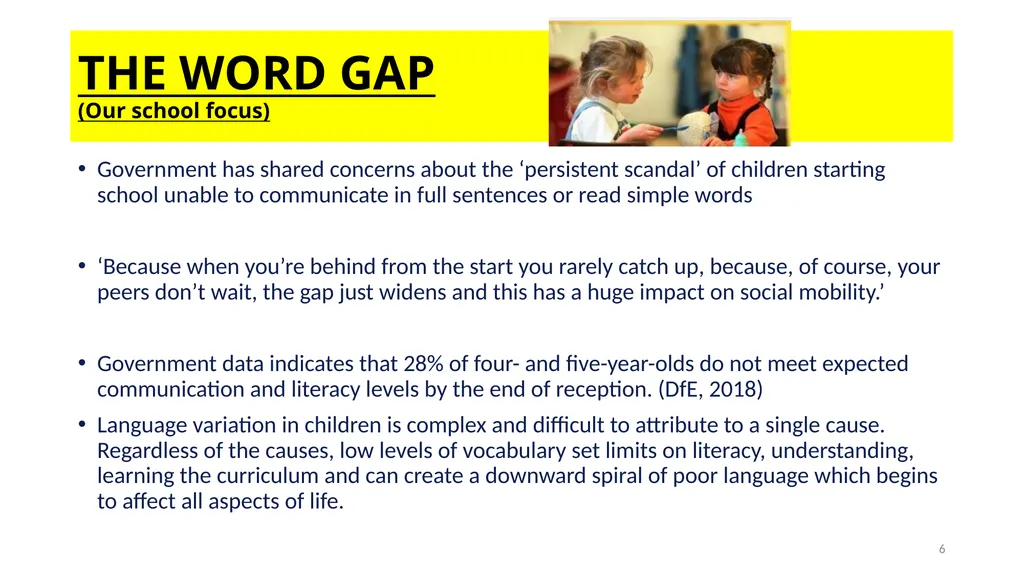
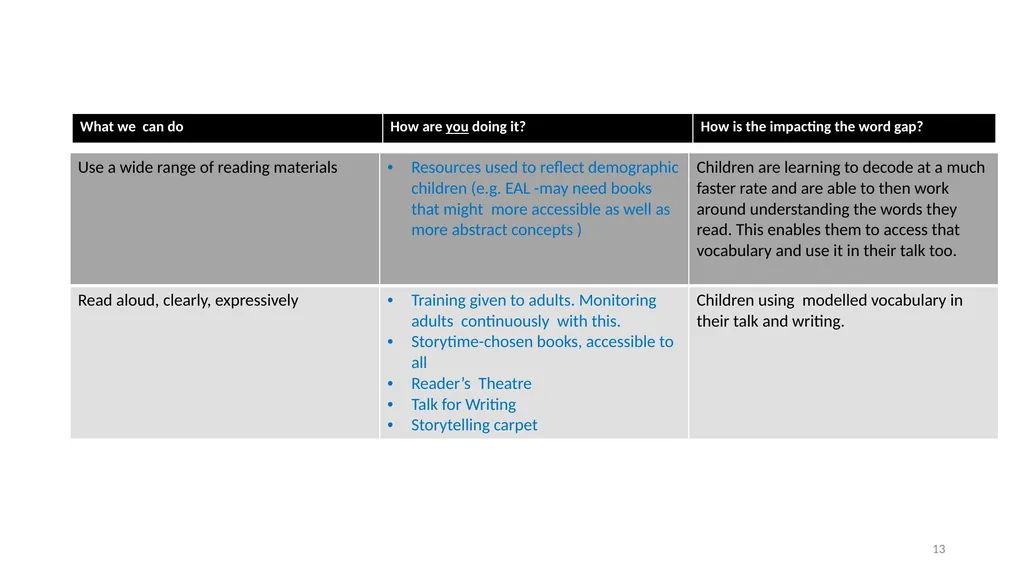
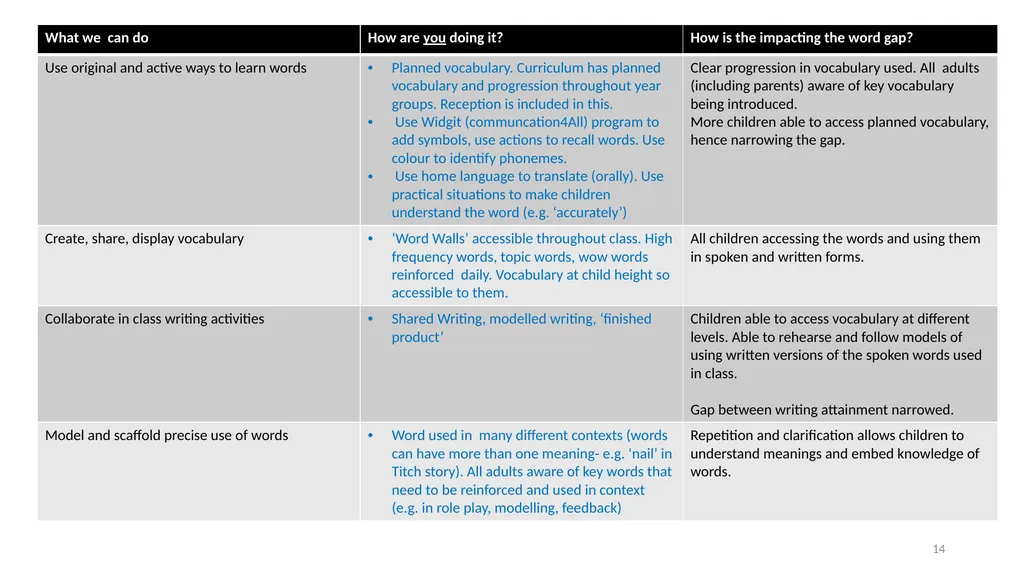
THE WORD GAP (Our school focus) Government has shared concerns about the ‘persistent scandal’ of children starting school unable to communicate in full sentences or read simple words
‘Because when you’re behind from the start you rarely catch up, because, of course, your peers don’t wait, the gap just widens and this has a huge impact on social mobility.’
Government data indicates that 28% of four- and five-year-olds do not meet expected communication and literacy levels by the end of reception. (DfE, 2018)
Language variation in children is complex and difficult to attribute to a single cause. Regardless of the causes, low levels of vocabulary set limits on literacy, understanding, learning the curriculum and can create a downward spiral of poor language which begins to affect all aspects of life. 6<br>
07
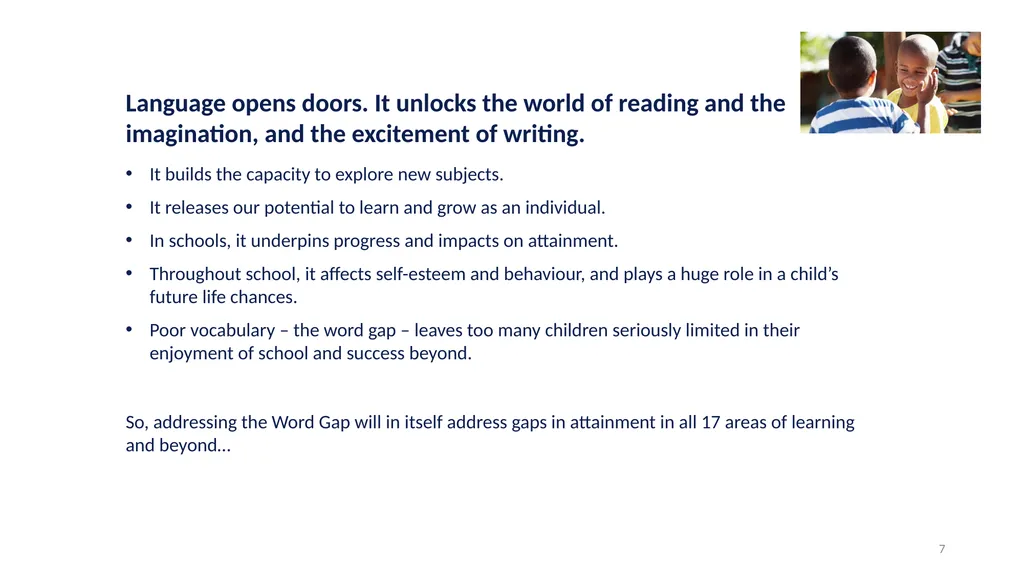
Language opens doors. It unlocks the world of reading and the imagination, and the excitement of writing.
It builds the capacity to explore new subjects.
It releases our potential to learn and grow as an individual.
In schools, it underpins progress and impacts on attainment.
Throughout school, it affects self-esteem and behaviour, and plays a huge role in a child’s future life chances.
Poor vocabulary – the word gap – leaves too many children seriously limited in their enjoyment of school and success beyond.
So, addressing the Word Gap will in itself address gaps in attainment in all 17 areas of learning and beyond… 7<br>
08
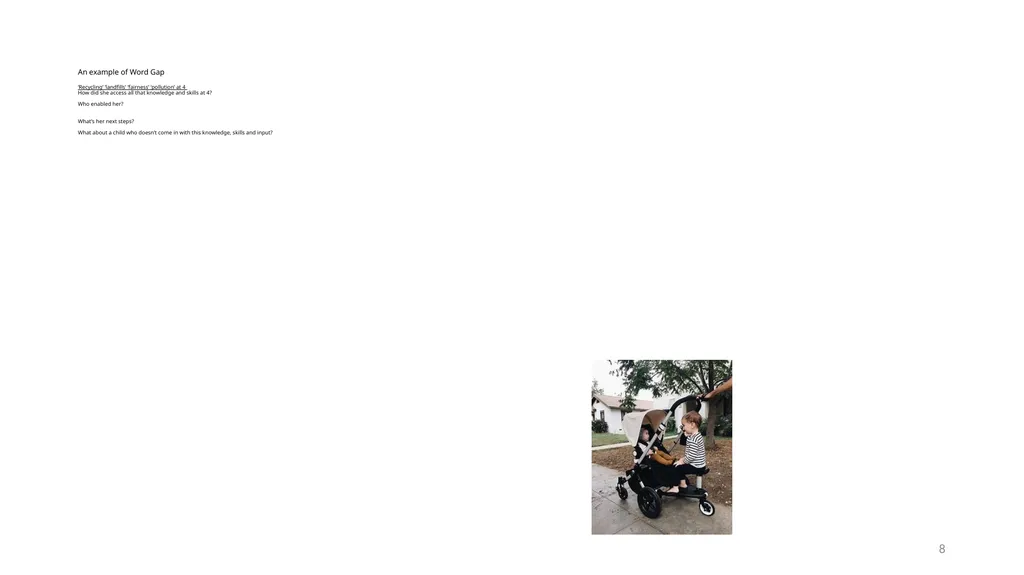
An example of Word Gap ‘Recycling’ ‘landfills’ ‘fairness’ ‘pollution’ at 4 How did she access all that knowledge and skills at 4? Who enabled her? What’s her next steps? What about a child who doesn’t come in with this knowledge, skills and input? 8<br>
09
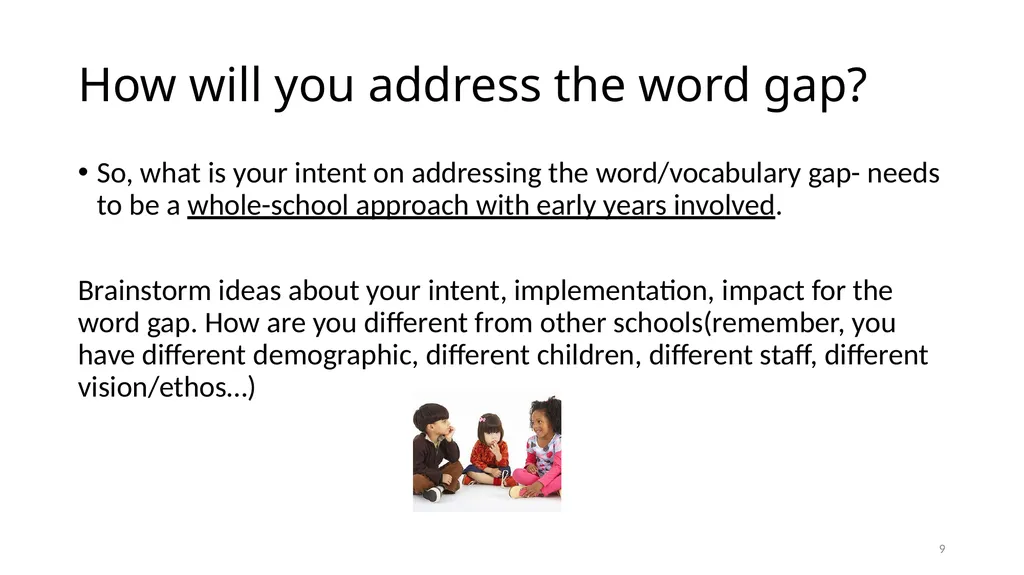
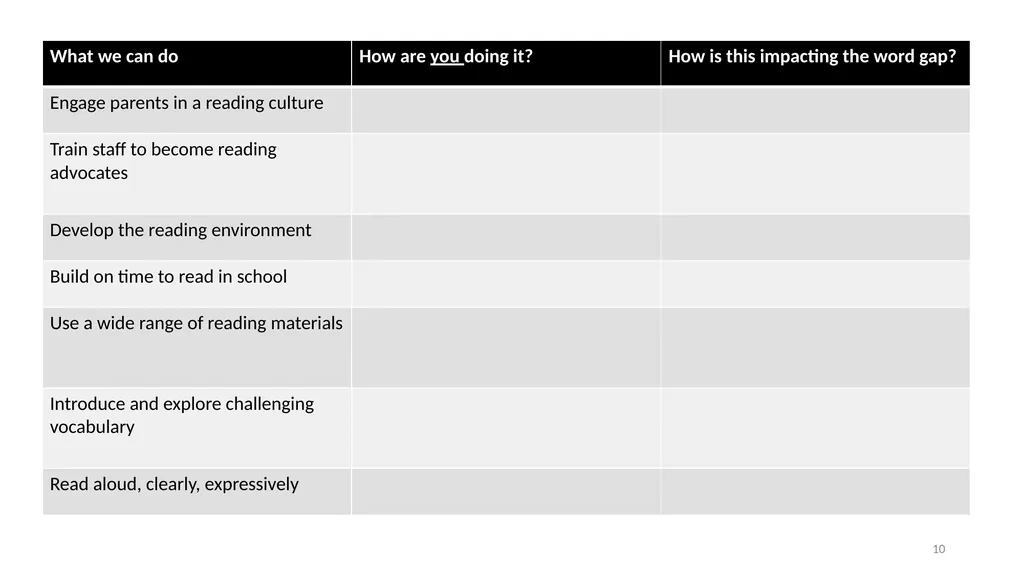
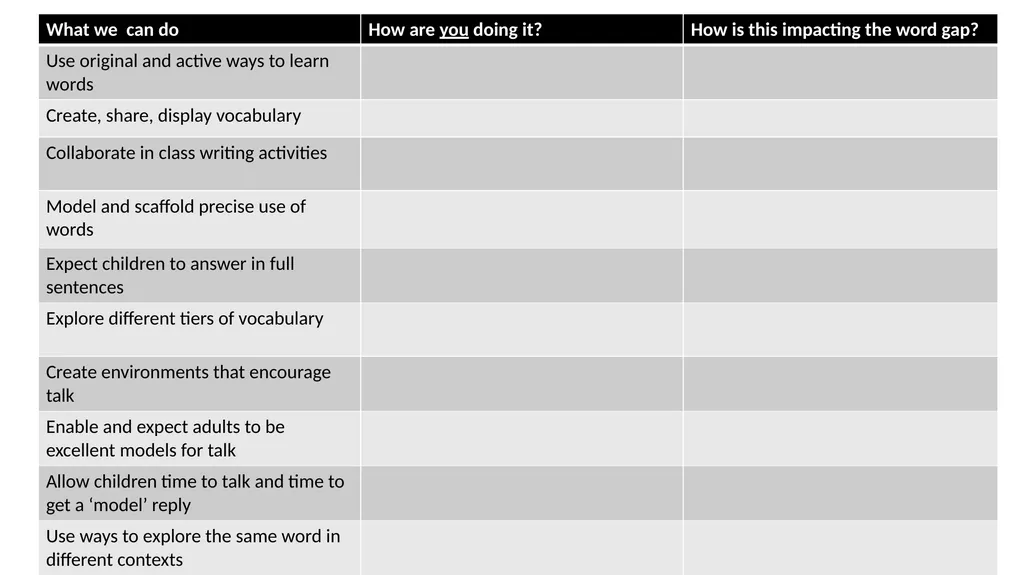
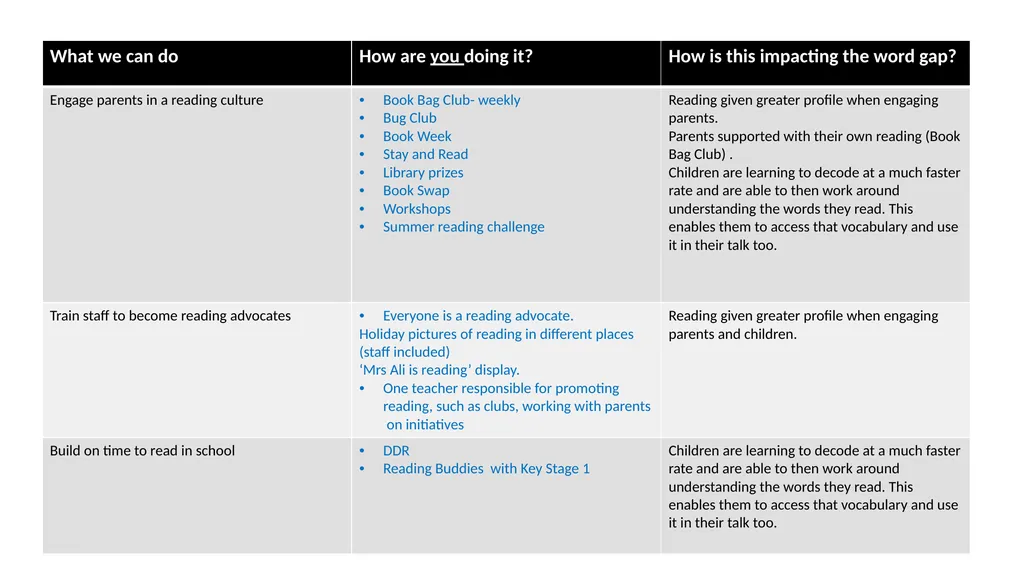
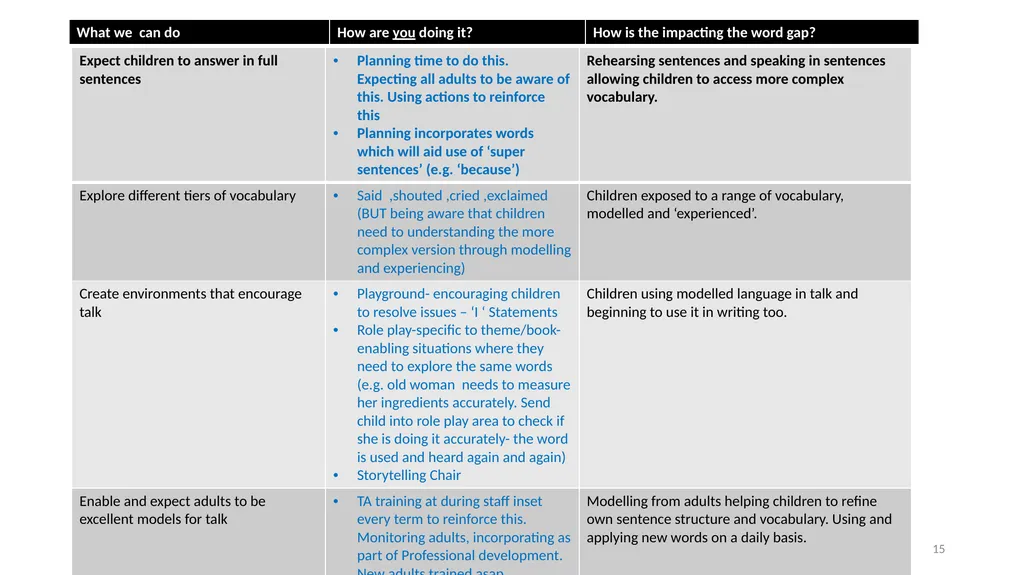
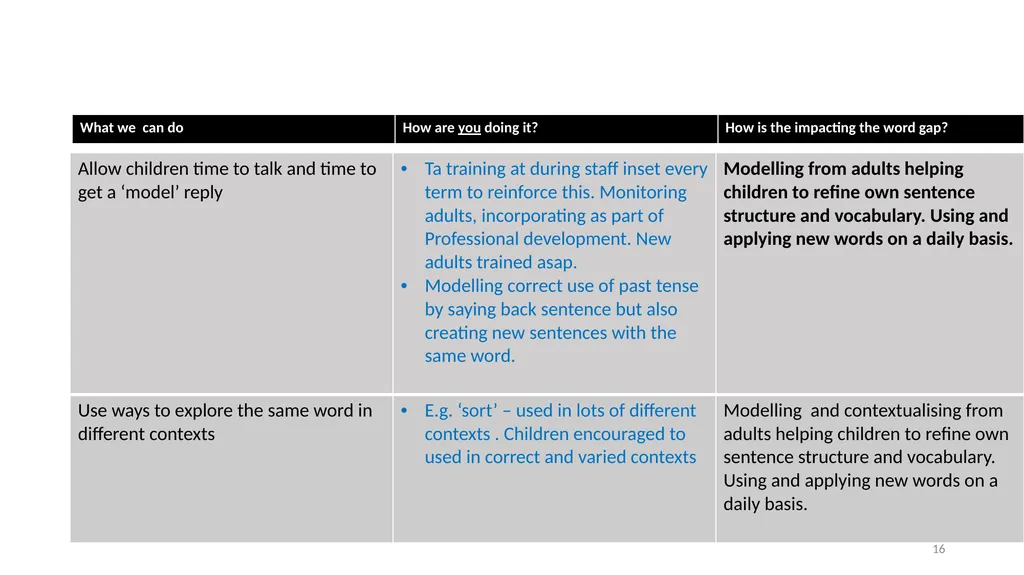
How will you address the word gap? So, what is your intent on addressing the word/vocabulary gap- needs to be a whole-school approach with early years involved.
Brainstorm ideas about your intent, implementation, impact for the word gap. How are you different from other schools(remember, you have different demographic, different children, different staff, different vision/ethos…) 9<br>