
Native American Struggles Terms and People




Description: Native American Struggles Terms and People reservation specific area set aside by the federal government for the Indians use Sand Creek Massacre 1864 incident in which a Colorado militia killed a camp of unarmed Cheyenne and Arapaho
Related Topics
Download Presentation
"Native American Struggles Terms and People" is the property of its rightful owner. Permission is granted to download and print the materials on this website for personal, non-commercial use only, and to display it on your personal computer provided you do not modify the materials and that you retain all copyright notices contained in the materials. By downloading content from our website, you accept the terms of this agreement.
Presentation Transcript
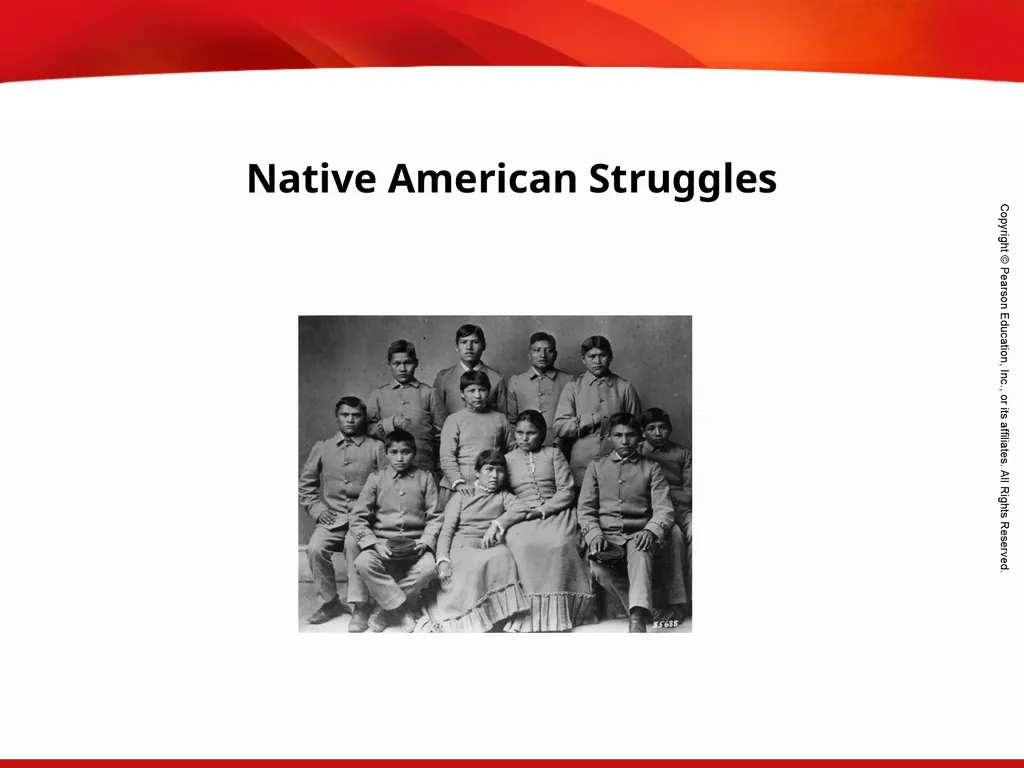
slide1. Native American Struggles<br>
slide2. Terms and People reservation – specific area set aside by the federal government for the Indians’ use
Sand Creek Massacre – 1864 incident in which a Colorado militia killed a camp of unarmed Cheyenne and Arapaho Indians
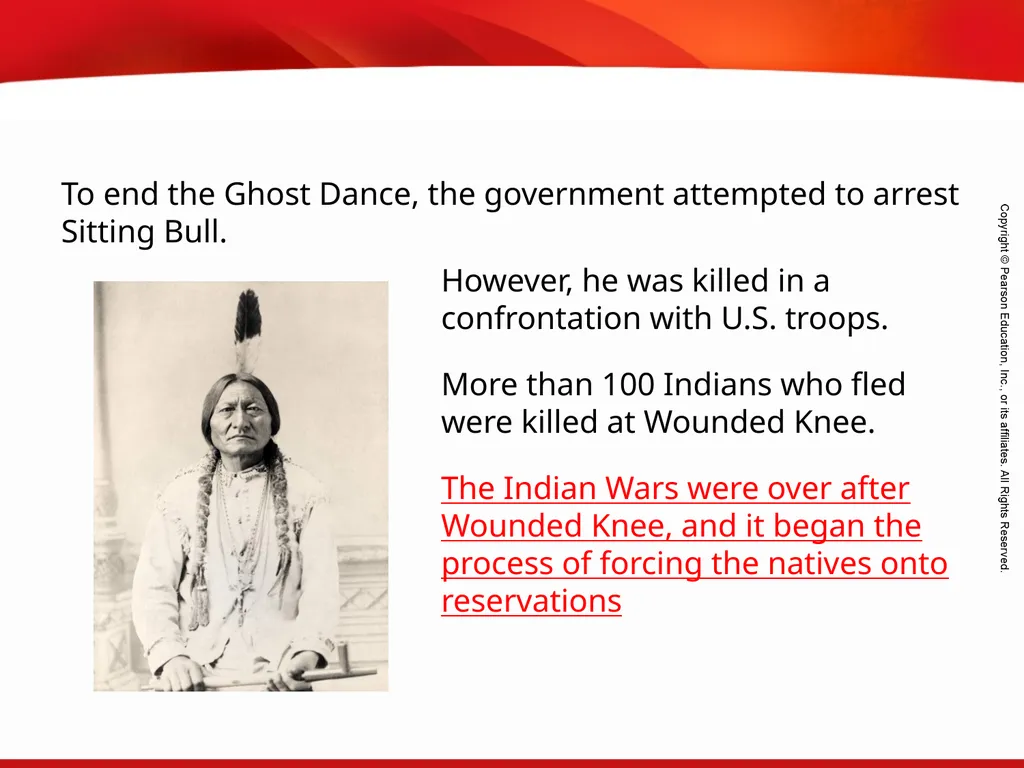
Sitting Bull – Sioux chief respected as a fighter and spiritual leader
Battle of the Little Big Horn – the site of a victory by Indians led by Crazy Horse and over 250 US soldiers led by General George Custer.<br>
slide3. Terms and People (continued) Chief Joseph – leader of the Nez Percés who surrendered after trying to lead a group of Indian refugees to Canada
Wounded Knee – 1890 confrontation between U.S. cavalry and the Sioux that marked the end of Indian resistance in the Ghost Dance War where over 100 Indians were killed by US troops
assimilate – to adopt the culture and civilization of the dominant group in a society
Dawes General Allotment Act – 1887 law that divided reservation land into private family plots
transcontinental railroad – rail link between the eastern and western United States<br>
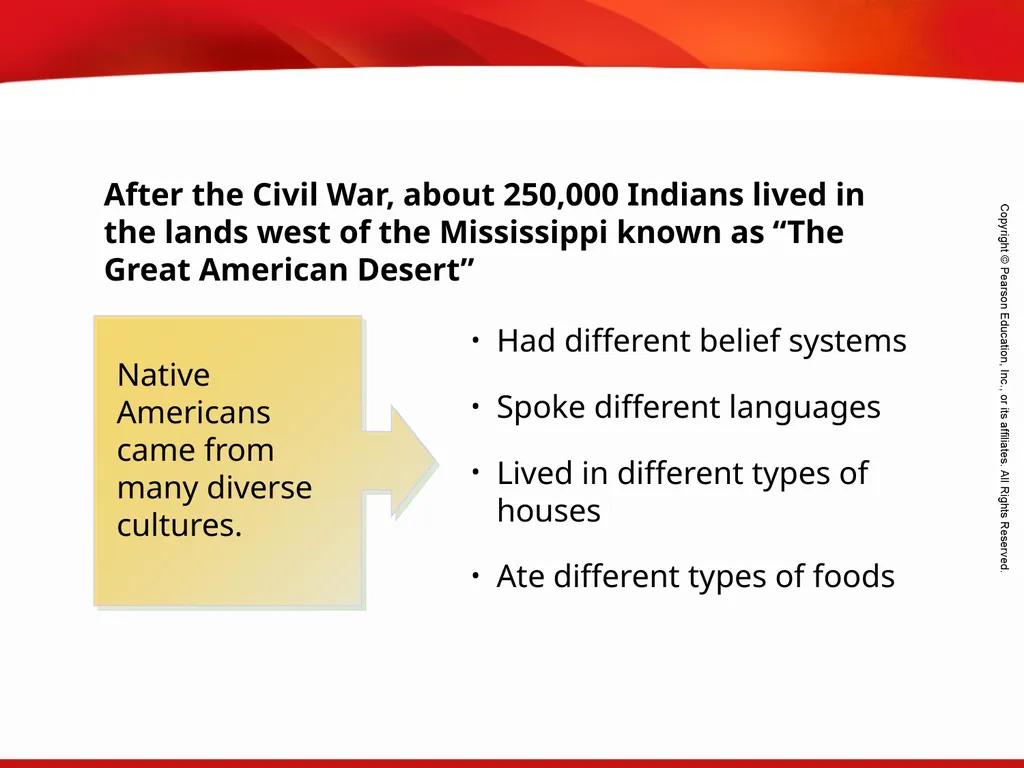
slide4. After the Civil War, about 250,000 Indians lived in the lands west of the Mississippi known as “The Great American Desert” Had different belief systems
Spoke different languages
Lived in different types of houses
Ate different types of foods Native Americans came from many diverse cultures.<br>
slide5. The diverse Indian peoples, however, shared a common view toward nature—a view that conflicted with that of many white Americans. Native Americans saw themselves as part of nature and viewed nature as sacred. Many white Americans viewed the land as a resource to produce wealth.<br>
slide6. During the 1800s, the government carried out a policy of moving Indians out of the way of white settlers. Late 1860s - Indians were forced into reservations. No longer free to roam the Plains, they faced suppression and poverty.<br>
slide7. Two other crises also threatened Native American civilizations. Disease Loss of the buffalo Settlers introduced diseases to which Indians had no immunity. Settlers slaughtered buffalo herds.<br>
slide8. 1862
Sioux Indians put up a fight against the US government of their land in eastern Minnesota
US fought back
Pushed the Sioux into western part of the Dakotas
This sparked a series of attacks on other settlements as other Indian groups felt their freedoms and life was slipping away.<br>
slide9. Some Native Americans fought to defend their lands. At the Sand Creek
Massacre, a Colorado militia killed an unarmed camp of Cheyenne and Arapahu Indians who were under U.S. Army protection. But attacks and retaliation led to distrust—and to tragedy. Promises were made and peace treaties were signed, but they often were broken.
* United States Indian Peace Commission – lasting peace will only come if Natives settle on farms and adapt to white civilization<br>
slide10. Fearful of insurrection, government officials tried to ban the practice. As their way of life slipped away, some Indians turned to a religious revival based on the Ghost Dance.<br>
slide11. However, he was killed in a confrontation with U.S. troops.
More than 100 Indians who fled were killed at Wounded Knee.
The Indian Wars were over after Wounded Knee, and it began the process of forcing the natives onto reservations To end the Ghost Dance, the government attempted to arrest Sitting Bull.<br>
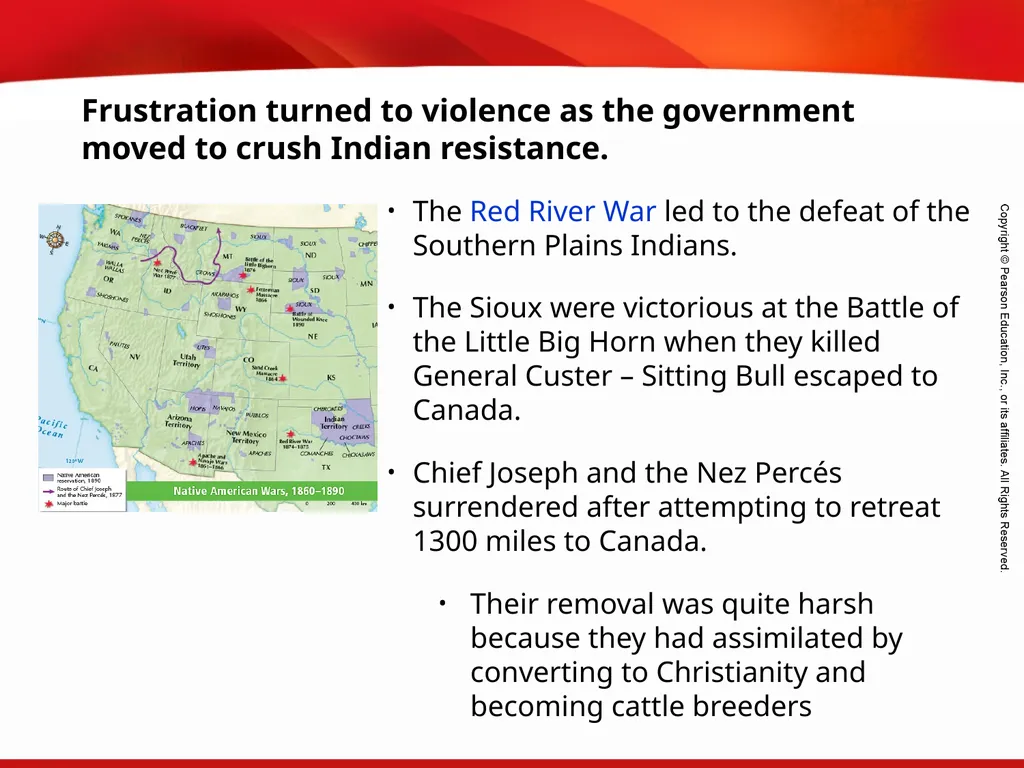
slide12. Frustration turned to violence as the government moved to crush Indian resistance. The Red River War led to the defeat of the Southern Plains Indians.
The Sioux were victorious at the Battle of the Little Big Horn when they killed General Custer – Sitting Bull escaped to Canada.
Chief Joseph and the Nez Percés surrendered after attempting to retreat 1300 miles to Canada.
Their removal was quite harsh because they had assimilated by converting to Christianity and becoming cattle breeders<br>
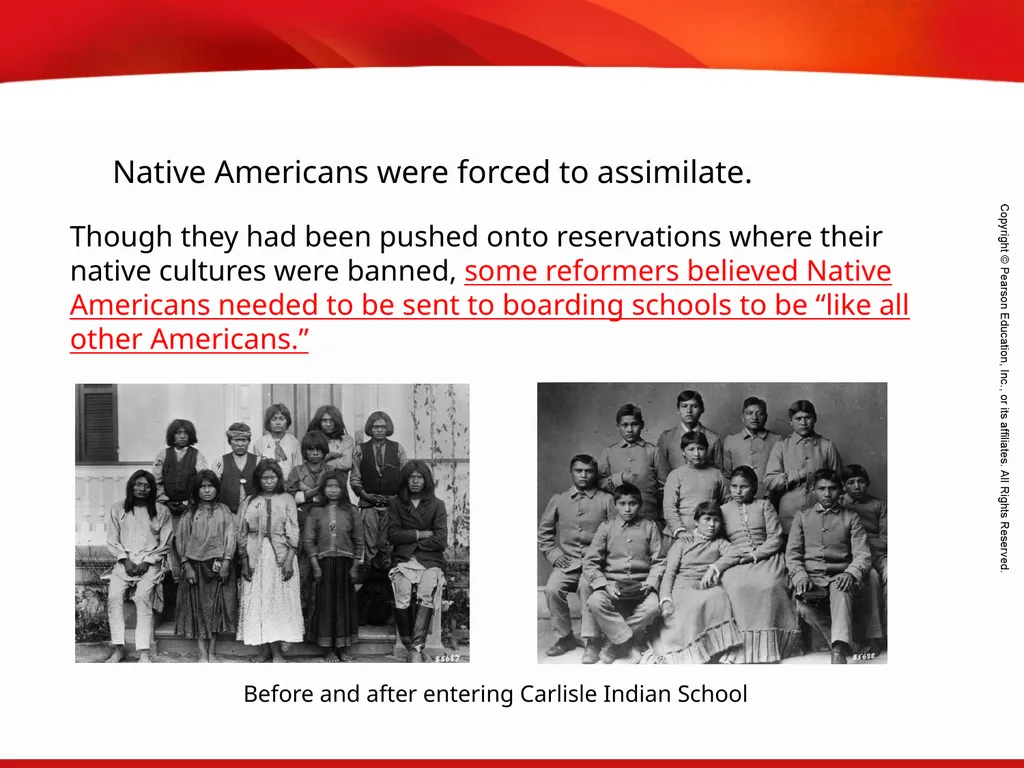
slide13. Native Americans were forced to assimilate. Though they had been pushed onto reservations where their native cultures were banned, some reformers believed Native Americans needed to be sent to boarding schools to be “like all other Americans.” Before and after entering Carlisle Indian School<br>
slide14. Replaced the reservation system with an allotment system
Granted each Indian family their own plot of land – 160 acres
Specified the land could not be sold for 25 years In 1887, Congress passed the Dawes General Allotment Act to encourage assimilation.<br>
slide15. Only a small number were left to carry on their legacy. Native Americans’ struggle to retain their homeland, freedom, and culture proved tragic.<br>
slide2. Terms and People reservation – specific area set aside by the federal government for the Indians’ use
Sand Creek Massacre – 1864 incident in which a Colorado militia killed a camp of unarmed Cheyenne and Arapaho Indians
Sitting Bull – Sioux chief respected as a fighter and spiritual leader
Battle of the Little Big Horn – the site of a victory by Indians led by Crazy Horse and over 250 US soldiers led by General George Custer.<br>
slide3. Terms and People (continued) Chief Joseph – leader of the Nez Percés who surrendered after trying to lead a group of Indian refugees to Canada
Wounded Knee – 1890 confrontation between U.S. cavalry and the Sioux that marked the end of Indian resistance in the Ghost Dance War where over 100 Indians were killed by US troops
assimilate – to adopt the culture and civilization of the dominant group in a society
Dawes General Allotment Act – 1887 law that divided reservation land into private family plots
transcontinental railroad – rail link between the eastern and western United States<br>
slide4. After the Civil War, about 250,000 Indians lived in the lands west of the Mississippi known as “The Great American Desert” Had different belief systems
Spoke different languages
Lived in different types of houses
Ate different types of foods Native Americans came from many diverse cultures.<br>
slide5. The diverse Indian peoples, however, shared a common view toward nature—a view that conflicted with that of many white Americans. Native Americans saw themselves as part of nature and viewed nature as sacred. Many white Americans viewed the land as a resource to produce wealth.<br>
slide6. During the 1800s, the government carried out a policy of moving Indians out of the way of white settlers. Late 1860s - Indians were forced into reservations. No longer free to roam the Plains, they faced suppression and poverty.<br>
slide7. Two other crises also threatened Native American civilizations. Disease Loss of the buffalo Settlers introduced diseases to which Indians had no immunity. Settlers slaughtered buffalo herds.<br>
slide8. 1862
Sioux Indians put up a fight against the US government of their land in eastern Minnesota
US fought back
Pushed the Sioux into western part of the Dakotas
This sparked a series of attacks on other settlements as other Indian groups felt their freedoms and life was slipping away.<br>
slide9. Some Native Americans fought to defend their lands. At the Sand Creek
Massacre, a Colorado militia killed an unarmed camp of Cheyenne and Arapahu Indians who were under U.S. Army protection. But attacks and retaliation led to distrust—and to tragedy. Promises were made and peace treaties were signed, but they often were broken.
* United States Indian Peace Commission – lasting peace will only come if Natives settle on farms and adapt to white civilization<br>
slide10. Fearful of insurrection, government officials tried to ban the practice. As their way of life slipped away, some Indians turned to a religious revival based on the Ghost Dance.<br>
slide11. However, he was killed in a confrontation with U.S. troops.
More than 100 Indians who fled were killed at Wounded Knee.
The Indian Wars were over after Wounded Knee, and it began the process of forcing the natives onto reservations To end the Ghost Dance, the government attempted to arrest Sitting Bull.<br>
slide12. Frustration turned to violence as the government moved to crush Indian resistance. The Red River War led to the defeat of the Southern Plains Indians.
The Sioux were victorious at the Battle of the Little Big Horn when they killed General Custer – Sitting Bull escaped to Canada.
Chief Joseph and the Nez Percés surrendered after attempting to retreat 1300 miles to Canada.
Their removal was quite harsh because they had assimilated by converting to Christianity and becoming cattle breeders<br>
slide13. Native Americans were forced to assimilate. Though they had been pushed onto reservations where their native cultures were banned, some reformers believed Native Americans needed to be sent to boarding schools to be “like all other Americans.” Before and after entering Carlisle Indian School<br>
slide14. Replaced the reservation system with an allotment system
Granted each Indian family their own plot of land – 160 acres
Specified the land could not be sold for 25 years In 1887, Congress passed the Dawes General Allotment Act to encourage assimilation.<br>
slide15. Only a small number were left to carry on their legacy. Native Americans’ struggle to retain their homeland, freedom, and culture proved tragic.<br>