
Native Americans First natives may have come as
KL
Published · 30 slides · 0 views

1 / 1








Description
Native Americans First natives may have come as long ago as 50,000 years. Theory was that they crossed the Bering straits from Asia when ocean levels were lower Tribes represent greatest number of ethnic subgroups than in any other minority
Related Topics
Share
Embed code
Download this presentation From Below
"Native Americans First natives may have come as" is the property of its rightful owner. Permission is granted to download and print the materials on this website for personal, non-commercial use only, and to display it on your personal computer provided you do not modify the materials and that you retain all copyright notices contained in the materials. By downloading content from our website, you accept the terms of this agreement.
Presentation Transcript
01
Native Americans<br>
02
First natives may have come as long ago as 50,000 years. Theory was that they crossed the Bering straits from Asia when ocean levels were lower
Tribes represent greatest number of ethnic subgroups than in any other minority culture (over 400 tribes/nations) Native American Food<br>
Tribes represent greatest number of ethnic subgroups than in any other minority culture (over 400 tribes/nations) Native American Food<br>
03
Over several millennia the foodways of Native Americans were well established and included both wild and domesticated foods, traditions that have continued to evolve through the centuries of conquest, assimilation, and resistance that began with European contact in the fifteenth century. Native American Food<br>
04
Contrary to popular stereotypes, not all Native Americans were horse-riding bison hunters who lived in tepees. Although these elements fit some historical contexts, they ignore actual regional and cultural differences. Native American Food<br>
05
Alaska- Eskimo, Indian, Aleut
Northwest- Yakima, Spokan, Klamath
California- Shasta, Maidu, Miwok
Southwest- Apache, Hopi, Navajo
Plains- Cheyenne, Sioux, Shoshone
Southeast- “5 Civilized Tribes” Cherokees, Chickasaws, Choctaws, Creeks and Seminoles
Northeast- Iroquois, Mohawk Settlement Patterns<br>
Northwest- Yakima, Spokan, Klamath
California- Shasta, Maidu, Miwok
Southwest- Apache, Hopi, Navajo
Plains- Cheyenne, Sioux, Shoshone
Southeast- “5 Civilized Tribes” Cherokees, Chickasaws, Choctaws, Creeks and Seminoles
Northeast- Iroquois, Mohawk Settlement Patterns<br>
06
Many Native Americans were located to reservations away from their native territories and foods
Food and other subsidies were often poor excuses for nutrition
Others have been able to stay on near their tribal grounds, mainly in NE and SW, AK, CA and OK
Health care is marginal Resettlement Patterns<br>
Food and other subsidies were often poor excuses for nutrition
Others have been able to stay on near their tribal grounds, mainly in NE and SW, AK, CA and OK
Health care is marginal Resettlement Patterns<br>
07
Harmony
Balance between spiritual, social and physical needs
Generosity
Competitiveness was/is discouraged
Individual rights regarded highly, matrilineal societies
Present oriented Worldview<br>
Balance between spiritual, social and physical needs
Generosity
Competitiveness was/is discouraged
Individual rights regarded highly, matrilineal societies
Present oriented Worldview<br>
08
Indigenous foods:
Fruits from North: berries, cherries, grapes, to more tropical guava, papaya, pineapple
Vegetables mainly pumpkins, beans, squash, tomatoes, peppers, avocados
Beans were planted around corn stalks for support; then squash planted around the beans to help keep soil cool and moist
Grains mainly corn and wild rice Traditional Food Habits<br>
Fruits from North: berries, cherries, grapes, to more tropical guava, papaya, pineapple
Vegetables mainly pumpkins, beans, squash, tomatoes, peppers, avocados
Beans were planted around corn stalks for support; then squash planted around the beans to help keep soil cool and moist
Grains mainly corn and wild rice Traditional Food Habits<br>
09
Tubers and roots, e,g, cassava, potatoes, sweet potatoes, Jerusalem artichokes
Nuts/seeds from tree nuts, peanuts, pumpkin and sunflower
Meats were mainly turkey and small game, unless lived near coast (lots of shellfish) or near buffalo/ antelope areas
Later introduction of pigs and sheep by Europeans had a big impact on protein status Traditional Food Habits<br>
Nuts/seeds from tree nuts, peanuts, pumpkin and sunflower
Meats were mainly turkey and small game, unless lived near coast (lots of shellfish) or near buffalo/ antelope areas
Later introduction of pigs and sheep by Europeans had a big impact on protein status Traditional Food Habits<br>
10
Northeast
Abundance of fish and produce (fruits and vegetables)
Many New England foods today influence
Clambakes, lobster
Baked beans and corn meal breads
Succotash stew of corn, beans and fish
Corn pudding, pumpkin pie, cranberries
Many different shellfish and small game Regional variations<br>
Abundance of fish and produce (fruits and vegetables)
Many New England foods today influence
Clambakes, lobster
Baked beans and corn meal breads
Succotash stew of corn, beans and fish
Corn pudding, pumpkin pie, cranberries
Many different shellfish and small game Regional variations<br>
11
Southeast
Warmer climate oysters, shrimp and crabs
Abundant small game and produce (Brunswick squirrel stew)
Hominy and grits (ground corn)
Corn, bean squash trio
Nuts, berries, fruits and honey Regional variations<br>
Warmer climate oysters, shrimp and crabs
Abundant small game and produce (Brunswick squirrel stew)
Hominy and grits (ground corn)
Corn, bean squash trio
Nuts, berries, fruits and honey Regional variations<br>
12
Northern Plains
Bison was staple meat for the Cheyenne, Crow, Arapaho, Dakota and Pawnee tribes; every part of it was used
Corn, beans, squash grown in river valleys
Small game also hunted and cooked with wild rice, berries, nuts fruits
Bison dried into jerky or mixed with berries and fat for travel- called pemmican and stored in parfleches (leather pouches) Regional variations<br>
Bison was staple meat for the Cheyenne, Crow, Arapaho, Dakota and Pawnee tribes; every part of it was used
Corn, beans, squash grown in river valleys
Small game also hunted and cooked with wild rice, berries, nuts fruits
Bison dried into jerky or mixed with berries and fat for travel- called pemmican and stored in parfleches (leather pouches) Regional variations<br>
13
Southwest
Oldest communities date back to the steep river canyons in the dry deserts
Traditional corn, beans, squash trio raised with chilies for flavor; pinto beans from Mexico
Originally lived on small game, but now raise sheep
Pulp of cactus, yucca and mescal used Regional variations<br>
Oldest communities date back to the steep river canyons in the dry deserts
Traditional corn, beans, squash trio raised with chilies for flavor; pinto beans from Mexico
Originally lived on small game, but now raise sheep
Pulp of cactus, yucca and mescal used Regional variations<br>
14
Northwest and Alaska
Coastal areas of NW and S Alaska have abundance of seafood and produce
The Northern realms are often permafrost and inhabited mainly by Eskimos (Inuits) in the north, and Aleuts along the 1,000 mile long chain of islands called the Aleutians
Fish, sea mammals, bear, elk are mainstays of diet with some foraged fruits and vegetables
Muktuk: blubber a favorite
tundra tea from bog shrub Regional variations<br>
Coastal areas of NW and S Alaska have abundance of seafood and produce
The Northern realms are often permafrost and inhabited mainly by Eskimos (Inuits) in the north, and Aleuts along the 1,000 mile long chain of islands called the Aleutians
Fish, sea mammals, bear, elk are mainstays of diet with some foraged fruits and vegetables
Muktuk: blubber a favorite
tundra tea from bog shrub Regional variations<br>
15
California
Miwok and Pomo tribes lived mainly on ground acorns from which the bitter tannins had been leached
Many small California tribes were just marginal hunter-gatherers and ate whatever they could find Regional variations<br>
Miwok and Pomo tribes lived mainly on ground acorns from which the bitter tannins had been leached
Many small California tribes were just marginal hunter-gatherers and ate whatever they could find Regional variations<br>
16
Corn was perhaps the greatest gift that the Native Americans bestowed upon the white settlers.
The early Pilgrims of Plymouth and the colonists at Jamestown settlements were saved from starvation by harvests of corn.
It is believed that the settlement of America by white colonists would have been delayed 100 years if it hadn't been for the availability of corn for food. Interesting Facts: Corn<br>
The early Pilgrims of Plymouth and the colonists at Jamestown settlements were saved from starvation by harvests of corn.
It is believed that the settlement of America by white colonists would have been delayed 100 years if it hadn't been for the availability of corn for food. Interesting Facts: Corn<br>
17
Native Americans had 50 different recipes for serving corn which included corn on the cob, roasted ears, hominy, mush, popcorn, corn bread, johnnycake, puddings, succotash, and varieties of corn soup.
Parched or dried corn was stored in bark barrels or hung up in bunches in the longhouse Corn contd.<br>
Parched or dried corn was stored in bark barrels or hung up in bunches in the longhouse Corn contd.<br>
18
Native American legend states that corn, bean and squash plants were “three loving sisters” that must always be planted together.
The Iroquois learned to make maple syrup from the maple tree. Early French visitors to Indian villages were served popcorn mixed with maple syrup. The French called it "snow food". Today, we call it crackerjacks. More corn<br>
The Iroquois learned to make maple syrup from the maple tree. Early French visitors to Indian villages were served popcorn mixed with maple syrup. The French called it "snow food". Today, we call it crackerjacks. More corn<br>
19
Green (unripened) corn is the central element in:
"Green Corn" ceremonies,
The Busk ceremony of the southeastern cultures, which signals the beginning of a new year,
Annual Schemitzun (Green Corn Festival) of the Mashantucket Pequot held near Ledyard, Connecticut, gathers nations from across the country for a huge powow.
Green corn is now a major item of American foodways when consumed as sweet corn, a mutated variety of maize that concentrates a sugar rather than a starch component. And more corn!<br>
"Green Corn" ceremonies,
The Busk ceremony of the southeastern cultures, which signals the beginning of a new year,
Annual Schemitzun (Green Corn Festival) of the Mashantucket Pequot held near Ledyard, Connecticut, gathers nations from across the country for a huge powow.
Green corn is now a major item of American foodways when consumed as sweet corn, a mutated variety of maize that concentrates a sugar rather than a starch component. And more corn!<br>
20
Native American made beverages from different plants.
One was a type of coffee made from roasted corn.
Another brew was made from sunflower seeds.
Tea was made from most berries.
A popular summer beverage much like lemonade was concocted by using the berries from the stag horn sumac. Beverages<br>
One was a type of coffee made from roasted corn.
Another brew was made from sunflower seeds.
Tea was made from most berries.
A popular summer beverage much like lemonade was concocted by using the berries from the stag horn sumac. Beverages<br>
21
Many stereotype Native American Foods with “Fry bread”
Fry bread was born out of the imprisonment of Navajos and Apaches by the U.S. government in 1863. Their rations consisted of wheat flour and lard, and they made the best of their rations<br>
Fry bread was born out of the imprisonment of Navajos and Apaches by the U.S. government in 1863. Their rations consisted of wheat flour and lard, and they made the best of their rations<br>
22
Northeast: one large hearty meal consumed before noon. Soups and snacks for the rest of the day.
Roasted game usually served during the meal.
Coastal: consumed salmon at least twice a day with edible greens and roots Meal patterns<br>
Roasted game usually served during the meal.
Coastal: consumed salmon at least twice a day with edible greens and roots Meal patterns<br>
23
Southwest and Northwest: 2 meals per day common.
Breakfast at sunrise and dinner before sunset
Native American meals were monotonous
Common foods included cornmeal gruel or bread, boiled dehydrated vegetables
Game, fresh veg and fruits when available
Southwest: baked cornmeal in adobo ovens Meal Patterns contd<br>
Breakfast at sunrise and dinner before sunset
Native American meals were monotonous
Common foods included cornmeal gruel or bread, boiled dehydrated vegetables
Game, fresh veg and fruits when available
Southwest: baked cornmeal in adobo ovens Meal Patterns contd<br>
24
The cooking traditions of Native Americans included everything from stone-boiling in leather bags to roasting and baking in earth ovens.
Cooking methods simple
Roasted over fire or ashes, foods cooked in forms of soups and stews
Preservation by sun drying or smoking
Fermentation in pits with berries, greens and fruits
Men ate first followed by women and children in silence Cooking Techniques<br>
Cooking methods simple
Roasted over fire or ashes, foods cooked in forms of soups and stews
Preservation by sun drying or smoking
Fermentation in pits with berries, greens and fruits
Men ate first followed by women and children in silence Cooking Techniques<br>
25
The daily diet of most Native Americans does not contain traditional foods.
Diet reflects that of low-to middle-income families who often buy food for its bulk, not its nutritional value
Unfortunately, for many tribes the traditional food habits continue to fade Contemporary Food Habits and N Nutrition Issues<br>
Diet reflects that of low-to middle-income families who often buy food for its bulk, not its nutritional value
Unfortunately, for many tribes the traditional food habits continue to fade Contemporary Food Habits and N Nutrition Issues<br>
26
The combination of commodities—highly refined white flour, sugar, and lard—are the basis of a common Indian food, fry bread.
Go to any powwow and fry bread will be available. A variant that includes toppings like spicy ground beef and/or beans is called an "Indian taco." Contemporary Food Habits and Nutrition Issues<br>
Go to any powwow and fry bread will be available. A variant that includes toppings like spicy ground beef and/or beans is called an "Indian taco." Contemporary Food Habits and Nutrition Issues<br>
27
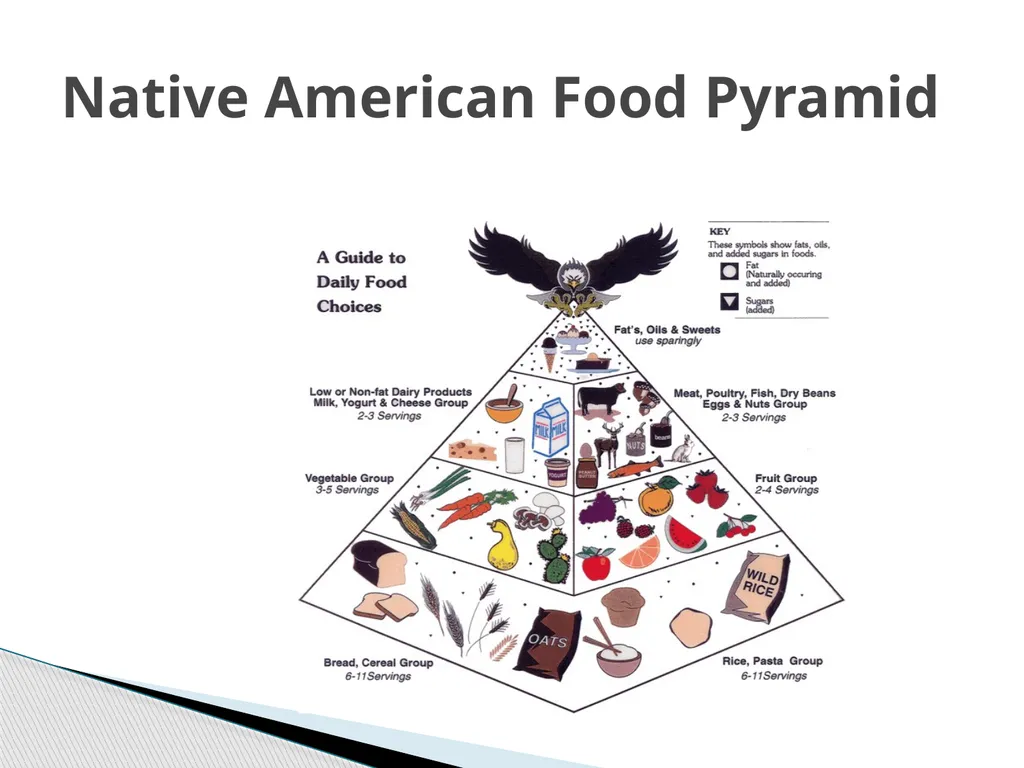
Native American Food Pyramid<br>
28
Alarming rate of adult-onset (Type 2) diabetes is over three times that of the rest of the U.S. population as a whole.
Explanations for this phenomenon have included the “thrifty genotype" model, which explains that such a genotype would have given a genetic advantage to populations who experienced periods of feast and famine. Nutrition issues<br>
Explanations for this phenomenon have included the “thrifty genotype" model, which explains that such a genotype would have given a genetic advantage to populations who experienced periods of feast and famine. Nutrition issues<br>
29
The epidemic rise in diet-related health problems like diabetes, CAD, HTN and obesity has been most pronounced in the decades following World War II.
The promotion of an American diet and lifestyle to assimilate into the U.S. mainstream Nutrition Issues<br>
The promotion of an American diet and lifestyle to assimilate into the U.S. mainstream Nutrition Issues<br>
30
https://youtu.be/QGOPte3kk2c<br>