Natural Sciences Grade 7 Term 3: Energy and Change Insulation and energy savings Topic 4 Insulation and Energy Savings Using insulating materials part 2 Natural Sciences - Grade 7 Insulation, energy saving and energy transfer to the
"Natural Sciences Grade 7 Term 3: Energy and Change" is the property of its rightful owner. Permission is granted to
download and print the materials on this website for personal, non-commercial use only, and to display it
on your personal computer provided you do not modify the materials and that you retain all copyright
notices contained in the materials. By downloading content from our website, you accept the terms of this
agreement.
Presentation Transcript
01
Natural Sciences Grade 7 Term 3: Energy and Change
Insulation and energy savings<br>
02
Topic 4 Insulation and Energy Savings Using insulating materials [part 2] Natural Sciences - Grade 7<br>
03
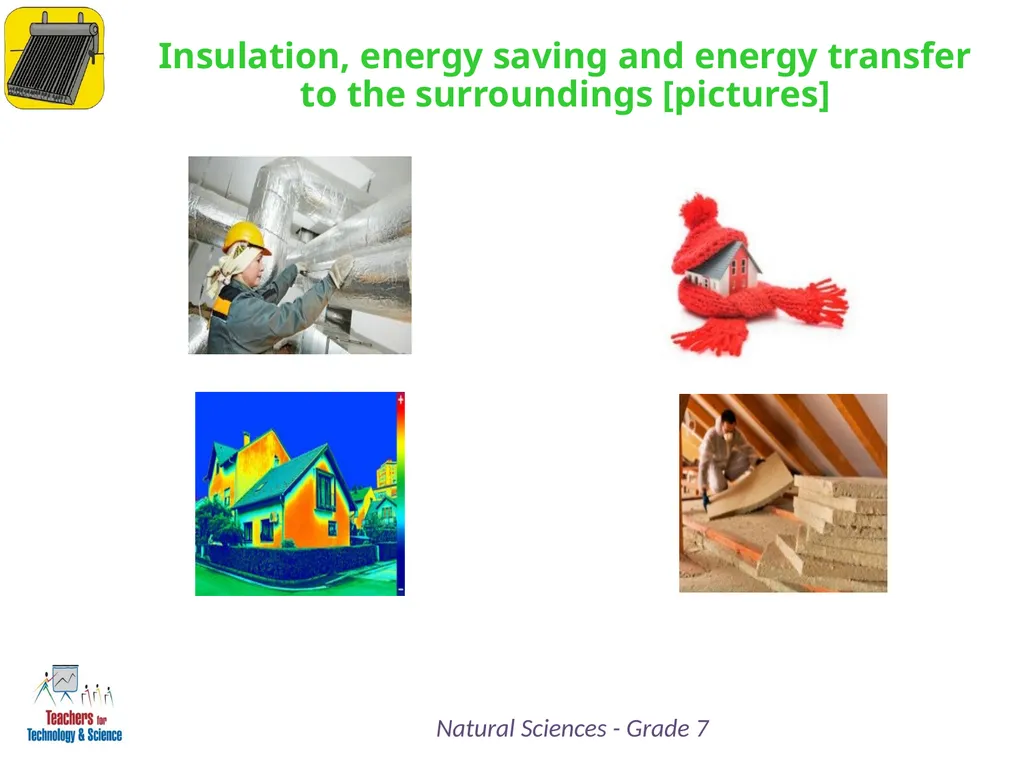
Insulation, energy saving and energy transfer to the surroundings [pictures] Natural Sciences - Grade 7<br>
04
Insulation, energy saving and energy transfer to the surroundings
You have learnt that heat can be transferred by means of three methods:
Conduction; Convection and Radiation.
In this topic we focused on the importance of insulation in controlling heat loss and gain.
Vests and jackets keep us warm. Natural Sciences - Grade 7<br>
05
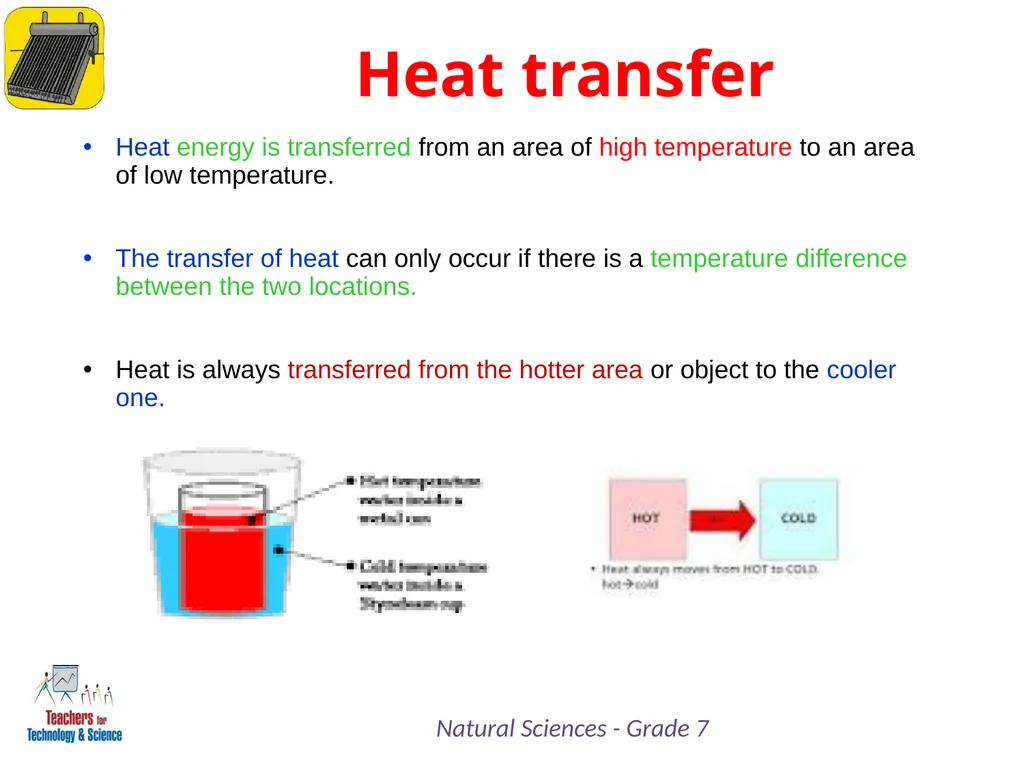
Heat energy is transferred from an area of high temperature to an area of low temperature.
The transfer of heat can only occur if there is a temperature difference between the two locations.
Heat is always transferred from the hotter area or object to the cooler one. Natural Sciences - Grade 7 Heat transfer<br>
06
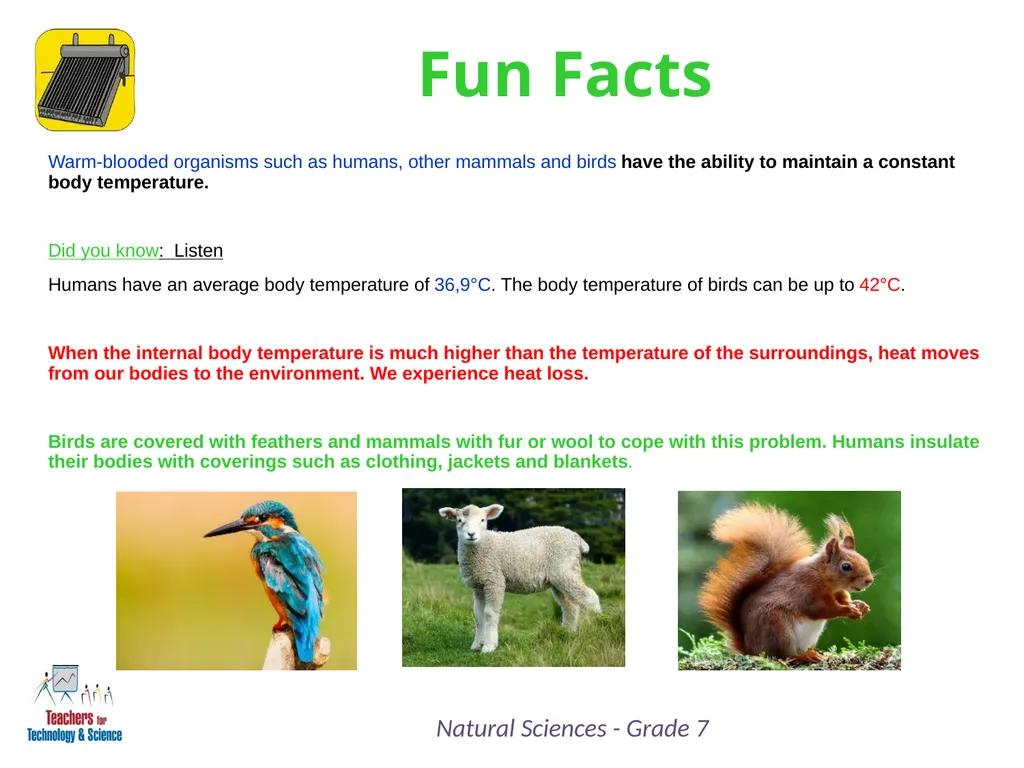
Warm-blooded organisms such as humans, other mammals and birds have the ability to maintain a constant body temperature.
Did you know: Listen
Humans have an average body temperature of 36,9°C. The body temperature of birds can be up to 42°C.
When the internal body temperature is much higher than the temperature of the surroundings, heat moves from our bodies to the environment. We experience heat loss.
Birds are covered with feathers and mammals with fur or wool to cope with this problem. Humans insulate their bodies with coverings such as clothing, jackets and blankets. Natural Sciences - Grade 7 Fun Facts<br>
07
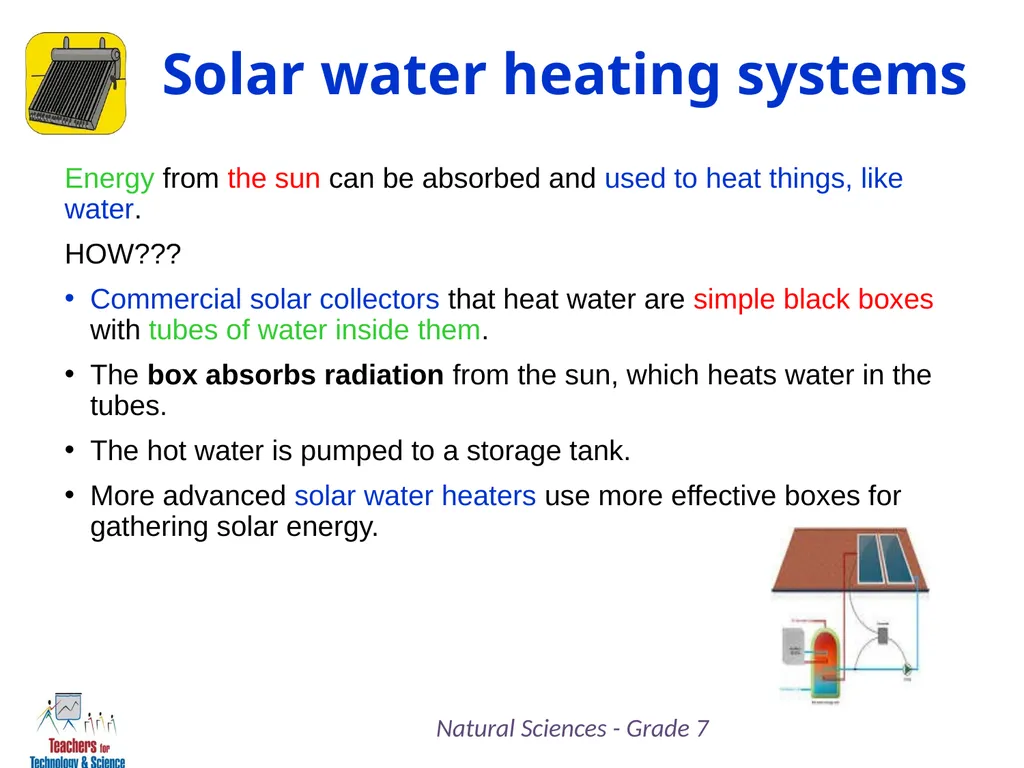
Energy from the sun can be absorbed and used to heat things, like water.
HOW???
Commercial solar collectors that heat water are simple black boxes with tubes of water inside them.
The box absorbs radiation from the sun, which heats water in the tubes.
The hot water is pumped to a storage tank.
More advanced solar water heaters use more effective boxes for gathering solar energy. Natural Sciences - Grade 7 Solar water heating systems<br>
08
Energy efficiency
Energy efficiency means that the maximum amount of heat energy is gained by an area or object with minimal loss of heat energy to the surroundings.
In an energy efficient system, the energy gained by an area is far greater than the energy lost by the area.
Energy efficiency = Energy input – Energy output Natural Sciences - Grade 7<br>
09
Controlling the rate of heat flow in homes
Heat flows from a hotter area to a colder area. Increasing or decreasing the rate at which heat flows between two locations is very important when it comes to insulating houses.
During winter we must try to prevent heat escaping from the house to the environment through the walls, ceilings, windows, doors and roof.
In summer we must try to prevent heat from entering the house. We can solve these problems by using insulating materials. Natural Sciences - Grade 7<br>