03
Agricultural Adaptation Increases Resilience in an Evolving Landscape Climate change has increased agricultural production risks by disrupting growing zones and growing days, which depend on precipitation, air temperature, and soil moisture (very likely, very high confidence). Growing evidence for positive environmental and economic outcomes of conservation management has led some farmers and ranchers to adopt agroecological practices (very high confidence), which increases the potential for agricultural producers to limit greenhouse gas emissions (likely, medium confidence) and improve agricultural resilience to climate change (high confidence). 1<br>
04
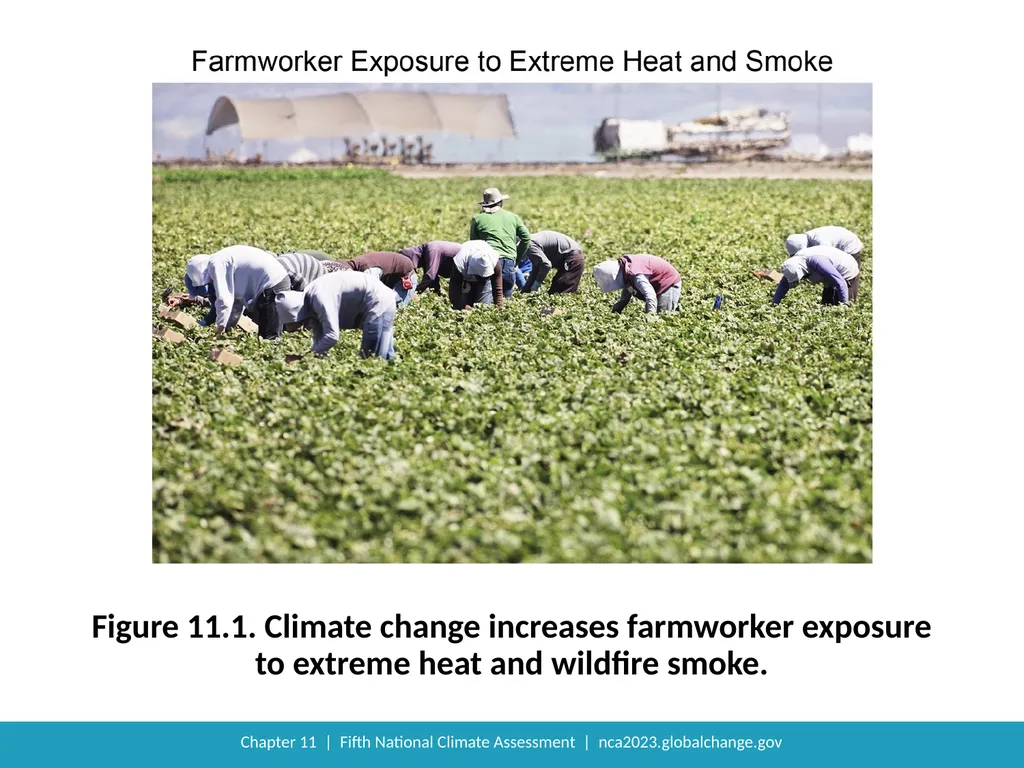
Climate Change Disrupts Our Food Systems in Uneven Ways Climate change is projected to disrupt food systems in ways that reduce the availability and affordability of nutritious food, with uneven economic impacts across society (likely, medium confidence). Impacts of climate change on other measures of human well-being are also distributed unevenly, such as worsening heat stress among farmworkers (high confidence) and disruptions to the ability of subsistence-based peoples to access food through hunting, fishing, and foraging (high confidence). 2<br>
05
Rural Communities Face Unique Challenges and Opportunities Rural communities steward much of the Nation’s land and natural resources, which provide food, bioproducts, and ecosystem services (high confidence). These crucial roles are at risk as climate change compounds existing stressors such as poverty, unemployment, and depopulation (likely, medium confidence). Opportunities exist for rural communities to increase their resilience to climate change and protect rural livelihoods (high confidence). 3<br>
06
Figure 11.1. Climate change increases farmworker exposure to extreme heat and wildfire smoke.<br>
07
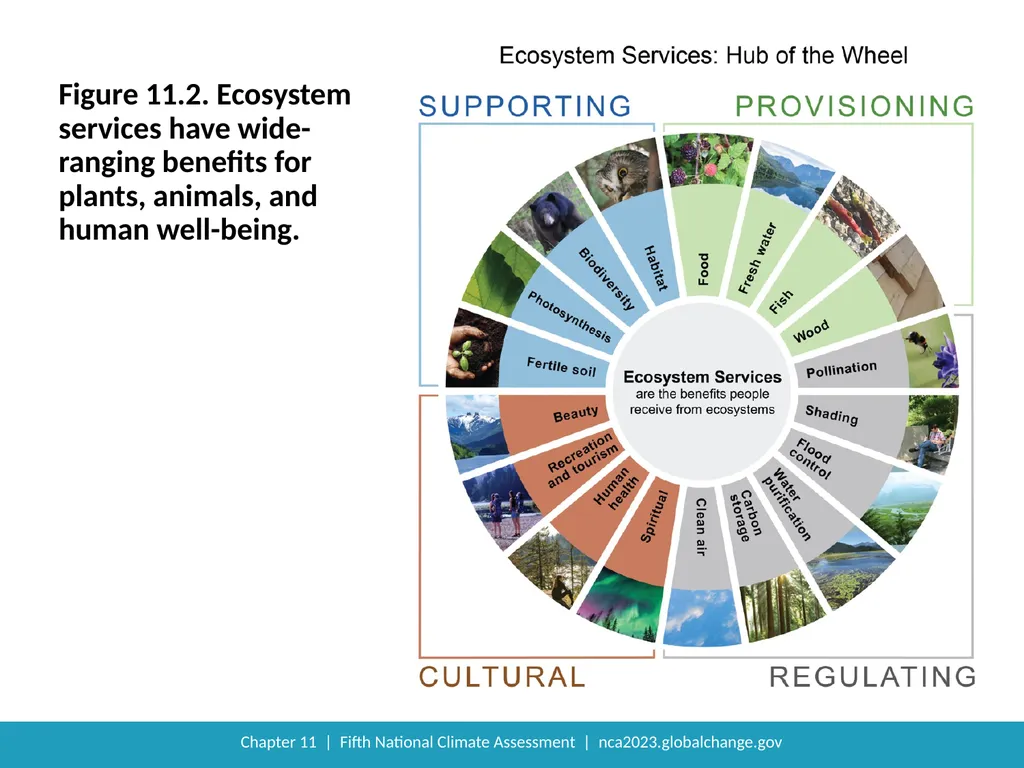
Figure 11.2. Ecosystem services have wide-ranging benefits for plants, animals, and human well-being.<br>
08
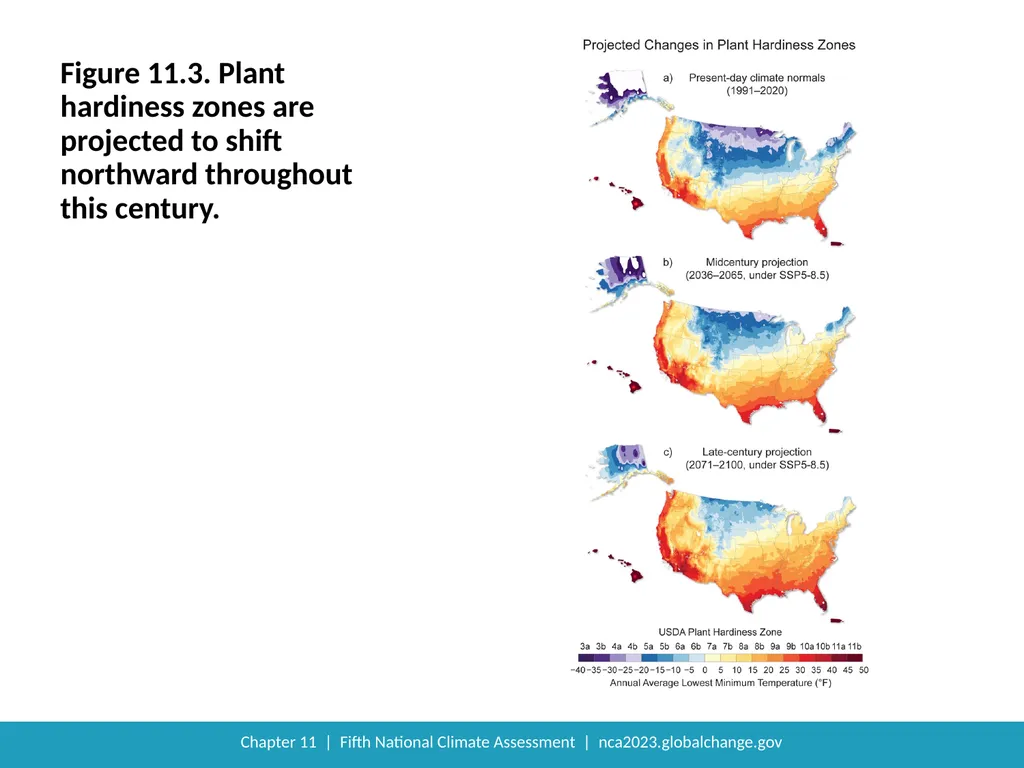
Figure 11.3. Plant hardiness zones are projected to shift northward throughout this century.<br>
09
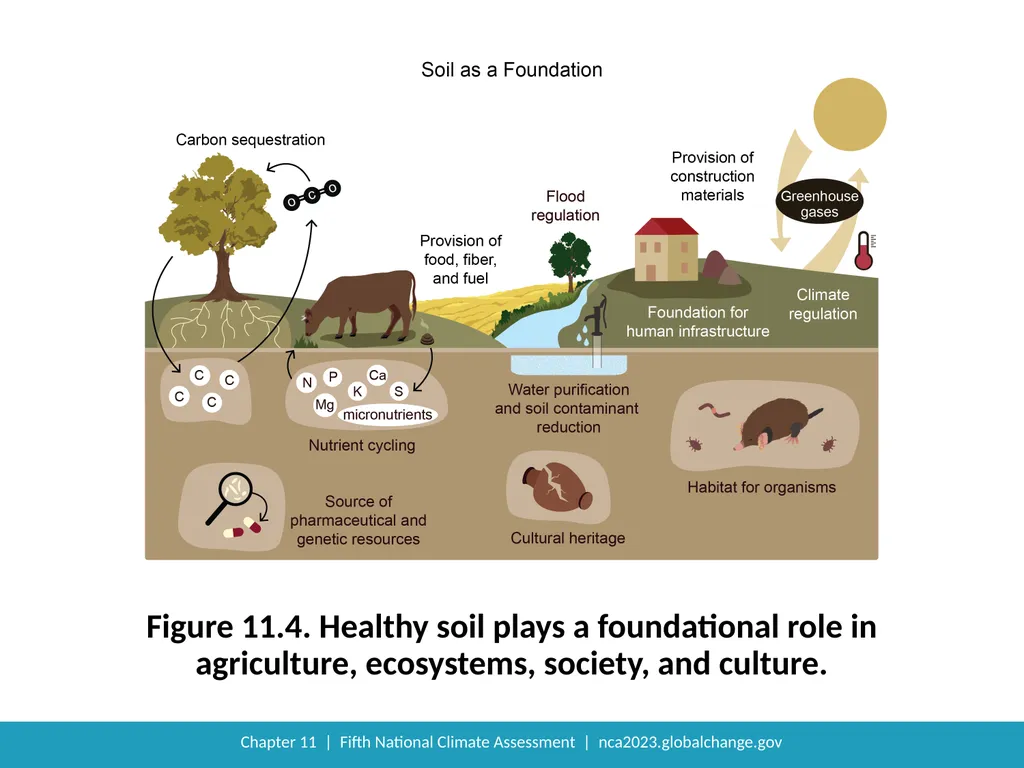
Figure 11.4. Healthy soil plays a foundational role in agriculture, ecosystems, society, and culture.<br>
10
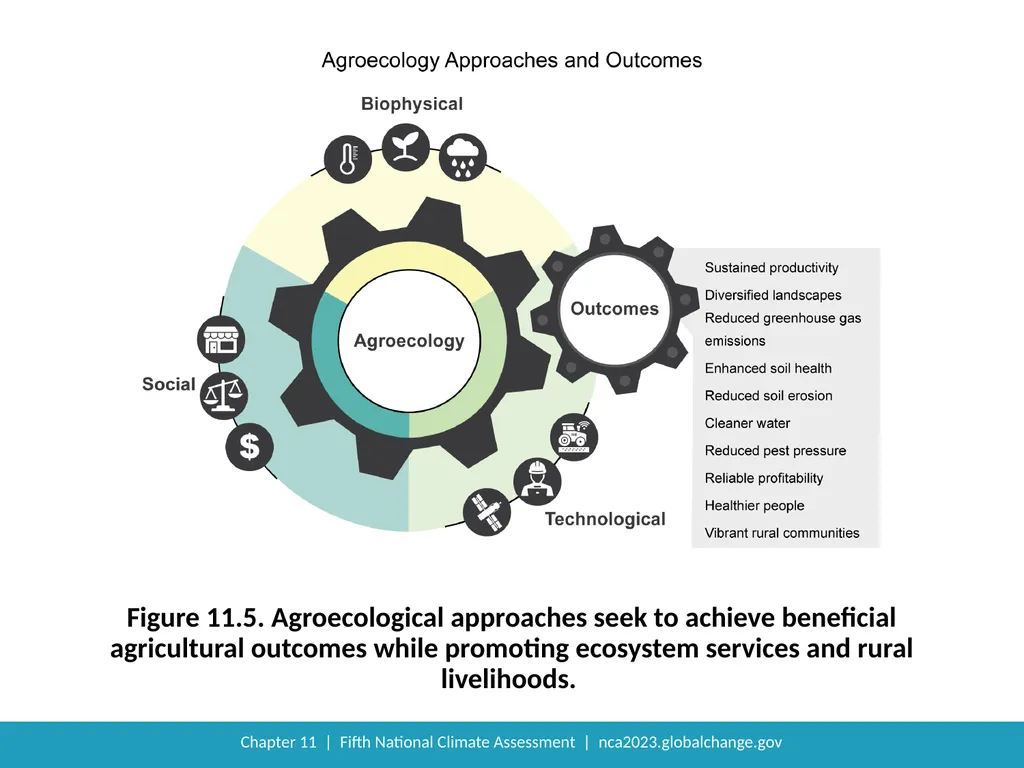
Figure 11.5. Agroecological approaches seek to achieve beneficial agricultural outcomes while promoting ecosystem services and rural livelihoods.<br>
11
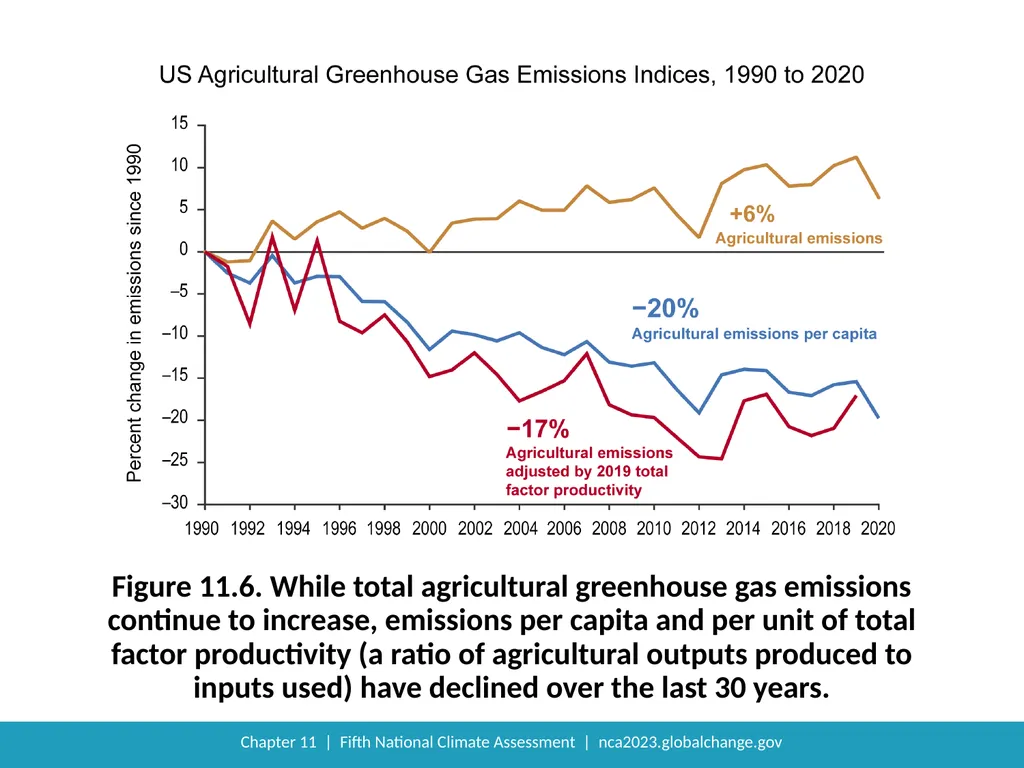
Figure 11.6. While total agricultural greenhouse gas emissions continue to increase, emissions per capita and per unit of total factor productivity (a ratio of agricultural outputs produced to inputs used) have declined over the last 30 years.<br>
12
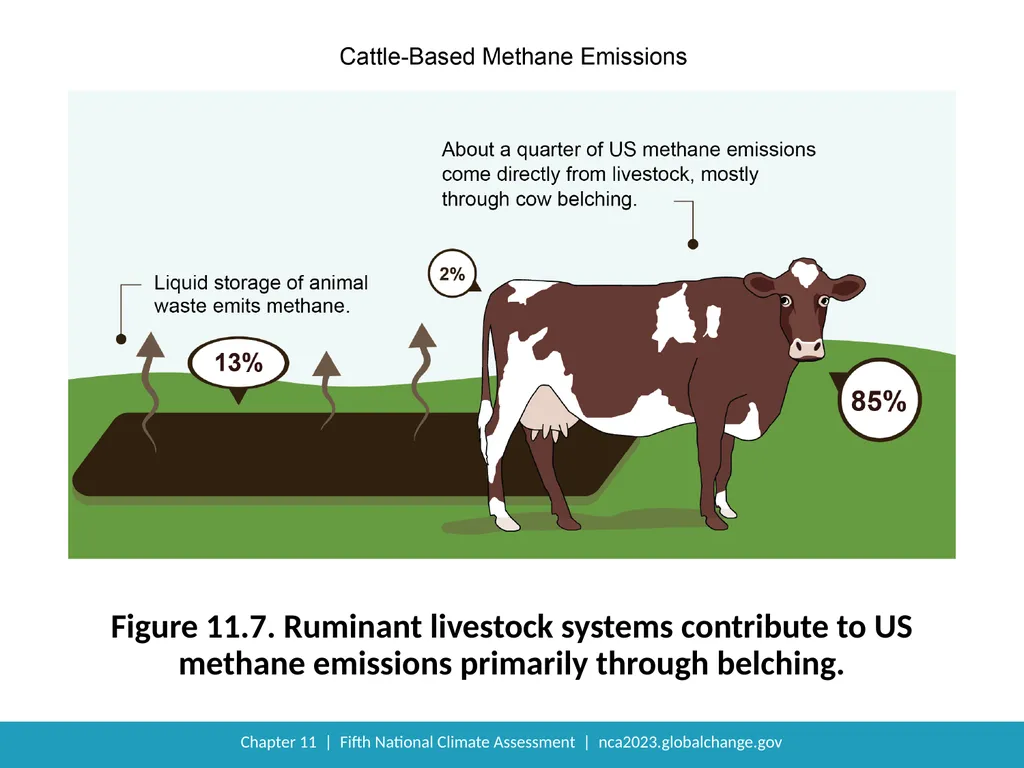
Figure 11.7. Ruminant livestock systems contribute to US methane emissions primarily through belching.<br>
13
Figure 11.8. Greenhouse gas emissions from protein production vary greatly according to food type.<br>
14
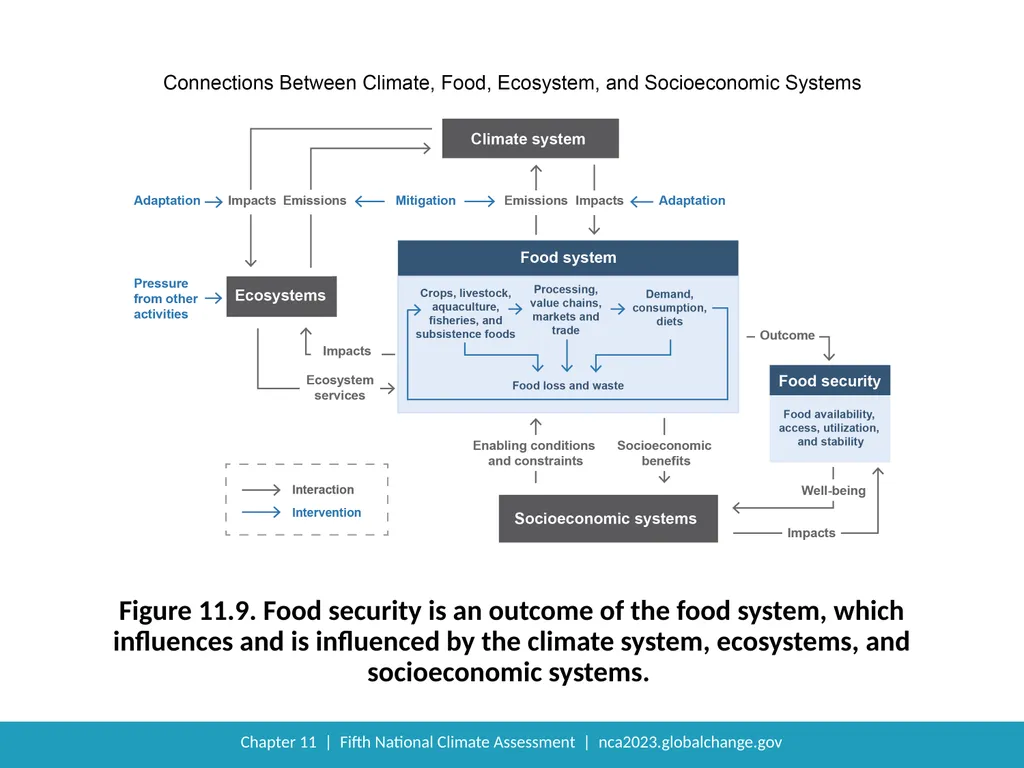
Figure 11.9. Food security is an outcome of the food system, which influences and is influenced by the climate system, ecosystems, and socioeconomic systems.<br>
15
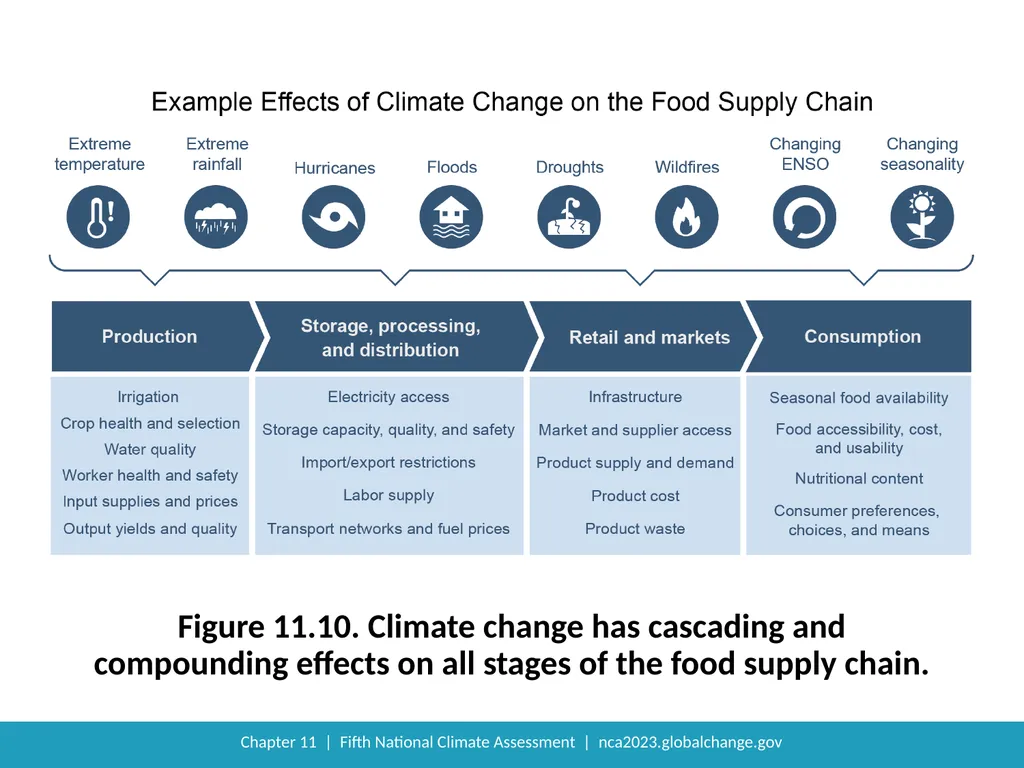
Figure 11.10. Climate change has cascading and compounding effects on all stages of the food supply chain.<br>
16
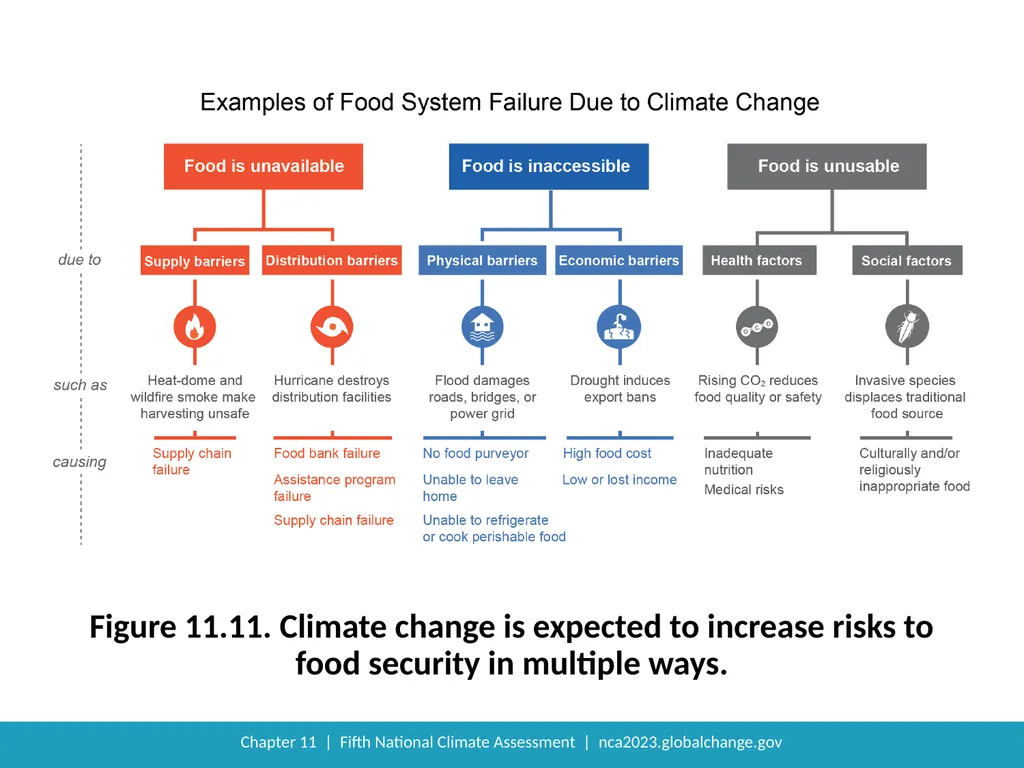
Figure 11.11. Climate change is expected to increase risks to food security in multiple ways.<br>
17
Figure 11.12. Greenhouse gas emissions differ by stage of the food supply chain.<br>
18
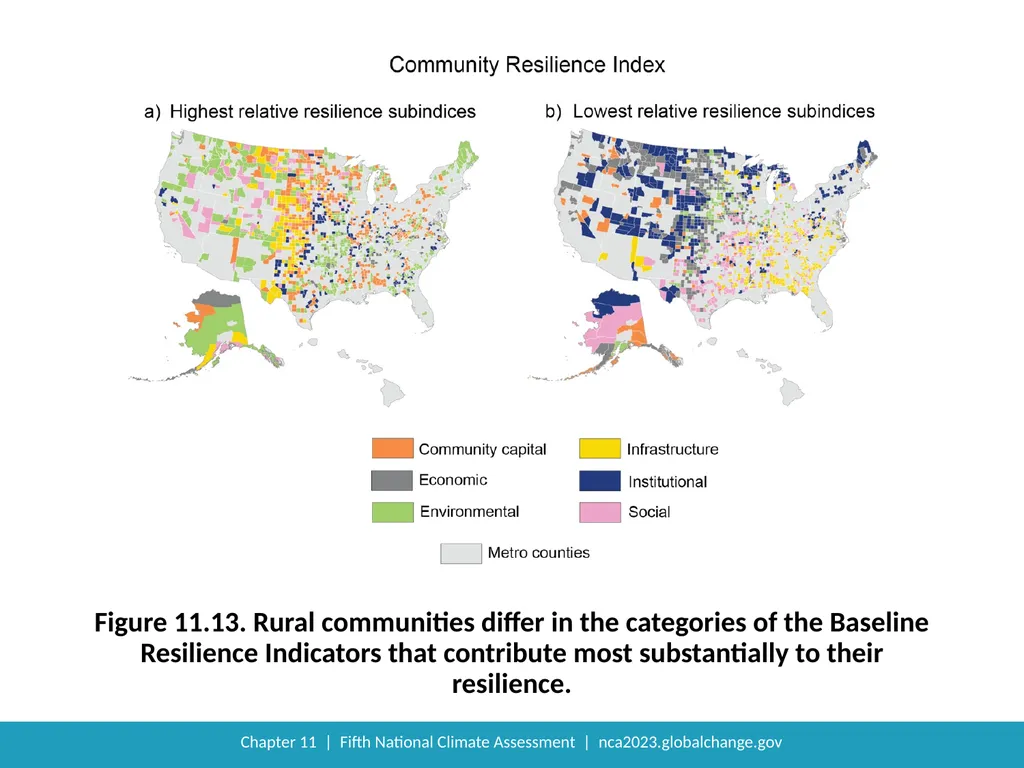
Figure 11.13. Rural communities differ in the categories of the Baseline Resilience Indicators that contribute most substantially to their resilience.<br>
19
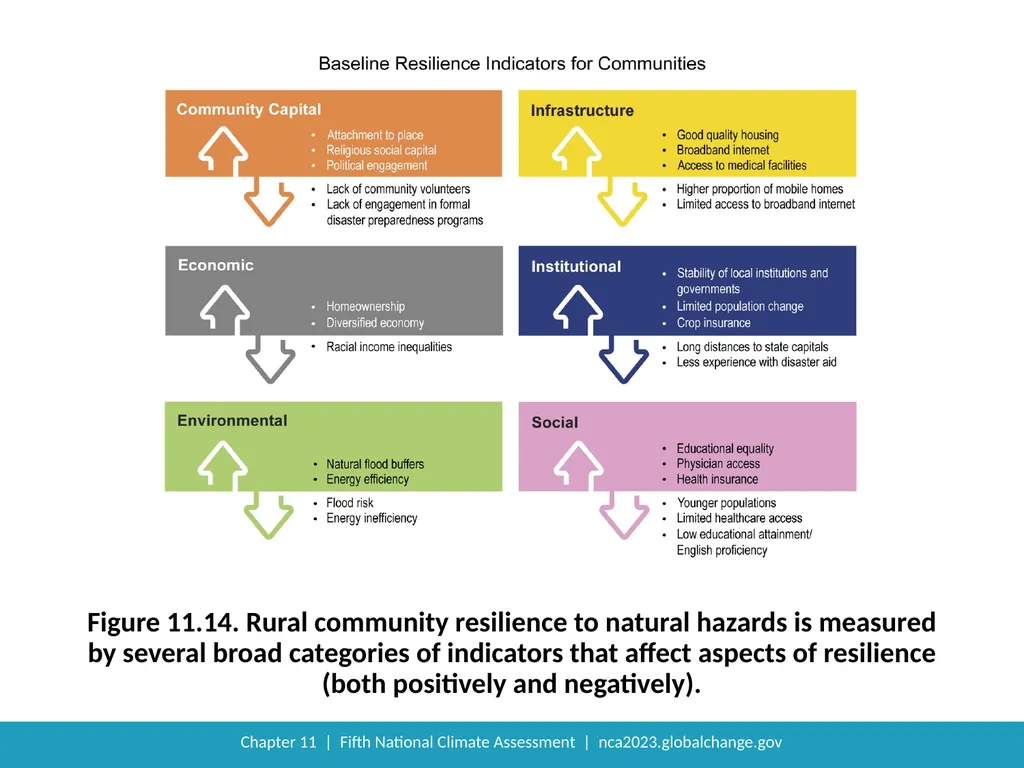
Figure 11.14. Rural community resilience to natural hazards is measured by several broad categories of indicators that affect aspects of resilience (both positively and negatively).<br>
20
Federal Coordinating Lead Author
Rob Mitchell, USDA Agricultural Research Service
Chapter Lead
Carl H. Bolster, USDA Agricultural Research Service
Agency Chapter Lead Author
Andrew Kitts, NOAA Fisheries, Office of Science and Technology
Chapter Authors
Amber Campbell, USDA National Institute of Food and Agriculture
Michael Cosh, USDA Agricultural Research Service, Hydrology and Remote Sensing Laboratory
Tracey L. Farrigan, USDA Economic Research Service
Alan J. Franzluebbers, USDA Agricultural Research Service
David L. Hoover, USDA Agricultural Research Service
Virginia L. Jin, USDA Agricultural Research Service
Dannele E. Peck, USDA Agricultural Research Service, Northern Plains Climate Hub
Marty R. Schmer, USDA Agricultural Research Service
Michael D. Smith, National Oceanic and Atmospheric Administration
Review Editor
Omanjana Goswami, Union of Concerned Scientists
USGCRP Coordinators
Christopher W. Avery, US Global Change Research Program / ICF
Samantha Basile, US Global Change Research Program / ICF<br>
21
Bolster, C.H., R. Mitchell, A. Kitts, A. Campbell, M. Cosh, T.L. Farrigan,
A.J. Franzluebbers, D.L. Hoover, V.L. Jin, D.E. Peck, M.R. Schmer, and
M.D. Smith, 2023: Ch. 11. Agriculture, food systems, and rural
communities. In: Fifth National Climate Assessment. Crimmins, A.R.,
C.W. Avery, D.R. Easterling, K.E. Kunkel, B.C. Stewart, and T.K. Maycock,
Eds. U.S. Global Change Research Program, Washington, DC, USA.
https://doi.org/10.7930/NCA5.2023.CH11 https://nca2023.globalchange.gov/chapter/11<br>