NEED ANALYSIS YANUARTI APSARI, M.Pd NEED ANALYSIS WHAT? WHO? WHY? WHEN? WHERE? HOW? WHAT INFORMATION NEED TO BE COLLECTED Who are the students? How about their language abilities? Why they want to learn English? What skill, content and
"NEED ANALYSIS YANUARTI APSARI, M.Pd NEED ANALYSIS" is the property of its rightful owner. Permission is granted to
download and print the materials on this website for personal, non-commercial use only, and to display it
on your personal computer provided you do not modify the materials and that you retain all copyright
notices contained in the materials. By downloading content from our website, you accept the terms of this
agreement.
Presentation Transcript
01
NEED ANALYSIS YANUARTI APSARI, M.Pd<br>
02
NEED ANALYSIS WHAT?
WHO?
WHY?
WHEN?
WHERE?
HOW?<br>
03
WHAT INFORMATION NEED TO BE COLLECTED Who are the students?
How about their language abilities?
Why they want to learn English?
What skill, content and learning experience that they need?<br>
04
THE PURPOSE OF NEED ANALYSIS 1. It provides a means of obtaining wider input into the content, design and implementation of language program
2. it can be used in developing goal, objective and content
3. It can provide data for reviewing and evaluating the program<br>
05
WHO IS THE USER<br>
06
NEED ANALYSIS AND ESP ESP is an approach in Language Teaching in which all decision for the content and method are based on the learners’ need<br>
07
2. WHY WAS ESP INTRODUCED IN TEACHING SITUATION? Because learners are seen to have different need<br>
08
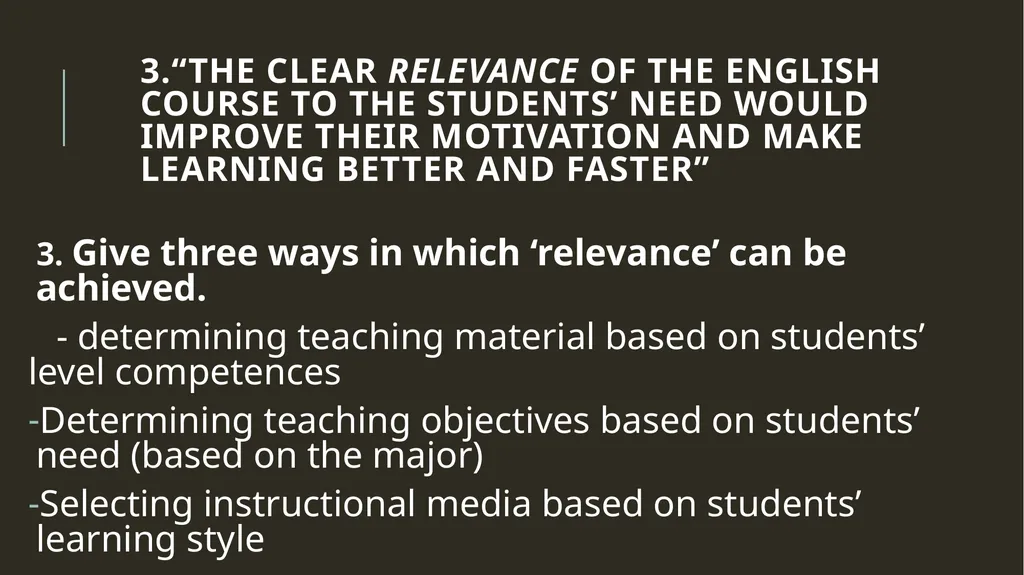
3.“the clear RELEVANCE of the English course to the students’ need would improve their motivation and make learning better and faster” 3. Give three ways in which ‘relevance’ can be achieved.
- determining teaching material based on students’ level competences
Determining teaching objectives based on students’ need (based on the major)
Selecting instructional media based on students’ learning style<br>
09
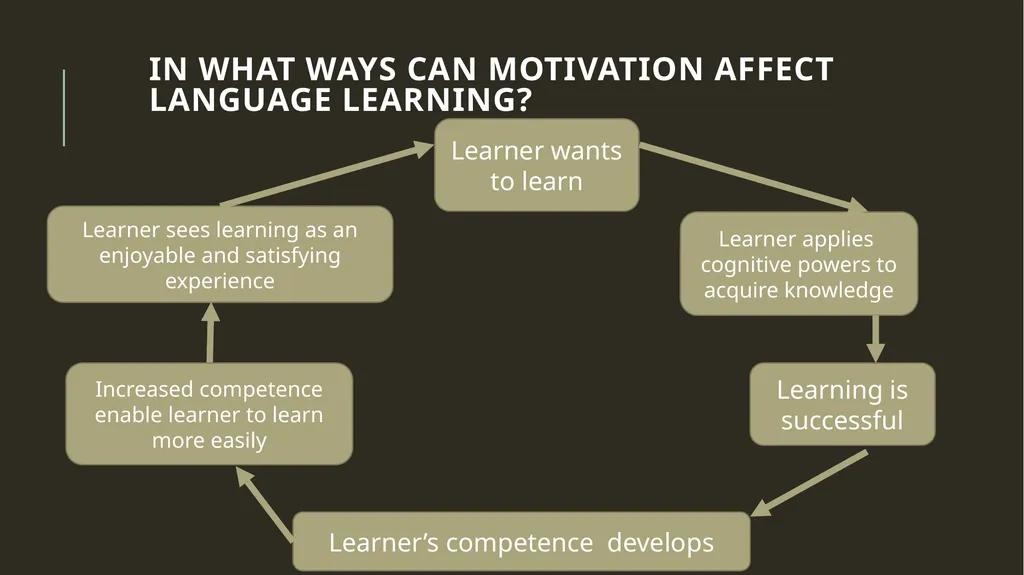
In what ways can motivation affect language learning? Learner wants to learn Learner applies cognitive powers to acquire knowledge Learning is successful Learner’s competence develops Increased competence enable learner to learn more easily Learner sees learning as an enjoyable and satisfying experience<br>
10
4.All language teaching should be based on learners’ need. Thus, in theory there is no difference between ESP and general English teaching. In practice, however, there is a great deal of difference. How far would you agree with this statement?<br>
11
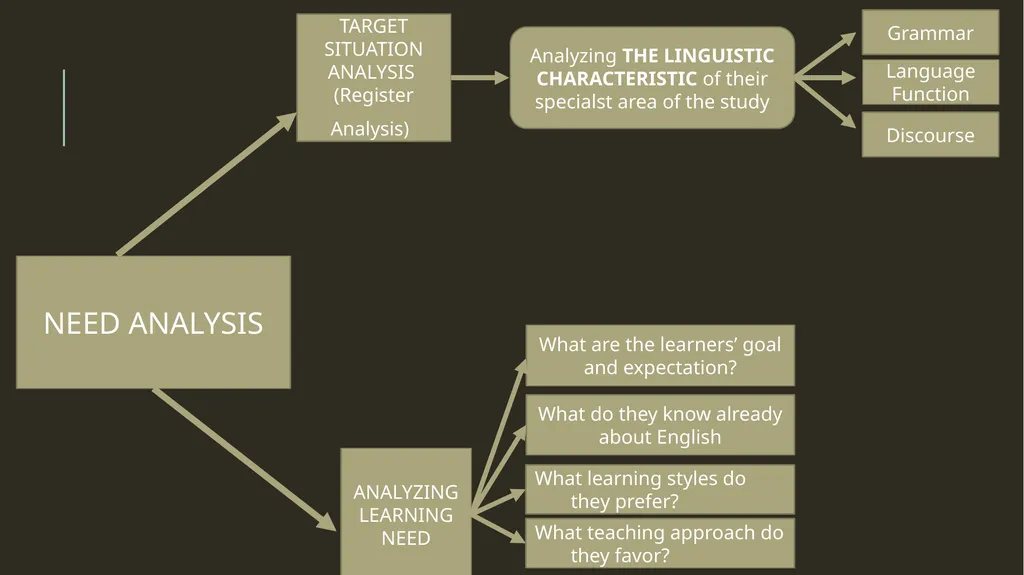
NEED ANALYSIS TARGET SITUATION ANALYSIS
(Register Analysis) ANALYZING LEARNING NEED Analyzing THE LINGUISTIC CHARACTERISTIC of their specialst area of the study Grammar Language Function Discourse What are the learners’ goal and expectation? What do they know already about English What learning styles do they prefer? What teaching approach do they favor?<br>