
Neglect and poverty aware practice 1 Louise



Description: Neglect and poverty aware practice 1 Louise Johnstone Senior Partner Engagement Officer Setting the scene 2 This session is for you, time out to reflect on what is important in your practice and will last around 60 mins. What you do is
Related Topics
Download Presentation
"Neglect and poverty aware practice 1 Louise" is the property of its rightful owner. Permission is granted to download and print the materials on this website for personal, non-commercial use only, and to display it on your personal computer provided you do not modify the materials and that you retain all copyright notices contained in the materials. By downloading content from our website, you accept the terms of this agreement.
Presentation Transcript
slide1. Neglect and poverty aware practice 1 Louise Johnstone
Senior Partner Engagement Officer<br>
slide2. Setting the scene 2 This session is for you, time out to reflect on what is important in your practice and will last around 60 mins.
What you do is incredibly impactful work. Your ability to do it well helps to achieve the best outcomes for those you support.
You, and your professional development, are valuable to them –switching off your phone and emails allows you to focus on that.
Your thoughts, experiences and reflections are an essential part of this session please do share these.<br>
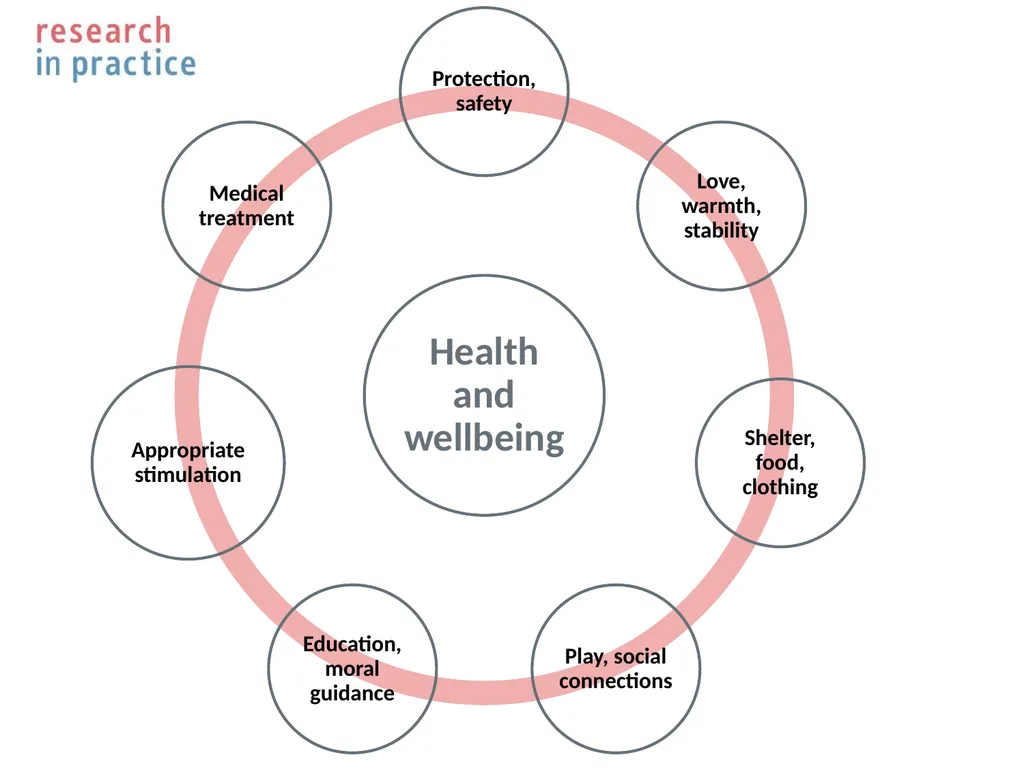
slide3. Definition - neglect Neglect is a multi-dimensional concept, covering a wide range of behaviours that can affect children’s wellbeing and long-term outcomes, including lack of:
meeting basic needs for food and clothing
supervision
support to access public services
nurturing and responsive care (Working Together to Safeguard Children, 2018)<br>
slide5. We know.. Assessing neglect is difficult
It can be subjective and prone to bias
There is a high threshold for recognition
It is difficult to capture and compare
It can be complex and intergenerational (Kyriacou S & Nicholl E., 2019)<br>
slide6. What is the story? Whilst presenting issues may be the same we need to understand why the child’s need are not being responded to.
There may be a range of differing reasons or explanations for why this is.
It is important to understand what is going on ‘the story’ for our response to be effective.
Exercising professional curiosity, building relationships, fostering confidence and trust is vital to this.<br>
slide7. Reflecting on the impact What different explanations might there be, for example, for me not taking my child to the doctors surgery?
What steps might you take to understand my story? 7<br>
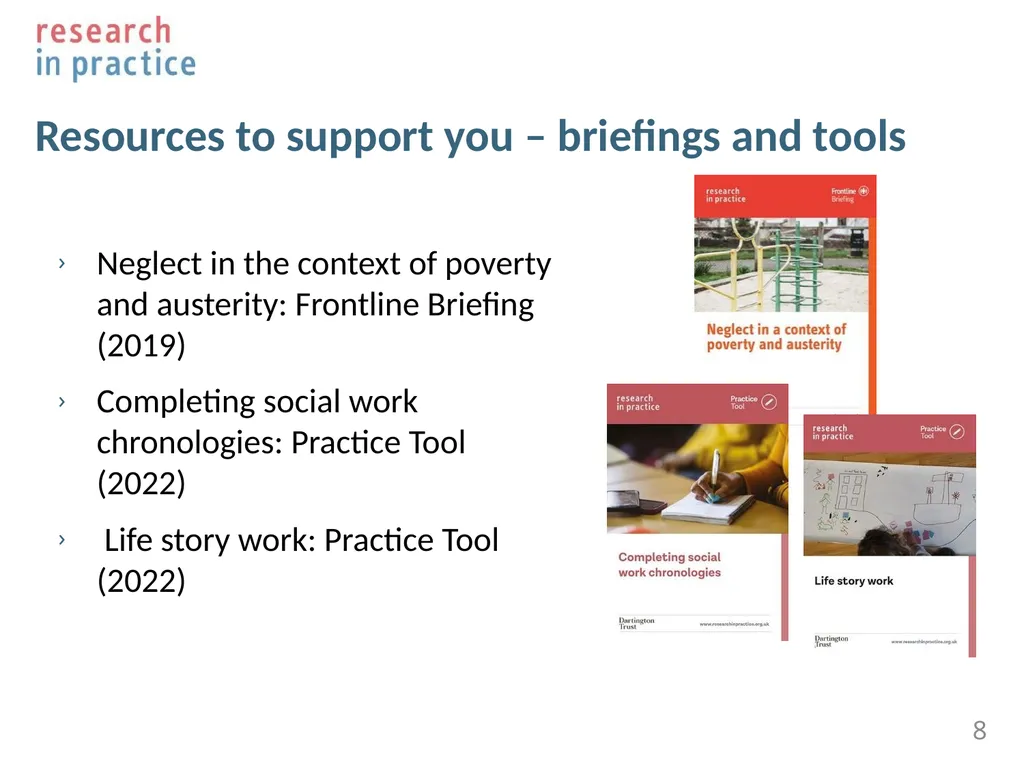
slide8. Resources to support you – briefings and tools Neglect in the context of poverty and austerity: Frontline Briefing (2019)
Completing social work chronologies: Practice Tool (2022)
Life story work: Practice Tool (2022) 8<br>
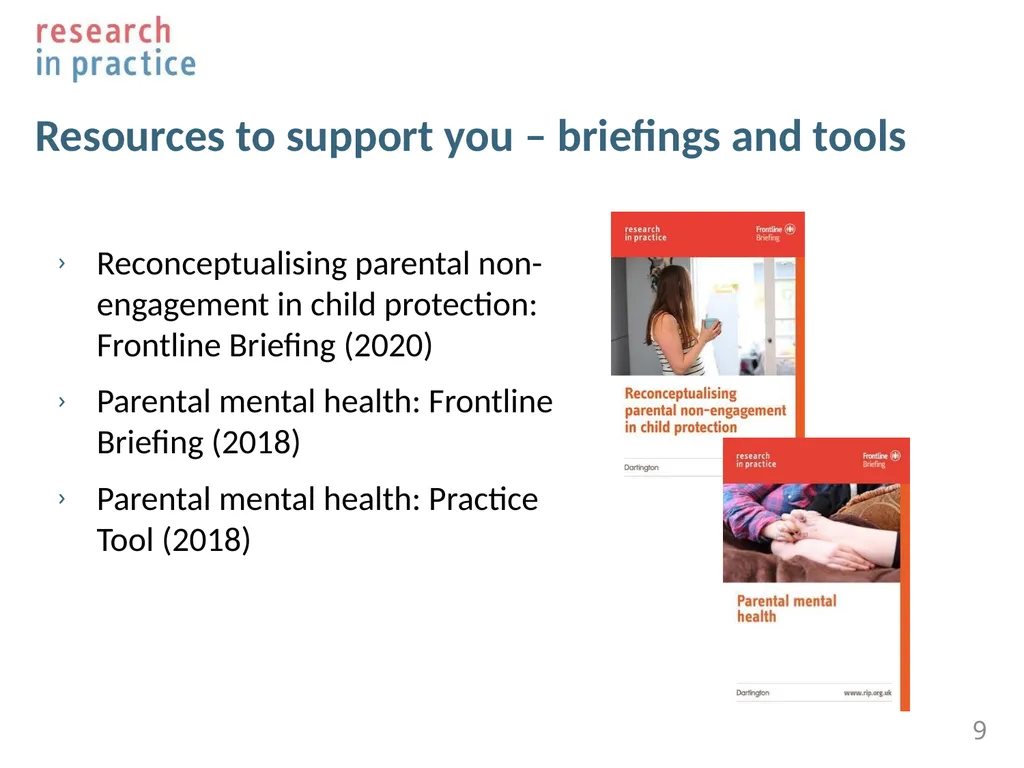
slide9. Resources to support you – briefings and tools Reconceptualising parental non-engagement in child protection: Frontline Briefing (2020)
Parental mental health: Frontline Briefing (2018)
Parental mental health: Practice Tool (2018) 9<br>
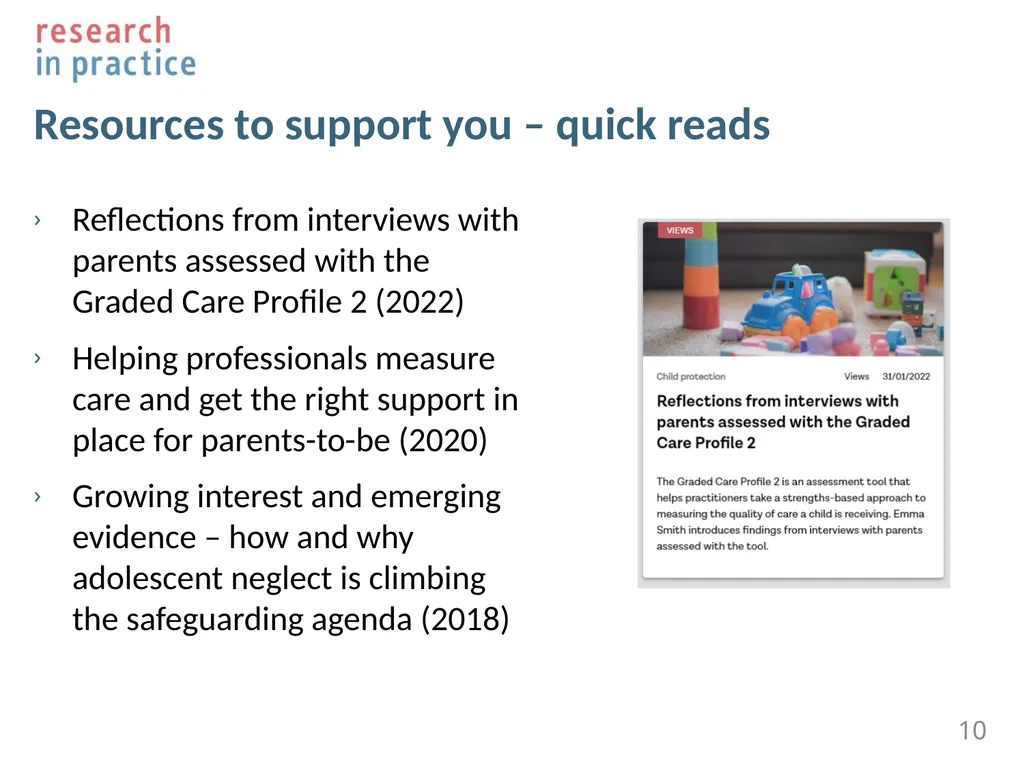
slide10. Resources to support you – quick reads Reflections from interviews with parents assessed with the Graded Care Profile 2 (2022)
Helping professionals measure care and get the right support in place for parents-to-be (2020)
Growing interest and emerging evidence – how and why adolescent neglect is climbing the safeguarding agenda (2018) 10<br>
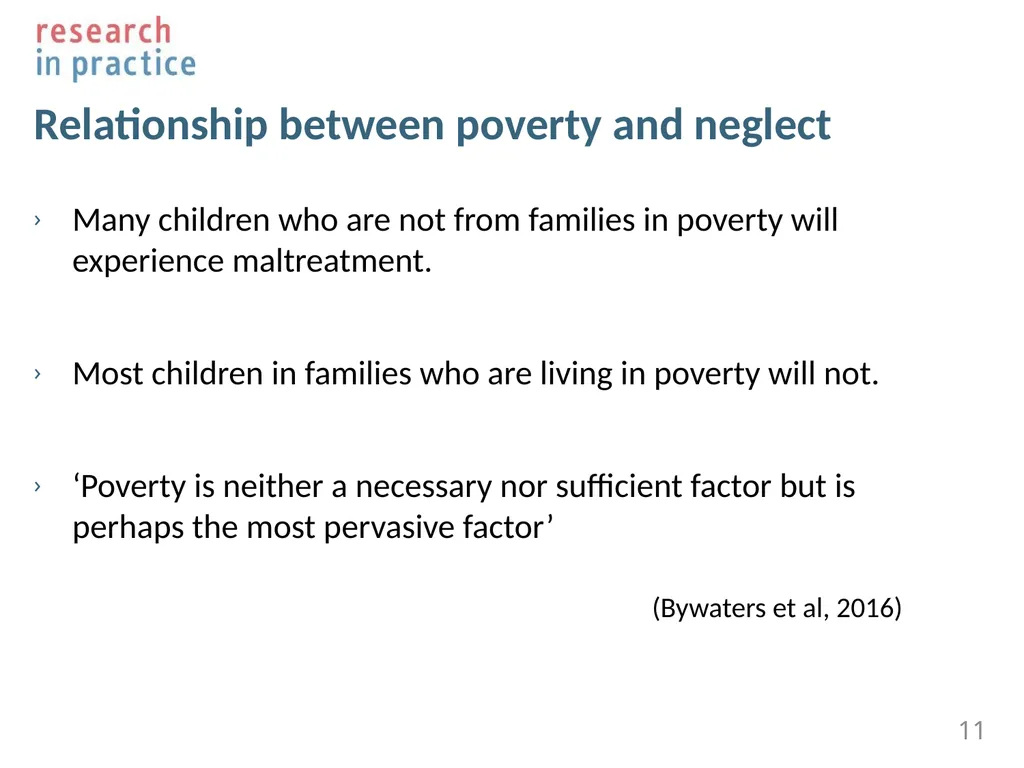
slide11. Relationship between poverty and neglect Many children who are not from families in poverty will experience maltreatment.
Most children in families who are living in poverty will not.
‘Poverty is neither a necessary nor sufficient factor but is perhaps the most pervasive factor’ 11 (Bywaters et al, 2016)<br>
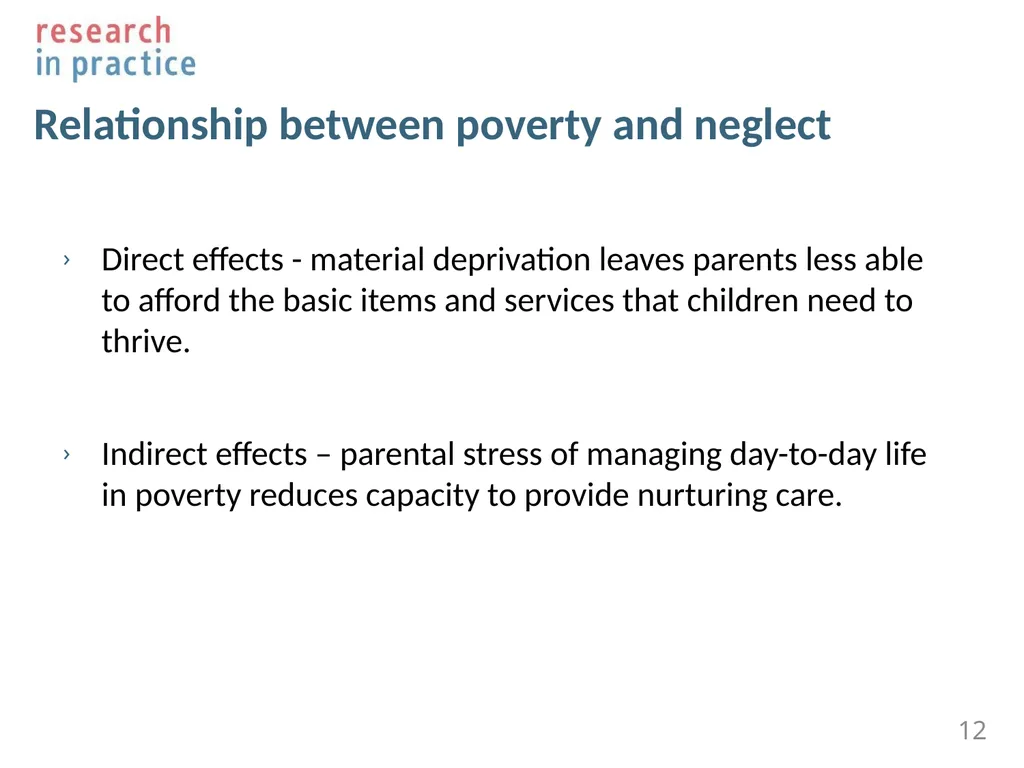
slide12. Relationship between poverty and neglect Direct effects - material deprivation leaves parents less able to afford the basic items and services that children need to thrive.
Indirect effects – parental stress of managing day-to-day life in poverty reduces capacity to provide nurturing care. 12<br>
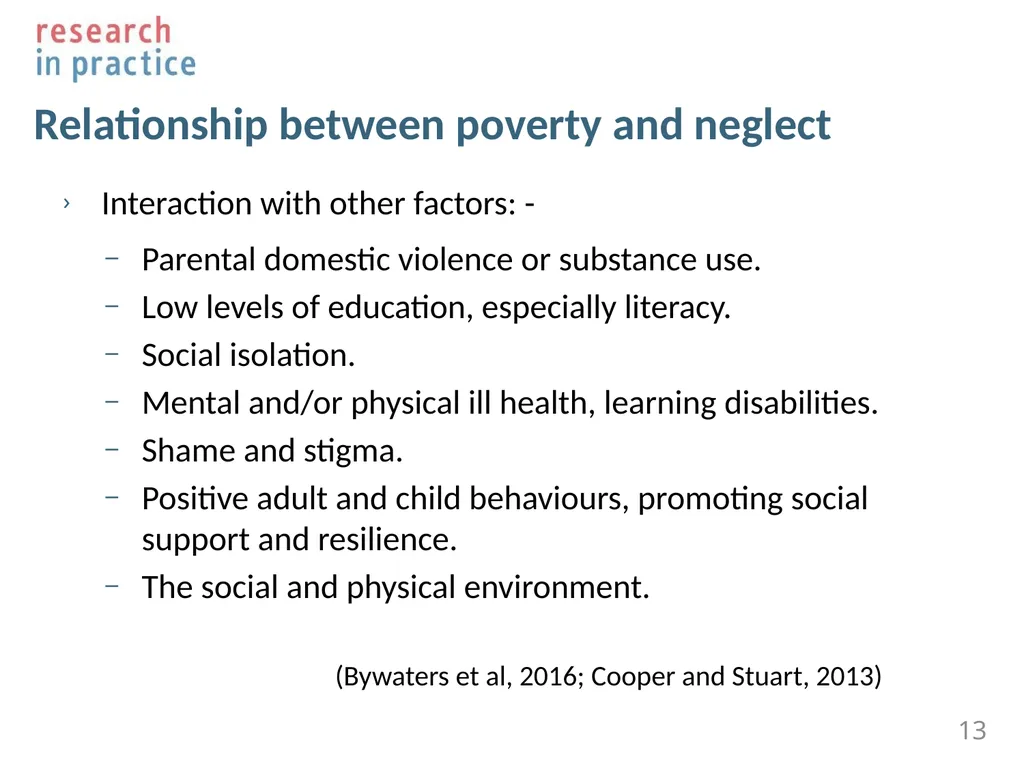
slide13. Relationship between poverty and neglect Interaction with other factors: -
Parental domestic violence or substance use.
Low levels of education, especially literacy.
Social isolation.
Mental and/or physical ill health, learning disabilities.
Shame and stigma.
Positive adult and child behaviours, promoting social support and resilience.
The social and physical environment. 13 (Bywaters et al, 2016; Cooper and Stuart, 2013)<br>
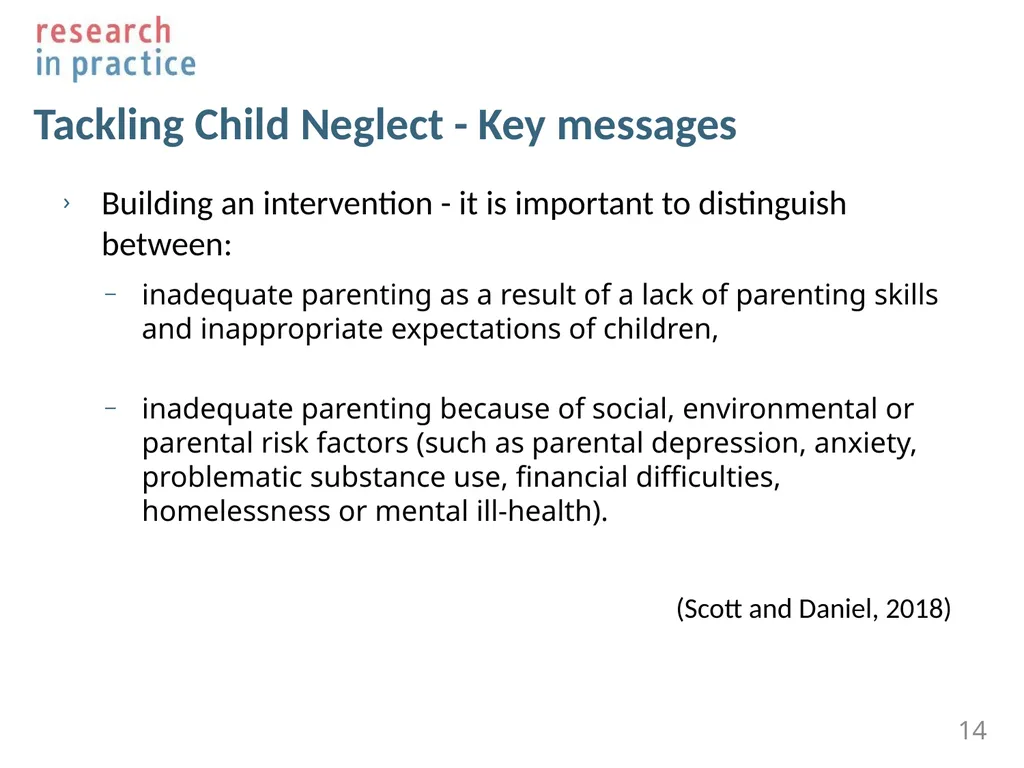
slide14. Tackling Child Neglect - Key messages Building an intervention - it is important to distinguish between:
inadequate parenting as a result of a lack of parenting skills and inappropriate expectations of children,
inadequate parenting because of social, environmental or parental risk factors (such as parental depression, anxiety, problematic substance use, financial difficulties, homelessness or mental ill-health).
(Scott and Daniel, 2018) 14<br>
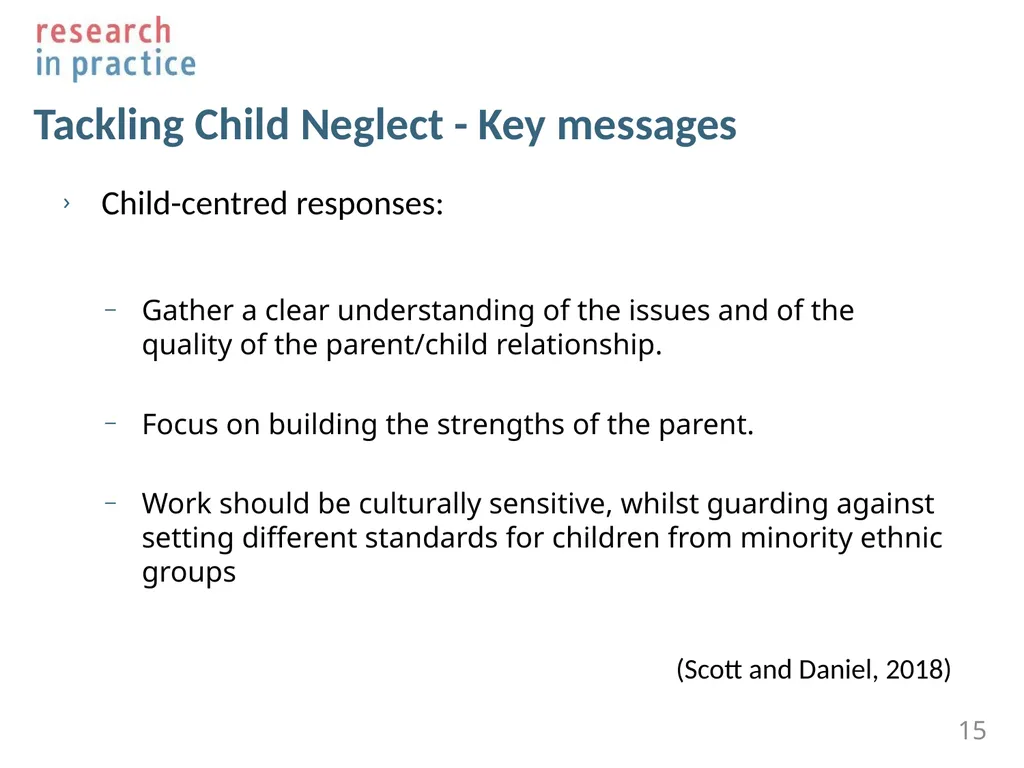
slide15. Tackling Child Neglect - Key messages Child-centred responses:
Gather a clear understanding of the issues and of the quality of the parent/child relationship.
Focus on building the strengths of the parent.
Work should be culturally sensitive, whilst guarding against setting different standards for children from minority ethnic groups
(Scott and Daniel, 2018) 15<br>
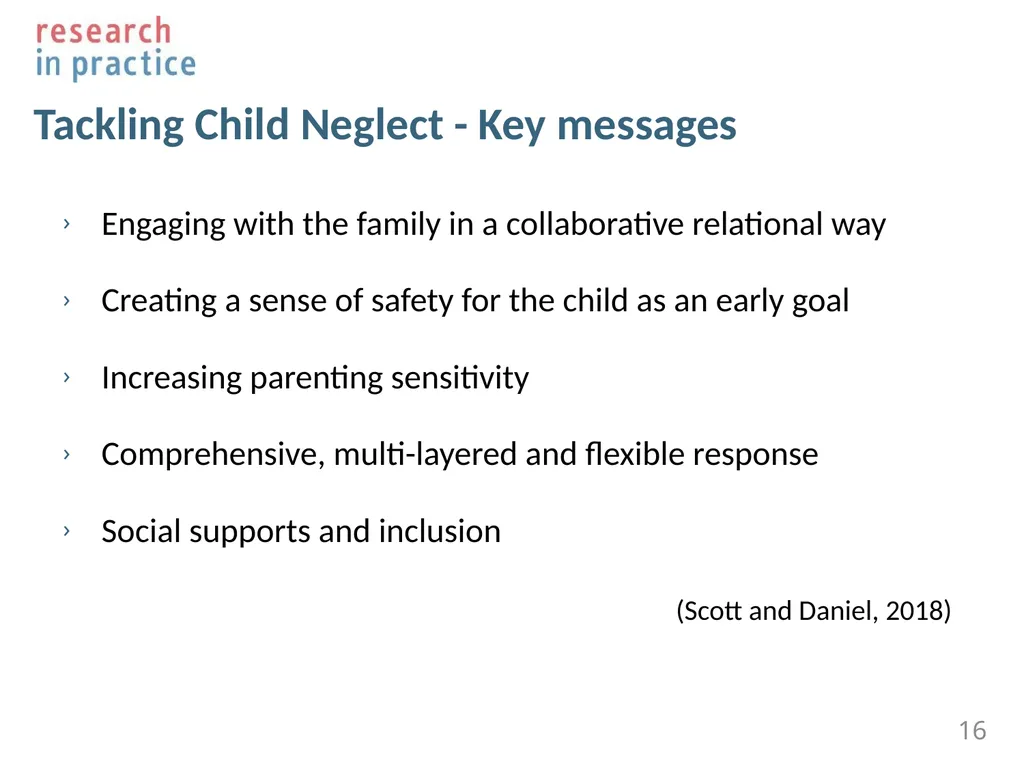
slide16. Tackling Child Neglect - Key messages Engaging with the family in a collaborative relational way
Creating a sense of safety for the child as an early goal
Increasing parenting sensitivity
Comprehensive, multi-layered and flexible response
Social supports and inclusion
(Scott and Daniel, 2018) 16<br>
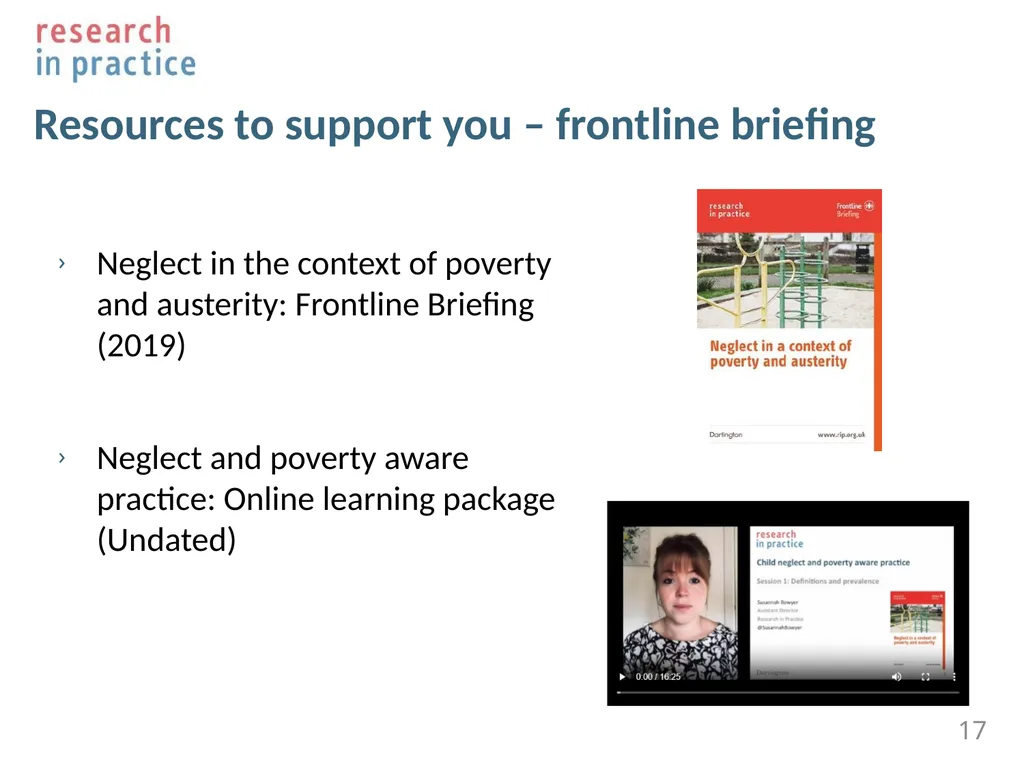
slide17. Resources to support you – frontline briefing Neglect in the context of poverty and austerity: Frontline Briefing (2019)
Neglect and poverty aware practice: Online learning package (Undated) 17<br>
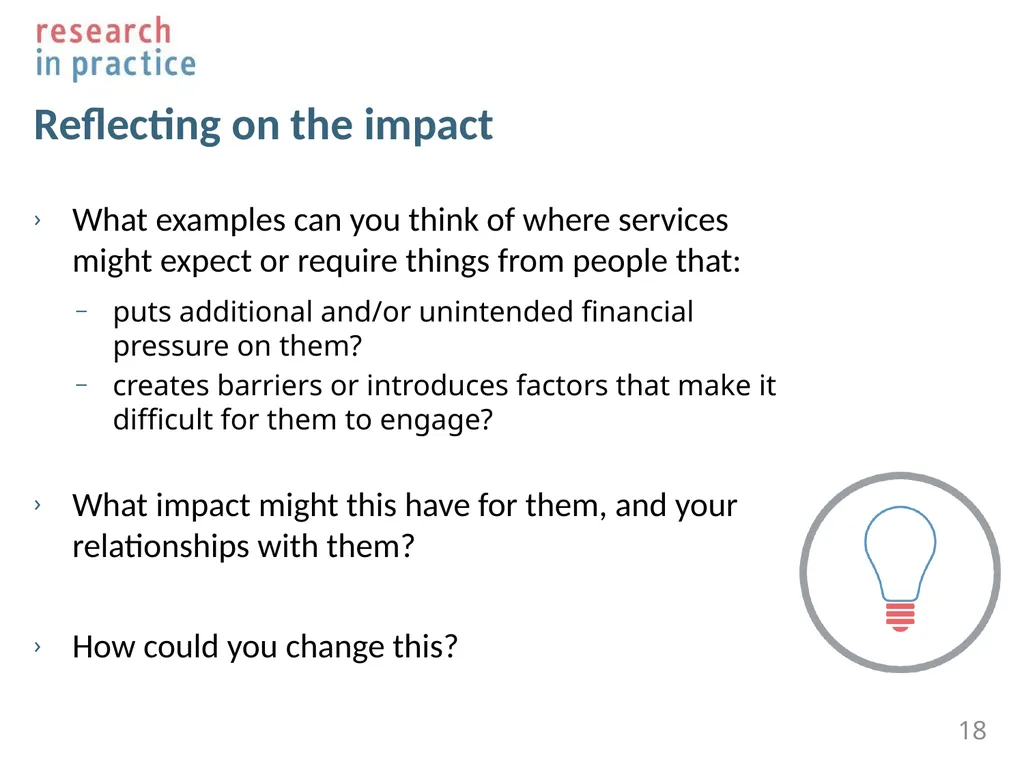
slide18. Reflecting on the impact What examples can you think of where services might expect or require things from people that:
puts additional and/or unintended financial pressure on them?
creates barriers or introduces factors that make it difficult for them to engage?
What impact might this have for them, and your relationships with them?
How could you change this? 18<br>
slide19. 19 Thank you<br>
Senior Partner Engagement Officer<br>
slide2. Setting the scene 2 This session is for you, time out to reflect on what is important in your practice and will last around 60 mins.
What you do is incredibly impactful work. Your ability to do it well helps to achieve the best outcomes for those you support.
You, and your professional development, are valuable to them –switching off your phone and emails allows you to focus on that.
Your thoughts, experiences and reflections are an essential part of this session please do share these.<br>
slide3. Definition - neglect Neglect is a multi-dimensional concept, covering a wide range of behaviours that can affect children’s wellbeing and long-term outcomes, including lack of:
meeting basic needs for food and clothing
supervision
support to access public services
nurturing and responsive care (Working Together to Safeguard Children, 2018)<br>
slide5. We know.. Assessing neglect is difficult
It can be subjective and prone to bias
There is a high threshold for recognition
It is difficult to capture and compare
It can be complex and intergenerational (Kyriacou S & Nicholl E., 2019)<br>
slide6. What is the story? Whilst presenting issues may be the same we need to understand why the child’s need are not being responded to.
There may be a range of differing reasons or explanations for why this is.
It is important to understand what is going on ‘the story’ for our response to be effective.
Exercising professional curiosity, building relationships, fostering confidence and trust is vital to this.<br>
slide7. Reflecting on the impact What different explanations might there be, for example, for me not taking my child to the doctors surgery?
What steps might you take to understand my story? 7<br>
slide8. Resources to support you – briefings and tools Neglect in the context of poverty and austerity: Frontline Briefing (2019)
Completing social work chronologies: Practice Tool (2022)
Life story work: Practice Tool (2022) 8<br>
slide9. Resources to support you – briefings and tools Reconceptualising parental non-engagement in child protection: Frontline Briefing (2020)
Parental mental health: Frontline Briefing (2018)
Parental mental health: Practice Tool (2018) 9<br>
slide10. Resources to support you – quick reads Reflections from interviews with parents assessed with the Graded Care Profile 2 (2022)
Helping professionals measure care and get the right support in place for parents-to-be (2020)
Growing interest and emerging evidence – how and why adolescent neglect is climbing the safeguarding agenda (2018) 10<br>
slide11. Relationship between poverty and neglect Many children who are not from families in poverty will experience maltreatment.
Most children in families who are living in poverty will not.
‘Poverty is neither a necessary nor sufficient factor but is perhaps the most pervasive factor’ 11 (Bywaters et al, 2016)<br>
slide12. Relationship between poverty and neglect Direct effects - material deprivation leaves parents less able to afford the basic items and services that children need to thrive.
Indirect effects – parental stress of managing day-to-day life in poverty reduces capacity to provide nurturing care. 12<br>
slide13. Relationship between poverty and neglect Interaction with other factors: -
Parental domestic violence or substance use.
Low levels of education, especially literacy.
Social isolation.
Mental and/or physical ill health, learning disabilities.
Shame and stigma.
Positive adult and child behaviours, promoting social support and resilience.
The social and physical environment. 13 (Bywaters et al, 2016; Cooper and Stuart, 2013)<br>
slide14. Tackling Child Neglect - Key messages Building an intervention - it is important to distinguish between:
inadequate parenting as a result of a lack of parenting skills and inappropriate expectations of children,
inadequate parenting because of social, environmental or parental risk factors (such as parental depression, anxiety, problematic substance use, financial difficulties, homelessness or mental ill-health).
(Scott and Daniel, 2018) 14<br>
slide15. Tackling Child Neglect - Key messages Child-centred responses:
Gather a clear understanding of the issues and of the quality of the parent/child relationship.
Focus on building the strengths of the parent.
Work should be culturally sensitive, whilst guarding against setting different standards for children from minority ethnic groups
(Scott and Daniel, 2018) 15<br>
slide16. Tackling Child Neglect - Key messages Engaging with the family in a collaborative relational way
Creating a sense of safety for the child as an early goal
Increasing parenting sensitivity
Comprehensive, multi-layered and flexible response
Social supports and inclusion
(Scott and Daniel, 2018) 16<br>
slide17. Resources to support you – frontline briefing Neglect in the context of poverty and austerity: Frontline Briefing (2019)
Neglect and poverty aware practice: Online learning package (Undated) 17<br>
slide18. Reflecting on the impact What examples can you think of where services might expect or require things from people that:
puts additional and/or unintended financial pressure on them?
creates barriers or introduces factors that make it difficult for them to engage?
What impact might this have for them, and your relationships with them?
How could you change this? 18<br>
slide19. 19 Thank you<br>