
New Developments in Transactions: Doing it Well
DJ
Published · 25 slides · 0 views
1 / 1

Description
New Developments in Transactions: Doing it Well and Doing it Right Letitia James, New York State Attorney General Emily Stern, Co-Chief, Enforcement Section, Charities Bureau Linda Heinberg, Assistant Attorney General, Transactions Section,
Related Topics
Share
Embed code
Download this presentation From Below
"New Developments in Transactions: Doing it Well" is the property of its rightful owner. Permission is granted to download and print the materials on this website for personal, non-commercial use only, and to display it on your personal computer provided you do not modify the materials and that you retain all copyright notices contained in the materials. By downloading content from our website, you accept the terms of this agreement.
Presentation Transcript
01
New Developments in Transactions:
Doing it Well and Doing it Right Letitia James, New York State Attorney General
Emily Stern, Co-Chief, Enforcement Section, Charities Bureau
Linda Heinberg, Assistant Attorney General, Transactions Section, Charities Bureau
Interchurch Center Conference, New York, N.Y. November 10, 2022 1<br>
Emily Stern, Co-Chief, Enforcement Section, Charities Bureau
Linda Heinberg, Assistant Attorney General, Transactions Section, Charities Bureau
Interchurch Center Conference, New York, N.Y. November 10, 2022 1<br>
02
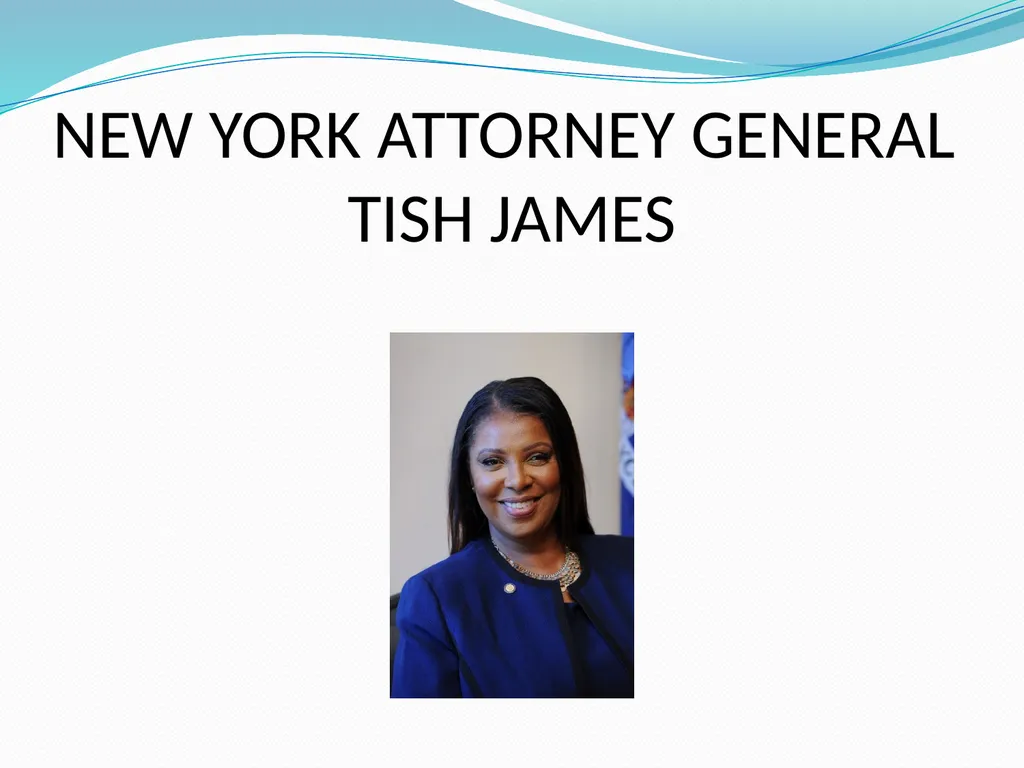
NEW YORK ATTORNEY GENERAL
TISH JAMES<br>
03
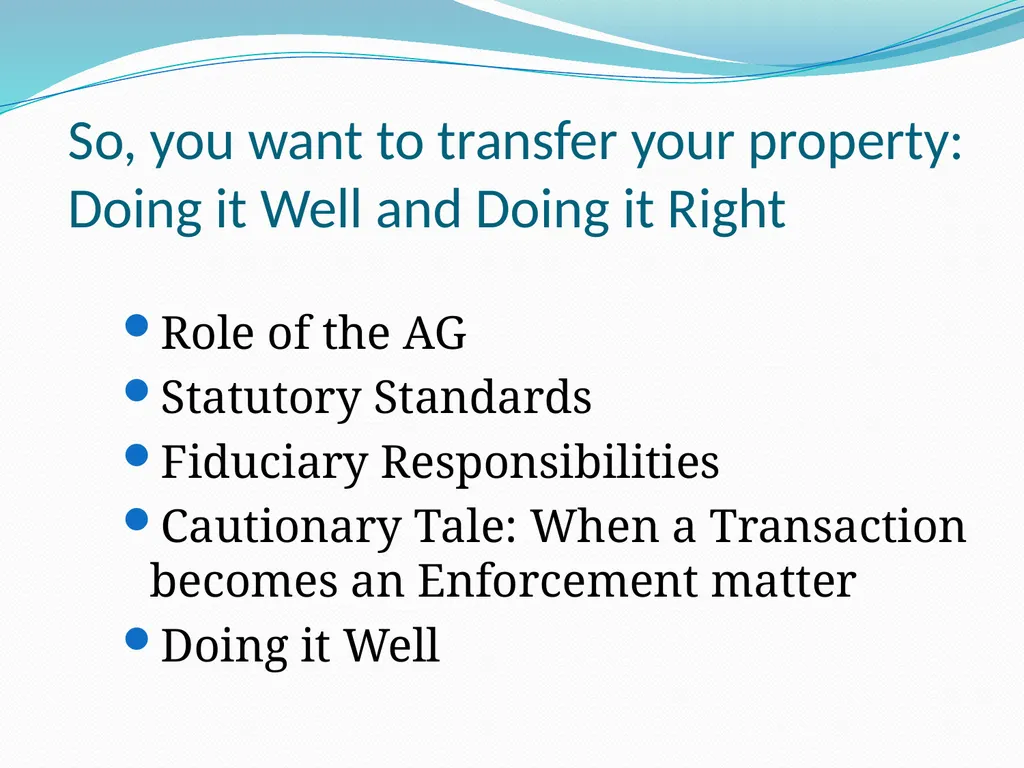
So, you want to transfer your property:
Doing it Well and Doing it Right Role of the AG
Statutory Standards
Fiduciary Responsibilities
Cautionary Tale: When a Transaction becomes an Enforcement matter
Doing it Well<br>
Statutory Standards
Fiduciary Responsibilities
Cautionary Tale: When a Transaction becomes an Enforcement matter
Doing it Well<br>
04
Role of the Attorney General Attorney General James is committed to supporting and protecting the faith-based community.
Statutory responsibility to protect charitable assets, including religious real property, as well as the charitable beneficiaries.
Assure compliance with procedural requirements
Prevent self-dealing, private inurement, private benefit
Protect charities from unfair, unenforceable or one-sided transactions<br>
Statutory responsibility to protect charitable assets, including religious real property, as well as the charitable beneficiaries.
Assure compliance with procedural requirements
Prevent self-dealing, private inurement, private benefit
Protect charities from unfair, unenforceable or one-sided transactions<br>
05
Statutory Standards N.Y. Religious Corporation Law and N.Y. Not-for-Profit Corporation Law require either Court or AG approval for the sale, mortgage or leasing (for over 5 yrs) of religious real property.
Standards for approval: “the consideration and the terms of the transaction are fair and reasonable to the corporation” and “the purposes of the corporation or the interests of the members will be promoted”
Use of Proceeds 5<br>
Standards for approval: “the consideration and the terms of the transaction are fair and reasonable to the corporation” and “the purposes of the corporation or the interests of the members will be promoted”
Use of Proceeds 5<br>
06
Statutory Standards “’The purpose of this requirement is to protect the members of the religious corporation, the real parties in interest, from loss through unwise bargains and from perversion of the use of the property.’” St. Lucy's Cathedral Old Roman Cath. Church v. Sacred Heart of Jesus Eng. Rite Cath. Church, Inc., 189 A.D.3d 909, 911, (2d Dep’t 2020) (quoting Church of God of Prospect Plaza v. Fourth Church of Christ, Scientist, of Brooklyn, 76 A.D.2d 712, 716 (2d Dep’t 1980), affd 54 N.Y.2d 742 (1981)). 6<br>
07
Fiduciary Responsibilities Trustees or persons responsible for the governance of religious charities have duties codified by statute:
to “discharge their respective positions in good faith and the care an ordinarily prudent person in a like position would exercise under similar circumstances.” N.Y. Not-for-Profit Corporation Law § 717
to properly administer the charitable assets of the organization. N.Y. Estates, Powers & Trusts Law § 8-1.4(m)
not to self-deal, including by engaging in related party transactions without disclosure to and approval by the majority of independent members of the governing body of the charity. N.Y. Not-for Profit Corporation Law § 715 and EPTL § 8-1.9 7<br>
to “discharge their respective positions in good faith and the care an ordinarily prudent person in a like position would exercise under similar circumstances.” N.Y. Not-for-Profit Corporation Law § 717
to properly administer the charitable assets of the organization. N.Y. Estates, Powers & Trusts Law § 8-1.4(m)
not to self-deal, including by engaging in related party transactions without disclosure to and approval by the majority of independent members of the governing body of the charity. N.Y. Not-for Profit Corporation Law § 715 and EPTL § 8-1.9 7<br>
08
How Does this Apply: Consider a Cautionary Tale The AG commenced a confidential investigation in late 2017 into seven development projects involving church-owned properties in Harlem and Brooklyn with Moujan Vahdat, a developer. These transactions went unfinished and/or were past due for many years.
Each of these deals had been subject to AG review and were approved by the AG or the Court based on representations made by senior clergy.
The investigation was extensive and entailed review of voluminous records, including emails and text messages between the parties, bank records, testimonial examinations, and interviews with numerous witnesses. 8<br>
Each of these deals had been subject to AG review and were approved by the AG or the Court based on representations made by senior clergy.
The investigation was extensive and entailed review of voluminous records, including emails and text messages between the parties, bank records, testimonial examinations, and interviews with numerous witnesses. 8<br>
09
Documentary and Testimonial Evidence showed that:
Mr. Vahdat had undisclosed financial relationships with senior clergy, who had responsibilities for negotiating, overseeing, and in some instances, approving the development deals with Mr. Vahdat.
Mr. Vahdat gained favor by making donations to the churches
He then gave clergy fees as “finders” and gifts while negotiating and after securing deals. One cleric received more than $600,000 and another received more than $300,000. 9 The Attorney General’s Core Factual Findings<br>
Mr. Vahdat had undisclosed financial relationships with senior clergy, who had responsibilities for negotiating, overseeing, and in some instances, approving the development deals with Mr. Vahdat.
Mr. Vahdat gained favor by making donations to the churches
He then gave clergy fees as “finders” and gifts while negotiating and after securing deals. One cleric received more than $600,000 and another received more than $300,000. 9 The Attorney General’s Core Factual Findings<br>
10
The Attorney General’s Core Factual Findings Mr. Vahdat bestowed significant payments and gifts on the senior clergy while the clergy were responsible for selecting developers, negotiating transactions, seeking necessary court or administrative approvals, and overseeing compliance with the deal terms.
The financial transactions between the clergy and the developer created conflicts of interest and constituted related party transactions. However, the clergy did not, as required by law, provide advance disclosure and obtain a approval of the transactions as fair, reasonable and in the best interests the church by its governing body. 10<br>
The financial transactions between the clergy and the developer created conflicts of interest and constituted related party transactions. However, the clergy did not, as required by law, provide advance disclosure and obtain a approval of the transactions as fair, reasonable and in the best interests the church by its governing body. 10<br>
11
The Attorney General’s Core Factual Findings The clergy allowed the developer to alter or amend protections in the deals, which put churches in vulnerable positions and which were not presented to the AG or Court for approval.
The clergy’s financial relationships with Mr. Vahdat were also not disclosed, as required, to the AG or the court. 11<br>
The clergy’s financial relationships with Mr. Vahdat were also not disclosed, as required, to the AG or the court. 11<br>
12
The Attorney General’s Core Legal Findings The clergy breached their fiduciary duties to the churches in violation of their statutory obligations.
Mr. Vahdat and clergy violated New York law by engaging in undisclosed, unapproved related-party transactions. 12<br>
Mr. Vahdat and clergy violated New York law by engaging in undisclosed, unapproved related-party transactions. 12<br>
13
The AG reached settlements with Bishop Gregory Ingram and Reverend Melvin Wilson requiring:
Financial restitution to their churches
Permanent bars on serving in a fiduciary role in any New York charity or not-for-profit, or from administering charitable assets in New York. (This does not relate to positions that are purely spiritual or ministerial.)
The AG filed a civil enforcement action in NYS Supreme Court against Bishop Kevin Griffin, who is challenging the AG’s claims. 13 The Outcome of the Investigation<br>
Financial restitution to their churches
Permanent bars on serving in a fiduciary role in any New York charity or not-for-profit, or from administering charitable assets in New York. (This does not relate to positions that are purely spiritual or ministerial.)
The AG filed a civil enforcement action in NYS Supreme Court against Bishop Kevin Griffin, who is challenging the AG’s claims. 13 The Outcome of the Investigation<br>
14
The AG reached a settlement with Mr. Vahdat and his related business entities requiring him to make restitution to the churches. 14 The Outcome of the Investigation<br>
15
Structure of the Transactions at Issue The structures of the deals in the AG Investigation resulted in the developer holding title to the properties before he had to perform in full.
Development deals in which organization received small amount of $ at closing, promise of new church space (sanctuary, offices, classrooms, parsonage, etc.) and future cash flow.
Ground Lease
Sale and Leaseback w/promise of renovations 15<br>
Development deals in which organization received small amount of $ at closing, promise of new church space (sanctuary, offices, classrooms, parsonage, etc.) and future cash flow.
Ground Lease
Sale and Leaseback w/promise of renovations 15<br>
16
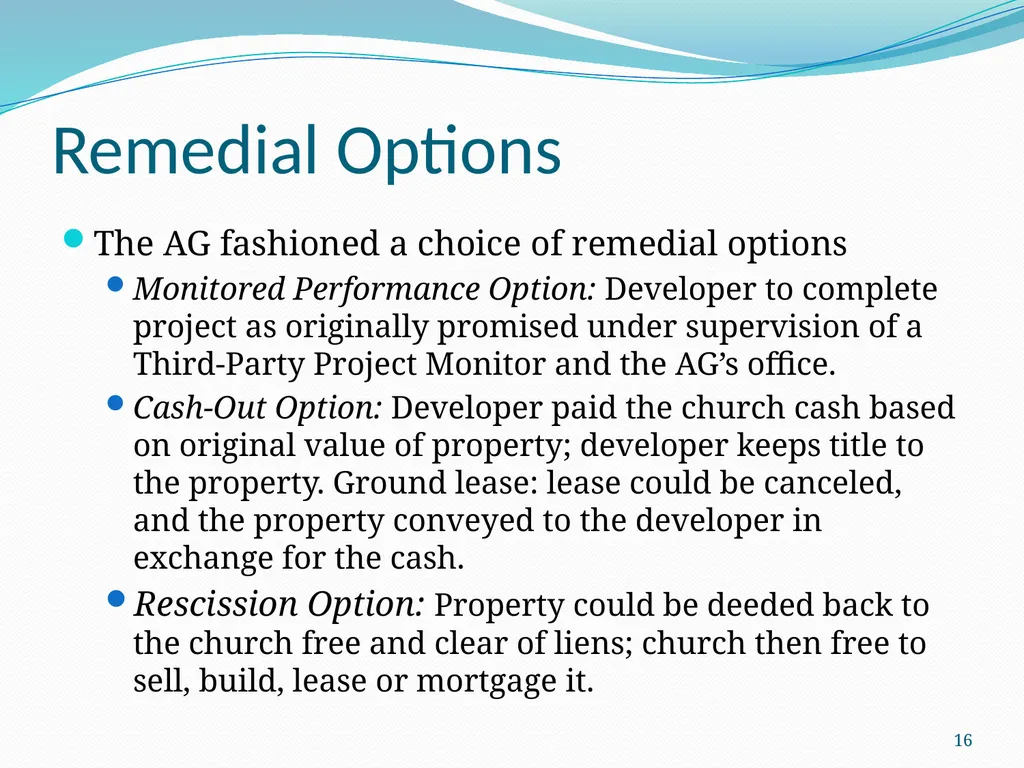
Remedial Options The AG fashioned a choice of remedial options
Monitored Performance Option: Developer to complete project as originally promised under supervision of a Third-Party Project Monitor and the AG’s office.
Cash-Out Option: Developer paid the church cash based on original value of property; developer keeps title to the property. Ground lease: lease could be canceled, and the property conveyed to the developer in exchange for the cash.
Rescission Option: Property could be deeded back to the church free and clear of liens; church then free to sell, build, lease or mortgage it. 16<br>
Monitored Performance Option: Developer to complete project as originally promised under supervision of a Third-Party Project Monitor and the AG’s office.
Cash-Out Option: Developer paid the church cash based on original value of property; developer keeps title to the property. Ground lease: lease could be canceled, and the property conveyed to the developer in exchange for the cash.
Rescission Option: Property could be deeded back to the church free and clear of liens; church then free to sell, build, lease or mortgage it. 16<br>
17
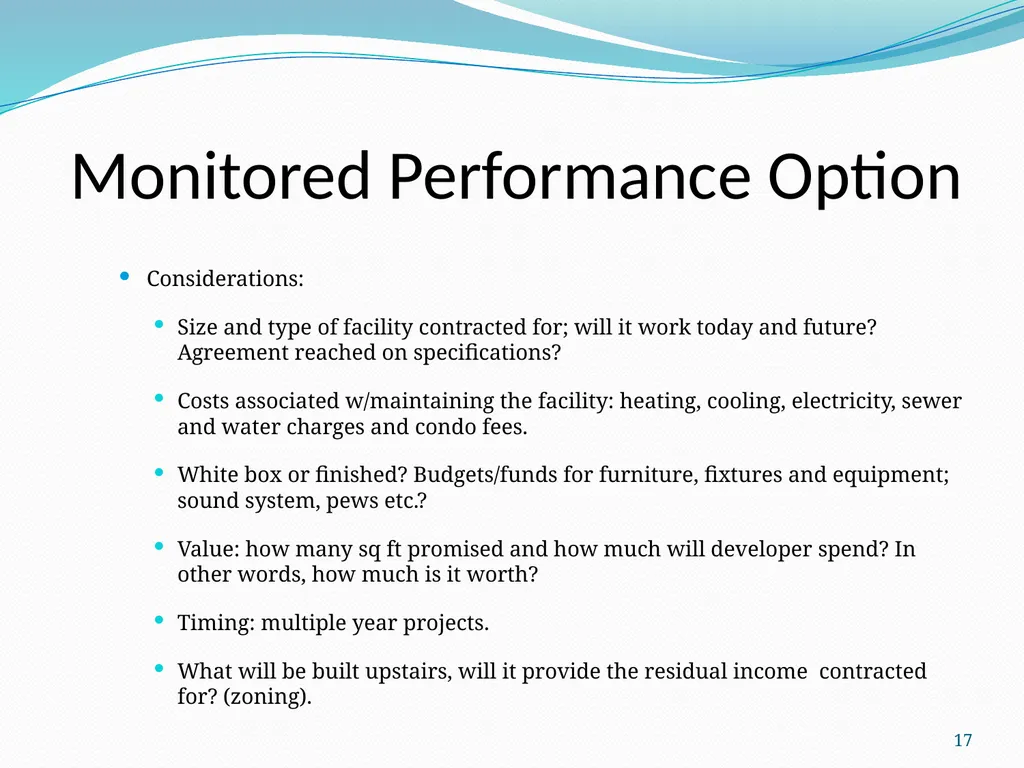
Monitored Performance Option Considerations:
Size and type of facility contracted for; will it work today and future? Agreement reached on specifications?
Costs associated w/maintaining the facility: heating, cooling, electricity, sewer and water charges and condo fees.
White box or finished? Budgets/funds for furniture, fixtures and equipment; sound system, pews etc.?
Value: how many sq ft promised and how much will developer spend? In other words, how much is it worth?
Timing: multiple year projects.
What will be built upstairs, will it provide the residual income contracted for? (zoning). 17<br>
Size and type of facility contracted for; will it work today and future? Agreement reached on specifications?
Costs associated w/maintaining the facility: heating, cooling, electricity, sewer and water charges and condo fees.
White box or finished? Budgets/funds for furniture, fixtures and equipment; sound system, pews etc.?
Value: how many sq ft promised and how much will developer spend? In other words, how much is it worth?
Timing: multiple year projects.
What will be built upstairs, will it provide the residual income contracted for? (zoning). 17<br>
18
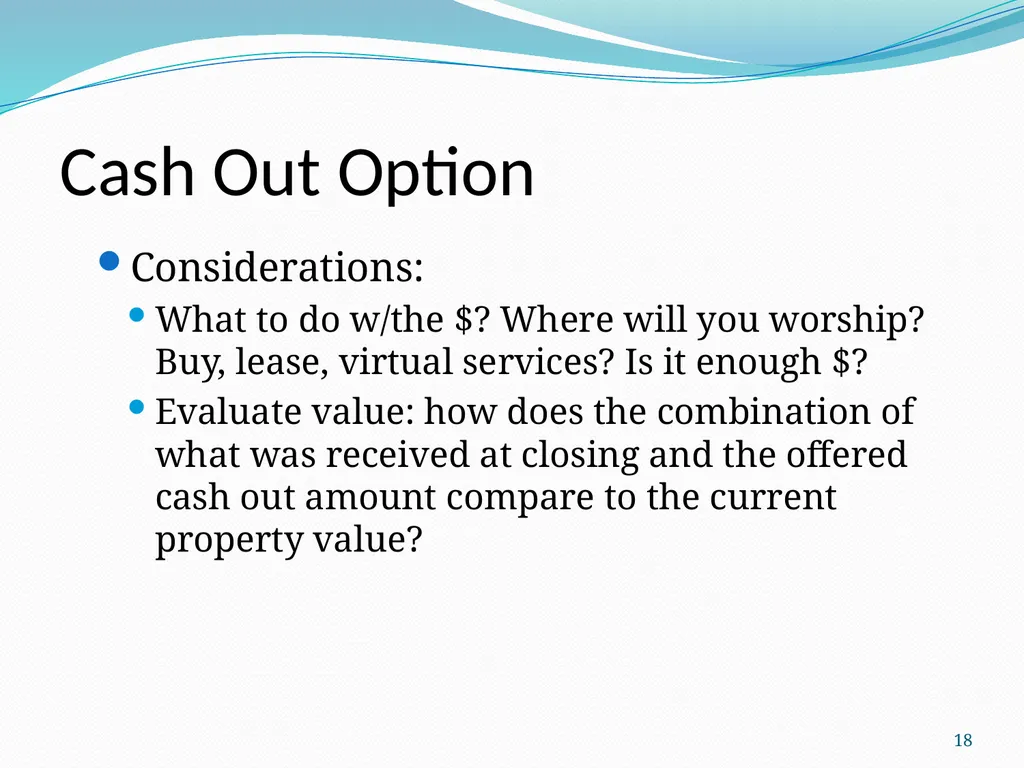
Cash Out Option Considerations:
What to do w/the $? Where will you worship? Buy, lease, virtual services? Is it enough $?
Evaluate value: how does the combination of what was received at closing and the offered cash out amount compare to the current property value? 18<br>
What to do w/the $? Where will you worship? Buy, lease, virtual services? Is it enough $?
Evaluate value: how does the combination of what was received at closing and the offered cash out amount compare to the current property value? 18<br>
19
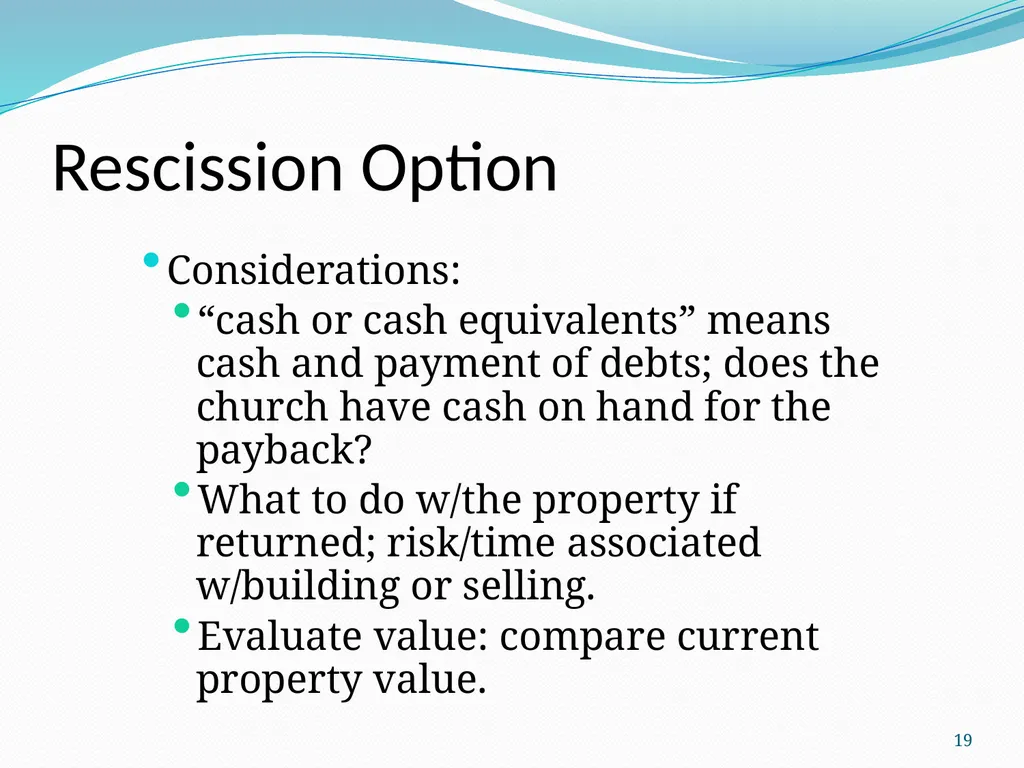
Rescission Option Considerations:
“cash or cash equivalents” means cash and payment of debts; does the church have cash on hand for the payback?
What to do w/the property if returned; risk/time associated w/building or selling.
Evaluate value: compare current property value. 19<br>
“cash or cash equivalents” means cash and payment of debts; does the church have cash on hand for the payback?
What to do w/the property if returned; risk/time associated w/building or selling.
Evaluate value: compare current property value. 19<br>
20
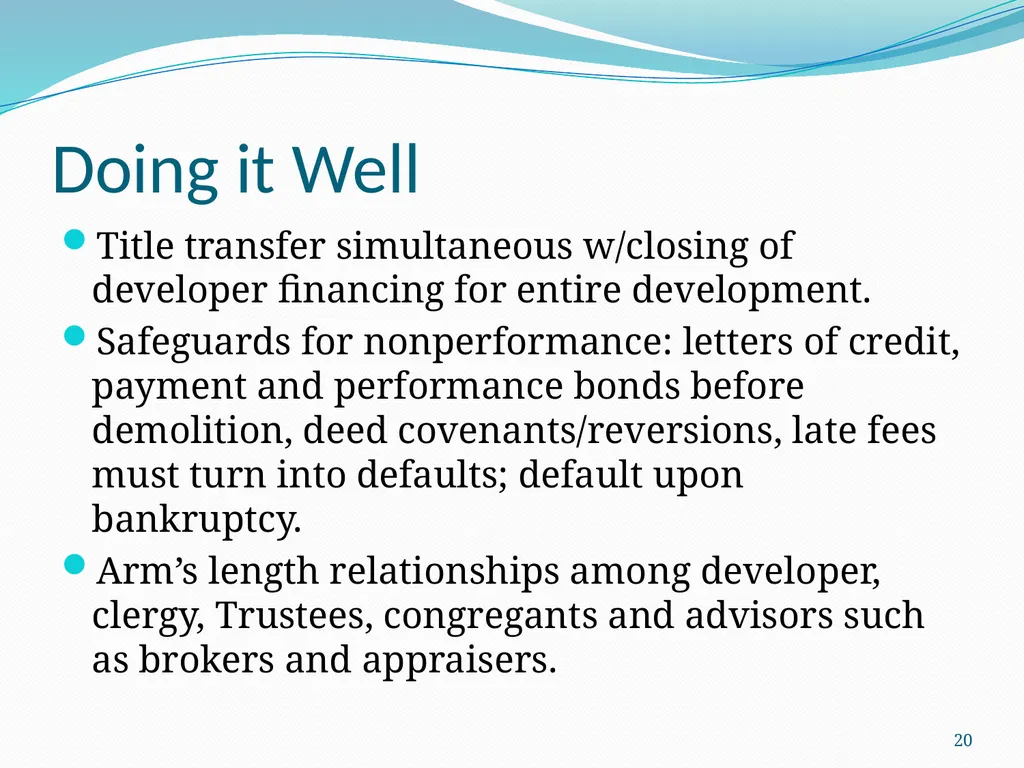
Doing it Well Title transfer simultaneous w/closing of developer financing for entire development.
Safeguards for nonperformance: letters of credit, payment and performance bonds before demolition, deed covenants/reversions, late fees must turn into defaults; default upon bankruptcy.
Arm’s length relationships among developer, clergy, Trustees, congregants and advisors such as brokers and appraisers. 20<br>
Safeguards for nonperformance: letters of credit, payment and performance bonds before demolition, deed covenants/reversions, late fees must turn into defaults; default upon bankruptcy.
Arm’s length relationships among developer, clergy, Trustees, congregants and advisors such as brokers and appraisers. 20<br>
21
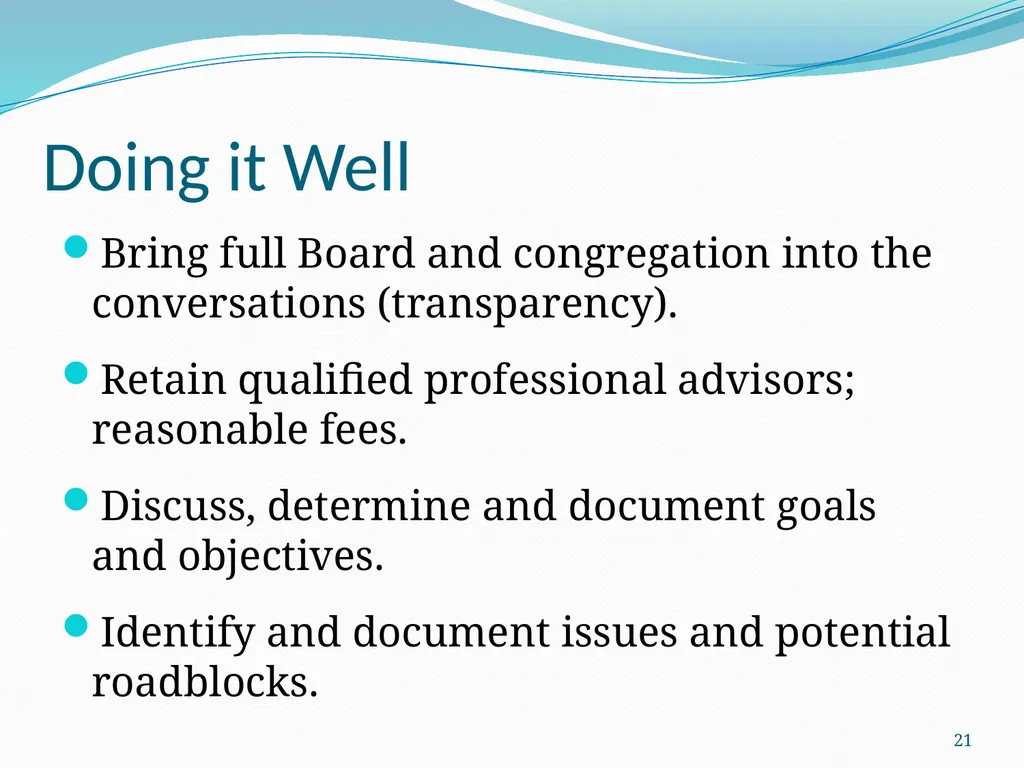
Doing it Well Bring full Board and congregation into the conversations (transparency).
Retain qualified professional advisors; reasonable fees.
Discuss, determine and document goals and objectives.
Identify and document issues and potential roadblocks. 21<br>
Retain qualified professional advisors; reasonable fees.
Discuss, determine and document goals and objectives.
Identify and document issues and potential roadblocks. 21<br>
22
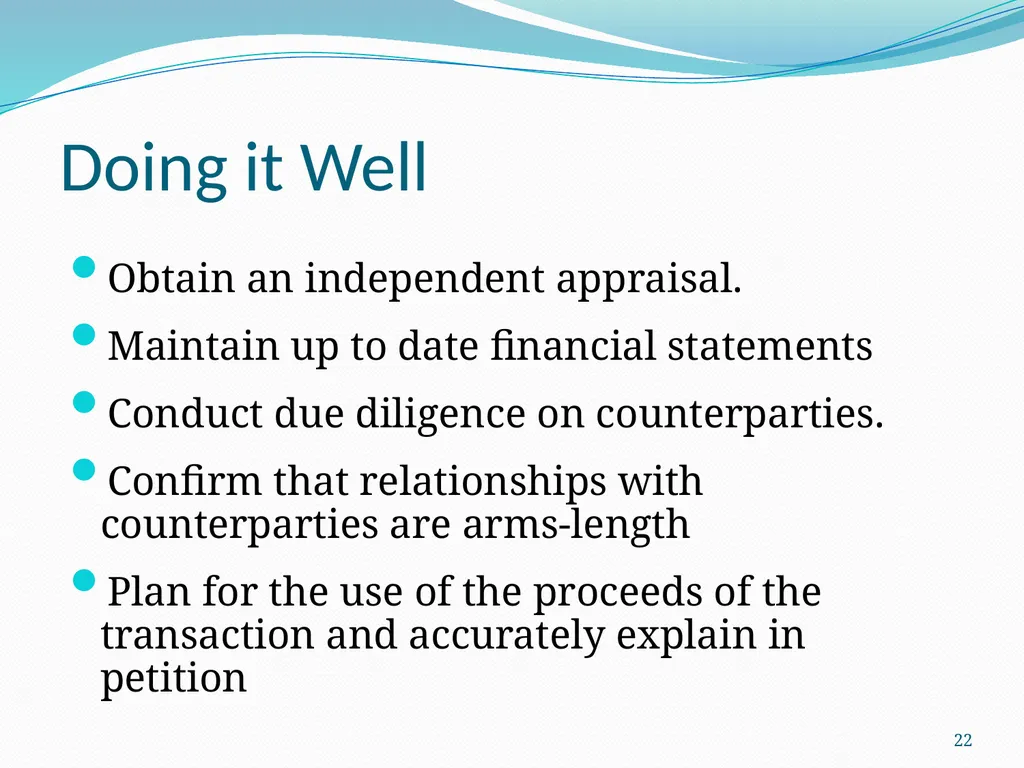
Doing it Well Obtain an independent appraisal.
Maintain up to date financial statements
Conduct due diligence on counterparties.
Confirm that relationships with counterparties are arms-length
Plan for the use of the proceeds of the transaction and accurately explain in petition 22<br>
Maintain up to date financial statements
Conduct due diligence on counterparties.
Confirm that relationships with counterparties are arms-length
Plan for the use of the proceeds of the transaction and accurately explain in petition 22<br>
23
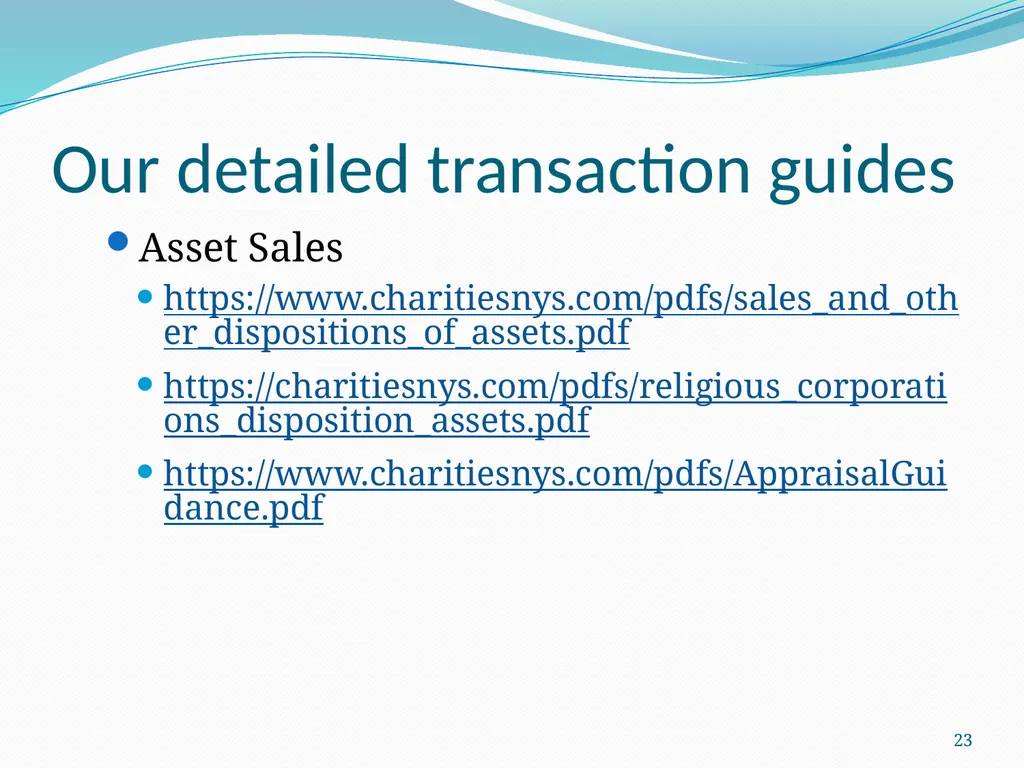
Our detailed transaction guides Asset Sales
https://www.charitiesnys.com/pdfs/sales_and_other_dispositions_of_assets.pdf
https://charitiesnys.com/pdfs/religious_corporations_disposition_assets.pdf
https://www.charitiesnys.com/pdfs/AppraisalGuidance.pdf 23<br>
https://www.charitiesnys.com/pdfs/sales_and_other_dispositions_of_assets.pdf
https://charitiesnys.com/pdfs/religious_corporations_disposition_assets.pdf
https://www.charitiesnys.com/pdfs/AppraisalGuidance.pdf 23<br>
24
Resources New York Charities Bureau guidance
https://www.charitiesnys.com/guides
Right From the Start - Responsibilities of Directors of Not-for-Profit Corporations
Internal Controls and Financial Accountability for Not-for-Profit Boards
Whistleblower Policies Under the Nonprofit Revitalization Act of 2013
Accounting from the Inside Out – Internal Controls and External Accountability (New York Council of Nonprofits) 24<br>
Right From the Start - Responsibilities of Directors of Not-for-Profit Corporations
Internal Controls and Financial Accountability for Not-for-Profit Boards
Whistleblower Policies Under the Nonprofit Revitalization Act of 2013
Accounting from the Inside Out – Internal Controls and External Accountability (New York Council of Nonprofits) 24<br>
25
Questions?<br>