Nonviolent Action: A Force for Change Case study lesson: Otpor: How did a bunch of students use humour to bring down a dictator? Mystery: What happened? Look at the information and pictures on your table take turns to read the information
"Nonviolent Action: A Force for Change Case study" is the property of its rightful owner. Permission is granted to
download and print the materials on this website for personal, non-commercial use only, and to display it
on your personal computer provided you do not modify the materials and that you retain all copyright
notices contained in the materials. By downloading content from our website, you accept the terms of this
agreement.
Presentation Transcript
01
Nonviolent Action: A Force for Change Case study lesson:
Otpor: How did a bunch of students use humour to bring down a dictator?<br>
02
Mystery: What happened? Look at the information and pictures on your table – take turns to read the information slips out.
What do you think happened?
Can you put the events in the order in which they happened?<br>
03
Elect 2 people in your group to be the ‘reporters’. They will stay at your table and answer other people’s questions so will need to know the information well.
The rest of the group are the ‘detectives’ who will go round the classroom collecting information from the other groups.<br>
04
Decide what information you would like your detectives to find out. Divide your questions between your detectives.<br>
05
Detectives go round the other groups asking the reporters their questions.
Reporters answer the questions of all visiting detectives. They must be honest and only give out information from what they already found out.
This is a collaborative activity but you need to be quick<br>
06
All detectives now return to their groups and share what they have found out.
Do you know what happened?
Read the full case study together, helping each other to understand and checking if you managed to solve the mystery.<br>
07
Timeline of events 1997: Elections
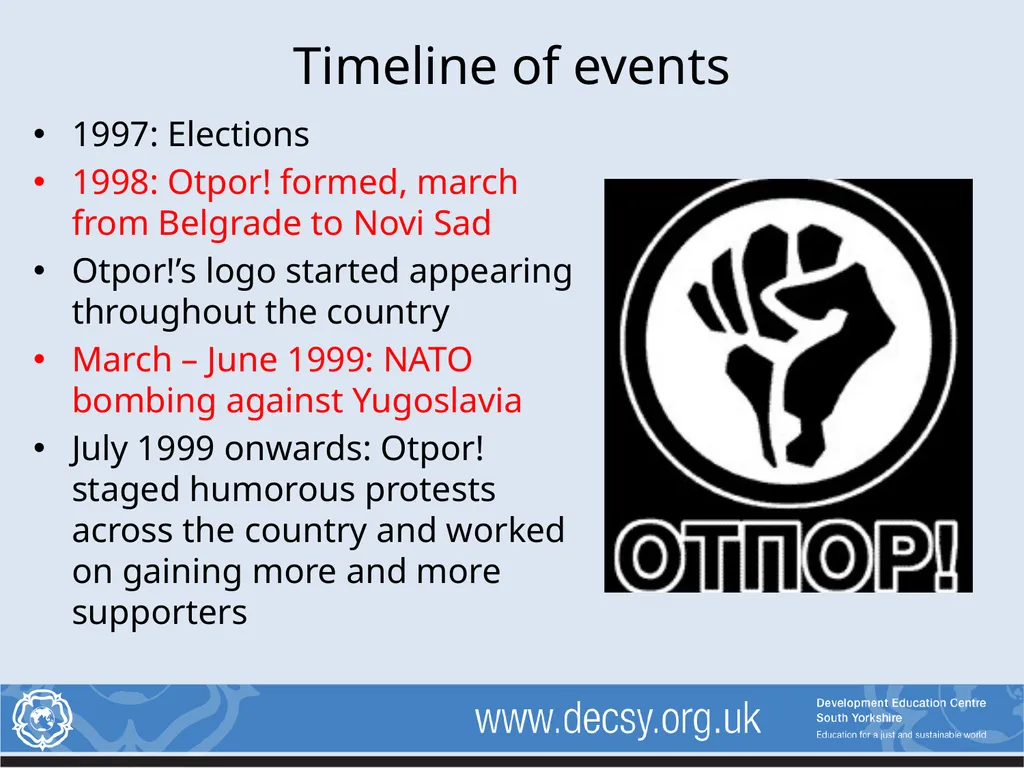
1998: Otpor! formed, march from Belgrade to Novi Sad
Otpor!’s logo started appearing throughout the country
March – June 1999: NATO bombing against Yugoslavia
July 1999 onwards: Otpor! staged humorous protests across the country and worked on gaining more and more supporters<br>
08
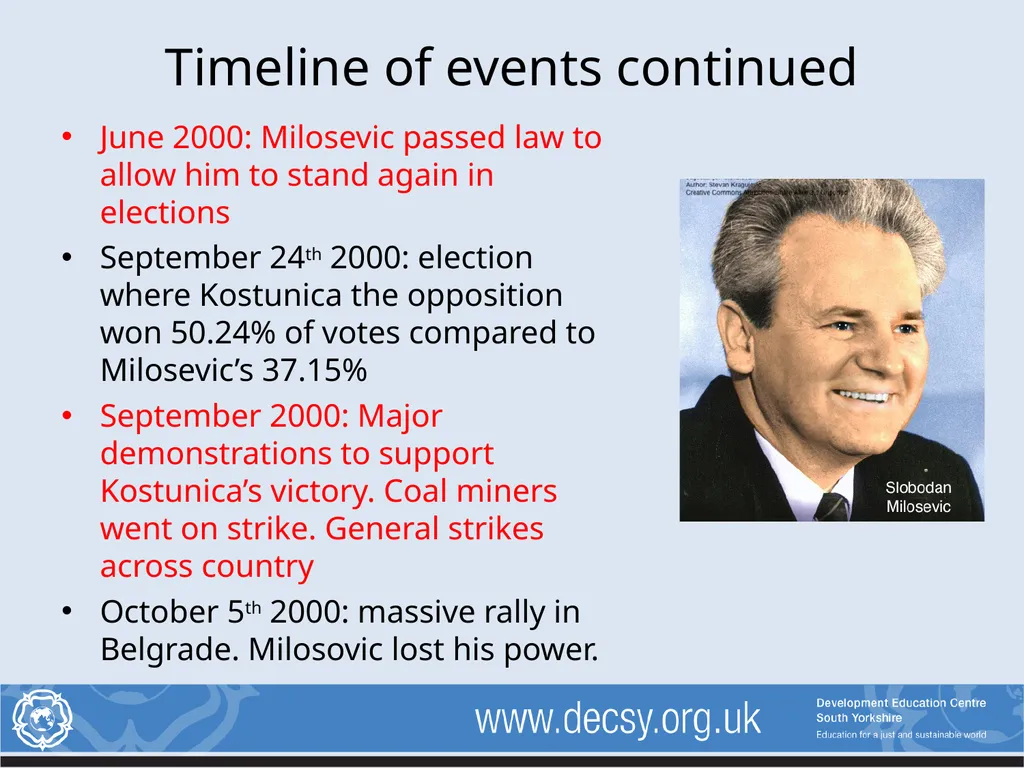
Timeline of events continued June 2000: Milosevic passed law to allow him to stand again in elections
September 24th 2000: election where Kostunica the opposition won 50.24% of votes compared to Milosevic’s 37.15%
September 2000: Major demonstrations to support Kostunica’s victory. Coal miners went on strike. General strikes across country
October 5th 2000: massive rally in Belgrade. Milosovic lost his power.<br>
09
Show Otpor! YouTube film:
https://www.youtube.com/watch?v=kv9R6kn2Pcc
0.00-4.35<br>
10
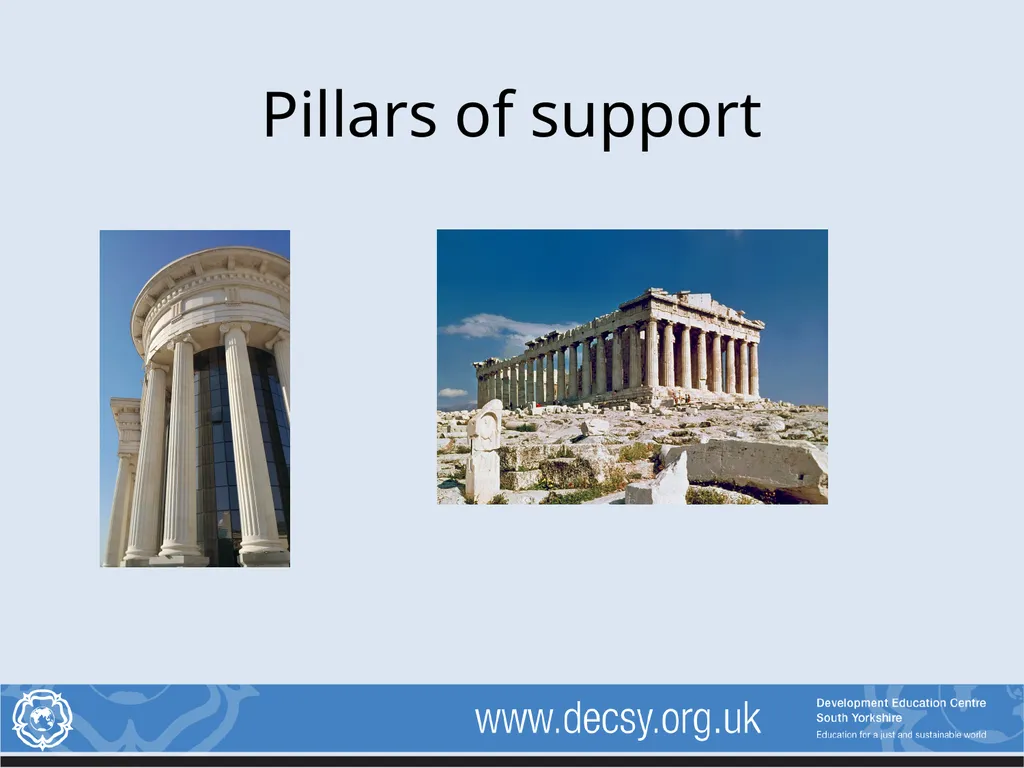
Pillars of support<br>
11
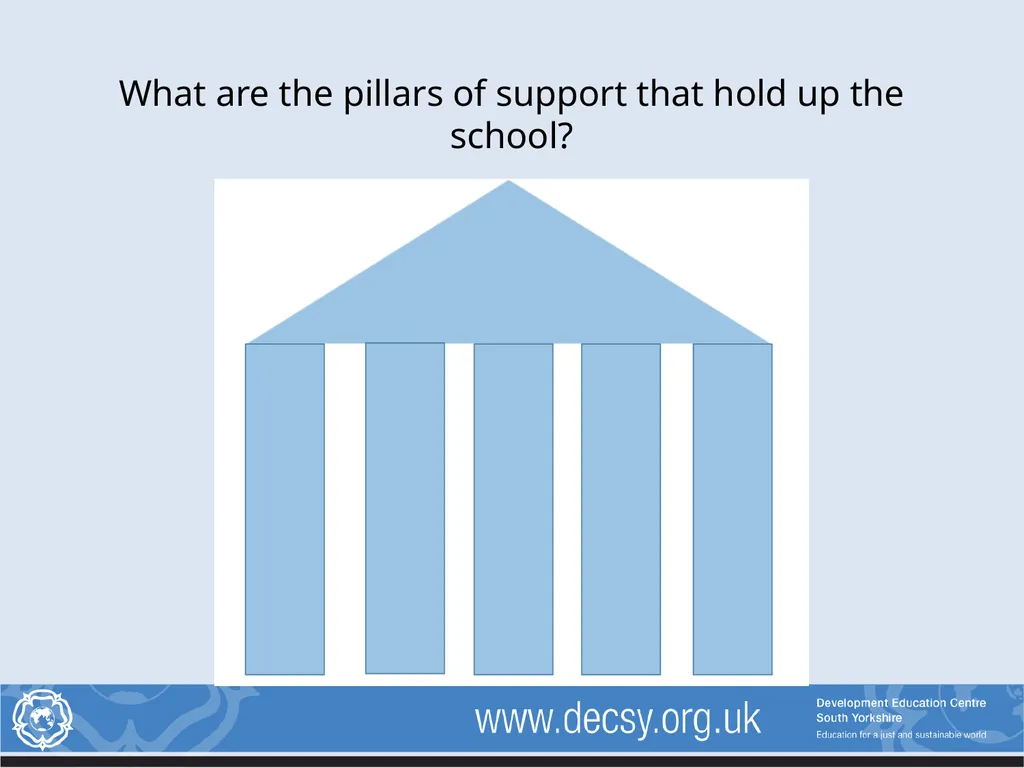
What are the pillars of support that hold up the school?<br>
12
What was Otpor! trying to change? What were the pillars of support?
How did Otpor! weaken or remove these pillars?
Which pillars were Otpor! most effective at weakening?<br>
13
Reflection/evaluation Did Otpor! do the right thing?
Could they have done anything differently?
Which words have we used today for the vocabulary wall/bank?
Generate definitions for new words covered today.<br>