Objective: Students will be able to define, recognize and explain symbolism, allegory and figurative language. Symbolism and Allegory Q: What does it mean to define, recognize, and explain? See if you can explain what the following symbols
"Objective: Students will be able to define," is the property of its rightful owner. Permission is granted to
download and print the materials on this website for personal, non-commercial use only, and to display it
on your personal computer provided you do not modify the materials and that you retain all copyright
notices contained in the materials. By downloading content from our website, you accept the terms of this
agreement.
Presentation Transcript
01
Objective: Students will be able to define, recognize and explain symbolism, allegory and figurative language. Symbolism and Allegory Q: What does it mean to define, recognize, and explain?<br>
02
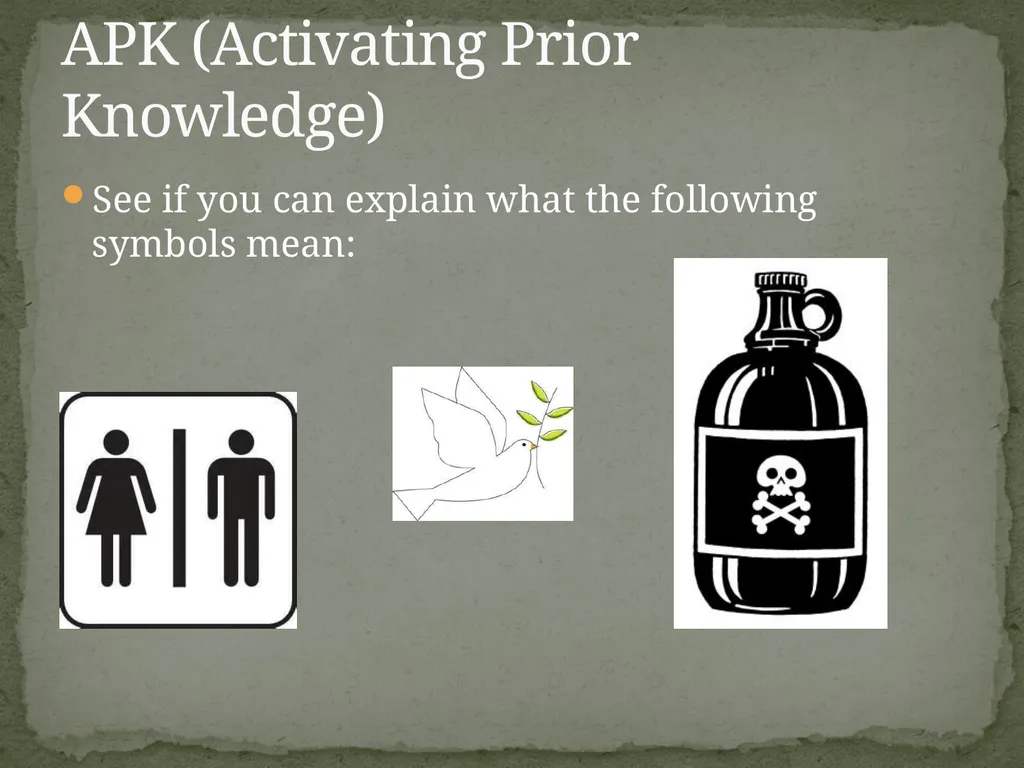
See if you can explain what the following symbols mean: APK (Activating Prior Knowledge)<br>
03
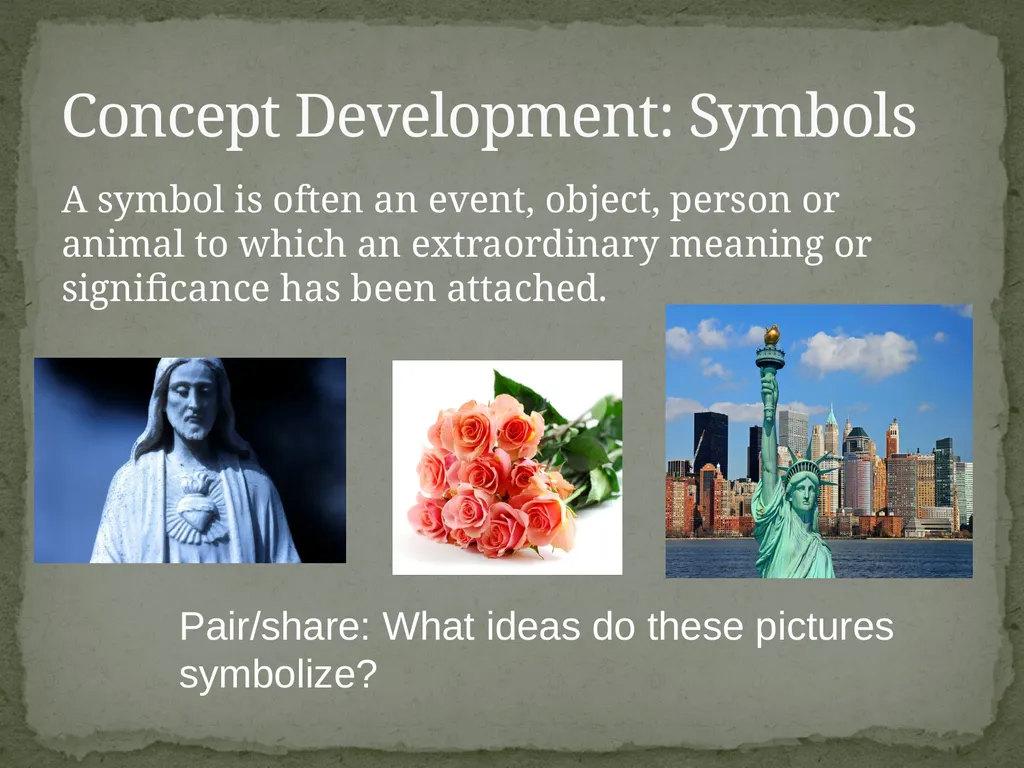
A symbol is often an event, object, person or animal to which an extraordinary meaning or significance has been attached. Concept Development: Symbols Pair/share: What ideas do these pictures symbolize?<br>
04
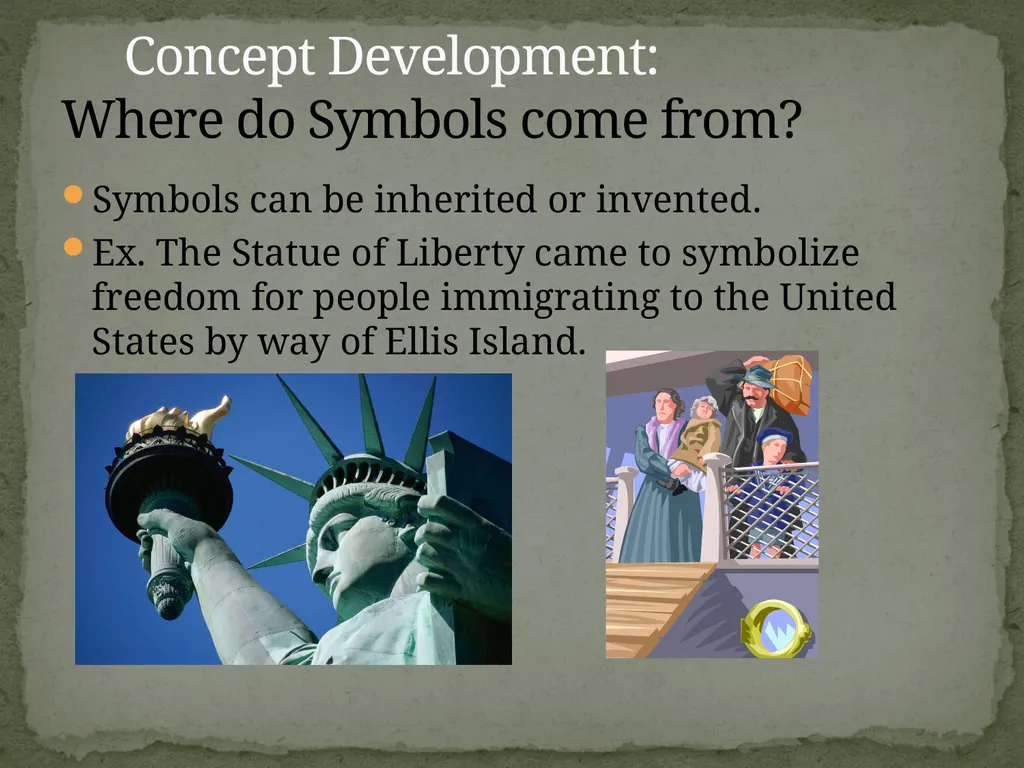
Symbols can be inherited or invented.
Ex. The Statue of Liberty came to symbolize freedom for people immigrating to the United States by way of Ellis Island. Concept Development: Where do Symbols come from?<br>
05
Symbols allow writers to suggest layers of meanings and possibilities that a simple literal statement could not convey as well.
Symbols allow writers to convey an idea with layers of meaning without having to explain those layers in the text.
A symbol is like a pebble cast into a pond: It sends out ever widening ripples.
Pair/Share: Tell your partner a symbol from one of our readings this year or last year. Importance: Why Create Symbols in literature?<br>
06
An Allegory is a story in which characters, settings and actions stand for something beyond themselves.
In some types of Allegories, the characters and setting represent abstract ideas of moral qualities.
In other types, characters and situations stand for historical figures and events. Concept Development: Allegory<br>
07
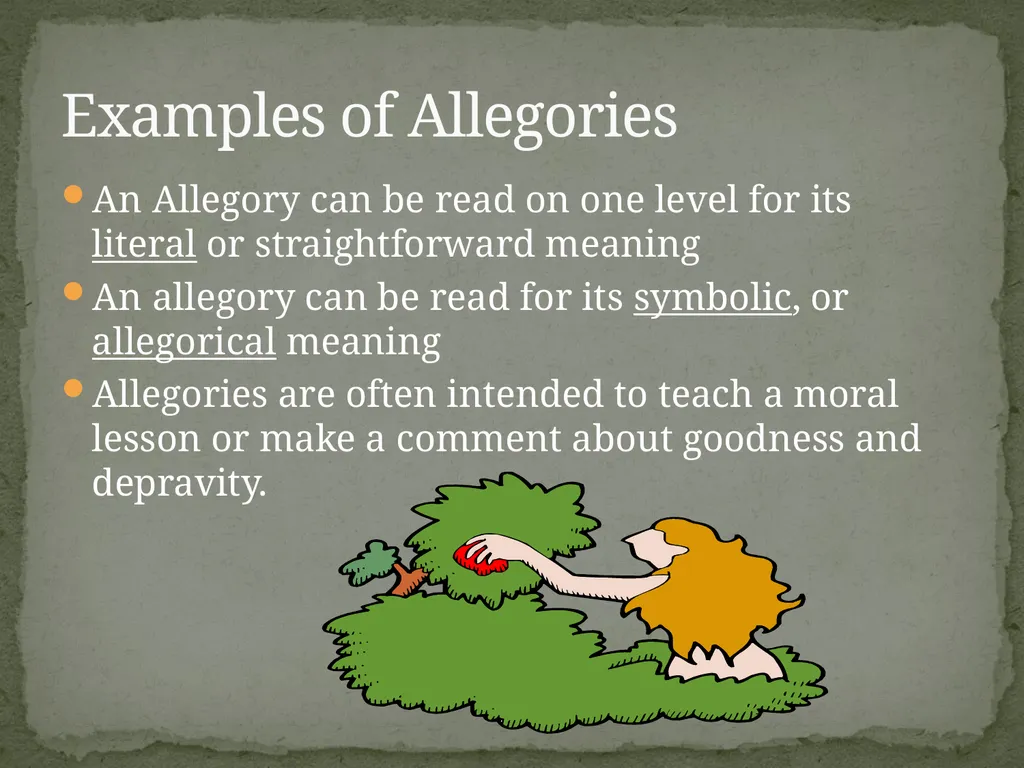
An Allegory can be read on one level for its literal or straightforward meaning
An allegory can be read for its symbolic, or allegorical meaning
Allegories are often intended to teach a moral lesson or make a comment about goodness and depravity. Examples of Allegories<br>
08
The Most Dangerous Game:
Zaroff: Allegory for _______________
Thank you Ma’am:
Shoes: Symbol for ________________
The Casks of Amontillado:
Fortunato: Symbol/Allegory for ___________ Symbols and Allegory in past stories we have read…<br>
09
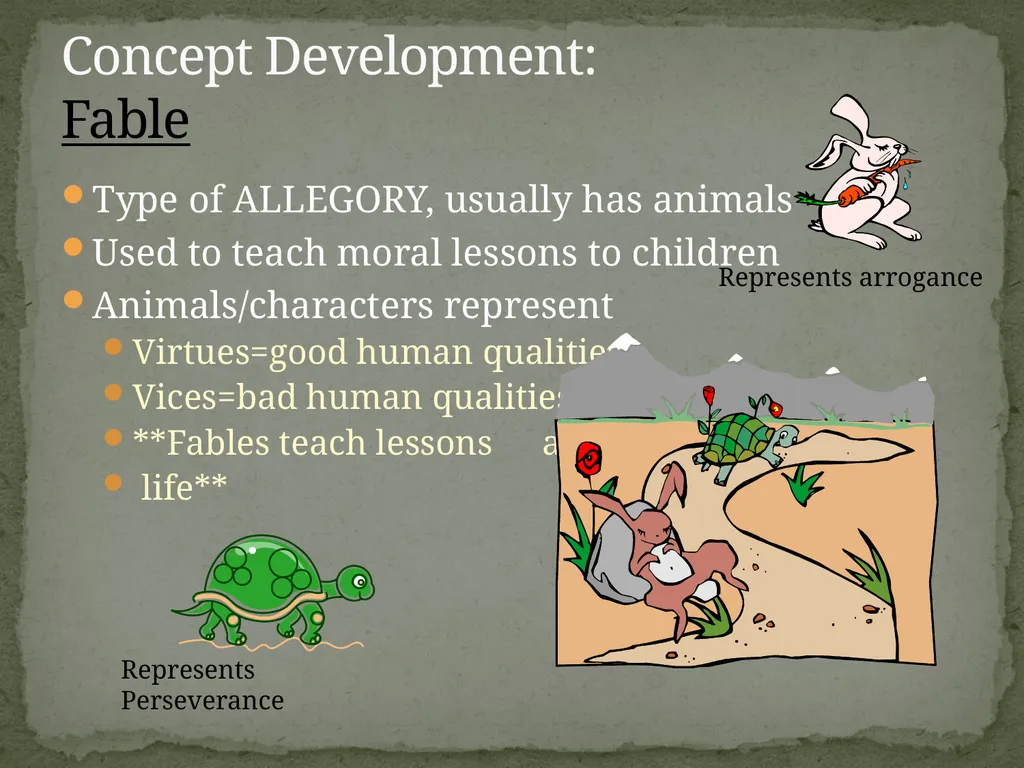
Type of ALLEGORY, usually has animals
Used to teach moral lessons to children
Animals/characters represent
Virtues=good human qualities
Vices=bad human qualities
**Fables teach lessons about
life** Concept Development: Fable Represents Perseverance Represents arrogance<br>
10
Another example of a famous fable is the following from Aesop’s Fables:
The Hound Dog and the Rabbit
One day, a hound dog was hunting for a rabbit and managed to find one. The hound chased the rabbit for a long time, but eventually, the rabbit escaped. When another dog made fun of the hound dog for allowing the rabbit to escape, the hound dog replied: “You do now see the difference between the rabbit and I; I am only running for my dinner, while he is running for his life.”
The lesson: Incentive will spur effort
Pair/Share: Can you name another fable? Concept Development: Fable<br>
11
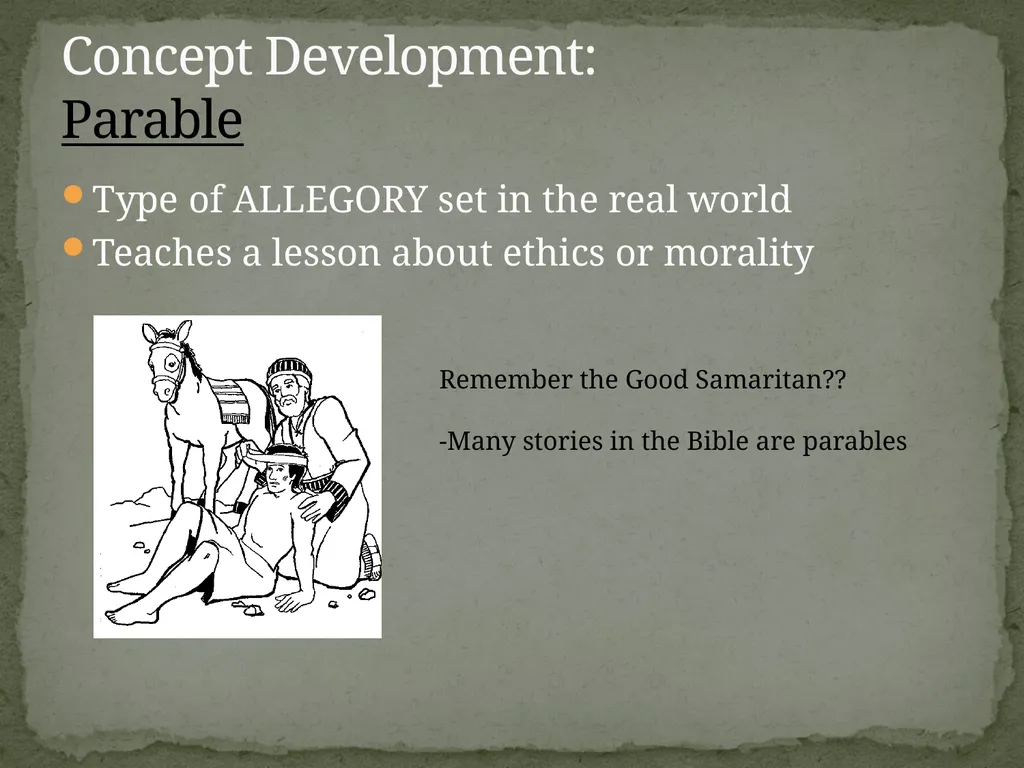
Type of ALLEGORY set in the real world
Teaches a lesson about ethics or morality Concept Development: Parable Remember the Good Samaritan??
-Many stories in the Bible are parables<br>
12
Some famous parables and allegorical stories/movies/television programs are:
Animal Farm
“The Emperor’s New Clothes”
The Wizard of Oz
“The Boy Who Cried Wolf”
Avatar
The Matrix
Of Mice and Men Concept Development: Allegory/Parables<br>
13
In a old English play called Everyman, the main character is named Everyman ( he stands for exactly what his name indicates.)
One day Everyman is summoned by death to give an accounting of his life.
Everyman asks his friends Fellowship, Beauty, Strength and Good Deeds to go with him to tell death that he has led a good life.
Only Good Deeds stays with him until the end.
Pair/Share: What do you think the lesson is from this story? Allegory continued…<br>
14
A symbol can be a word, place, character or object that means something beyond what it is on a literal level.
An allegory involves using many interconnected symbols or allegorical figures in such a way that nearly every element of the narrative has a meaning beyond the literal level, i.e., everything in the narrative is a symbol that relates to other symbols within the story. Symbolism vs. Allegory<br>
15
A symbol is _____________________.
Symbols can be _______, _________, __________, or _________.
Symbols represent _______________________.
Name the four things that can be symbols.
Symbols allow writers to __________.
An allegory is ______ in which _______________.
and _______ stand for something beyond themselves.
Name two types of Allegories. Closure: Symbolism and Allegory Review<br>
16
Think of a movie or book that utilizes a symbol (you cannot use an example from this powerpoint!)
Name the movie/book
Identify the symbol
Identify the literal meaning of the symbol
Identify the figurative (symbolic) meaning of the symbol
Explain why the symbol was used Independent Practice<br>