Offering the Infant Fruit and Veggie Benefit (FVB) 1 Produced by Oregon WIC Program January 2021 In-service The Infant FVB We would love to increase participation in the Infant FVB (Fruit and Veggie Benefit)! After reviewing these slides,
"Offering the Infant Fruit and Veggie Benefit (FVB)" is the property of its rightful owner. Permission is granted to
download and print the materials on this website for personal, non-commercial use only, and to display it
on your personal computer provided you do not modify the materials and that you retain all copyright
notices contained in the materials. By downloading content from our website, you accept the terms of this
agreement.
Presentation Transcript
01
Offering the Infant Fruit and Veggie Benefit (FVB) 1 Produced by Oregon WIC Program
January 2021 In-service<br>
02
The Infant FVB We would love to increase participation in the Infant FVB (Fruit and Veggie Benefit)!
After reviewing these slides, you will be able to:
Describe how the FVB for infants connects to developmental feeding.
List the benefits of FVB for introducing table foods and the downsides to only feeding infants baby food during their first year. STOP AND THINK:
How do you talk with mothers about the FVB? What are some barriers that stop mothers from accepting this benefit? What keeps you from discussing this benefit with mothers?<br>
03
Infant FVB Reminders The Infant FVB (Fruit and Vegetable Benefit) provides additional money for purchasing fruits and vegetables instead of jarred baby food.
Participants can use the Infant FVB when a baby is 9-11 months old.
In order to provide this benefit, the caregiver must receive education on safe food preparation, storage, techniques, and progression of feeding. STOP AND THINK:
Since we need to provide them with this education, think about your favorite tips to give to caregivers about safe food preparation and progression of feeding.<br>
04
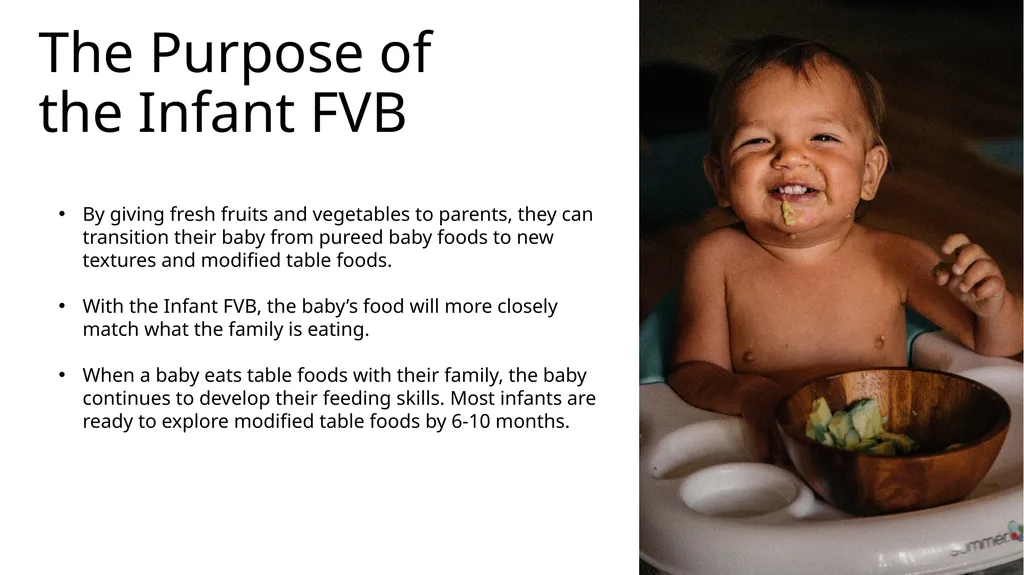
The Purpose of the Infant FVB By giving fresh fruits and vegetables to parents, they can transition their baby from pureed baby foods to new textures and modified table foods.
With the Infant FVB, the baby’s food will more closely match what the family is eating.
When a baby eats table foods with their family, the baby continues to develop their feeding skills. Most infants are ready to explore modified table foods by 6-10 months.<br>
05
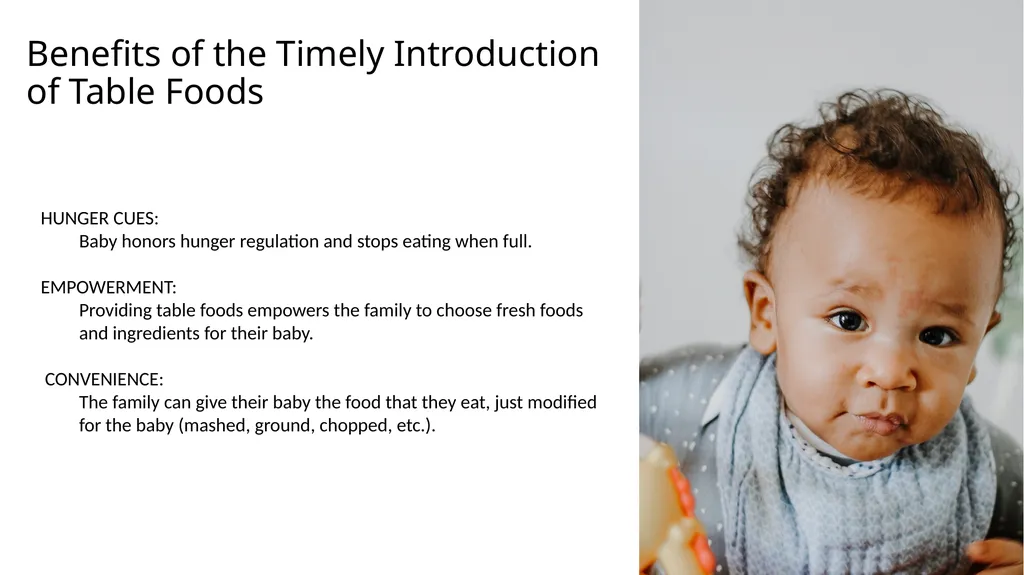
Benefits of the Timely Introduction of Table Foods HUNGER CUES:
Baby honors hunger regulation and stops eating when full.
EMPOWERMENT:
Providing table foods empowers the family to choose fresh foods and ingredients for their baby.
CONVENIENCE:
The family can give their baby the food that they eat, just modified for the baby (mashed, ground, chopped, etc.). Benefits of the Timely Introduction of Table Foods<br>
06
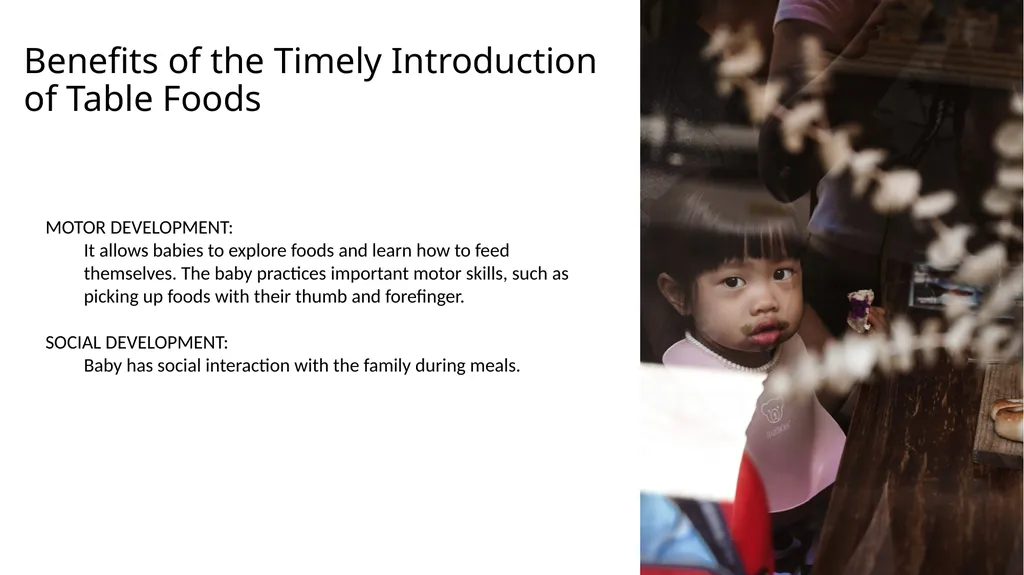
Benefits of the Timely Introduction of Table Foods MOTOR DEVELOPMENT:
It allows babies to explore foods and learn how to feed themselves. The baby practices important motor skills, such as picking up foods with their thumb and forefinger.
SOCIAL DEVELOPMENT:
Baby has social interaction with the family during meals. Benefits of the Timely Introduction of Table Foods<br>
07
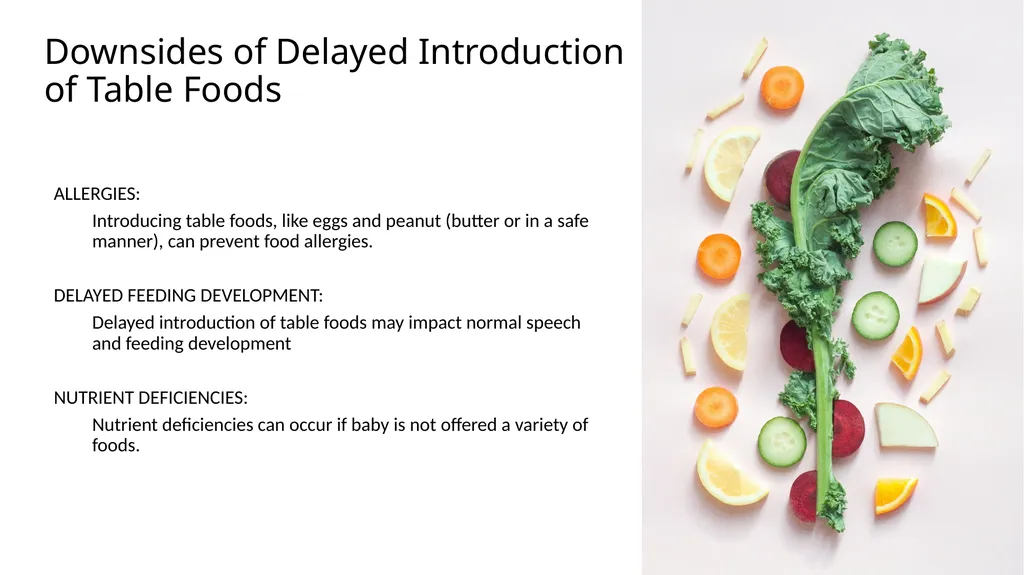
Downsides of Delayed Introduction of Table Foods ALLERGIES:
Introducing table foods, like eggs and peanut (butter or in a safe manner), can prevent food allergies.
DELAYED FEEDING DEVELOPMENT:
Delayed introduction of table foods may impact normal speech and feeding development
NUTRIENT DEFICIENCIES:
Nutrient deficiencies can occur if baby is not offered a variety of foods. Downsides of Delayed Introduction of Table Foods<br>
08
Downsides of Delayed Introduction of Table Foods FOOD RESISTANCE:
If the baby does not experience a variety of textures and flavors early, they may be more resistant to different textures and flavors later.
OVERRIDING HUNGER CUES:
Caregiver may continue to spoon-feed the baby even when they are full. This may affect the baby’s hunger cues. Downsides of Delayed Introduction of Table Foods<br>
09
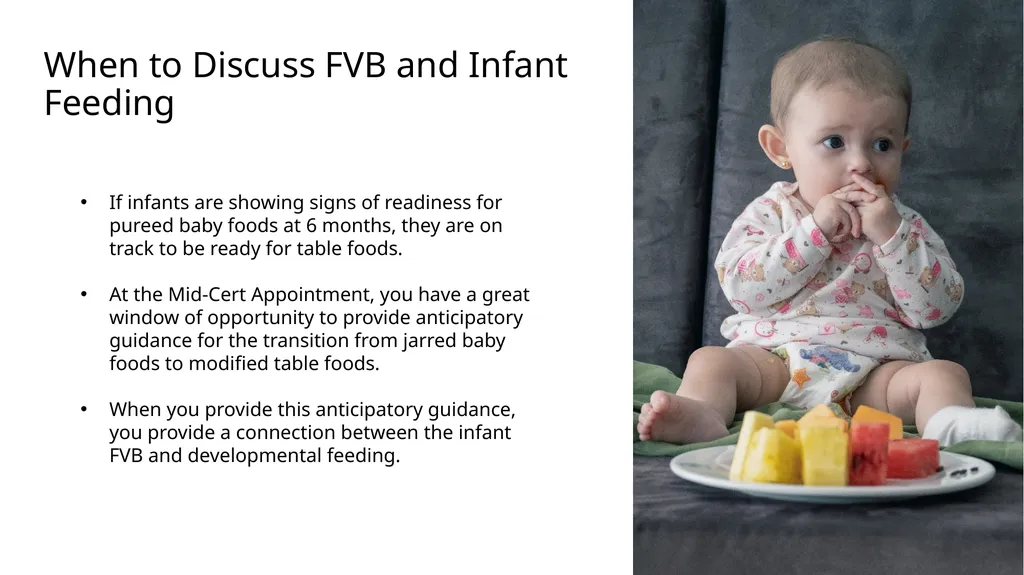
When to Discuss FVB and Infant Feeding If infants are showing signs of readiness for pureed baby foods at 6 months, they are on track to be ready for table foods.
At the Mid-Cert Appointment, you have a great window of opportunity to provide anticipatory guidance for the transition from jarred baby foods to modified table foods.
When you provide this anticipatory guidance, you provide a connection between the infant FVB and developmental feeding.<br>
10
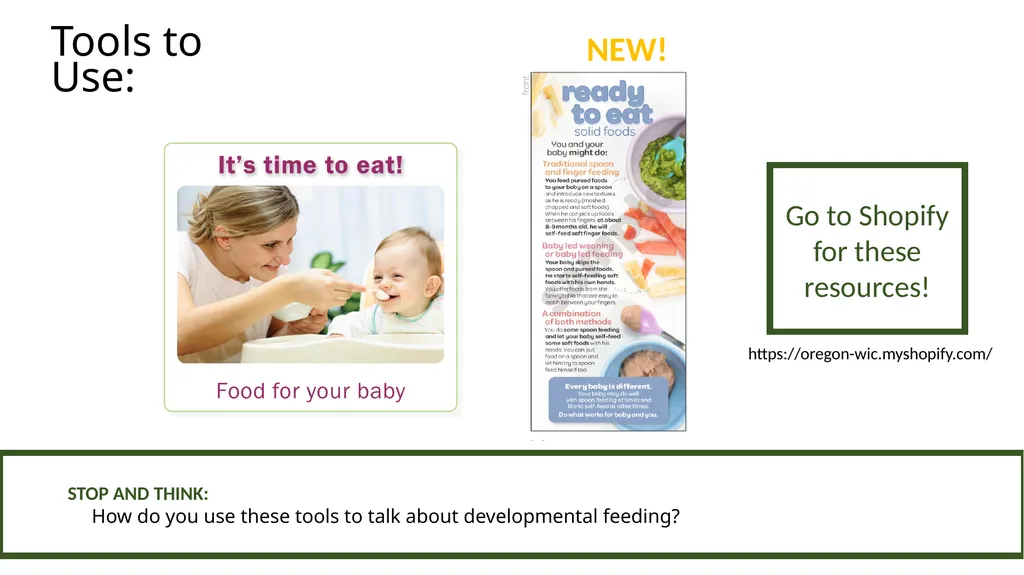
Tools to Use: NEW! STOP AND THINK:
How do you use these tools to talk about developmental feeding? Go to Shopify for these resources! https://oregon-wic.myshopify.com/<br>
11
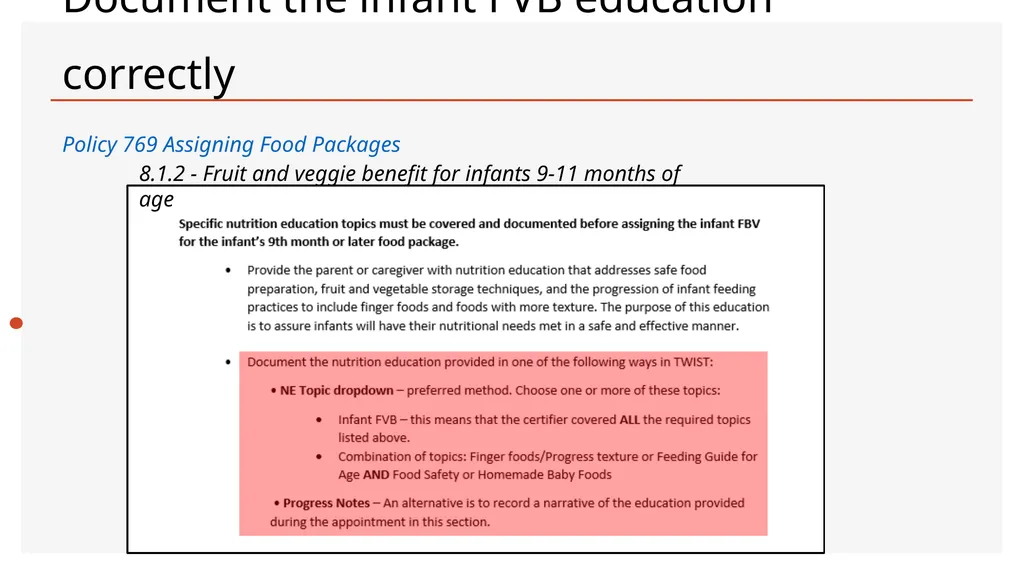
Document the infant FVB education correctly Policy 769 Assigning Food Packages
8.1.2 - Fruit and veggie benefit for infants 9-11 months of age<br>
12
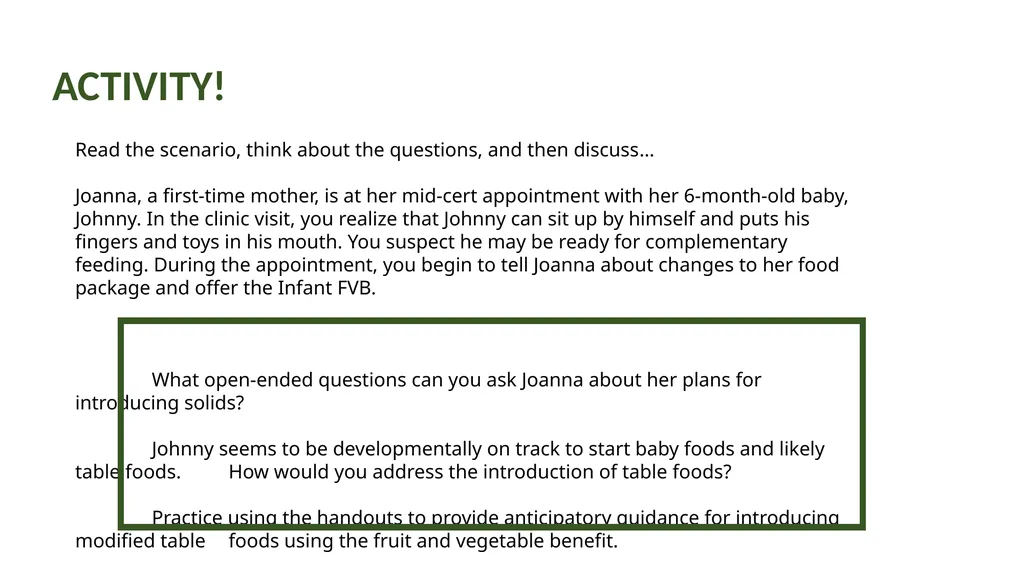
ACTIVITY! Read the scenario, think about the questions, and then discuss…
Joanna, a first-time mother, is at her mid-cert appointment with her 6-month-old baby, Johnny. In the clinic visit, you realize that Johnny can sit up by himself and puts his fingers and toys in his mouth. You suspect he may be ready for complementary feeding. During the appointment, you begin to tell Joanna about changes to her food package and offer the Infant FVB.
What open-ended questions can you ask Joanna about her plans for introducing solids?
Johnny seems to be developmentally on track to start baby foods and likely table foods. How would you address the introduction of table foods?
Practice using the handouts to provide anticipatory guidance for introducing modified table foods using the fruit and vegetable benefit.<br>
13
Thank you!
Ask your WIC nutritionist if you have any questions. 13<br>