"OMD Safety Policy Training Eyewash Station and" is the property of its rightful owner. Permission is granted to
download and print the materials on this website for personal, non-commercial use only, and to display it
on your personal computer provided you do not modify the materials and that you retain all copyright
notices contained in the materials. By downloading content from our website, you accept the terms of this
agreement.
Presentation Transcript
01
OMD Safety Policy Training Eyewash Station and Shower Equipment<br>
02
Emergency Eyewash and Shower Equipment<br>
03
Agenda Introduction
References
Locations & Map
Training Video
Questions 20XX<br>
04
References OSHA 29 CFR 1910.151(c)
ANSI Z358.1
OAR 437-001-0760 (1)(d)
OAR 437-002-0161, Medical and First Aid 20XX<br>
05
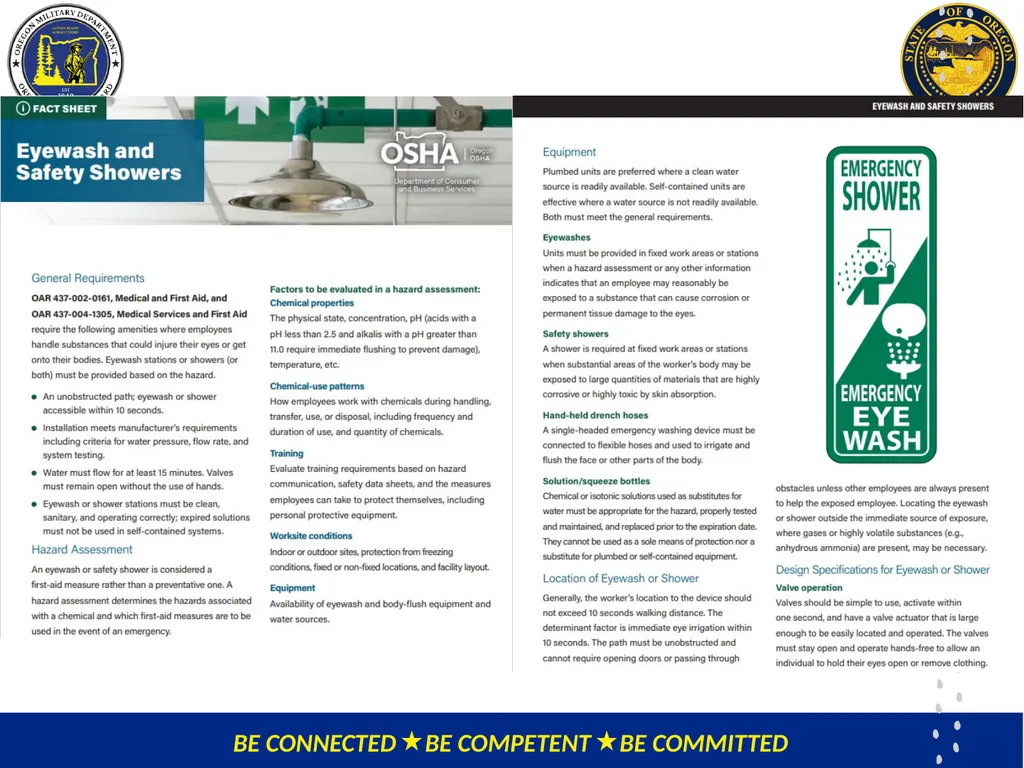
Locations Generally, the worker’s location to the device should not exceed 10 seconds walking distance.
The determinant factor is immediate eye irrigation within 10 seconds.
The path must be unobstructed and cannot require opening doors or passing through obstacles unless other employees are always present to help the exposed employee.
Locating the eyewash or shower outside the immediate source of exposure, where gases or highly volatile substances (e.g., anhydrous ammonia) are present, may be necessary. 20XX<br>
06
INSERT MAP OF EYEWASH STATION LOCATIONS<br>
07
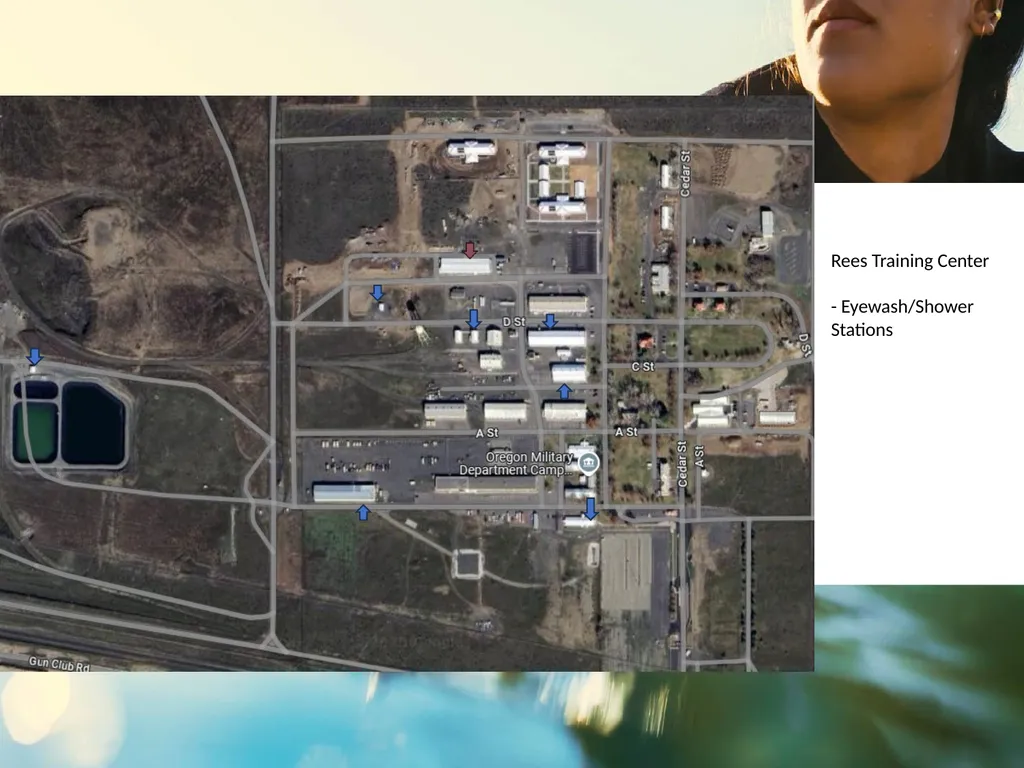
Rees Training Center
- Eyewash/Shower Stations<br>
08
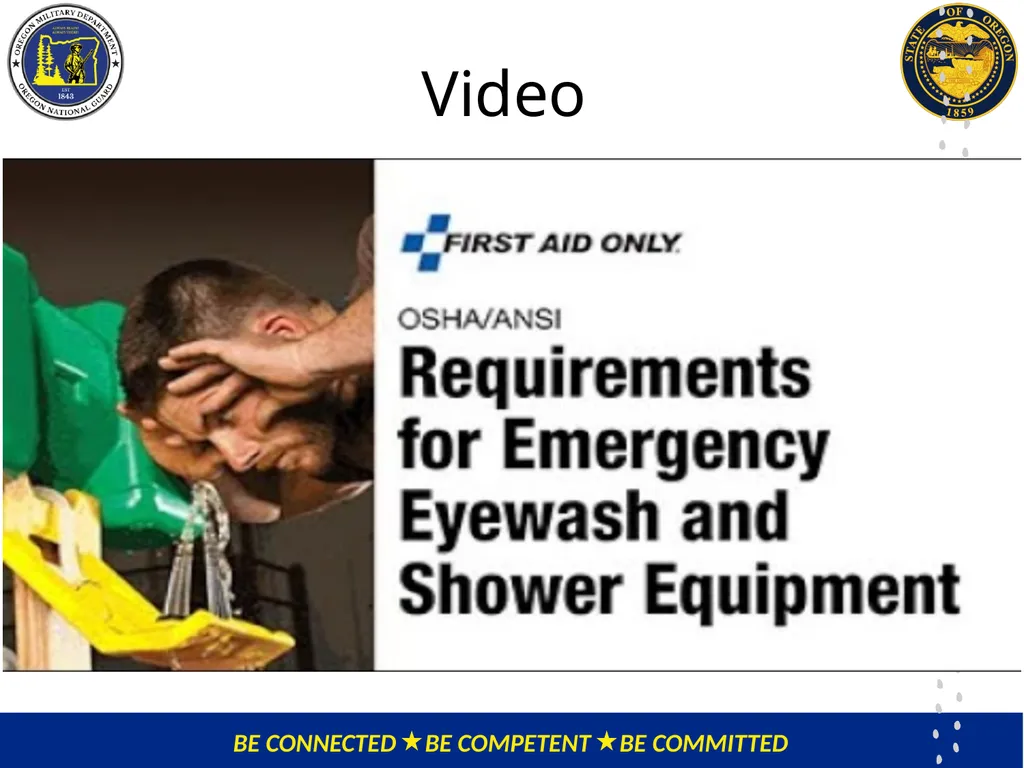
Video<br>
09
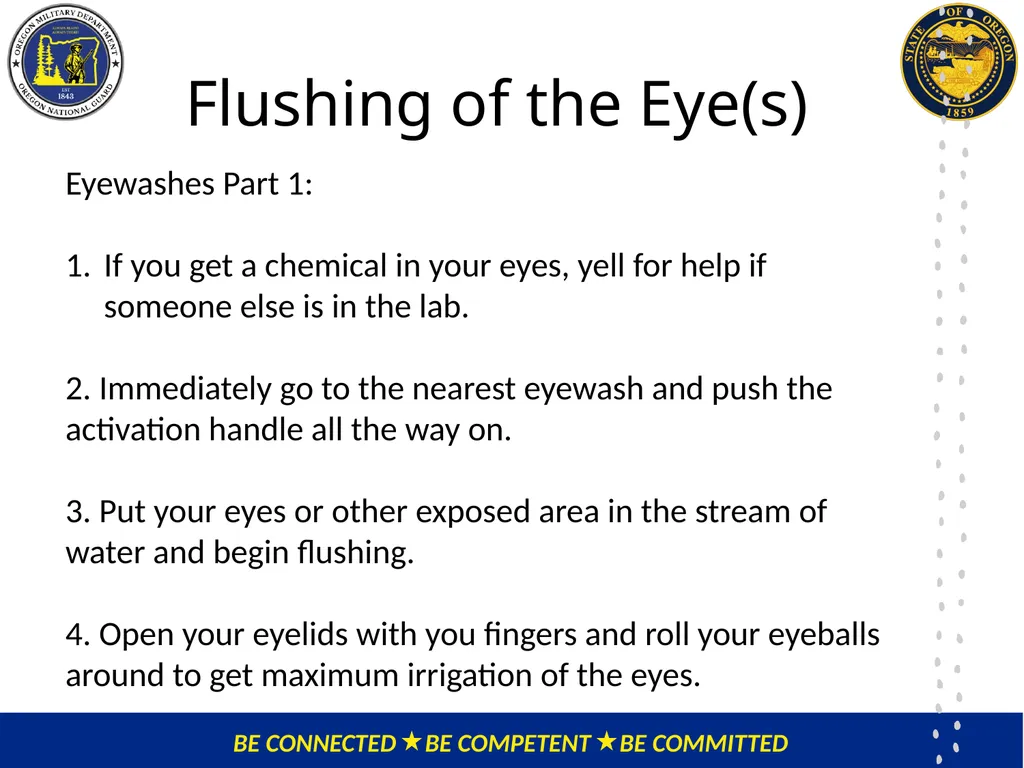
Flushing of the Eye(s) Eyewashes Part 1:
If you get a chemical in your eyes, yell for help if someone else is in the lab.
2. Immediately go to the nearest eyewash and push the activation handle all the way on.
3. Put your eyes or other exposed area in the stream of water and begin flushing.
4. Open your eyelids with you fingers and roll your eyeballs around to get maximum irrigation of the eyes.<br>
10
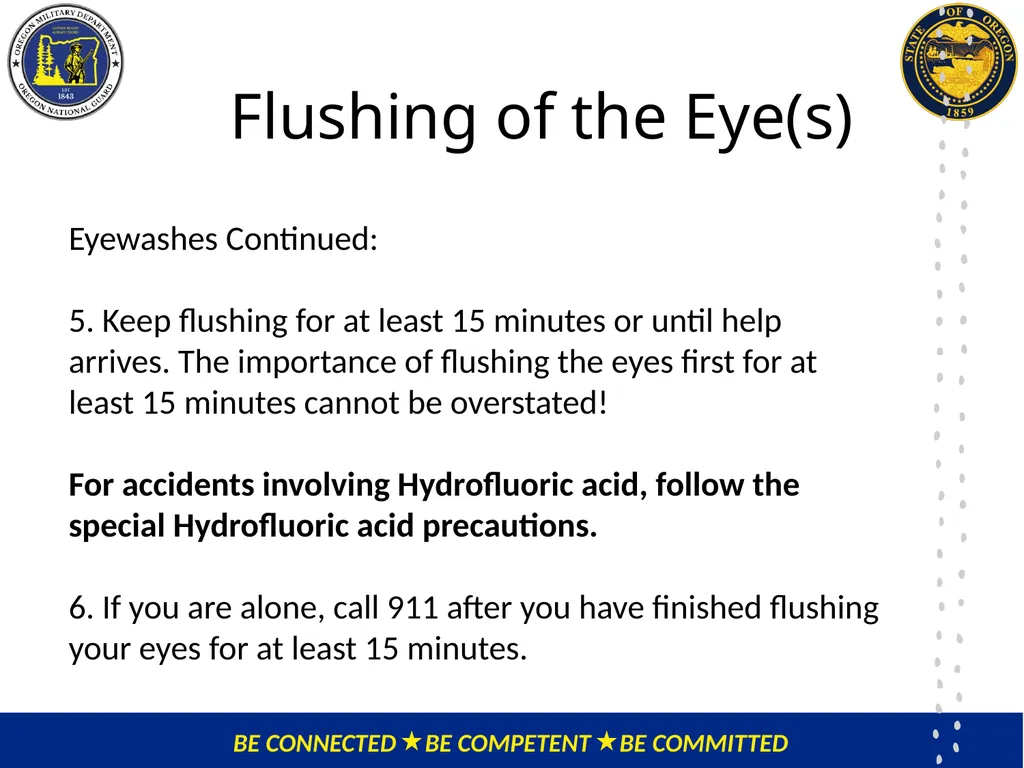
Flushing of the Eye(s) Eyewashes Continued:
5. Keep flushing for at least 15 minutes or until help arrives. The importance of flushing the eyes first for at least 15 minutes cannot be overstated!
For accidents involving Hydrofluoric acid, follow the special Hydrofluoric acid precautions.
6. If you are alone, call 911 after you have finished flushing your eyes for at least 15 minutes.<br>
11
Flushing of the Eye(s) Eyewashes Continued:
7. Seek medical attention.
8. Complete an Injury/Illness Exposure Report.
If someone else in the lab needs to use an eyewash, assist them to the eyewash, activate the eyewash for them, and help them get started flushing their eyes using the procedures above and then call 911. After calling 911, go back to assist the person using the eyewash and continue flushing for 15 minutes or until help arrives and have the person seek medical attention<br>
12
Emergency Showers 1. If you get chemical contamination on your skin resulting from an accident, yell for help if someone else is in the lab.
2. Immediately go to the nearest emergency shower and pull the activation handle.
Environment, Health and Safety
3. Once under the stream of water, begin removing your clothing to wash off all chemicals. In some instances, clothing may not be
removed, (although it is best to remove contaminated clothing), it is more important to flush away chemical contamination.<br>
13
Emergency Showers Continued 4. Keep flushing for at least 15 minutes or until help arrives. The importance of flushing for at least 15 minutes cannot be overstated! If you spill
Hydrofluoric acid on yourself, follow the special Hydrofluoric acid precautions.
5. If you are alone, call 911 after you have finished flushing for at least 15 minutes.
6. Seek medical attention.
7. Complete an Injury/Illness Exposure Reporting.<br>
14
Maintenance Of Eyewash and Showers 20XX Frequency and Timing of Inspections
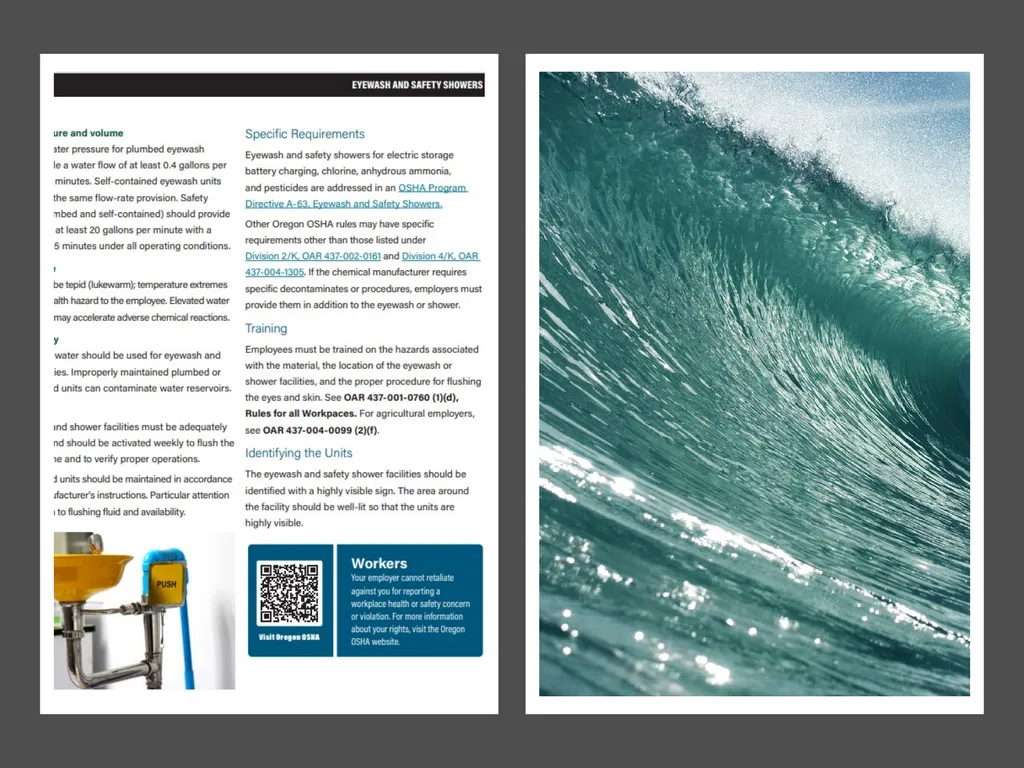
The ANSI Z358.1-2014 standard sets forth a clear schedule for inspections, recommending weekly checks for plumbed eyewash stations and self-contained units. The frequency ensures that any potential issues are promptly identified and resolved before they escalate into safety hazards.<br>
15
Maintenance Of Eyewash and Showers 20XX Record-Keeping and Documentation
Maintaining detailed records of inspections and testing is not just a regulatory requirement but also a crucial aspect of effective safety management. Accurate documentation allows for easy tracking of inspection dates, testing results, and maintenance activities.<br>
16
Thank you This Powerpoint was compiled by Joey Medel, Safety Chairperson, OMD Rees Training Center.<br>