OMD Safety Policy Training REDUCING SILICA
Description: OMD Safety Policy Training REDUCING SILICA EXPOSURE Crystalline Silica Employee Safety Training Training Requirements Annual training Materials will cover: Hazards of silica exposure Safe work practices How to minimize or eliminate silica
Related Topics
Download Presentation
"OMD Safety Policy Training REDUCING SILICA" is the property of its rightful owner. Permission is granted to download and print the materials on this website for personal, non-commercial use only, and to display it on your personal computer provided you do not modify the materials and that you retain all copyright notices contained in the materials. By downloading content from our website, you accept the terms of this agreement.
Presentation Transcript
slide1. OMD Safety Policy Training REDUCING SILICA EXPOSURE<br>
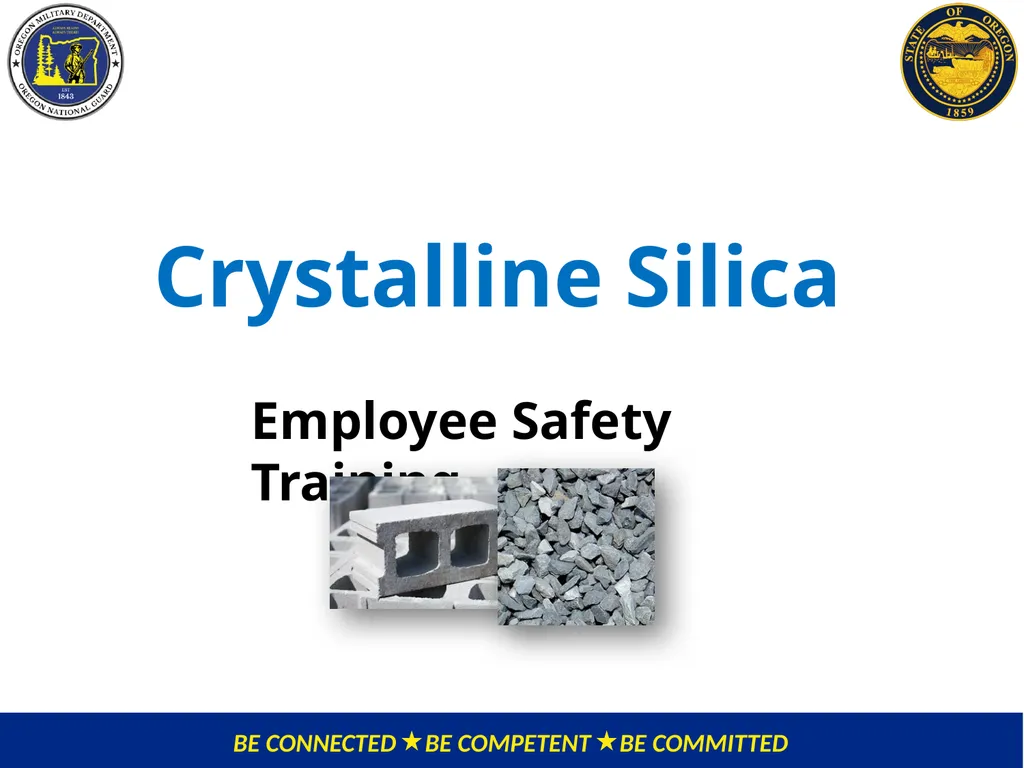
slide2. Crystalline Silica Employee Safety Training<br>
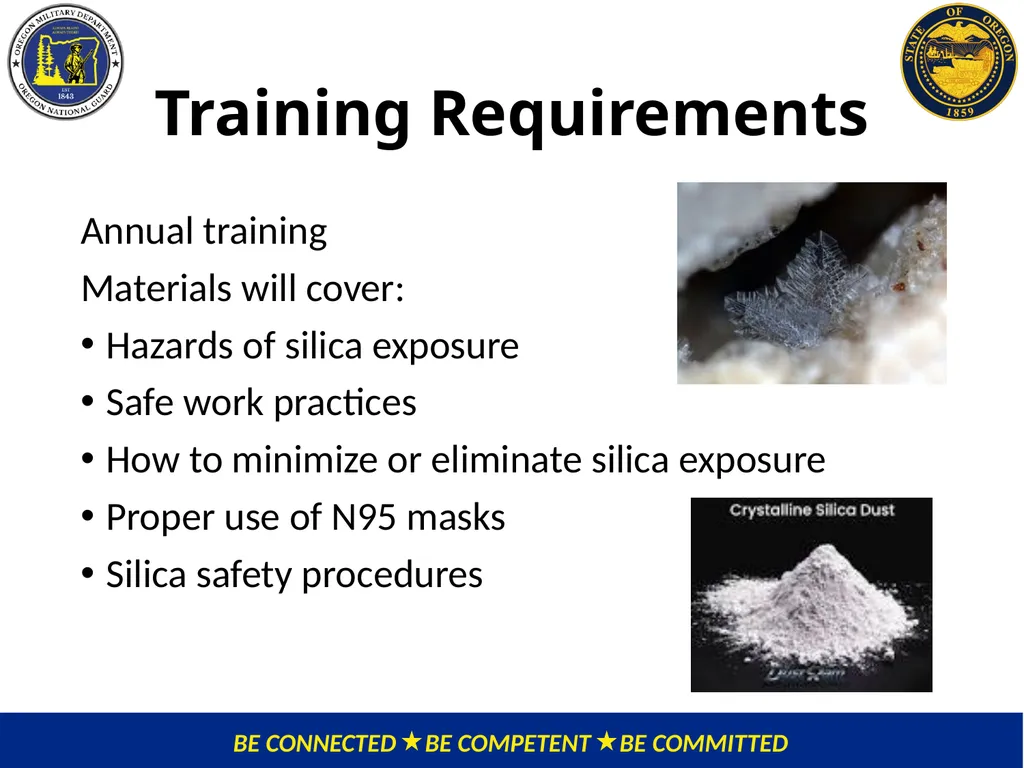
slide3. Training Requirements Annual training
Materials will cover:
Hazards of silica exposure
Safe work practices
How to minimize or eliminate silica exposure
Proper use of N95 masks
Silica safety procedures<br>
slide4. What is Crystalline Silica? Crystalline silica is a material commonly found in industrial and construction processes.
There a 3 forms of crystalline silica: quartz, tridymite, and cristobalite.
Quartz is the most common form of crystalline silica. It is a component of sand, rock, brick, concrete, and many other common industrial materials.<br>
slide5. Site Specific Processes and Equipment that may expose workers to Crystalline Silica Stationary masonry saws
Handheld power saws (any blade diameter)
Handheld power saws for cutting fiber-cement board (with blade diameter of 8 inches or less)
Walk-behind saws
Handheld and stand-mounted drills (including impact and rotary hammer drills)
Jackhammers and handheld powered chipping tools
Handheld grinders for mortar removal (tuckpointing)
Handheld grinders for uses other than mortar removal
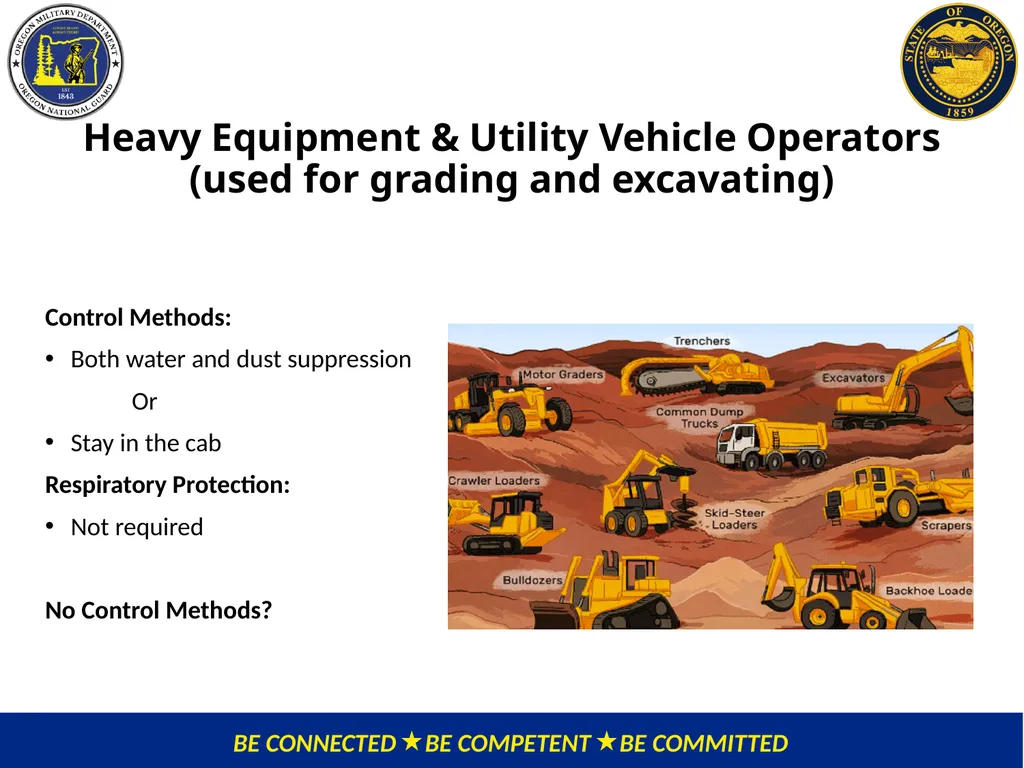
Heavy equipment and utility vehicles used to abrade or fracture silica containing materials or used during demolition activities involving silica-containing materials
Heavy equipment and utility vehicles used for tasks such as grading and excavating but not including demolishing, abrading, or fracturing silica-containing material
Hazmat with silica<br>
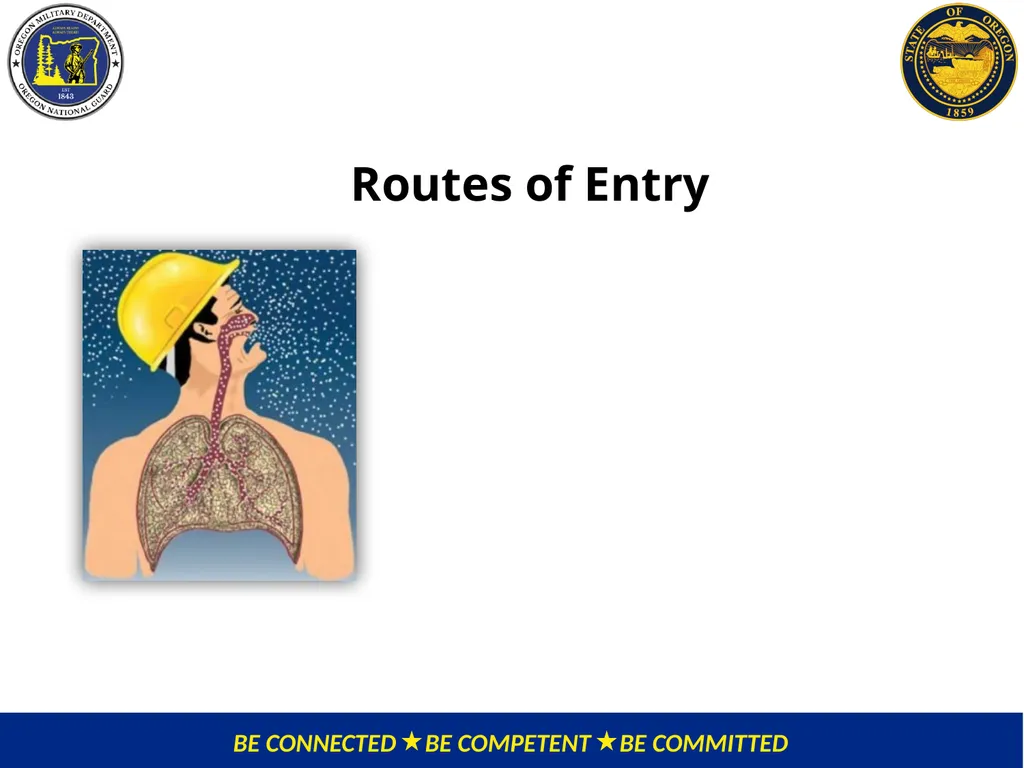
slide6. Routes of Entry Primarily an inhalation hazard
Crystalline silica also has a contact eye and skin hazard, which may result in minor irritation.<br>
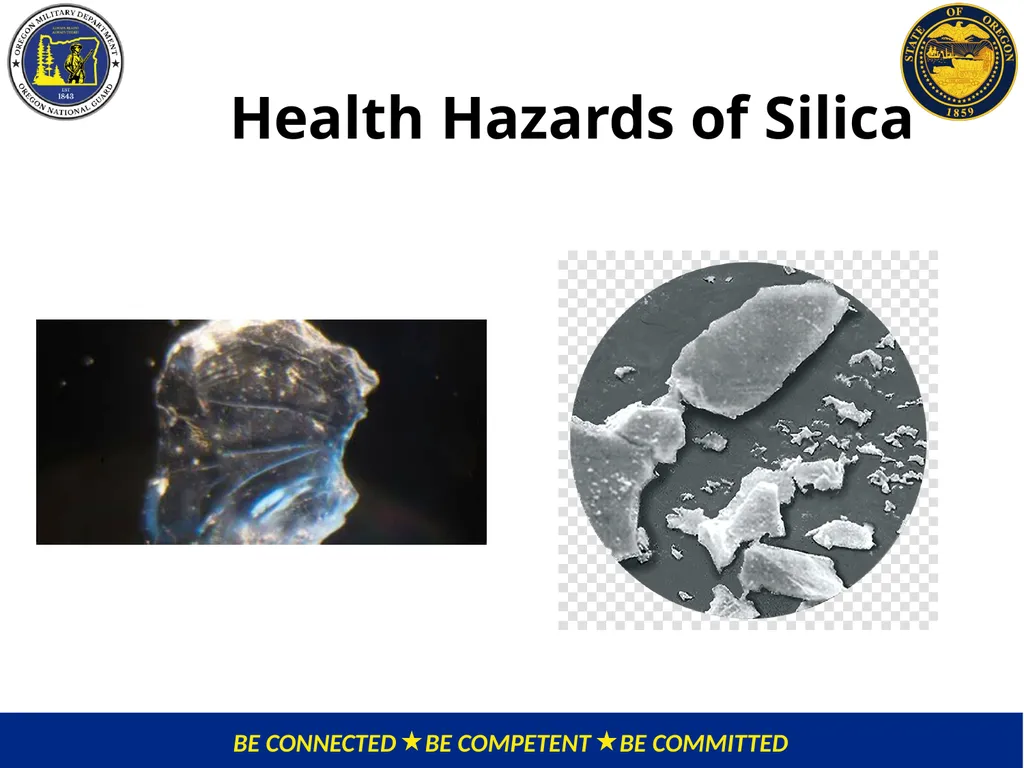
slide7. Health Hazards of Silica<br>
slide8. Health Hazards of Silica Formation of nodules can develop into a disease called silicosis.
Slowly progressive, irreversible, and potentially fatal.
Once established, it can continue to progress even if you’re no longer exposed.<br>
slide9. Health Hazards of Silica Three types of silicosis: acute, chronic, and accelerated.
Acute: worker exposed to extremely high levels and may show symptoms only after a few weeks.
Chronic: Low but frequent exposure.
Accelerated: Develops after worker is exposed to high levels for a shorter period of time.<br>
slide10. Stages of Silicosis Early stages: No symptoms
Disease progression: Symptoms appear.
Later stages: Symptoms worsen.
Advanced or severe cases: Terminal.<br>
slide11. Other Increased Health Affects with Silicosis Increased risk for lung infections, including tuberculosis
Chronic obstructive pulmonary disease (COPD), emphysema, chronic bronchitis
Cancer
Kidney and immune system diseases (autoimmune diseases i.e. rheumatoid arthritis, lupus)<br>
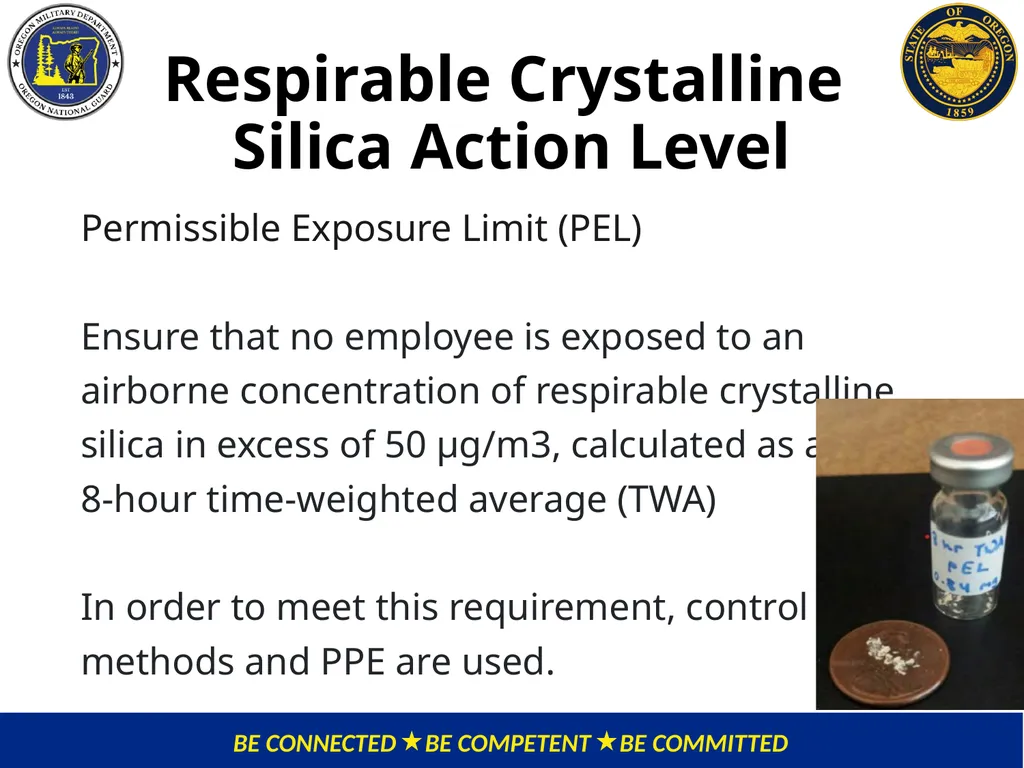
slide12. Respirable Crystalline Silica Action Level Permissible Exposure Limit (PEL)
Ensure that no employee is exposed to an
airborne concentration of respirable crystalline
silica in excess of 50 μg/m3, calculated as an
8-hour time-weighted average (TWA)
In order to meet this requirement, control
methods and PPE are used.<br>
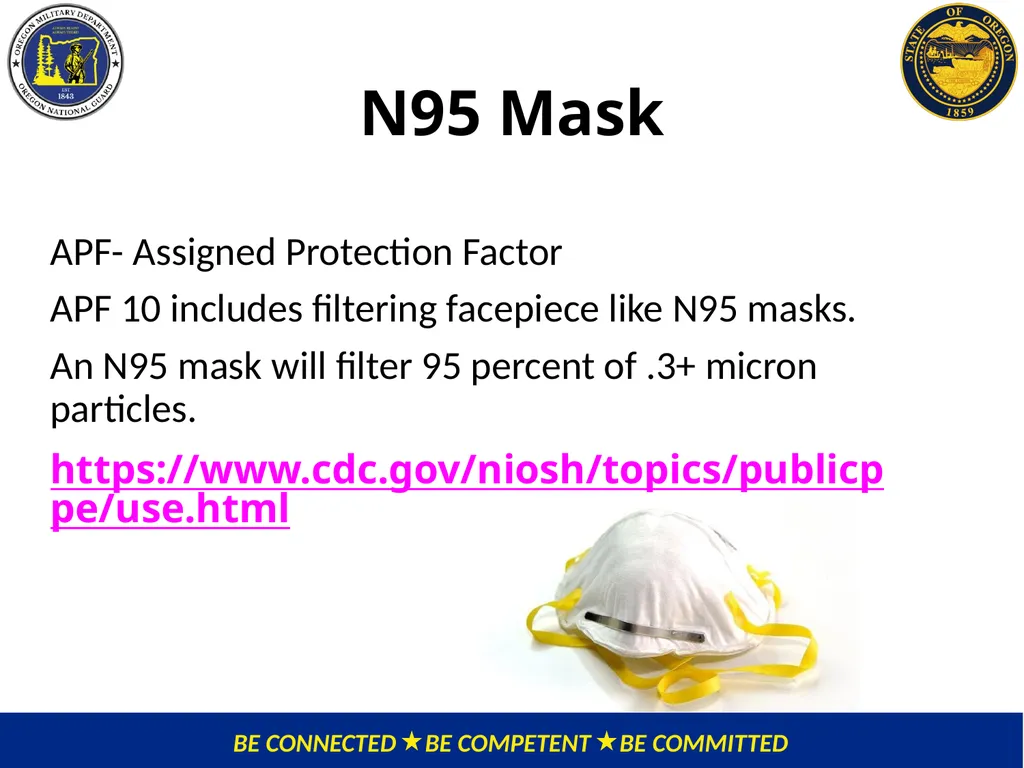
slide13. N95 Mask APF- Assigned Protection Factor
APF 10 includes filtering facepiece like N95 masks.
An N95 mask will filter 95 percent of .3+ micron particles.
https://www.cdc.gov/niosh/topics/publicppe/use.html<br>
slide14. Silica ExposureSite Specific Processes and Equipment<br>
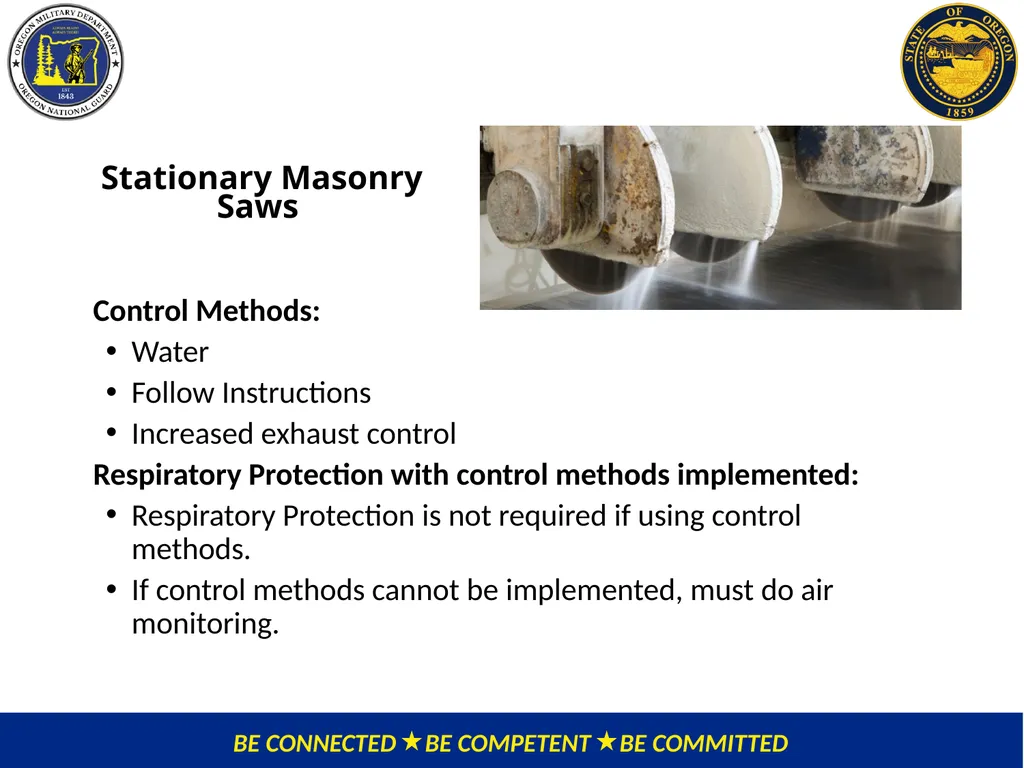
slide15. Stationary Masonry Saws Control Methods:
Water
Follow Instructions
Increased exhaust control
Respiratory Protection with control methods implemented:
Respiratory Protection is not required if using control methods.
If control methods cannot be implemented, must do air monitoring.<br>
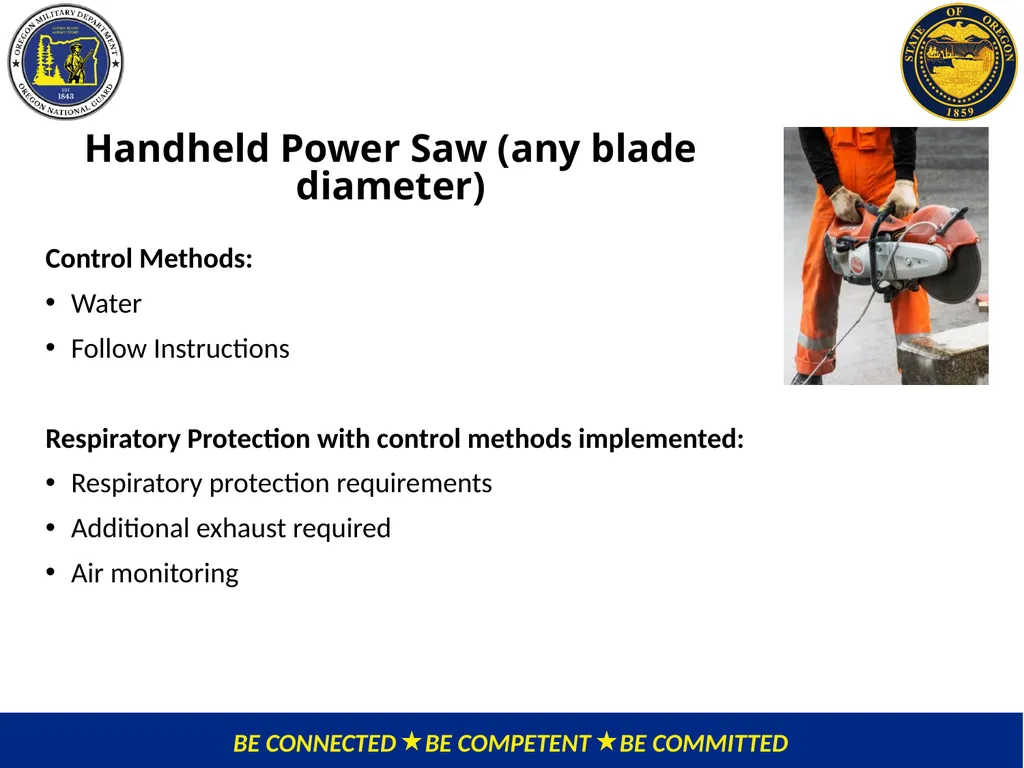
slide16. Handheld Power Saw (any blade diameter) Control Methods:
Water
Follow Instructions
Respiratory Protection with control methods implemented:
Respiratory protection requirements
Additional exhaust required
Air monitoring<br>
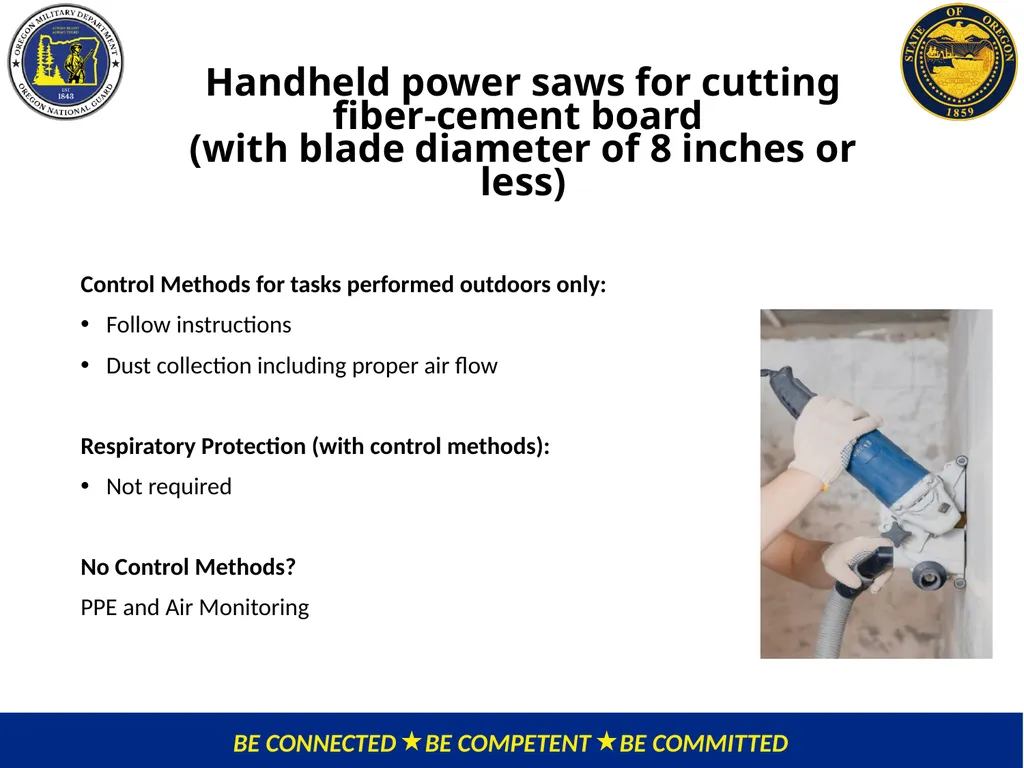
slide17. Handheld power saws for cutting fiber-cement board (with blade diameter of 8 inches or less) Control Methods for tasks performed outdoors only:
Follow instructions
Dust collection including proper air flow
Respiratory Protection (with control methods):
Not required
No Control Methods?
PPE and Air Monitoring<br>
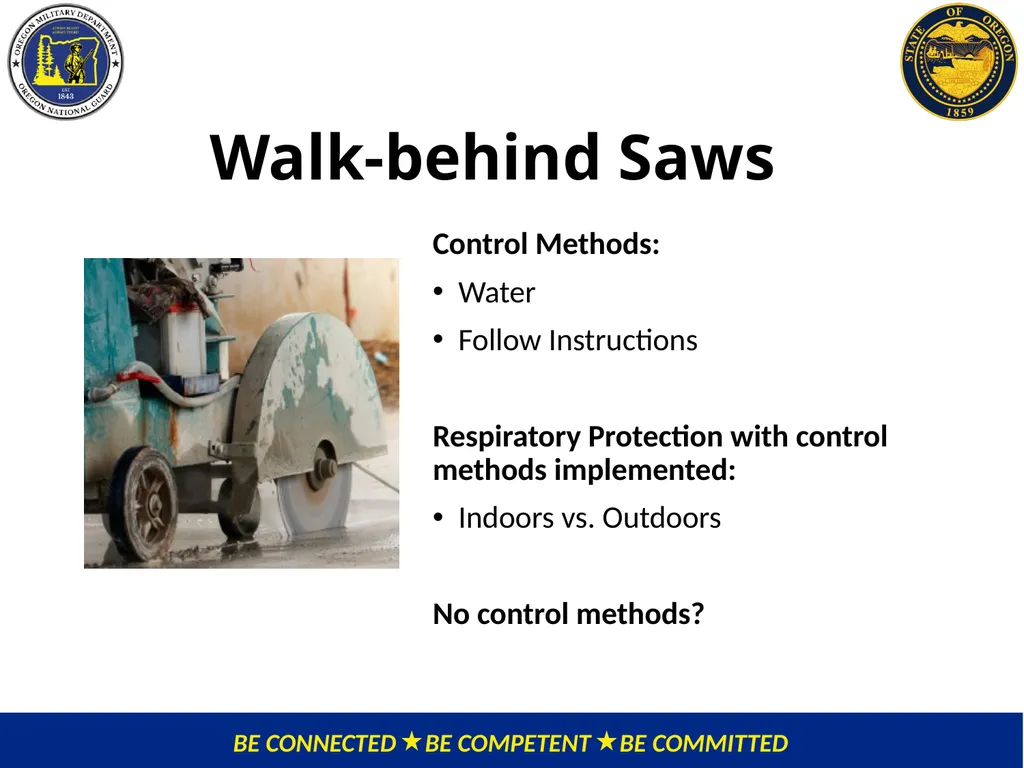
slide18. Walk-behind Saws Control Methods:
Water
Follow Instructions
Respiratory Protection with control methods implemented:
Indoors vs. Outdoors
No control methods?<br>
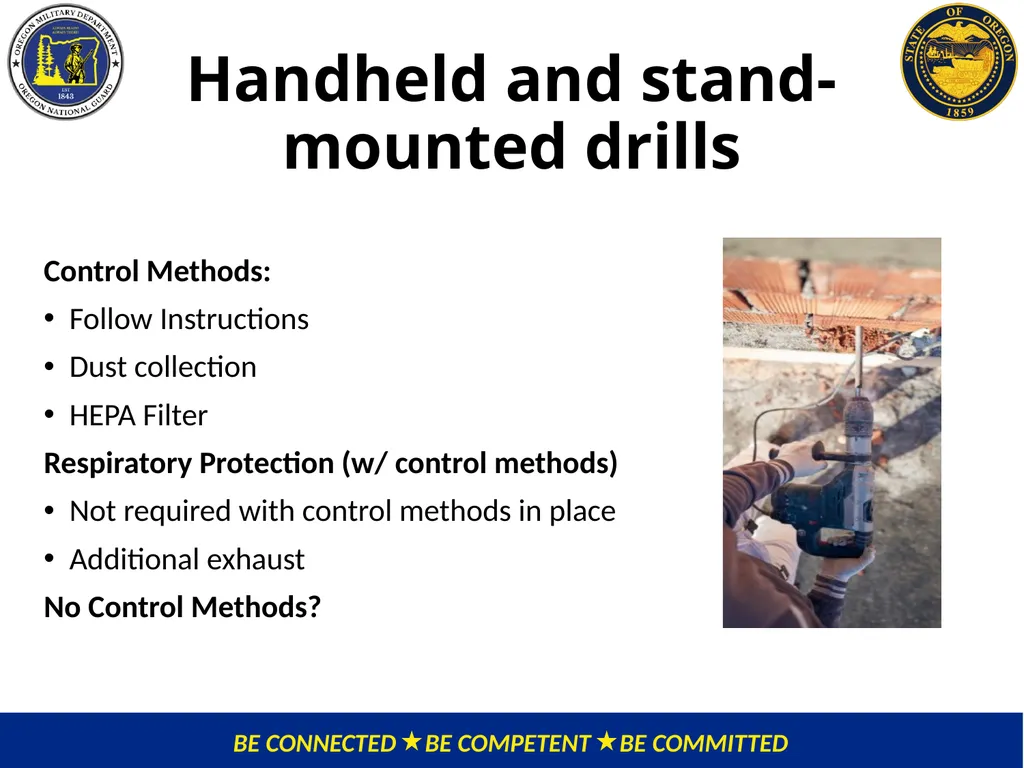
slide19. Handheld and stand-mounted drills Control Methods:
Follow Instructions
Dust collection
HEPA Filter
Respiratory Protection (w/ control methods)
Not required with control methods in place
Additional exhaust
No Control Methods?<br>
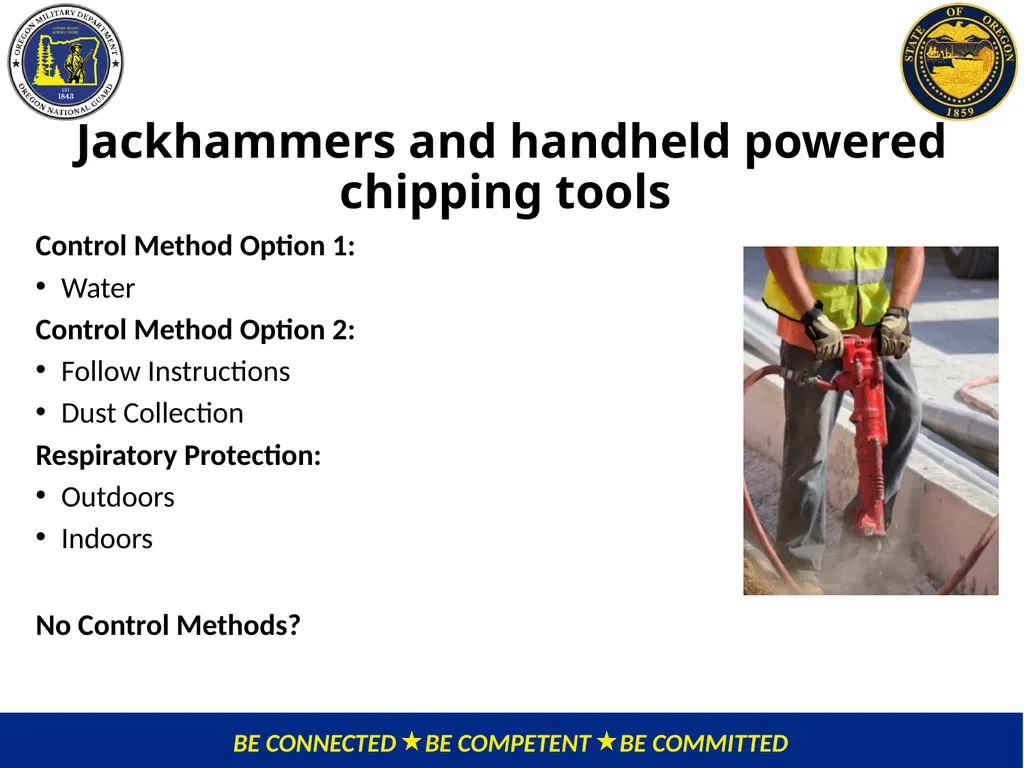
slide20. Jackhammers and handheld powered chipping tools Control Method Option 1:
Water
Control Method Option 2:
Follow Instructions
Dust Collection
Respiratory Protection:
Outdoors
Indoors
No Control Methods?<br>
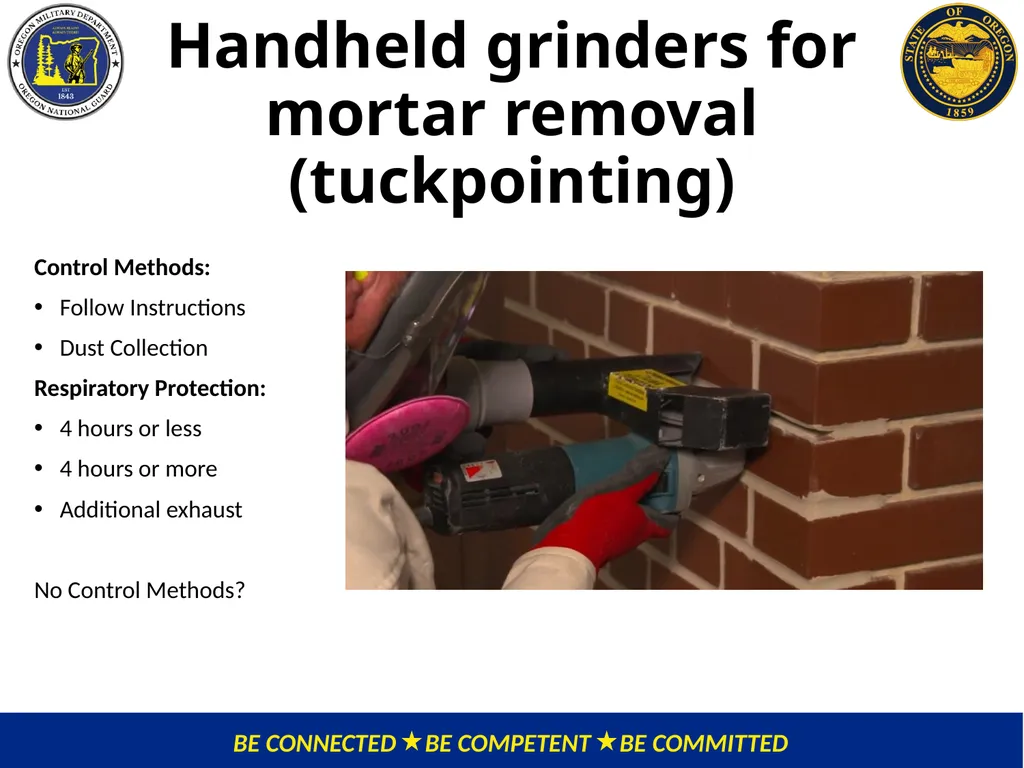
slide21. Handheld grinders for mortar removal (tuckpointing) Control Methods:
Follow Instructions
Dust Collection
Respiratory Protection:
4 hours or less
4 hours or more
Additional exhaust
No Control Methods?<br>
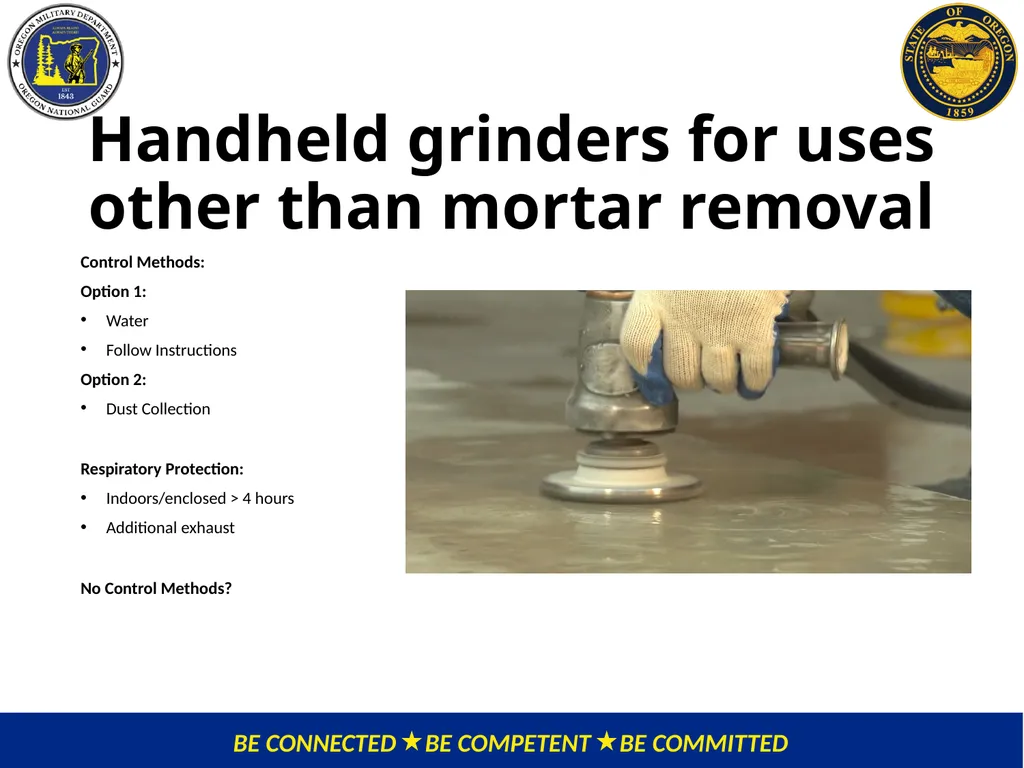
slide22. Handheld grinders for uses other than mortar removal Control Methods:
Option 1:
Water
Follow Instructions
Option 2:
Dust Collection
Respiratory Protection:
Indoors/enclosed > 4 hours
Additional exhaust
No Control Methods?<br>
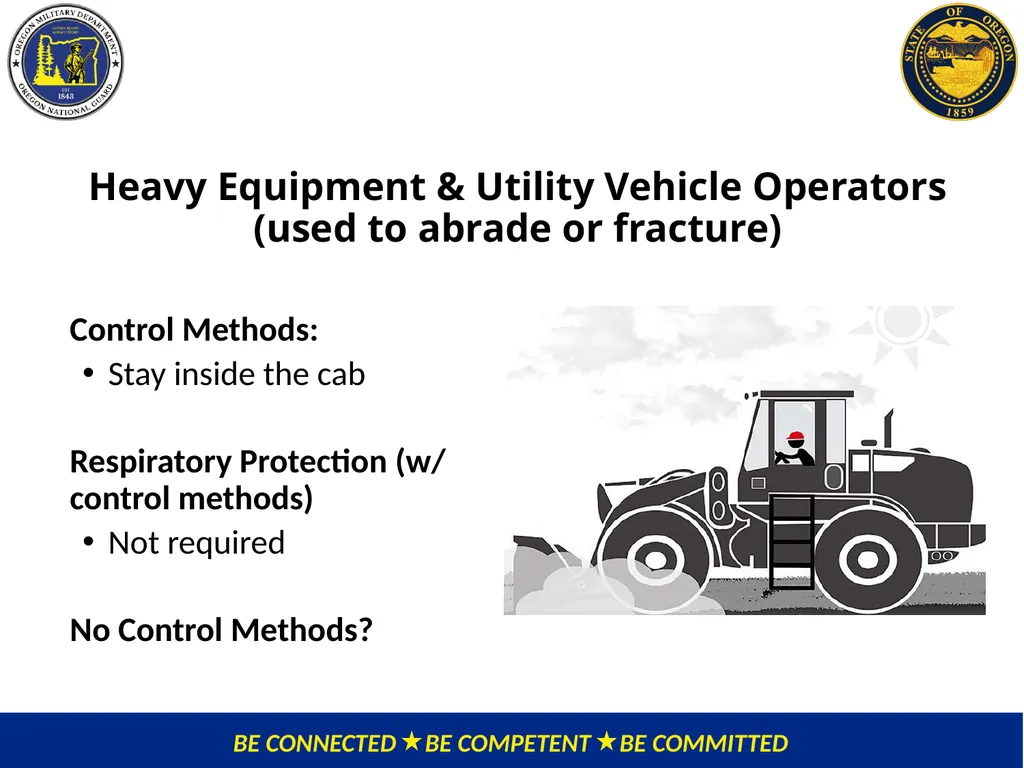
slide23. Heavy Equipment & Utility Vehicle Operators(used to abrade or fracture) Control Methods:
Stay inside the cab
Respiratory Protection (w/ control methods)
Not required
No Control Methods?<br>
slide24. Heavy Equipment & Utility Vehicle Operators(used for grading and excavating) Control Methods:
Both water and dust suppression
Or
Stay in the cab
Respiratory Protection:
Not required
No Control Methods?<br>
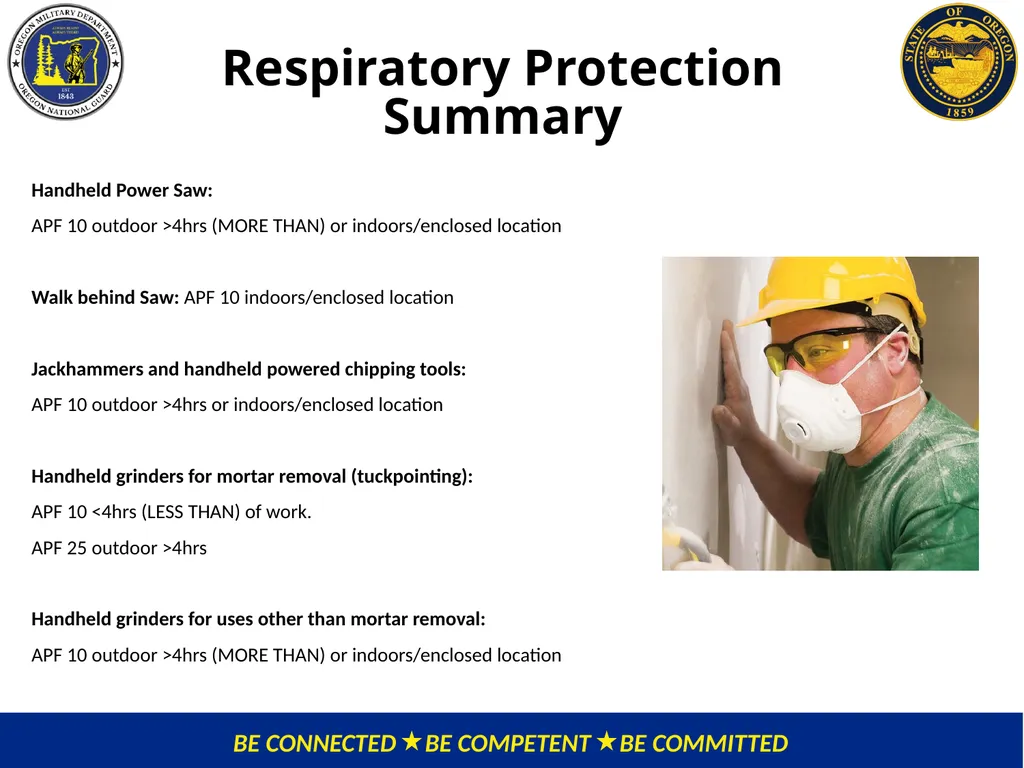
slide25. Respiratory Protection Summary Handheld Power Saw:
APF 10 outdoor >4hrs (MORE THAN) or indoors/enclosed location
Walk behind Saw: APF 10 indoors/enclosed location
Jackhammers and handheld powered chipping tools:
APF 10 outdoor >4hrs or indoors/enclosed location
Handheld grinders for mortar removal (tuckpointing):
APF 10 <4hrs (LESS THAN) of work.
APF 25 outdoor >4hrs
Handheld grinders for uses other than mortar removal:
APF 10 outdoor >4hrs (MORE THAN) or indoors/enclosed location<br>
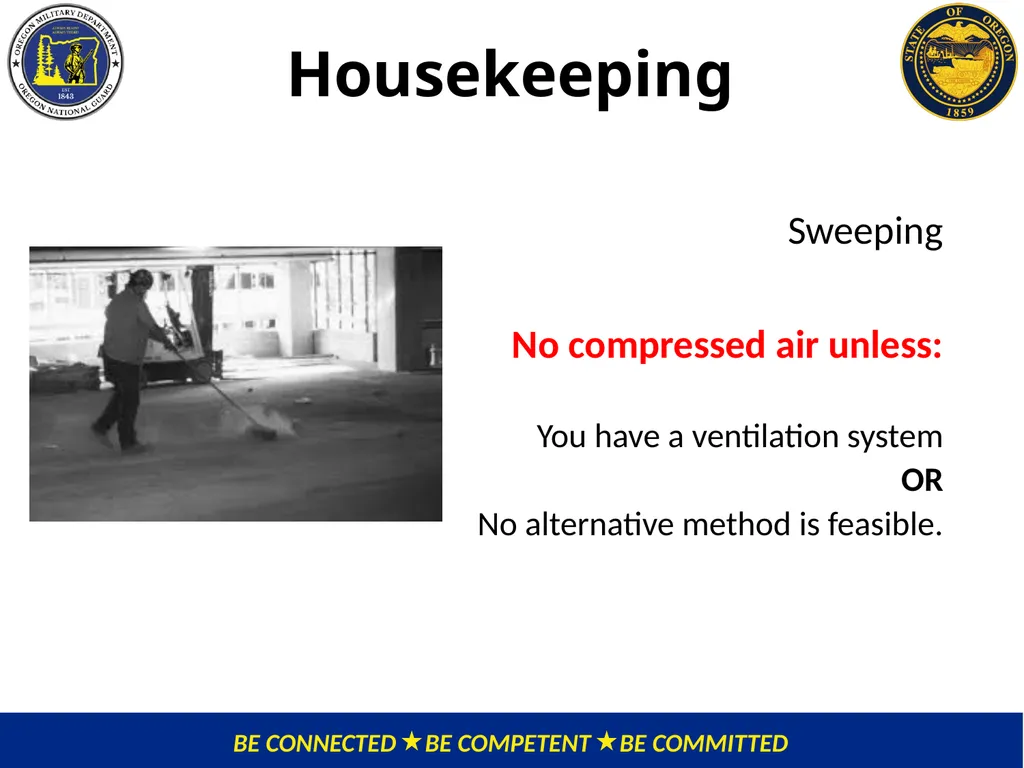
slide26. Housekeeping Sweeping
No compressed air unless:
You have a ventilation system
OR
No alternative method is feasible.<br>
slide27. References and Resources OR-OSHA Oregon Occupational Safety and Health : Silica
SAIF.com
NIOSH and CDC.com - Silica and Worker Health | Silica | CDC
Work Safely with Silica www.silica-safe.org
Your local safety committee<br>
slide28. Thank you!
Questions?<br>
slide2. Crystalline Silica Employee Safety Training<br>
slide3. Training Requirements Annual training
Materials will cover:
Hazards of silica exposure
Safe work practices
How to minimize or eliminate silica exposure
Proper use of N95 masks
Silica safety procedures<br>
slide4. What is Crystalline Silica? Crystalline silica is a material commonly found in industrial and construction processes.
There a 3 forms of crystalline silica: quartz, tridymite, and cristobalite.
Quartz is the most common form of crystalline silica. It is a component of sand, rock, brick, concrete, and many other common industrial materials.<br>
slide5. Site Specific Processes and Equipment that may expose workers to Crystalline Silica Stationary masonry saws
Handheld power saws (any blade diameter)
Handheld power saws for cutting fiber-cement board (with blade diameter of 8 inches or less)
Walk-behind saws
Handheld and stand-mounted drills (including impact and rotary hammer drills)
Jackhammers and handheld powered chipping tools
Handheld grinders for mortar removal (tuckpointing)
Handheld grinders for uses other than mortar removal
Heavy equipment and utility vehicles used to abrade or fracture silica containing materials or used during demolition activities involving silica-containing materials
Heavy equipment and utility vehicles used for tasks such as grading and excavating but not including demolishing, abrading, or fracturing silica-containing material
Hazmat with silica<br>
slide6. Routes of Entry Primarily an inhalation hazard
Crystalline silica also has a contact eye and skin hazard, which may result in minor irritation.<br>
slide7. Health Hazards of Silica<br>
slide8. Health Hazards of Silica Formation of nodules can develop into a disease called silicosis.
Slowly progressive, irreversible, and potentially fatal.
Once established, it can continue to progress even if you’re no longer exposed.<br>
slide9. Health Hazards of Silica Three types of silicosis: acute, chronic, and accelerated.
Acute: worker exposed to extremely high levels and may show symptoms only after a few weeks.
Chronic: Low but frequent exposure.
Accelerated: Develops after worker is exposed to high levels for a shorter period of time.<br>
slide10. Stages of Silicosis Early stages: No symptoms
Disease progression: Symptoms appear.
Later stages: Symptoms worsen.
Advanced or severe cases: Terminal.<br>
slide11. Other Increased Health Affects with Silicosis Increased risk for lung infections, including tuberculosis
Chronic obstructive pulmonary disease (COPD), emphysema, chronic bronchitis
Cancer
Kidney and immune system diseases (autoimmune diseases i.e. rheumatoid arthritis, lupus)<br>
slide12. Respirable Crystalline Silica Action Level Permissible Exposure Limit (PEL)
Ensure that no employee is exposed to an
airborne concentration of respirable crystalline
silica in excess of 50 μg/m3, calculated as an
8-hour time-weighted average (TWA)
In order to meet this requirement, control
methods and PPE are used.<br>
slide13. N95 Mask APF- Assigned Protection Factor
APF 10 includes filtering facepiece like N95 masks.
An N95 mask will filter 95 percent of .3+ micron particles.
https://www.cdc.gov/niosh/topics/publicppe/use.html<br>
slide14. Silica ExposureSite Specific Processes and Equipment<br>
slide15. Stationary Masonry Saws Control Methods:
Water
Follow Instructions
Increased exhaust control
Respiratory Protection with control methods implemented:
Respiratory Protection is not required if using control methods.
If control methods cannot be implemented, must do air monitoring.<br>
slide16. Handheld Power Saw (any blade diameter) Control Methods:
Water
Follow Instructions
Respiratory Protection with control methods implemented:
Respiratory protection requirements
Additional exhaust required
Air monitoring<br>
slide17. Handheld power saws for cutting fiber-cement board (with blade diameter of 8 inches or less) Control Methods for tasks performed outdoors only:
Follow instructions
Dust collection including proper air flow
Respiratory Protection (with control methods):
Not required
No Control Methods?
PPE and Air Monitoring<br>
slide18. Walk-behind Saws Control Methods:
Water
Follow Instructions
Respiratory Protection with control methods implemented:
Indoors vs. Outdoors
No control methods?<br>
slide19. Handheld and stand-mounted drills Control Methods:
Follow Instructions
Dust collection
HEPA Filter
Respiratory Protection (w/ control methods)
Not required with control methods in place
Additional exhaust
No Control Methods?<br>
slide20. Jackhammers and handheld powered chipping tools Control Method Option 1:
Water
Control Method Option 2:
Follow Instructions
Dust Collection
Respiratory Protection:
Outdoors
Indoors
No Control Methods?<br>
slide21. Handheld grinders for mortar removal (tuckpointing) Control Methods:
Follow Instructions
Dust Collection
Respiratory Protection:
4 hours or less
4 hours or more
Additional exhaust
No Control Methods?<br>
slide22. Handheld grinders for uses other than mortar removal Control Methods:
Option 1:
Water
Follow Instructions
Option 2:
Dust Collection
Respiratory Protection:
Indoors/enclosed > 4 hours
Additional exhaust
No Control Methods?<br>
slide23. Heavy Equipment & Utility Vehicle Operators(used to abrade or fracture) Control Methods:
Stay inside the cab
Respiratory Protection (w/ control methods)
Not required
No Control Methods?<br>
slide24. Heavy Equipment & Utility Vehicle Operators(used for grading and excavating) Control Methods:
Both water and dust suppression
Or
Stay in the cab
Respiratory Protection:
Not required
No Control Methods?<br>
slide25. Respiratory Protection Summary Handheld Power Saw:
APF 10 outdoor >4hrs (MORE THAN) or indoors/enclosed location
Walk behind Saw: APF 10 indoors/enclosed location
Jackhammers and handheld powered chipping tools:
APF 10 outdoor >4hrs or indoors/enclosed location
Handheld grinders for mortar removal (tuckpointing):
APF 10 <4hrs (LESS THAN) of work.
APF 25 outdoor >4hrs
Handheld grinders for uses other than mortar removal:
APF 10 outdoor >4hrs (MORE THAN) or indoors/enclosed location<br>
slide26. Housekeeping Sweeping
No compressed air unless:
You have a ventilation system
OR
No alternative method is feasible.<br>
slide27. References and Resources OR-OSHA Oregon Occupational Safety and Health : Silica
SAIF.com
NIOSH and CDC.com - Silica and Worker Health | Silica | CDC
Work Safely with Silica www.silica-safe.org
Your local safety committee<br>
slide28. Thank you!
Questions?<br>