
Opening Left side of the room – Using





Description: Opening Left side of the room Using dictionaries, define the words myth, fable, and scientific. Work with an elbow partner Right side of the room Using your own knowledge and understanding of the world, give a dictionary type of
Related Topics
Download Presentation
"Opening Left side of the room – Using" is the property of its rightful owner. Permission is granted to download and print the materials on this website for personal, non-commercial use only, and to display it on your personal computer provided you do not modify the materials and that you retain all copyright notices contained in the materials. By downloading content from our website, you accept the terms of this agreement.
Presentation Transcript
slide1. Opening Left side of the room – Using dictionaries, define the words “myth,” “fable,” and “scientific.”
Work with an elbow partner
Right side of the room – Using your own knowledge and understanding of the world, give a dictionary type of definition IN YOUR OWN WORDS for “myth,” “fable,” and “scientific.”
Work with an elbow partner<br>
slide2. Where do we begin when studying mythology?<br>
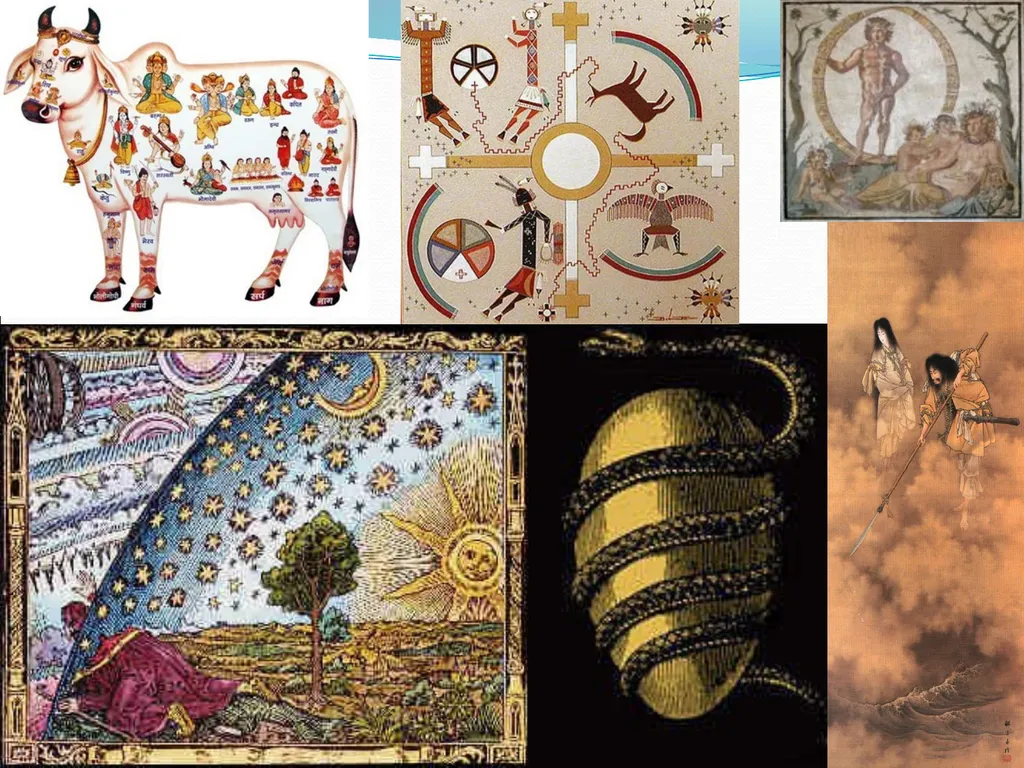
slide3. Creation Myths and Stories From around the world<br>
slide5. Essential Questions? What are the characteristics of a creation myth?
How do different cultures explain the beginning?
What are the similarities and differences in creation myths from around the world?
What unique cultural traits are revealed in the creation myths?<br>
slide6. Innate in human nature is the drive to explore. Chief among these explorations is the desire to explain the origin of man, earth, animals, plants, and other elements of nature.
In an effort to explain these origins, early man invented stories which made sense in regard to his specific time period and culture.
These stories are known today as “Creation Myths and Stories.”<br>
slide7. What is a creation story/myth? A creation myth (or cosmogonic myth) is a symbolic narrative of how the world began and how people first came to inhabit it.
While in popular usage the term myth often refers to false or fanciful stories, this is NOT the case here.
Cultures generally regard their creation myths as true.<br>
slide8. Cont. In the society in which it is told, a creation myth is usually regarded as conveying profound truths, metaphorically, symbolically and sometimes in a historical or literal sense.
They are commonly, although not always, considered cosmogonical myths – that is, they describe the ordering of the cosmos from a state of chaos or amorphousness (lacking definite form; having no specific shape; formless). https://en.wikipedia.org/wiki/Creation_myth<br>
slide9. Common Themes Interestingly, Creation Myths from around the world often share many similar themes.
It is important to remember, however, that these similarities have been attributed by modern scholars, not the inventors of the stories.
Therefore, individual myths cannot be expected to conform exactly to modern stereotypes.
Rather, each creation myth will likely contain several common thematic features.
We will attempt to explore these interesting similarities, while also observing any obvious differences.<br>
slide10. The characteristics of creation Nothingness
Primal ooze
An egg
A serpent
The formation of the earth and geography
The peopling of the world<br>
slide11. Most cultures revered a pantheon of supreme beings (polytheistic)
Some cultures revered a single creator (monotheistic) Characteristics: Supreme Beings<br>
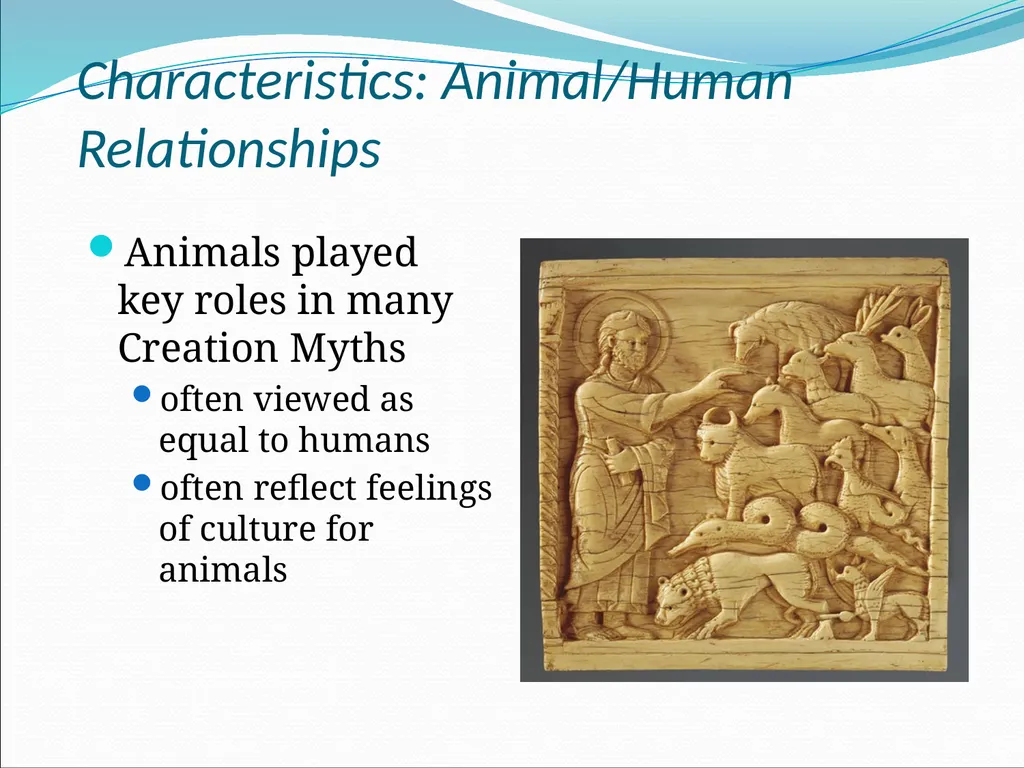
slide12. Animals played key roles in many Creation Myths
often viewed as equal to humans
often reflect feelings of culture for animals Characteristics: Animal/Human Relationships<br>
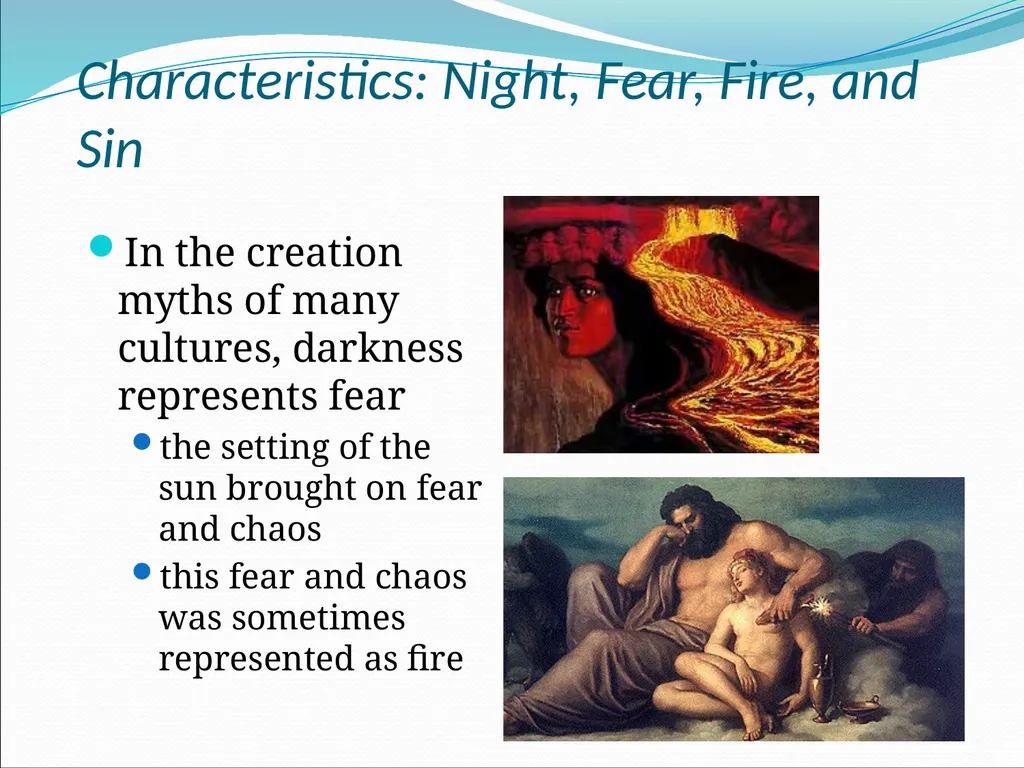
slide13. In the creation myths of many cultures, darkness represents fear
the setting of the sun brought on fear and chaos
this fear and chaos was sometimes represented as fire Characteristics: Night, Fear, Fire, and Sin<br>
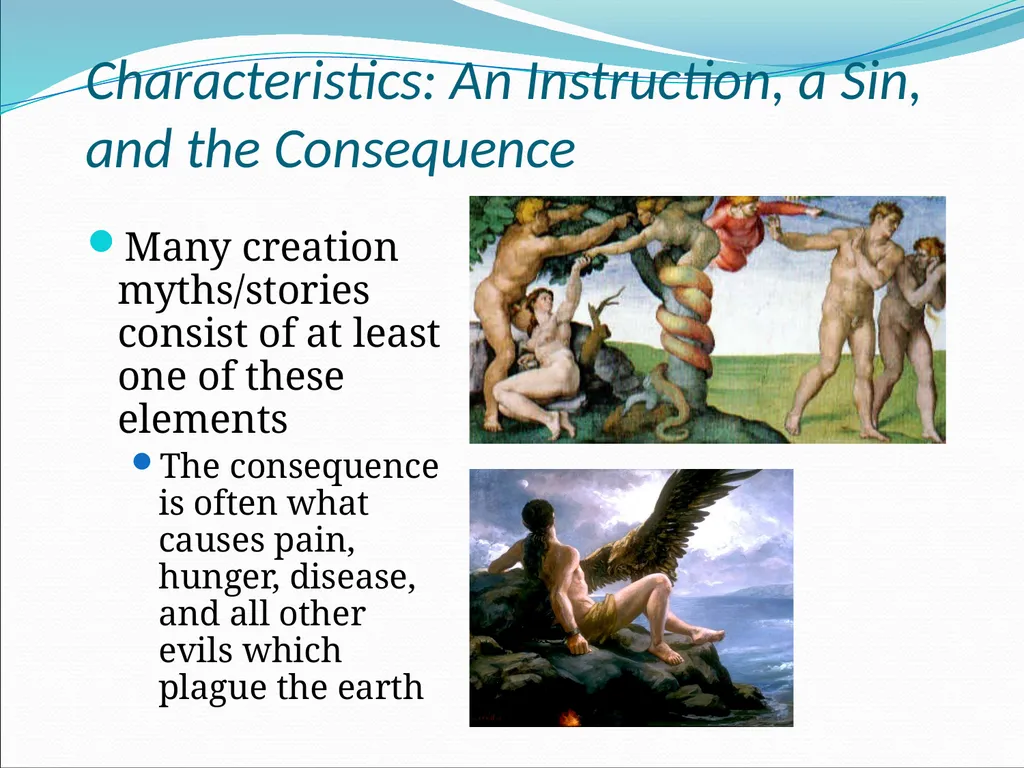
slide14. Many creation myths/stories consist of at least one of these elements
The consequence is often what causes pain, hunger, disease, and all other evils which plague the earth Characteristics: An Instruction, a Sin, and the Consequence<br>
slide15. Created by a god or supernatural being
Establishes:
a connection between human beings and the supernatural world
the place of humans in the hierarchy of life in the universe (below gods, above animals) Characteristics: Creation of Man<br>
slide16. Types of ways in which the earth was Created: By emergence
By sacrifice
By secretion
By thought
By word
By cosmic egg
From ancestors
From chaos
From clay
From dismemberment of primordial being<br>
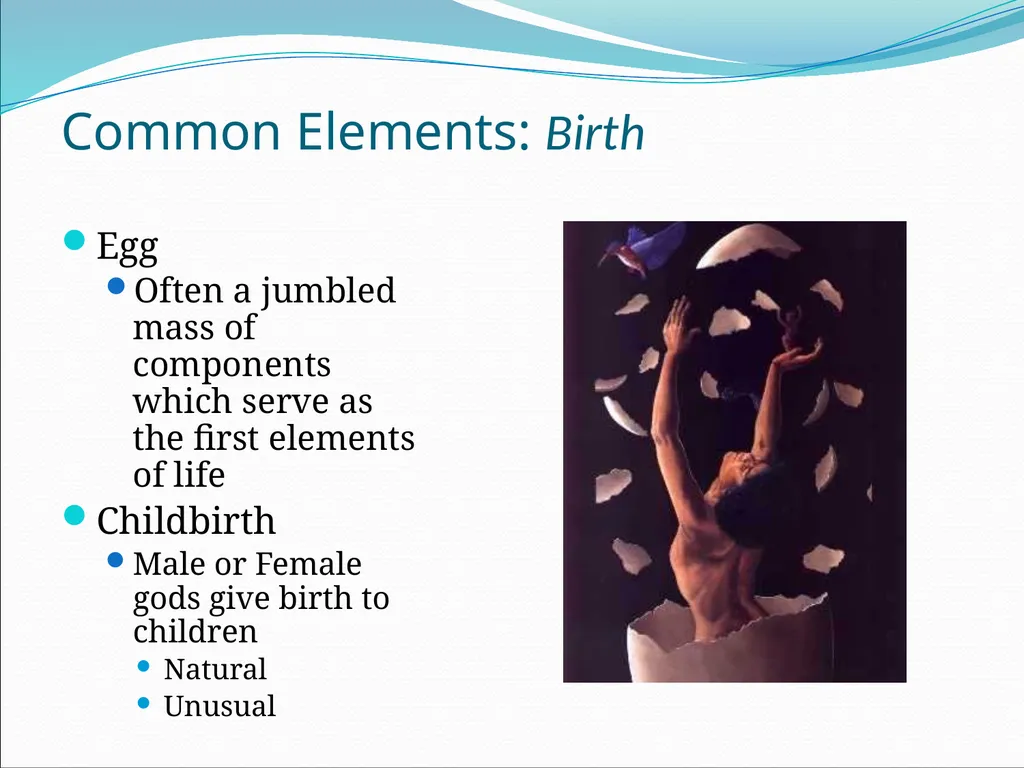
slide17. Common Elements: Birth Egg
Often a jumbled mass of components which serve as the first elements of life
Childbirth
Male or Female gods give birth to children
Natural
Unusual<br>
slide18. Emergence Stories a type of creation myth popular among Native American tribes.
The emergence story stresses the idea of the Earth as a womb from which the people emerge gradually, as in childbirth.
At each stage they grow in knowledge and ability<br>
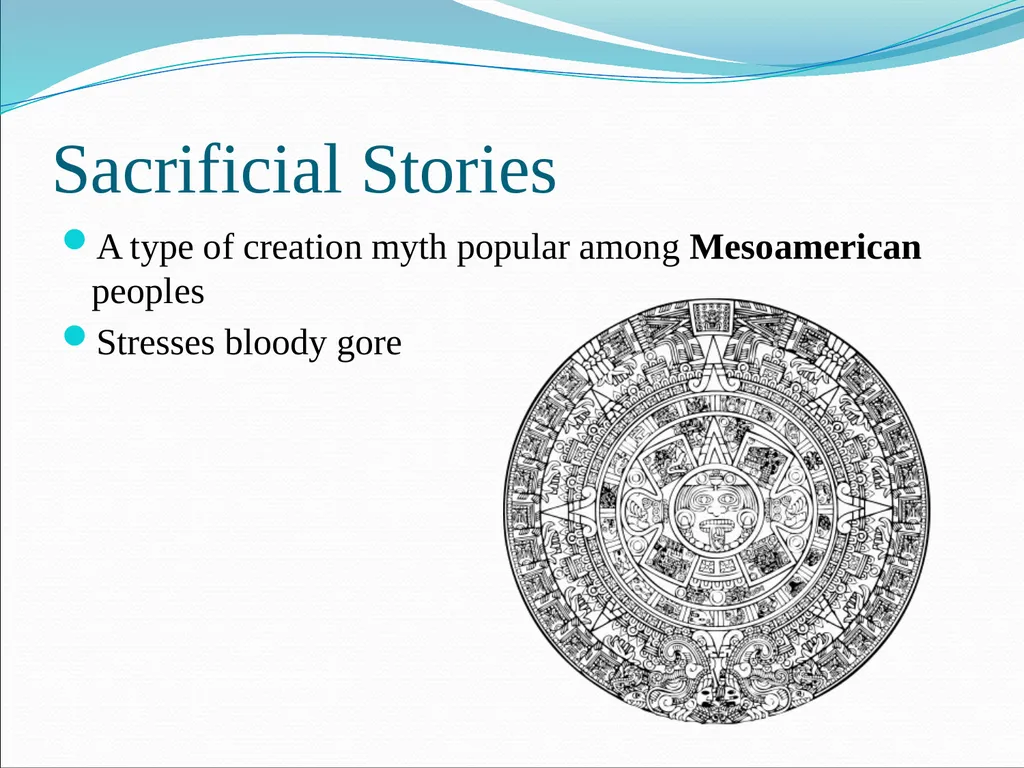
slide19. Sacrificial Stories A type of creation myth popular among Mesoamerican peoples
Stresses bloody gore<br>
slide20. Secretion Stories Type of creation myth used on occasion in Norse legends
Beings formed from the sweat of Ymir, the frost god<br>
slide21. Thought stories Type of creation myth used on occasion in Mayan legends
Gods sitting around thinking about things and they are created while that is happening.<br>
slide22. Spoken word stories Type of creation myth used on occasion in Japanese legends
Type of creation in Bible “let there be light…”
Gods sitting around discussing things to create and then creating, altering, etc.<br>
slide23. Ancestor stories Type of creation myth used the Greeks, Romans, writers of the Bible and many others.
The world begins with two individuals and all other humans are descendants of these two.<br>
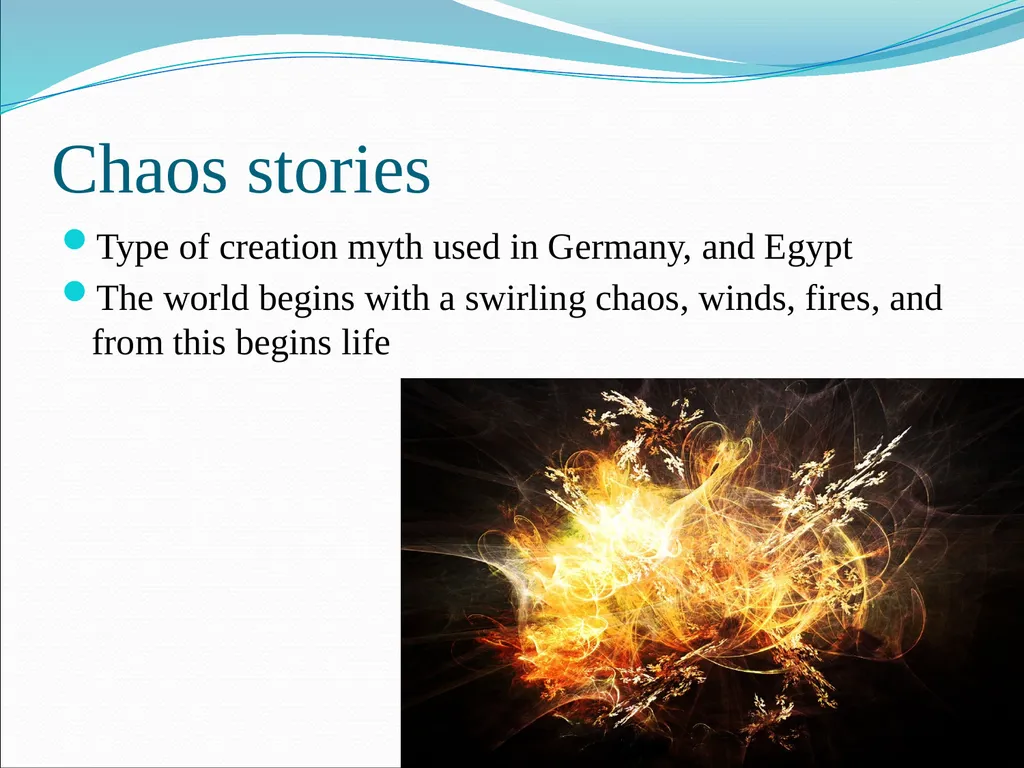
slide24. Chaos stories Type of creation myth used in Germany, and Egypt
The world begins with a swirling chaos, winds, fires, and from this begins life<br>
slide25. Clay stories Type of creation myth used in some African tribal stories
The man, animals, environment can all be created out of clay.<br>
slide26. Dismemberment stories Type of creation myth used in some Hindu cultures, Norse, Greek
A creature consists of everything in the world, but not until he/she/it is separated do they all truly exist.<br>
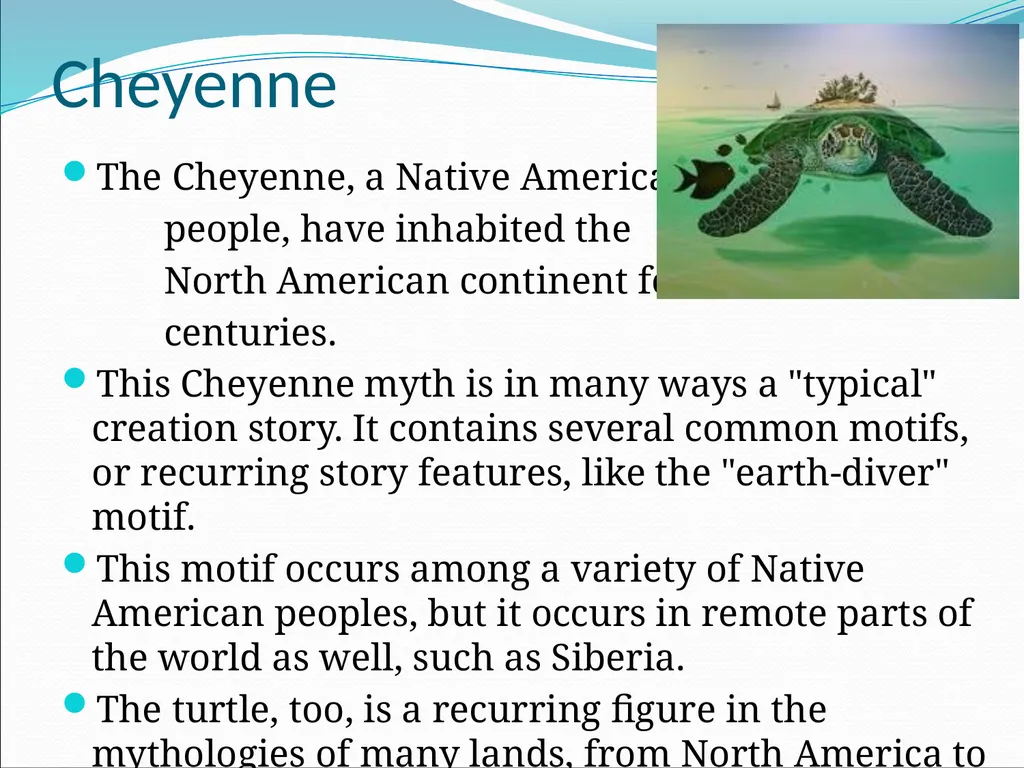
slide27. Cheyenne The Cheyenne, a Native American
people, have inhabited the
North American continent for
centuries.
This Cheyenne myth is in many ways a "typical" creation story. It contains several common motifs, or recurring story features, like the "earth-diver" motif.
This motif occurs among a variety of Native American peoples, but it occurs in remote parts of the world as well, such as Siberia.
The turtle, too, is a recurring figure in the mythologies of many lands, from North America to China and India.<br>
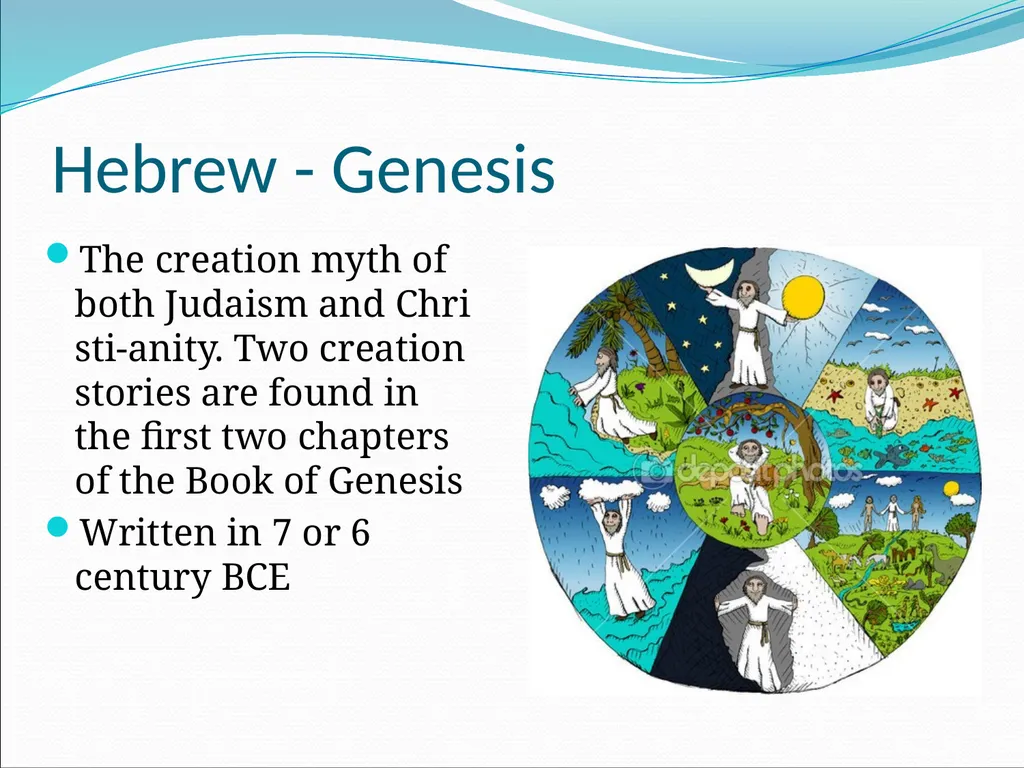
slide28. Hebrew - Genesis The creation myth of both Judaism and Christi-anity. Two creation stories are found in the first two chapters of the Book of Genesis
Written in 7 or 6 century BCE<br>
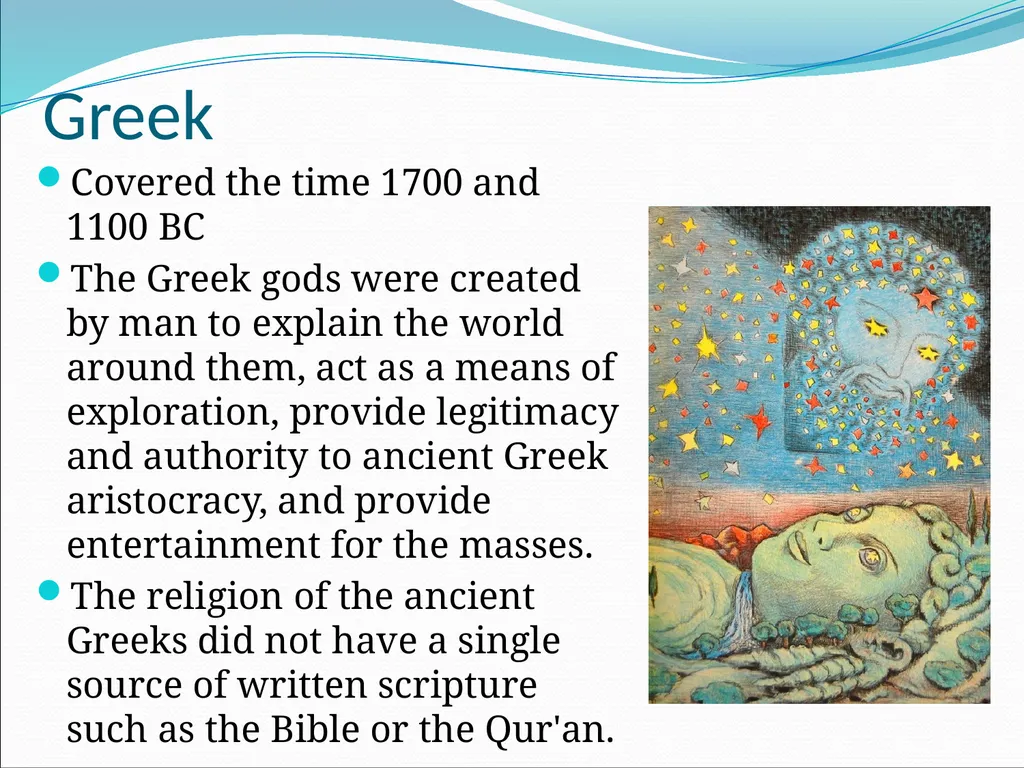
slide29. Greek Covered the time 1700 and 1100 BC
The Greek gods were created by man to explain the world around them, act as a means of exploration, provide legitimacy and authority to ancient Greek aristocracy, and provide entertainment for the masses.
The religion of the ancient Greeks did not have a single source of written scripture such as the Bible or the Qur'an.<br>
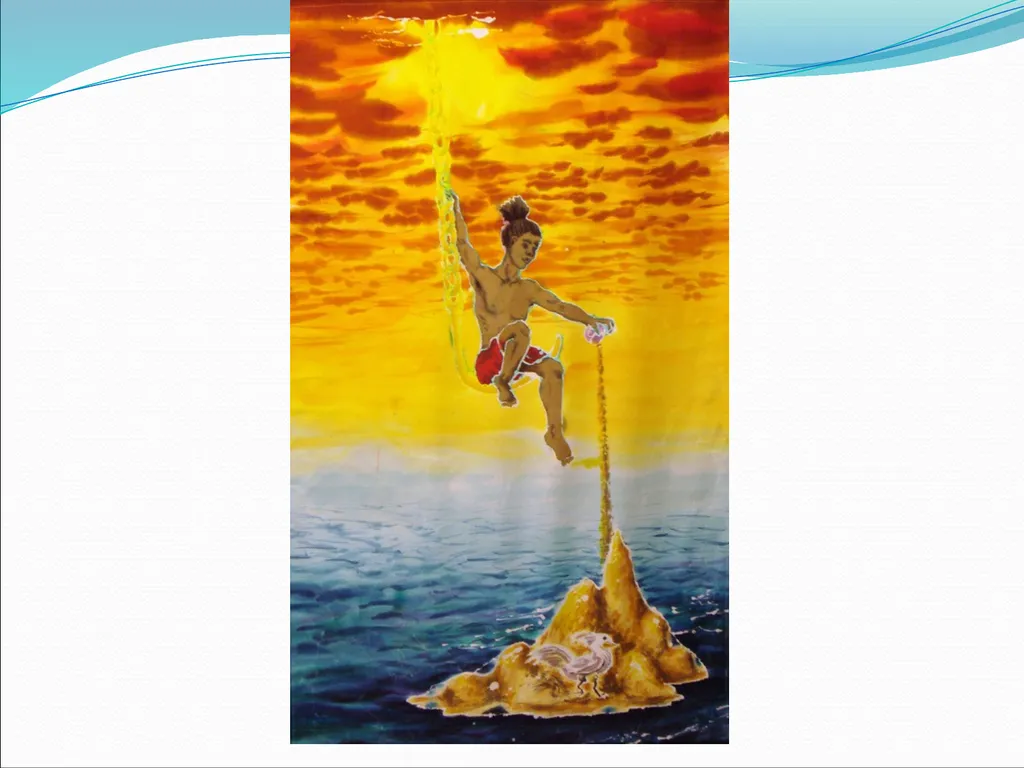
slide30. Yoruba – “The Golden Chain” Archeological evidence shows us that the Yoruba have lived in here since prehistoric times.
The Yoruba have been the most dominant group in this region of Africa for centuries.
The eighteenth century was a particularly difficult one for them; there were civil wars with neighbors and the slave trade destroyed much of the richness of Yoruba society.<br>
slide31. Traditional Yoruba religion has a pantheon of the deities called the Orisha.
There are many varieties of Yoruba religion and there are anywhere between 400 and 700 Yoruba gods. Yoruba adults will often honor several of these.
Some gods existed before the creation of the earth and others are heroes or heroines from the past that became gods after their deaths. Other gods are even natural objects in their environment such as mountains, hills and rivers that have influenced people's lives and history<br>
slide33. Chinese Creation The main traditional religions in
China date from the Imperial
period. They are Confucianism,
Taoism, and Buddism.
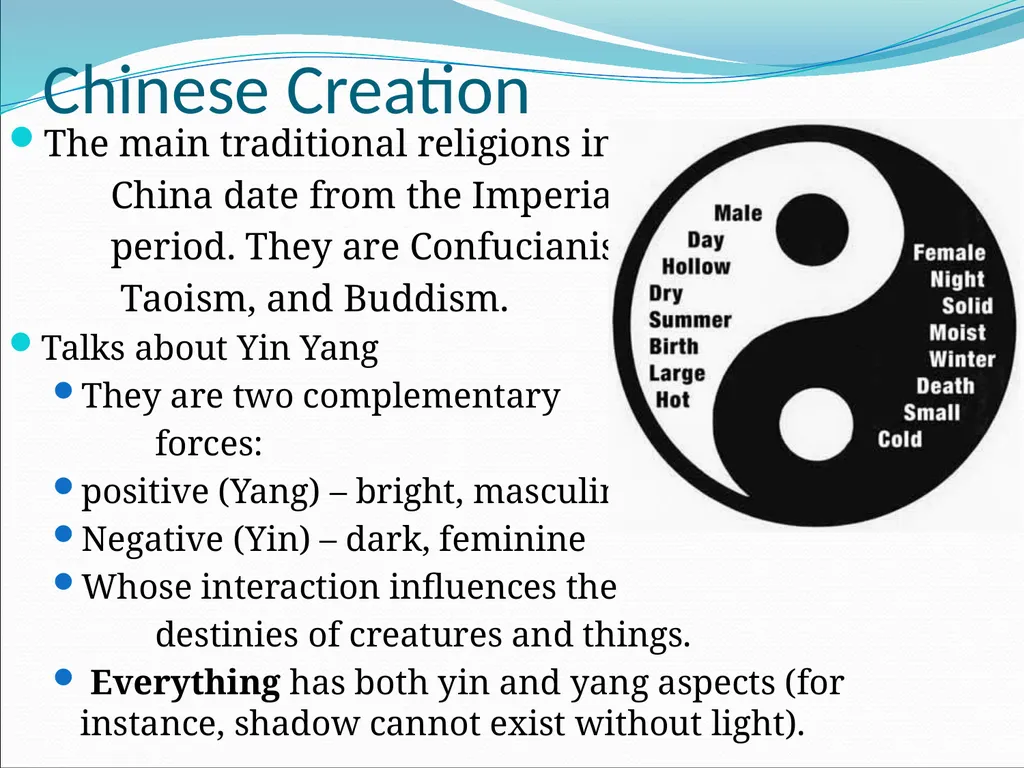
Talks about Yin Yang
They are two complementary
forces:
positive (Yang) – bright, masculine
Negative (Yin) – dark, feminine
Whose interaction influences the
destinies of creatures and things.
Everything has both yin and yang aspects (for instance, shadow cannot exist without light).<br>
slide34. Much like our distant ancestors, we strive to uncover our origins and determine our place in the universe.
Scientists advance new theories each year on the origin of the universe
For some, scientific evidence serves as a basis for creation stories
For others, deeply rooted beliefs remain the cornerstone in their own theories Creation Myths / Stories<br>
Work with an elbow partner
Right side of the room – Using your own knowledge and understanding of the world, give a dictionary type of definition IN YOUR OWN WORDS for “myth,” “fable,” and “scientific.”
Work with an elbow partner<br>
slide2. Where do we begin when studying mythology?<br>
slide3. Creation Myths and Stories From around the world<br>
slide5. Essential Questions? What are the characteristics of a creation myth?
How do different cultures explain the beginning?
What are the similarities and differences in creation myths from around the world?
What unique cultural traits are revealed in the creation myths?<br>
slide6. Innate in human nature is the drive to explore. Chief among these explorations is the desire to explain the origin of man, earth, animals, plants, and other elements of nature.
In an effort to explain these origins, early man invented stories which made sense in regard to his specific time period and culture.
These stories are known today as “Creation Myths and Stories.”<br>
slide7. What is a creation story/myth? A creation myth (or cosmogonic myth) is a symbolic narrative of how the world began and how people first came to inhabit it.
While in popular usage the term myth often refers to false or fanciful stories, this is NOT the case here.
Cultures generally regard their creation myths as true.<br>
slide8. Cont. In the society in which it is told, a creation myth is usually regarded as conveying profound truths, metaphorically, symbolically and sometimes in a historical or literal sense.
They are commonly, although not always, considered cosmogonical myths – that is, they describe the ordering of the cosmos from a state of chaos or amorphousness (lacking definite form; having no specific shape; formless). https://en.wikipedia.org/wiki/Creation_myth<br>
slide9. Common Themes Interestingly, Creation Myths from around the world often share many similar themes.
It is important to remember, however, that these similarities have been attributed by modern scholars, not the inventors of the stories.
Therefore, individual myths cannot be expected to conform exactly to modern stereotypes.
Rather, each creation myth will likely contain several common thematic features.
We will attempt to explore these interesting similarities, while also observing any obvious differences.<br>
slide10. The characteristics of creation Nothingness
Primal ooze
An egg
A serpent
The formation of the earth and geography
The peopling of the world<br>
slide11. Most cultures revered a pantheon of supreme beings (polytheistic)
Some cultures revered a single creator (monotheistic) Characteristics: Supreme Beings<br>
slide12. Animals played key roles in many Creation Myths
often viewed as equal to humans
often reflect feelings of culture for animals Characteristics: Animal/Human Relationships<br>
slide13. In the creation myths of many cultures, darkness represents fear
the setting of the sun brought on fear and chaos
this fear and chaos was sometimes represented as fire Characteristics: Night, Fear, Fire, and Sin<br>
slide14. Many creation myths/stories consist of at least one of these elements
The consequence is often what causes pain, hunger, disease, and all other evils which plague the earth Characteristics: An Instruction, a Sin, and the Consequence<br>
slide15. Created by a god or supernatural being
Establishes:
a connection between human beings and the supernatural world
the place of humans in the hierarchy of life in the universe (below gods, above animals) Characteristics: Creation of Man<br>
slide16. Types of ways in which the earth was Created: By emergence
By sacrifice
By secretion
By thought
By word
By cosmic egg
From ancestors
From chaos
From clay
From dismemberment of primordial being<br>
slide17. Common Elements: Birth Egg
Often a jumbled mass of components which serve as the first elements of life
Childbirth
Male or Female gods give birth to children
Natural
Unusual<br>
slide18. Emergence Stories a type of creation myth popular among Native American tribes.
The emergence story stresses the idea of the Earth as a womb from which the people emerge gradually, as in childbirth.
At each stage they grow in knowledge and ability<br>
slide19. Sacrificial Stories A type of creation myth popular among Mesoamerican peoples
Stresses bloody gore<br>
slide20. Secretion Stories Type of creation myth used on occasion in Norse legends
Beings formed from the sweat of Ymir, the frost god<br>
slide21. Thought stories Type of creation myth used on occasion in Mayan legends
Gods sitting around thinking about things and they are created while that is happening.<br>
slide22. Spoken word stories Type of creation myth used on occasion in Japanese legends
Type of creation in Bible “let there be light…”
Gods sitting around discussing things to create and then creating, altering, etc.<br>
slide23. Ancestor stories Type of creation myth used the Greeks, Romans, writers of the Bible and many others.
The world begins with two individuals and all other humans are descendants of these two.<br>
slide24. Chaos stories Type of creation myth used in Germany, and Egypt
The world begins with a swirling chaos, winds, fires, and from this begins life<br>
slide25. Clay stories Type of creation myth used in some African tribal stories
The man, animals, environment can all be created out of clay.<br>
slide26. Dismemberment stories Type of creation myth used in some Hindu cultures, Norse, Greek
A creature consists of everything in the world, but not until he/she/it is separated do they all truly exist.<br>
slide27. Cheyenne The Cheyenne, a Native American
people, have inhabited the
North American continent for
centuries.
This Cheyenne myth is in many ways a "typical" creation story. It contains several common motifs, or recurring story features, like the "earth-diver" motif.
This motif occurs among a variety of Native American peoples, but it occurs in remote parts of the world as well, such as Siberia.
The turtle, too, is a recurring figure in the mythologies of many lands, from North America to China and India.<br>
slide28. Hebrew - Genesis The creation myth of both Judaism and Christi-anity. Two creation stories are found in the first two chapters of the Book of Genesis
Written in 7 or 6 century BCE<br>
slide29. Greek Covered the time 1700 and 1100 BC
The Greek gods were created by man to explain the world around them, act as a means of exploration, provide legitimacy and authority to ancient Greek aristocracy, and provide entertainment for the masses.
The religion of the ancient Greeks did not have a single source of written scripture such as the Bible or the Qur'an.<br>
slide30. Yoruba – “The Golden Chain” Archeological evidence shows us that the Yoruba have lived in here since prehistoric times.
The Yoruba have been the most dominant group in this region of Africa for centuries.
The eighteenth century was a particularly difficult one for them; there were civil wars with neighbors and the slave trade destroyed much of the richness of Yoruba society.<br>
slide31. Traditional Yoruba religion has a pantheon of the deities called the Orisha.
There are many varieties of Yoruba religion and there are anywhere between 400 and 700 Yoruba gods. Yoruba adults will often honor several of these.
Some gods existed before the creation of the earth and others are heroes or heroines from the past that became gods after their deaths. Other gods are even natural objects in their environment such as mountains, hills and rivers that have influenced people's lives and history<br>
slide33. Chinese Creation The main traditional religions in
China date from the Imperial
period. They are Confucianism,
Taoism, and Buddism.
Talks about Yin Yang
They are two complementary
forces:
positive (Yang) – bright, masculine
Negative (Yin) – dark, feminine
Whose interaction influences the
destinies of creatures and things.
Everything has both yin and yang aspects (for instance, shadow cannot exist without light).<br>
slide34. Much like our distant ancestors, we strive to uncover our origins and determine our place in the universe.
Scientists advance new theories each year on the origin of the universe
For some, scientific evidence serves as a basis for creation stories
For others, deeply rooted beliefs remain the cornerstone in their own theories Creation Myths / Stories<br>