Optimizing Early Infant HIV Diagnosis through the Introduction of Point of Care Testing Post-Market Surveillance Case Study Lesotho, October 2017 Post Market surveillance Post-marketing surveillance (PMS) (also post market surveillance) is
"Optimizing Early Infant HIV Diagnosis through the" is the property of its rightful owner. Permission is granted to
download and print the materials on this website for personal, non-commercial use only, and to display it
on your personal computer provided you do not modify the materials and that you retain all copyright
notices contained in the materials. By downloading content from our website, you accept the terms of this
agreement.
Presentation Transcript
01
Optimizing Early Infant HIV Diagnosis through the Introduction of Point of Care Testing Post-Market Surveillance
Case Study
Lesotho, October 2017<br>
02
Post Market surveillance Post-marketing surveillance (PMS) (also post market surveillance) is the practice of monitoring the safety of a pharmaceutical drug or medical device after it has been released on the market and is an important part of the science of pharmacovigilance.<br>
03
Why ? Devices offer opportunities for improved diagnosis and management of disease, they also can carry substantial risks.
Gvt & Regulatory bodies need to balance the goals of expanding therapeutic options with safeguarding public health
In recognition of the importance of medical devices, the WHO established a Medical Device Unit
focus research and policy on prioritizing access to medical devices in low-resource settings
Dissemination of innovations, and
Training of biomedical personnel to support the use of devices worldwide<br>
04
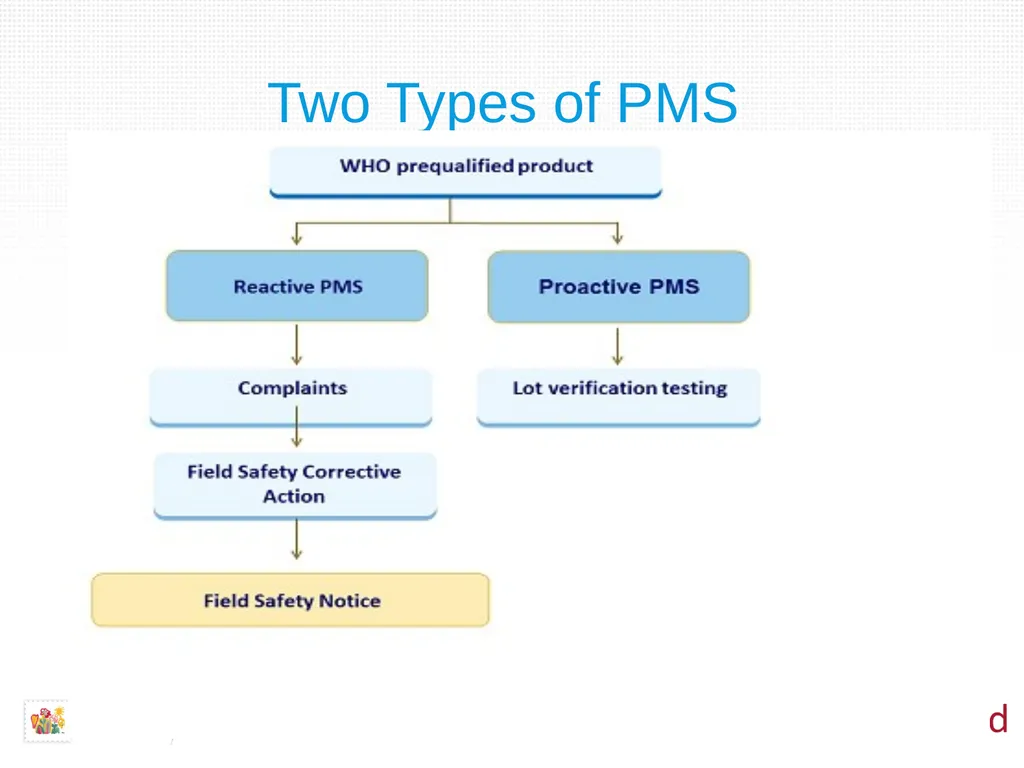
Two Types of PMS<br>
05
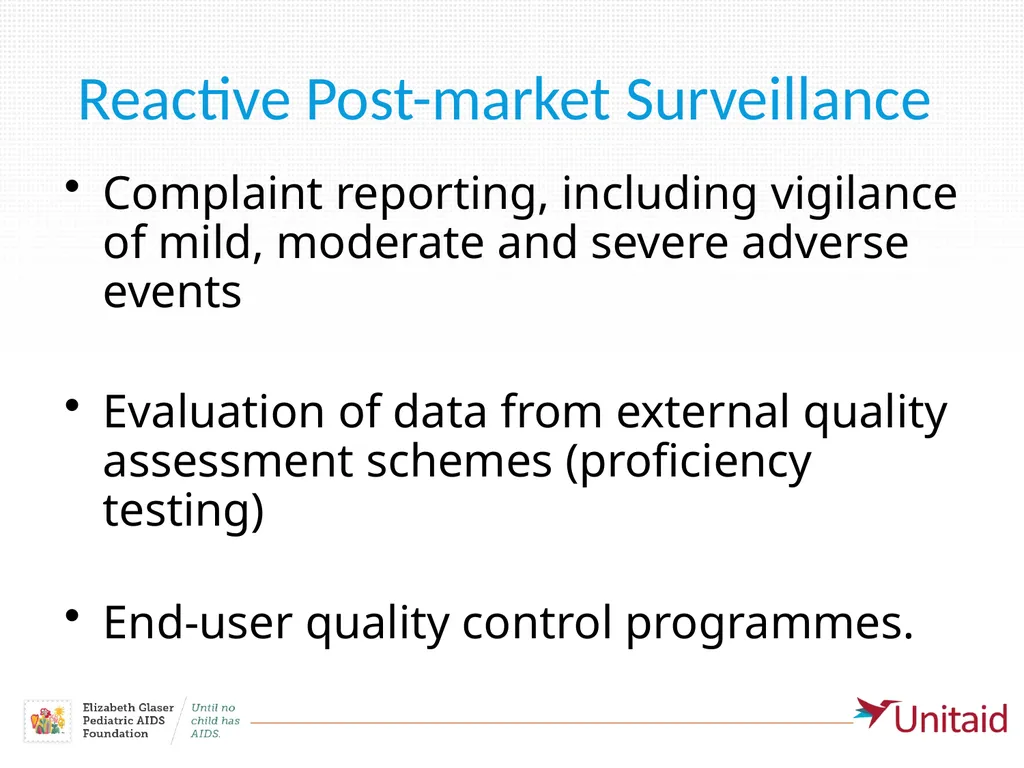
Reactive Post-market Surveillance Complaint reporting, including vigilance of mild, moderate and severe adverse events
Evaluation of data from external quality assessment schemes (proficiency testing)
End-user quality control programmes.<br>
06
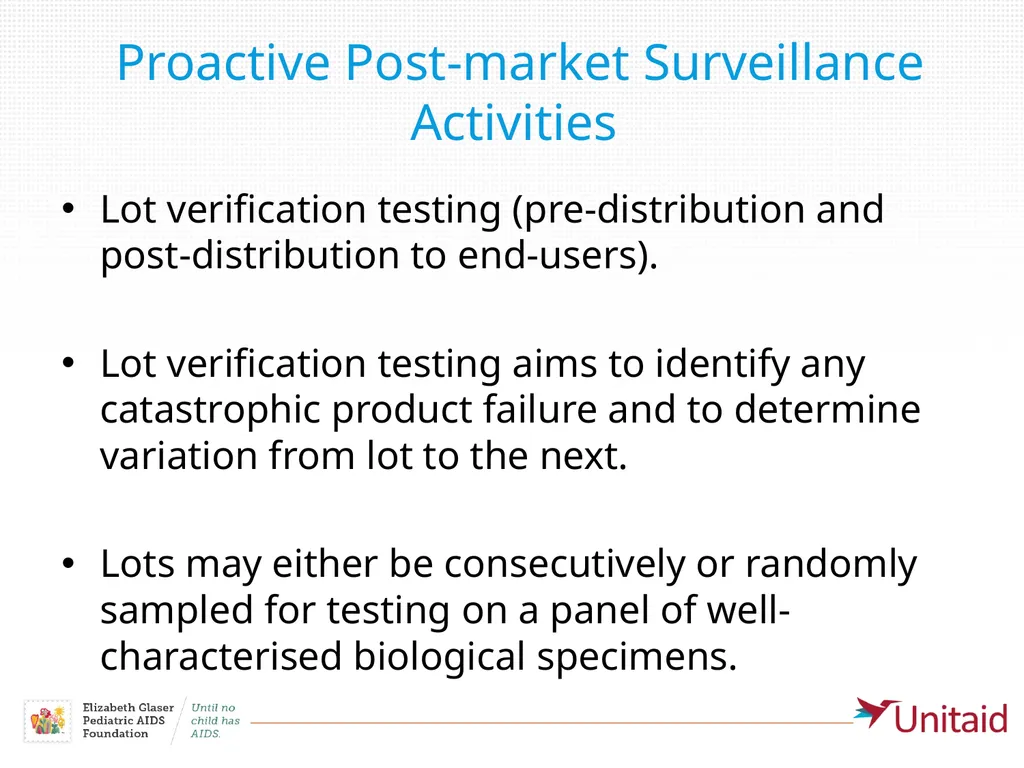
Proactive Post-market Surveillance Activities Lot verification testing (pre-distribution and post-distribution to end-users).
Lot verification testing aims to identify any catastrophic product failure and to determine variation from lot to the next.
Lots may either be consecutively or randomly sampled for testing on a panel of well-characterised biological specimens.<br>
07
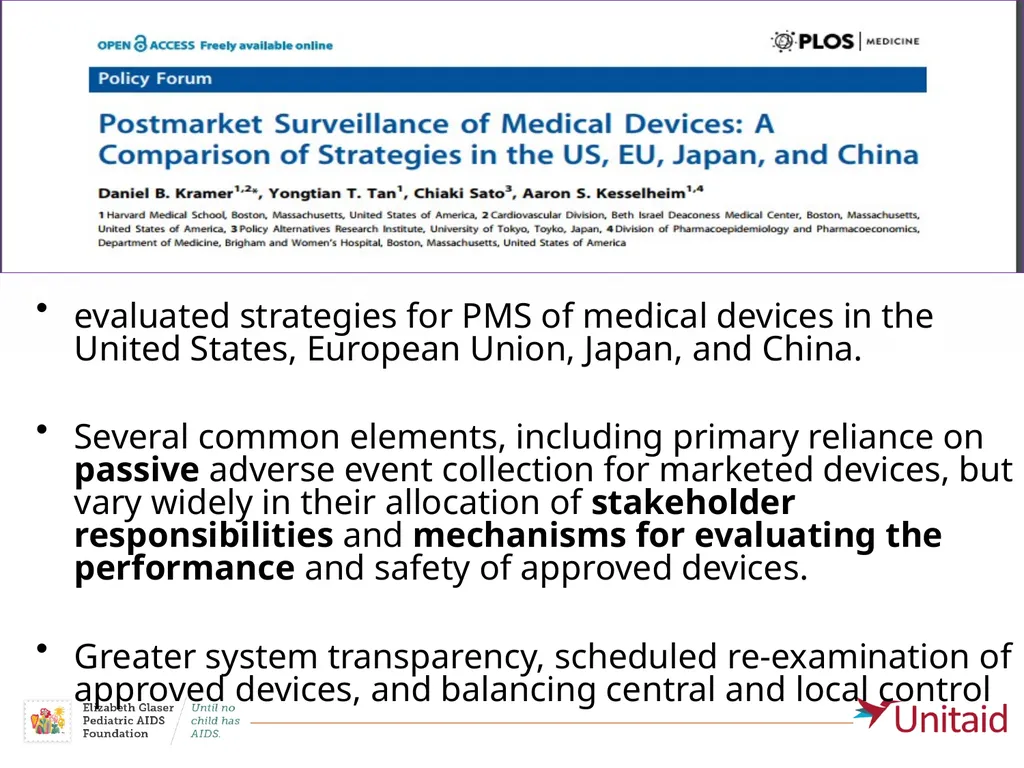
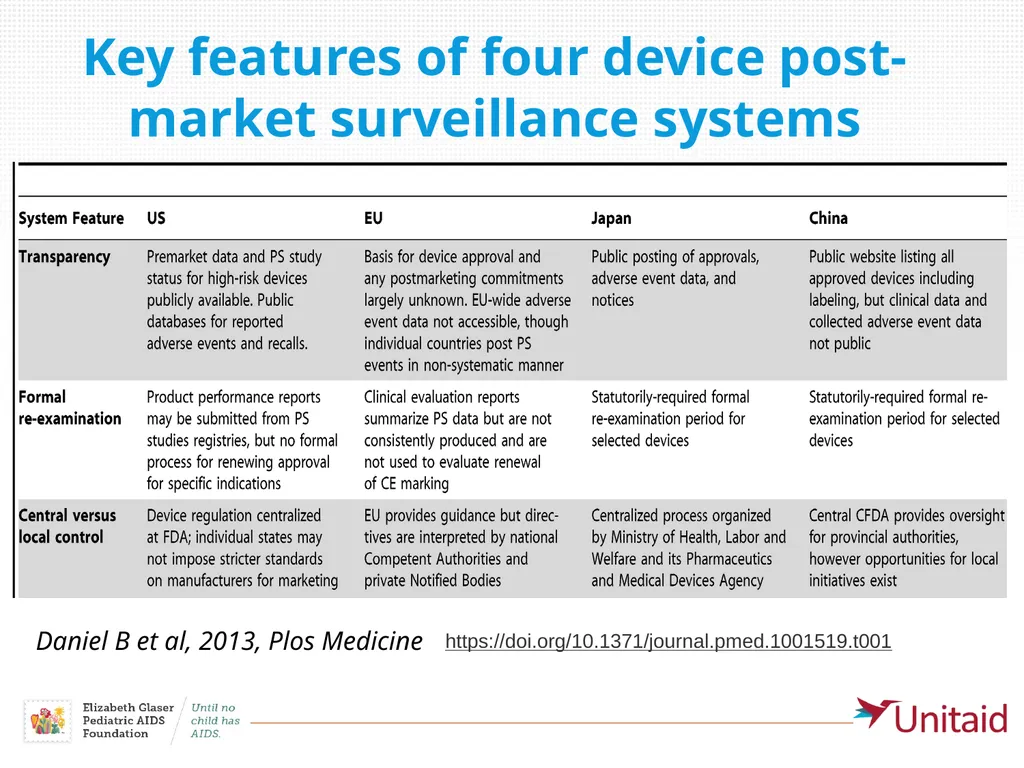
evaluated strategies for PMS of medical devices in the United States, European Union, Japan, and China.
Several common elements, including primary reliance on passive adverse event collection for marketed devices, but vary widely in their allocation of stakeholder responsibilities and mechanisms for evaluating the performance and safety of approved devices.
Greater system transparency, scheduled re-examination of approved devices, and balancing central and local control<br>
08
Key features of four device post-market surveillance systems https://doi.org/10.1371/journal.pmed.1001519.t001 Daniel B et al, 2013, Plos Medicine<br>
09
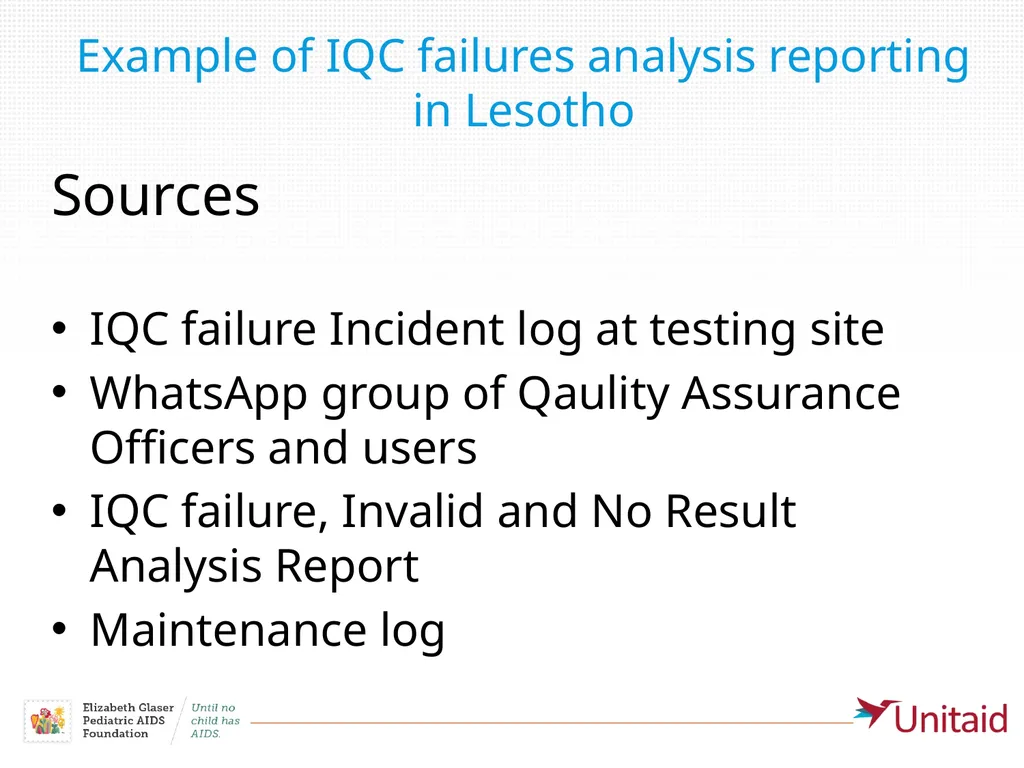
Example of IQC failures analysis reporting in Lesotho Sources
IQC failure Incident log at testing site
WhatsApp group of Qaulity Assurance Officers and users
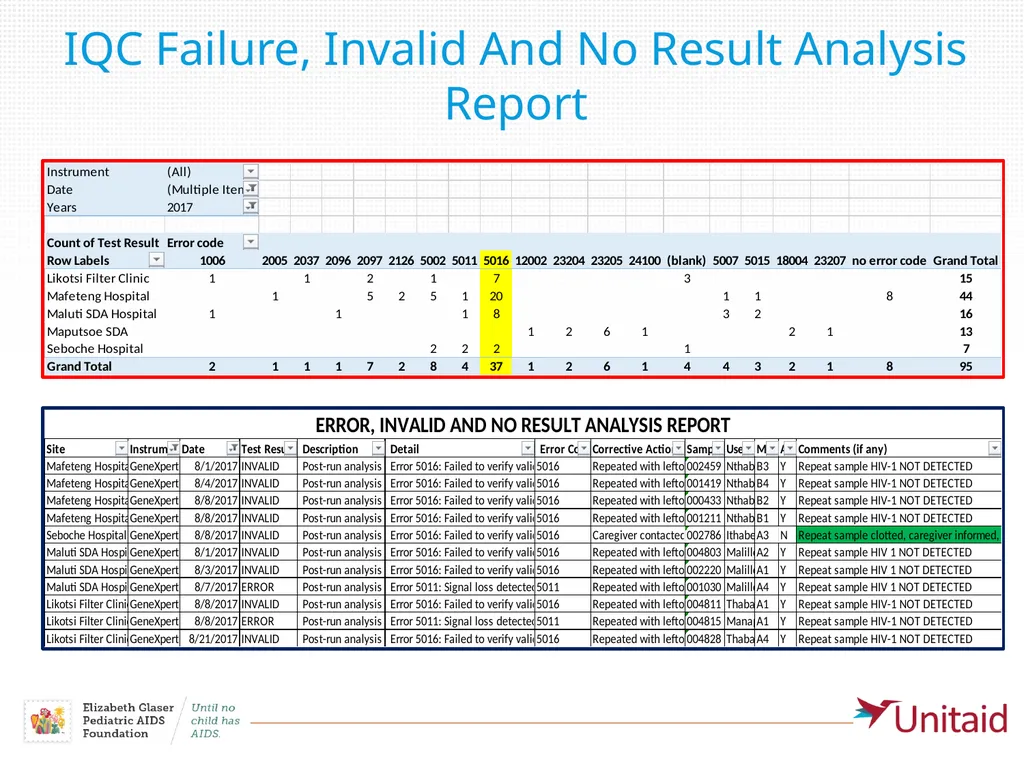
IQC failure, Invalid and No Result Analysis Report
Maintenance log<br>
10
IQC Failure, Invalid And No Result Analysis Report<br>
11
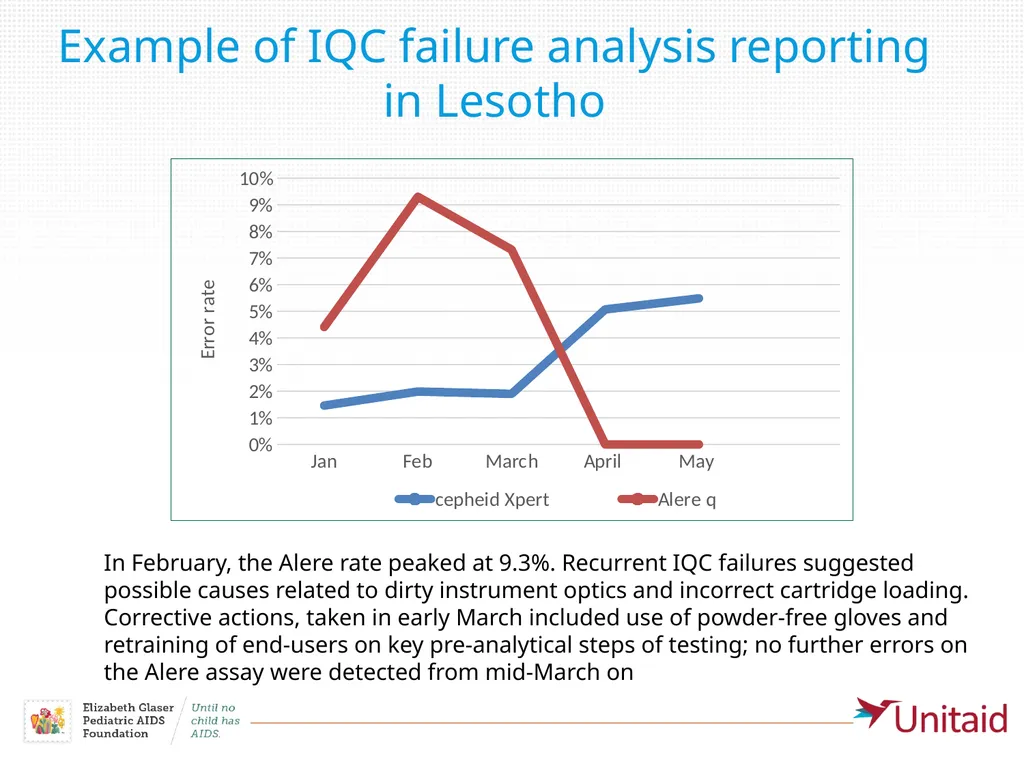
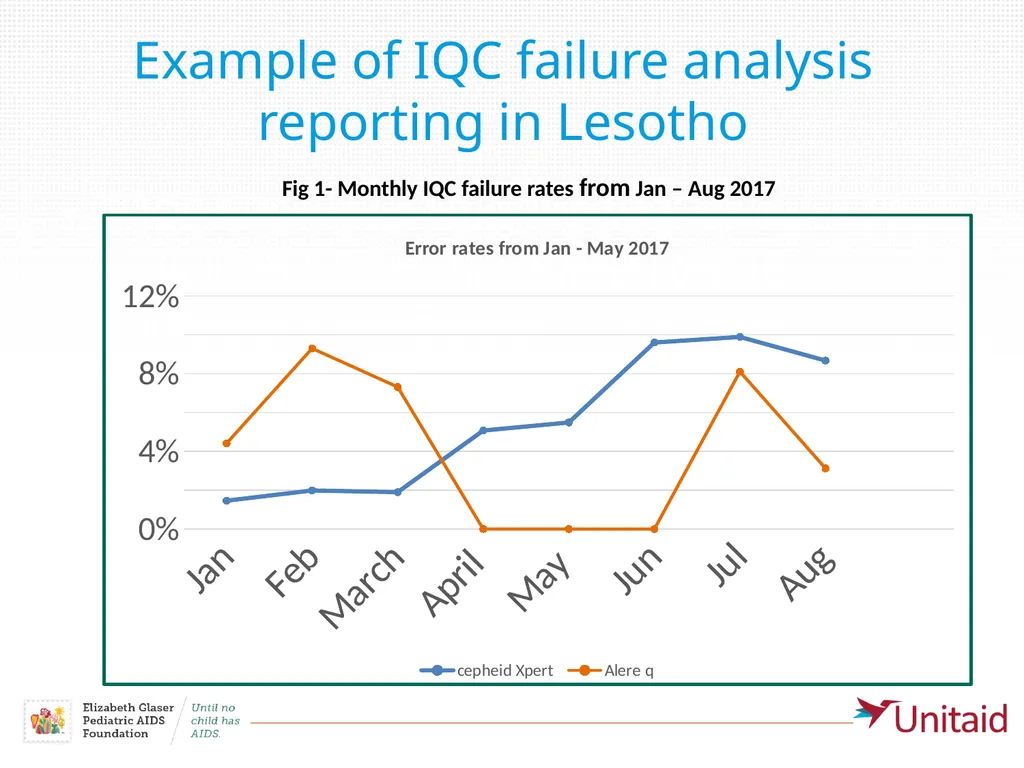
Example of IQC failure analysis reporting in Lesotho In February, the Alere rate peaked at 9.3%. Recurrent IQC failures suggested possible causes related to dirty instrument optics and incorrect cartridge loading. Corrective actions, taken in early March included use of powder-free gloves and retraining of end-users on key pre-analytical steps of testing; no further errors on the Alere assay were detected from mid-March on<br>
12
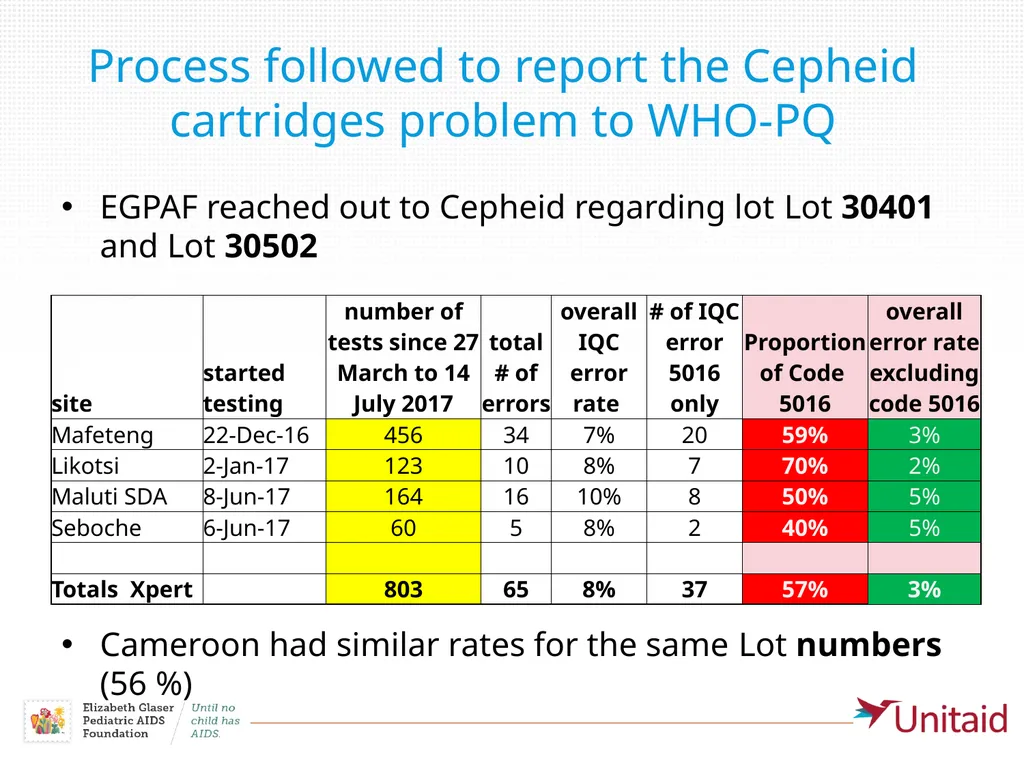
Process followed to report the Cepheid cartridges problem to WHO-PQ EGPAF reached out to Cepheid regarding lot Lot 30401 and Lot 30502
Cameroon had similar rates for the same Lot numbers (56 %)<br>
13
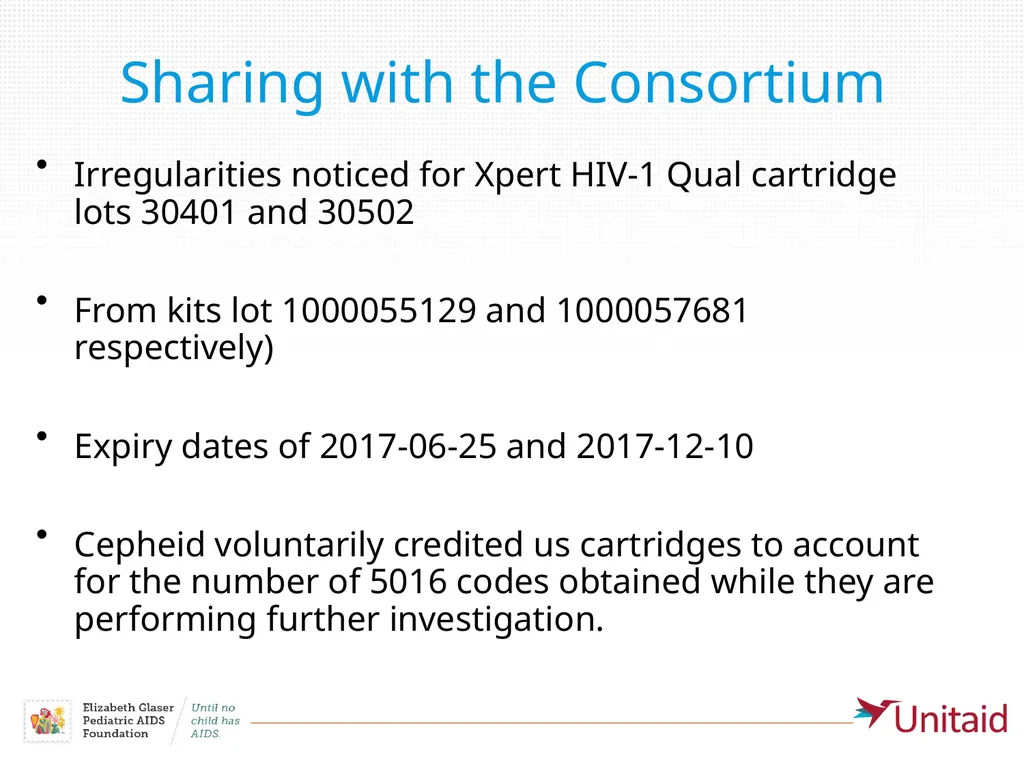
Sharing with the Consortium Irregularities noticed for Xpert HIV-1 Qual cartridge lots 30401 and 30502
From kits lot 1000055129 and 1000057681 respectively)
Expiry dates of 2017-06-25 and 2017-12-10
Cepheid voluntarily credited us cartridges to account for the number of 5016 codes obtained while they are performing further investigation.<br>
14
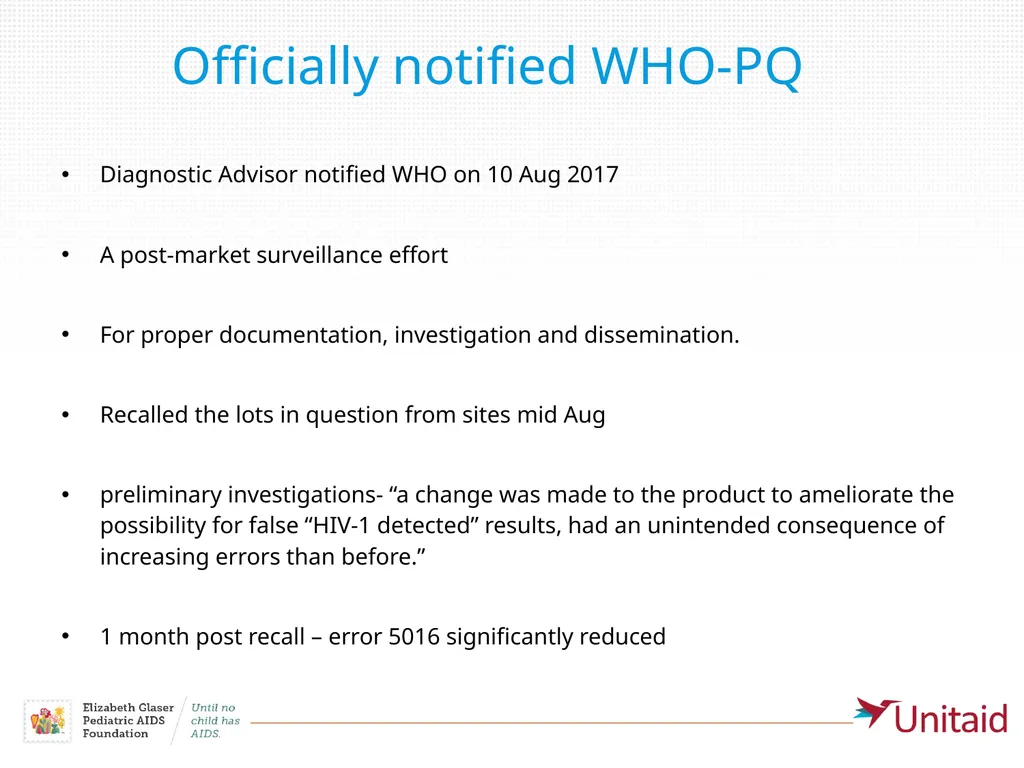
Officially notified WHO-PQ Diagnostic Advisor notified WHO on 10 Aug 2017
A post-market surveillance effort
For proper documentation, investigation and dissemination.
Recalled the lots in question from sites mid Aug
preliminary investigations- “a change was made to the product to ameliorate the possibility for false “HIV-1 detected” results, had an unintended consequence of increasing errors than before.”
1 month post recall – error 5016 significantly reduced<br>
15
Example of IQC failure analysis reporting in Lesotho IQC failure reporting log was introduced for clinic end-users (health workers) to investigate all failures
IQC failures observed in the first five months (January-May 2017) of routine clinical use of the two POC assays in three maternal and child health clinics were analyzed monthly for event counts and error/invalid types Fig 1- Monthly IQC failure rates from Jan – Aug 2017<br>
16
This document was made possible thanks to Unitaid’s support. Unitaid accelerates access to innovation so that critical health products can reach the people who most need them. For more information, please contact: The EGPAF Innovation and New Technology Team at (innovation@pedaids.org). www.pedaids.org | www.unitaid.org<br>