
Options Counseling Date Supporting Pregnant









Description: Options Counseling Date Supporting Pregnant Patients with Information on All Pregnancy Options Learning Objectives Discuss positive pregnancy results in a patient-centered and unbiased manner Demonstrate appropriate options counseling
Related Topics
Download Presentation
"Options Counseling Date Supporting Pregnant" is the property of its rightful owner. Permission is granted to download and print the materials on this website for personal, non-commercial use only, and to display it on your personal computer provided you do not modify the materials and that you retain all copyright notices contained in the materials. By downloading content from our website, you accept the terms of this agreement.
Presentation Transcript
slide1. Options Counseling Date Supporting Pregnant Patients with Information on All Pregnancy Options<br>
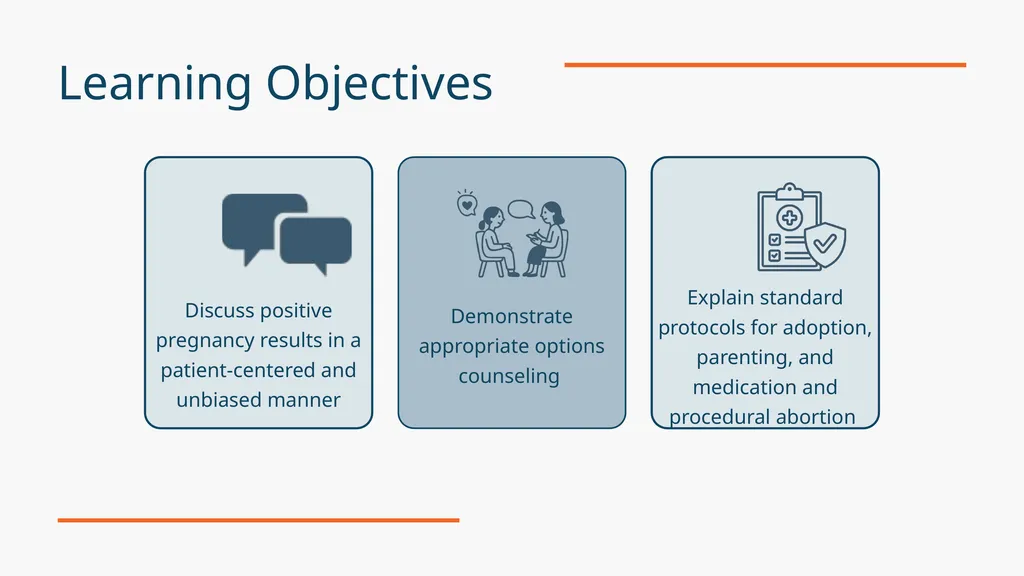
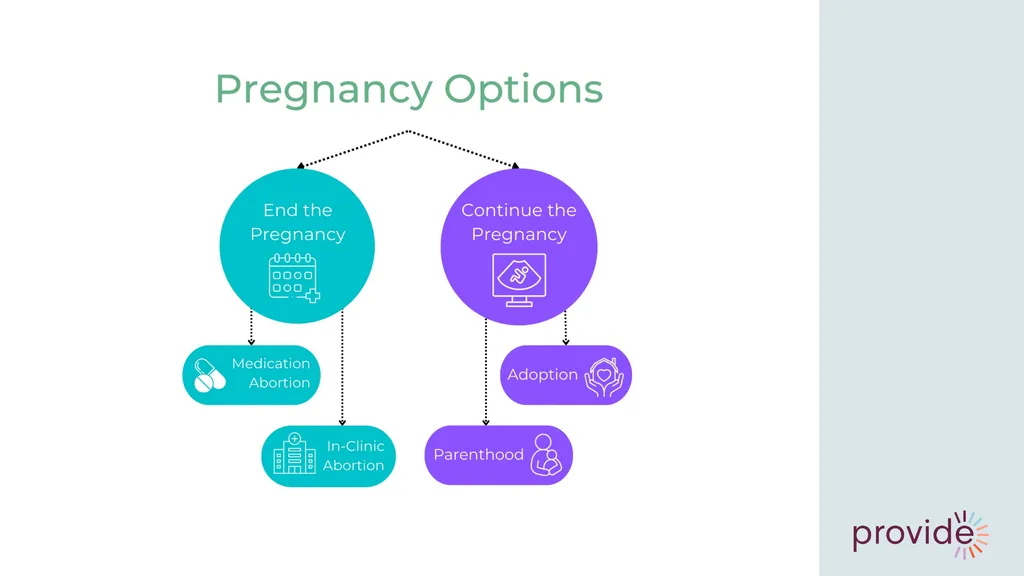
slide2. Learning Objectives Discuss positive pregnancy results in a patient-centered and unbiased manner Demonstrate appropriate options counseling Explain standard protocols for adoption, parenting, and medication and procedural abortion<br>
slide3. Think about a time that a client made a decision or shared something with you that you did not agree with.
How did it feel to be part of that conversation/hear about their decision?
Were you still able to support them and provide care? How so? What was your thought process like in that moment? Values Clarification<br>
slide4. Reproductive Justice The human right to maintain personal bodily autonomy, have children, not have children, and parent the children we have in safe and sustainable communities. - SisterSong<br>
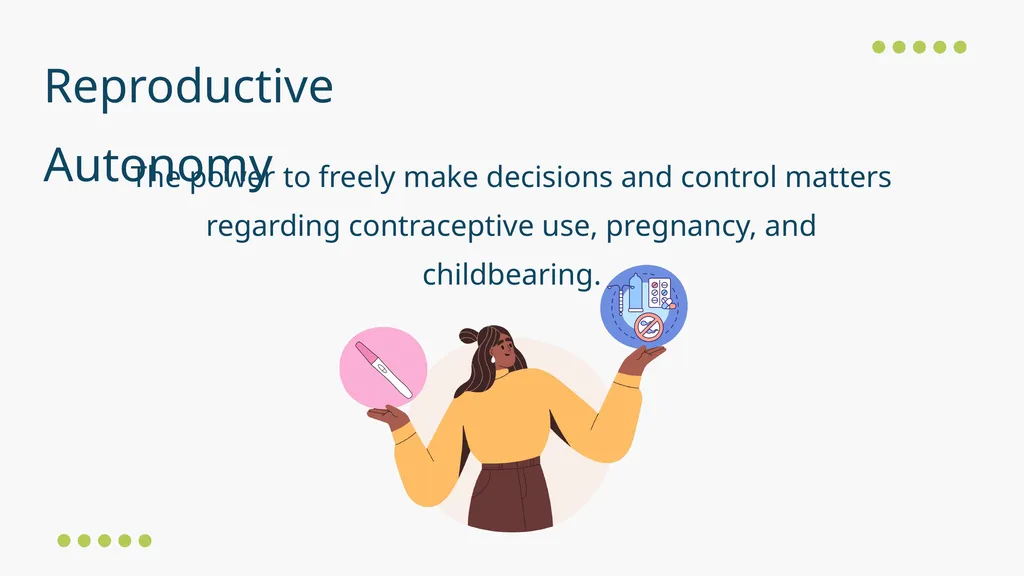
slide5. Reproductive Autonomy The power to freely make decisions and control matters regarding contraceptive use, pregnancy, and childbearing.<br>
slide7. All-Options Model: “Change the conversation and build a movement toward reproductive justice where pregnancy, parenting, abortion, and adoption are accessible and supported for all people, without bias, coercion, or judgment.”
All-Options Definition: “Creating space and using active listening to explore someone’s pregnancy decisions, feelings, and experiences, with curiosity and empathy, and without an agenda.” All-Options Counseling<br>
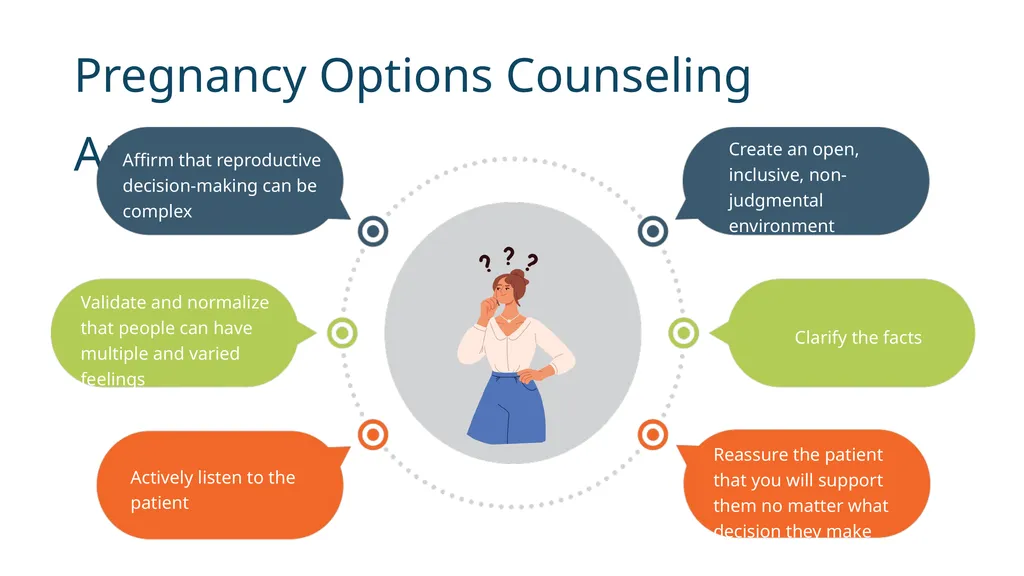
slide8. Pregnancy Options Counseling Approach Validate and normalize that people can have multiple and varied feelings Affirm that reproductive decision-making can be complex Create an open, inclusive, non-judgmental environment Actively listen to the patient Clarify the facts Reassure the patient that you will support them no matter what decision they make<br>
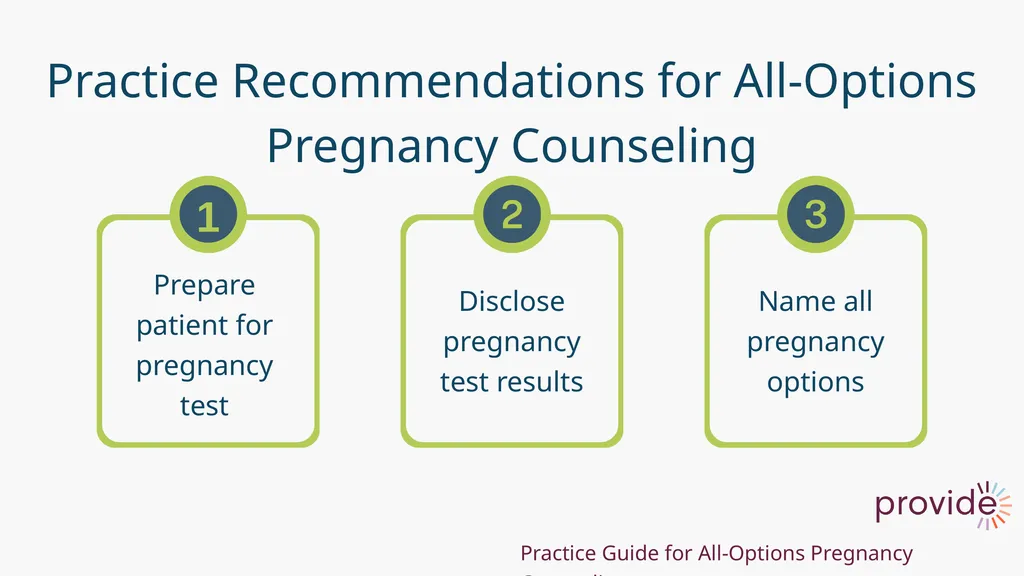
slide9. Practice Recommendations for All-Options Pregnancy Counseling Prepare patient for pregnancy test Disclose pregnancy test results Name all pregnancy options Practice Guide for All-Options Pregnancy Counseling<br>
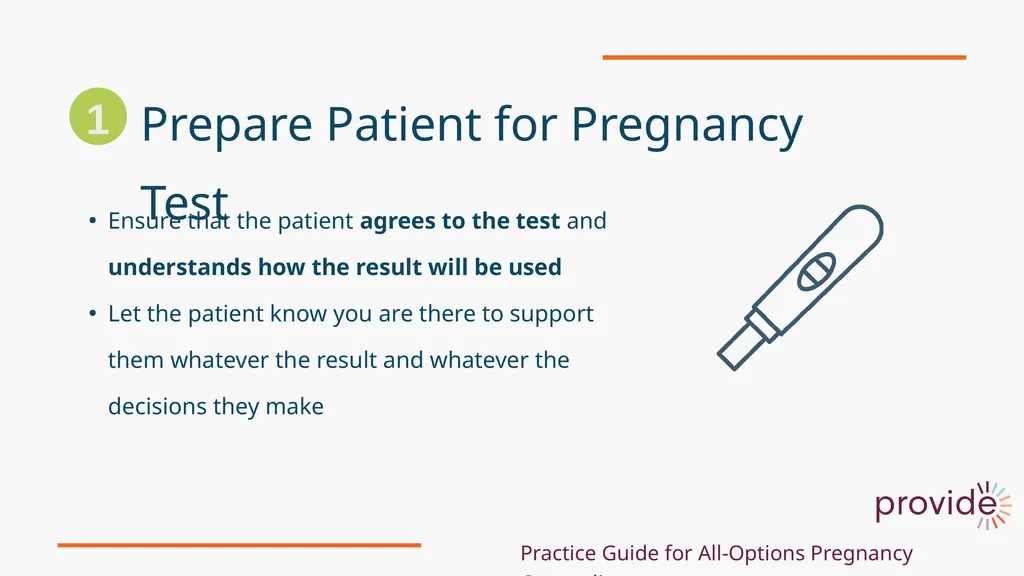
slide10. Ensure that the patient agrees to the test and understands how the result will be used
Let the patient know you are there to support them whatever the result and whatever the decisions they make Prepare Patient for Pregnancy Test Practice Guide for All-Options Pregnancy Counseling<br>
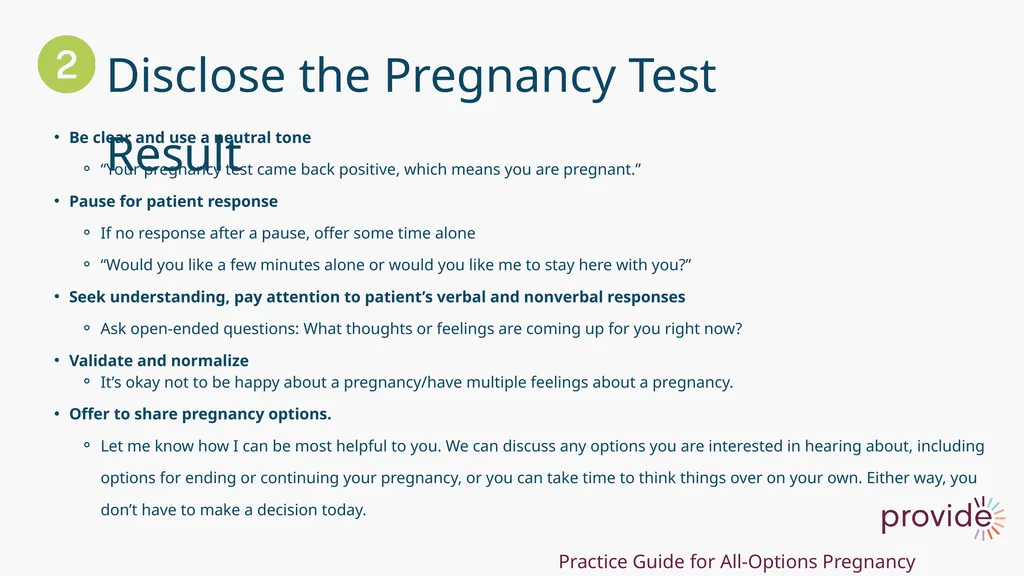
slide11. Be clear and use a neutral tone
“Your pregnancy test came back positive, which means you are pregnant.”
Pause for patient response
If no response after a pause, offer some time alone
“Would you like a few minutes alone or would you like me to stay here with you?”
Seek understanding, pay attention to patient’s verbal and nonverbal responses
Ask open-ended questions: What thoughts or feelings are coming up for you right now?
Validate and normalize
It’s okay not to be happy about a pregnancy/have multiple feelings about a pregnancy.
Offer to share pregnancy options.
Let me know how I can be most helpful to you. We can discuss any options you are interested in hearing about, including options for ending or continuing your pregnancy, or you can take time to think things over on your own. Either way, you don’t have to make a decision today. Disclose the Pregnancy Test Result Practice Guide for All-Options Pregnancy Counseling<br>
slide12. Could it be that…
I wonder if…
As I hear it, you… Is that the way you feel?
You convey a sense of…
You must have felt…
I sense that you’re feeling…
Do you feel…
It sounds as though…
I hear you saying…
From what you say, I gather you’re feeling… Empathetic Listening Leads for Empathetic Listening<br>
slide13. Name all pregnancy options in a neutral, professional manner (except those the patient expressed they do not want to discuss)
Naming each service without judgment respects patient autonomy, builds trust, makes space to ask honest questions, and is more likely to meet patients’ needs Name all Pregnancy Options Practice Guide for All-Options Pregnancy Counseling<br>
slide14. Explore the patient’s feelings after giving the positive test result
If unsure of plans, help patient to consider their options
Identify social supports
Help to reach a decision, or discuss a time table if still undecided
Refer or provide the appropriate service Recap Recommendations for All-Options Pregnancy Counseling Practice Guide for All-Options Pregnancy Counseling<br>
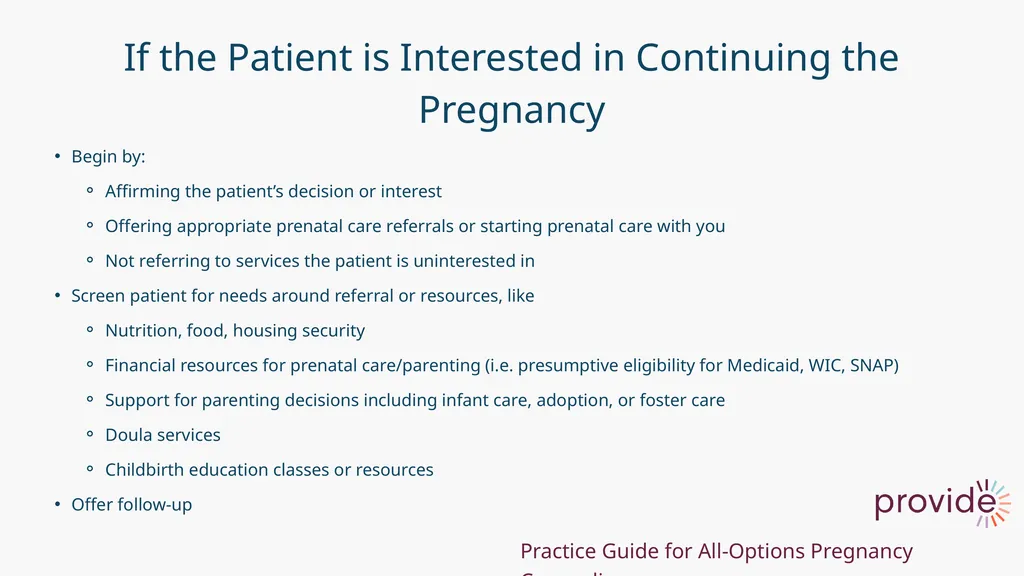
slide15. Begin by:
Affirming the patient’s decision or interest
Offering appropriate prenatal care referrals or starting prenatal care with you
Not referring to services the patient is uninterested in
Screen patient for needs around referral or resources, like
Nutrition, food, housing security
Financial resources for prenatal care/parenting (i.e. presumptive eligibility for Medicaid, WIC, SNAP)
Support for parenting decisions including infant care, adoption, or foster care
Doula services
Childbirth education classes or resources
Offer follow-up If the Patient is Interested in Continuing the Pregnancy Practice Guide for All-Options Pregnancy Counseling<br>
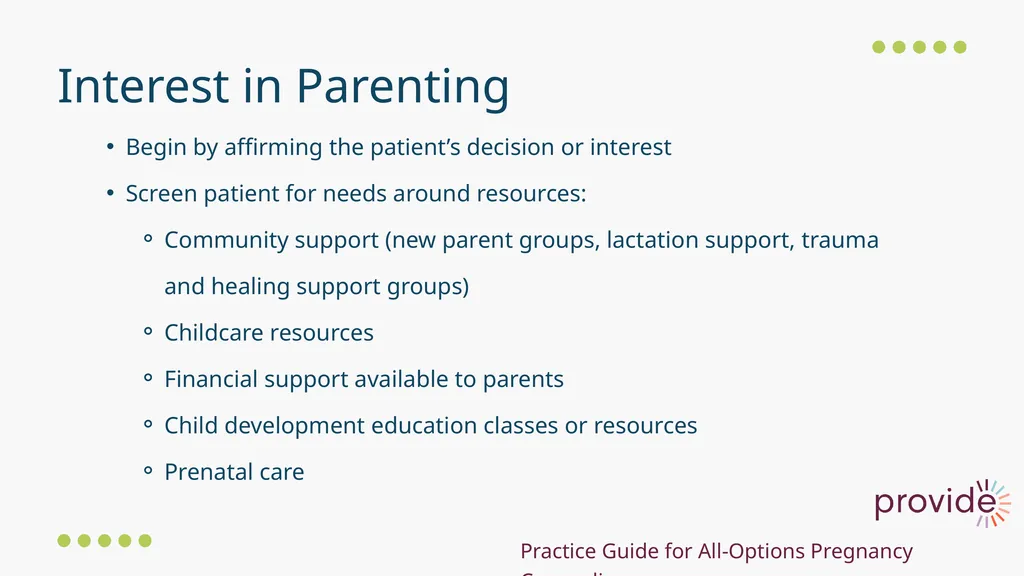
slide16. Interest in Parenting Begin by affirming the patient’s decision or interest
Screen patient for needs around resources:
Community support (new parent groups, lactation support, trauma and healing support groups)
Childcare resources
Financial support available to parents
Child development education classes or resources
Prenatal care Practice Guide for All-Options Pregnancy Counseling<br>
slide17. Affirm the patient’s decision or interest
Discuss types of adoption and provide resources
Refer and help schedule appointments
Can be arranged through any of the following:
Adoption agency
Attorney who specializes in adoption
“Exchange” or “consultant” who works with a specific population Interest in Adoption Practice Guide for All-Options Pregnancy Counseling<br>
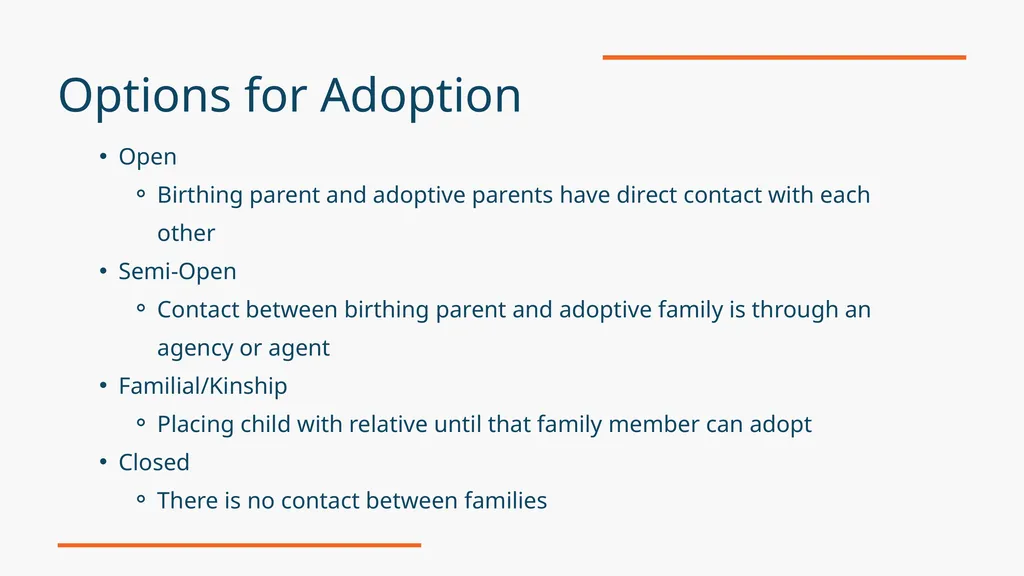
slide18. Open
Birthing parent and adoptive parents have direct contact with each other
Semi-Open
Contact between birthing parent and adoptive family is through an agency or agent
Familial/Kinship
Placing child with relative until that family member can adopt
Closed
There is no contact between families Options for Adoption<br>
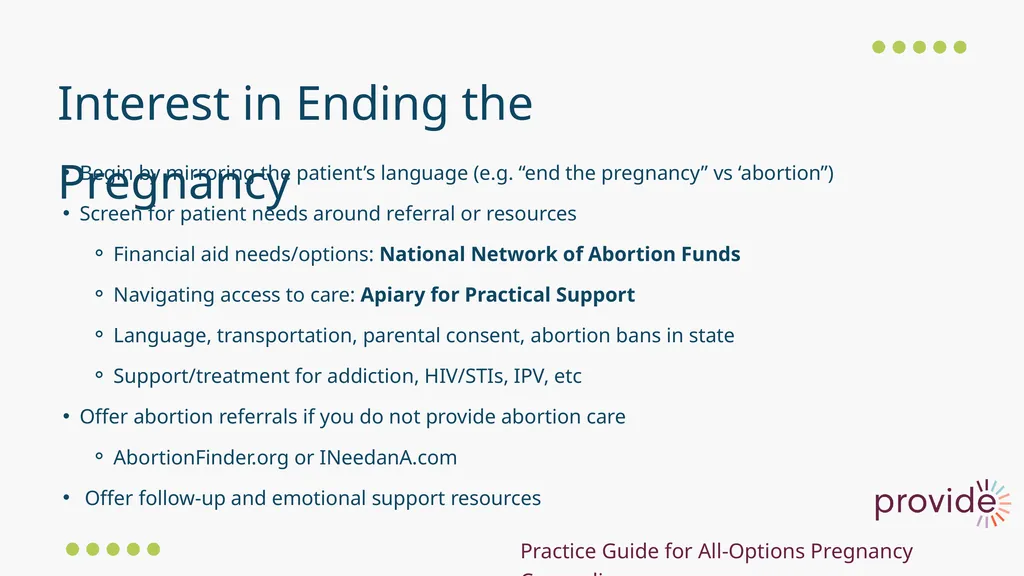
slide19. Begin by mirroring the patient’s language (e.g. “end the pregnancy” vs ‘abortion”)
Screen for patient needs around referral or resources
Financial aid needs/options: National Network of Abortion Funds
Navigating access to care: Apiary for Practical Support
Language, transportation, parental consent, abortion bans in state
Support/treatment for addiction, HIV/STIs, IPV, etc
Offer abortion referrals if you do not provide abortion care
AbortionFinder.org or INeedanA.com
Offer follow-up and emotional support resources Practice Guide for All-Options Pregnancy Counseling Interest in Ending the Pregnancy<br>
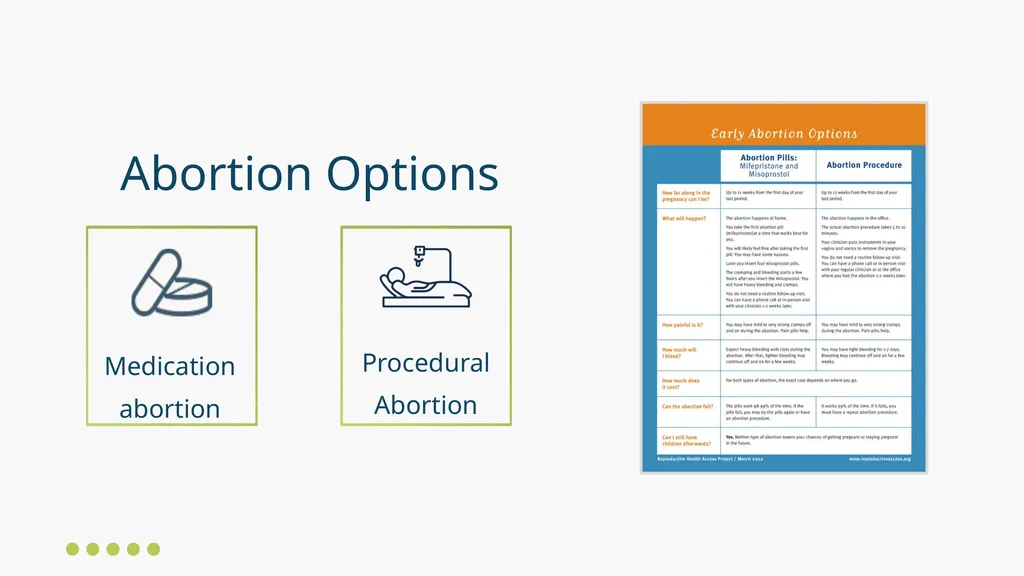
slide20. Procedural
Abortion Abortion Options<br>
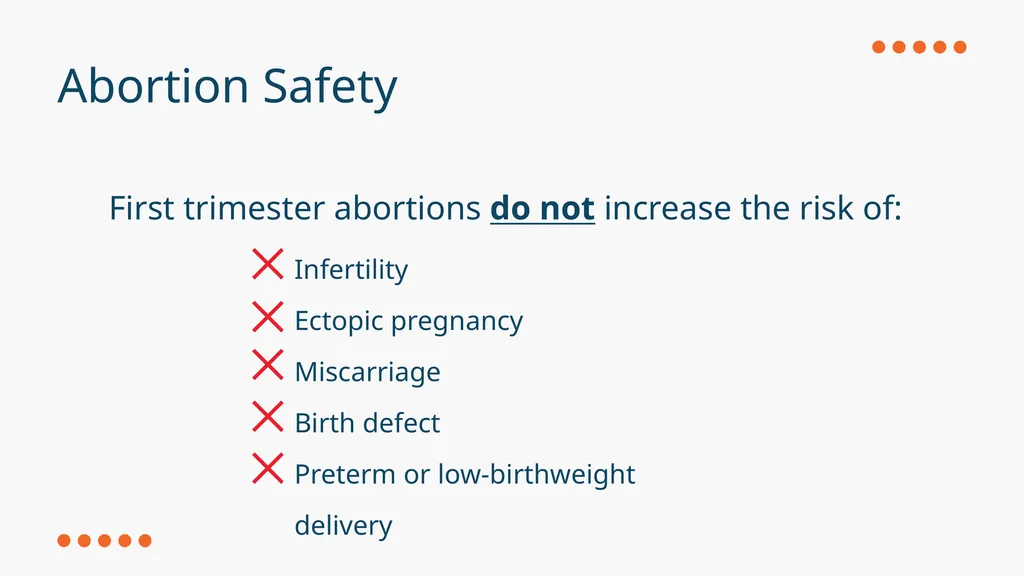
slide21. Infertility
Ectopic pregnancy
Miscarriage
Birth defect
Preterm or low-birthweight delivery Abortion Safety First trimester abortions do not increase the risk of:<br>
slide22. 99% effective
Takes minutes to complete, no follow up needed
Multiple anesthesia options (including local)
Shorter bleeding duration
Can be performed later in pregnancy
Requires pelvic instrumentation
Less patient control over a procedure
Potential medication side effects (anesthesia and analgesia) Manual Vacuum Aspiration<br>
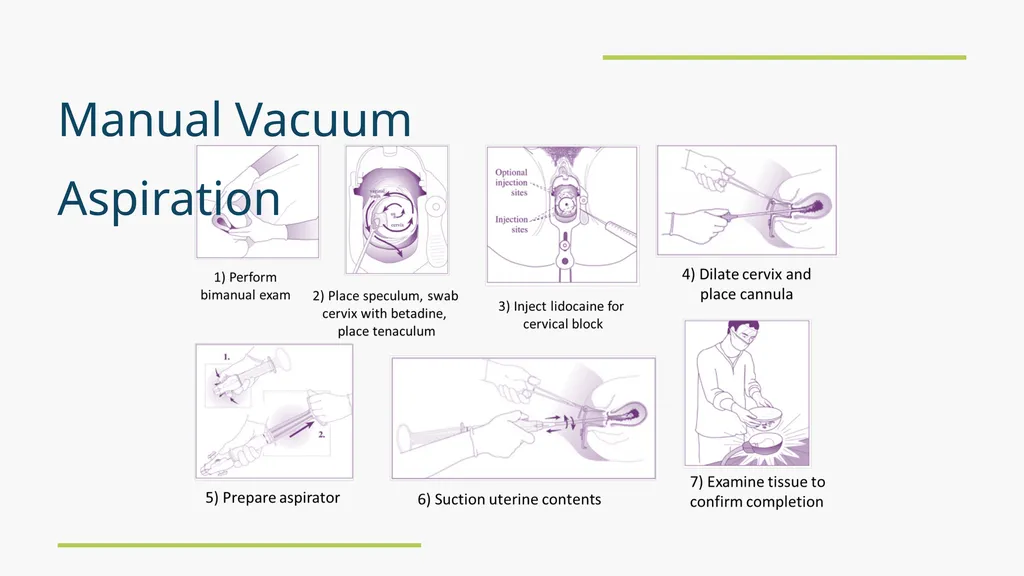
slide23. Manual Vacuum Aspiration<br>
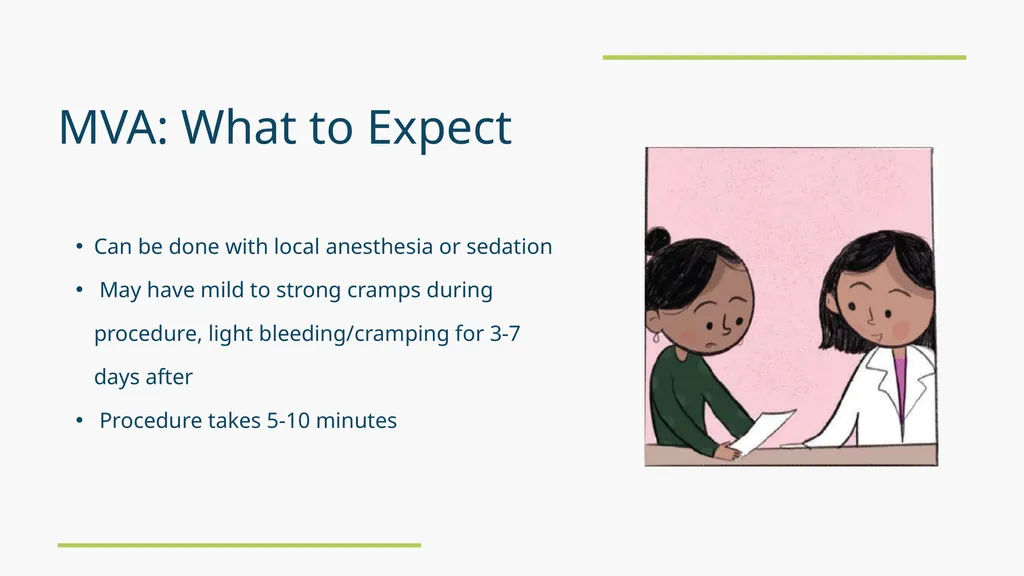
slide24. Can be done with local anesthesia or sedation
May have mild to strong cramps during procedure, light bleeding/cramping for 3-7 days after
Procedure takes 5-10 minutes MVA: What to Expect<br>
slide25. Avoids surgical and anesthetic risk
Greater patient autonomy and privacy (can take the pills at home)
Less invasive
More “natural”
Bleeding can be heavy, last longer
84 days (12 weeks) gestation
Telehealth option (for some states) Medication Abortion<br>
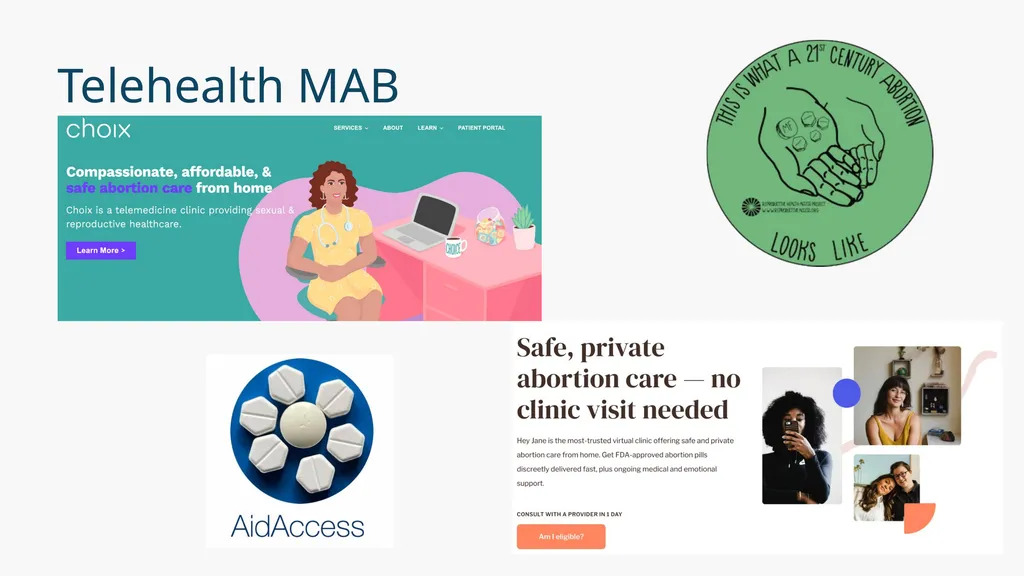
slide26. Telehealth MAB<br>
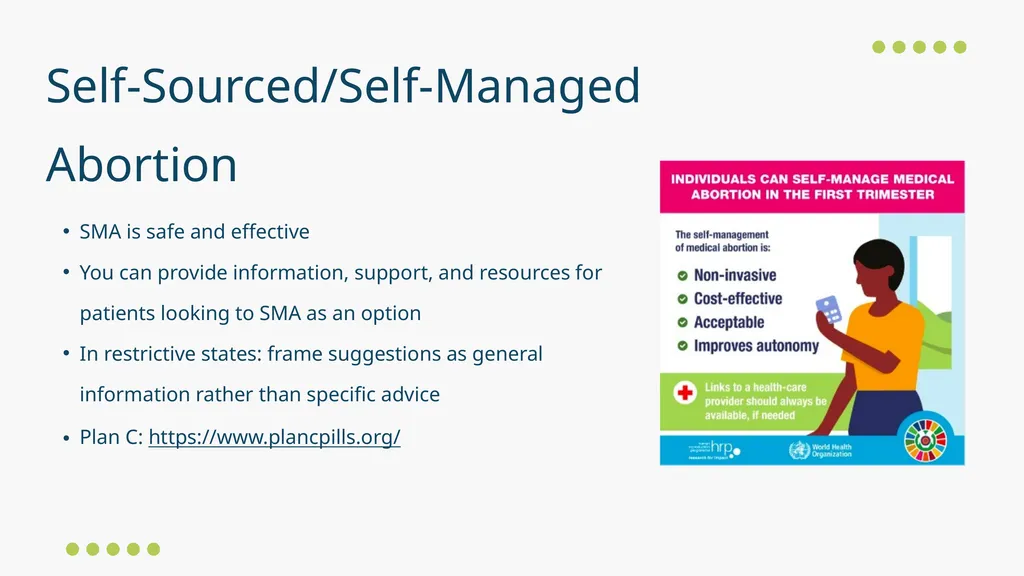
slide27. SMA is safe and effective
You can provide information, support, and resources for patients looking to SMA as an option
In restrictive states: frame suggestions as general information rather than specific advice
Plan C: https://www.plancpills.org/ Self-Sourced/Self-Managed Abortion<br>
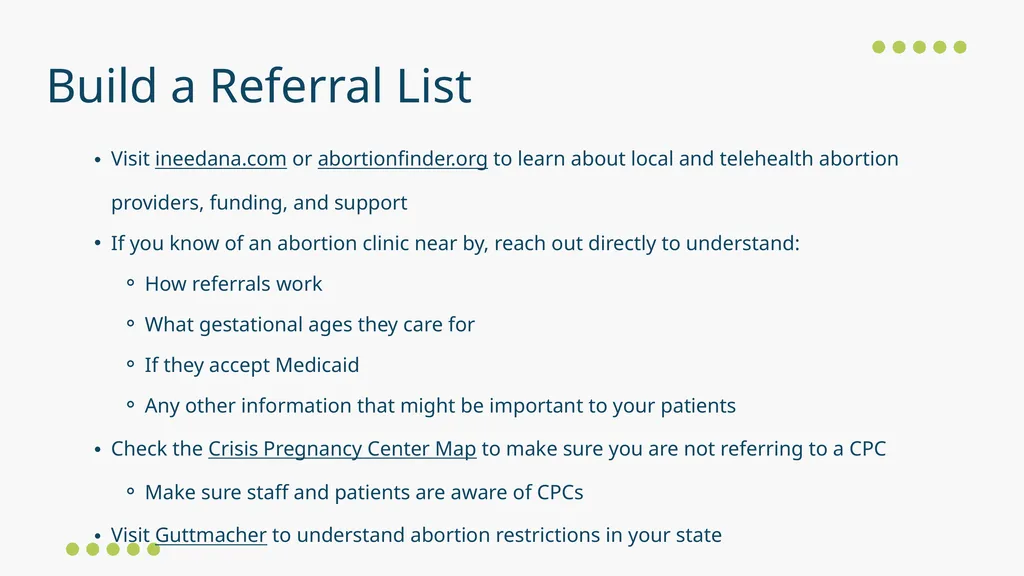
slide28. Visit ineedana.com or abortionfinder.org to learn about local and telehealth abortion providers, funding, and support
If you know of an abortion clinic near by, reach out directly to understand:
How referrals work
What gestational ages they care for
If they accept Medicaid
Any other information that might be important to your patients
Check the Crisis Pregnancy Center Map to make sure you are not referring to a CPC
Make sure staff and patients are aware of CPCs
Visit Guttmacher to understand abortion restrictions in your state Build a Referral List<br>
slide29. Begin by offering to answer any questions
Discuss all options with the patient
Ask open-ended, non-directive questions: “Can you say more about what you are feeling?”
Consider pros and cons of each option, directed by patient concerns and preferences
Abortion restrictions may impact timing for decisions
Provide information on exposures that may be harmful to a developing pregnancy (e.g. medications, drugs/alcohol, etc)
Additional support: All Options Talkline, 1-888-493-0092
Reflection exercises Practice Guide for All-Options Pregnancy Counseling If the Patient is Unsure<br>
slide30. Frequently reflect on your biases, assumptions, and values
What scenarios are hard for you and why? Do you want patients to make certain decisions? Why and for whom do you feel that way? Work to mitigate those biases when you provide options counseling.
The patient has “the answer”, not you. Only the patient knows the right decision for themselves and their family.
Seek to understand how the patient is doing, their feelings and beliefs. Ask open-ended questions in a non-directive manner to help the patient explore their feelings and preferences
“Can you say more about what you are feeling?”
Keep in mind, not all patients will feel comfortable sharing their true feelings
Affirm that the patient’s choice not to be a parent now is not the same as choosing not to be a parent in the future. Other Tips<br>
slide31. Refer to the pregnancy, not the baby
Ask about other supports in the patient’s life
Express your gratitude to the patient for sharing their feelings and coming to you for support.
The patient may not come to a decision at the end of the visit or be ready to discuss options at this time. Offer written information on all options for them to read on their own. Offer to schedule a timely follow-up appointment or phone call.
People who decide to have an abortion are just as sure as those who choose to continue their pregnancy
Much of the stress that comes with having an abortion can be attributed to the barriers people face in obtaining care.
State restrictions on abortion will impact how much time the patient has to make a decision about whether or not to get abortion care, where they can go, and the types of care options available Other Tips<br>
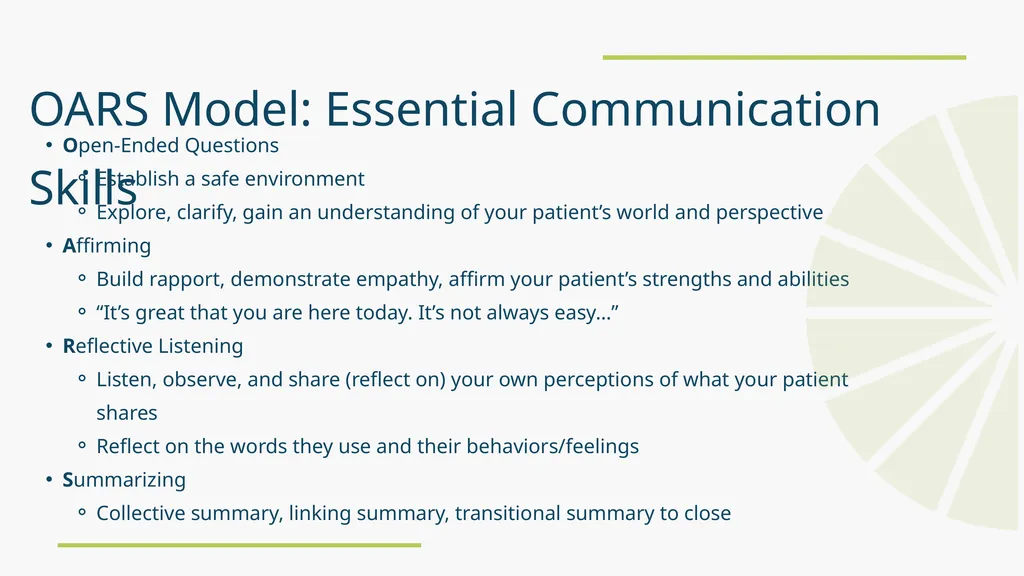
slide32. Open-Ended Questions
Establish a safe environment
Explore, clarify, gain an understanding of your patient’s world and perspective
Affirming
Build rapport, demonstrate empathy, affirm your patient’s strengths and abilities
“It’s great that you are here today. It’s not always easy…”
Reflective Listening
Listen, observe, and share (reflect on) your own perceptions of what your patient shares
Reflect on the words they use and their behaviors/feelings
Summarizing
Collective summary, linking summary, transitional summary to close OARS Model: Essential Communication Skills<br>
slide33. Pair up/break out rooms
One person represents the clinician, the other is the patient – then switch
Practice all-options pregnancy counseling by disclosing a positive pregnancy test result and discussing pregnancy options. (As the patient – create your own backstory regarding how you feel about this pregnancy) Exercise: Pregnancy Options Counseling<br>
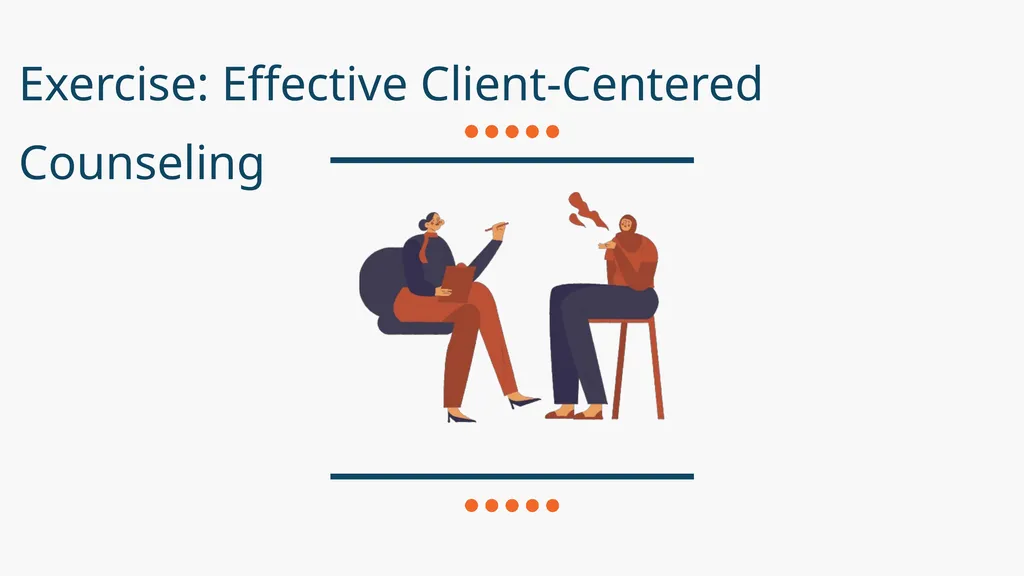
slide34. Exercise: Effective Client-Centered Counseling<br>
slide35. These videos model patient-centered, compassionate, non-directive counseling, and demonstrate reproductive health care as a part of the continuity of care family physicians provide their patients.
Each video has an accompanying set of discussion questions designed to deepen learners’ knowledge and skills about patient-centered pregnancy options counseling. They can be used for one-on-one or group didactic sessions, or in small-group discussion exercises. Options Counseling Videos<br>
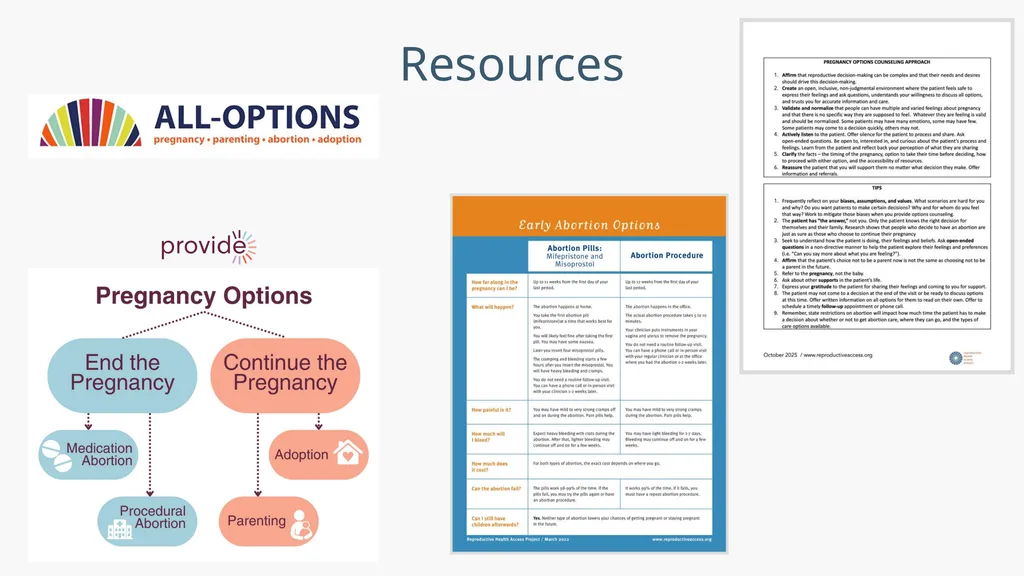
slide36. Resources<br>
slide37. Thank you!<br>
slide2. Learning Objectives Discuss positive pregnancy results in a patient-centered and unbiased manner Demonstrate appropriate options counseling Explain standard protocols for adoption, parenting, and medication and procedural abortion<br>
slide3. Think about a time that a client made a decision or shared something with you that you did not agree with.
How did it feel to be part of that conversation/hear about their decision?
Were you still able to support them and provide care? How so? What was your thought process like in that moment? Values Clarification<br>
slide4. Reproductive Justice The human right to maintain personal bodily autonomy, have children, not have children, and parent the children we have in safe and sustainable communities. - SisterSong<br>
slide5. Reproductive Autonomy The power to freely make decisions and control matters regarding contraceptive use, pregnancy, and childbearing.<br>
slide7. All-Options Model: “Change the conversation and build a movement toward reproductive justice where pregnancy, parenting, abortion, and adoption are accessible and supported for all people, without bias, coercion, or judgment.”
All-Options Definition: “Creating space and using active listening to explore someone’s pregnancy decisions, feelings, and experiences, with curiosity and empathy, and without an agenda.” All-Options Counseling<br>
slide8. Pregnancy Options Counseling Approach Validate and normalize that people can have multiple and varied feelings Affirm that reproductive decision-making can be complex Create an open, inclusive, non-judgmental environment Actively listen to the patient Clarify the facts Reassure the patient that you will support them no matter what decision they make<br>
slide9. Practice Recommendations for All-Options Pregnancy Counseling Prepare patient for pregnancy test Disclose pregnancy test results Name all pregnancy options Practice Guide for All-Options Pregnancy Counseling<br>
slide10. Ensure that the patient agrees to the test and understands how the result will be used
Let the patient know you are there to support them whatever the result and whatever the decisions they make Prepare Patient for Pregnancy Test Practice Guide for All-Options Pregnancy Counseling<br>
slide11. Be clear and use a neutral tone
“Your pregnancy test came back positive, which means you are pregnant.”
Pause for patient response
If no response after a pause, offer some time alone
“Would you like a few minutes alone or would you like me to stay here with you?”
Seek understanding, pay attention to patient’s verbal and nonverbal responses
Ask open-ended questions: What thoughts or feelings are coming up for you right now?
Validate and normalize
It’s okay not to be happy about a pregnancy/have multiple feelings about a pregnancy.
Offer to share pregnancy options.
Let me know how I can be most helpful to you. We can discuss any options you are interested in hearing about, including options for ending or continuing your pregnancy, or you can take time to think things over on your own. Either way, you don’t have to make a decision today. Disclose the Pregnancy Test Result Practice Guide for All-Options Pregnancy Counseling<br>
slide12. Could it be that…
I wonder if…
As I hear it, you… Is that the way you feel?
You convey a sense of…
You must have felt…
I sense that you’re feeling…
Do you feel…
It sounds as though…
I hear you saying…
From what you say, I gather you’re feeling… Empathetic Listening Leads for Empathetic Listening<br>
slide13. Name all pregnancy options in a neutral, professional manner (except those the patient expressed they do not want to discuss)
Naming each service without judgment respects patient autonomy, builds trust, makes space to ask honest questions, and is more likely to meet patients’ needs Name all Pregnancy Options Practice Guide for All-Options Pregnancy Counseling<br>
slide14. Explore the patient’s feelings after giving the positive test result
If unsure of plans, help patient to consider their options
Identify social supports
Help to reach a decision, or discuss a time table if still undecided
Refer or provide the appropriate service Recap Recommendations for All-Options Pregnancy Counseling Practice Guide for All-Options Pregnancy Counseling<br>
slide15. Begin by:
Affirming the patient’s decision or interest
Offering appropriate prenatal care referrals or starting prenatal care with you
Not referring to services the patient is uninterested in
Screen patient for needs around referral or resources, like
Nutrition, food, housing security
Financial resources for prenatal care/parenting (i.e. presumptive eligibility for Medicaid, WIC, SNAP)
Support for parenting decisions including infant care, adoption, or foster care
Doula services
Childbirth education classes or resources
Offer follow-up If the Patient is Interested in Continuing the Pregnancy Practice Guide for All-Options Pregnancy Counseling<br>
slide16. Interest in Parenting Begin by affirming the patient’s decision or interest
Screen patient for needs around resources:
Community support (new parent groups, lactation support, trauma and healing support groups)
Childcare resources
Financial support available to parents
Child development education classes or resources
Prenatal care Practice Guide for All-Options Pregnancy Counseling<br>
slide17. Affirm the patient’s decision or interest
Discuss types of adoption and provide resources
Refer and help schedule appointments
Can be arranged through any of the following:
Adoption agency
Attorney who specializes in adoption
“Exchange” or “consultant” who works with a specific population Interest in Adoption Practice Guide for All-Options Pregnancy Counseling<br>
slide18. Open
Birthing parent and adoptive parents have direct contact with each other
Semi-Open
Contact between birthing parent and adoptive family is through an agency or agent
Familial/Kinship
Placing child with relative until that family member can adopt
Closed
There is no contact between families Options for Adoption<br>
slide19. Begin by mirroring the patient’s language (e.g. “end the pregnancy” vs ‘abortion”)
Screen for patient needs around referral or resources
Financial aid needs/options: National Network of Abortion Funds
Navigating access to care: Apiary for Practical Support
Language, transportation, parental consent, abortion bans in state
Support/treatment for addiction, HIV/STIs, IPV, etc
Offer abortion referrals if you do not provide abortion care
AbortionFinder.org or INeedanA.com
Offer follow-up and emotional support resources Practice Guide for All-Options Pregnancy Counseling Interest in Ending the Pregnancy<br>
slide20. Procedural
Abortion Abortion Options<br>
slide21. Infertility
Ectopic pregnancy
Miscarriage
Birth defect
Preterm or low-birthweight delivery Abortion Safety First trimester abortions do not increase the risk of:<br>
slide22. 99% effective
Takes minutes to complete, no follow up needed
Multiple anesthesia options (including local)
Shorter bleeding duration
Can be performed later in pregnancy
Requires pelvic instrumentation
Less patient control over a procedure
Potential medication side effects (anesthesia and analgesia) Manual Vacuum Aspiration<br>
slide23. Manual Vacuum Aspiration<br>
slide24. Can be done with local anesthesia or sedation
May have mild to strong cramps during procedure, light bleeding/cramping for 3-7 days after
Procedure takes 5-10 minutes MVA: What to Expect<br>
slide25. Avoids surgical and anesthetic risk
Greater patient autonomy and privacy (can take the pills at home)
Less invasive
More “natural”
Bleeding can be heavy, last longer
84 days (12 weeks) gestation
Telehealth option (for some states) Medication Abortion<br>
slide26. Telehealth MAB<br>
slide27. SMA is safe and effective
You can provide information, support, and resources for patients looking to SMA as an option
In restrictive states: frame suggestions as general information rather than specific advice
Plan C: https://www.plancpills.org/ Self-Sourced/Self-Managed Abortion<br>
slide28. Visit ineedana.com or abortionfinder.org to learn about local and telehealth abortion providers, funding, and support
If you know of an abortion clinic near by, reach out directly to understand:
How referrals work
What gestational ages they care for
If they accept Medicaid
Any other information that might be important to your patients
Check the Crisis Pregnancy Center Map to make sure you are not referring to a CPC
Make sure staff and patients are aware of CPCs
Visit Guttmacher to understand abortion restrictions in your state Build a Referral List<br>
slide29. Begin by offering to answer any questions
Discuss all options with the patient
Ask open-ended, non-directive questions: “Can you say more about what you are feeling?”
Consider pros and cons of each option, directed by patient concerns and preferences
Abortion restrictions may impact timing for decisions
Provide information on exposures that may be harmful to a developing pregnancy (e.g. medications, drugs/alcohol, etc)
Additional support: All Options Talkline, 1-888-493-0092
Reflection exercises Practice Guide for All-Options Pregnancy Counseling If the Patient is Unsure<br>
slide30. Frequently reflect on your biases, assumptions, and values
What scenarios are hard for you and why? Do you want patients to make certain decisions? Why and for whom do you feel that way? Work to mitigate those biases when you provide options counseling.
The patient has “the answer”, not you. Only the patient knows the right decision for themselves and their family.
Seek to understand how the patient is doing, their feelings and beliefs. Ask open-ended questions in a non-directive manner to help the patient explore their feelings and preferences
“Can you say more about what you are feeling?”
Keep in mind, not all patients will feel comfortable sharing their true feelings
Affirm that the patient’s choice not to be a parent now is not the same as choosing not to be a parent in the future. Other Tips<br>
slide31. Refer to the pregnancy, not the baby
Ask about other supports in the patient’s life
Express your gratitude to the patient for sharing their feelings and coming to you for support.
The patient may not come to a decision at the end of the visit or be ready to discuss options at this time. Offer written information on all options for them to read on their own. Offer to schedule a timely follow-up appointment or phone call.
People who decide to have an abortion are just as sure as those who choose to continue their pregnancy
Much of the stress that comes with having an abortion can be attributed to the barriers people face in obtaining care.
State restrictions on abortion will impact how much time the patient has to make a decision about whether or not to get abortion care, where they can go, and the types of care options available Other Tips<br>
slide32. Open-Ended Questions
Establish a safe environment
Explore, clarify, gain an understanding of your patient’s world and perspective
Affirming
Build rapport, demonstrate empathy, affirm your patient’s strengths and abilities
“It’s great that you are here today. It’s not always easy…”
Reflective Listening
Listen, observe, and share (reflect on) your own perceptions of what your patient shares
Reflect on the words they use and their behaviors/feelings
Summarizing
Collective summary, linking summary, transitional summary to close OARS Model: Essential Communication Skills<br>
slide33. Pair up/break out rooms
One person represents the clinician, the other is the patient – then switch
Practice all-options pregnancy counseling by disclosing a positive pregnancy test result and discussing pregnancy options. (As the patient – create your own backstory regarding how you feel about this pregnancy) Exercise: Pregnancy Options Counseling<br>
slide34. Exercise: Effective Client-Centered Counseling<br>
slide35. These videos model patient-centered, compassionate, non-directive counseling, and demonstrate reproductive health care as a part of the continuity of care family physicians provide their patients.
Each video has an accompanying set of discussion questions designed to deepen learners’ knowledge and skills about patient-centered pregnancy options counseling. They can be used for one-on-one or group didactic sessions, or in small-group discussion exercises. Options Counseling Videos<br>
slide36. Resources<br>
slide37. Thank you!<br>