
Oxygen Therapy in Veterinary Practice Prepared by-

Description: Oxygen Therapy in Veterinary Practice Prepared by- Dr. Sonam Bhatt Assistant Professor (Veterinary Medicine) Introduction It is widely used in veterinary medicine Most important veterinary cares in emergency health Used to relieve hypoxia
Related Topics
Download Presentation
"Oxygen Therapy in Veterinary Practice Prepared by-" is the property of its rightful owner. Permission is granted to download and print the materials on this website for personal, non-commercial use only, and to display it on your personal computer provided you do not modify the materials and that you retain all copyright notices contained in the materials. By downloading content from our website, you accept the terms of this agreement.
Presentation Transcript
slide1. Oxygen Therapy in Veterinary Practice Prepared by-
Dr. Sonam Bhatt
Assistant Professor
(Veterinary Medicine)<br>
slide2. Introduction It is widely used in veterinary medicine
Most important veterinary cares in emergency health
Used to relieve hypoxia and increase oxygen delivery to the tissues.
In the emergency room setting, patients presenting with symptoms of respiratory distress may benefit from oxygen supplementation until the status of their respiratory system can be determined.<br>
slide3. Oxygen therapy denotes the delivery of high concentrations of oxygen into the respiratory system to increase the oxygen levels in the blood so that more oxygen reaches at tissues level
Oxygen therapy increases the fraction of inspired oxygen (FiO2) delivered to the alveoli<br>
slide4. Indications of Oxygen Therapy Hypoxia
Hypoxaemia<br>
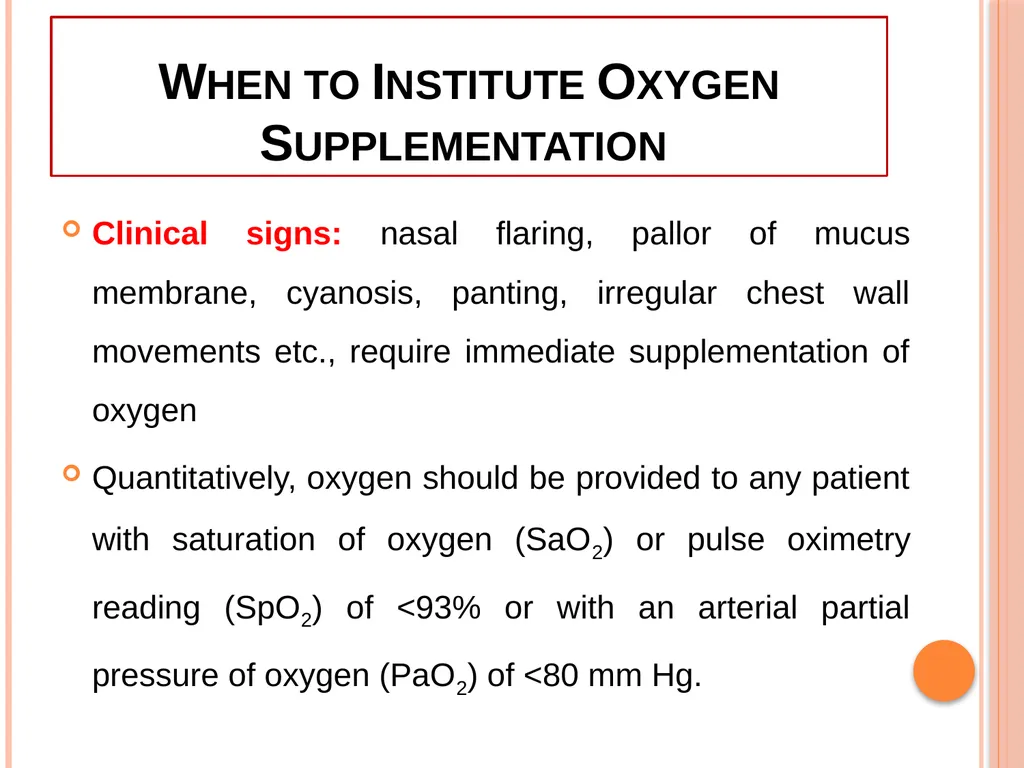
slide5. When to Institute Oxygen Supplementation Clinical signs: nasal flaring, pallor of mucus membrane, cyanosis, panting, irregular chest wall movements etc., require immediate supplementation of oxygen
Quantitatively, oxygen should be provided to any patient with saturation of oxygen (SaO2) or pulse oximetry reading (SpO2) of <93% or with an arterial partial pressure of oxygen (PaO2) of <80 mm Hg.<br>
slide6. Methods of Oxygen Therapy Non-invasive Method
Invasive Method<br>
slide7. Non-Invasive Methods of Oxygen Therapy This method is readily available in most emergency clinics.
Administration of ventilator support without using an invasive artificial airway (endotracheal tube or tracheostomy tube).<br>
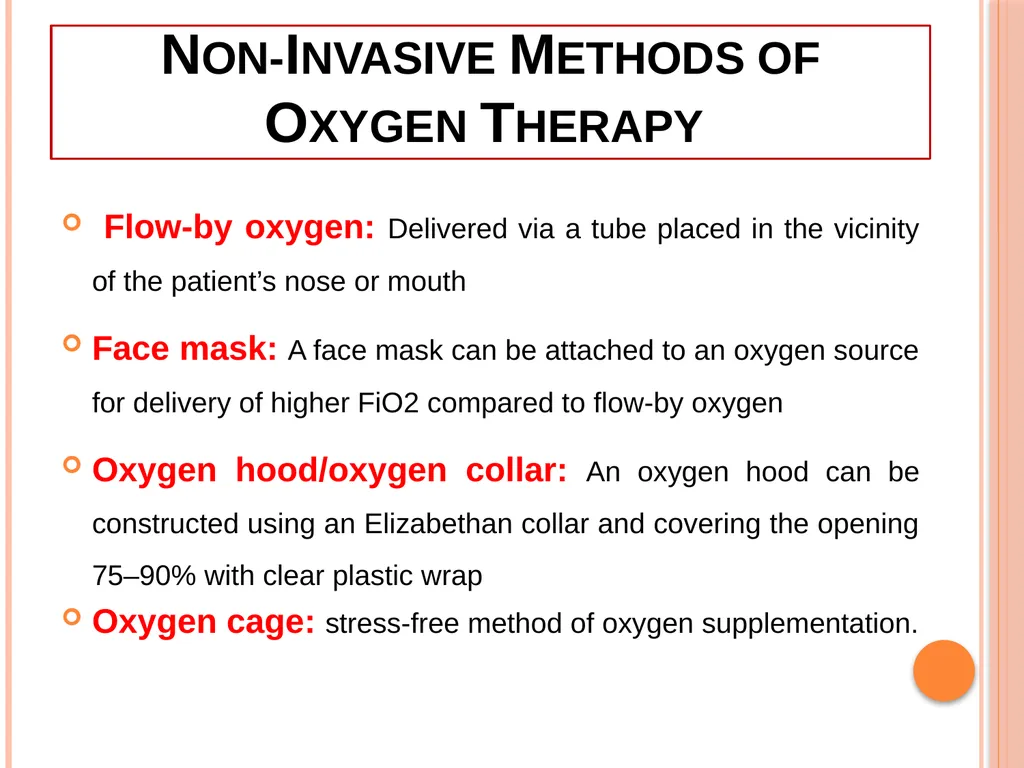
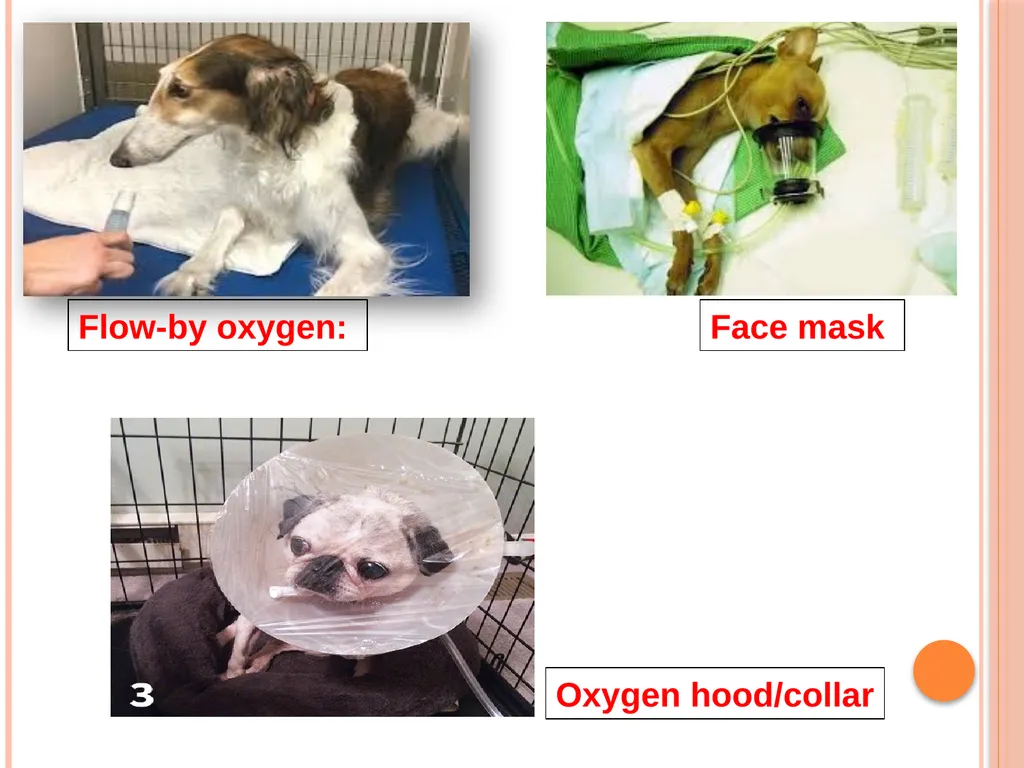
slide8. Non-Invasive Methods of Oxygen Therapy Flow-by oxygen: Delivered via a tube placed in the vicinity of the patient’s nose or mouth
Face mask: A face mask can be attached to an oxygen source for delivery of higher FiO2 compared to flow-by oxygen
Oxygen hood/oxygen collar: An oxygen hood can be constructed using an Elizabethan collar and covering the opening 75–90% with clear plastic wrap
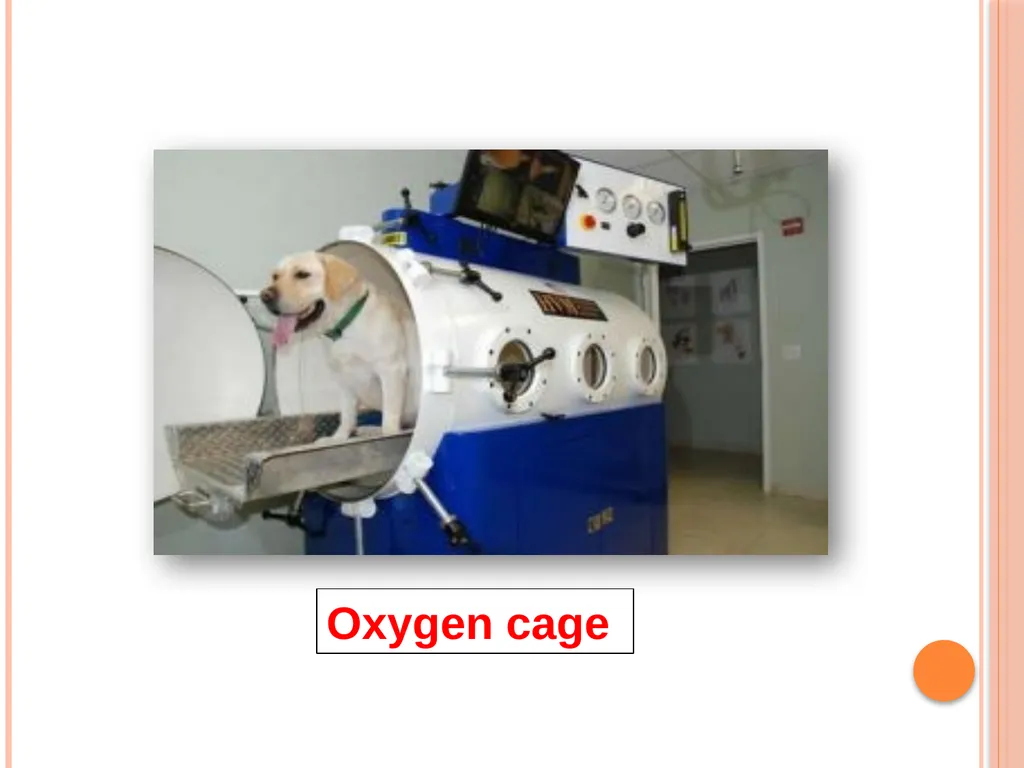
Oxygen cage: stress-free method of oxygen supplementation.<br>
slide9. Flow-by oxygen: Face mask Oxygen hood/collar<br>
slide10. Oxygen cage<br>
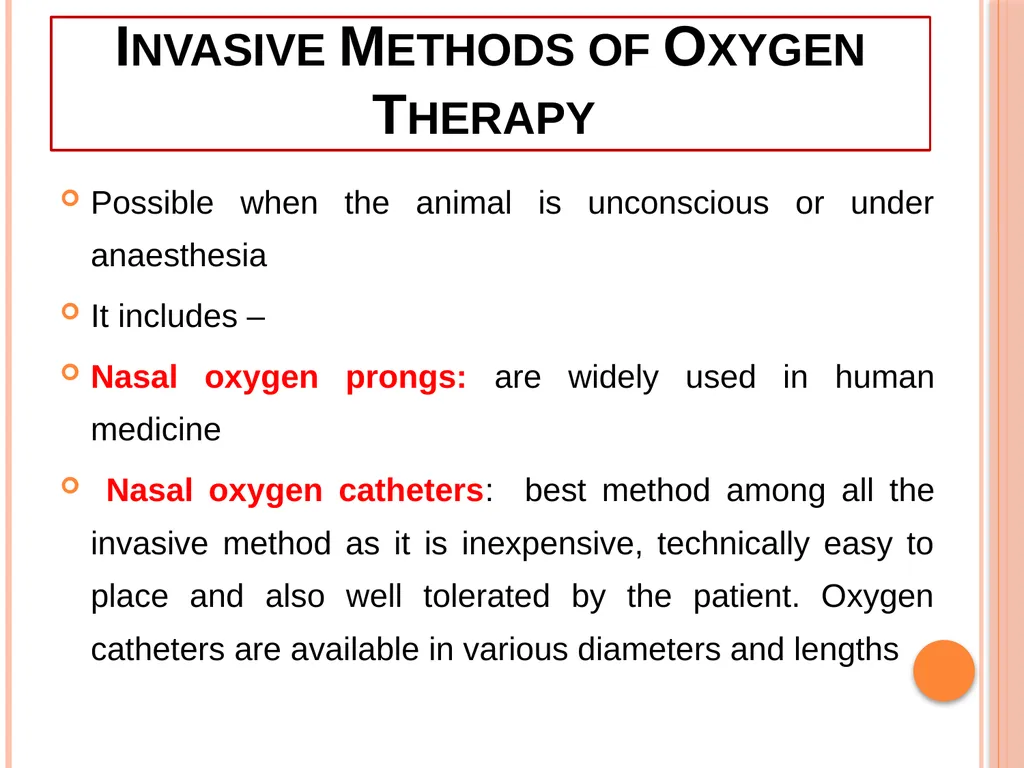
slide11. Possible when the animal is unconscious or under anaesthesia
It includes –
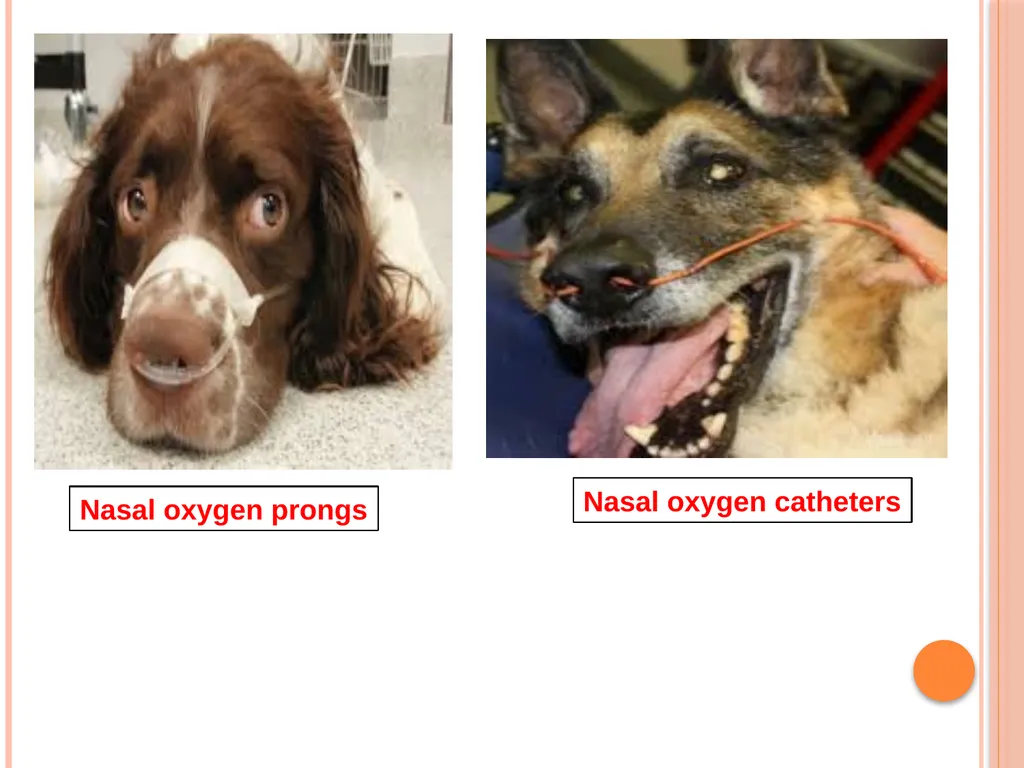
Nasal oxygen prongs: are widely used in human medicine
Nasal oxygen catheters: best method among all the invasive method as it is inexpensive, technically easy to place and also well tolerated by the patient. Oxygen catheters are available in various diameters and lengths Invasive Methods of Oxygen Therapy<br>
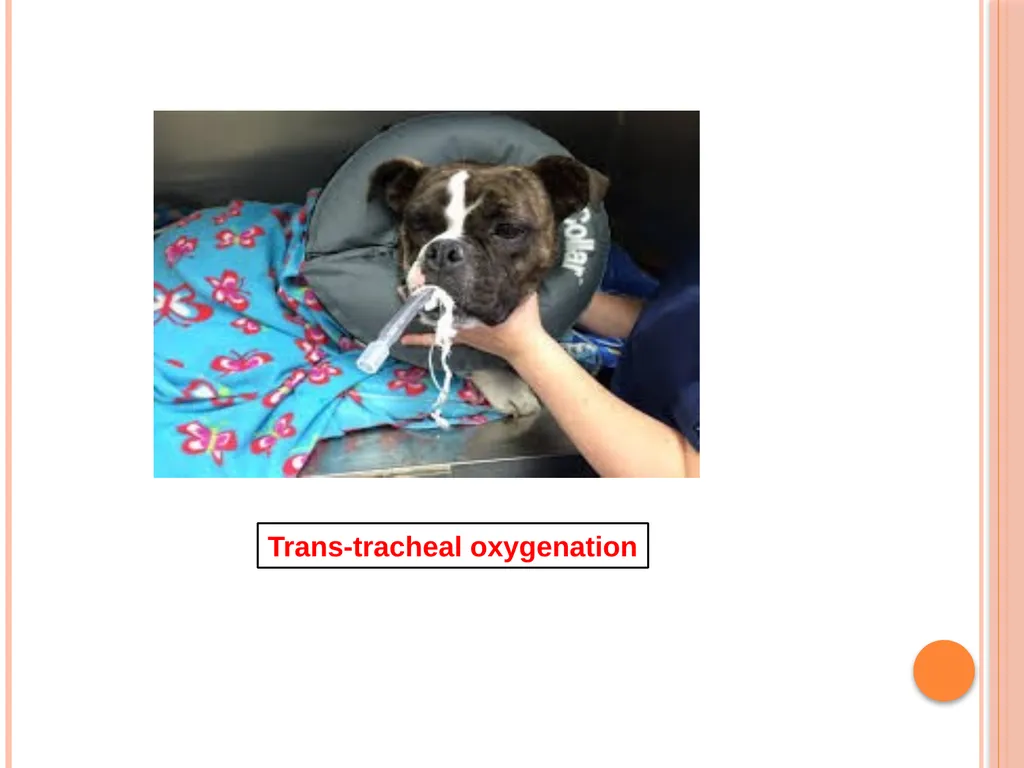
slide12. Trans-tracheal oxygenation: This technique is used in patients intolerant to nasal oxygen delivery like patients suffering from upper airway obstruction<br>
slide13. Nasal oxygen prongs Nasal oxygen catheters<br>
slide14. Trans-tracheal oxygenation<br>
Dr. Sonam Bhatt
Assistant Professor
(Veterinary Medicine)<br>
slide2. Introduction It is widely used in veterinary medicine
Most important veterinary cares in emergency health
Used to relieve hypoxia and increase oxygen delivery to the tissues.
In the emergency room setting, patients presenting with symptoms of respiratory distress may benefit from oxygen supplementation until the status of their respiratory system can be determined.<br>
slide3. Oxygen therapy denotes the delivery of high concentrations of oxygen into the respiratory system to increase the oxygen levels in the blood so that more oxygen reaches at tissues level
Oxygen therapy increases the fraction of inspired oxygen (FiO2) delivered to the alveoli<br>
slide4. Indications of Oxygen Therapy Hypoxia
Hypoxaemia<br>
slide5. When to Institute Oxygen Supplementation Clinical signs: nasal flaring, pallor of mucus membrane, cyanosis, panting, irregular chest wall movements etc., require immediate supplementation of oxygen
Quantitatively, oxygen should be provided to any patient with saturation of oxygen (SaO2) or pulse oximetry reading (SpO2) of <93% or with an arterial partial pressure of oxygen (PaO2) of <80 mm Hg.<br>
slide6. Methods of Oxygen Therapy Non-invasive Method
Invasive Method<br>
slide7. Non-Invasive Methods of Oxygen Therapy This method is readily available in most emergency clinics.
Administration of ventilator support without using an invasive artificial airway (endotracheal tube or tracheostomy tube).<br>
slide8. Non-Invasive Methods of Oxygen Therapy Flow-by oxygen: Delivered via a tube placed in the vicinity of the patient’s nose or mouth
Face mask: A face mask can be attached to an oxygen source for delivery of higher FiO2 compared to flow-by oxygen
Oxygen hood/oxygen collar: An oxygen hood can be constructed using an Elizabethan collar and covering the opening 75–90% with clear plastic wrap
Oxygen cage: stress-free method of oxygen supplementation.<br>
slide9. Flow-by oxygen: Face mask Oxygen hood/collar<br>
slide10. Oxygen cage<br>
slide11. Possible when the animal is unconscious or under anaesthesia
It includes –
Nasal oxygen prongs: are widely used in human medicine
Nasal oxygen catheters: best method among all the invasive method as it is inexpensive, technically easy to place and also well tolerated by the patient. Oxygen catheters are available in various diameters and lengths Invasive Methods of Oxygen Therapy<br>
slide12. Trans-tracheal oxygenation: This technique is used in patients intolerant to nasal oxygen delivery like patients suffering from upper airway obstruction<br>
slide13. Nasal oxygen prongs Nasal oxygen catheters<br>
slide14. Trans-tracheal oxygenation<br>