
P1 Chapter 3 :: Equations and Inequalities
Description: P1 Chapter 3 :: Equations and Inequalities jfrosttiffin.kingston.sch.uk www.drfrostmaths.com DrFrostMaths Last modified: 23rd July 2018 www.drfrostmaths.com Everything is completely free. Why not register? Teaching videos with topic tests
Related Topics
Download Presentation
"P1 Chapter 3 :: Equations and Inequalities" is the property of its rightful owner. Permission is granted to download and print the materials on this website for personal, non-commercial use only, and to display it on your personal computer provided you do not modify the materials and that you retain all copyright notices contained in the materials. By downloading content from our website, you accept the terms of this agreement.
Presentation Transcript
slide1. P1 Chapter 3 :: Equations and Inequalities jfrost@tiffin.kingston.sch.uk
www.drfrostmaths.com @DrFrostMaths Last modified: 23rd July 2018<br>
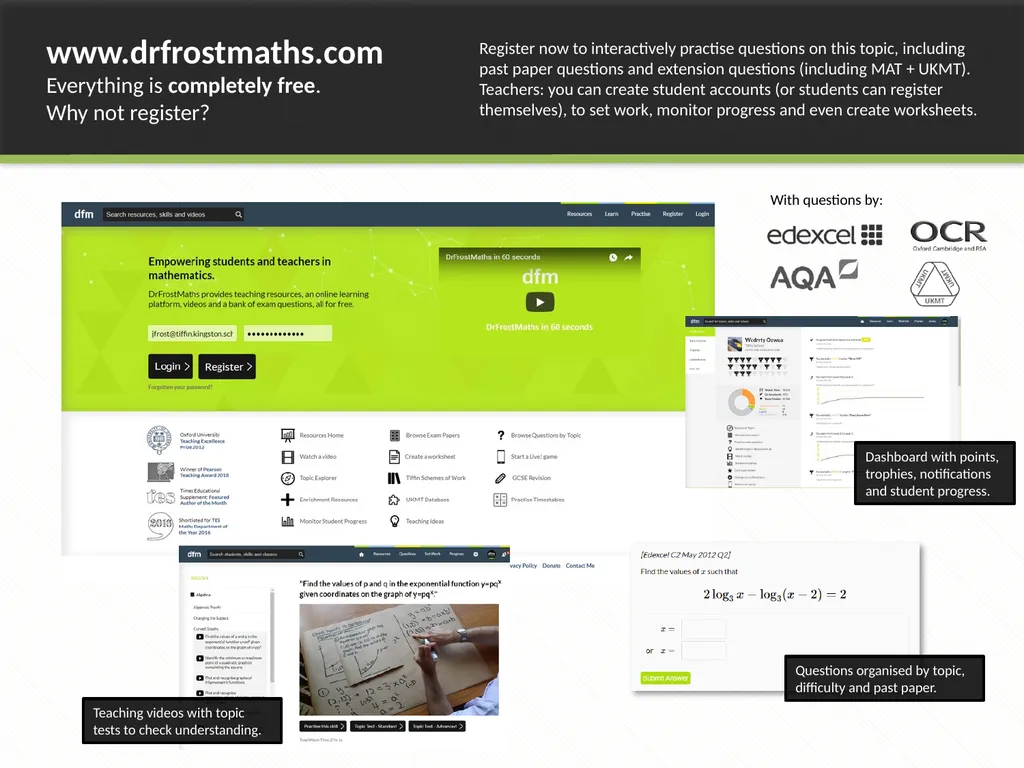
slide2. www.drfrostmaths.com
Everything is completely free.
Why not register? Teaching videos with topic tests to check understanding. Register now to interactively practise questions on this topic, including past paper questions and extension questions (including MAT + UKMT).
Teachers: you can create student accounts (or students can register themselves), to set work, monitor progress and even create worksheets. Dashboard with points, trophies, notifications and student progress. With questions by: Questions organised by topic, difficulty and past paper.<br>
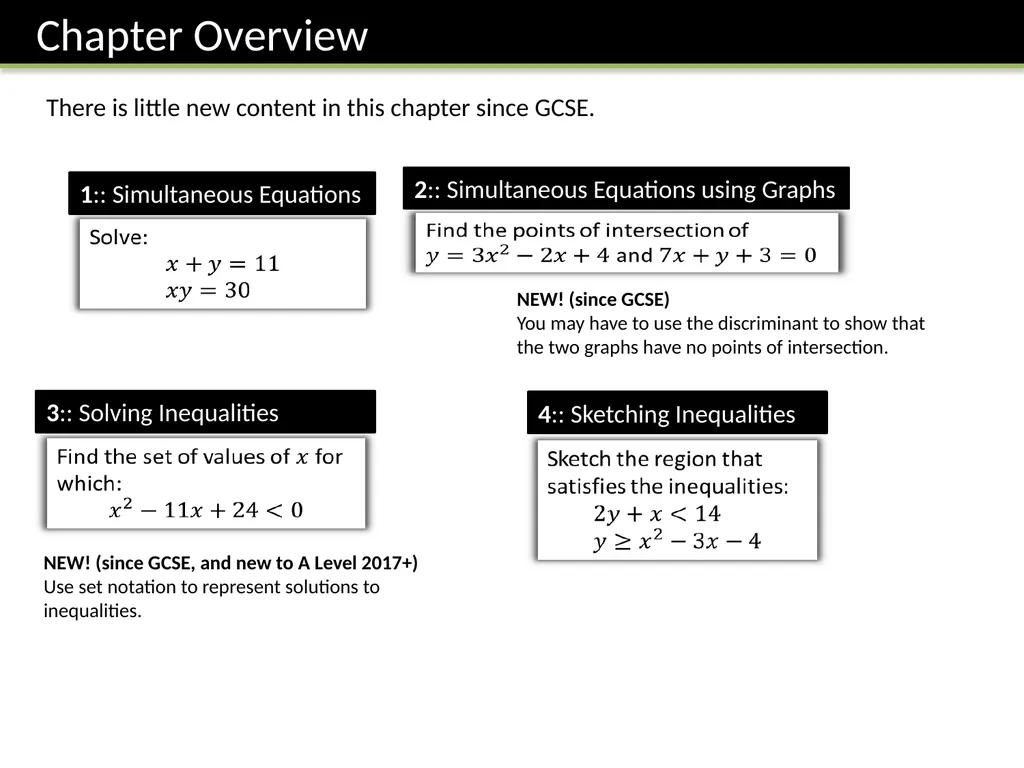
slide3. There is little new content in this chapter since GCSE. 1:: Simultaneous Equations 2:: Simultaneous Equations using Graphs 3:: Solving Inequalities 4:: Sketching Inequalities NEW! (since GCSE)
You may have to use the discriminant to show that the two graphs have no points of intersection. NEW! (since GCSE, and new to A Level 2017+)
Use set notation to represent solutions to inequalities.<br>
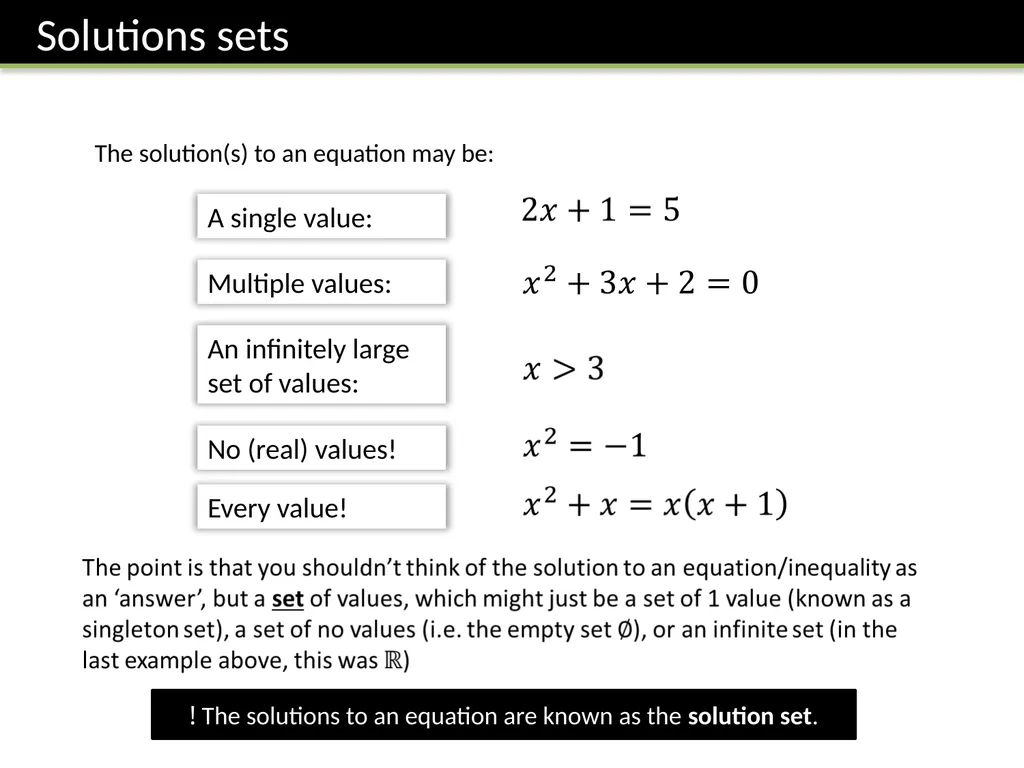
slide4. The solution(s) to an equation may be: A single value: Multiple values: An infinitely large set of values: No (real) values! Every value! ! The solutions to an equation are known as the solution set.<br>
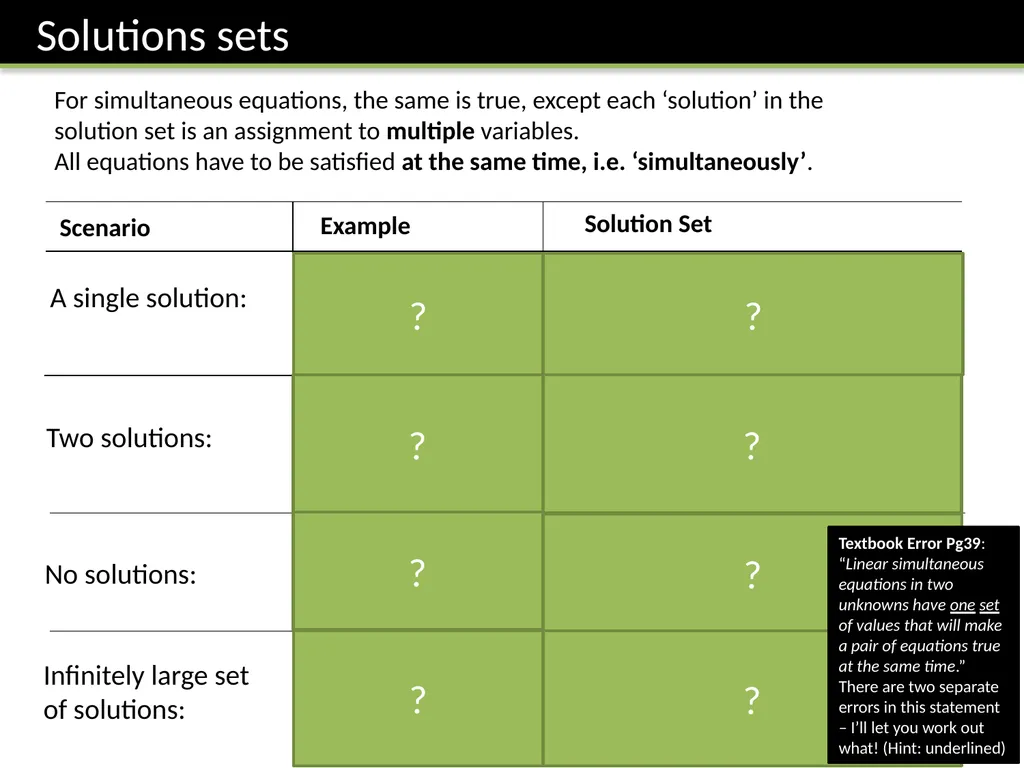
slide5. For simultaneous equations, the same is true, except each ‘solution’ in the solution set is an assignment to multiple variables.
All equations have to be satisfied at the same time, i.e. ‘simultaneously’. A single solution: Two solutions: No solutions: Infinitely large set of solutions: Scenario Example Solution Set ? ? ? ? ? ? ? ? Textbook Error Pg39: “Linear simultaneous equations in two unknowns have one set of values that will make a pair of equations true at the same time.”
There are two separate errors in this statement – I’ll let you work out what! (Hint: underlined)<br>
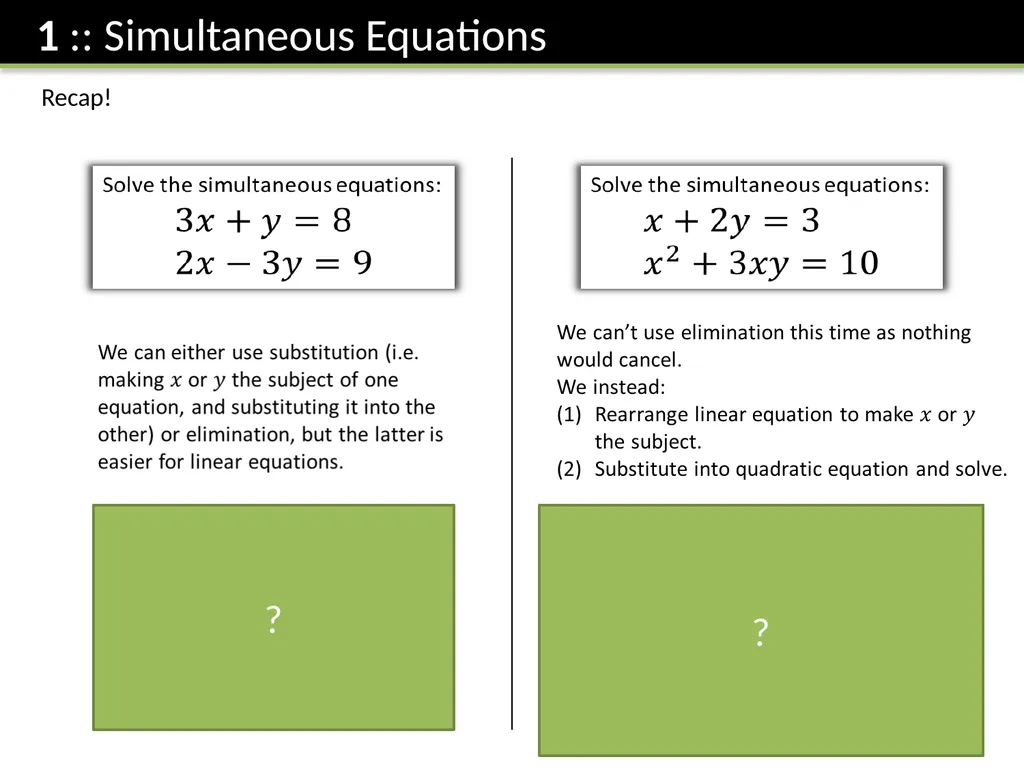
slide6. ? ? Recap!<br>
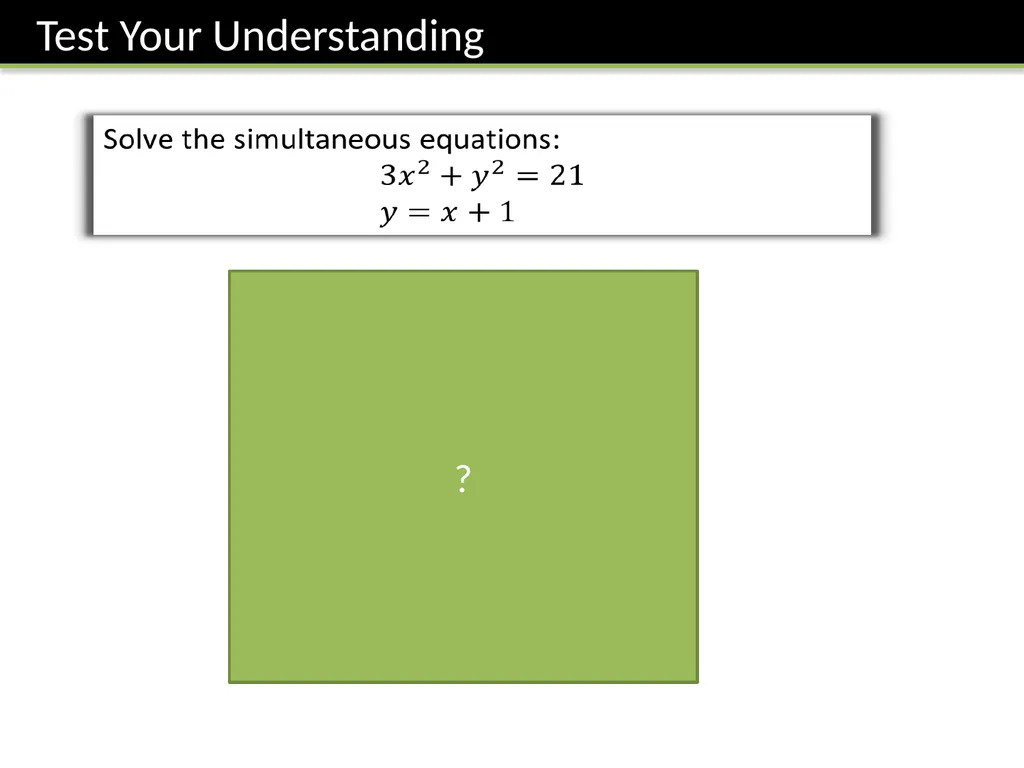
slide7. ?<br>
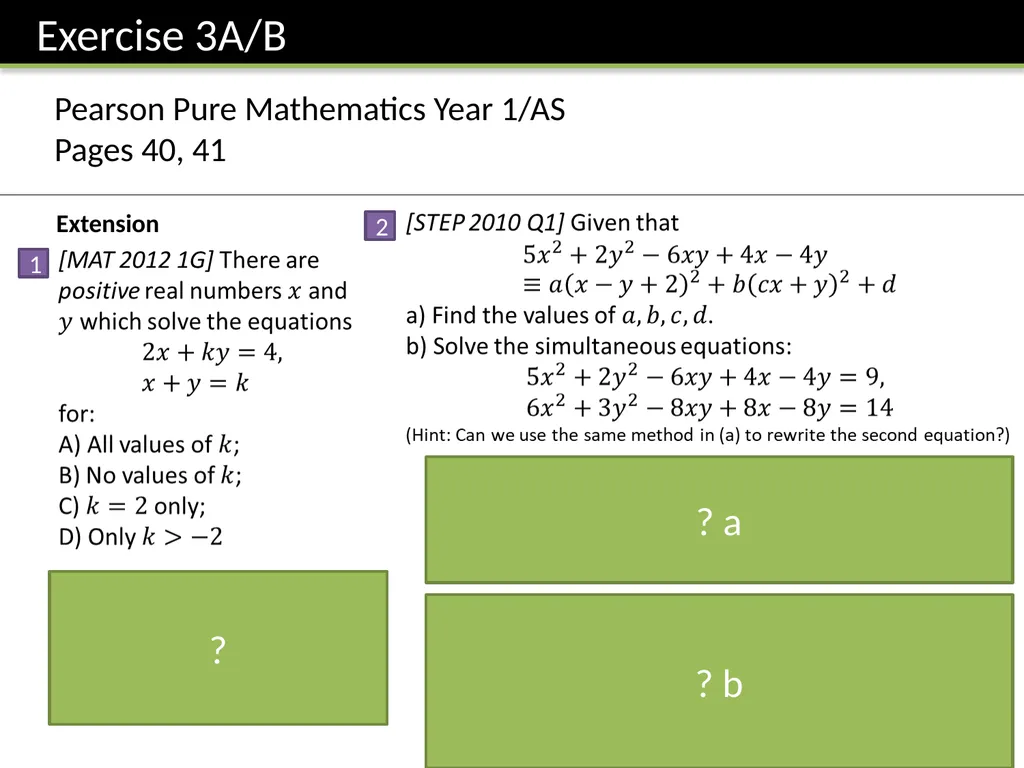
slide8. Pearson Pure Mathematics Year 1/AS
Pages 40, 41 1 2 ? ? a Extension ? b<br>
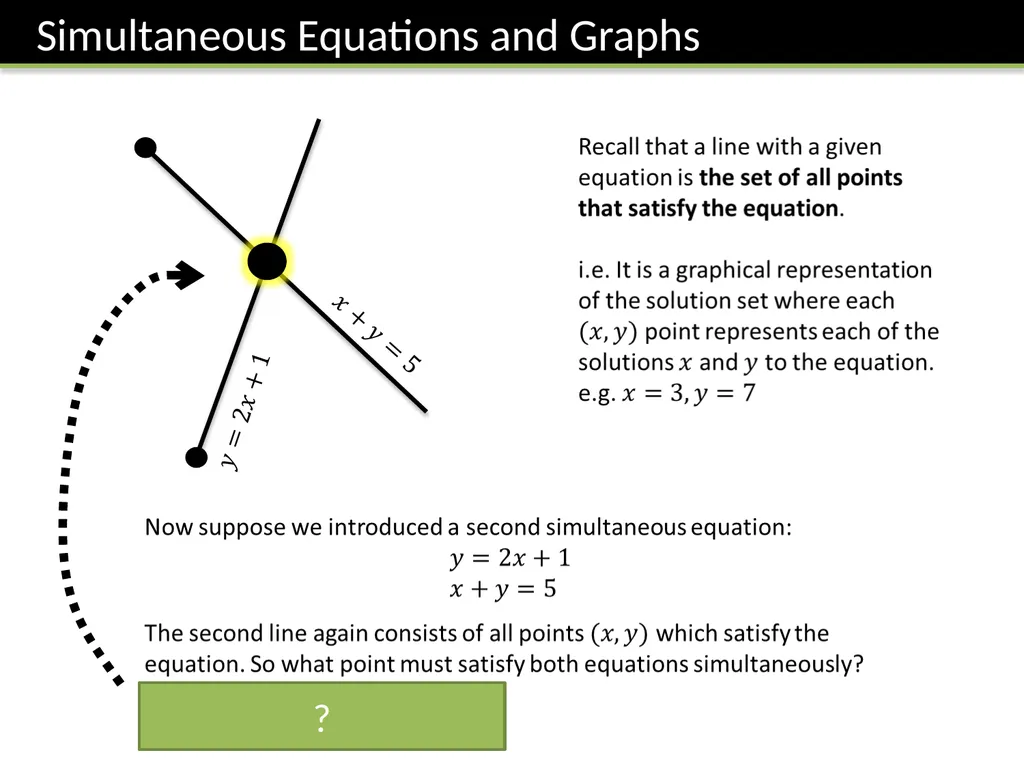
slide9. ?<br>
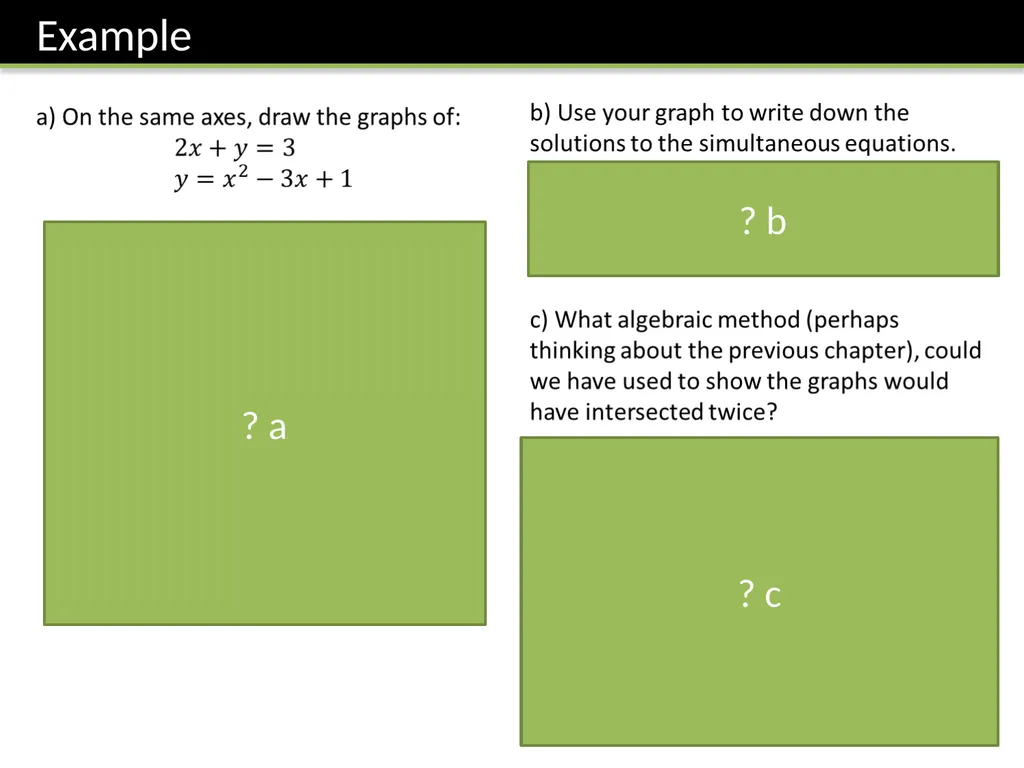
slide10. ? a ? b ? c<br>
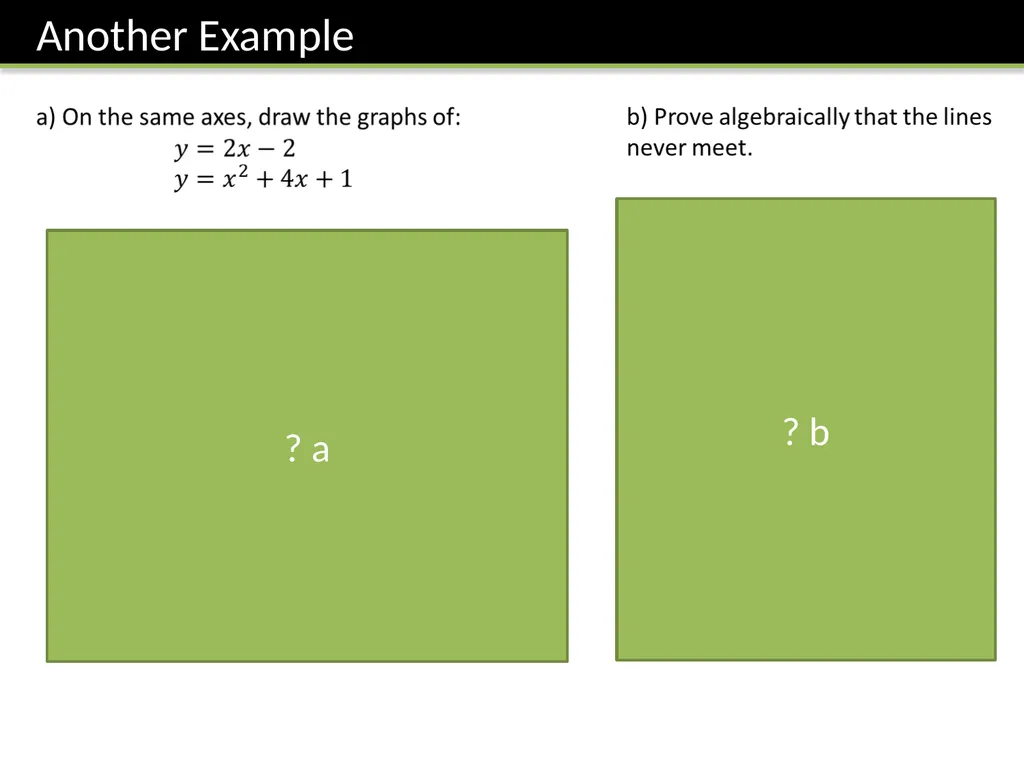
slide11. ? a ? b<br>
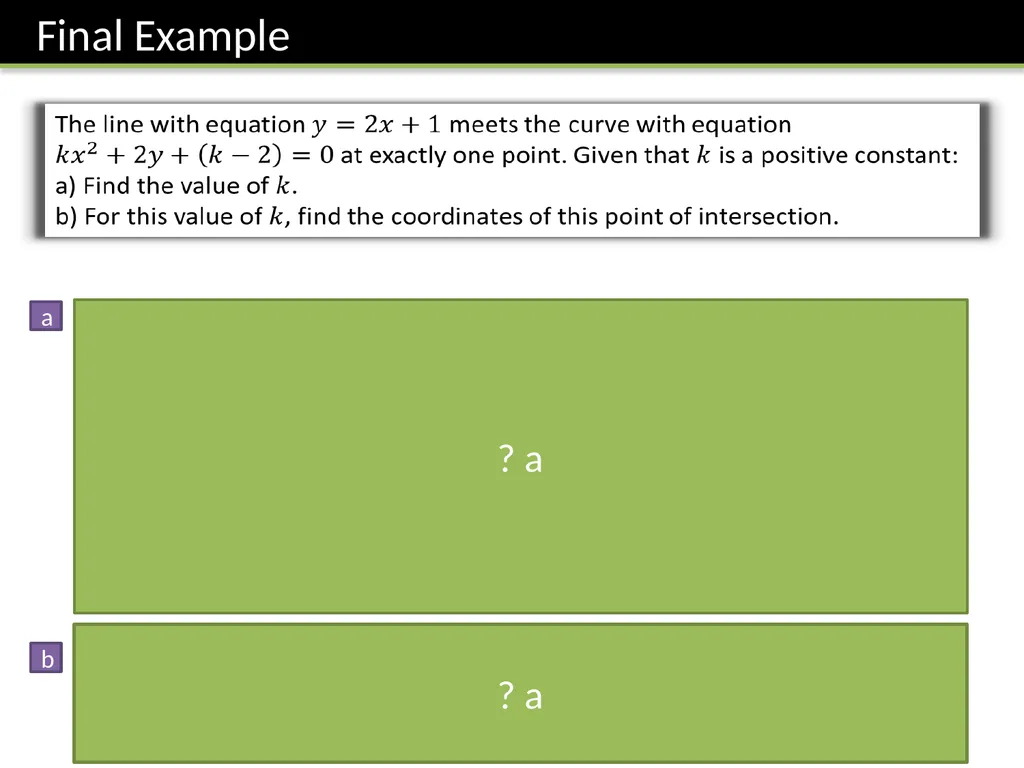
slide12. a b We can breathe a sigh of relief as we were expecting one solution only. ? a ? a<br>
slide13. Pearson Pure Mathematics Year 1/AS
Page 45<br>
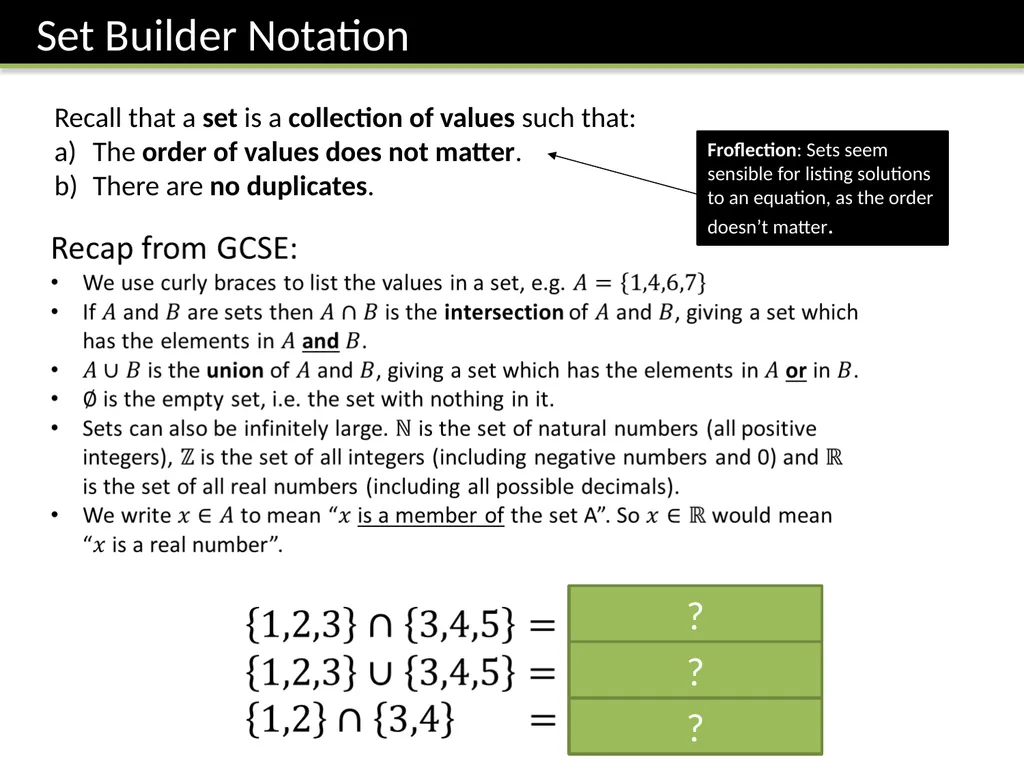
slide14. Recall that a set is a collection of values such that:
The order of values does not matter.
There are no duplicates. Froflection: Sets seem sensible for listing solutions to an equation, as the order doesn’t matter. ? ? ?<br>
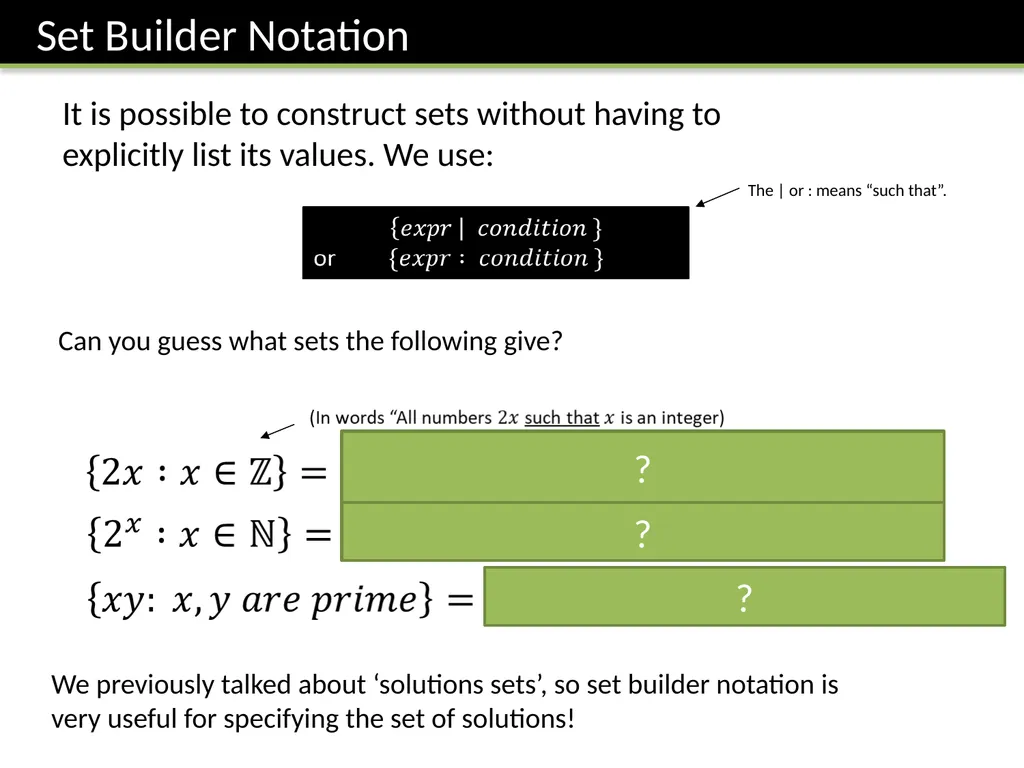
slide15. It is possible to construct sets without having to explicitly list its values. We use: Can you guess what sets the following give? The | or : means “such that”. i.e. The set of all even numbers! i.e. All possible products of two primes. ? ? ? We previously talked about ‘solutions sets’, so set builder notation is very useful for specifying the set of solutions!<br>
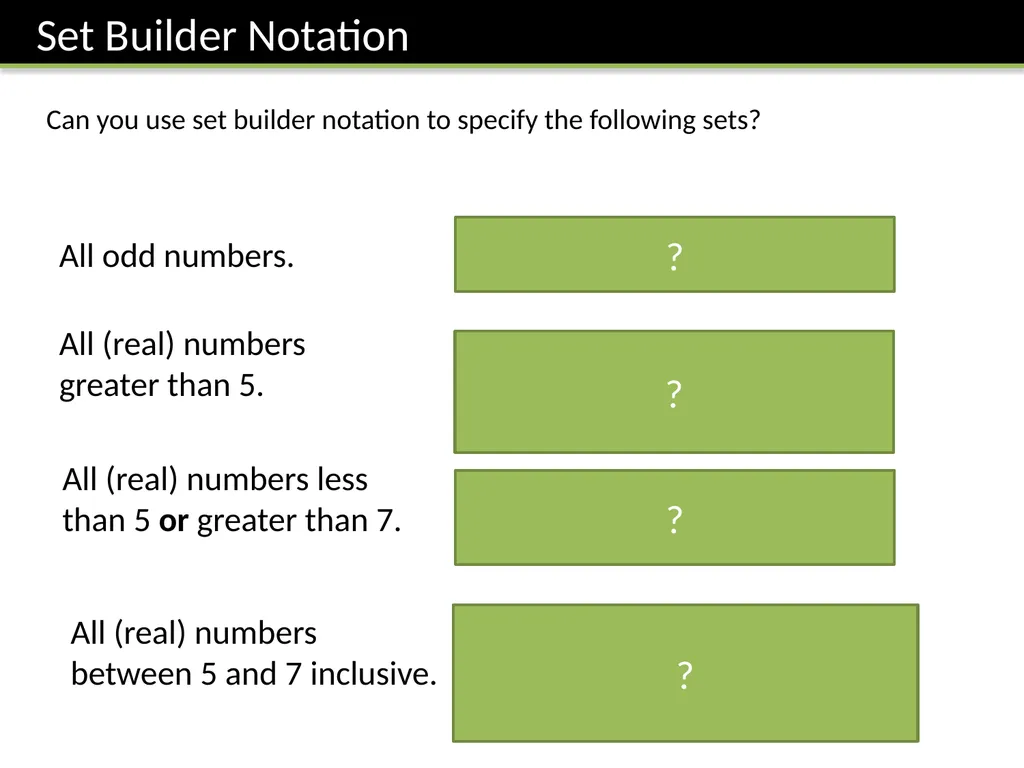
slide16. Can you use set builder notation to specify the following sets? All odd numbers. All (real) numbers greater than 5. All (real) numbers less than 5 or greater than 7. We combine the two sets together. All (real) numbers between 5 and 7 inclusive. ? ? ? ?<br>
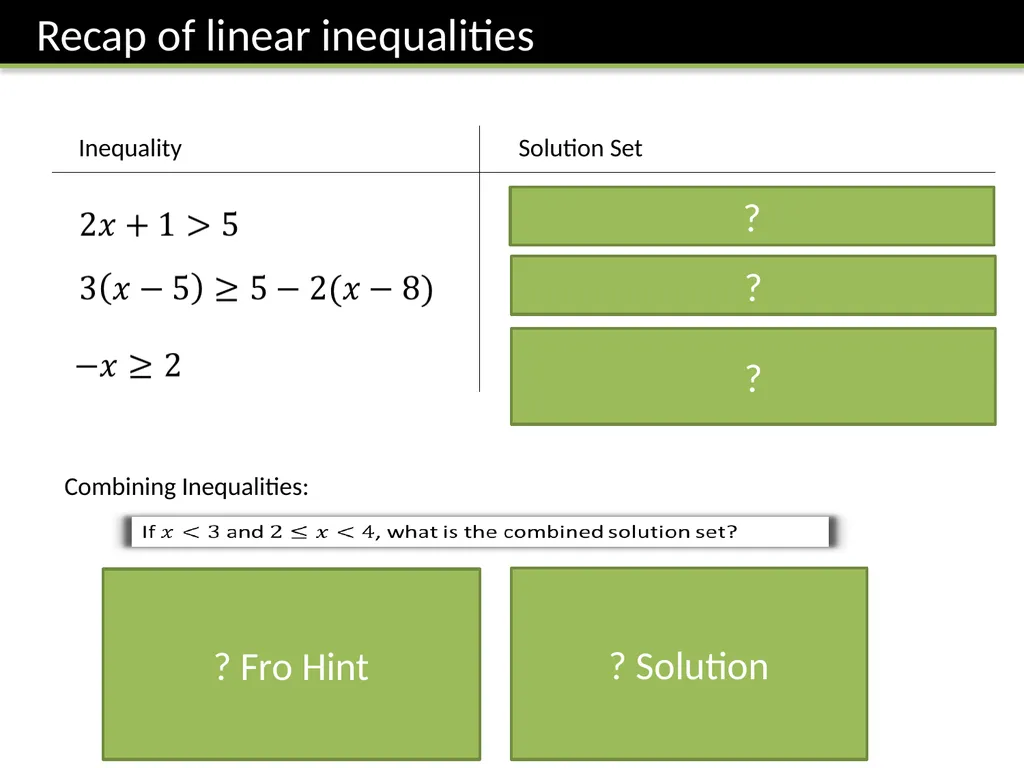
slide17. Inequality Solution Set Fro Note: Multiplying or both sides of an inequality by a negative number reverses the direction. ? ? ? Combining Inequalities: 2 3 4 If both inequalities have to be satisfied, we have to be on both lines. Place your finger vertically and scan across. ? Fro Hint ? Solution<br>
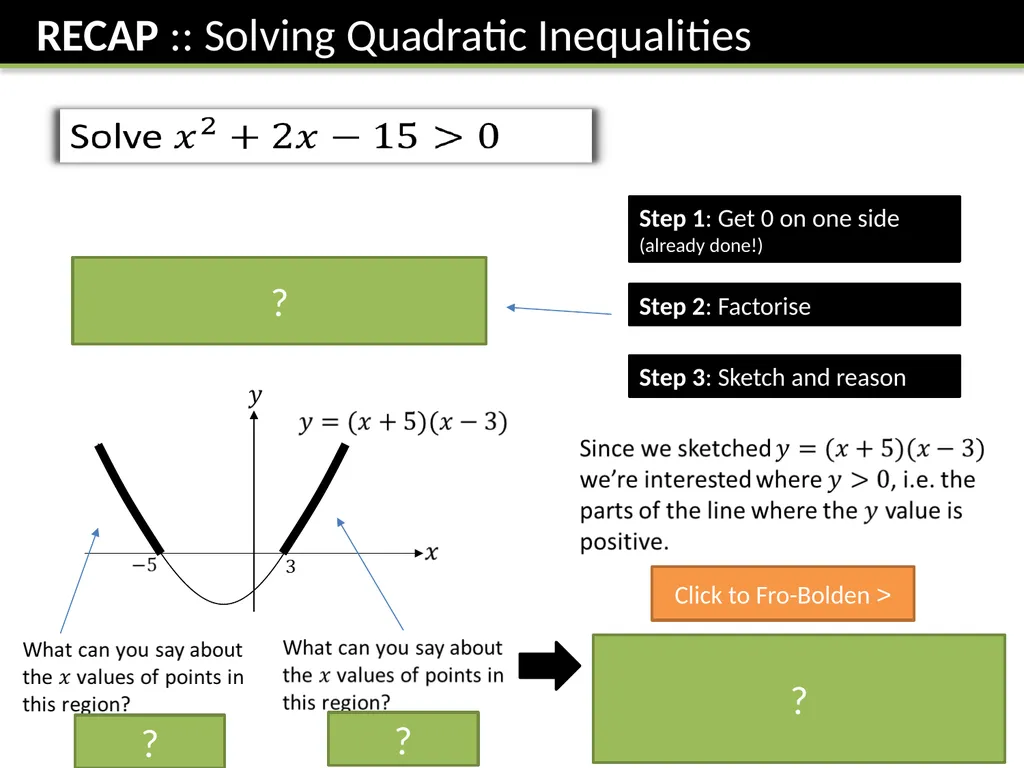
slide18. Step 1: Get 0 on one side
(already done!) Step 2: Factorise Step 3: Sketch and reason Click to Fro-Bolden > ? ? ? ?<br>
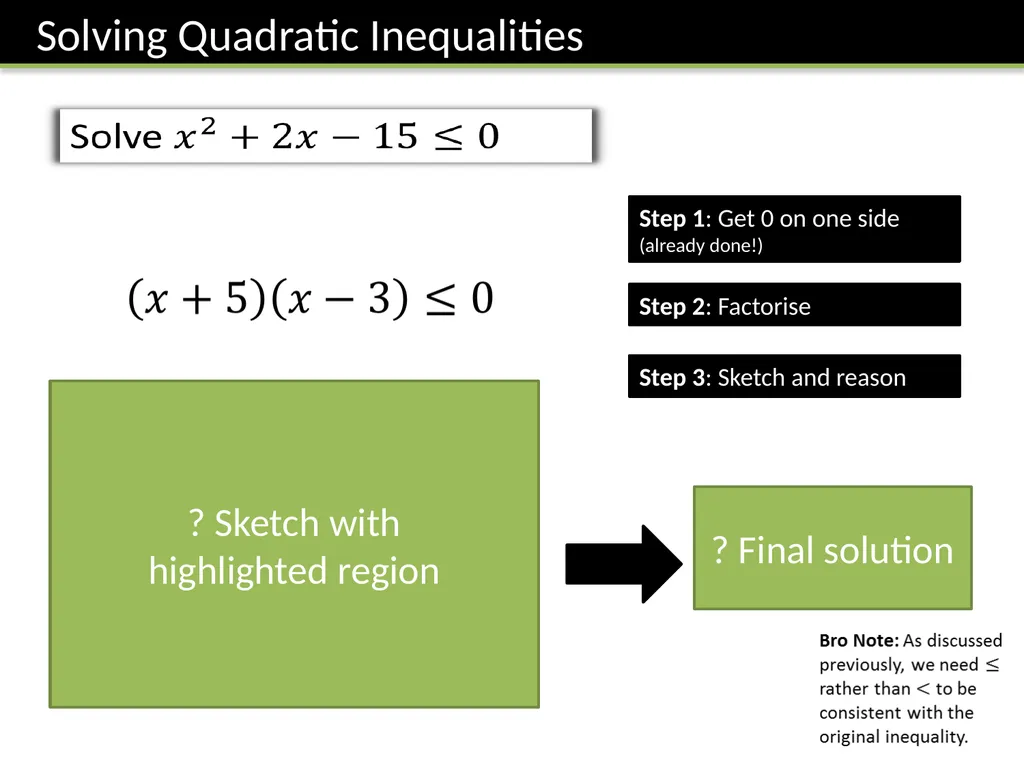
slide19. Step 1: Get 0 on one side
(already done!) Step 2: Factorise Step 3: Sketch and reason ? Final solution ? Sketch with highlighted region<br>
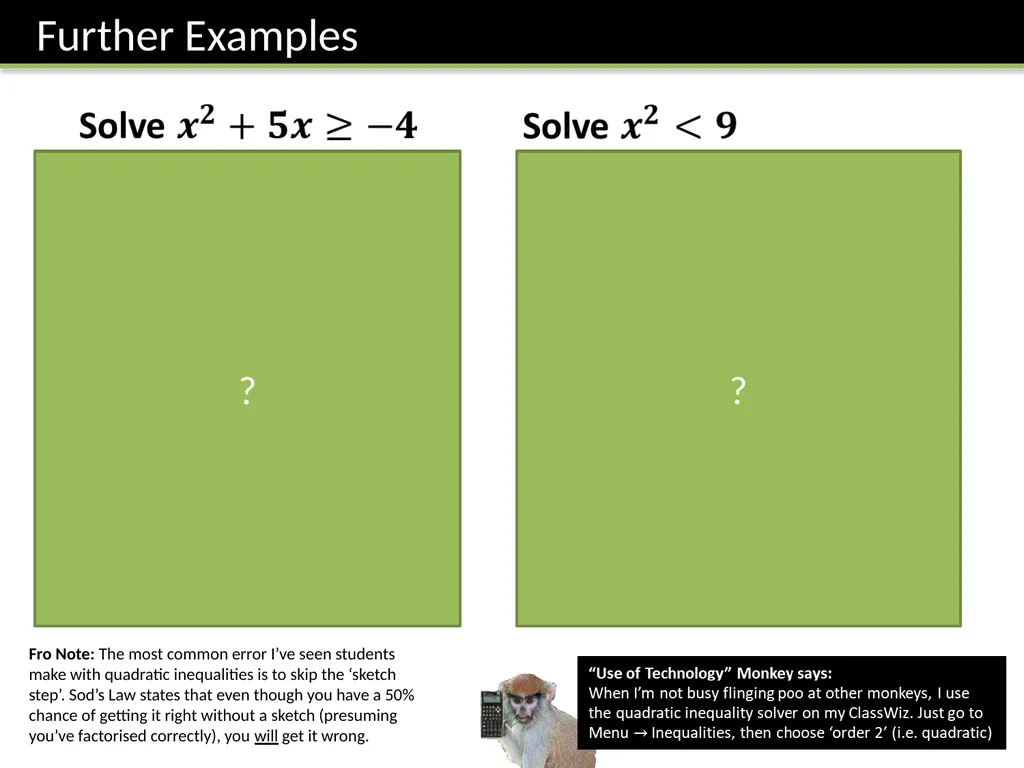
slide20. ? ? Fro Note: The most common error I’ve seen students make with quadratic inequalities is to skip the ‘sketch step’. Sod’s Law states that even though you have a 50% chance of getting it right without a sketch (presuming you’ve factorised correctly), you will get it wrong.<br>
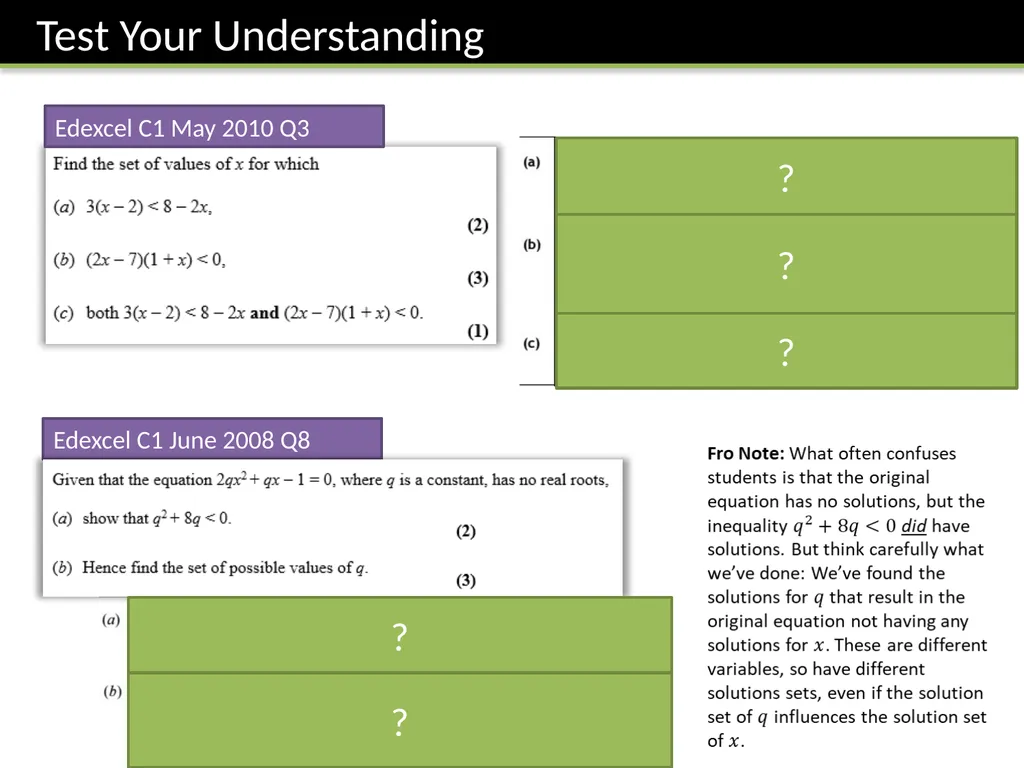
slide21. Edexcel C1 June 2008 Q8 Edexcel C1 May 2010 Q3 ? ? ? ? ?<br>
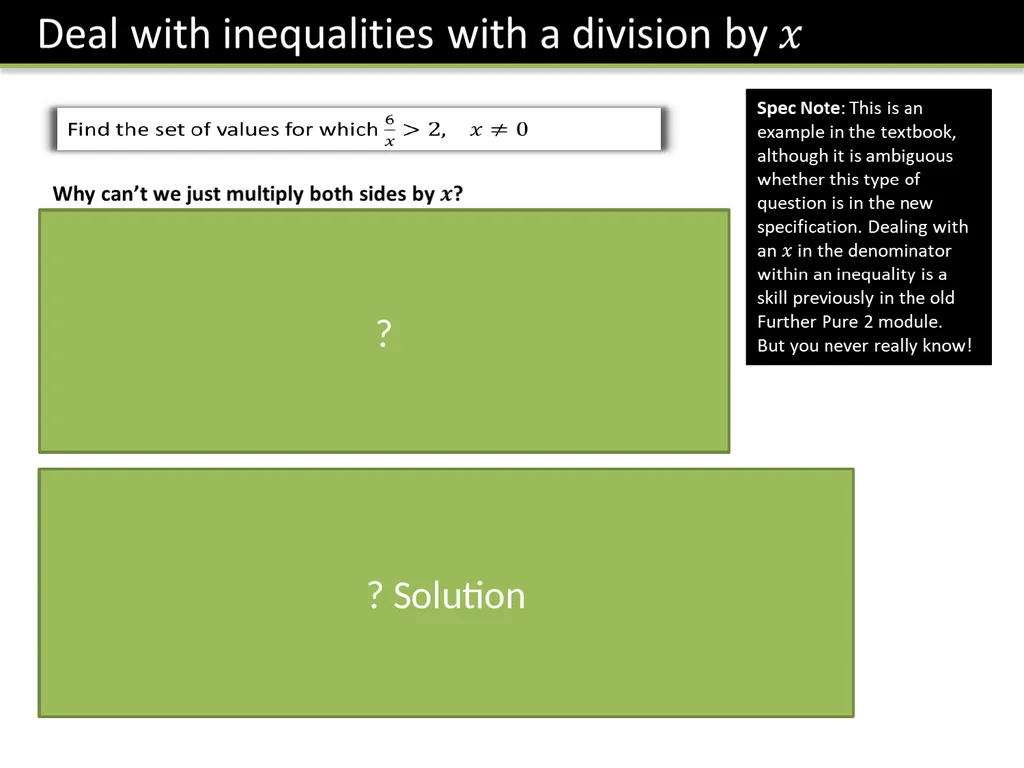
slide22. ? Solution ?<br>
slide23. Pearson Pure Mathematics Year 1/AS
Page 47-48, 50-51<br>
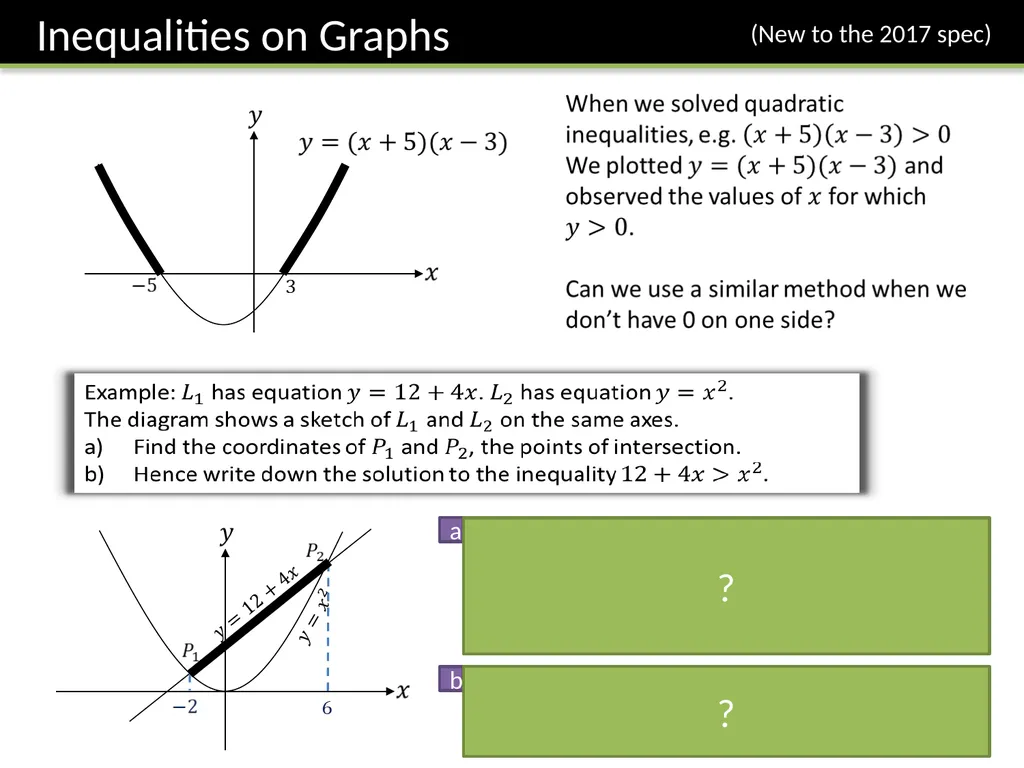
slide24. a b ? ? (New to the 2017 spec)<br>
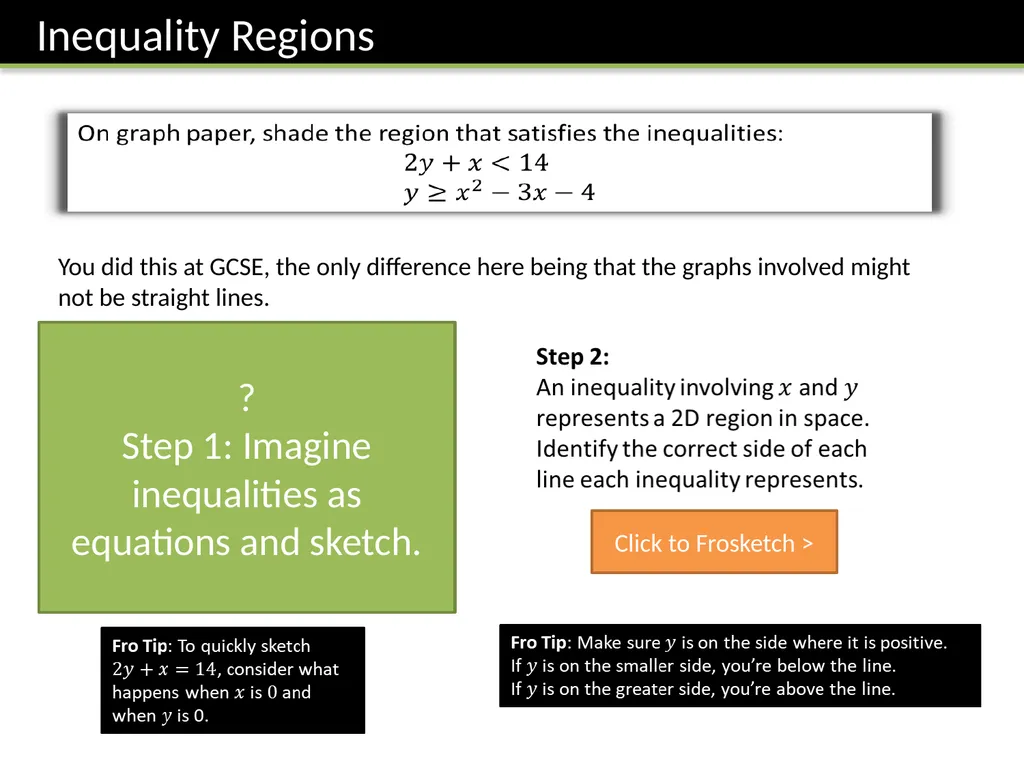
slide25. You did this at GCSE, the only difference here being that the graphs involved might not be straight lines. ?
Step 1: Imagine inequalities as equations and sketch. Click to Frosketch ><br>
slide26. Pearson Pure Mathematics Year 1/AS
Page 53, 55<br>
www.drfrostmaths.com @DrFrostMaths Last modified: 23rd July 2018<br>
slide2. www.drfrostmaths.com
Everything is completely free.
Why not register? Teaching videos with topic tests to check understanding. Register now to interactively practise questions on this topic, including past paper questions and extension questions (including MAT + UKMT).
Teachers: you can create student accounts (or students can register themselves), to set work, monitor progress and even create worksheets. Dashboard with points, trophies, notifications and student progress. With questions by: Questions organised by topic, difficulty and past paper.<br>
slide3. There is little new content in this chapter since GCSE. 1:: Simultaneous Equations 2:: Simultaneous Equations using Graphs 3:: Solving Inequalities 4:: Sketching Inequalities NEW! (since GCSE)
You may have to use the discriminant to show that the two graphs have no points of intersection. NEW! (since GCSE, and new to A Level 2017+)
Use set notation to represent solutions to inequalities.<br>
slide4. The solution(s) to an equation may be: A single value: Multiple values: An infinitely large set of values: No (real) values! Every value! ! The solutions to an equation are known as the solution set.<br>
slide5. For simultaneous equations, the same is true, except each ‘solution’ in the solution set is an assignment to multiple variables.
All equations have to be satisfied at the same time, i.e. ‘simultaneously’. A single solution: Two solutions: No solutions: Infinitely large set of solutions: Scenario Example Solution Set ? ? ? ? ? ? ? ? Textbook Error Pg39: “Linear simultaneous equations in two unknowns have one set of values that will make a pair of equations true at the same time.”
There are two separate errors in this statement – I’ll let you work out what! (Hint: underlined)<br>
slide6. ? ? Recap!<br>
slide7. ?<br>
slide8. Pearson Pure Mathematics Year 1/AS
Pages 40, 41 1 2 ? ? a Extension ? b<br>
slide9. ?<br>
slide10. ? a ? b ? c<br>
slide11. ? a ? b<br>
slide12. a b We can breathe a sigh of relief as we were expecting one solution only. ? a ? a<br>
slide13. Pearson Pure Mathematics Year 1/AS
Page 45<br>
slide14. Recall that a set is a collection of values such that:
The order of values does not matter.
There are no duplicates. Froflection: Sets seem sensible for listing solutions to an equation, as the order doesn’t matter. ? ? ?<br>
slide15. It is possible to construct sets without having to explicitly list its values. We use: Can you guess what sets the following give? The | or : means “such that”. i.e. The set of all even numbers! i.e. All possible products of two primes. ? ? ? We previously talked about ‘solutions sets’, so set builder notation is very useful for specifying the set of solutions!<br>
slide16. Can you use set builder notation to specify the following sets? All odd numbers. All (real) numbers greater than 5. All (real) numbers less than 5 or greater than 7. We combine the two sets together. All (real) numbers between 5 and 7 inclusive. ? ? ? ?<br>
slide17. Inequality Solution Set Fro Note: Multiplying or both sides of an inequality by a negative number reverses the direction. ? ? ? Combining Inequalities: 2 3 4 If both inequalities have to be satisfied, we have to be on both lines. Place your finger vertically and scan across. ? Fro Hint ? Solution<br>
slide18. Step 1: Get 0 on one side
(already done!) Step 2: Factorise Step 3: Sketch and reason Click to Fro-Bolden > ? ? ? ?<br>
slide19. Step 1: Get 0 on one side
(already done!) Step 2: Factorise Step 3: Sketch and reason ? Final solution ? Sketch with highlighted region<br>
slide20. ? ? Fro Note: The most common error I’ve seen students make with quadratic inequalities is to skip the ‘sketch step’. Sod’s Law states that even though you have a 50% chance of getting it right without a sketch (presuming you’ve factorised correctly), you will get it wrong.<br>
slide21. Edexcel C1 June 2008 Q8 Edexcel C1 May 2010 Q3 ? ? ? ? ?<br>
slide22. ? Solution ?<br>
slide23. Pearson Pure Mathematics Year 1/AS
Page 47-48, 50-51<br>
slide24. a b ? ? (New to the 2017 spec)<br>
slide25. You did this at GCSE, the only difference here being that the graphs involved might not be straight lines. ?
Step 1: Imagine inequalities as equations and sketch. Click to Frosketch ><br>
slide26. Pearson Pure Mathematics Year 1/AS
Page 53, 55<br>