Pain Management Objectives Describe pain. Explain
Description: Pain Management Objectives Describe pain. Explain the approved pain assessment tools. Summarize key elements of successful pain management, including pharmacologic and non-pharmacologic interventions. Pain Management The Joint Commission
Related Topics
Download Presentation
"Pain Management Objectives Describe pain. Explain" is the property of its rightful owner. Permission is granted to download and print the materials on this website for personal, non-commercial use only, and to display it on your personal computer provided you do not modify the materials and that you retain all copyright notices contained in the materials. By downloading content from our website, you accept the terms of this agreement.
Presentation Transcript
slide2. Pain Management Objectives
Describe pain.
Explain the approved pain assessment tools.
Summarize key elements of successful pain management, including pharmacologic and non-pharmacologic interventions.<br>
slide3. Pain Management The Joint Commission
Identify pain assessment and pain management, including safe opioid prescribing, as an organizational priority (LD.04.03.13).
• Actively involve the organized medical staff in leadership roles in organization performance improvement activities to improve quality of care, treatment, and services and patient safety (MS.05.01.01).
• Assess and manage the patient’s pain and minimize the risks associated with treatment (PC.01.02.07).
• Collect data to monitor its performance (PI.01.01.01).
• Compile and analyze data (PI.02.01.01).<br>
slide4. Pain Management Definition
Pain is an unpleasant sensory and/or emotional experience associated with tissue damage or described in terms of such damage.
Source: International Association for the Study of Pain, 1979<br>
slide5. Pain Management Policy Statement:
Every patient has the right to effective pain assessment & management.
Pain is subjective and it is what the patient states.
Effort will be made to involve patient an family in the plan for pain management, also education on the processes and management of pain (pharmacological & non-pharmacological).
Discharge instructions also includes information on pain management.<br>
slide6. Types of Pain Acute – brief in duration and subsides as healing takes place.
Chronic – is prolonged and usually lasts from 3-6 months or longer.
Cancer – a complex, temporary symptom which is the end result of mixed mechanism pain. It may involve inflammatory, neuropathic, ischemic, and compression mechanisms at multiple levels.<br>
slide7. Types of Pain Visceral pain – damage or disruption of internal organs and tissues
ex. pelvis, abdomen, chest, intestines
Somatic pain – Somatic pain is experienced when the nociceptors nerves located in the skin or tissues are injured or traumatized.
ex. skin, muscles, soft tissue<br>
slide8. Screening & Assessment for Pain Performed as a part of the initial evaluation using an approved pain assessment tool.
The assessment tool should be based on the age and developmental level of the patient.
A positive pain screen requires a comprehensive pain assessment and a management plan (pharmacologic and non-pharmacologic).
Determining the Acceptable Pain Level (APL) for each patient.<br>
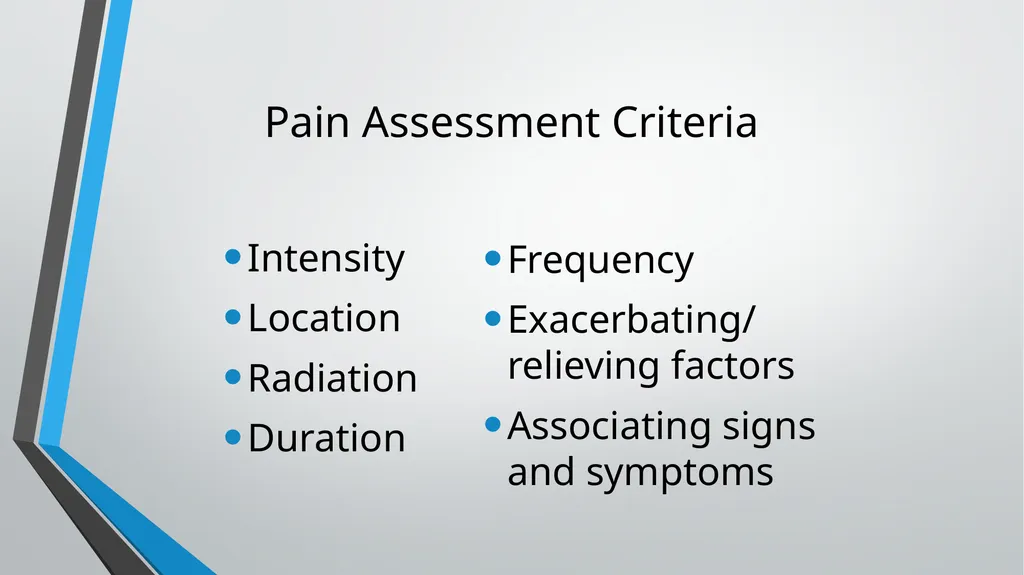
slide9. Pain Assessment Criteria Intensity
Location
Radiation
Duration Frequency
Exacerbating/relieving factors
Associating signs and symptoms<br>
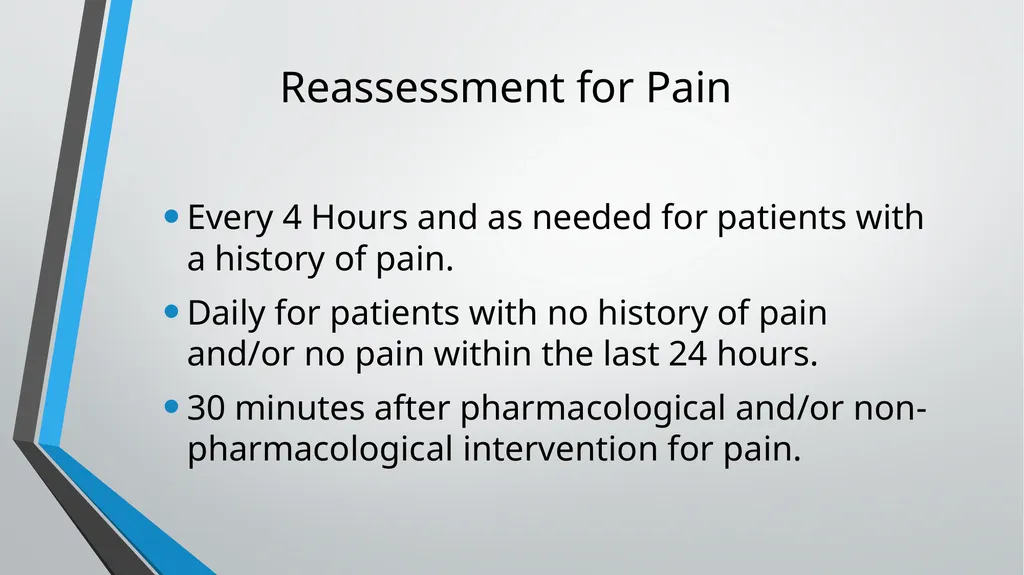
slide10. Reassessment for Pain Every 4 Hours and as needed for patients with a history of pain.
Daily for patients with no history of pain and/or no pain within the last 24 hours.
30 minutes after pharmacological and/or non-pharmacological intervention for pain.<br>
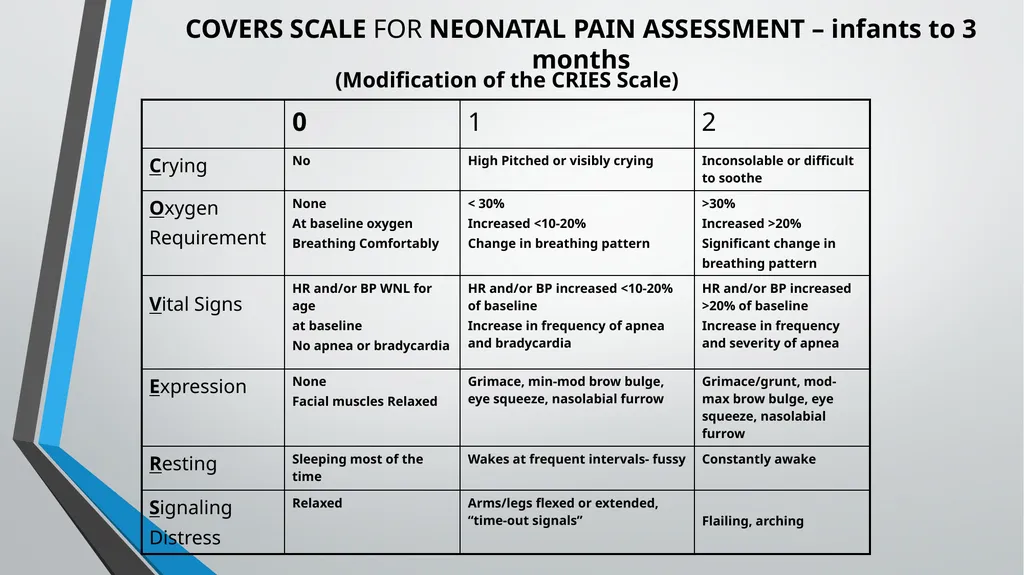
slide11. COVERS SCALE FOR NEONATAL PAIN ASSESSMENT – infants to 3 months (Modification of the CRIES Scale)<br>
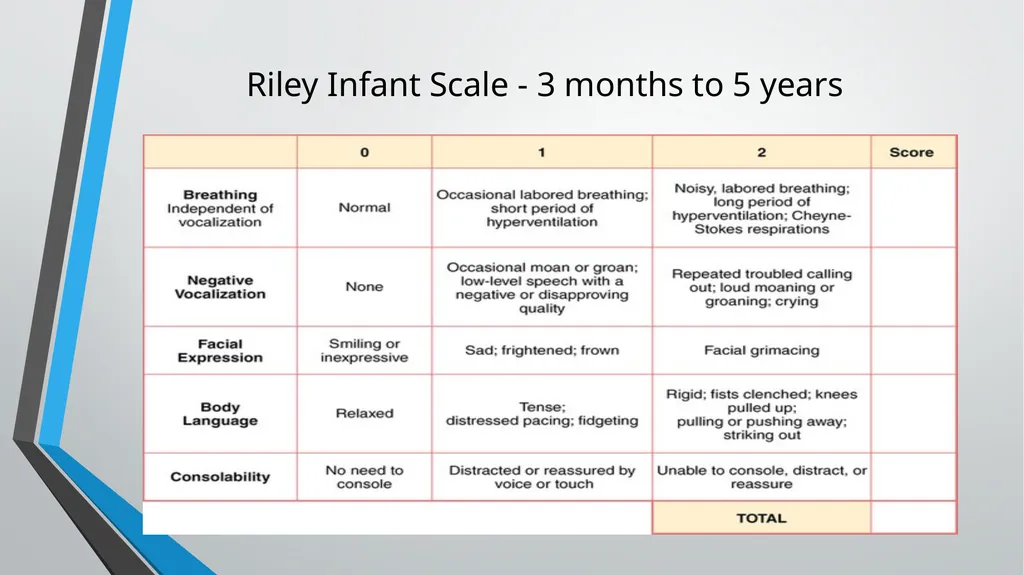
slide12. Riley Infant Scale - 3 months to 5 years<br>
slide13. Wong-Baker Faces 5 years to adult<br>
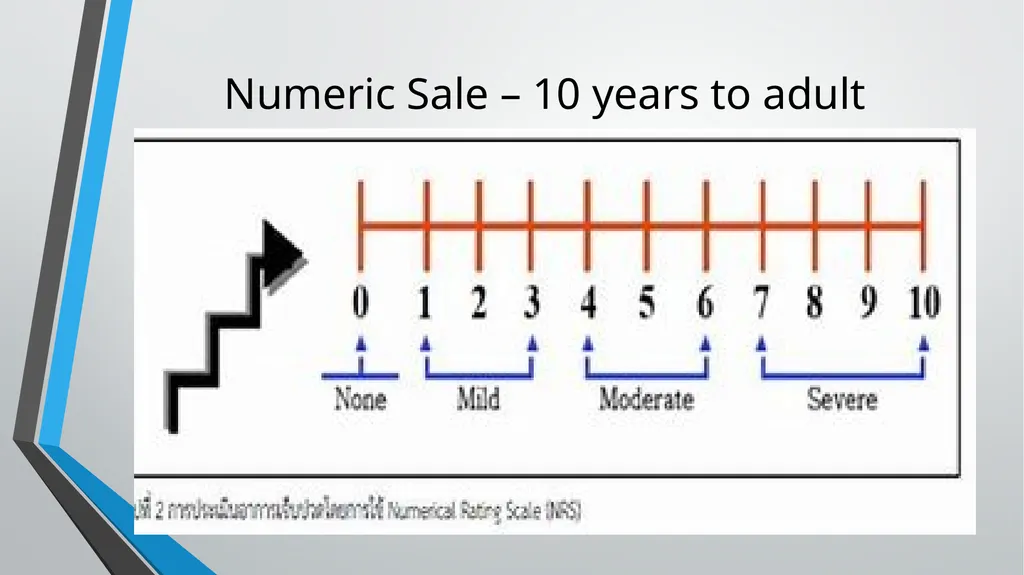
slide14. Numeric Sale – 10 years to adult<br>
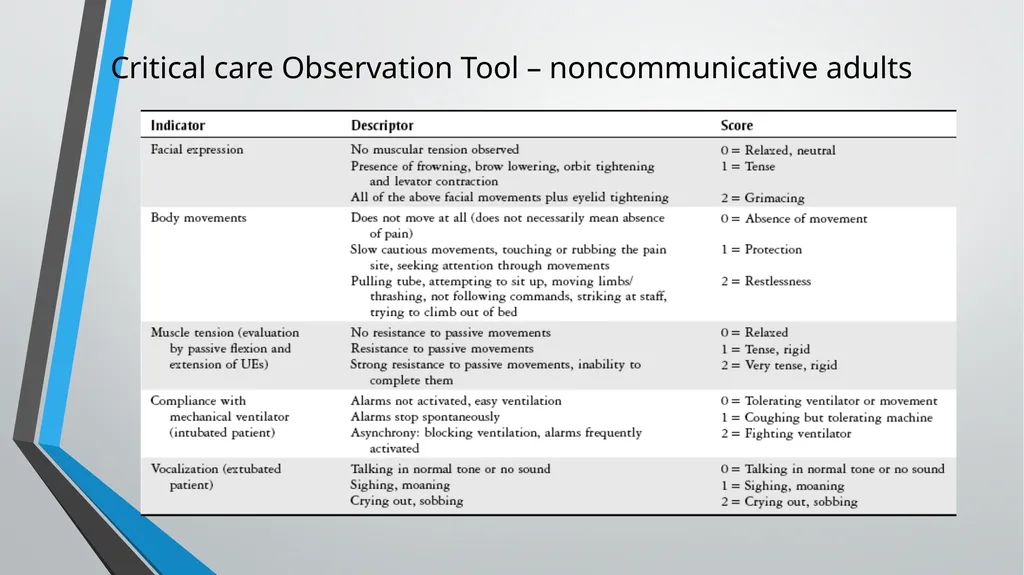
slide15. Critical care Observation Tool – noncommunicative adults<br>
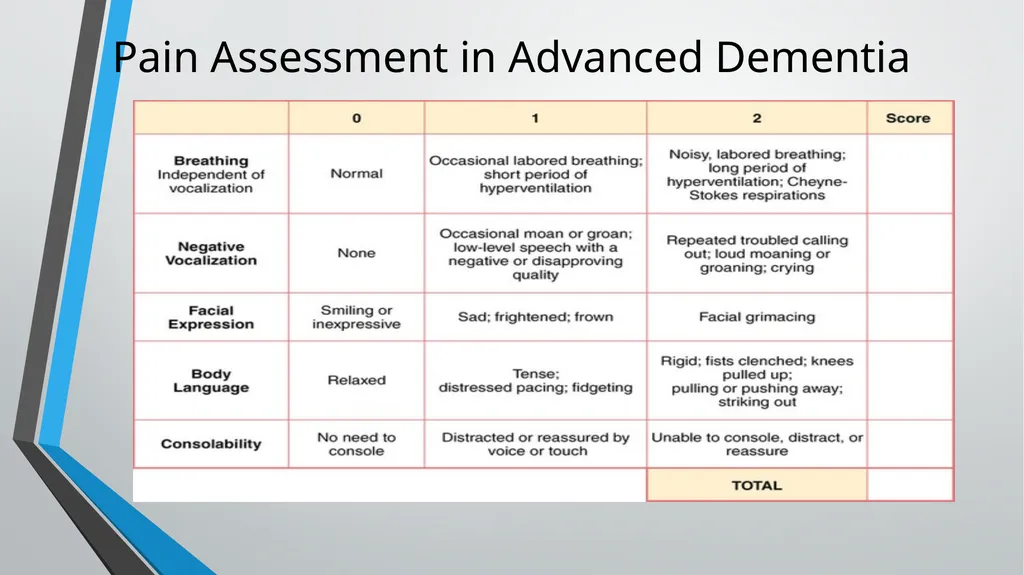
slide16. Pain Assessment in Advanced Dementia<br>
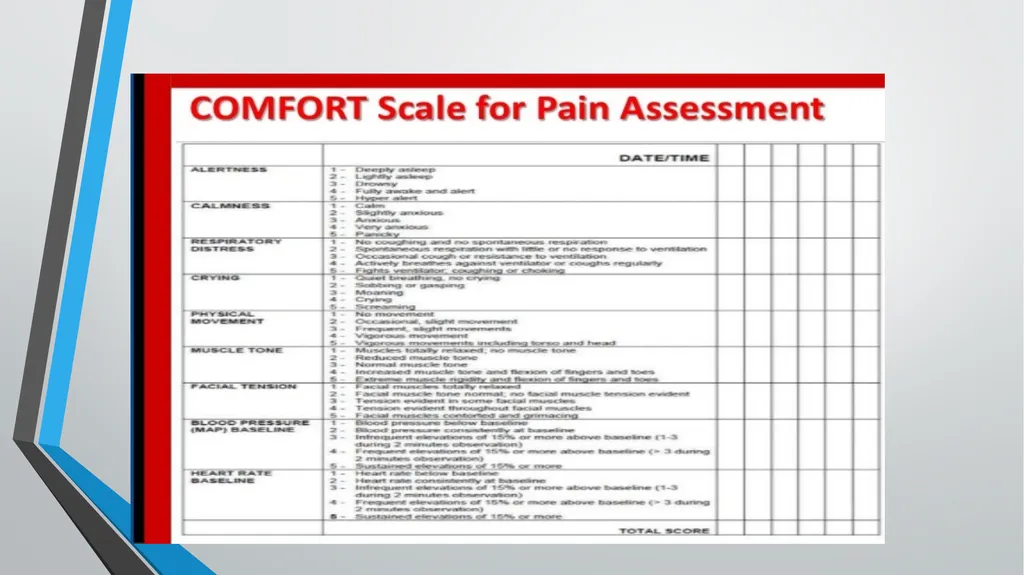
slide17. Sedation Monitoring Comfort Scale for mechanically ventilated patients
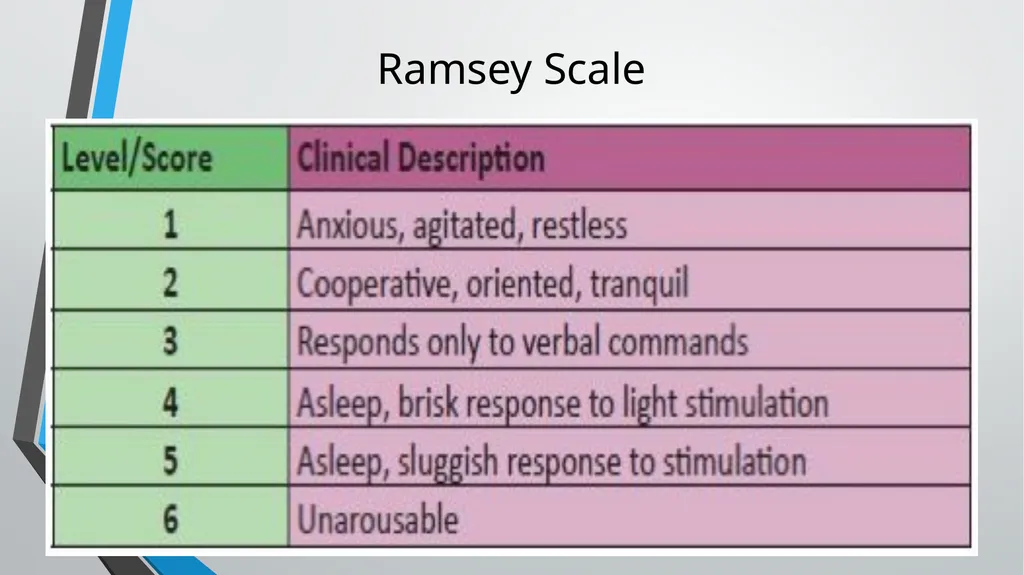
Ramsey scale for patients with non-opioid sedation
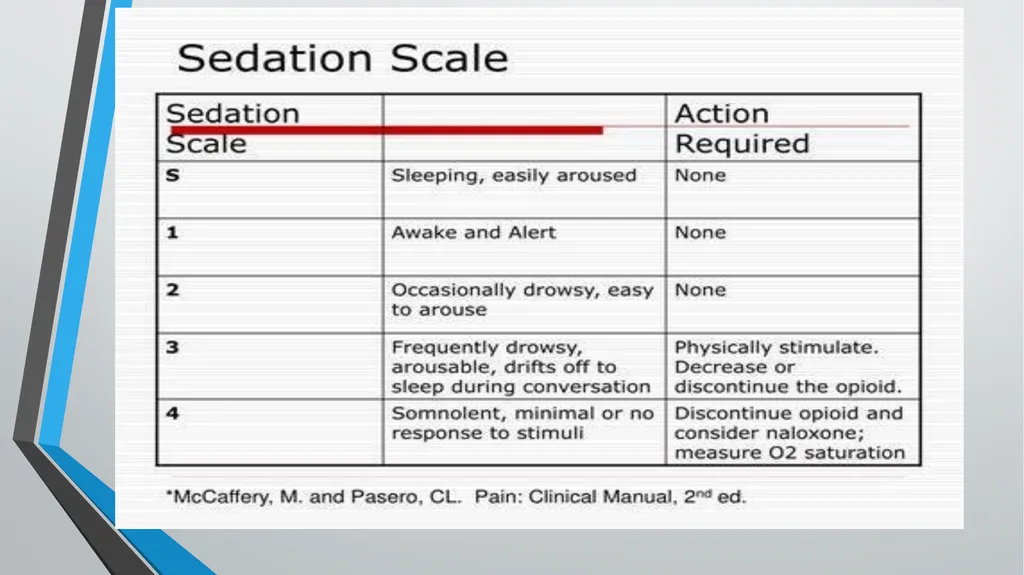
0-4 Sedation Scale for assessing patients on opioids<br>
slide19. Ramsey Scale<br>
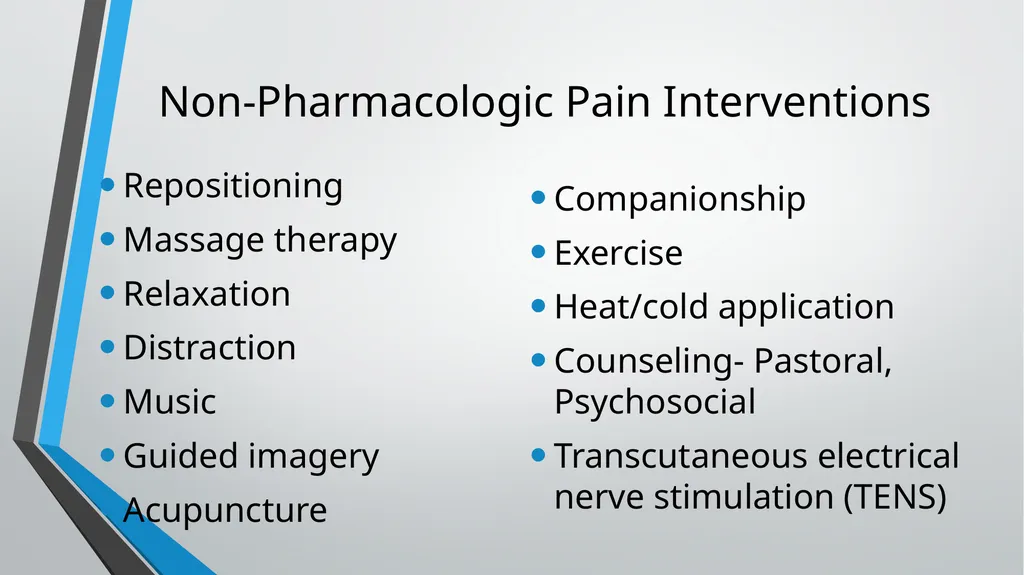
slide21. Non-Pharmacologic Pain Interventions Repositioning
Massage therapy
Relaxation
Distraction
Music
Guided imagery
Acupuncture Companionship
Exercise
Heat/cold application
Counseling- Pastoral, Psychosocial
Transcutaneous electrical nerve stimulation (TENS)<br>
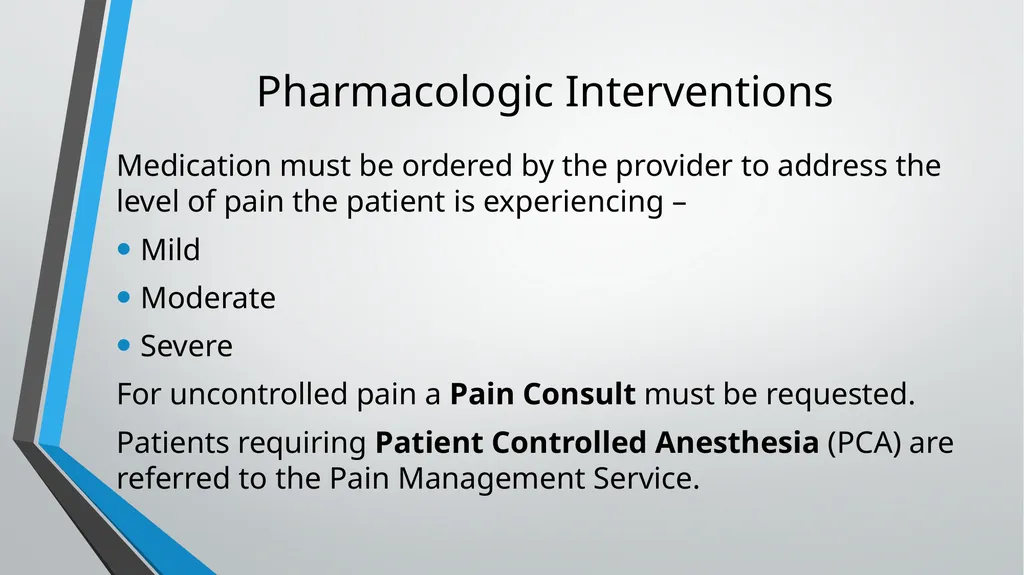
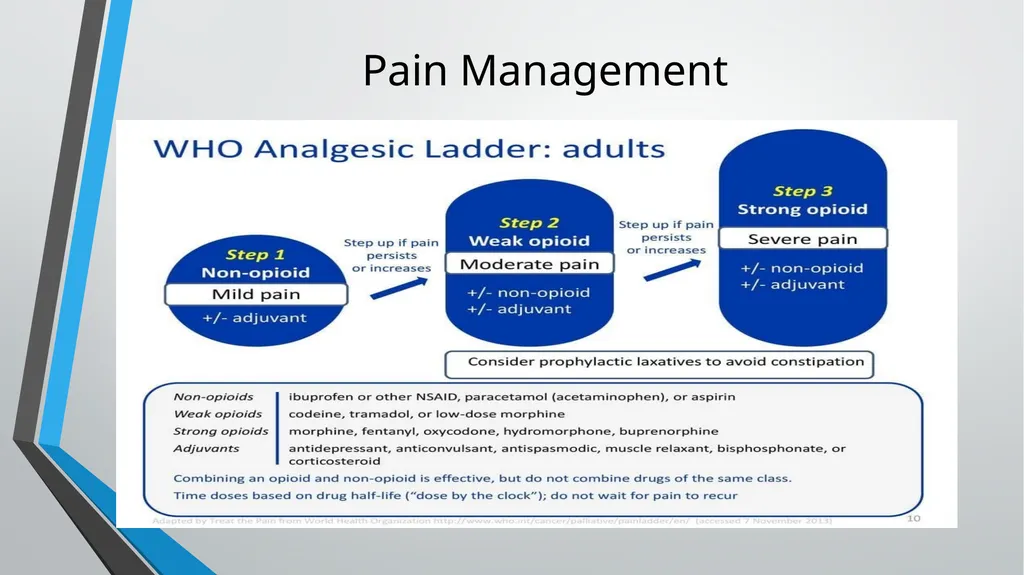
slide22. Pharmacologic Interventions Medication must be ordered by the provider to address the level of pain the patient is experiencing –
Mild
Moderate
Severe
For uncontrolled pain a Pain Consult must be requested.
Patients requiring Patient Controlled Anesthesia (PCA) are referred to the Pain Management Service.<br>
slide23. Pain Management<br>
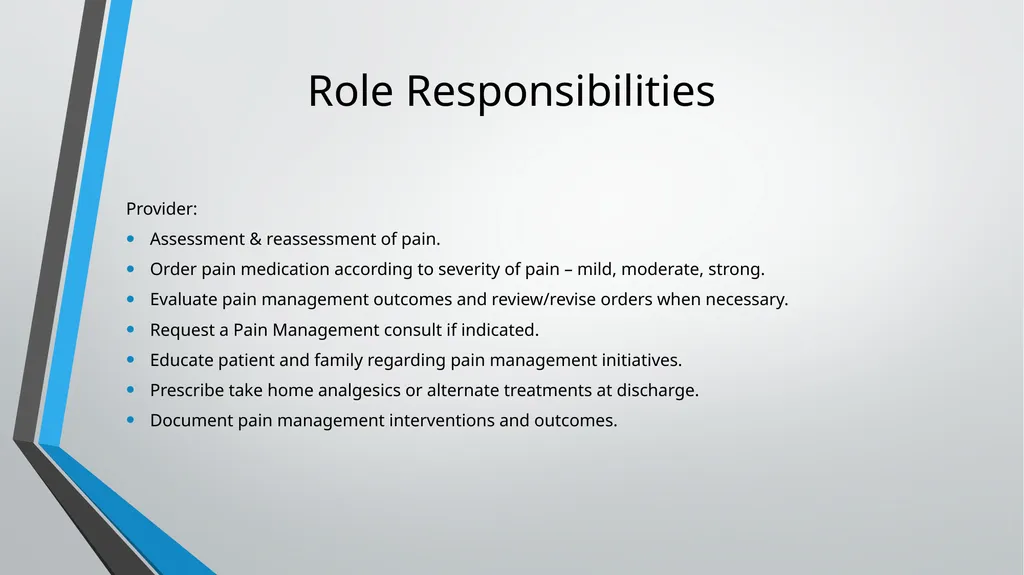
slide24. Role Responsibilities Provider:
Assessment & reassessment of pain.
Order pain medication according to severity of pain – mild, moderate, strong.
Evaluate pain management outcomes and review/revise orders when necessary.
Request a Pain Management consult if indicated.
Educate patient and family regarding pain management initiatives.
Prescribe take home analgesics or alternate treatments at discharge.
Document pain management interventions and outcomes.<br>
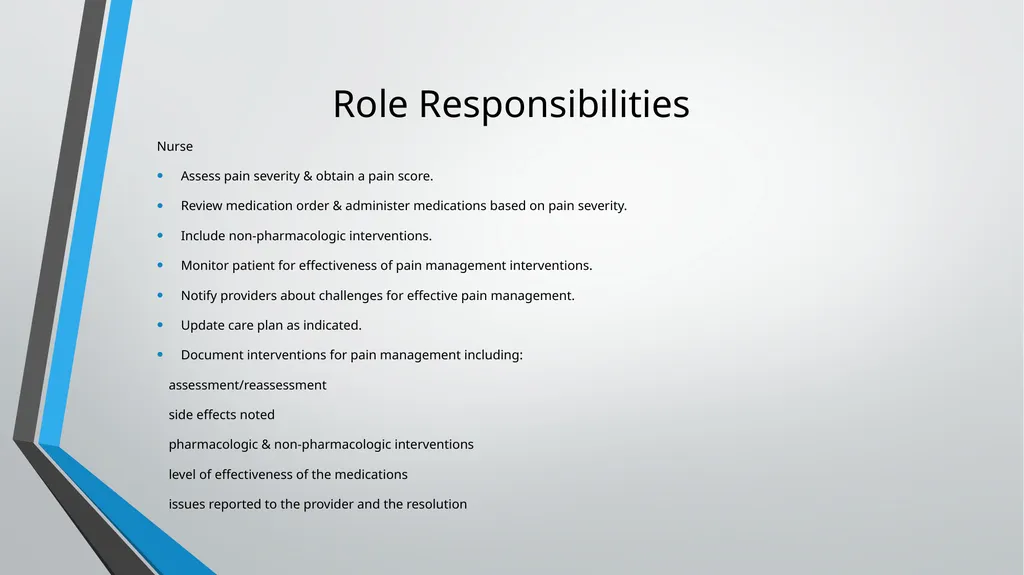
slide25. Role Responsibilities Nurse
Assess pain severity & obtain a pain score.
Review medication order & administer medications based on pain severity.
Include non-pharmacologic interventions.
Monitor patient for effectiveness of pain management interventions.
Notify providers about challenges for effective pain management.
Update care plan as indicated.
Document interventions for pain management including:
assessment/reassessment
side effects noted
pharmacologic & non-pharmacologic interventions
level of effectiveness of the medications
issues reported to the provider and the resolution<br>
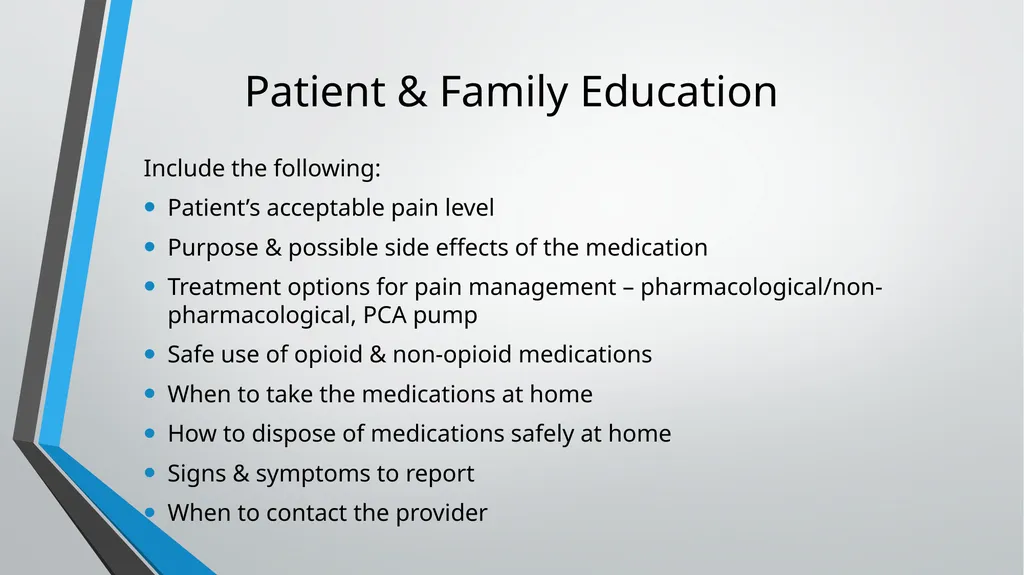
slide26. Patient & Family Education Include the following:
Patient’s acceptable pain level
Purpose & possible side effects of the medication
Treatment options for pain management – pharmacological/non-pharmacological, PCA pump
Safe use of opioid & non-opioid medications
When to take the medications at home
How to dispose of medications safely at home
Signs & symptoms to report
When to contact the provider<br>
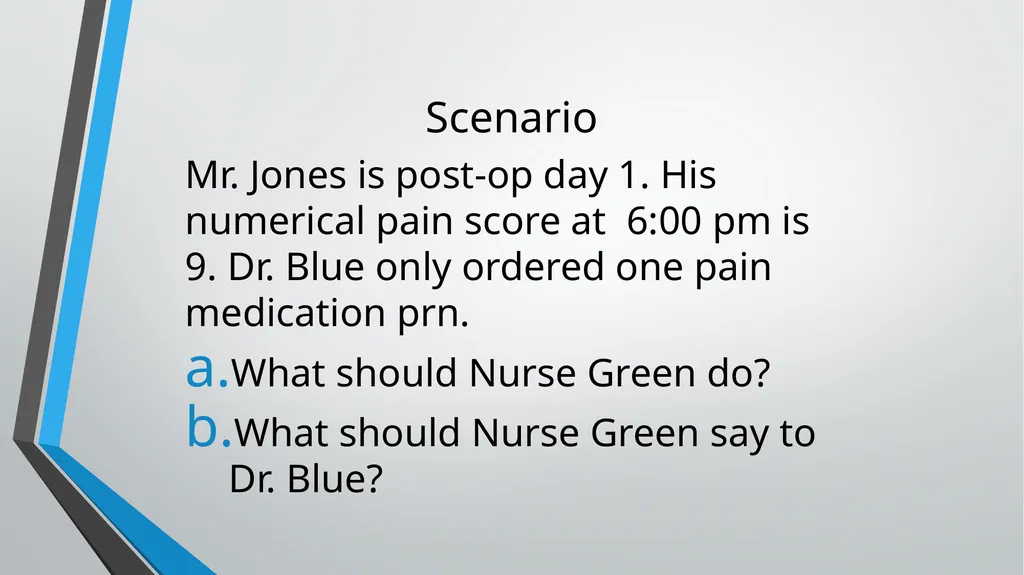
slide27. Scenario Mr. Jones is post-op day 1. His numerical pain score at 6:00 pm is 9. Dr. Blue only ordered one pain medication prn.
What should Nurse Green do?
What should Nurse Green say to Dr. Blue?<br>
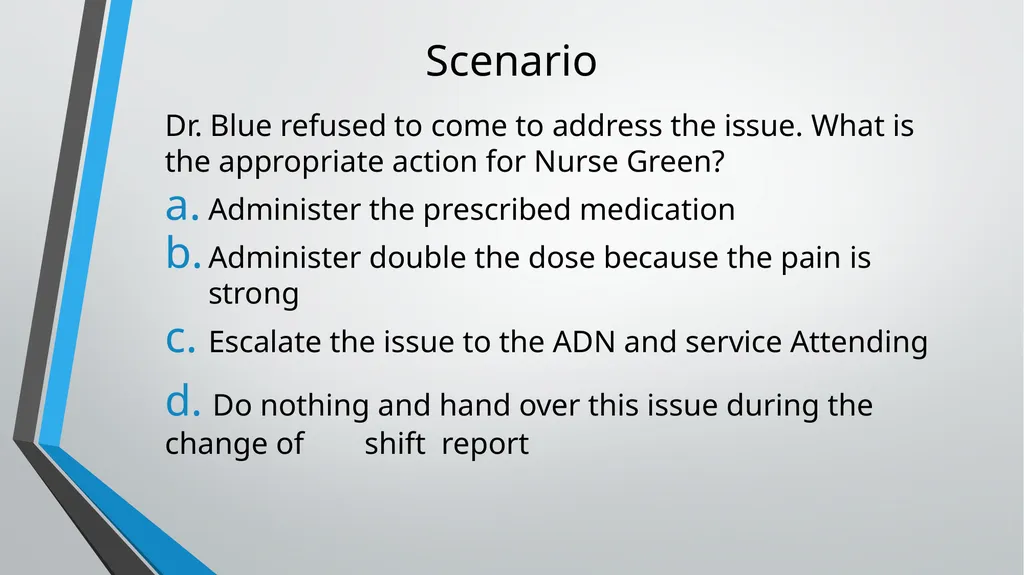
slide28. Scenario Dr. Blue refused to come to address the issue. What is the appropriate action for Nurse Green?
Administer the prescribed medication
Administer double the dose because the pain is strong
Escalate the issue to the ADN and service Attending
d. Do nothing and hand over this issue during the change of shift report<br>
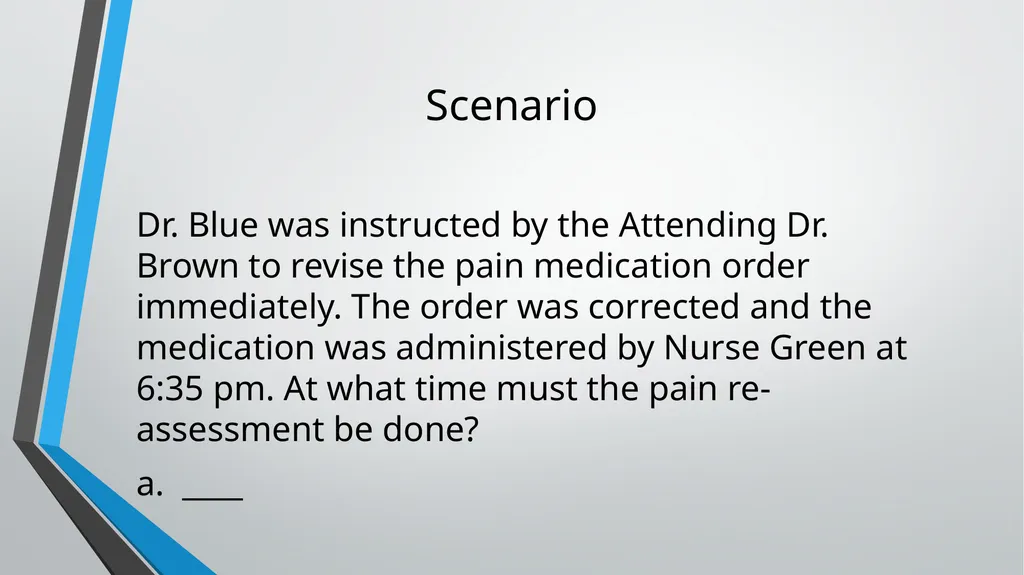
slide29. Scenario Dr. Blue was instructed by the Attending Dr. Brown to revise the pain medication order immediately. The order was corrected and the medication was administered by Nurse Green at 6:35 pm. At what time must the pain re-assessment be done?
a. ____<br>

Describe pain.
Explain the approved pain assessment tools.
Summarize key elements of successful pain management, including pharmacologic and non-pharmacologic interventions.<br>
slide3. Pain Management The Joint Commission
Identify pain assessment and pain management, including safe opioid prescribing, as an organizational priority (LD.04.03.13).
• Actively involve the organized medical staff in leadership roles in organization performance improvement activities to improve quality of care, treatment, and services and patient safety (MS.05.01.01).
• Assess and manage the patient’s pain and minimize the risks associated with treatment (PC.01.02.07).
• Collect data to monitor its performance (PI.01.01.01).
• Compile and analyze data (PI.02.01.01).<br>
slide4. Pain Management Definition
Pain is an unpleasant sensory and/or emotional experience associated with tissue damage or described in terms of such damage.
Source: International Association for the Study of Pain, 1979<br>
slide5. Pain Management Policy Statement:
Every patient has the right to effective pain assessment & management.
Pain is subjective and it is what the patient states.
Effort will be made to involve patient an family in the plan for pain management, also education on the processes and management of pain (pharmacological & non-pharmacological).
Discharge instructions also includes information on pain management.<br>
slide6. Types of Pain Acute – brief in duration and subsides as healing takes place.
Chronic – is prolonged and usually lasts from 3-6 months or longer.
Cancer – a complex, temporary symptom which is the end result of mixed mechanism pain. It may involve inflammatory, neuropathic, ischemic, and compression mechanisms at multiple levels.<br>
slide7. Types of Pain Visceral pain – damage or disruption of internal organs and tissues
ex. pelvis, abdomen, chest, intestines
Somatic pain – Somatic pain is experienced when the nociceptors nerves located in the skin or tissues are injured or traumatized.
ex. skin, muscles, soft tissue<br>
slide8. Screening & Assessment for Pain Performed as a part of the initial evaluation using an approved pain assessment tool.
The assessment tool should be based on the age and developmental level of the patient.
A positive pain screen requires a comprehensive pain assessment and a management plan (pharmacologic and non-pharmacologic).
Determining the Acceptable Pain Level (APL) for each patient.<br>
slide9. Pain Assessment Criteria Intensity
Location
Radiation
Duration Frequency
Exacerbating/relieving factors
Associating signs and symptoms<br>
slide10. Reassessment for Pain Every 4 Hours and as needed for patients with a history of pain.
Daily for patients with no history of pain and/or no pain within the last 24 hours.
30 minutes after pharmacological and/or non-pharmacological intervention for pain.<br>
slide11. COVERS SCALE FOR NEONATAL PAIN ASSESSMENT – infants to 3 months (Modification of the CRIES Scale)<br>
slide12. Riley Infant Scale - 3 months to 5 years<br>
slide13. Wong-Baker Faces 5 years to adult<br>
slide14. Numeric Sale – 10 years to adult<br>
slide15. Critical care Observation Tool – noncommunicative adults<br>
slide16. Pain Assessment in Advanced Dementia<br>
slide17. Sedation Monitoring Comfort Scale for mechanically ventilated patients
Ramsey scale for patients with non-opioid sedation
0-4 Sedation Scale for assessing patients on opioids<br>
slide19. Ramsey Scale<br>
slide21. Non-Pharmacologic Pain Interventions Repositioning
Massage therapy
Relaxation
Distraction
Music
Guided imagery
Acupuncture Companionship
Exercise
Heat/cold application
Counseling- Pastoral, Psychosocial
Transcutaneous electrical nerve stimulation (TENS)<br>
slide22. Pharmacologic Interventions Medication must be ordered by the provider to address the level of pain the patient is experiencing –
Mild
Moderate
Severe
For uncontrolled pain a Pain Consult must be requested.
Patients requiring Patient Controlled Anesthesia (PCA) are referred to the Pain Management Service.<br>
slide23. Pain Management<br>
slide24. Role Responsibilities Provider:
Assessment & reassessment of pain.
Order pain medication according to severity of pain – mild, moderate, strong.
Evaluate pain management outcomes and review/revise orders when necessary.
Request a Pain Management consult if indicated.
Educate patient and family regarding pain management initiatives.
Prescribe take home analgesics or alternate treatments at discharge.
Document pain management interventions and outcomes.<br>
slide25. Role Responsibilities Nurse
Assess pain severity & obtain a pain score.
Review medication order & administer medications based on pain severity.
Include non-pharmacologic interventions.
Monitor patient for effectiveness of pain management interventions.
Notify providers about challenges for effective pain management.
Update care plan as indicated.
Document interventions for pain management including:
assessment/reassessment
side effects noted
pharmacologic & non-pharmacologic interventions
level of effectiveness of the medications
issues reported to the provider and the resolution<br>
slide26. Patient & Family Education Include the following:
Patient’s acceptable pain level
Purpose & possible side effects of the medication
Treatment options for pain management – pharmacological/non-pharmacological, PCA pump
Safe use of opioid & non-opioid medications
When to take the medications at home
How to dispose of medications safely at home
Signs & symptoms to report
When to contact the provider<br>
slide27. Scenario Mr. Jones is post-op day 1. His numerical pain score at 6:00 pm is 9. Dr. Blue only ordered one pain medication prn.
What should Nurse Green do?
What should Nurse Green say to Dr. Blue?<br>
slide28. Scenario Dr. Blue refused to come to address the issue. What is the appropriate action for Nurse Green?
Administer the prescribed medication
Administer double the dose because the pain is strong
Escalate the issue to the ADN and service Attending
d. Do nothing and hand over this issue during the change of shift report<br>
slide29. Scenario Dr. Blue was instructed by the Attending Dr. Brown to revise the pain medication order immediately. The order was corrected and the medication was administered by Nurse Green at 6:35 pm. At what time must the pain re-assessment be done?
a. ____<br>