01
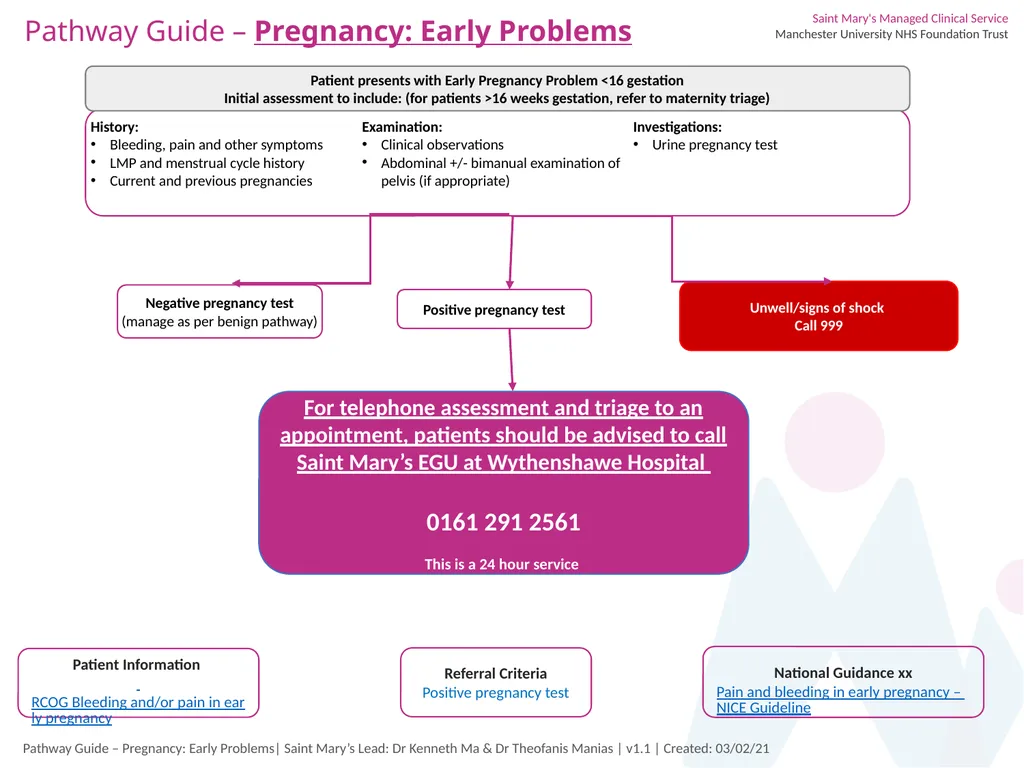
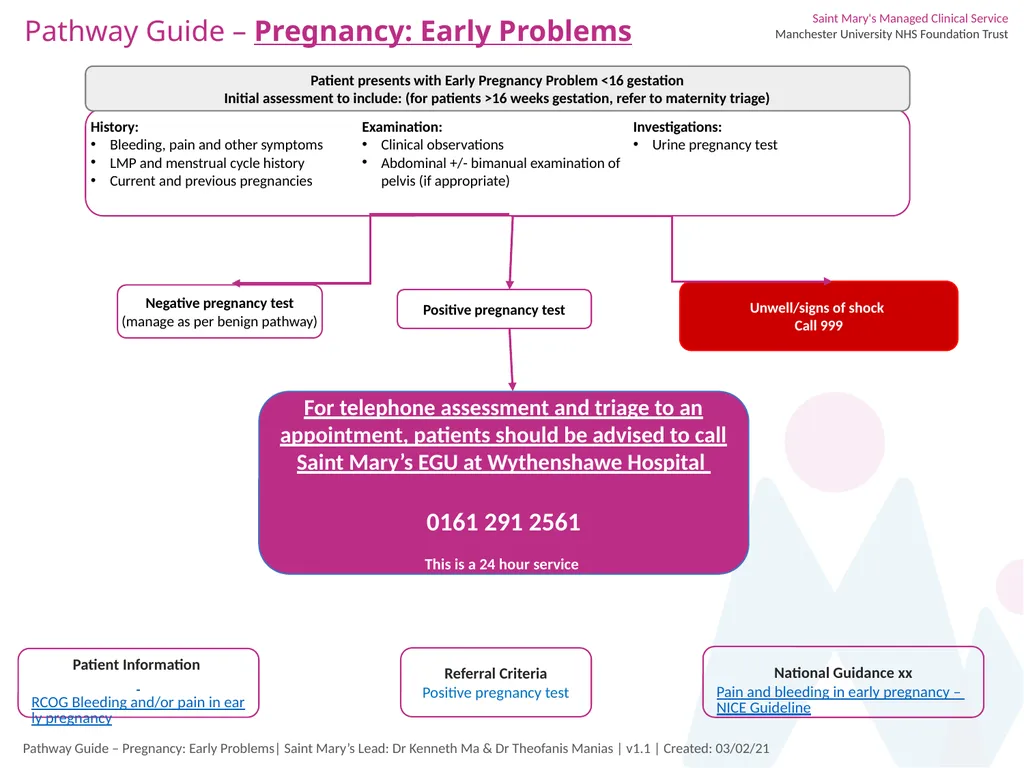
Pathway Guide – Pregnancy: Early Problems History:
Bleeding, pain and other symptoms
LMP and menstrual cycle history
Current and previous pregnancies
Examination:
Clinical observations
Abdominal +/- bimanual examination of pelvis (if appropriate)
Investigations:
Urine pregnancy test Patient presents with Early Pregnancy Problem <16 gestation
Initial assessment to include: (for patients >16 weeks gestation, refer to maternity triage) Unwell/signs of shock
Call 999 Pathway Guide – Pregnancy: Early Problems| Saint Mary’s Lead: Dr Kenneth Ma & Dr Theofanis Manias | v1.1 | Created: 03/02/21 National Guidance xx
Pain and bleeding in early pregnancy – NICE Guideline Referral Criteria
Positive pregnancy test Positive pregnancy test Negative pregnancy test
(manage as per benign pathway) Patient Information
RCOG Bleeding and/or pain in early pregnancy For telephone assessment and triage to an appointment, patients should be advised to call Saint Mary’s EGU at Wythenshawe Hospital
0161 291 2561
This is a 24 hour service<br>
02
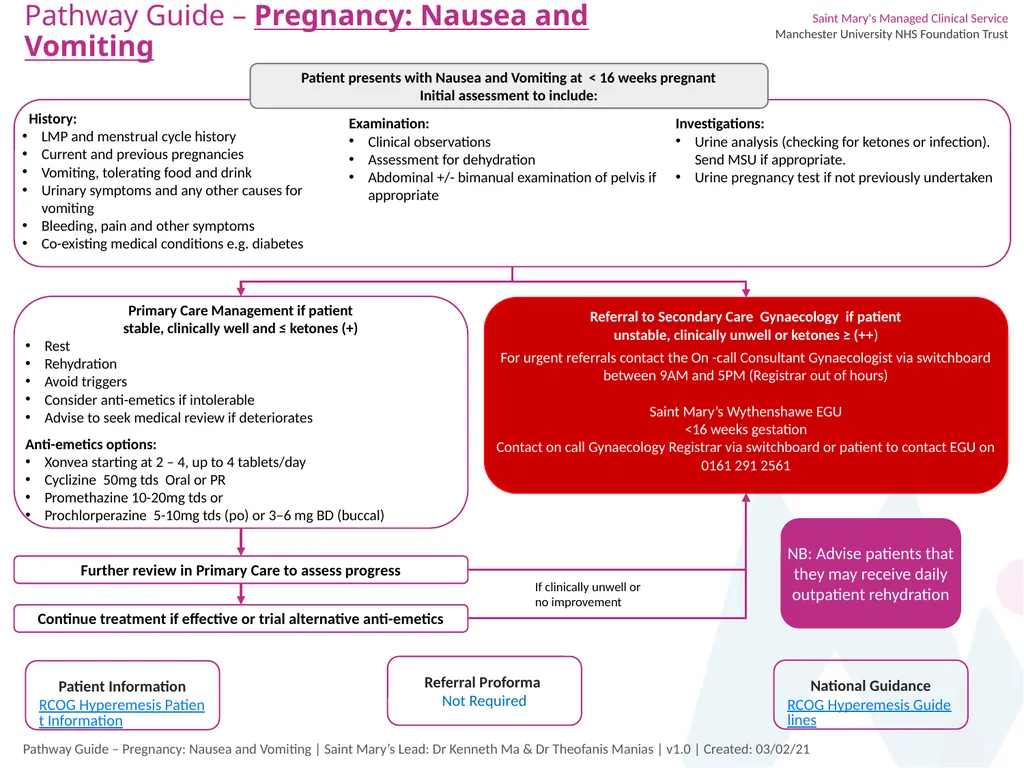
Pathway Guide – Pregnancy: Nausea and Vomiting Primary Care Management if patient
stable, clinically well and ≤ ketones (+)
Rest
Rehydration
Avoid triggers
Consider anti-emetics if intolerable
Advise to seek medical review if deteriorates
Anti-emetics options:
Xonvea starting at 2 – 4, up to 4 tablets/day
Cyclizine 50mg tds Oral or PR
Promethazine 10-20mg tds or
Prochlorperazine 5-10mg tds (po) or 3–6 mg BD (buccal) Continue treatment if effective or trial alternative anti-emetics Further review in Primary Care to assess progress History:
LMP and menstrual cycle history
Current and previous pregnancies
Vomiting, tolerating food and drink
Urinary symptoms and any other causes for vomiting
Bleeding, pain and other symptoms
Co-existing medical conditions e.g. diabetes
Examination:
Clinical observations
Assessment for dehydration
Abdominal +/- bimanual examination of pelvis if appropriate
Investigations:
Urine analysis (checking for ketones or infection). Send MSU if appropriate.
Urine pregnancy test if not previously undertaken Patient presents with Nausea and Vomiting at < 16 weeks pregnant
Initial assessment to include: Referral to Secondary Care Gynaecology if patient
unstable, clinically unwell or ketones ≥ (++)
For urgent referrals contact the On -call Consultant Gynaecologist via switchboard between 9AM and 5PM (Registrar out of hours)
Saint Mary’s Wythenshawe EGU
<16 weeks gestation
Contact on call Gynaecology Registrar via switchboard or patient to contact EGU on 0161 291 2561 If clinically unwell or no improvement Pathway Guide – Pregnancy: Nausea and Vomiting | Saint Mary’s Lead: Dr Kenneth Ma & Dr Theofanis Manias | v1.0 | Created: 03/02/21 National Guidance
RCOG Hyperemesis Guidelines Patient Information
RCOG Hyperemesis Patient Information Referral Proforma
Not Required NB: Advise patients that they may receive daily outpatient rehydration<br>