
Pathways First Year Unit 2: Strategies and styles

Description: Pathways First Year Unit 2: Strategies and styles Unit 2: Strategies and styles Suggested learning intentions We are learning to rank learning and teaching strategies according to how enjoyable and effective they are identify our current
Related Topics
Download Presentation
"Pathways First Year Unit 2: Strategies and styles" is the property of its rightful owner. Permission is granted to download and print the materials on this website for personal, non-commercial use only, and to display it on your personal computer provided you do not modify the materials and that you retain all copyright notices contained in the materials. By downloading content from our website, you accept the terms of this agreement.
Presentation Transcript
slide1. Pathways First Year
Unit 2: Strategies and styles<br>
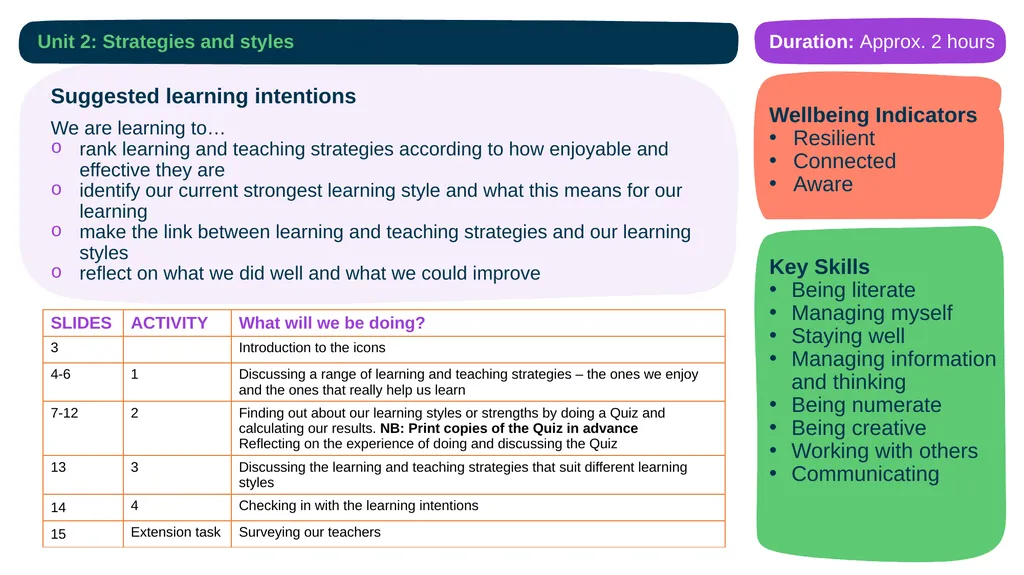
slide2. Unit 2: Strategies and styles Suggested learning intentions
We are learning to…
rank learning and teaching strategies according to how enjoyable and effective they are
identify our current strongest learning style and what this means for our learning
make the link between learning and teaching strategies and our learning styles
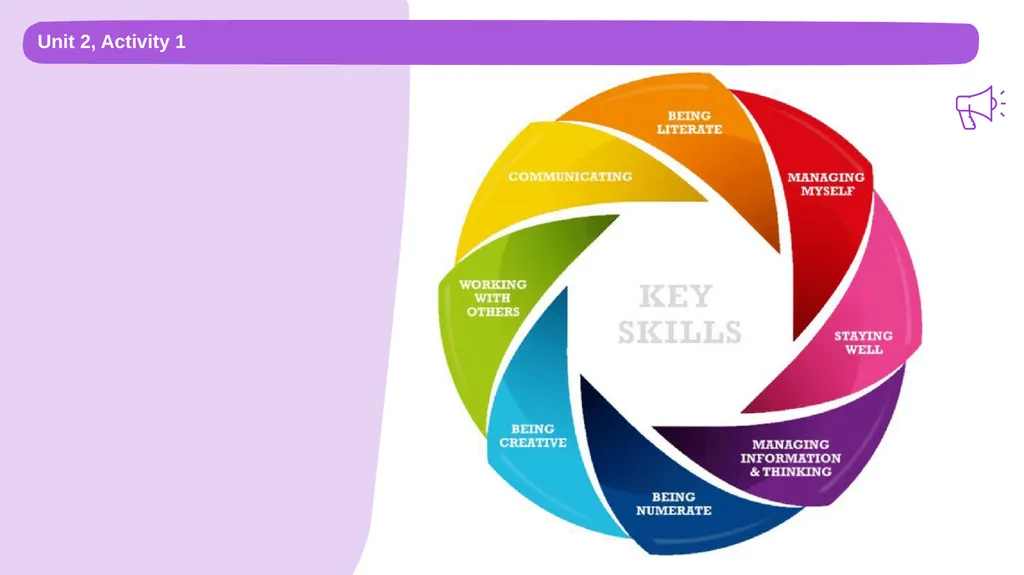
reflect on what we did well and what we could improve Key Skills
Being literate
Managing myself
Staying well
Managing information and thinking
Being numerate
Being creative
Working with others
Communicating Duration: Approx. 2 hours Wellbeing Indicators
Resilient
Connected
Aware<br>
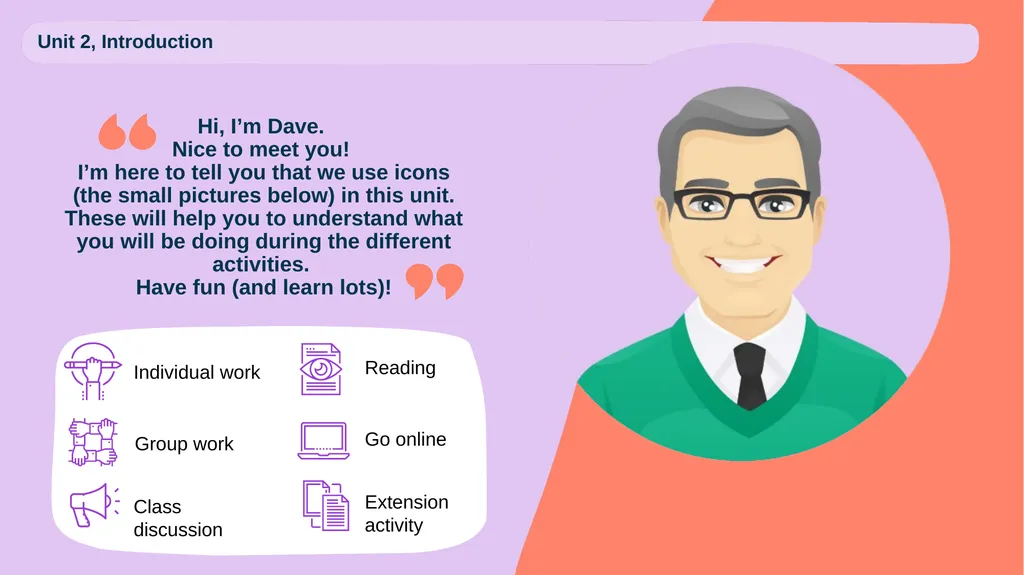
slide3. Unit 2, Introduction Hi, I’m Dave.
Nice to meet you!
I’m here to tell you that we use icons (the small pictures below) in this unit. These will help you to understand what you will be doing during the different activities.
Have fun (and learn lots)! Class discussion Reading<br>
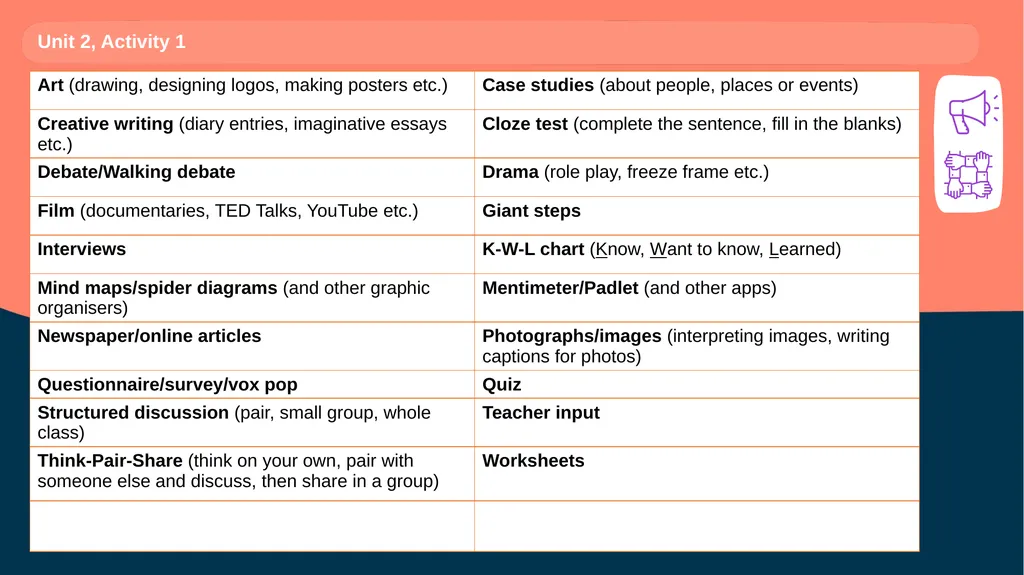
slide4. Unit 2, Activity 1<br>
slide5. Unit 2, Activity 1<br>
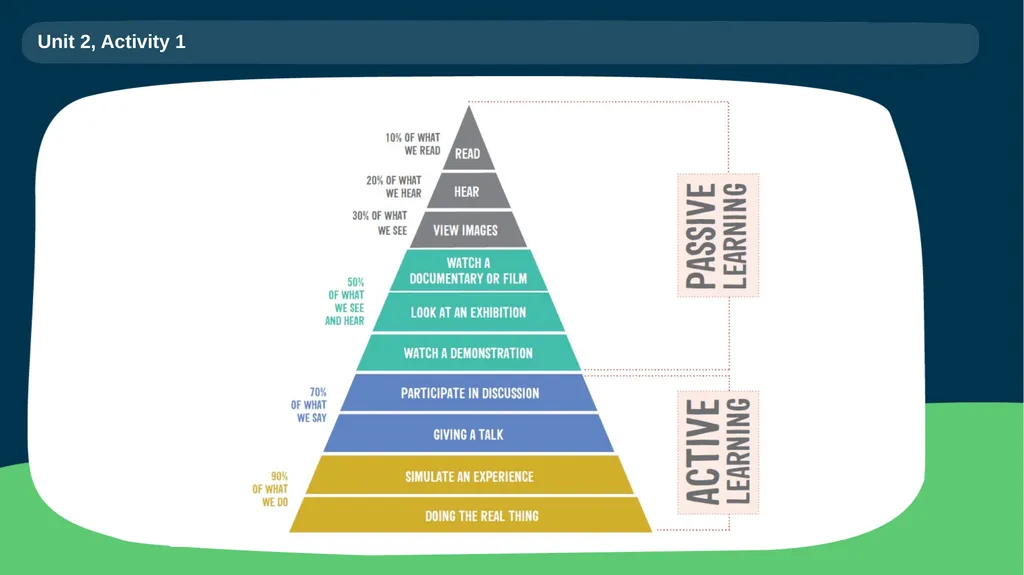
slide6. Unit 2, Activity 1<br>
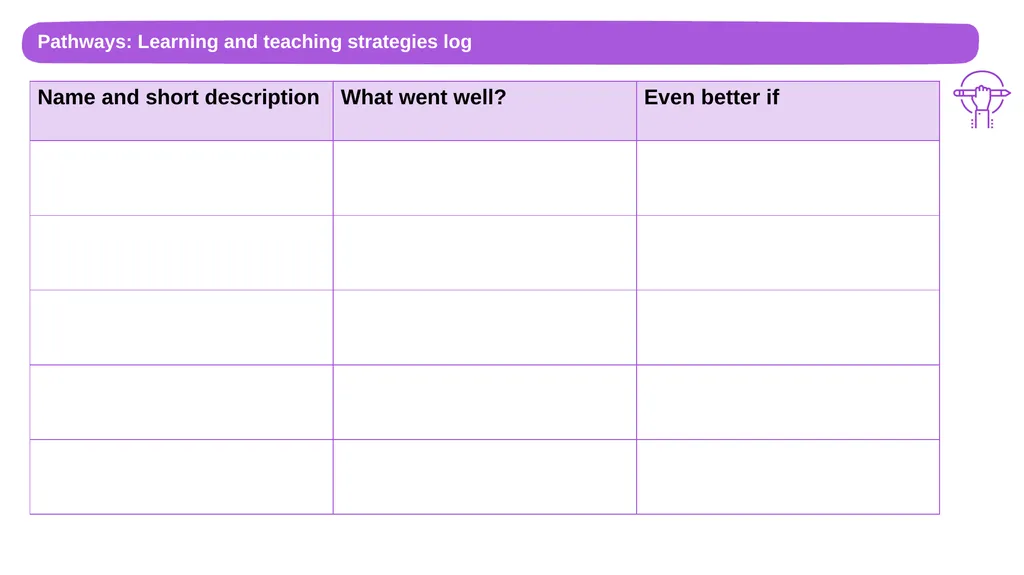
slide7. Pathways: Learning and teaching strategies log<br>
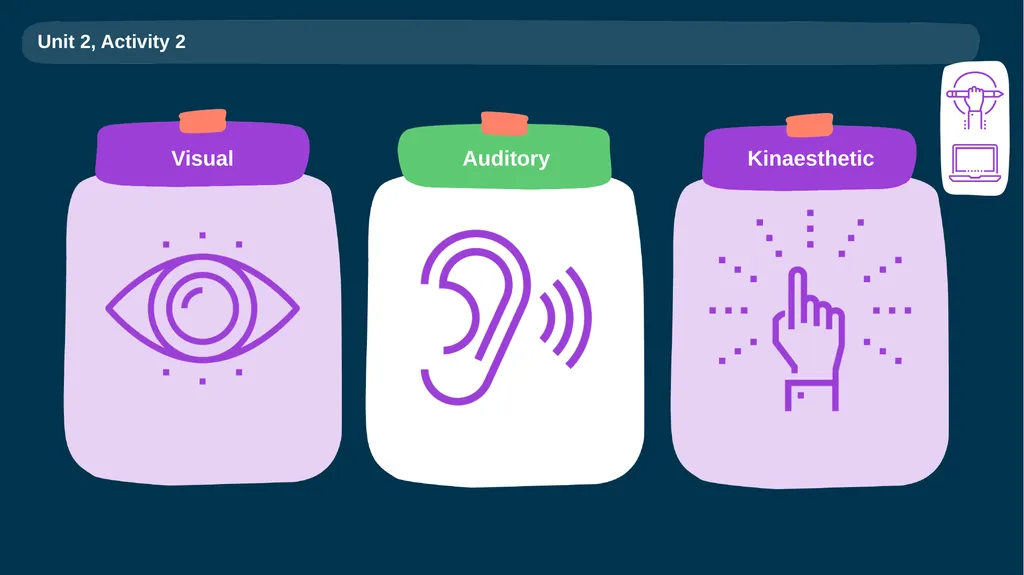
slide8. Unit 2, Activity 2 Visual Kinaesthetic Auditory<br>
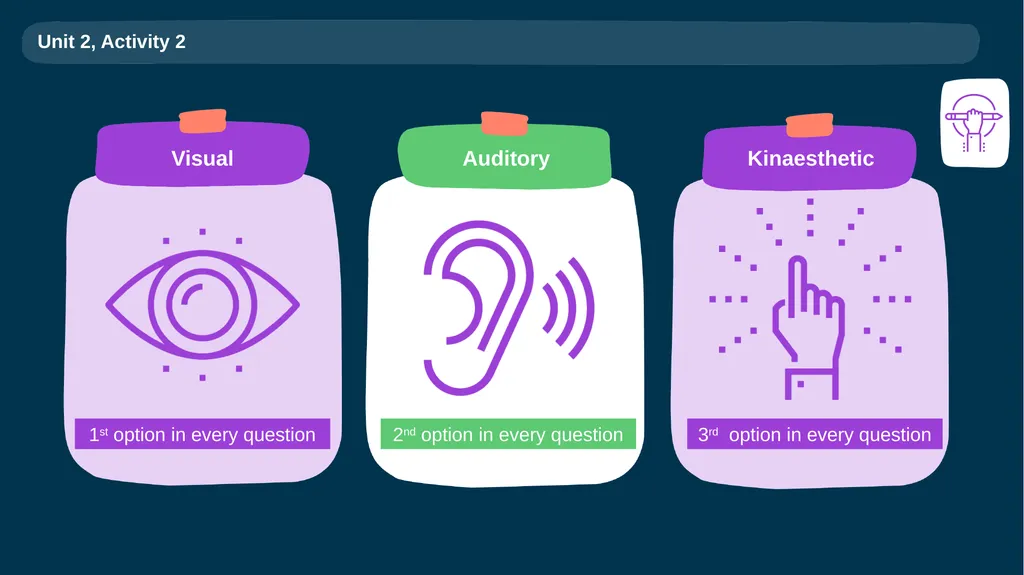
slide9. Unit 2, Activity 2 Visual Kinaesthetic Auditory 1st option in every question 2nd option in every question 3rd option in every question<br>
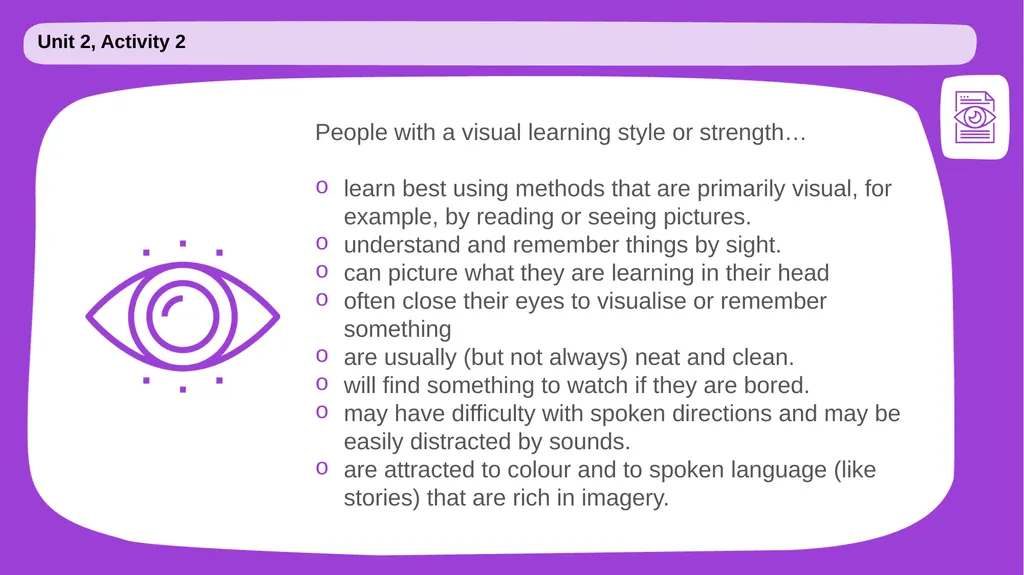
slide10. Unit 2, Activity 2 People with a visual learning style or strength…
learn best using methods that are primarily visual, for example, by reading or seeing pictures.
understand and remember things by sight.
can picture what they are learning in their head
often close their eyes to visualise or remember something
are usually (but not always) neat and clean.
will find something to watch if they are bored.
may have difficulty with spoken directions and may be easily distracted by sounds.
are attracted to colour and to spoken language (like stories) that are rich in imagery.<br>
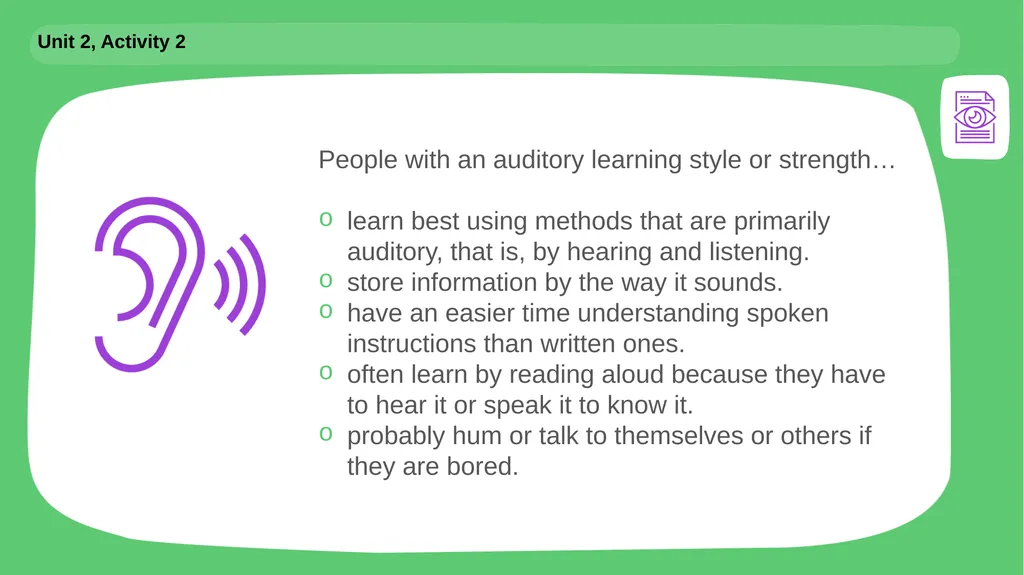
slide11. People with an auditory learning style or strength…
learn best using methods that are primarily auditory, that is, by hearing and listening.
store information by the way it sounds.
have an easier time understanding spoken instructions than written ones.
often learn by reading aloud because they have to hear it or speak it to know it.
probably hum or talk to themselves or others if they are bored. Unit 2, Activity 2<br>
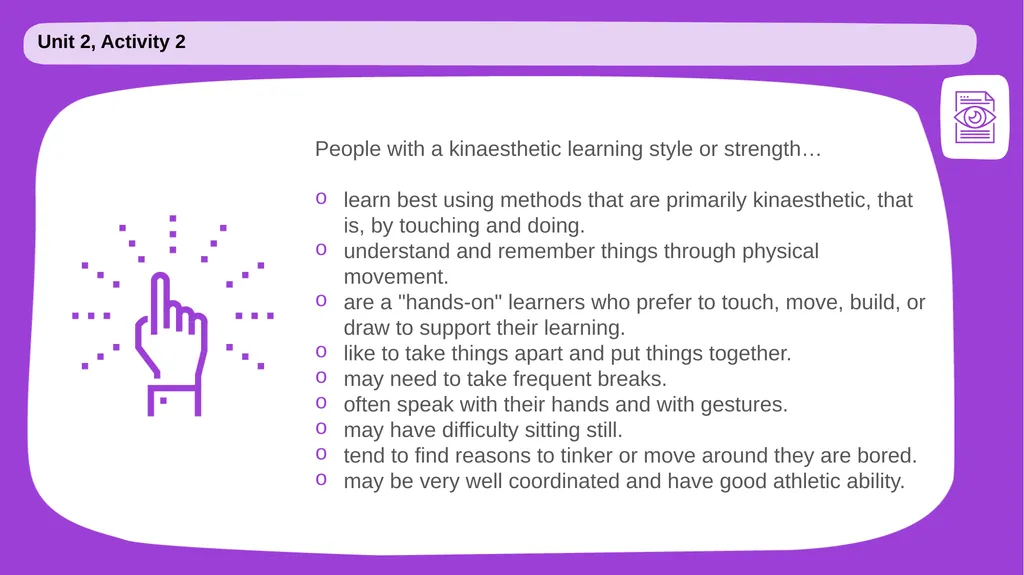
slide12. Unit 2, Activity 2 People with a kinaesthetic learning style or strength…
learn best using methods that are primarily kinaesthetic, that is, by touching and doing.
understand and remember things through physical movement.
are a "hands-on" learners who prefer to touch, move, build, or draw to support their learning.
like to take things apart and put things together.
may need to take frequent breaks.
often speak with their hands and with gestures.
may have difficulty sitting still.
tend to find reasons to tinker or move around they are bored.
may be very well coordinated and have good athletic ability.<br>
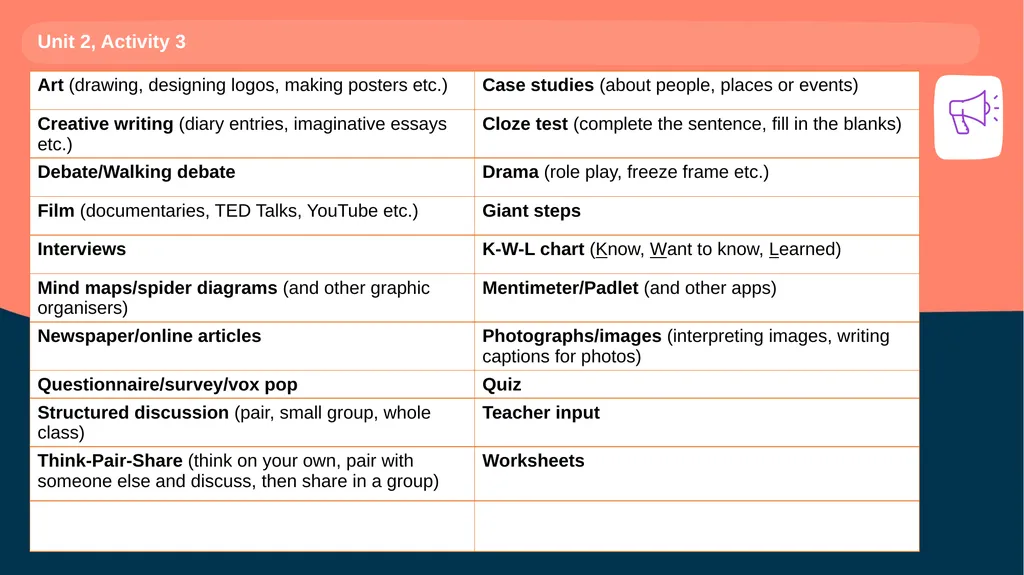
slide13. Unit 2, Activity 3<br>
slide14. rank learning and teaching strategies according to how enjoyable and effective they are
identify our strongest learning style(s) and what this means for our learning
make the link between learning and teaching strategies and our learning styles Hello again!
How did you get on with Unit 2?
Did you learn to…? Unit 2, Checking in with the learning intentions<br>
slide15. Unit 2, Extension activity Here’s an idea for you.
Why not carry out a survey of your teachers?
Ask them to identify the learning and teaching strategy they think is most enjoyable and/or effective. They should give you a reason for their choice.
Discuss the survey findings in class. You could even consider going back to your teachers with a comparison of their enjoyable/effective strategies and those picked by your class.<br>
slide16. Path Project
Institute of Education
Dublin City University<br>
Unit 2: Strategies and styles<br>
slide2. Unit 2: Strategies and styles Suggested learning intentions
We are learning to…
rank learning and teaching strategies according to how enjoyable and effective they are
identify our current strongest learning style and what this means for our learning
make the link between learning and teaching strategies and our learning styles
reflect on what we did well and what we could improve Key Skills
Being literate
Managing myself
Staying well
Managing information and thinking
Being numerate
Being creative
Working with others
Communicating Duration: Approx. 2 hours Wellbeing Indicators
Resilient
Connected
Aware<br>
slide3. Unit 2, Introduction Hi, I’m Dave.
Nice to meet you!
I’m here to tell you that we use icons (the small pictures below) in this unit. These will help you to understand what you will be doing during the different activities.
Have fun (and learn lots)! Class discussion Reading<br>
slide4. Unit 2, Activity 1<br>
slide5. Unit 2, Activity 1<br>
slide6. Unit 2, Activity 1<br>
slide7. Pathways: Learning and teaching strategies log<br>
slide8. Unit 2, Activity 2 Visual Kinaesthetic Auditory<br>
slide9. Unit 2, Activity 2 Visual Kinaesthetic Auditory 1st option in every question 2nd option in every question 3rd option in every question<br>
slide10. Unit 2, Activity 2 People with a visual learning style or strength…
learn best using methods that are primarily visual, for example, by reading or seeing pictures.
understand and remember things by sight.
can picture what they are learning in their head
often close their eyes to visualise or remember something
are usually (but not always) neat and clean.
will find something to watch if they are bored.
may have difficulty with spoken directions and may be easily distracted by sounds.
are attracted to colour and to spoken language (like stories) that are rich in imagery.<br>
slide11. People with an auditory learning style or strength…
learn best using methods that are primarily auditory, that is, by hearing and listening.
store information by the way it sounds.
have an easier time understanding spoken instructions than written ones.
often learn by reading aloud because they have to hear it or speak it to know it.
probably hum or talk to themselves or others if they are bored. Unit 2, Activity 2<br>
slide12. Unit 2, Activity 2 People with a kinaesthetic learning style or strength…
learn best using methods that are primarily kinaesthetic, that is, by touching and doing.
understand and remember things through physical movement.
are a "hands-on" learners who prefer to touch, move, build, or draw to support their learning.
like to take things apart and put things together.
may need to take frequent breaks.
often speak with their hands and with gestures.
may have difficulty sitting still.
tend to find reasons to tinker or move around they are bored.
may be very well coordinated and have good athletic ability.<br>
slide13. Unit 2, Activity 3<br>
slide14. rank learning and teaching strategies according to how enjoyable and effective they are
identify our strongest learning style(s) and what this means for our learning
make the link between learning and teaching strategies and our learning styles Hello again!
How did you get on with Unit 2?
Did you learn to…? Unit 2, Checking in with the learning intentions<br>
slide15. Unit 2, Extension activity Here’s an idea for you.
Why not carry out a survey of your teachers?
Ask them to identify the learning and teaching strategy they think is most enjoyable and/or effective. They should give you a reason for their choice.
Discuss the survey findings in class. You could even consider going back to your teachers with a comparison of their enjoyable/effective strategies and those picked by your class.<br>
slide16. Path Project
Institute of Education
Dublin City University<br>