pedigree overview What is a pedigree? Definition Uses Constructing a pedigree Symbols Connecting the symbols Interpreting a pedigree What is a pedigree? A pedigree is a chart of the genetic history of family over several generations Genetic
"pedigree overview What is a pedigree? Definition" is the property of its rightful owner. Permission is granted to
download and print the materials on this website for personal, non-commercial use only, and to display it
on your personal computer provided you do not modify the materials and that you retain all copyright
notices contained in the materials. By downloading content from our website, you accept the terms of this
agreement.
Presentation Transcript
01
pedigree<br>
02
overview What is a pedigree?
Definition
Uses
Constructing a pedigree
Symbols
Connecting the symbols
Interpreting a pedigree<br>
03
What is a pedigree? A pedigree is a chart of the genetic history of family over several generations
Genetic counselor would find out about your family history and make this chart to analyze.<br>
04
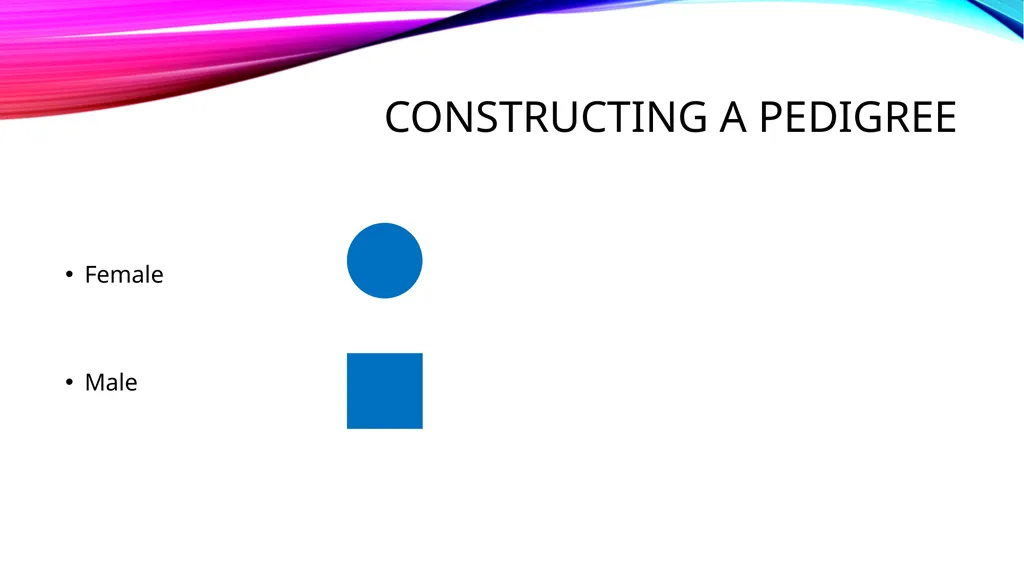
Constructing a pedigree Female
Male<br>
05
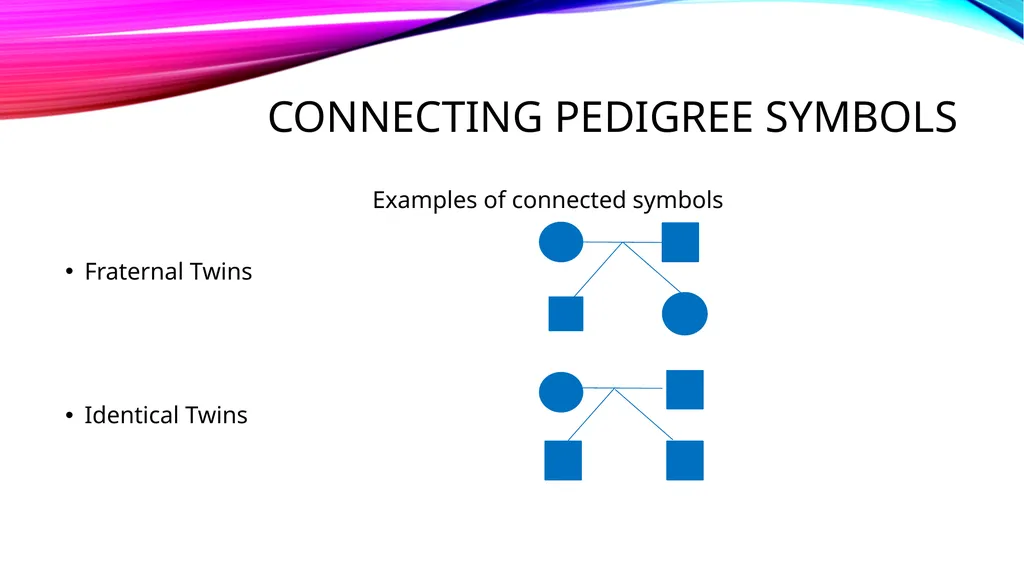
Connecting pedigree symbols Examples of connected symbols
Fraternal Twins
Identical Twins<br>
06
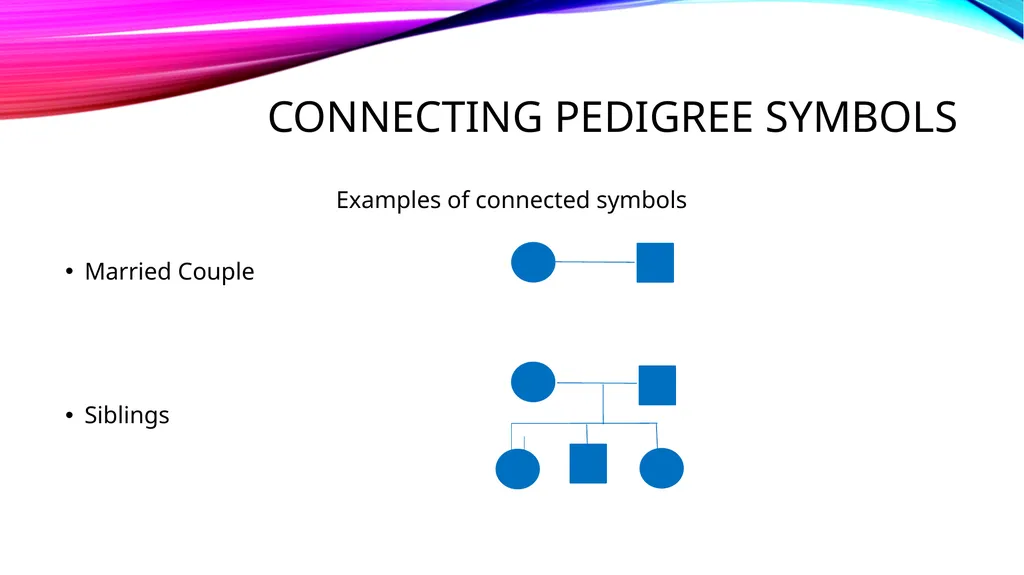
Connecting pedigree symbols Examples of connected symbols
Married Couple
Siblings<br>
07
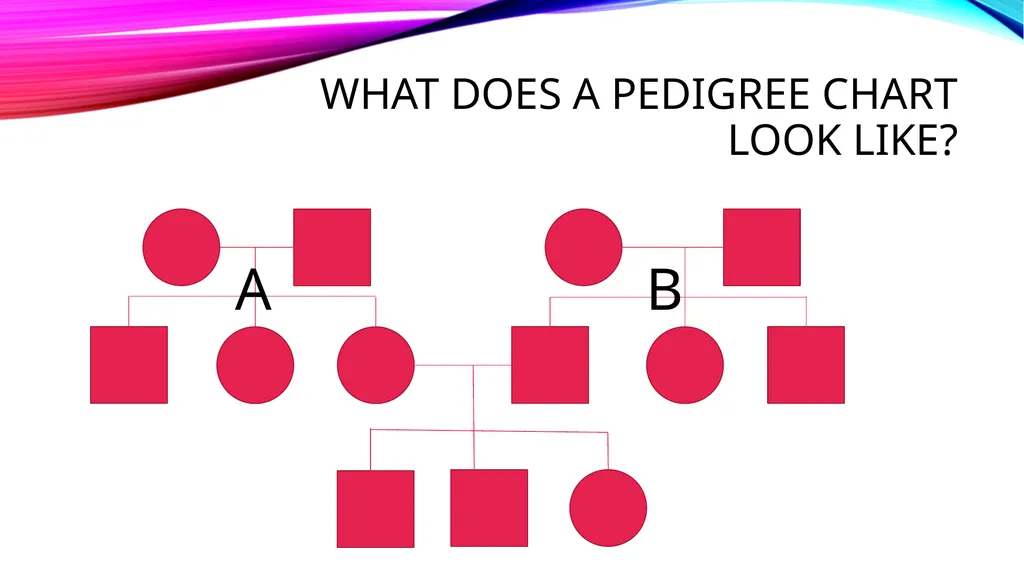
What does a pedigree chart look like? A B<br>
08
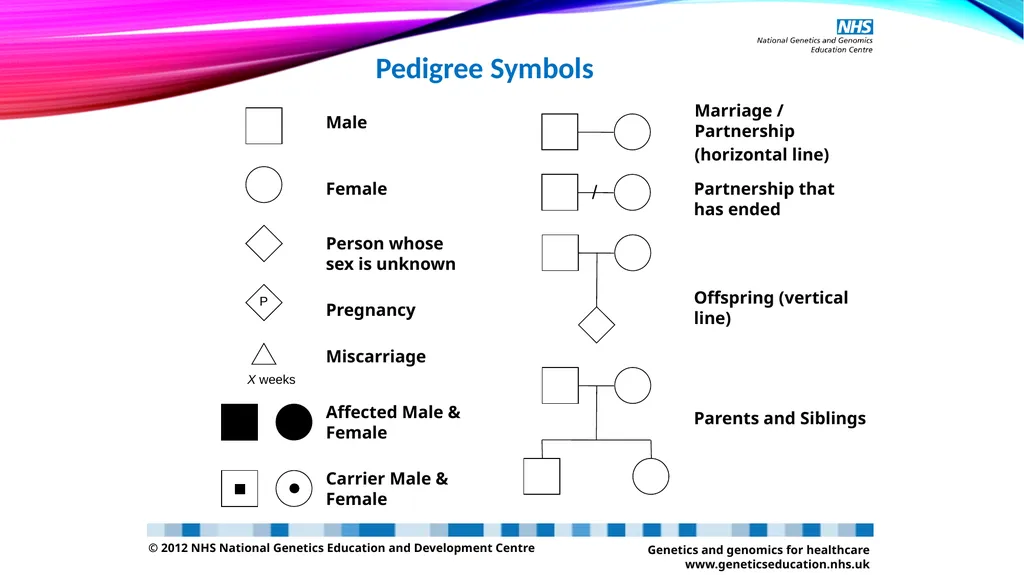
Pedigree Symbols Male Female Person whose sex is unknown Pregnancy Marriage / Partnership
(horizontal line) Parents and Siblings Offspring (vertical line) Affected Male & Female Carrier Male & Female Partnership that has ended Miscarriage<br>
09
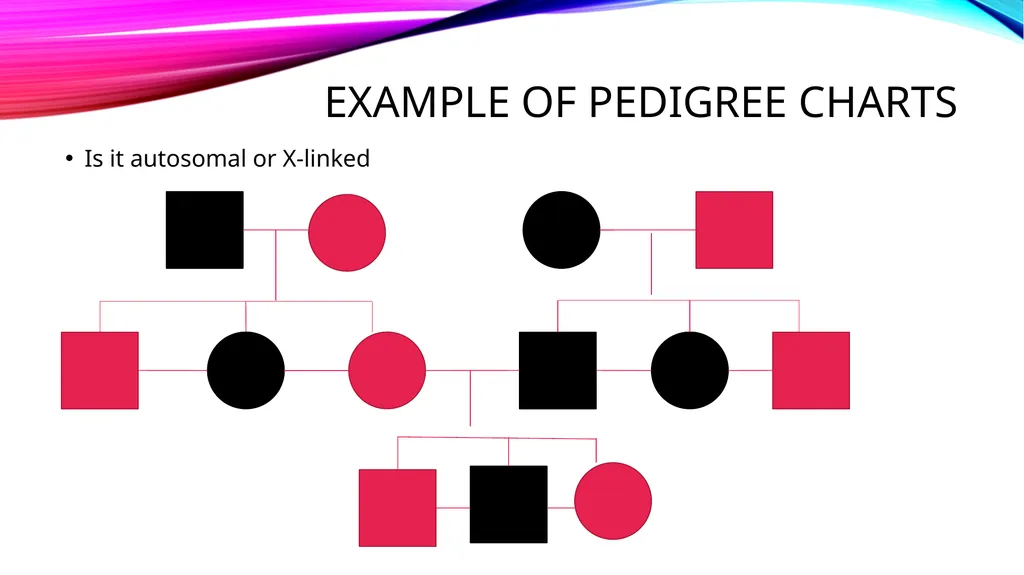
Interpreting a pedigree chart Determine if the pedigree chart shows an autosomal or X-linked disease.
If most of the males in the pedigree are affected the disorder is X-linked
If it is a 50/50 ratio between men and women the disorder is autosomal<br>
10
Example of pedigree charts Is it autosomal or X-linked<br>
11
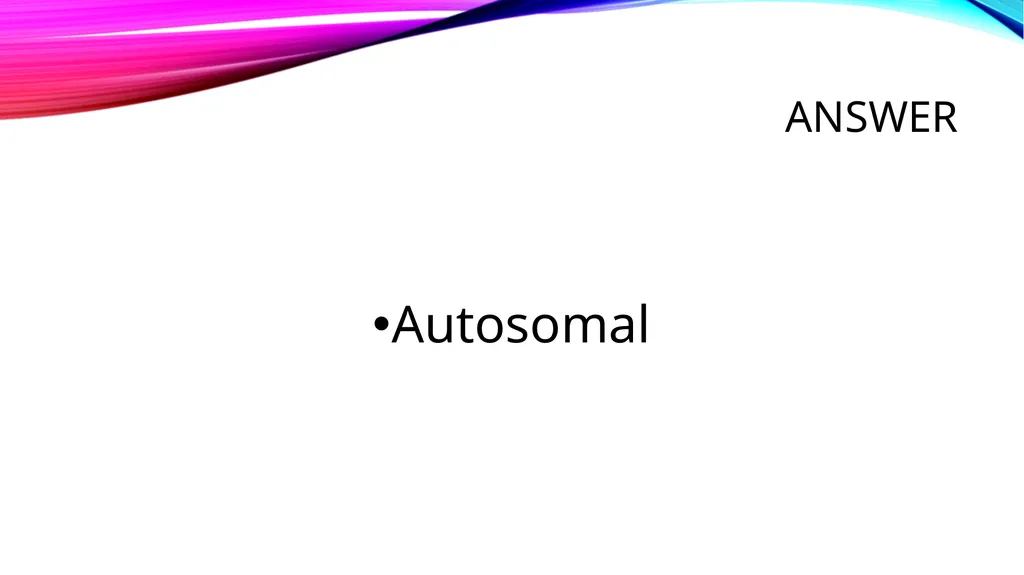
answer Autosomal<br>
12
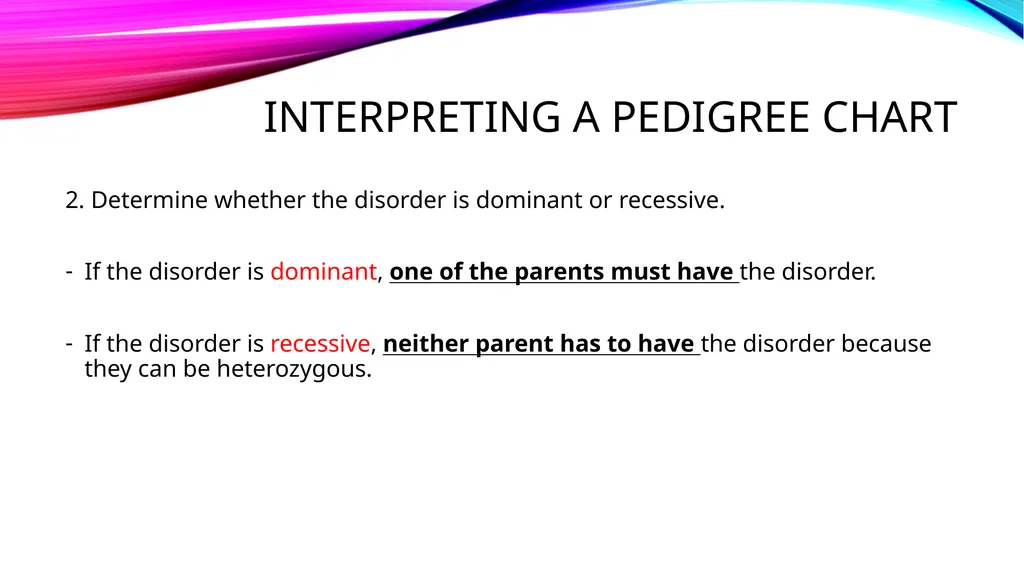
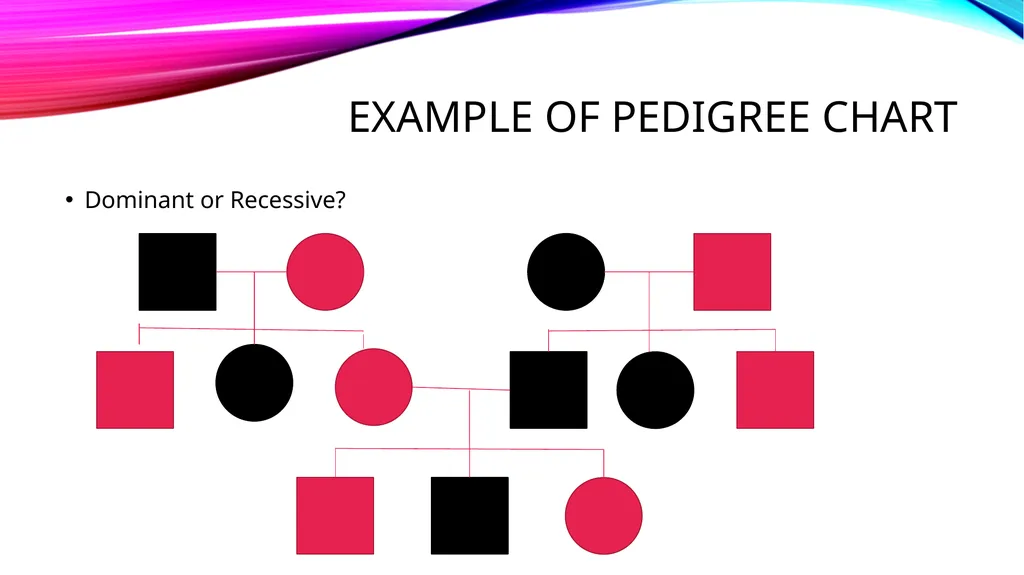
Interpreting a pedigree chart 2. Determine whether the disorder is dominant or recessive.
If the disorder is dominant, one of the parents must have the disorder.
If the disorder is recessive, neither parent has to have the disorder because they can be heterozygous.<br>
13
Example of pedigree chart Dominant or Recessive?<br>
14
answer Dominant<br>
15
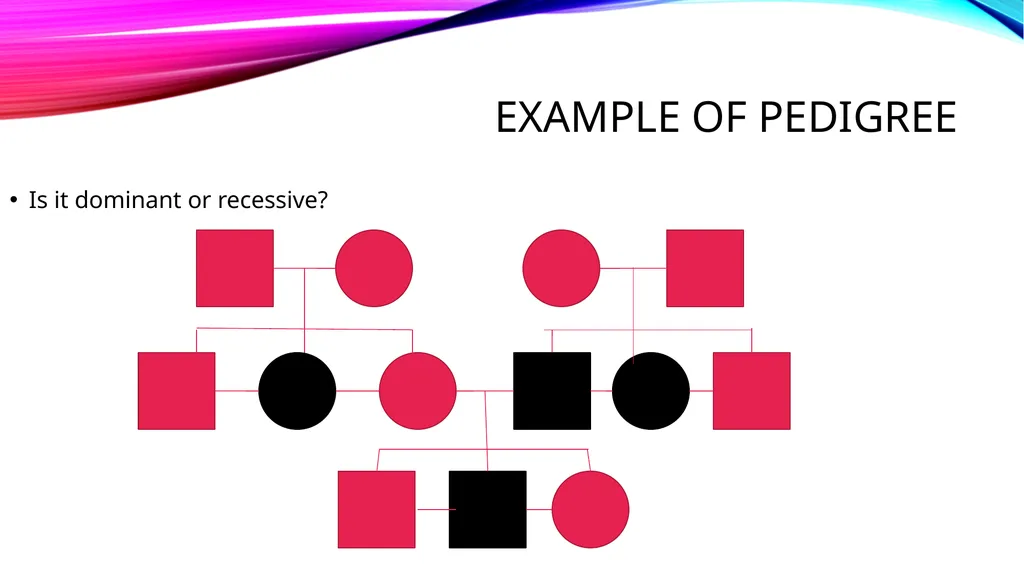
Example of pedigree Is it dominant or recessive?<br>
16
Answer Recessive<br>
17
summary Pedigrees are family trees that explain your genetic history
Pedigree are used to find out the probability of a child having disorder in a particular family
To begin to interpret a pedigree, determine if the disease or condition is autosomal or X-linked and dominant or recessive.<br>
18
activity Trace the pedigree of each family and determine what type of inheritance.
Family A: the father has heart disease while the mother has no illness problem at all.
Family B: both father and mother is a carrier of genetic disease.<br>
19
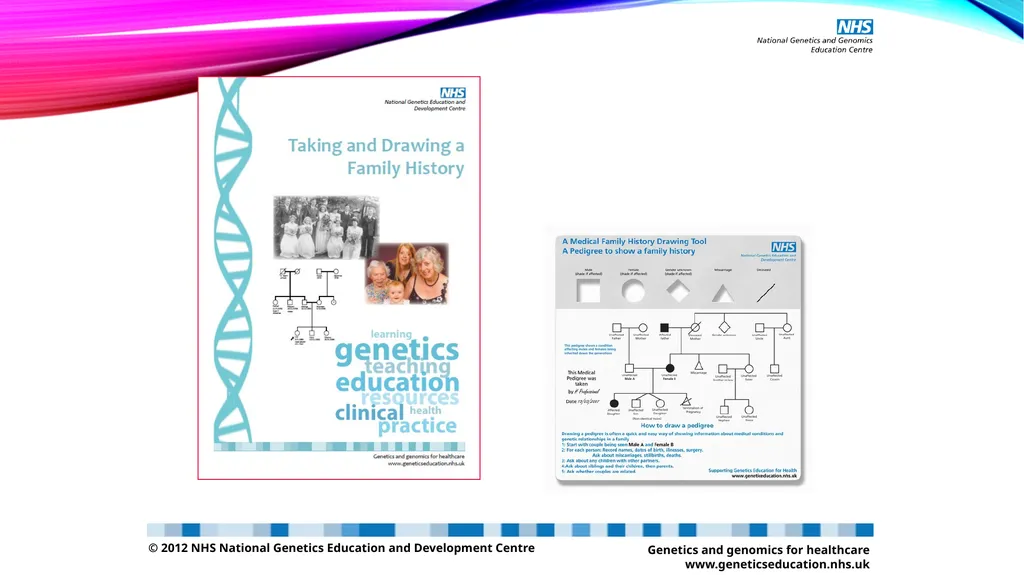
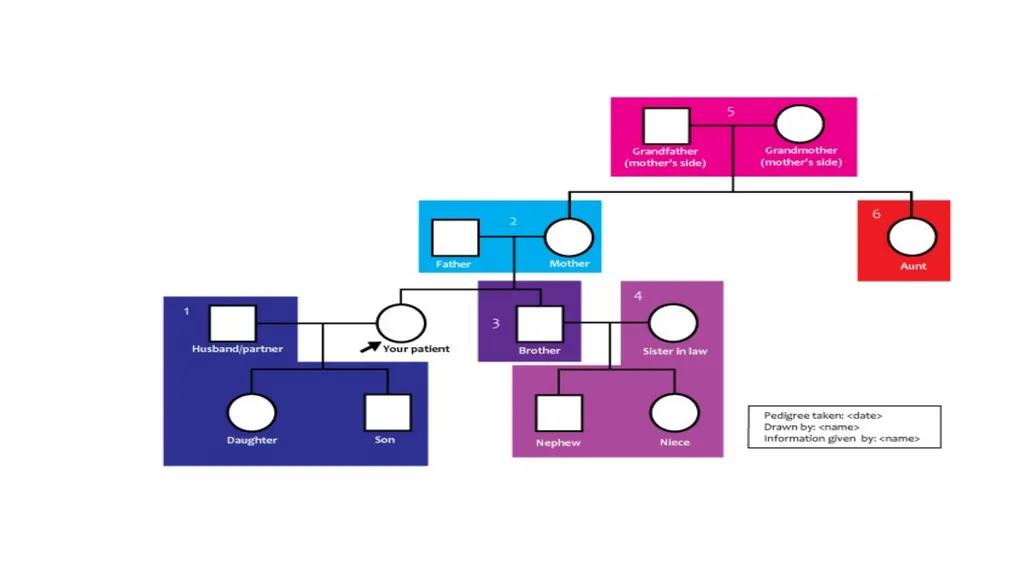
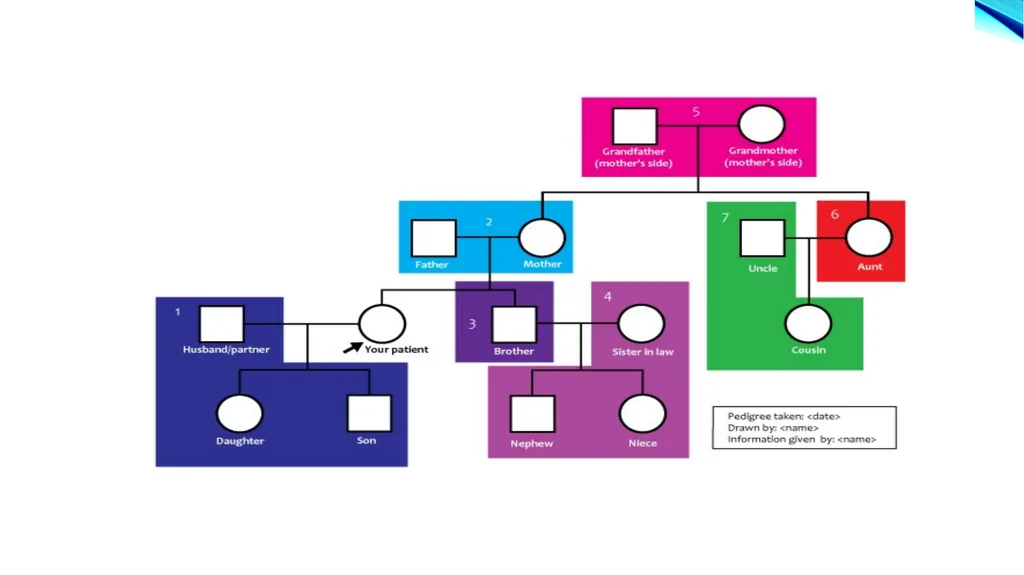
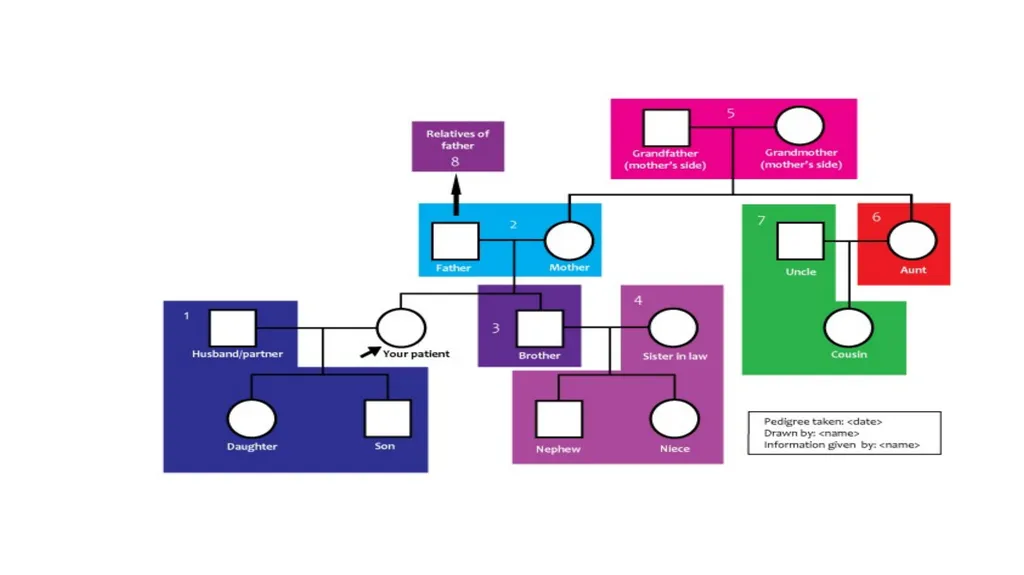
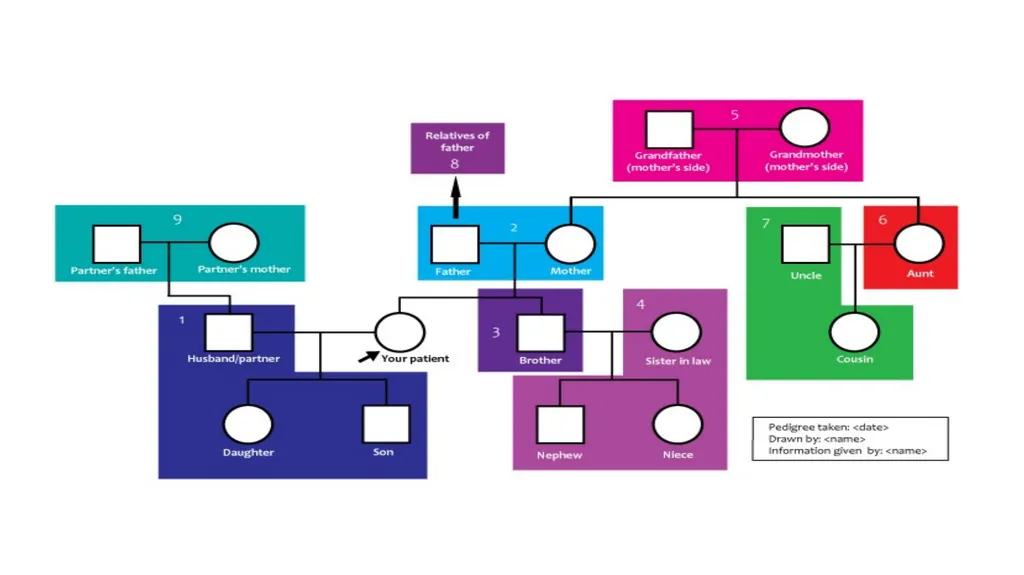
Collecting family history information This presentation can be used as part of Lesson Plan 3 Taking and Drawing a Family History. It can also be used with the Family History booklet available on the website. If individual slides are taken for use in other presentations please ensure appropriate copyright is taken into account<br>
20
Why collect family history information? Patient concern
Clinical feature
Routine assessment
Result of screening test
Opportunistic<br>
21
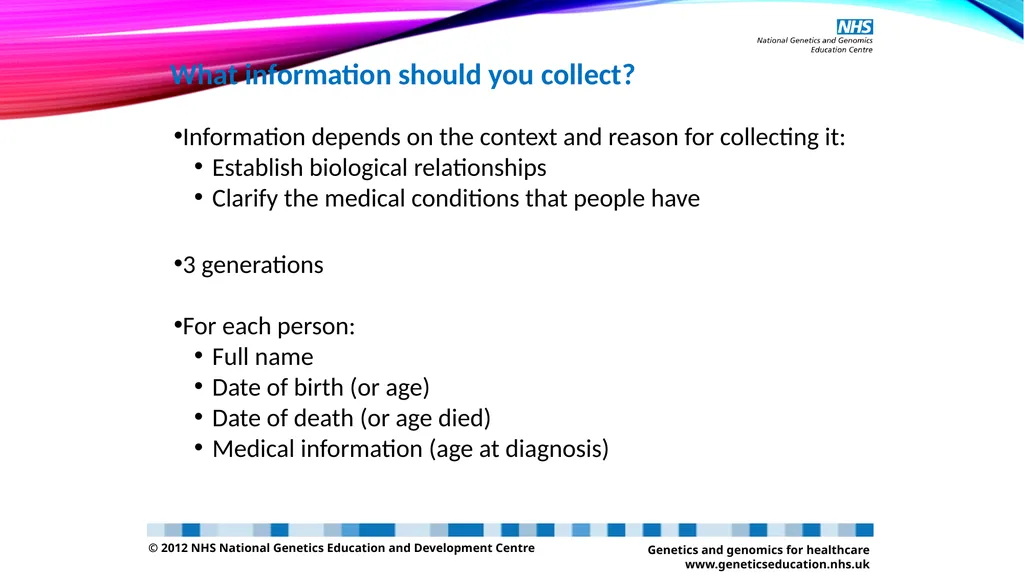
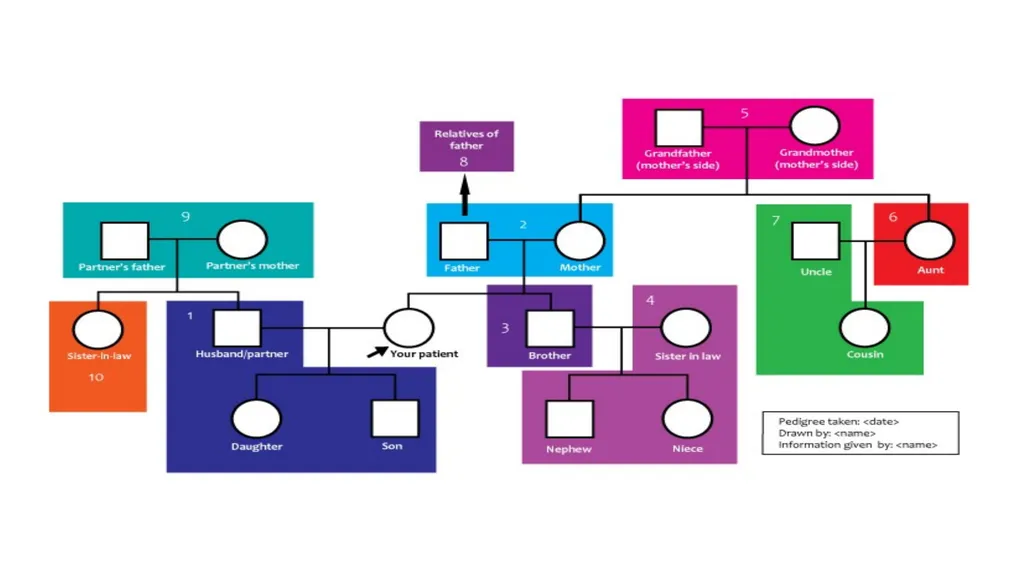
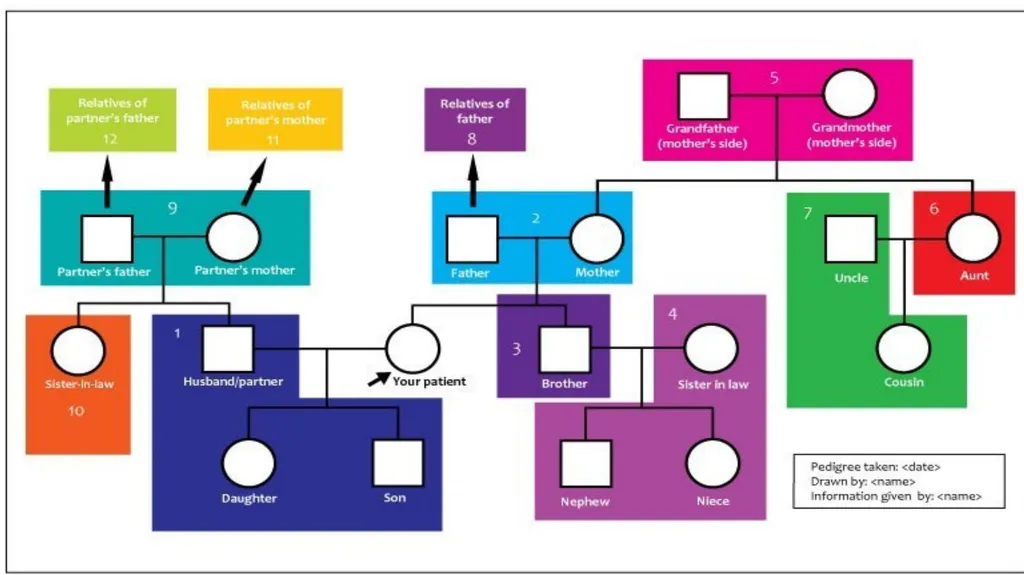
What information should you collect? Information depends on the context and reason for collecting it:
Establish biological relationships
Clarify the medical conditions that people have
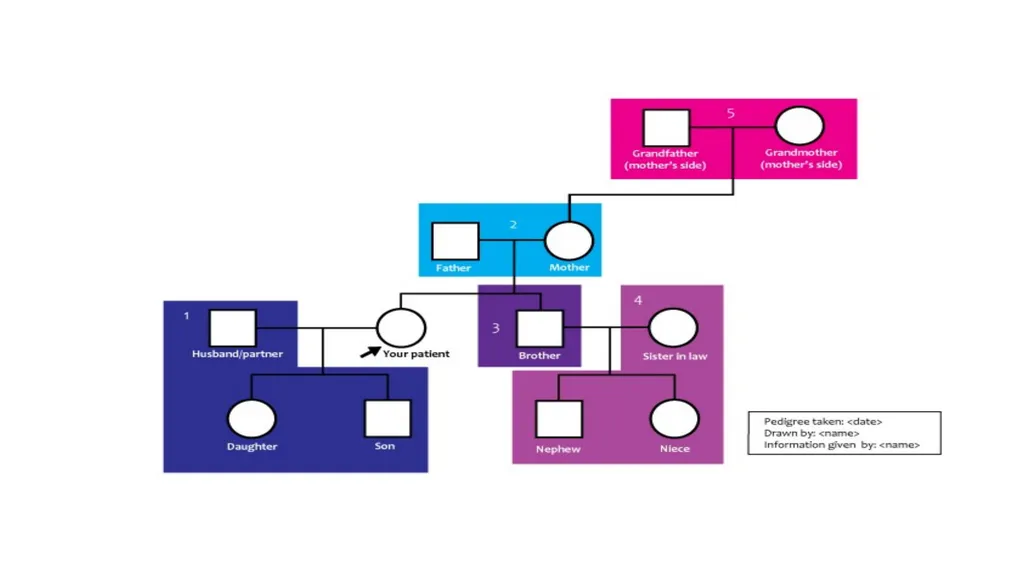
3 generations
For each person:
Full name
Date of birth (or age)
Date of death (or age died)
Medical information (age at diagnosis)<br>
22
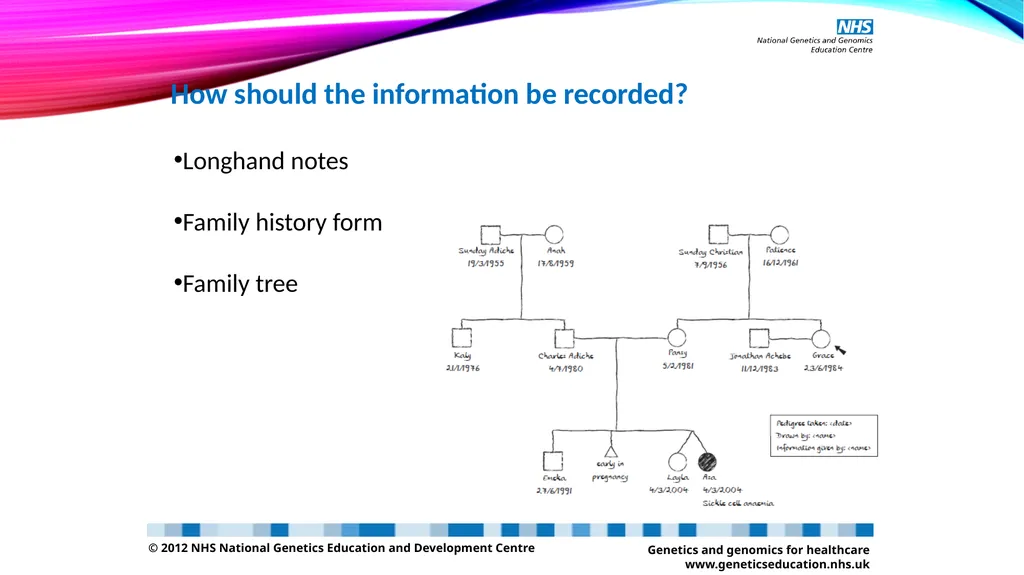
How should the information be recorded? Longhand notes
Family history form
Family tree<br>
23
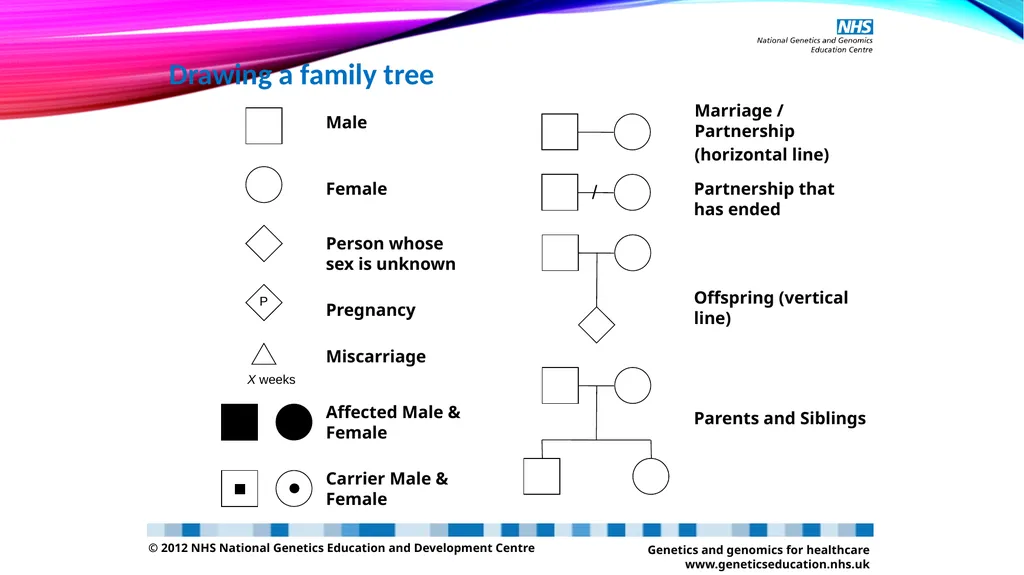
Drawing a family tree Male Female Person whose sex is unknown Pregnancy Marriage / Partnership
(horizontal line) Parents and Siblings Offspring (vertical line) Affected Male & Female Carrier Male & Female Partnership that has ended Miscarriage<br>
24
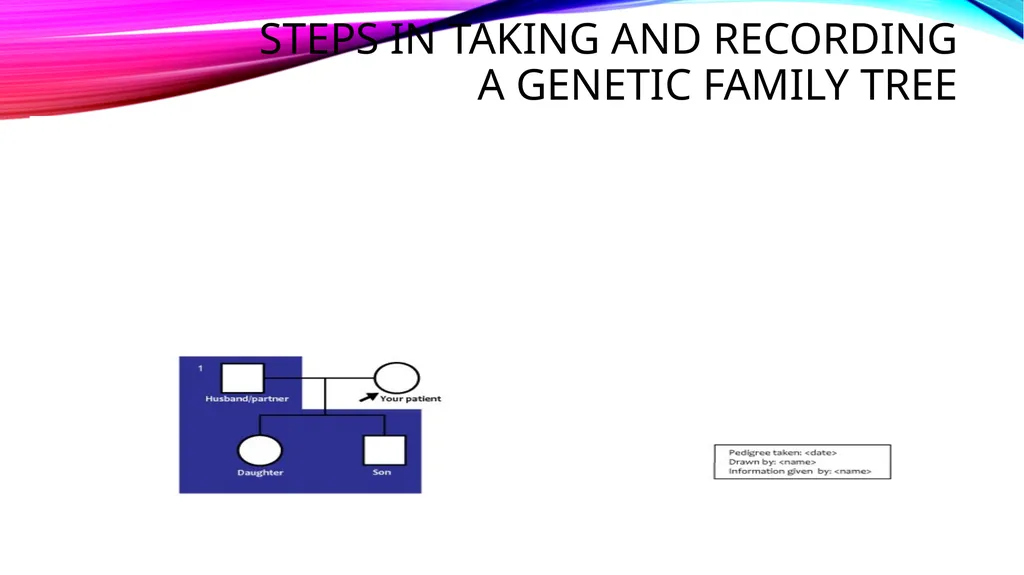
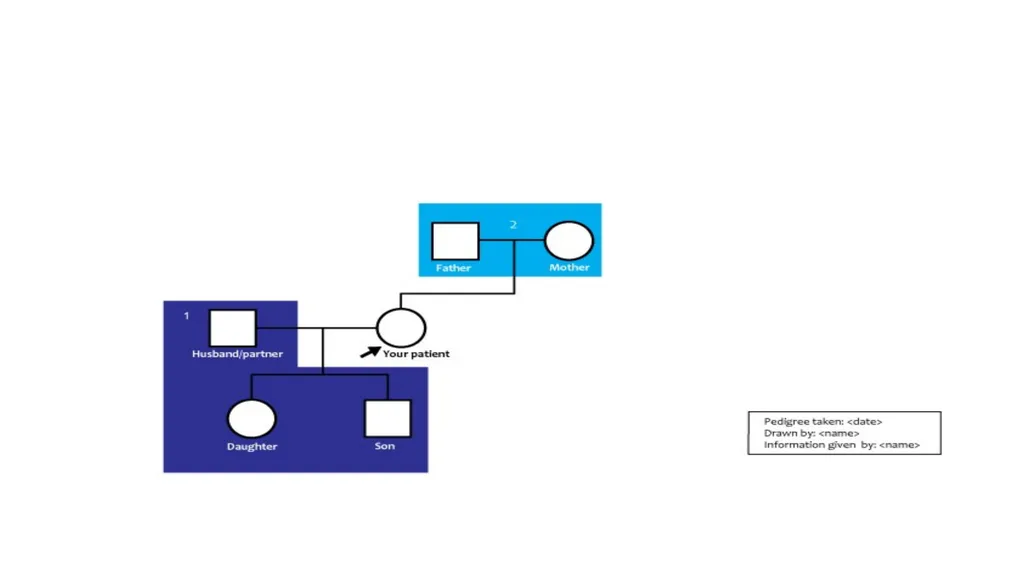
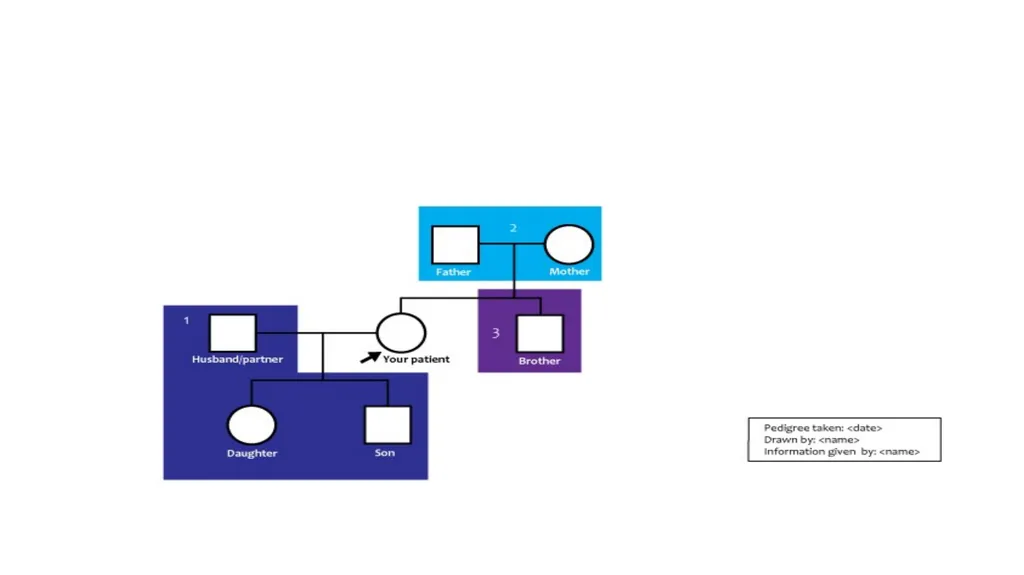
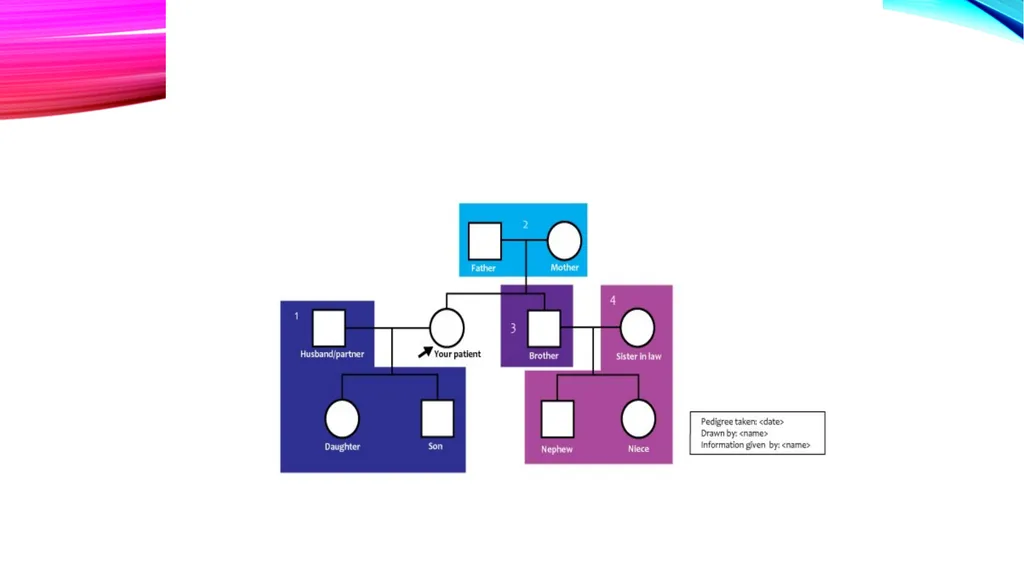
Steps in taking and recording a genetic family tree<br>
25
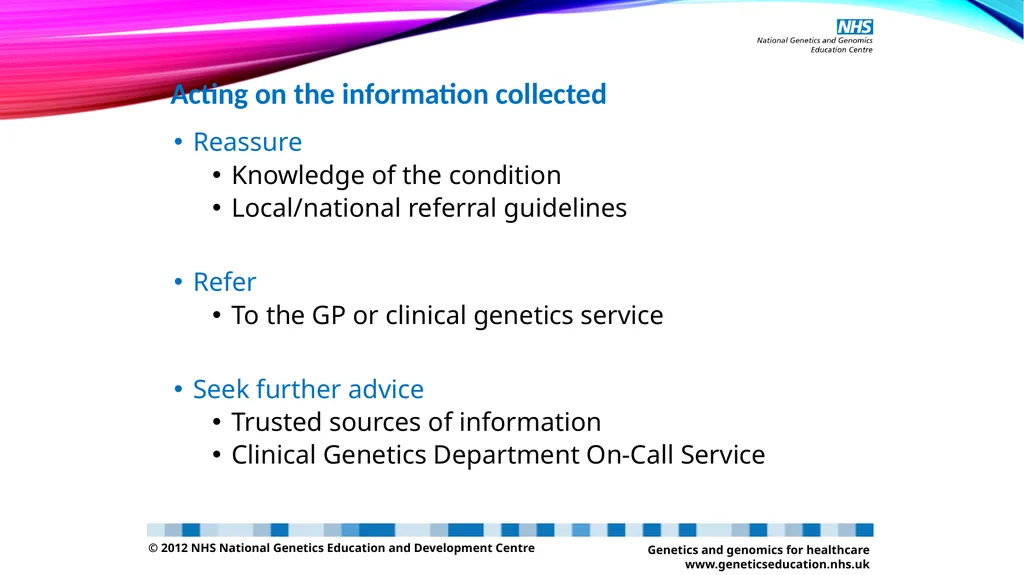
Acting on the information collected Reassure
Knowledge of the condition
Local/national referral guidelines
Refer
To the GP or clinical genetics service
Seek further advice
Trusted sources of information
Clinical Genetics Department On-Call Service<br>
26
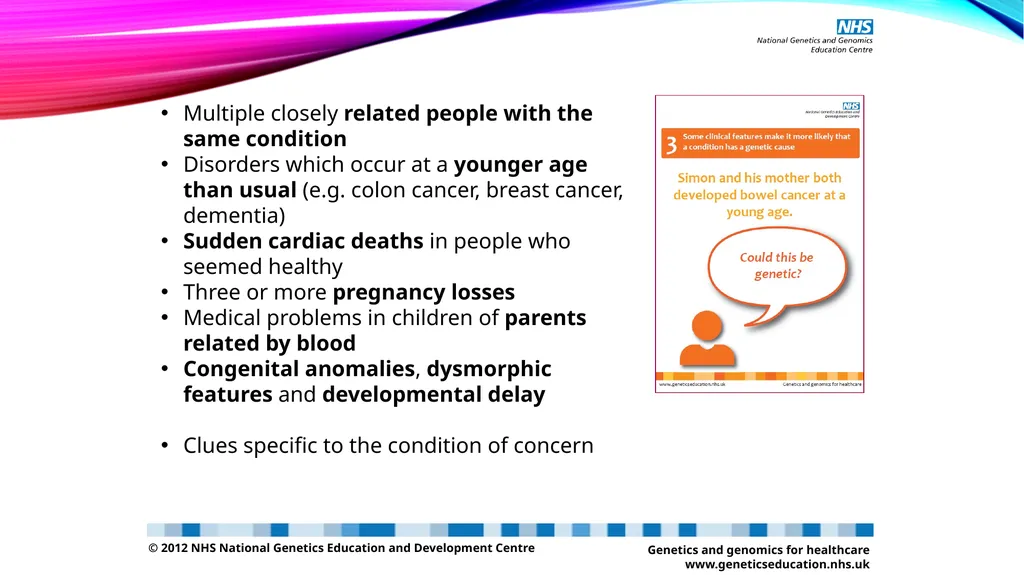
Multiple closely related people with the same condition
Disorders which occur at a younger age than usual (e.g. colon cancer, breast cancer, dementia)
Sudden cardiac deaths in people who seemed healthy
Three or more pregnancy losses
Medical problems in children of parents related by blood
Congenital anomalies, dysmorphic features and developmental delay