04
Years after the installation Thiessen shared that composing a mural at such a large scale that was to seen from the street level while still creating harmony with its surroundings were the biggest challenges and points of focus of the design. A project of this size and importance would certainly have been intriguing for the artists to tackle.<br>
05
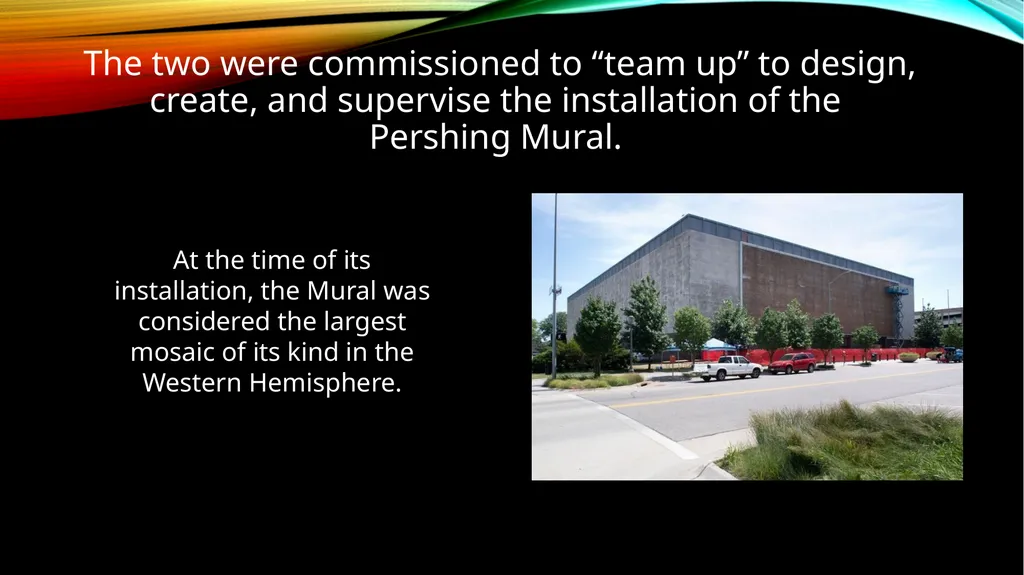
The two were commissioned to “team up” to design, create, and supervise the installation of the �Pershing Mural. At the time of its installation, the Mural was considered the largest mosaic of its kind in the Western Hemisphere.<br>
06
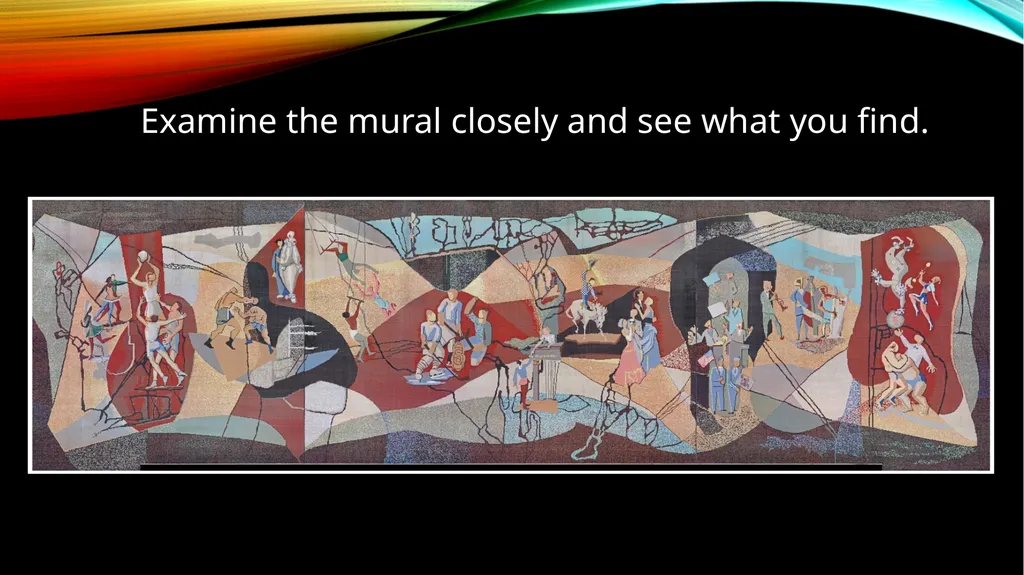
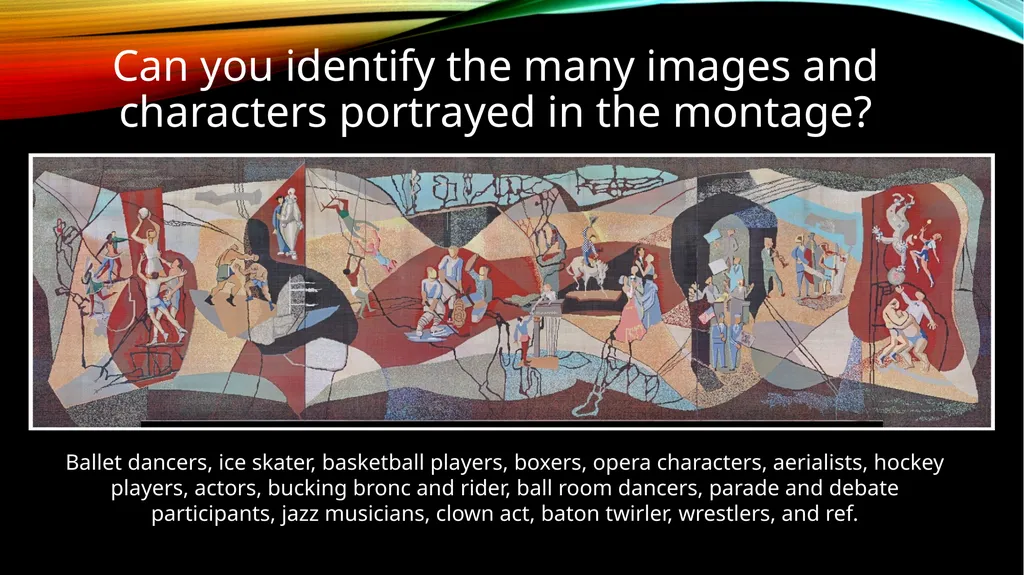
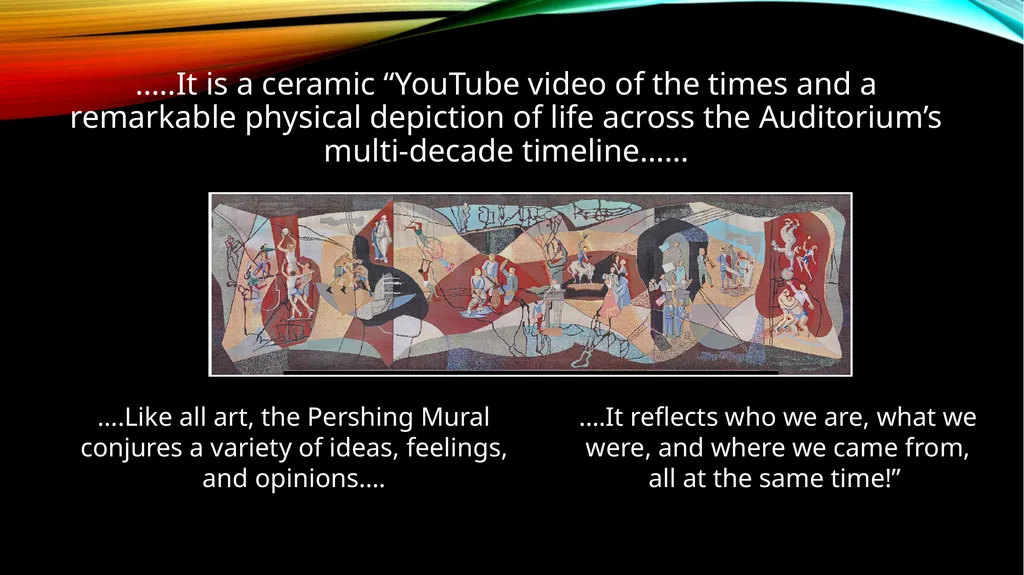
Here are some facts about the Mural mounted on the Auditorium: It measured 140’ 8” wide and 38’ 3” high. It was made up of more than 763,000 one-inch ceramic-tile pieces in 40 different shades/colors, 10% of which were glazed to make them shimmer. It was a montage-type of work depicting the many activities that would be seen in the building.<br>
07
Here are some facts about the Mural: The panel was constructed by Cambridge Tile Co. of Cincinnati, OH. It took three months for the Cambridge Co. to construct the Mural off site. The Mural was assembled in one-foot by two-foot sections and was shipped to Lincoln.<br>
08
Here are some facts about the Mural: Each tile piece was numbered on its back to facilitate mounting the sections. The sections were affixed to metal cleats against a plaster base projecting out from the building. The mural was designed to last for the duration of the building.<br>
09
No artist statements from Thiessen and Hammon have been found concerning the Mural. We do not know what part each artist played in the design and concept of the mural or how they arrived at the final creation. What we do know is that this is a complex piece that certainly deserves careful study.<br>
10
Your job is to write an artist statement decades later! So get ready to take some notes to help you with the task as you learn more about the Mural!<br>
11
Examine the mural closely and see what you find.<br>
12
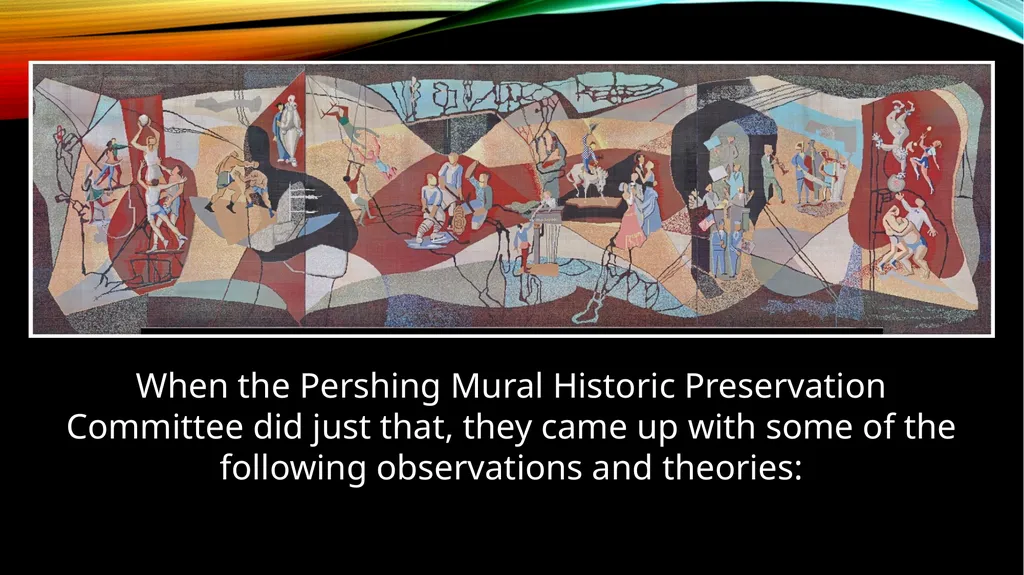
When the Pershing Mural Historic Preservation Committee did just that, they came up with some of the following observations and theories:<br>
13
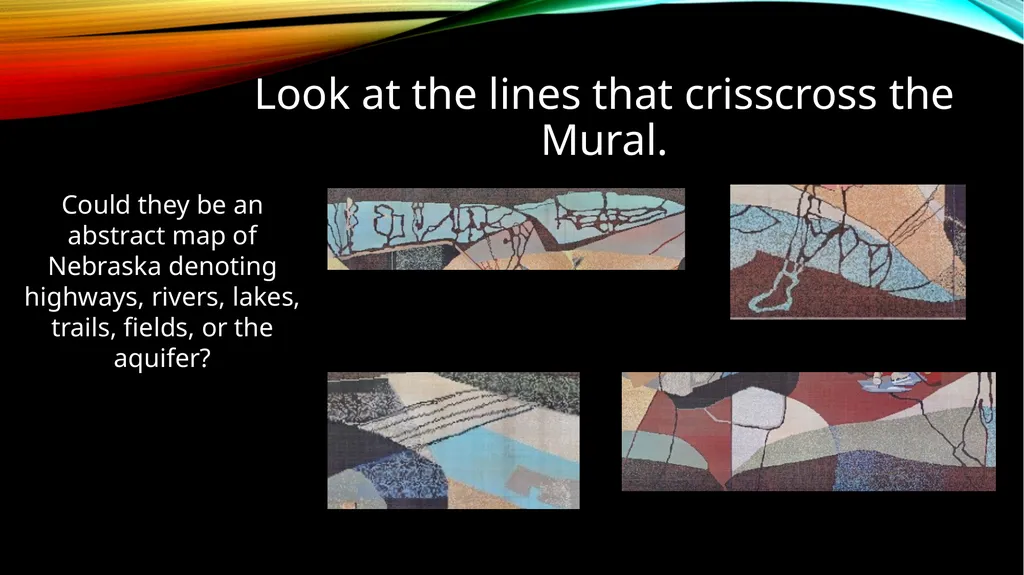
Look at the lines that crisscross the Mural. Could they be an abstract map of Nebraska denoting highways, rivers, lakes, trails, fields, or the aquifer?<br>
14
Can you identify the many images and characters portrayed in the montage? Ballet dancers, ice skater, basketball players, boxers, opera characters, aerialists, hockey players, actors, bucking bronc and rider, ball room dancers, parade and debate participants, jazz musicians, clown act, baton twirler, wrestlers, and ref.<br>
15
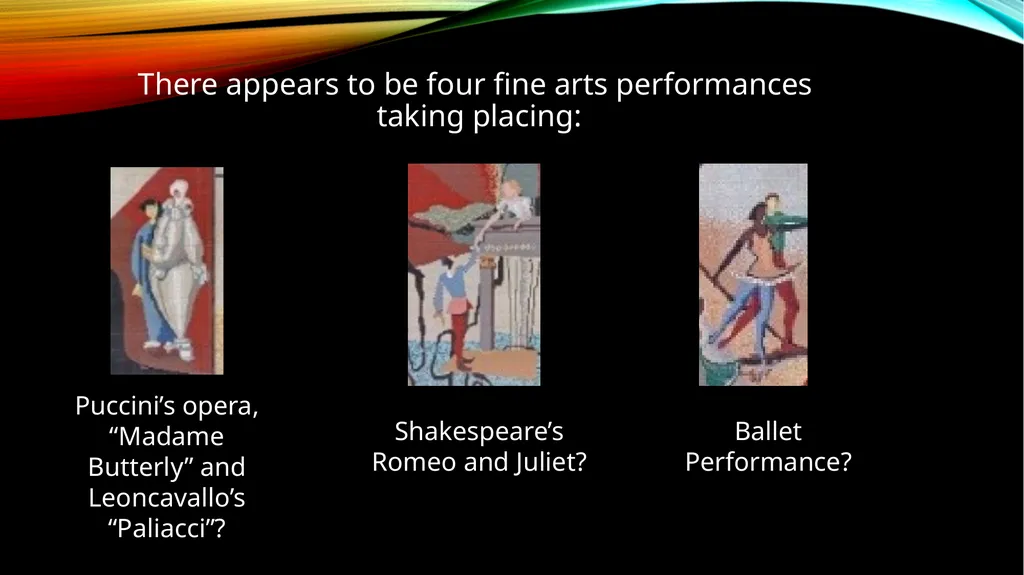
There appears to be four fine arts performances �taking placing: Puccini’s opera, “Madame Butterly” and Leoncavallo’s “Paliacci”? Shakespeare’s Romeo and Juliet? Ballet Performance?<br>
16
Can you feel the energy and playfulness expressed in the Mural?<br>
17
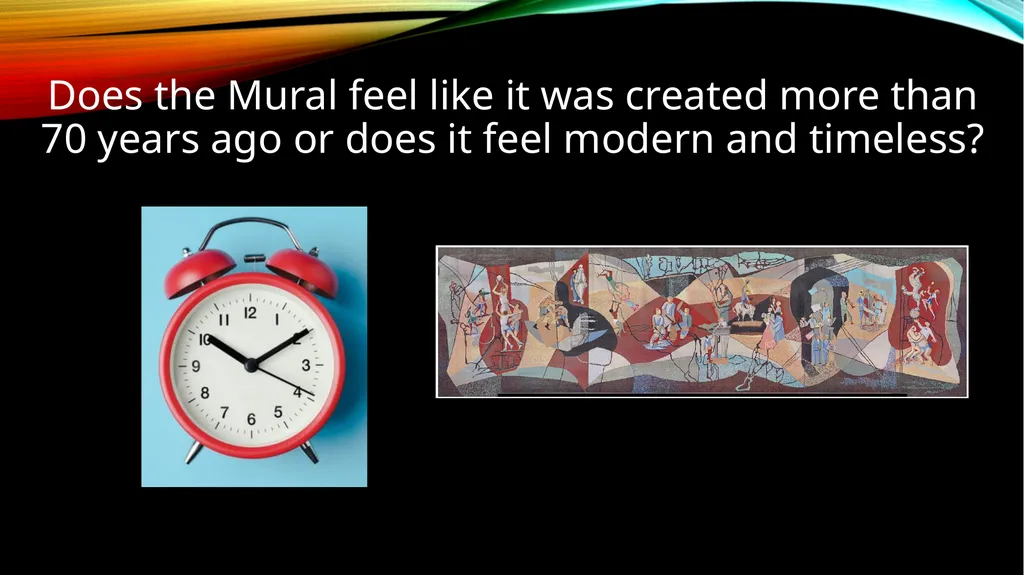
Does the Mural feel like it was created more than 70 years ago or does it feel modern and timeless?<br>
18
What emotions are evoked from the Mural? Humor? Anticipation? Love? Aggression?<br>
19
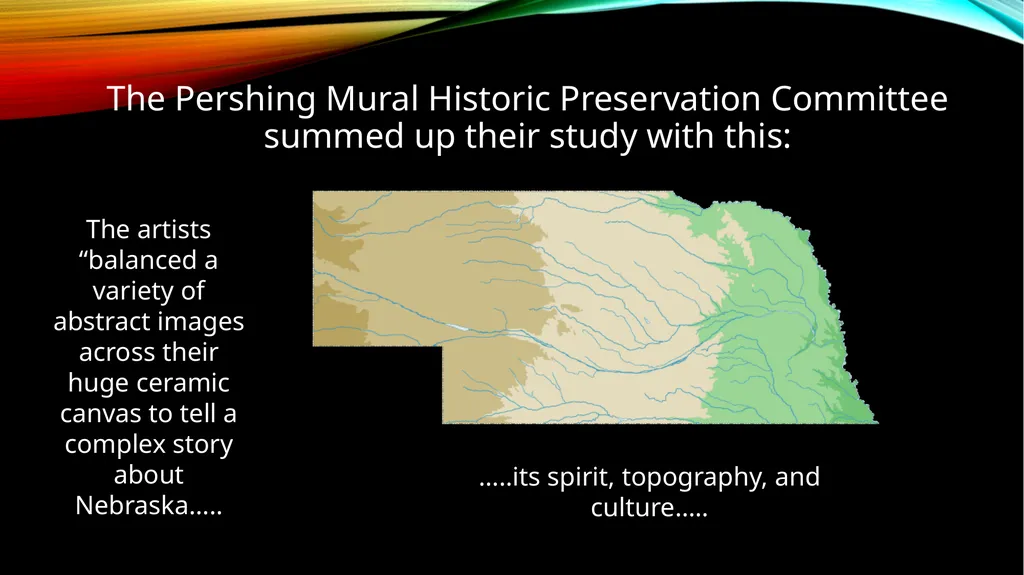
The Pershing Mural Historic Preservation Committee summed up their study with this: The artists “balanced a
variety of abstract images across their huge ceramic canvas to tell a complex story about Nebraska….. …..its spirit, topography, and culture…..<br>
20
…..It is a ceramic “YouTube video of the times and a remarkable physical depiction of life across the Auditorium’s multi-decade timeline…… ….Like all art, the Pershing Mural conjures a variety of ideas, feelings, and opinions…. ….It reflects who we are, what we were, and where we came from, all at the same time!”<br>
21
Since Thiessen and Hammon did not leave behind an artist statement for the Pershing Mural, your job will be to write one for them!<br>
22
Known facts about the Mural can be used in your statement….. …but wouldn’t just listing a bunch of facts alone be boring??<br>
23
Consider how powerful visual thinking
through art is when you are writing your artist statement! From Karissa Johnson, Curator of the Museum of Nebraska Art: “Artists are people who make ‘stuff’. They are resourceful, problem-solvers who work with their hands just like any other trade.” “The biggest difference between an artist and someone like an electrician, mechanic, or plumber is that they are communicating something through their making.”<br>
24
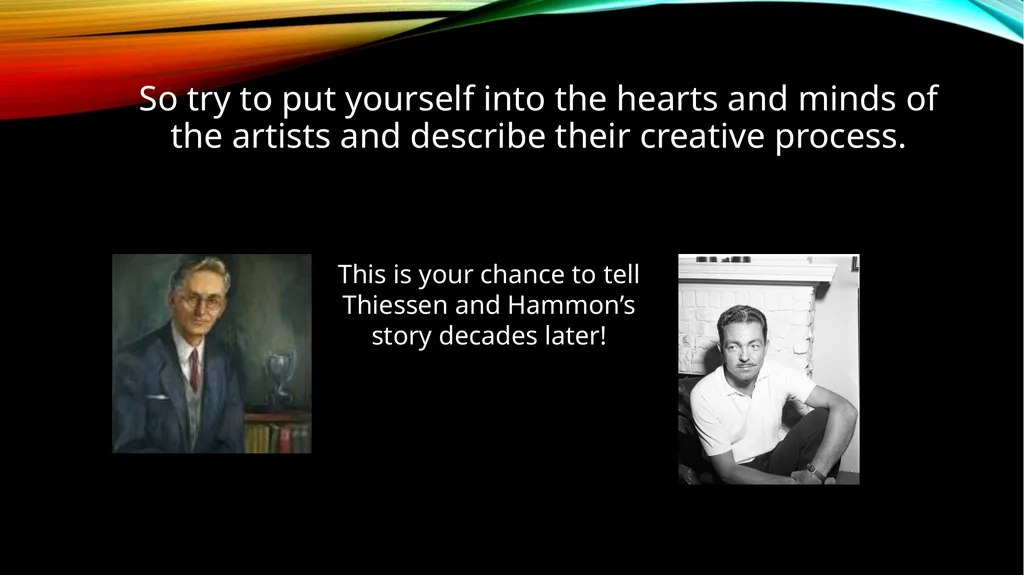
So try to put yourself into the hearts and minds of the artists and describe their creative process. This is your chance to tell Thiessen and Hammon’s story decades later!<br>