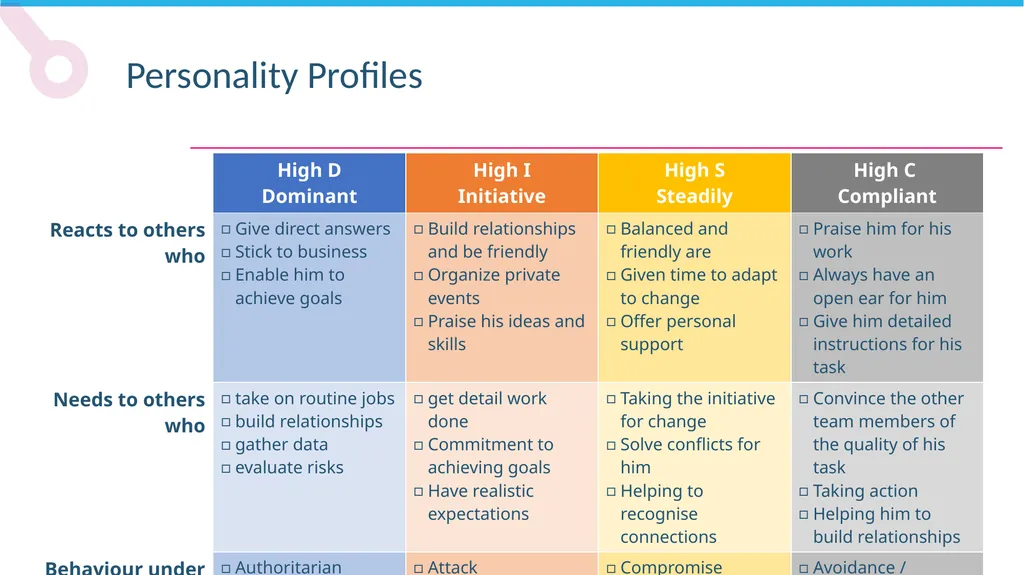
Personality Profiles Personality Profiles The DISC - Concept The DISC model developed by William Moulton Marston almost a century ago but is just as relevant today. It divides people into four main behavioural styles. Individuals are
"Personality Profiles Personality Profiles – The" is the property of its rightful owner. Permission is granted to
download and print the materials on this website for personal, non-commercial use only, and to display it
on your personal computer provided you do not modify the materials and that you retain all copyright
notices contained in the materials. By downloading content from our website, you accept the terms of this
agreement.
Presentation Transcript
01
Personality Profiles<br>
02
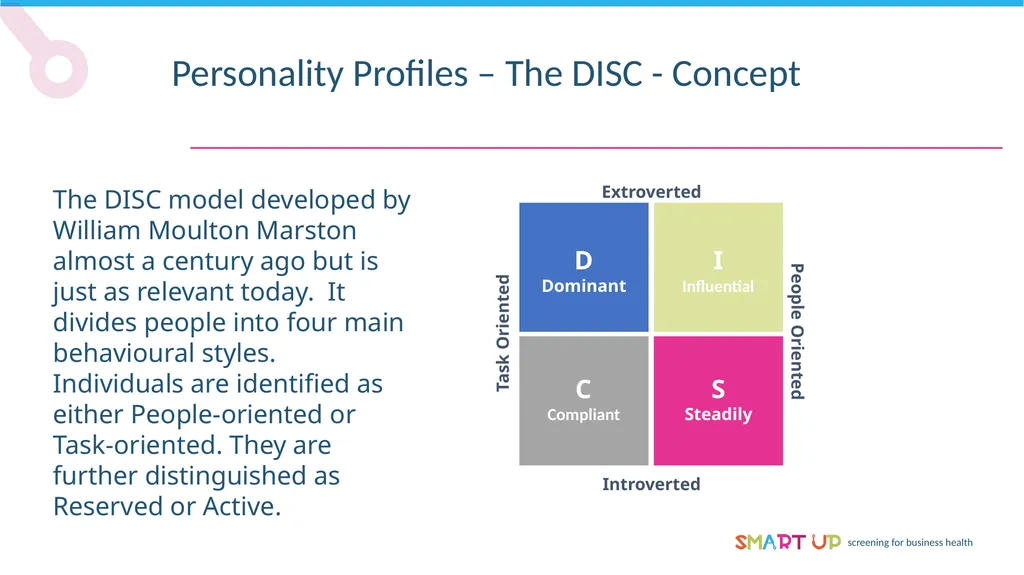
Personality Profiles – The DISC - Concept The DISC model developed by William Moulton Marston almost a century ago but is just as relevant today. It divides people into four main behavioural styles. Individuals are identified as either People-oriented or Task-oriented. They are further distinguished as Reserved or Active. I Influential S Steadily C
Compliant D Dominant Task Oriented Introverted People Oriented Extroverted<br>
03
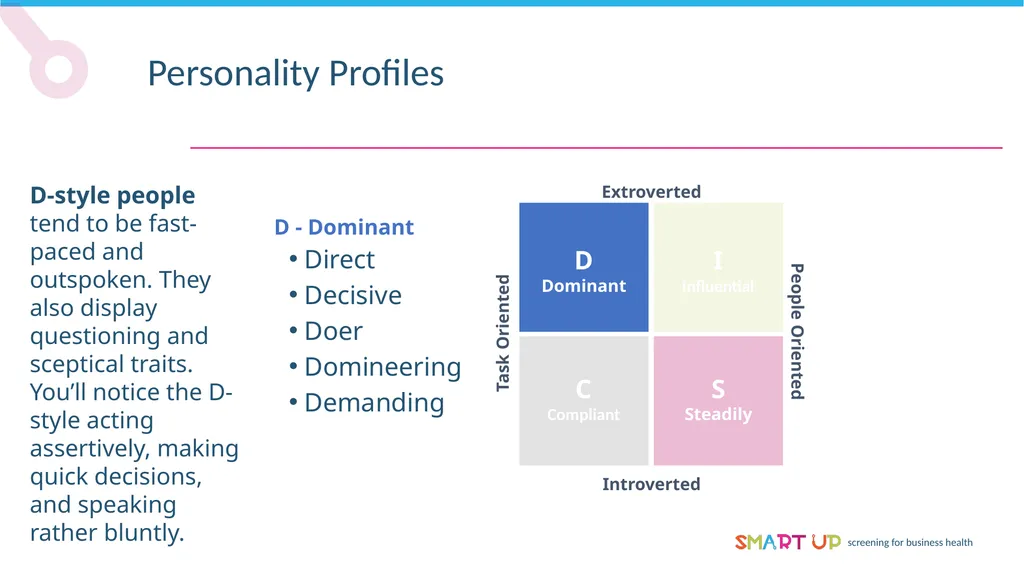
Personality Profiles D-style people tend to be fast-paced and outspoken. They also display questioning and sceptical traits. You’ll notice the D-style acting assertively, making quick decisions, and speaking rather bluntly. I Influential S Steadily C
Compliant D Dominant Task Oriented Introverted People Oriented Extroverted Direct
Decisive
Doer
Domineering
Demanding D - Dominant<br>
04
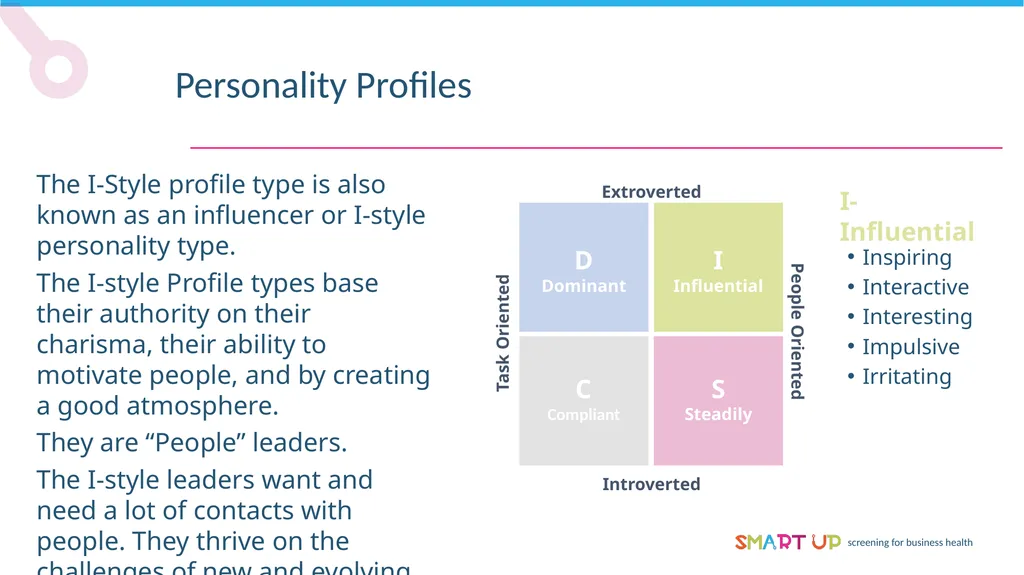
Personality Profiles The I-Style profile type is also known as an influencer or I-style personality type.
The I-style Profile types base their authority on their charisma, their ability to motivate people, and by creating a good atmosphere.
They are “People” leaders.
The I-style leaders want and need a lot of contacts with people. They thrive on the challenges of new and evolving organizations. I Influential S Steadily C
Compliant D Dominant Task Oriented Introverted People Oriented Extroverted Inspiring
Interactive
Interesting
Impulsive
Irritating I- Influential<br>
05
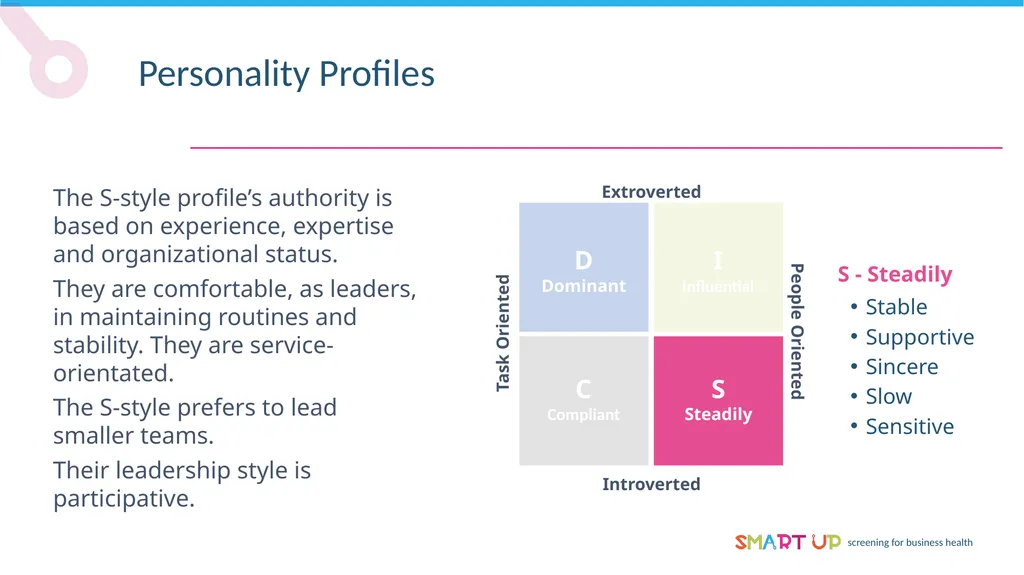
Personality Profiles The S-style profile’s authority is based on experience, expertise and organizational status.
They are comfortable, as leaders, in maintaining routines and stability. They are service- orientated.
The S-style prefers to lead smaller teams.
Their leadership style is participative. I Influential S Steadily C
Compliant D Dominant Task Oriented Introverted People Oriented Extroverted Stable
Supportive
Sincere
Slow
Sensitive S - Steadily<br>
06
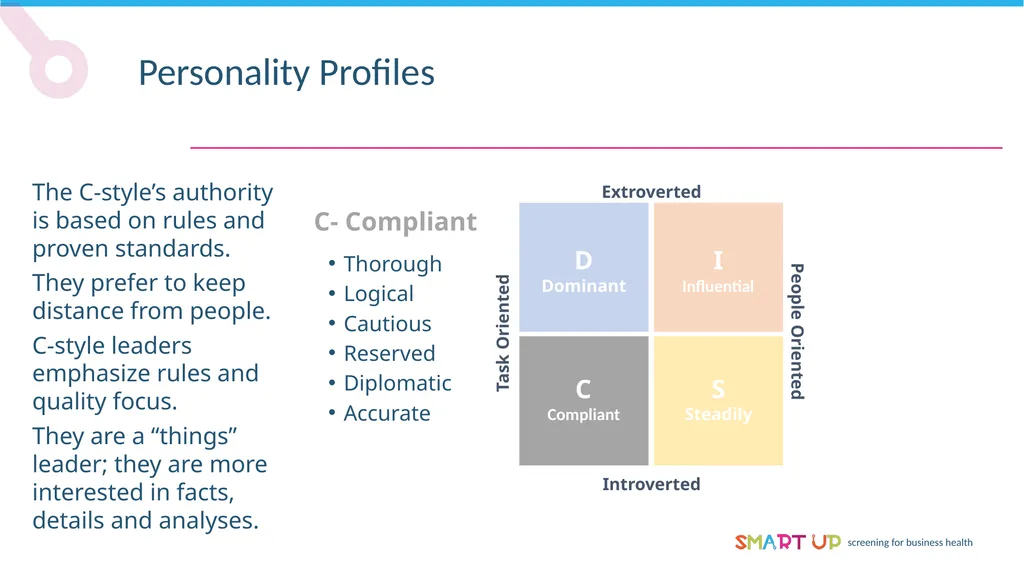
Personality Profiles The C-style’s authority is based on rules and proven standards.
They prefer to keep distance from people.
C-style leaders emphasize rules and quality focus.
They are a “things” leader; they are more interested in facts, details and analyses. I Influential S Steadily C
Compliant D Dominant Task Oriented Introverted People Oriented Extroverted Thorough
Logical
Cautious
Reserved
Diplomatic
Accurate C- Compliant<br>
07
Personality Profiles<br>
08
Personality Profiles<br>
09
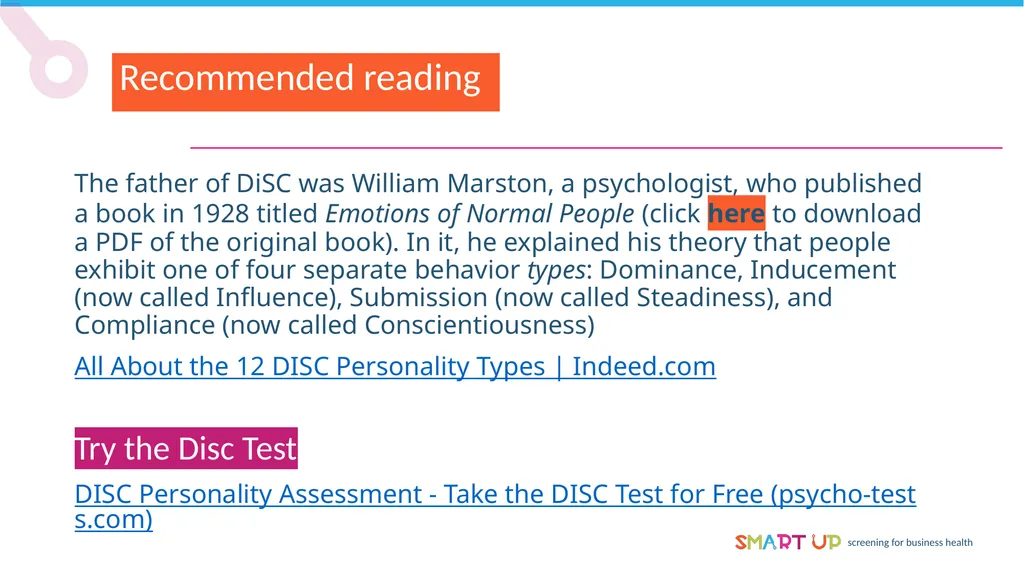
The father of DiSC was William Marston, a psychologist, who published a book in 1928 titled Emotions of Normal People (click here to download a PDF of the original book). In it, he explained his theory that people exhibit one of four separate behavior types: Dominance, Inducement (now called Influence), Submission (now called Steadiness), and Compliance (now called Conscientiousness)
All About the 12 DISC Personality Types | Indeed.com
Try the Disc Test
DISC Personality Assessment - Take the DISC Test for Free (psycho-tests.com) Recommended reading<br>