PharmaSeer Module 7: Patient Interaction R 176 G 214 B 235 R 244 G 116 B 52 R 251 G 226 B 79 R 32 G 134 B 198 R 53 G 189 B 178 R 126 G 128 B 131 Module 7 Learning Objectives Implement appropriate direct patient care in your pharmacy that
"PharmaSeer Module 7: Patient Interaction R 176 G" is the property of its rightful owner. Permission is granted to
download and print the materials on this website for personal, non-commercial use only, and to display it
on your personal computer provided you do not modify the materials and that you retain all copyright
notices contained in the materials. By downloading content from our website, you accept the terms of this
agreement.
Presentation Transcript
01
PharmaSeer Module 7: Patient Interaction R 176
G 214
B 235 R 244
G 116
B 52 R 251
G 226
B 79 R 32
G 134
B 198 R 53
G 189
B 178 R 126
G 128
B 131<br>
02
Module 7 Learning Objectives Implement appropriate direct patient care in your pharmacy that demonstrates a caring attitude toward patients.
Identify how appearance, conduct, and adherence to moral standards contribute to professionalism.
Use effective telephone, fax, and e-mail communication strategies within the pharmacy technician’s scope of practice.
Use appropriate nonverbal and verbal communication techniques with patients, coworkers, and health care professionals.
Implement strategies to overcome communication challenges.
Communicate effectively with specific populations including children, older adult patients, patients who have disabilities, and patients who do not share a common language with you. 3<br>
03
Pharmacy technicians’ assistance to others include:
Pharmacist
Patients
It is important to maintain a healthy balance when working with the pharmacists and patients. Direct Patient Care<br>
04
Medication information
Literature-evaluation skills
Evidence-based medicine
Self-care
Teach monitoring, diagnosing, and screening techniques
Help patients make informed decisions
Clinical pharmacy
Evaluate a patient’s therapy
Recommend appropriate medications
Monitor disease states
Pharmaceutical practice
Use ethics to determine overall well-being of the patient
Take into account a patient’s preference for certain dosage forms
Distribution practice
Use detail-oriented skills to ensure accuracy Contributions to Patient Care 5<br>
05
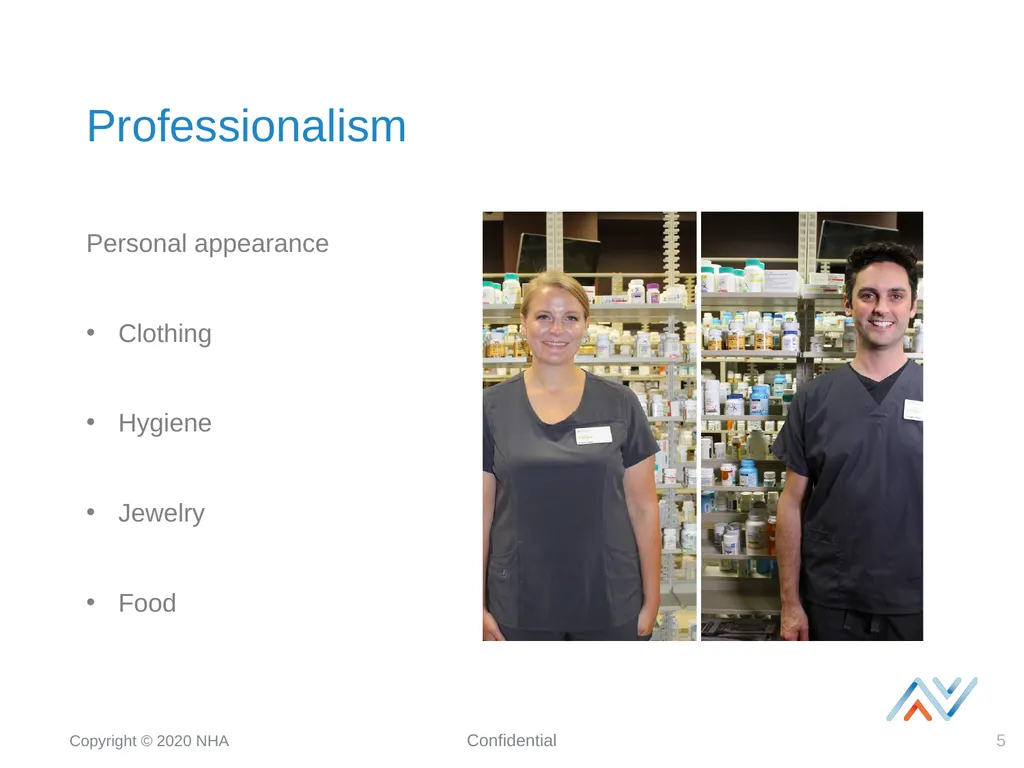
Professionalism Personal appearance
Clothing
Hygiene
Jewelry
Food 6<br>
06
Write one-page summary about a time you visited a pharmacy to fill a prescription for yourself or a family member. Who was your first point of contact and what did you observe during your visit? How was the pharmacy technician’s professionalism? Describe your overall experience. Activity Professionalism—Reflection Journal 7<br>
07
There are a few traits one may encompass that come with being a professional:
Being honest and trustworthy
Respecting of patient autonomy
Practicing confidentiality
Practicing beneficence
Having fidelity Characteristics of a Professional 8<br>
08
Ethics, moral principles that govern an individual or group, are very important in the pharmacy profession. Pharmacists and pharmacy technicians have moral obligations they must follow
The “Code of Ethics for Pharmacy Technicians” was created by American Association of Pharmacy Technicians and should be followed. Characteristics of a Professional, cont.<br>
09
Define ethics and morals. In your opinion, why is it important for a pharmacy technician to have. Should a pharmacy technician have morals, ethics, or both? Why? Activity—Ethics or Morals? 10<br>
10
Communication 11<br>
11
Telephone, fax, and email communication are the forms of communication seen within the pharmacy.
A pharmacy technician must maintain professionalism in all methods of communication methods. Telephone, fax, and email communication 12<br>
12
A pharmacy technician must follow certain general guidelines when answering the phone in the workplace.
Answer the phone by the 3rd ring.
Identify the store, department, your name, and offer a service.
Be alert and pay attention to the person calling.
Speak clearly, at a moderate speed, and in a pleasant and relaxed tone. Telephone Communication 13<br>
13
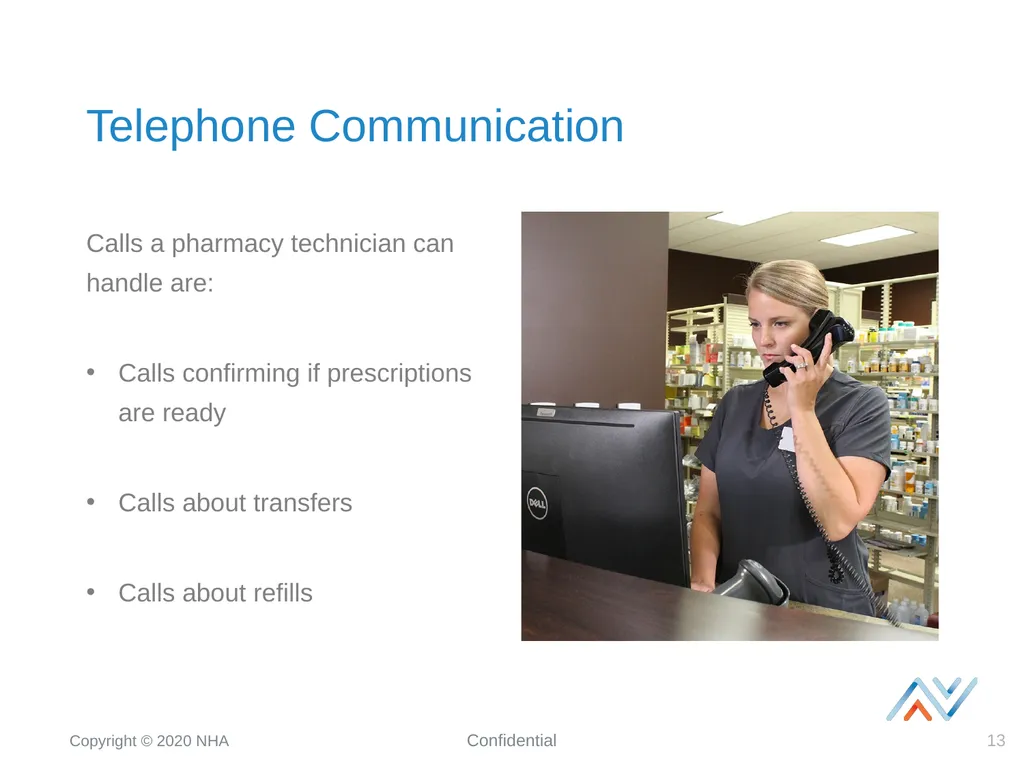
Telephone Communication Calls a pharmacy technician can handle are:
Calls confirming if prescriptions are ready
Calls about transfers
Calls about refills 14<br>
14
Telephone Communication Certain calls pharmacy technicians cannot handle
Calls from prescribers’ offices that a technician is not allowed to handle
Calls about information or emergencies such as questions about side effects, overdoses, and poisons
Calls from other pharmacies to transfer a prescription
Calls about prescription errors, although the technician can help the pharmacist by preparing information they will need when they talk to the patient. 15<br>
15
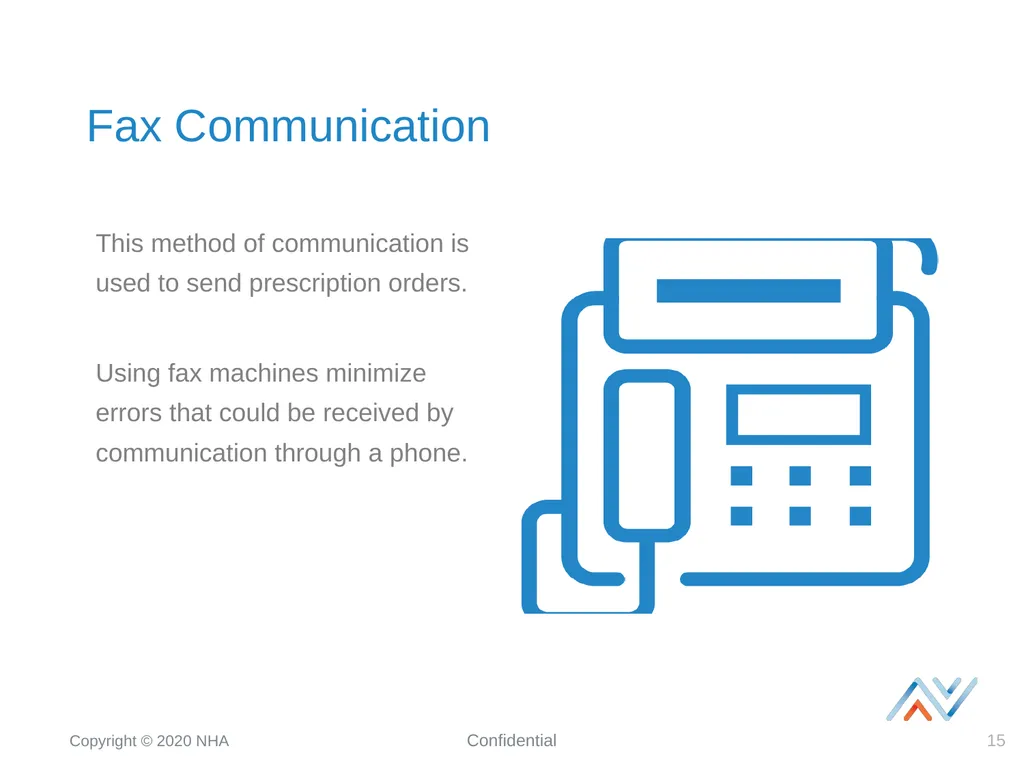
Fax Communication This method of communication is used to send prescription orders.
Using fax machines minimize errors that could be received by communication through a phone. 16<br>
16
Pharmacy personnel normally use email communication because it is fast and easy to use.
Make sure the patient has signed a consent form to allow communication via email.
The pharmacy team should use email etiquette and proper grammar and spelling.
Emails containing PHI protected by HIPAA should include encryption (regardless of recipient). Email Communication 17<br>
17
Research your state’s guidelines and regulations for using email and fax communication in the pharmacy. Do you agree with the regulations? Why or why not? If you could change one or more of the regulations, what would you change and why. Activity—State Regulation Communication Methods<br>
18
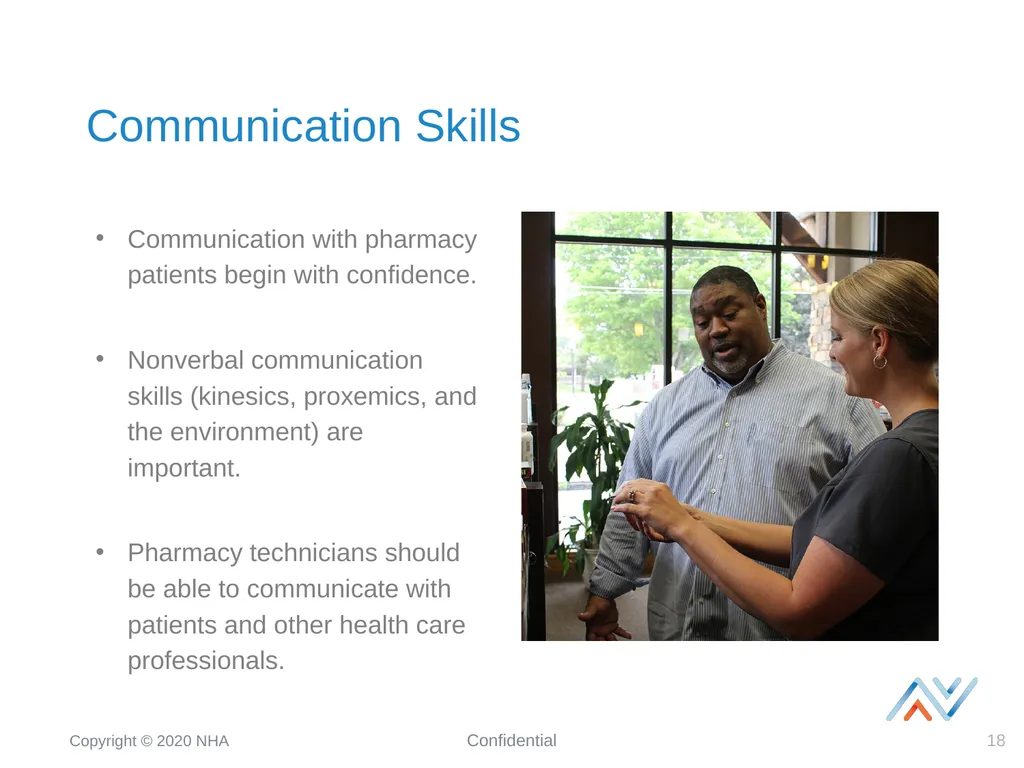
Communication Skills Communication with pharmacy patients begin with confidence.
Nonverbal communication skills (kinesics, proxemics, and the environment) are important.
Pharmacy technicians should be able to communicate with patients and other health care professionals. 19<br>
19
There are a few factors that may result in communication challenges
Environmental barriers
Personal issues
Timing Communication Challenges 20<br>
20
When working in the healthcare profession as a pharmacy technician, you must learn to communicate with specific groups of the population.
Children and older adults
Patient who have vision or hearing loss
Patient who speak a different language
Patients who have a speech impairment
Patients who cannot read Communication with Specific Populations 21<br>
21
Write a 1- to 2-page summary on how you, as a pharmacy technician, will communicate with a patient who has a language barrier. How will you handle the situation and maintain professionalism? Activity—Communication Barrier<br>