Phonological processes What do you think about the phonological processes? The linguistic sounds suffer a great quantity of changes, valuable both in the normal flow of the language and in the course of the time, and such changes are known
"Phonological processes What do you think about the" is the property of its rightful owner. Permission is granted to
download and print the materials on this website for personal, non-commercial use only, and to display it
on your personal computer provided you do not modify the materials and that you retain all copyright
notices contained in the materials. By downloading content from our website, you accept the terms of this
agreement.
Presentation Transcript
01
Phonological processes<br>
02
What do you think about the phonological processes? The linguistic sounds suffer a great quantity of changes, valuable both in the normal flow of the language and in the course of the time, and such changes are known as Phonological Processes.
Pharies (2007)<br>
03
If we take into account that the oral production is considered as the process of producing, receiving and processing the information from a communicative and pragmatic point of view (Brown, 1994), we may comprehend the influence it has over the knowledge and effective employment of the Phonological Processes, since they allow the learners to increase their fluency while expressing their ideas, and consequently to improve the quality and precision of their oral production. Why do you think is important for the EFL students to know about the phonological processes?<br>
04
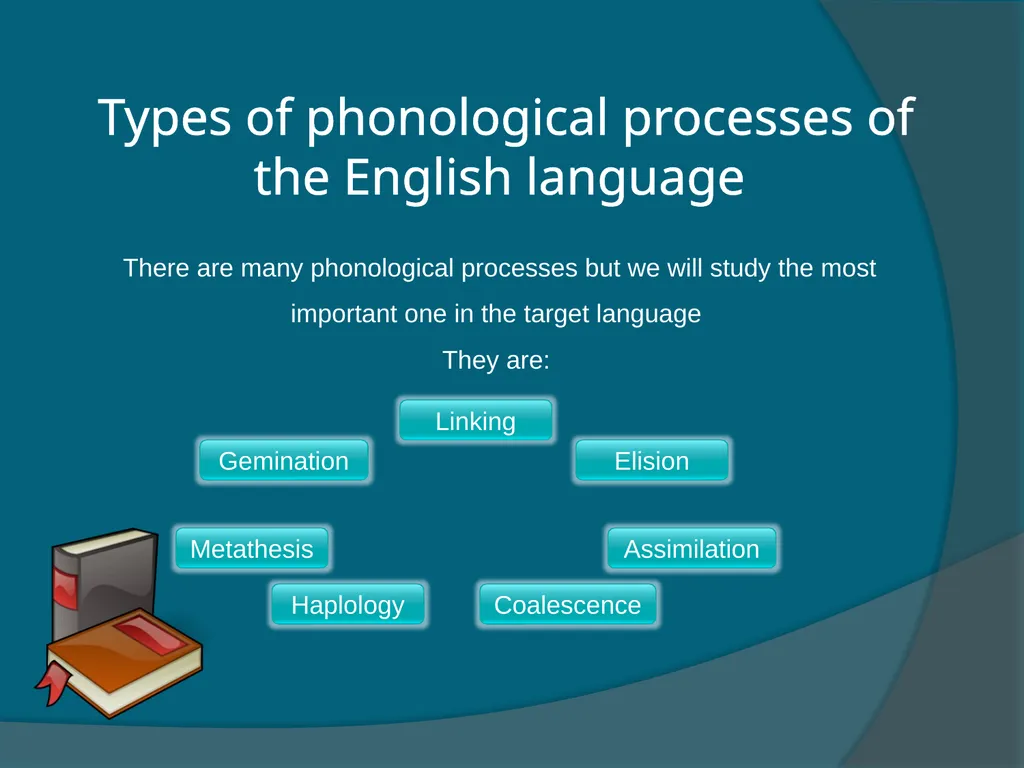
There are many phonological processes but we will study the most important one in the target language
They are: Types of phonological processes of the English language Haplology Coalescence Gemination Metathesis Elision Assimilation Linking<br>
05
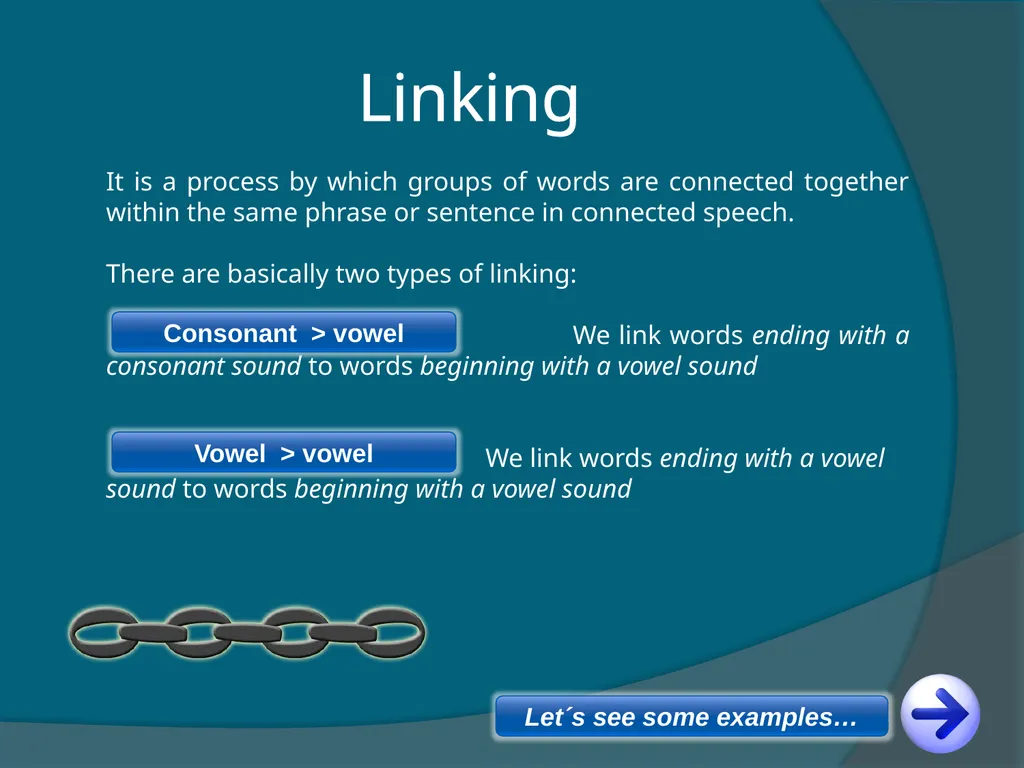
Linking It is a process by which groups of words are connected together within the same phrase or sentence in connected speech.
There are basically two types of linking:
We link words ending with a consonant sound to words beginning with a vowel sound
We link words ending with a vowel sound to words beginning with a vowel sound Consonant > vowel Vowel > vowel Let´s see some examples…<br>
06
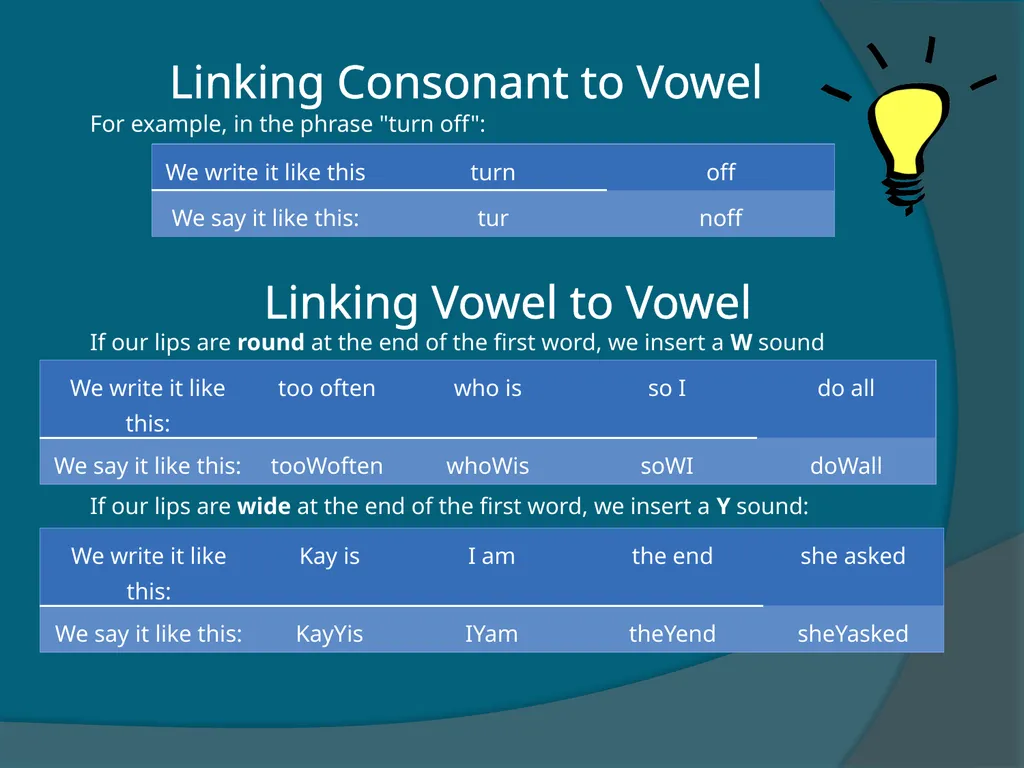
Linking Consonant to Vowel For example, in the phrase "turn off":
Linking Vowel to Vowel
If our lips are round at the end of the first word, we insert a W sound
If our lips are wide at the end of the first word, we insert a Y sound:<br>
07
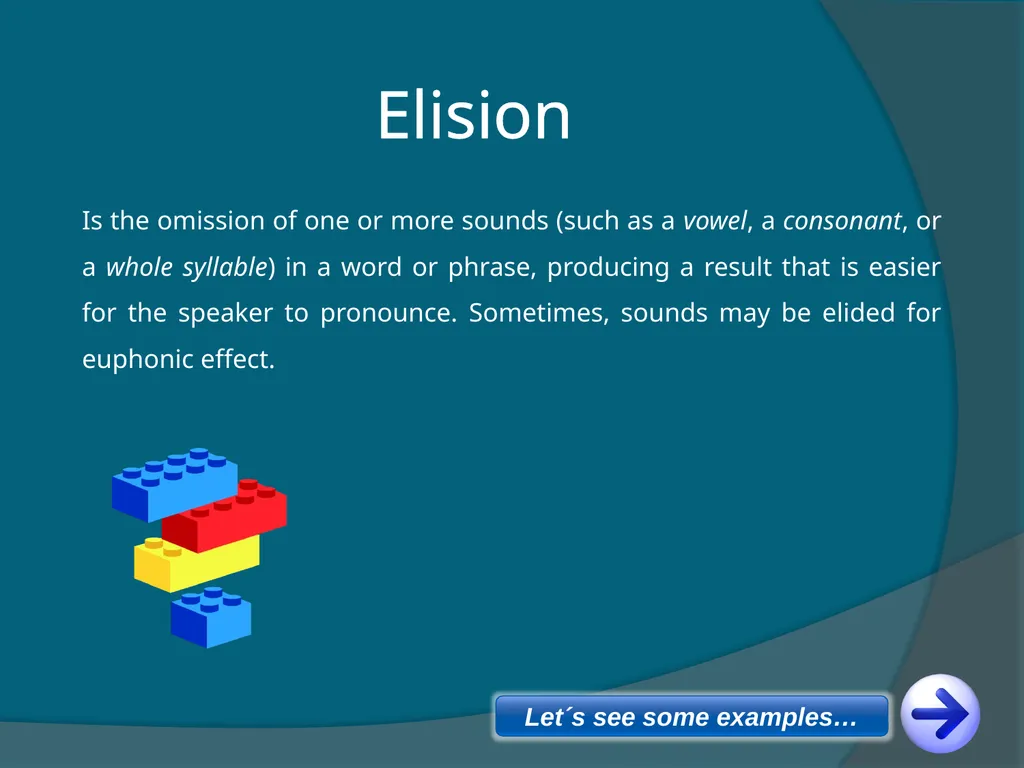
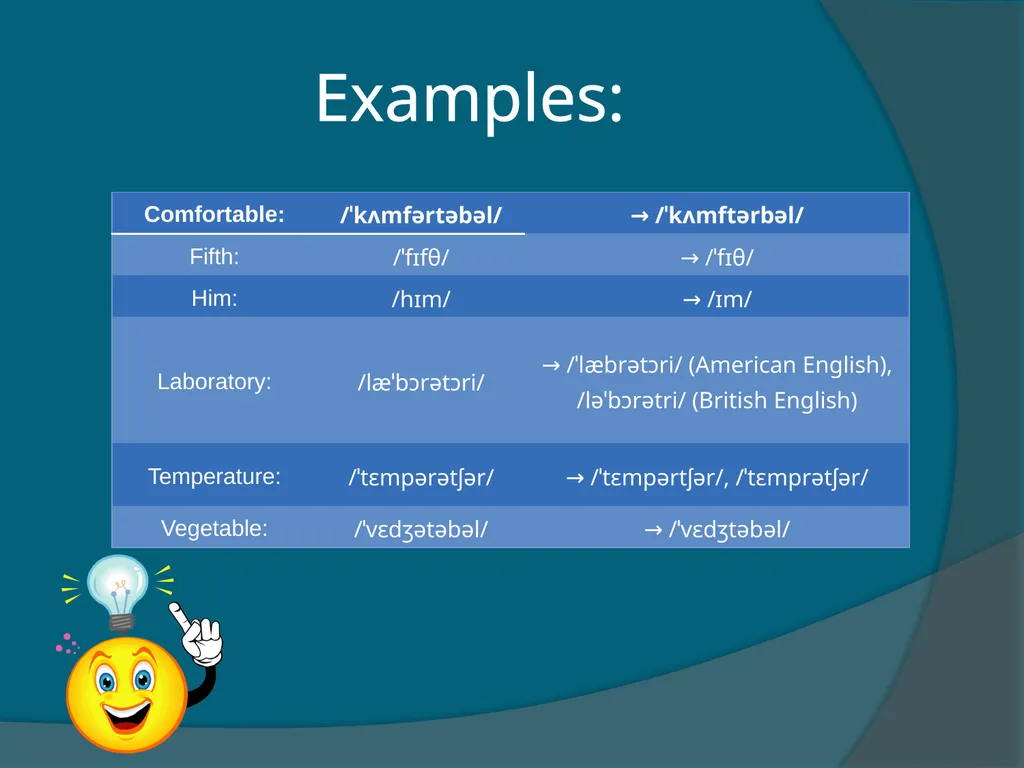
Elision Is the omission of one or more sounds (such as a vowel, a consonant, or a whole syllable) in a word or phrase, producing a result that is easier for the speaker to pronounce. Sometimes, sounds may be elided for euphonic effect. Let´s see some examples…<br>
08
Examples:<br>
09
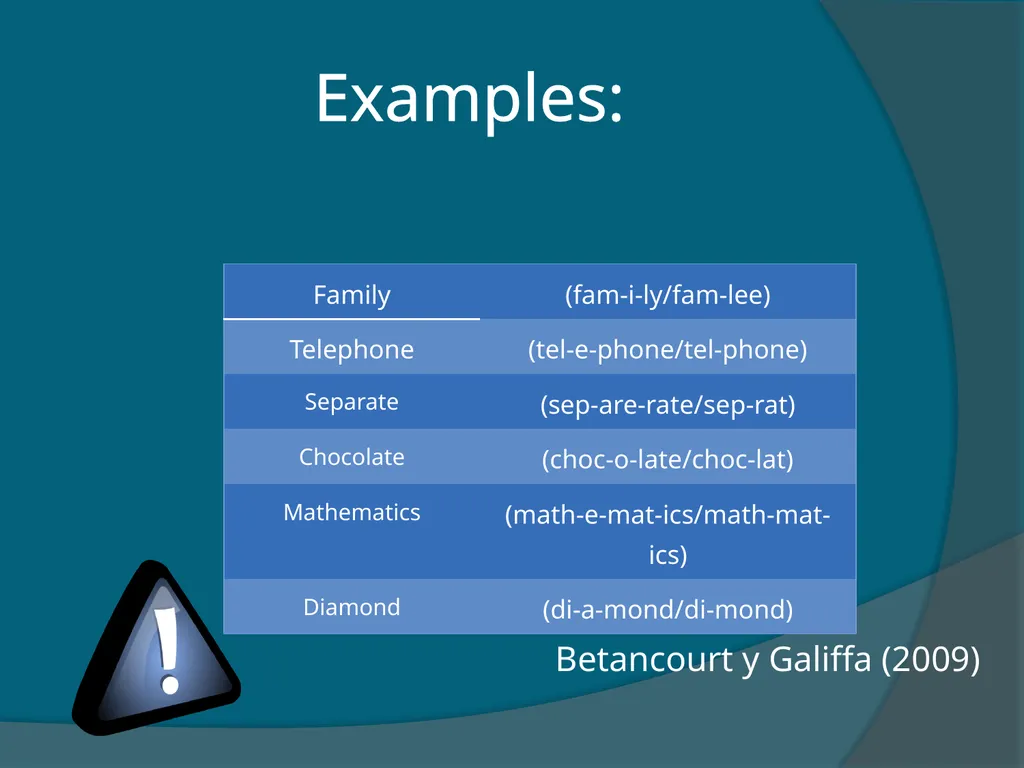
Assimilation It is a common phonological process by which the phonetics of a speech segment becomes more like that of another segment in a word (or at a word boundary). Let´s see some examples…<br>
10
Examples: Betancourt y Galiffa (2009)<br>
11
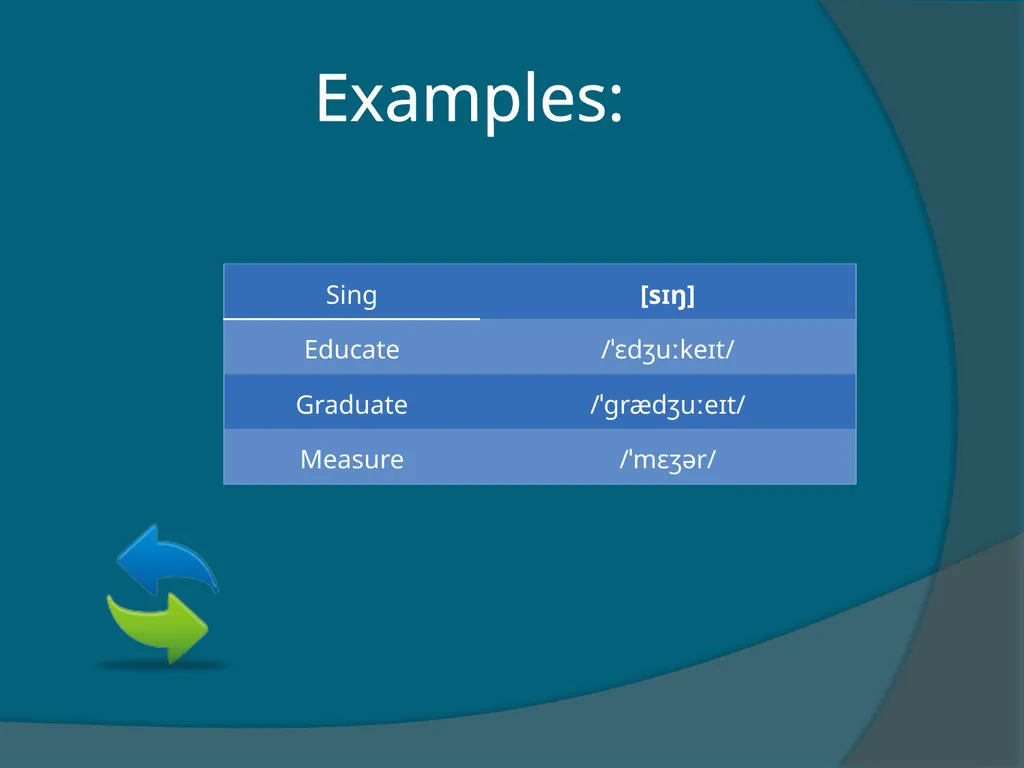
Coalescence It is a phonological process by which two neighboring sounds merge into a single sound that has properties of each of the two original sounds. Often, the resulting sound has the place of articulation of one of the source sounds and the manner of articulation of the other. Let´s see some examples…<br>
12
Examples:<br>
13
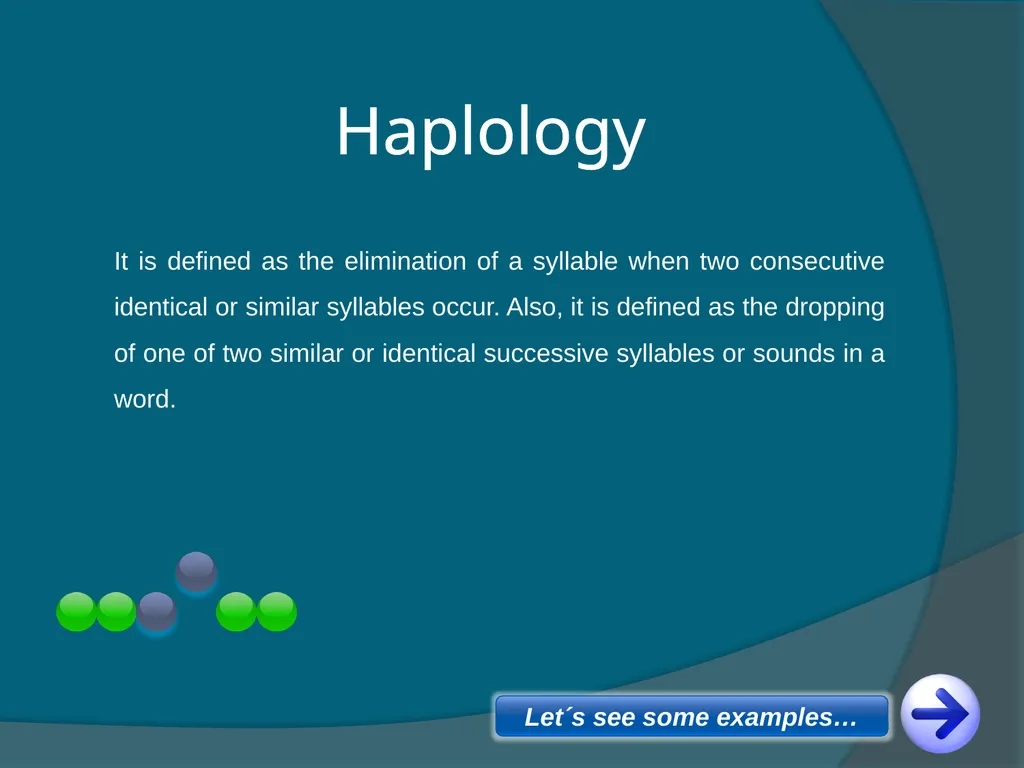
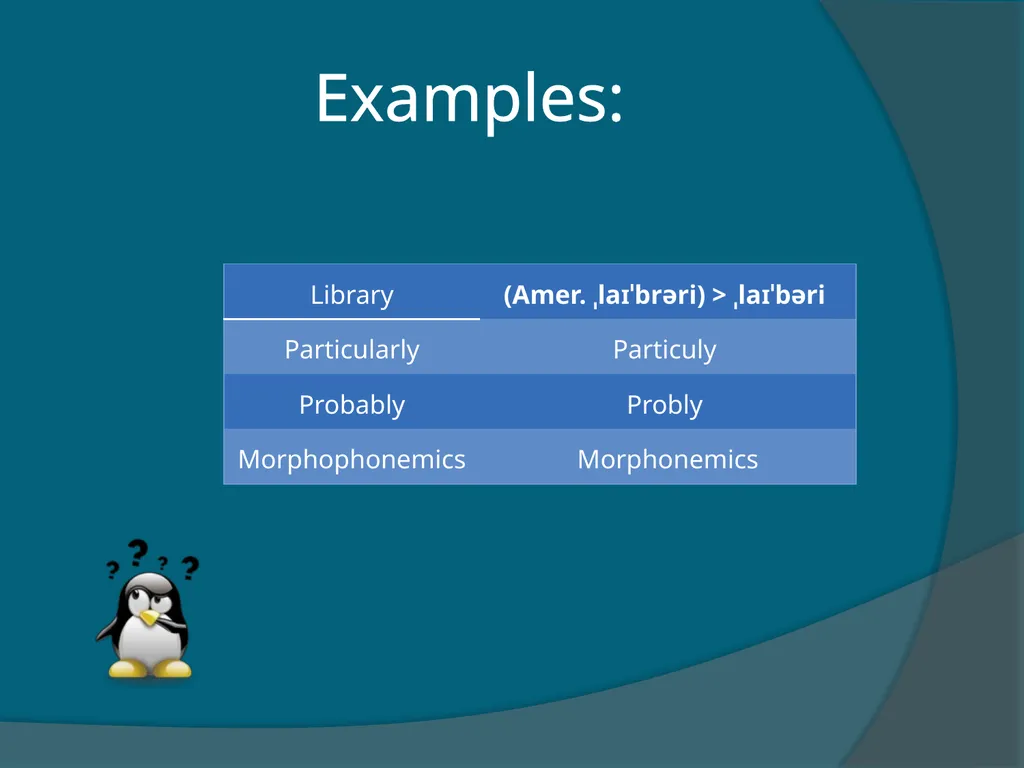
Haplology It is defined as the elimination of a syllable when two consecutive identical or similar syllables occur. Also, it is defined as the dropping of one of two similar or identical successive syllables or sounds in a word. Let´s see some examples…<br>
14
Examples:<br>
15
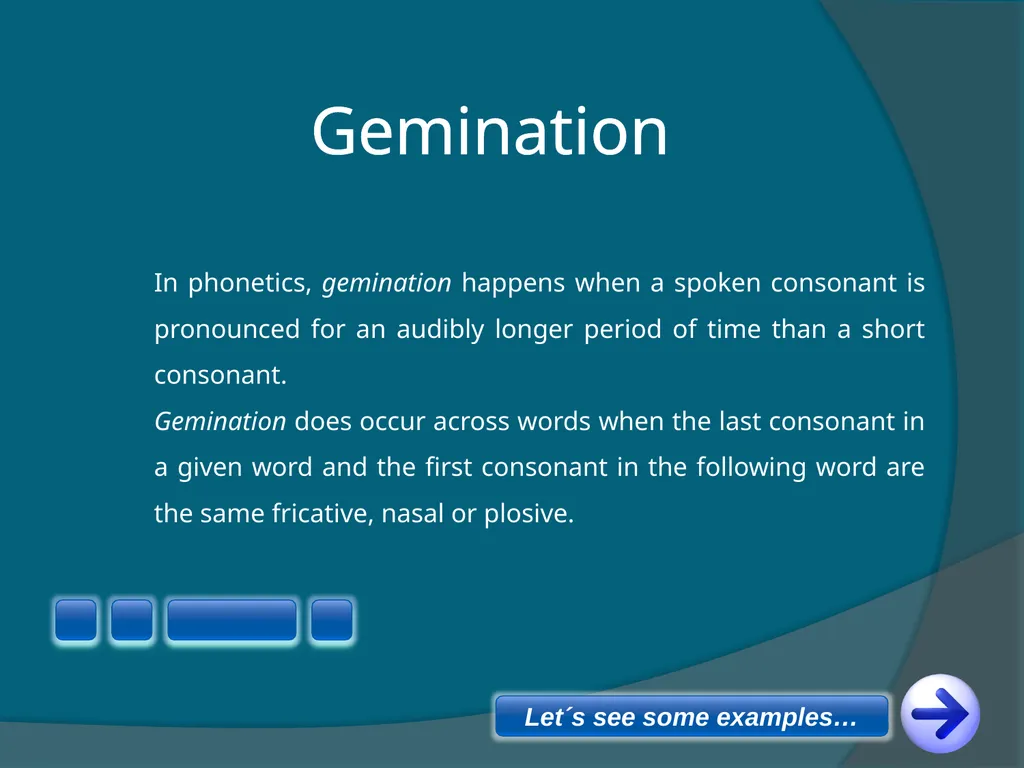
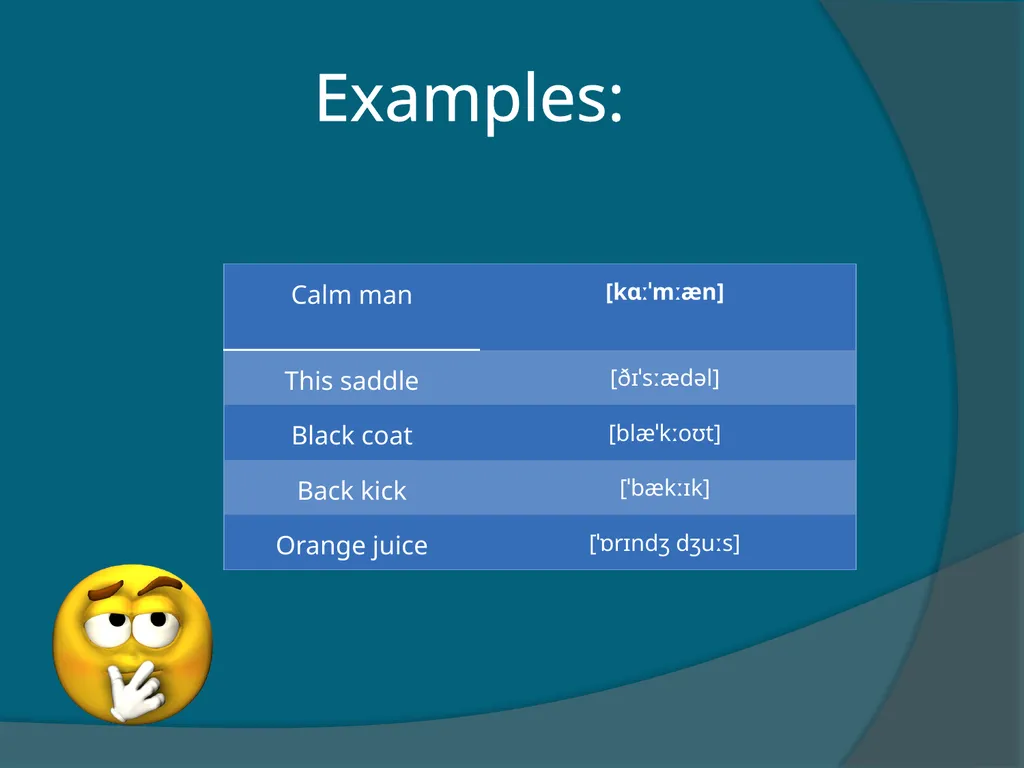
Gemination Let´s see some examples… In phonetics, gemination happens when a spoken consonant is pronounced for an audibly longer period of time than a short consonant.
Gemination does occur across words when the last consonant in a given word and the first consonant in the following word are the same fricative, nasal or plosive.<br>