Physical Activity Guidelines Essential Question: How can I develop a positive attitude toward physical activity and exercise to improve personal fitness and health? PHYSICAL ACTIVITY GUIDELINES US Department of Health and Human Services,
"Physical Activity Guidelines Essential Question:" is the property of its rightful owner. Permission is granted to
download and print the materials on this website for personal, non-commercial use only, and to display it
on your personal computer provided you do not modify the materials and that you retain all copyright
notices contained in the materials. By downloading content from our website, you accept the terms of this
agreement.
Presentation Transcript
01
Physical Activity Guidelines Essential Question: How can I develop a positive attitude toward physical activity and exercise to improve personal fitness and health?<br>
02
PHYSICAL ACTIVITY GUIDELINES US Department of Health and Human Services, recommend children and adolescents ages 6 through 17 get at least 60 minutes of moderate-to-vigorous physical activity daily.
Regular physical activity in childhood and adolescence is important for:
Promoting lifelong health and well-being
Developing a positive attitude toward movement and exercise
Preventing risk factors for chronic disease<br>
03
TYPES OF PHYSICAL ACTIVITY Aerobic
Most activity minutes should be moderate to vigorous aerobic intensity that increases heart rate, respiration, and perspiration.
Muscle & Bone Strengthening
Children and adolescents should include bone and muscle strengthening activities 3 or more days a week.<br>
04
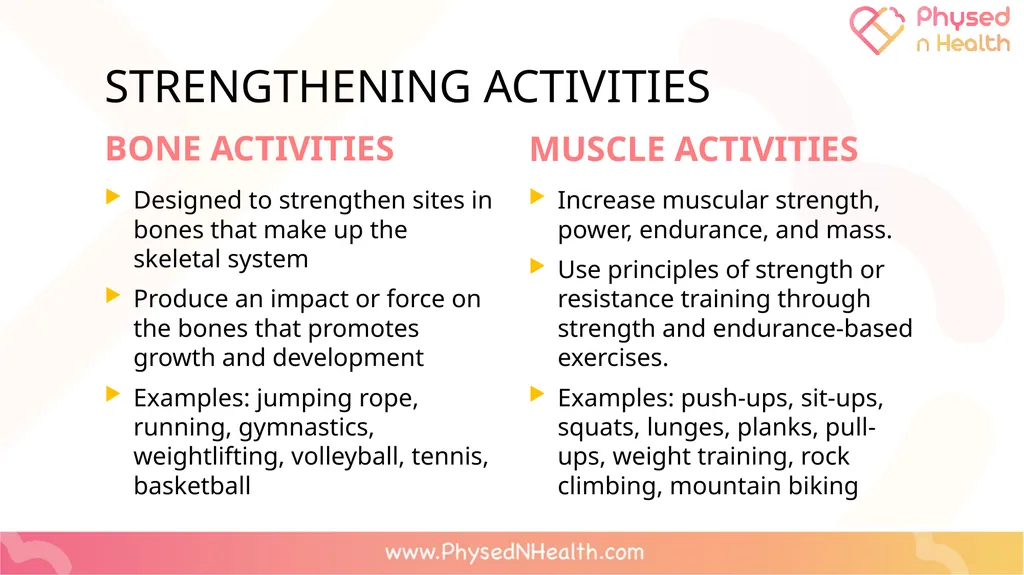
STRENGTHENING ACTIVITIES BONE ACTIVITIES Designed to strengthen sites in bones that make up the skeletal system
Produce an impact or force on the bones that promotes growth and development
Examples: jumping rope, running, gymnastics, weightlifting, volleyball, tennis, basketball MUSCLE ACTIVITIES Increase muscular strength, power, endurance, and mass.
Use principles of strength or resistance training through strength and endurance-based exercises.
Examples: push-ups, sit-ups, squats, lunges, planks, pull-ups, weight training, rock climbing, mountain biking<br>
05
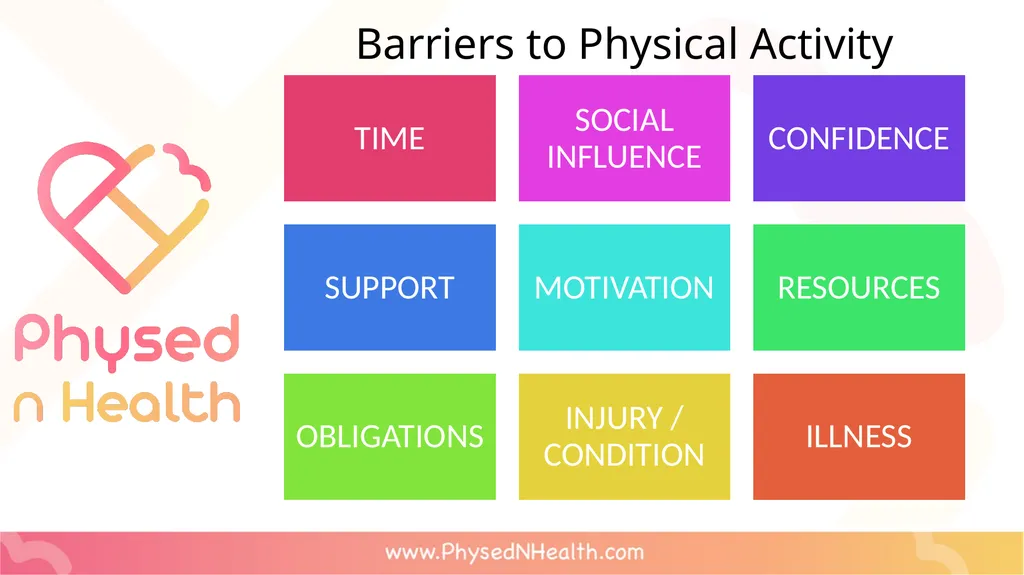
Barriers to Physical Activity<br>
06
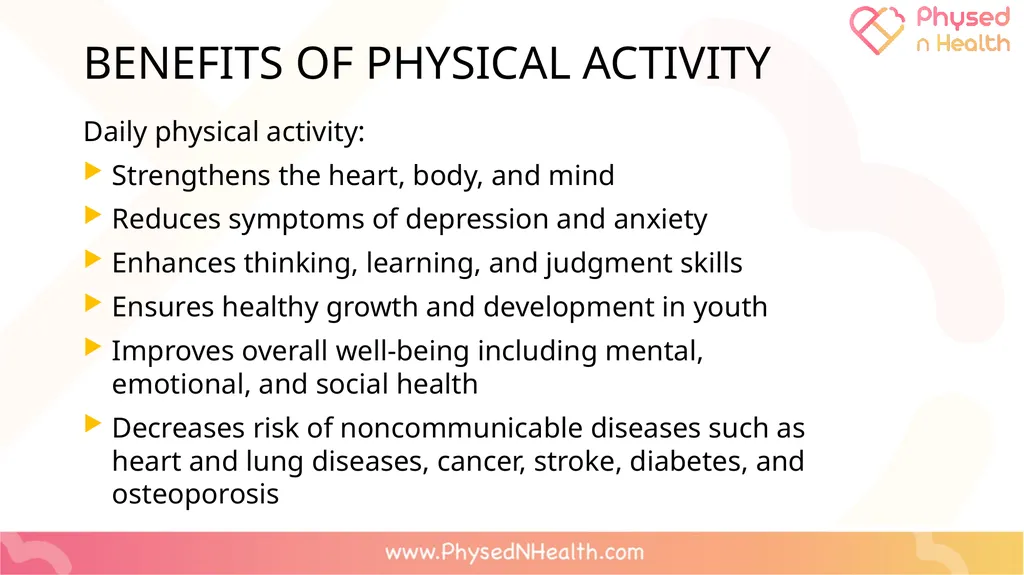
Benefits of Physical Activity Daily physical activity:
Strengthens the heart, body, and mind
Reduces symptoms of depression and anxiety
Enhances thinking, learning, and judgment skills
Ensures healthy growth and development in youth
Improves overall well-being including mental, emotional, and social health
Decreases risk of noncommunicable diseases such as heart and lung diseases, cancer, stroke, diabetes, and osteoporosis<br>
07
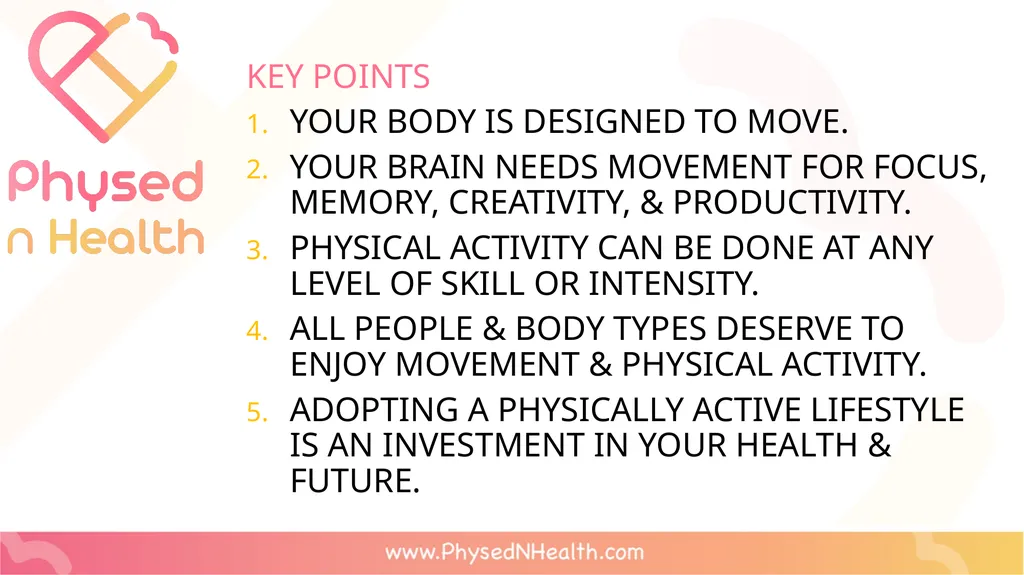
Key points
Your body is designed to move.
Your brain needs movement for focus, memory, creativity, & productivity.
Physical activity can be done at any level of skill or intensity.
All people & body types deserve to enjoy movement & physical activity.
Adopting a physically active lifestyle is an investment in your health & future.<br>
08
ADULTS & PHYSICAL ACTIVITY Adults aged 18 and above need:
At least 150–300 minutes of moderate-intensity aerobic physical activity per week;
Or about 75–150 minutes of vigorous-intensity aerobic physical activity;
Or an equivalent combination of moderate- and vigorous-intensity activity throughout the week<br>
09
ADULTS & PHYSICAL ACTIVITY Adults aged 18 and above need muscle-strengthening activities involving all major muscle groups on 2 or more days a week.
Adults may increase aerobic activity to more than 300 minutes for additional health benefits.
Building habits that promote daily physical activity and regular exercise significantly improves health, happiness, and life expectancy.<br>
10
Essential Question: How can I develop a positive attitude toward physical activity and exercise to improve personal fitness and health? Learning Assessment:
ANALYZING PERSONAL BEHAVIORS
& BARRIERS FOR PHYSICAL ACTIVITY<br>