
Plans for Reconstruction Terms and People





Description: Plans for Reconstruction Terms and People Reconstruction period in which the Union tried to readmit the Southern states, rebuild the economy, and obtain rights for former slaves. Radical Republicans Congressmen who supported full
Related Topics
Download Presentation
"Plans for Reconstruction Terms and People" is the property of its rightful owner. Permission is granted to download and print the materials on this website for personal, non-commercial use only, and to display it on your personal computer provided you do not modify the materials and that you retain all copyright notices contained in the materials. By downloading content from our website, you accept the terms of this agreement.
Presentation Transcript
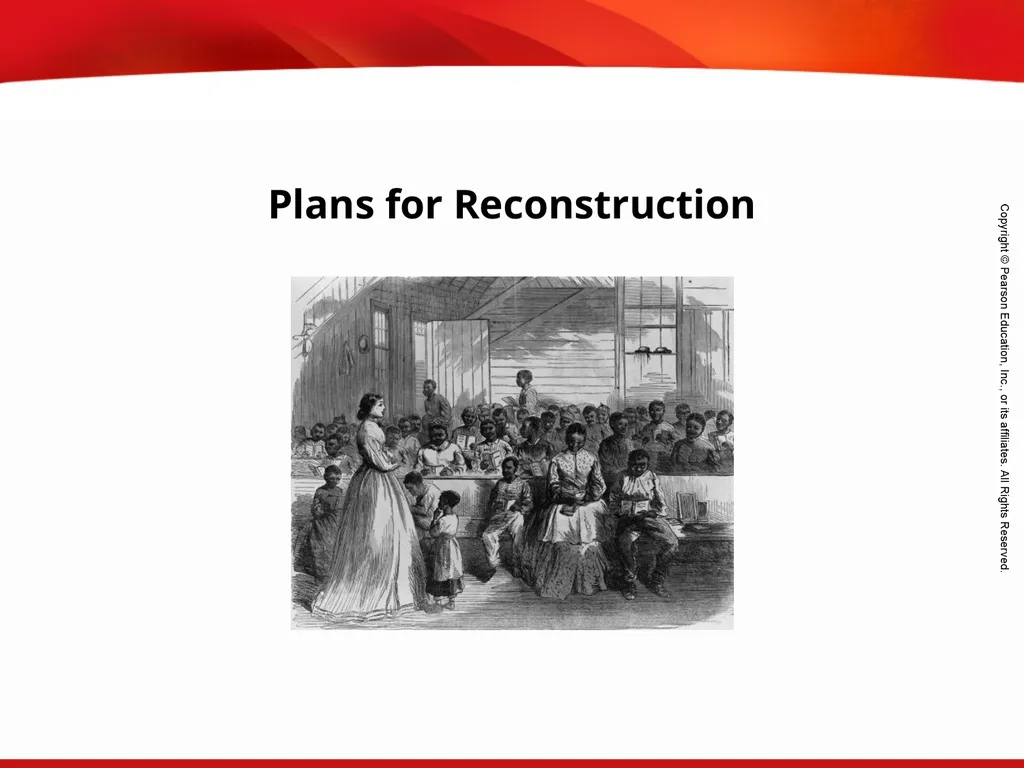
slide1. Plans for Reconstruction<br>
slide2. Terms and People Reconstruction – period in which the Union tried to readmit the Southern states, rebuild the economy, and obtain rights for former slaves.
Radical Republicans – Congressmen who supported full citizenship rights for African Americans along with a harsh punishment for Confederates
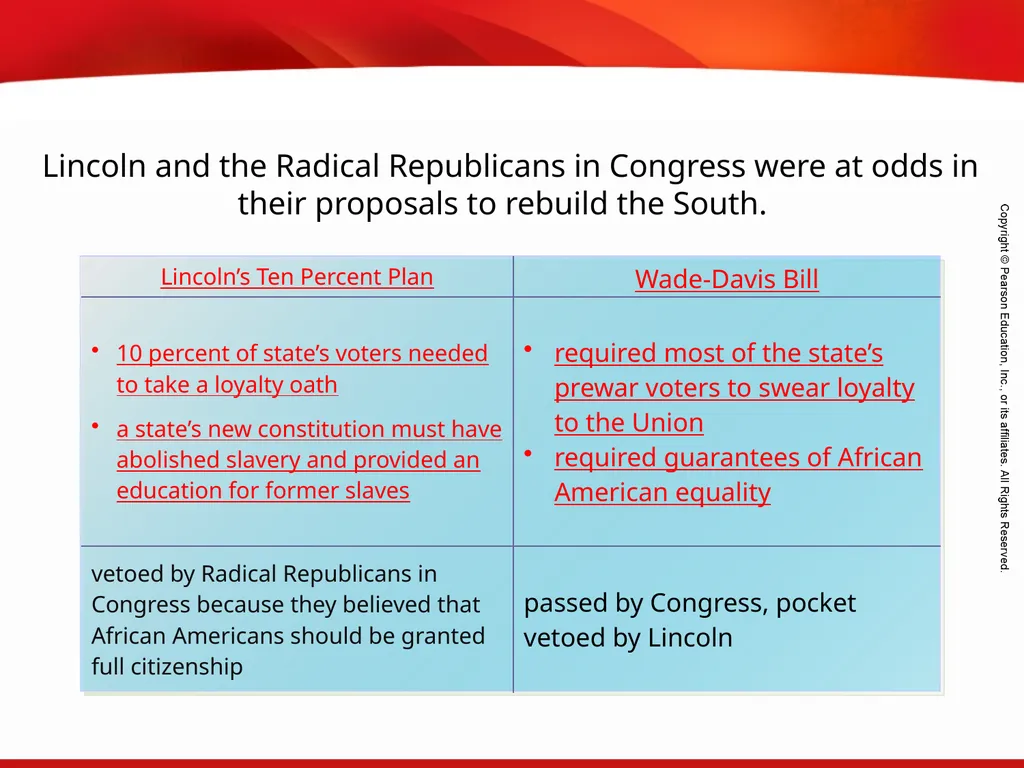
Wade-Davis Bill – required that a majority of prewar voters in the Confederate states swear loyalty to the Union before restoration could begin<br>
slide3. Freedmen’s Bureau – organization that provided food, clothing, healthcare, and education for Southern refugees – Let by Oliver O. Howard
Andrew Johnson – Lincoln’s Vice President; became President after Lincoln’s assassination; supported the quick readmission of Southern states to the Union but did not worry about African Americans’ rights.
black code – law passed in southern states restricting the freedoms of African Americans; restored pre-emancipation system of slaef relations
Civil Rights Act of 1866 – law that established federal guarantees of civil rights for all citizens Terms and People (continued)<br>
slide4. Fourteenth Amendment – 1868 constitutional amendment which defined citizenship and guarantees citizens equality under the law; also known as the Civil Rights Act of 1866
impeach – accusation against a public official of wrong-doing in office
Fifteenth Amendment – 1870 constitutional amendment that guaranteed voting rights regardless of race or previous condition of servitude; African American men could vote. Terms and People (continued)<br>
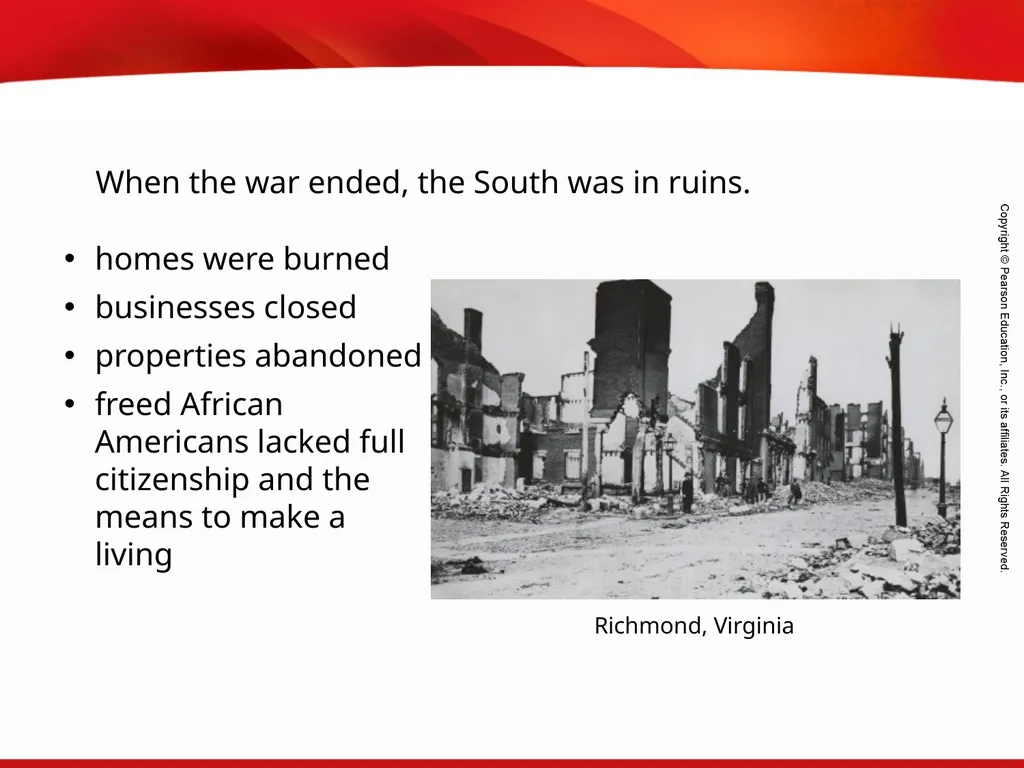
slide5. When the war ended, the South was in ruins. homes were burned
businesses closed
properties abandoned
freed African Americans lacked full citizenship and the means to make a living Richmond, Virginia<br>
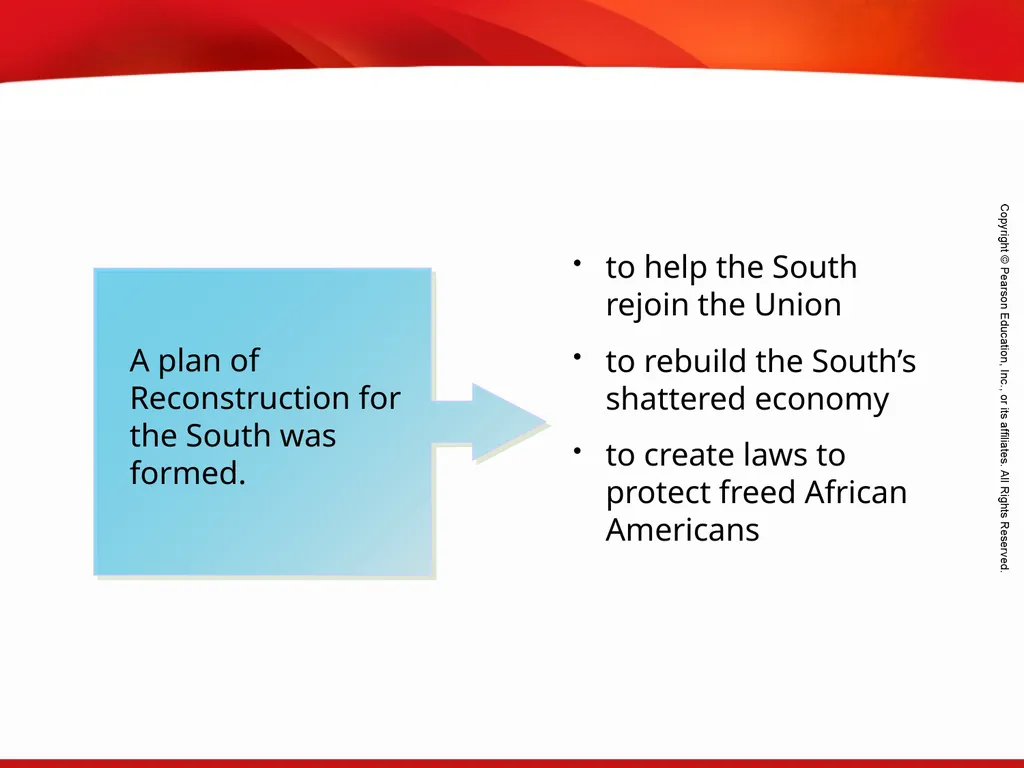
slide6. to help the South rejoin the Union
to rebuild the South’s shattered economy
to create laws to protect freed African Americans A plan of Reconstruction for the South was formed.<br>
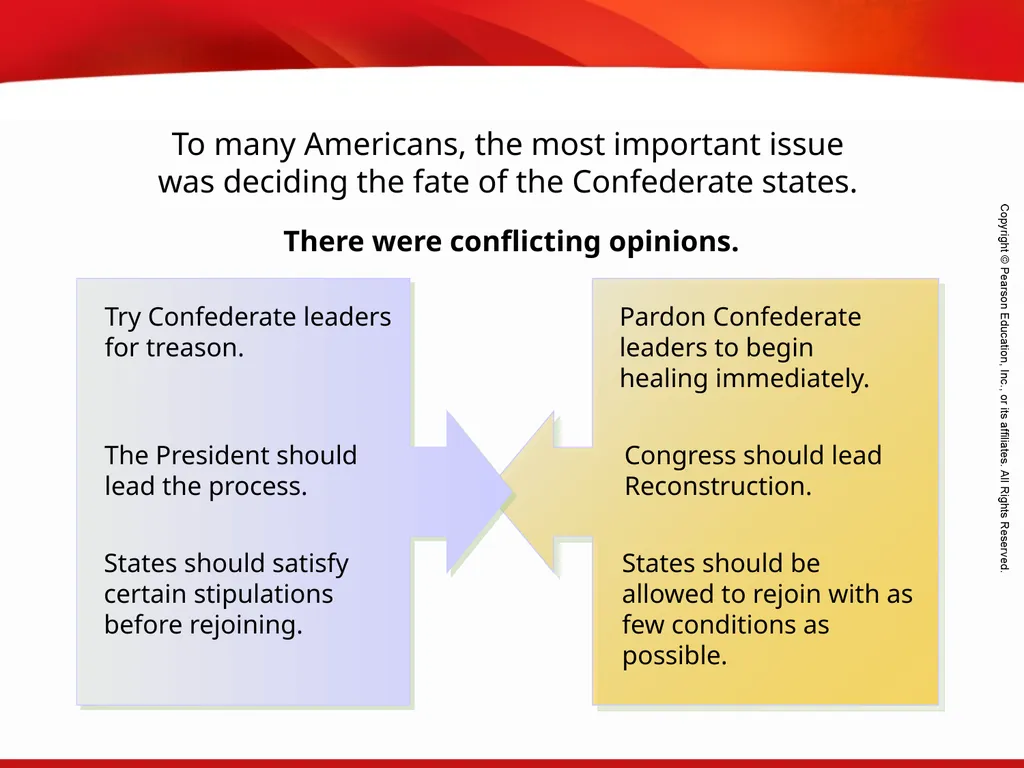
slide7. To many Americans, the most important issue was deciding the fate of the Confederate states. Try Confederate leaders for treason. Pardon Confederate leaders to begin healing immediately. The President should lead the process. Congress should lead Reconstruction. States should satisfy certain stipulations before rejoining. States should be allowed to rejoin with as few conditions as possible. There were conflicting opinions.<br>
slide8. With the South’s economy destroyed, land became the most valuable asset. Who should control it was hotly debated. Some northerners proposed the federal government should redistribute the land to former slaves.
The plan sought to revitalize the South’s economy and provide income for African Americans. Southern landowners fought government redistribution of their land.
Many northerners felt the confiscation of property violated the Constitution. Forty acres and a mule<br>
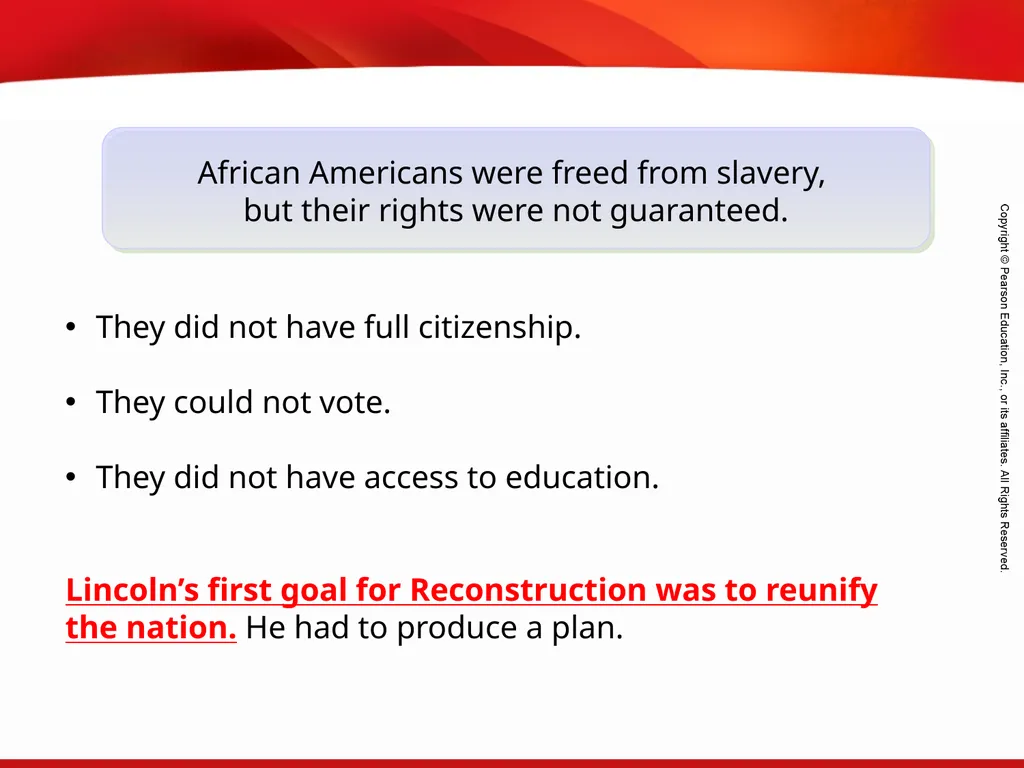
slide9. African Americans were freed from slavery, but their rights were not guaranteed. They did not have full citizenship.
They could not vote.
They did not have access to education.
Lincoln’s first goal for Reconstruction was to reunify the nation. He had to produce a plan.<br>
slide10. Lincoln and the Radical Republicans in Congress were at odds in their proposals to rebuild the South.<br>
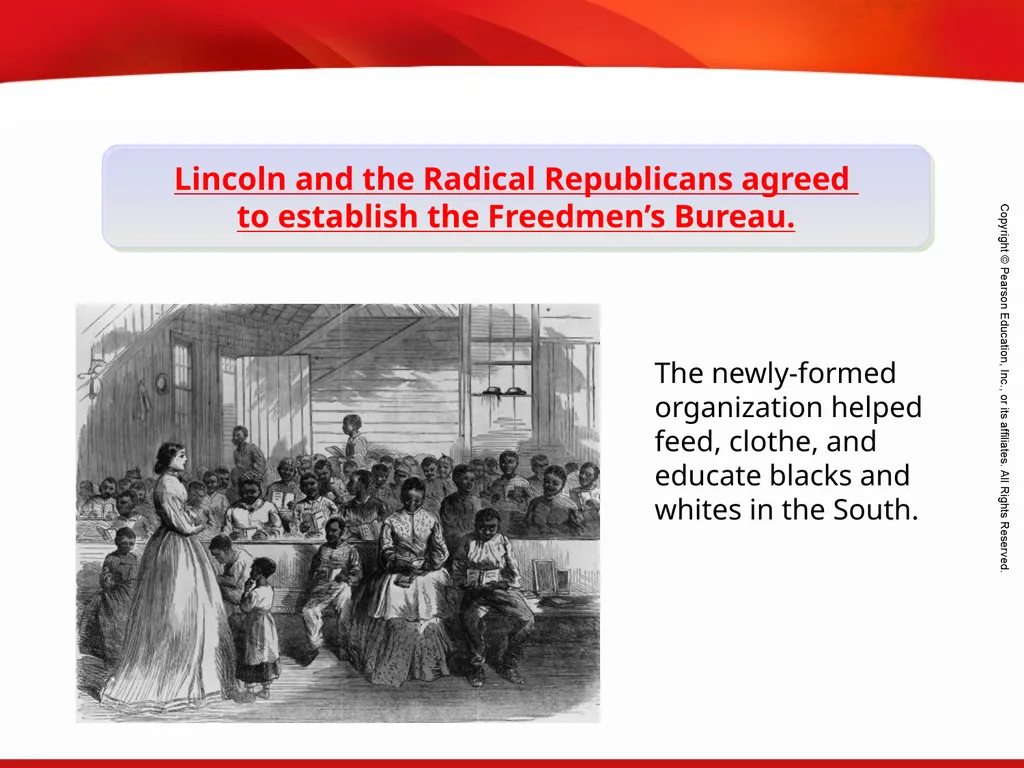
slide11. Lincoln and the Radical Republicans agreed to establish the Freedmen’s Bureau. The newly-formed organization helped feed, clothe, and educate blacks and whites in the South.<br>
slide12. He pardoned any Confederate who swore allegiance to the Union and the Constitution.
Each Southern state needed to ratify the Thirteenth Amendment.
All state constitutions had to ban slavery After Lincoln’s death, President Andrew Johnson ALSO wanted to restore the status of the southern states.<br>
slide13. By December 1865, most southern states had met Johnson’s requirements for readmission to the Union. All southern states instituted black codes.
Many states specifically limited the vote to white men.
Some states sent Confederate officials to Congress.
Vagrancy laws – if blacks didn’t have a job, they could be arrested and jailed. During the required state conventions, however, southern states tried to rebuild their prewar world.<br>
slide14. Newly arriving southern state representatives were not seated.
A committee was created to investigate how former slaves were being treated. Political tensions boiled up in Congress.<br>
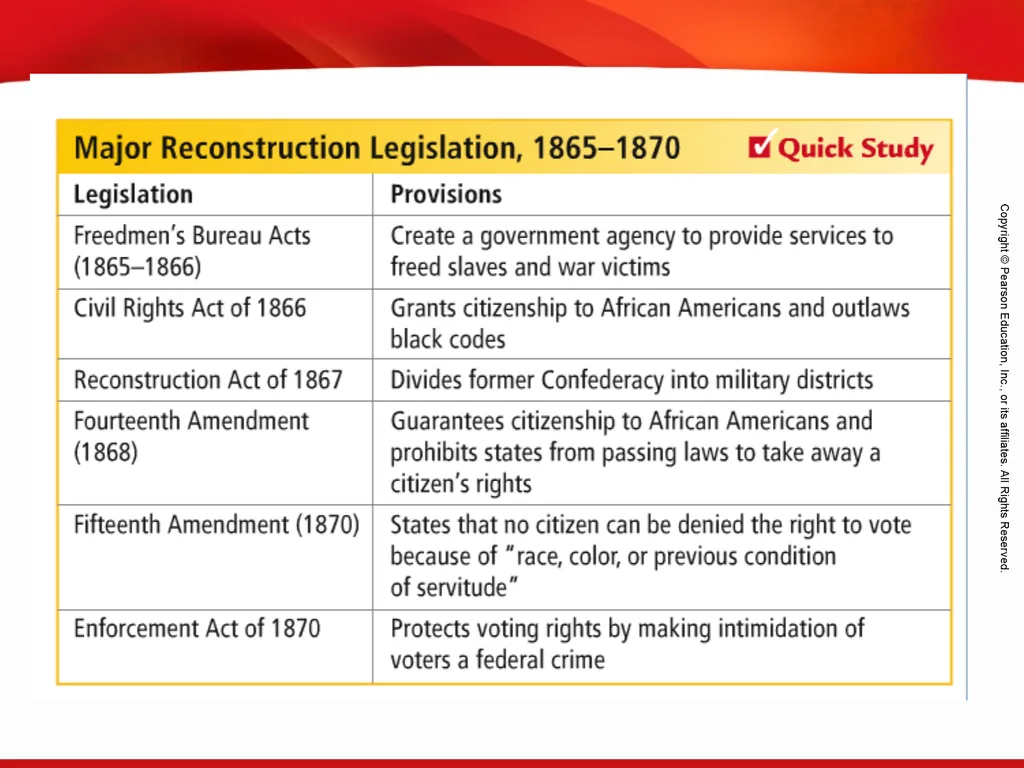
slide15. The South’s disregard of Reconstruction efforts angered moderates and Radical Republicans. the Civil Rights Act of 1866. – vetoed by Johnson; Congress voted again; 2/3 of vote – first time overturning Presidential veto
the Fourteenth Amendment.
the division of the South into five military districts. (Military Reconstruction Act of 1867) In response, the Radical Republicans in Congress passed new legislation over President Johnson’s veto. The legislation included<br>
slide16. Equality under the law for all citizens
States that refused to allow black people to vote would risk losing seats in the House of Representatives
Confederate officials could not hold federal or state offices<br>
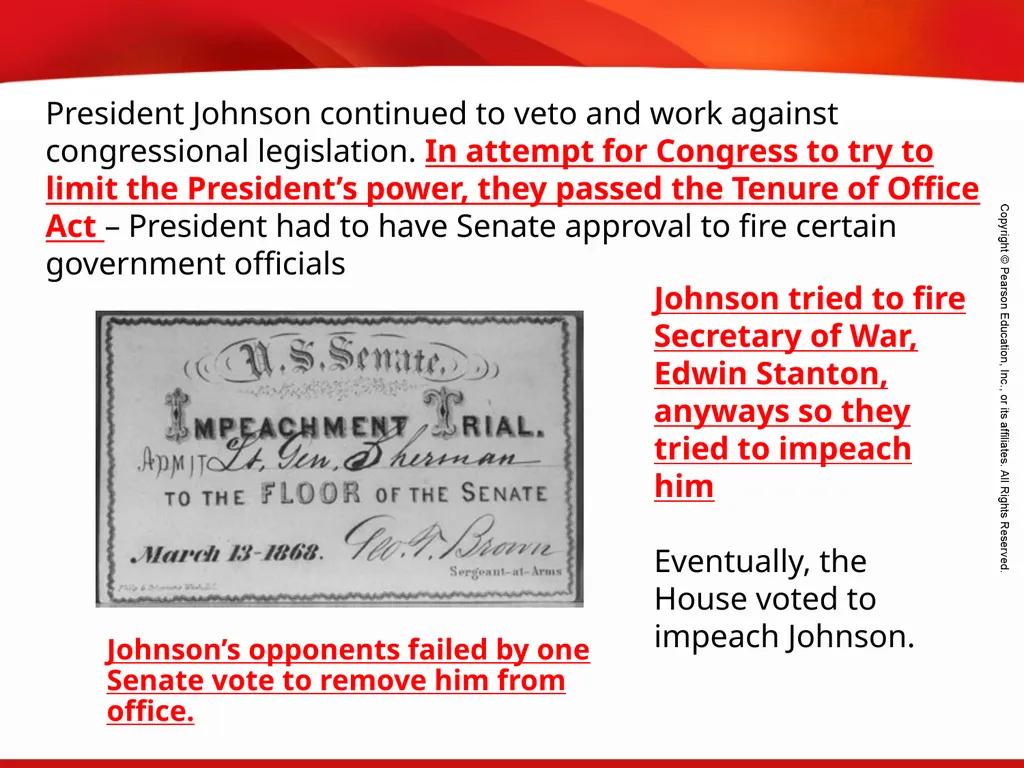
slide17. President Johnson continued to veto and work against congressional legislation. In attempt for Congress to try to limit the President’s power, they passed the Tenure of Office Act – President had to have Senate approval to fire certain government officials Johnson’s opponents failed by one Senate vote to remove him from office. Johnson tried to fire Secretary of War, Edwin Stanton, anyways so they tried to impeach him
Eventually, the House voted to impeach Johnson.<br>
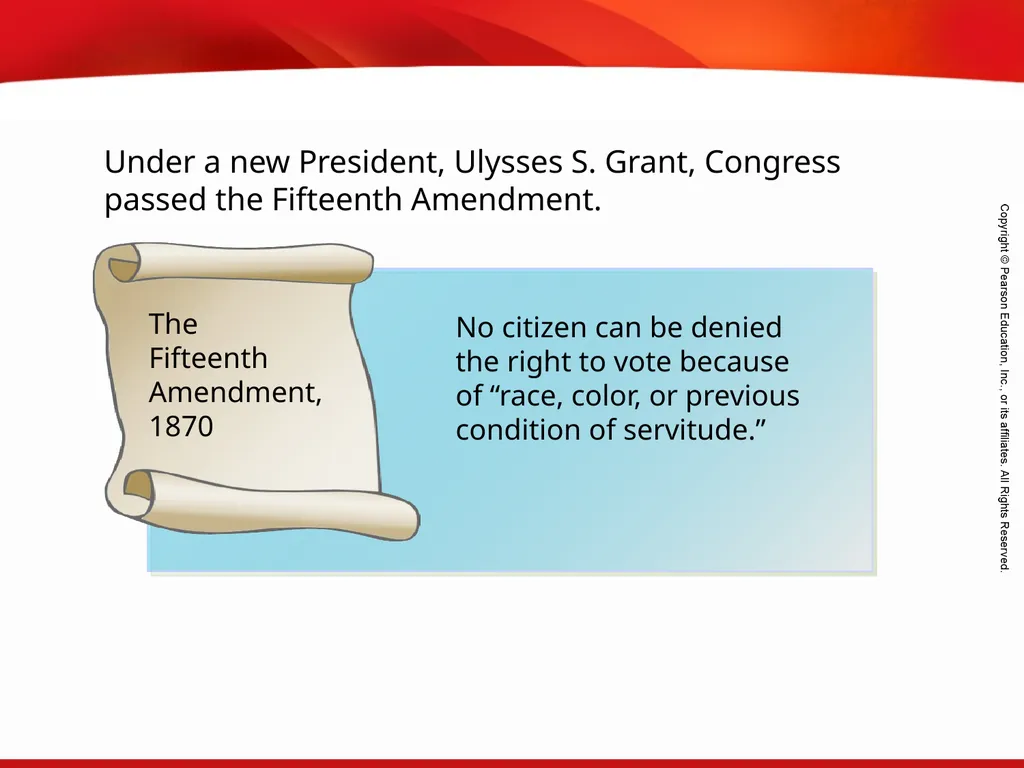
slide18. Under a new President, Ulysses S. Grant, Congress passed the Fifteenth Amendment. No citizen can be denied the right to vote because of “race, color, or previous condition of servitude.”<br>
slide2. Terms and People Reconstruction – period in which the Union tried to readmit the Southern states, rebuild the economy, and obtain rights for former slaves.
Radical Republicans – Congressmen who supported full citizenship rights for African Americans along with a harsh punishment for Confederates
Wade-Davis Bill – required that a majority of prewar voters in the Confederate states swear loyalty to the Union before restoration could begin<br>
slide3. Freedmen’s Bureau – organization that provided food, clothing, healthcare, and education for Southern refugees – Let by Oliver O. Howard
Andrew Johnson – Lincoln’s Vice President; became President after Lincoln’s assassination; supported the quick readmission of Southern states to the Union but did not worry about African Americans’ rights.
black code – law passed in southern states restricting the freedoms of African Americans; restored pre-emancipation system of slaef relations
Civil Rights Act of 1866 – law that established federal guarantees of civil rights for all citizens Terms and People (continued)<br>
slide4. Fourteenth Amendment – 1868 constitutional amendment which defined citizenship and guarantees citizens equality under the law; also known as the Civil Rights Act of 1866
impeach – accusation against a public official of wrong-doing in office
Fifteenth Amendment – 1870 constitutional amendment that guaranteed voting rights regardless of race or previous condition of servitude; African American men could vote. Terms and People (continued)<br>
slide5. When the war ended, the South was in ruins. homes were burned
businesses closed
properties abandoned
freed African Americans lacked full citizenship and the means to make a living Richmond, Virginia<br>
slide6. to help the South rejoin the Union
to rebuild the South’s shattered economy
to create laws to protect freed African Americans A plan of Reconstruction for the South was formed.<br>
slide7. To many Americans, the most important issue was deciding the fate of the Confederate states. Try Confederate leaders for treason. Pardon Confederate leaders to begin healing immediately. The President should lead the process. Congress should lead Reconstruction. States should satisfy certain stipulations before rejoining. States should be allowed to rejoin with as few conditions as possible. There were conflicting opinions.<br>
slide8. With the South’s economy destroyed, land became the most valuable asset. Who should control it was hotly debated. Some northerners proposed the federal government should redistribute the land to former slaves.
The plan sought to revitalize the South’s economy and provide income for African Americans. Southern landowners fought government redistribution of their land.
Many northerners felt the confiscation of property violated the Constitution. Forty acres and a mule<br>
slide9. African Americans were freed from slavery, but their rights were not guaranteed. They did not have full citizenship.
They could not vote.
They did not have access to education.
Lincoln’s first goal for Reconstruction was to reunify the nation. He had to produce a plan.<br>
slide10. Lincoln and the Radical Republicans in Congress were at odds in their proposals to rebuild the South.<br>
slide11. Lincoln and the Radical Republicans agreed to establish the Freedmen’s Bureau. The newly-formed organization helped feed, clothe, and educate blacks and whites in the South.<br>
slide12. He pardoned any Confederate who swore allegiance to the Union and the Constitution.
Each Southern state needed to ratify the Thirteenth Amendment.
All state constitutions had to ban slavery After Lincoln’s death, President Andrew Johnson ALSO wanted to restore the status of the southern states.<br>
slide13. By December 1865, most southern states had met Johnson’s requirements for readmission to the Union. All southern states instituted black codes.
Many states specifically limited the vote to white men.
Some states sent Confederate officials to Congress.
Vagrancy laws – if blacks didn’t have a job, they could be arrested and jailed. During the required state conventions, however, southern states tried to rebuild their prewar world.<br>
slide14. Newly arriving southern state representatives were not seated.
A committee was created to investigate how former slaves were being treated. Political tensions boiled up in Congress.<br>
slide15. The South’s disregard of Reconstruction efforts angered moderates and Radical Republicans. the Civil Rights Act of 1866. – vetoed by Johnson; Congress voted again; 2/3 of vote – first time overturning Presidential veto
the Fourteenth Amendment.
the division of the South into five military districts. (Military Reconstruction Act of 1867) In response, the Radical Republicans in Congress passed new legislation over President Johnson’s veto. The legislation included<br>
slide16. Equality under the law for all citizens
States that refused to allow black people to vote would risk losing seats in the House of Representatives
Confederate officials could not hold federal or state offices<br>
slide17. President Johnson continued to veto and work against congressional legislation. In attempt for Congress to try to limit the President’s power, they passed the Tenure of Office Act – President had to have Senate approval to fire certain government officials Johnson’s opponents failed by one Senate vote to remove him from office. Johnson tried to fire Secretary of War, Edwin Stanton, anyways so they tried to impeach him
Eventually, the House voted to impeach Johnson.<br>
slide18. Under a new President, Ulysses S. Grant, Congress passed the Fifteenth Amendment. No citizen can be denied the right to vote because of “race, color, or previous condition of servitude.”<br>