Plant Form Chapter 35 Meristems Meristematic tissues are clumps of small cells with dense cytoplasm and proportionately large nuclei. Elongation of roots and shoots takes place by repeated cell divisions and subsequent elongation by the
"Plant Form Chapter 35 Meristems Meristematic" is the property of its rightful owner. Permission is granted to
download and print the materials on this website for personal, non-commercial use only, and to display it
on your personal computer provided you do not modify the materials and that you retain all copyright
notices contained in the materials. By downloading content from our website, you accept the terms of this
agreement.
Presentation Transcript
01
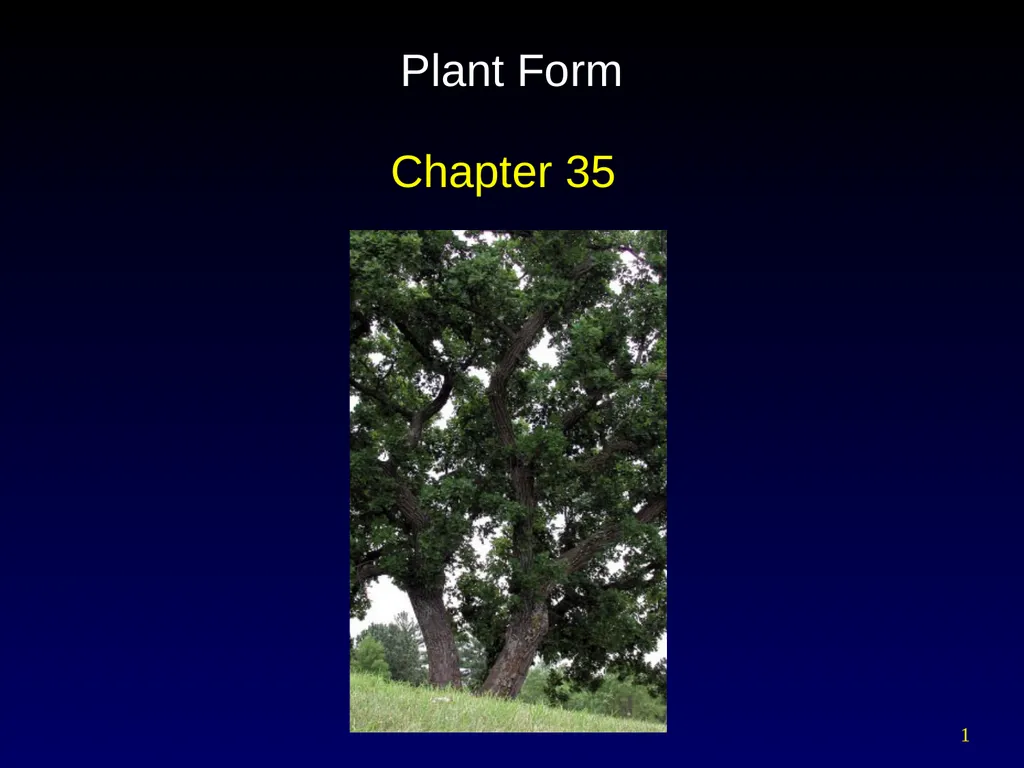
Plant Form Chapter 35<br>
02
Meristems Meristematic tissues are clumps of small cells with dense cytoplasm and proportionately large nuclei.
Elongation of roots and shoots takes place by repeated cell divisions and subsequent elongation by the apical meristem.
In some species, lateral meristems produce an increase in girth.<br>
03
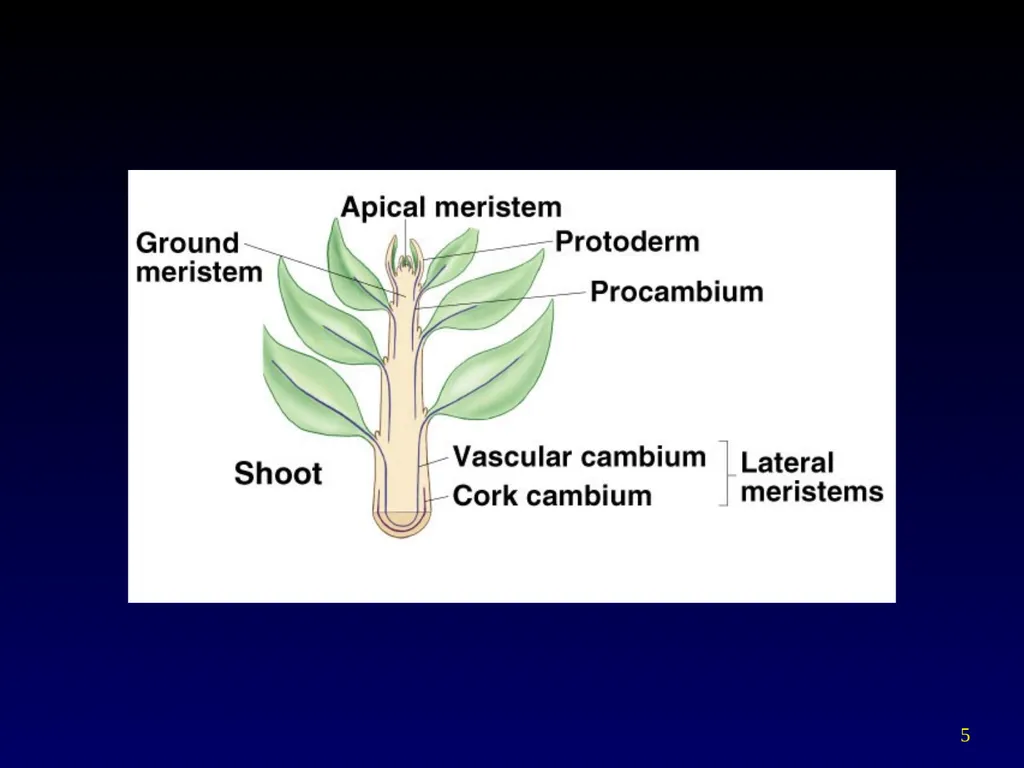
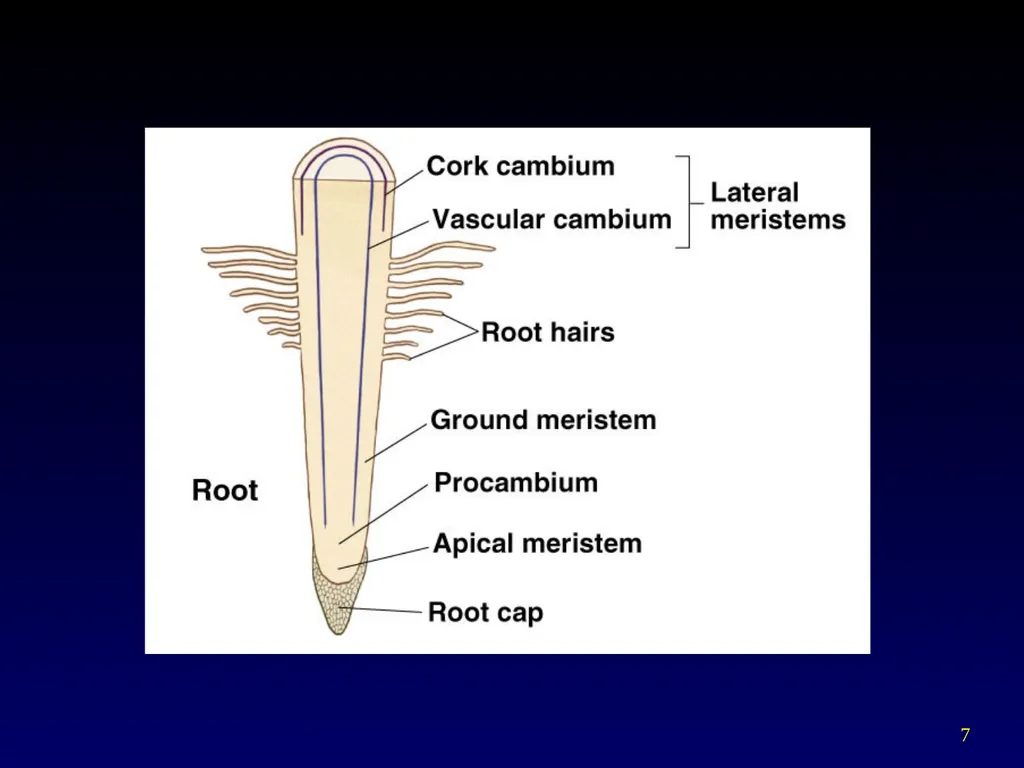
Meristems Apical meristems
located at tip of stems and roots
Plant tissues that result from primary growth are called primary tissues.
make up primary plant body
root apical meristem protected by root cap<br>
04
Apical Meristems Give rise to three types of primary meristems
protoderm - forms epidermis
procambium - forms primary vascular tissue
ground meristem - differentiates into ground tissue
intercalary meristems may arise in stem internodes<br>
05
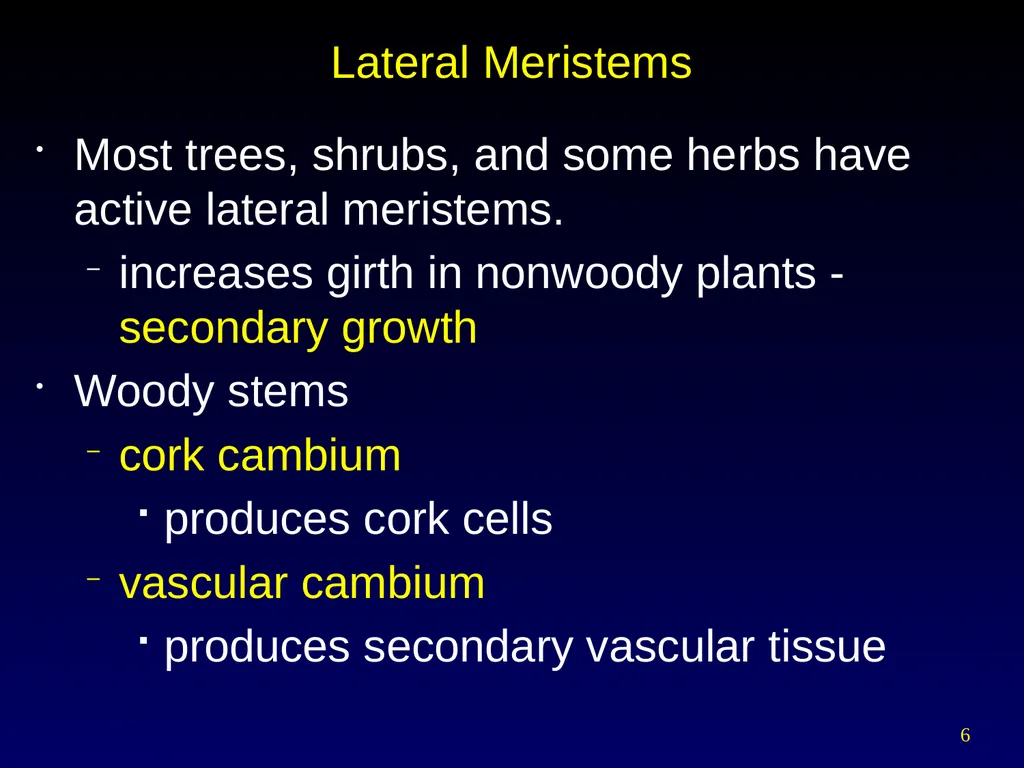
Lateral Meristems Most trees, shrubs, and some herbs have active lateral meristems.
increases girth in nonwoody plants - secondary growth
Woody stems
cork cambium
produces cork cells
vascular cambium
produces secondary vascular tissue<br>
06
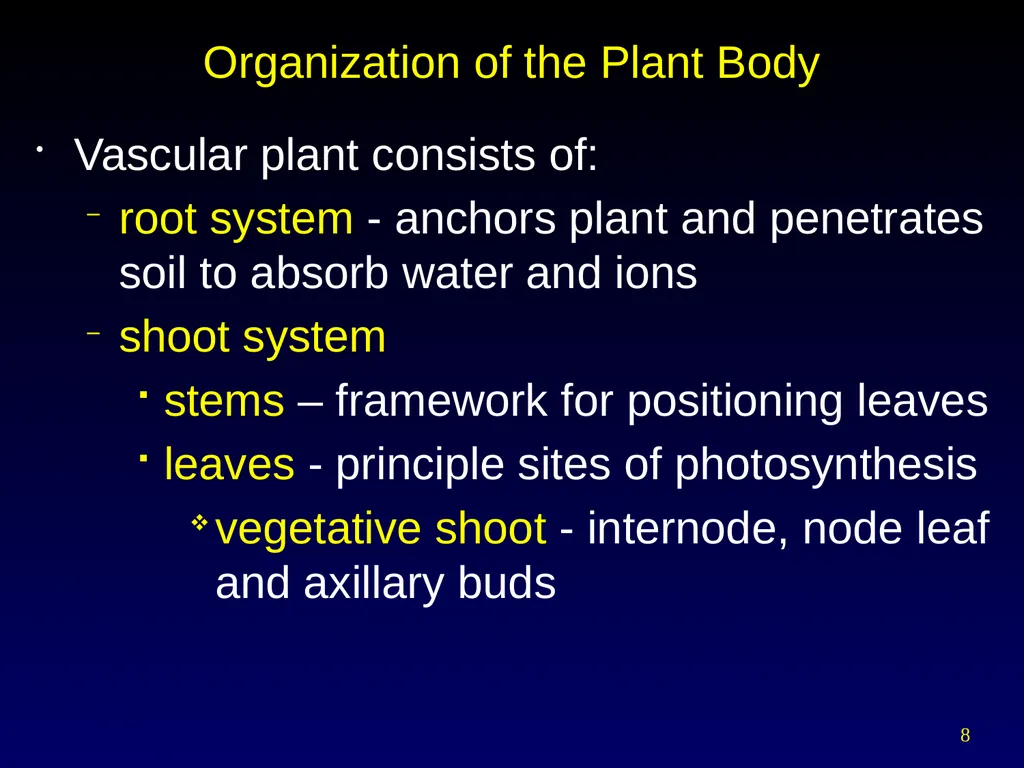
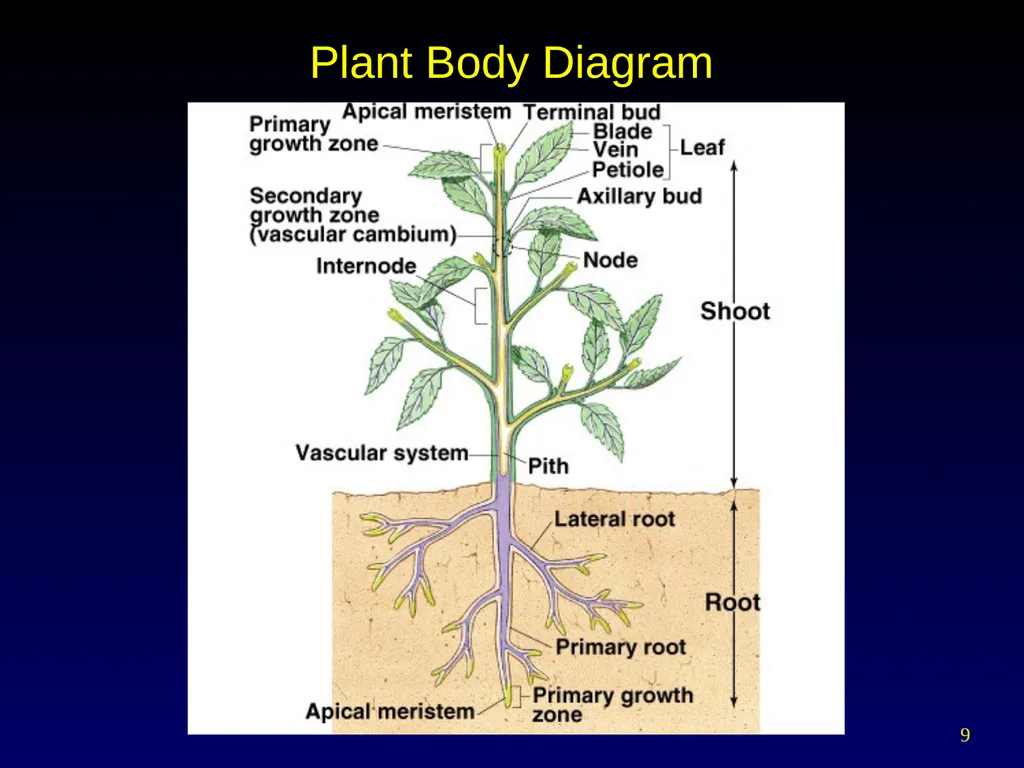
Organization of the Plant Body Vascular plant consists of:
root system - anchors plant and penetrates soil to absorb water and ions
shoot system
stems – framework for positioning leaves
leaves - principle sites of photosynthesis
vegetative shoot - internode, node leaf and axillary buds<br>
07
Plant Body Diagram<br>
08
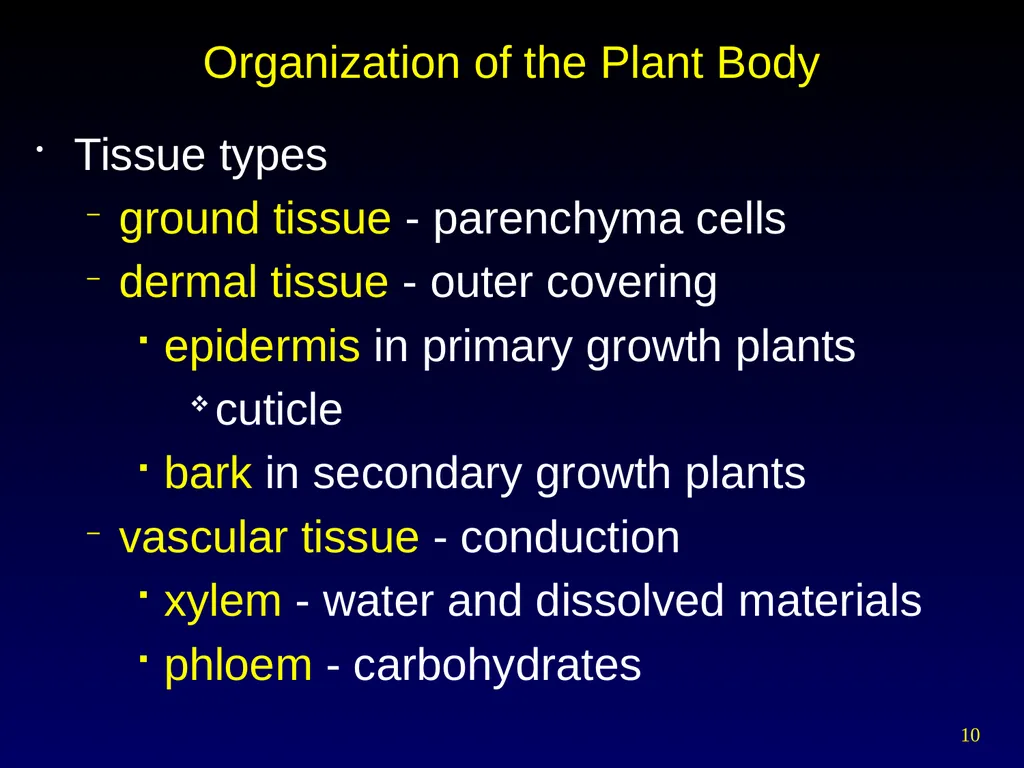
Organization of the Plant Body Tissue types
ground tissue - parenchyma cells
dermal tissue - outer covering
epidermis in primary growth plants
cuticle
bark in secondary growth plants
vascular tissue - conduction
xylem - water and dissolved materials
phloem - carbohydrates<br>
09
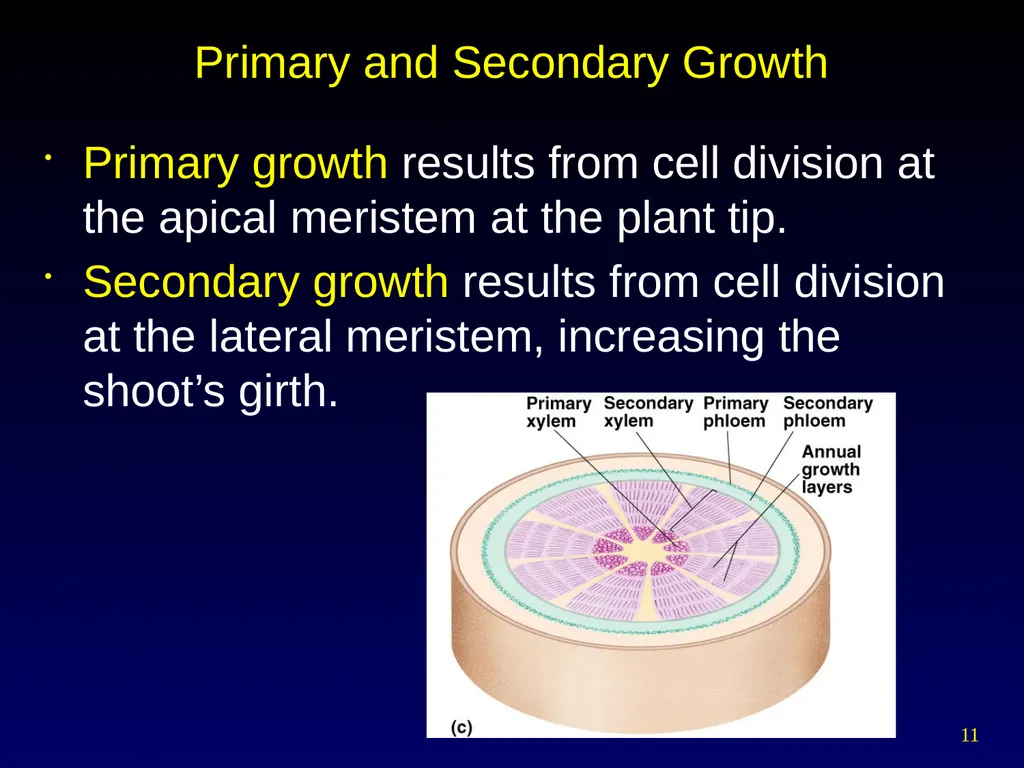
Primary and Secondary Growth Primary growth results from cell division at the apical meristem at the plant tip.
Secondary growth results from cell division at the lateral meristem, increasing the shoot’s girth.<br>
10
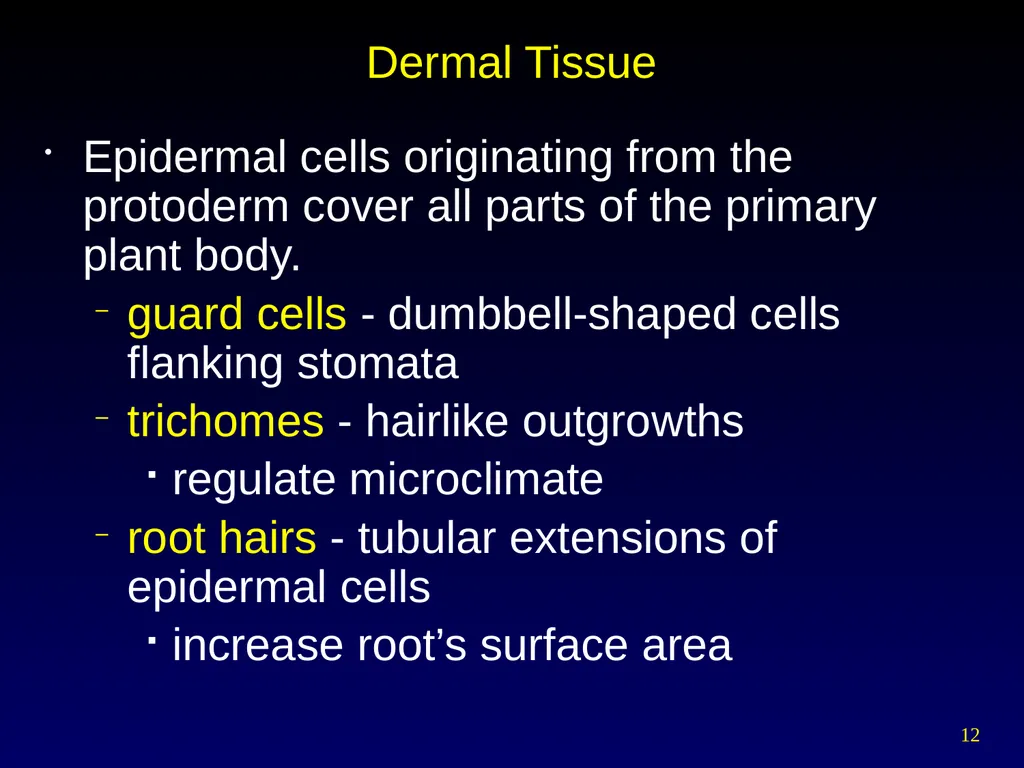
Dermal Tissue Epidermal cells originating from the protoderm cover all parts of the primary plant body.
guard cells - dumbbell-shaped cells flanking stomata
trichomes - hairlike outgrowths
regulate microclimate
root hairs - tubular extensions of epidermal cells
increase root’s surface area<br>
11
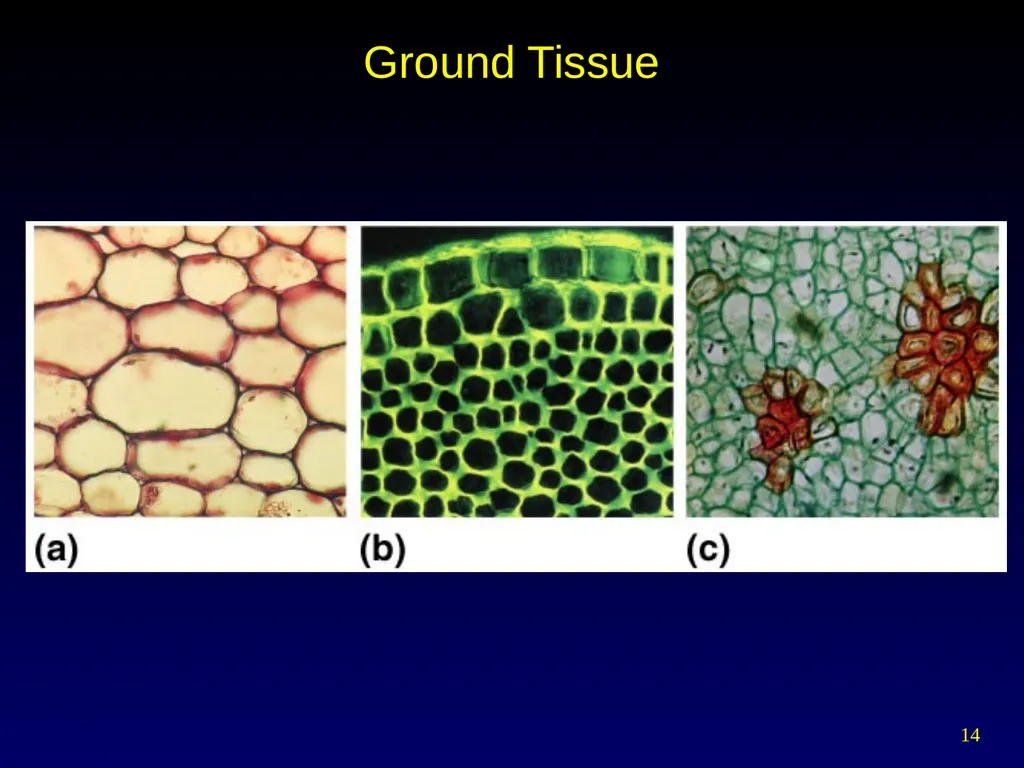
Ground Tissue Parenchyma
store food and water
Collenchyma
provide support for plant organs
Sclerenchyma
supporting function
secondary walls impregnated with lignin
fibers and sclerids
may be nonliving at maturity<br>
12
Ground Tissue<br>
13
Vascular Tissue Xylem
principle water-conducting tissue
combination of vessels and tracheids
primary xylem derived from procambium
secondary xylem formed by vascular cambium
wood made of accumulated secondary xylem<br>
14
Vascular Tissue Phloem
principle food-conducting tissue in vascular plants, located toward the outer part of roots and stems
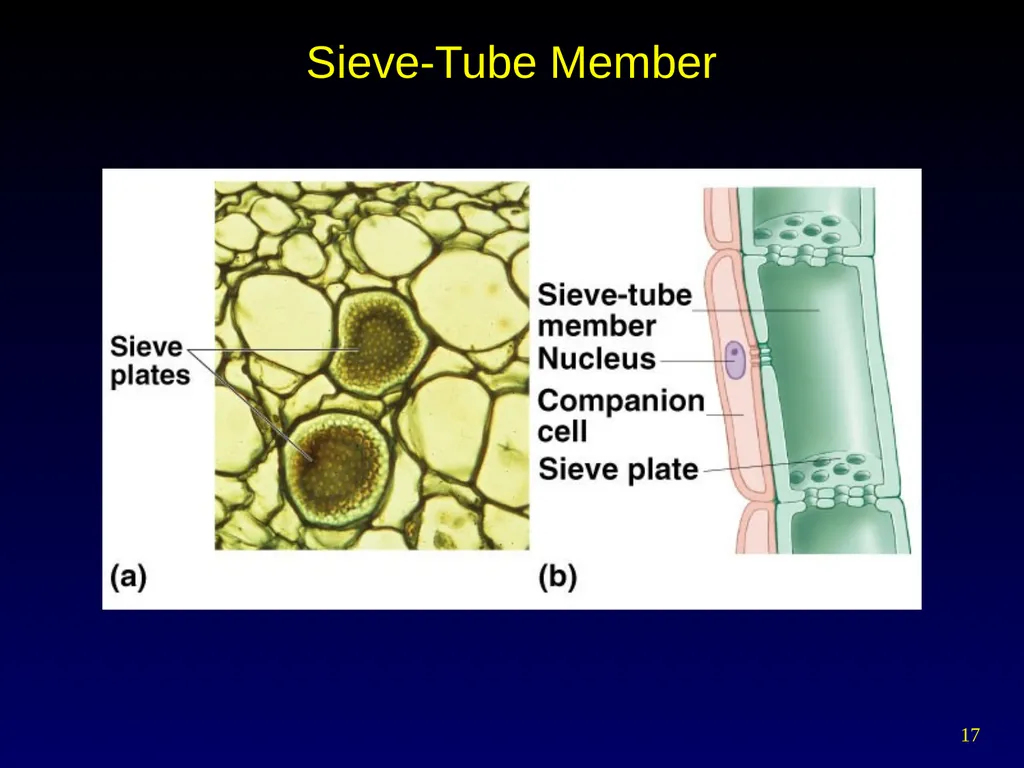
carried out through sieve cells and sieve-tube members
some sieve areas (pores) have larger pores called sieve plates
each sieve-tube member associated with companion cell<br>
15
Sieve-Tube Member<br>
16
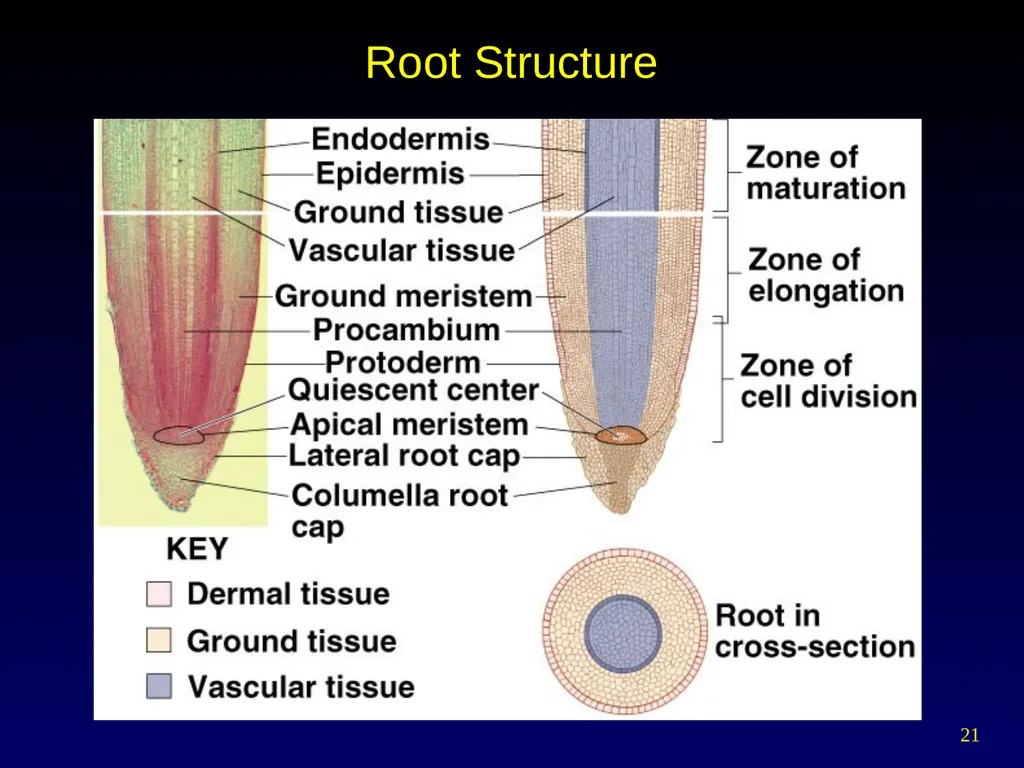
Root Cells Differentiate Root structure
root cap
composed of inner columella cells and lateral root cap cells
new root cap produced when existing cap is removed
functions in gravity perception<br>
17
Root Structure Zone of cell division
cells divide every 12 to 36 hours toward the edges of the concave dome
Apical meristem daughter cells divide into protoderm, procambium, and ground meristem tissues.
Zone of elongation
roots lengthen because cells produced by primary meristems grow longer than wide<br>
18
Root Structure Zone of maturation
cells differentiate into specific cell types
root surface cells mature into epidermal hairs, each with root hair
cortex produced by parenchyma cells
inner boundary differentiates into endodermis
surrounded by Casparian strips composed of suberin<br>
19
Root Structure<br>
20
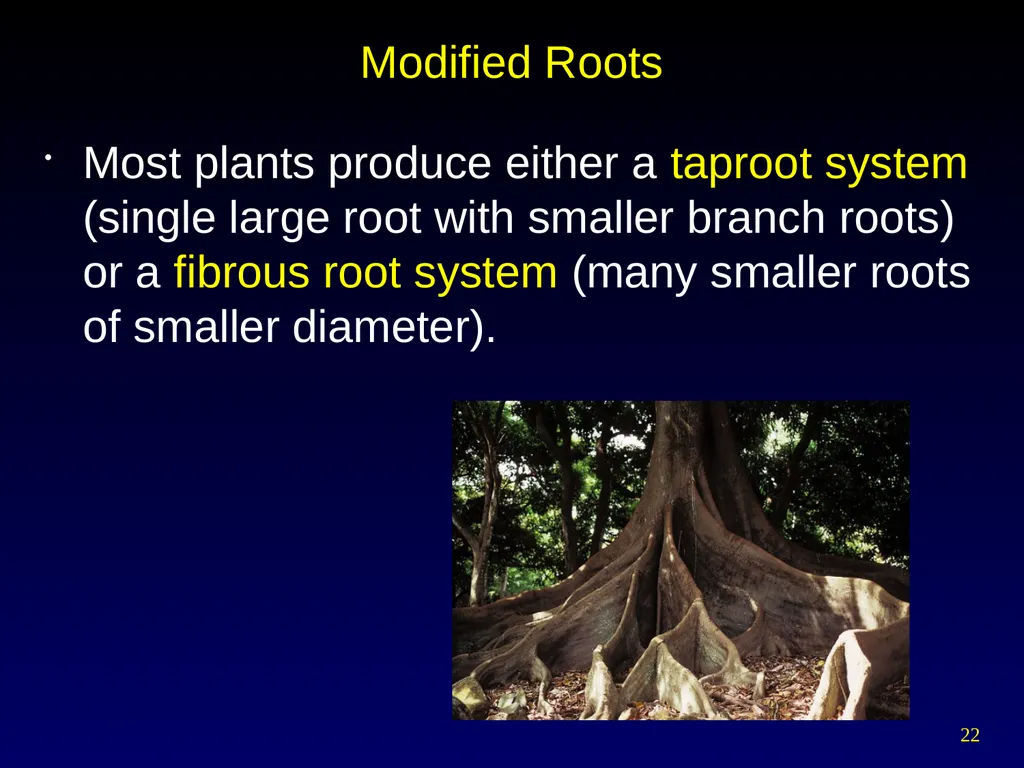
Modified Roots Most plants produce either a taproot system (single large root with smaller branch roots) or a fibrous root system (many smaller roots of smaller diameter).<br>
21
Woody Twig<br>
22
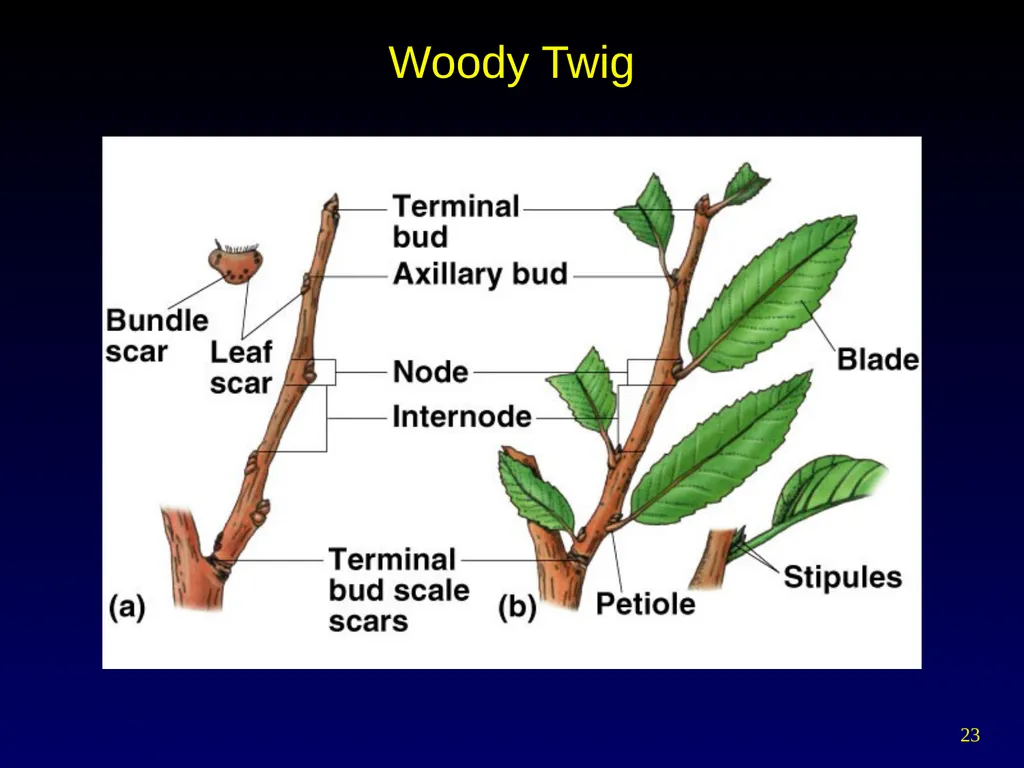
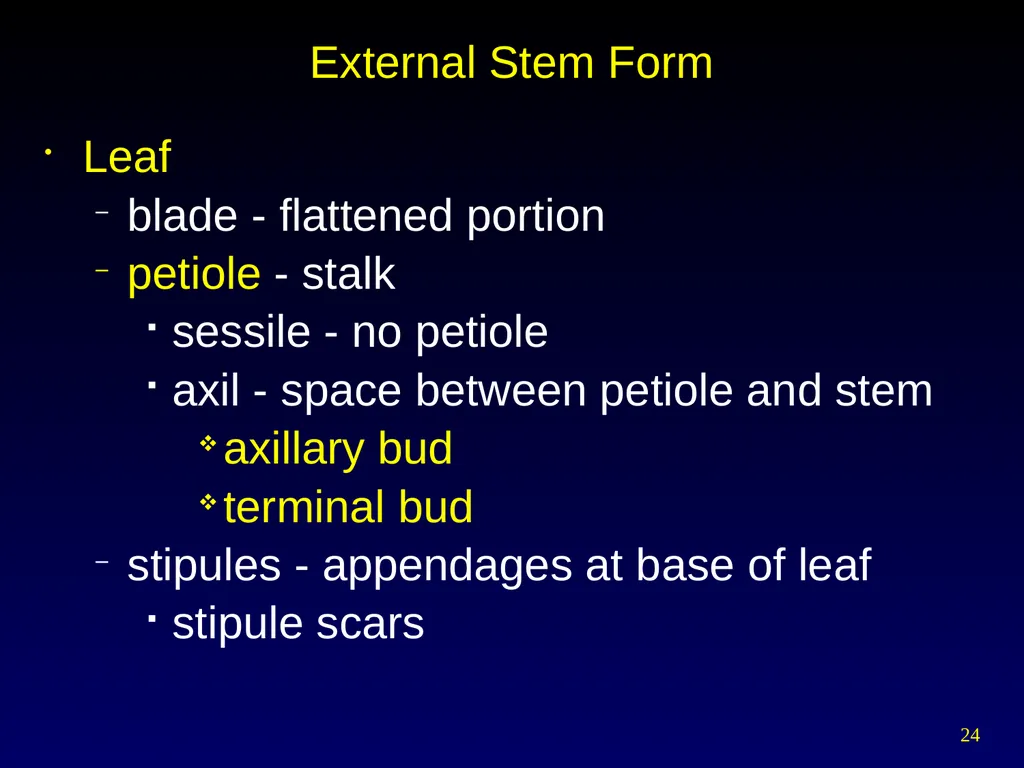
External Stem Form Leaf
blade - flattened portion
petiole - stalk
sessile - no petiole
axil - space between petiole and stem
axillary bud
terminal bud
stipules - appendages at base of leaf
stipule scars<br>
23
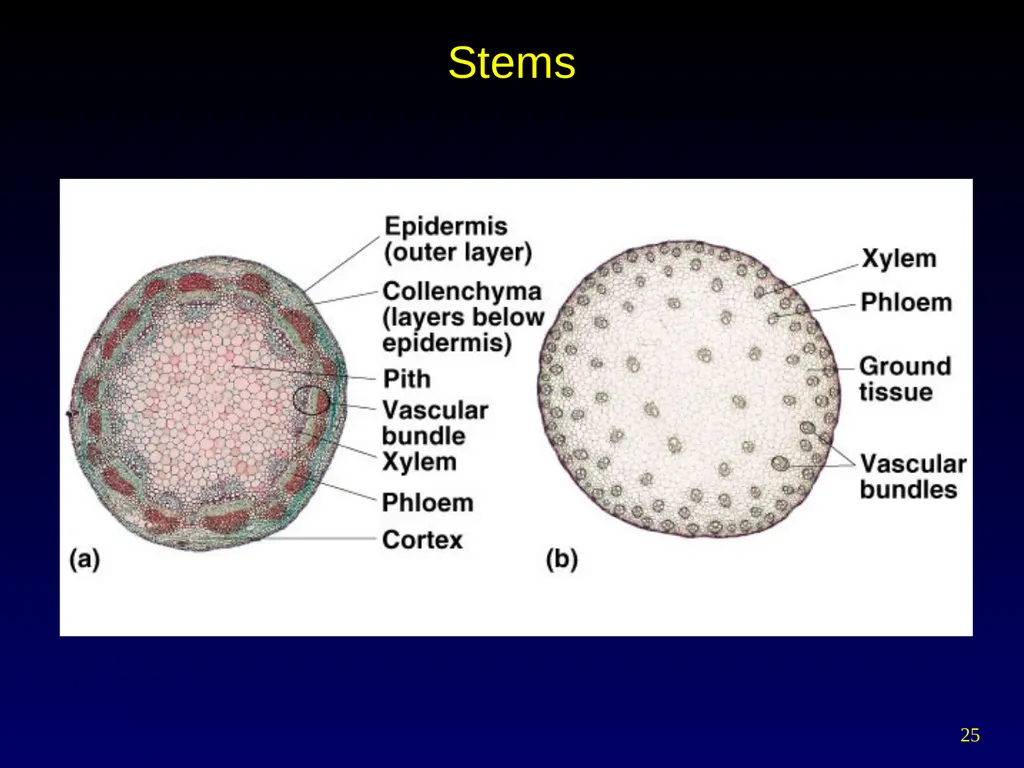
Stems<br>
24
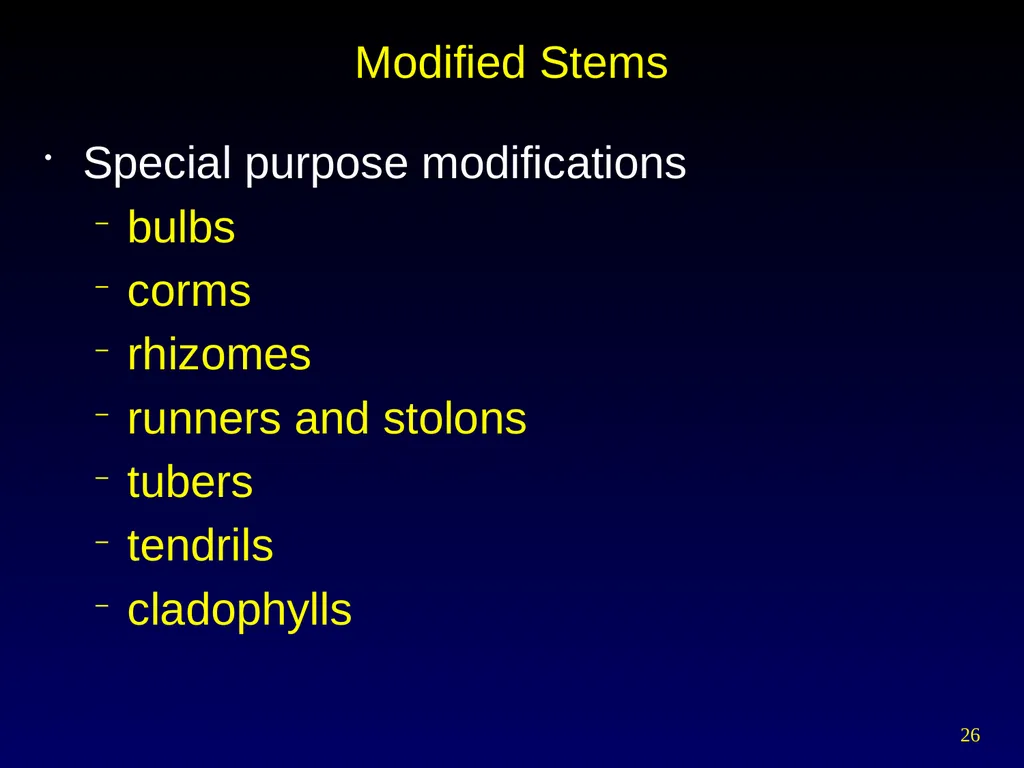
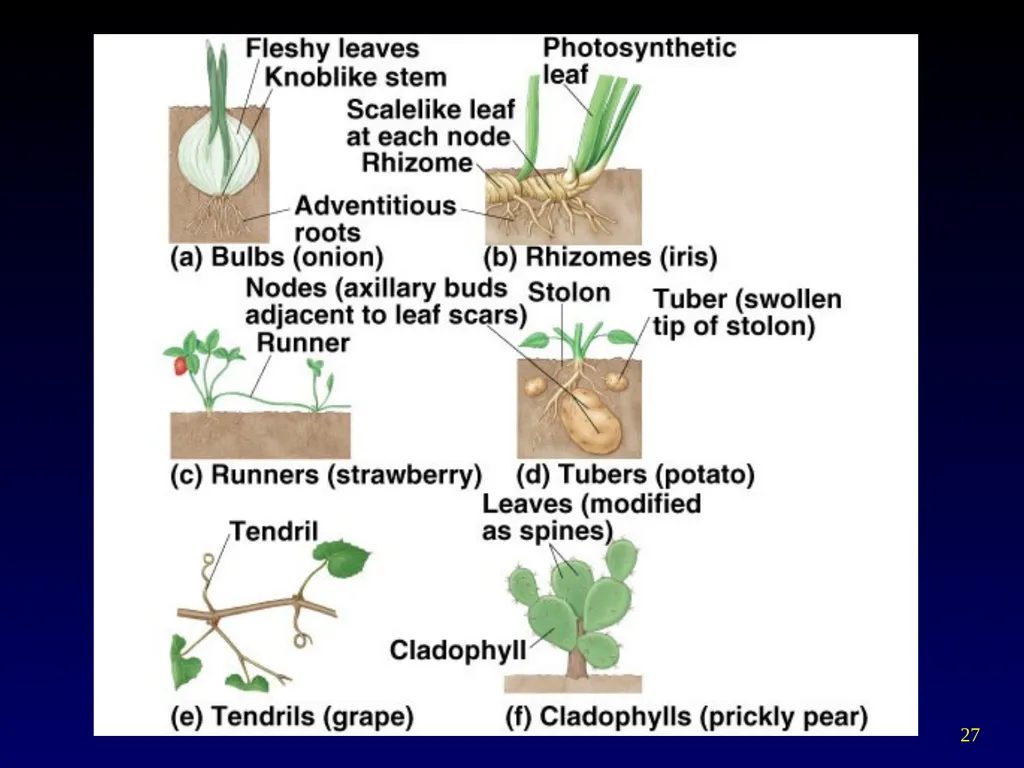
Modified Stems Special purpose modifications
bulbs
corms
rhizomes
runners and stolons
tubers
tendrils
cladophylls<br>
25
Leaves Leaf external structure
microphylls - have one vein that does not leave a gap when it branches from the vascular cylinder of the stem
megaphylls - have several veins that leave a gap when they branch from the vascular cylinder of the stem<br>
26
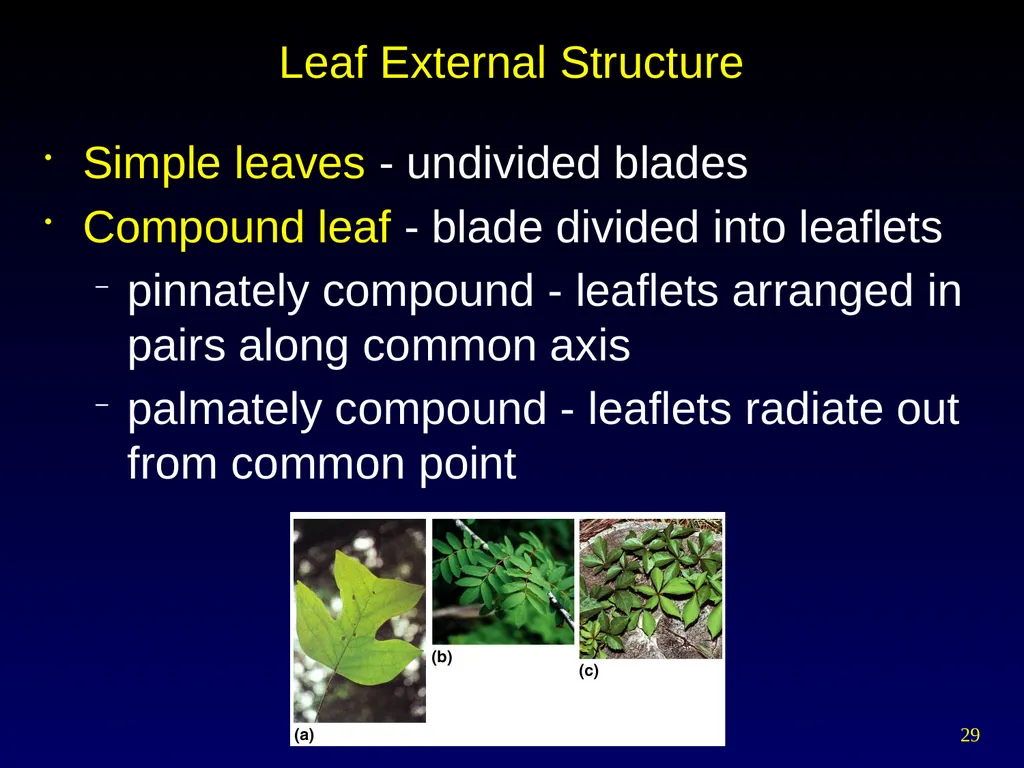
Leaf External Structure Simple leaves - undivided blades
Compound leaf - blade divided into leaflets
pinnately compound - leaflets arranged in pairs along common axis
palmately compound - leaflets radiate out from common point<br>
27
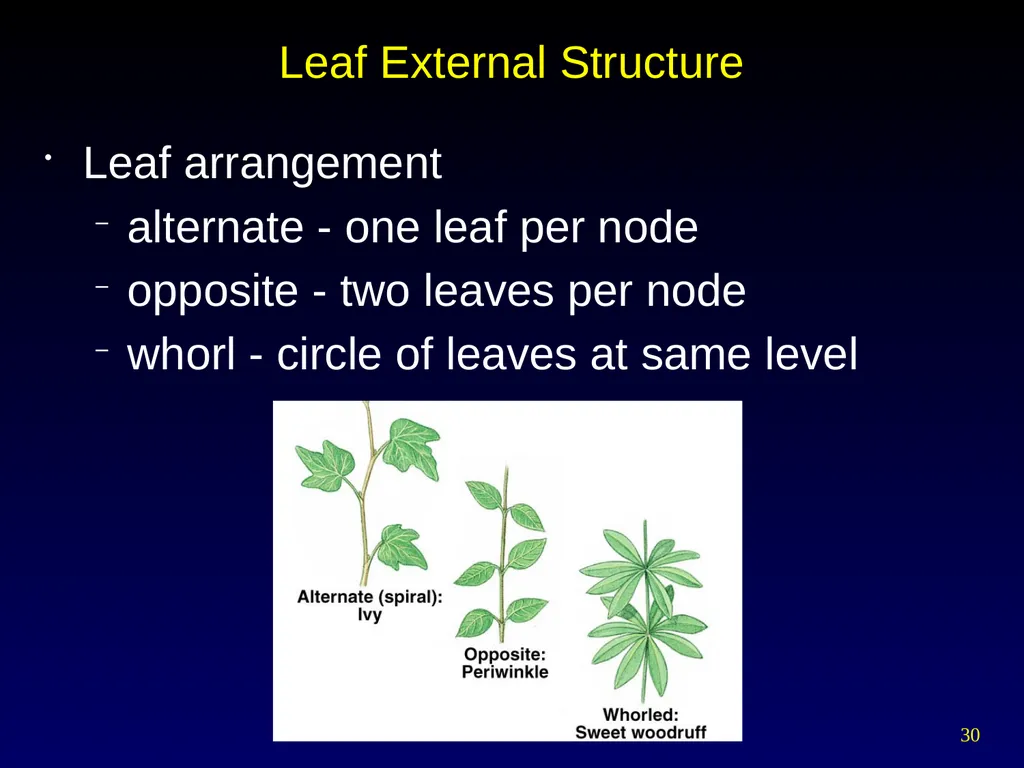
Leaf External Structure Leaf arrangement
alternate - one leaf per node
opposite - two leaves per node
whorl - circle of leaves at same level<br>
28
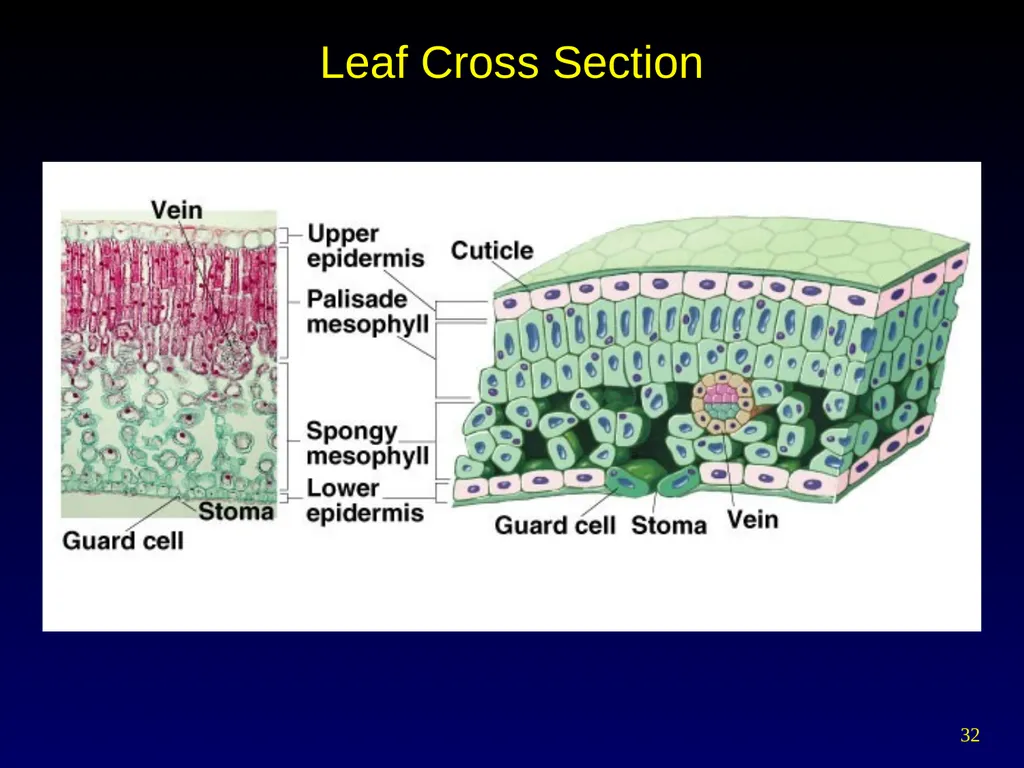
Leaf Internal Structure Epidermis has waxy cuticle and may have tricomes
lower epidermis contains stomata flanked by guard cells
Mesophyll - tissue between upper and lower epidermis
Dicots have rows of cholenchyma cells constituting the palisade mesophyll.
spongy mesophyll between palisade mesophyll and lower epidermis
monocot mesophyll not differentiated<br>