04
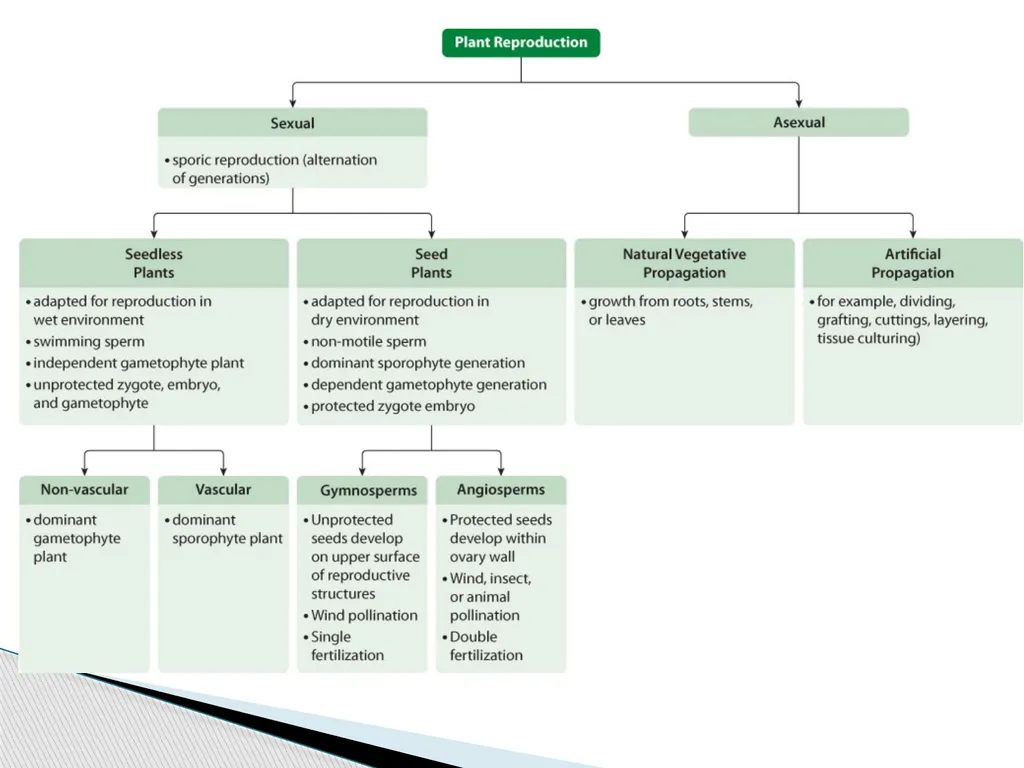
Sexual reproduction is by sporic reproduction (alternation of generations).
Haploid gametophyte cells (1n) produce gametes
Diploid sporophyte cells (2n) produce spores.
Male and female gametes unite to form the sporophyte that continues the life cycle. Sexual Vs. Asexual Reproduction<br>
05
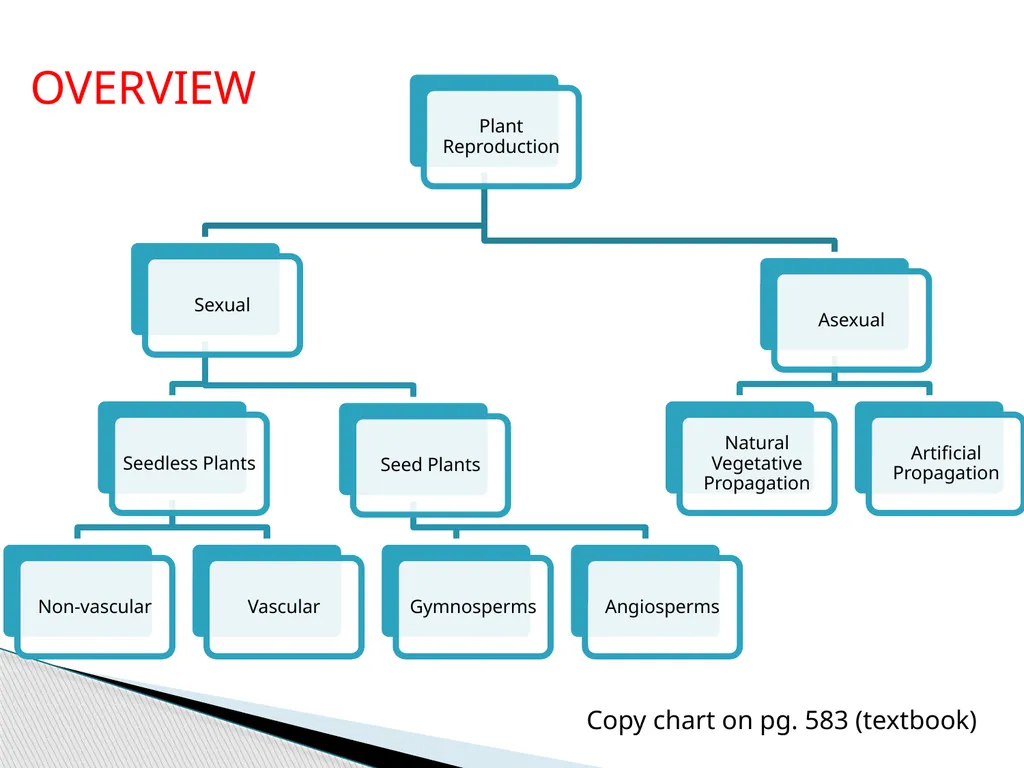
OVERVIEW Copy chart on pg. 583 (textbook)<br>
06
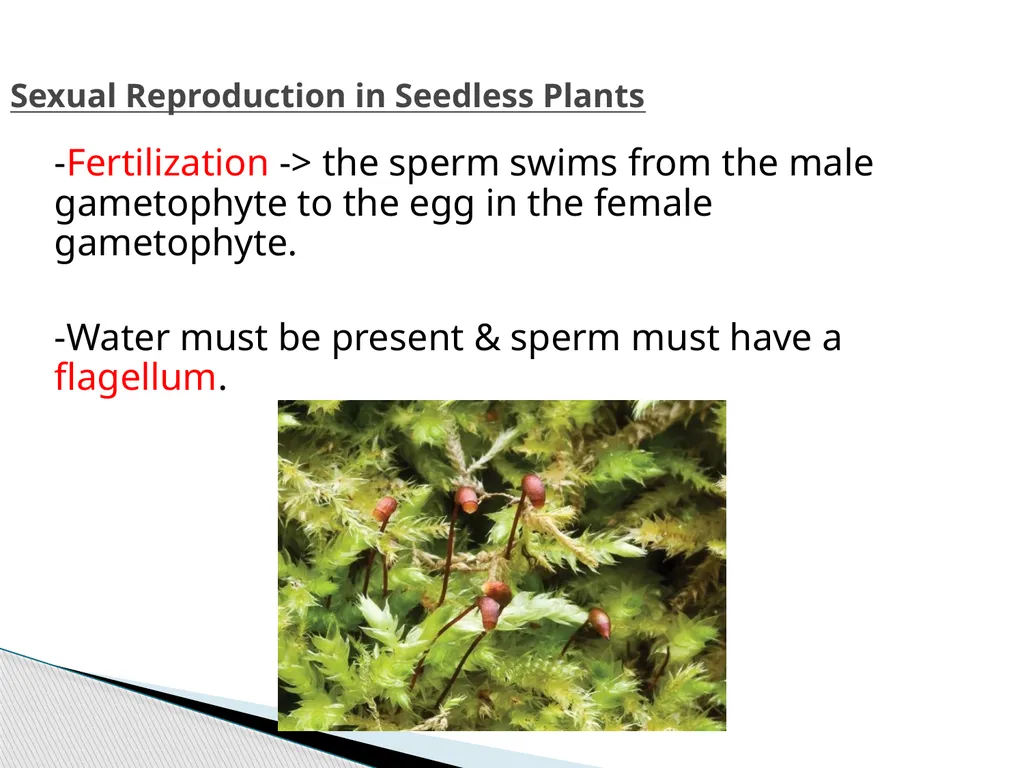
Sexual Reproduction in Seedless Plants -Fertilization -> the sperm swims from the male gametophyte to the egg in the female gametophyte.
-Water must be present & sperm must have a flagellum.<br>
07
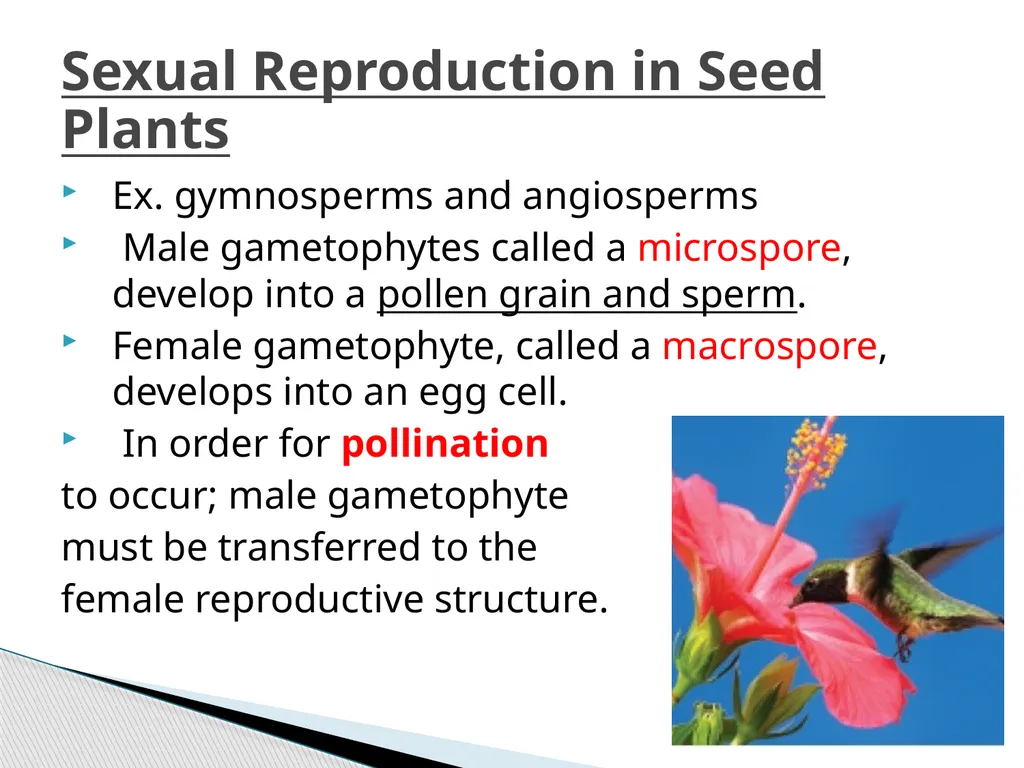
Ex. gymnosperms and angiosperms
Male gametophytes called a microspore, develop into a pollen grain and sperm.
Female gametophyte, called a macrospore, develops into an egg cell.
In order for pollination
to occur; male gametophyte
must be transferred to the
female reproductive structure. Sexual Reproduction in Seed Plants<br>
09
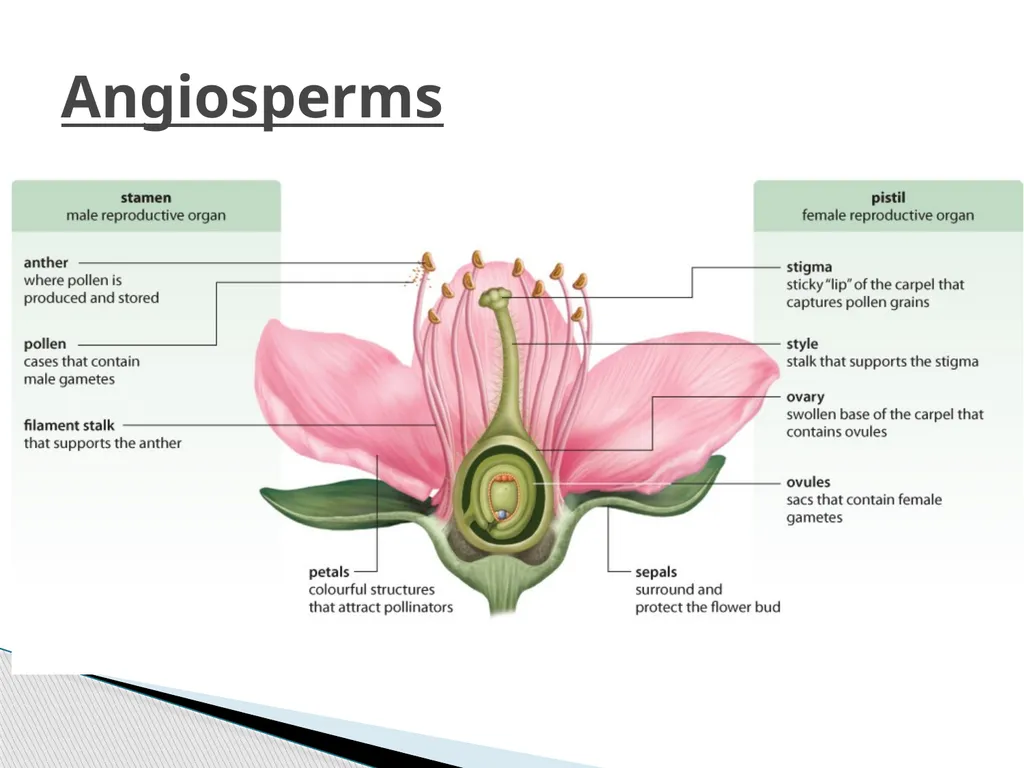
sepals – protect the flower bud
petals – attract pollinators 4 Basic Flower Organs stamens – male reproductive structure
pistils – female reproductive structure
The reproductive structures are in the flowers.
Fertilization & seed development occur within the ovule.
Pollination takes place on the stigma.
Female gametophytes develop in the ovules, where eggs are formed.<br>
10
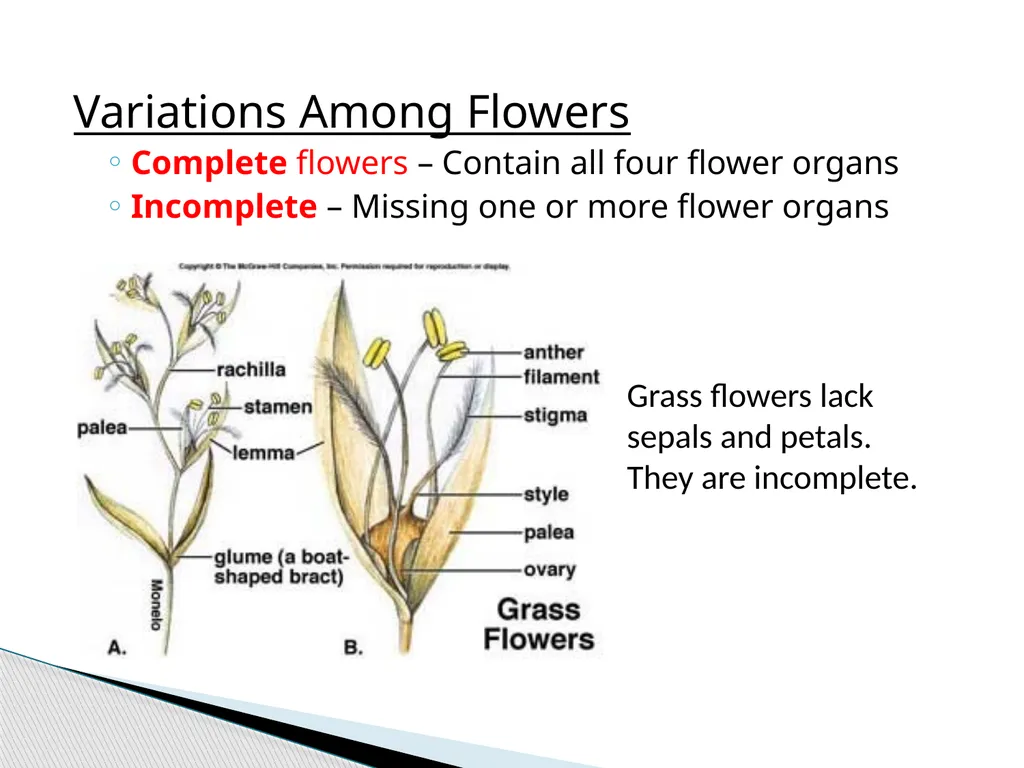
Variations Among Flowers
Complete flowers – Contain all four flower organs
Incomplete – Missing one or more flower organs Grass flowers lack sepals and petals.
They are incomplete.<br>
11
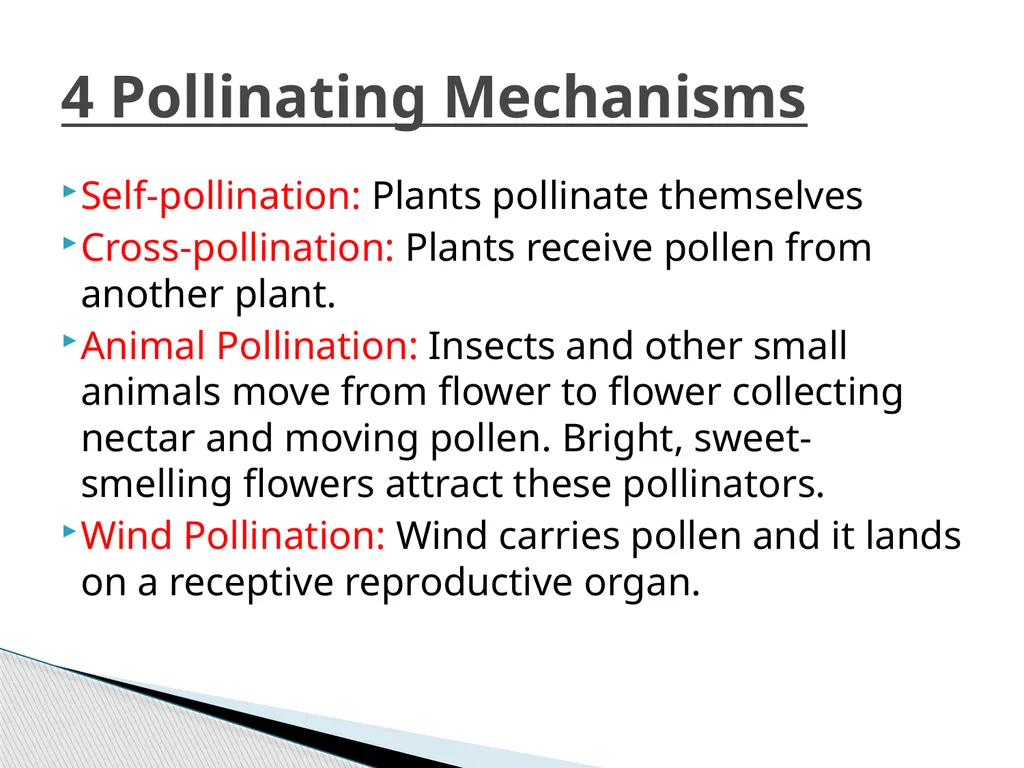
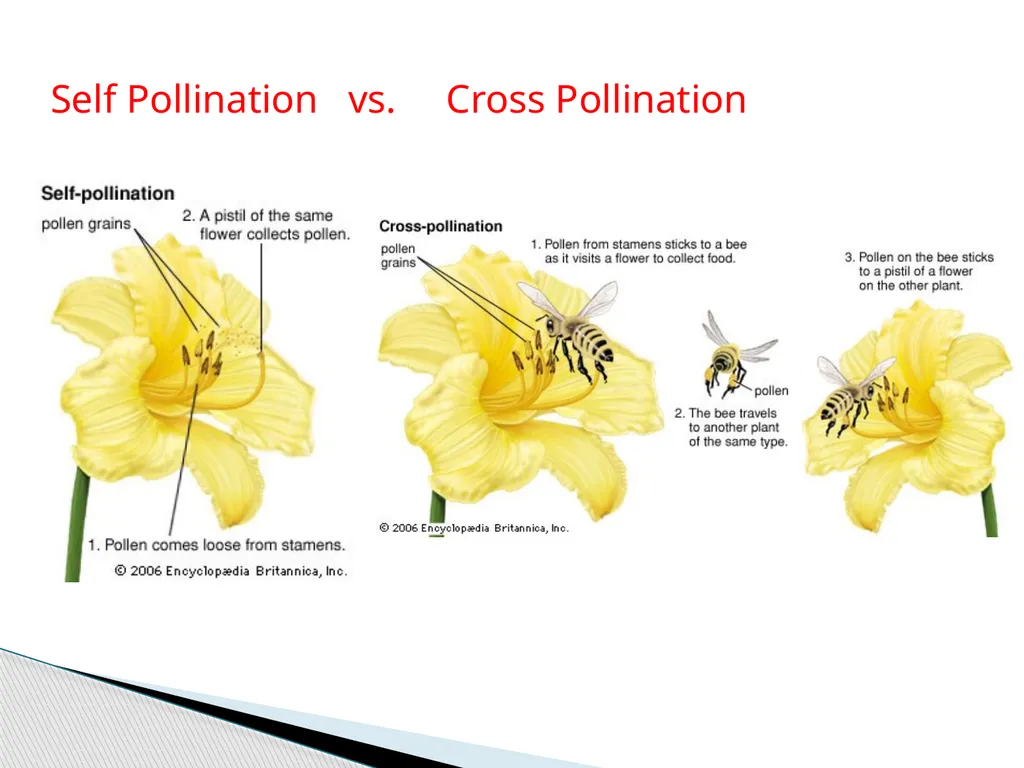
Self-pollination: Plants pollinate themselves
Cross-pollination: Plants receive pollen from another plant.
Animal Pollination: Insects and other small animals move from flower to flower collecting nectar and moving pollen. Bright, sweet-smelling flowers attract these pollinators.
Wind Pollination: Wind carries pollen and it lands on a receptive reproductive organ. 4 Pollinating Mechanisms<br>
12
Self Pollination vs. Cross Pollination<br>
13
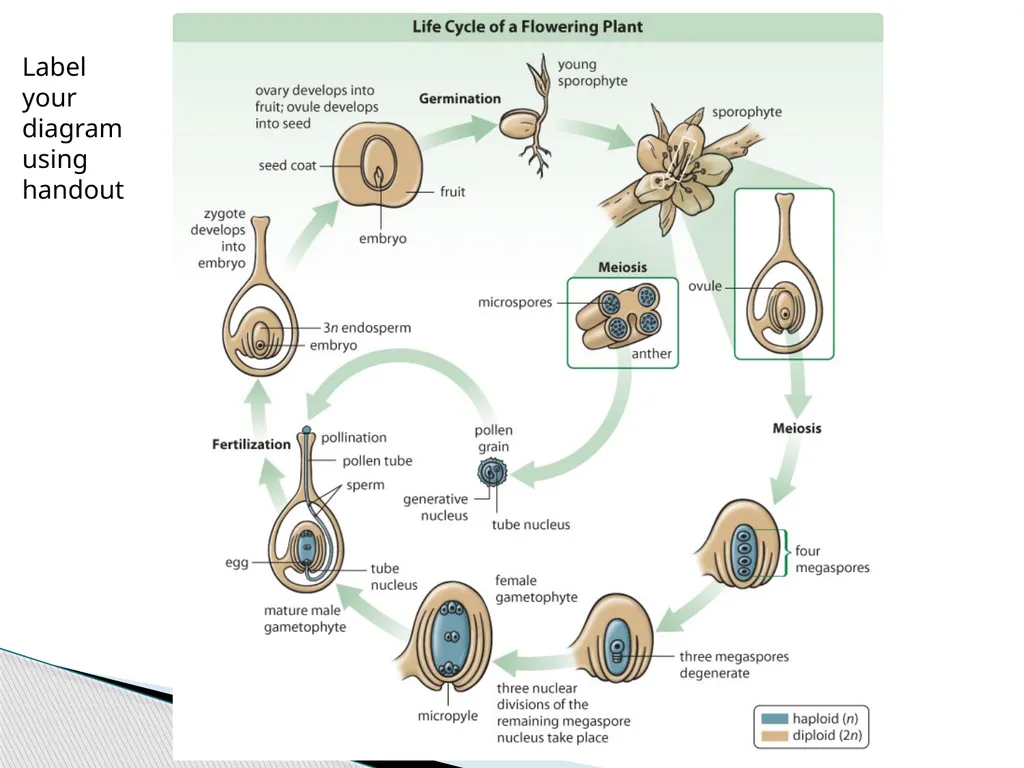
Label your diagram using handout<br>
14
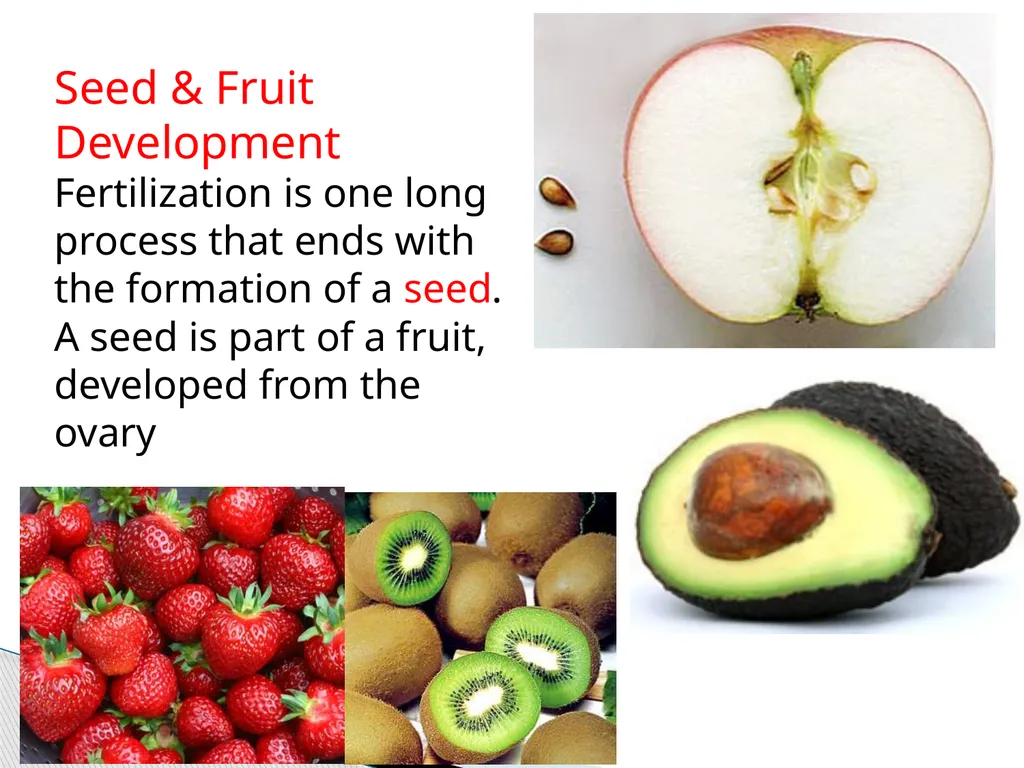
Seed & Fruit Development
Fertilization is one long process that ends with the formation of a seed.
A seed is part of a fruit, developed from the ovary<br>
15
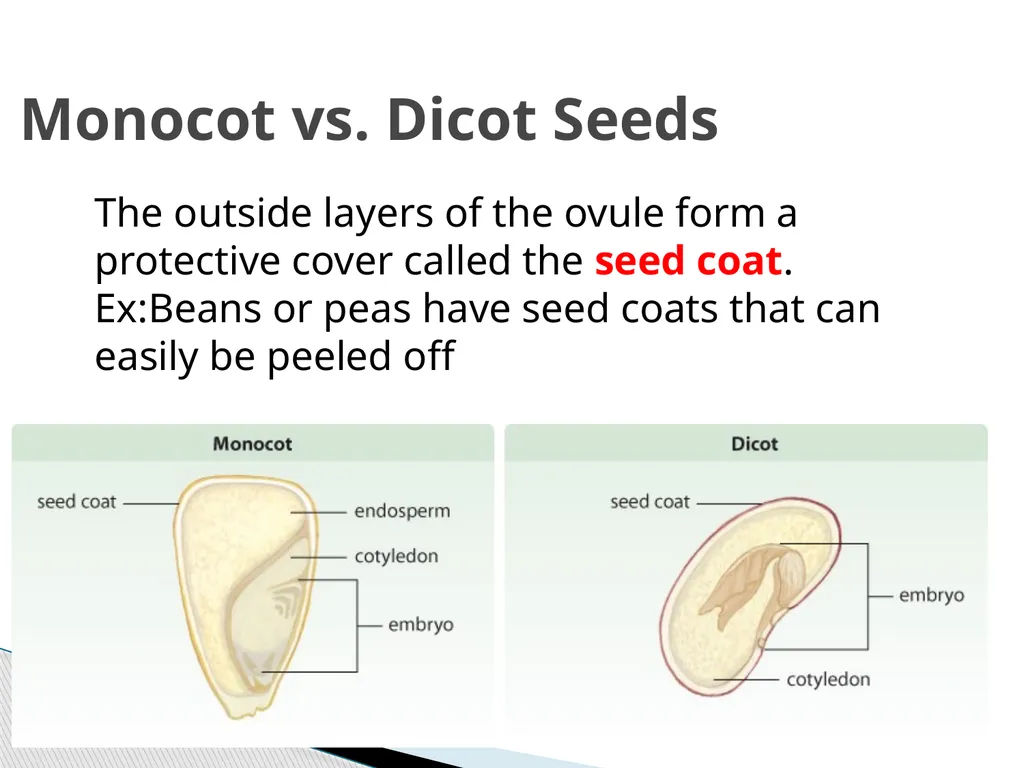
Monocot vs. Dicot Seeds The outside layers of the ovule form a protective cover called the seed coat. Ex:Beans or peas have seed coats that can easily be peeled off<br>
16
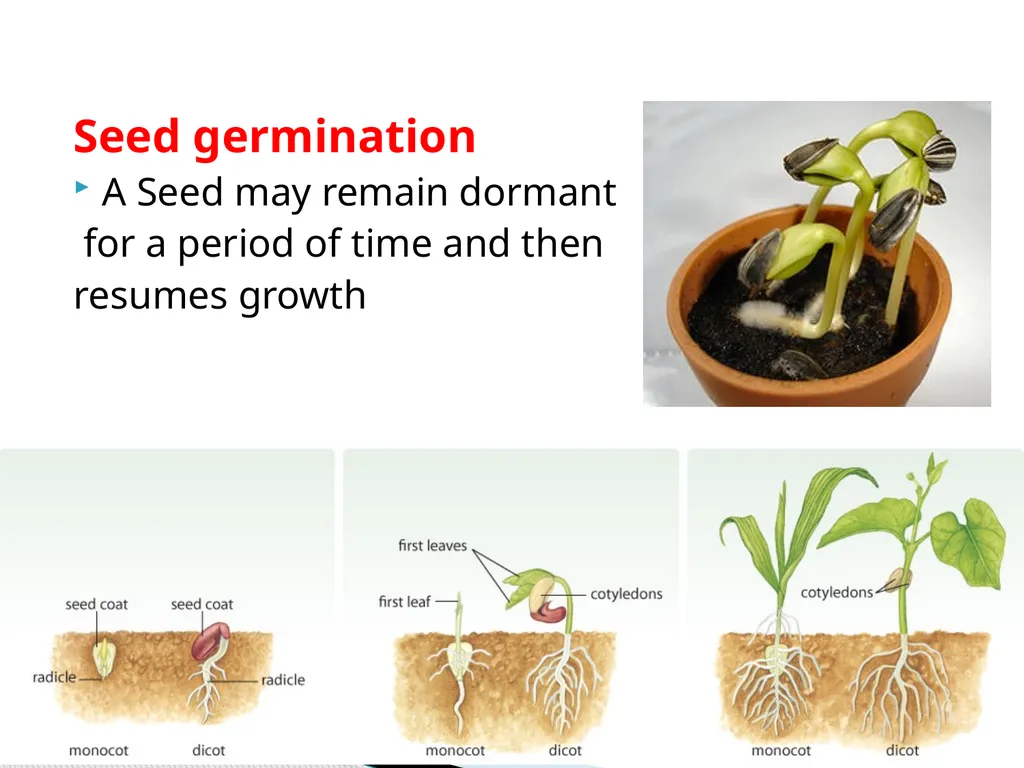
Seed germination
A Seed may remain dormant
for a period of time and then
resumes growth<br>
17
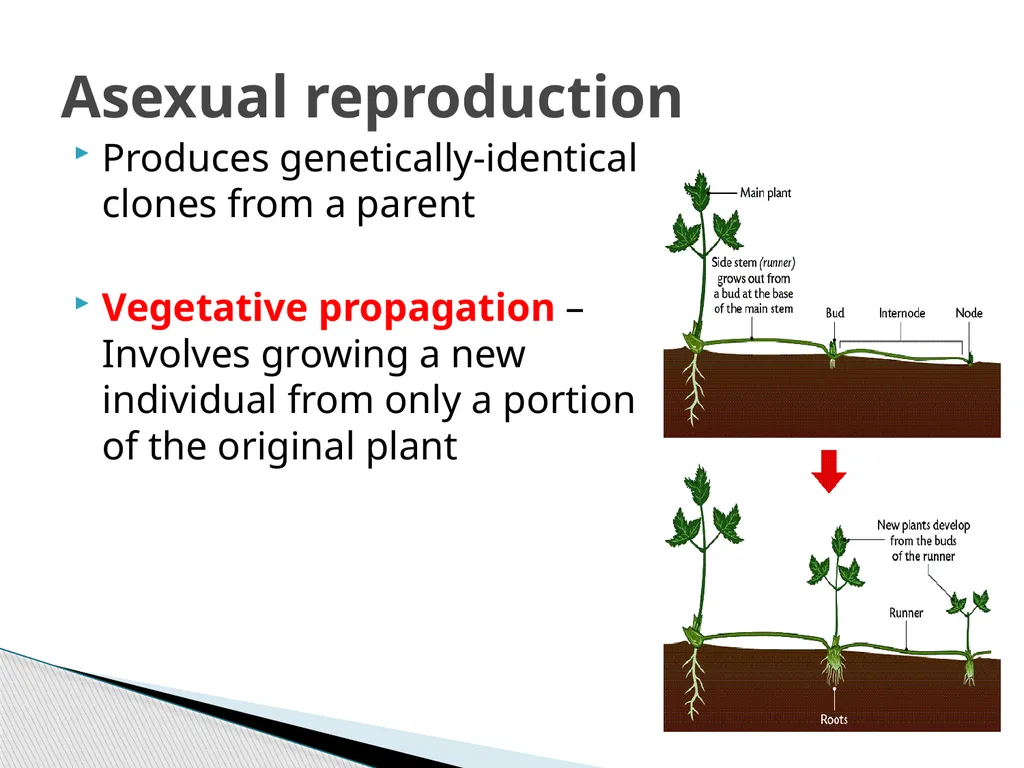
Produces genetically-identical clones from a parent
Vegetative propagation – Involves growing a new individual from only a portion of the original plant Asexual reproduction<br>
18
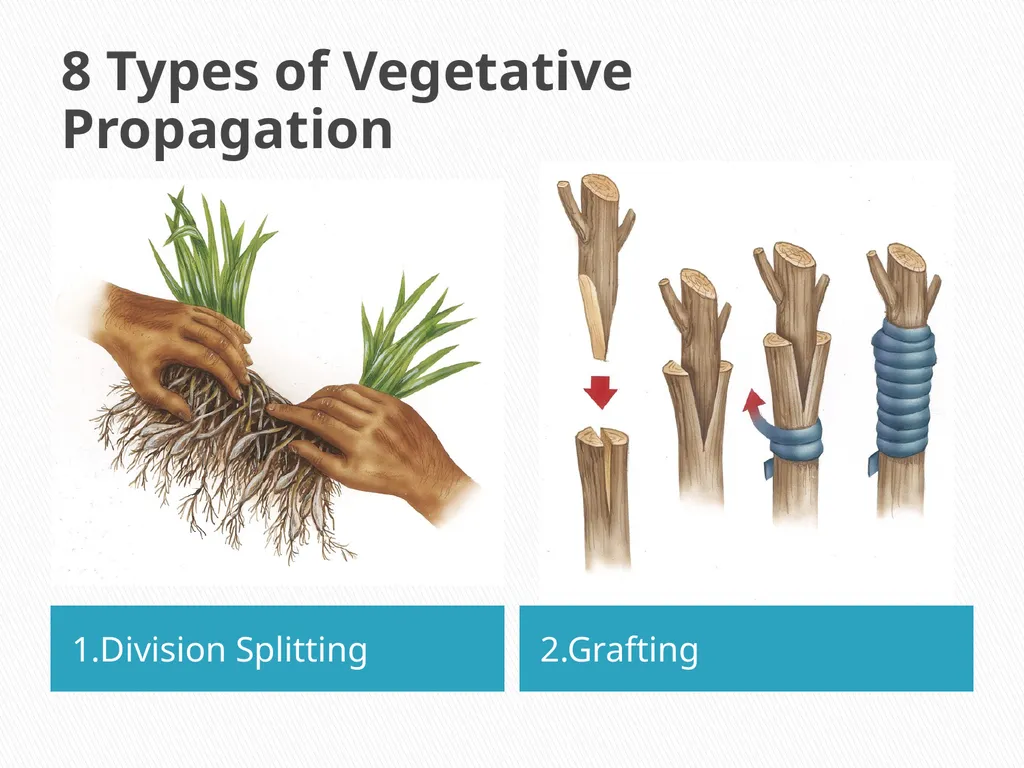
8 Types of Vegetative Propagation 1.Division Splitting 2.Grafting<br>
19
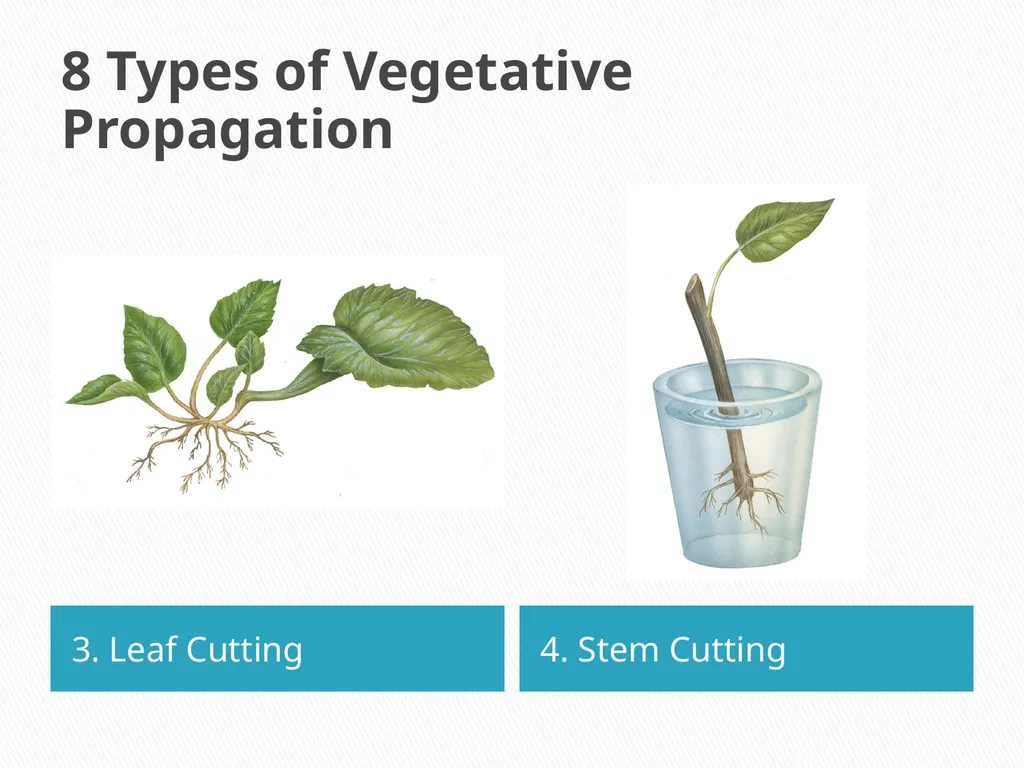
8 Types of Vegetative Propagation 3. Leaf Cutting 4. Stem Cutting<br>
20
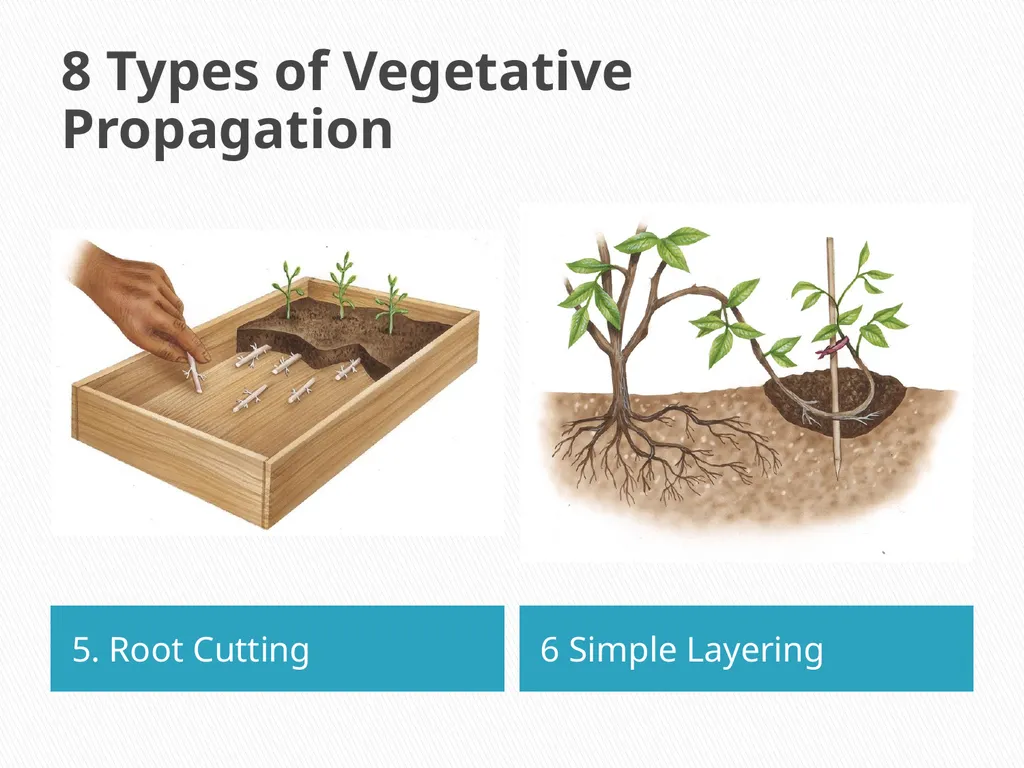
8 Types of Vegetative Propagation 5. Root Cutting 6 Simple Layering<br>
21
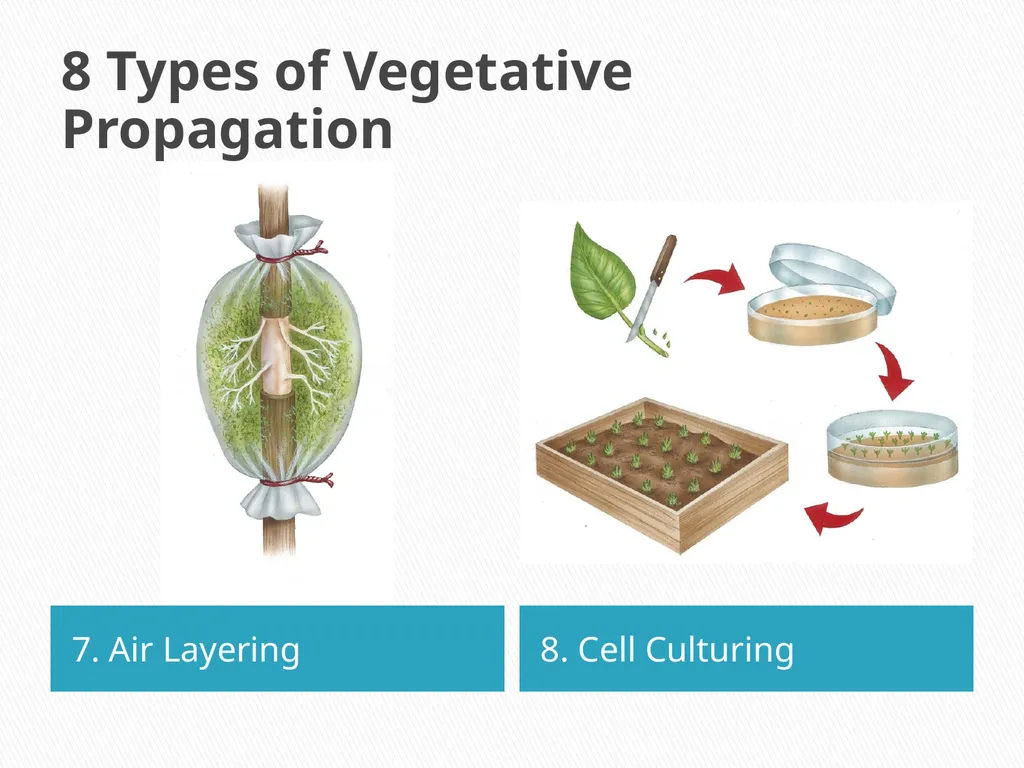
8 Types of Vegetative Propagation 7. Air Layering 8. Cell Culturing<br>
22
PLANT GROWTH & DEVELOPMENT<br>
23
Plant Hormones Hormone: chemical compound produced in one part of the plant that controls growth in another part of that plant
act as chemical signals between cells and tissues
Some stimulate growth, others inhibit growth<br>
24
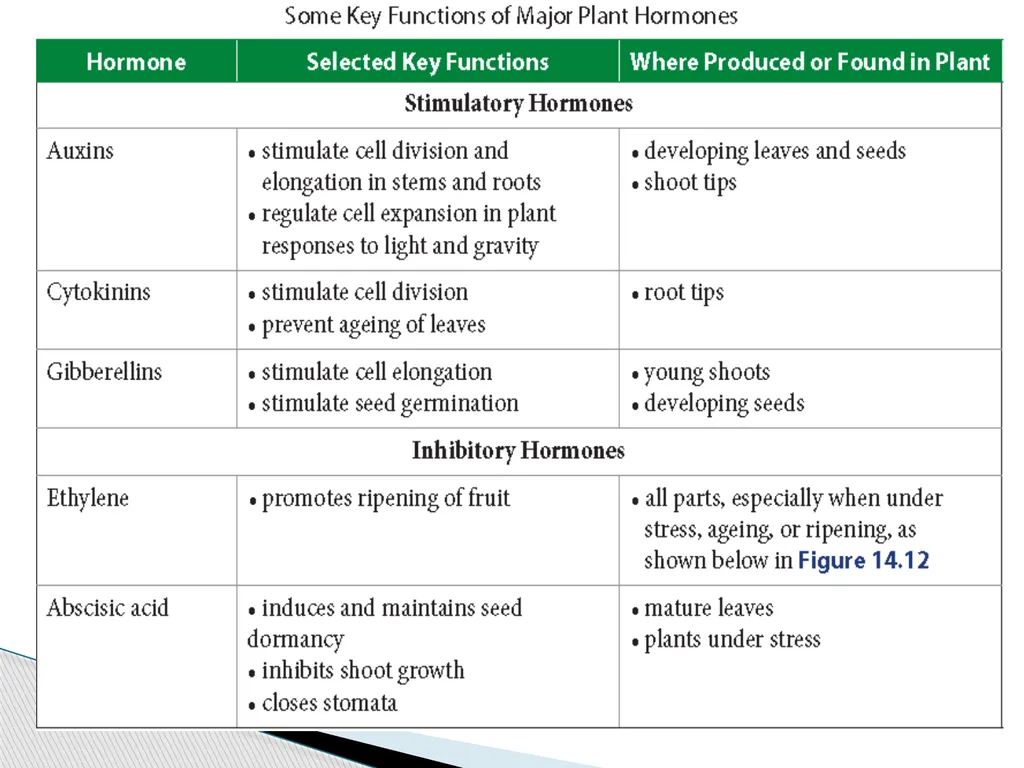
Auxins
Cytokinins
Gibberellins
Ethylene
Abscisic acid 5 Main Plant Hormones:<br>
25
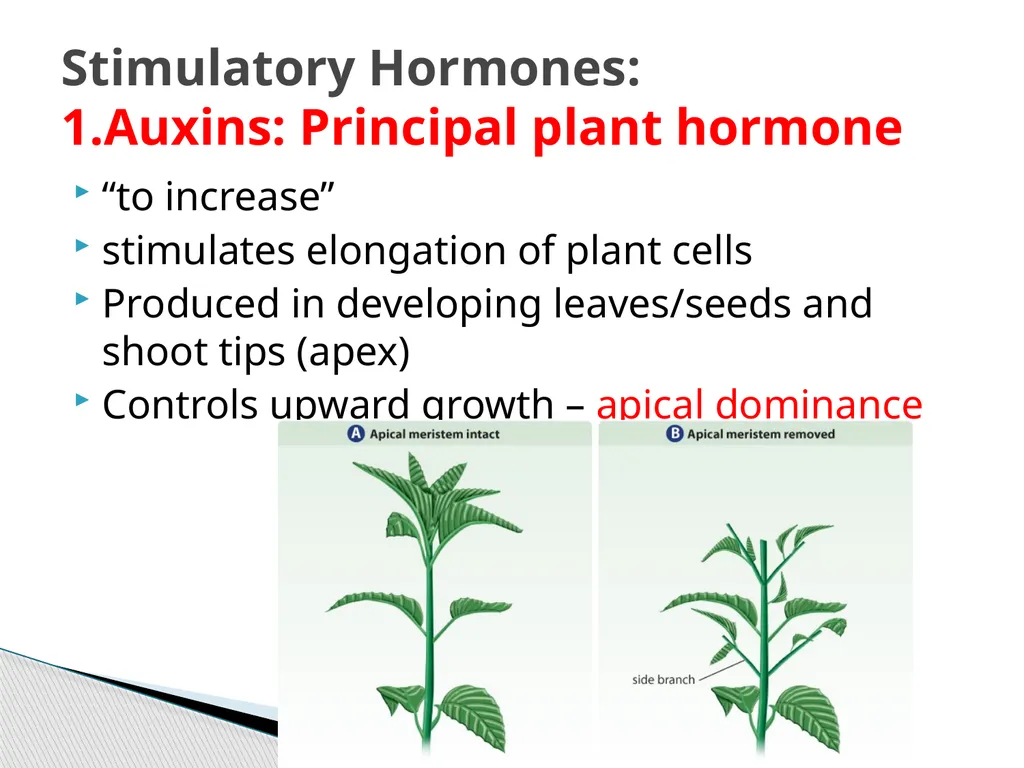
“to increase”
stimulates elongation of plant cells
Produced in developing leaves/seeds and shoot tips (apex)
Controls upward growth – apical dominance Stimulatory Hormones:�1.Auxins: Principal plant hormone<br>
26
Promotes cell division & differentiation
Stimulates the production of proteins required for mitosis and cytokinesis
delays aging of leaves and fruit Stimulatory Hormones:�2. Cytokinis<br>
27
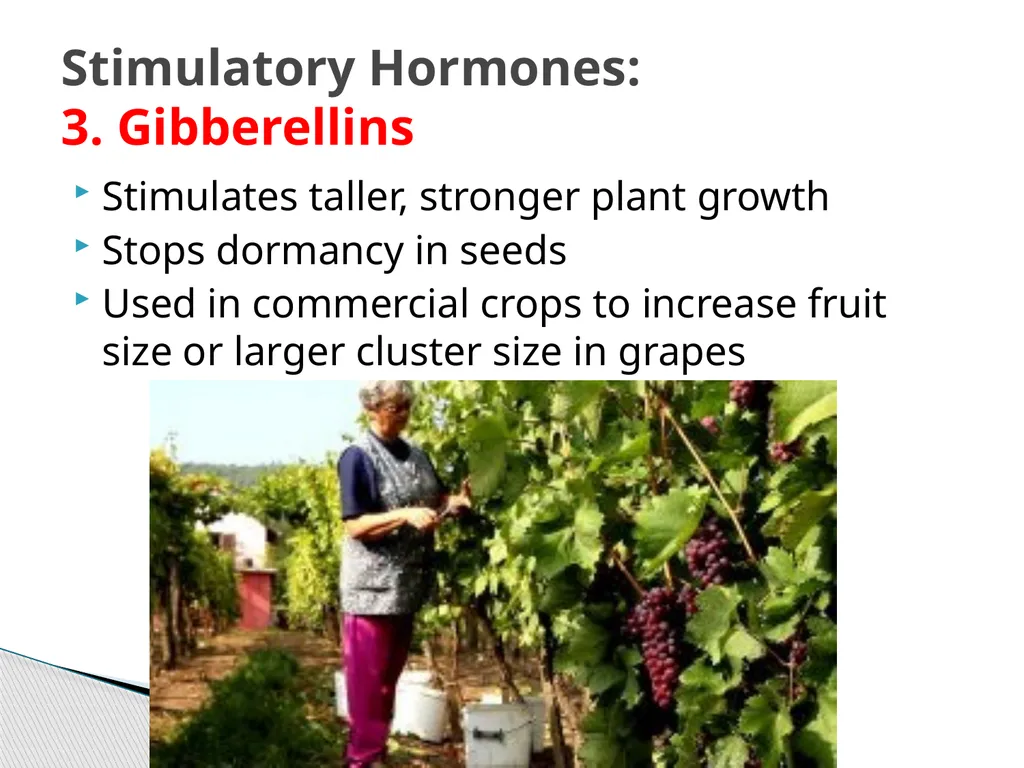
Stimulates taller, stronger plant growth
Stops dormancy in seeds
Used in commercial crops to increase fruit size or larger cluster size in grapes Stimulatory Hormones:�3. Gibberellins<br>
28
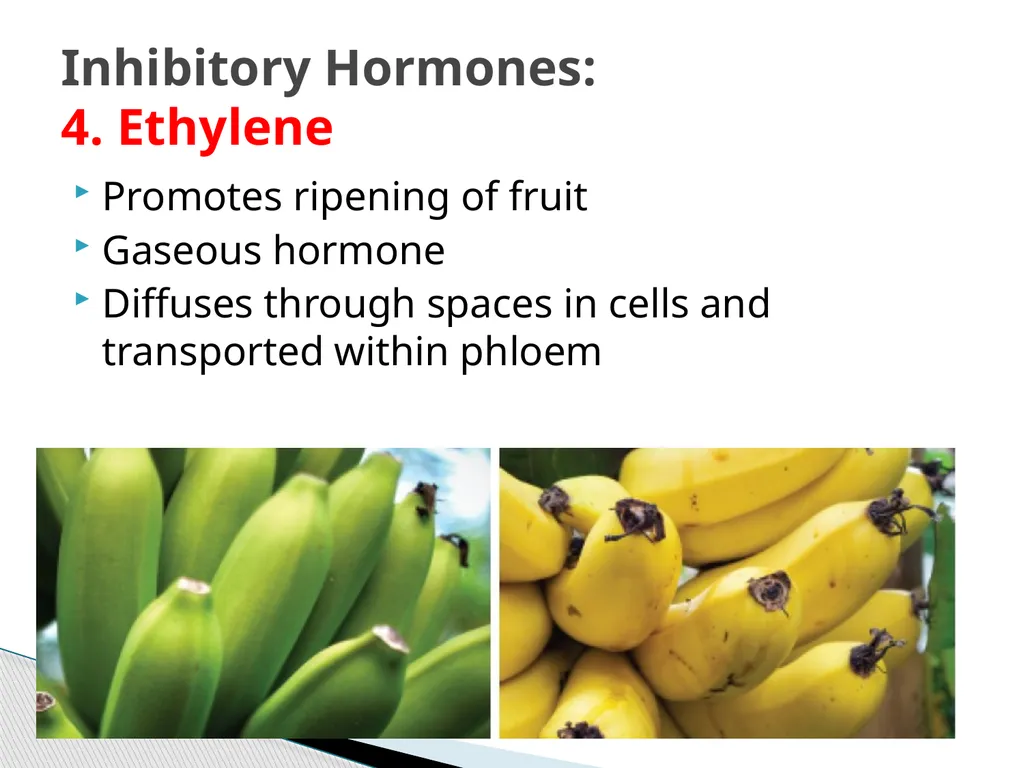
Promotes ripening of fruit
Gaseous hormone
Diffuses through spaces in cells and transported within phloem Inhibitory Hormones:�4. Ethylene<br>
29
Induces seed dormancy
Inhibits growth of buds in plant stems
Closes stomata & blocks intake of CO2 Inhibitory Hormones:�5. Abscisic Acid<br>
30
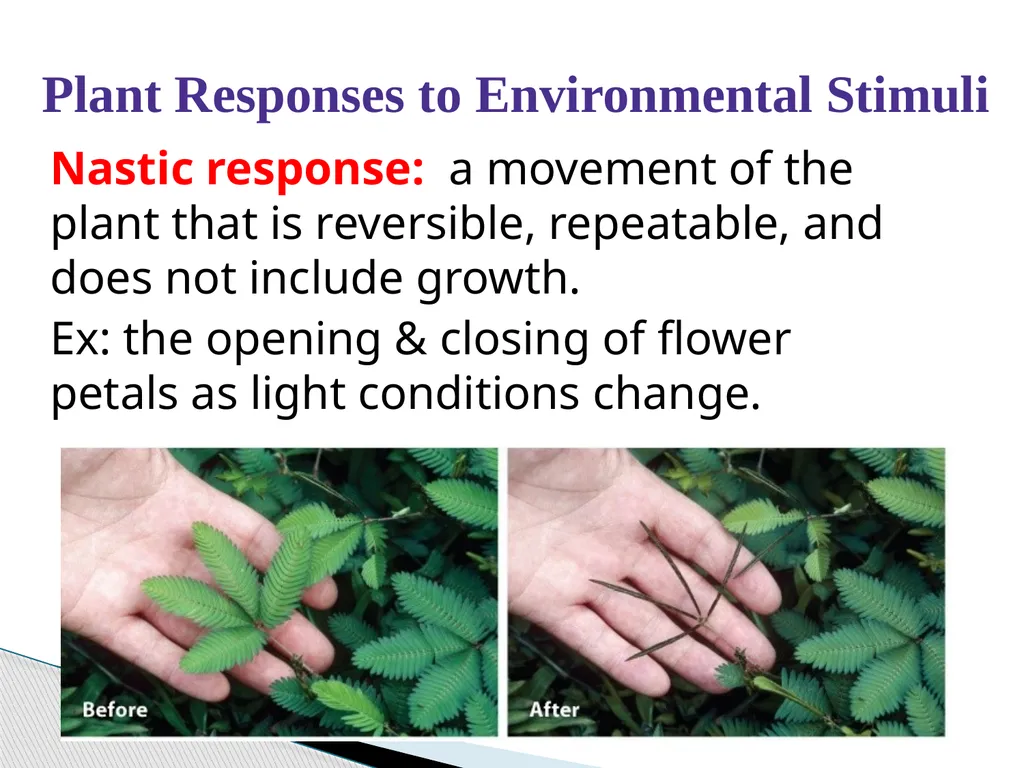
Nastic response: a movement of the plant that is reversible, repeatable, and does not include growth.
Ex: the opening & closing of flower petals as light conditions change. Plant Responses to Environmental Stimuli UNIT 5 Chapter 14: Plants: Reproduction, Growth, and Sustainability Section 14.2<br>
31
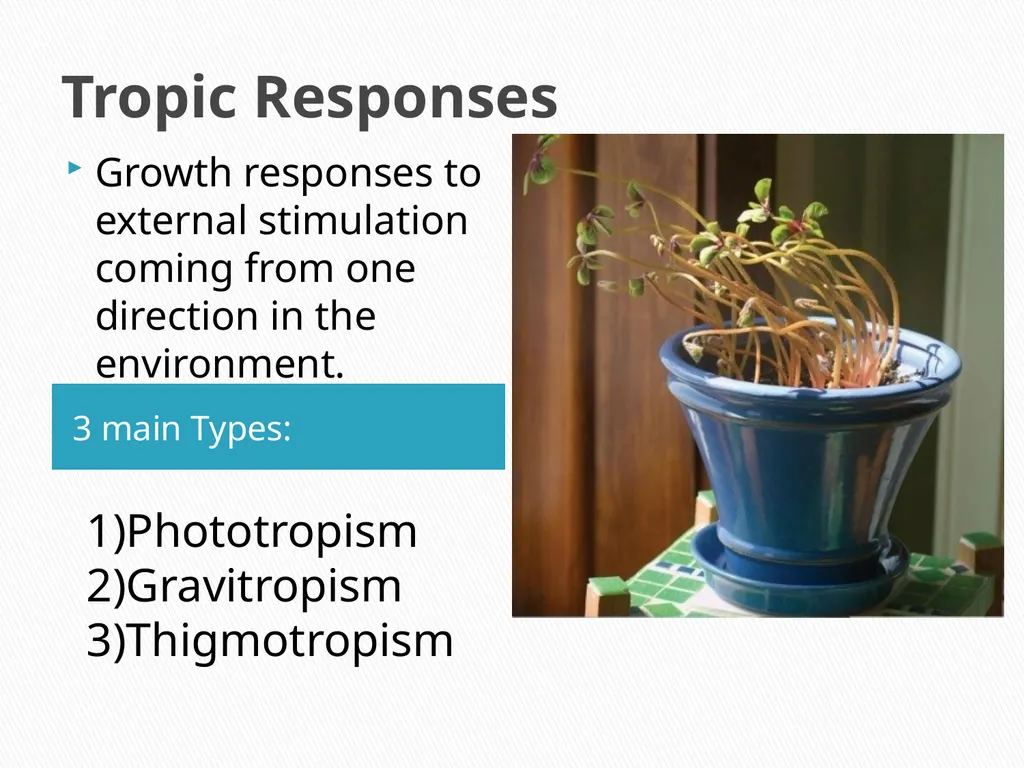
Tropic Responses 3 main Types: Growth responses to external stimulation coming from one direction in the environment. Phototropism
Gravitropism
Thigmotropism<br>
32
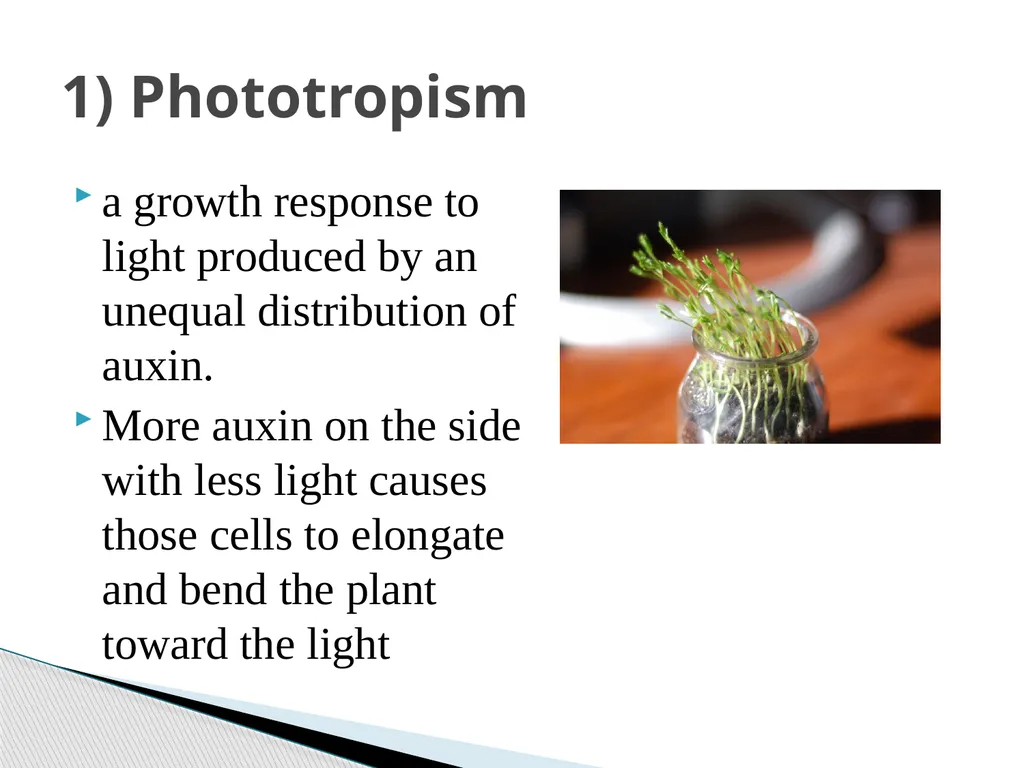
a growth response to light produced by an unequal distribution of auxin.
More auxin on the side with less light causes those cells to elongate and bend the plant toward the light 1) Phototropism<br>
33
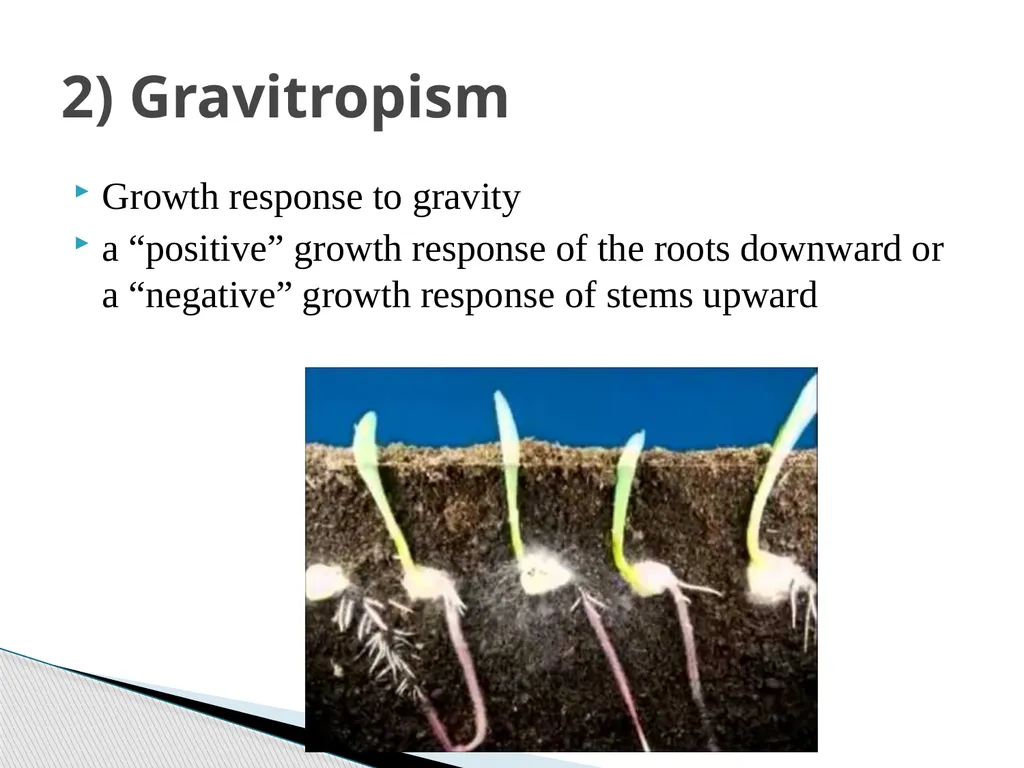
Growth response to gravity
a “positive” growth response of the roots downward or a “negative” growth response of stems upward 2) Gravitropism<br>
34
a growth response to mechanical stimuli
Contact with another object
Ie. Ivy growing on a fence or tree 3) Thigmotropism<br>
35
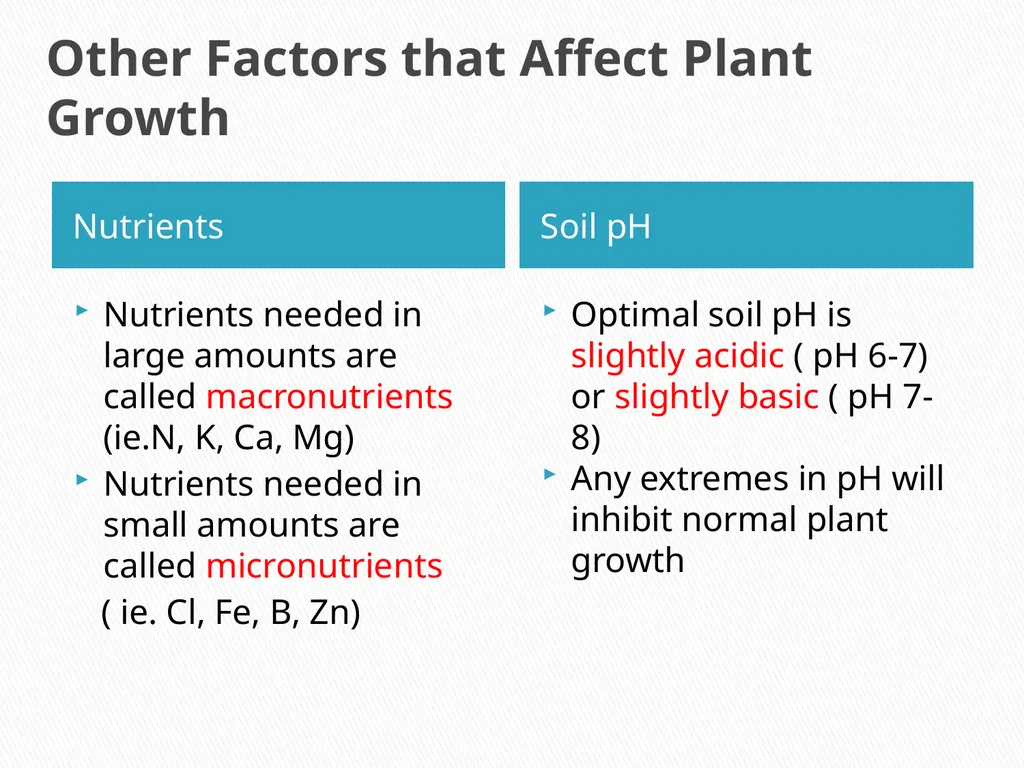
Other Factors that Affect Plant Growth Nutrients Soil pH Nutrients needed in large amounts are called macronutrients (ie.N, K, Ca, Mg)
Nutrients needed in small amounts are called micronutrients
( ie. Cl, Fe, B, Zn) Optimal soil pH is slightly acidic ( pH 6-7) or slightly basic ( pH 7-8)
Any extremes in pH will inhibit normal plant growth<br>