04
What is Psychology? Psychology is behavioural science, specially interested in the study of human behaviour.
It is search or discovering reasons why people behave in a particular manner.
The behaviour seems to connote activities which could be observed, noted or recorded by an outsider.<br>
05
CATEGORIES OF PSYCHOLOGICAL ASPECTS The study of psychology has two aspects:-
(a) An academic discipline
(b) A technology
(a) Academic discipline of psychology means scientific study of behaviour of human beings as well as animals.
(b) As a technology, psychology is the means of changing behaviour by applying the principles of psychology.<br>
06
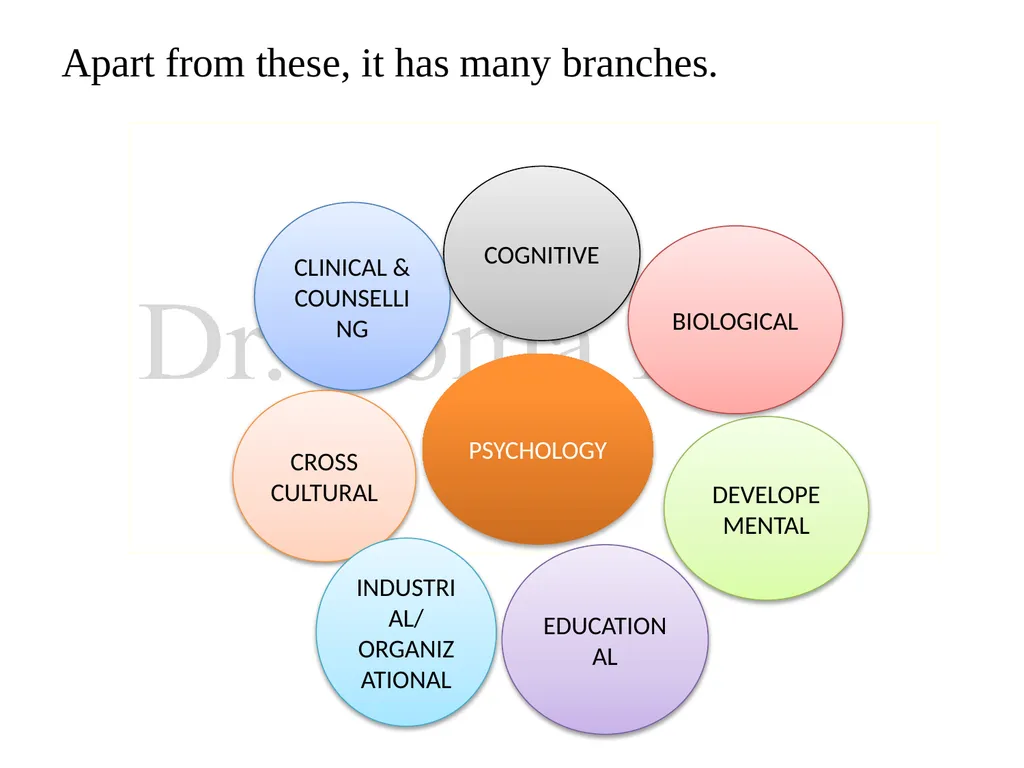
Apart from these, it has many branches. PSYCHOLOGY CLINICAL & COUNSELLING CROSS CULTURAL INDUSTRIAL/ORGANIZATIONAL EDUCATIONAL DEVELOPEMENTAL COGNITIVE BIOLOGICAL<br>
07
History Of Positive Psychology It is observed that the idea of positive psychology is not new.
There were four groups who worked on how to achieve ‘THE GOOD LIFE’.
1. Greeks 2. Utilitarianism 3. William James
4. Humanistic Psychology<br>
08
Contd….. The greatest philosopher Aristotle (384-322 BC) made a remarkable contribution on morality, virtue and what it means to live a good life.
Utilitarianism talks about the ‘the greatest good for all the greatest number of people’.
(Jeremy Bentham; 1748-1832)
It is also known as the ‘greatest happiness principle’ or the principle of utility.<br>
09
Contd….. William James (1890) wrote a text The Principle of Psychology.
His chapter ‘The Emotion’ is most relevant for positive psychology to acknowledge.
He suggests that emotions comes after, we have physically acted out. Emotional reaction are often excited by objects. For example: anger, weeping, feel sorry.<br>
10
By the late 1950’s is the beginning period of Humanistic Psychology.
The Humanistic Psychology introduced the research, related to human thought, behavior and experience.
It emphasizes the study of the whole person.
It believes individual behavior is primarily determine by their perception of the world around and their meaning.
Individuals are internally directed and motivated to fulfil their human potential.<br>
11
Positive Psychology Positive psychology began as a new area of psychology in 1998 when Martin E.P. Seligman chose it as the theme for his term as president of the American Psychological Association.
In the first sentence of his book Authentic Happiness, Seligman claimed: "for the last half century psychology has been consumed with a single topic only – mental illness",<br>
12
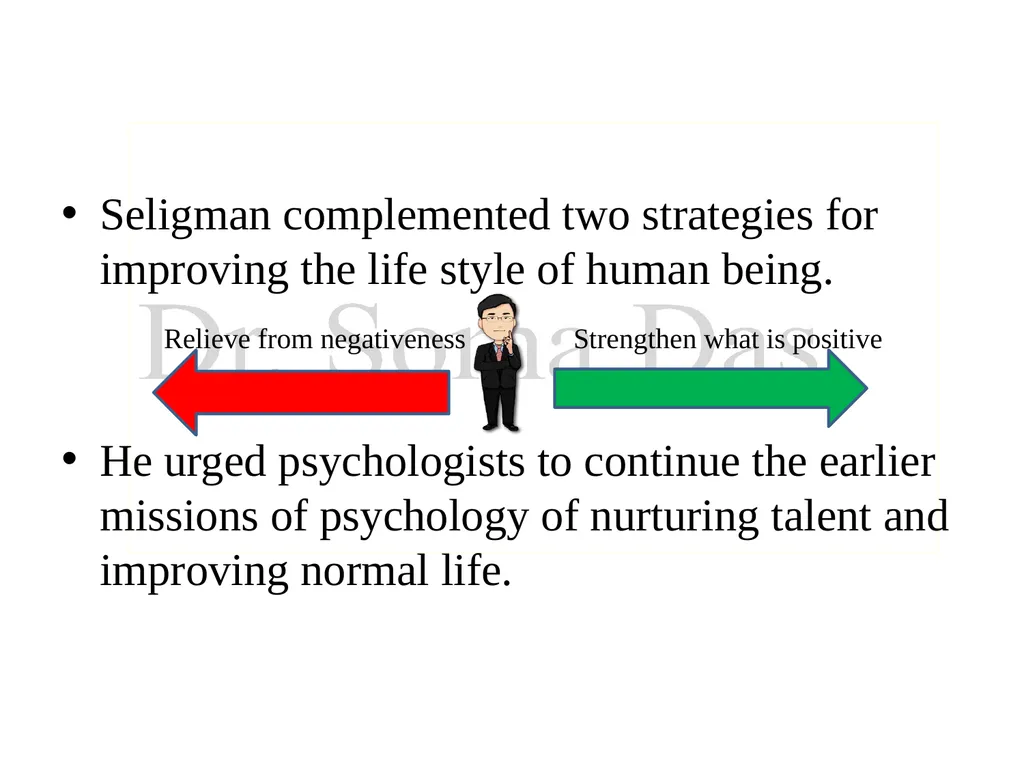
Seligman complemented two strategies for improving the life style of human being.
Relieve from negativeness Strengthen what is positive
He urged psychologists to continue the earlier missions of psychology of nurturing talent and improving normal life.<br>
13
Definitions of Positive Psychology “ Positive psychology is the scientific study of what makes life most worth living”
“Positive Psychology is the scientific study of human flourishing, and an applied approach to optimal functioning. It has also been defined as the study of the strengths and virtues that enable individuals, communities and organisations to thrive.” Positive Psychology Institute. Apr 3, 2015<br>
14
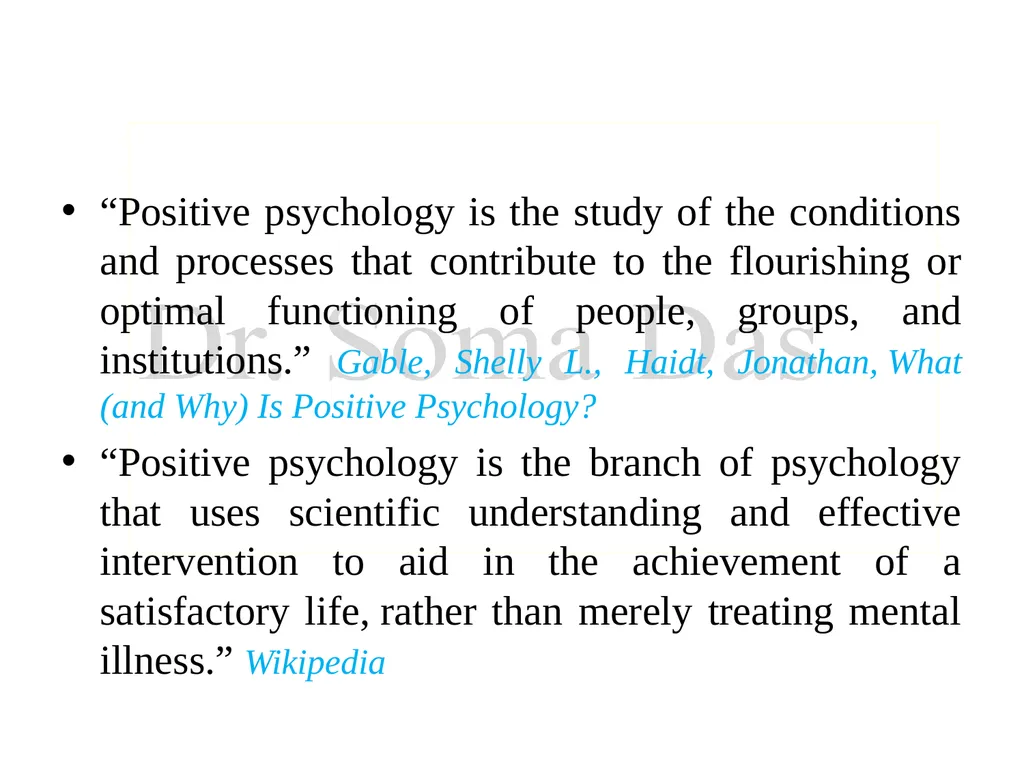
“Positive psychology is the study of the conditions and processes that contribute to the flourishing or optimal functioning of people, groups, and institutions.” Gable, Shelly L., Haidt, Jonathan, What (and Why) Is Positive Psychology?
“Positive psychology is the branch of psychology that uses scientific understanding and effective intervention to aid in the achievement of a satisfactory life, rather than merely treating mental illness.” Wikipedia<br>
15
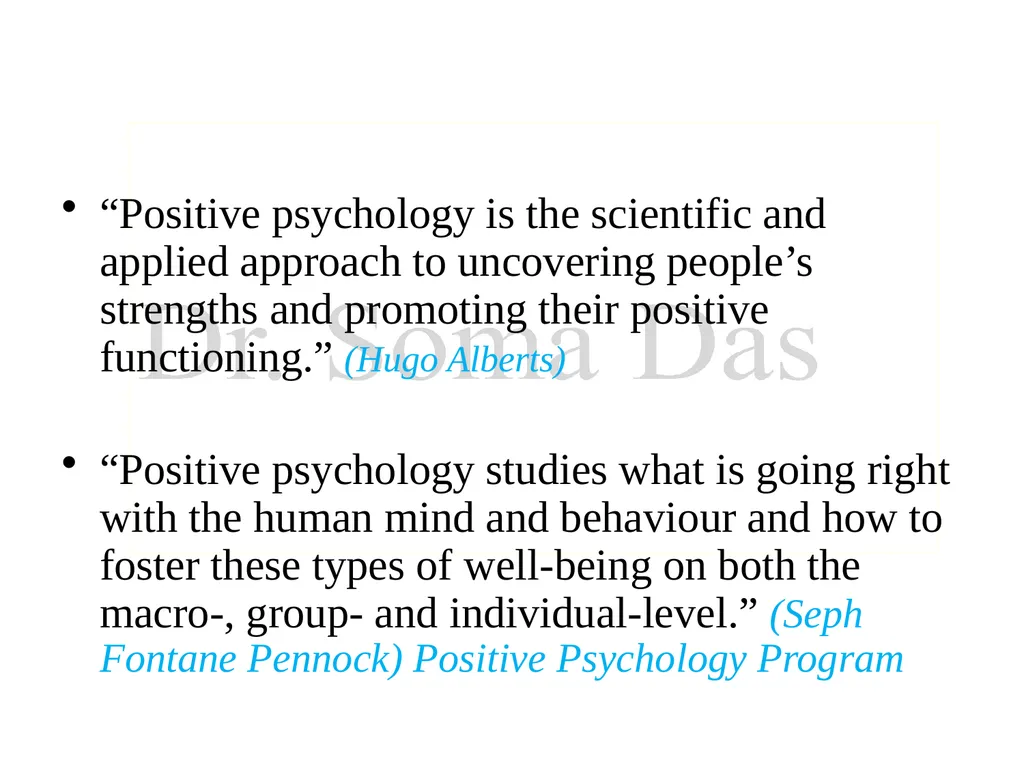
“Positive psychology is the scientific and applied approach to uncovering people’s strengths and promoting their positive functioning.” (Hugo Alberts)
“Positive psychology studies what is going right with the human mind and behaviour and how to foster these types of well-being on both the macro-, group- and individual-level.” (Seph Fontane Pennock) Positive Psychology Program<br>
16
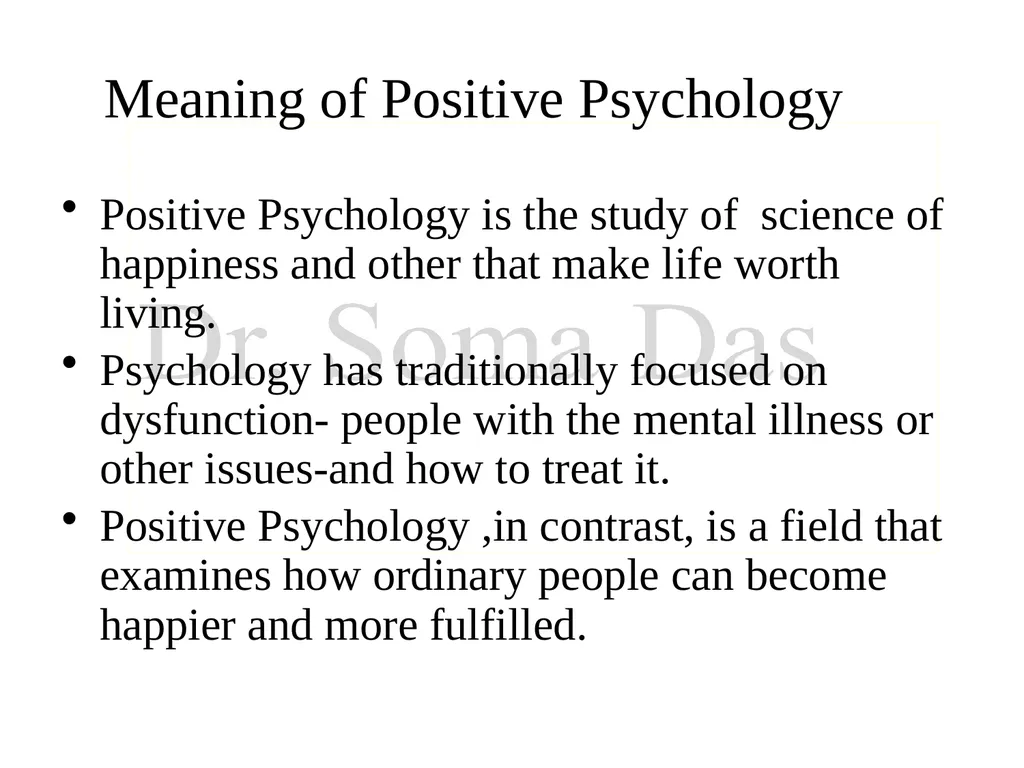
Meaning of Positive Psychology Positive Psychology is the study of science of happiness and other that make life worth living.
Psychology has traditionally focused on dysfunction- people with the mental illness or other issues-and how to treat it.
Positive Psychology ,in contrast, is a field that examines how ordinary people can become happier and more fulfilled.<br>
17
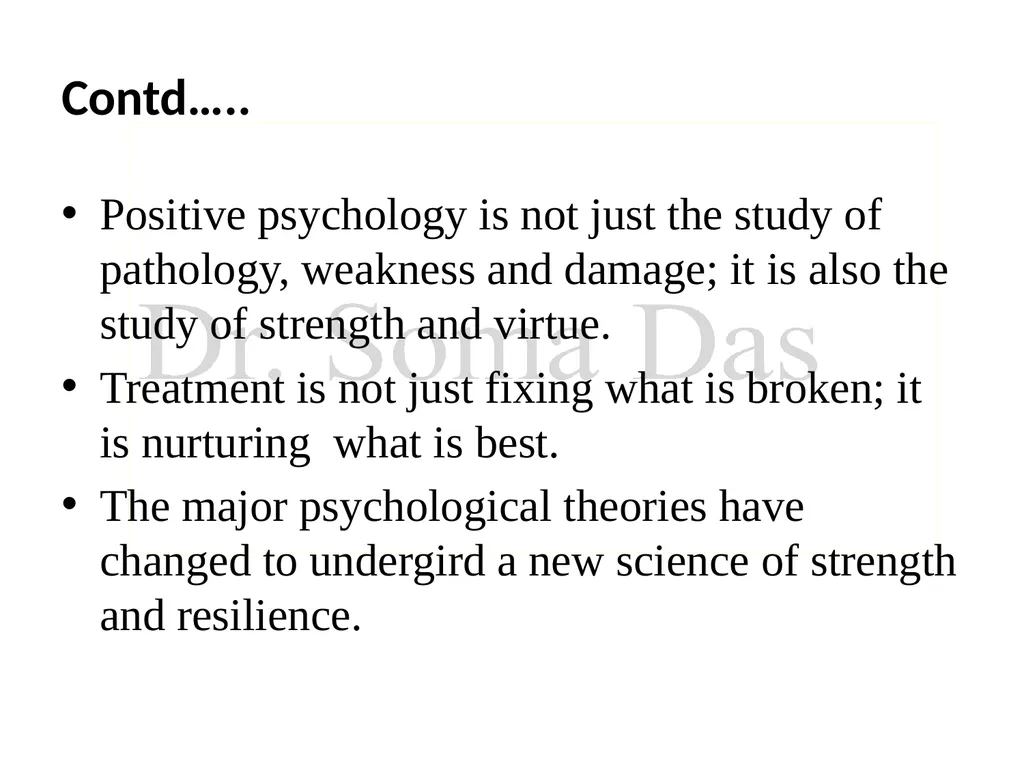
Contd….. Positive psychology is not just the study of pathology, weakness and damage; it is also the study of strength and virtue.
Treatment is not just fixing what is broken; it is nurturing what is best.
The major psychological theories have changed to undergird a new science of strength and resilience.<br>
18
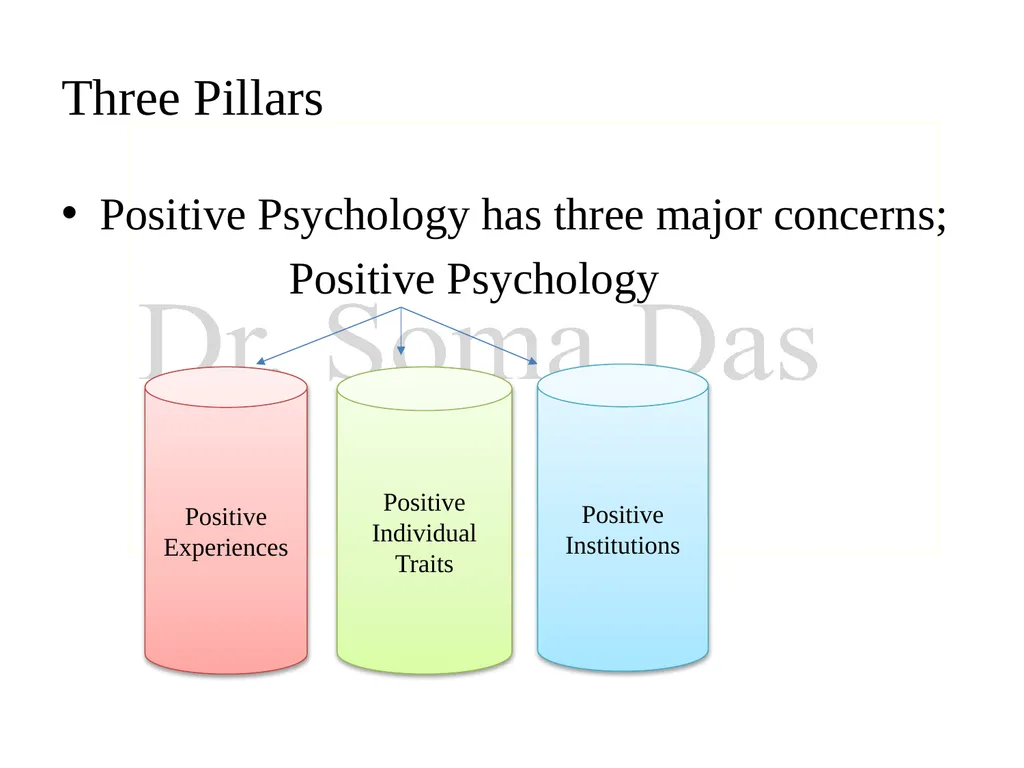
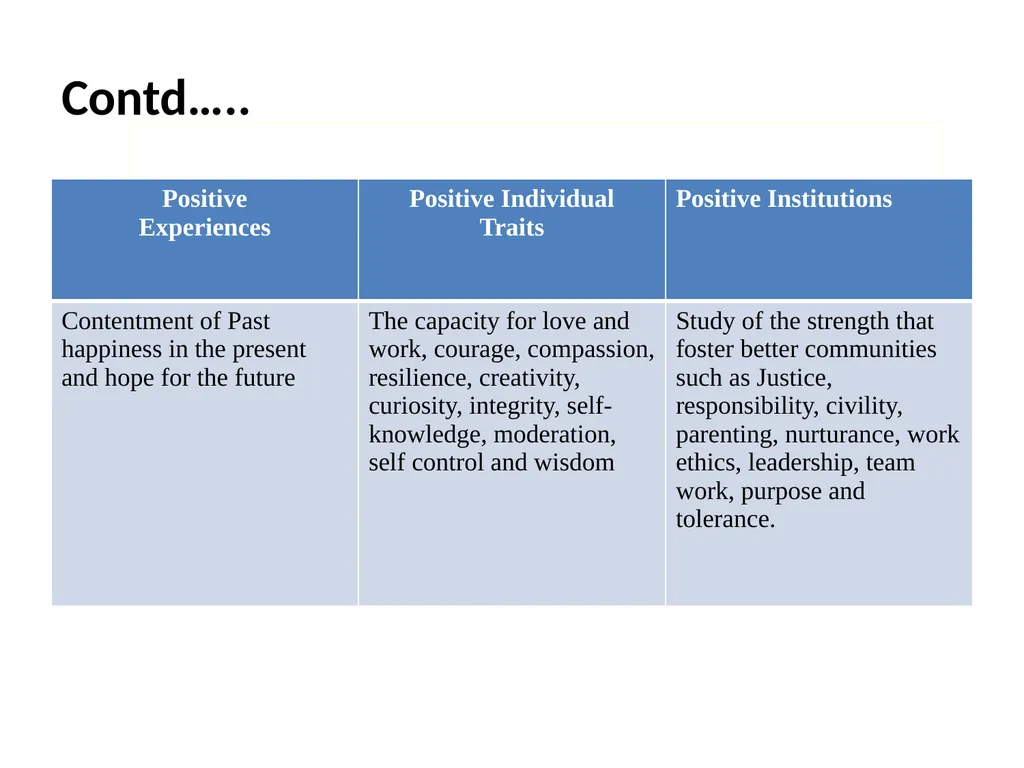
Three Pillars Positive Psychology has three major concerns;
Positive Psychology Positive
Experiences Positive Institutions Positive Individual
Traits<br>
20
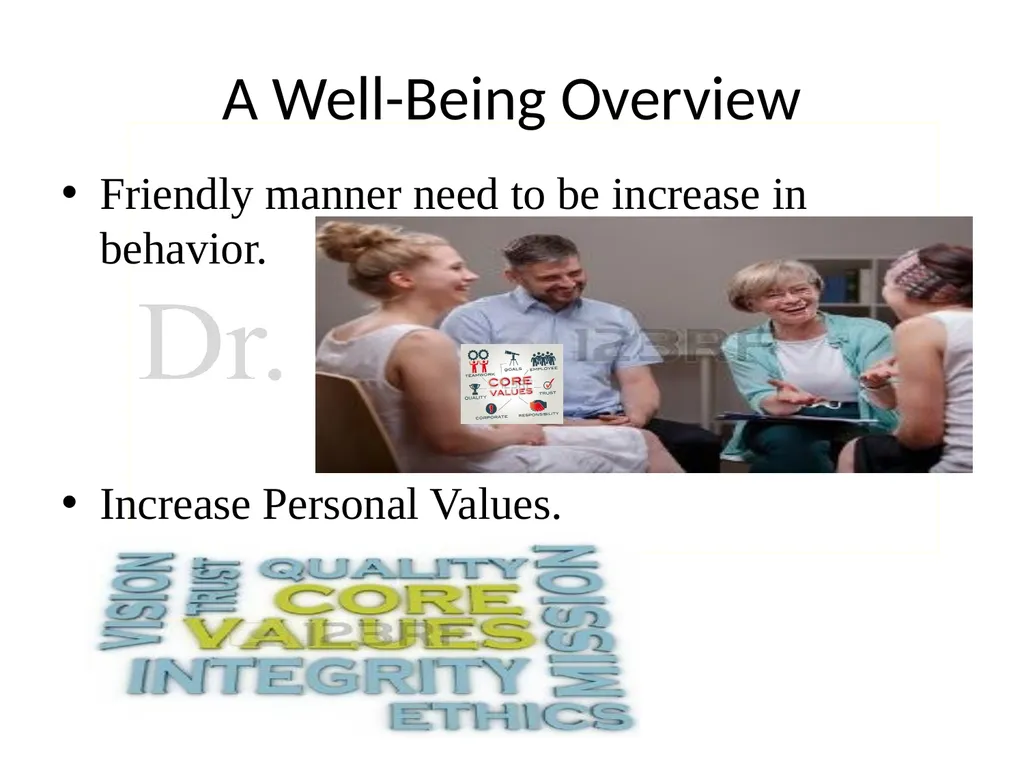
A Well-Being Overview Friendly manner need to be increase in behavior.
Increase Personal Values.<br>
21
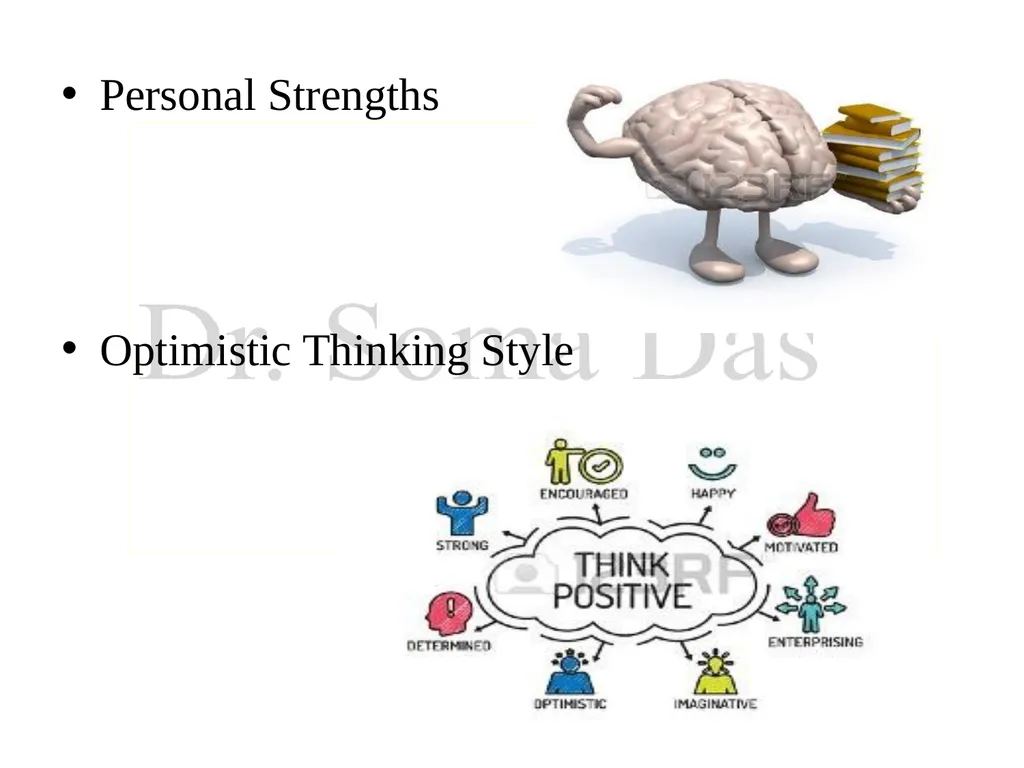
Personal Strengths
Optimistic Thinking Style<br>
22
Work that you enjoy
Be grateful
Be Curious<br>
23
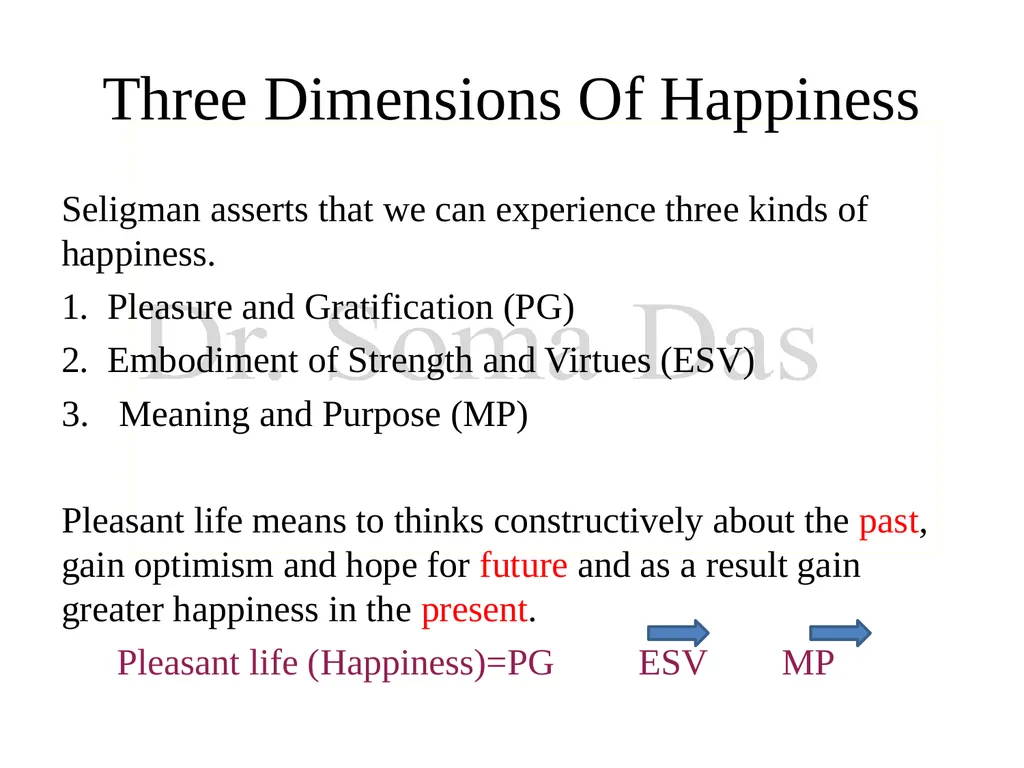
Three Dimensions Of Happiness Seligman asserts that we can experience three kinds of happiness.
1. Pleasure and Gratification (PG)
2. Embodiment of Strength and Virtues (ESV)
Meaning and Purpose (MP)
Pleasant life means to thinks constructively about the past, gain optimism and hope for future and as a result gain greater happiness in the present.
Pleasant life (Happiness)=PG ESV MP<br>
24
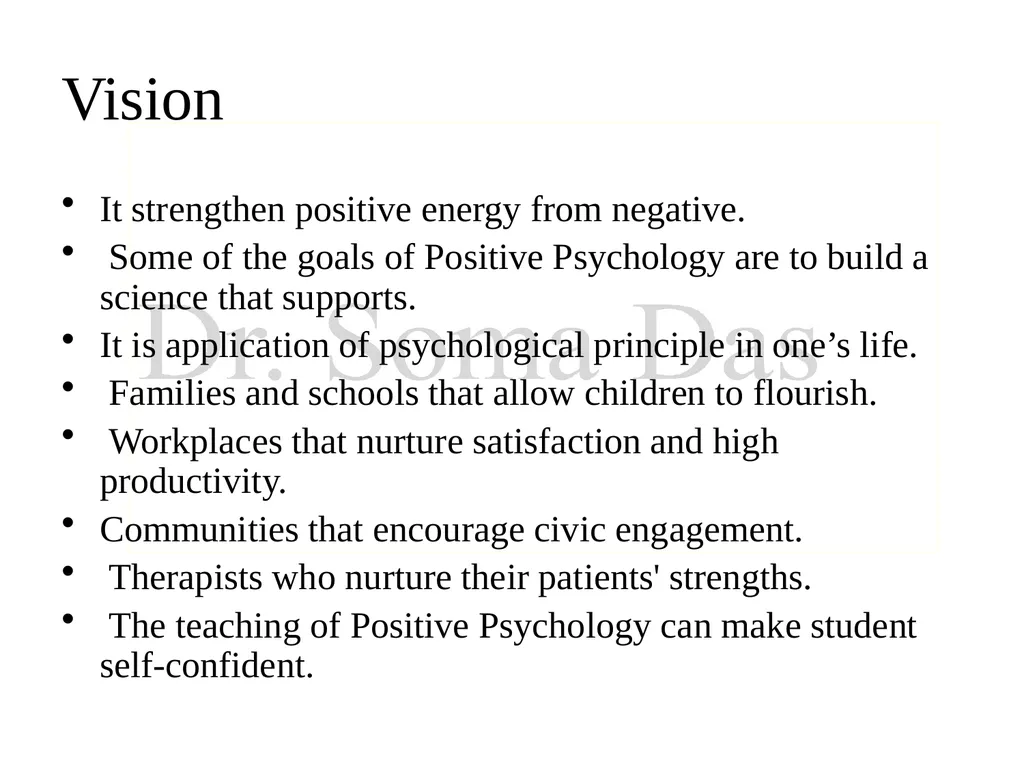
Vision It strengthen positive energy from negative.
Some of the goals of Positive Psychology are to build a science that supports.
It is application of psychological principle in one’s life.
Families and schools that allow children to flourish.
Workplaces that nurture satisfaction and high productivity.
Communities that encourage civic engagement.
Therapists who nurture their patients' strengths.
The teaching of Positive Psychology can make student self-confident.<br>
25
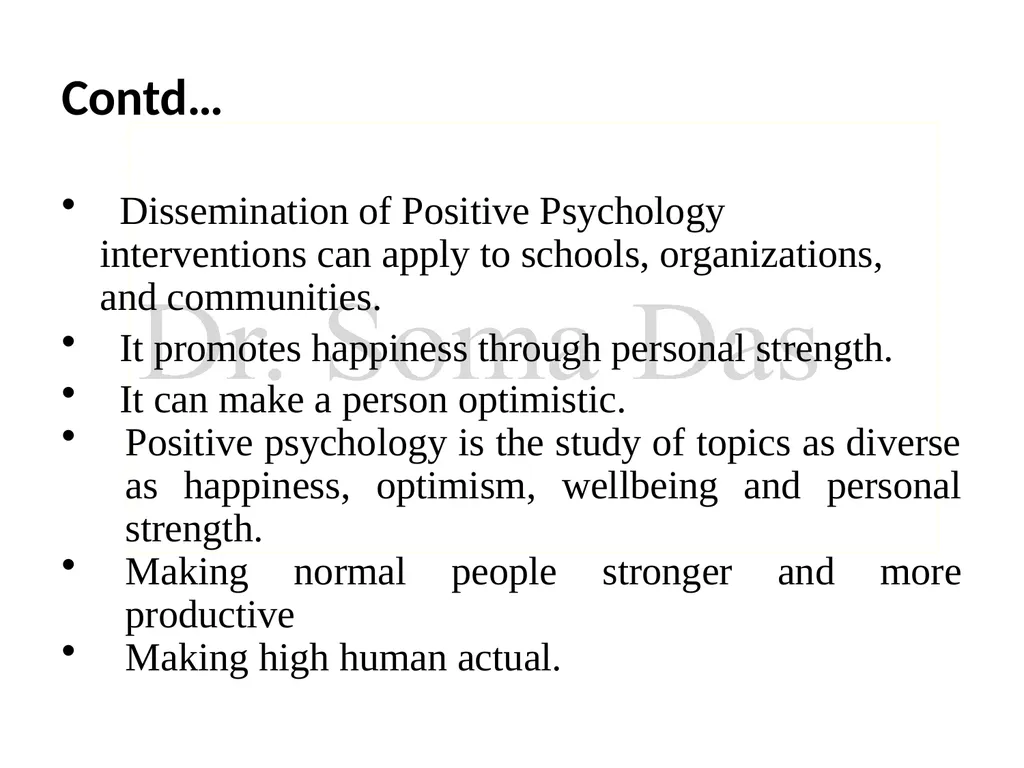
Contd… Dissemination of Positive Psychology interventions can apply to schools, organizations, and communities.
It promotes happiness through personal strength.
It can make a person optimistic.
Positive psychology is the study of topics as diverse as happiness, optimism, wellbeing and personal strength.
Making normal people stronger and more productive
Making high human actual.<br>