PREP Neonatal cases. 2021 Helen Fielder Case 1 33 week boy, no steroids, SVD. On high flow 50, 6h old, significant work of breathing. Sats 88-92 pH 7.23, CO2 8.1, BE -4 LISA Indications Infant on non-invasive respiratory support, at any
"PREP Neonatal cases…. 2021 Helen Fielder Case 1 33" is the property of its rightful owner. Permission is granted to
download and print the materials on this website for personal, non-commercial use only, and to display it
on your personal computer provided you do not modify the materials and that you retain all copyright
notices contained in the materials. By downloading content from our website, you accept the terms of this
agreement.
Presentation Transcript
01
PREP Neonatal cases…. 2021
Helen Fielder<br>
02
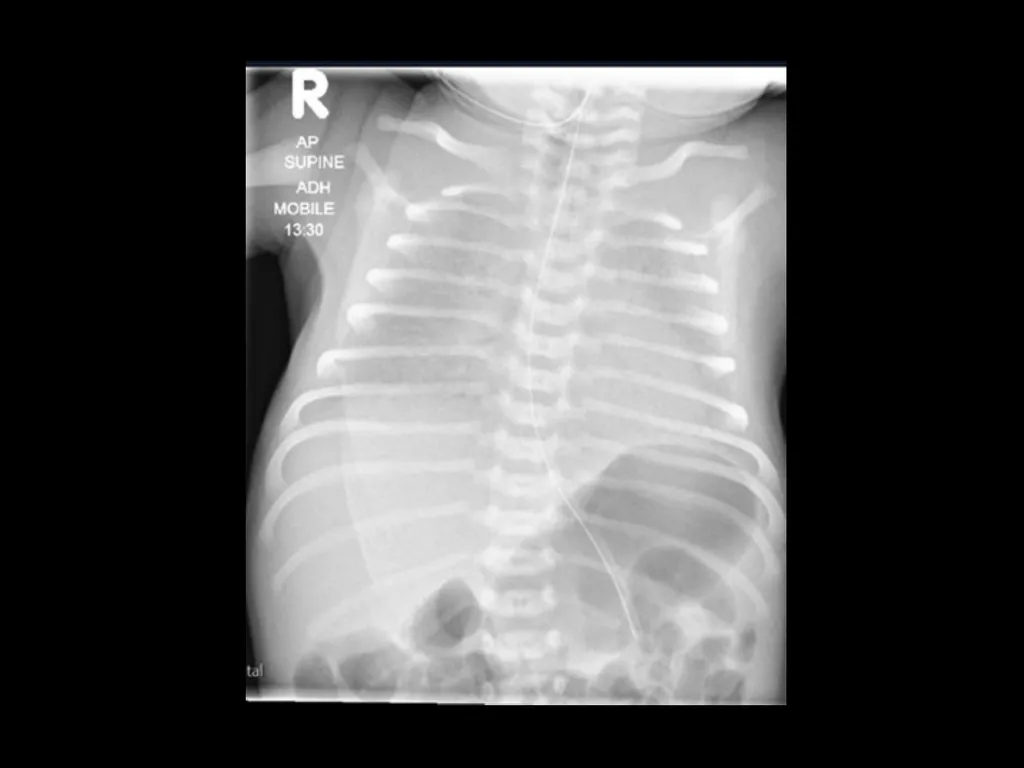
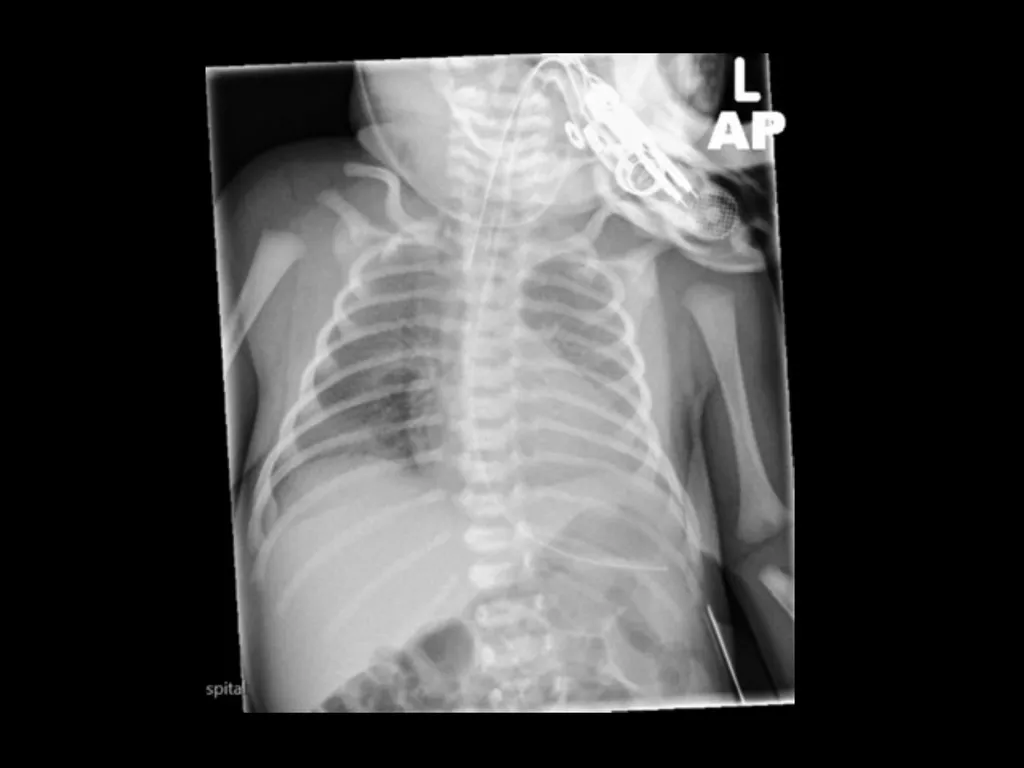
Case 1 33 week boy, no steroids, SVD.
On high flow 50%, 6h old, significant work of breathing. Sats 88-92%
pH 7.23, CO2 8.1, BE -4<br>
03
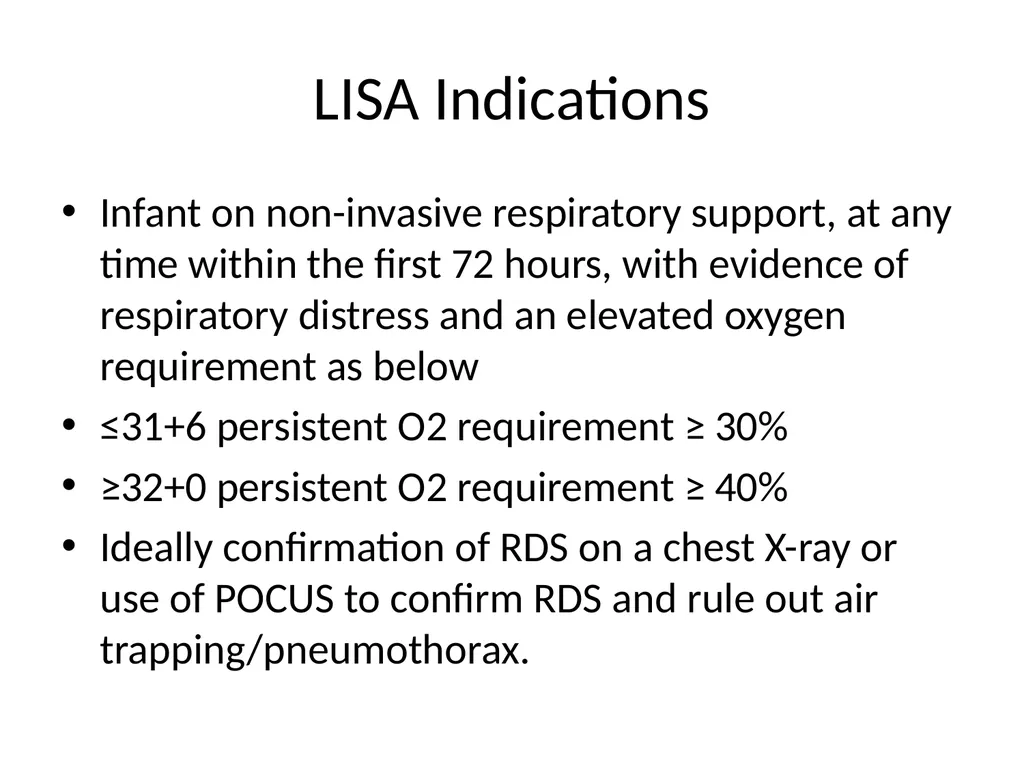
LISA Indications Infant on non-invasive respiratory support, at any time within the first 72 hours, with evidence of respiratory distress and an elevated oxygen requirement as below
≤31+6 persistent O2 requirement ≥ 30%
≥32+0 persistent O2 requirement ≥ 40%
Ideally confirmation of RDS on a chest X-ray or use of POCUS to confirm RDS and rule out air trapping/pneumothorax.<br>
04
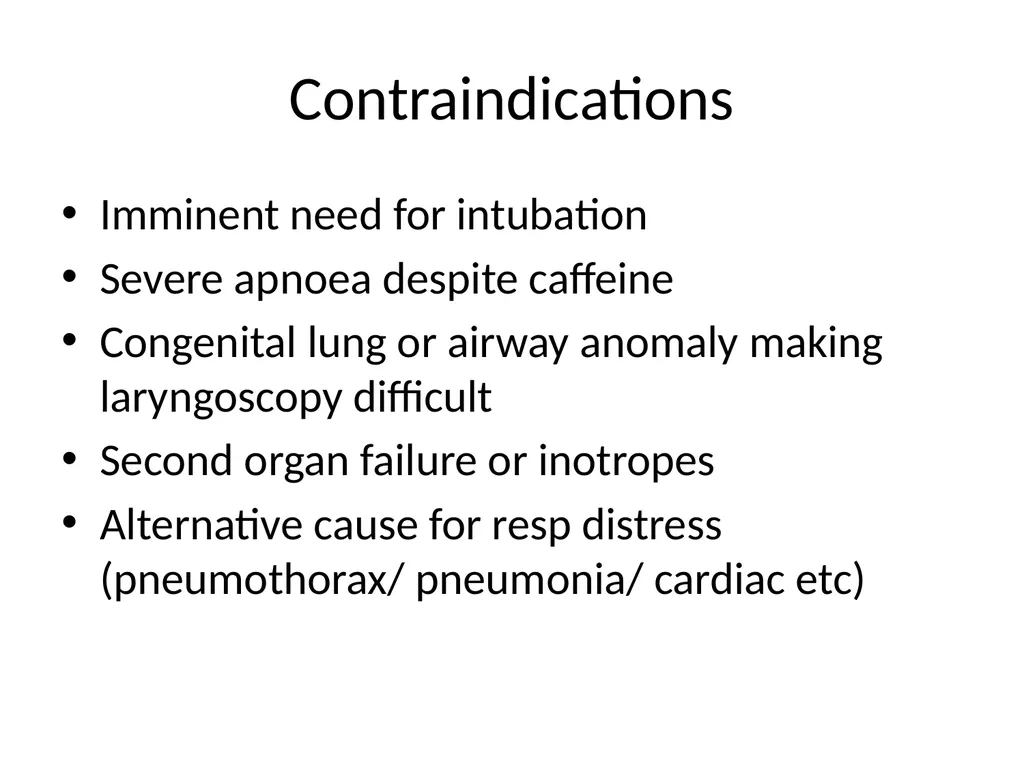
Contraindications Imminent need for intubation
Severe apnoea despite caffeine
Congenital lung or airway anomaly making laryngoscopy difficult
Second organ failure or inotropes
Alternative cause for resp distress (pneumothorax/ pneumonia/ cardiac etc)<br>
05
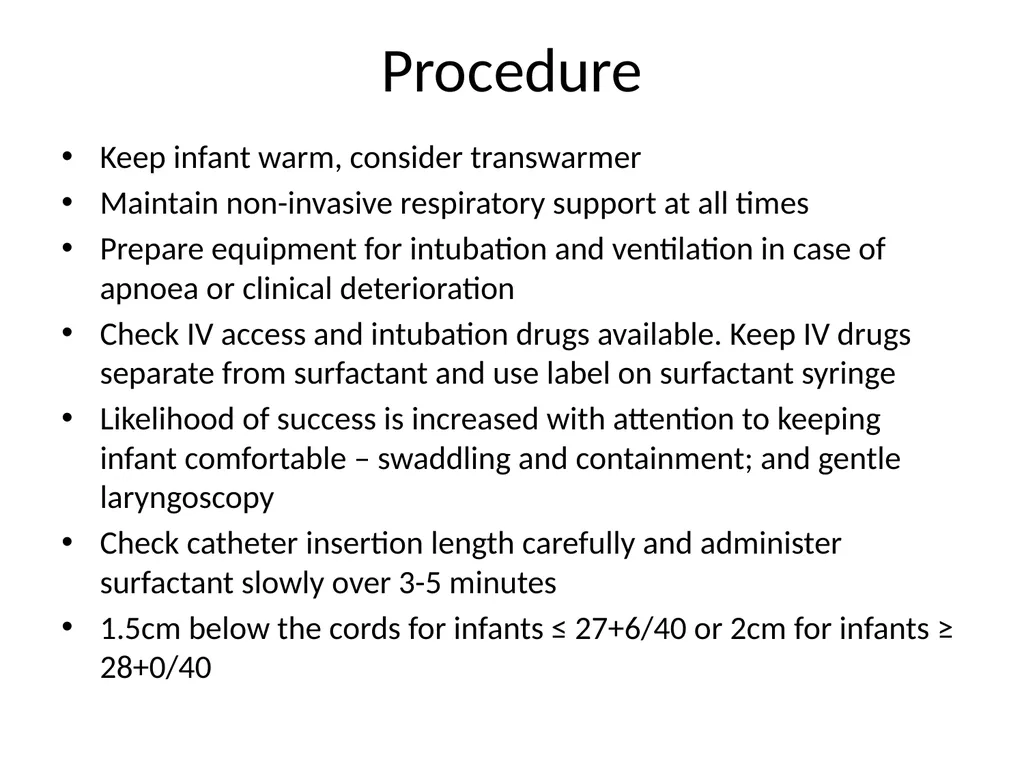
Procedure Keep infant warm, consider transwarmer
Maintain non-invasive respiratory support at all times
Prepare equipment for intubation and ventilation in case of apnoea or clinical deterioration
Check IV access and intubation drugs available. Keep IV drugs separate from surfactant and use label on surfactant syringe
Likelihood of success is increased with attention to keeping infant comfortable – swaddling and containment; and gentle laryngoscopy
Check catheter insertion length carefully and administer surfactant slowly over 3-5 minutes
1.5cm below the cords for infants ≤ 27+6/40 or 2cm for infants ≥ 28+0/40<br>
06
Maintain CPAP or HHNFC throughout procedure
Consider sucrose or sedation
Insert LISA catheter to desired length with laryngoscope
Hold catheter at lips and remove laryngoscope
Administer surfactant SLOWLY over 3-5minutes
Titrate oxygen as required
Remove LISA catheter once administered and continue CPAP or HHFNC
If prolonged apnoea / ongoing bradycardia / significant hypoxia during LISA, then convert to intubation or provide IPPV as required<br>
07
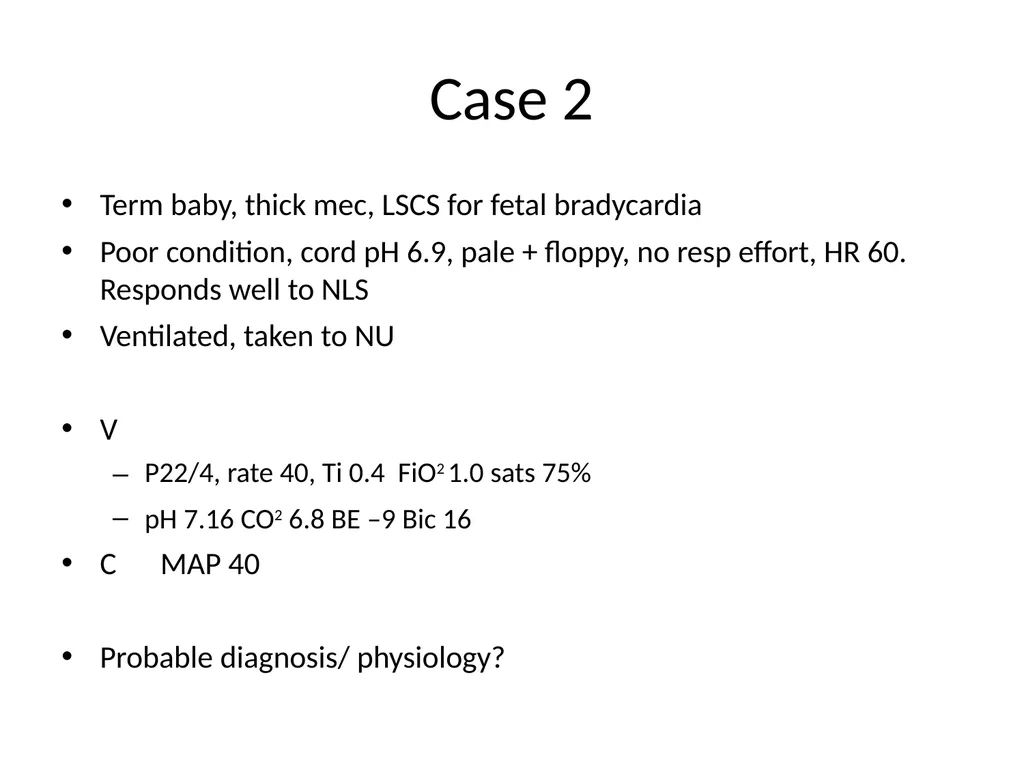
Case 2 Term baby, thick mec, LSCS for fetal bradycardia
Poor condition, cord pH 6.9, pale + floppy, no resp effort, HR 60. Responds well to NLS
Ventilated, taken to NU
V
P22/4, rate 40, Ti 0.4 FiO2 1.0 sats 75%
pH 7.16 CO2 6.8 BE –9 Bic 16
C MAP 40
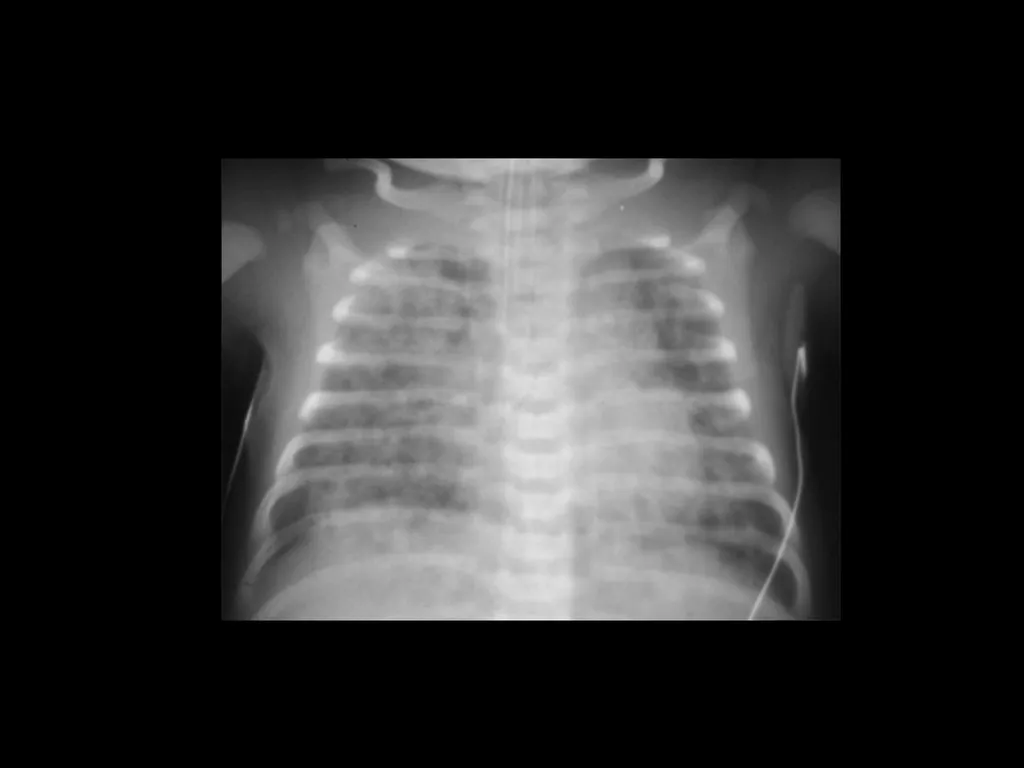
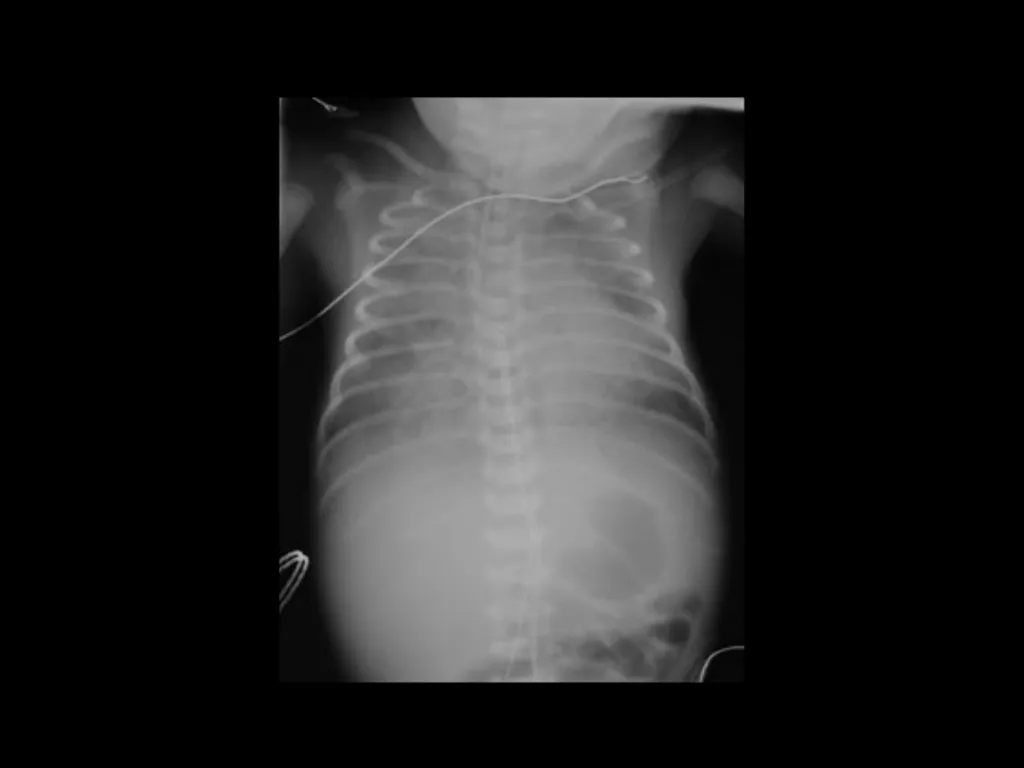
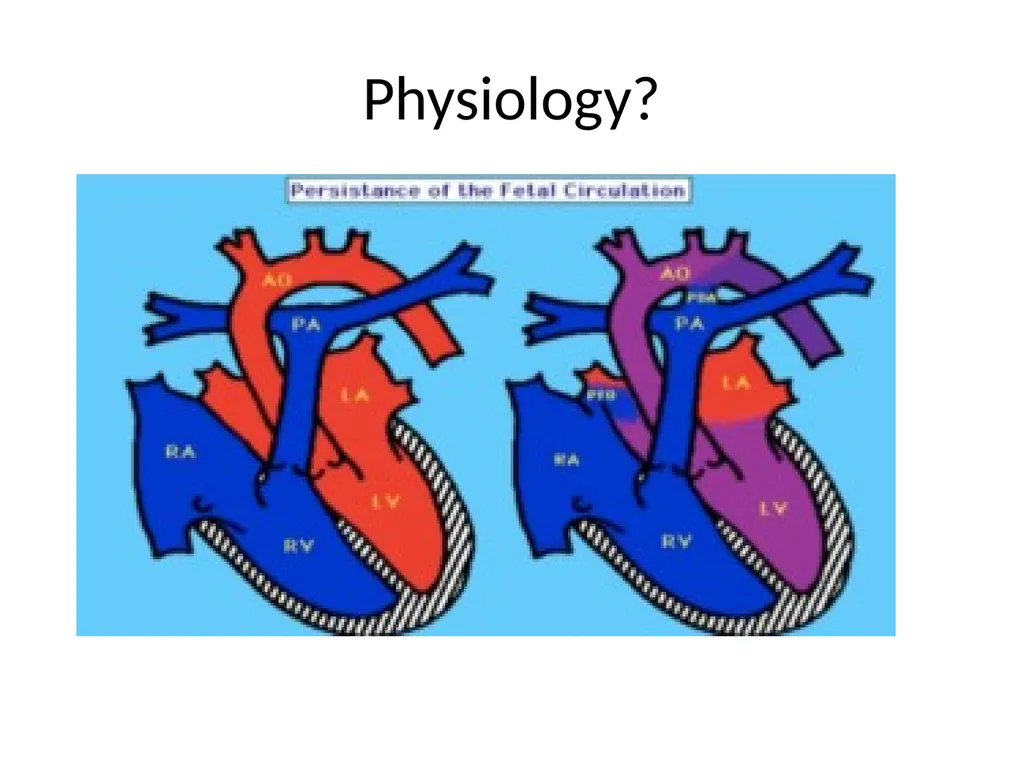
Probable diagnosis/ physiology?<br>
08
Physiology?<br>
09
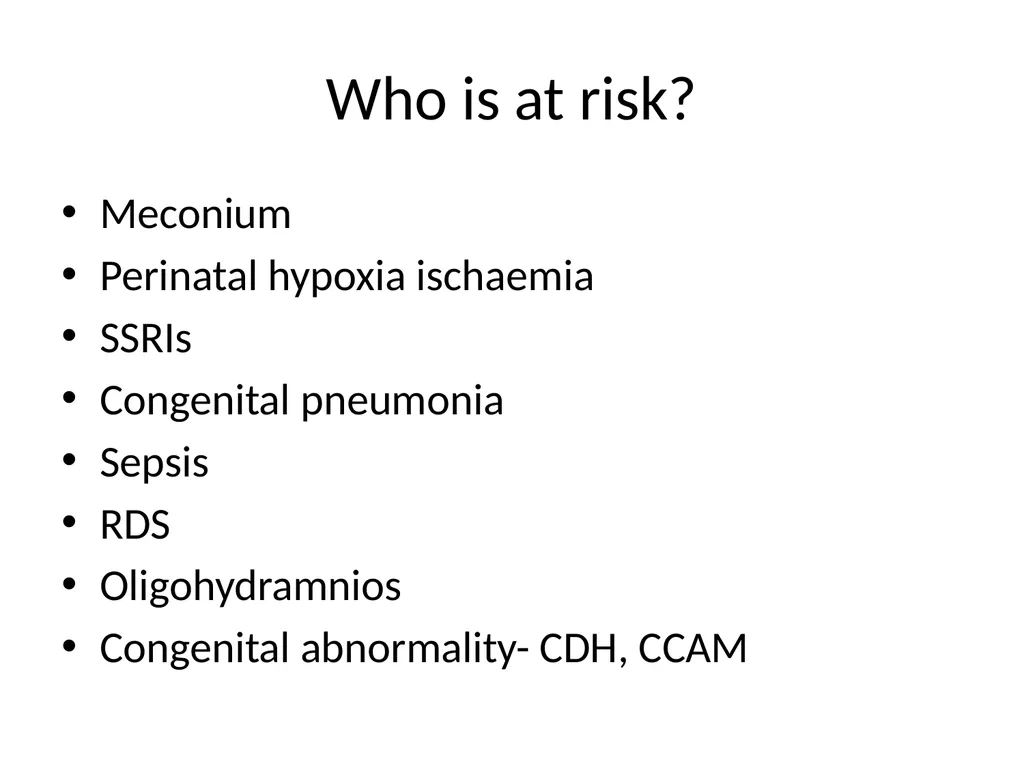
Who is at risk? Meconium
Perinatal hypoxia ischaemia
SSRIs
Congenital pneumonia
Sepsis
RDS
Oligohydramnios
Congenital abnormality- CDH, CCAM<br>
10
Management Act quickly and aggressively!
Phone a friend -local consultant -SONeT<br>
11
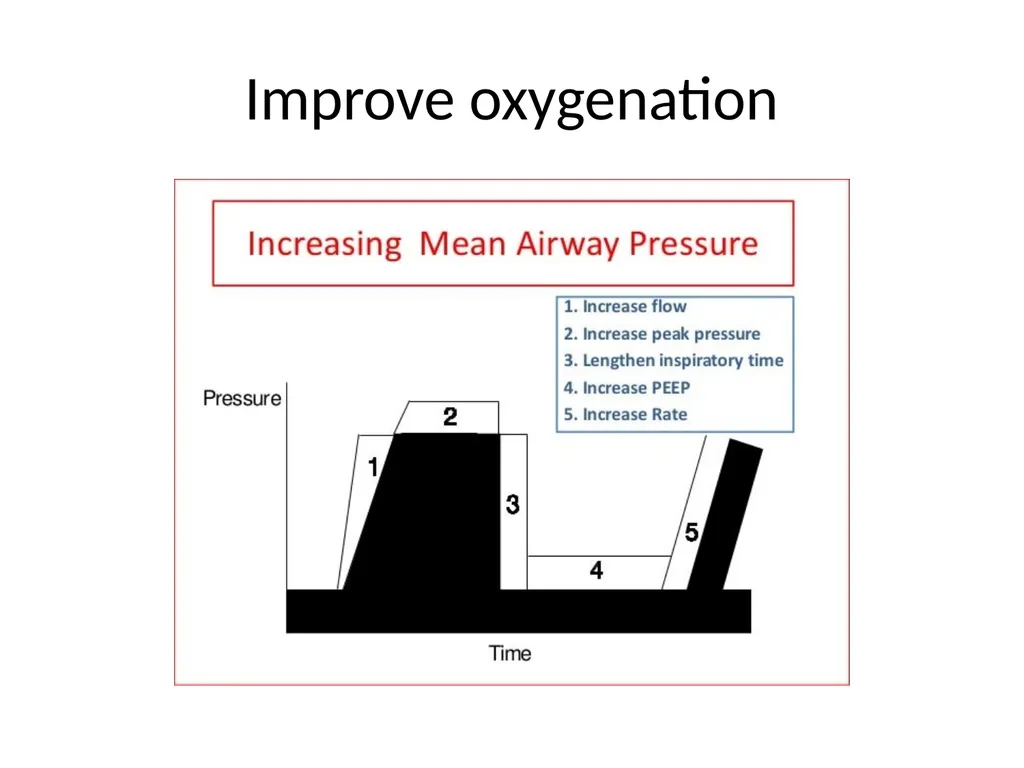
Improve oxygenation<br>
12
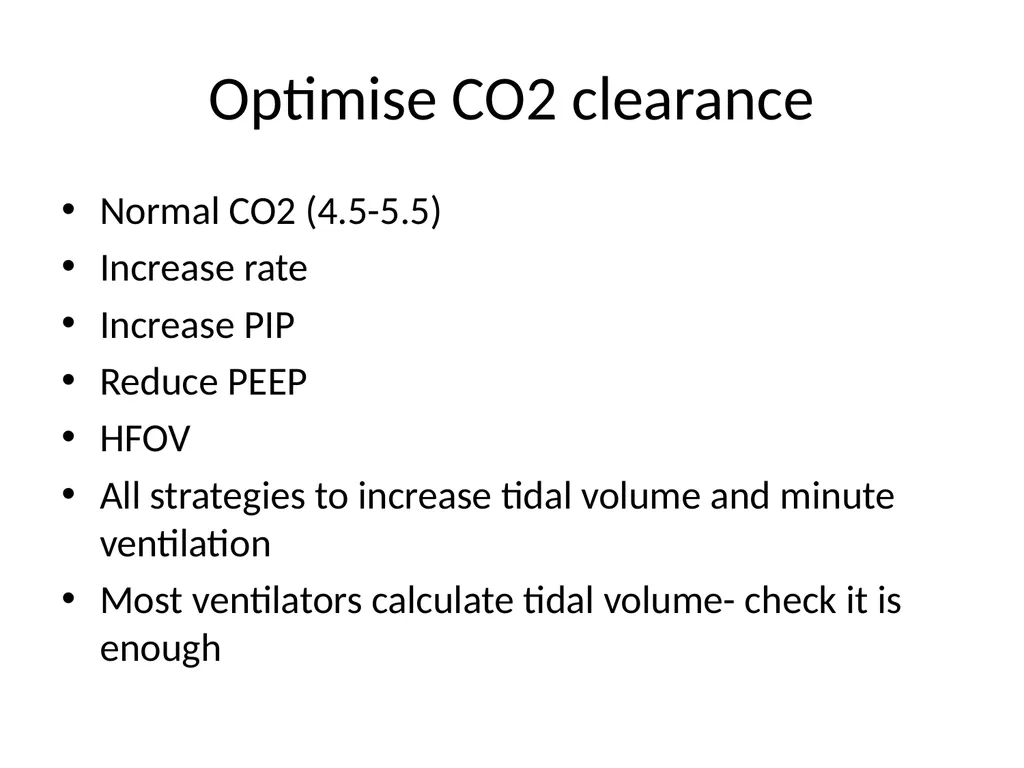
Optimise CO2 clearance Normal CO2 (4.5-5.5)
Increase rate
Increase PIP
Reduce PEEP
HFOV
All strategies to increase tidal volume and minute ventilation
Most ventilators calculate tidal volume- check it is enough<br>
13
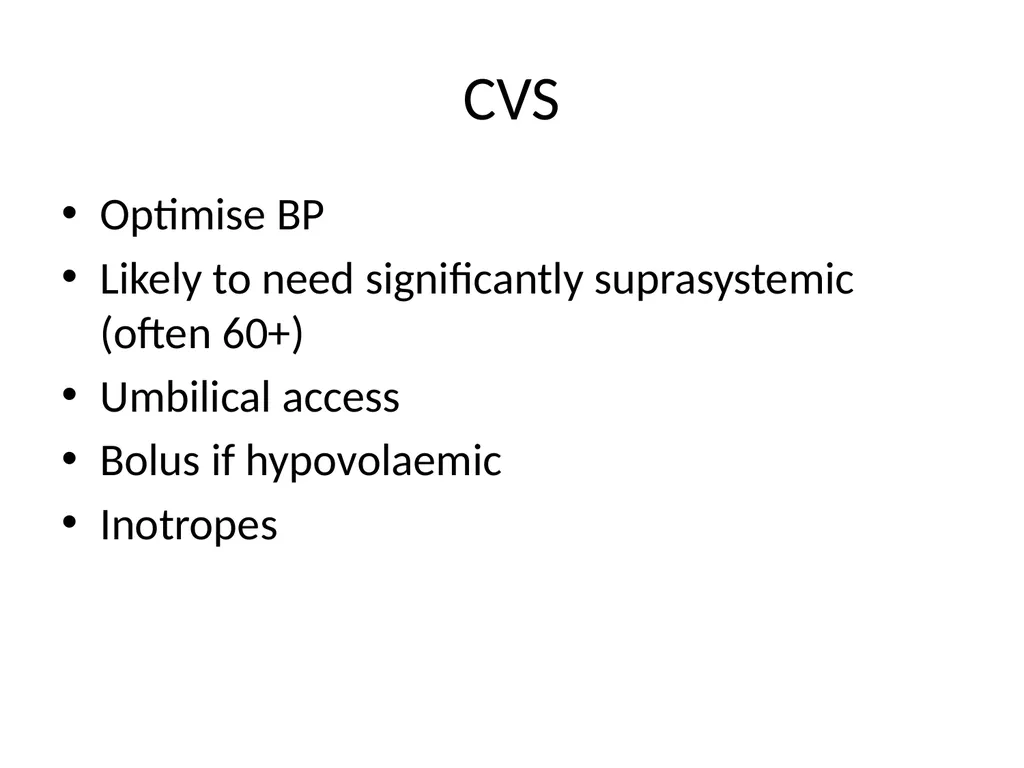
CVS Optimise BP
Likely to need significantly suprasystemic (often 60+)
Umbilical access
Bolus if hypovolaemic
Inotropes<br>
14
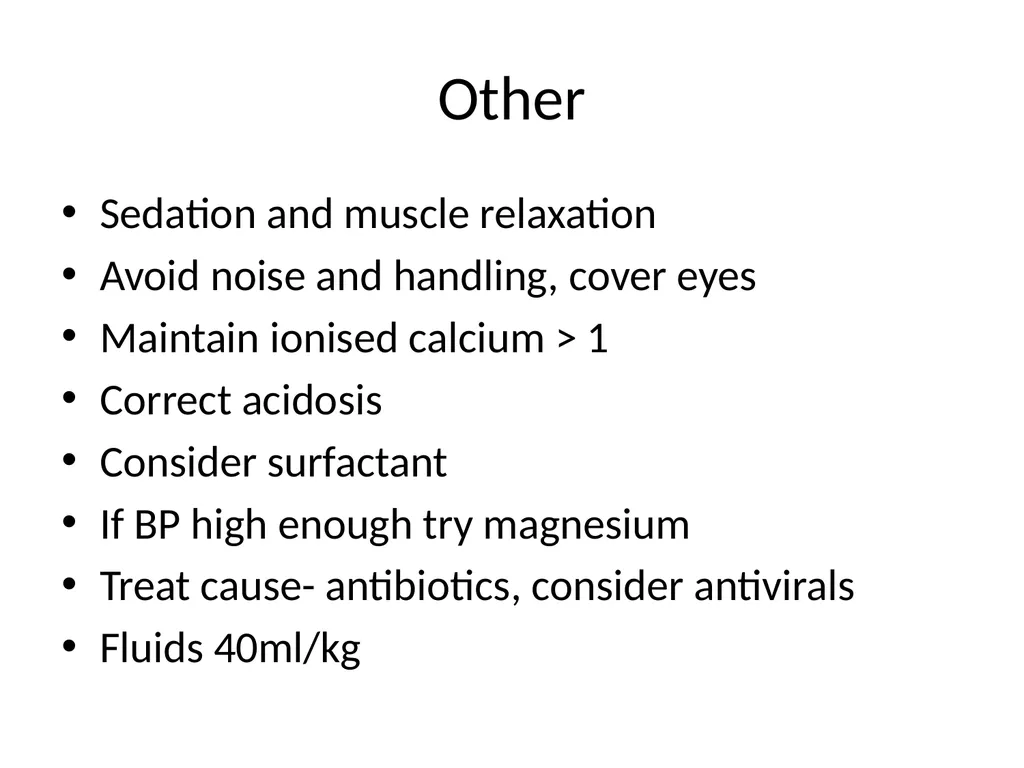
Other Sedation and muscle relaxation
Avoid noise and handling, cover eyes
Maintain ionised calcium > 1
Correct acidosis
Consider surfactant
If BP high enough try magnesium
Treat cause- antibiotics, consider antivirals
Fluids 40ml/kg<br>
15
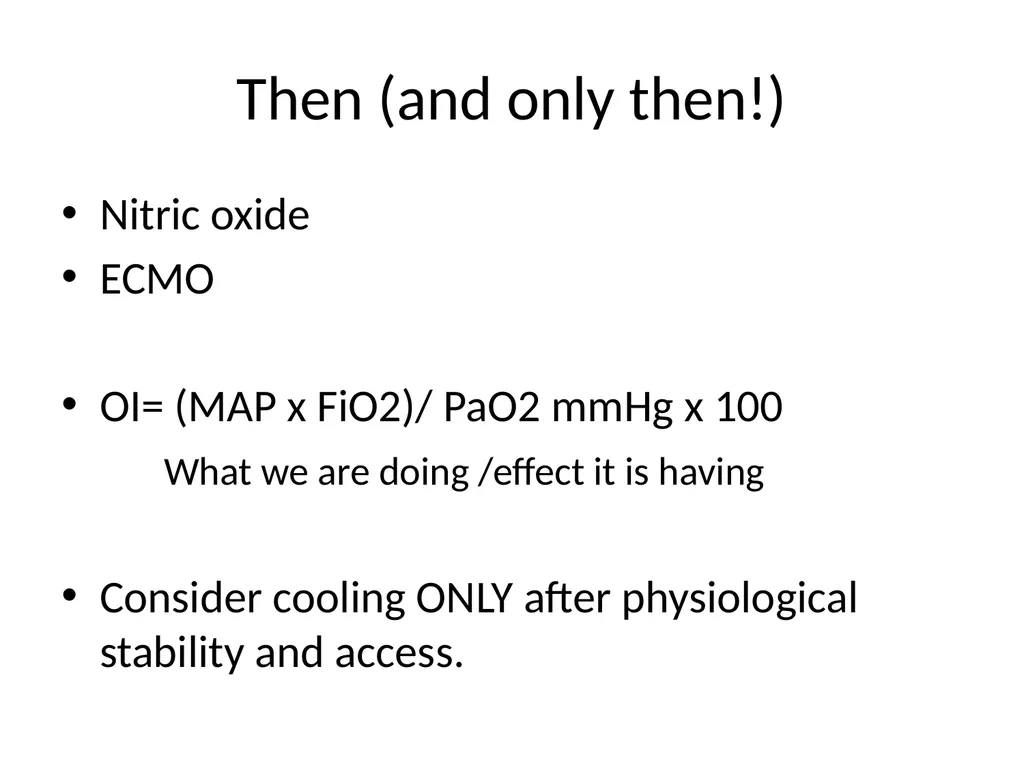
Then (and only then!) Nitric oxide
ECMO
OI= (MAP x FiO2)/ PaO2 mmHg x 100
What we are doing /effect it is having
Consider cooling ONLY after physiological stability and access.<br>
16
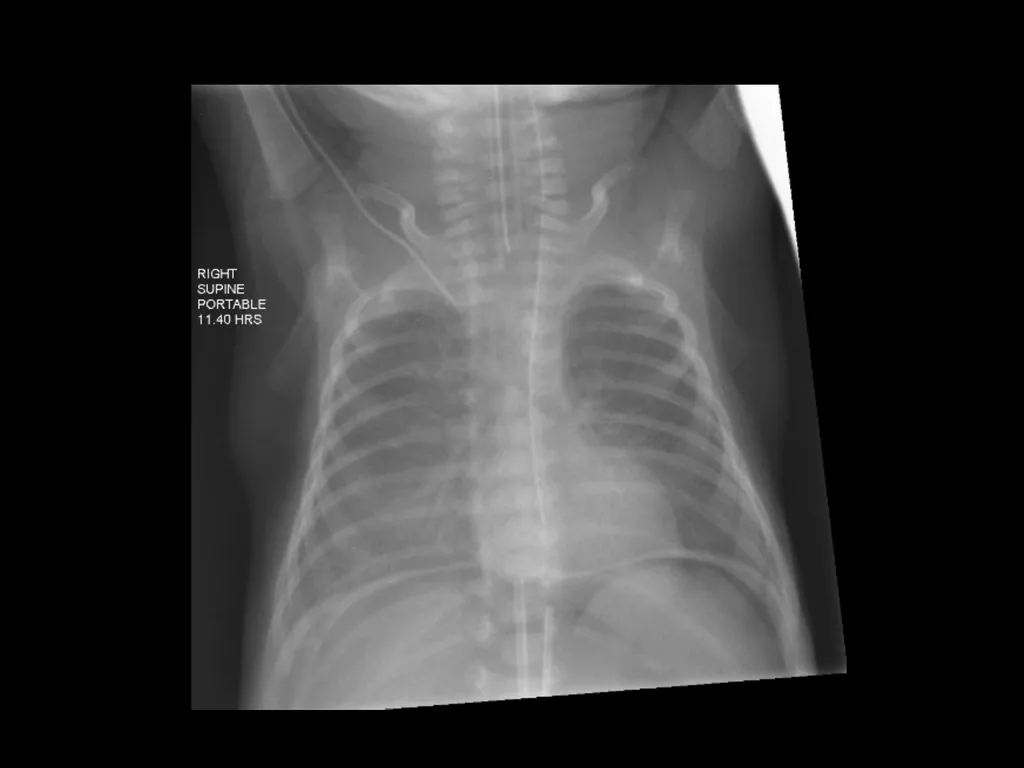
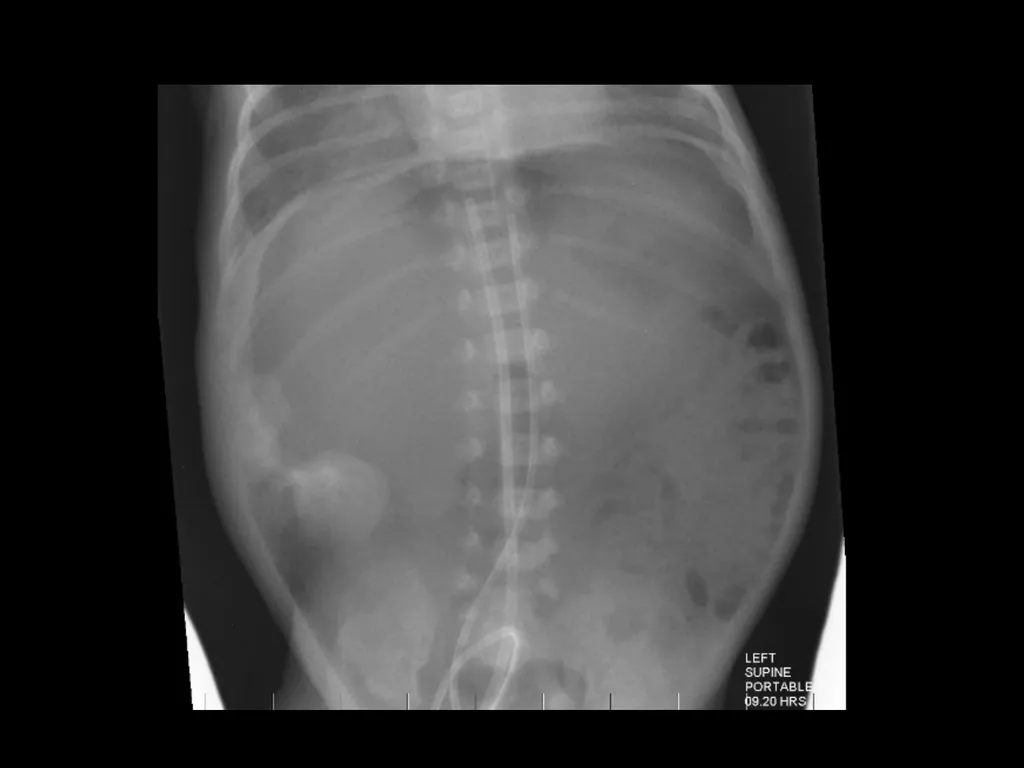
Case 3 29+0 male, 950g, PROM
Intubated + ventilated in DGH
P20/4, rate 40, 30% O2
Aiming for extubation day 2
Long line inserted prior to extubation<br>
17
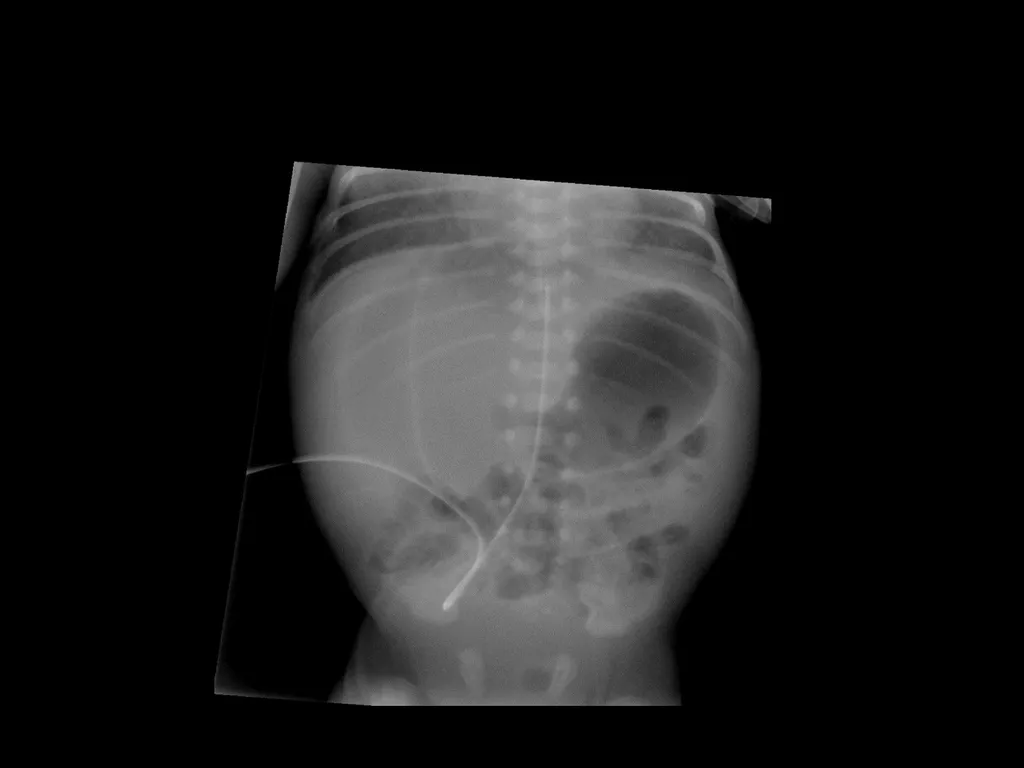
Review of obs….. Tachycardia, increasing ventilation + base excess, hyperglycaemia
What next?<br>
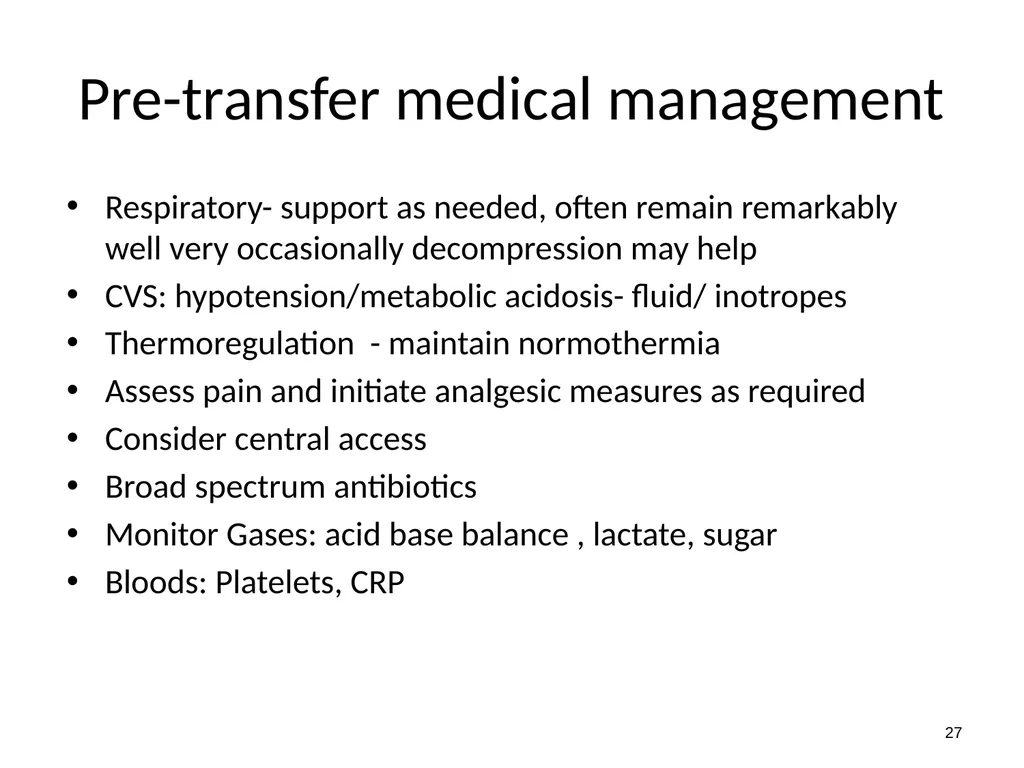
Respiratory- support as needed, often remain remarkably well very occasionally decompression may help
CVS: hypotension/metabolic acidosis- fluid/ inotropes
Thermoregulation - maintain normothermia
Assess pain and initiate analgesic measures as required
Consider central access
Broad spectrum antibiotics
Monitor Gases: acid base balance , lactate, sugar
Bloods: Platelets, CRP 27 Pre-transfer medical management<br>
20
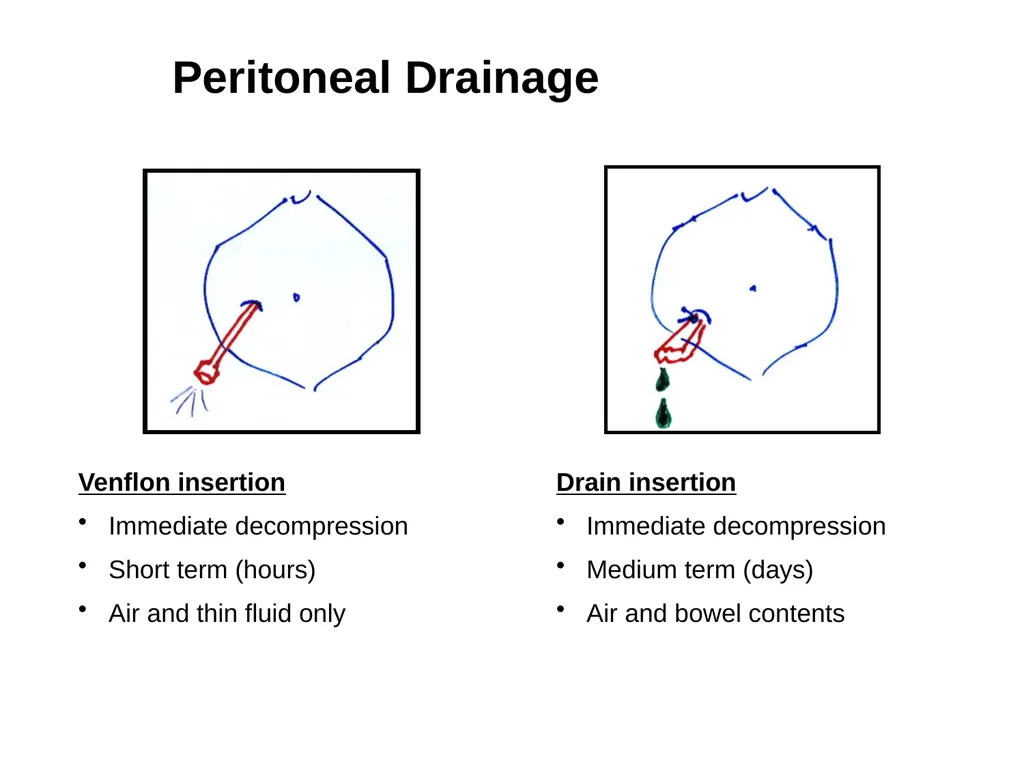
Venflon insertion
Immediate decompression
Short term (hours)
Air and thin fluid only Drain insertion
Immediate decompression
Medium term (days)
Air and bowel contents Peritoneal Drainage<br>
21
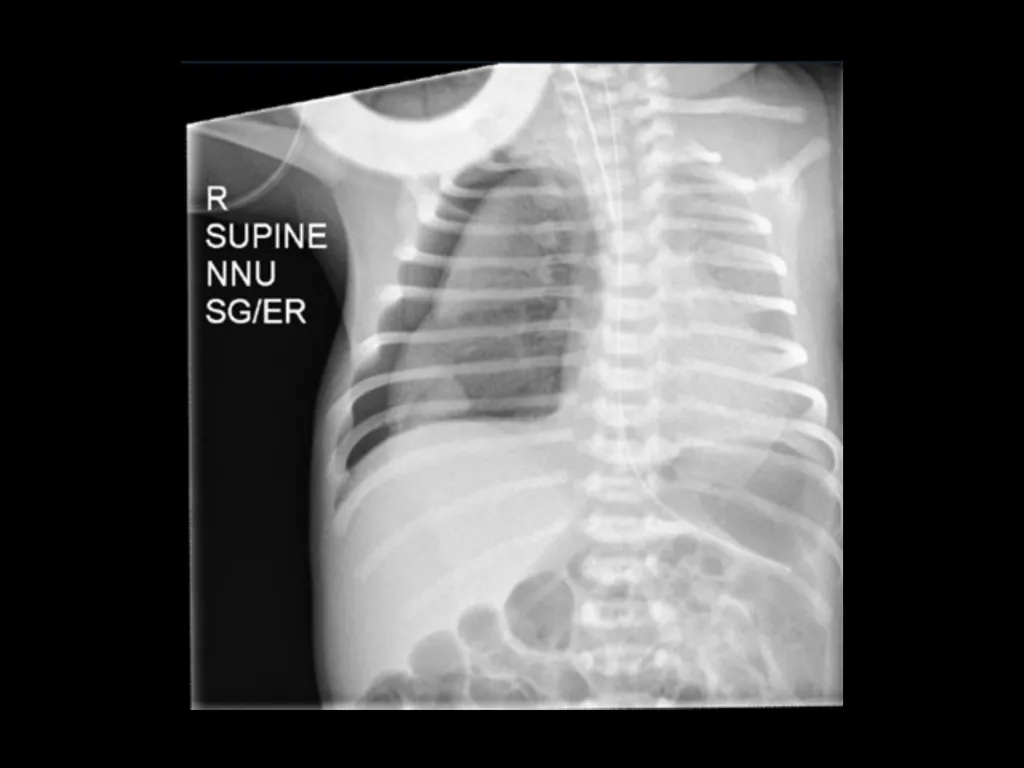
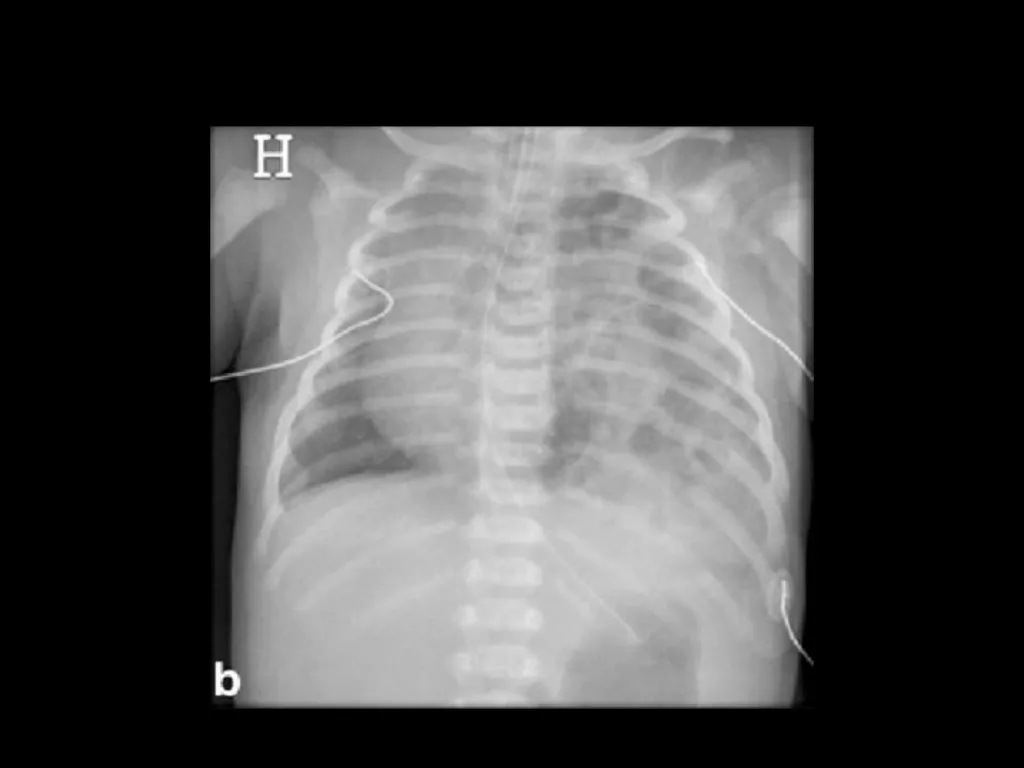
Case 4 Term baby, uneventful antenatal history
Tachypnoeic with sats 92% on postnatal ward<br>
22
Diagnosis?
Management?
NGT
Intubate and ventilate rather than CPAP if respiratory support needed<br>
23
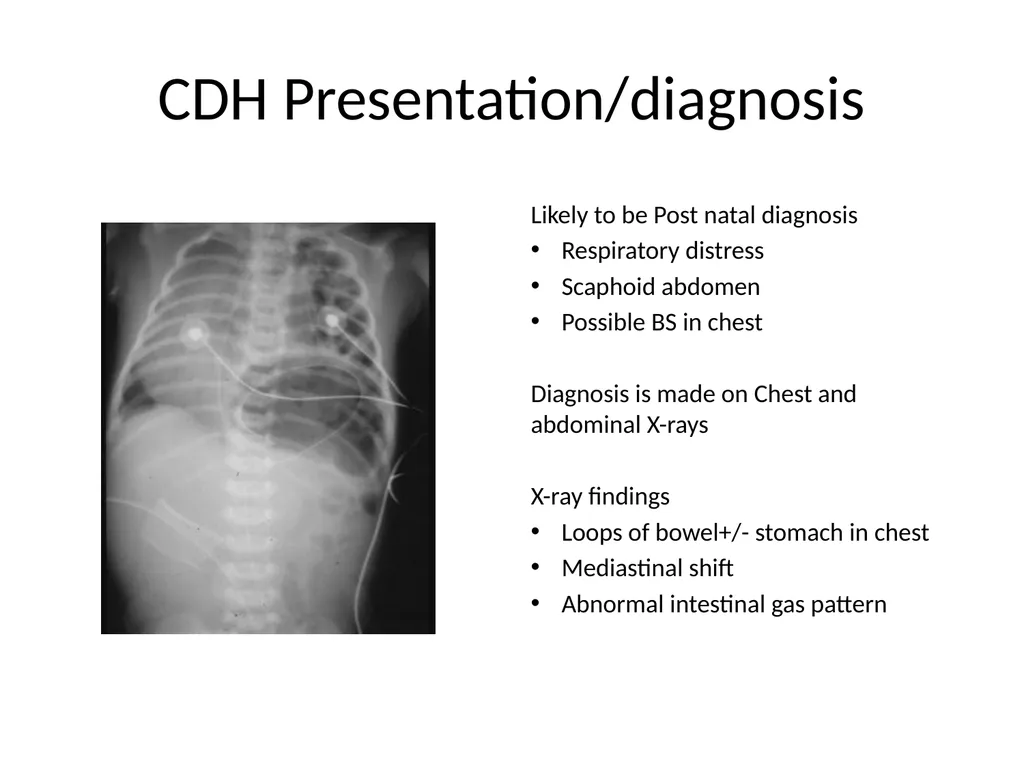
Likely to be Post natal diagnosis
Respiratory distress
Scaphoid abdomen
Possible BS in chest
Diagnosis is made on Chest and abdominal X-rays
X-ray findings
Loops of bowel+/- stomach in chest
Mediastinal shift
Abnormal intestinal gas pattern CDH Presentation/diagnosis<br>
24
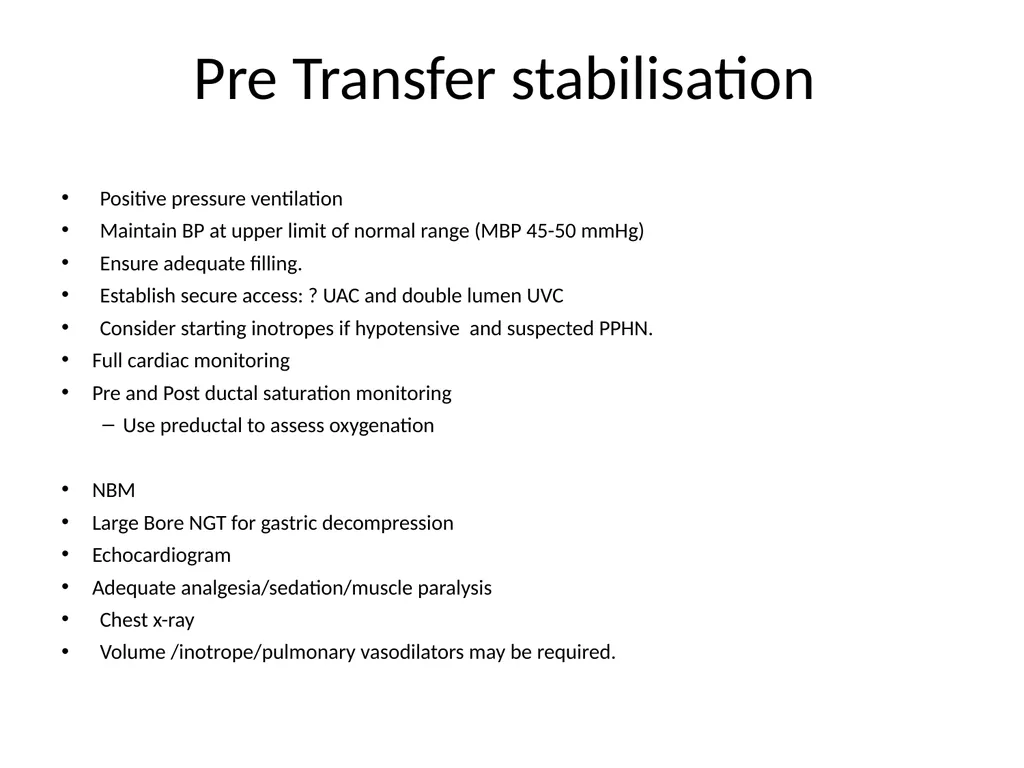
Positive pressure ventilation
Maintain BP at upper limit of normal range (MBP 45-50 mmHg)
Ensure adequate filling.
Establish secure access: ? UAC and double lumen UVC
Consider starting inotropes if hypotensive and suspected PPHN.
Full cardiac monitoring
Pre and Post ductal saturation monitoring
Use preductal to assess oxygenation
NBM
Large Bore NGT for gastric decompression
Echocardiogram
Adequate analgesia/sedation/muscle paralysis
Chest x-ray
Volume /inotrope/pulmonary vasodilators may be required. Pre Transfer stabilisation<br>
25
Questions?
Other things you would like to chat through?<br>