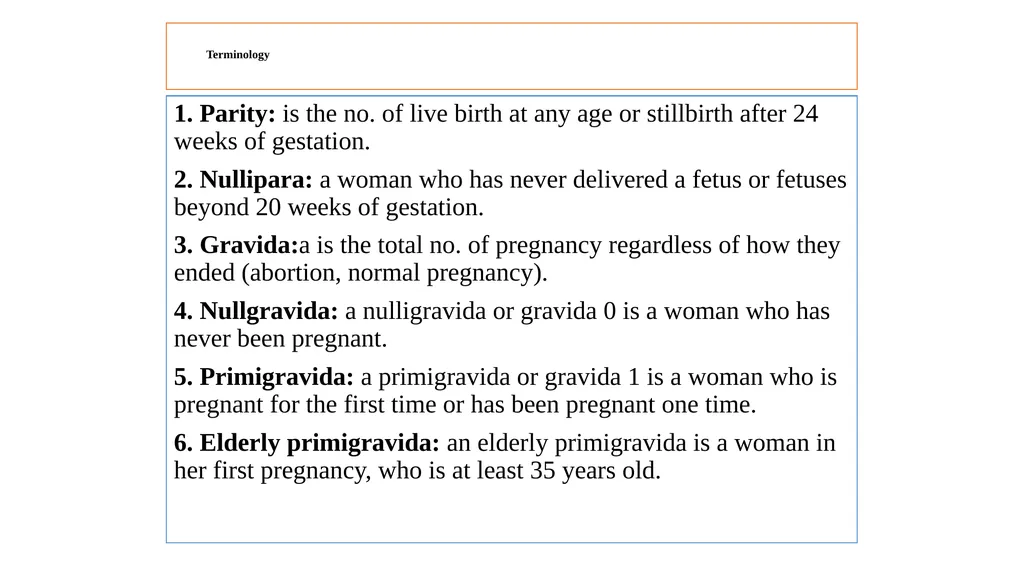
Prepared By Assist. Lect. Rasha Saadi Abbas Terminology 1. Parity: is the no. of live birth at any age or stillbirth after 24 weeks of gestation. 2. Nullipara: a woman who has never delivered a fetus or fetuses beyond 20 weeks of gestation.
"Prepared By Assist. Lect. Rasha Saadi Abbas" is the property of its rightful owner. Permission is granted to
download and print the materials on this website for personal, non-commercial use only, and to display it
on your personal computer provided you do not modify the materials and that you retain all copyright
notices contained in the materials. By downloading content from our website, you accept the terms of this
agreement.
Presentation Transcript
01
Prepared By
Assist. Lect. Rasha Saadi Abbas<br>
02
Terminology 1. Parity: is the no. of live birth at any age or stillbirth after 24 weeks of gestation.
2. Nullipara: a woman who has never delivered a fetus or fetuses beyond 20 weeks of gestation.
3. Gravida:a is the total no. of pregnancy regardless of how they ended (abortion, normal pregnancy).
4. Nullgravida: a nulligravida or gravida 0 is a woman who has never been pregnant.
5. Primigravida: a primigravida or gravida 1 is a woman who is pregnant for the first time or has been pregnant one time.
6. Elderly primigravida: an elderly primigravida is a woman in her first pregnancy, who is at least 35 years old.<br>
03
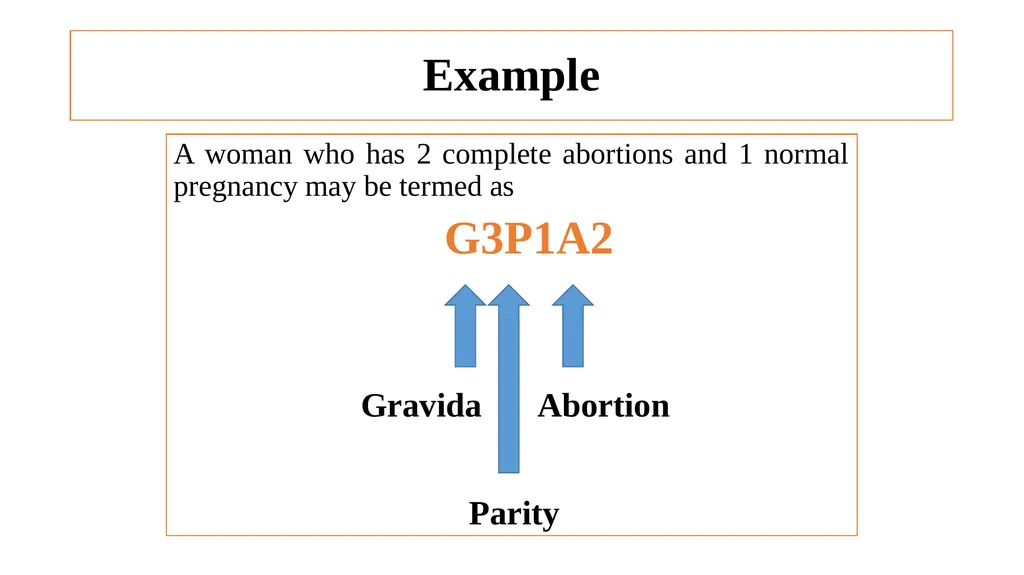
Example A woman who has 2 complete abortions and 1 normal pregnancy may be termed as
G3P1A2 Gravida Parity Abortion<br>
04
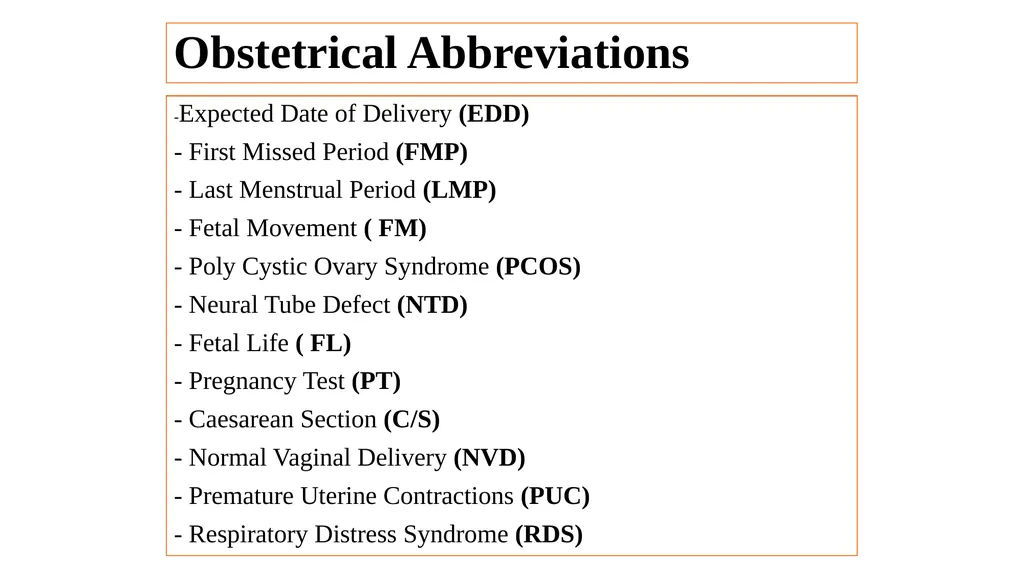
Obstetrical Abbreviations -Expected Date of Delivery (EDD)
- First Missed Period (FMP)
- Last Menstrual Period (LMP)
- Fetal Movement ( FM)
- Poly Cystic Ovary Syndrome (PCOS)
- Neural Tube Defect (NTD)
- Fetal Life ( FL)
- Pregnancy Test (PT)
- Caesarean Section (C/S)
- Normal Vaginal Delivery (NVD)
- Premature Uterine Contractions (PUC)
- Respiratory Distress Syndrome (RDS)<br>
05
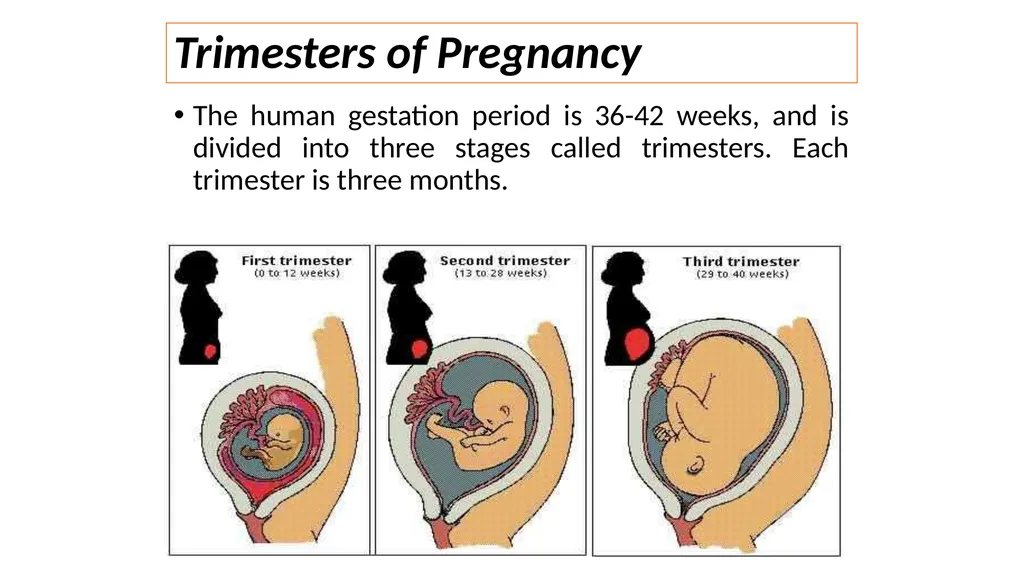
Trimesters of Pregnancy The human gestation period is 36-42 weeks, and is divided into three stages called trimesters. Each trimester is three months.<br>
06
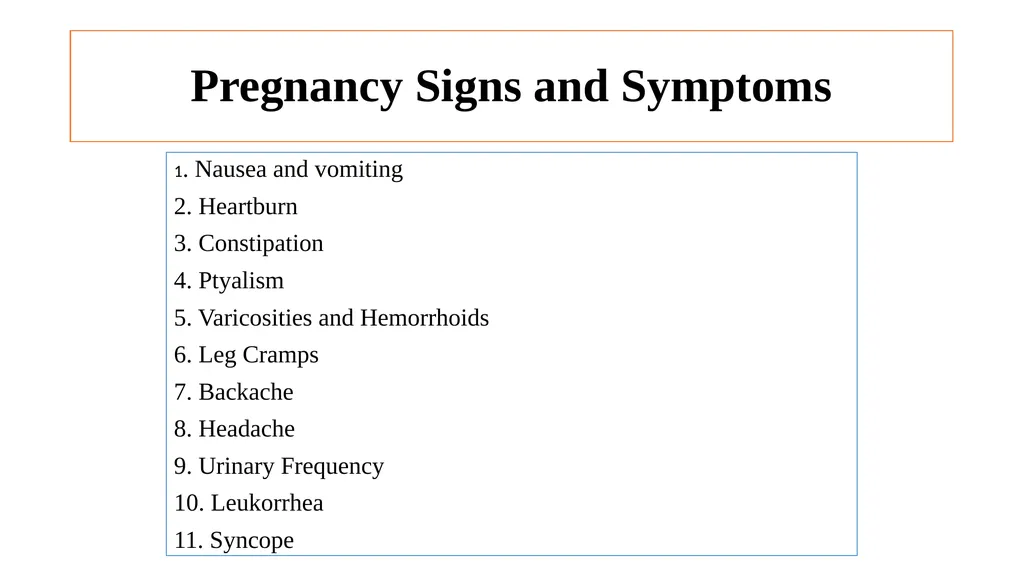
Pregnancy Signs and Symptoms 1. Nausea and vomiting
2. Heartburn
3. Constipation
4. Ptyalism
5. Varicosities and Hemorrhoids
6. Leg Cramps
7. Backache
8. Headache
9. Urinary Frequency
10. Leukorrhea
11. Syncope<br>
07
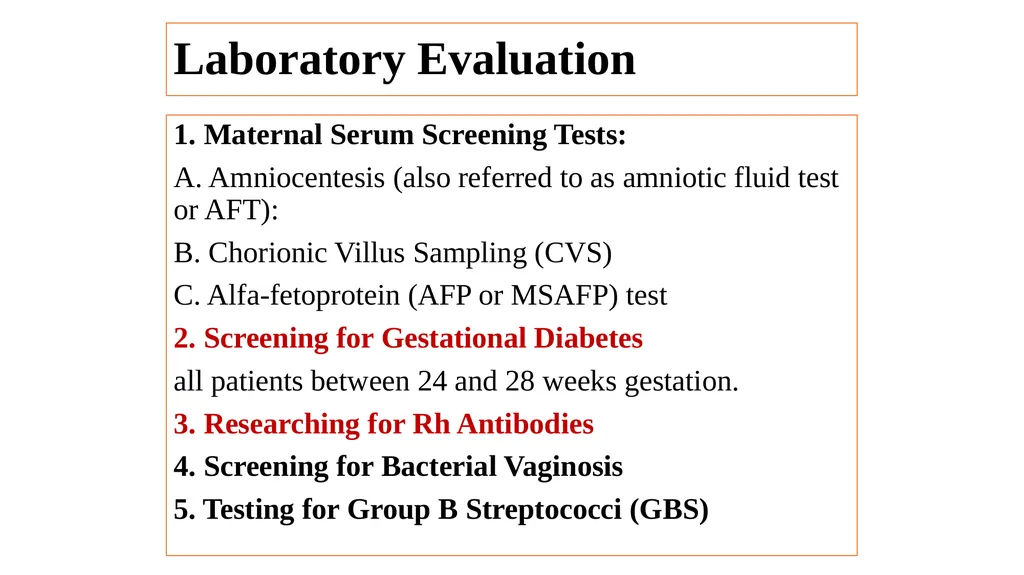
Laboratory Evaluation 1. Maternal Serum Screening Tests:
A. Amniocentesis (also referred to as amniotic fluid test or AFT):
B. Chorionic Villus Sampling (CVS)
C. Alfa-fetoprotein (AFP or MSAFP) test
2. Screening for Gestational Diabetes
all patients between 24 and 28 weeks gestation.
3. Researching for Rh Antibodies
4. Screening for Bacterial Vaginosis
5. Testing for Group B Streptococci (GBS)<br>
08
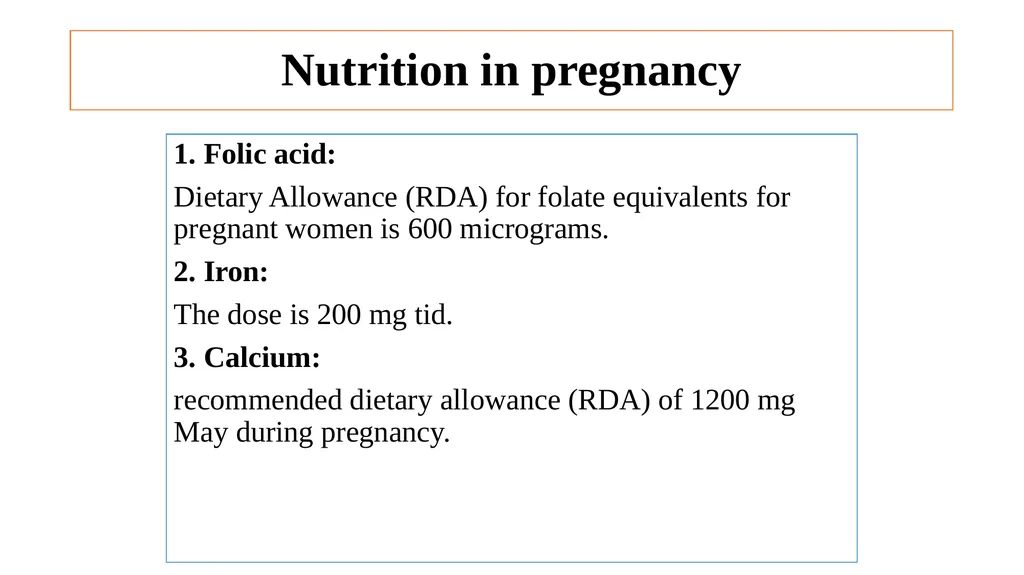
Nutrition in pregnancy 1. Folic acid:
Dietary Allowance (RDA) for folate equivalents for pregnant women is 600 micrograms.
2. Iron:
The dose is 200 mg tid.
3. Calcium:
recommended dietary allowance (RDA) of 1200 mg May during pregnancy.<br>
09
Nutrition in pregnancy (cont.) 4. Zinc
The RDA during pregnancy is increased from 15 to 20 mg /day.
5. Vitamin D
400-500IU vitamin D supplementation have been reported to be safe and adequate.
6. Vitamin A<br>
10
Pregnancy Loss and Spontaneous Abortion Abortion is the termination of pregnancy by any means, resulting in the expulsion of an immature, nonviable fetus.
The term “miscarriage,” although imprecise, has been used for all types of pregnancy losses up to a gestational age of 20 to 22 weeks.
The term miscarriage is used often in the lay language and refers to spontaneous abortion.<br>
11
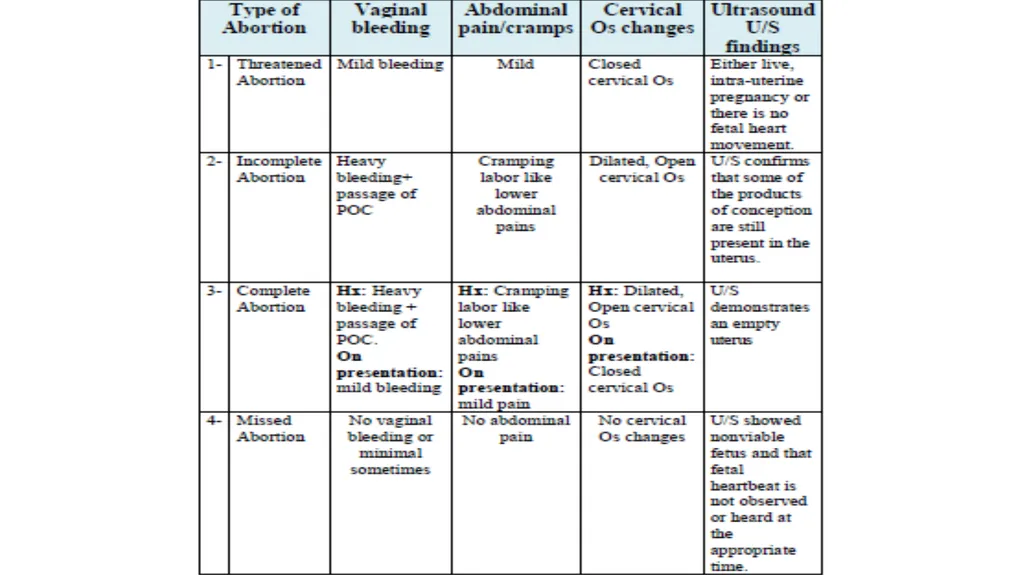
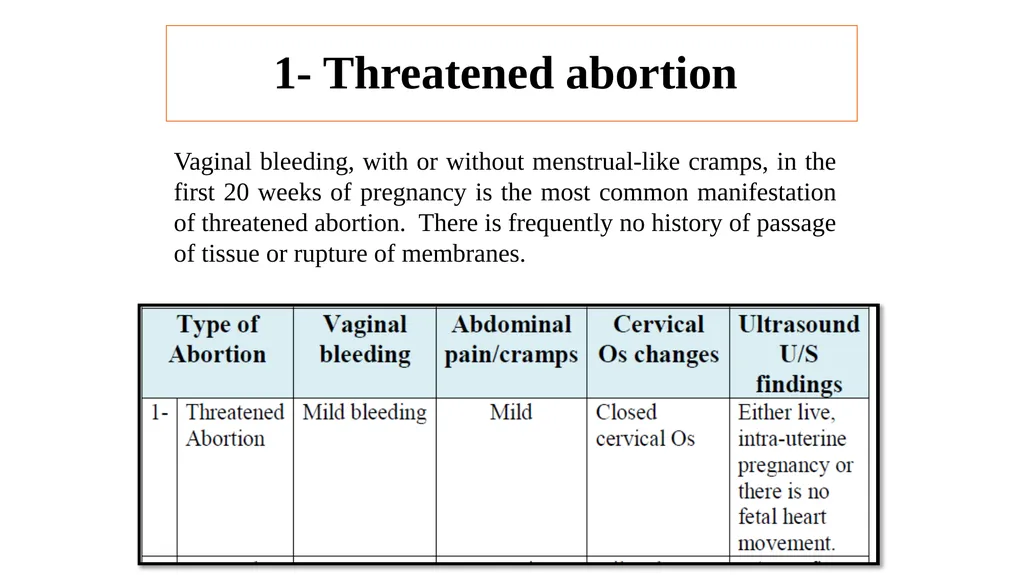
1- Threatened abortion Vaginal bleeding, with or without menstrual-like cramps, in the first 20 weeks of pregnancy is the most common manifestation of threatened abortion. There is frequently no history of passage of tissue or rupture of membranes.<br>
12
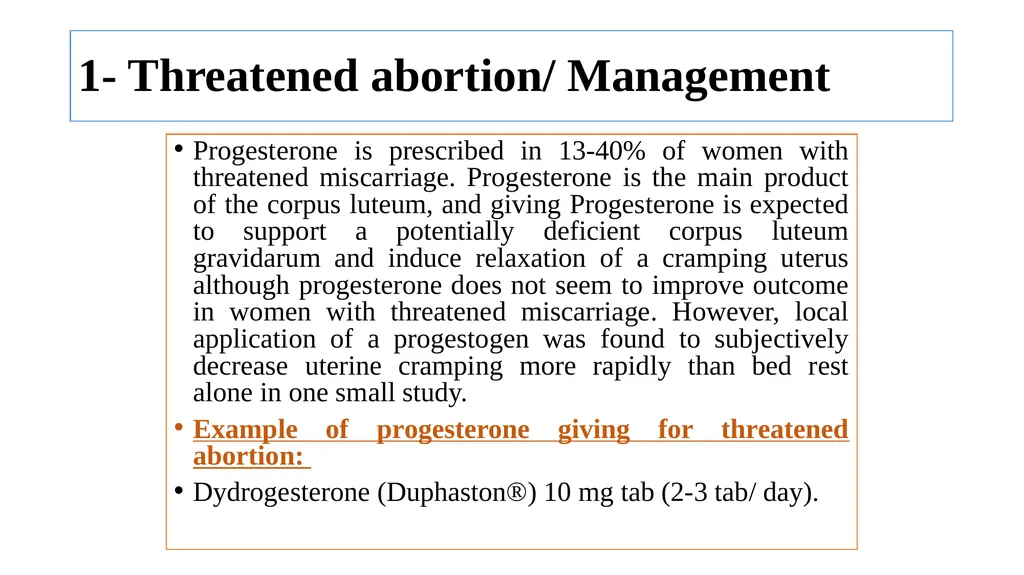
1- Threatened abortion/ Management Progesterone is prescribed in 13-40% of women with threatened miscarriage. Progesterone is the main product of the corpus luteum, and giving Progesterone is expected to support a potentially deficient corpus luteum gravidarum and induce relaxation of a cramping uterus although progesterone does not seem to improve outcome in women with threatened miscarriage. However, local application of a progestogen was found to subjectively decrease uterine cramping more rapidly than bed rest alone in one small study.
Example of progesterone giving for threatened abortion:
Dydrogesterone (Duphaston®) 10 mg tab (2-3 tab/ day).<br>
13
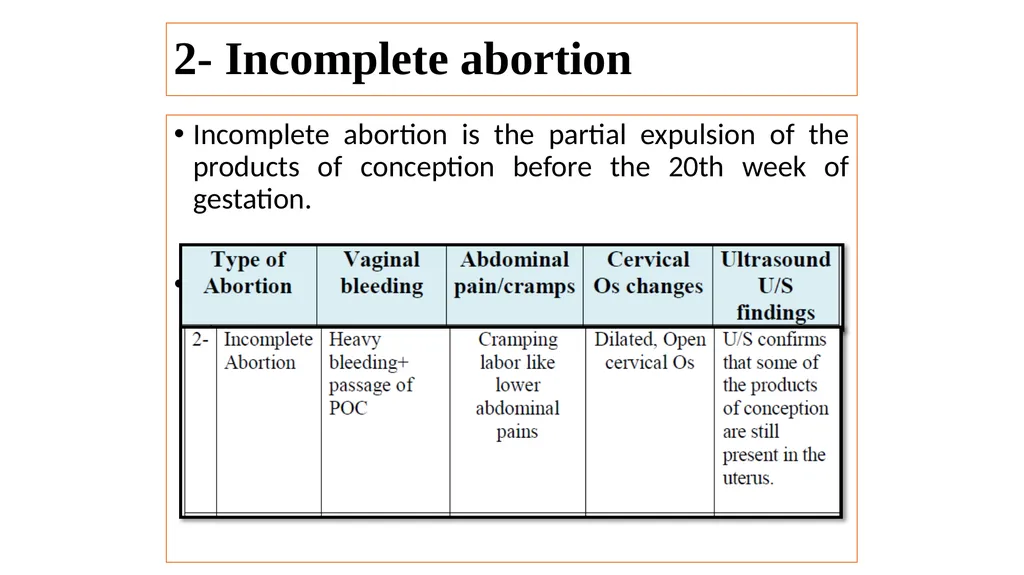
2- Incomplete abortion Incomplete abortion is the partial expulsion of the products of conception before the 20th week of gestation.<br>
14
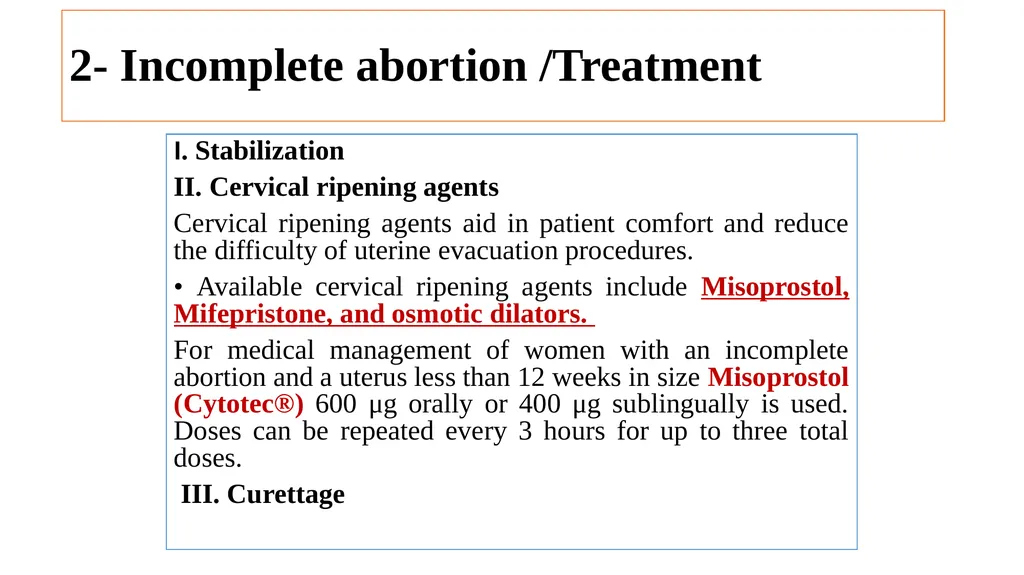
2- Incomplete abortion /Treatment I. Stabilization
II. Cervical ripening agents
Cervical ripening agents aid in patient comfort and reduce the difficulty of uterine evacuation procedures.
• Available cervical ripening agents include Misoprostol, Mifepristone, and osmotic dilators.
For medical management of women with an incomplete abortion and a uterus less than 12 weeks in size Misoprostol (Cytotec®) 600 μg orally or 400 μg sublingually is used. Doses can be repeated every 3 hours for up to three total doses.
III. Curettage<br>
15
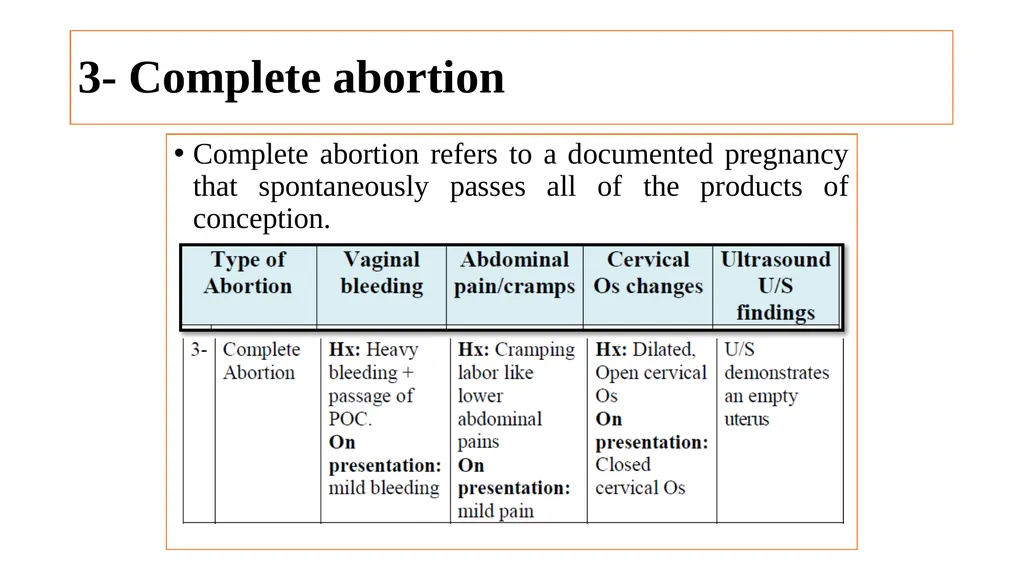
3- Complete abortion Complete abortion refers to a documented pregnancy that spontaneously passes all of the products of conception.<br>
16
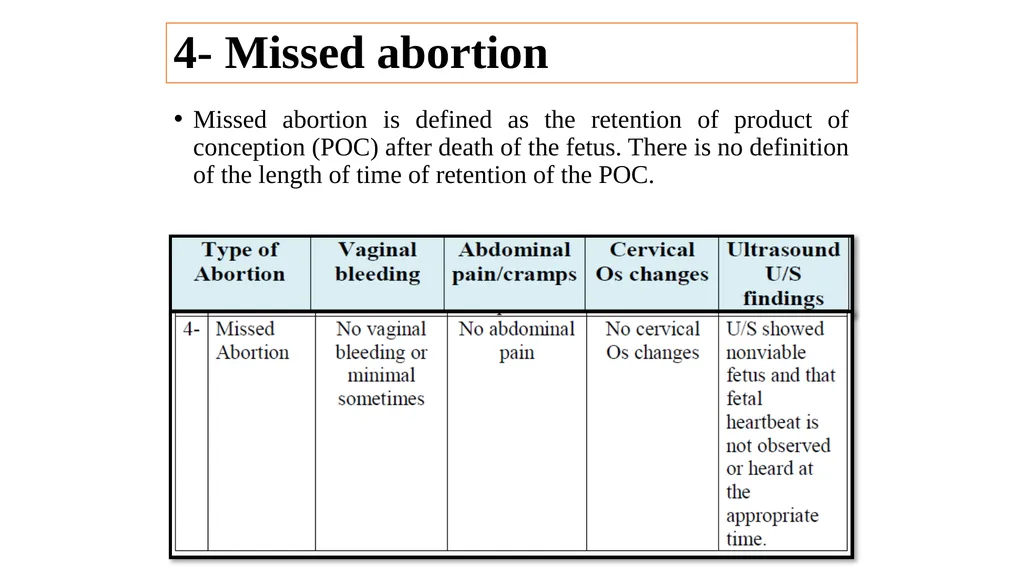
4- Missed abortion Missed abortion is defined as the retention of product of conception (POC) after death of the fetus. There is no definition of the length of time of retention of the POC.<br>
17
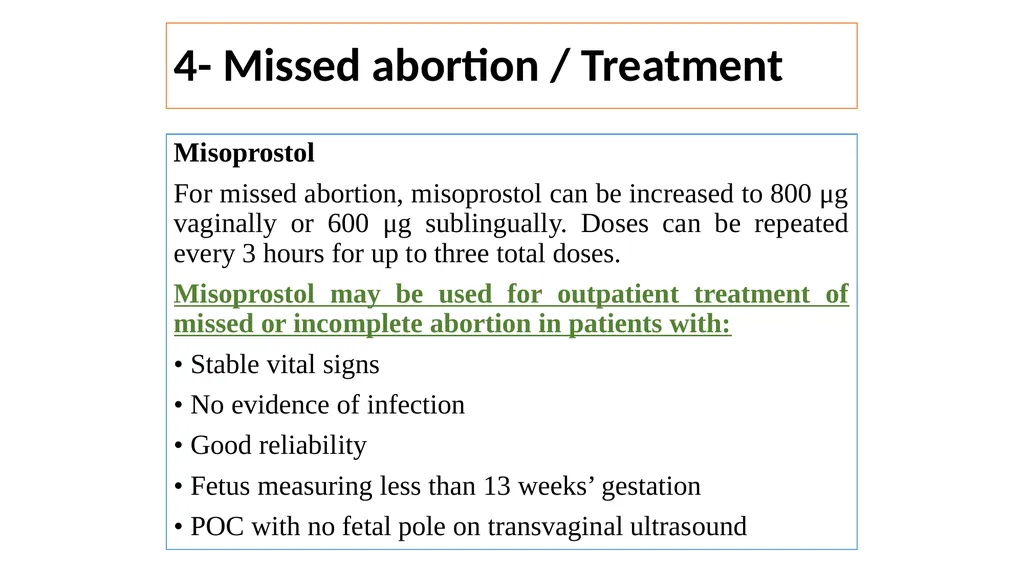
4- Missed abortion / Treatment Misoprostol
For missed abortion, misoprostol can be increased to 800 μg vaginally or 600 μg sublingually. Doses can be repeated every 3 hours for up to three total doses.
Misoprostol may be used for outpatient treatment of missed or incomplete abortion in patients with:
• Stable vital signs
• No evidence of infection
• Good reliability
• Fetus measuring less than 13 weeks’ gestation
• POC with no fetal pole on transvaginal ultrasound<br>
18
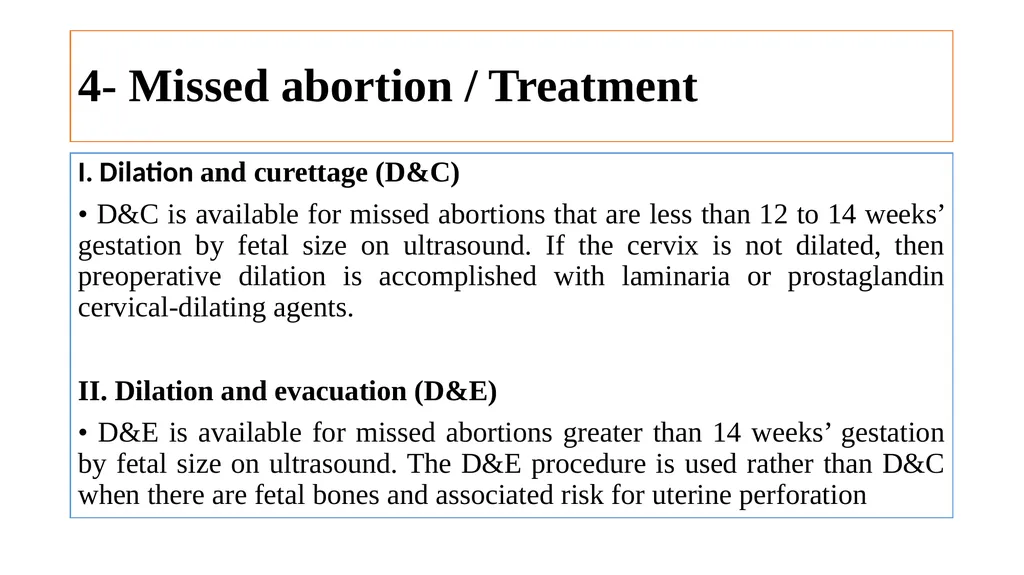
4- Missed abortion / Treatment I. Dilation and curettage (D&C)
• D&C is available for missed abortions that are less than 12 to 14 weeks’ gestation by fetal size on ultrasound. If the cervix is not dilated, then preoperative dilation is accomplished with laminaria or prostaglandin cervical-dilating agents.
II. Dilation and evacuation (D&E)
• D&E is available for missed abortions greater than 14 weeks’ gestation by fetal size on ultrasound. The D&E procedure is used rather than D&C when there are fetal bones and associated risk for uterine perforation<br>
19
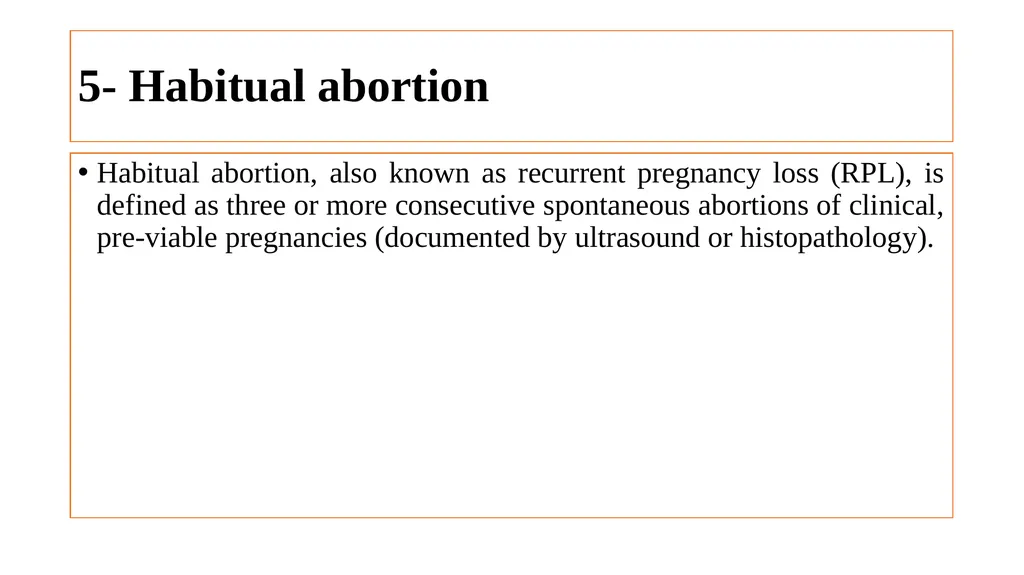
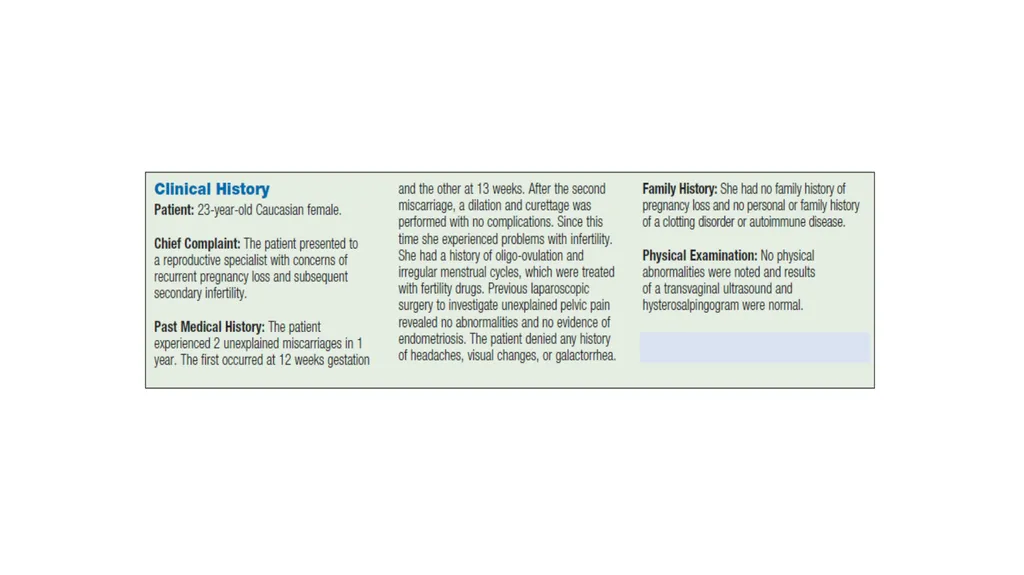
5- Habitual abortion Habitual abortion, also known as recurrent pregnancy loss (RPL), is defined as three or more consecutive spontaneous abortions of clinical, pre-viable pregnancies (documented by ultrasound or histopathology).<br>