Presentation Skills After violent death, most people fear public speaking more than anything else in life People Management April 2002 Planning Why are you doing the talk? Be clear about your purpose Find out how big your audience is
"Presentation Skills “After violent death, most" is the property of its rightful owner. Permission is granted to
download and print the materials on this website for personal, non-commercial use only, and to display it
on your personal computer provided you do not modify the materials and that you retain all copyright
notices contained in the materials. By downloading content from our website, you accept the terms of this
agreement.
Presentation Transcript
01
Presentation Skills<br>
02
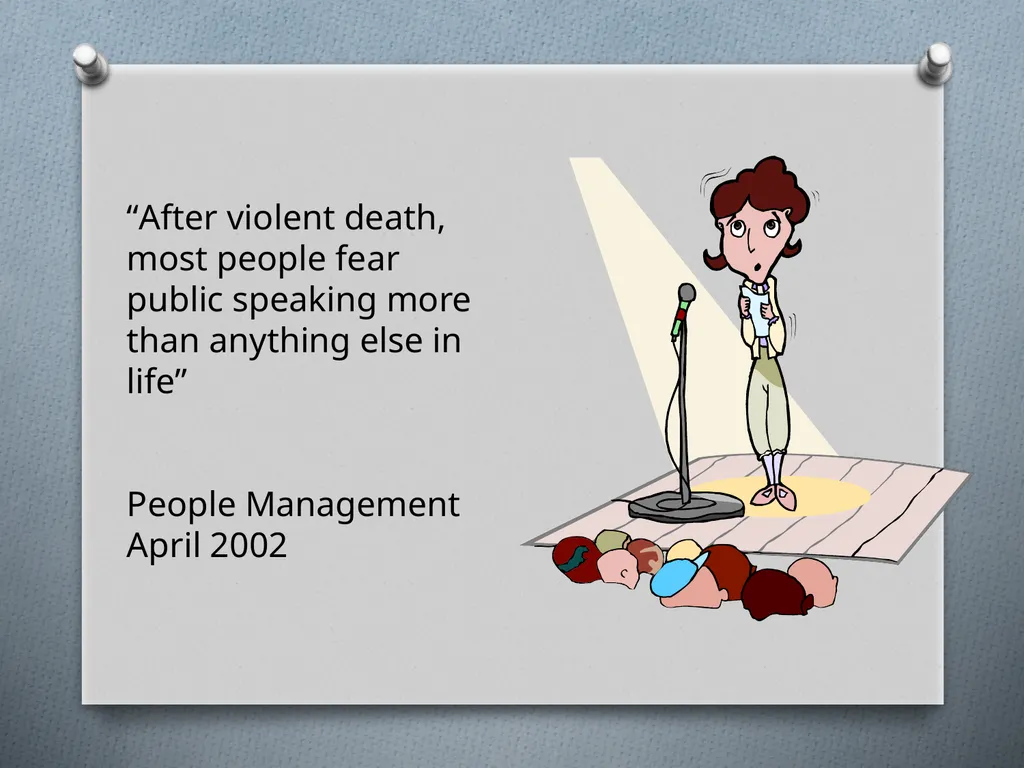
“After violent death, most people fear public speaking more than anything else in life”
People Management
April 2002<br>
03
Planning Why are you doing the talk? Be clear about your purpose
Find out how big your audience is likely to be & what sort of group
Make notes about your subject
Don’t write your talk word for word
Use small pieces of paper and number them
Powerpoint has a notes & timing feature which may help
Time your talk & practice it
Then practice it again<br>
04
Think of Threes Tell people what you’re going to say
Tell them
Tell them what you’ve said<br>
05
Presentation Techniques “He was looking up into the sky all the time he was speaking and Alice thought this decidedly uncivil”
Lewis Carroll<br>
06
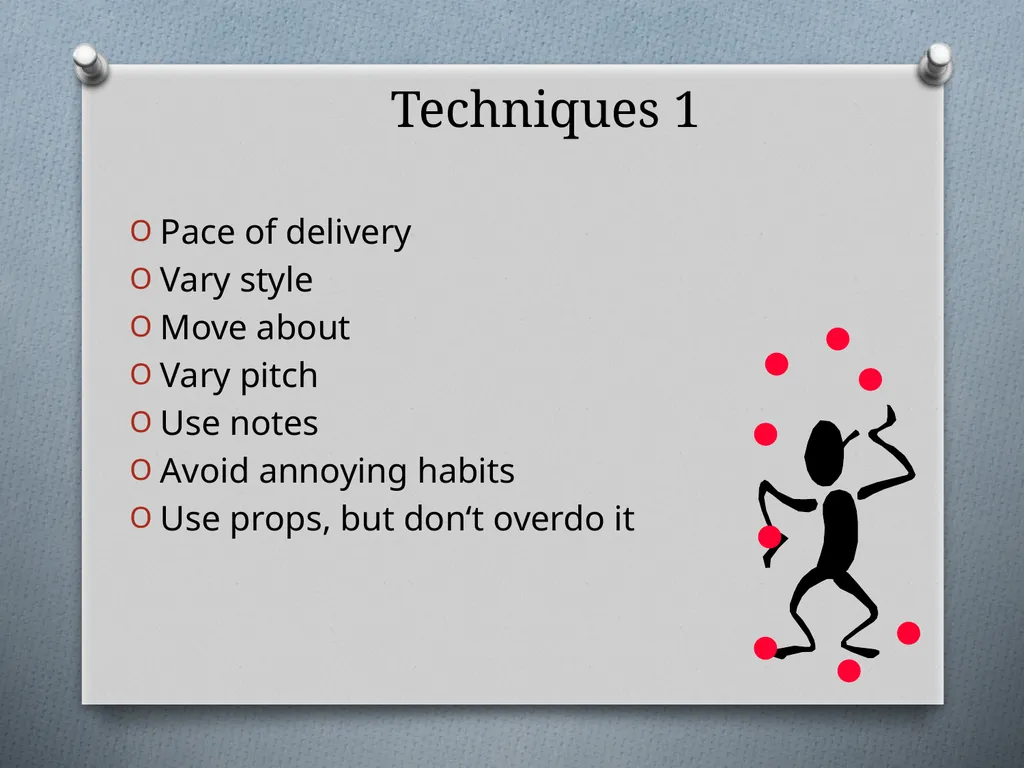
Techniques 1 Pace of delivery
Vary style
Move about
Vary pitch
Use notes
Avoid annoying habits
Use props, but don‘t overdo it<br>
07
Techniques – teaching aids Flip chart for diagrams, pictures, key points
Ohps/powerpoint - serve the same purpose (more permanent, better for a large audience)
Powerpoint – pros and cons on next slide
Demonstration - get your audience involved<br>
08
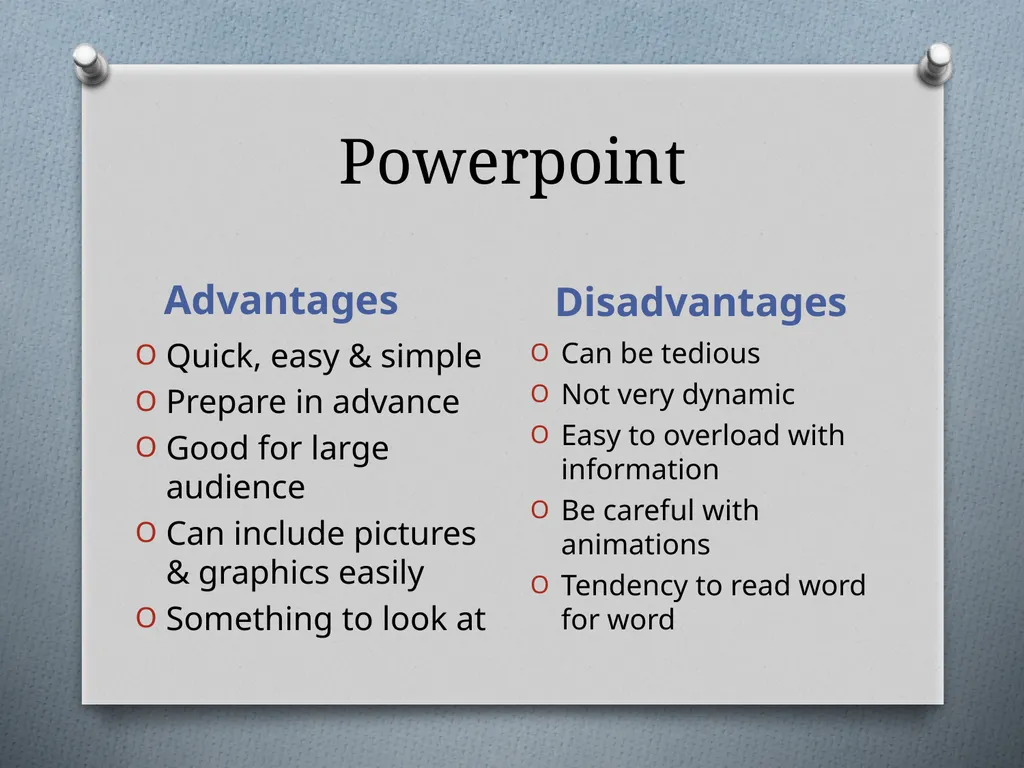
Powerpoint Advantages Disadvantages Quick, easy & simple
Prepare in advance
Good for large audience
Can include pictures & graphics easily
Something to look at Can be tedious
Not very dynamic
Easy to overload with information
Be careful with animations
Tendency to read word for word<br>
09
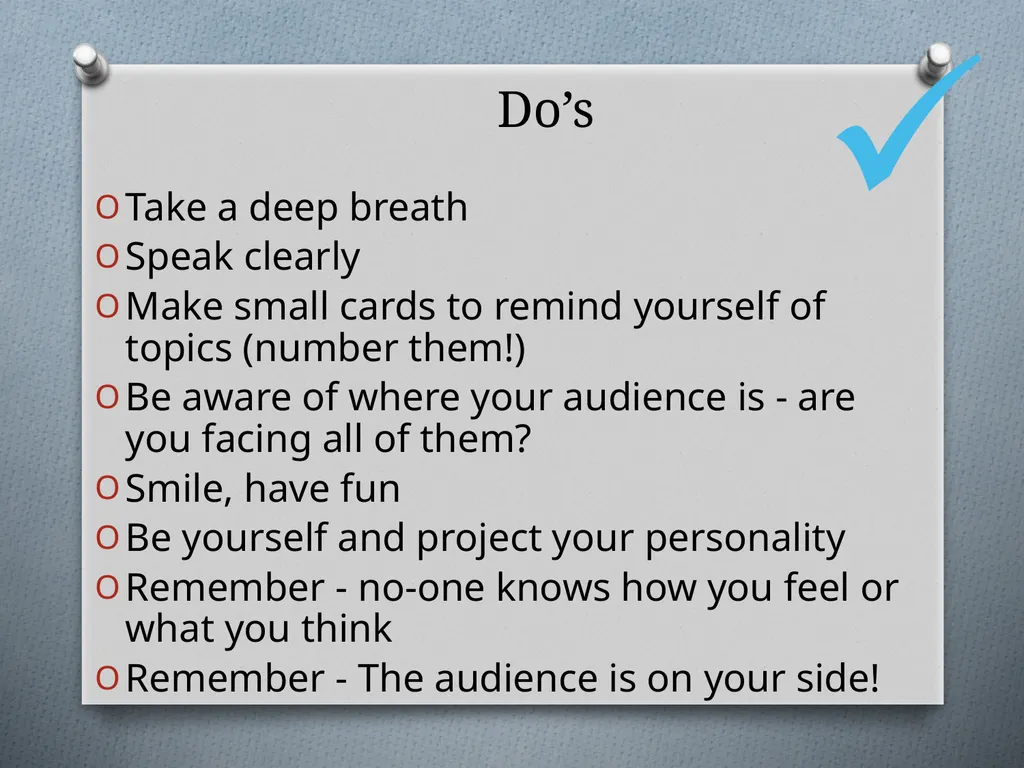
Do’s Take a deep breath
Speak clearly
Make small cards to remind yourself of topics (number them!)
Be aware of where your audience is - are you facing all of them?
Smile, have fun
Be yourself and project your personality
Remember - no-one knows how you feel or what you think
Remember - The audience is on your side! <br>
10
Don’ts “ ‘Don’t grunt’, said Alice; ‘that’s not at all the proper way of expressing yourself’ ”
Lewis Carroll <br>
11
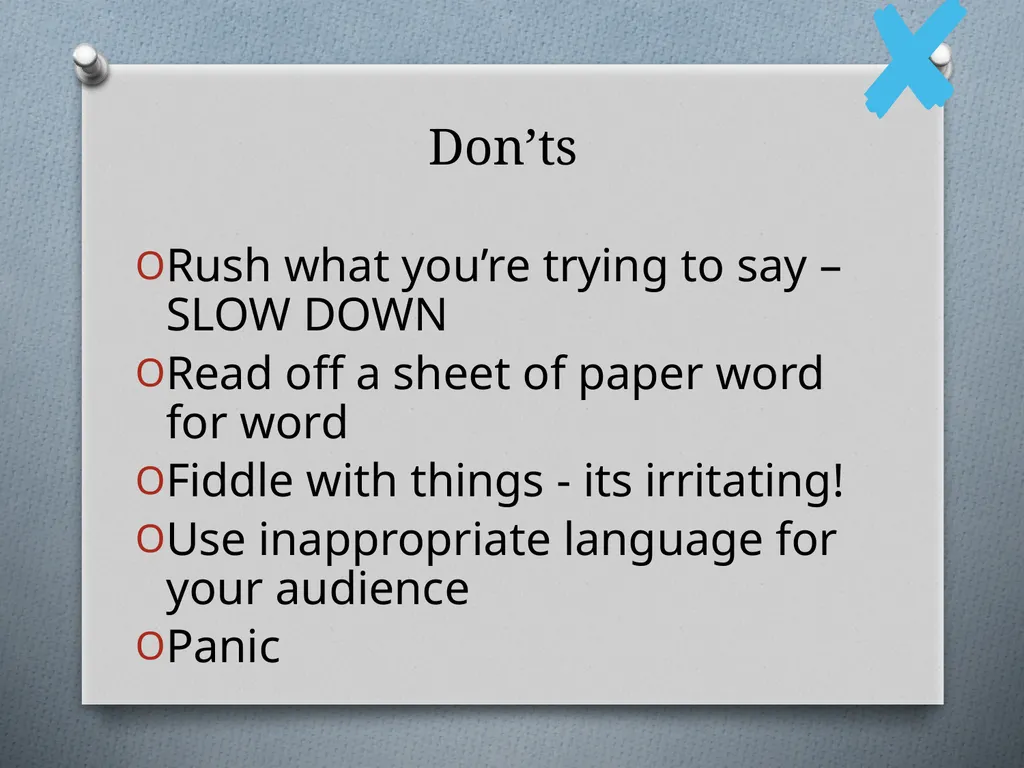
Don’ts Rush what you’re trying to say – SLOW DOWN
Read off a sheet of paper word for word
Fiddle with things - its irritating!
Use inappropriate language for your audience
Panic <br>
12
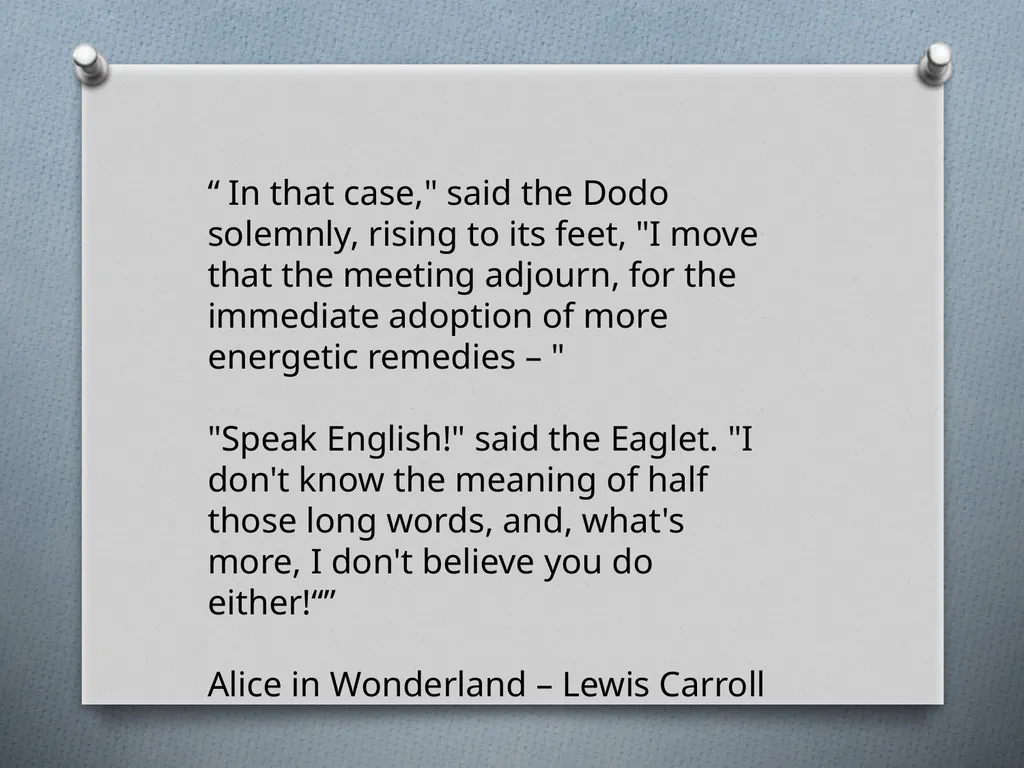
“ In that case," said the Dodo solemnly, rising to its feet, "I move that the meeting adjourn, for the immediate adoption of more energetic remedies – " "Speak English!" said the Eaglet. "I don't know the meaning of half those long words, and, what's more, I don't believe you do either!“”
Alice in Wonderland – Lewis Carroll<br>
13
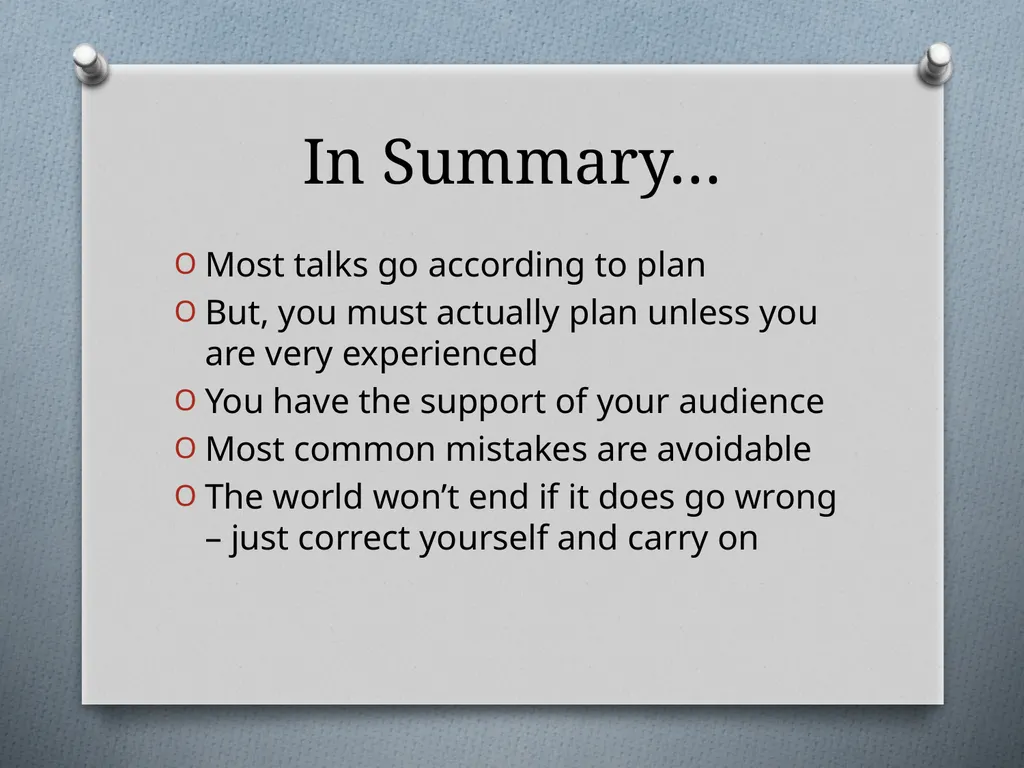
In Summary… Most talks go according to plan
But, you must actually plan unless you are very experienced
You have the support of your audience
Most common mistakes are avoidable
The world won’t end if it does go wrong – just correct yourself and carry on<br>
14
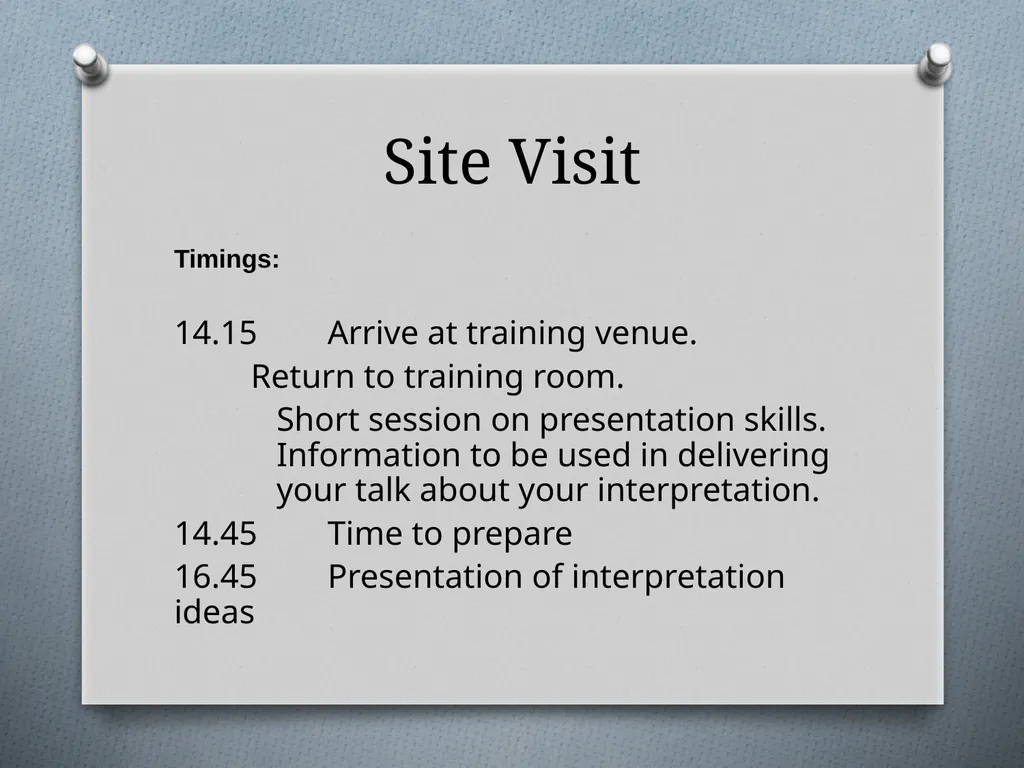
Site Visit Timings:
14.15 Arrive at training venue.
Return to training room.
Short session on presentation skills. Information to be used in delivering your talk about your interpretation.
14.45 Time to prepare
16.45 Presentation of interpretation ideas<br>