PRESENTATION TITLE Presented by: Name Surname
Description: PRESENTATION TITLE Presented by: Name Surname Directorate Date OVERVIEW: VOTE 36 STRATEGIC AND ANNUAL PERFORMANCE PLANS Presented by: Margaret-Ann Diedricks Director-General Date: 07 April 2016 Contents Legislative regulatory environment
Related Topics
Download Presentation
"PRESENTATION TITLE Presented by: Name Surname" is the property of its rightful owner. Permission is granted to download and print the materials on this website for personal, non-commercial use only, and to display it on your personal computer provided you do not modify the materials and that you retain all copyright notices contained in the materials. By downloading content from our website, you accept the terms of this agreement.
Presentation Transcript
slide1. PRESENTATION TITLE
Presented by:
Name Surname
Directorate
Date OVERVIEW: VOTE 36 STRATEGIC AND ANNUAL PERFORMANCE PLANS
Presented by:
Margaret-Ann Diedricks
Director-General
Date: 07 April 2016<br>
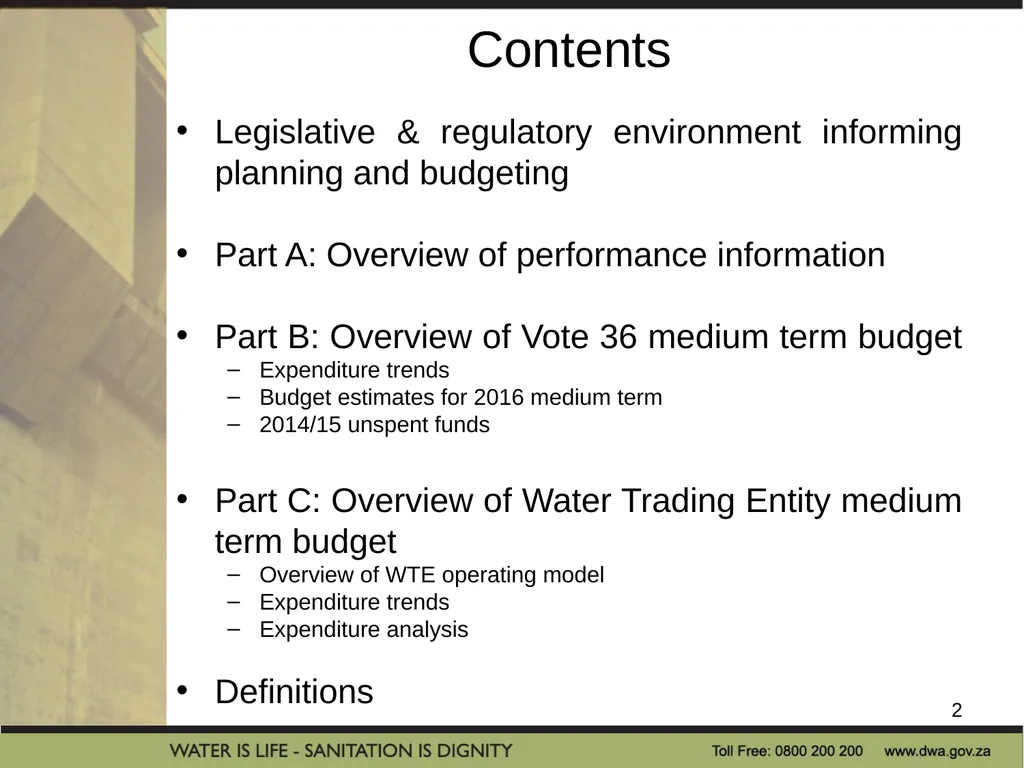
slide2. Contents Legislative & regulatory environment informing planning and budgeting
Part A: Overview of performance information
Part B: Overview of Vote 36 medium term budget
Expenditure trends
Budget estimates for 2016 medium term
2014/15 unspent funds
Part C: Overview of Water Trading Entity medium term budget
Overview of WTE operating model
Expenditure trends
Expenditure analysis
Definitions 2<br>
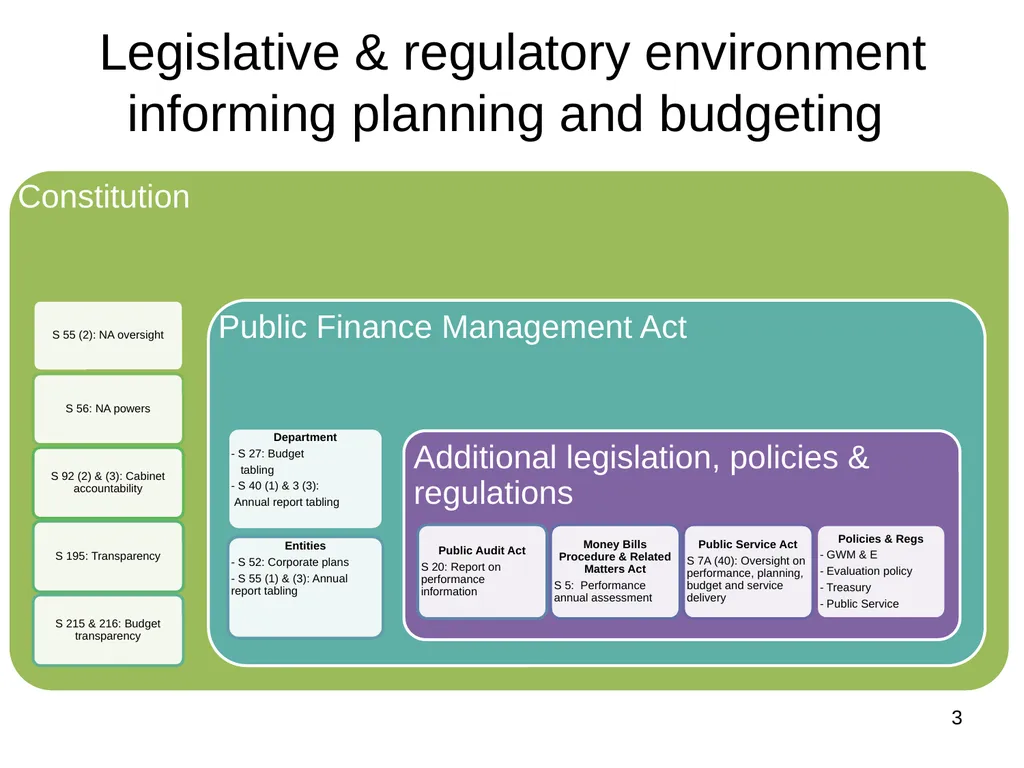
slide3. Legislative & regulatory environment informing planning and budgeting 3<br>
slide4. Part A: Overview of performance information<br>
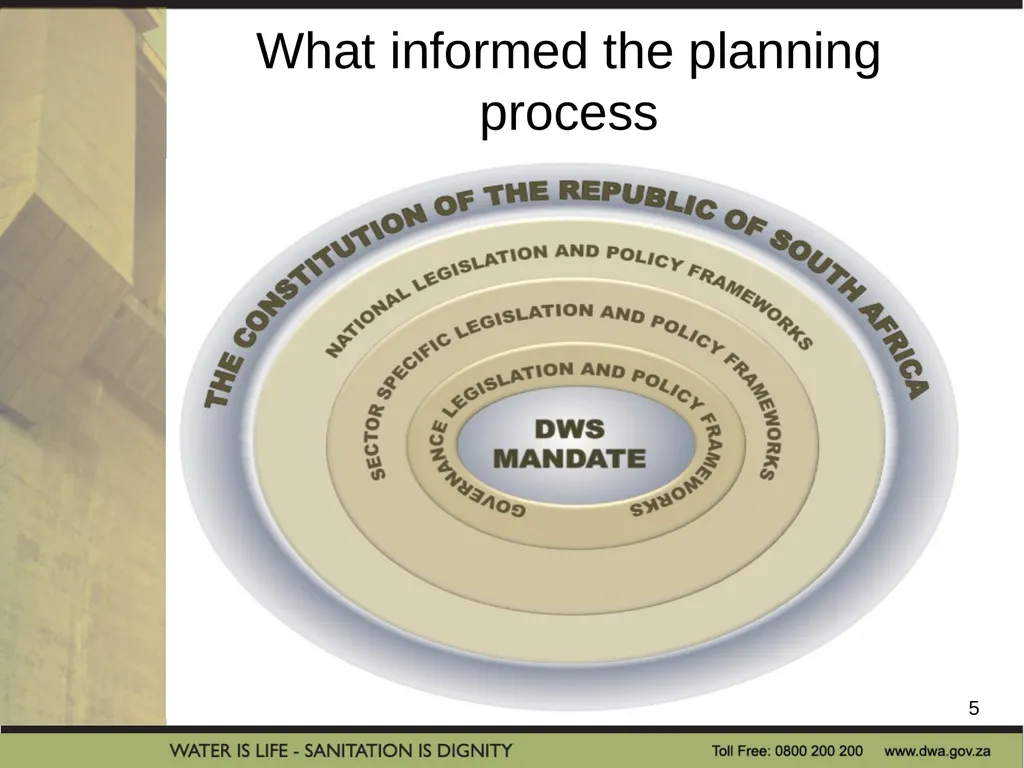
slide5. What informed the planning process 5 5<br>
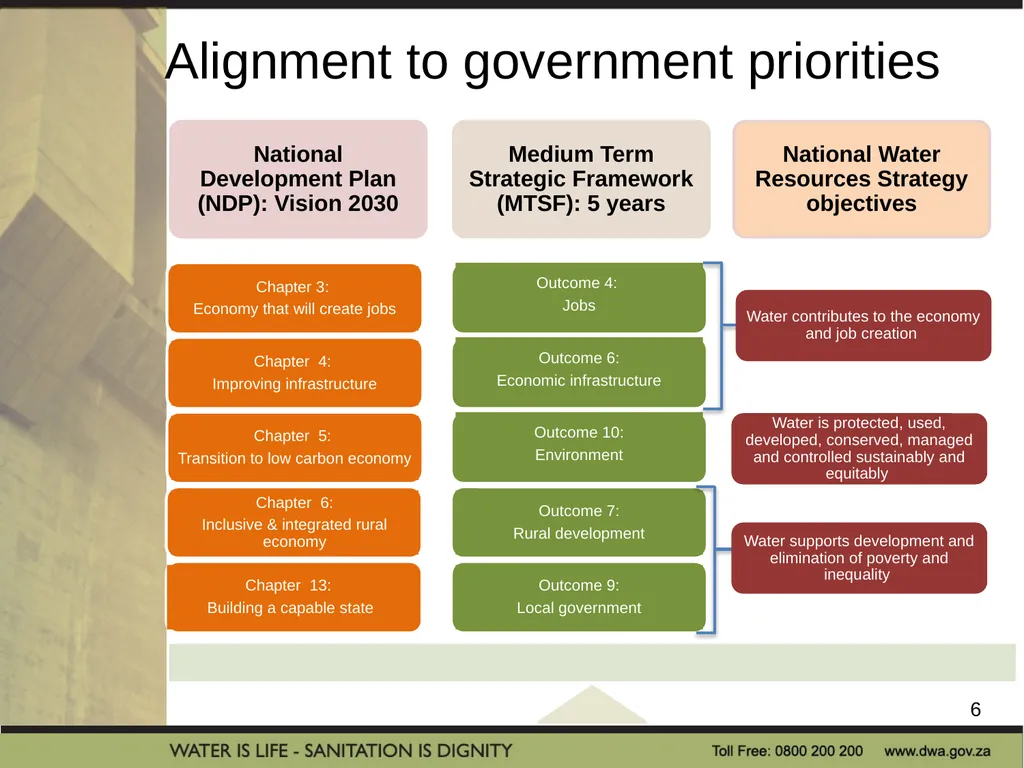
slide6. Alignment to government priorities 6 Medium Term Strategic Framework (MTSF): 5 years Outcome 9:
Local government Outcome 7:
Rural development Outcome 6:
Economic infrastructure Outcome 4:
Jobs Outcome 10:
Environment Chapter 13:
Building a capable state<br>
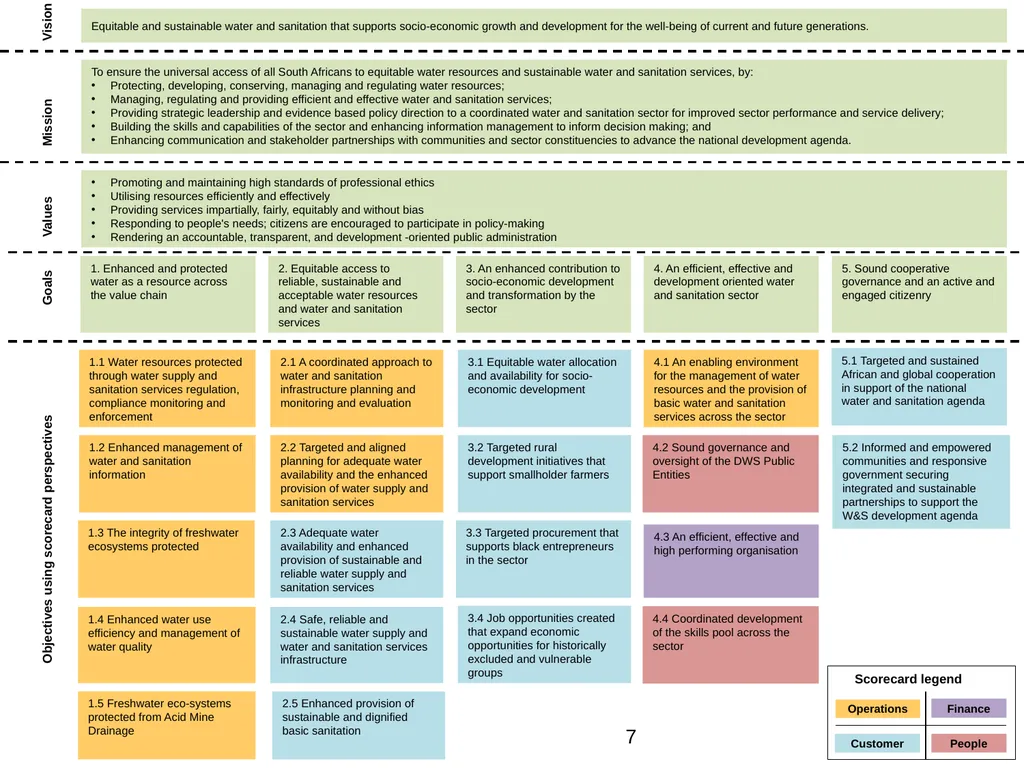
slide7. 7<br>
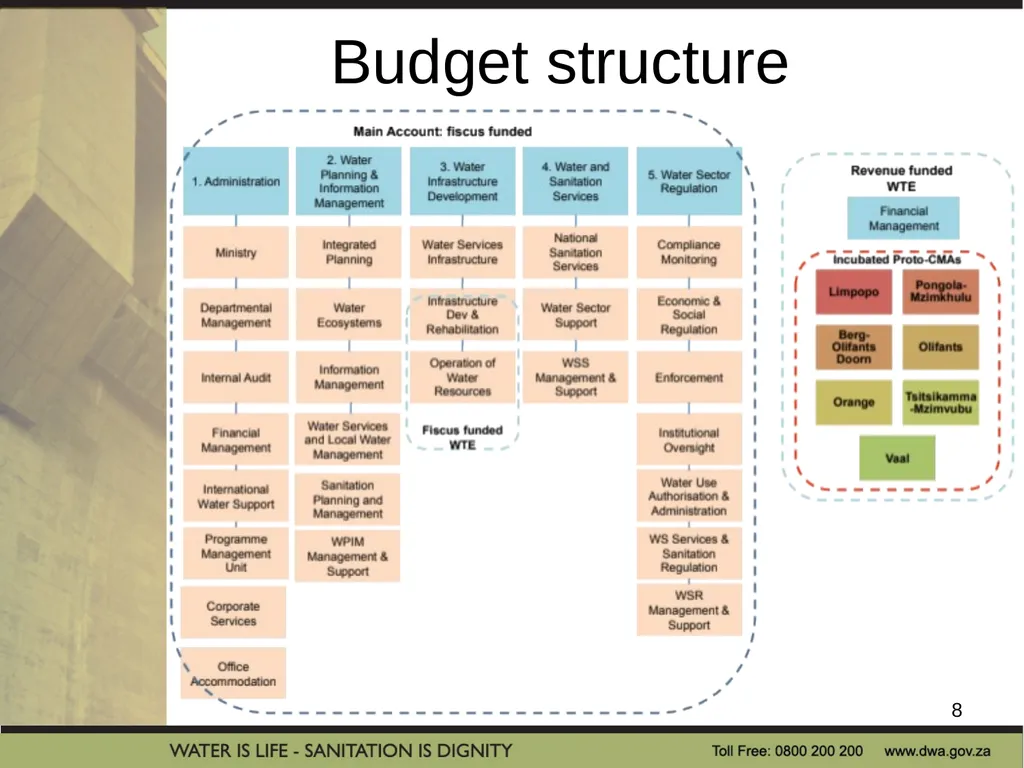
slide8. Budget structure 8<br>
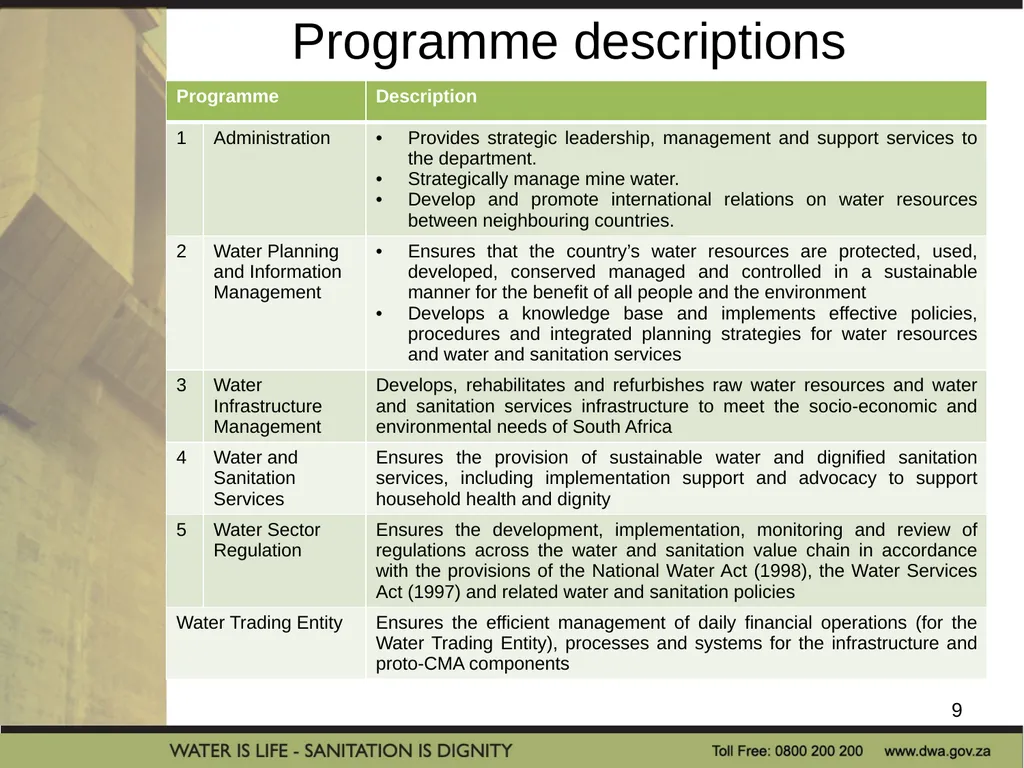
slide9. Programme descriptions 9<br>
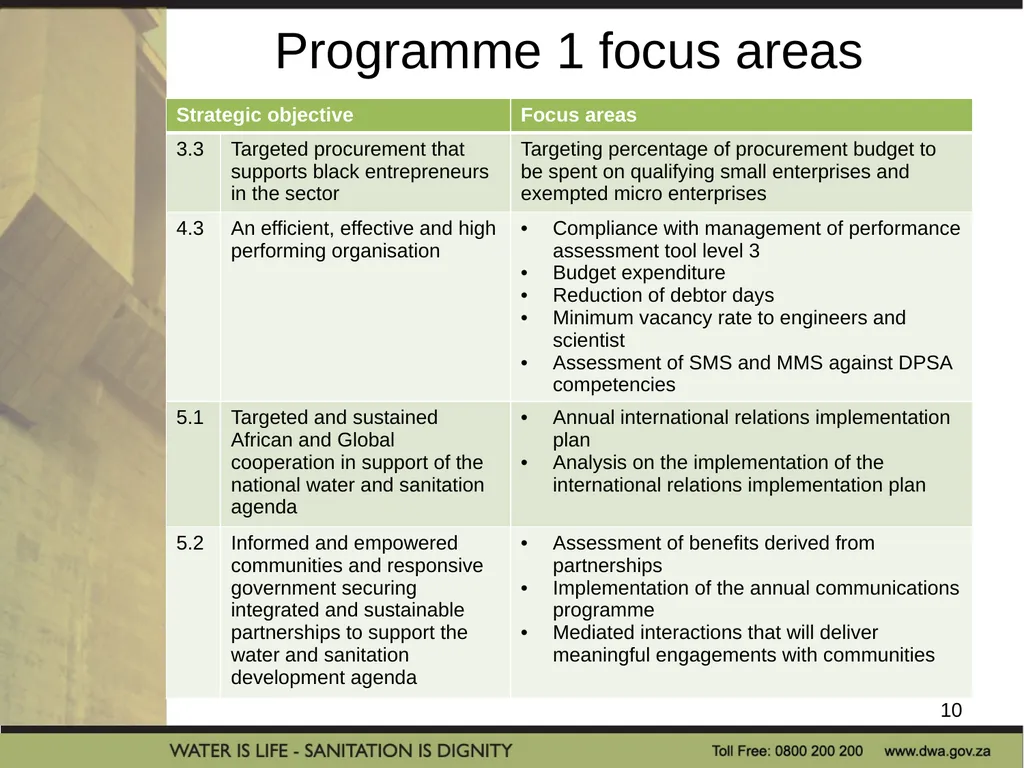
slide10. Programme 1 focus areas 10<br>
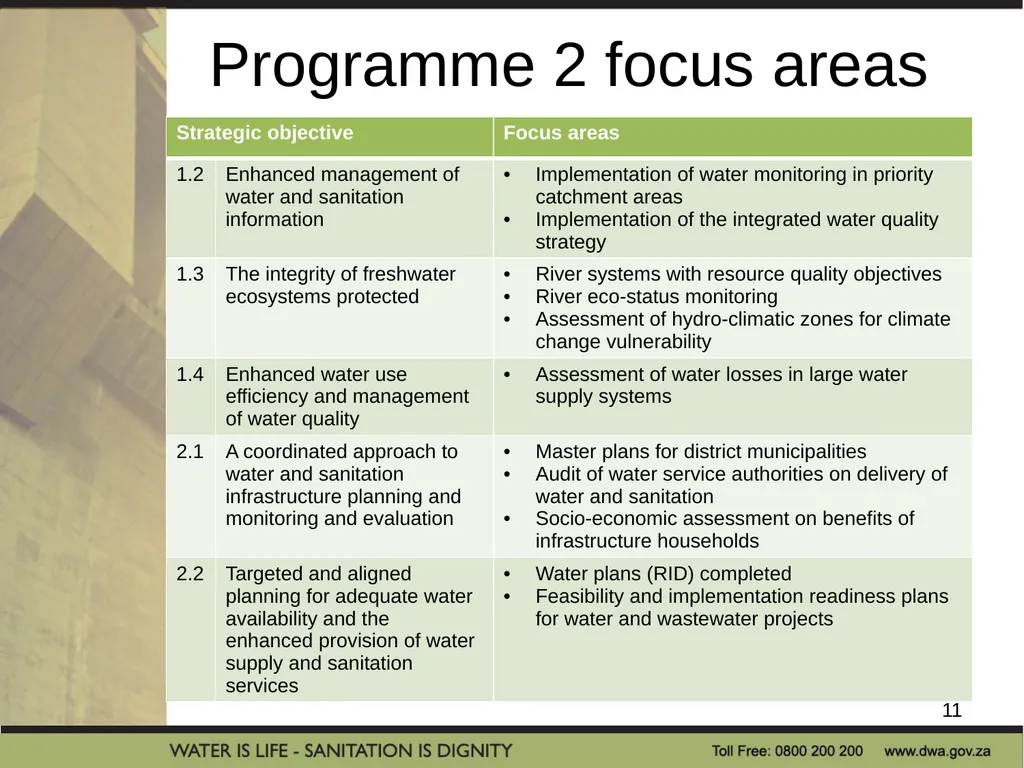
slide11. Programme 2 focus areas 11<br>
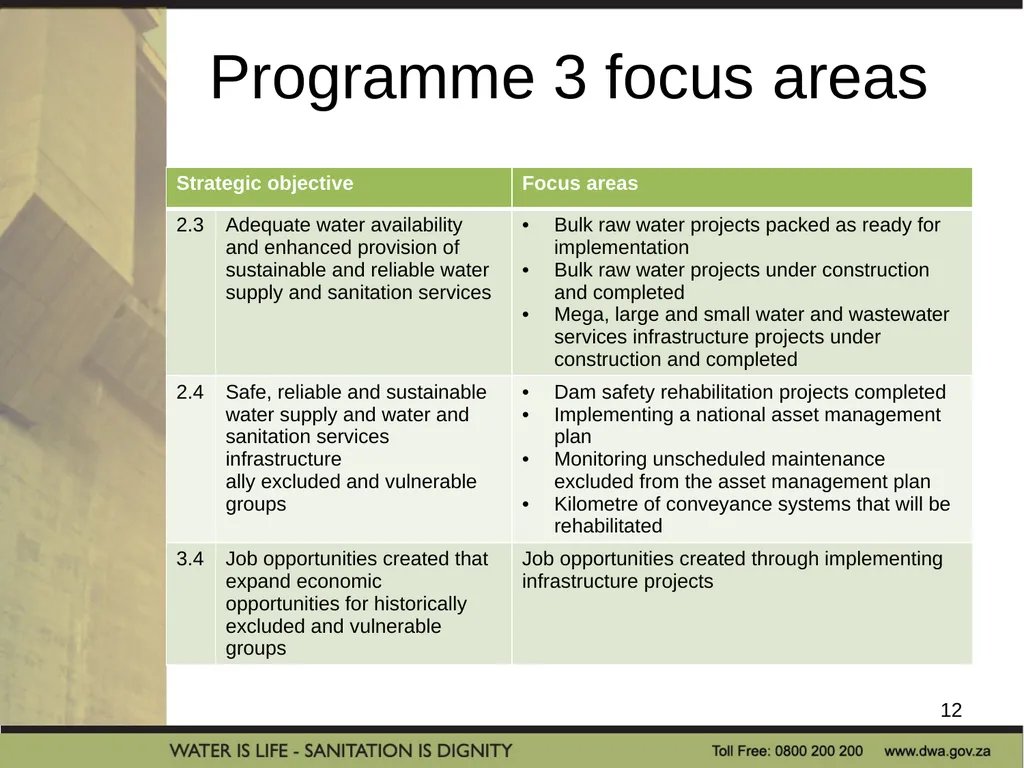
slide12. Programme 3 focus areas 12<br>
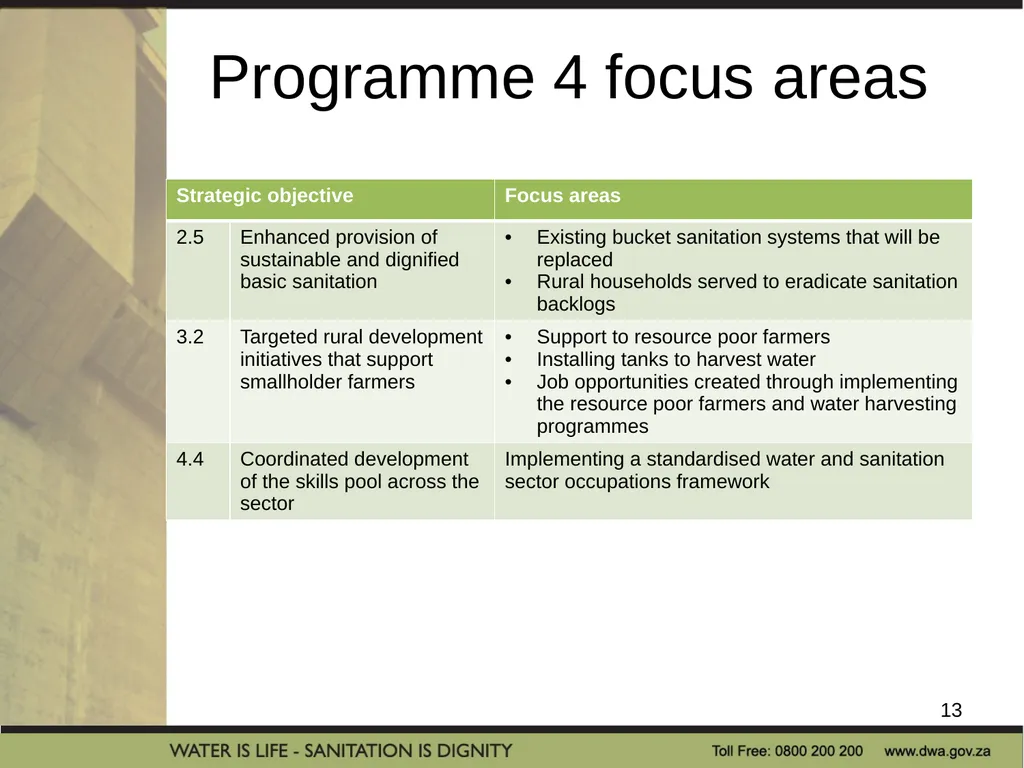
slide13. Programme 4 focus areas 13<br>
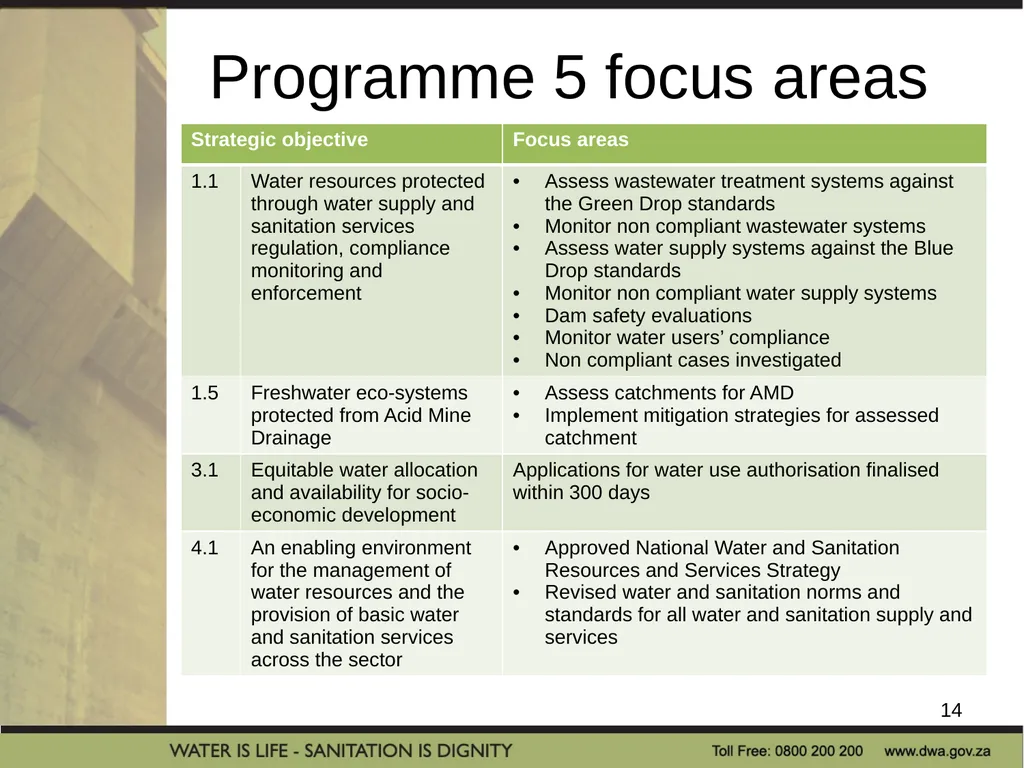
slide14. Programme 5 focus areas 14<br>
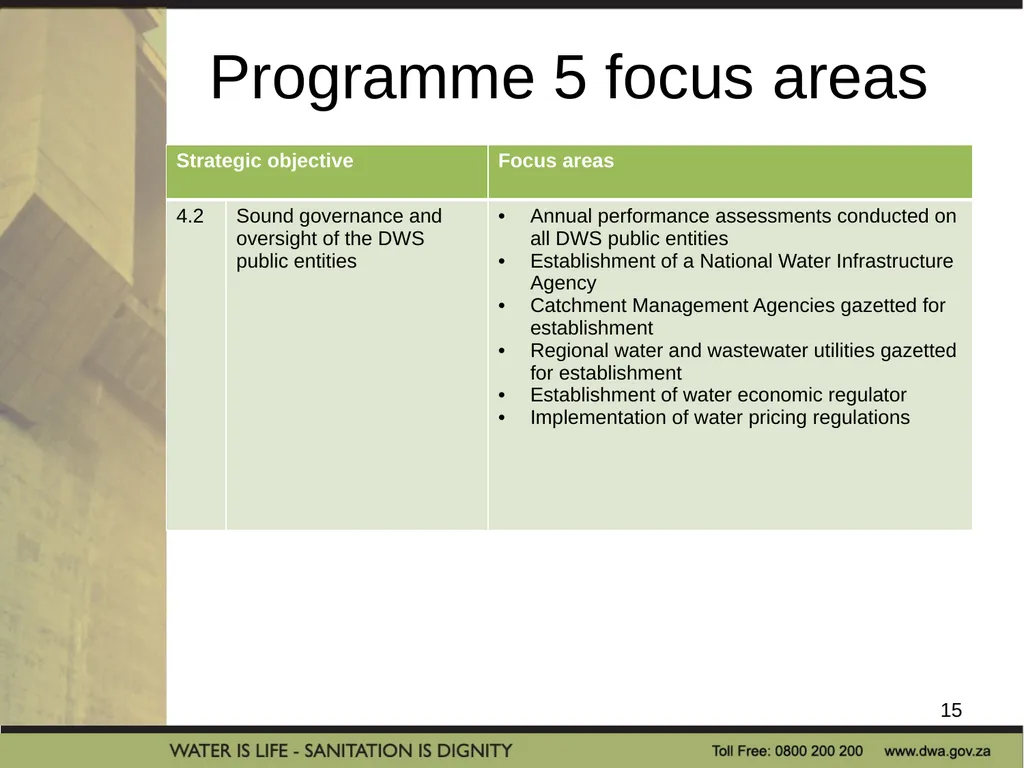
slide15. Programme 5 focus areas 15<br>
slide16. Part b: Overview of Vote 36 medium term budget<br>
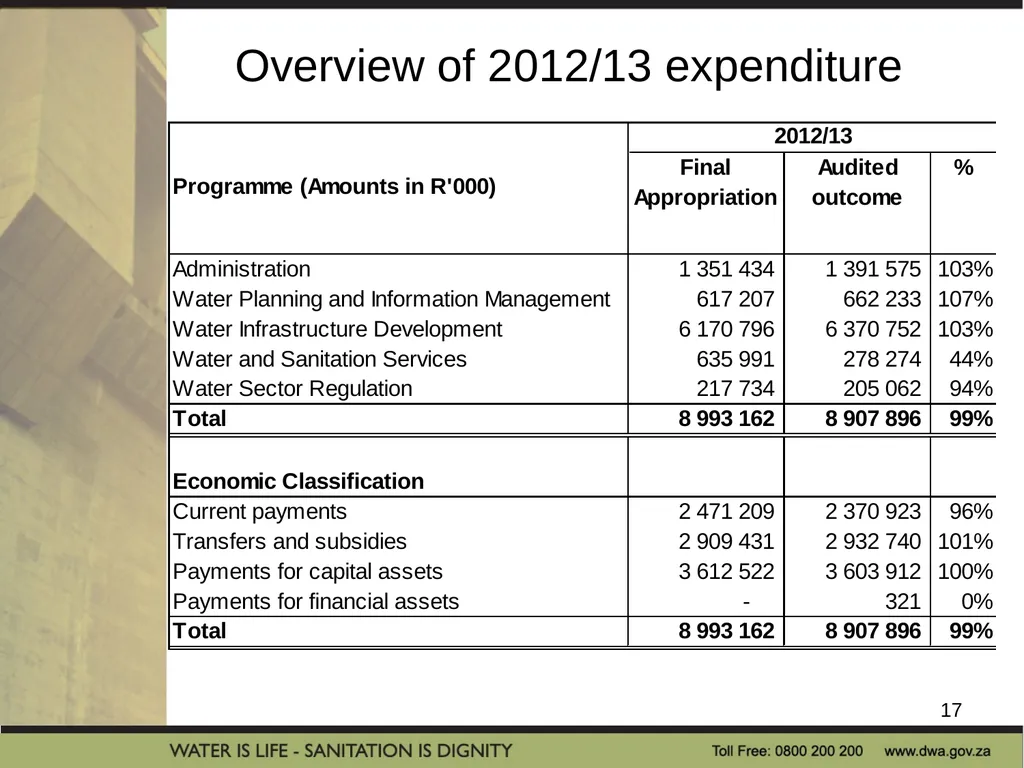
slide17. Overview of 2012/13 expenditure 17<br>
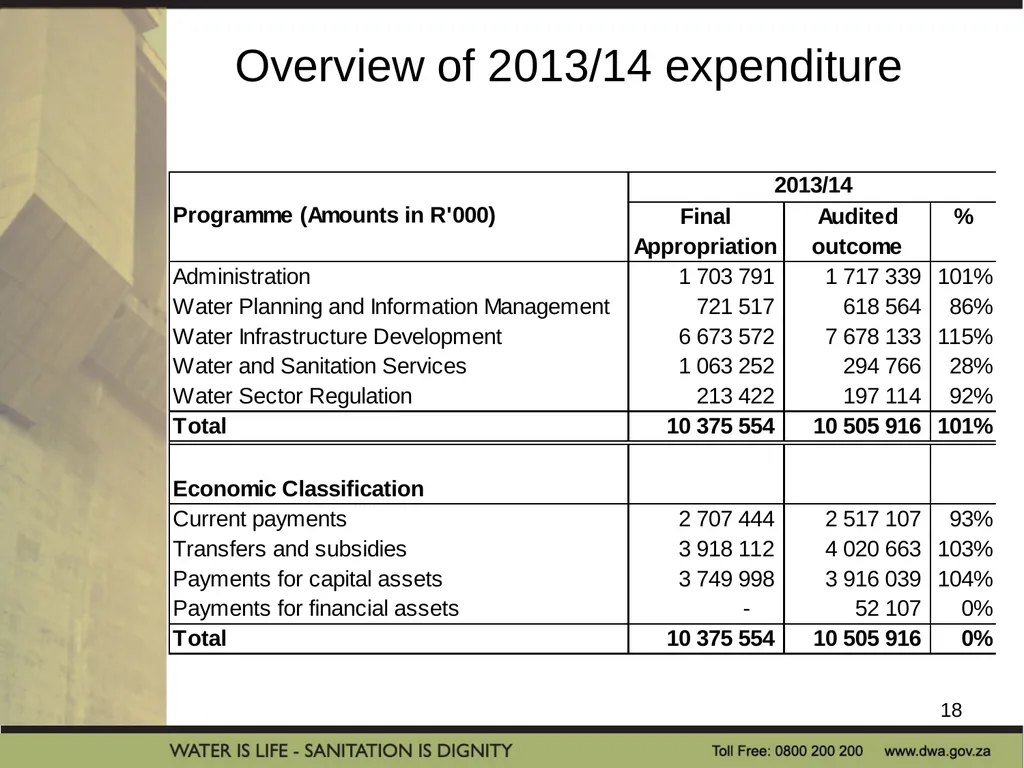
slide18. Overview of 2013/14 expenditure 18<br>
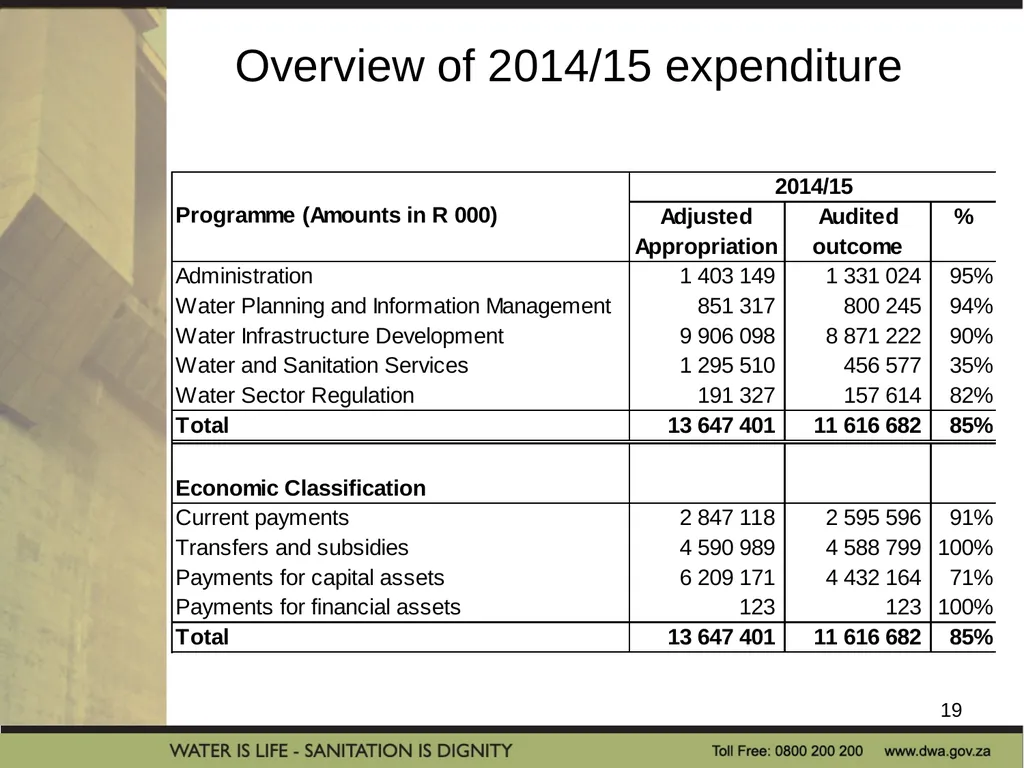
slide19. Overview of 2014/15 expenditure 19<br>
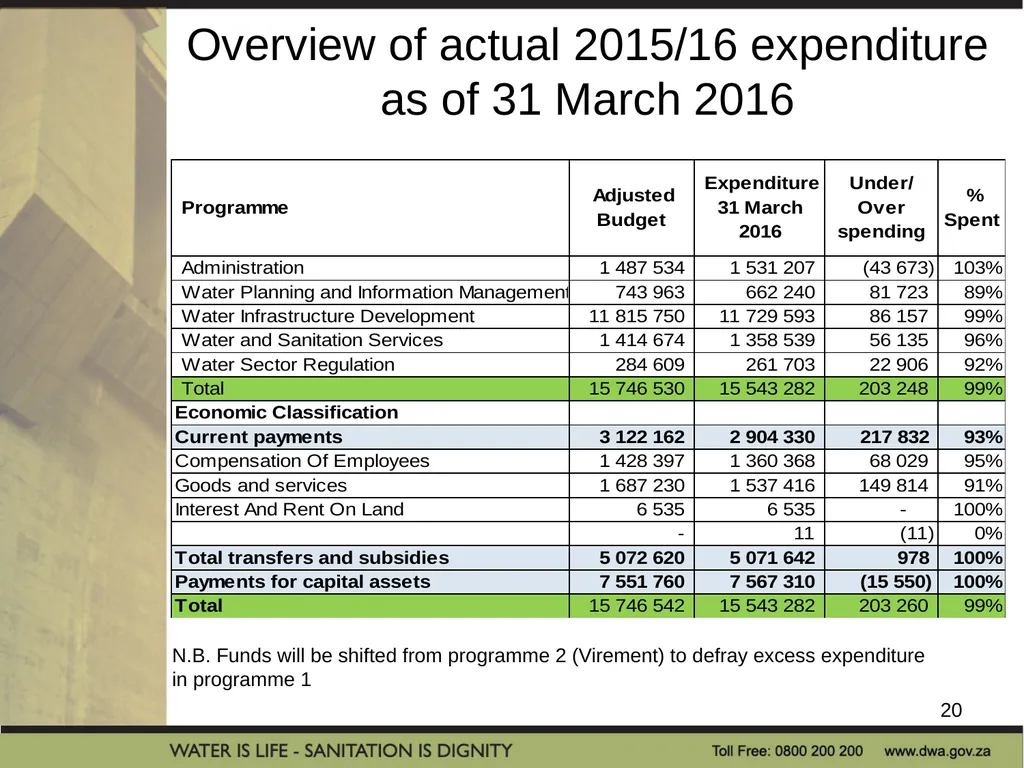
slide20. Overview of actual 2015/16 expenditure as of 31 March 2016 N.B. Funds will be shifted from programme 2 (Virement) to defray excess expenditure in programme 1 20<br>
slide21. Historical expenditure trends(Goods and Services) Over the years, it has been difficult to attract critical scarce skills for the department’s core functions resulting in the consistent use of consultants (From R362 million in 2014/15 to R319 million in 2016/17)
Funding has been reprioritised from expenditure items such as travel and subsistence, catering costs, departmental entertainment and cell phones to infrastructure 21<br>
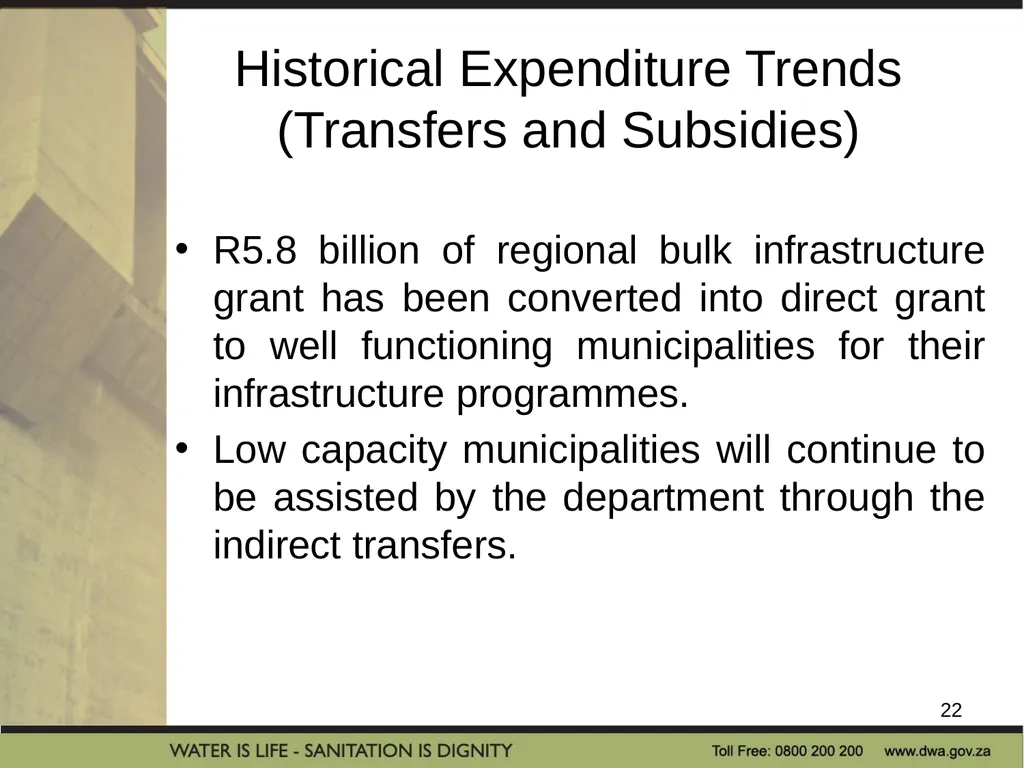
slide22. Historical Expenditure Trends(Transfers and Subsidies) R5.8 billion of regional bulk infrastructure grant has been converted into direct grant to well functioning municipalities for their infrastructure programmes.
Low capacity municipalities will continue to be assisted by the department through the indirect transfers. 22<br>
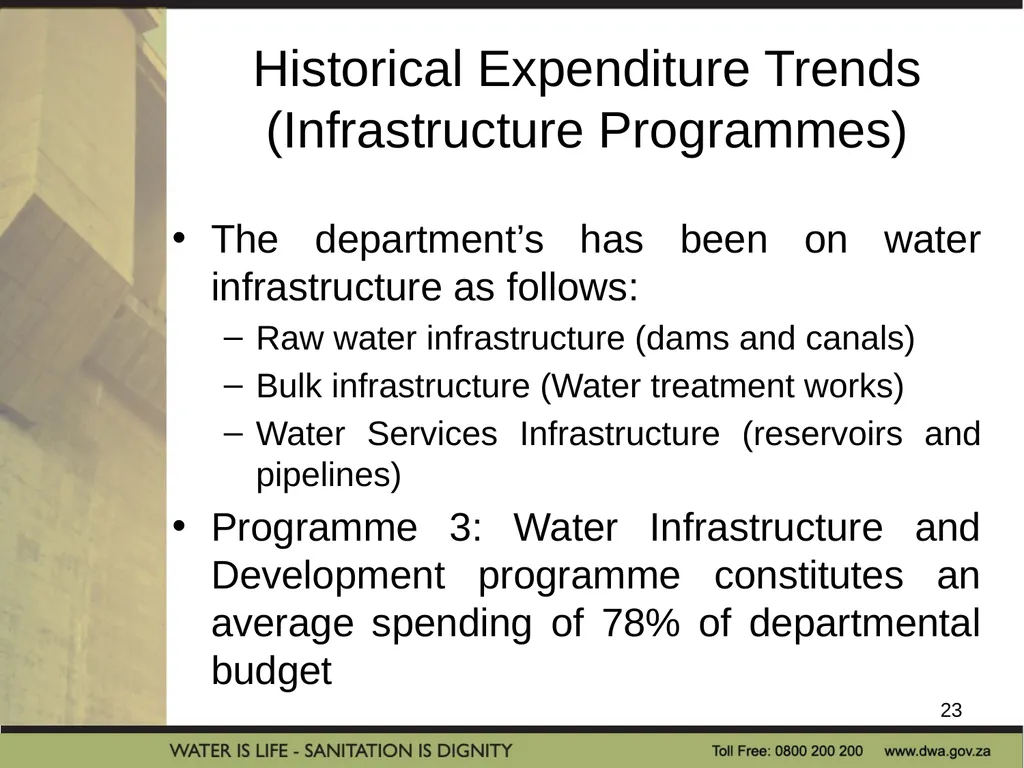
slide23. Historical Expenditure Trends(Infrastructure Programmes) The department’s has been on water infrastructure as follows:
Raw water infrastructure (dams and canals)
Bulk infrastructure (Water treatment works)
Water Services Infrastructure (reservoirs and pipelines)
Programme 3: Water Infrastructure and Development programme constitutes an average spending of 78% of departmental budget 23<br>
slide24. Budget estimates for the 2016/17 medium term<br>
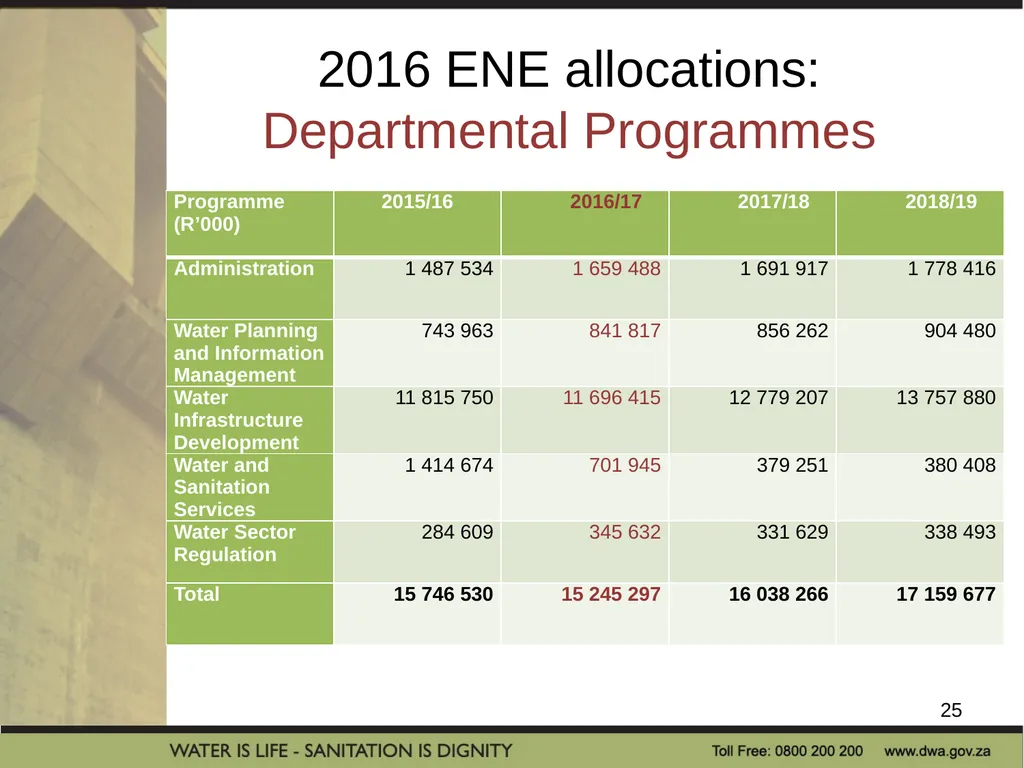
slide25. 2016 ENE allocations:Departmental Programmes 25<br>
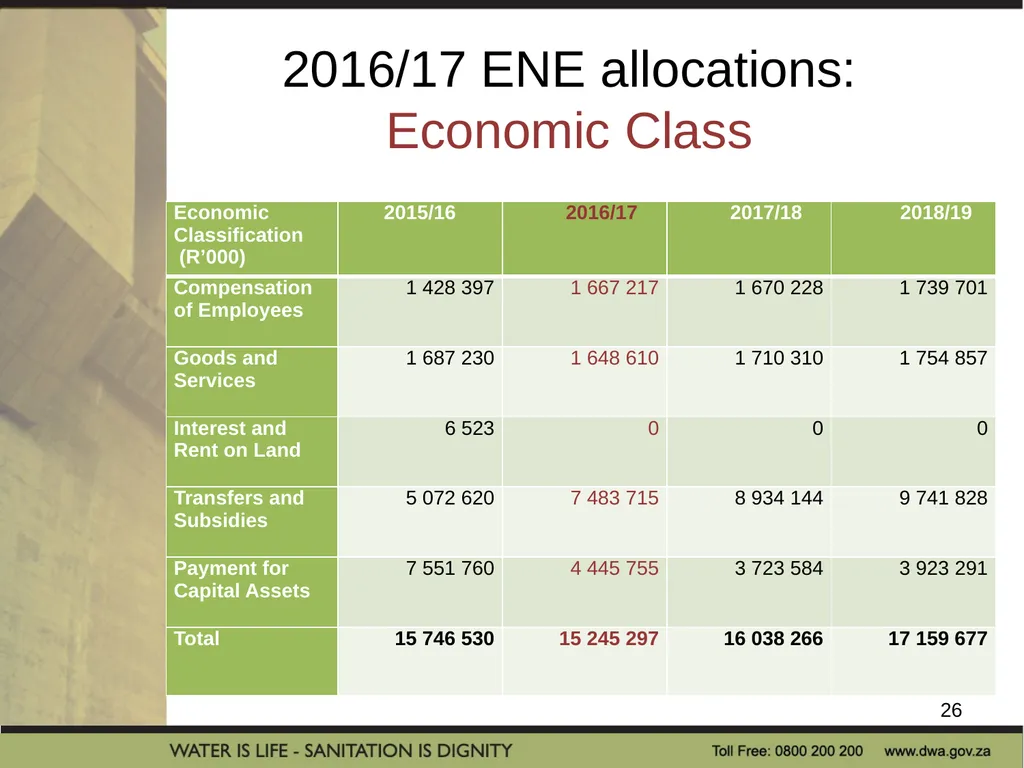
slide26. 2016/17 ENE allocations: Economic Class 26<br>
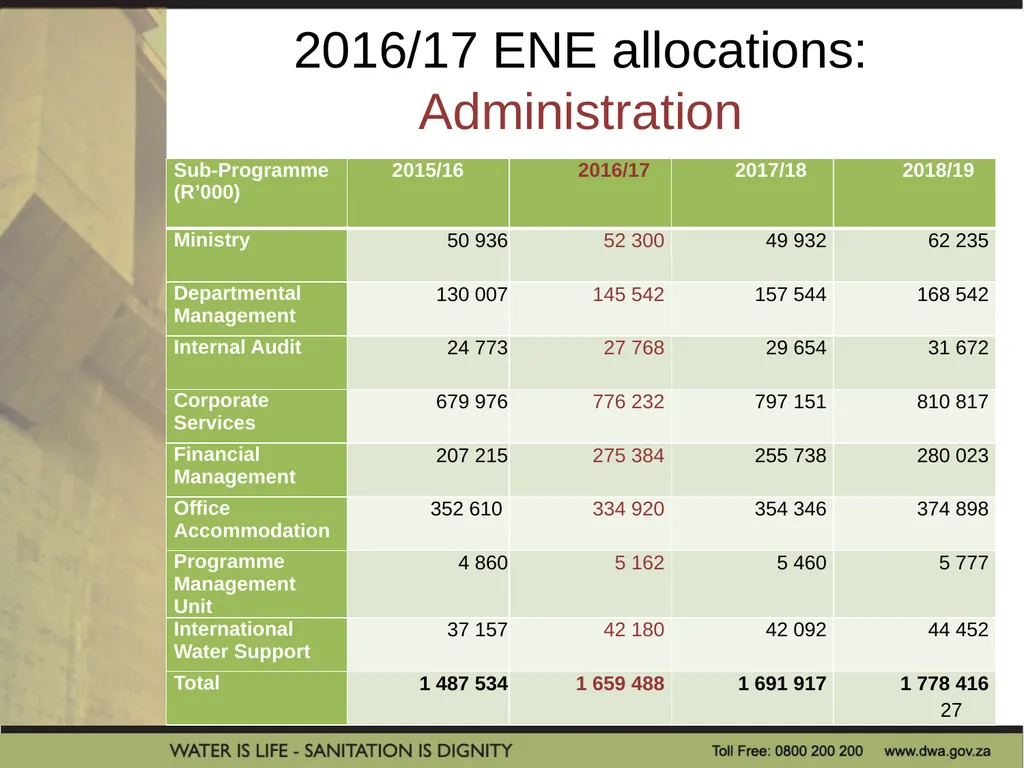
slide27. 2016/17 ENE allocations: Administration 27<br>
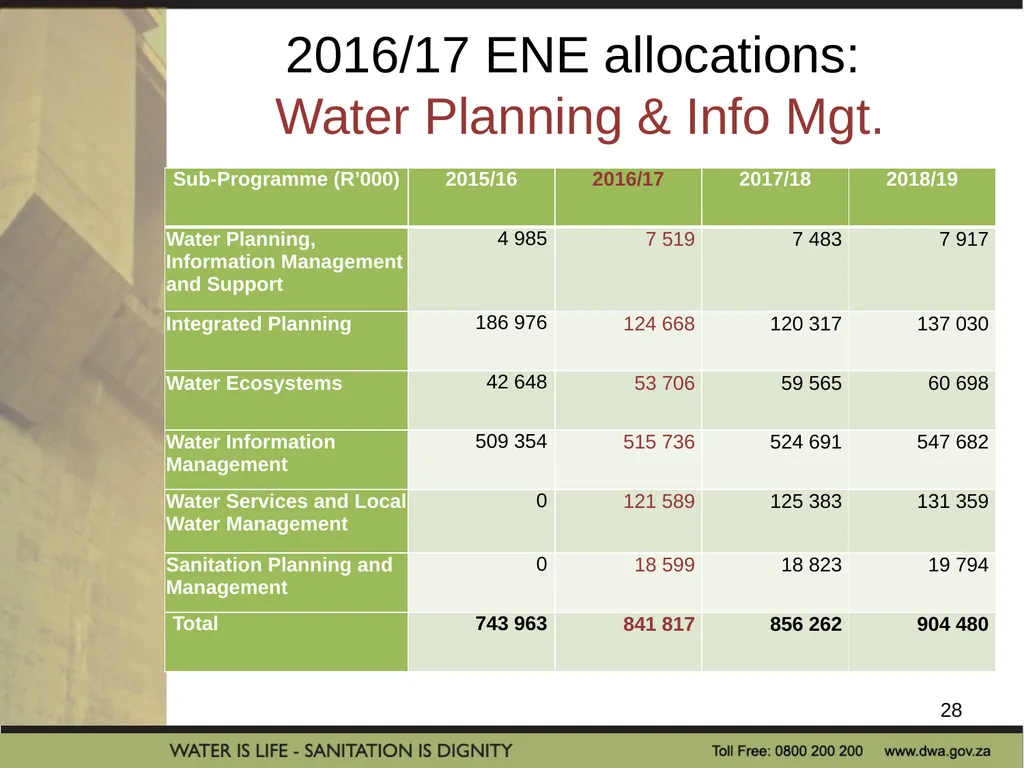
slide28. 2016/17 ENE allocations: Water Planning & Info Mgt. 28<br>
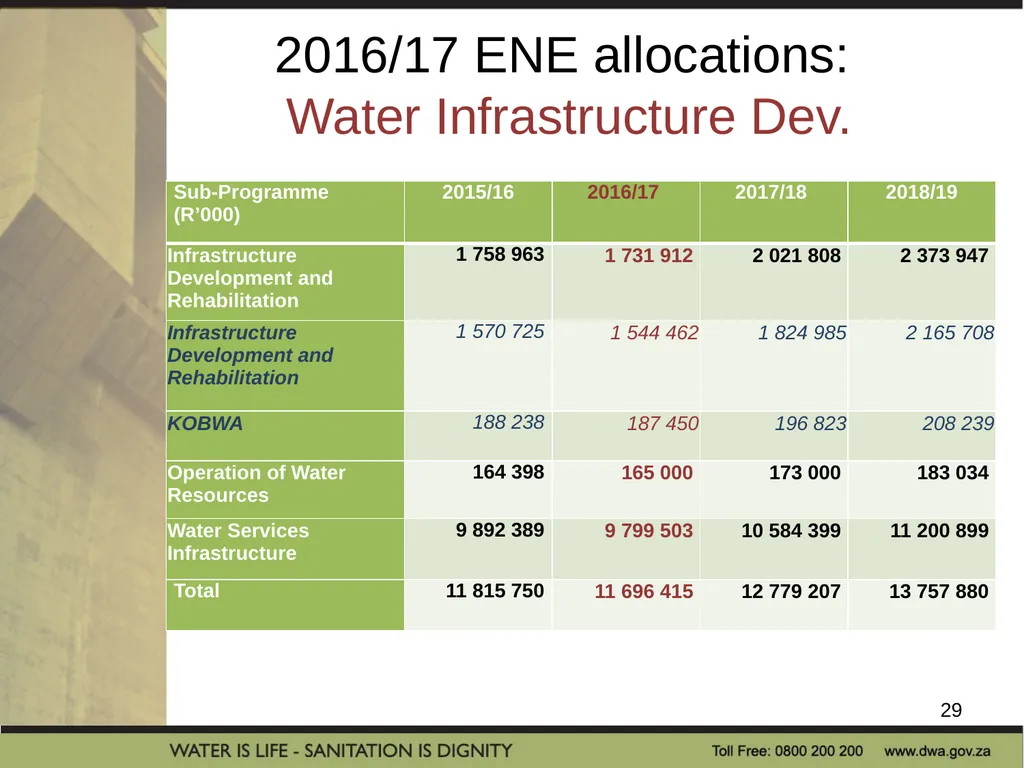
slide29. 2016/17 ENE allocations: Water Infrastructure Dev. 29<br>
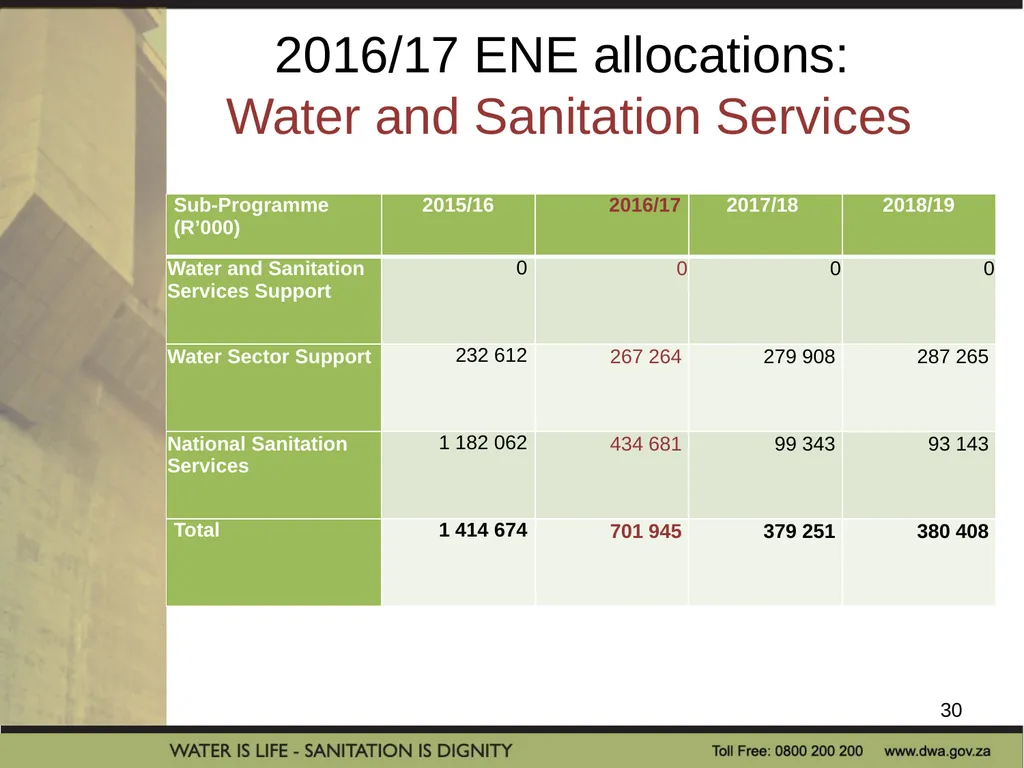
slide30. 2016/17 ENE allocations: Water and Sanitation Services 30<br>
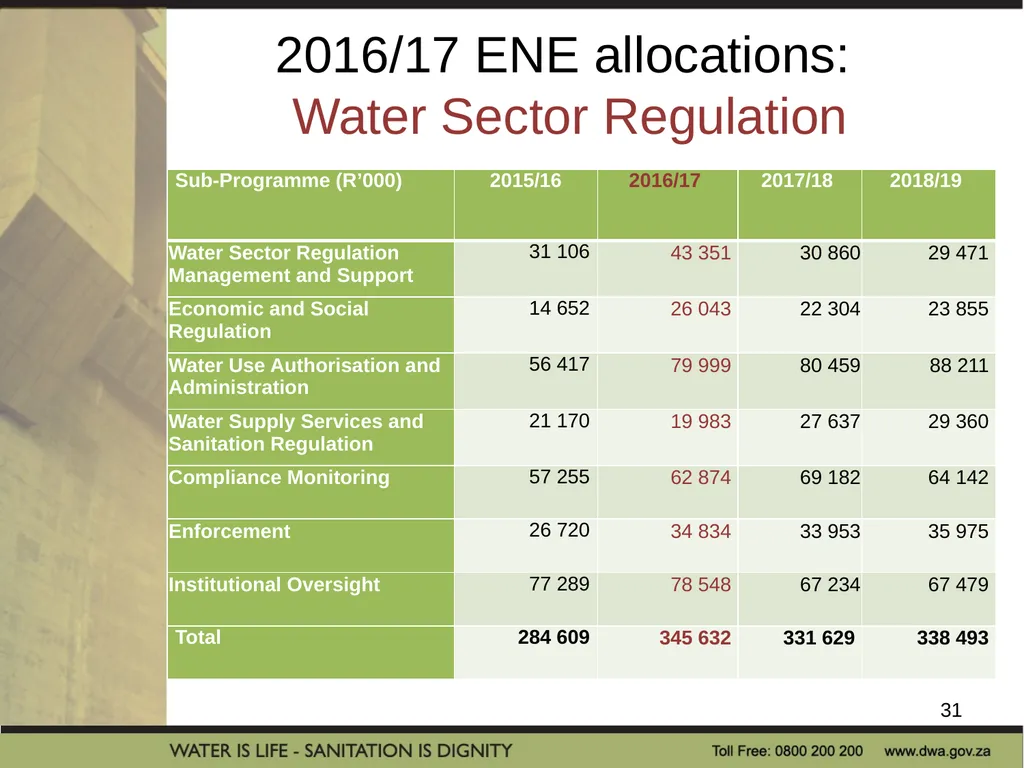
slide31. 2016/17 ENE allocations: Water Sector Regulation 31<br>
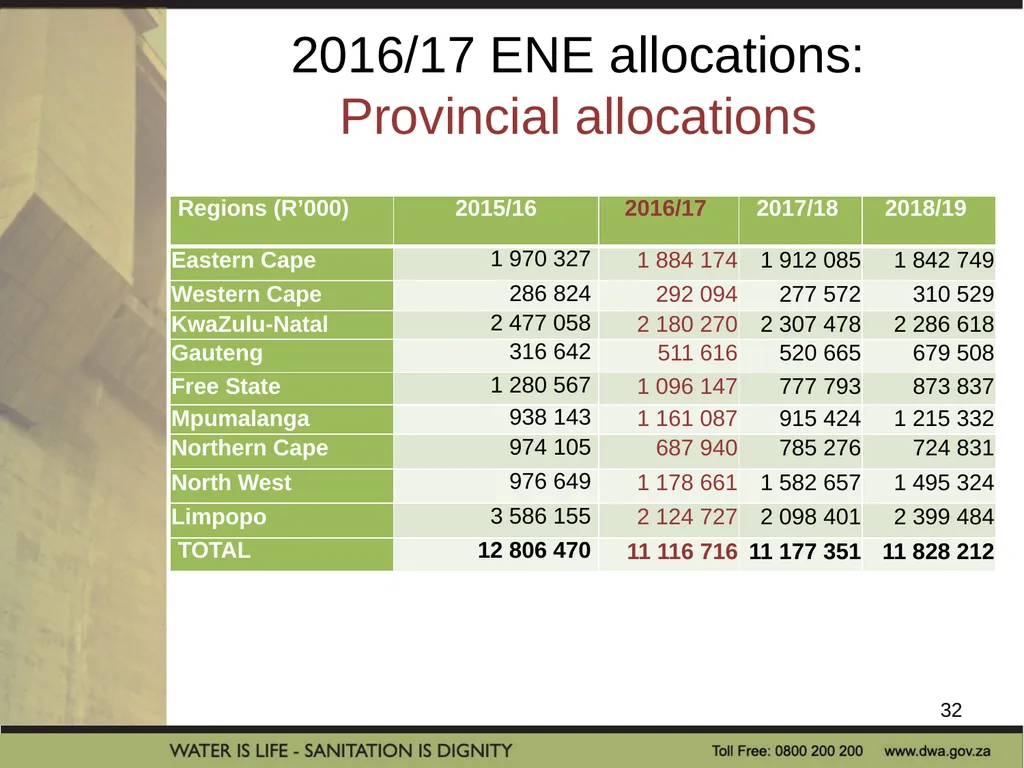
slide32. 2016/17 ENE allocations:Provincial allocations 32<br>
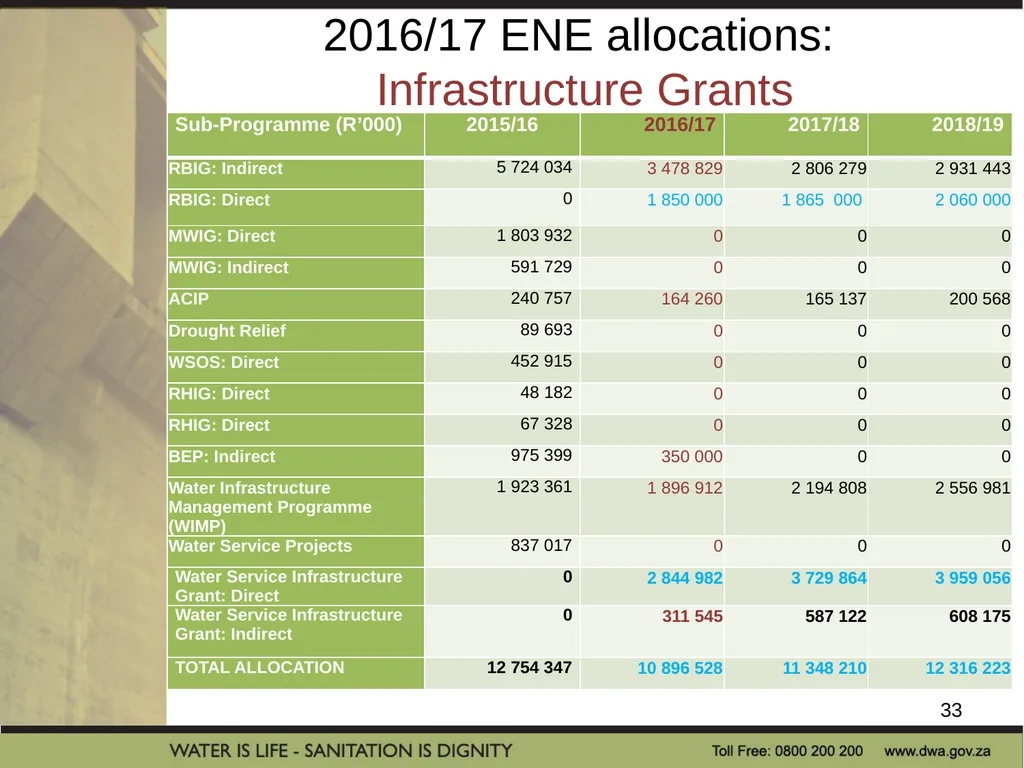
slide33. 2016/17 ENE allocations: Infrastructure Grants 33<br>
slide34. 2014/15 unspent funds<br>
slide35. 35 2014/15 Unspent Funds<br>
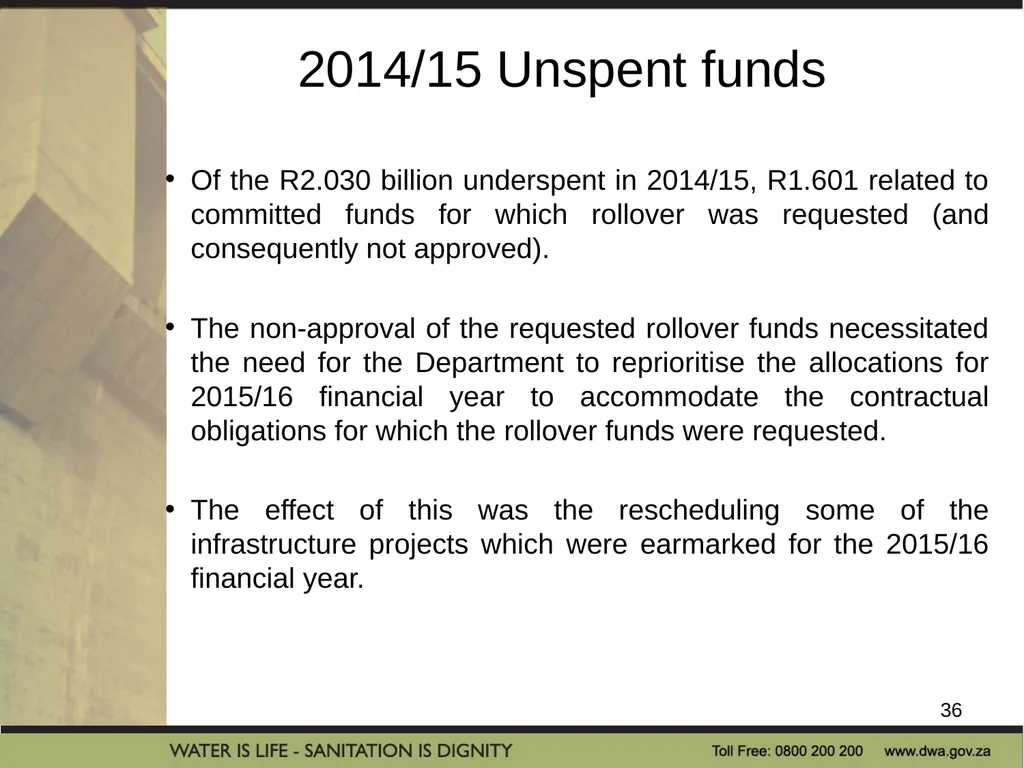
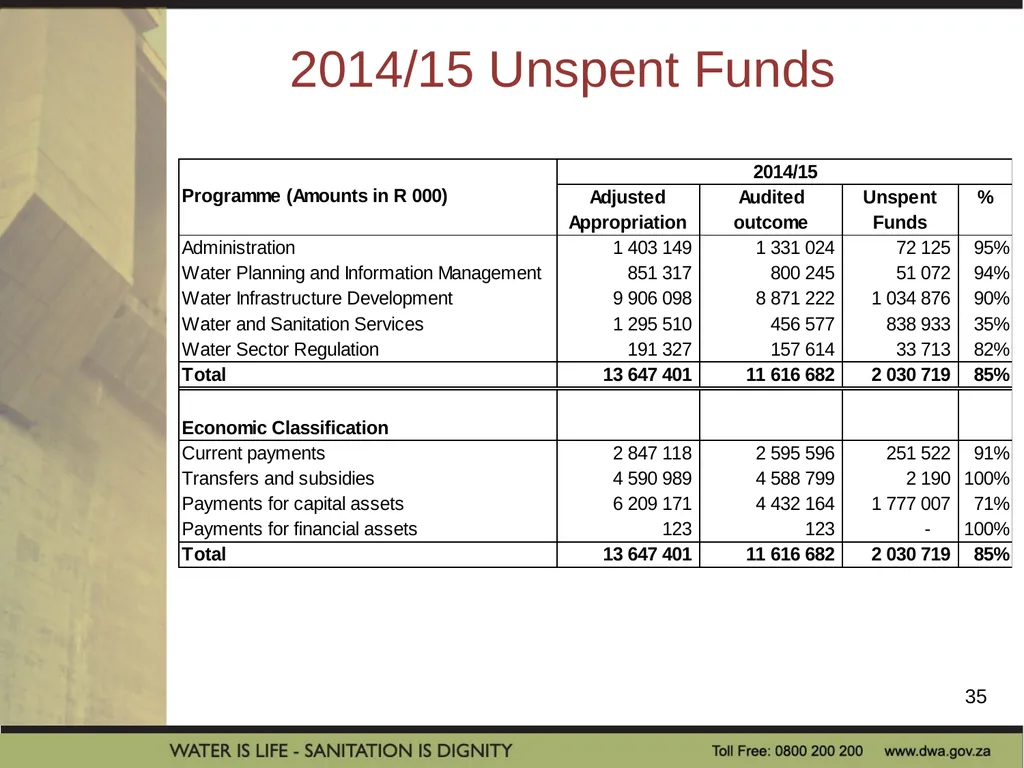
slide36. 2014/15 Unspent funds 36 Of the R2.030 billion underspent in 2014/15, R1.601 related to committed funds for which rollover was requested (and consequently not approved).
The non-approval of the requested rollover funds necessitated the need for the Department to reprioritise the allocations for 2015/16 financial year to accommodate the contractual obligations for which the rollover funds were requested.
The effect of this was the rescheduling some of the infrastructure projects which were earmarked for the 2015/16 financial year.<br>
slide37. Part C: Overview of Water Trading Entity medium term budget<br>
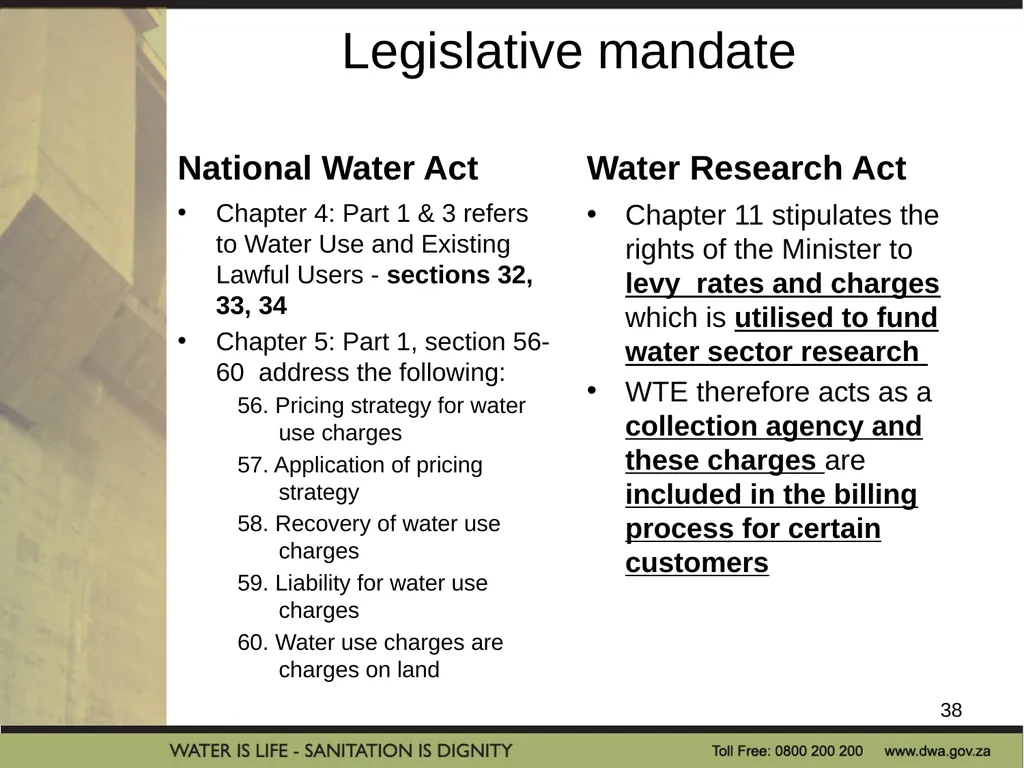
slide38. Legislative mandate National Water Act Chapter 4: Part 1 & 3 refers to Water Use and Existing Lawful Users - sections 32, 33, 34
Chapter 5: Part 1, section 56-60 address the following:
56. Pricing strategy for water use charges
57. Application of pricing strategy
58. Recovery of water use charges
59. Liability for water use charges
60. Water use charges are charges on land Water Research Act Chapter 11 stipulates the rights of the Minister to levy rates and charges which is utilised to fund water sector research
WTE therefore acts as a collection agency and these charges are included in the billing process for certain customers 38<br>
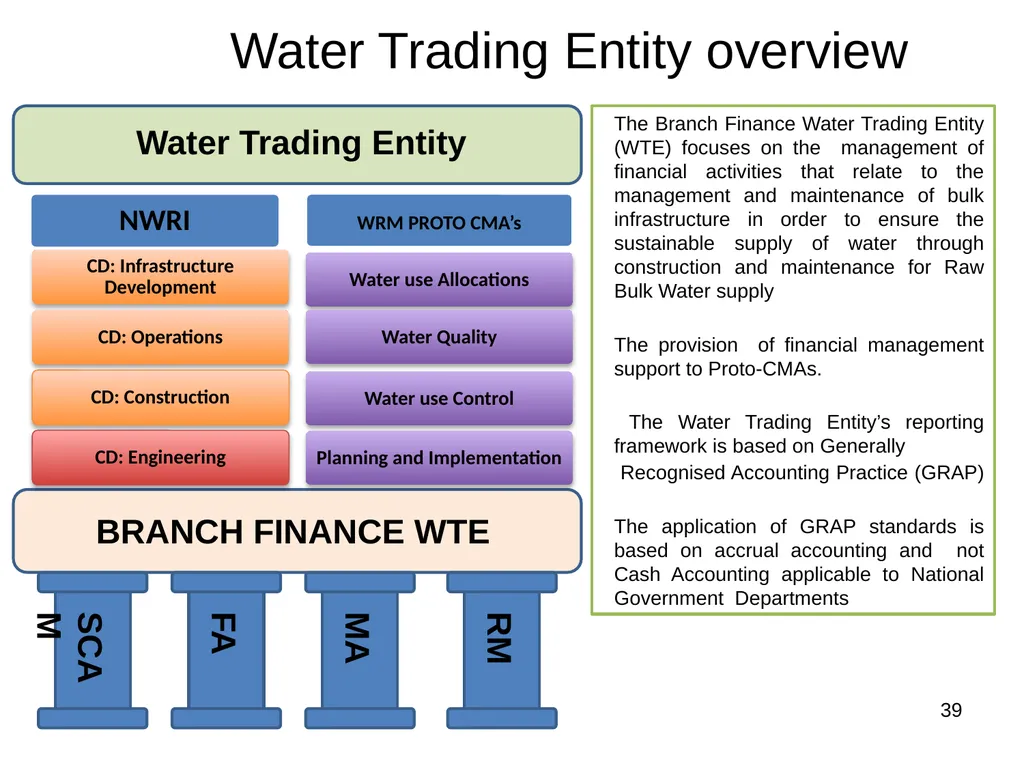
slide39. Water Trading Entity overview 39 The Branch Finance Water Trading Entity (WTE) focuses on the management of financial activities that relate to the management and maintenance of bulk infrastructure in order to ensure the sustainable supply of water through construction and maintenance for Raw Bulk Water supply
The provision of financial management support to Proto-CMAs.
The Water Trading Entity’s reporting framework is based on Generally
Recognised Accounting Practice (GRAP)
The application of GRAP standards is based on accrual accounting and not Cash Accounting applicable to National Government Departments<br>
slide40. Cost recovery business 40<br>
slide41. 2016/17 medium term expenditure trends<br>
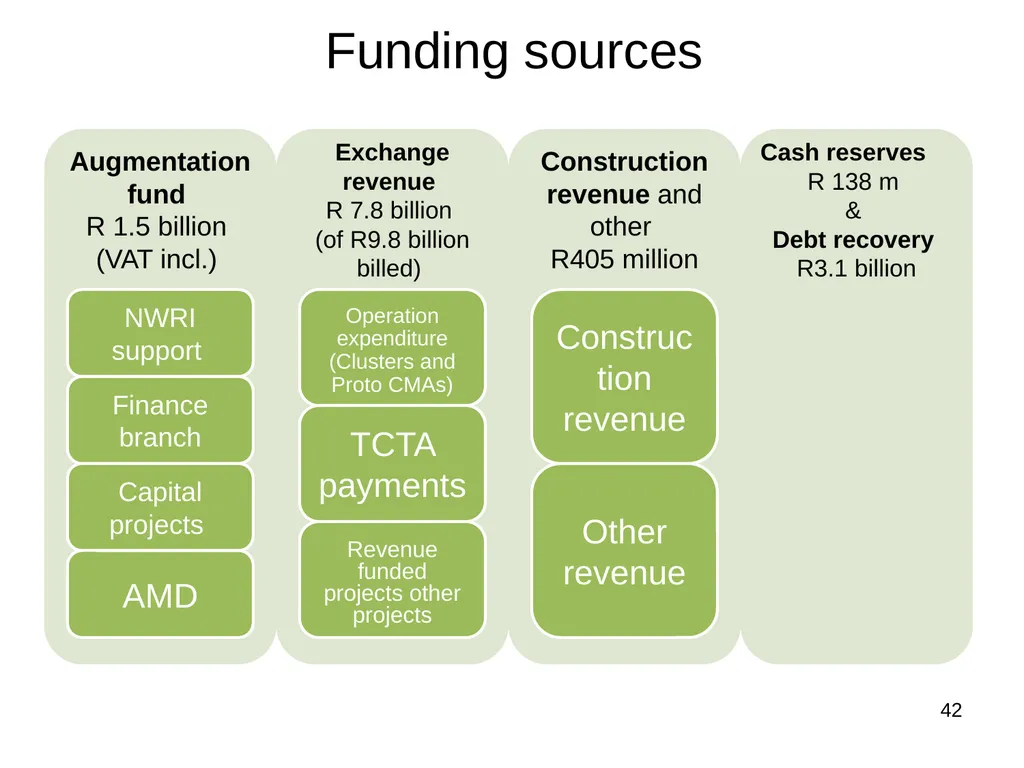
slide42. Funding sources 42<br>
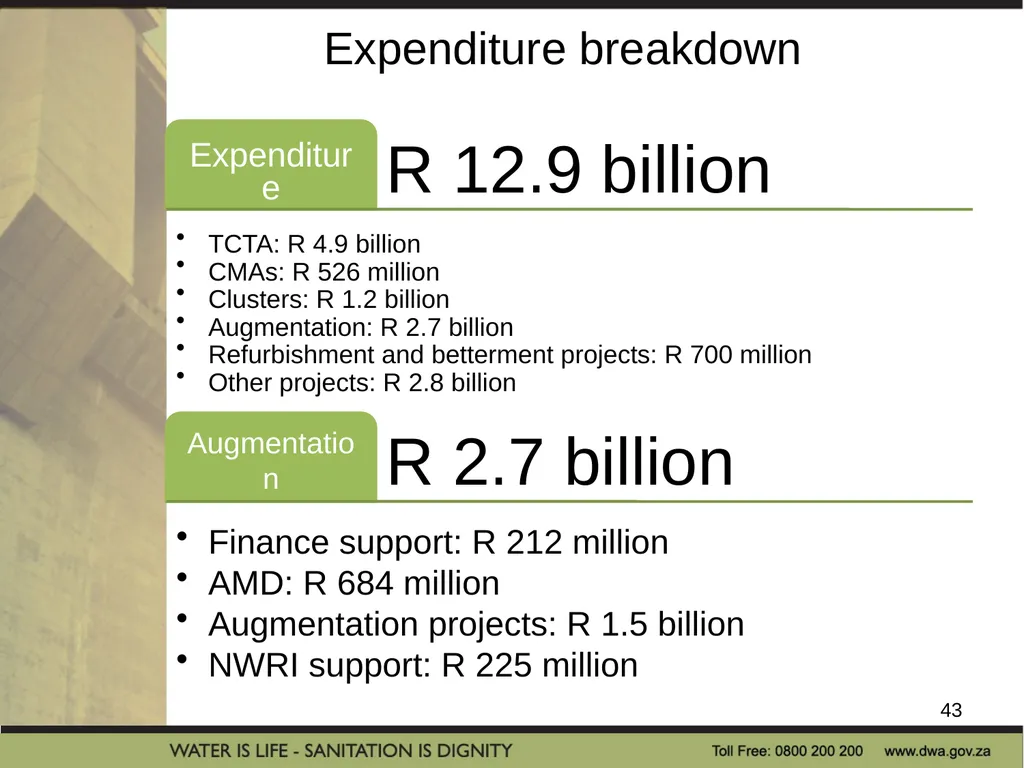
slide43. Expenditure breakdown 43<br>
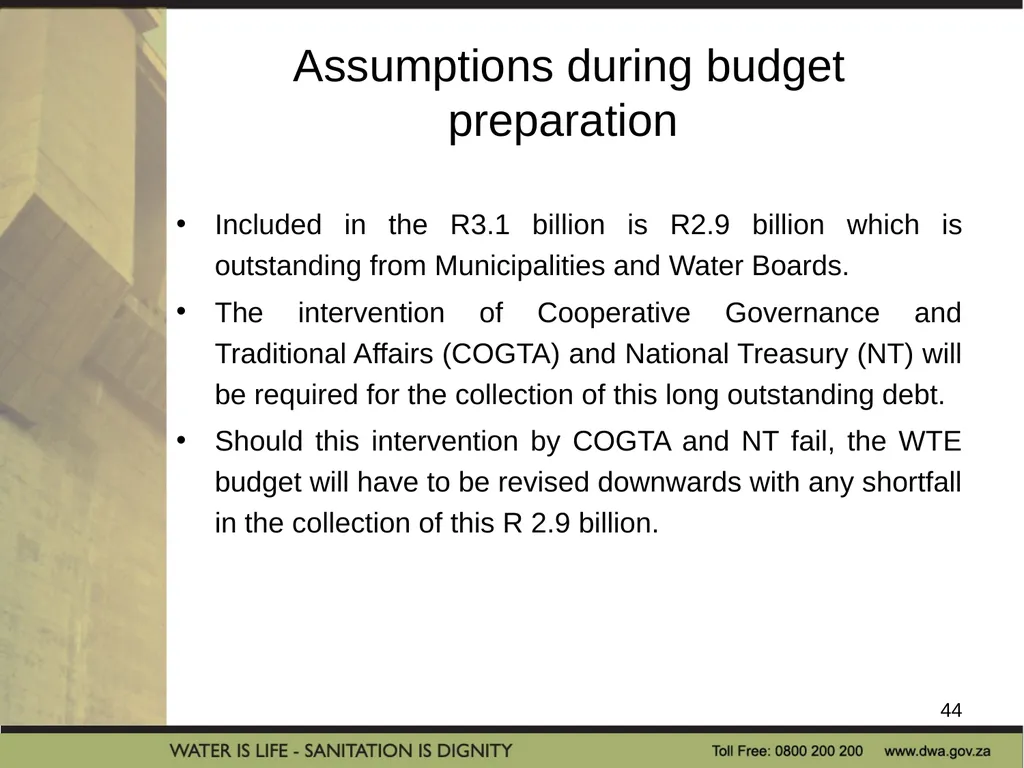
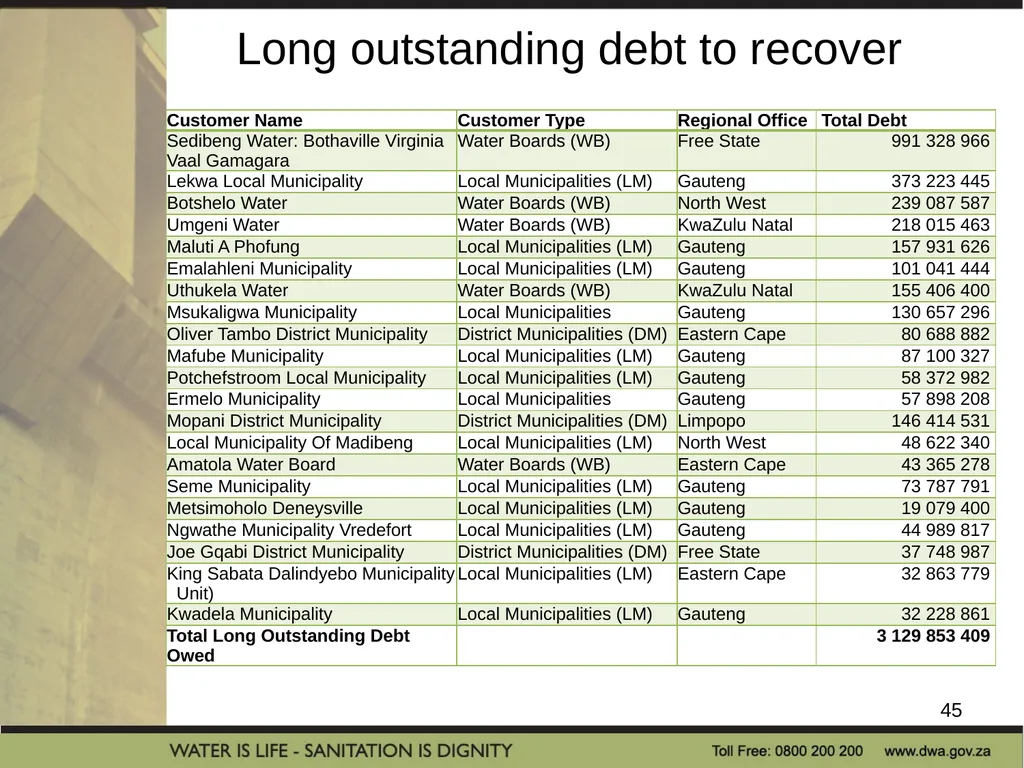
slide44. Assumptions during budget preparation Included in the R3.1 billion is R2.9 billion which is outstanding from Municipalities and Water Boards.
The intervention of Cooperative Governance and Traditional Affairs (COGTA) and National Treasury (NT) will be required for the collection of this long outstanding debt.
Should this intervention by COGTA and NT fail, the WTE budget will have to be revised downwards with any shortfall in the collection of this R 2.9 billion. 44<br>
slide45. Long outstanding debt to recover 45<br>
slide46. 2016/17 medium term budget allocations<br>
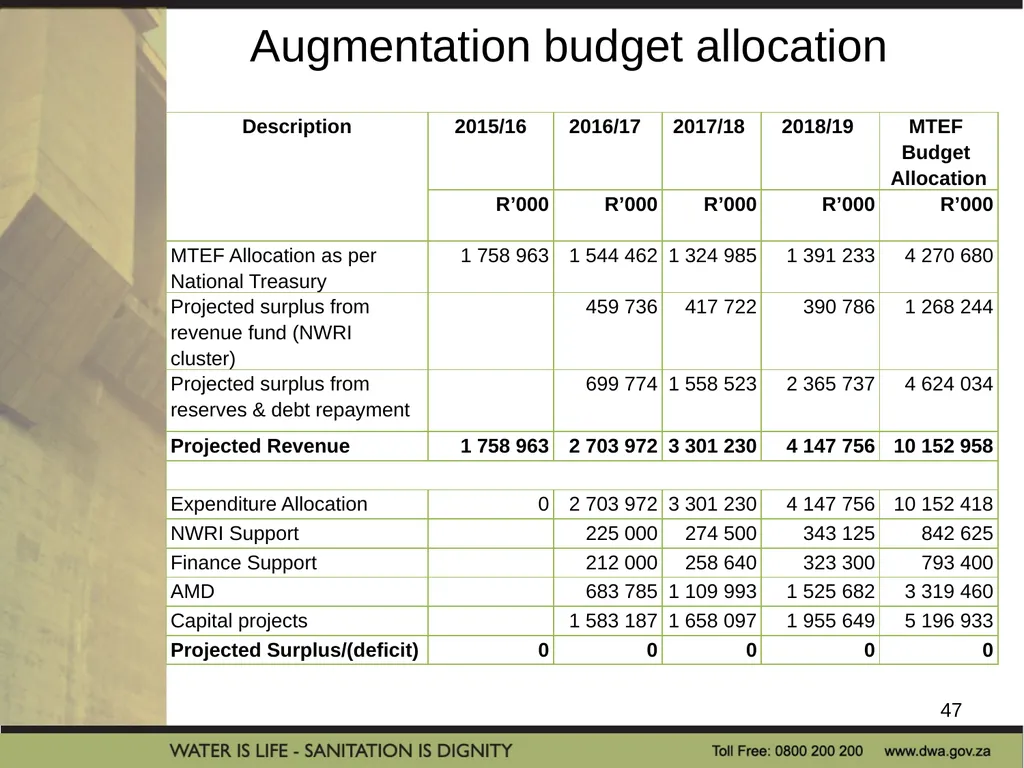
slide47. Augmentation budget allocation 47<br>
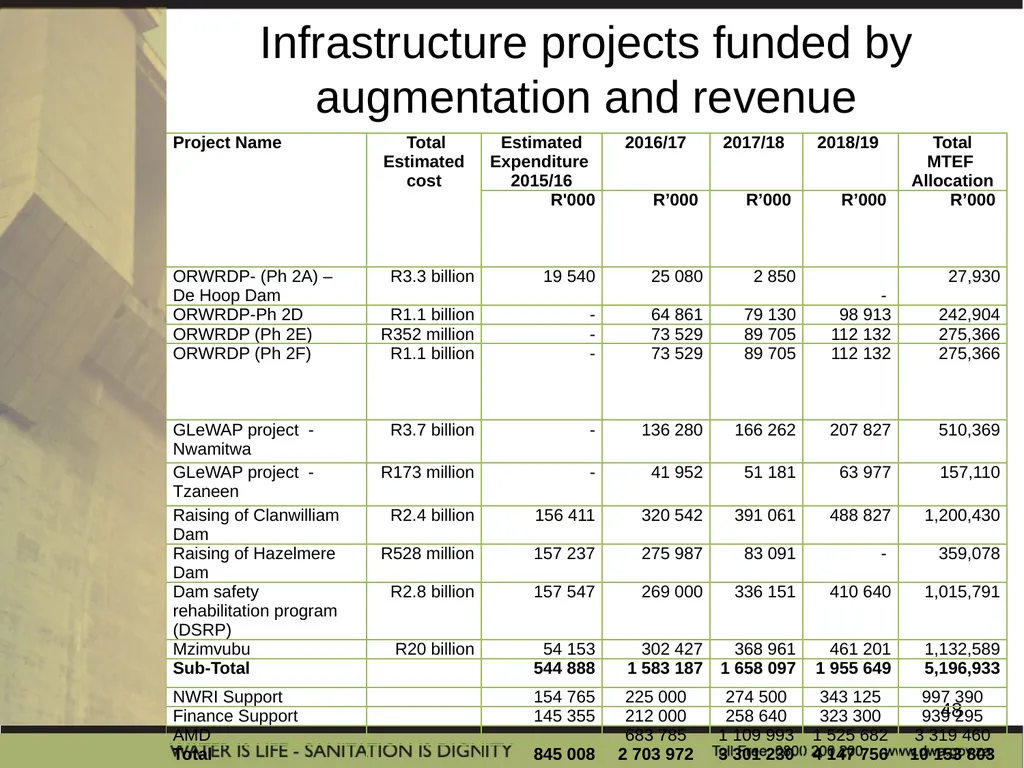
slide48. Infrastructure projects funded by augmentation and revenue 48<br>
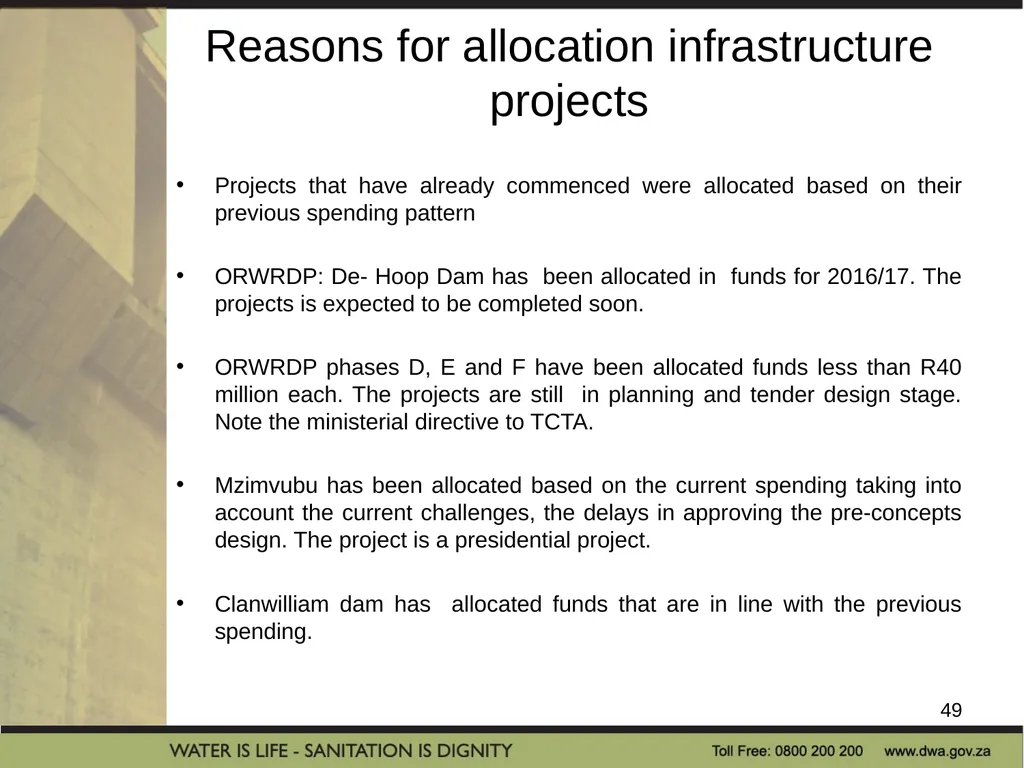
slide49. Reasons for allocation infrastructure projects Projects that have already commenced were allocated based on their previous spending pattern
ORWRDP: De- Hoop Dam has been allocated in funds for 2016/17. The projects is expected to be completed soon.
ORWRDP phases D, E and F have been allocated funds less than R40 million each. The projects are still in planning and tender design stage. Note the ministerial directive to TCTA.
Mzimvubu has been allocated based on the current spending taking into account the current challenges, the delays in approving the pre-concepts design. The project is a presidential project.
Clanwilliam dam has allocated funds that are in line with the previous spending. 49<br>
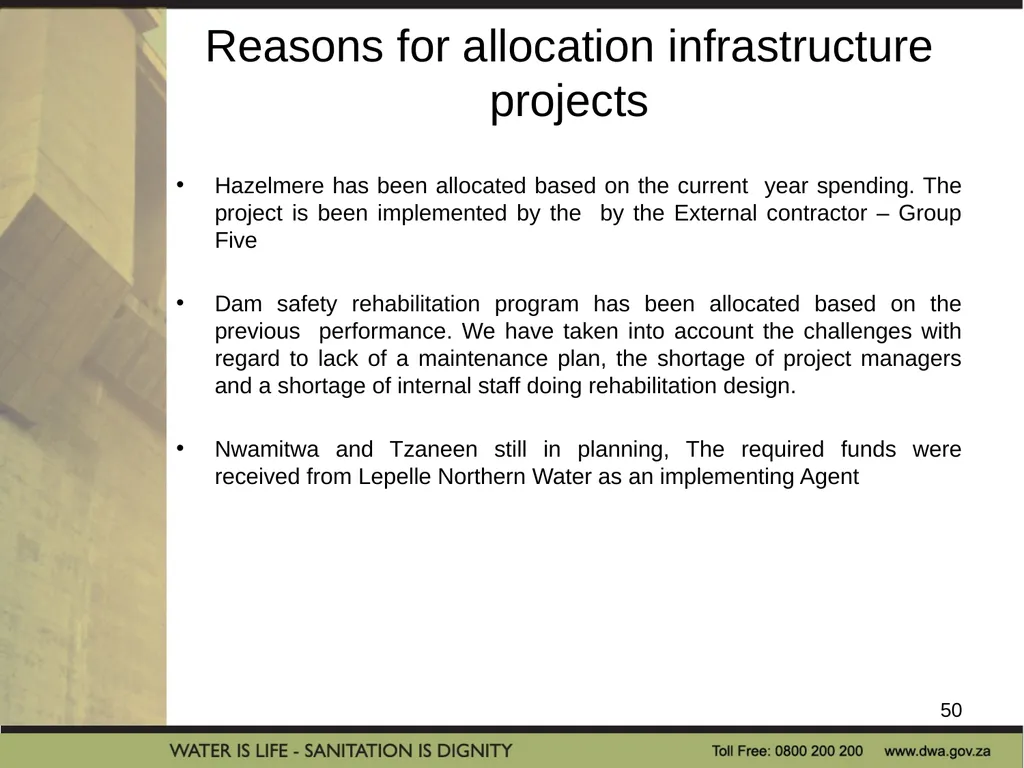
slide50. Reasons for allocation infrastructure projects Hazelmere has been allocated based on the current year spending. The project is been implemented by the by the External contractor – Group Five
Dam safety rehabilitation program has been allocated based on the previous performance. We have taken into account the challenges with regard to lack of a maintenance plan, the shortage of project managers and a shortage of internal staff doing rehabilitation design.
Nwamitwa and Tzaneen still in planning, The required funds were received from Lepelle Northern Water as an implementing Agent 50<br>
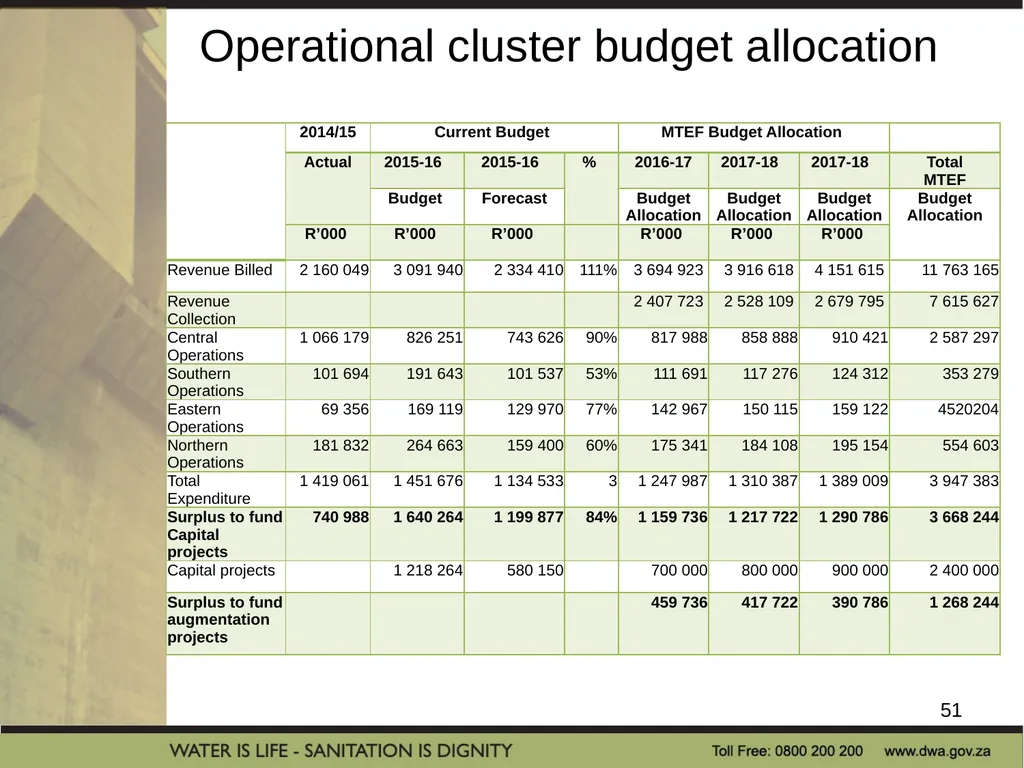
slide51. Operational cluster budget allocation 51<br>
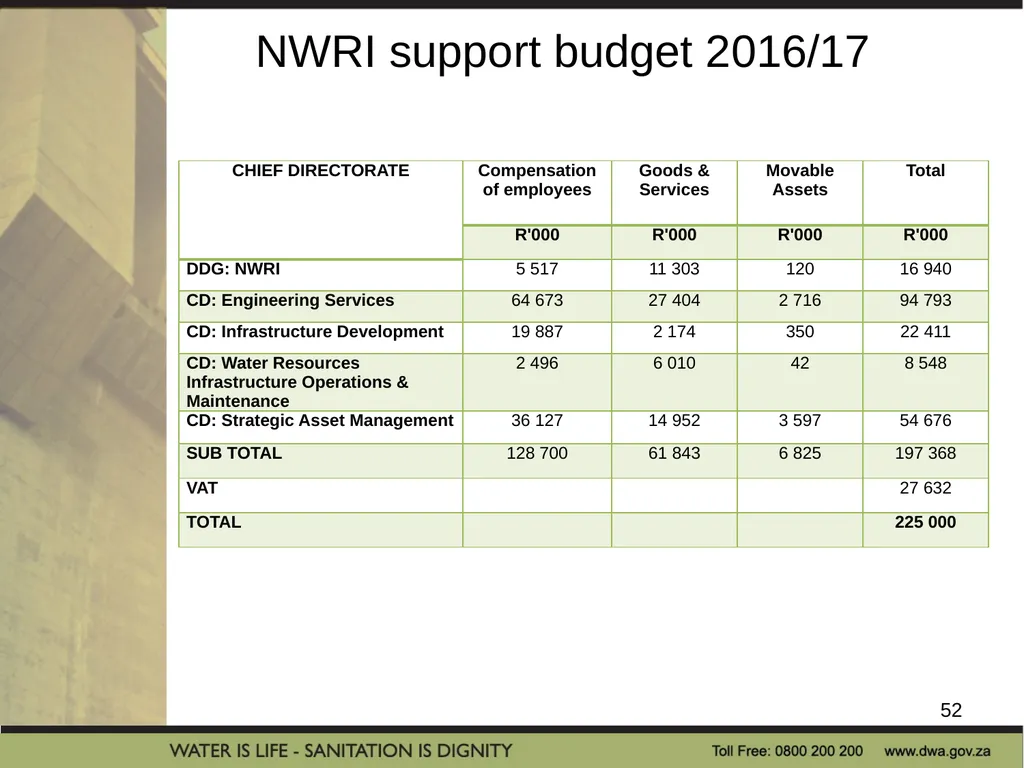
slide52. NWRI support budget 2016/17 52<br>
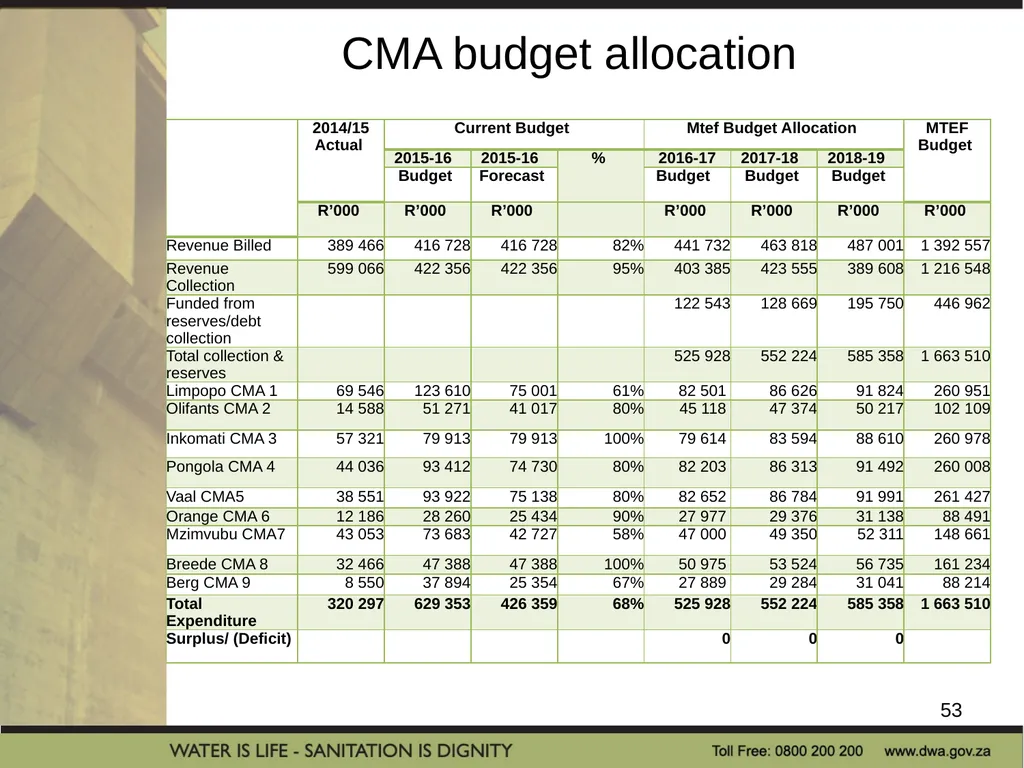
slide53. CMA budget allocation 53<br>
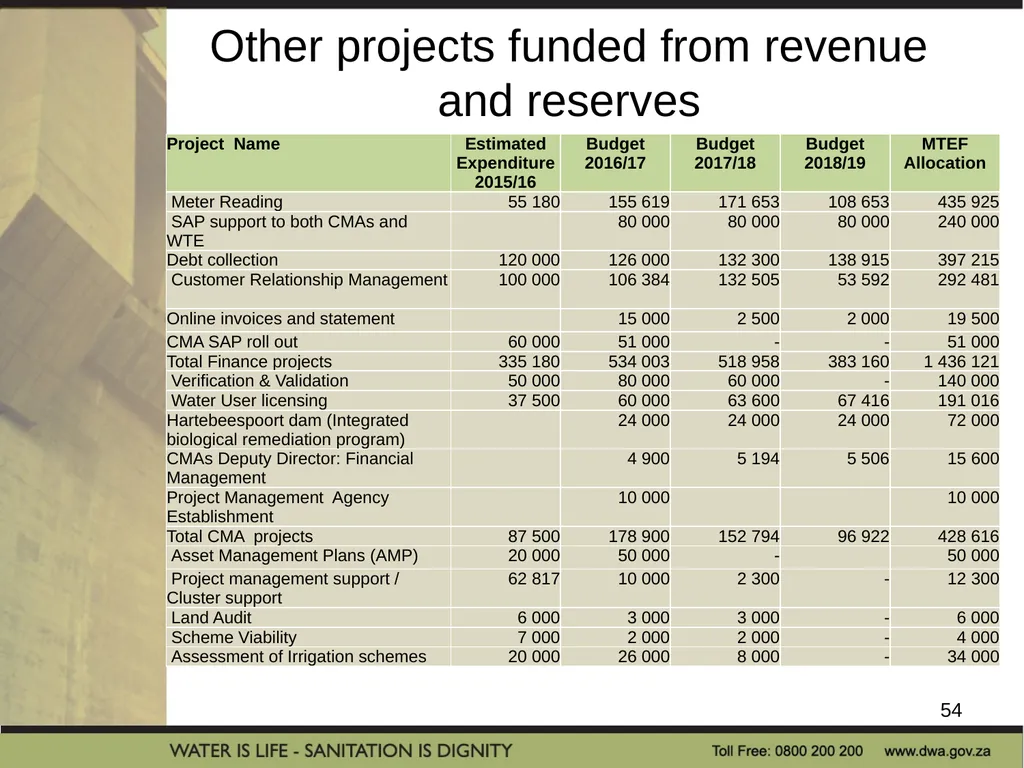
slide54. Other projects funded from revenue and reserves 54<br>
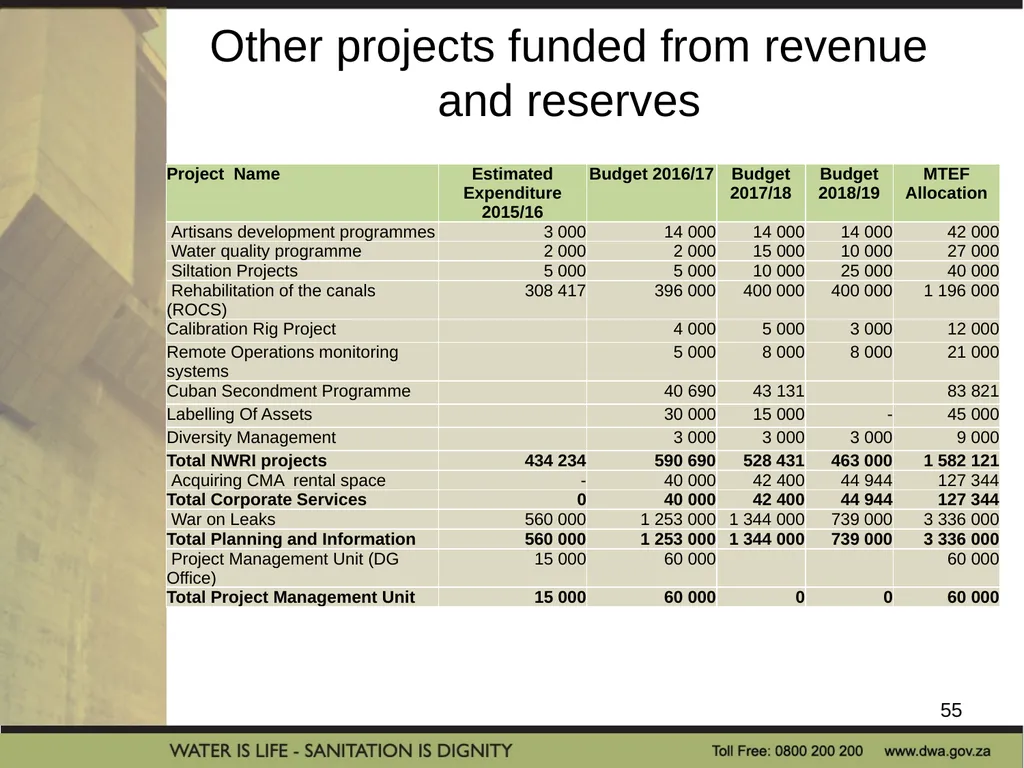
slide55. Other projects funded from revenue and reserves 55<br>
slide56. Financial performance for the month ended 29 February 2016<br>
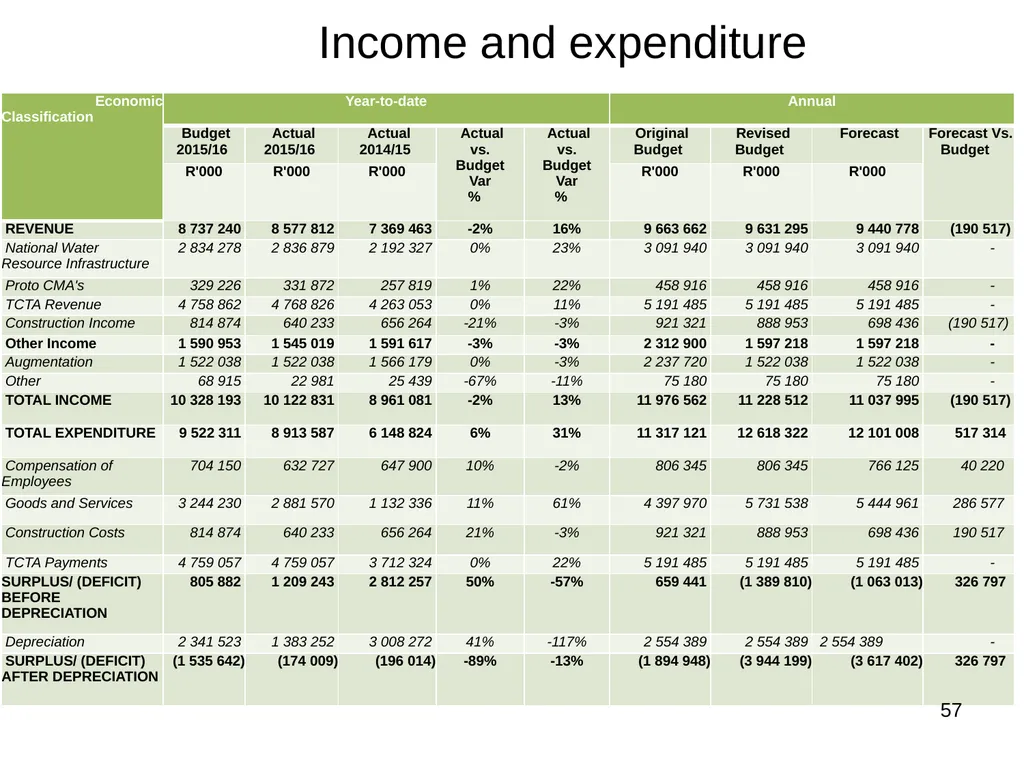
slide57. Income and expenditure 57<br>
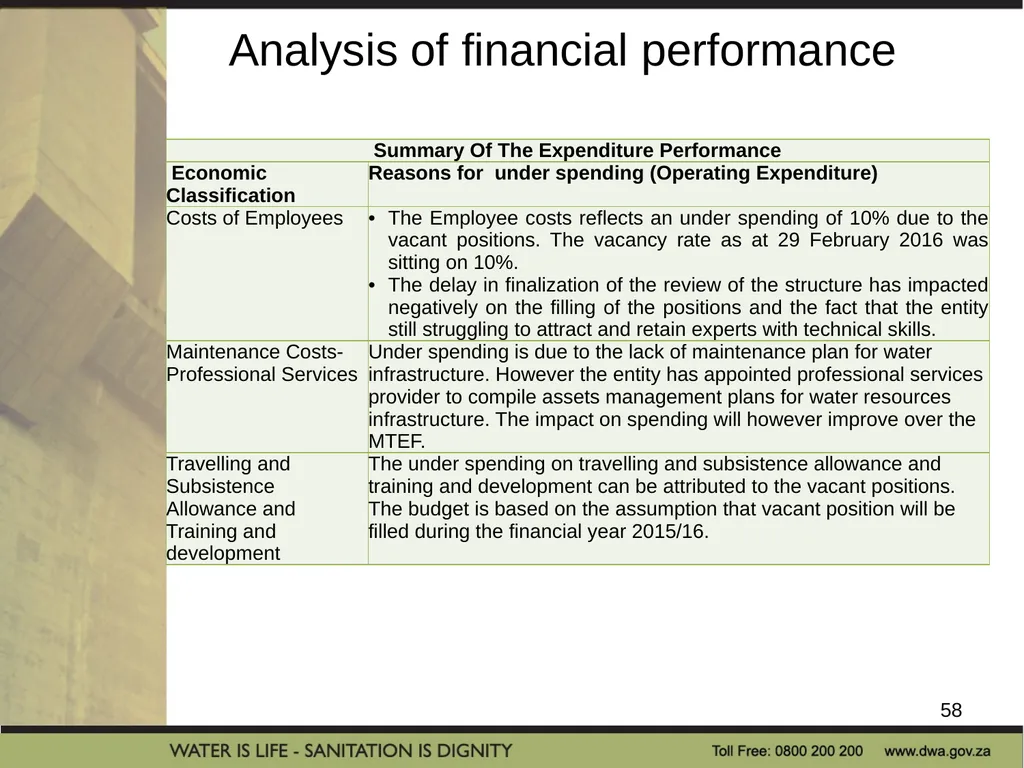
slide58. Analysis of financial performance 58<br>
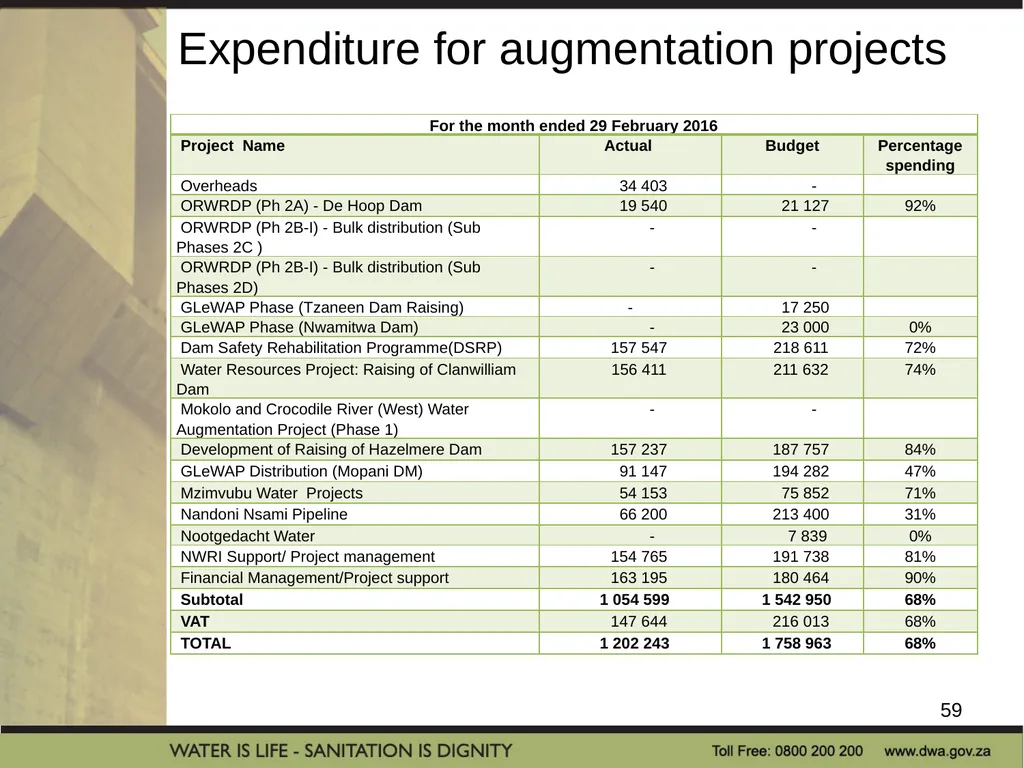
slide59. Expenditure for augmentation projects 59<br>
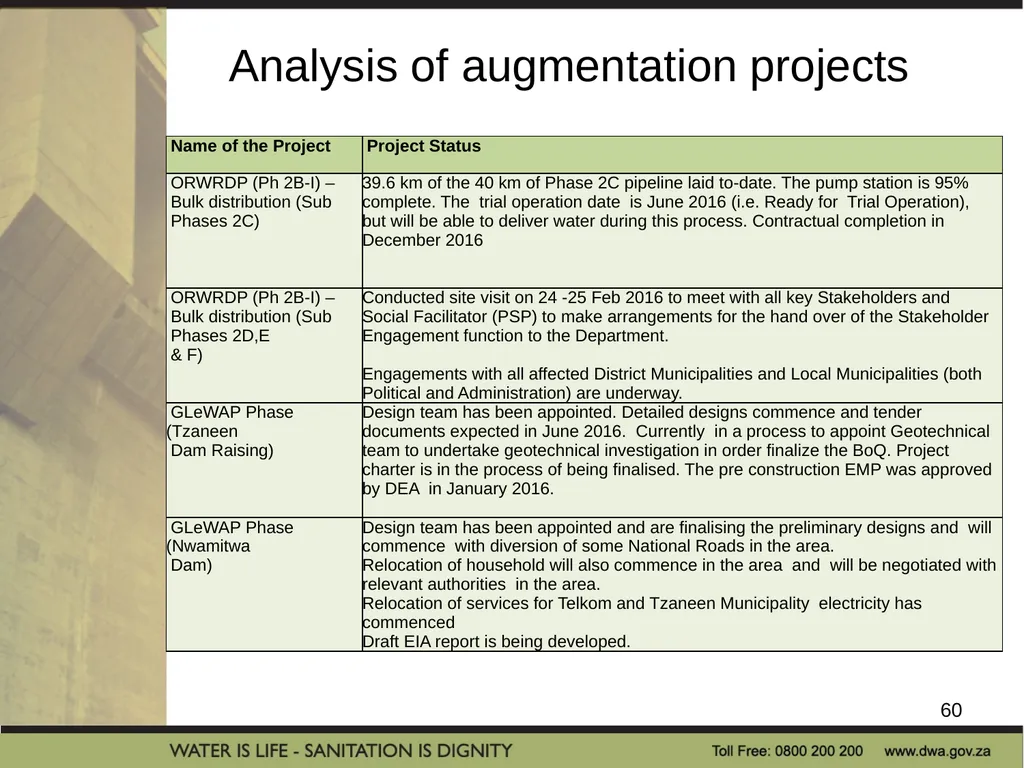
slide60. Analysis of augmentation projects 60<br>
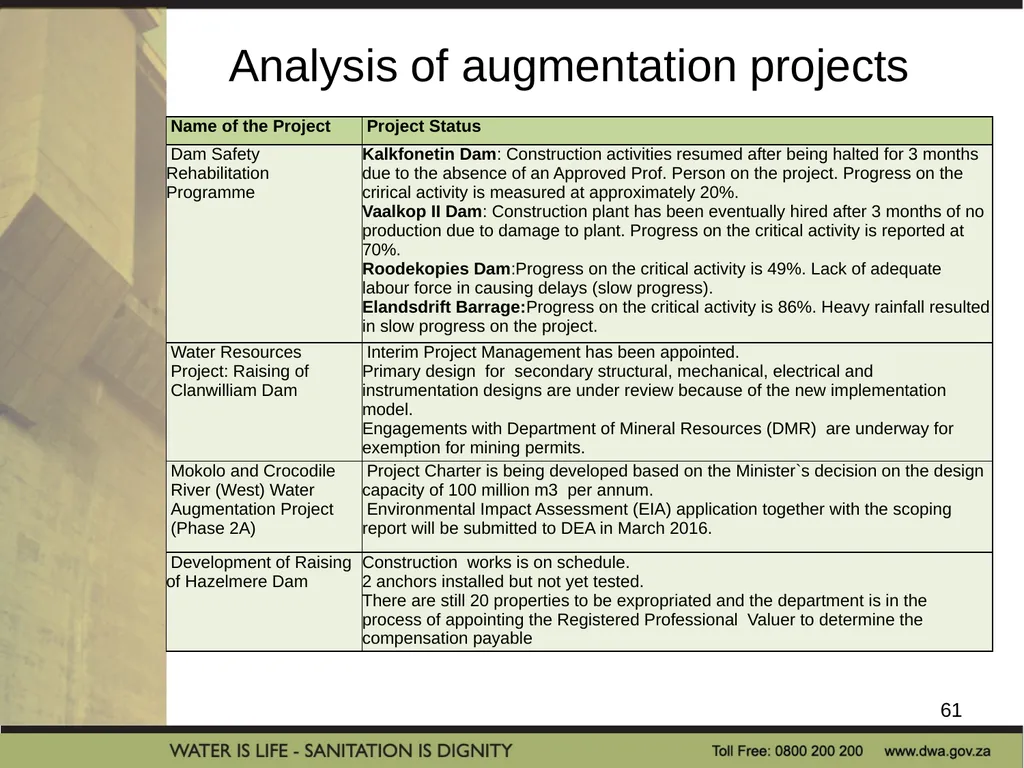
slide61. Analysis of augmentation projects 61<br>
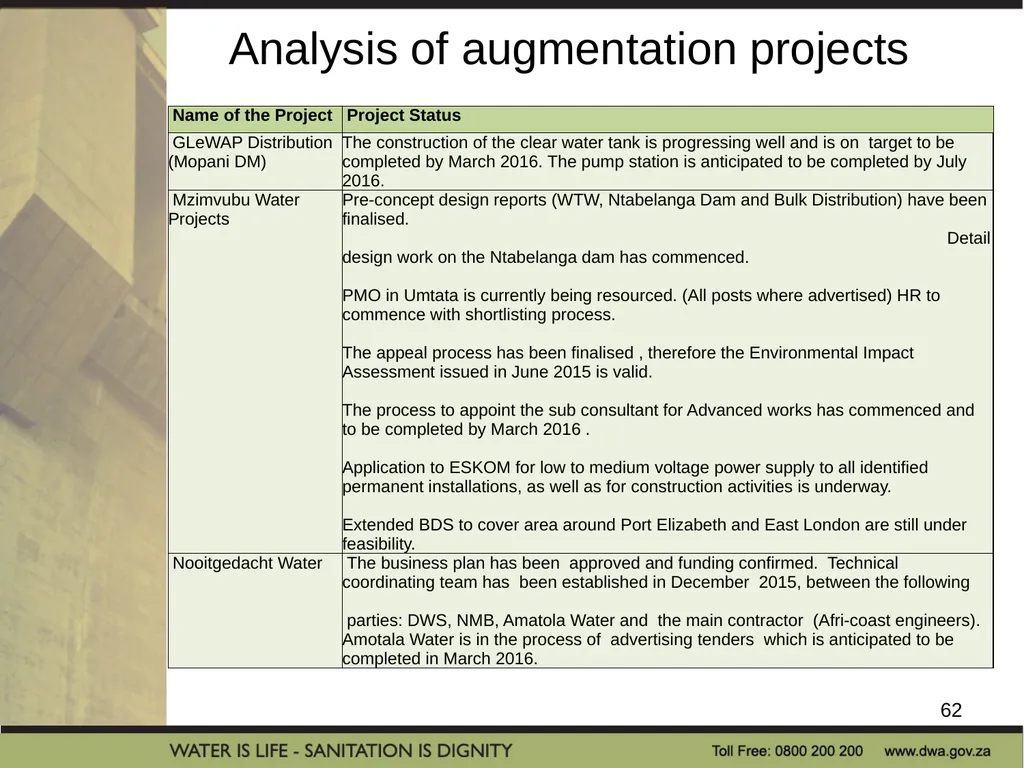
slide62. Analysis of augmentation projects 62<br>
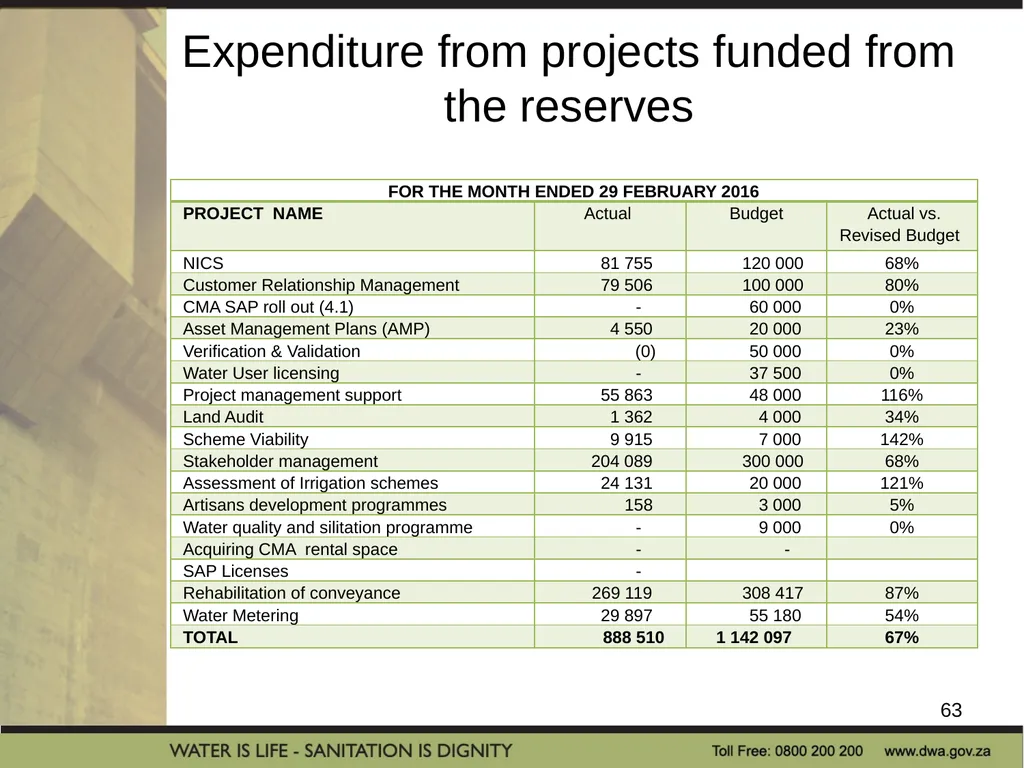
slide63. Expenditure from projects funded from the reserves 63<br>
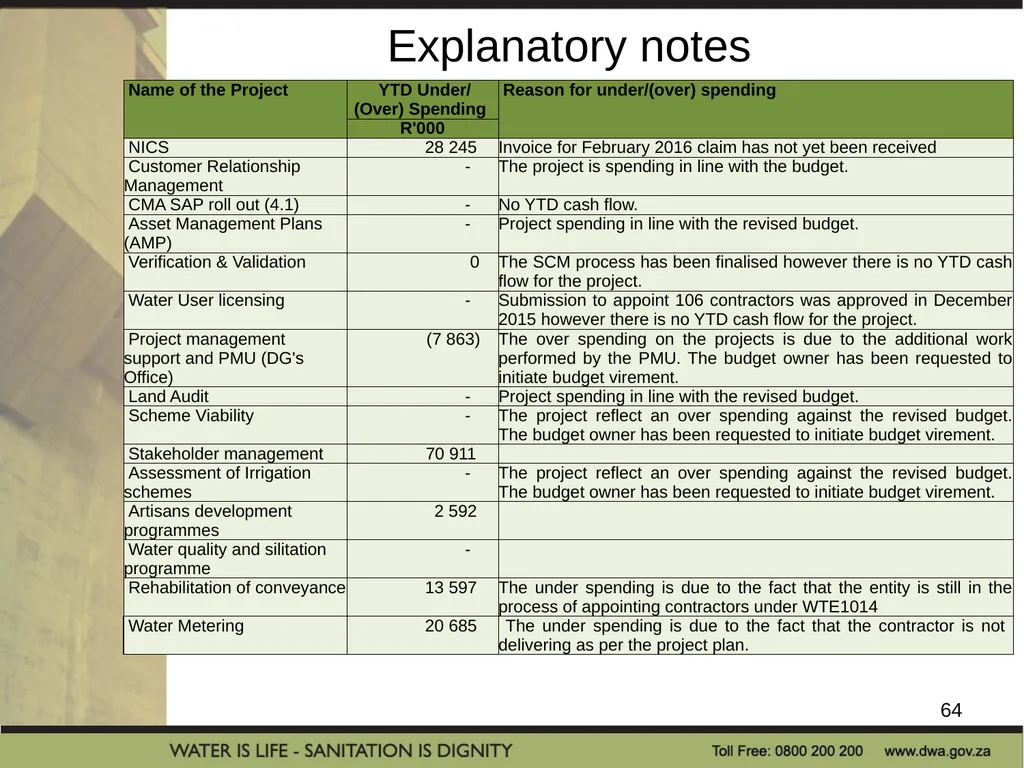
slide64. Explanatory notes 64<br>
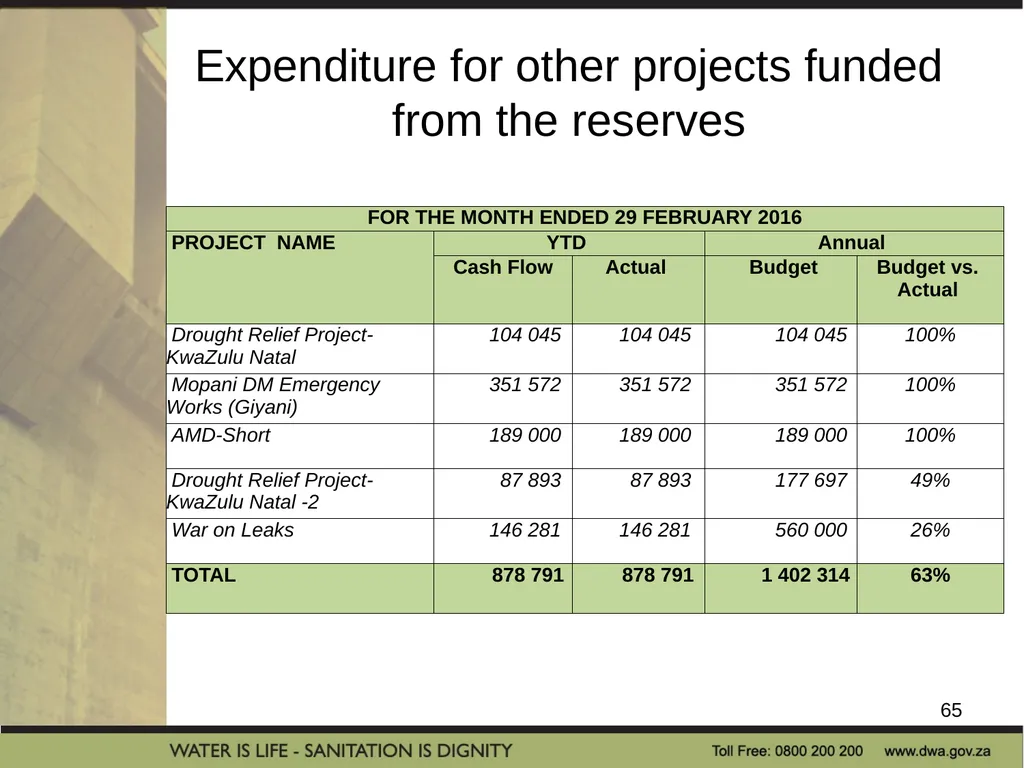
slide65. Expenditure for other projects funded from the reserves 65<br>
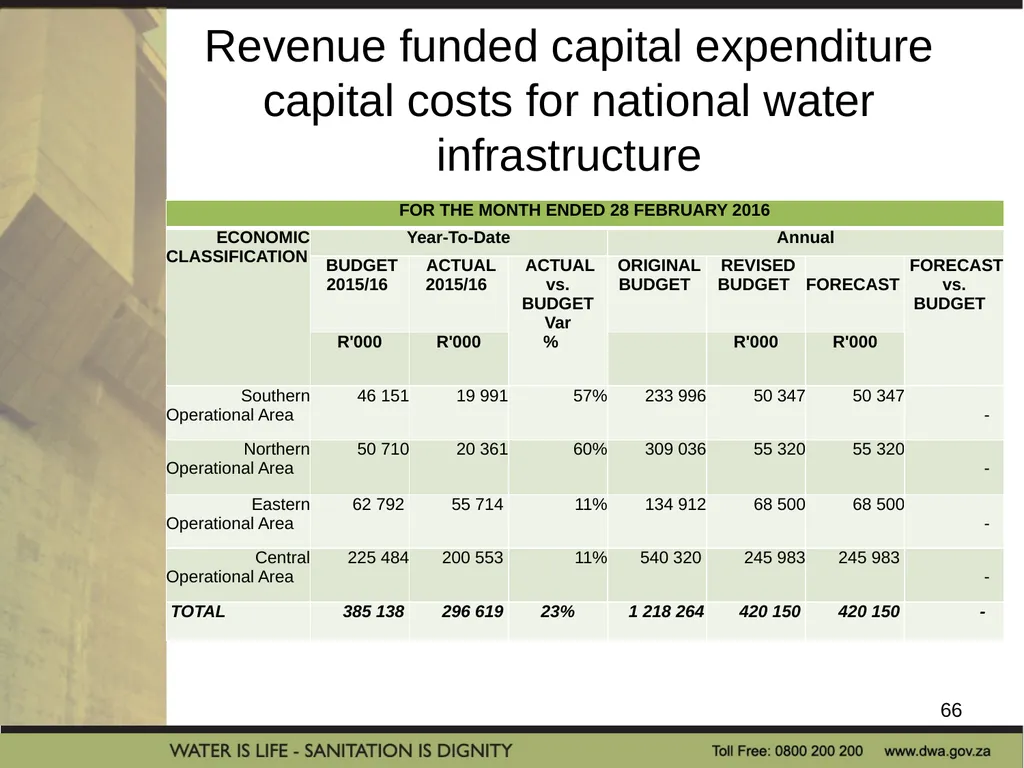
slide66. Revenue funded capital expenditure capital costs for national water infrastructure 66<br>

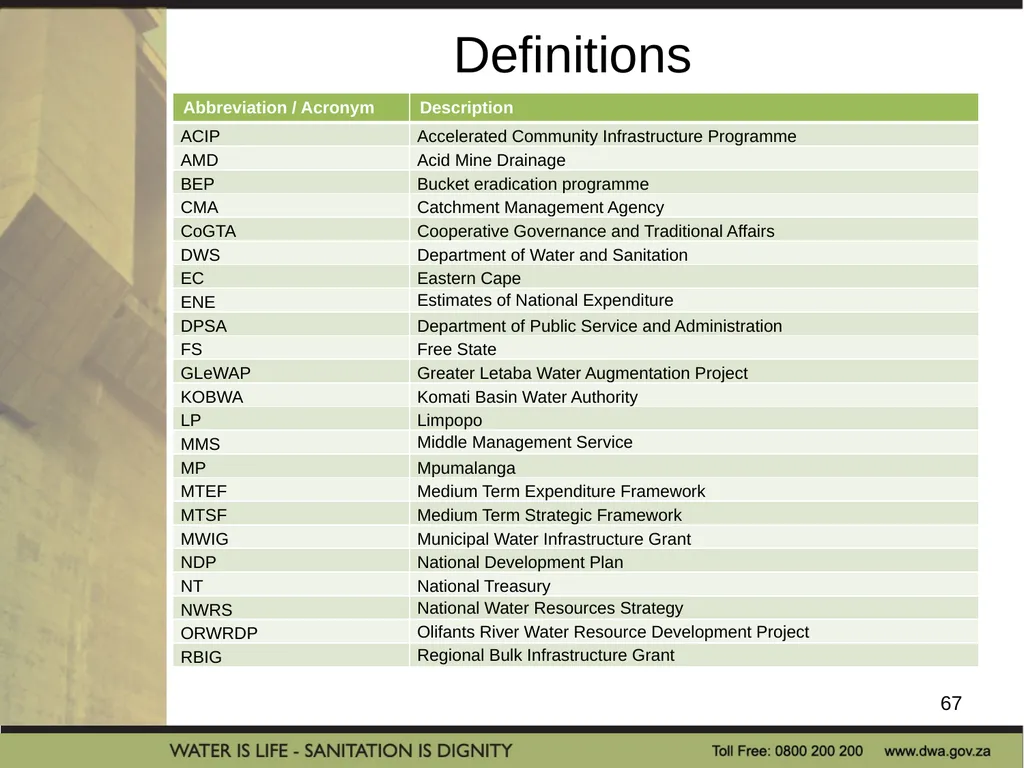
slide67. Definitions 67<br>
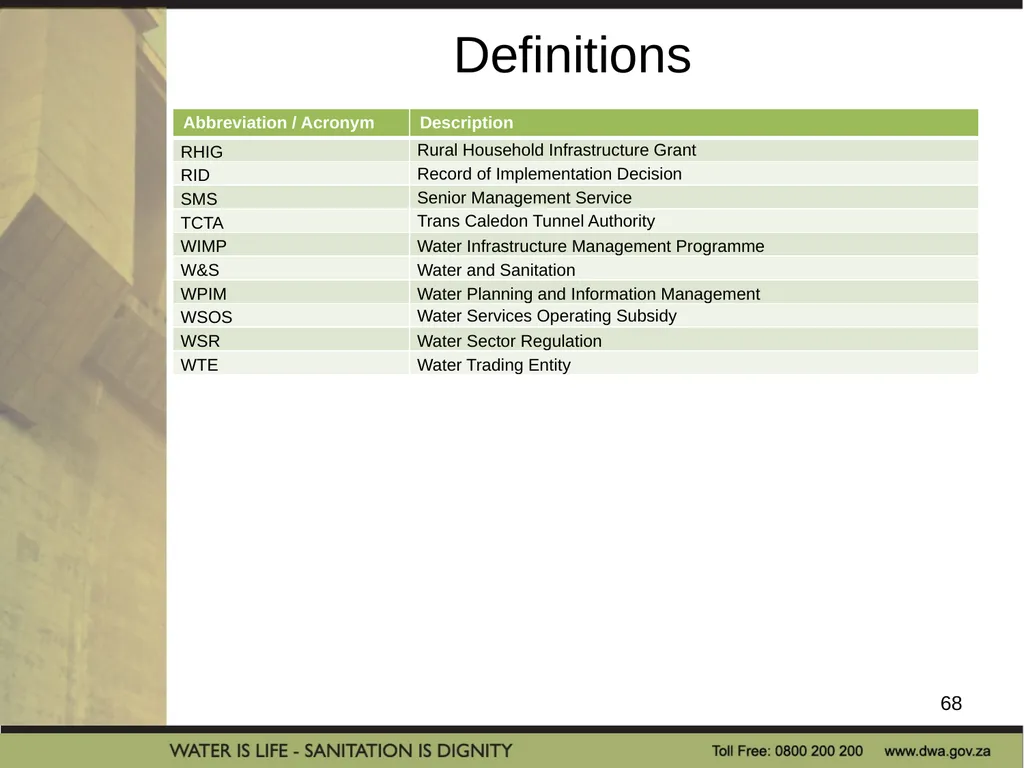
slide68. Definitions 68<br>
slide69. END 69<br>
Presented by:
Name Surname
Directorate
Date OVERVIEW: VOTE 36 STRATEGIC AND ANNUAL PERFORMANCE PLANS
Presented by:
Margaret-Ann Diedricks
Director-General
Date: 07 April 2016<br>
slide2. Contents Legislative & regulatory environment informing planning and budgeting
Part A: Overview of performance information
Part B: Overview of Vote 36 medium term budget
Expenditure trends
Budget estimates for 2016 medium term
2014/15 unspent funds
Part C: Overview of Water Trading Entity medium term budget
Overview of WTE operating model
Expenditure trends
Expenditure analysis
Definitions 2<br>
slide3. Legislative & regulatory environment informing planning and budgeting 3<br>
slide4. Part A: Overview of performance information<br>
slide5. What informed the planning process 5 5<br>
slide6. Alignment to government priorities 6 Medium Term Strategic Framework (MTSF): 5 years Outcome 9:
Local government Outcome 7:
Rural development Outcome 6:
Economic infrastructure Outcome 4:
Jobs Outcome 10:
Environment Chapter 13:
Building a capable state<br>
slide7. 7<br>
slide8. Budget structure 8<br>
slide9. Programme descriptions 9<br>
slide10. Programme 1 focus areas 10<br>
slide11. Programme 2 focus areas 11<br>
slide12. Programme 3 focus areas 12<br>
slide13. Programme 4 focus areas 13<br>
slide14. Programme 5 focus areas 14<br>
slide15. Programme 5 focus areas 15<br>
slide16. Part b: Overview of Vote 36 medium term budget<br>
slide17. Overview of 2012/13 expenditure 17<br>
slide18. Overview of 2013/14 expenditure 18<br>
slide19. Overview of 2014/15 expenditure 19<br>
slide20. Overview of actual 2015/16 expenditure as of 31 March 2016 N.B. Funds will be shifted from programme 2 (Virement) to defray excess expenditure in programme 1 20<br>
slide21. Historical expenditure trends(Goods and Services) Over the years, it has been difficult to attract critical scarce skills for the department’s core functions resulting in the consistent use of consultants (From R362 million in 2014/15 to R319 million in 2016/17)
Funding has been reprioritised from expenditure items such as travel and subsistence, catering costs, departmental entertainment and cell phones to infrastructure 21<br>
slide22. Historical Expenditure Trends(Transfers and Subsidies) R5.8 billion of regional bulk infrastructure grant has been converted into direct grant to well functioning municipalities for their infrastructure programmes.
Low capacity municipalities will continue to be assisted by the department through the indirect transfers. 22<br>
slide23. Historical Expenditure Trends(Infrastructure Programmes) The department’s has been on water infrastructure as follows:
Raw water infrastructure (dams and canals)
Bulk infrastructure (Water treatment works)
Water Services Infrastructure (reservoirs and pipelines)
Programme 3: Water Infrastructure and Development programme constitutes an average spending of 78% of departmental budget 23<br>
slide24. Budget estimates for the 2016/17 medium term<br>
slide25. 2016 ENE allocations:Departmental Programmes 25<br>
slide26. 2016/17 ENE allocations: Economic Class 26<br>
slide27. 2016/17 ENE allocations: Administration 27<br>
slide28. 2016/17 ENE allocations: Water Planning & Info Mgt. 28<br>
slide29. 2016/17 ENE allocations: Water Infrastructure Dev. 29<br>
slide30. 2016/17 ENE allocations: Water and Sanitation Services 30<br>
slide31. 2016/17 ENE allocations: Water Sector Regulation 31<br>
slide32. 2016/17 ENE allocations:Provincial allocations 32<br>
slide33. 2016/17 ENE allocations: Infrastructure Grants 33<br>
slide34. 2014/15 unspent funds<br>
slide35. 35 2014/15 Unspent Funds<br>
slide36. 2014/15 Unspent funds 36 Of the R2.030 billion underspent in 2014/15, R1.601 related to committed funds for which rollover was requested (and consequently not approved).
The non-approval of the requested rollover funds necessitated the need for the Department to reprioritise the allocations for 2015/16 financial year to accommodate the contractual obligations for which the rollover funds were requested.
The effect of this was the rescheduling some of the infrastructure projects which were earmarked for the 2015/16 financial year.<br>
slide37. Part C: Overview of Water Trading Entity medium term budget<br>
slide38. Legislative mandate National Water Act Chapter 4: Part 1 & 3 refers to Water Use and Existing Lawful Users - sections 32, 33, 34
Chapter 5: Part 1, section 56-60 address the following:
56. Pricing strategy for water use charges
57. Application of pricing strategy
58. Recovery of water use charges
59. Liability for water use charges
60. Water use charges are charges on land Water Research Act Chapter 11 stipulates the rights of the Minister to levy rates and charges which is utilised to fund water sector research
WTE therefore acts as a collection agency and these charges are included in the billing process for certain customers 38<br>
slide39. Water Trading Entity overview 39 The Branch Finance Water Trading Entity (WTE) focuses on the management of financial activities that relate to the management and maintenance of bulk infrastructure in order to ensure the sustainable supply of water through construction and maintenance for Raw Bulk Water supply
The provision of financial management support to Proto-CMAs.
The Water Trading Entity’s reporting framework is based on Generally
Recognised Accounting Practice (GRAP)
The application of GRAP standards is based on accrual accounting and not Cash Accounting applicable to National Government Departments<br>
slide40. Cost recovery business 40<br>
slide41. 2016/17 medium term expenditure trends<br>
slide42. Funding sources 42<br>
slide43. Expenditure breakdown 43<br>
slide44. Assumptions during budget preparation Included in the R3.1 billion is R2.9 billion which is outstanding from Municipalities and Water Boards.
The intervention of Cooperative Governance and Traditional Affairs (COGTA) and National Treasury (NT) will be required for the collection of this long outstanding debt.
Should this intervention by COGTA and NT fail, the WTE budget will have to be revised downwards with any shortfall in the collection of this R 2.9 billion. 44<br>
slide45. Long outstanding debt to recover 45<br>
slide46. 2016/17 medium term budget allocations<br>
slide47. Augmentation budget allocation 47<br>
slide48. Infrastructure projects funded by augmentation and revenue 48<br>
slide49. Reasons for allocation infrastructure projects Projects that have already commenced were allocated based on their previous spending pattern
ORWRDP: De- Hoop Dam has been allocated in funds for 2016/17. The projects is expected to be completed soon.
ORWRDP phases D, E and F have been allocated funds less than R40 million each. The projects are still in planning and tender design stage. Note the ministerial directive to TCTA.
Mzimvubu has been allocated based on the current spending taking into account the current challenges, the delays in approving the pre-concepts design. The project is a presidential project.
Clanwilliam dam has allocated funds that are in line with the previous spending. 49<br>
slide50. Reasons for allocation infrastructure projects Hazelmere has been allocated based on the current year spending. The project is been implemented by the by the External contractor – Group Five
Dam safety rehabilitation program has been allocated based on the previous performance. We have taken into account the challenges with regard to lack of a maintenance plan, the shortage of project managers and a shortage of internal staff doing rehabilitation design.
Nwamitwa and Tzaneen still in planning, The required funds were received from Lepelle Northern Water as an implementing Agent 50<br>
slide51. Operational cluster budget allocation 51<br>
slide52. NWRI support budget 2016/17 52<br>
slide53. CMA budget allocation 53<br>
slide54. Other projects funded from revenue and reserves 54<br>
slide55. Other projects funded from revenue and reserves 55<br>
slide56. Financial performance for the month ended 29 February 2016<br>
slide57. Income and expenditure 57<br>
slide58. Analysis of financial performance 58<br>
slide59. Expenditure for augmentation projects 59<br>
slide60. Analysis of augmentation projects 60<br>
slide61. Analysis of augmentation projects 61<br>
slide62. Analysis of augmentation projects 62<br>
slide63. Expenditure from projects funded from the reserves 63<br>
slide64. Explanatory notes 64<br>
slide65. Expenditure for other projects funded from the reserves 65<br>
slide66. Revenue funded capital expenditure capital costs for national water infrastructure 66<br>
slide67. Definitions 67<br>
slide68. Definitions 68<br>
slide69. END 69<br>