
PRESENTATION TO ECLA SEMINAR ON 4AMLD Alex



Description: PRESENTATION TO ECLA SEMINAR ON 4AMLD Alex Merriman Consultant, 95CPR LTD IALS, 7th November 2016 Presentation: UK Financial Services in the Age of Brexit Outline INTRODUCTION: THE IMPORTANCE OF FINANCIAL RELATED PROFESSIONAL SERVICES TO
Related Topics
Download Presentation
"PRESENTATION TO ECLA SEMINAR ON 4AMLD Alex" is the property of its rightful owner. Permission is granted to download and print the materials on this website for personal, non-commercial use only, and to display it on your personal computer provided you do not modify the materials and that you retain all copyright notices contained in the materials. By downloading content from our website, you accept the terms of this agreement.
Presentation Transcript
slide1. PRESENTATION TO ECLA SEMINAR ON 4AMLD Alex Merriman
Consultant, 95CPR LTD
IALS, 7th November 2016<br>
slide2. Presentation: UK Financial Services in the Age of Brexit<br>
slide3. Outline<br>
slide4. INTRODUCTION: THE IMPORTANCE OF FINANCIAL & RELATED PROFESSIONAL SERVICES TO THE UK ECONOMY<br>
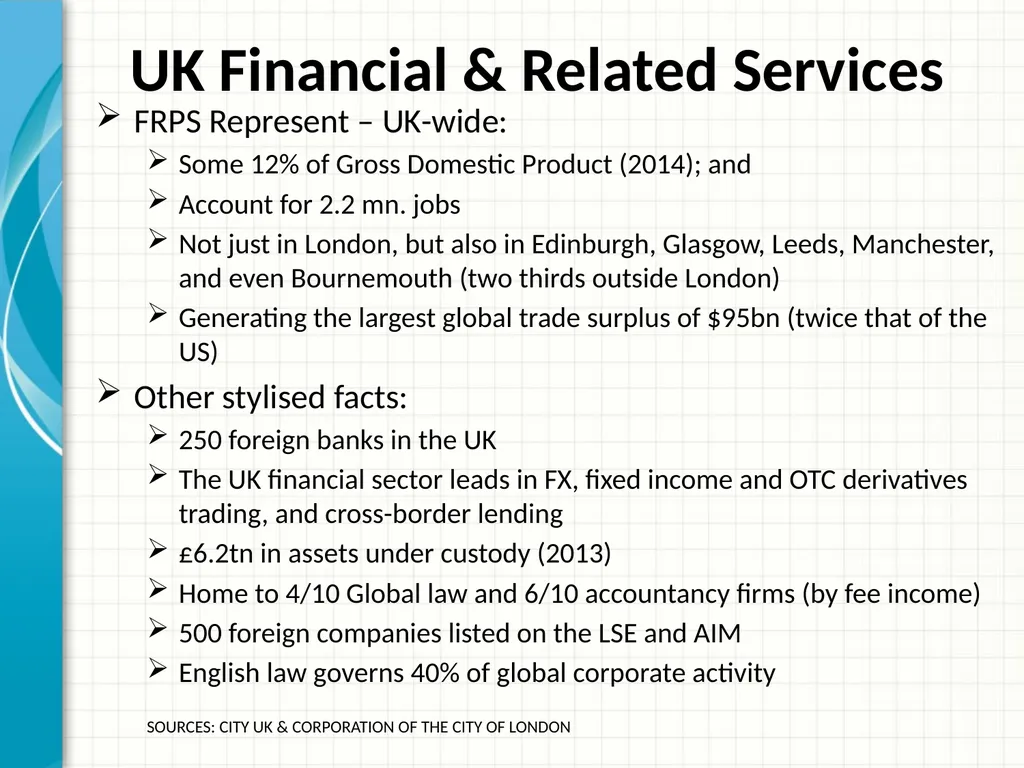
slide5. UK Financial & Related Services FRPS Represent – UK-wide:
Some 12% of Gross Domestic Product (2014); and
Account for 2.2 mn. jobs
Not just in London, but also in Edinburgh, Glasgow, Leeds, Manchester, and even Bournemouth (two thirds outside London)
Generating the largest global trade surplus of $95bn (twice that of the US)
Other stylised facts:
250 foreign banks in the UK
The UK financial sector leads in FX, fixed income and OTC derivatives trading, and cross-border lending
£6.2tn in assets under custody (2013)
Home to 4/10 Global law and 6/10 accountancy firms (by fee income)
500 foreign companies listed on the LSE and AIM
English law governs 40% of global corporate activity
SOURCES: CITY UK & CORPORATION OF THE CITY OF LONDON<br>
slide6. Where are we now with brexit?<br>
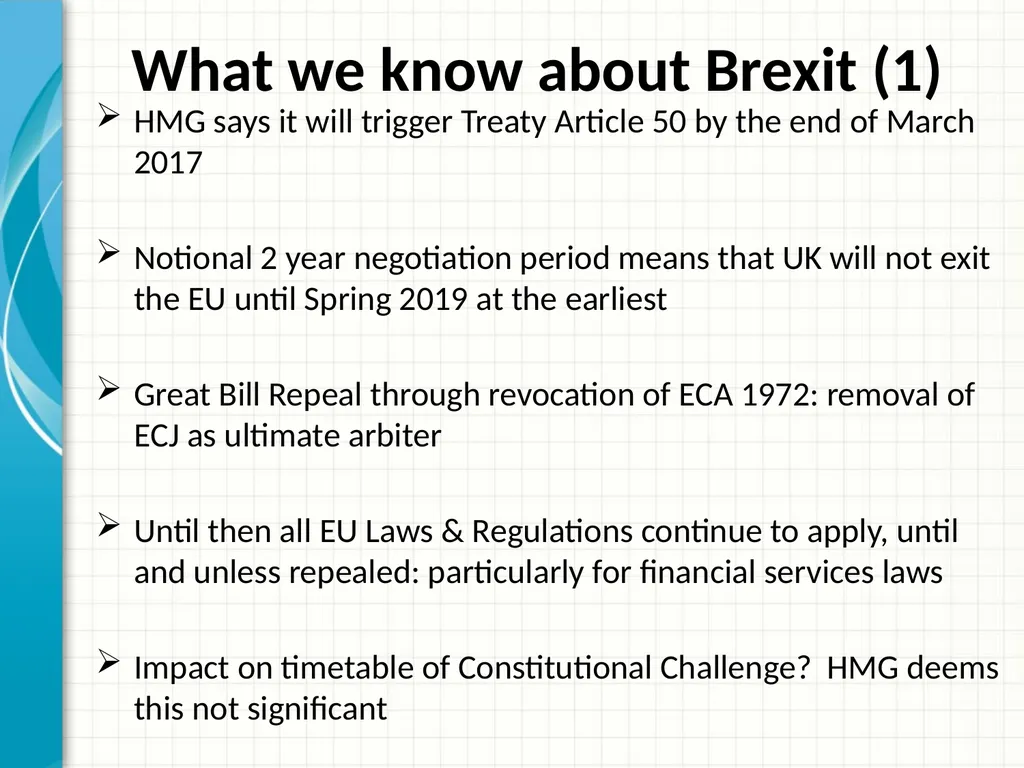
slide7. What we know about Brexit (1) HMG says it will trigger Treaty Article 50 by the end of March 2017
Notional 2 year negotiation period means that UK will not exit the EU until Spring 2019 at the earliest
Great Bill Repeal through revocation of ECA 1972: removal of ECJ as ultimate arbiter
Until then all EU Laws & Regulations continue to apply, until and unless repealed: particularly for financial services laws
Impact on timetable of Constitutional Challenge? HMG deems this not significant<br>
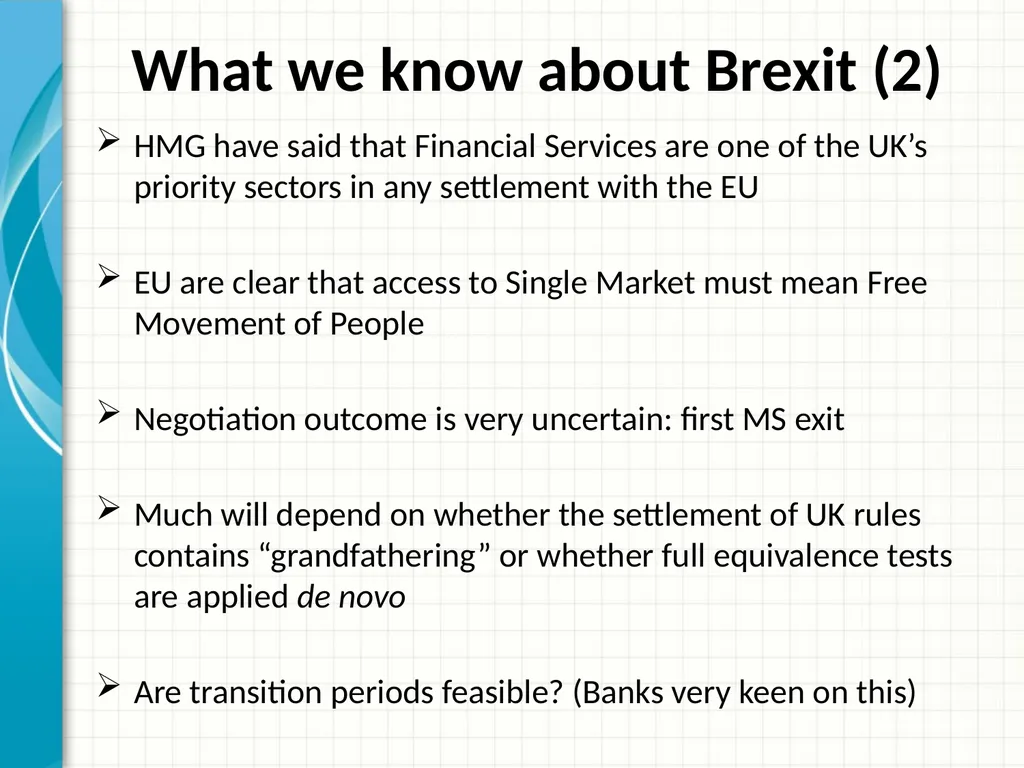
slide8. What we know about Brexit (2) HMG have said that Financial Services are one of the UK’s priority sectors in any settlement with the EU
EU are clear that access to Single Market must mean Free Movement of People
Negotiation outcome is very uncertain: first MS exit
Much will depend on whether the settlement of UK rules contains “grandfathering” or whether full equivalence tests are applied de novo
Are transition periods feasible? (Banks very keen on this)<br>
slide9. Looking ahead: What are the Options?<br>
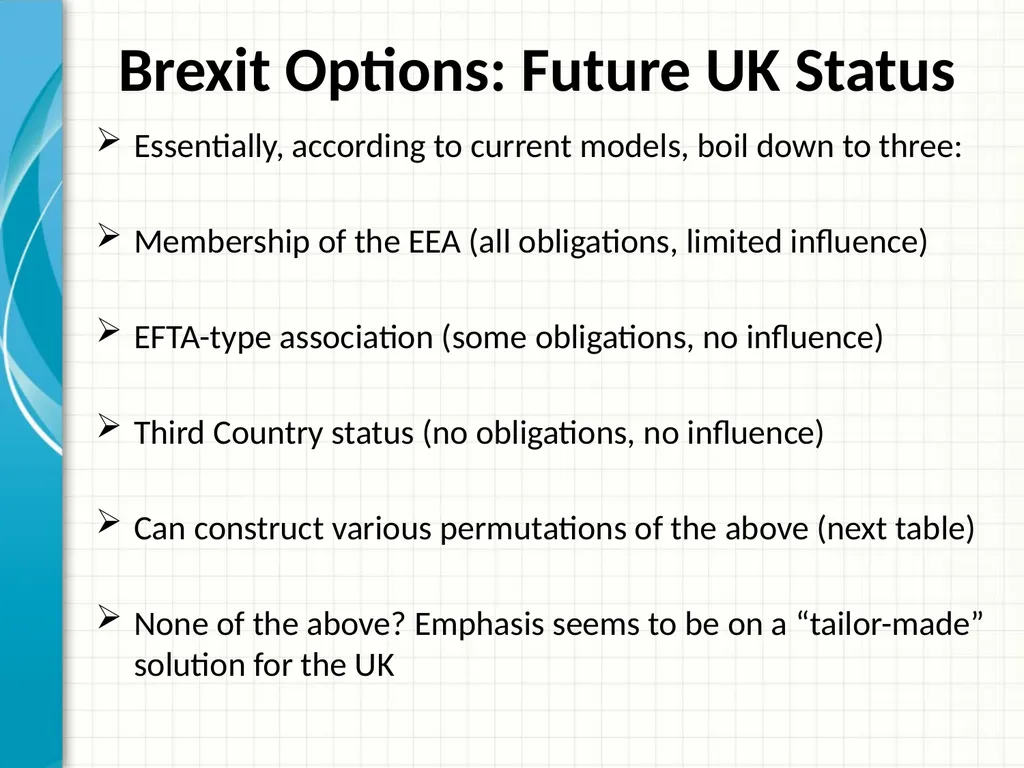
slide10. Brexit Options: Future UK Status Essentially, according to current models, boil down to three:
Membership of the EEA (all obligations, limited influence)
EFTA-type association (some obligations, no influence)
Third Country status (no obligations, no influence)
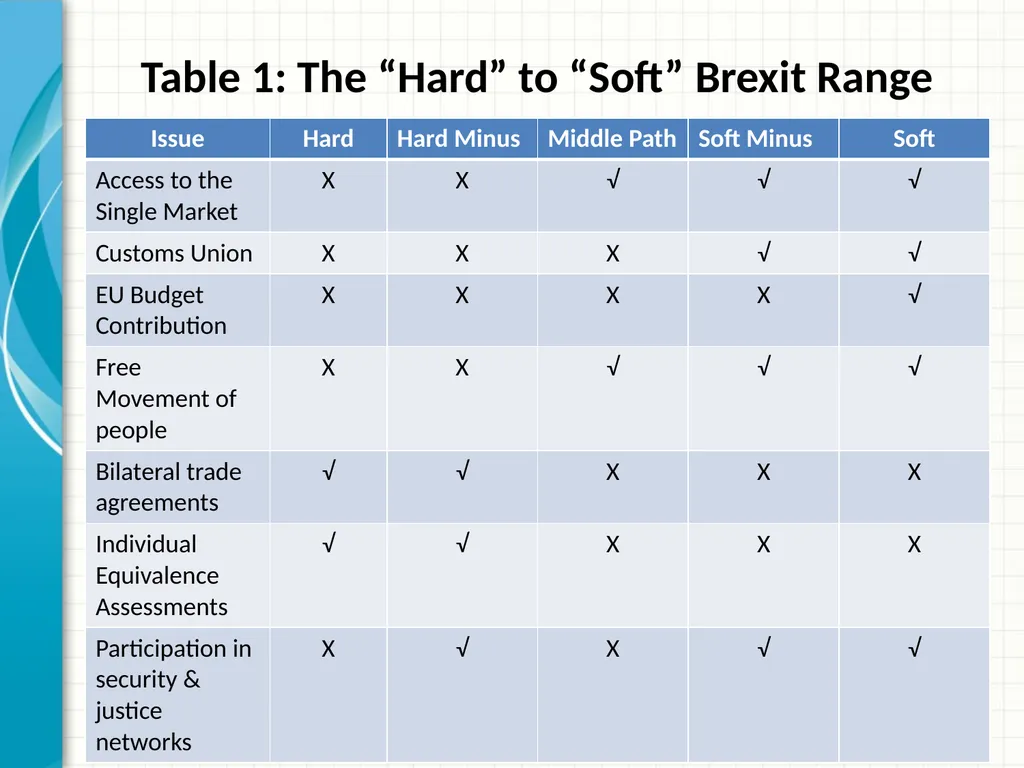
Can construct various permutations of the above (next table)
None of the above? Emphasis seems to be on a “tailor-made” solution for the UK<br>
slide11. Table 1: The “Hard” to “Soft” Brexit Range<br>
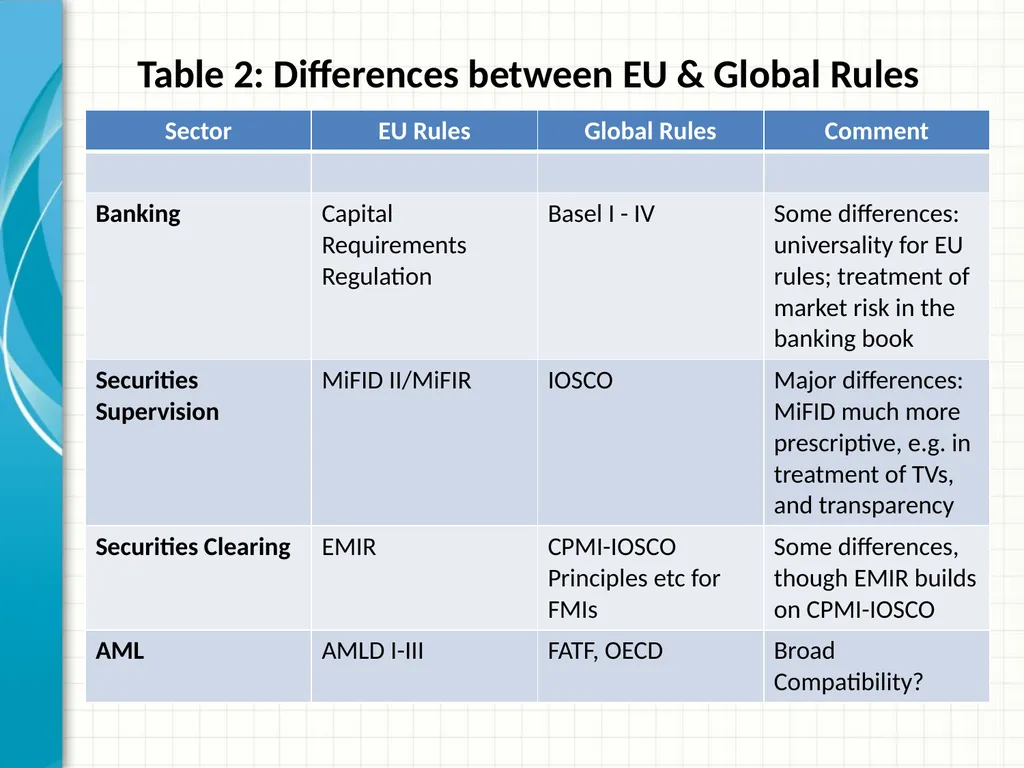
slide12. Table 2: Differences between EU & Global Rules<br>
slide13. The International Framework, and how does Equivalence work for third countries<br>
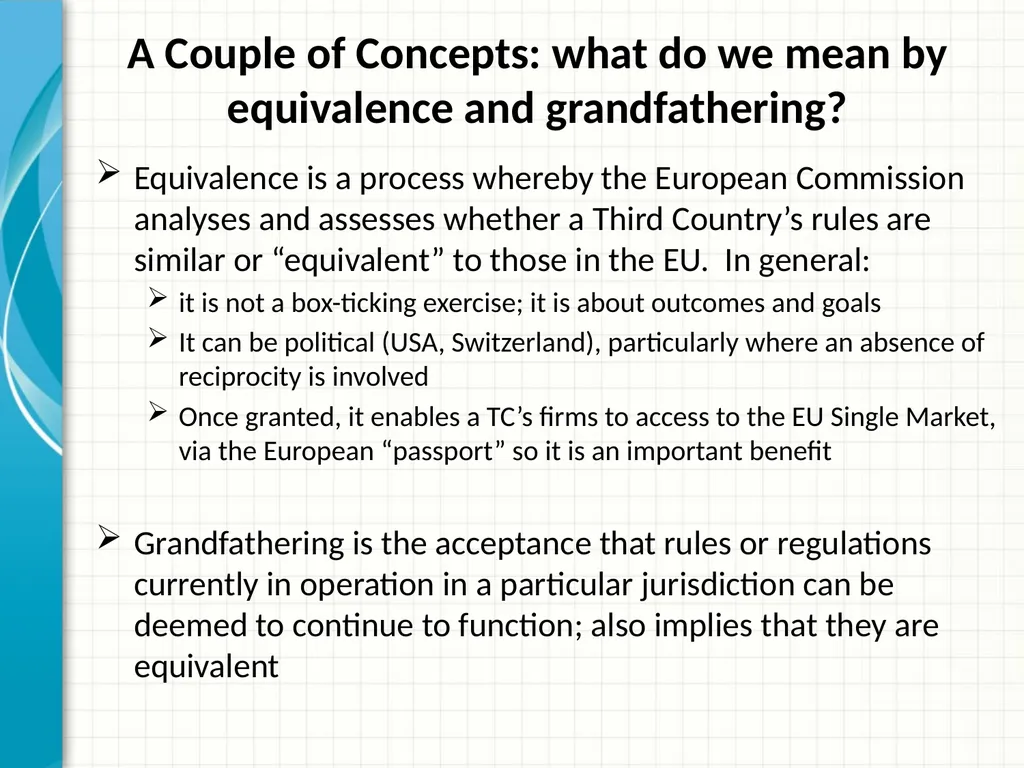
slide14. A Couple of Concepts: what do we mean by equivalence and grandfathering? Equivalence is a process whereby the European Commission analyses and assesses whether a Third Country’s rules are similar or “equivalent” to those in the EU. In general:
it is not a box-ticking exercise; it is about outcomes and goals
It can be political (USA, Switzerland), particularly where an absence of reciprocity is involved
Once granted, it enables a TC’s firms to access to the EU Single Market, via the European “passport” so it is an important benefit
Grandfathering is the acceptance that rules or regulations currently in operation in a particular jurisdiction can be deemed to continue to function; also implies that they are equivalent<br>
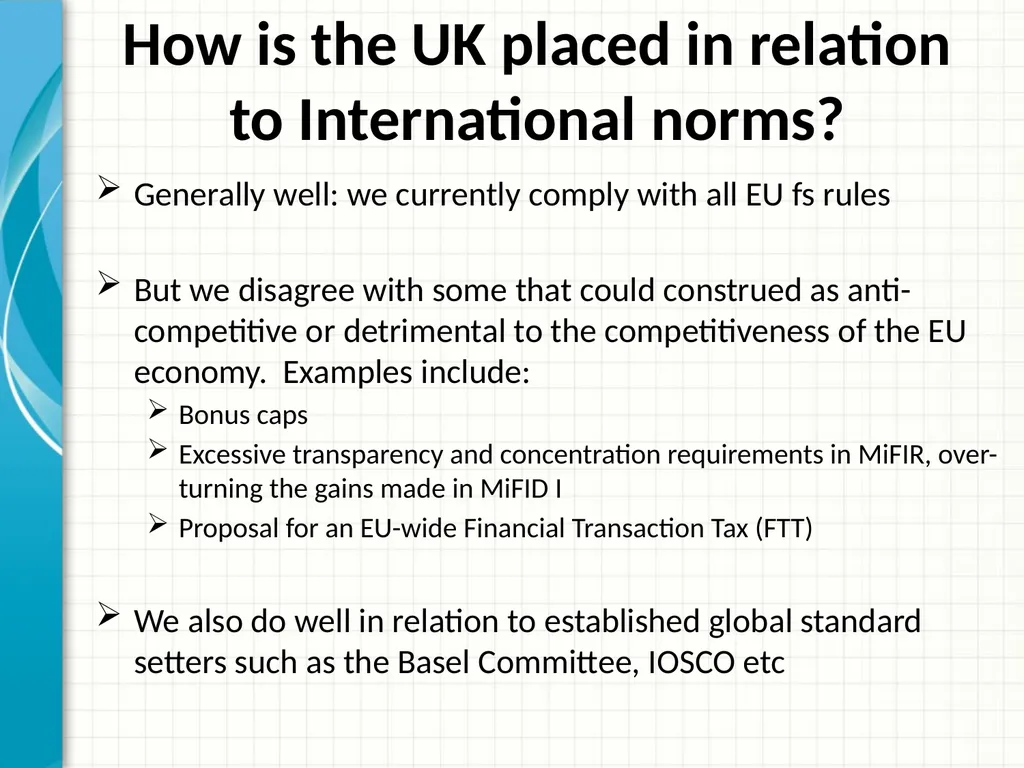
slide15. How is the UK placed in relation to International norms? Generally well: we currently comply with all EU fs rules
But we disagree with some that could construed as anti-competitive or detrimental to the competitiveness of the EU economy. Examples include:
Bonus caps
Excessive transparency and concentration requirements in MiFIR, over-turning the gains made in MiFID I
Proposal for an EU-wide Financial Transaction Tax (FTT)
We also do well in relation to established global standard setters such as the Basel Committee, IOSCO etc<br>
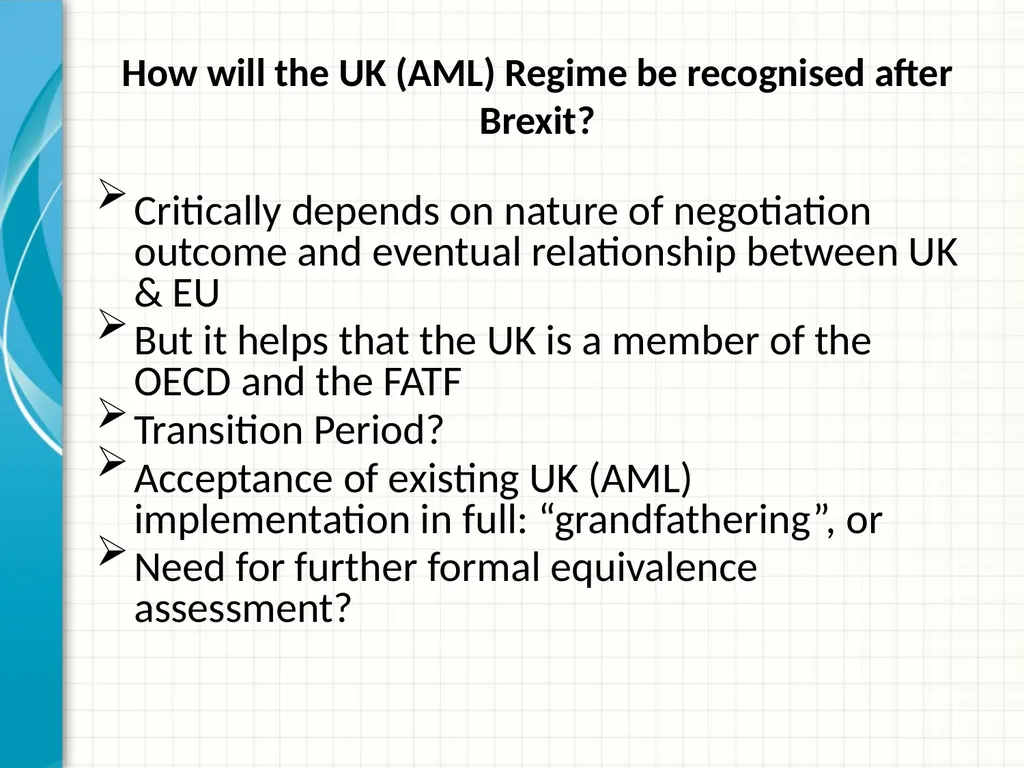
slide16. How will the UK (AML) Regime be recognised after Brexit? Critically depends on nature of negotiation outcome and eventual relationship between UK & EU
But it helps that the UK is a member of the OECD and the FATF
Transition Period?
Acceptance of existing UK (AML) implementation in full: “grandfathering”, or
Need for further formal equivalence assessment?<br>
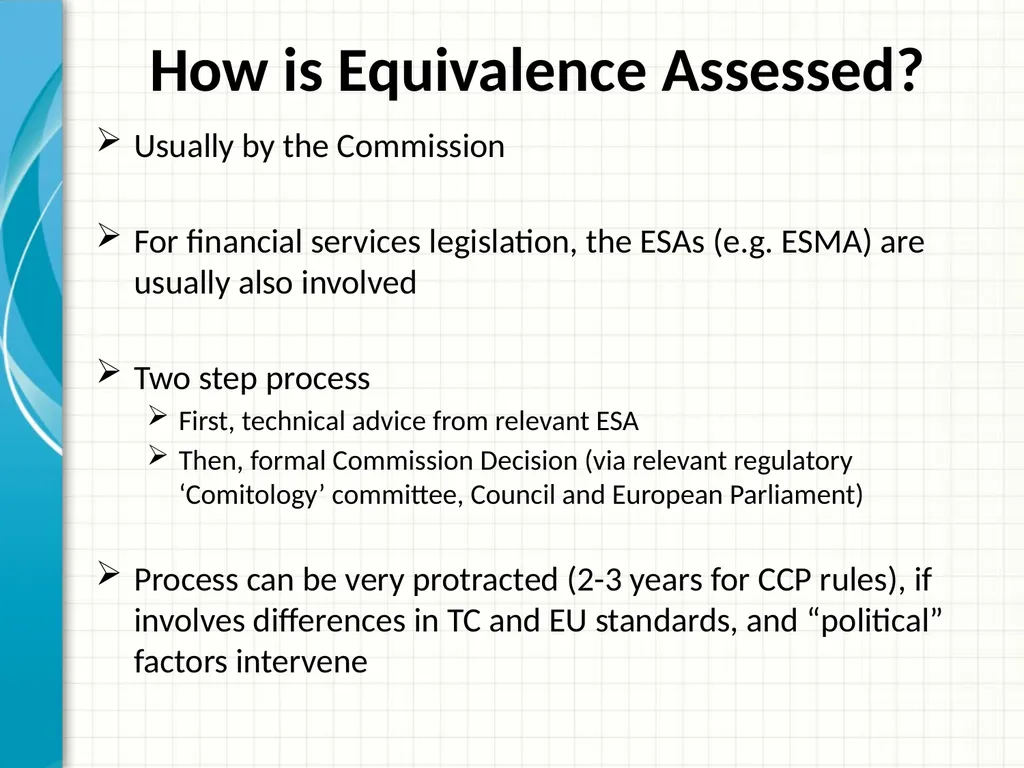
slide17. How is Equivalence Assessed? Usually by the Commission
For financial services legislation, the ESAs (e.g. ESMA) are usually also involved
Two step process
First, technical advice from relevant ESA
Then, formal Commission Decision (via relevant regulatory ‘Comitology’ committee, Council and European Parliament)
Process can be very protracted (2-3 years for CCP rules), if involves differences in TC and EU standards, and “political” factors intervene<br>
slide18. The AML Equivalence Assessment Process for Third Countries is somewhat different
In AMLD I, requires a (single) member state to declare that it finds a TC equivalent
E.g. the UK has done this for Switzerland
Process is not therefore that protracted , unless “political” factors intervene
Commission then has to adopt an Implementing Decision<br>
slide19. Questions?<br>
slide20. THANK YOU FOR LISTENING ajsmerriman@yahoo.co.uk © 95 CPR LTD: Reproduction permitted as long as source is acknowledged<br>
Consultant, 95CPR LTD
IALS, 7th November 2016<br>
slide2. Presentation: UK Financial Services in the Age of Brexit<br>
slide3. Outline<br>
slide4. INTRODUCTION: THE IMPORTANCE OF FINANCIAL & RELATED PROFESSIONAL SERVICES TO THE UK ECONOMY<br>
slide5. UK Financial & Related Services FRPS Represent – UK-wide:
Some 12% of Gross Domestic Product (2014); and
Account for 2.2 mn. jobs
Not just in London, but also in Edinburgh, Glasgow, Leeds, Manchester, and even Bournemouth (two thirds outside London)
Generating the largest global trade surplus of $95bn (twice that of the US)
Other stylised facts:
250 foreign banks in the UK
The UK financial sector leads in FX, fixed income and OTC derivatives trading, and cross-border lending
£6.2tn in assets under custody (2013)
Home to 4/10 Global law and 6/10 accountancy firms (by fee income)
500 foreign companies listed on the LSE and AIM
English law governs 40% of global corporate activity
SOURCES: CITY UK & CORPORATION OF THE CITY OF LONDON<br>
slide6. Where are we now with brexit?<br>
slide7. What we know about Brexit (1) HMG says it will trigger Treaty Article 50 by the end of March 2017
Notional 2 year negotiation period means that UK will not exit the EU until Spring 2019 at the earliest
Great Bill Repeal through revocation of ECA 1972: removal of ECJ as ultimate arbiter
Until then all EU Laws & Regulations continue to apply, until and unless repealed: particularly for financial services laws
Impact on timetable of Constitutional Challenge? HMG deems this not significant<br>
slide8. What we know about Brexit (2) HMG have said that Financial Services are one of the UK’s priority sectors in any settlement with the EU
EU are clear that access to Single Market must mean Free Movement of People
Negotiation outcome is very uncertain: first MS exit
Much will depend on whether the settlement of UK rules contains “grandfathering” or whether full equivalence tests are applied de novo
Are transition periods feasible? (Banks very keen on this)<br>
slide9. Looking ahead: What are the Options?<br>
slide10. Brexit Options: Future UK Status Essentially, according to current models, boil down to three:
Membership of the EEA (all obligations, limited influence)
EFTA-type association (some obligations, no influence)
Third Country status (no obligations, no influence)
Can construct various permutations of the above (next table)
None of the above? Emphasis seems to be on a “tailor-made” solution for the UK<br>
slide11. Table 1: The “Hard” to “Soft” Brexit Range<br>
slide12. Table 2: Differences between EU & Global Rules<br>
slide13. The International Framework, and how does Equivalence work for third countries<br>
slide14. A Couple of Concepts: what do we mean by equivalence and grandfathering? Equivalence is a process whereby the European Commission analyses and assesses whether a Third Country’s rules are similar or “equivalent” to those in the EU. In general:
it is not a box-ticking exercise; it is about outcomes and goals
It can be political (USA, Switzerland), particularly where an absence of reciprocity is involved
Once granted, it enables a TC’s firms to access to the EU Single Market, via the European “passport” so it is an important benefit
Grandfathering is the acceptance that rules or regulations currently in operation in a particular jurisdiction can be deemed to continue to function; also implies that they are equivalent<br>
slide15. How is the UK placed in relation to International norms? Generally well: we currently comply with all EU fs rules
But we disagree with some that could construed as anti-competitive or detrimental to the competitiveness of the EU economy. Examples include:
Bonus caps
Excessive transparency and concentration requirements in MiFIR, over-turning the gains made in MiFID I
Proposal for an EU-wide Financial Transaction Tax (FTT)
We also do well in relation to established global standard setters such as the Basel Committee, IOSCO etc<br>
slide16. How will the UK (AML) Regime be recognised after Brexit? Critically depends on nature of negotiation outcome and eventual relationship between UK & EU
But it helps that the UK is a member of the OECD and the FATF
Transition Period?
Acceptance of existing UK (AML) implementation in full: “grandfathering”, or
Need for further formal equivalence assessment?<br>
slide17. How is Equivalence Assessed? Usually by the Commission
For financial services legislation, the ESAs (e.g. ESMA) are usually also involved
Two step process
First, technical advice from relevant ESA
Then, formal Commission Decision (via relevant regulatory ‘Comitology’ committee, Council and European Parliament)
Process can be very protracted (2-3 years for CCP rules), if involves differences in TC and EU standards, and “political” factors intervene<br>
slide18. The AML Equivalence Assessment Process for Third Countries is somewhat different
In AMLD I, requires a (single) member state to declare that it finds a TC equivalent
E.g. the UK has done this for Switzerland
Process is not therefore that protracted , unless “political” factors intervene
Commission then has to adopt an Implementing Decision<br>
slide19. Questions?<br>
slide20. THANK YOU FOR LISTENING ajsmerriman@yahoo.co.uk © 95 CPR LTD: Reproduction permitted as long as source is acknowledged<br>