Presented by Max Brown Modified from Brandon Ernest Laboratory Safety Lasers Blindness or Burns ChemicalsRadiation Poisoning High voltages Shock or Fire Gases Asphyxiation Extreme heat or cold Burns What are some common lab
"Presented by Max Brown Modified from Brandon" is the property of its rightful owner. Permission is granted to
download and print the materials on this website for personal, non-commercial use only, and to display it
on your personal computer provided you do not modify the materials and that you retain all copyright
notices contained in the materials. By downloading content from our website, you accept the terms of this
agreement.
Presentation Transcript
01
Presented by Max Brown
Modified from Brandon Ernest Laboratory Safety<br>
02
Lasers – Blindness or Burns
Chemicals/Radiation – Poisoning
High voltages – Shock or Fire
Gases – Asphyxiation
Extreme heat or cold – Burns What are some common lab hazards that are uncommon outside a physics lab?<br>
03
What does laboratory fire safety mean to you? What are your responsibilities when it comes to fire safety in the lab? Laboratories are kept clean and well maintained
Equipment is maintained
Chemicals stored appropriately
Students are given safety training
Everyone wears proper PPE
Safety checks performed before each class What are common hazards you find in the labs? Chemicals left out, not in storage cabinets
Fume hoods full of unused equipment, supplies, etc.
Extension cords
Aisles and exits blocked
Safety equipment blocked or missing
Inadequate PPE or inappropriate clothing such as open toed shoes<br>
04
UCLA Lab Fire
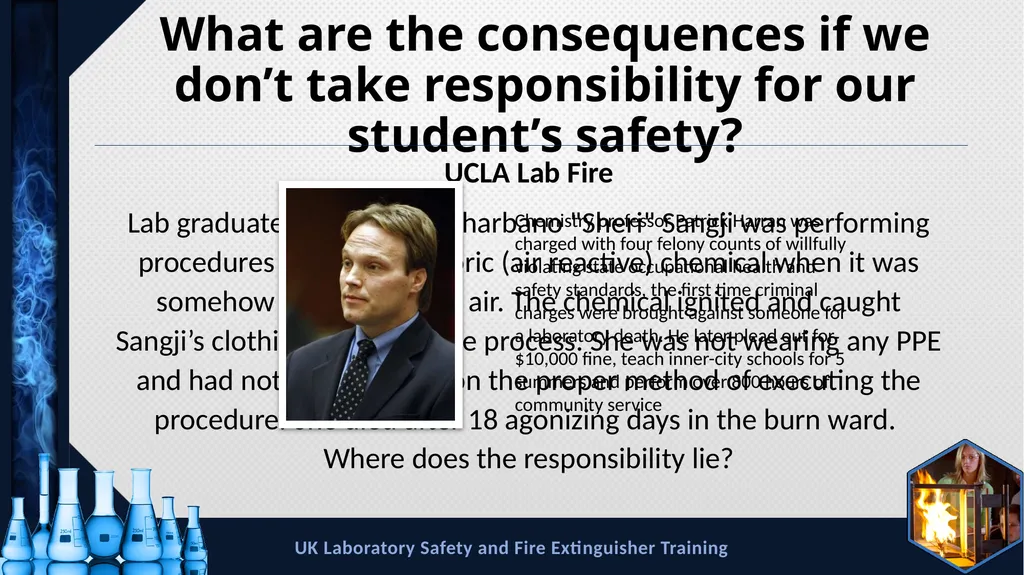
Lab graduate employee Sheharbano "Sheri" Sangji was performing procedures with a pyrophoric (air reactive) chemical when it was somehow exposed to the air. The chemical ignited and caught Sangji’s clothing on fire in the process. She was not wearing any PPE and had not been trained on the proper method of executing the procedure. She died after 18 agonizing days in the burn ward. Where does the responsibility lie? What are the consequences if we don’t take responsibility for our student’s safety? Chemistry professor Patrick Harran was charged with four felony counts of willfully violating state occupational health and safety standards, the first time criminal charges were brought against someone for a laboratory death. He later plead out for $10,000 fine, teach inner-city schools for 5 summers and perform over 800 hours of community service<br>
05
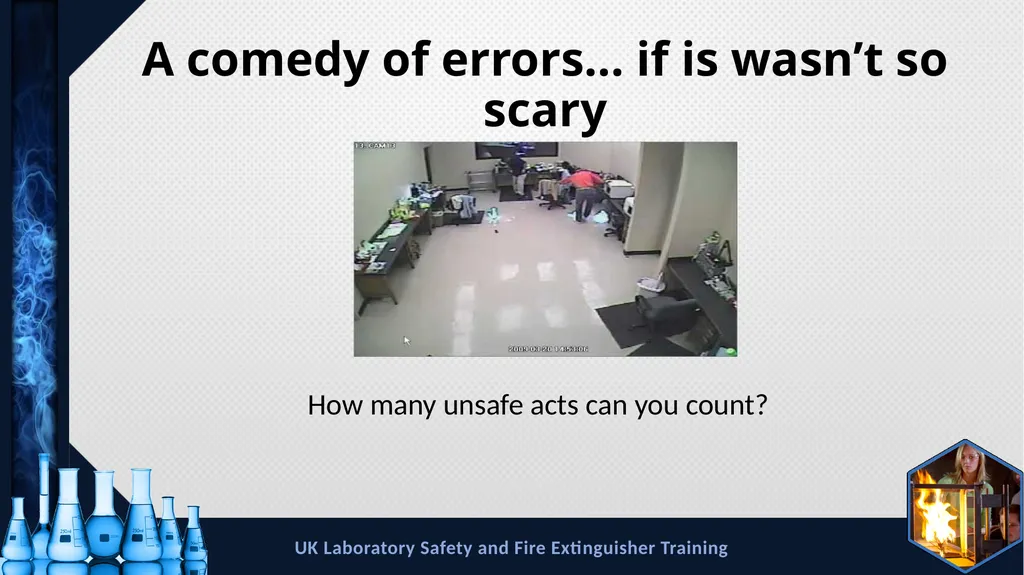
A comedy of errors… if is wasn’t so scary How many unsafe acts can you count?<br>
06
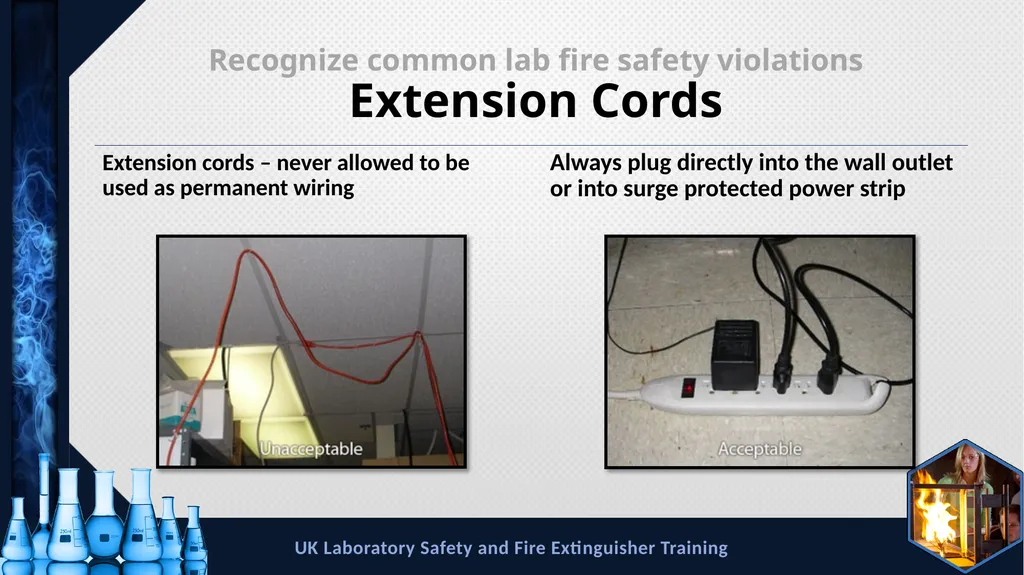
Recognize common lab fire safety violations Extension Cords Extension cords – never allowed to be used as permanent wiring Always plug directly into the wall outlet or into surge protected power strip<br>
07
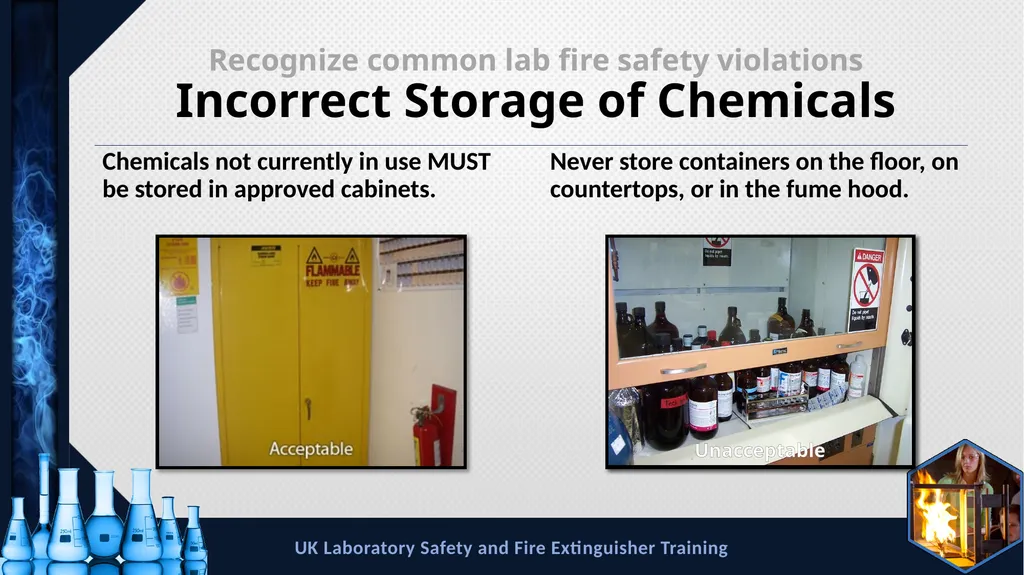
Recognize common lab fire safety violations Incorrect Storage of Chemicals Chemicals not currently in use MUST be stored in approved cabinets. Never store containers on the floor, on countertops, or in the fume hood.<br>
08
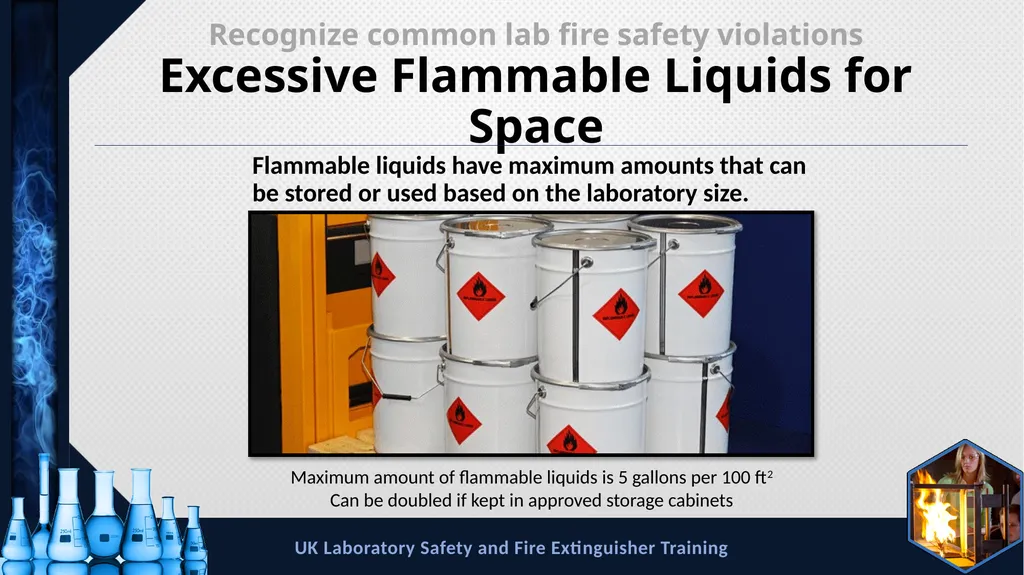
Recognize common lab fire safety violations Excessive Flammable Liquids for Space Flammable liquids have maximum amounts that can be stored or used based on the laboratory size. Maximum amount of flammable liquids is 5 gallons per 100 ft2
Can be doubled if kept in approved storage cabinets<br>
09
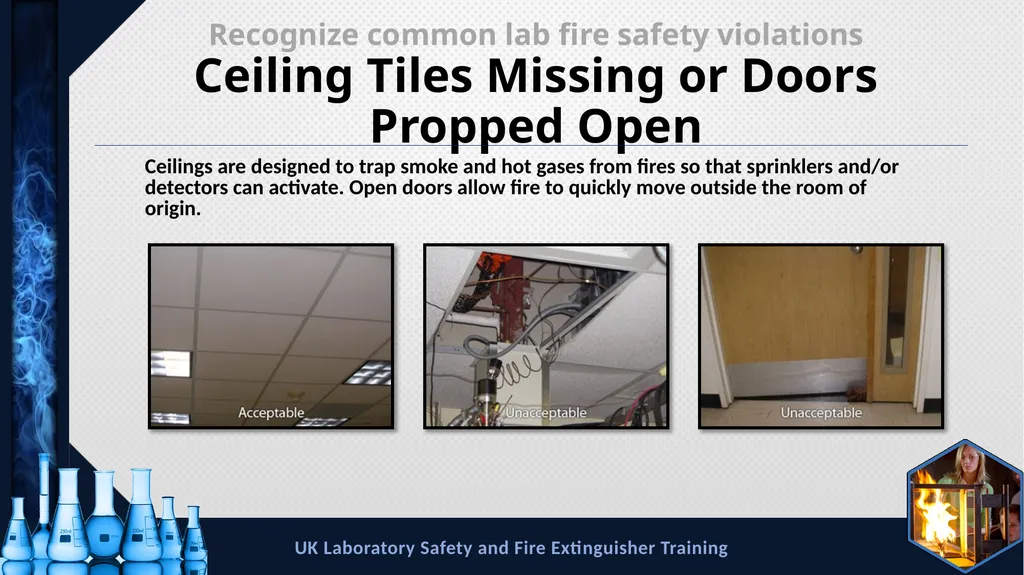
Recognize common lab fire safety violations Ceiling Tiles Missing or Doors Propped Open Ceilings are designed to trap smoke and hot gases from fires so that sprinklers and/or detectors can activate. Open doors allow fire to quickly move outside the room of origin.<br>
10
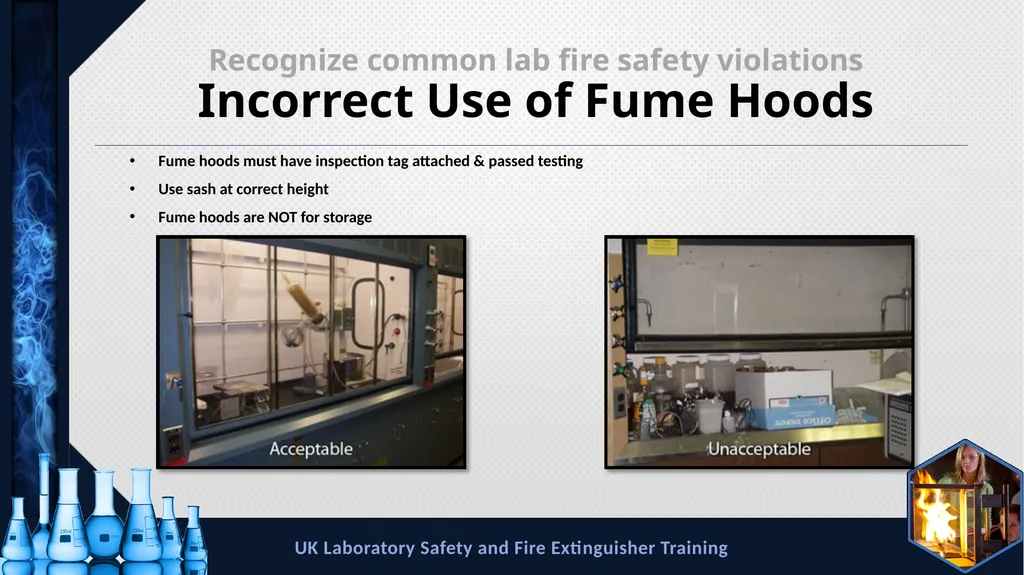
Recognize common lab fire safety violations Incorrect Use of Fume Hoods Fume hoods must have inspection tag attached & passed testing
Use sash at correct height
Fume hoods are NOT for storage<br>
11
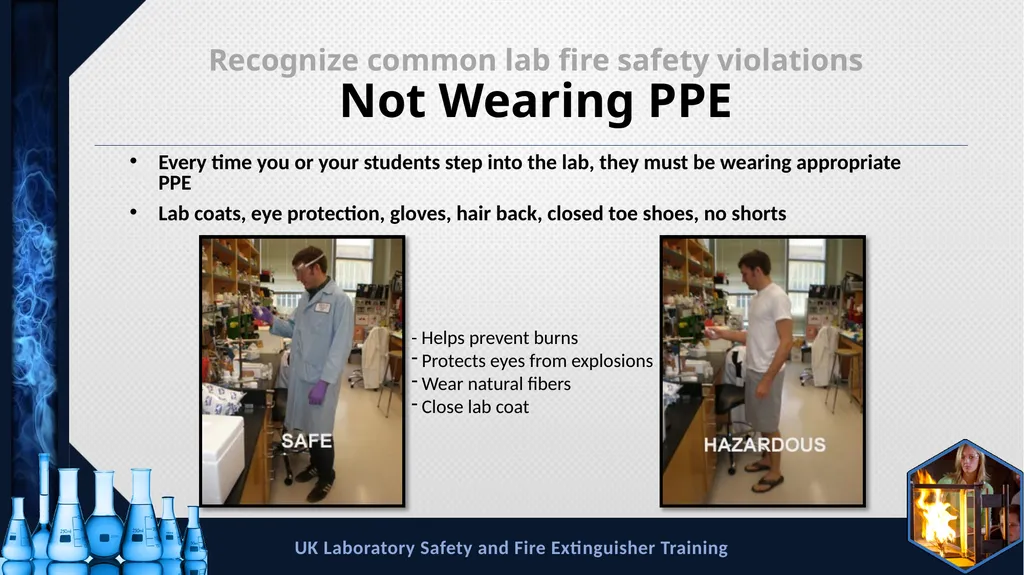
Recognize common lab fire safety violations Not Wearing PPE Every time you or your students step into the lab, they must be wearing appropriate PPE
Lab coats, eye protection, gloves, hair back, closed toe shoes, no shorts - Helps prevent burns
Protects eyes from explosions
Wear natural fibers
Close lab coat<br>
12
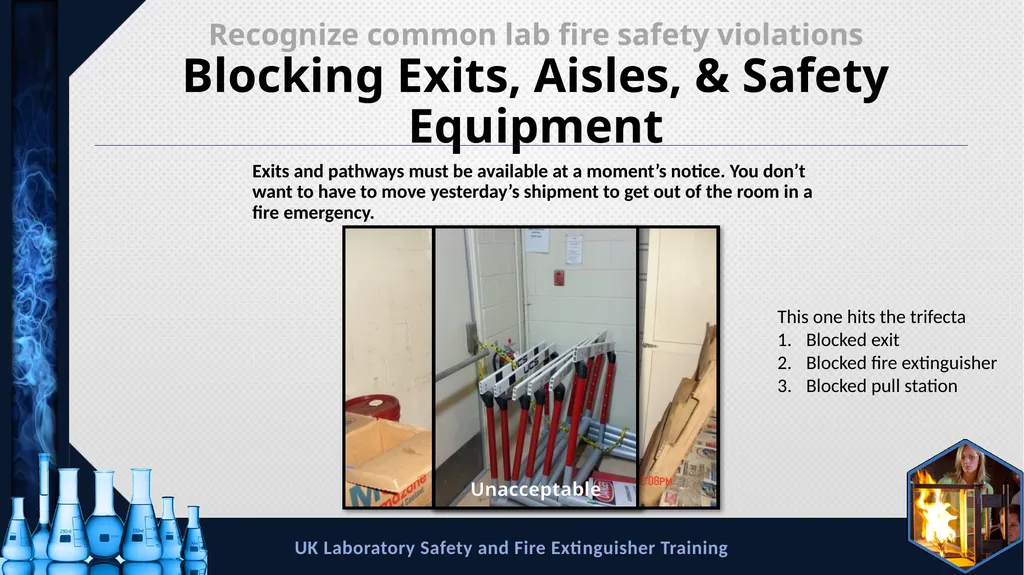
Recognize common lab fire safety violations Blocking Exits, Aisles, & Safety Equipment Exits and pathways must be available at a moment’s notice. You don’t want to have to move yesterday’s shipment to get out of the room in a fire emergency.<br>
13
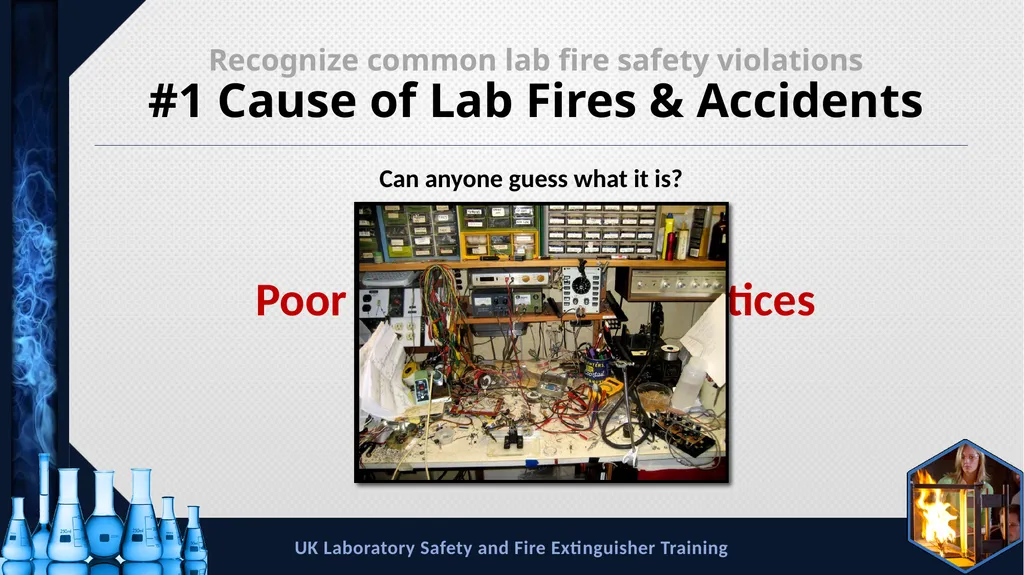
Recognize common lab fire safety violations #1 Cause of Lab Fires & Accidents Can anyone guess what it is? Poor Housekeeping Practices<br>
14
Remember RACE
Fire can get out of control quickly, on average it doubles in size every minute.
You are not trained firefighters, evacuation is always the preferred response. It is NOT your job to put out fires in the laboratory.
Notify the proper authorities, Fire Department 1st, UK Fire Marshal 2nd
You must always report a fire to authorities, no matter how small If there is a fire in the lab, how should you respond?<br>
15
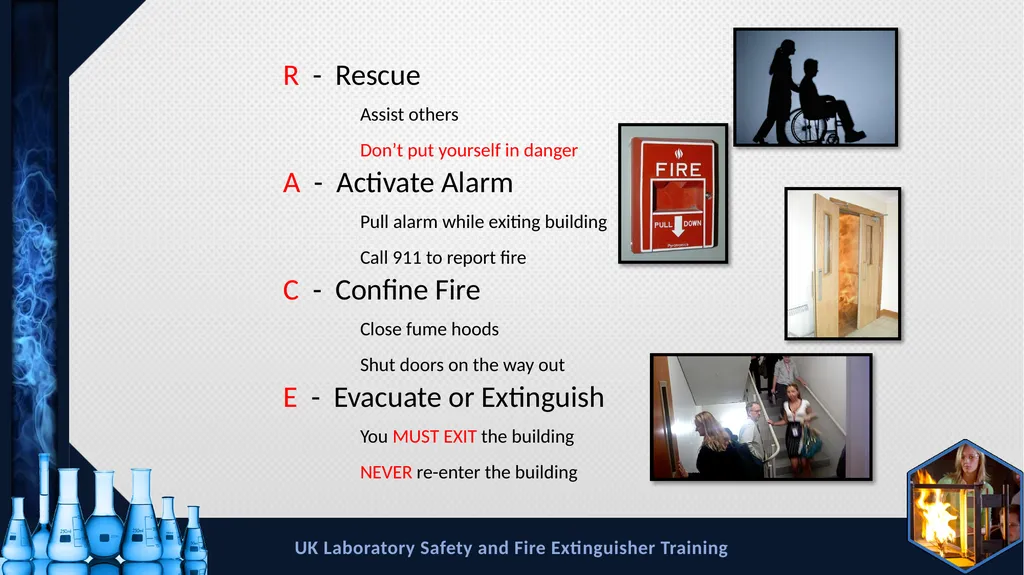
R - Rescue
Assist others
Don’t put yourself in danger
A - Activate Alarm
Pull alarm while exiting building
Call 911 to report fire
C - Confine Fire
Close fume hoods
Shut doors on the way out
E - Evacuate or Extinguish
You MUST EXIT the building
NEVER re-enter the building<br>
16
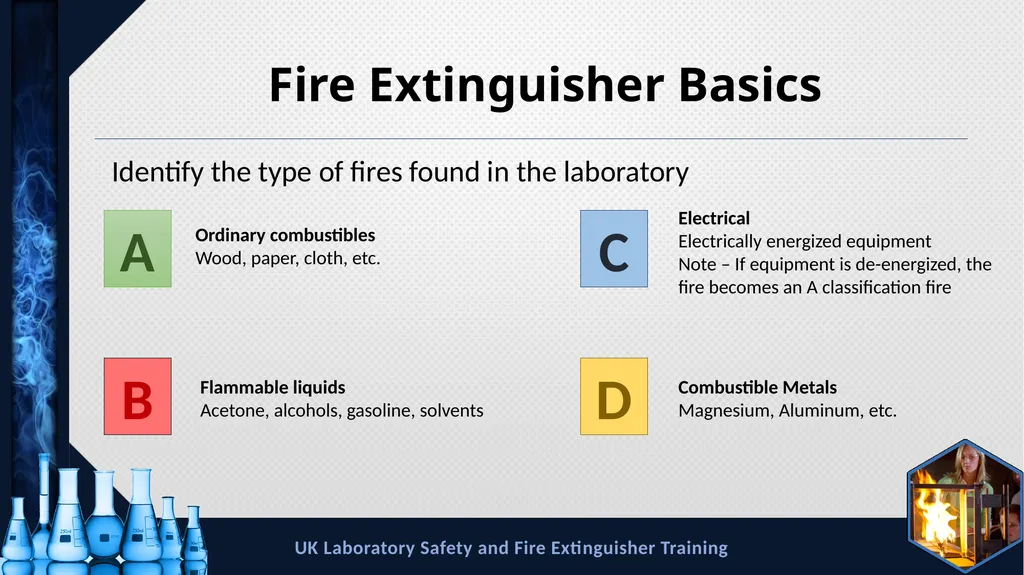
Fire Extinguisher Basics Identify the type of fires found in the laboratory A B C D Ordinary combustibles
Wood, paper, cloth, etc. Electrical
Electrically energized equipment
Note – If equipment is de-energized, the fire becomes an A classification fire Flammable liquids
Acetone, alcohols, gasoline, solvents Combustible Metals
Magnesium, Aluminum, etc.<br>
17
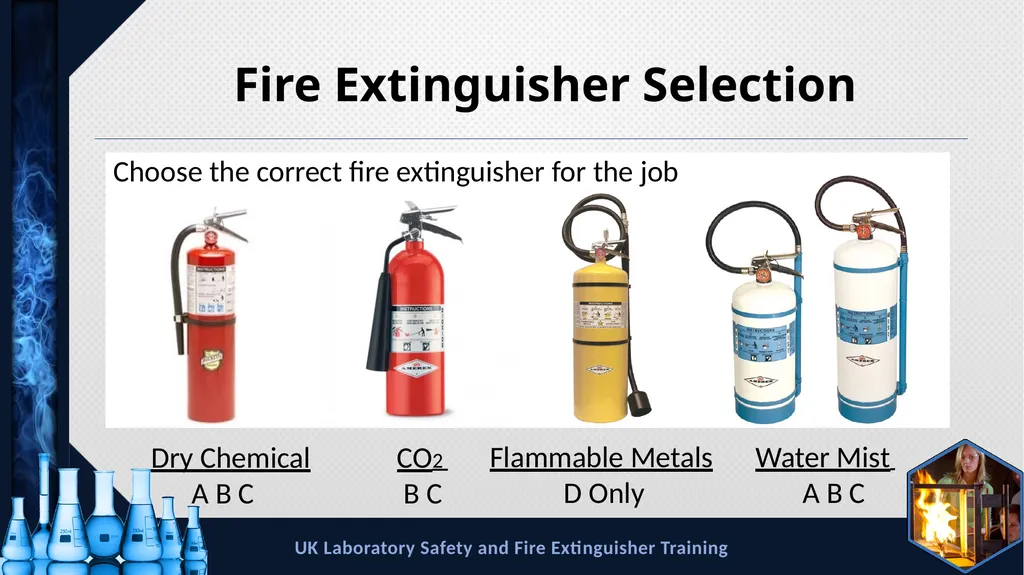
Fire Extinguisher Selection Choose the correct fire extinguisher for the job Dry Chemical
A B C CO2
B C Flammable Metals
D Only Water Mist
A B C<br>
18
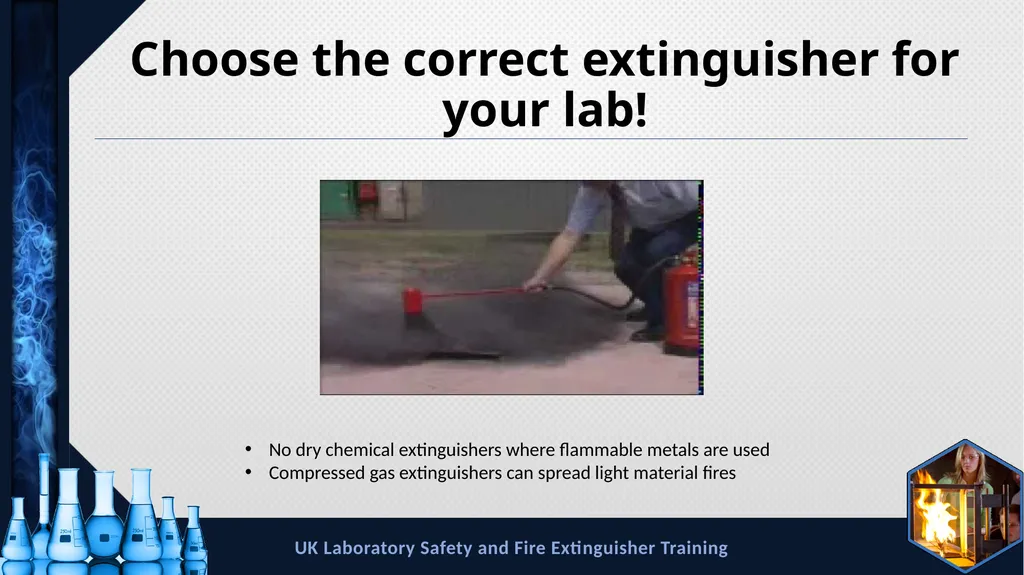
Choose the correct extinguisher for your lab! No dry chemical extinguishers where flammable metals are used
Compressed gas extinguishers can spread light material fires<br>