Pressure ulcer risk assessment The Braden scale Sarah Warner Senior TVN Oxford Health NHS Foundation Trust . (Adapted from Lucy Hosies Presentation ) 2014 RISK ASSESSMENT RECAP Guide identification of people at risk of pressure ulcer
"Pressure ulcer risk assessment The Braden scale" is the property of its rightful owner. Permission is granted to
download and print the materials on this website for personal, non-commercial use only, and to display it
on your personal computer provided you do not modify the materials and that you retain all copyright
notices contained in the materials. By downloading content from our website, you accept the terms of this
agreement.
Presentation Transcript
01
Pressure ulcer risk assessment The Braden scale Sarah Warner Senior TVN
Oxford Health NHS Foundation Trust . (Adapted from Lucy Hosie’s Presentation )
2014<br>
02
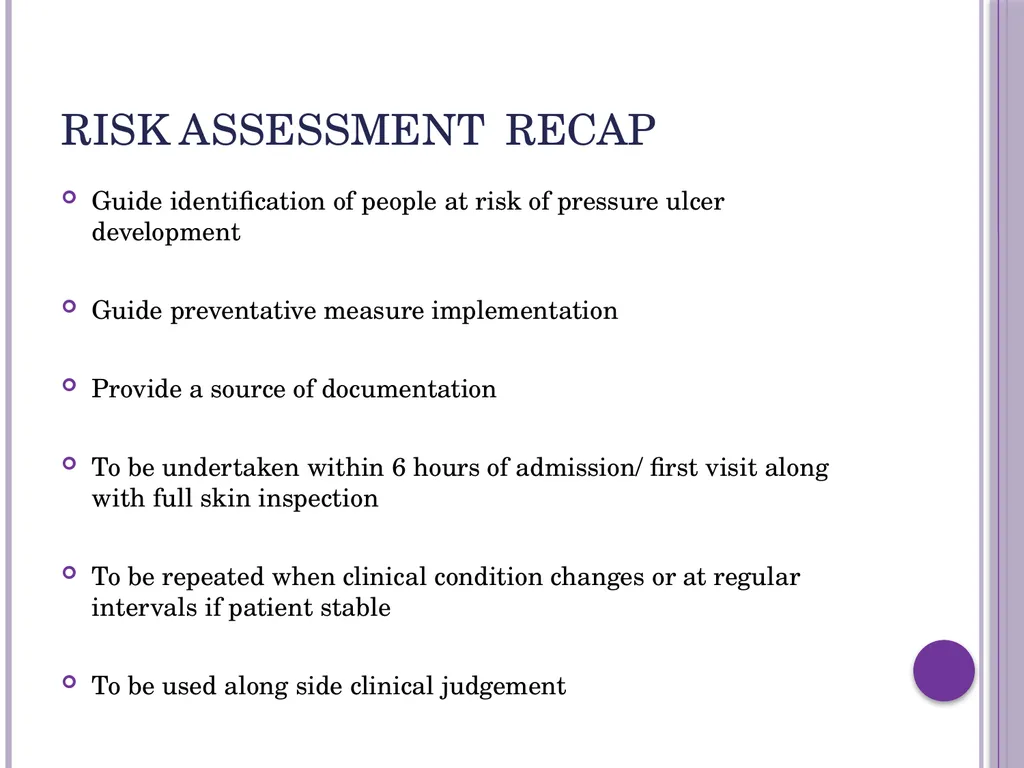
RISK ASSESSMENT RECAP Guide identification of people at risk of pressure ulcer development
Guide preventative measure implementation
Provide a source of documentation
To be undertaken within 6 hours of admission/ first visit along with full skin inspection
To be repeated when clinical condition changes or at regular intervals if patient stable
To be used along side clinical judgement<br>
03
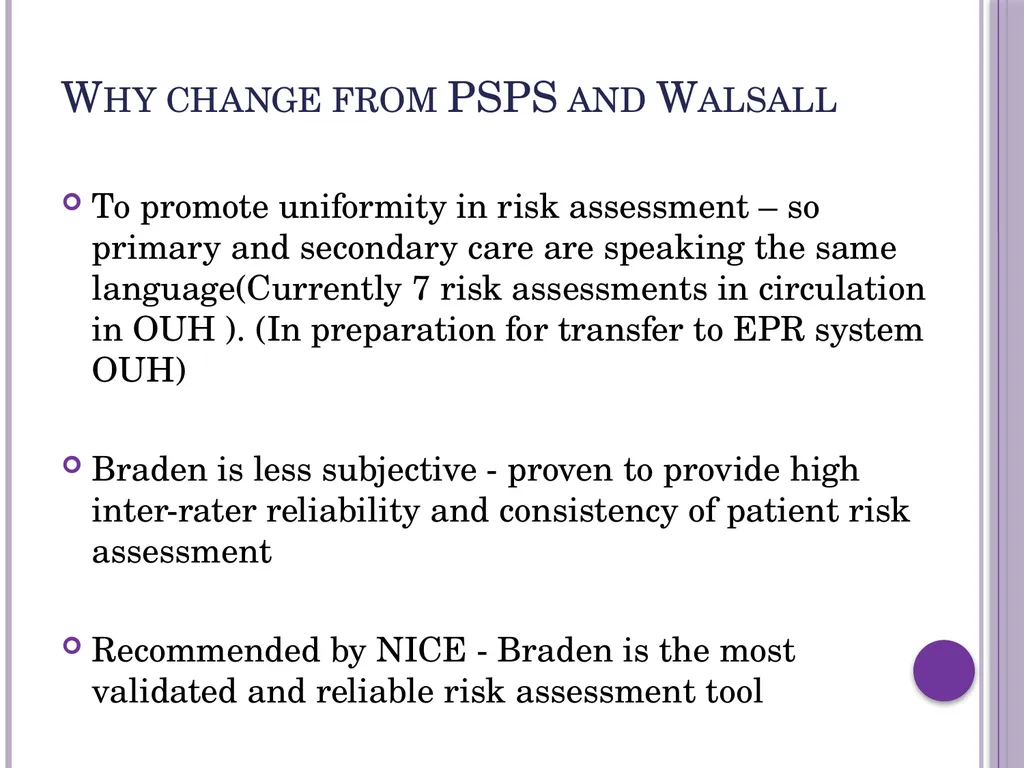
Why change from PSPS and Walsall To promote uniformity in risk assessment – so primary and secondary care are speaking the same language(Currently 7 risk assessments in circulation in OUH ). (In preparation for transfer to EPR system OUH)
Braden is less subjective - proven to provide high inter-rater reliability and consistency of patient risk assessment
Recommended by NICE - Braden is the most validated and reliable risk assessment tool<br>
04
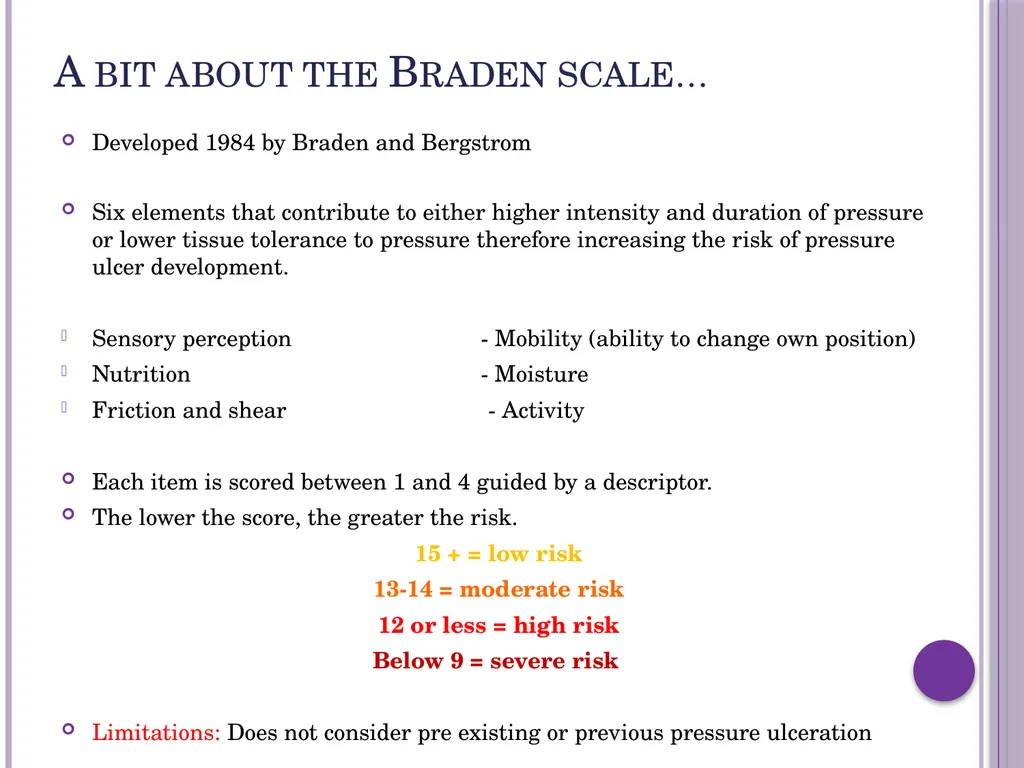
A bit about the Braden scale… Developed 1984 by Braden and Bergstrom
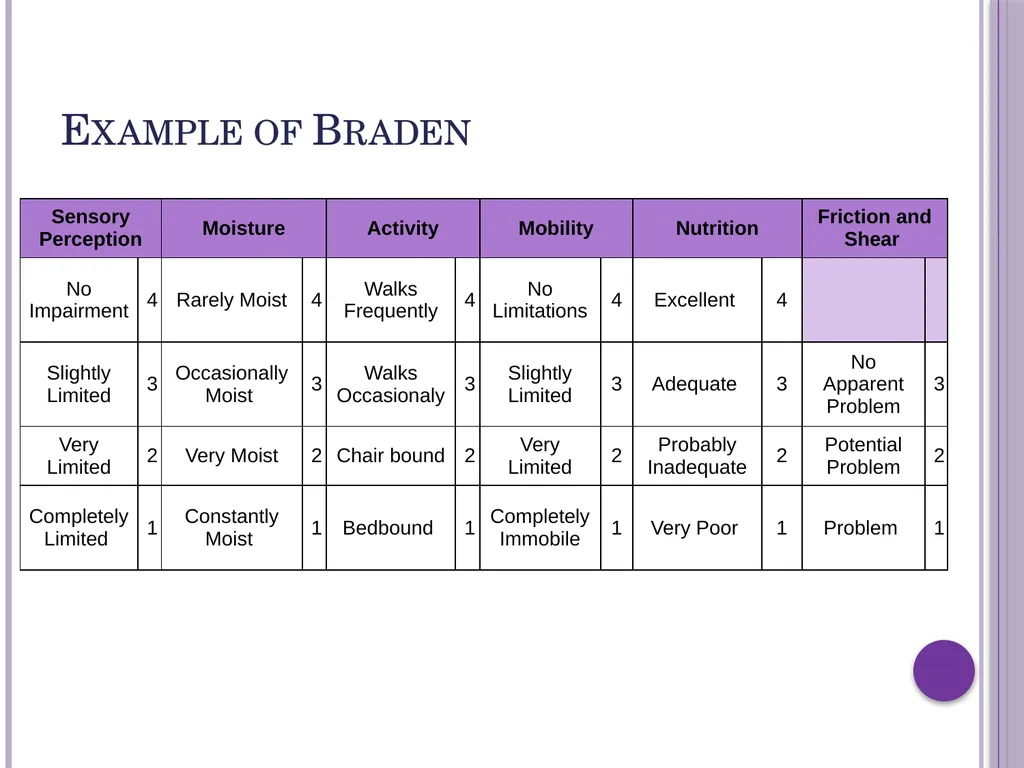
Six elements that contribute to either higher intensity and duration of pressure or lower tissue tolerance to pressure therefore increasing the risk of pressure ulcer development.
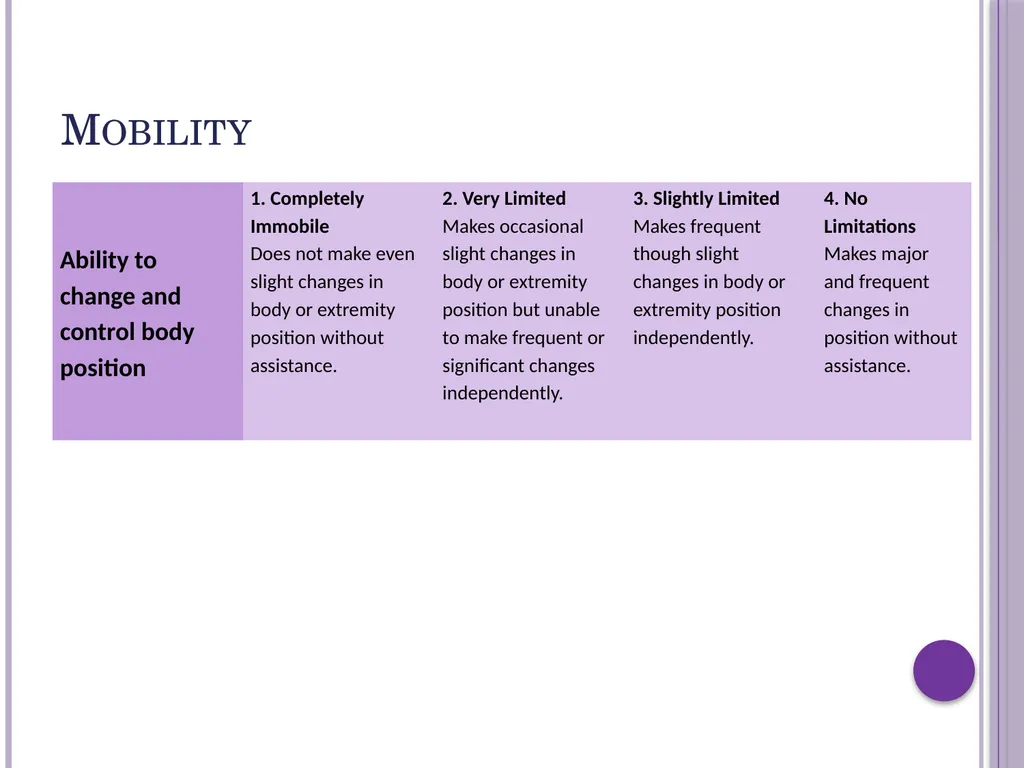
Sensory perception - Mobility (ability to change own position)
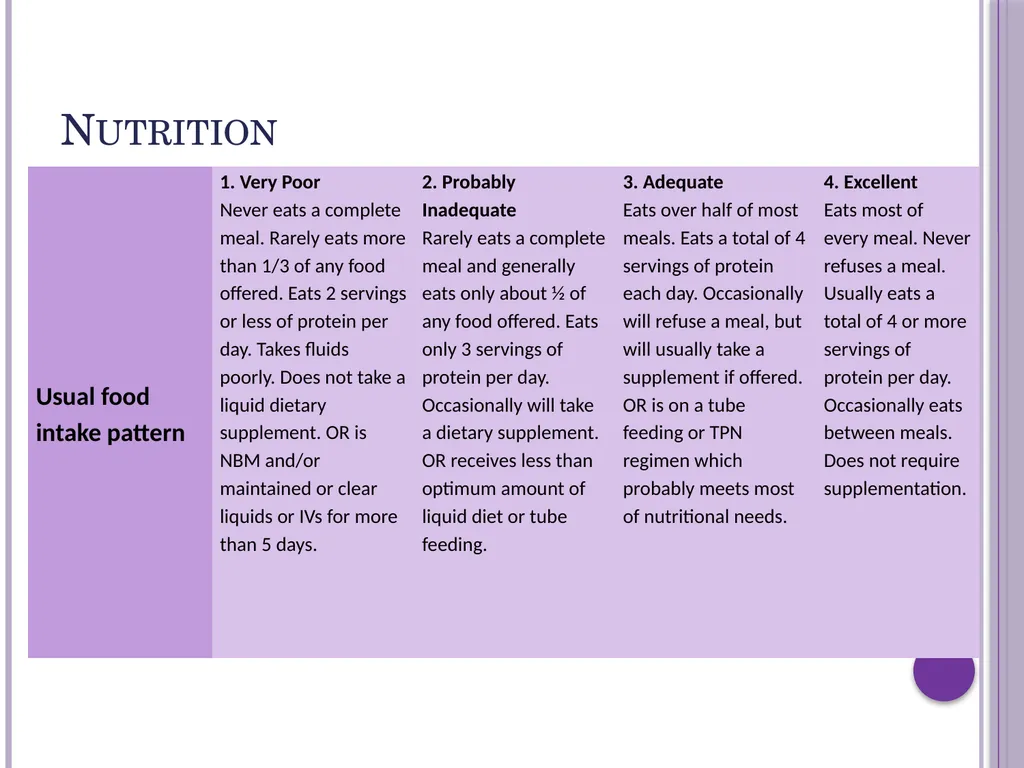
Nutrition - Moisture
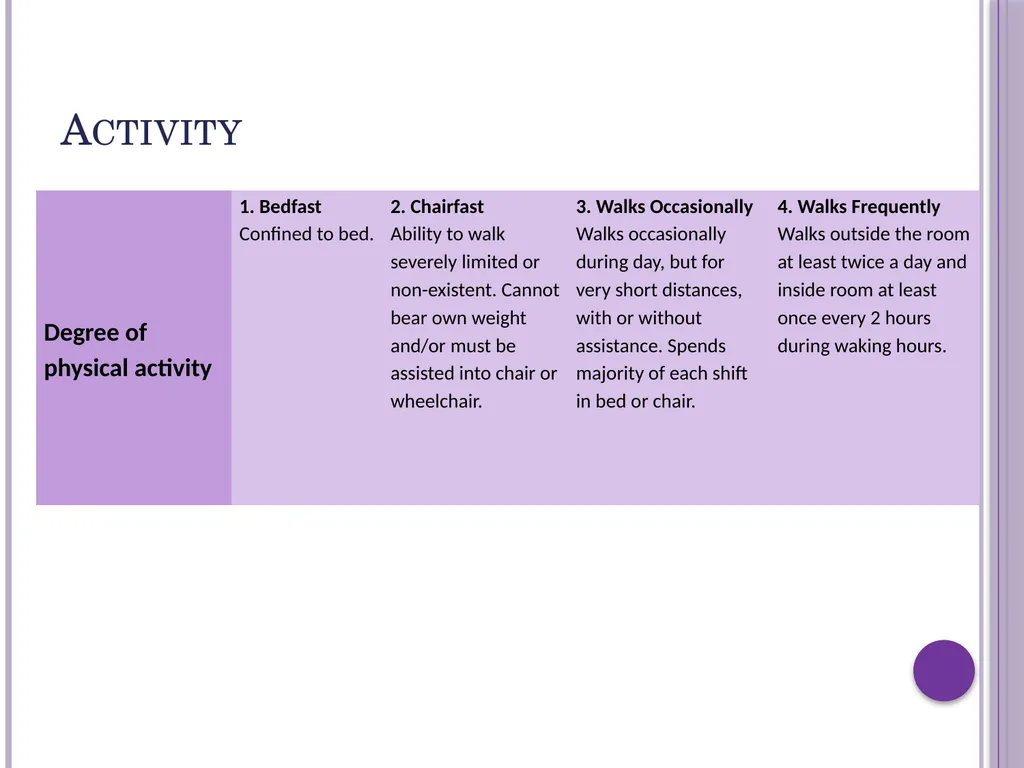
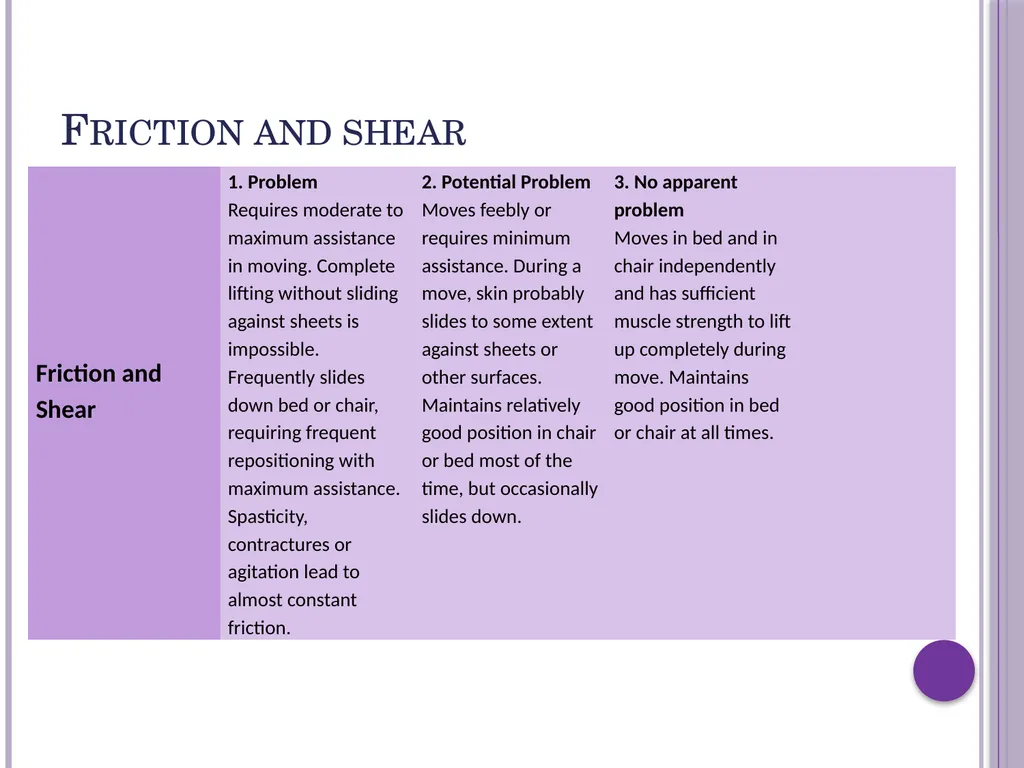
Friction and shear - Activity
Each item is scored between 1 and 4 guided by a descriptor.
The lower the score, the greater the risk.
15 + = low risk
13-14 = moderate risk
12 or less = high risk
Below 9 = severe risk
Limitations: Does not consider pre existing or previous pressure ulceration<br>
05
ALERT!! The lower the score, the greater the risk. This is the opposite way round to the Walsall . 9 and below is now Severe risk.<br>
06
Example of Braden<br>
07
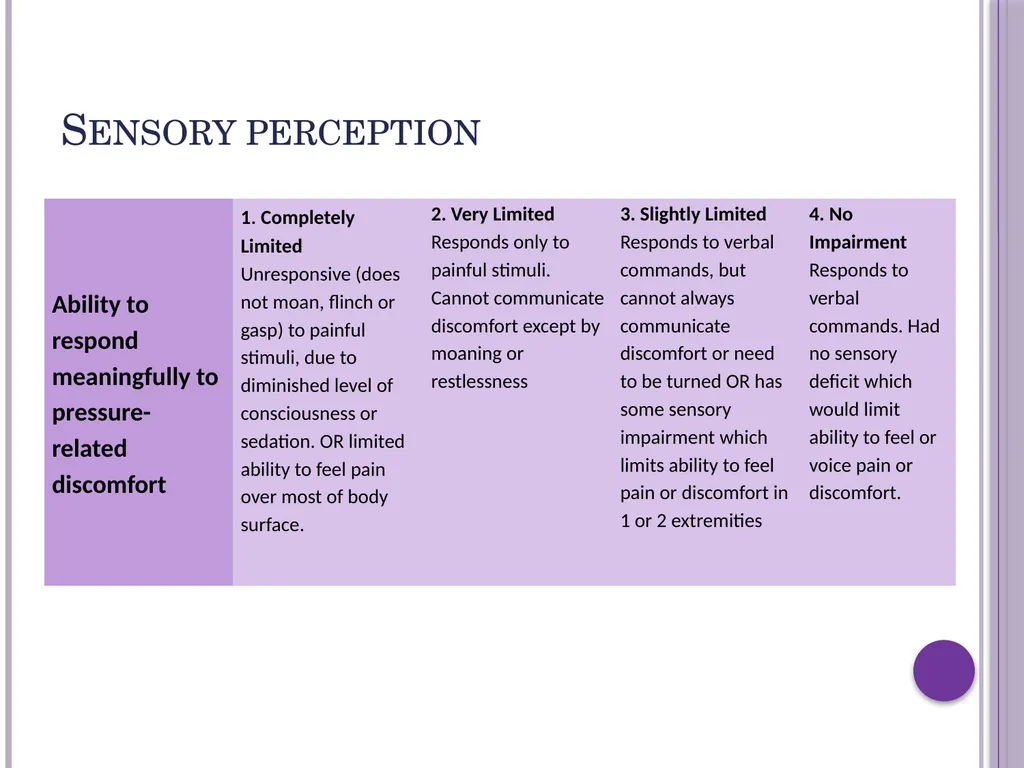
Sensory perception<br>
08
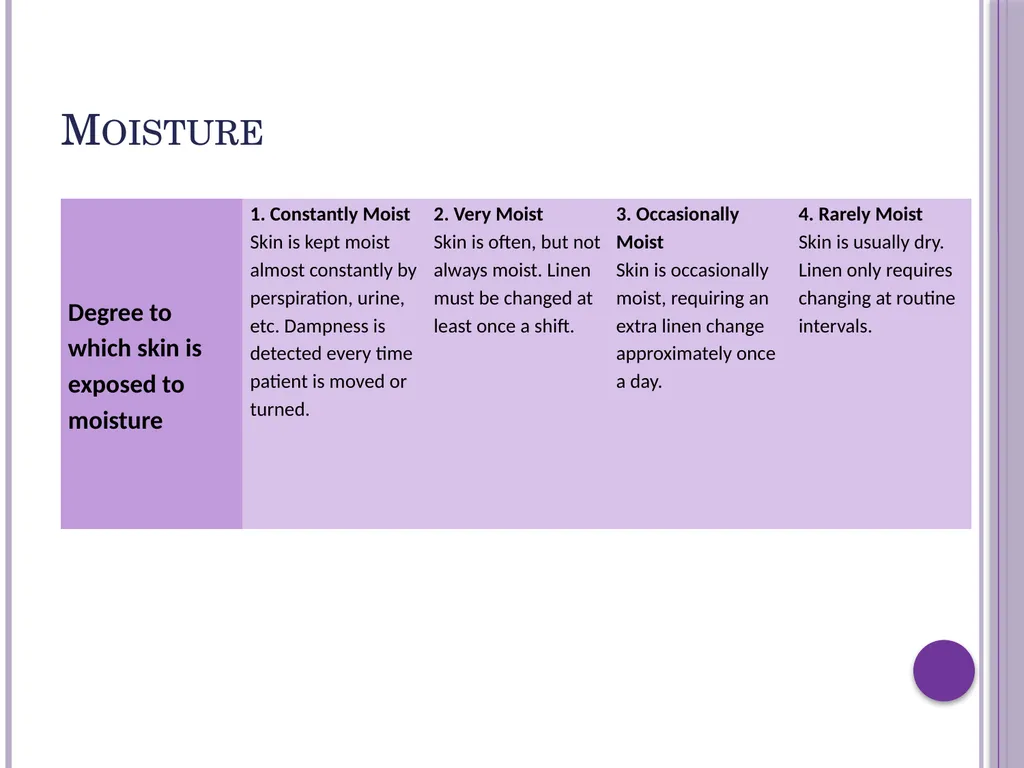
Moisture<br>
09
Activity<br>
10
Mobility<br>
11
Nutrition<br>
12
Friction and shear<br>
13
Remember clinical judgement Risk assessments are tools – and must be supported by clinical judgement .
You Cannot Adapt this tool .
Current or previous pressure damage how does this effect the risk score.
Availability of associated documents.
We go Live on the 3rd of November<br>
14
Risk assessed…what now? Ensure risk assessment fully documented along with full skin inspection
Implement preventative measures according to identified risk – and document interventions
Regularly evaluate effectiveness of interventions
Provide patient and relative education regarding pressure ulcer prevention
Ensure degree of risk fully communicated with next clinical area – enable time to get equipment in place for at risk patients<br>
15
Practice Case studies You now have the opportunity to
Practice with the new tool.<br>
16
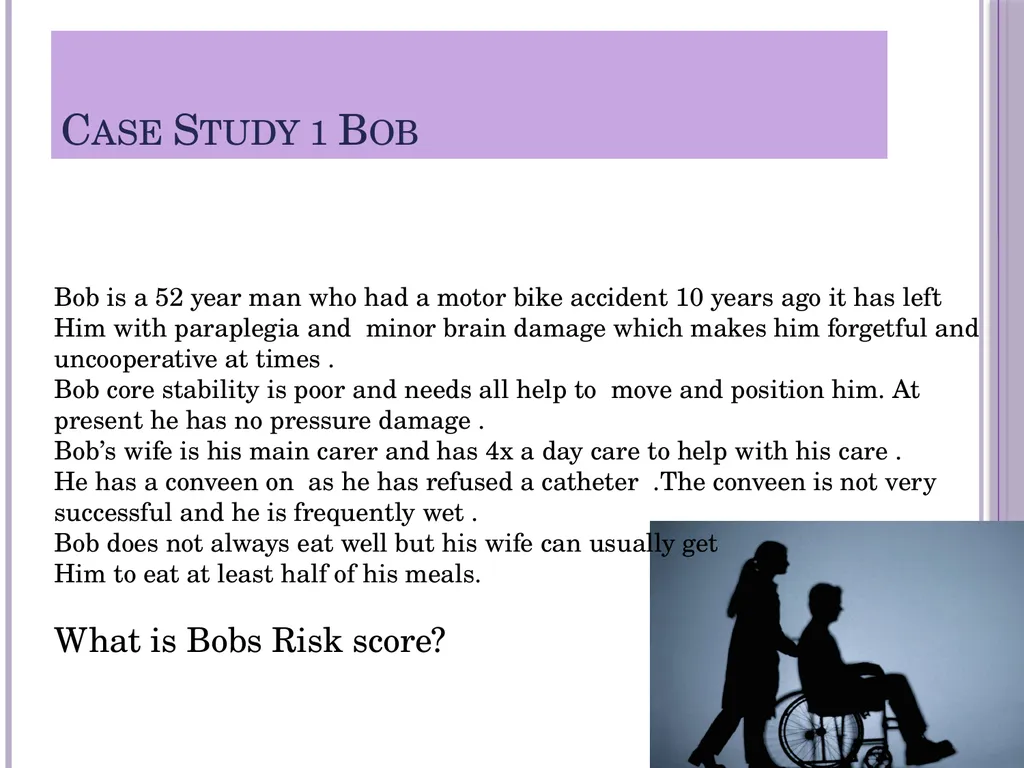
Case Study 1 Bob Bob is a 52 year man who had a motor bike accident 10 years ago it has left
Him with paraplegia and minor brain damage which makes him forgetful and uncooperative at times .
Bob core stability is poor and needs all help to move and position him. At present he has no pressure damage .
Bob’s wife is his main carer and has 4x a day care to help with his care .
He has a conveen on as he has refused a catheter .The conveen is not very successful and he is frequently wet .
Bob does not always eat well but his wife can usually get
Him to eat at least half of his meals.
What is Bobs Risk score?<br>
17
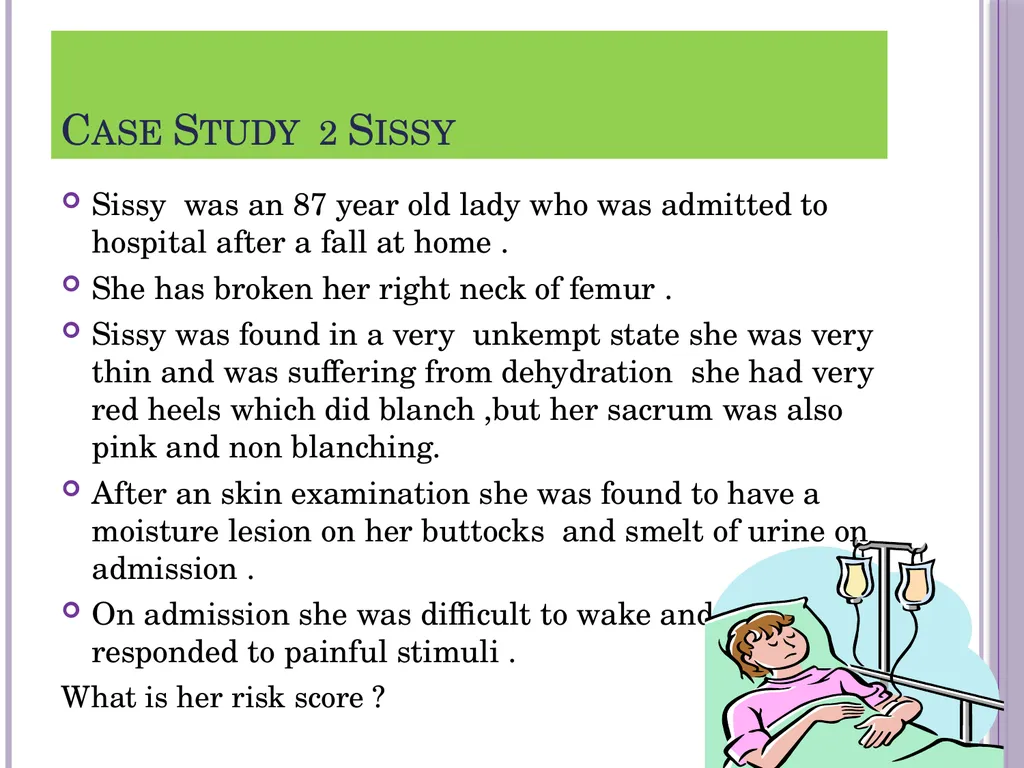
Case Study 2 Sissy Sissy was an 87 year old lady who was admitted to hospital after a fall at home .
She has broken her right neck of femur .
Sissy was found in a very unkempt state she was very thin and was suffering from dehydration she had very red heels which did blanch ,but her sacrum was also pink and non blanching.
After an skin examination she was found to have a moisture lesion on her buttocks and smelt of urine on admission .
On admission she was difficult to wake and only responded to painful stimuli .
What is her risk score ?<br>
18
Case study 3 –Brenda Brenda was a 47 year old women who had had a stroke 6 months ago .
She had mild right sided weakness ,but was still mobile with a stick.
She had problems with her swallowing so was on a soft diet she now has a very poor diet and has lost weight.
Brenda now had difficulties communicating which has made her very withdrawn and her GP has started her on medication for depression.
What is her risk score ?<br>
19
Case study 4 Bill Bill has end stage Multiple sclerosis which he has had for the last 20 years.
Bill now is bed bound and totally immobile needing assistance for all his positioning needs.
His diet has reduce but at present he still manages at least half of his meals
Bill has a catheter and is hoisted to the toilet for his bowels so is totally continent.
Bill has equipment in place to maintain his position (profiling bed)
What is the risk score ?<br>
20
Thank You Any Questions ? Tissueviability@oxfordhealth.nhs.uk<br>