Process Control Course II Lecture 4 The Controllers Part I 1 2 The controller is part of a closed loop system in which a process variable is measured, compared to a set point, and action is taken to correct any deviation from the set point.
"Process Control Course II Lecture 4 The" is the property of its rightful owner. Permission is granted to
download and print the materials on this website for personal, non-commercial use only, and to display it
on your personal computer provided you do not modify the materials and that you retain all copyright
notices contained in the materials. By downloading content from our website, you accept the terms of this
agreement.
Presentation Transcript
01
Process Control
Course II
Lecture 4
The Controllers
Part I 1<br>
02
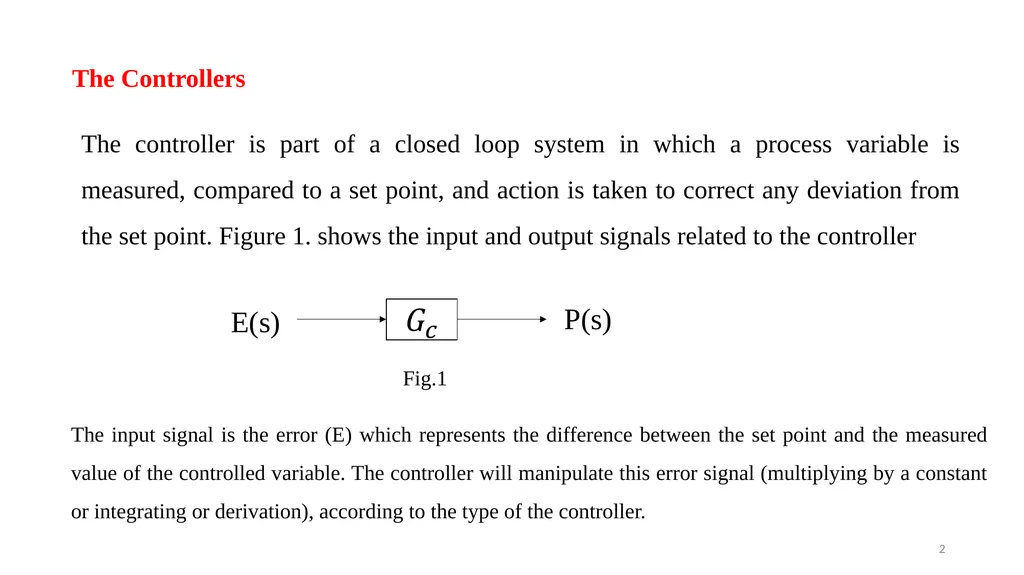
2 The controller is part of a closed loop system in which a process variable is measured, compared to a set point, and action is taken to correct any deviation from the set point. Figure 1. shows the input and output signals related to the controller The Controllers The input signal is the error (E) which represents the difference between the set point and the measured value of the controlled variable. The controller will manipulate this error signal (multiplying by a constant or integrating or derivation), according to the type of the controller.<br>
03
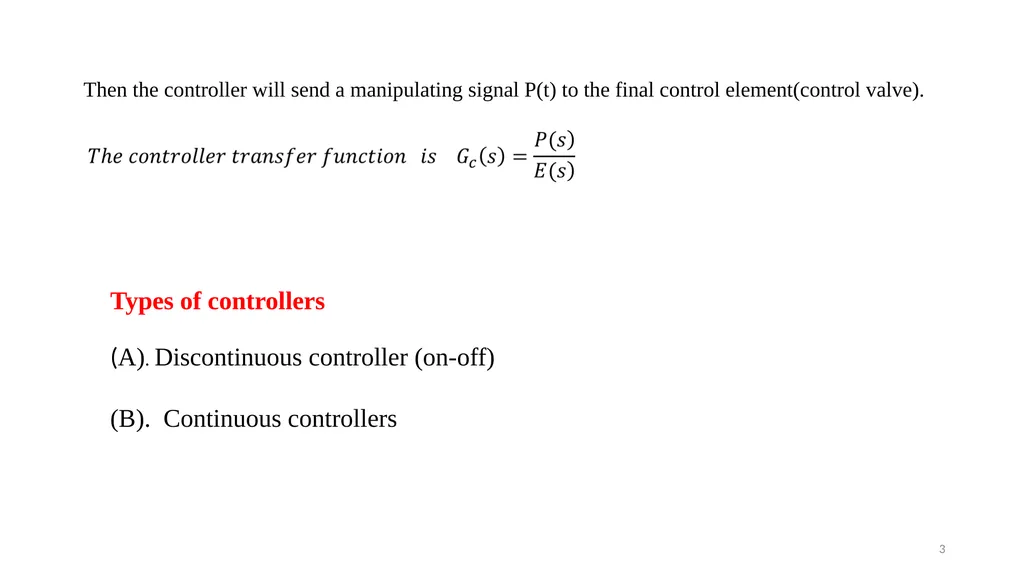
3 Then the controller will send a manipulating signal P(t) to the final control element(control valve). Types of controllers (A). Discontinuous controller (on-off)
(B). Continuous controllers<br>
04
4 (A). Discontinuous controller (on-off) Discontinuous controllers sometimes called two position controllers or on-off controllers. These types of controllers are normally used when the process variable need no maintained at precise value. In these controllers, the manipulated variable changes between discrete values. On-off controller simply drives the manipulated variable from fully closed to fully open depending on the position of the controlled variable relative to the set point. A common examples of on-off control are the temperature control in a domestic heating system, oven alarm shutdown, refrigerator , Iron, and hot plate.<br>
05
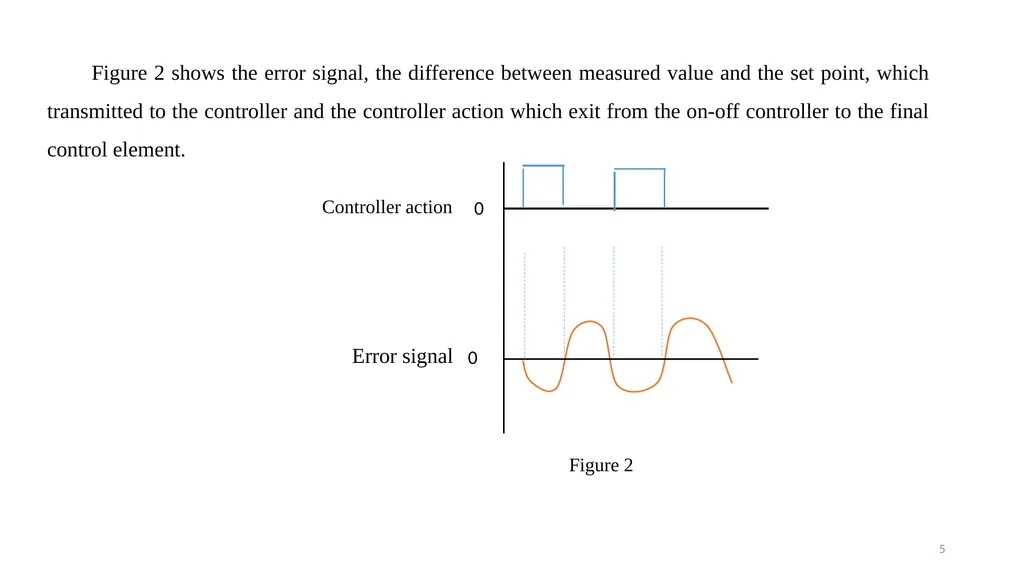
5 Figure 2 shows the error signal, the difference between measured value and the set point, which transmitted to the controller and the controller action which exit from the on-off controller to the final control element. Figure 2<br>
06
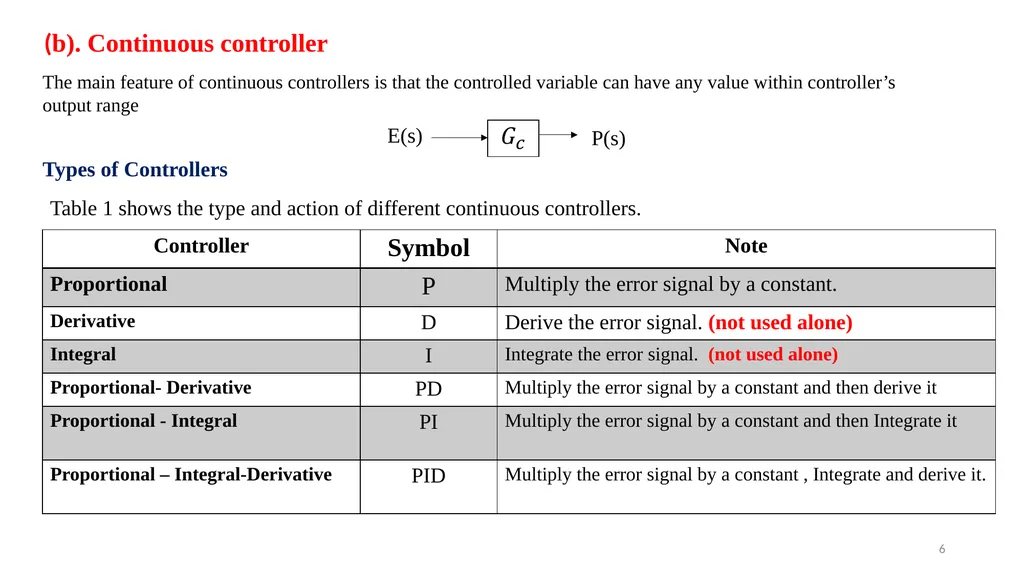
6 (b). Continuous controller The main feature of continuous controllers is that the controlled variable can have any value within controller’s output range Types of Controllers Table 1 shows the type and action of different continuous controllers.<br>
07
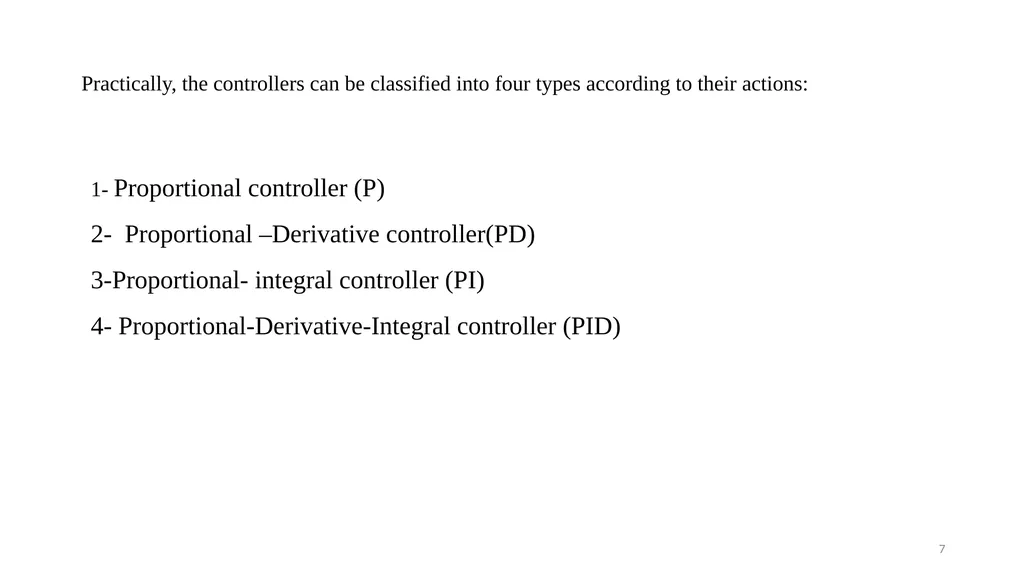
7 1- Proportional controller (P)
2- Proportional –Derivative controller(PD)
3-Proportional- integral controller (PI)
4- Proportional-Derivative-Integral controller (PID) Practically, the controllers can be classified into four types according to their actions:<br>
08
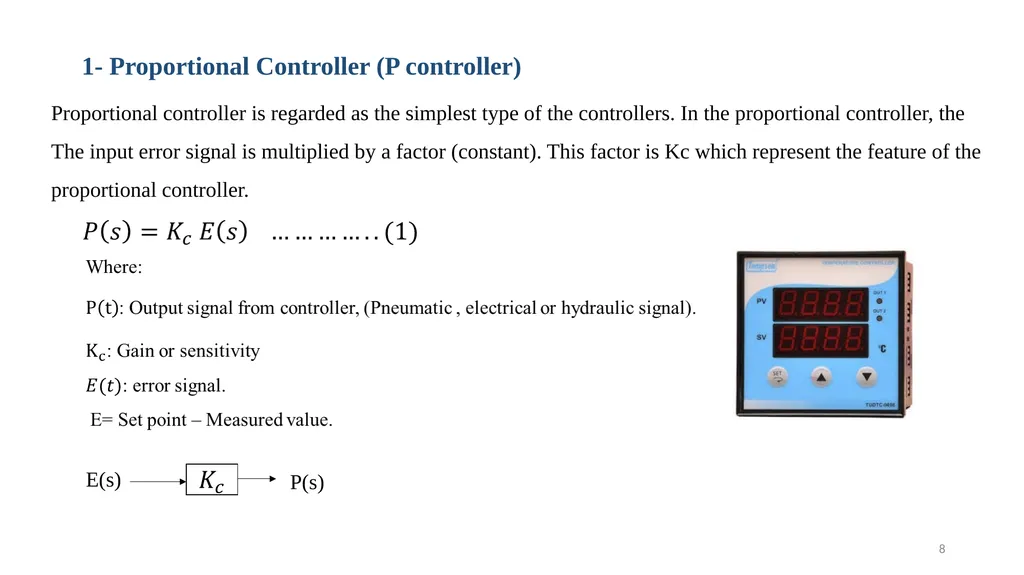
8 1- Proportional Controller (P controller) Proportional controller is regarded as the simplest type of the controllers. In the proportional controller, the
The input error signal is multiplied by a factor (constant). This factor is Kc which represent the feature of the proportional controller.<br>
09
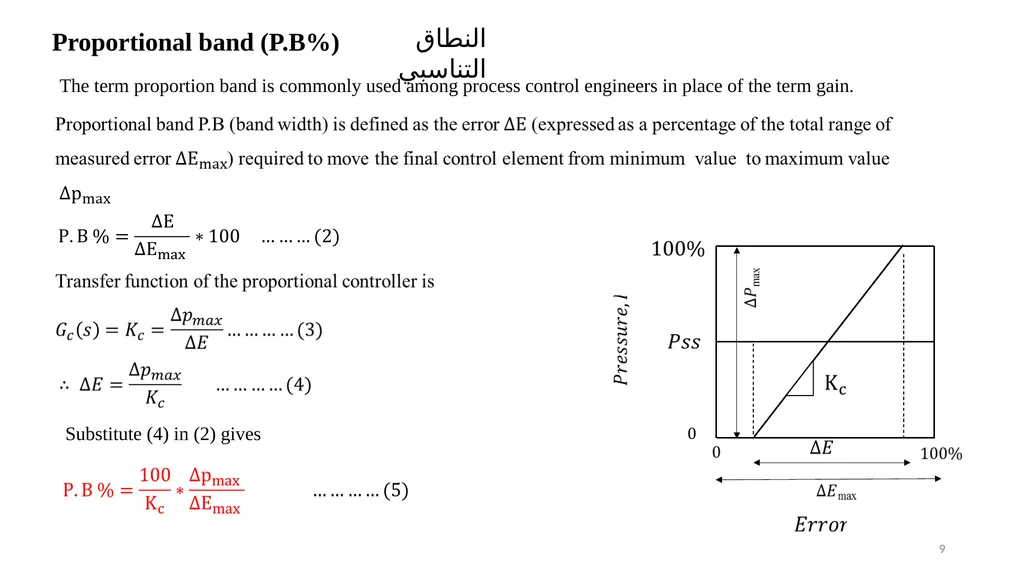
9 Proportional band (P.B%) The term proportion band is commonly used among process control engineers in place of the term gain. النطاق التناسبي Substitute (4) in (2) gives<br>
10
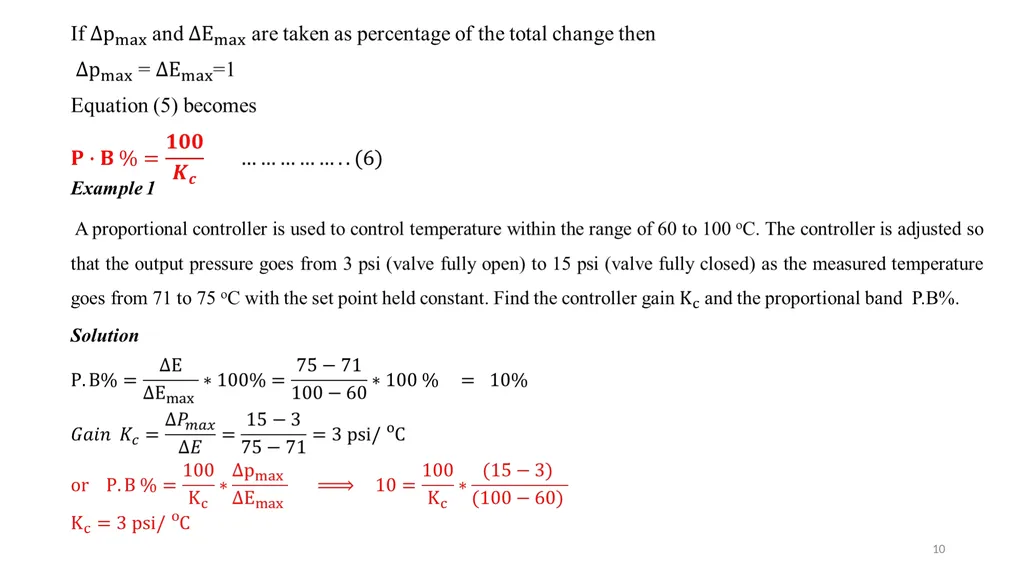
10<br>
11
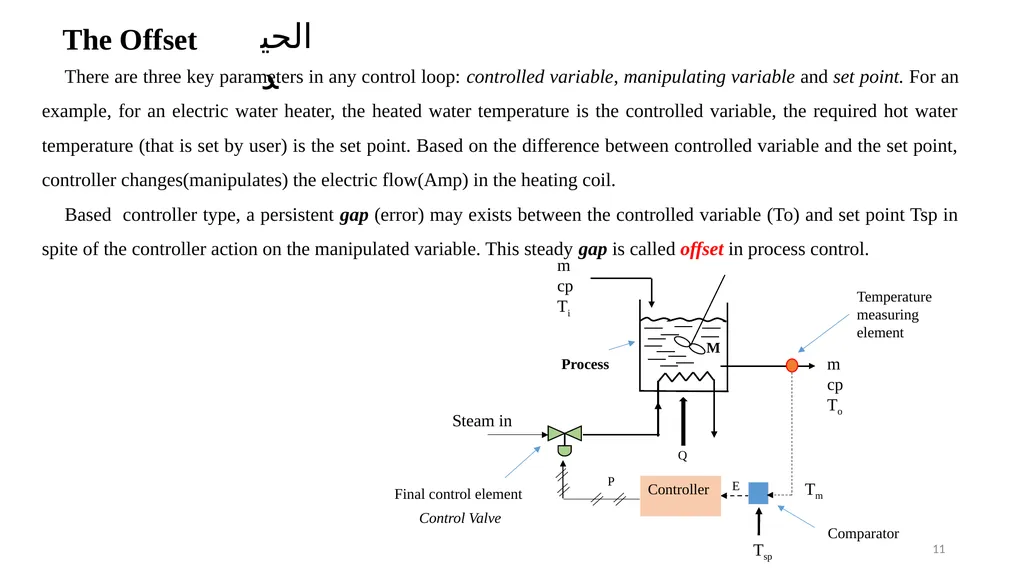
11 The Offset There are three key parameters in any control loop: controlled variable, manipulating variable and set point. For an example, for an electric water heater, the heated water temperature is the controlled variable, the required hot water temperature (that is set by user) is the set point. Based on the difference between controlled variable and the set point, controller changes(manipulates) the electric flow(Amp) in the heating coil.
Based controller type, a persistent gap (error) may exists between the controlled variable (To) and set point Tsp in spite of the controller action on the manipulated variable. This steady gap is called offset in process control. الحيد<br>
12
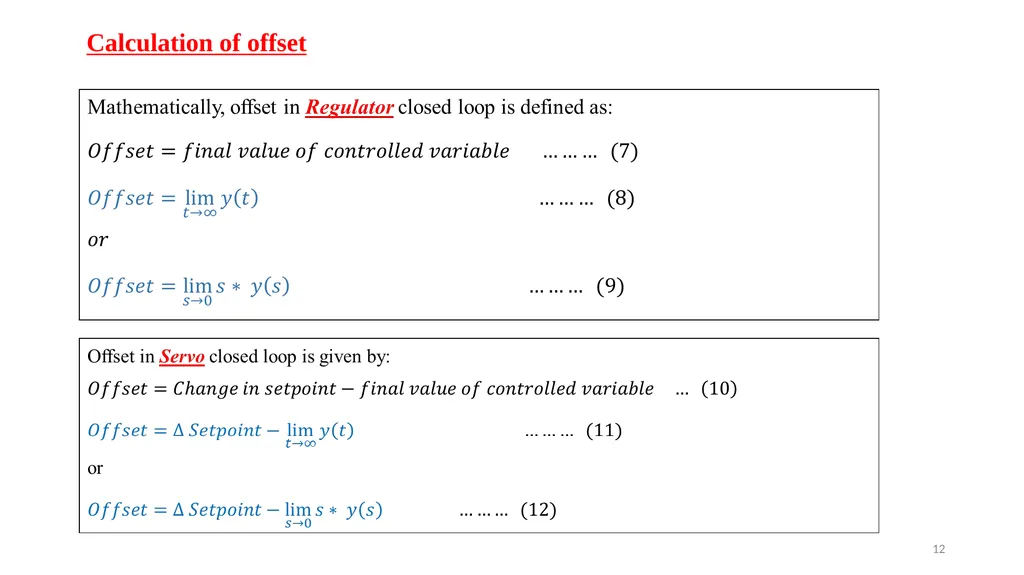
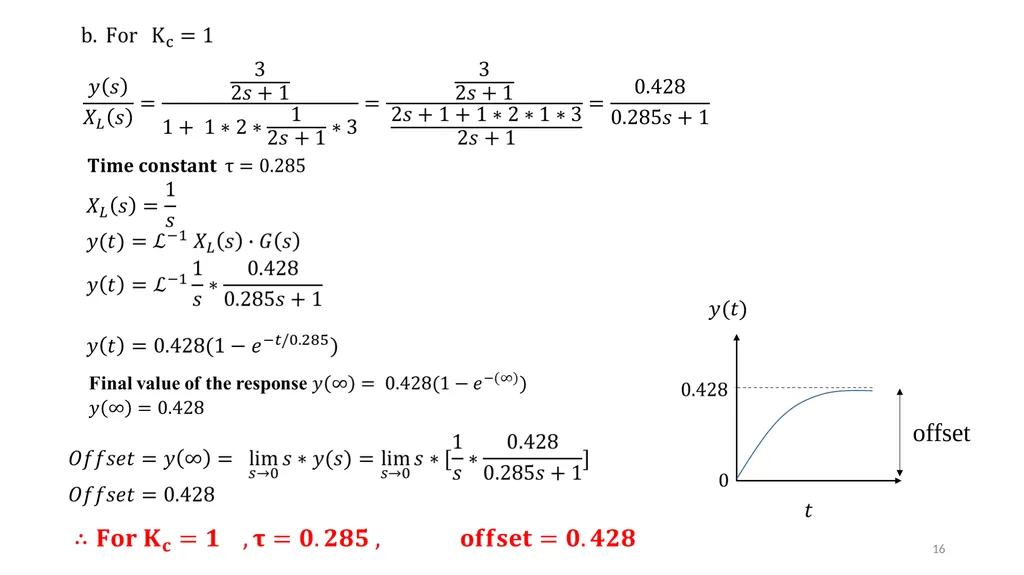
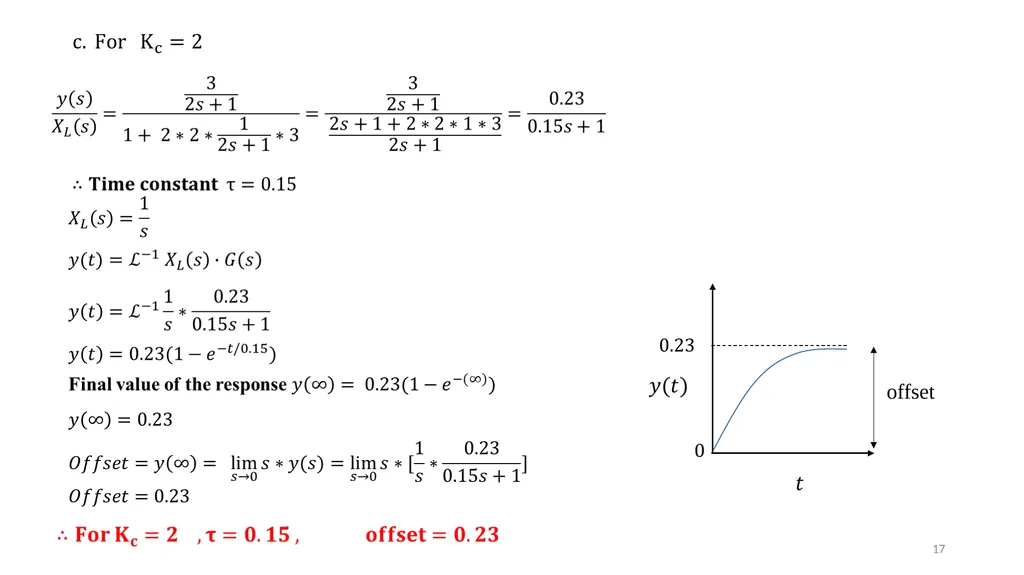
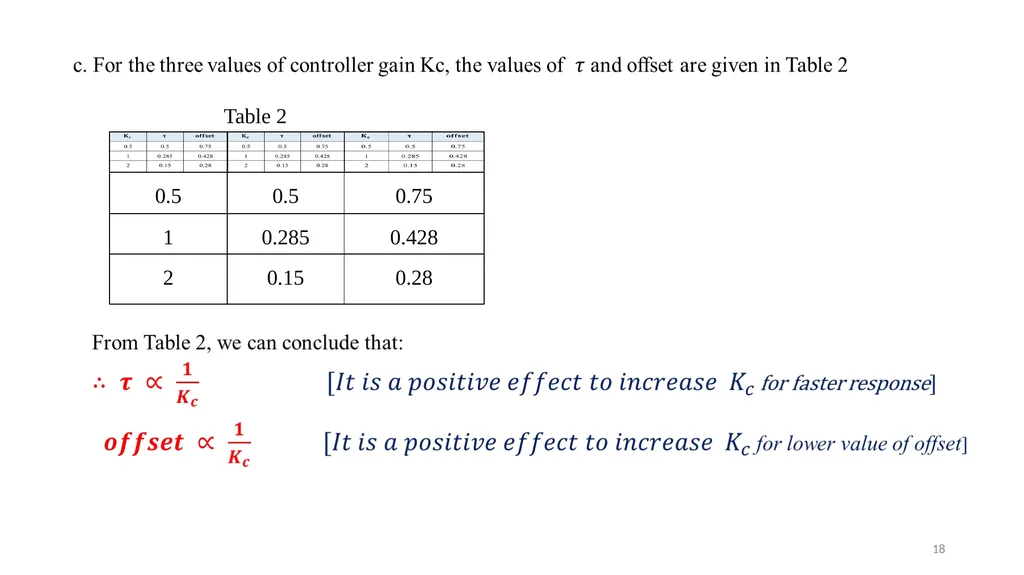
12 Calculation of offset<br>
13
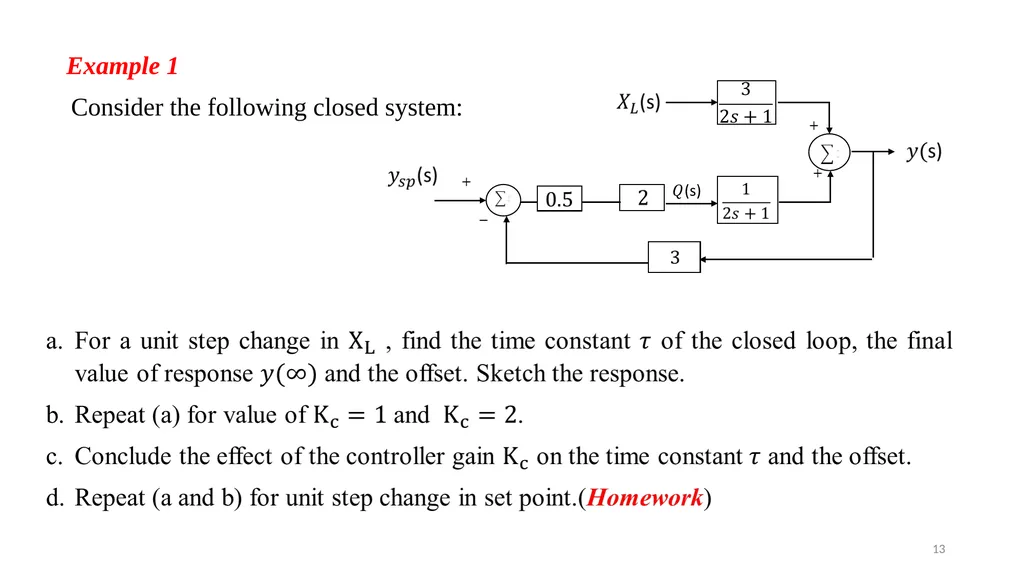
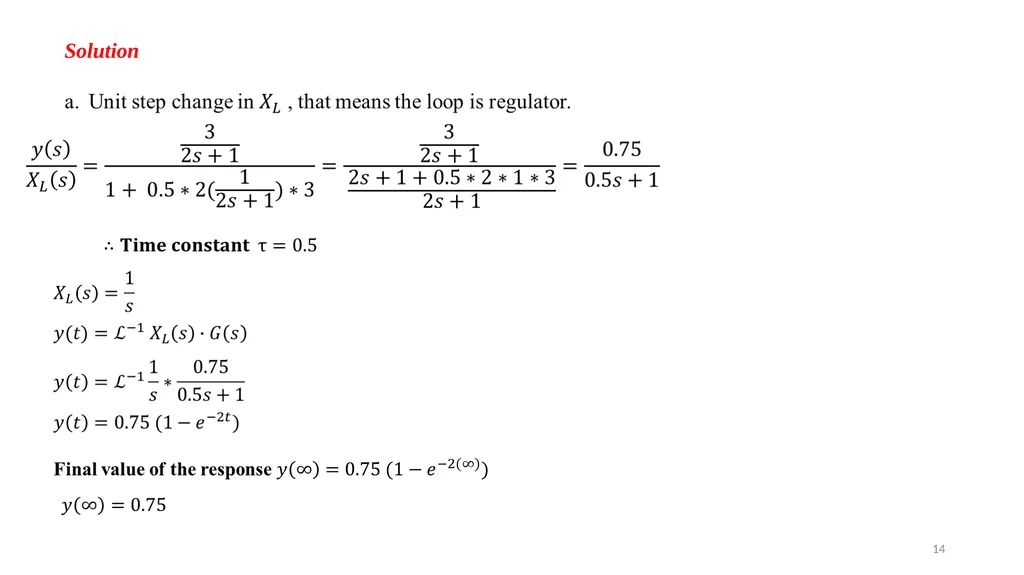
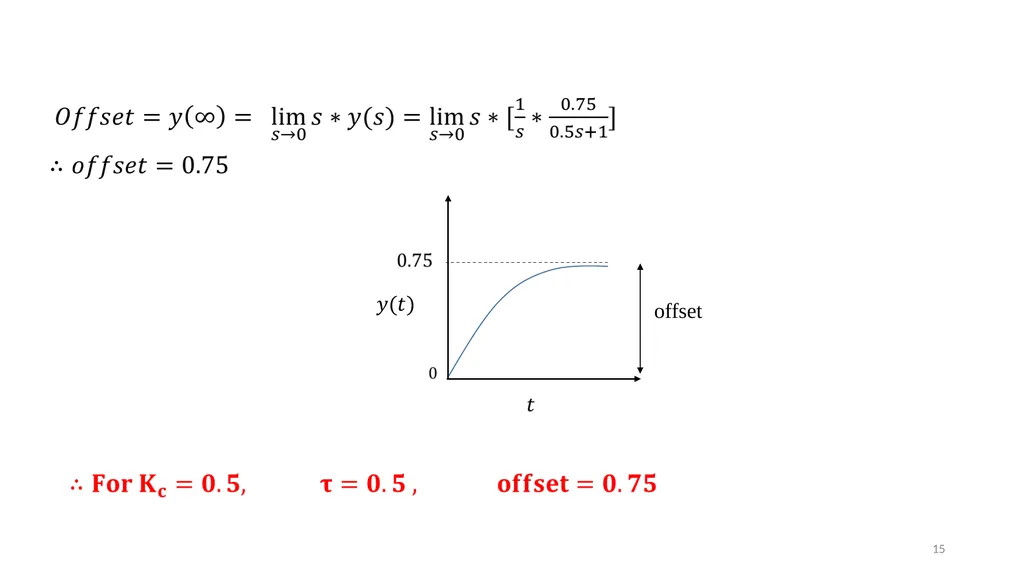
13 Example 1
Consider the following closed system:<br>