
Procurement and Supply Management Potential roles
Description: Procurement and Supply Management Potential roles for IHP IHP Steering Committee 12 December 2014 1 Rationale for IHP engagement Importance in health service delivery Leverage better use of domestic health spending as well as external
Related Topics
Download Presentation
"Procurement and Supply Management Potential roles" is the property of its rightful owner. Permission is granted to download and print the materials on this website for personal, non-commercial use only, and to display it on your personal computer provided you do not modify the materials and that you retain all copyright notices contained in the materials. By downloading content from our website, you accept the terms of this agreement.
Presentation Transcript
slide1. Procurement and Supply Management
Potential roles for IHP+ IHP+ Steering Committee
12 December 2014 1<br>
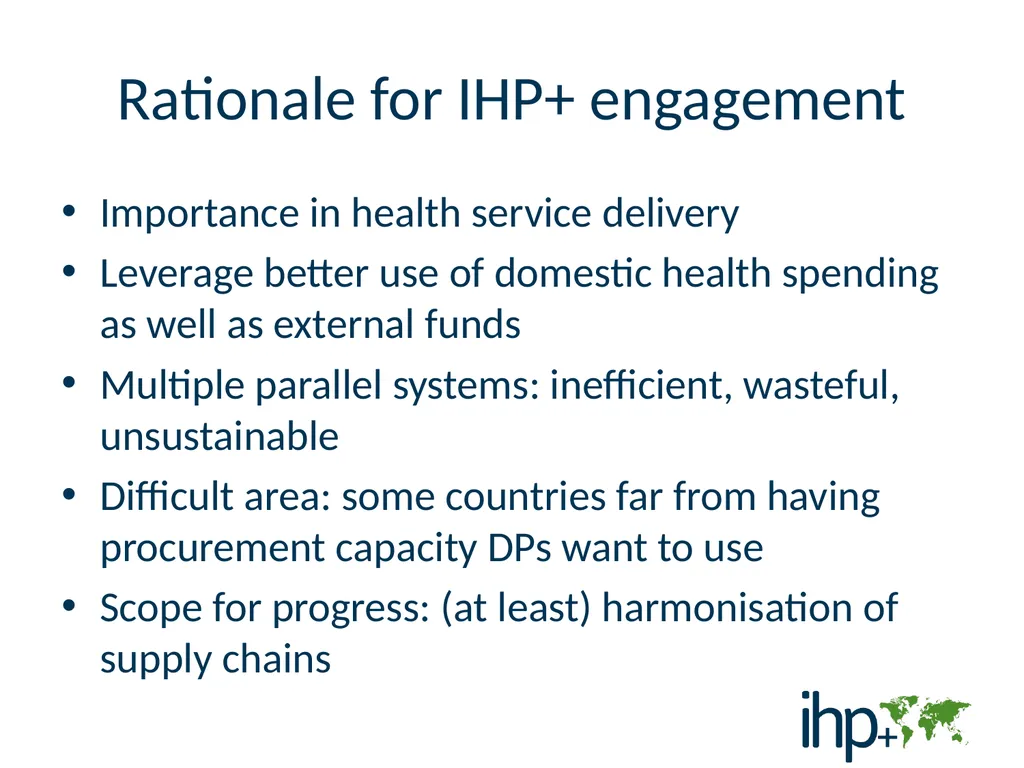
slide2. Rationale for IHP+ engagement Importance in health service delivery
Leverage better use of domestic health spending as well as external funds
Multiple parallel systems: inefficient, wasteful, unsustainable
Difficult area: some countries far from having procurement capacity DPs want to use
Scope for progress: (at least) harmonisation of supply chains<br>
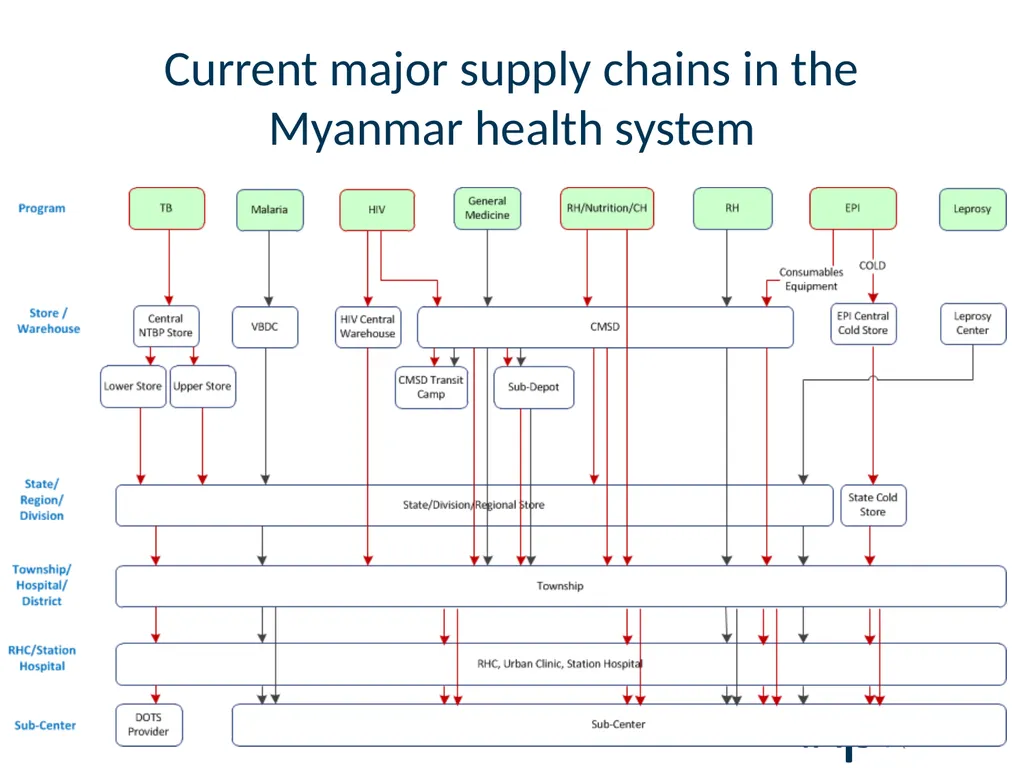
slide3. Current major supply chains in the Myanmar health system<br>
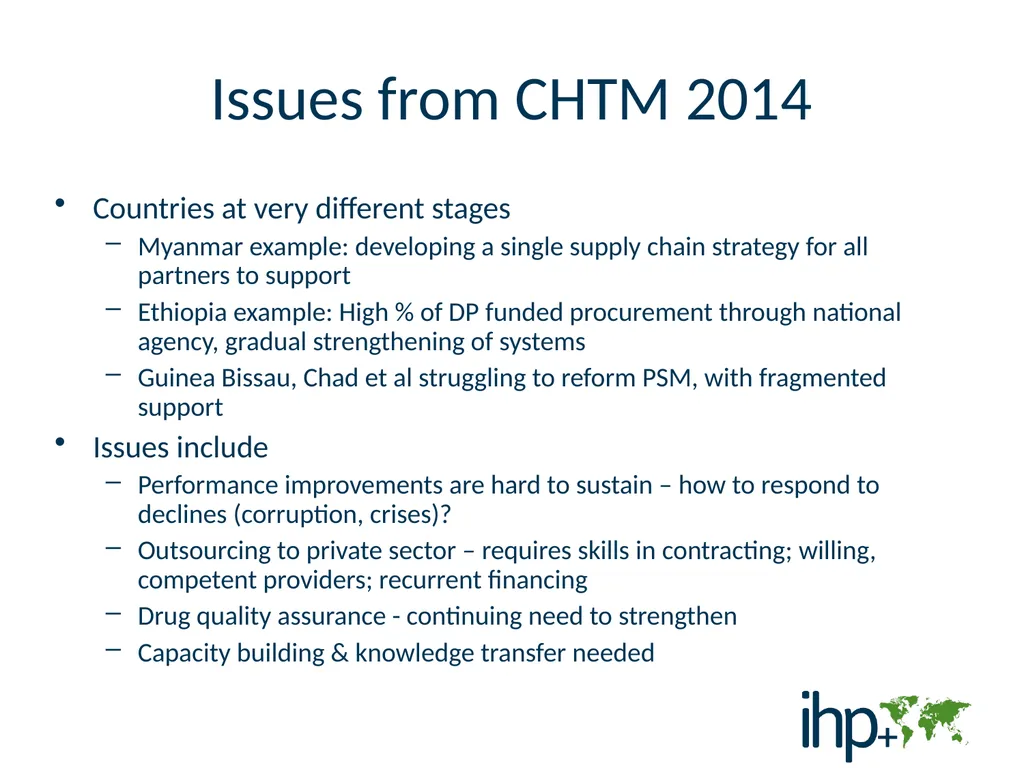
slide4. Issues from CHTM 2014 Countries at very different stages
Myanmar example: developing a single supply chain strategy for all partners to support
Ethiopia example: High % of DP funded procurement through national agency, gradual strengthening of systems
Guinea Bissau, Chad et al struggling to reform PSM, with fragmented support
Issues include
Performance improvements are hard to sustain – how to respond to declines (corruption, crises)?
Outsourcing to private sector – requires skills in contracting; willing, competent providers; recurrent financing
Drug quality assurance - continuing need to strengthen
Capacity building & knowledge transfer needed<br>
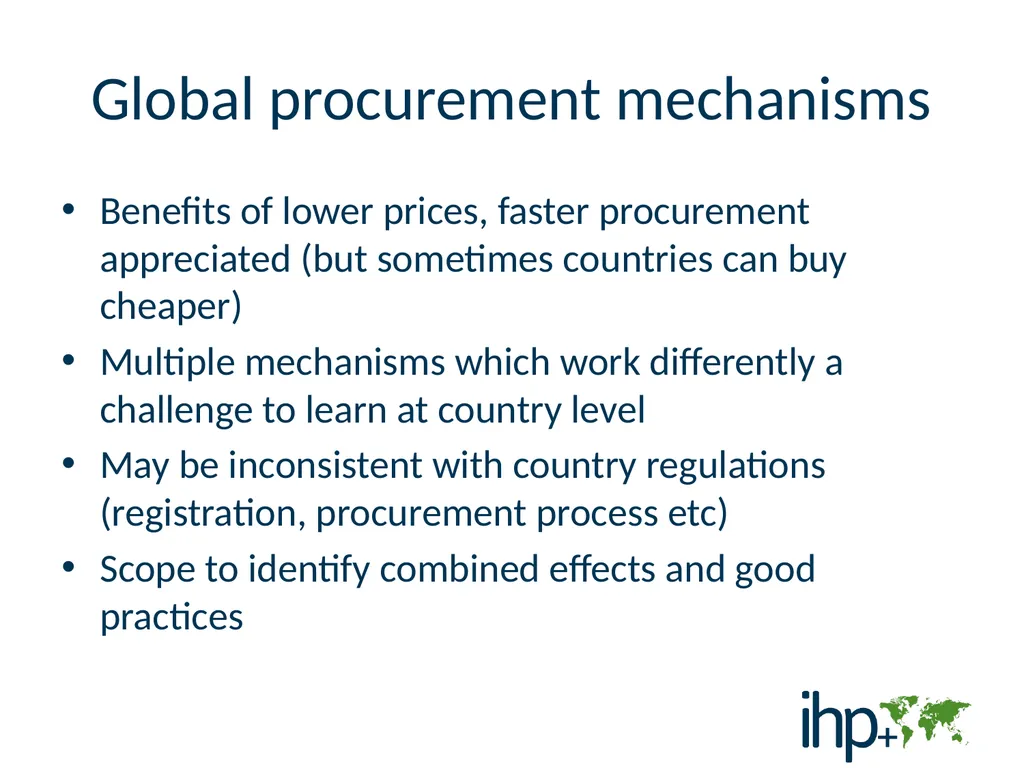
slide5. Global procurement mechanisms Benefits of lower prices, faster procurement appreciated (but sometimes countries can buy cheaper)
Multiple mechanisms which work differently a challenge to learn at country level
May be inconsistent with country regulations (registration, procurement process etc)
Scope to identify combined effects and good practices<br>
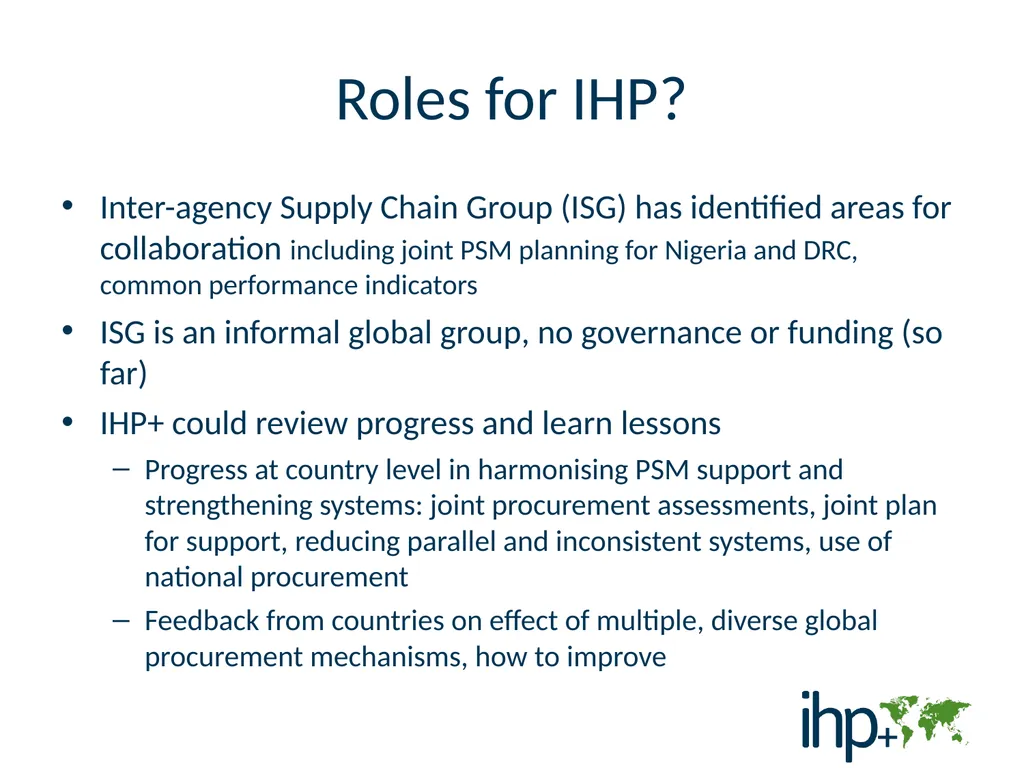
slide6. Roles for IHP? Inter-agency Supply Chain Group (ISG) has identified areas for collaboration including joint PSM planning for Nigeria and DRC, common performance indicators
ISG is an informal global group, no governance or funding (so far)
IHP+ could review progress and learn lessons
Progress at country level in harmonising PSM support and strengthening systems: joint procurement assessments, joint plan for support, reducing parallel and inconsistent systems, use of national procurement
Feedback from countries on effect of multiple, diverse global procurement mechanisms, how to improve<br>
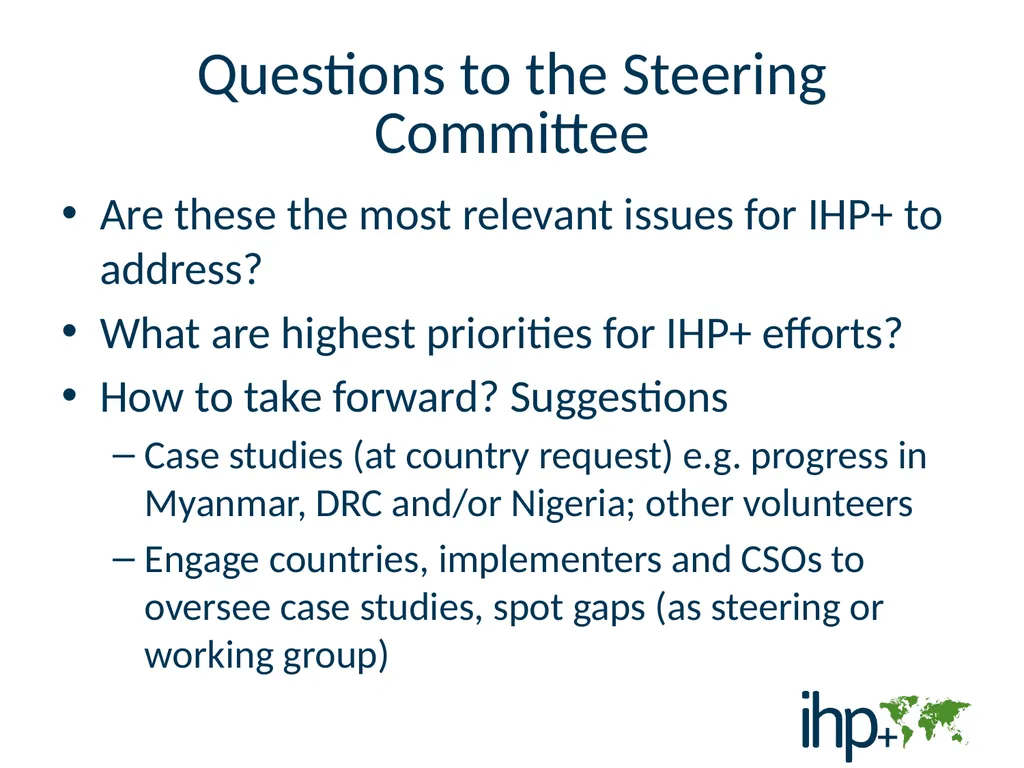
slide7. Questions to the Steering Committee Are these the most relevant issues for IHP+ to address?
What are highest priorities for IHP+ efforts?
How to take forward? Suggestions
Case studies (at country request) e.g. progress in Myanmar, DRC and/or Nigeria; other volunteers
Engage countries, implementers and CSOs to oversee case studies, spot gaps (as steering or working group)<br>
12 December 2014 1<br>
slide2. Rationale for IHP+ engagement Importance in health service delivery
Leverage better use of domestic health spending as well as external funds
Multiple parallel systems: inefficient, wasteful, unsustainable
Difficult area: some countries far from having procurement capacity DPs want to use
Scope for progress: (at least) harmonisation of supply chains<br>
slide3. Current major supply chains in the Myanmar health system<br>
slide4. Issues from CHTM 2014 Countries at very different stages
Myanmar example: developing a single supply chain strategy for all partners to support
Ethiopia example: High % of DP funded procurement through national agency, gradual strengthening of systems
Guinea Bissau, Chad et al struggling to reform PSM, with fragmented support
Issues include
Performance improvements are hard to sustain – how to respond to declines (corruption, crises)?
Outsourcing to private sector – requires skills in contracting; willing, competent providers; recurrent financing
Drug quality assurance - continuing need to strengthen
Capacity building & knowledge transfer needed<br>
slide5. Global procurement mechanisms Benefits of lower prices, faster procurement appreciated (but sometimes countries can buy cheaper)
Multiple mechanisms which work differently a challenge to learn at country level
May be inconsistent with country regulations (registration, procurement process etc)
Scope to identify combined effects and good practices<br>
slide6. Roles for IHP? Inter-agency Supply Chain Group (ISG) has identified areas for collaboration including joint PSM planning for Nigeria and DRC, common performance indicators
ISG is an informal global group, no governance or funding (so far)
IHP+ could review progress and learn lessons
Progress at country level in harmonising PSM support and strengthening systems: joint procurement assessments, joint plan for support, reducing parallel and inconsistent systems, use of national procurement
Feedback from countries on effect of multiple, diverse global procurement mechanisms, how to improve<br>
slide7. Questions to the Steering Committee Are these the most relevant issues for IHP+ to address?
What are highest priorities for IHP+ efforts?
How to take forward? Suggestions
Case studies (at country request) e.g. progress in Myanmar, DRC and/or Nigeria; other volunteers
Engage countries, implementers and CSOs to oversee case studies, spot gaps (as steering or working group)<br>