
Production and Operations Management
GB
Published · 160 slides · 0 views

1 / 1












Description
Production and Operations Management Ch1:Production and operations management concept Production management specializes in transformational processes and Operations Management: It is a set of administrative activities necessary to design,
Related Topics
Share
Embed code
Download this presentation From Below
"Production and Operations Management" is the property of its rightful owner. Permission is granted to download and print the materials on this website for personal, non-commercial use only, and to display it on your personal computer provided you do not modify the materials and that you retain all copyright notices contained in the materials. By downloading content from our website, you accept the terms of this agreement.
Presentation Transcript
01
Production and Operations Management<br>
02
Ch1:Production and operations management concept Production management specializes in transformational processes and Operations Management: It is a set of administrative activities necessary to design, operate, and control the transformational process.<br>
03
It consists of a group of main activities:
1- Design : Process Design
2- Operation : Operation Transformational Process
3- Controlling: control over the transformational process<br>
1- Design : Process Design
2- Operation : Operation Transformational Process
3- Controlling: control over the transformational process<br>
04
First: Designing It is a set of strategic and tactical decisions about choosing the way to transform inputs into limited outputs and devising ways to be used in the transformation process.
The nature of the design is creative or innovative Design
Examples :
Production process design
Factory site selection
or design Factory internal arrangement
Product or commodity design<br>
The nature of the design is creative or innovative Design
Examples :
Production process design
Factory site selection
or design Factory internal arrangement
Product or commodity design<br>
05
Second: Operation: It is the set of decisions that give the transformational process the kinetic formula and give life to it Operation gives life or kinetic character of work Operation
examples:
Long-term production planning
Process energy planning
Annual production planning
Production scheduling or daily business planning process<br>
examples:
Long-term production planning
Process energy planning
Annual production planning
Production scheduling or daily business planning process<br>
06
Third: Control: It is to ensure that the actual operation is carried out according to the set plan and to take corrective actions when needed
Examples of Control:
Inventory control
Quality Control
productivity measurement<br>
Examples of Control:
Inventory control
Quality Control
productivity measurement<br>
07
2. Concept of Production Production function is that part of an organization, which is concerned with the transformation of a range of inputs into the required outputs (products) having the requisite quality level.
Production is defined as “the step-by-step conversion of one form of material into another form through the chemical or mechanical process to create or enhance the utility of the product to the user.” Thus, production is a value addition process. At each stage of processing, there will be the value addition.<br>
Production is defined as “the step-by-step conversion of one form of material into another form through the chemical or mechanical process to create or enhance the utility of the product to the user.” Thus, production is a value addition process. At each stage of processing, there will be the value addition.<br>
08
Edwood Buffa defines production as ‘a process by which goods and services are created’. Some examples of production are: manufacturing custom-made products like, boilers with a specific capacity, constructing flats, some structural fabrication works for selected customers, etc., and manufacturing standardized products like, car, bus, motorcycle, radio, television, etc.<br>
09
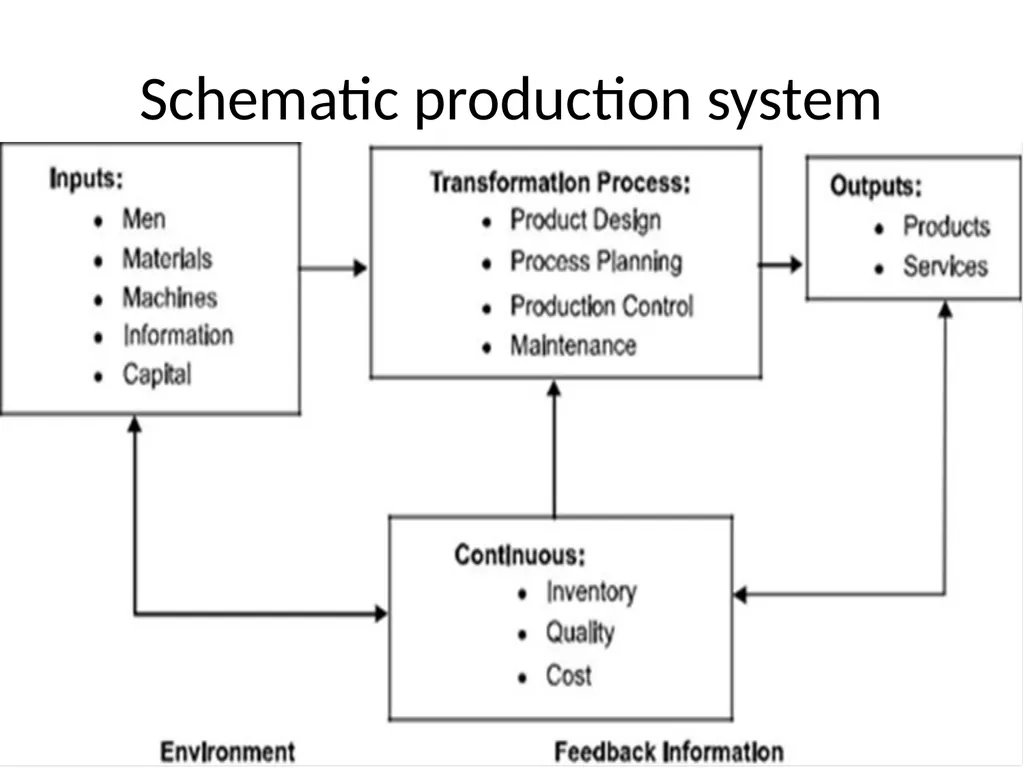
Schematic production system<br>
10
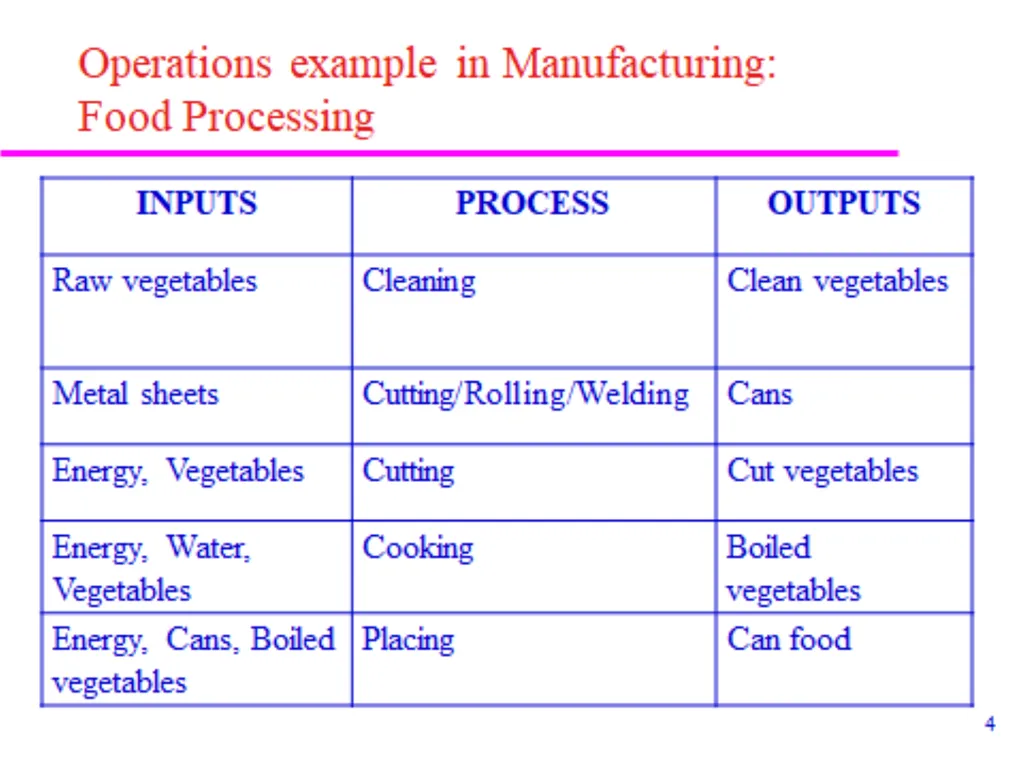
3. Production System The production system of an organization is that part, which produces products of an organization. It is that activity whereby resources, flowing within a defined system, are combined and transformed in a controlled manner to add value in accordance with the policies communicated by management. A simplified production system is shown above.<br>
11
The production system has the following characteristics: 1.Production is an organized activity, so every production system has an objective.
2.The system transforms the various inputs to useful outputs.
3.It does not operate in isolation from the other organization system.
4.There exists a feedback about the activities, which is essential to control and improve system performance.<br>
2.The system transforms the various inputs to useful outputs.
3.It does not operate in isolation from the other organization system.
4.There exists a feedback about the activities, which is essential to control and improve system performance.<br>
12
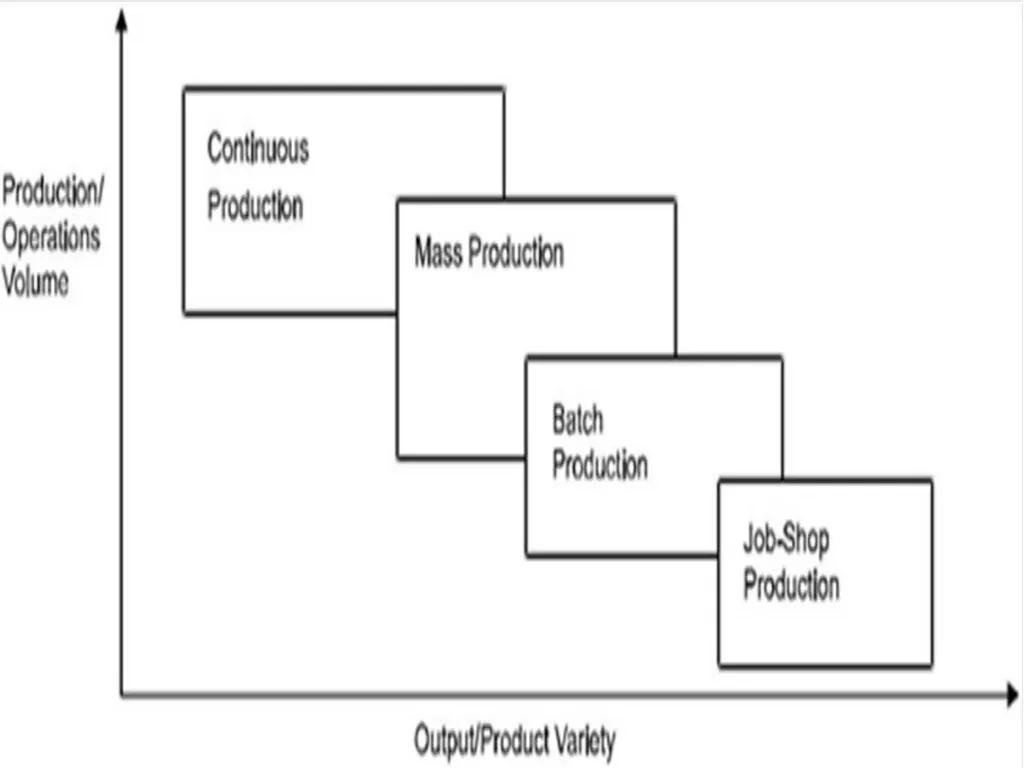
3.1. Classification of Production System Production systems can be classified as Job Shop, Batch, Mass and Continuous Production systems.<br>
13
3.1.1. Job Shop Production1- Job shop production are characterised by manufacturing of one or few quantity of products designed and produced as per the specification of customers within prefixed time and cost. The distinguishing feature of this is low volume and high variety of products. A job shop comprises of general purpose machines arranged into different departments. Each job demands unique technological requirements demands processing on machines in a certain sequence.<br>
14
Characteristics The Job-shop production system is followed when there is:
1.High variety of products and low volume.
2.Use of general purpose machines and facilities.
3.Highly skilled operators who can take up each job as a challenge because of uniqueness.
4.Large inventory of materials, tools, parts.
5.Detailed planning is essential for sequencing the requirements of each product, capacities for each work centre and order priorities.<br>
1.High variety of products and low volume.
2.Use of general purpose machines and facilities.
3.Highly skilled operators who can take up each job as a challenge because of uniqueness.
4.Large inventory of materials, tools, parts.
5.Detailed planning is essential for sequencing the requirements of each product, capacities for each work centre and order priorities.<br>
15
Advantages Following are the advantages of job shop production:
1.Because of general purpose machines and facilities variety of products can be produced.
2.Operators will become more skilled and competent, as each job gives them learning opportunities.
3.Full potential of operators can be utilised.
4.Opportunity exists for creative methods and innovative ideas.<br>
1.Because of general purpose machines and facilities variety of products can be produced.
2.Operators will become more skilled and competent, as each job gives them learning opportunities.
3.Full potential of operators can be utilised.
4.Opportunity exists for creative methods and innovative ideas.<br>
16
Limitations Following are the limitations of job shop production:
1.Higher cost due to frequent setup changes.
2.Higher level of inventory at all levels and hence higher inventory cost.
3.Production planning is complicated.
4.Larger space requirements.<br>
1.Higher cost due to frequent setup changes.
2.Higher level of inventory at all levels and hence higher inventory cost.
3.Production planning is complicated.
4.Larger space requirements.<br>
17
2. Batch Production Batch production is defined by American Production and Inventory Control Society (APICS) “as a form of manufacturing in which the job passes through the functional departments in lots or batches and each lot may have a different routing.” It is characterised by the manufacture of limited number of products produced at regular intervals and stocked awaiting sales.<br>
18
Characteristics Batch production system is used under the following circumstances:
1.When there is shorter production runs.
2.When plant and machinery are flexible.
3.When plant and machinery set up is used for the production of item in a batch and change of set up is required for processing the next batch.
4.When manufacturing lead time and cost are lower as compared to job order production.<br>
1.When there is shorter production runs.
2.When plant and machinery are flexible.
3.When plant and machinery set up is used for the production of item in a batch and change of set up is required for processing the next batch.
4.When manufacturing lead time and cost are lower as compared to job order production.<br>
19
Advantages Following are the advantages of batch production:
1.Better utilisation (using) of plant and machinery.
2.Promotes functional specialisation.
3.Cost per unit is lower as compared to job order production.
4.Lower investment in plant and machinery.
5.Flexibility to accommodate and process number of products.
6.Job satisfaction exists for operators.<br>
1.Better utilisation (using) of plant and machinery.
2.Promotes functional specialisation.
3.Cost per unit is lower as compared to job order production.
4.Lower investment in plant and machinery.
5.Flexibility to accommodate and process number of products.
6.Job satisfaction exists for operators.<br>
20
Limitations Following are the limitations of batch production:
1.Material handling is complex because of irregular and longer flows.
2.Production planning and control is complex.
3.Work in process inventory is higher compared to continuous production.
4.Higher set up costs due to frequent changes in set up.<br>
1.Material handling is complex because of irregular and longer flows.
2.Production planning and control is complex.
3.Work in process inventory is higher compared to continuous production.
4.Higher set up costs due to frequent changes in set up.<br>
21
3. Mass Production Manufacture of discrete parts or assemblies using a continuous process are called mass production.
This production system is justified by very large volume of production.
The machines are arranged in a line or product layout.
Product and process standardisation exists and all outputs follow the same path.<br>
This production system is justified by very large volume of production.
The machines are arranged in a line or product layout.
Product and process standardisation exists and all outputs follow the same path.<br>
22
Characteristics Mass production is used under the following circumstances:
1.Standardisation of product and process sequence.
2.Dedicated special purpose machines having higher production capacities and output rates.
3.Large volume of products.
4.Shorter cycle time of production.
5.Lower in process inventory.<br>
1.Standardisation of product and process sequence.
2.Dedicated special purpose machines having higher production capacities and output rates.
3.Large volume of products.
4.Shorter cycle time of production.
5.Lower in process inventory.<br>
23
6.Perfectly balanced production lines.
7.Flow of materials, components and parts is continuous and without any back tracking.
8.Production planning and control is easy.
9.Material handling can be completely automatic.<br>
7.Flow of materials, components and parts is continuous and without any back tracking.
8.Production planning and control is easy.
9.Material handling can be completely automatic.<br>
24
Advantages Following are the advantages of mass production:
1.Higher rate of production with reduced cycle time.
2.Higher capacity utilisation due to line balancing.
3.Less skilled operators are required.
4.Low process inventory.
5.Manufacturing cost per unit is low.<br>
1.Higher rate of production with reduced cycle time.
2.Higher capacity utilisation due to line balancing.
3.Less skilled operators are required.
4.Low process inventory.
5.Manufacturing cost per unit is low.<br>
25
Limitations Following are the limitations of mass production:
1.Breakdown of one machine will stop an entire production line.
2.Line layout needs major change with the changes in the product design.
3.High investment in production facilities.
4.The cycle time is determined by the slowest operation.<br>
1.Breakdown of one machine will stop an entire production line.
2.Line layout needs major change with the changes in the product design.
3.High investment in production facilities.
4.The cycle time is determined by the slowest operation.<br>
26
4. Continuous Production Production facilities are arranged as per the sequence of production operations from the first operations to the finished product.
The items are made to flow through the sequence of operations through material handling devices such as conveyors, transfer devices, etc.<br>
The items are made to flow through the sequence of operations through material handling devices such as conveyors, transfer devices, etc.<br>
27
Characteristics Continuous production is used under the following circumstances:
1.Dedicated plant and equipment with zero flexibility.
2.Material handling is fully automated.
3.Process follows a predetermined sequence of operations.
4.Component materials cannot be readily identified with final product.
5.Planning and scheduling is a routine action.<br>
1.Dedicated plant and equipment with zero flexibility.
2.Material handling is fully automated.
3.Process follows a predetermined sequence of operations.
4.Component materials cannot be readily identified with final product.
5.Planning and scheduling is a routine action.<br>
28
Advantages Following are the advantages of continuous production:
1.Standardisation of product and process sequence.
2.Higher rate of production with reduced cycle time.
3.Higher capacity utilisation due to line balancing.
4.Manpower is not required for material handling as it is completely automatic.
5.Person with limited skills can be used on the production line.
6.Unit cost is lower due to high volume of production.<br>
1.Standardisation of product and process sequence.
2.Higher rate of production with reduced cycle time.
3.Higher capacity utilisation due to line balancing.
4.Manpower is not required for material handling as it is completely automatic.
5.Person with limited skills can be used on the production line.
6.Unit cost is lower due to high volume of production.<br>
29
Limitations Following are the limitations of continuous production:
1.Flexibility to accommodate and process number of products does not exist.
2.Very high investment for setting flow lines.
3.Product differentiation is limited.<br>
1.Flexibility to accommodate and process number of products does not exist.
2.Very high investment for setting flow lines.
3.Product differentiation is limited.<br>
30
4. Production Management
Production management is a process of planning, organizing, directing and controlling the activities of the production function. It combines and transforms various resources used in the production subsystem of the organization into value added product in a controlled manner as per the policies of the organization.<br>
Production management is a process of planning, organizing, directing and controlling the activities of the production function. It combines and transforms various resources used in the production subsystem of the organization into value added product in a controlled manner as per the policies of the organization.<br>
31
E.S. Buffa defines production management as, “Production management deals with decision making related to production processes so that the resulting goods or services are produced according to specifications, in the amount and by the schedule demanded and out of minimum cost.”<br>
32
4.1. Objectives of Production Management The objective of the production management is ‘to produce goods services of right quality and quantity at the right time and right manufacturing cost’.
A. Right Quality :
The quality of the product is established based upon the customer's needs. The right quality is not necessarily best quality. It is determined by the cost of the product and the technical characteristics as suited to the specific requirements.<br>
A. Right Quality :
The quality of the product is established based upon the customer's needs. The right quality is not necessarily best quality. It is determined by the cost of the product and the technical characteristics as suited to the specific requirements.<br>
33
B. Right Quantity :
The manufacturing organization should produce the products in the right number. If they are produced in excess of demand the capital will block up in the form of inventory and if the quantity is produced in short of demand, leads to the shortage of products.<br>
The manufacturing organization should produce the products in the right number. If they are produced in excess of demand the capital will block up in the form of inventory and if the quantity is produced in short of demand, leads to the shortage of products.<br>
34
C. Right Time :
Timeliness of delivery is one of the important parameter to judge the effectiveness of production department. So, the production department has to make the optimal utilization of input resources to achieve its objective.<br>
Timeliness of delivery is one of the important parameter to judge the effectiveness of production department. So, the production department has to make the optimal utilization of input resources to achieve its objective.<br>
35
D. Right Manufacturing Cost :
Manufacturing costs are established before the product is actually manufactured. Hence, all attempts should be made to produce the products at pre-established cost, so as to reduce the variation between actual and the standard (pre-established) cost.<br>
Manufacturing costs are established before the product is actually manufactured. Hence, all attempts should be made to produce the products at pre-established cost, so as to reduce the variation between actual and the standard (pre-established) cost.<br>
36
5. Operating System
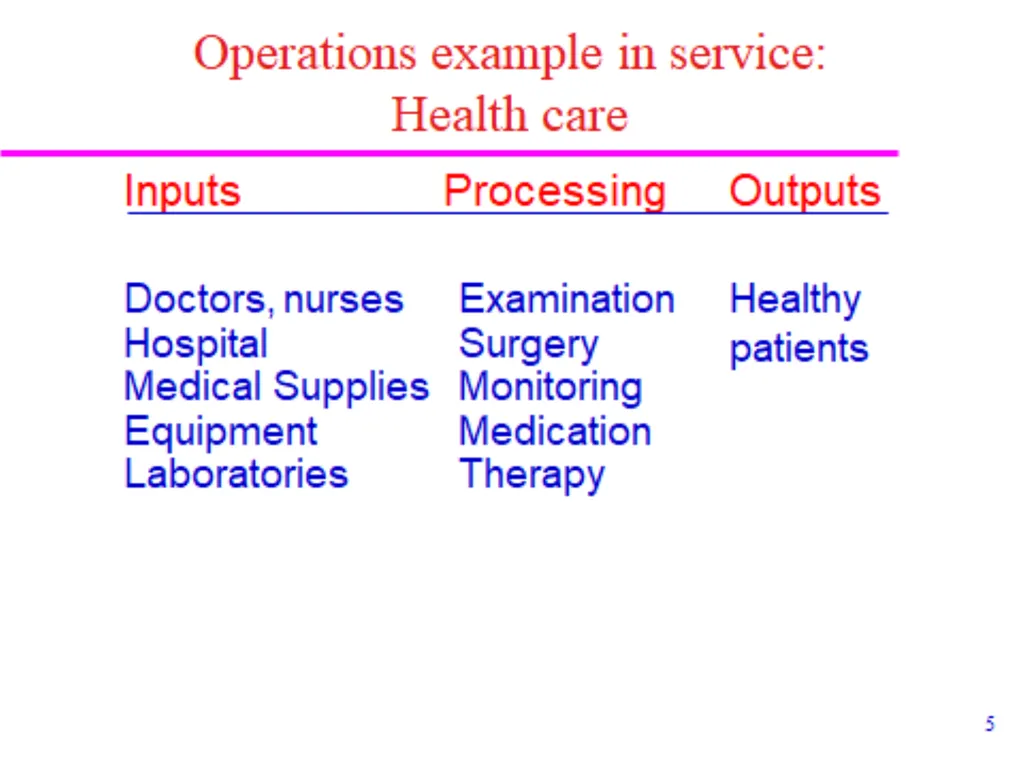
Operating system converts inputs in order to provide outputs which are required by a customer. It converts physical resources into outputs, the function of which is to satisfy customer wants i.e., to provide some utility for the customer. In some of the organization the product is a physical good (hotels) while in others it is a service (hospitals). Bus and taxi services, tailors, hospital and builders are the examples of an operating system.
Everett E. Adam & Ronald J. Ebert define the operating system as, “An operating system (function) of an organization is the part of an organization that produces the organization’s physical goods and services.”
Ray Wild defines the operating system as, “An operating system is a configuration of resources combined for the provision of goods or services.”<br>
Operating system converts inputs in order to provide outputs which are required by a customer. It converts physical resources into outputs, the function of which is to satisfy customer wants i.e., to provide some utility for the customer. In some of the organization the product is a physical good (hotels) while in others it is a service (hospitals). Bus and taxi services, tailors, hospital and builders are the examples of an operating system.
Everett E. Adam & Ronald J. Ebert define the operating system as, “An operating system (function) of an organization is the part of an organization that produces the organization’s physical goods and services.”
Ray Wild defines the operating system as, “An operating system is a configuration of resources combined for the provision of goods or services.”<br>
37
Label: Production and Operations Management: The naming of production management for industrial organizations and the naming of operations for service organizations, and that is why this name came<br>
38
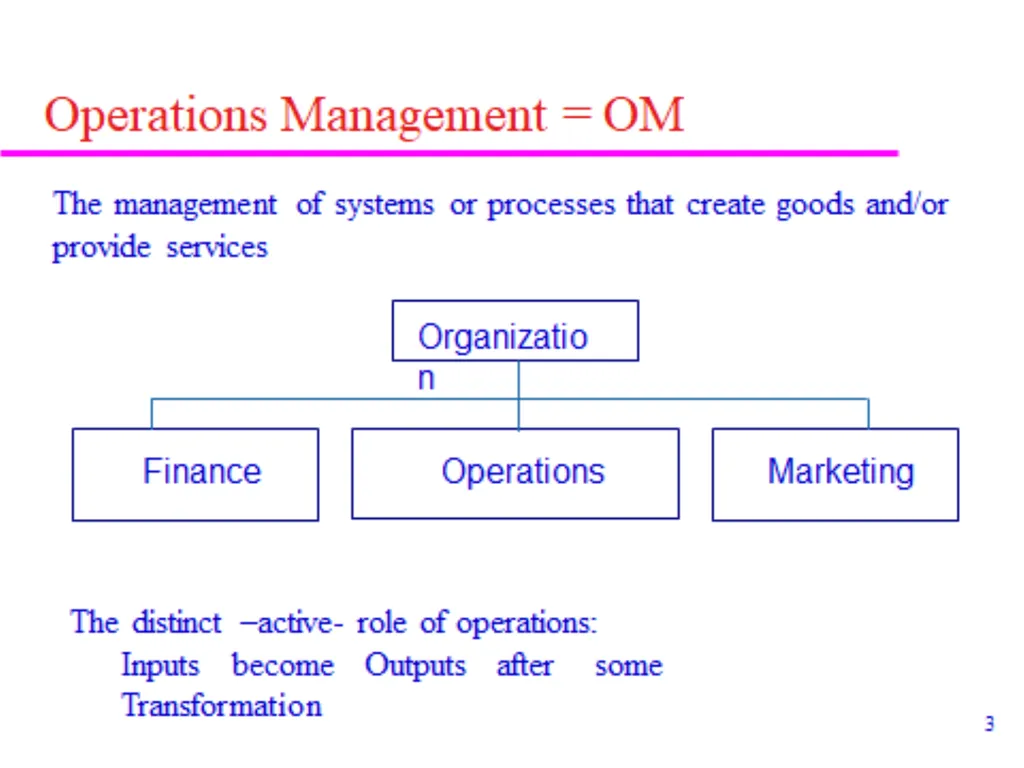
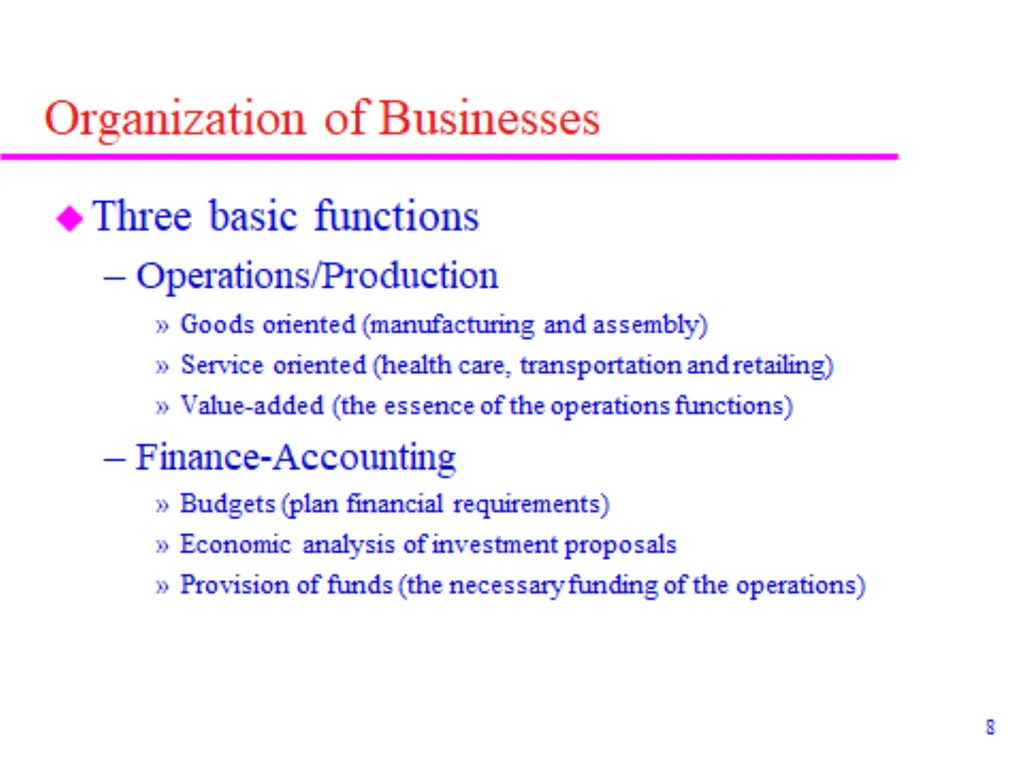
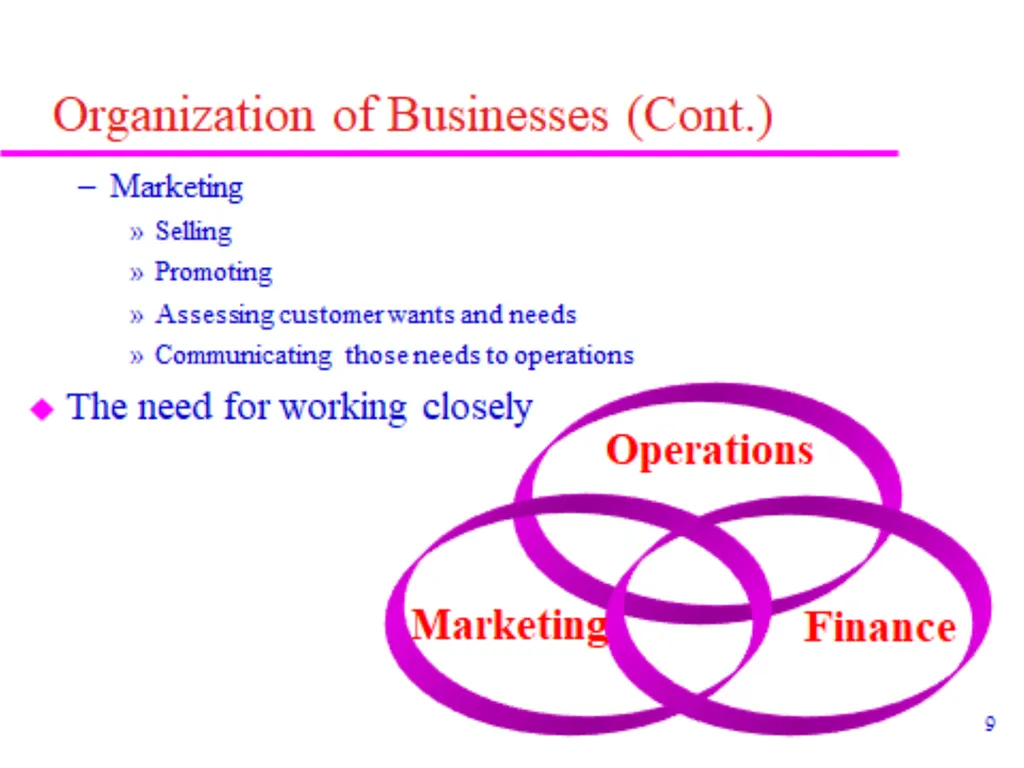
Relationship of the production department with other departments: The main departments have three departments: Marketing Department, Production Department-Finance management
Production management aims to create a product
Marketing management aims to create demand for the product
Financial management aims to provide financial needs<br>
Production management aims to create a product
Marketing management aims to create demand for the product
Financial management aims to provide financial needs<br>
39
Q: What is the relationship between production management and marketing management?? One of the most important decisions they have in common is :
Product Design
production planning<br>
Product Design
production planning<br>
40
Q: What is the relationship between production management and finance management?? Replacing old machines with new ones<br>
41
Q: What is the relationship or common decisions between the three departments?? energy planning decision
Decision to introduce a new product to the market
Factory expansion decision<br>
Decision to introduce a new product to the market
Factory expansion decision<br>
42
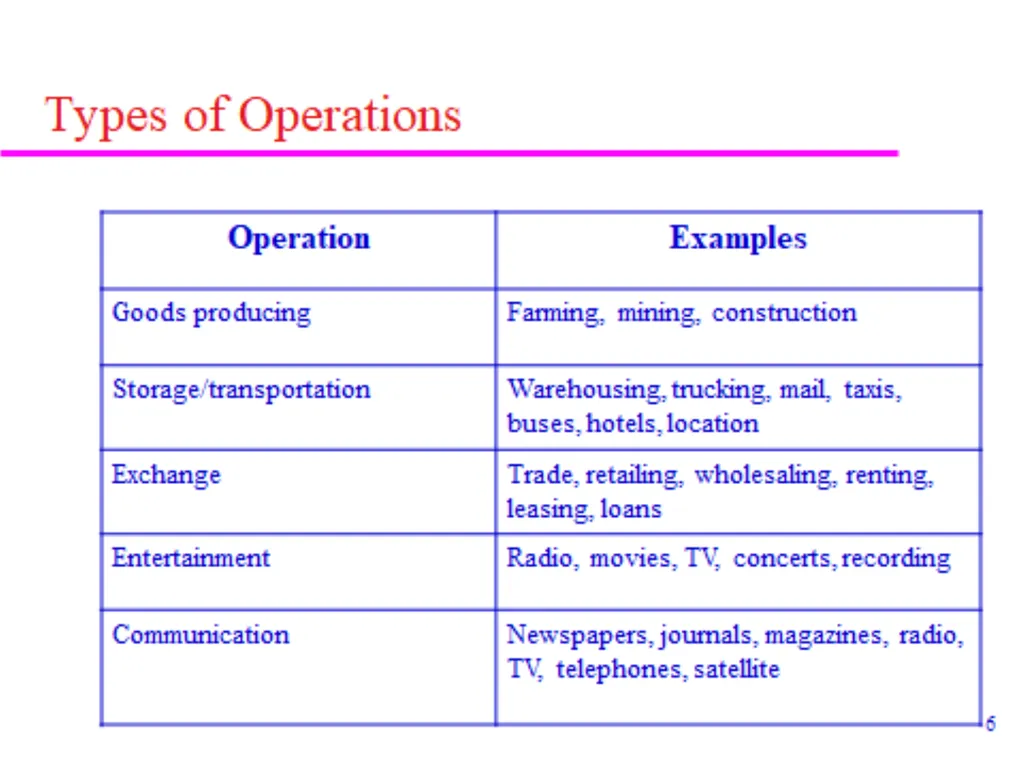
What are the different forms of the production system?? Six main divisions of organizations:
1- Organizations that produce tangible, material goods are also called industrial organizations.
2- Spatial organizations: They transport goods and benefits from the place of their production to the places of their consumption, for example: railways, shipping companies and aviation.<br>
1- Organizations that produce tangible, material goods are also called industrial organizations.
2- Spatial organizations: They transport goods and benefits from the place of their production to the places of their consumption, for example: railways, shipping companies and aviation.<br>
43
3- Exchange Organizations: The exchange of goods and services carried out by wholesalers, agents and retailers.
4- Storage organizations: They are also called temporal organizations and they provide a temporal benefit.<br>
4- Storage organizations: They are also called temporal organizations and they provide a temporal benefit.<br>
44
5- Organic conversion organizations: such as medical and educational organizations.
6- Psychological transformation organizations: places of recreation and entertainment such as parks, cinemas and places of psychotherapy.<br>
6- Psychological transformation organizations: places of recreation and entertainment such as parks, cinemas and places of psychotherapy.<br>
45
What is the difference between producing goods and providing services?? 1- Goods production is tangible physical production, and goods can be observed and measured with the naked eye, while services are difficult to notice and measure except through personal judgment.
2- The production of commodities depends mainly on two things:
MaterialsMachines and machinesWhile the services depend on the service provider and his skill.<br>
2- The production of commodities depends mainly on two things:
MaterialsMachines and machinesWhile the services depend on the service provider and his skill.<br>
46
3- The commodity can be stored, and the service cannot be stored, but it is performed on time.
4- Service provision depends on direct contact between the service producer and the recipient, while the commodity does not depend on direct contact between the producer and the user.
5- The production of goods can be modular production (mass production) while services cannot be produced modularly.
6- Service organizations must be decentralized organizations and distributed over geographical areas to be close to customers, while goods are central organizations and in one place.<br>
4- Service provision depends on direct contact between the service producer and the recipient, while the commodity does not depend on direct contact between the producer and the user.
5- The production of goods can be modular production (mass production) while services cannot be produced modularly.
6- Service organizations must be decentralized organizations and distributed over geographical areas to be close to customers, while goods are central organizations and in one place.<br>
47
What are the objectives of production and operations management? service or consumer satisfaction. This includes reducing costs and qualityIt produces a commodity and provides a service to meet the needs of the consumer, and we call the management that achieves the goal of consumer satisfaction the efficient management.
High productivity.It is a criterion for measuring its success and we call it the effectiveness of production management.Environmental protection and improvement.For example: it must produce a product that is not harmful to the individual and the environment.<br>
High productivity.It is a criterion for measuring its success and we call it the effectiveness of production management.Environmental protection and improvement.For example: it must produce a product that is not harmful to the individual and the environment.<br>
48
Ch2:Productivity Management Production: The total number of units of a good or service produced by the company during a certain period of time, measured in terms of units or value.
Examples:
The production of the grain company is 50,000 tons annually
An oil company produces 1,000,000 barrels per day
A car company produces 500,000 cars annually
Production does not measure the efficiency of management, there must be another indicator, which is productivity<br>
Examples:
The production of the grain company is 50,000 tons annually
An oil company produces 1,000,000 barrels per day
A car company produces 500,000 cars annually
Production does not measure the efficiency of management, there must be another indicator, which is productivity<br>
49
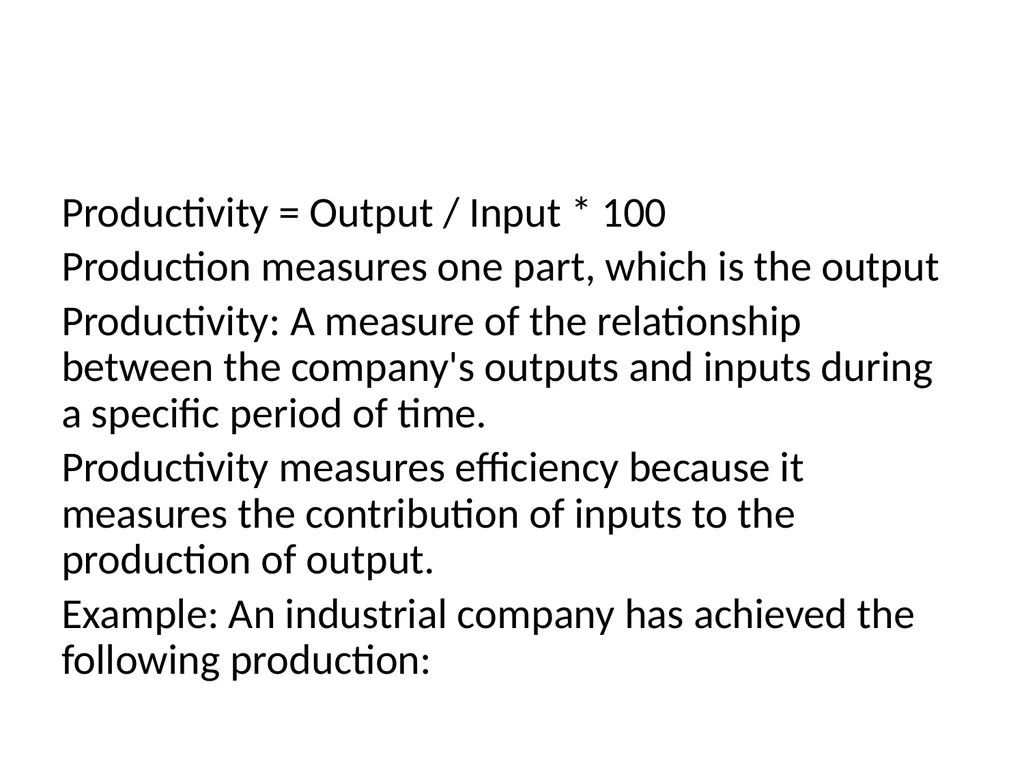
Productivity = Output / Input * 100
Production measures one part, which is the output
Productivity: A measure of the relationship between the company's outputs and inputs during a specific period of time.
Productivity measures efficiency because it measures the contribution of inputs to the production of output.
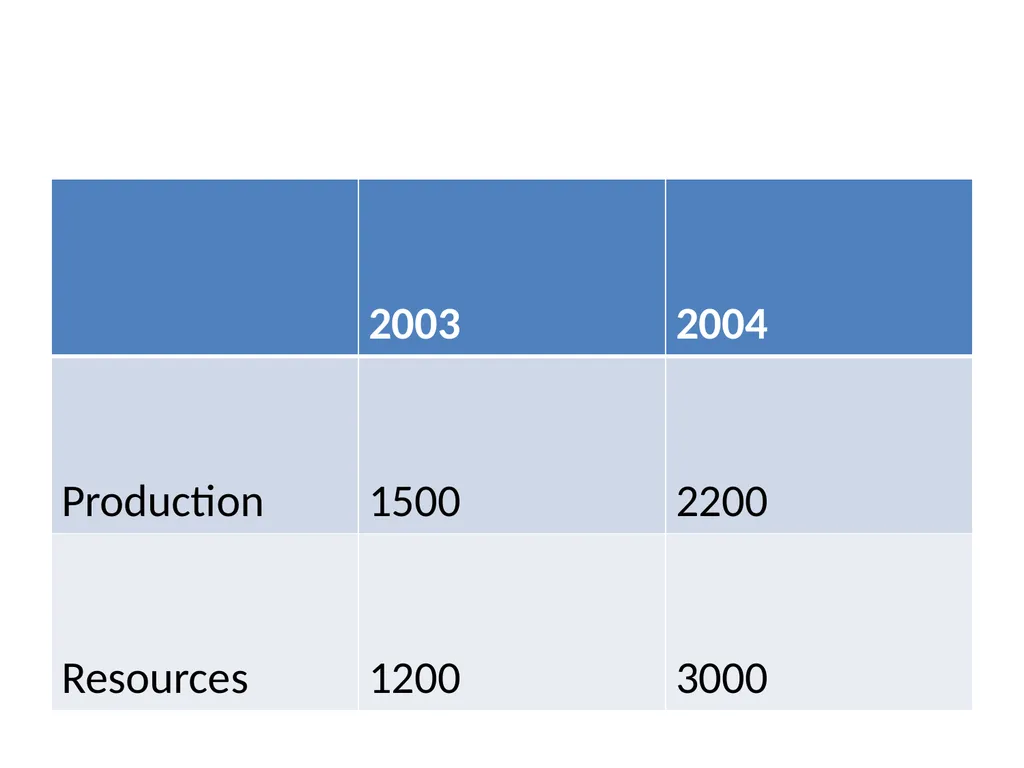
Example: An industrial company has achieved the following production:<br>
Production measures one part, which is the output
Productivity: A measure of the relationship between the company's outputs and inputs during a specific period of time.
Productivity measures efficiency because it measures the contribution of inputs to the production of output.
Example: An industrial company has achieved the following production:<br>
50
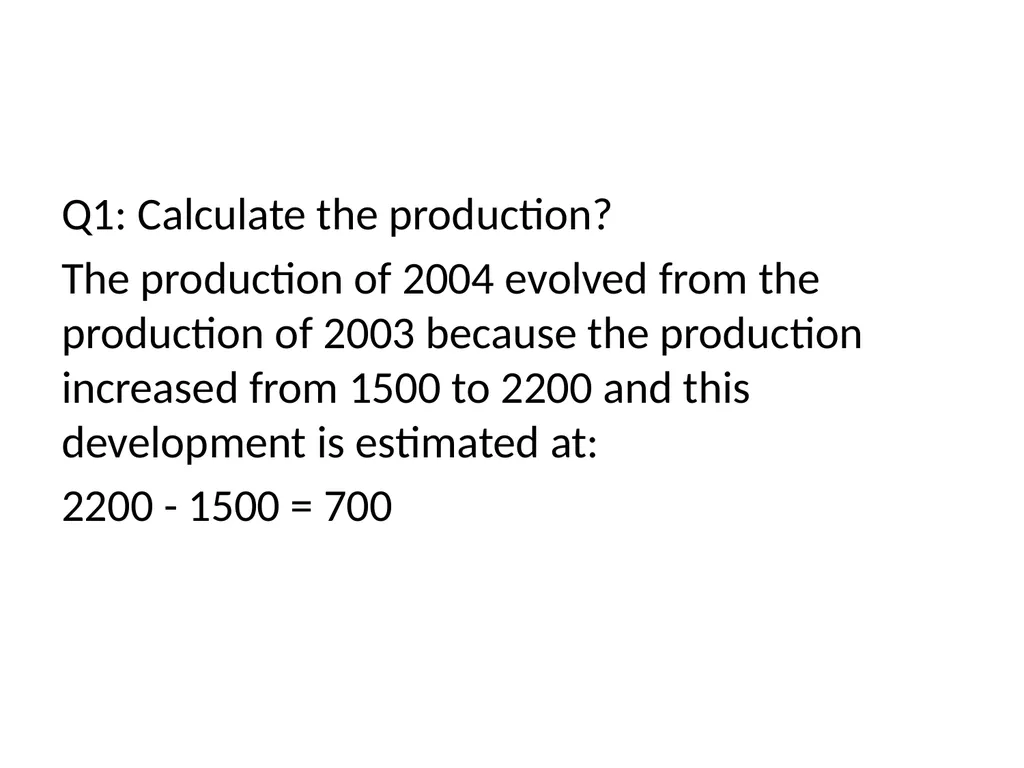
Q1: Calculate the production?
The production of 2004 evolved from the production of 2003 because the production increased from 1500 to 2200 and this development is estimated at:
2200 - 1500 = 700<br>
The production of 2004 evolved from the production of 2003 because the production increased from 1500 to 2200 and this development is estimated at:
2200 - 1500 = 700<br>
51
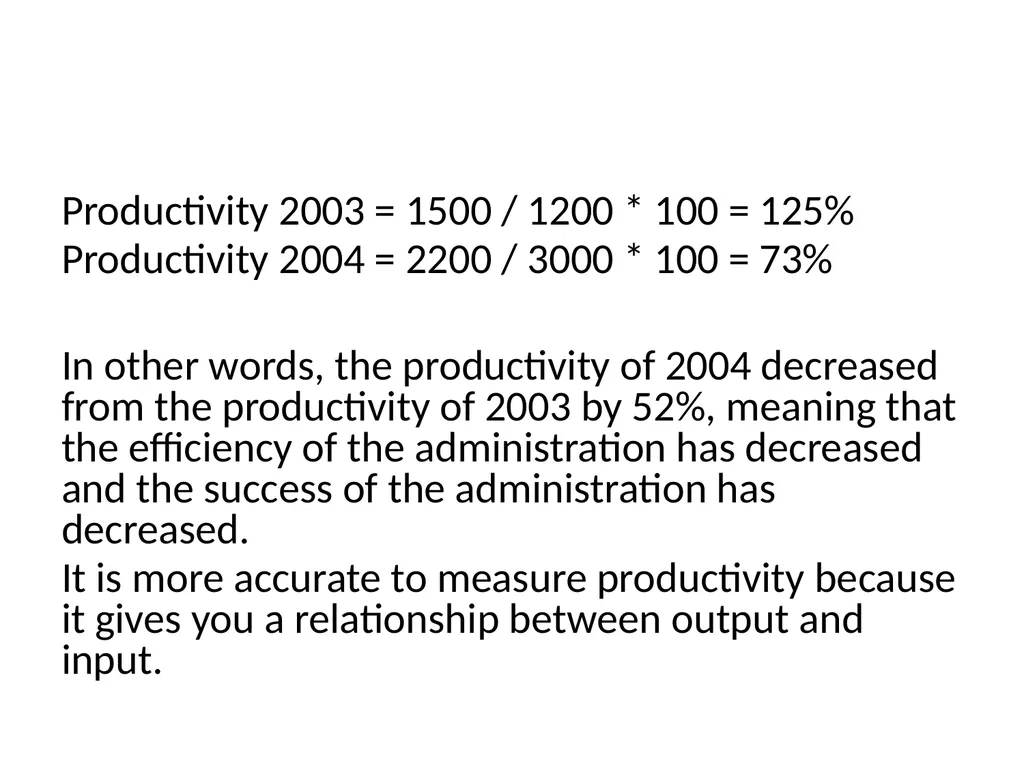
Productivity 2003 = 1500 / 1200 * 100 = 125%
Productivity 2004 = 2200 / 3000 * 100 = 73%
In other words, the productivity of 2004 decreased from the productivity of 2003 by 52%, meaning that the efficiency of the administration has decreased and the success of the administration has decreased.
It is more accurate to measure productivity because it gives you a relationship between output and input.<br>
Productivity 2004 = 2200 / 3000 * 100 = 73%
In other words, the productivity of 2004 decreased from the productivity of 2003 by 52%, meaning that the efficiency of the administration has decreased and the success of the administration has decreased.
It is more accurate to measure productivity because it gives you a relationship between output and input.<br>
52
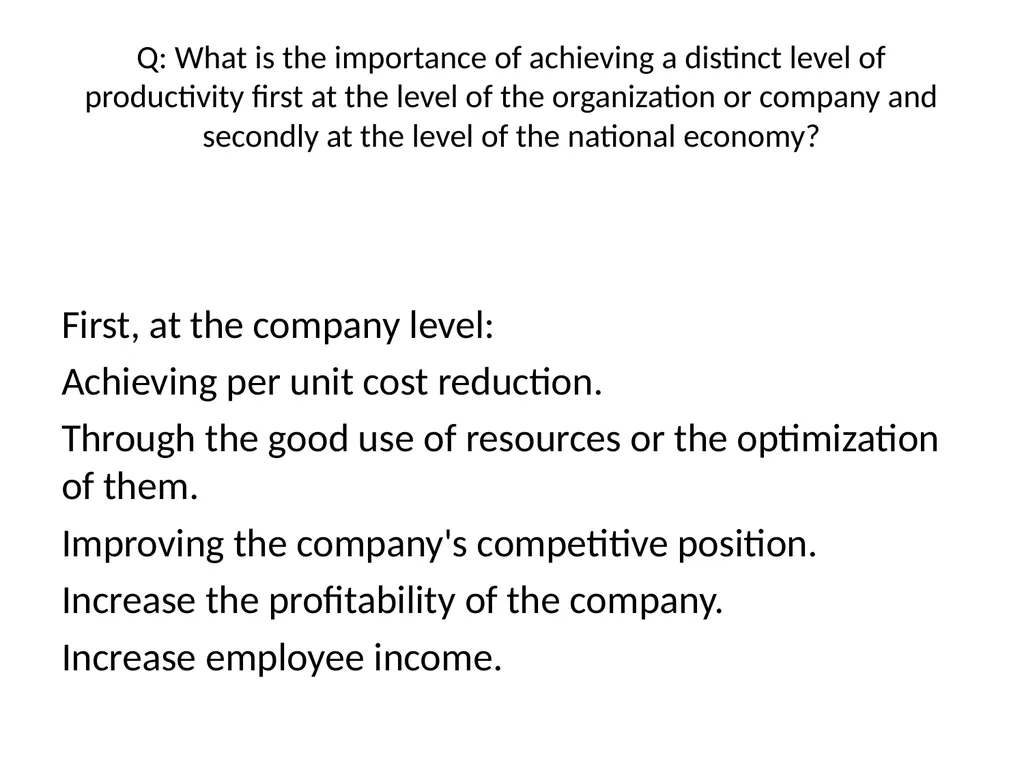
Q: What is the importance of achieving a distinct level of productivity first at the level of the organization or company and secondly at the level of the national economy? First, at the company level:
Achieving per unit cost reduction.
Through the good use of resources or the optimization of them.
Improving the company's competitive position.
Increase the profitability of the company.
Increase employee income.<br>
Achieving per unit cost reduction.
Through the good use of resources or the optimization of them.
Improving the company's competitive position.
Increase the profitability of the company.
Increase employee income.<br>
53
Second: At the level of the national economy:
1) Reducing the rate of inflation.
Inflation: the decline in the real value of a currency (money) through a continuous rise in prices.
2) The high standard of living.
3) Raising economic development.
By increasing the company's profits, and thus it may produce another factory and produce more goods, and thus will employ other workers, which leads to the reduction of unemployment and also exports abroad and thus reduce import and this leads to increased development.
4) the burden of government support.
It means government subsidies for real commodity prices.<br>
1) Reducing the rate of inflation.
Inflation: the decline in the real value of a currency (money) through a continuous rise in prices.
2) The high standard of living.
3) Raising economic development.
By increasing the company's profits, and thus it may produce another factory and produce more goods, and thus will employ other workers, which leads to the reduction of unemployment and also exports abroad and thus reduce import and this leads to increased development.
4) the burden of government support.
It means government subsidies for real commodity prices.<br>
54
Productivity Management Cycle It consists of three interconnected and continuous phases that is why it is called a cycle
It starts first with:
measuring productivity
Second, productivity analysis
Third, improve productivity
First, measure productivity
There are two ways to measure productivity:
1) Overall productivity.
2) Partial productivity.
Total productivity : total output over total input<br>
It starts first with:
measuring productivity
Second, productivity analysis
Third, improve productivity
First, measure productivity
There are two ways to measure productivity:
1) Overall productivity.
2) Partial productivity.
Total productivity : total output over total input<br>
55
(I) consists of more than one of the elements: (W- M- E- C)
W: wages of workers
M: material
E: energy
C: money or fixed and current assets<br>
W: wages of workers
M: material
E: energy
C: money or fixed and current assets<br>
56
Productivity Measurement Stage:
The importance of the measurement stage:
If the productivity measurement is accurate it leads to accurate optimization decisions.
The measurement is not done once, but rather it is a continuous process
Who does the measurement?
It is carried out by a group of specialists or practitioners in measuring productivity.
In companies, the process of measuring by quantities is preferred rather than by value, because prices are always on the rise, which leads to improved productivity, an illusory improvement rather than a real one.<br>
The importance of the measurement stage:
If the productivity measurement is accurate it leads to accurate optimization decisions.
The measurement is not done once, but rather it is a continuous process
Who does the measurement?
It is carried out by a group of specialists or practitioners in measuring productivity.
In companies, the process of measuring by quantities is preferred rather than by value, because prices are always on the rise, which leads to improved productivity, an illusory improvement rather than a real one.<br>
57
In measuring productivity, the units of scale must be fixed (so that the development and deterioration in the scale can be monitored, it is not preferable to change the units of the numerator and denominator)
Information must be available in the production measurement process in order to accurately measure productivity.
Measuring productivity does not mean only measuring the organization, but all departments of the organization such as the marketing department, the finance department, and others..<br>
Information must be available in the production measurement process in order to accurately measure productivity.
Measuring productivity does not mean only measuring the organization, but all departments of the organization such as the marketing department, the finance department, and others..<br>
58
Second: Analysis stage:
The analysis stage is divided into two parts:
The first part is called the comparison phase
By comparison, we mean: comparing productivity, either with the productivity of previous periods, or with the productivity of other companies.<br>
The analysis stage is divided into two parts:
The first part is called the comparison phase
By comparison, we mean: comparing productivity, either with the productivity of previous periods, or with the productivity of other companies.<br>
59
Types of comparisons:
Time (historical) comparison: It means comparing the productivity figures of the same company over several successive time periods called time series.
It is one of the most popular methods used for comparisons
Comparing with quantity and units is better than comparing with value because of the high prices that lead to fake and unreal improvement.
Example: If the total productivity of a spinning company during the years 1994-1995 is:
10 - 8 dinars of output for every dinar of inputs
Required: Calculate the productivity growth rate??<br>
Time (historical) comparison: It means comparing the productivity figures of the same company over several successive time periods called time series.
It is one of the most popular methods used for comparisons
Comparing with quantity and units is better than comparing with value because of the high prices that lead to fake and unreal improvement.
Example: If the total productivity of a spinning company during the years 1994-1995 is:
10 - 8 dinars of output for every dinar of inputs
Required: Calculate the productivity growth rate??<br>
60
In the sense that the productivity in 1995 increased by 25%, the productivity appeared positive in the sense of growth
If productivity appears negative, it means a decline
Some companies do not rely on this comparison because improvement may occur, but it is from worse to bad, so we use the comparison with other similar companies in the same activity.<br>
If productivity appears negative, it means a decline
Some companies do not rely on this comparison because improvement may occur, but it is from worse to bad, so we use the comparison with other similar companies in the same activity.<br>
61
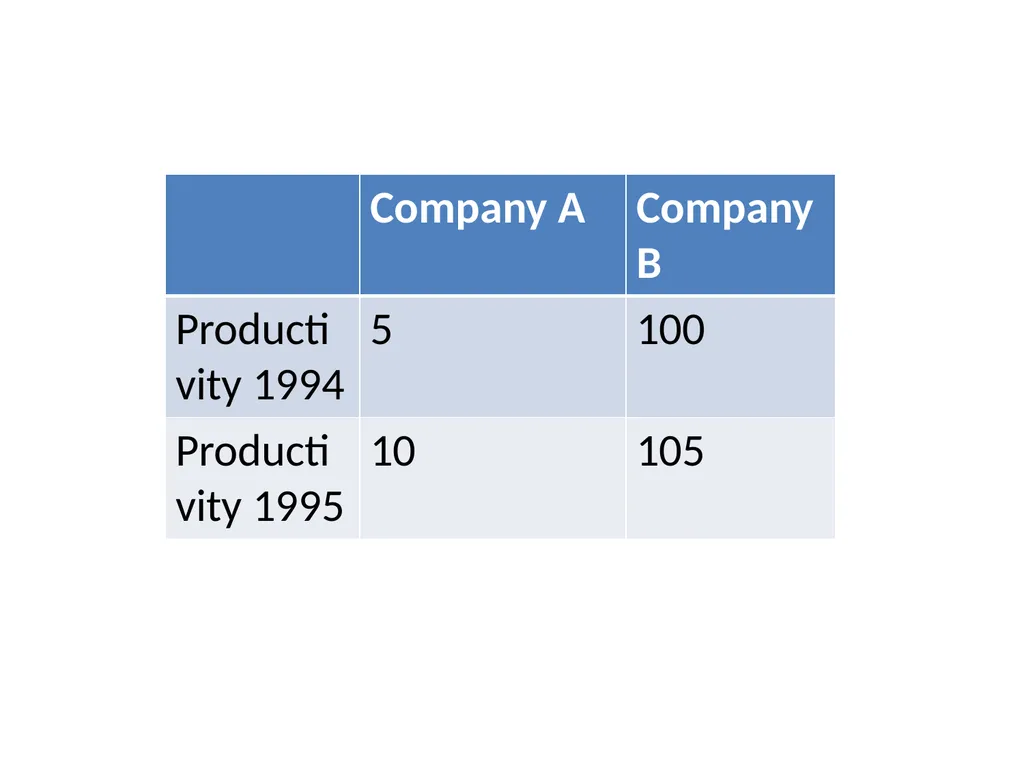
Comparison with similar companies in the same activity:
Calculate the productivity growth rate of Company A and the productivity growth rate of Company B?<br>
Calculate the productivity growth rate of Company A and the productivity growth rate of Company B?<br>
62
In terms of numbers, the productivity of Company B is better than that of Company A, but it is incorrect because the two companies are not the same, so it is necessary to compare with similar companies in the type of activity and capabilities, and it is preferable to compare other leading companies in the world that are similar to the company.
3. Comparison with the average productivity of the industry.
And we mean the average productivity of enterprises in the same type of activity. Who issues this data ministries<br>
3. Comparison with the average productivity of the industry.
And we mean the average productivity of enterprises in the same type of activity. Who issues this data ministries<br>
63
4. Comparison of several factories belonging to the same company.
The second part of the analysis process: Diagnosis:
It is intended to link the total productivity with the partial elements and to determine which elements contributed to the improvement and which elements contributed to the deterioration.<br>
The second part of the analysis process: Diagnosis:
It is intended to link the total productivity with the partial elements and to determine which elements contributed to the improvement and which elements contributed to the deterioration.<br>
64
The third stage: the productivity improvement stage:
This stage aims to achieve a better level of both total and partial productivity.
At this stage, the following characteristics must be present:
First, the process of improving productivity must be a permanent process
Second: The process of improving productivity should not be just ambitions, but rather it should be transformed into programs to improve productivity.
(These programs must be detailed)<br>
This stage aims to achieve a better level of both total and partial productivity.
At this stage, the following characteristics must be present:
First, the process of improving productivity must be a permanent process
Second: The process of improving productivity should not be just ambitions, but rather it should be transformed into programs to improve productivity.
(These programs must be detailed)<br>
65
Third: It is preferable that the productivity improvement program be comprehensive for all units and departments within the company.
Fourth: The means of productivity improvement methods are endless, so they are constantly evolving through the results achieved by the (R&D) Department of Research and Development.<br>
Fourth: The means of productivity improvement methods are endless, so they are constantly evolving through the results achieved by the (R&D) Department of Research and Development.<br>
66
What are the entrances or ways to improve productivity? The first way : the stability of the outputs while reducing the inputs . Inputs are reduced by eliminating redundant input elements.
The second way : Increasing the outputs with the stability of the inputs . Ways to achieve this :
Prevent material waste . Applying strong supervision and control methods to employees . Through the technical aspect, such as maintaining machines, which leads to an increase in their effectiveness.<br>
The second way : Increasing the outputs with the stability of the inputs . Ways to achieve this :
Prevent material waste . Applying strong supervision and control methods to employees . Through the technical aspect, such as maintaining machines, which leads to an increase in their effectiveness.<br>
67
The third way : increase the output and increase the input . Provided that the percentage increase in output is higher . It can be achieved by : computer input Designing a new incentive system Training course for employees .
Fourth way : Reducing the outputs with the reduction of the inputs (provided that the reduction of the inputs is by a greater percentage)
Fifth way : Increasing outputs and decreasing inputs . It is the best entrance<br>
Fourth way : Reducing the outputs with the reduction of the inputs (provided that the reduction of the inputs is by a greater percentage)
Fifth way : Increasing outputs and decreasing inputs . It is the best entrance<br>
68
CH3:Plant Location Decision Importance :One of the most important decisions of the plant design function .
One of the important strategic decisions taken by the company's management, whether industrial or service . Because making this decision will affect the decisions and will extend for long periods of time .
It is not possible to get rid of the negative effects of this decision for long periods . Because it is difficult to move the factory location from one place to another .
This decision is not a one-time decision taken by the administration, but rather it is permanent, especially when expanding.
For these reasons, this decision is considered strategic and important.<br>
One of the important strategic decisions taken by the company's management, whether industrial or service . Because making this decision will affect the decisions and will extend for long periods of time .
It is not possible to get rid of the negative effects of this decision for long periods . Because it is difficult to move the factory location from one place to another .
This decision is not a one-time decision taken by the administration, but rather it is permanent, especially when expanding.
For these reasons, this decision is considered strategic and important.<br>
69
What are the objectives behind choosing a factory site? 1-Reducing the costs of establishing the factory (we choose the site that has the lowest cost).
2-Reducing the cost of distributing products (choosing the site where the cost of distributing products is the least possible).
3- Reducing raw material costs.<br>
2-Reducing the cost of distributing products (choosing the site where the cost of distributing products is the least possible).
3- Reducing raw material costs.<br>
70
What are the factors that influence the choice of factory location? 1- Raw materials and production requirements: This factor is especially important for industrial companies, because raw materials and production requirements represent a large proportion of the total production costs .
Factories where the cost of raw materials is high, the factory should be chosen near the availability of these raw materials.
Also, gold, marble and iron factories are close to the mines because they constitute a large proportion of production and may be perishable as in foodstuffs.
2- Employment (manpower): by which we mean availability in terms of number and specializations and in terms of skill level and experience.<br>
Factories where the cost of raw materials is high, the factory should be chosen near the availability of these raw materials.
Also, gold, marble and iron factories are close to the mines because they constitute a large proportion of production and may be perishable as in foodstuffs.
2- Employment (manpower): by which we mean availability in terms of number and specializations and in terms of skill level and experience.<br>
71
The factory must be near the areas where the workforce is available, especially the textile industries (spinning and weaving) that need labor intensity, as well as the ready-made garment factories.
3- Market locations and distribution outlets: The particular establishments that provide services must be near the consumer. For example: banks, hotels, transport companies and communications .
Also, commercial establishments open branches near residential areas in order to realize their profits by serving a larger number of consumers .
Products that produce perishable products are close to residential areas, as in bakeries and flowers.<br>
3- Market locations and distribution outlets: The particular establishments that provide services must be near the consumer. For example: banks, hotels, transport companies and communications .
Also, commercial establishments open branches near residential areas in order to realize their profits by serving a larger number of consumers .
Products that produce perishable products are close to residential areas, as in bakeries and flowers.<br>
72
Also, industrial companies whose transportation costs for finished products are high are close to the market .
As well as government departments or agencies are close to the community, as well as schools and the post .
4- Sources of energy and water: The location of the factory must be close to energy, such as electricity .
Especially heavy industries such as iron and steel require energy greatly, so they must be close to permanent sources of energy .
Also, electric power plants must be close to water, as well as some large industrial plants.<br>
As well as government departments or agencies are close to the community, as well as schools and the post .
4- Sources of energy and water: The location of the factory must be close to energy, such as electricity .
Especially heavy industries such as iron and steel require energy greatly, so they must be close to permanent sources of energy .
Also, electric power plants must be close to water, as well as some large industrial plants.<br>
73
5- The degree of government encouragement and state policy: Many countries encourage investors to establish industrial and service organizations in specific areas, such as in ports, tax exemptions for several years, exemptions from employment restrictions, no restrictions on the transfer of profits, customs exemptions, or the state's sale of lands at prices Nominal or low costs .
6- Environmental factors: They play a role now in determining the locations of factories. Factories that are harmful to the environment are far from residential areas. This is one of the most important factors that determine the location of the factory .
7- Other factors: such as the proximity of hospitals, schools, fire-fighters .<br>
6- Environmental factors: They play a role now in determining the locations of factories. Factories that are harmful to the environment are far from residential areas. This is one of the most important factors that determine the location of the factory .
7- Other factors: such as the proximity of hospitals, schools, fire-fighters .<br>
74
What are the recent trends in choosing a factory site? -Effects of Globalization: Globalization has greatly affected the transformation of most industrial companies into multinational companies, ie opening branches in several countries .
Therefore, the process of selecting a plant is in three stages :
1- Choosing the country: studying the laws and legislations, studying the political stability in the country and the economic problems, the availability of communications and energy, the locations of the markets, the availability of the workforce in that country with specializations and skills, the availability of equipment and production requirements, and currency exchange rates.<br>
Therefore, the process of selecting a plant is in three stages :
1- Choosing the country: studying the laws and legislations, studying the political stability in the country and the economic problems, the availability of communications and energy, the locations of the markets, the availability of the workforce in that country with specializations and skills, the availability of equipment and production requirements, and currency exchange rates.<br>
75
2-Choosing the region: What are the attractive features, such as culture, taxes or climate that help to establish such factories, the availability of manpower in the region, costs (energy cost and energy availability in this region), as well as environmental protection legislation and the incentives offered by the state in the region. The cost of land and construction.
3- Choosing the area within the region: We study the construction costs in this region, the availability of water and sanitation and the environmental protection legislation in this region.<br>
3- Choosing the area within the region: We study the construction costs in this region, the availability of water and sanitation and the environmental protection legislation in this region.<br>
76
-privatization .Trend or increased interest in the services sector: Due to the development of technology, interest is being given to the service sector, as well as cultural, educational and livelihood development .
-The use of high technology: especially the use of the Internet in many companies, which achieve high production and production of the highest quality .
-High productivity: it is not produced only for one country, but is exported to other countries, so it must use high productivity to invade commercial markets<br>
-The use of high technology: especially the use of the Internet in many companies, which achieve high production and production of the highest quality .
-High productivity: it is not produced only for one country, but is exported to other countries, so it must use high productivity to invade commercial markets<br>
77
What are the methods used in selecting factories? There are two types of factors or Financially methods:
measurable factors: any factor related to revenue, such as the purchase of land and construction .
Factors that cannot be measured financially: such as environmental factors, climate, education level, state policy, and union level.<br>
measurable factors: any factor related to revenue, such as the purchase of land and construction .
Factors that cannot be measured financially: such as environmental factors, climate, education level, state policy, and union level.<br>
78
Financially measurable factors (factors that have an impact on costs and revenues that can be financially measured)
2. Determine which of the above factors can be measured financially? Financially measurable factors in which:
1 - Measuring the cost and then comparing the total costs for each site (example) on the basis of choosing the site that It achieves the lowest total costs
2 - Measuring the expected revenues for each site and then making a comparison on the basis of choosing the site that achieves the highest Revenues Continued - the methods used in choosing the site1. Factors that cannot be measured financially, but have an impact on site selection. Therefore, it is necessary to study it
2. Determine which of the above factors cannot be measured financially?<br>
2. Determine which of the above factors can be measured financially? Financially measurable factors in which:
1 - Measuring the cost and then comparing the total costs for each site (example) on the basis of choosing the site that It achieves the lowest total costs
2 - Measuring the expected revenues for each site and then making a comparison on the basis of choosing the site that achieves the highest Revenues Continued - the methods used in choosing the site1. Factors that cannot be measured financially, but have an impact on site selection. Therefore, it is necessary to study it
2. Determine which of the above factors cannot be measured financially?<br>
79
1 Methods based on financial factors only, such as the break-even method and the transfer method
2. Methods based on financial and non-financial factors, such as the general factor method
3. The methods used in choosing the location of services are the mediator base and the center of gravity<br>
2. Methods based on financial and non-financial factors, such as the general factor method
3. The methods used in choosing the location of services are the mediator base and the center of gravity<br>
80
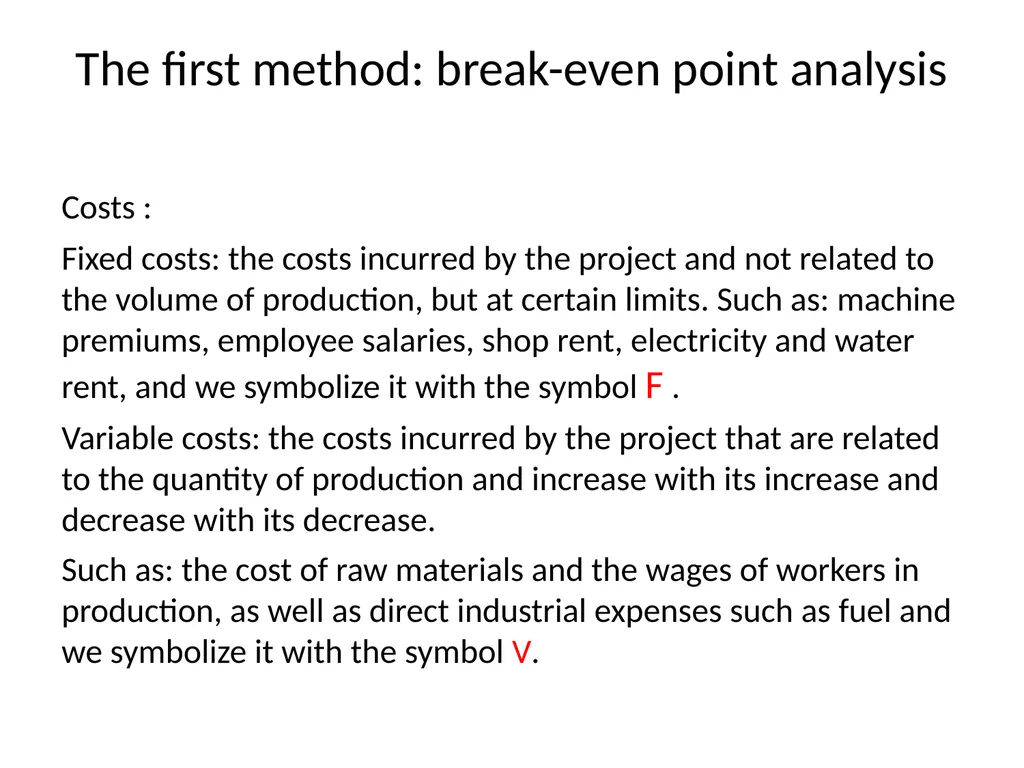
The first method: break-even point analysis Costs :
Fixed costs: the costs incurred by the project and not related to the volume of production, but at certain limits. Such as: machine premiums, employee salaries, shop rent, electricity and water rent, and we symbolize it with the symbol F .
Variable costs: the costs incurred by the project that are related to the quantity of production and increase with its increase and decrease with its decrease.
Such as: the cost of raw materials and the wages of workers in production, as well as direct industrial expenses such as fuel and we symbolize it with the symbol V.<br>
Fixed costs: the costs incurred by the project and not related to the volume of production, but at certain limits. Such as: machine premiums, employee salaries, shop rent, electricity and water rent, and we symbolize it with the symbol F .
Variable costs: the costs incurred by the project that are related to the quantity of production and increase with its increase and decrease with its decrease.
Such as: the cost of raw materials and the wages of workers in production, as well as direct industrial expenses such as fuel and we symbolize it with the symbol V.<br>
81
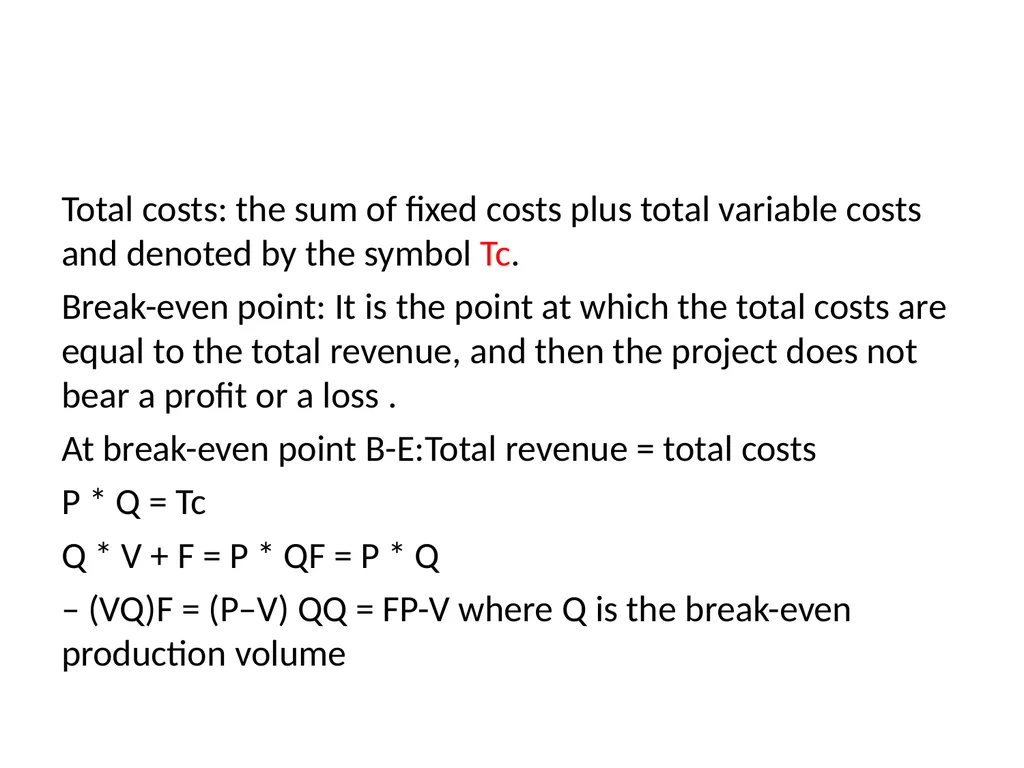
Total costs: the sum of fixed costs plus total variable costs and denoted by the symbol Tc.
Break-even point: It is the point at which the total costs are equal to the total revenue, and then the project does not bear a profit or a loss .
At break-even point B-E:Total revenue = total costs
P * Q = Tc
Q * V + F = P * QF = P * Q
– (VQ)F = (P–V) QQ = FP-V where Q is the break-even production volume<br>
Break-even point: It is the point at which the total costs are equal to the total revenue, and then the project does not bear a profit or a loss .
At break-even point B-E:Total revenue = total costs
P * Q = Tc
Q * V + F = P * QF = P * Q
– (VQ)F = (P–V) QQ = FP-V where Q is the break-even production volume<br>
82
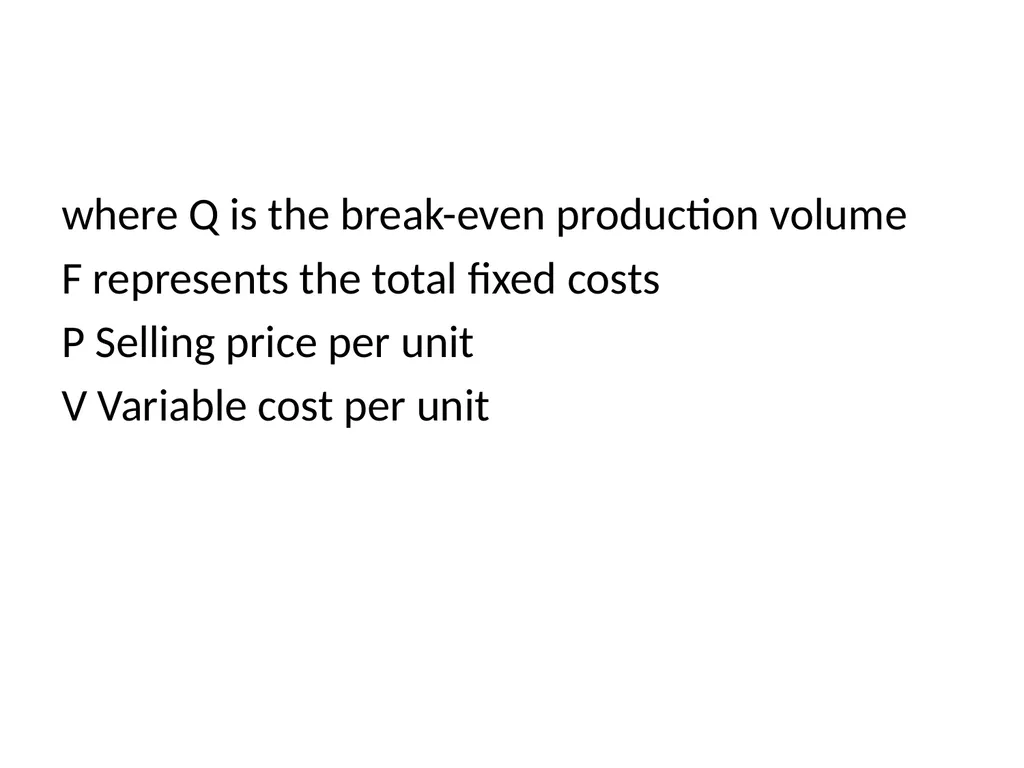
where Q is the break-even production volume
F represents the total fixed costs
P Selling price per unit
V Variable cost per unit<br>
F represents the total fixed costs
P Selling price per unit
V Variable cost per unit<br>
83
The second method: the general operand method
The third method: the method of transport networks<br>
The third method: the method of transport networks<br>
84
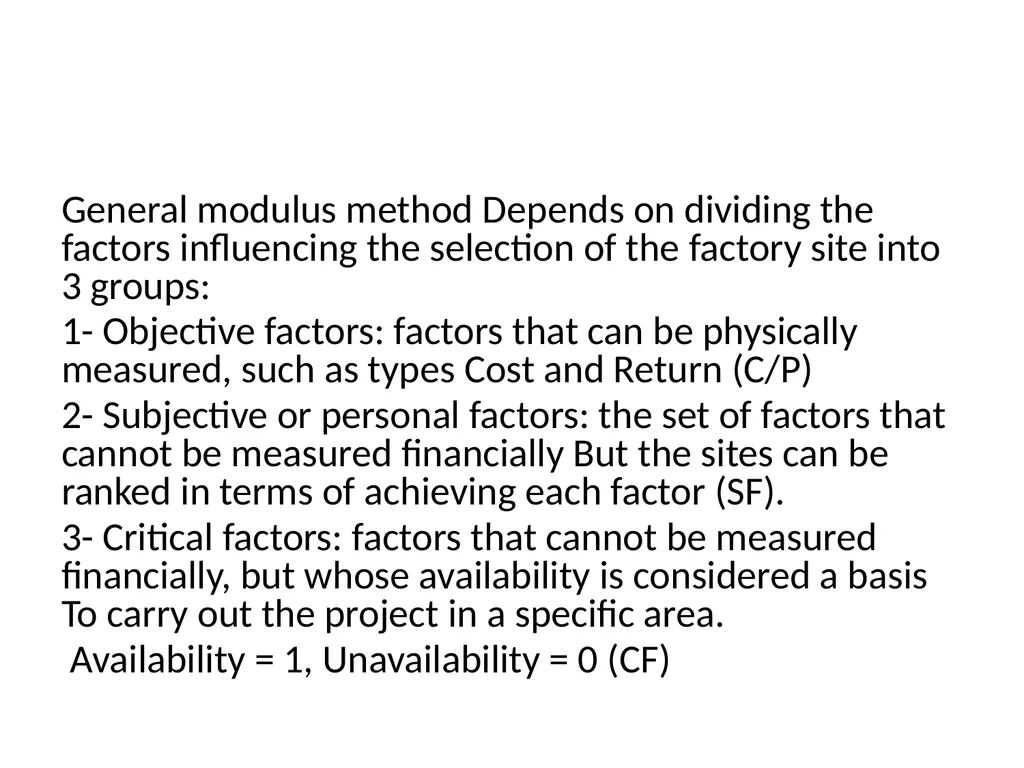
General modulus method Depends on dividing the factors influencing the selection of the factory site into 3 groups:
1- Objective factors: factors that can be physically measured, such as types Cost and Return (C/P)
2- Subjective or personal factors: the set of factors that cannot be measured financially But the sites can be ranked in terms of achieving each factor (SF).
3- Critical factors: factors that cannot be measured financially, but whose availability is considered a basis To carry out the project in a specific area.
Availability = 1, Unavailability = 0 (CF)<br>
1- Objective factors: factors that can be physically measured, such as types Cost and Return (C/P)
2- Subjective or personal factors: the set of factors that cannot be measured financially But the sites can be ranked in terms of achieving each factor (SF).
3- Critical factors: factors that cannot be measured financially, but whose availability is considered a basis To carry out the project in a specific area.
Availability = 1, Unavailability = 0 (CF)<br>
85
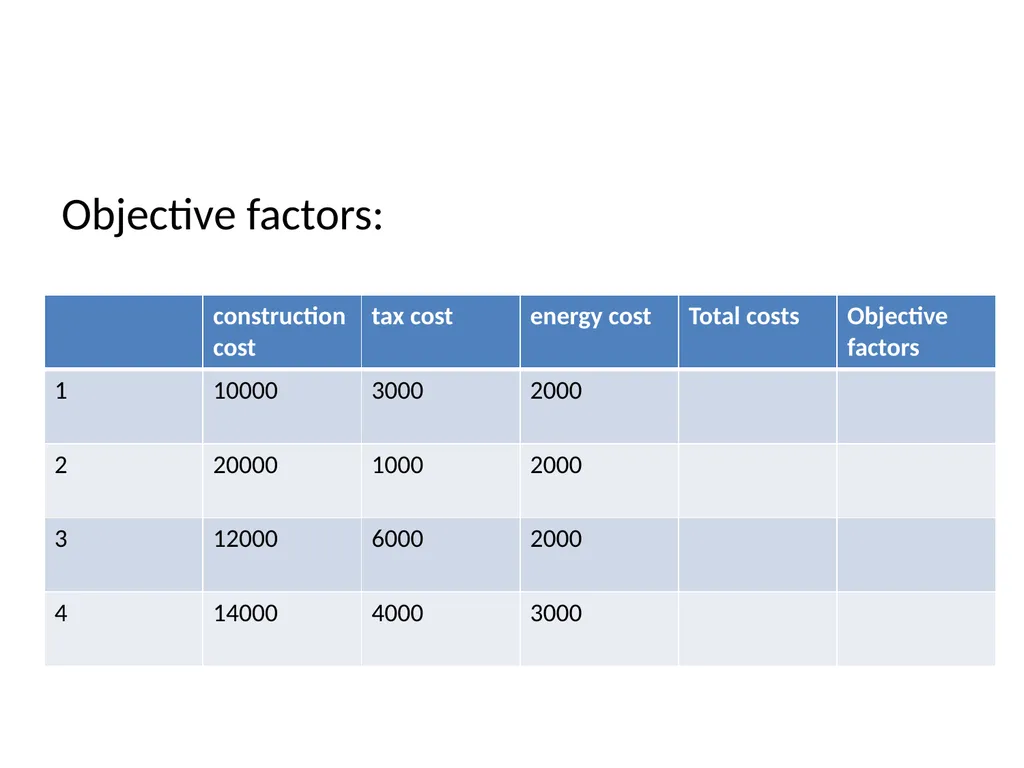
Objective factors:<br>
86
• Depends on dividing the factors affecting the selection of the factory site into 3 groups:
1- Objective factors (OF): factors that can be physically measured, such as types Cost and Return (C/P)
2- Subjective or personal factors: the set of factors that cannot be measured financially But the sites can be ranked in terms of achieving each factor (SF).
3- Critical factors: factors that cannot be measured financially, but whose availability is considered a basis To carry out the project in a specific area. Availability = 1, Unavailability = 0 (CF)<br>
1- Objective factors (OF): factors that can be physically measured, such as types Cost and Return (C/P)
2- Subjective or personal factors: the set of factors that cannot be measured financially But the sites can be ranked in terms of achieving each factor (SF).
3- Critical factors: factors that cannot be measured financially, but whose availability is considered a basis To carry out the project in a specific area. Availability = 1, Unavailability = 0 (CF)<br>
87
Transportation Network Method The costs of transporting raw materials to the factory, and transporting finished materials to sales or storage centres are among the important elements that are taken into account when choosing the location of the factory, and since these costs affect the final cost of the product, the administration is trying to determine the products that will be produced by a factory in A specific area, and also specifying the areas to which finished products will be transported to achieve the lowest possible transportation costs<br>
88
The method of transportation networks is one of the useful tools in solving the issues of selecting the factory site.
This method derives its name from its treatment of the problems of transporting products from multiple factories to multiple regions, with the aim of reducing transportation costs to the lowest possible extent and maximizing the profits achieved from that.
This takes place within the limits of the production capacity of factories and the demand for products, and this method is based on the following assumptions:<br>
This method derives its name from its treatment of the problems of transporting products from multiple factories to multiple regions, with the aim of reducing transportation costs to the lowest possible extent and maximizing the profits achieved from that.
This takes place within the limits of the production capacity of factories and the demand for products, and this method is based on the following assumptions:<br>
89
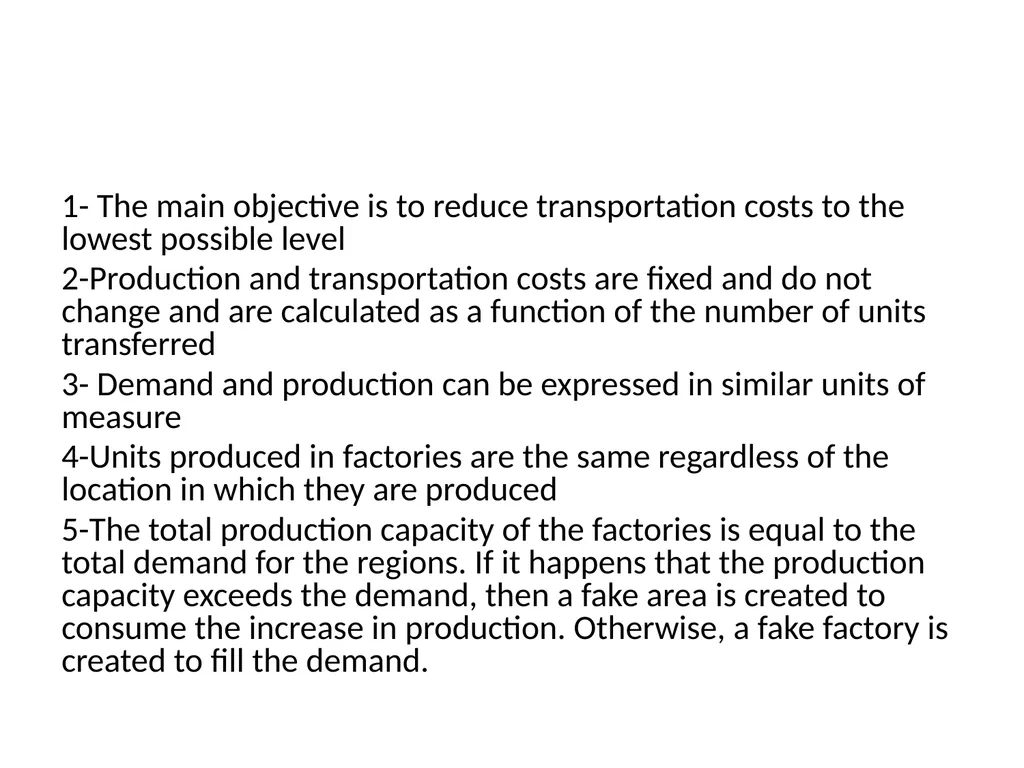
1- The main objective is to reduce transportation costs to the lowest possible level
2-Production and transportation costs are fixed and do not change and are calculated as a function of the number of units transferred
3- Demand and production can be expressed in similar units of measure
4-Units produced in factories are the same regardless of the location in which they are produced
5-The total production capacity of the factories is equal to the total demand for the regions. If it happens that the production capacity exceeds the demand, then a fake area is created to consume the increase in production. Otherwise, a fake factory is created to fill the demand.<br>
2-Production and transportation costs are fixed and do not change and are calculated as a function of the number of units transferred
3- Demand and production can be expressed in similar units of measure
4-Units produced in factories are the same regardless of the location in which they are produced
5-The total production capacity of the factories is equal to the total demand for the regions. If it happens that the production capacity exceeds the demand, then a fake area is created to consume the increase in production. Otherwise, a fake factory is created to fill the demand.<br>
90
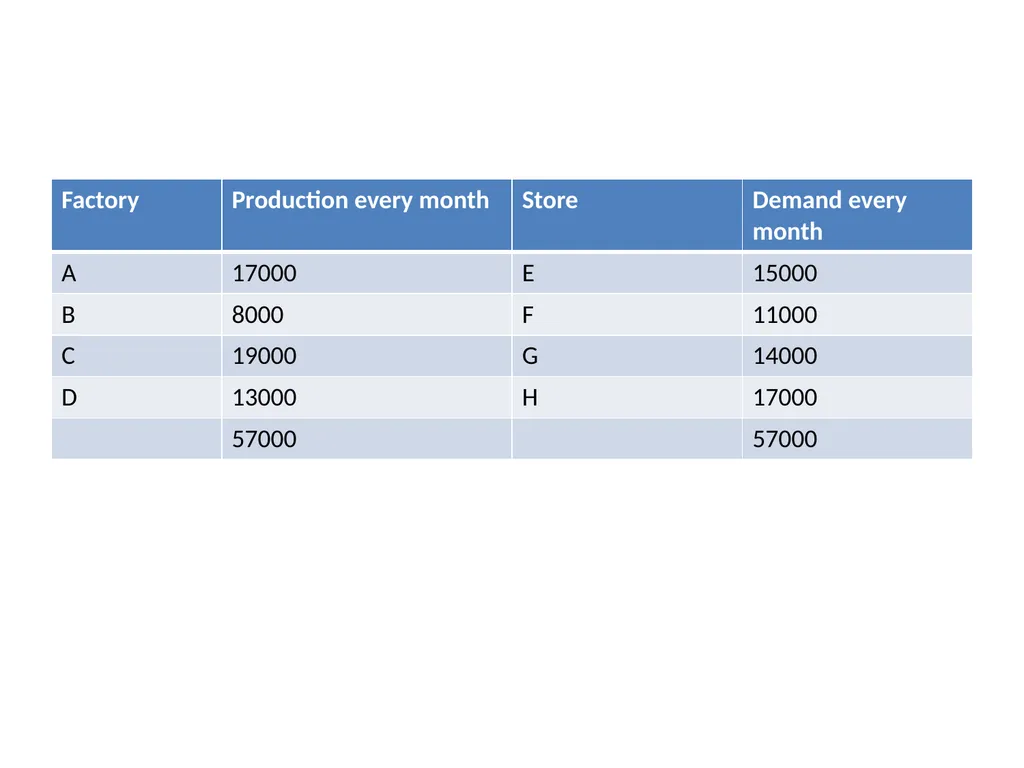
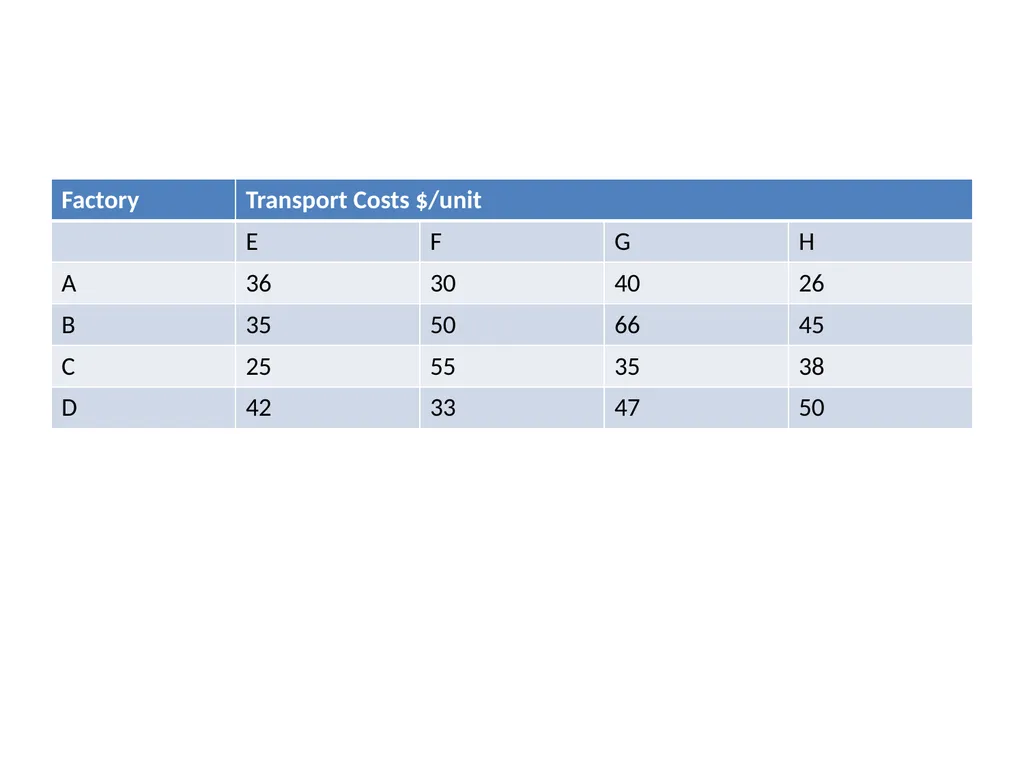
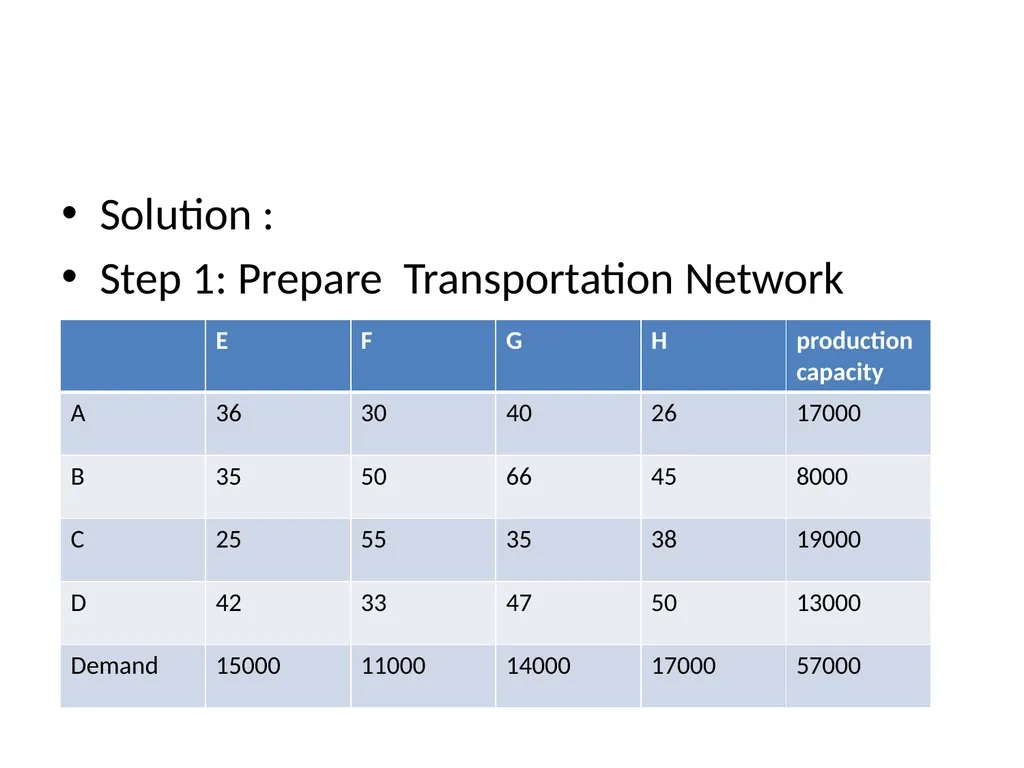
Example : A company owns four industrial carpet factories, and these factories distribute their products to four warehouses in Iraq. The administration has noticed the high costs of transporting carpets from factories to warehouses, and the occurrence of scarcity in one warehouse and suffocation in other stores
What is the optimal distribution that you get using the transport network and the following production, demand and costs data:<br>
What is the optimal distribution that you get using the transport network and the following production, demand and costs data:<br>
91
Solution :
Step 1: Prepare Transportation Network<br>
Step 1: Prepare Transportation Network<br>
92
Step 2 : Find the initial or basic solution
The initial solution is the starting point to reach the optimal solution.
We have many Methods :
1- Least Cost Method
2- Vogel's Approximation Method (VAM)
3- North – West Corner (NWC) Method<br>
The initial solution is the starting point to reach the optimal solution.
We have many Methods :
1- Least Cost Method
2- Vogel's Approximation Method (VAM)
3- North – West Corner (NWC) Method<br>
93
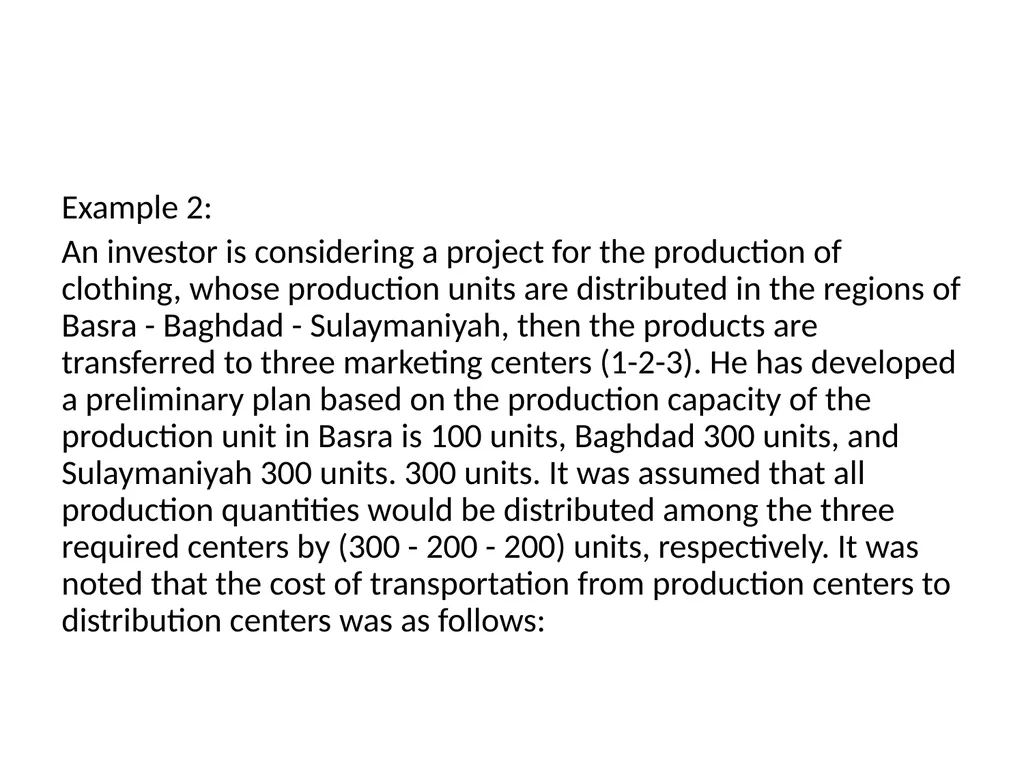
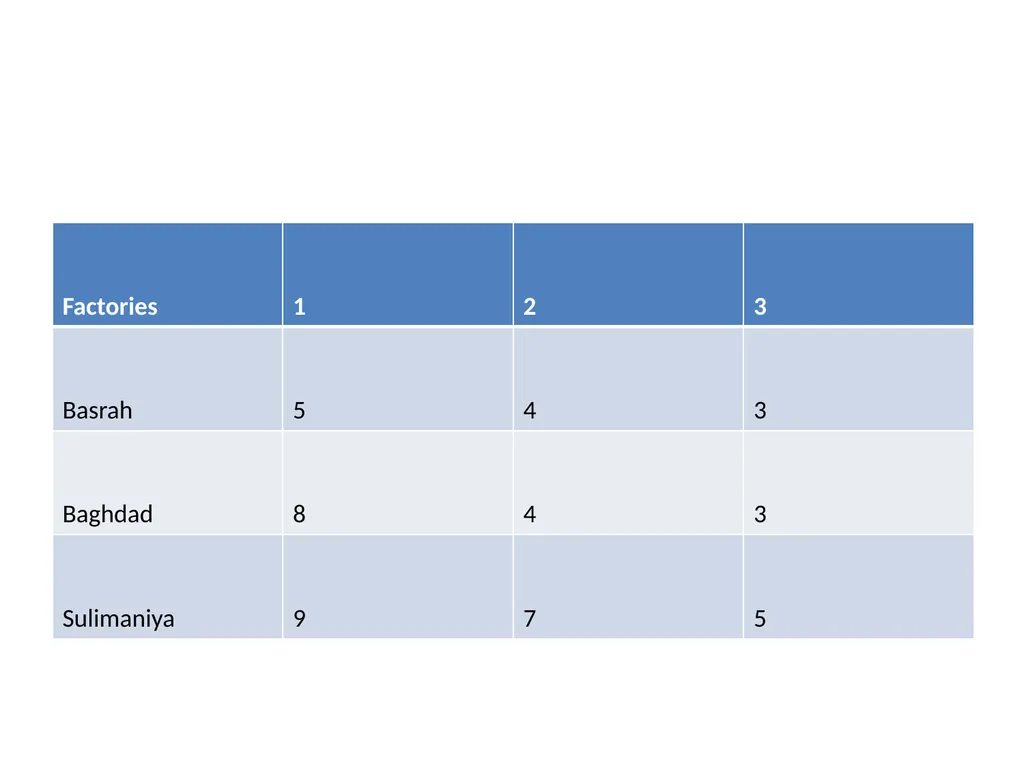
Example 2:
An investor is considering a project for the production of clothing, whose production units are distributed in the regions of Basra - Baghdad - Sulaymaniyah, then the products are transferred to three marketing centers (1-2-3). He has developed a preliminary plan based on the production capacity of the production unit in Basra is 100 units, Baghdad 300 units, and Sulaymaniyah 300 units. 300 units. It was assumed that all production quantities would be distributed among the three required centers by (300 - 200 - 200) units, respectively. It was noted that the cost of transportation from production centers to distribution centers was as follows:<br>
An investor is considering a project for the production of clothing, whose production units are distributed in the regions of Basra - Baghdad - Sulaymaniyah, then the products are transferred to three marketing centers (1-2-3). He has developed a preliminary plan based on the production capacity of the production unit in Basra is 100 units, Baghdad 300 units, and Sulaymaniyah 300 units. 300 units. It was assumed that all production quantities would be distributed among the three required centers by (300 - 200 - 200) units, respectively. It was noted that the cost of transportation from production centers to distribution centers was as follows:<br>
94
Required: Help this investor to reach the lowest transportation cost using transportation methods?<br>
95
CH4: Layout Planning Layout planning relates to decisions on the physical arrangement of centers of economic activities within a company's production system
The center of economic activity is defined as any activity that requires space for its completion, such as the worker’s need for a space to carry out his work, and this also applies to machines, departments, furniture, warehouses, etc.
The objective of planning the internal arrangement( Layout Planning) is to provide the opportunity for workers and equipment to complete the work as efficiently and effectively as possible. To achieve this, the Operations Manager should answer sequentially the following questions:<br>
The center of economic activity is defined as any activity that requires space for its completion, such as the worker’s need for a space to carry out his work, and this also applies to machines, departments, furniture, warehouses, etc.
The objective of planning the internal arrangement( Layout Planning) is to provide the opportunity for workers and equipment to complete the work as efficiently and effectively as possible. To achieve this, the Operations Manager should answer sequentially the following questions:<br>
96
What sections should be included in Layout
How much space is needed for each section
What is the body or composition of each section
Where should the Department or workstation be placed?<br>
How much space is needed for each section
What is the body or composition of each section
Where should the Department or workstation be placed?<br>
97
110 Layout: the configuration of departments, work centers, and equipment,
Whose design involves particular emphasis on movement of work (customers or materials) through the system
Importance of layout
Requires substantial investments of money and effort
Involves long-term commitments
Has significant impact on cost and efficiency of short-term operations Layout<br>
Whose design involves particular emphasis on movement of work (customers or materials) through the system
Importance of layout
Requires substantial investments of money and effort
Involves long-term commitments
Has significant impact on cost and efficiency of short-term operations Layout<br>
98
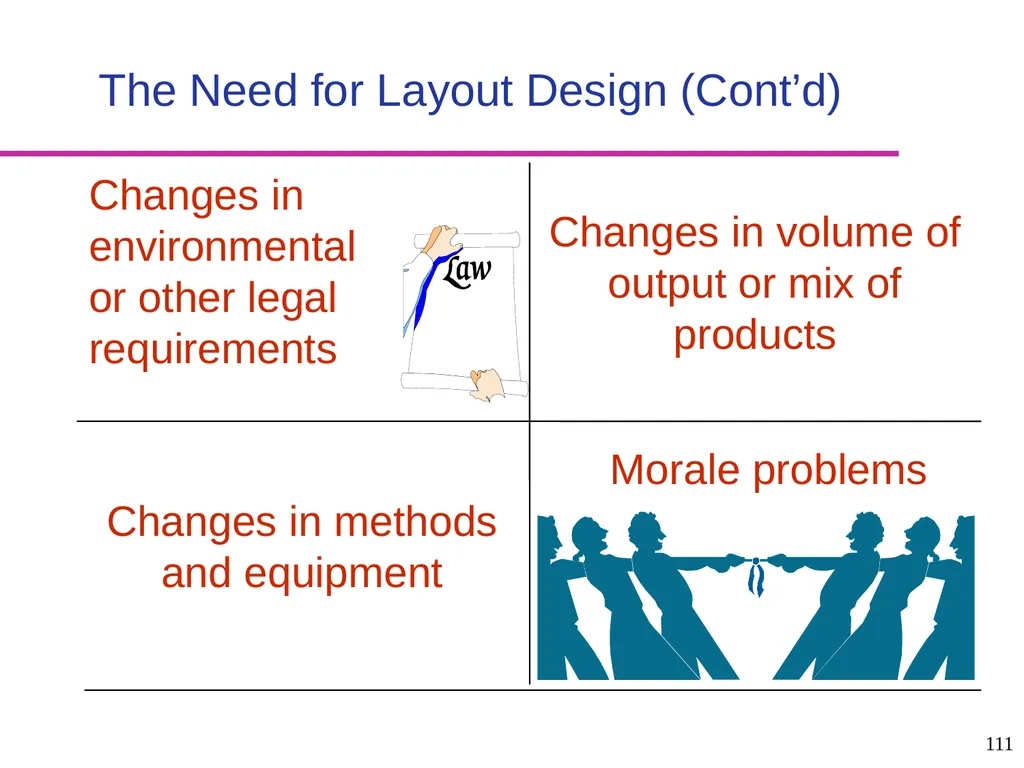
111 The Need for Layout Design (Cont’d)<br>
99
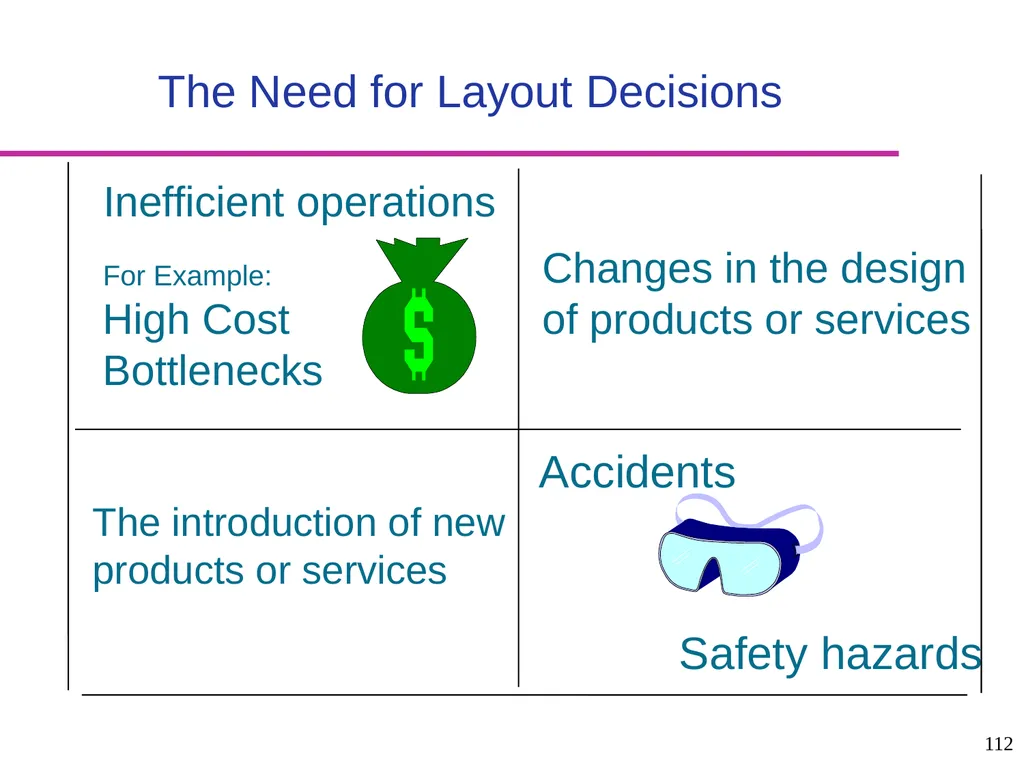
112 The Need for Layout Decisions<br>
100
This article deals with one of the important decisions in the field of designing the transformational process, which is related to determining the most appropriate sites for production and service equipment within the site, and then choosing it. This process is usually called the decision to choose the internal layout(Facility Layout ) of the site. It should be noted from the outset that this decision includes several aspects, the most important of which are:
1) Determining the locations and areas of the places necessary for the operations of receiving, storing, using and transporting materials that are necessary for the production process, including the handling means that must be used and their relationship to the places of production.<br>
1) Determining the locations and areas of the places necessary for the operations of receiving, storing, using and transporting materials that are necessary for the production process, including the handling means that must be used and their relationship to the places of production.<br>
101
2) Determine the places to store the materials under operation, which may exist between the different production stages.
3) Determine the locations of production departments as well as service departments such as maintenance and quality control, cafeteria, first aid...etc.
4) Achieving balance in the flow of materials during the stages of the production process in a way that ensures that there are no idle energies.
5) Determining where finished products are stored and how they are transported to distribution centers, for example: the presence of railway lines within the factory site.<br>
3) Determine the locations of production departments as well as service departments such as maintenance and quality control, cafeteria, first aid...etc.
4) Achieving balance in the flow of materials during the stages of the production process in a way that ensures that there are no idle energies.
5) Determining where finished products are stored and how they are transported to distribution centers, for example: the presence of railway lines within the factory site.<br>
102
Inputs to the planning process for the interior arrangement)Facility Layout ) Inputs to the process of determining the internal arrangement(Facility Layout ): (Jess and Aquilano) mentioned a group of factors that affect the decision to choose the optimal arrangement for the site, and these factors are:
1) The objectives of the production system (consumer satisfaction / increased productivity).
2) The size of the expected demand for goods or services.
3) the requirements of the production process.
4) The area of the place designated for the production process.
Objectives of the internal arrangement(Facility Layout ):
1) Reducing choke points that impede the movement of people, materials or machines within the site.
2) Reducing the cost of transporting and handling materials to the lowest possible extent.<br>
1) The objectives of the production system (consumer satisfaction / increased productivity).
2) The size of the expected demand for goods or services.
3) the requirements of the production process.
4) The area of the place designated for the production process.
Objectives of the internal arrangement(Facility Layout ):
1) Reducing choke points that impede the movement of people, materials or machines within the site.
2) Reducing the cost of transporting and handling materials to the lowest possible extent.<br>
103
3) Reducing the degree of danger to which workers are exposed during production.
4) Achieving the highest degree of benefit from the efforts of workers and technical equipment.
5) Improving morale among individuals.
6) Achieving the highest effective utilization rate of the available spaces.
7) Achieving a kind of flexibility and providing opportunities for the possibility of modification.
8) Facilitate the process of supervision and follow-up.
9) Facilitate the process of effective coordination between units and provide opportunities for direct communication when needed.<br>
4) Achieving the highest degree of benefit from the efforts of workers and technical equipment.
5) Improving morale among individuals.
6) Achieving the highest effective utilization rate of the available spaces.
7) Achieving a kind of flexibility and providing opportunities for the possibility of modification.
8) Facilitate the process of supervision and follow-up.
9) Facilitate the process of effective coordination between units and provide opportunities for direct communication when needed.<br>
104
Strategic Significance Of Facility Layout 1-High utilization of spaces, equipment and personnel
A distinct improvement in the flow of information, materials and the movement of workers
2- Improving the morale of workers and ensuring good working conditions
3-Improve the relationship with customers
4- Improve the flexibility of the production system
The senior management of the company faces several strategic decisions related to the internal arrangement, such as:
*Planning for current and future requirements
*Choosing between several designs of buildings,* choosing between arranging on the basis of the process or on the basis of the product
*Setting standards to judge the validity of the arrangement in the long term<br>
A distinct improvement in the flow of information, materials and the movement of workers
2- Improving the morale of workers and ensuring good working conditions
3-Improve the relationship with customers
4- Improve the flexibility of the production system
The senior management of the company faces several strategic decisions related to the internal arrangement, such as:
*Planning for current and future requirements
*Choosing between several designs of buildings,* choosing between arranging on the basis of the process or on the basis of the product
*Setting standards to judge the validity of the arrangement in the long term<br>
105
Types Of Facility Layout Depending on the division of the types of production processes, it can be said that there are four basic types of internal arrangement of the factory:
1) Arrangement on the basis of the product: It is the type in which the components and facilities of the production process are arranged according to the sequence of steps in which a specific standard product is produced, and accordingly, the flow of materials is in the form of a line dedicated to the production of a specific product, starting with the inputs of materials and ending At the point of production of the final product, the following figure shows this<br>
1) Arrangement on the basis of the product: It is the type in which the components and facilities of the production process are arranged according to the sequence of steps in which a specific standard product is produced, and accordingly, the flow of materials is in the form of a line dedicated to the production of a specific product, starting with the inputs of materials and ending At the point of production of the final product, the following figure shows this<br>
106
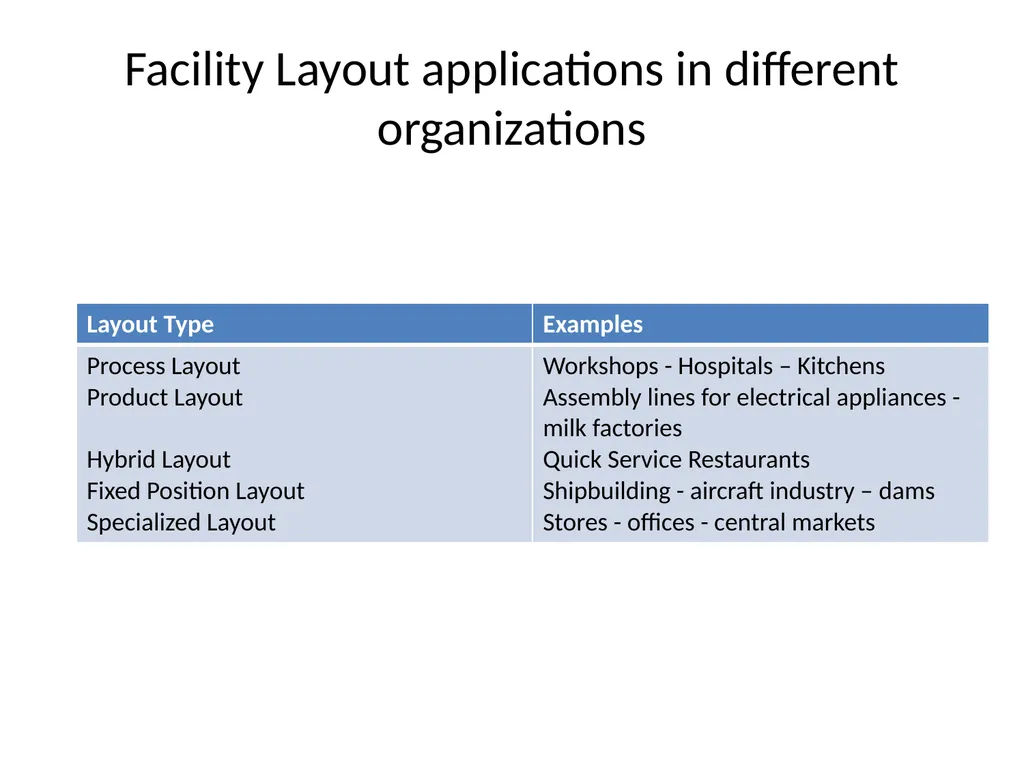
Facility Layout applications in different organizations<br>
107
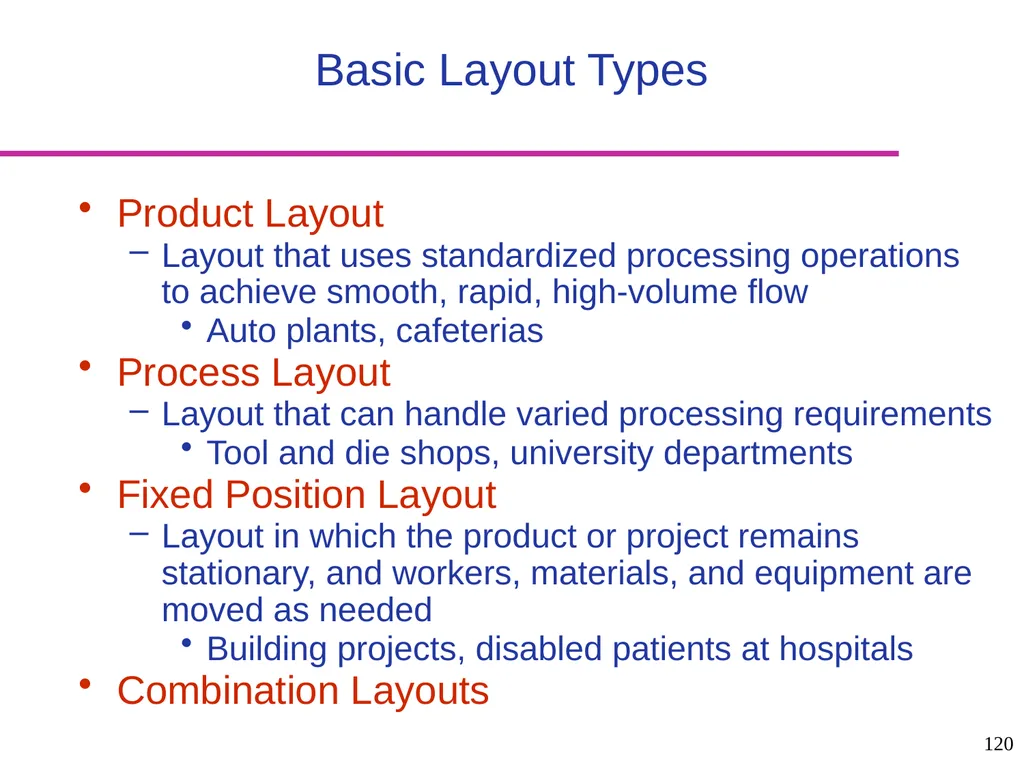
120 Basic Layout Types Product Layout
Layout that uses standardized processing operations to achieve smooth, rapid, high-volume flow
Auto plants, cafeterias
Process Layout
Layout that can handle varied processing requirements
Tool and die shops, university departments
Fixed Position Layout
Layout in which the product or project remains stationary, and workers, materials, and equipment are moved as needed
Building projects, disabled patients at hospitals
Combination Layouts<br>
Layout that uses standardized processing operations to achieve smooth, rapid, high-volume flow
Auto plants, cafeterias
Process Layout
Layout that can handle varied processing requirements
Tool and die shops, university departments
Fixed Position Layout
Layout in which the product or project remains stationary, and workers, materials, and equipment are moved as needed
Building projects, disabled patients at hospitals
Combination Layouts<br>
108
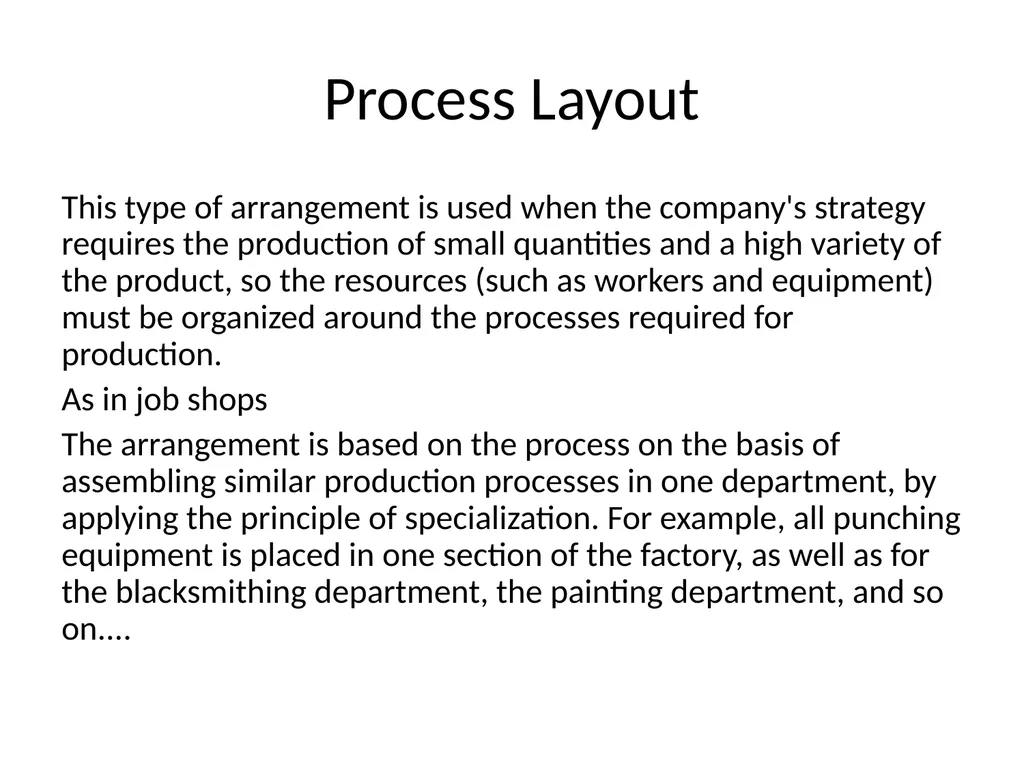
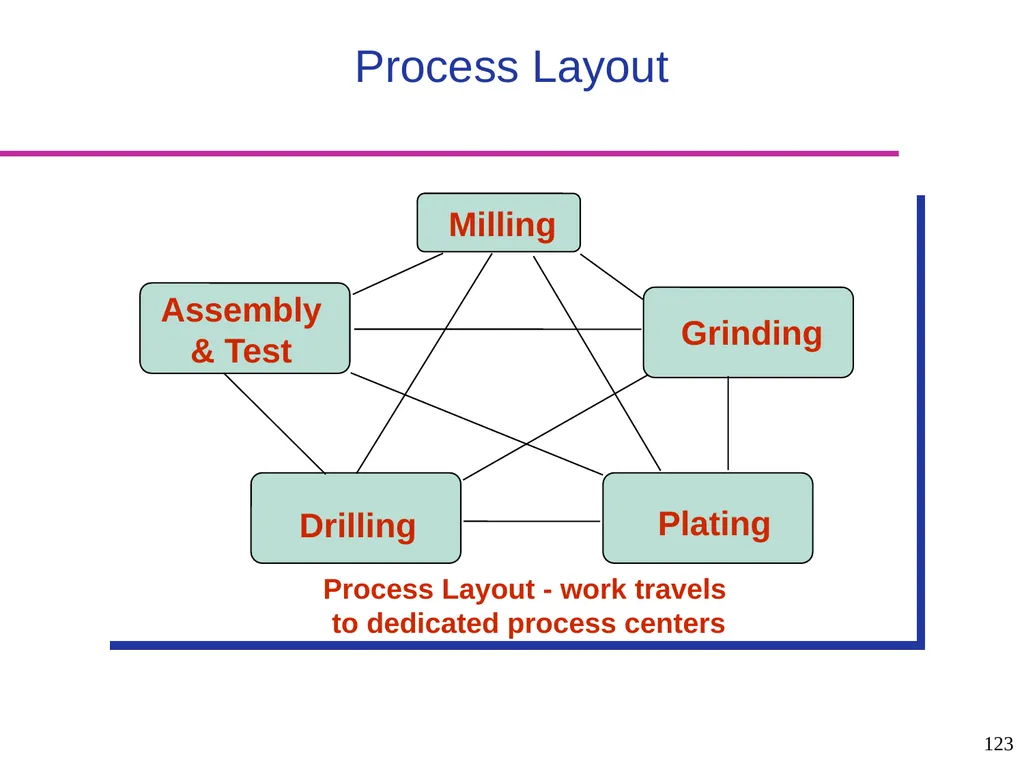
Process Layout This type of arrangement is used when the company's strategy requires the production of small quantities and a high variety of the product, so the resources (such as workers and equipment) must be organized around the processes required for production.
As in job shops
The arrangement is based on the process on the basis of assembling similar production processes in one department, by applying the principle of specialization. For example, all punching equipment is placed in one section of the factory, as well as for the blacksmithing department, the painting department, and so on....<br>
As in job shops
The arrangement is based on the process on the basis of assembling similar production processes in one department, by applying the principle of specialization. For example, all punching equipment is placed in one section of the factory, as well as for the blacksmithing department, the painting department, and so on....<br>
109
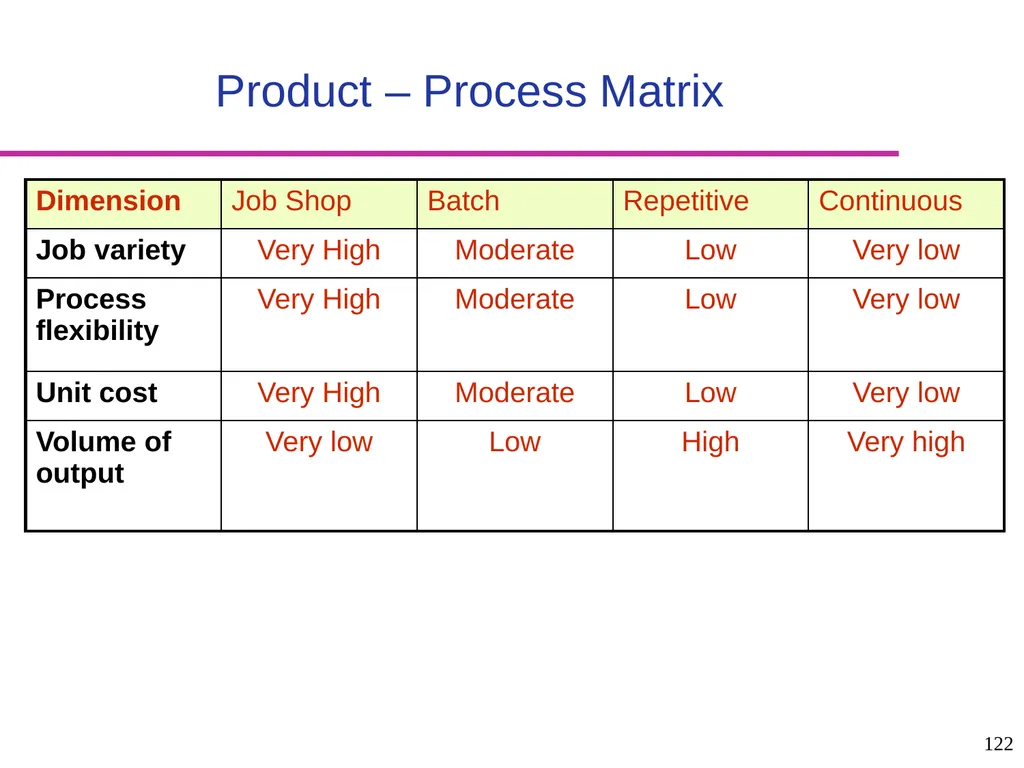
122 Product – Process Matrix<br>
110
123 Process Layout<br>
111
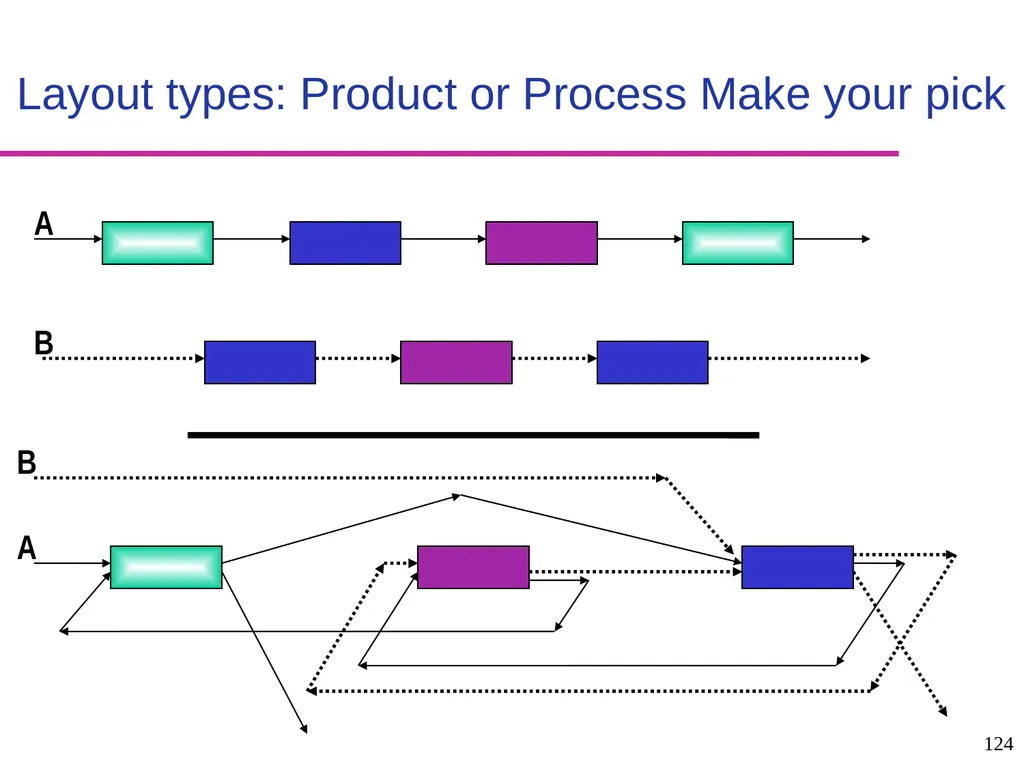
124 Layout types: Product or Process Make your pick A B A B<br>
112
The advantages of ranking on the basis of the process:
1- It achieves high flexibility to produce a variety of products
2- Allows the use of resources (workers and technology) of general use and flexibility
3- The possibility of continuing production operations in the event of a malfunction in one of the other sections of the factory 125<br>
1- It achieves high flexibility to produce a variety of products
2- Allows the use of resources (workers and technology) of general use and flexibility
3- The possibility of continuing production operations in the event of a malfunction in one of the other sections of the factory 125<br>
113
4- The possibility of changing production processes or production quantities without the need to change machines
5- The possibility of production, even in very small quantities, according to demand
6- Increasing customer satisfaction due to the high diversity of production
7- Improving the performance of employees as a result of the high specialization of the departments, which makes them able to implement very accurate requests 126<br>
5- The possibility of production, even in very small quantities, according to demand
6- Increasing customer satisfaction due to the high diversity of production
7- Improving the performance of employees as a result of the high specialization of the departments, which makes them able to implement very accurate requests 126<br>
114
As for the disadvantages of ranking on the basis of the process:
1- The arrangement is suitable only for production with small meals, which generates low exploitation rates for workers and equipment
2- The complexity and overlap of the technological paths of the products and the difficulty of controlling and following them up
3- Increasing the stock of materials under operation (WIP) in the production departments 127<br>
1- The arrangement is suitable only for production with small meals, which generates low exploitation rates for workers and equipment
2- The complexity and overlap of the technological paths of the products and the difficulty of controlling and following them up
3- Increasing the stock of materials under operation (WIP) in the production departments 127<br>
115
4- Increasing the process of transferring and handling materials between departments
5- Increasing the need for highly skilled and diverse workers
6- Business scheduling is complicated due to the high diversity of products
7- Difficulty supervising work
8- Difficulty controlling storage 128<br>
5- Increasing the need for highly skilled and diverse workers
6- Business scheduling is complicated due to the high diversity of products
7- Difficulty supervising work
8- Difficulty controlling storage 128<br>
116
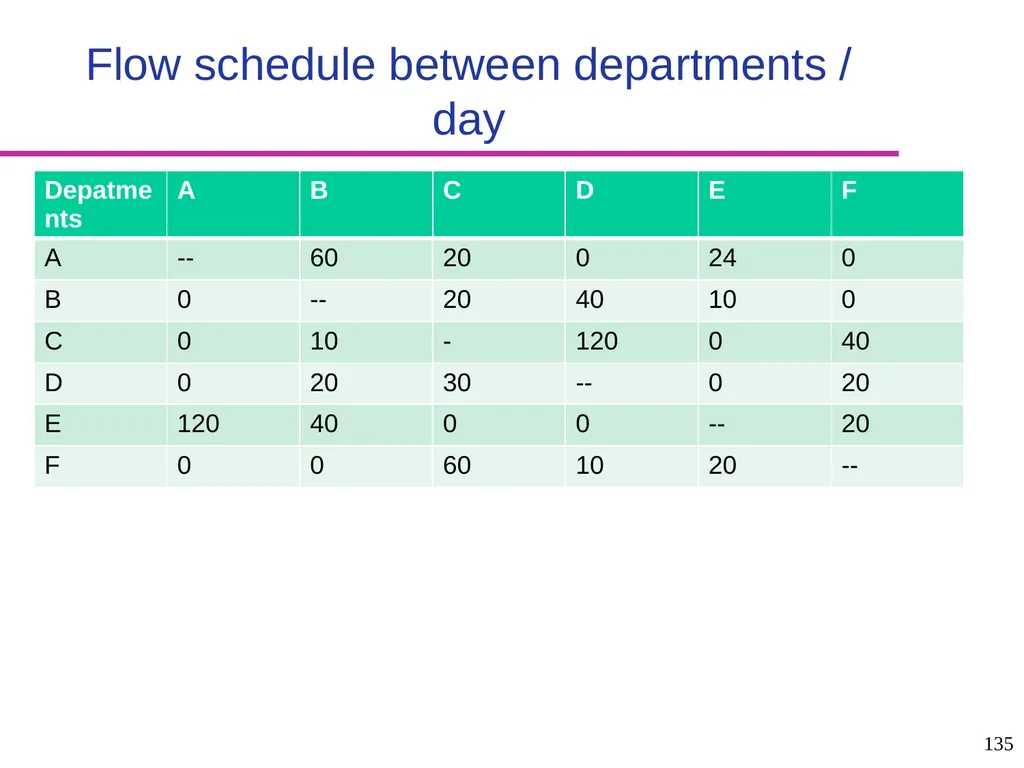
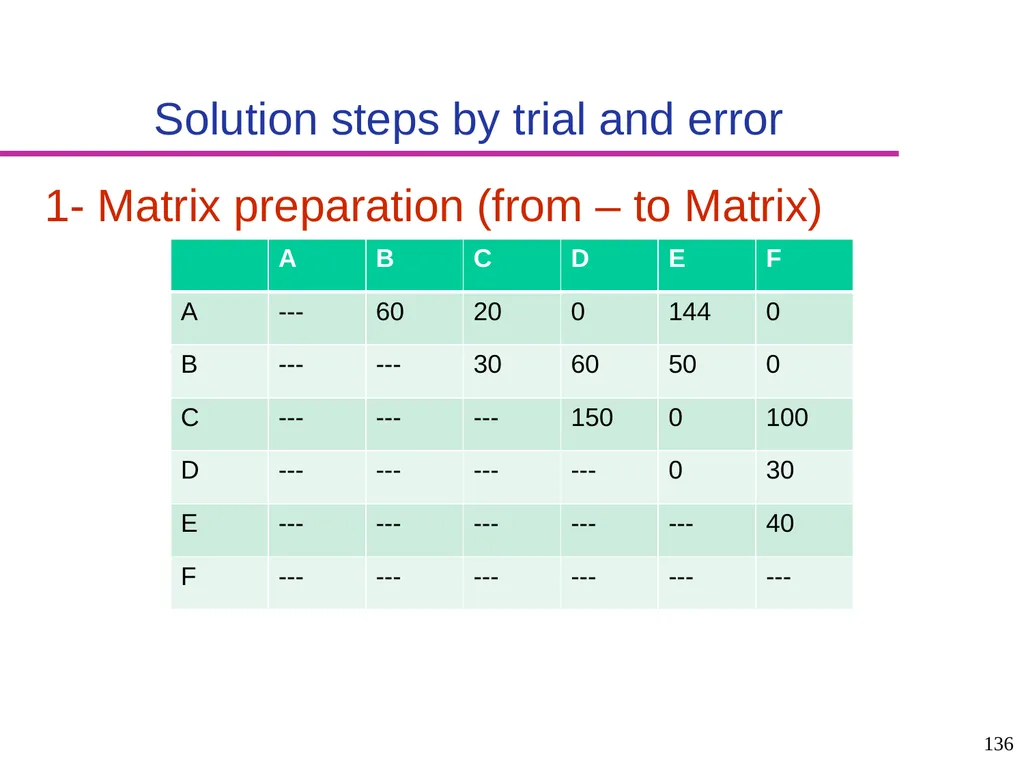
Developing a Process Layout The main problem in Layout on the basis of the process that must be solved is to reduce the cost of transporting materials between departments within the factory. The adopted logic is to make the sections between which there is a high flow adjacent as much as possible, taking into account other factors that can work without 129<br>
117
the adjacent sections between which there is a high flow, such as causing a fire in the case of adjacent or an explosion And to prepare an Layout on the basis of the process, there are several methods, some of which are simple and suitable for Layout a small Factory, such as the method of trial and error, and some are organized and suitable for preparing an Layout for a Factory that contains a large number of departments and requires the use of a computer 130<br>
118
Example :1 Example 1 shows how to prepare an internal Layout on the basis of the process for a Factory consisting of six departments using the trial and error method 131<br>
119
Example : One of the Factories contains six sections of equal area, arranged inside a one-Level building in the form of a rectangle. The following is a map with the current Layout of the sections and the number of transfers between sections / day . Note that the Factory uses a forklift for transportation inside the factory, and that the cost of transportation between departments is $10 / shift / section 132<br>
120
133<br>
121
Required: Using the trial and error method to prepare an internal Layout to reduce the cost of transportation within the Factory to the lowest possible extent 134<br>
122
Flow schedule between departments / day 135<br>
123
Solution steps by trial and error 1- Matrix preparation (from – to Matrix) 136<br>
124
2- Determining the area of each section: Here it was assumed that the area of each section is fixed, which is 400 square feet.
3- Preparing an initial Layout An initial Layout of the sections should be prepared here, provided that it does not exceed the dimensions of the area allocated to the factory, and we will assume that the current arrangement is the initial arrangement 137<br>
3- Preparing an initial Layout An initial Layout of the sections should be prepared here, provided that it does not exceed the dimensions of the area allocated to the factory, and we will assume that the current arrangement is the initial arrangement 137<br>
125
4- Prepare Network (Grid ) In the constituent sections of the current Layout .
The circles represent the centers of the sections, and the lines represent the distance between the sectionsWe note here that there are four non-contiguous sections, namely: A-C A-F D-C D-F 138<br>
The circles represent the centers of the sections, and the lines represent the distance between the sectionsWe note here that there are four non-contiguous sections, namely: A-C A-F D-C D-F 138<br>
126
5- Calculating the transportation cost between non-adjacent sections: In this step, the transportation cost is calculated between the non-adjacent sections only, given that if there is a high transportation cost between two adjacent sections, it is not possible to improve their location. On this basis, the transportation cost between the non-adjacent sections of the initial arrangement (step 3) It is calculated by multiplying the transportation cost, $10, by the number of distances (which are two spaces) by the number of transfers between the two departments (matrix from - to). 139<br>
127
6- Layout improvement: From the previous step, it is noted that the transportation cost between the C-D sections is very high, so the two sections should be made close to each other to reduce transportation costs.Here, section C can replace section A or B, E.
Or D replace B,E,F
Assume C replace A 140<br>
Or D replace B,E,F
Assume C replace A 140<br>
128
Product Layout This type of arrangement is used in companies that apply the product strategy, as the means of production are arranged in the form of a production line and on the basis of the sequence of operations that are carried out on the materials until they become a finished product, as in the following figure:This type of arrangement is suitable for companies that produce in large quantities, as in the case of car factoriesIn this arrangement, the following is required: 141<br>
129
1-The volume of production is large enough to allow the exploitation of large-scale production techniques.
2- The demand for the product is relatively stable, which justifies investment in specialized production techniques.
3- The product is standard or has reached maturity in the product life cycle to justify investment in specialized technology. 142<br>
2- The demand for the product is relatively stable, which justifies investment in specialized production techniques.
3- The product is standard or has reached maturity in the product life cycle to justify investment in specialized technology. 142<br>
130
4- The process of processing the raw materials and the parts involved in assembling the product is stable and of constant quality to ensure the use of specialized technology 143<br>
131
Arrangement based on the product for one of the dyes production plants 144 preparation station filling station mixing station closing station examination station charging station<br>
132
The flow of materials in the production line should not be in the form of a straight line, but the production line can take a form
O - L - U
Or for the line to be sequential, parallel, or parallel and sequential 145<br>
O - L - U
Or for the line to be sequential, parallel, or parallel and sequential 145<br>
133
Advantages of ranking by product:
1- The possibility of achieving high rates of production.
2- High utilization of production means, which leads to lower cost per unit of the product.
3- Ease of handling and transporting materials. 146<br>
1- The possibility of achieving high rates of production.
2- High utilization of production means, which leads to lower cost per unit of the product.
3- Ease of handling and transporting materials. 146<br>
134
4- Low amount of storage.
5- Ease of scheduling work.
6- Ease of control and supervision.
7- Consistency of product quality.
8- Decreased total time needed to produce one unit 147<br>
5- Ease of scheduling work.
6- Ease of control and supervision.
7- Consistency of product quality.
8- Decreased total time needed to produce one unit 147<br>
135
Disadvantages of ranking on the basis of product 1- Low flexibility in adapting to changes in operations.
2- Stopping any process on the production line leads to stopping the entire line.
3- It requires large financial investments.
4- The monotony of work on the production line generates boredom among the workers 148<br>
2- Stopping any process on the production line leads to stopping the entire line.
3- It requires large financial investments.
4- The monotony of work on the production line generates boredom among the workers 148<br>
136
Balancing The Assembly Line It is easier to forecast work flow in a product-based Layout than in a process-based Layout .
Assembly Line :A group of work stations responsible for assembling a specific product according to specific stages, so that the outputs of each work station are inputs for the next station directly, and materials are transferred between stations manually or using Conveyors 149<br>
Assembly Line :A group of work stations responsible for assembling a specific product according to specific stages, so that the outputs of each work station are inputs for the next station directly, and materials are transferred between stations manually or using Conveyors 149<br>
137
Work Station (WS):A group of workers, machines, or workers and machines assigned to accomplish an activity or a group of activities .
Task :A set of actions that can be distinguished from other actions and are performed in a workstation.
Job Content (JC) :It is the set of times required to complete all the activities related to assembling a single unit of a product 150<br>
Task :A set of actions that can be distinguished from other actions and are performed in a workstation.
Job Content (JC) :It is the set of times required to complete all the activities related to assembling a single unit of a product 150<br>
138
Theoretical Cycle Time :Divide the time available for production per day by the daily demand
Ct = PT/D ----1
PT : Production Time / Day
D: Demand /Day 151<br>
Ct = PT/D ----1
PT : Production Time / Day
D: Demand /Day 151<br>
139
-Theoretical Minimum Number of Work Stations (WSt) = JC / Ct ……2
-Actual cycle Time Ca :It is the period of time between the exit of one finished unit and another, and it is calculated on the basis of the work station that obtains the largest total of times allocated for activities among all work stations on the assembly line. 152<br>
-Actual cycle Time Ca :It is the period of time between the exit of one finished unit and another, and it is calculated on the basis of the work station that obtains the largest total of times allocated for activities among all work stations on the assembly line. 152<br>
140
-Efficiency (E) :It is the percentage between JC – Job Content The product of the theoretical number of stations (WSt) at the time of the production cycle
E = JC / Ct ×WSt × 100…..3
E = WSt /Wsa × 100……..5
-Balance Time B = 100%- E …6
-Idel Time (I):It is the unused sum of production time across all stations
I=(Wsa × Ct ) – JC …..7 153<br>
E = JC / Ct ×WSt × 100…..3
E = WSt /Wsa × 100……..5
-Balance Time B = 100%- E …6
-Idel Time (I):It is the unused sum of production time across all stations
I=(Wsa × Ct ) – JC …..7 153<br>
141
lost time situation :
20 unit 60 unit
Idel Time 40 mints / Hour 154 Station 1
3 mints Station 2
I mint<br>
20 unit 60 unit
Idel Time 40 mints / Hour 154 Station 1
3 mints Station 2
I mint<br>
142
lost time situation :
20 unit 60 unit
suffocationTime 40 mints / Hour in Station 2 155 Station 1
unit per minute Station 2
1 unit / 3 minutes<br>
20 unit 60 unit
suffocationTime 40 mints / Hour in Station 2 155 Station 1
unit per minute Station 2
1 unit / 3 minutes<br>
143
Example :The Operations Manager is trying to prepare an arrangement for one of the assembly lines dedicated to the production of VIdio CD devices at a rate of 500 devices / day, and the following table shows the activities required to assemble one device and their sequential relationships and the standard time required to complete each activity, noting that the line will operate at a rate of 7 hours per day 156<br>
144
157<br>
145
Solution steps :
1- Set up a sequence diagram
2-Calculating the theoretical production cycle by base…1
3- Calculating the theoretical minimum number of workstations (WSt) in Rule 2 158<br>
1- Set up a sequence diagram
2-Calculating the theoretical production cycle by base…1
3- Calculating the theoretical minimum number of workstations (WSt) in Rule 2 158<br>
146
4- Distribute the activities among the workstations so that the total time allotted for each workstation for the theoretical production cycle does not exceed 4.50 seconds, with no more than the sequence relationships between the activities.
5- Calculation of production line efficiency under rule 4 159<br>
5- Calculation of production line efficiency under rule 4 159<br>
147
6- Calculation of lost time percentage by rule 7- Calculating the amount of lost time with Rule 7 160<br>