
Professor Constance Hilliard Wooten Hall Rm. 245
A
Published · 16 slides · 0 views

1 / 1


Description
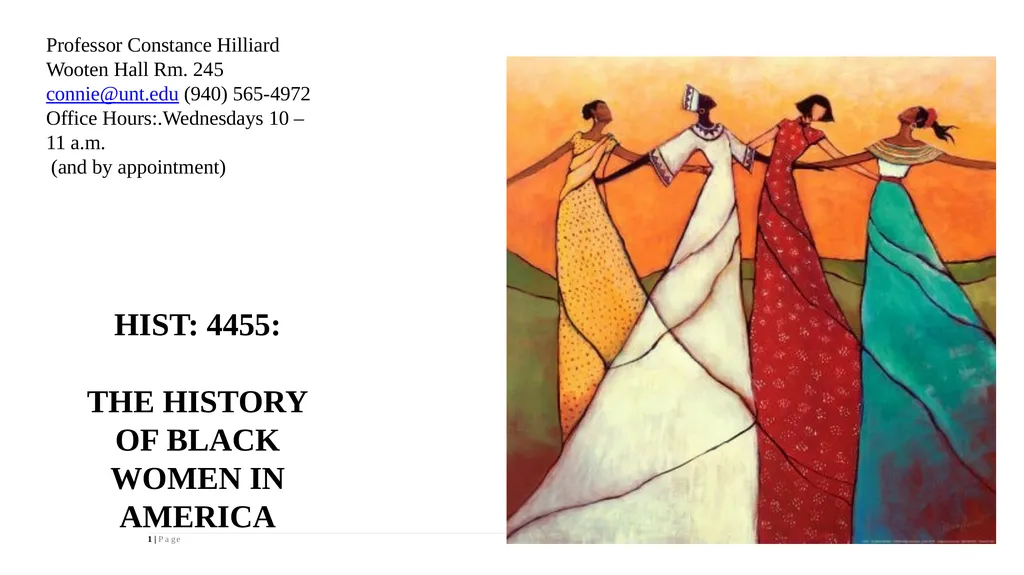
Professor Constance Hilliard Wooten Hall Rm. 245 connieunt.edu (940) 565-4972 Office Hours:.Wednesdays 10 11 a.m. (and by appointment) HIST: 4455: THE HISTORY OF BLACK WOMEN IN AMERICA 1 P a ge Course Description African-American women
Related Topics
Share
Embed code
Download this presentation From Below
"Professor Constance Hilliard Wooten Hall Rm. 245" is the property of its rightful owner. Permission is granted to download and print the materials on this website for personal, non-commercial use only, and to display it on your personal computer provided you do not modify the materials and that you retain all copyright notices contained in the materials. By downloading content from our website, you accept the terms of this agreement.
Presentation Transcript
01
Professor Constance Hilliard Wooten Hall Rm. 245 connie@unt.edu (940) 565-4972
Office Hours:.Wednesdays 10 – 11 a.m.
(and by appointment)
HIST: 4455:
THE HISTORY
OF BLACK WOMEN IN AMERICA 1 | P a ge<br>
Office Hours:.Wednesdays 10 – 11 a.m.
(and by appointment)
HIST: 4455:
THE HISTORY
OF BLACK WOMEN IN AMERICA 1 | P a ge<br>
02
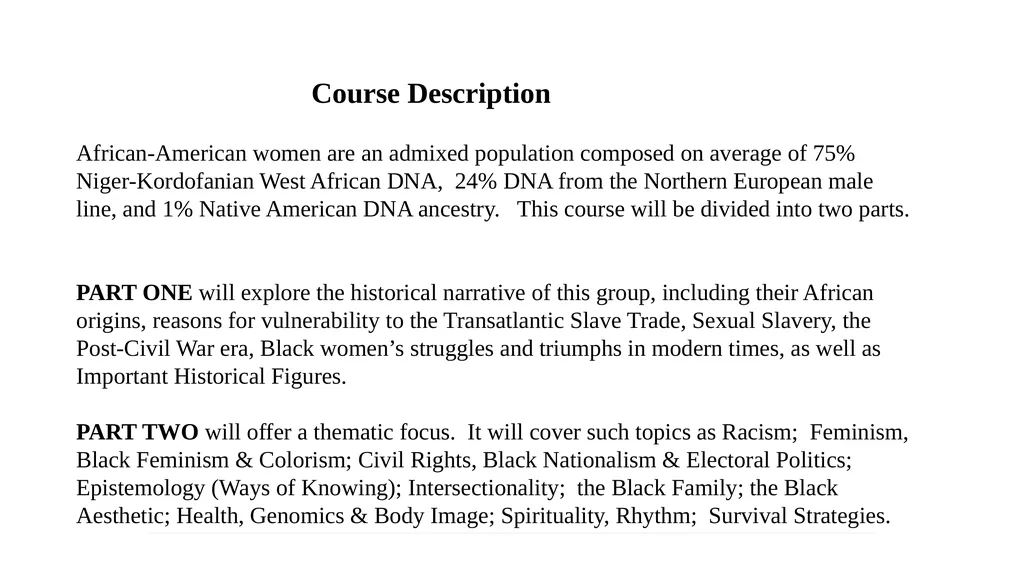
Course Description African-American women are an admixed population composed on average of 75% Niger-Kordofanian West African DNA, 24% DNA from the Northern European male line, and 1% Native American DNA ancestry. This course will be divided into two parts.
PART ONE will explore the historical narrative of this group, including their African origins, reasons for vulnerability to the Transatlantic Slave Trade, Sexual Slavery, the Post-Civil War era, Black women’s struggles and triumphs in modern times, as well as Important Historical Figures.
PART TWO will offer a thematic focus. It will cover such topics as Racism; Feminism, Black Feminism & Colorism; Civil Rights, Black Nationalism & Electoral Politics; Epistemology (Ways of Knowing); Intersectionality; the Black Family; the Black Aesthetic; Health, Genomics & Body Image; Spirituality, Rhythm; Survival Strategies.<br>
PART ONE will explore the historical narrative of this group, including their African origins, reasons for vulnerability to the Transatlantic Slave Trade, Sexual Slavery, the Post-Civil War era, Black women’s struggles and triumphs in modern times, as well as Important Historical Figures.
PART TWO will offer a thematic focus. It will cover such topics as Racism; Feminism, Black Feminism & Colorism; Civil Rights, Black Nationalism & Electoral Politics; Epistemology (Ways of Knowing); Intersectionality; the Black Family; the Black Aesthetic; Health, Genomics & Body Image; Spirituality, Rhythm; Survival Strategies.<br>
03
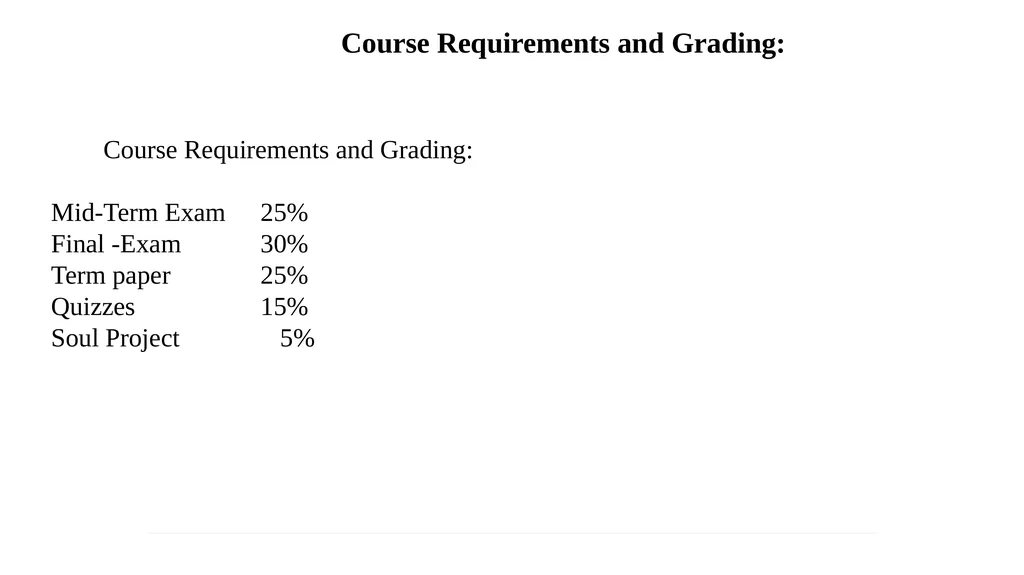
Course Requirements and Grading: Course Requirements and Grading:
Mid-Term Exam 25%
Final -Exam 30%
Term paper 25%
Quizzes 15%
Soul Project 5%<br>
Mid-Term Exam 25%
Final -Exam 30%
Term paper 25%
Quizzes 15%
Soul Project 5%<br>
04
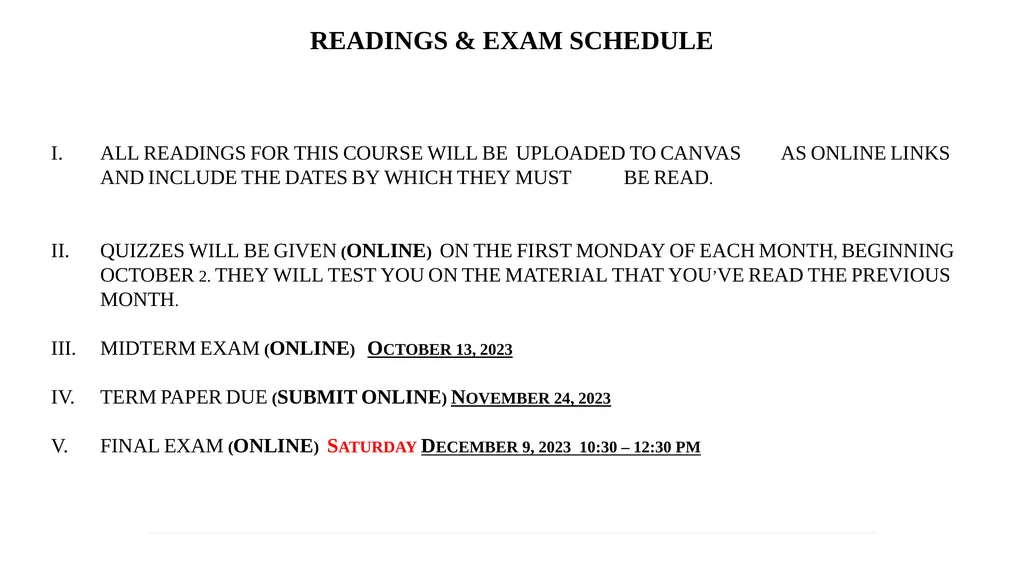
READINGS & EXAM SCHEDULE ALL READINGS FOR THIS COURSE WILL BE UPLOADED TO CANVAS AS ONLINE LINKS AND INCLUDE THE DATES BY WHICH THEY MUST BE READ.
QUIZZES WILL BE GIVEN (ONLINE) ON THE FIRST MONDAY OF EACH MONTH, BEGINNING OCTOBER 2. THEY WILL TEST YOU ON THE MATERIAL THAT YOU’VE READ THE PREVIOUS MONTH.
MIDTERM EXAM (ONLINE) October 13, 2023
TERM PAPER DUE (SUBMIT ONLINE) November 24, 2023
FINAL EXAM (ONLINE) Saturday December 9, 2023 10:30 – 12:30 pm<br>
QUIZZES WILL BE GIVEN (ONLINE) ON THE FIRST MONDAY OF EACH MONTH, BEGINNING OCTOBER 2. THEY WILL TEST YOU ON THE MATERIAL THAT YOU’VE READ THE PREVIOUS MONTH.
MIDTERM EXAM (ONLINE) October 13, 2023
TERM PAPER DUE (SUBMIT ONLINE) November 24, 2023
FINAL EXAM (ONLINE) Saturday December 9, 2023 10:30 – 12:30 pm<br>
05
Learning Objectives This course looks forward to answering the following questions:
In what ways are health influenced by ancestry?
Does Africa have a history?
Does race exist and what is ancestry?
What part of Africa did Black American women come from?
Why were they enslaved?
What was the experience of sexual slavery?
What cultural features are a legacy of their African homeland?
What epistemological features are a legacy of their homeland?<br>
In what ways are health influenced by ancestry?
Does Africa have a history?
Does race exist and what is ancestry?
What part of Africa did Black American women come from?
Why were they enslaved?
What was the experience of sexual slavery?
What cultural features are a legacy of their African homeland?
What epistemological features are a legacy of their homeland?<br>
06
8. Who are the most memorable historical figures in Black women’s history and why?
9. In what ways has slavery’s legacy affected the Black family?
10. What role do Black women play in the feminist movement? 11. What is the cultural legacy of African-American women?
12. What stereotypes do contemporary Black women face?
13. How would we define the Black aesthetic?
14. Describe the epistemological differences between Black female culture and the American mainstream.
15. What role does rhythm play in knowledge acquisition?
What factors account for the distinctive health disparities gap faced by African-American women, including complications in childbirth?
What is soul wisdom?<br>
9. In what ways has slavery’s legacy affected the Black family?
10. What role do Black women play in the feminist movement? 11. What is the cultural legacy of African-American women?
12. What stereotypes do contemporary Black women face?
13. How would we define the Black aesthetic?
14. Describe the epistemological differences between Black female culture and the American mainstream.
15. What role does rhythm play in knowledge acquisition?
What factors account for the distinctive health disparities gap faced by African-American women, including complications in childbirth?
What is soul wisdom?<br>
07
SOUL PROJECT
(This assignment can be handed in at any time before the end of the semester – but don’t procrastinate!) The Soul Project represents an opportunity for students to explore the expressive culture of Black women in America, through presentation of a project of their own creation inspired by the subject matter of this course. It may involve such activities as the writing of a poem, short story, essay, artistic expression in preparing a drawing, sketch, sculpture, craft making, a short dance, singing or instrumental performance, and so forth.
Because American cultural values facts (empiricism) over creativity, this assignment is an opportunity to engage a part of your mind-body that is often times overlooked and perhaps even starved. So, you may not have made a drawing since kindergarten. But no matter. It’s the effort that counts and the grading of these projects is past/fail, i.e. as long as you turn something in, you pass.
As this project represents an opportunity to express your own creativity, please refrain from merely reciting someone else’s poetry or writings. .<br>
Because American cultural values facts (empiricism) over creativity, this assignment is an opportunity to engage a part of your mind-body that is often times overlooked and perhaps even starved. So, you may not have made a drawing since kindergarten. But no matter. It’s the effort that counts and the grading of these projects is past/fail, i.e. as long as you turn something in, you pass.
As this project represents an opportunity to express your own creativity, please refrain from merely reciting someone else’s poetry or writings. .<br>
08
TERMPAPER The Term paper (10 to 12 pages typed) must present a factual (empirical), well-reasoned examination of an issue relating to either the historical or the thematic segment of this course. This paper can also relate to the relationship of another group to black women, e.g. white males, white females, Native Americans, Latinas or other ethnicities). This paper must demonstrate clarity of thought and an effective use of source materials. Term papers will also be expected to follow accepted practices of form and style for academic writing, and make accurate use of citations, footnotes, bibliography. Do not hand in a term paper that does not use citations.
The citation style to be used for this research paper will be “Turabian Referencing.” If you are not familiar with this citation style, look it up on the Internet. Cited sources are indicated in your text by a superscript number placed at the end of the sentence. Using Microsoft Word, the superscript number is created by clicking on “References”, then clicking on endnote or footnote.
Plagiarism.
If you quote or even paraphrase another author's work without including a reference, this is called plagiarism. This is cheating and will be penalized with a grade of ZERO on the paper.<br>
The citation style to be used for this research paper will be “Turabian Referencing.” If you are not familiar with this citation style, look it up on the Internet. Cited sources are indicated in your text by a superscript number placed at the end of the sentence. Using Microsoft Word, the superscript number is created by clicking on “References”, then clicking on endnote or footnote.
Plagiarism.
If you quote or even paraphrase another author's work without including a reference, this is called plagiarism. This is cheating and will be penalized with a grade of ZERO on the paper.<br>
09
DISABILITY STATEMENT: Any student with special circumstances covered by the Americans with
Disabilities Act should register with the Office of Disability
Accommodation (ODA), Suite 322, University Union Building, and also
inform the instructor of the class. Reasonable adjustments will be made
to accommodate the special needs of students with disabilities where
such adjustments are necessary to provide equality of educational
access. Students who have registered with the ODA should make an appointment to
discuss their disabilities accommodation requests with the instructor.<br>
Disabilities Act should register with the Office of Disability
Accommodation (ODA), Suite 322, University Union Building, and also
inform the instructor of the class. Reasonable adjustments will be made
to accommodate the special needs of students with disabilities where
such adjustments are necessary to provide equality of educational
access. Students who have registered with the ODA should make an appointment to
discuss their disabilities accommodation requests with the instructor.<br>
10
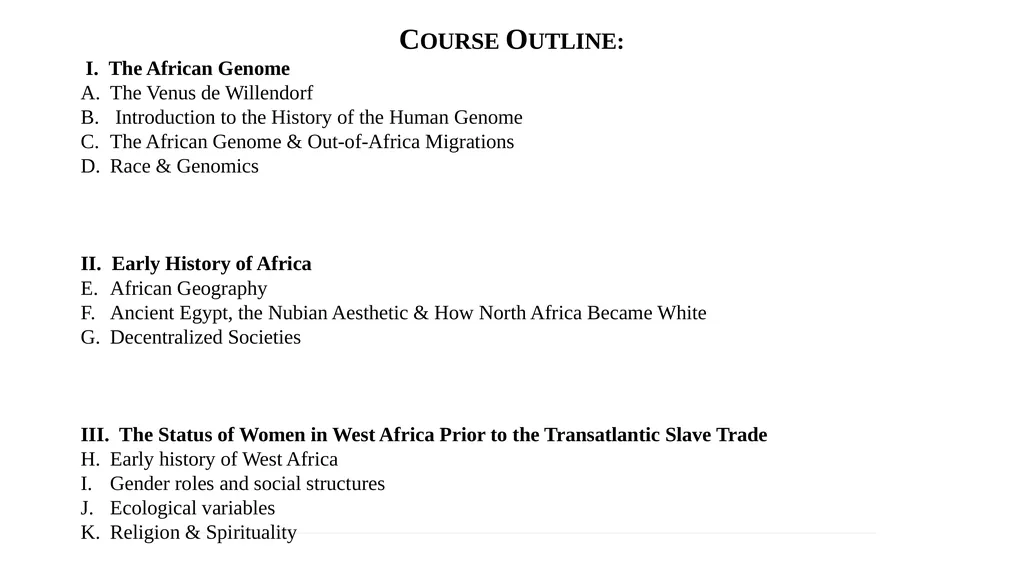
Course Outline:
I. The African Genome
The Venus de Willendorf
Introduction to the History of the Human Genome
The African Genome & Out-of-Africa Migrations
Race & Genomics
II. Early History of Africa
African Geography
Ancient Egypt, the Nubian Aesthetic & How North Africa Became White
Decentralized Societies
III. The Status of Women in West Africa Prior to the Transatlantic Slave Trade
Early history of West Africa
Gender roles and social structures
Ecological variables
Religion & Spirituality<br>
I. The African Genome
The Venus de Willendorf
Introduction to the History of the Human Genome
The African Genome & Out-of-Africa Migrations
Race & Genomics
II. Early History of Africa
African Geography
Ancient Egypt, the Nubian Aesthetic & How North Africa Became White
Decentralized Societies
III. The Status of Women in West Africa Prior to the Transatlantic Slave Trade
Early history of West Africa
Gender roles and social structures
Ecological variables
Religion & Spirituality<br>
11
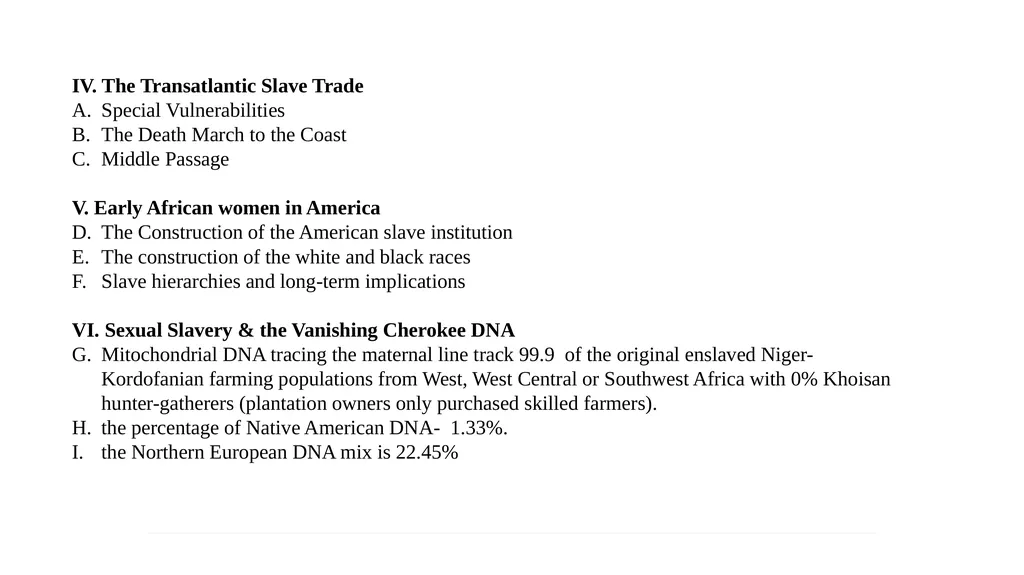
IV. The Transatlantic Slave Trade
Special Vulnerabilities
The Death March to the Coast
Middle Passage
V. Early African women in America
The Construction of the American slave institution
The construction of the white and black races
Slave hierarchies and long-term implications
VI. Sexual Slavery & the Vanishing Cherokee DNA
Mitochondrial DNA tracing the maternal line track 99.9 of the original enslaved Niger-Kordofanian farming populations from West, West Central or Southwest Africa with 0% Khoisan hunter-gatherers (plantation owners only purchased skilled farmers).
the percentage of Native American DNA- 1.33%.
the Northern European DNA mix is 22.45%<br>
Special Vulnerabilities
The Death March to the Coast
Middle Passage
V. Early African women in America
The Construction of the American slave institution
The construction of the white and black races
Slave hierarchies and long-term implications
VI. Sexual Slavery & the Vanishing Cherokee DNA
Mitochondrial DNA tracing the maternal line track 99.9 of the original enslaved Niger-Kordofanian farming populations from West, West Central or Southwest Africa with 0% Khoisan hunter-gatherers (plantation owners only purchased skilled farmers).
the percentage of Native American DNA- 1.33%.
the Northern European DNA mix is 22.45%<br>
12
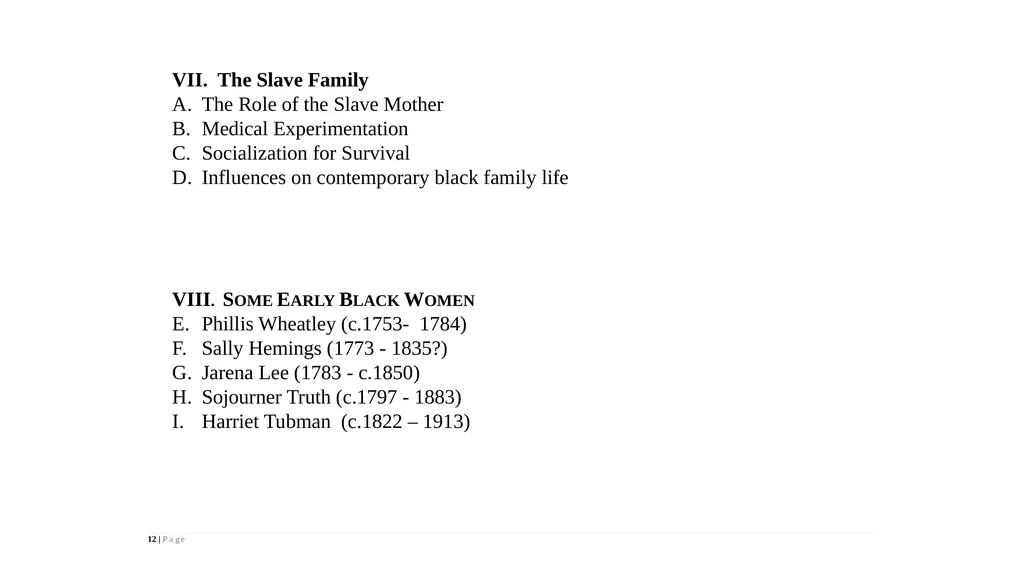
12 | P a ge VII. The Slave Family
The Role of the Slave Mother
Medical Experimentation
Socialization for Survival
Influences on contemporary black family life
VIII. Some Early Black Women
Phillis Wheatley (c.1753- 1784)
Sally Hemings (1773 - 1835?)
Jarena Lee (1783 - c.1850)
Sojourner Truth (c.1797 - 1883)
Harriet Tubman (c.1822 – 1913)<br>
The Role of the Slave Mother
Medical Experimentation
Socialization for Survival
Influences on contemporary black family life
VIII. Some Early Black Women
Phillis Wheatley (c.1753- 1784)
Sally Hemings (1773 - 1835?)
Jarena Lee (1783 - c.1850)
Sojourner Truth (c.1797 - 1883)
Harriet Tubman (c.1822 – 1913)<br>
13
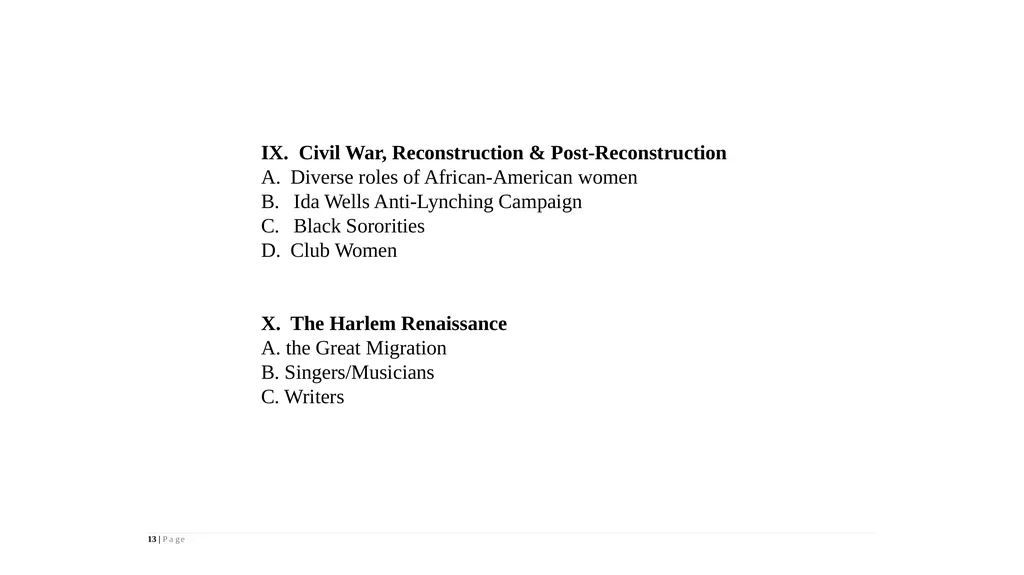
13 | P a ge IX. Civil War, Reconstruction & Post-Reconstruction
Diverse roles of African-American women
Ida Wells Anti-Lynching Campaign
Black Sororities
Club Women
X. The Harlem Renaissance
A. the Great Migration
B. Singers/Musicians
C. Writers<br>
Diverse roles of African-American women
Ida Wells Anti-Lynching Campaign
Black Sororities
Club Women
X. The Harlem Renaissance
A. the Great Migration
B. Singers/Musicians
C. Writers<br>
14
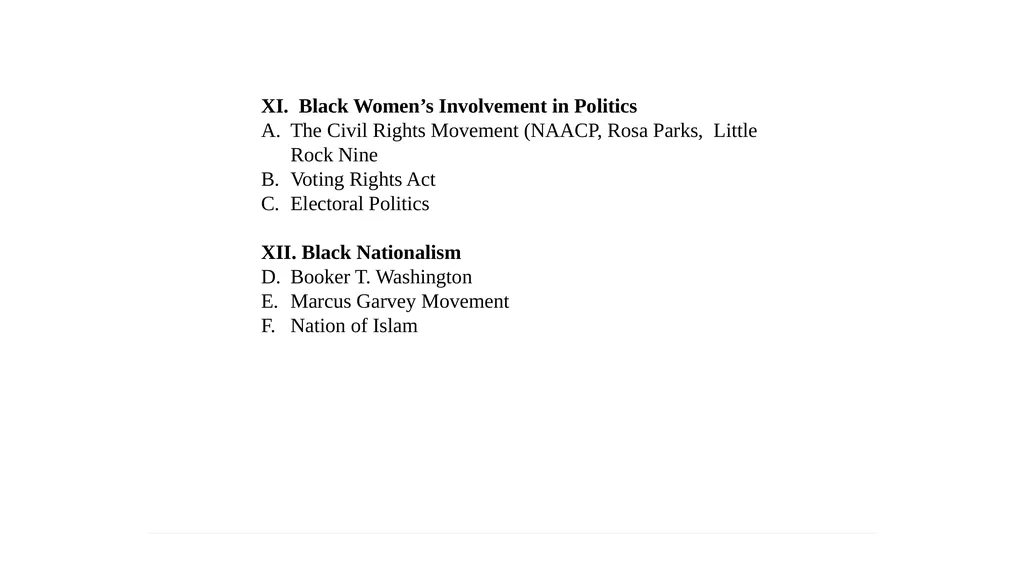
XI. Black Women’s Involvement in Politics
The Civil Rights Movement (NAACP, Rosa Parks, Little Rock Nine
Voting Rights Act
Electoral Politics
XII. Black Nationalism
Booker T. Washington
Marcus Garvey Movement
Nation of Islam<br>
The Civil Rights Movement (NAACP, Rosa Parks, Little Rock Nine
Voting Rights Act
Electoral Politics
XII. Black Nationalism
Booker T. Washington
Marcus Garvey Movement
Nation of Islam<br>
15
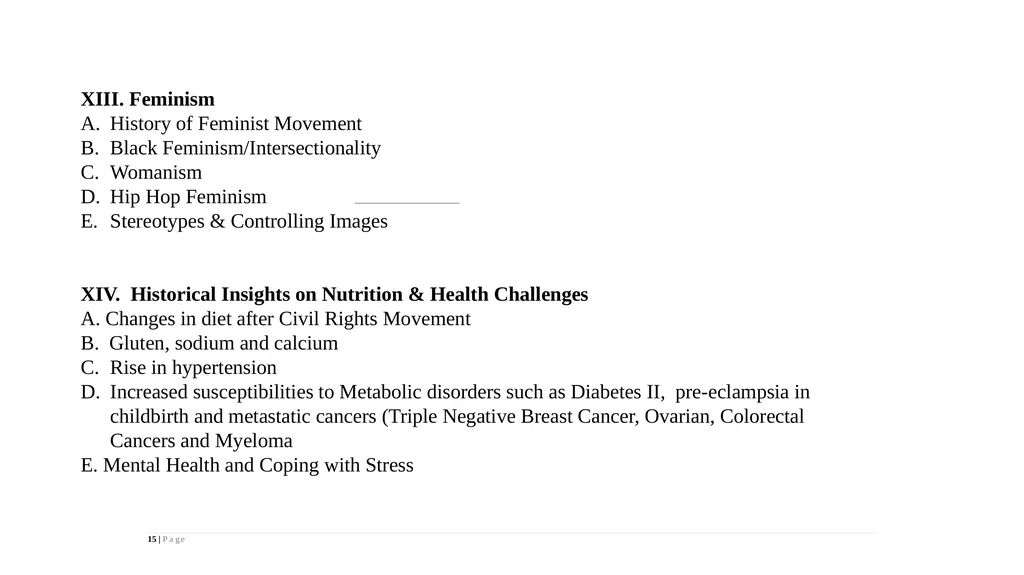
15 | P a ge XIII. Feminism
History of Feminist Movement
Black Feminism/Intersectionality
Womanism
Hip Hop Feminism
Stereotypes & Controlling Images
XIV. Historical Insights on Nutrition & Health Challenges
A. Changes in diet after Civil Rights Movement
B. Gluten, sodium and calcium
Rise in hypertension
Increased susceptibilities to Metabolic disorders such as Diabetes II, pre-eclampsia in childbirth and metastatic cancers (Triple Negative Breast Cancer, Ovarian, Colorectal Cancers and Myeloma
E. Mental Health and Coping with Stress<br>
History of Feminist Movement
Black Feminism/Intersectionality
Womanism
Hip Hop Feminism
Stereotypes & Controlling Images
XIV. Historical Insights on Nutrition & Health Challenges
A. Changes in diet after Civil Rights Movement
B. Gluten, sodium and calcium
Rise in hypertension
Increased susceptibilities to Metabolic disorders such as Diabetes II, pre-eclampsia in childbirth and metastatic cancers (Triple Negative Breast Cancer, Ovarian, Colorectal Cancers and Myeloma
E. Mental Health and Coping with Stress<br>
16
XV. Survival Strategies
A. Expressionism
Epistemology (Ways of Knowing)
Secular Spirituality
Science
Harmonizing Mind and Body<br>
A. Expressionism
Epistemology (Ways of Knowing)
Secular Spirituality
Science
Harmonizing Mind and Body<br>