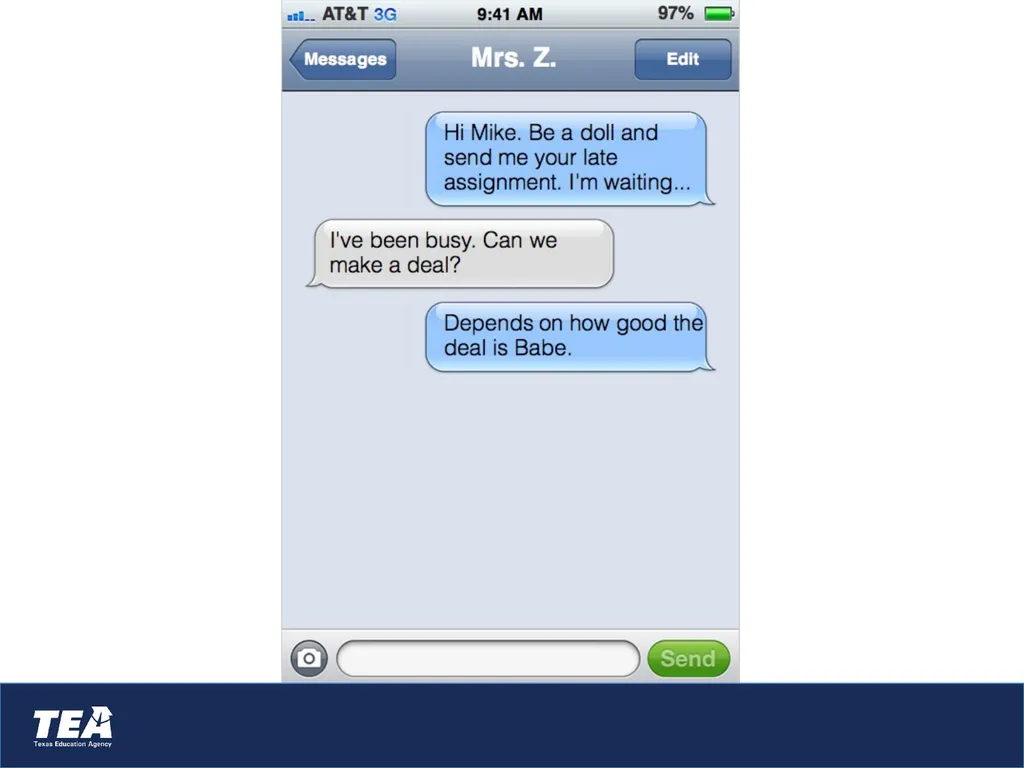
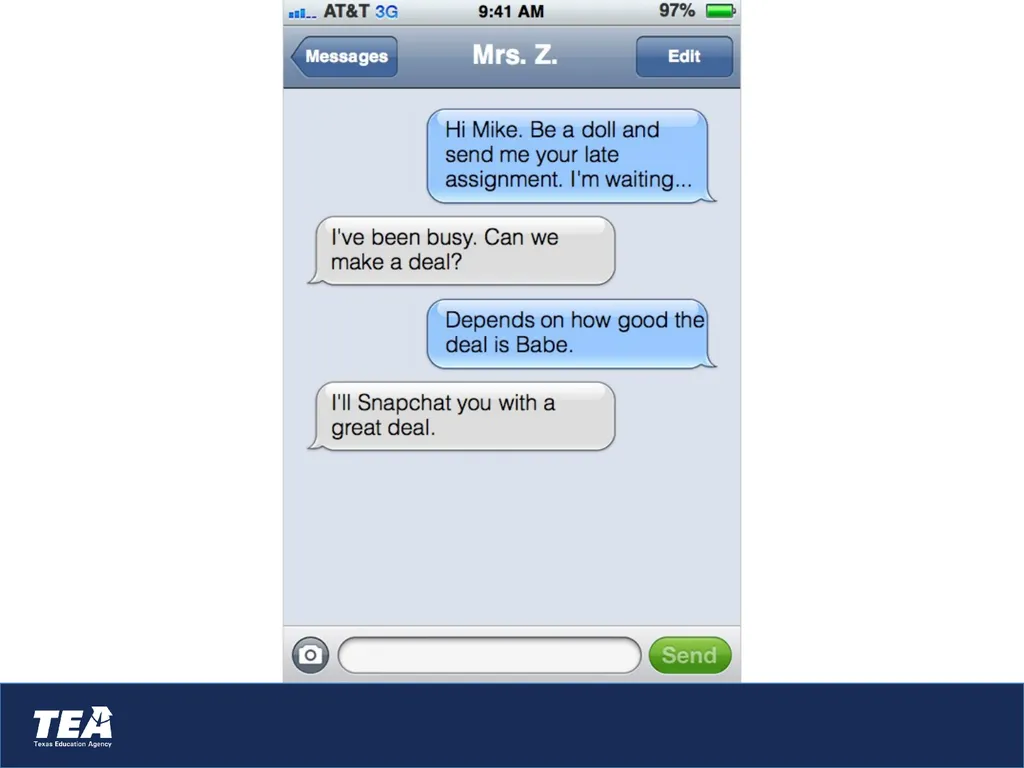
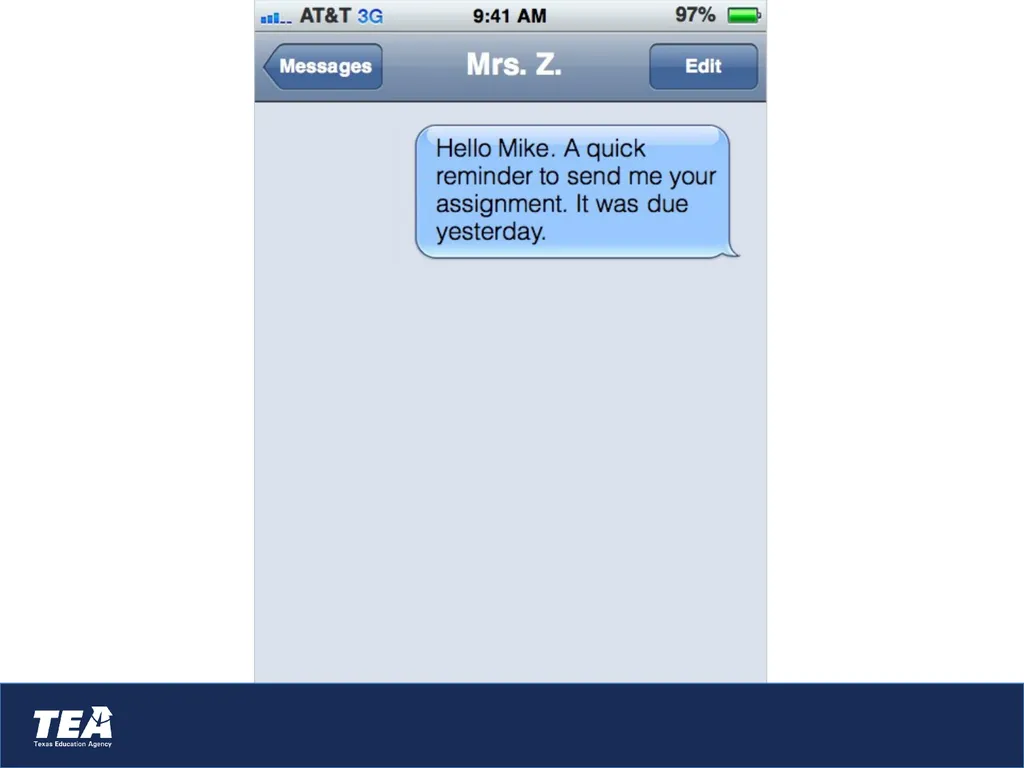
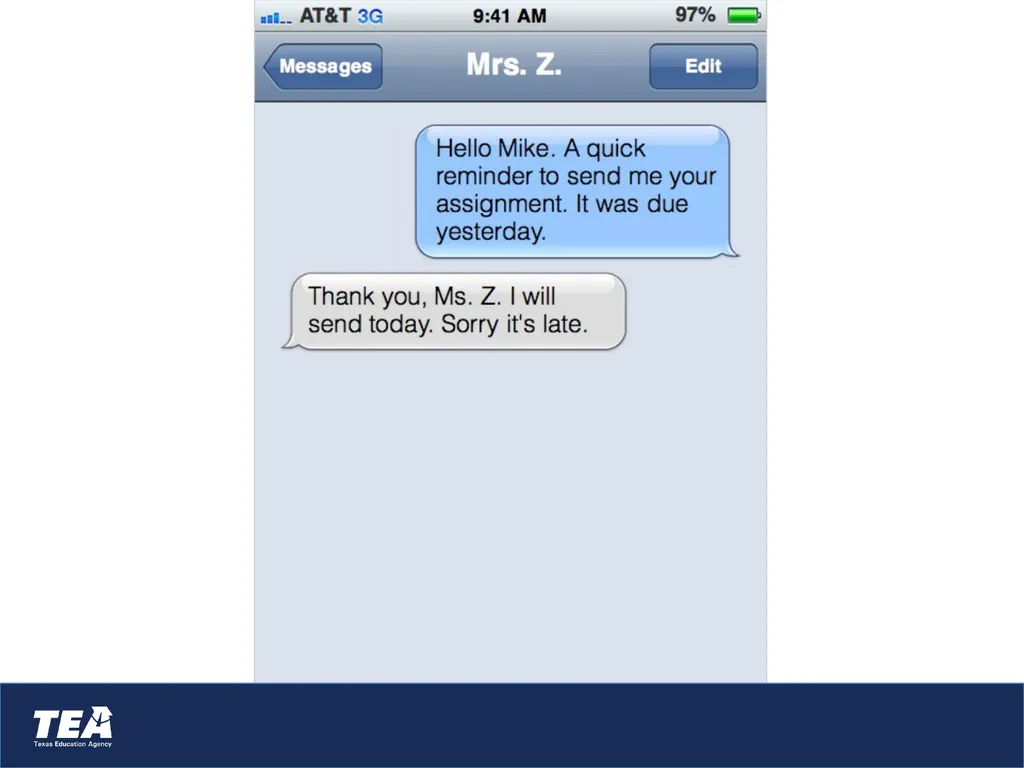
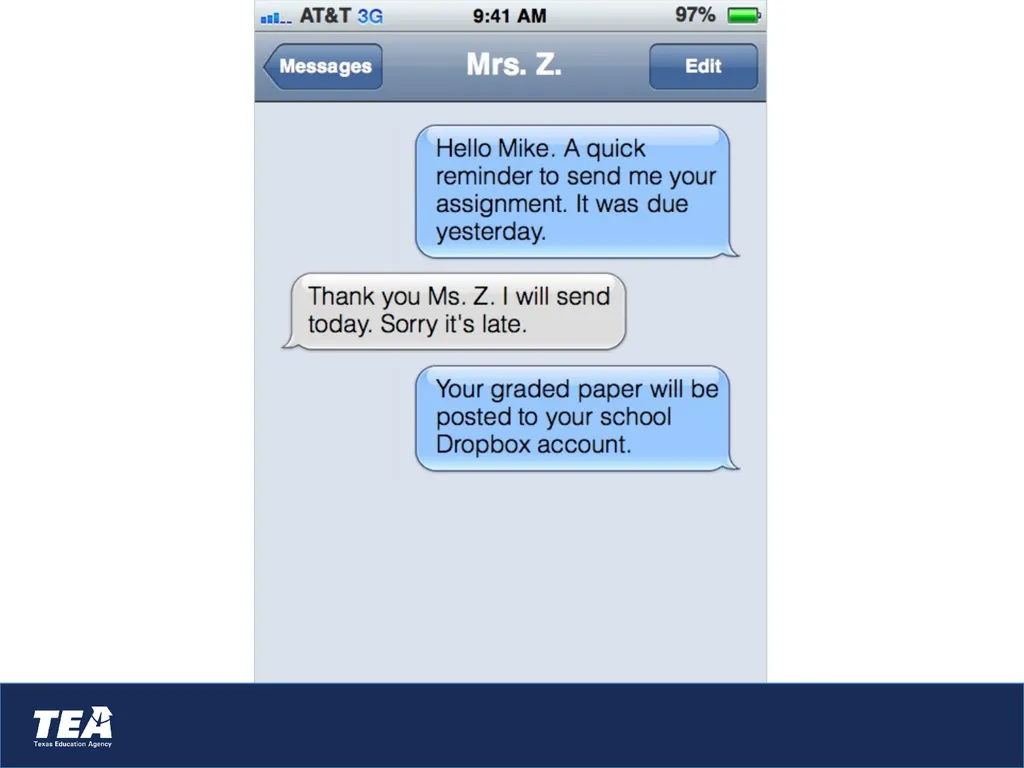
04
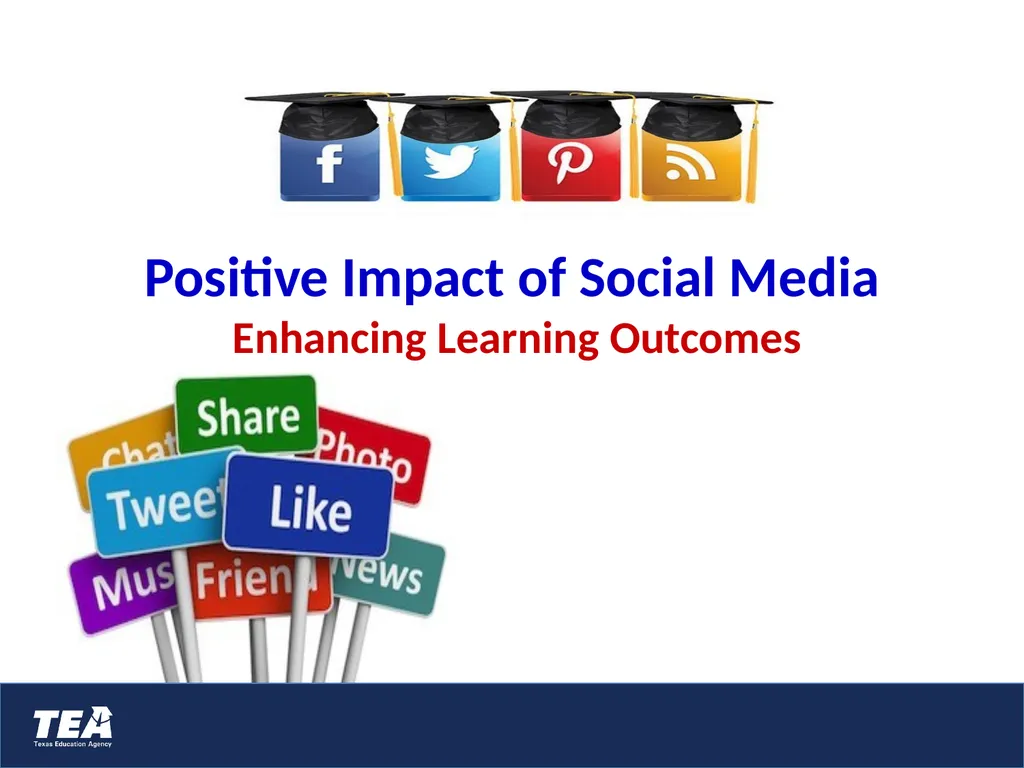
Positive Impact of Social Media
Enhancing Learning Outcomes 5<br>
05
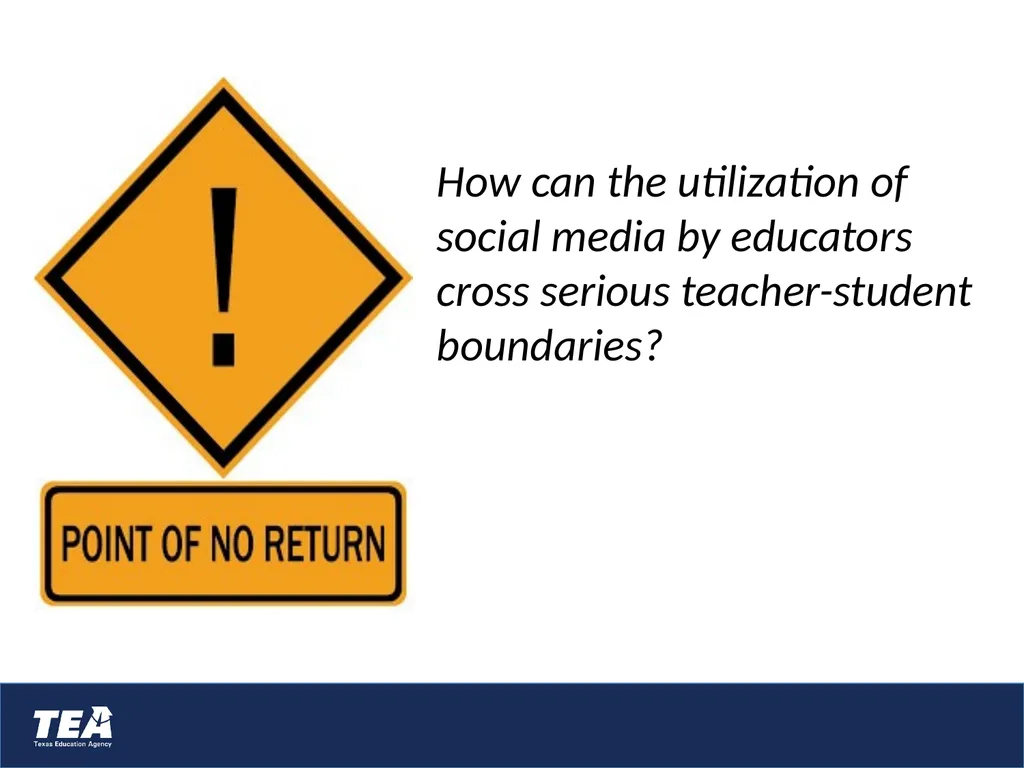
How can the utilization of social media by educators cross serious teacher-student boundaries? 6<br>
06
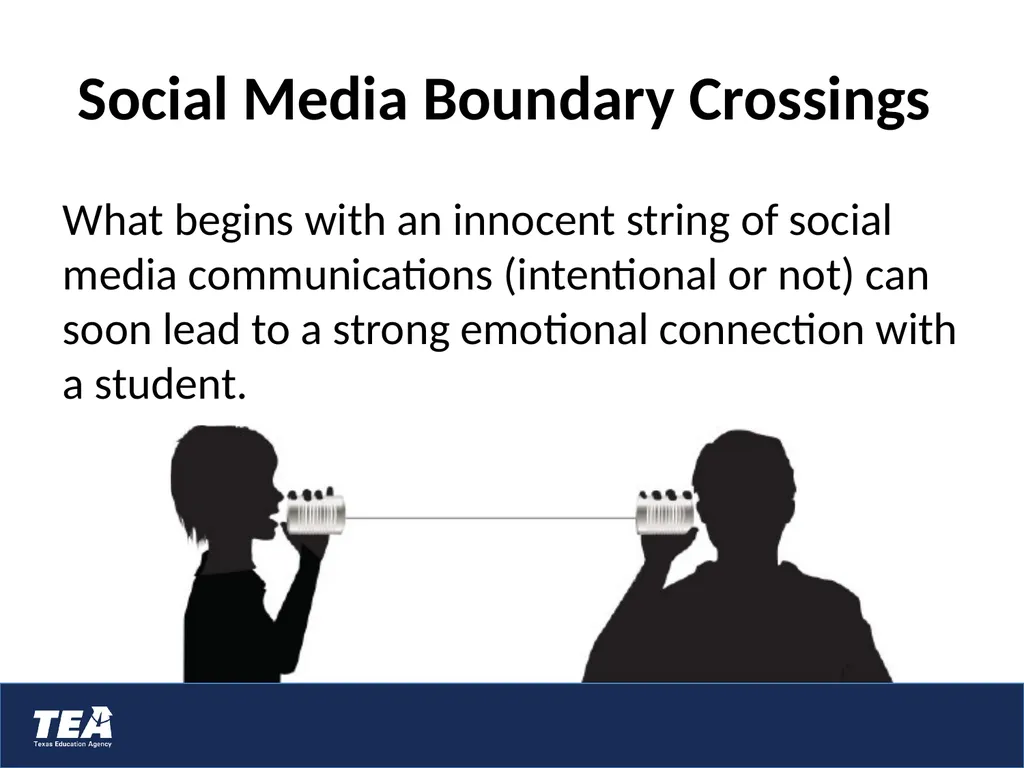
Social Media Boundary Crossings What begins with an innocent string of social media communications (intentional or not) can soon lead to a strong emotional connection with a student. 7<br>
07
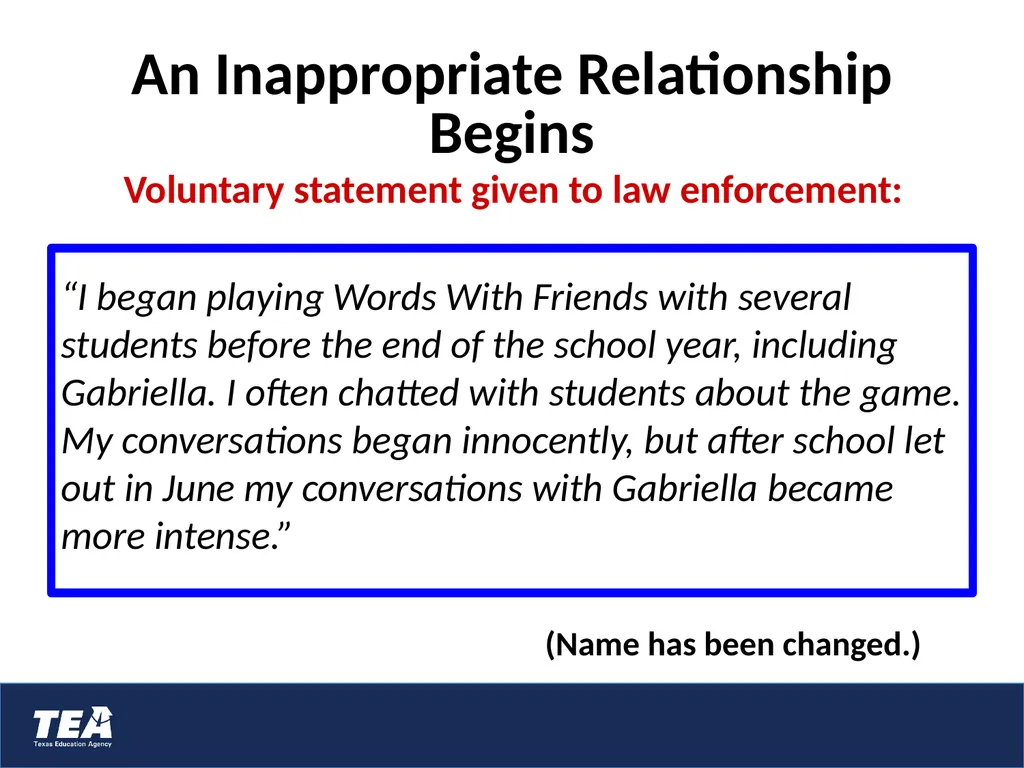
An Inappropriate Relationship Begins Voluntary statement given to law enforcement: “I began playing Words With Friends with several students before the end of the school year, including Gabriella. I often chatted with students about the game. My conversations began innocently, but after school let out in June my conversations with Gabriella became more intense.” (Name has been changed.) 8<br>
08
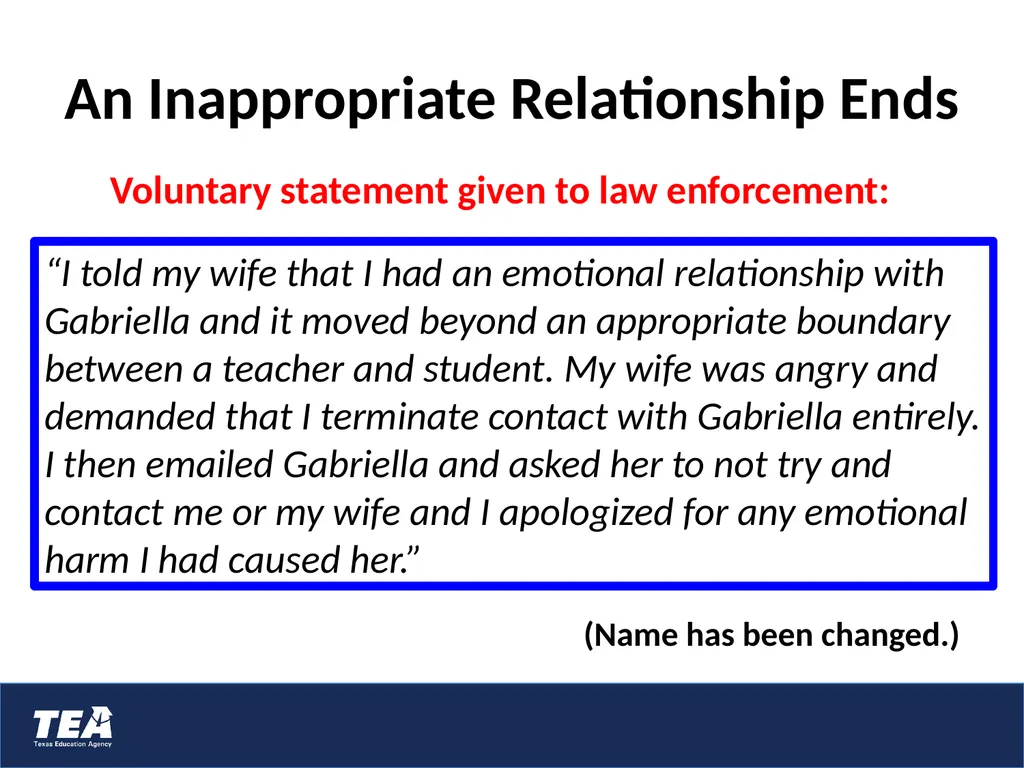
An Inappropriate Relationship Ends Voluntary statement given to law enforcement: “I told my wife that I had an emotional relationship with Gabriella and it moved beyond an appropriate boundary between a teacher and student. My wife was angry and demanded that I terminate contact with Gabriella entirely. I then emailed Gabriella and asked her to not try and contact me or my wife and I apologized for any emotional harm I had caused her.” (Name has been changed.) 9<br>
09
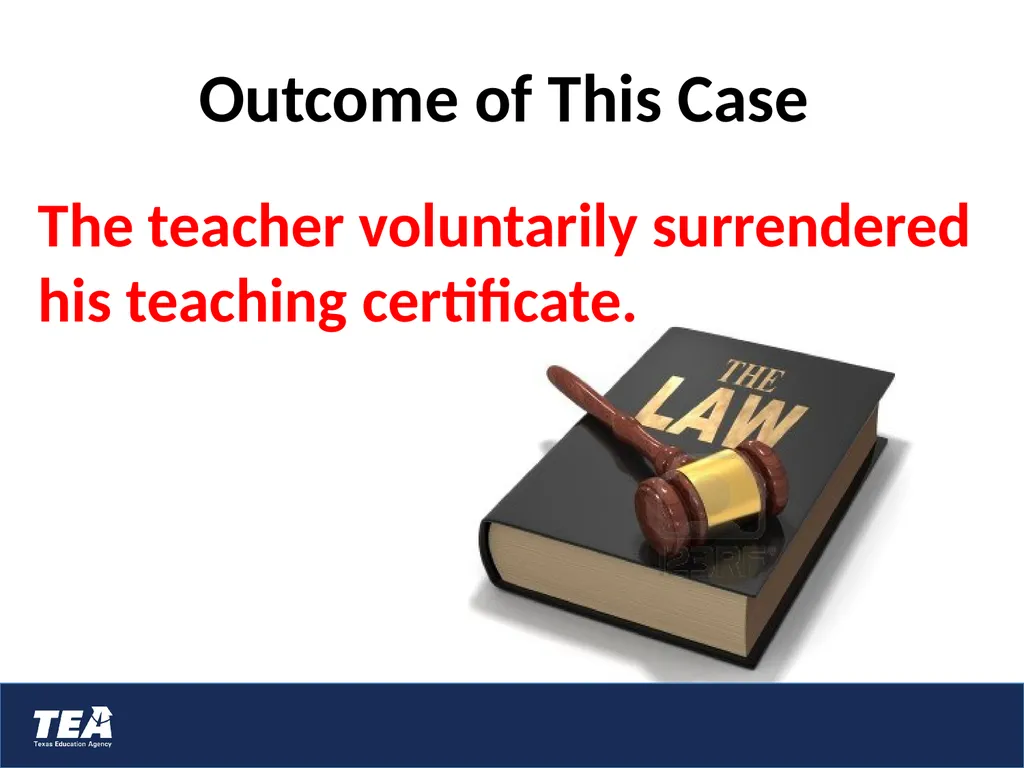
Outcome of This Case The teacher voluntarily surrendered
his teaching certificate. 10<br>
10
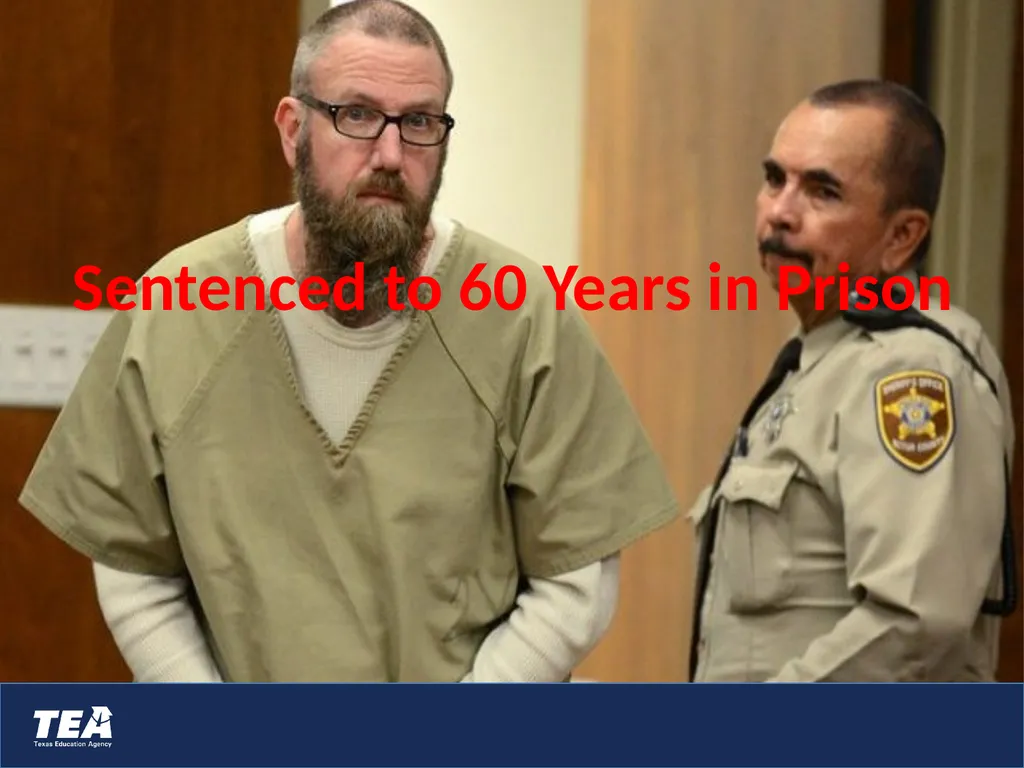
Photo Source: Sterkel, M. (2016, February). Burns rejects plea deal [digital image]. Odessa American Online. Retrieved from http://www.oaoa.com/news/crime_justice/courts/article_f56a1608-d7db-11e5-b352-43f5acd290c0.html Sentenced to 60 Years in Prison 11<br>
11
15 times EVERY week in this country 12<br>
12
Is Social Media to Blame for Inappropriate Student-Teacher Relationships? 13<br>
13
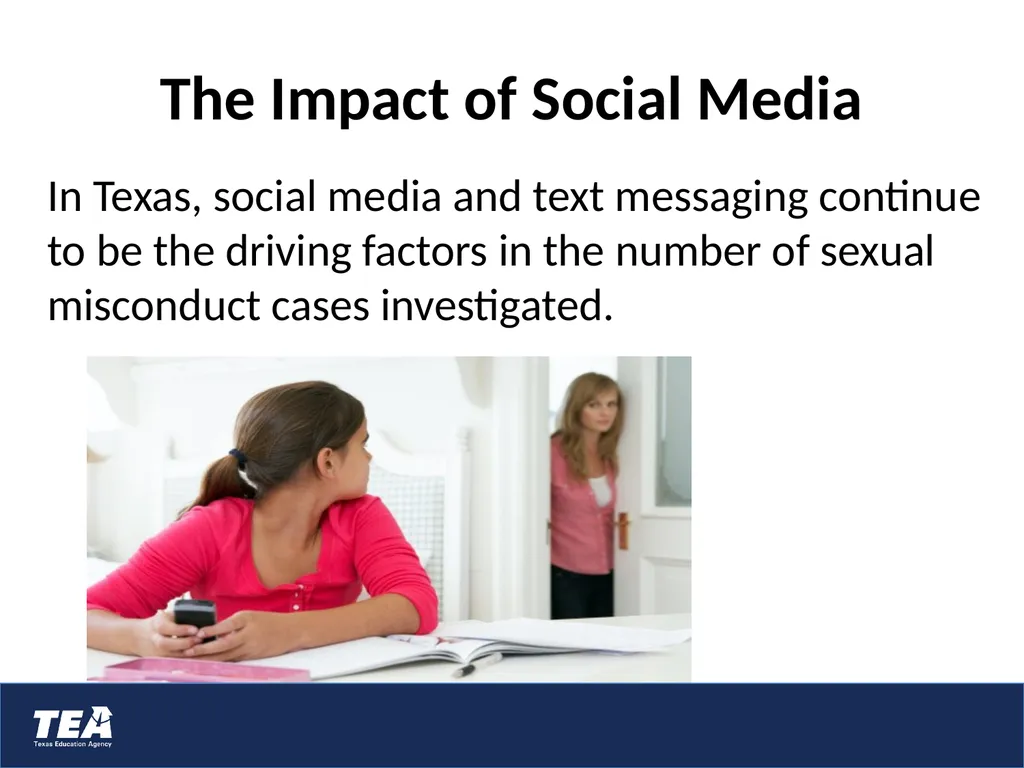
The Impact of Social Media In Texas, social media and text messaging continue to be the driving factors in the number of sexual misconduct cases investigated. 14<br>
14
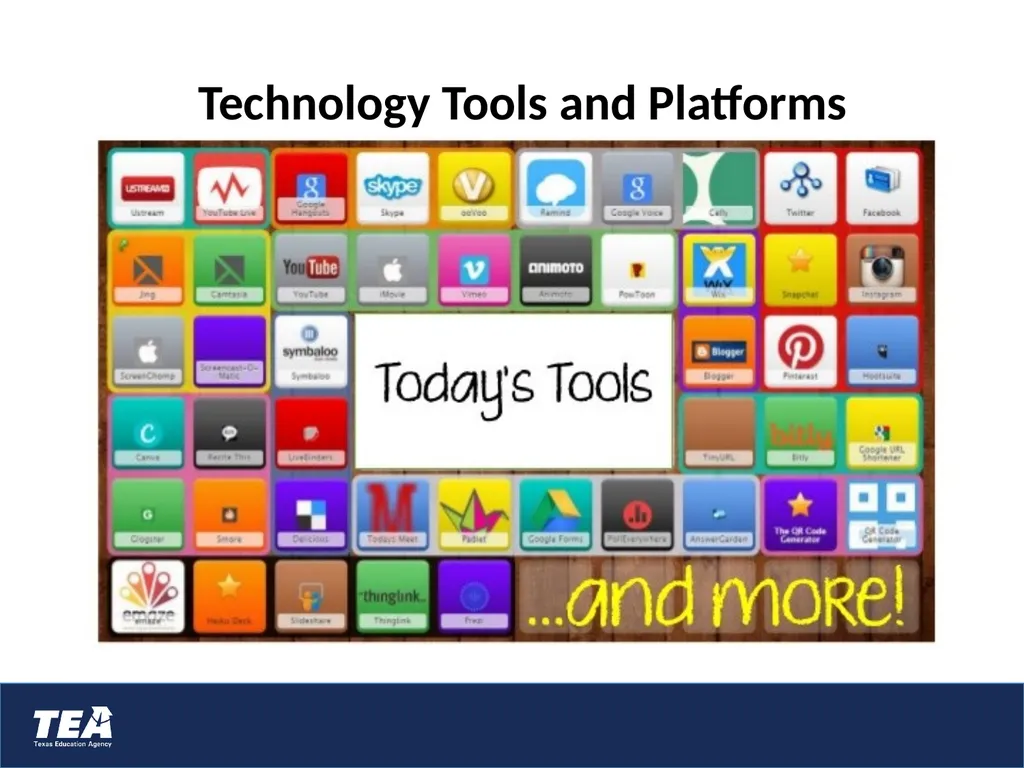
Technology Tools and Platforms
. 15<br>
15
Social media leaves a digital footprint. 16<br>
17
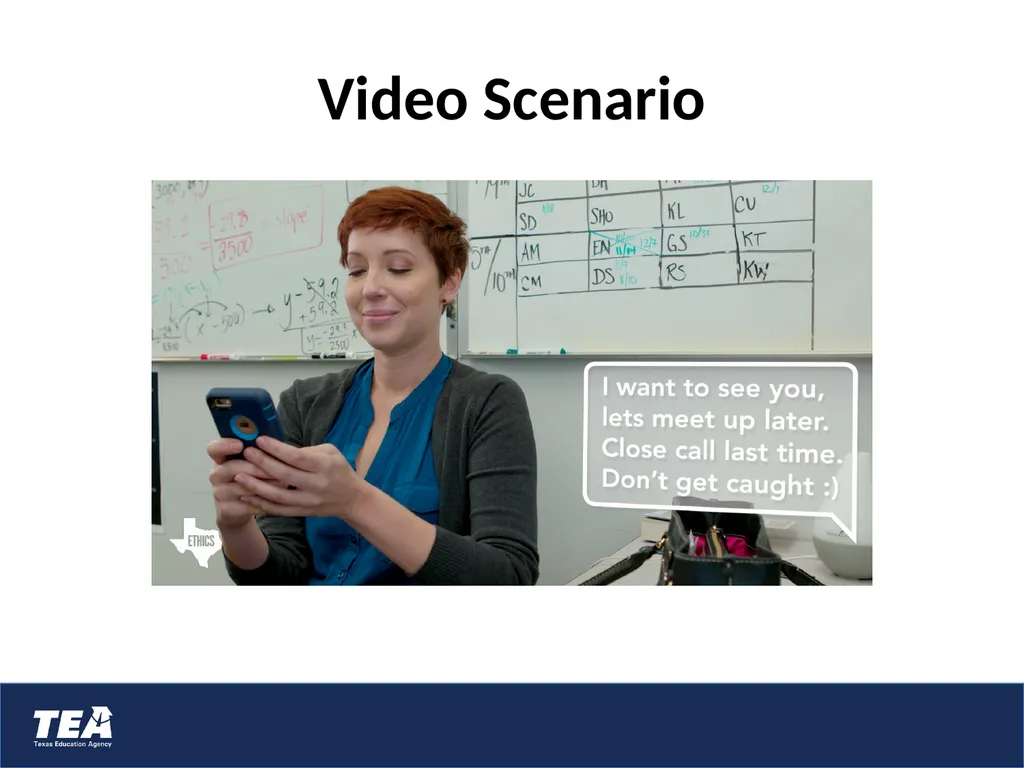
Video Scenario Debrief 18<br>
18
Sobering Statistics 19<br>
19
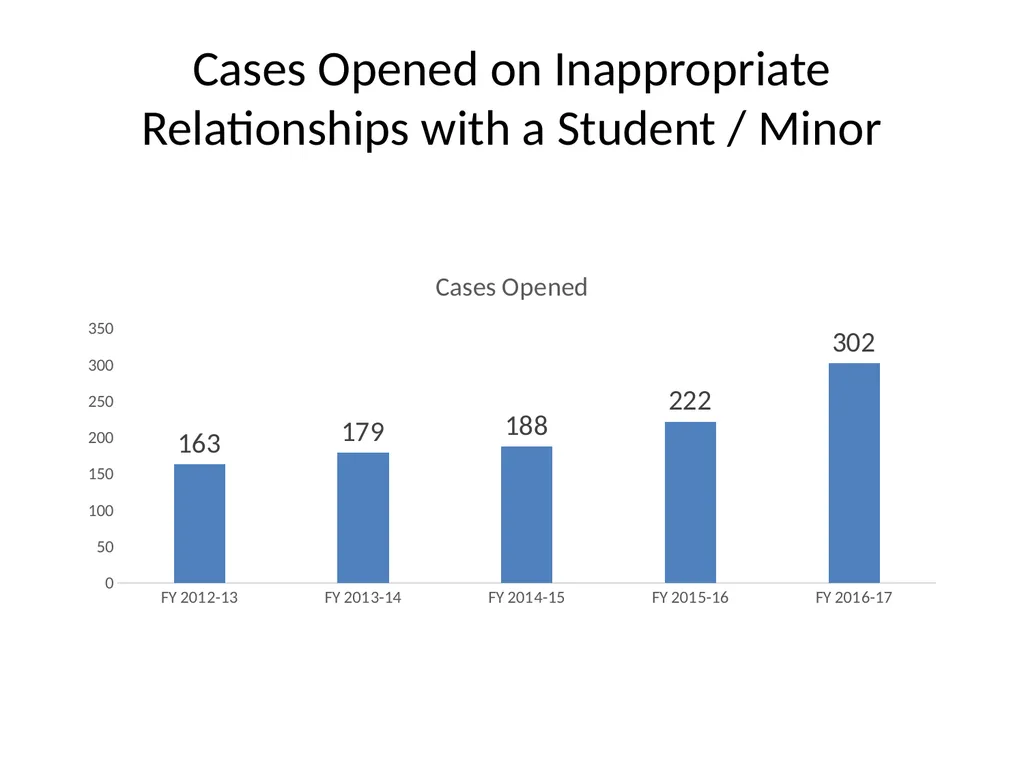
Cases Opened on Inappropriate Relationships with a Student / Minor<br>
20
Treading on Dangerous Ground Treading on Dangerous Ground 21<br>
21
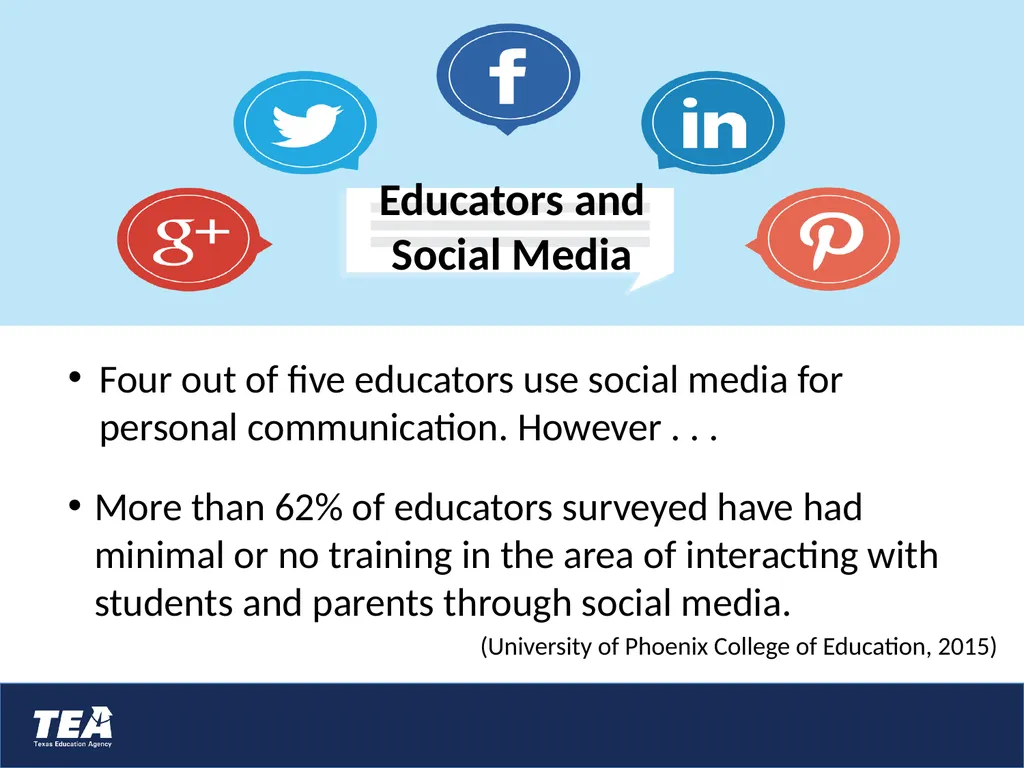
Educators and Social Media Four out of five educators use social media for personal communication. However . . . More than 62% of educators surveyed have had minimal or no training in the area of interacting with students and parents through social media. 22 (University of Phoenix College of Education, 2015)<br>
23
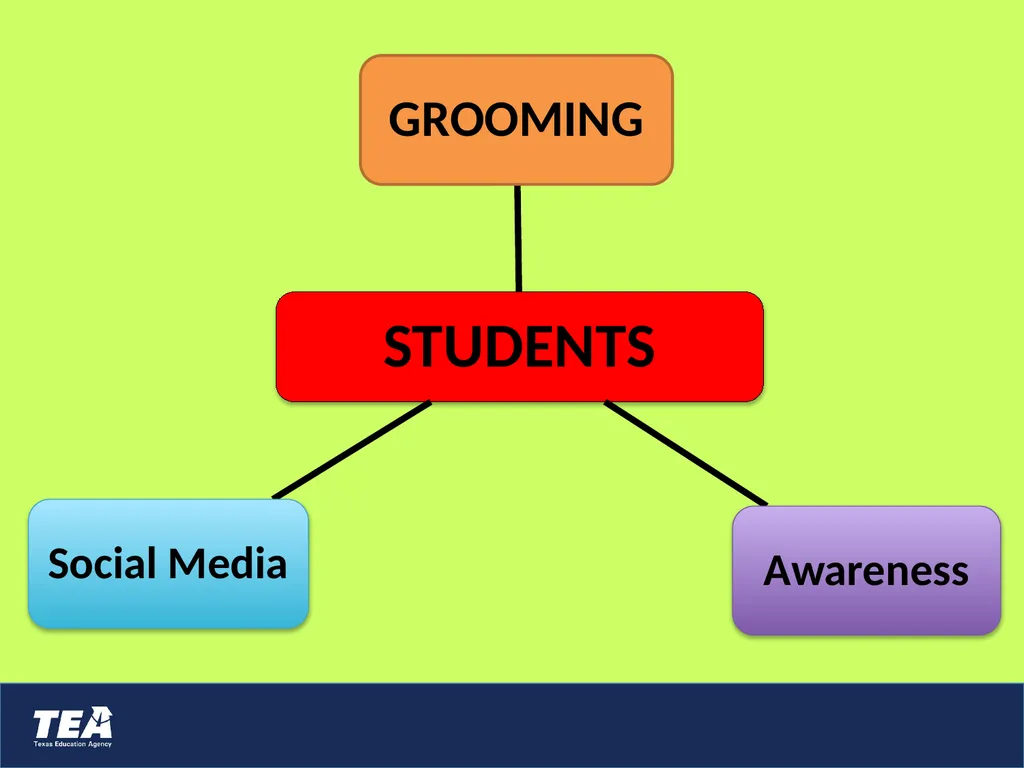
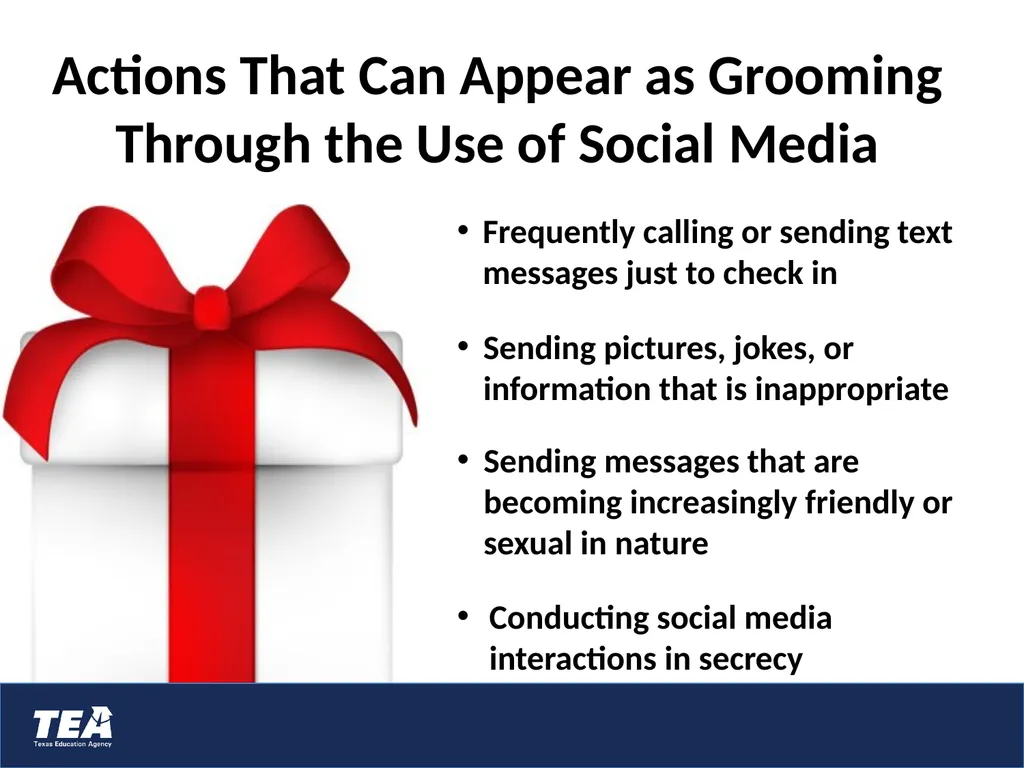
Actions That Can Appear as Grooming Through the Use of Social Media Sending pictures, jokes, or information that is inappropriate Sending messages that are becoming increasingly friendly or sexual in nature Frequently calling or sending text messages just to check in Conducting social media interactions in secrecy<br>
24
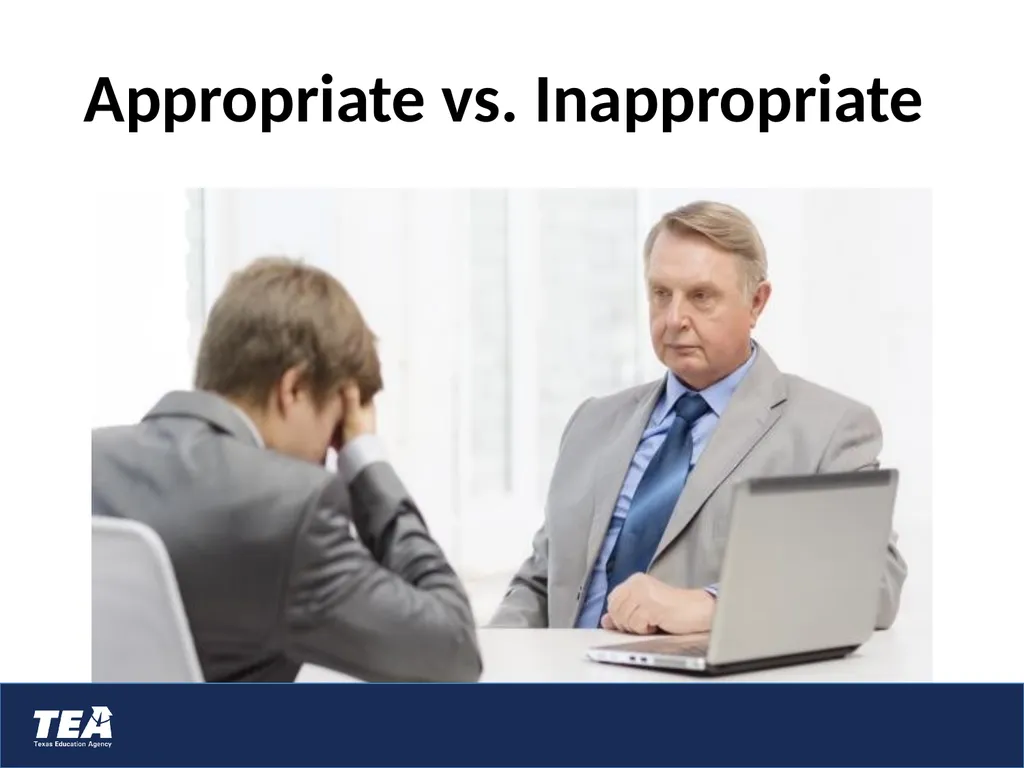
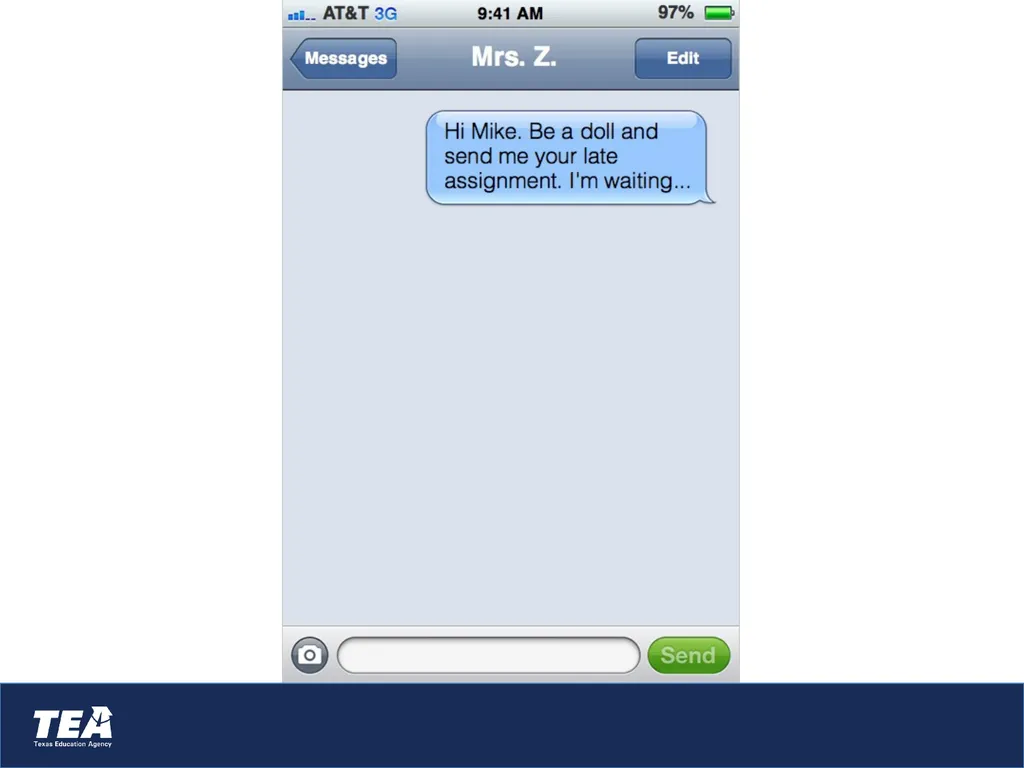
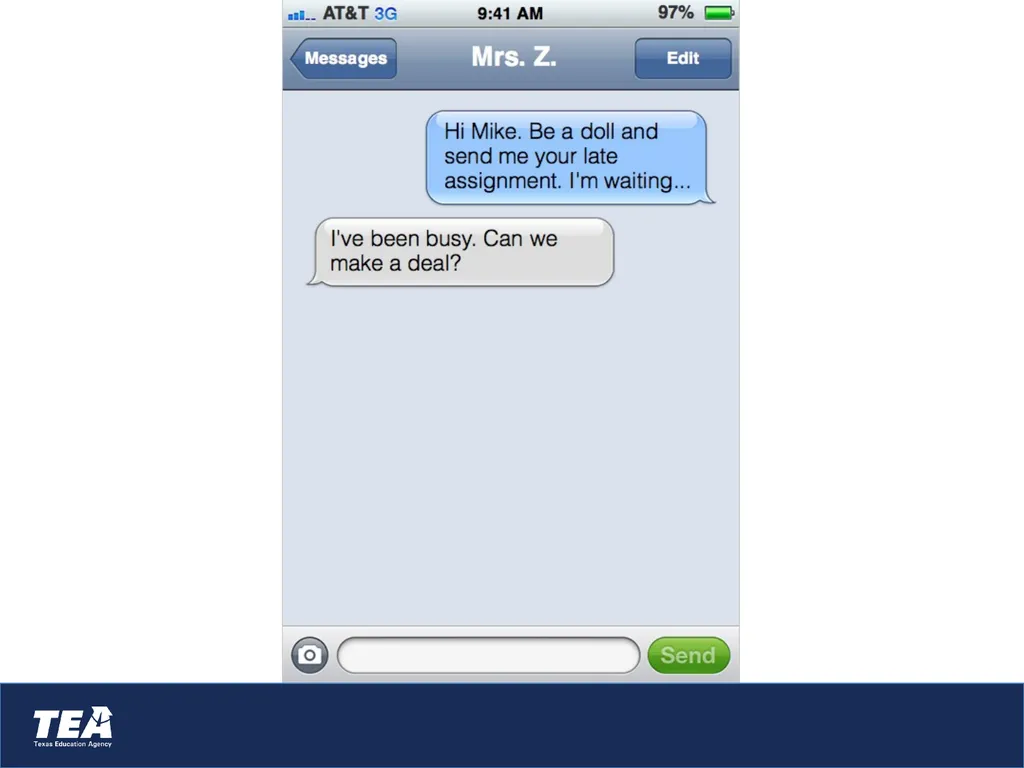
Appropriate vs. Inappropriate 25<br>
34
Inappropriate Social Media Communications 35<br>
35
What was the nature, purpose, timing, and amount of the communication? 36<br>
36
Was the communication made openly, or did the educator attempt to conceal it? 37<br>
37
Could the communication
be interpreted as
soliciting contact or a
romantic relationship? 38<br>
38
Was the communication sexually explicit? Did it involve discussion of a sexual nature regarding either the educator or the student? 39<br>
39
The Law and the Consequences Loss of Career Loss of Freedom 40<br>
40
Utilization Guidelines 41<br>
41
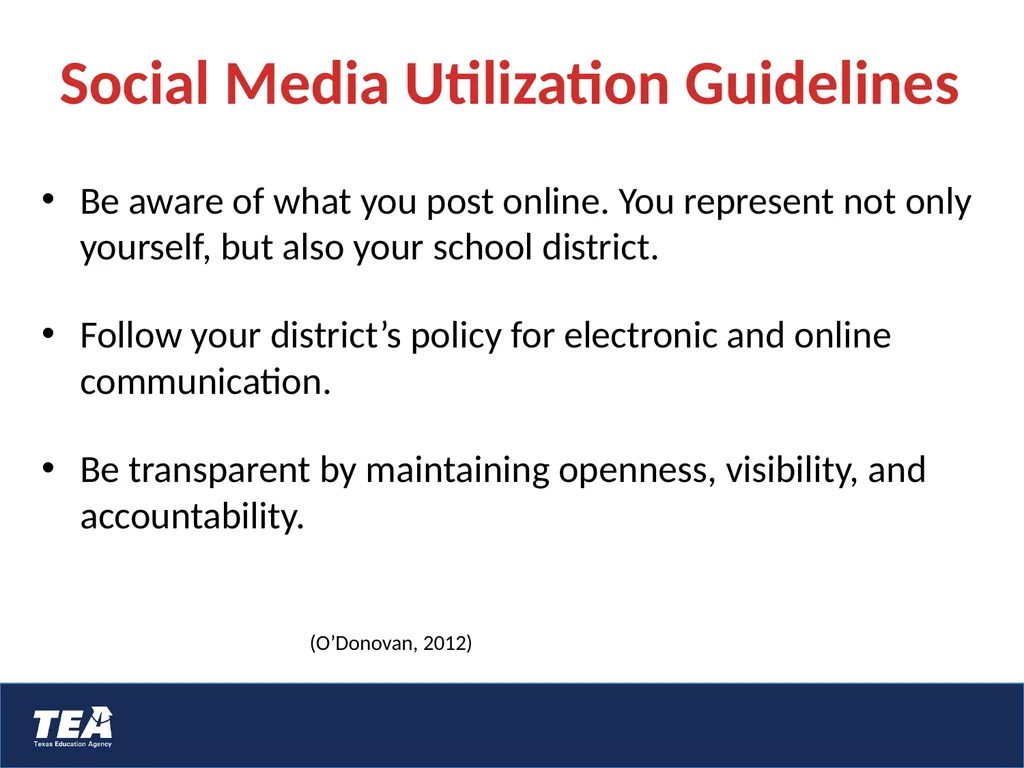
Social Media Utilization Guidelines Be aware of what you post online. You represent not only yourself, but also your school district.
Follow your district’s policy for electronic and online communication.
Be transparent by maintaining openness, visibility, and accountability.
(O’Donovan, 2012) 42<br>
42
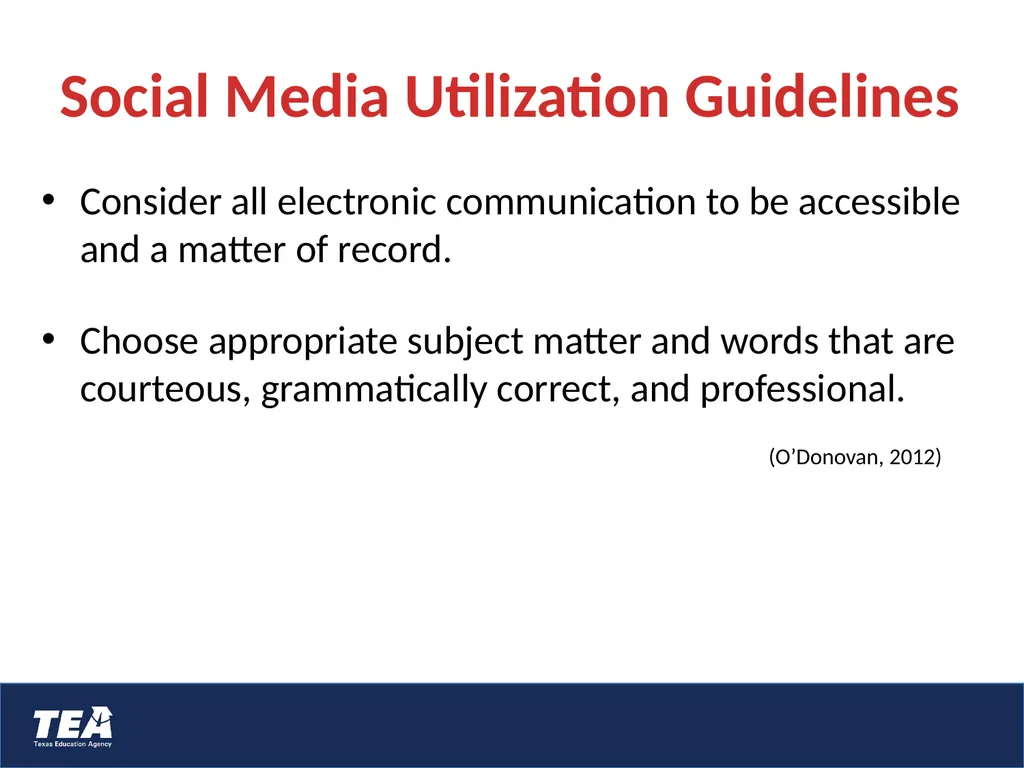
Social Media Utilization Guidelines Consider all electronic communication to be accessible and a matter of record.
Choose appropriate subject matter and words that are courteous, grammatically correct, and professional.
(O’Donovan, 2012) 43<br>
43
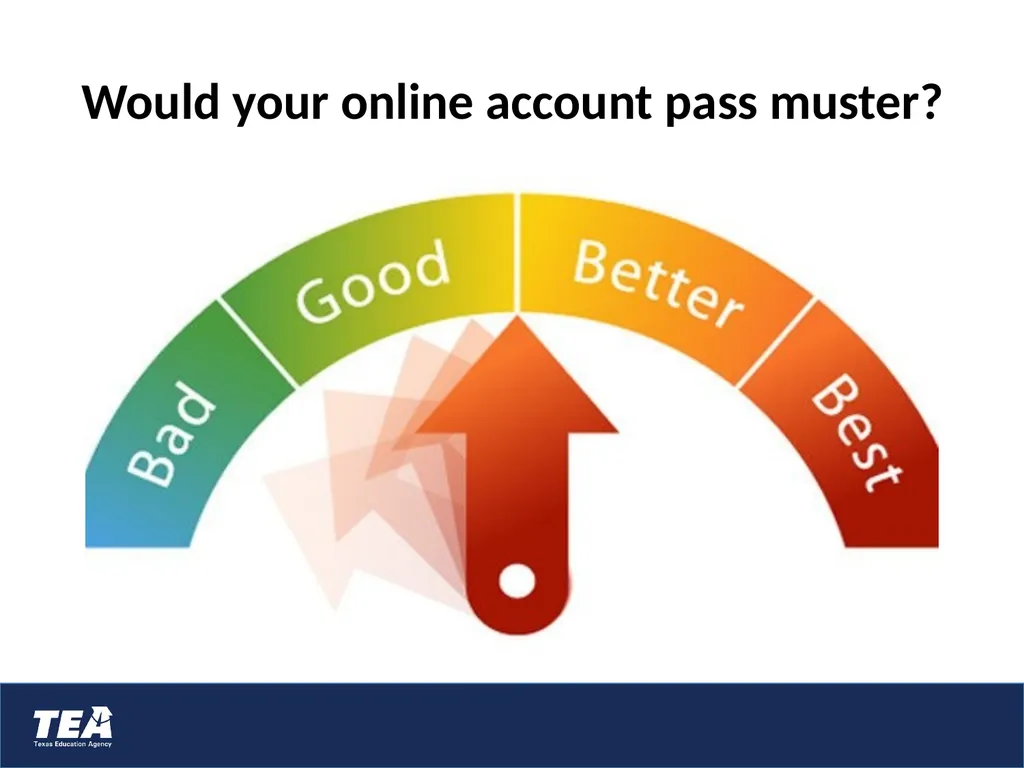
Would your online account pass muster? 44<br>
45
Strategies to Decrease Incidents Provide educator ethics training that focuses on
appropriate use of social media.
Strengthen and communicate district social
media utilization policies and guidelines. 46<br>
46
Strategies to Decrease Incidents Report suspected incidents consistently and
in a timely manner.
Expand accountability for withholding
information.
Acknowledge that schools will enforce a �zero-tolerance policy. 47<br>
51
References Bacon-Blood, L. (2015, January). Louisiana no. 3 for inappropriate teacher-student relationships, former U.S. education official says. The Times-Picayune. Retrieved from http://www.nola.com/education/index.ssf/2015/01/llouisiana_no_3_for_inappropriate_teacher-student_relationships_former_us_education_official_says.html
Miller, N. (2016, May). Jay Dee Burns receives sentence of 60 years in prison. Odessa American Online. Retrieved from http://www.oaoa.com/news/crime_justice/courts/article_28b9a59e-1203-11e6-911e-8bdd8ad682d3.html
Niederberger, M. (2015, May). Schools tighten social media contacts. The Washington Times. Retrieved from http://www.washingtontimes.com/news/2015/may/30/schools-tighten-teacher-student-social-media-conta/?page=all
O’Donovan, E. (2012, July/August). Social media: Guidelines for school administrators. District Administration. Retrieved from http://www.districtadministration.com/article/social-media-guidelines-school-administrators
Perrin, A. (2015, October). Social Media Usage: 2005–2015. Pew Research Center. Retrieved from http://www.pewinternet.org/files/2015/10/PI_2015-10-08_Social-Networking-Usage-2005-2015_FINAL.pdf
Shoop, R. Sexual Exploitation in Schools: How to Spot It and Stop It. Thousand Oaks, CA: Corwin Press.
Simpson, M. (2010). Social networking nightmares. NEA Office of General Counsel. Retrieved from http://www.nea.org/home/38324.htm 52<br>
52
References Sterkel, M. (2016, February). Burns rejects plea deal [digital image]. Odessa American Online. http://www.oaoa.com/news/crime_justice/courts/article_f56a1608-d7db-11e5-b352-43f5acd290c0.html
Stiner, L. (2012, October). Is social media to blame for inappropriate student-teacher relationships? ABC News 7 The Panhandle Spirit. Retrieved from http://abc7amarillo.com/news/local/is-social-media-to-blame-for-inappropriate-student-teacher-relationships
Texas Education Agency. (2016). Texas Administrative Code: Chapter 247.2. Retrieved from https://texreg.sos.state.tx.us/public/readtac$ext.TacPage?sl=R&app=9&p_dir=&p_rloc=&p_tloc=&p_ploc=&pg=1&p_tac=&ti=19&pt=7&ch=247&rl=2
Texas Education Agency. (2016). Texas Administrative Code: Chapter 249.5. Retrieved from https://texreg.sos.state.tx.us/public/readtac$ext.TacPage?sl=R&app=9&p_dir=&p_rloc=&p_tloc=&p_ploc=&pg=1&p_tac=&ti=19&pt=7&ch=249&rl=5
United States Department of Education. (2008). Educator sexual misconduct: What school staff need to know and do. Helpful Hints for School Emergency Management, 3(2). Retrieved from http://rems.ed.gov/docs/HH_Vol3Issue2.pdf
University of Phoenix. (2015, August). Despite embracing new technology, 87 percent of K-12 educators have not integrated social media into the classroom. University of Phoenix College of Education. Retrieved from http://www.phoenix.edu/news/releases/2015/08/87_percent_k-12_educators_not_integrated_social_media_into_classroom.html
f 53<br>