RAFTs for Differentiating A RAFT is An engaging, high level strategy that encourages writing across the curriculum A way to encourage students to --assume a Role --consider their Audience --write in a particular Format --examine a Topic
"RAFTs for Differentiating A RAFT is… An engaging," is the property of its rightful owner. Permission is granted to
download and print the materials on this website for personal, non-commercial use only, and to display it
on your personal computer provided you do not modify the materials and that you retain all copyright
notices contained in the materials. By downloading content from our website, you accept the terms of this
agreement.
Presentation Transcript
01
RAFTs for Differentiating<br>
02
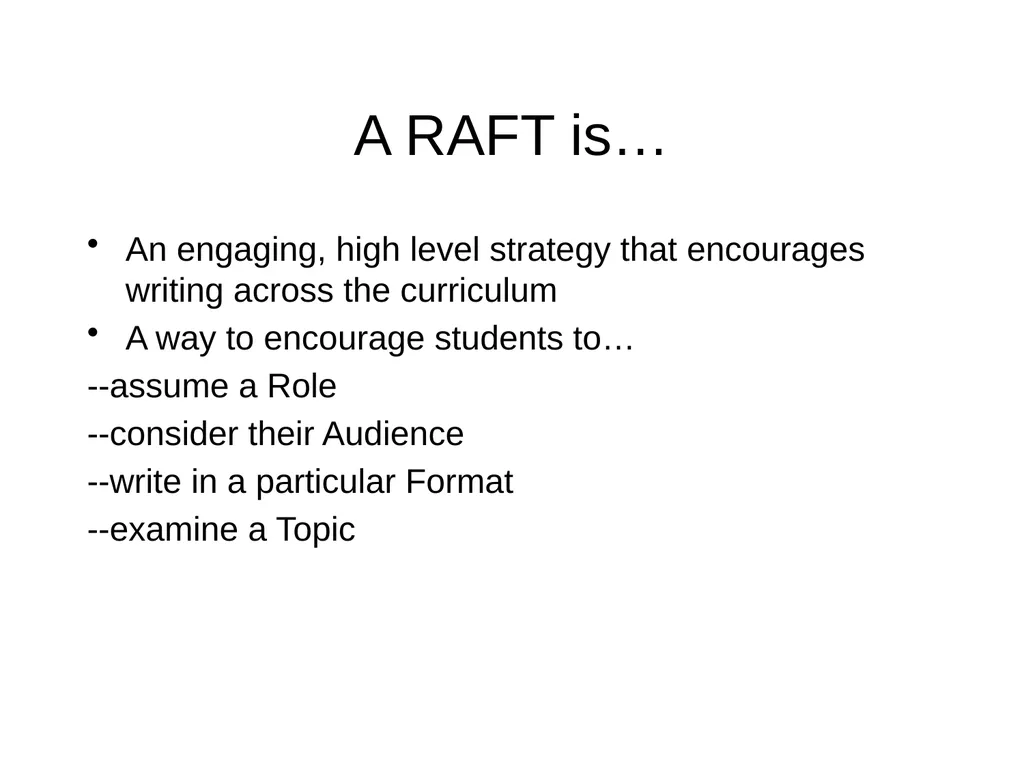
A RAFT is… An engaging, high level strategy that encourages writing across the curriculum
A way to encourage students to…
--assume a Role
--consider their Audience
--write in a particular Format
--examine a Topic<br>
03
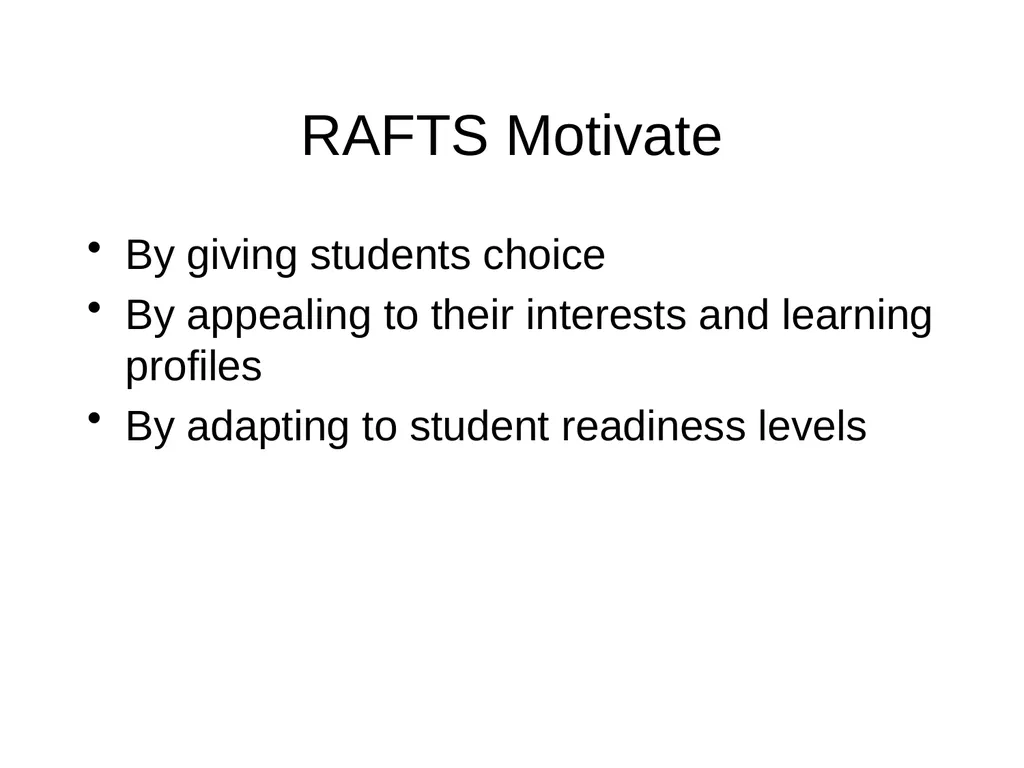
RAFTS Motivate By giving students choice
By appealing to their interests and learning profiles
By adapting to student readiness levels<br>
04
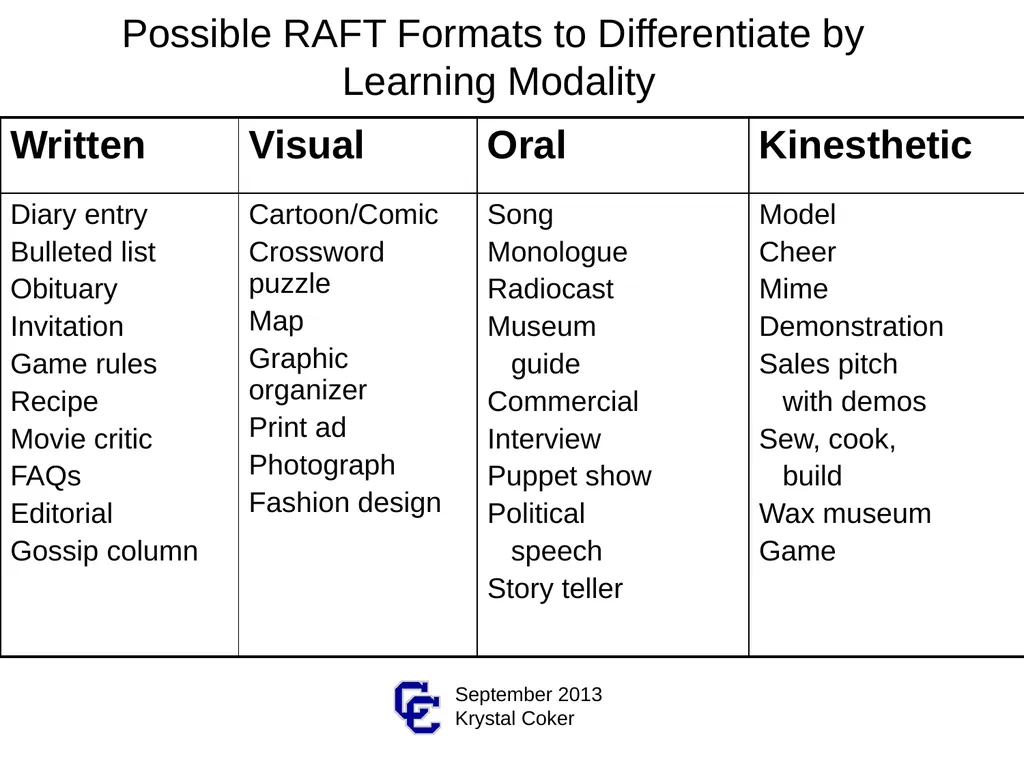
Possible RAFT Formats to Differentiate by Learning Modality September 2013
Krystal Coker<br>
05
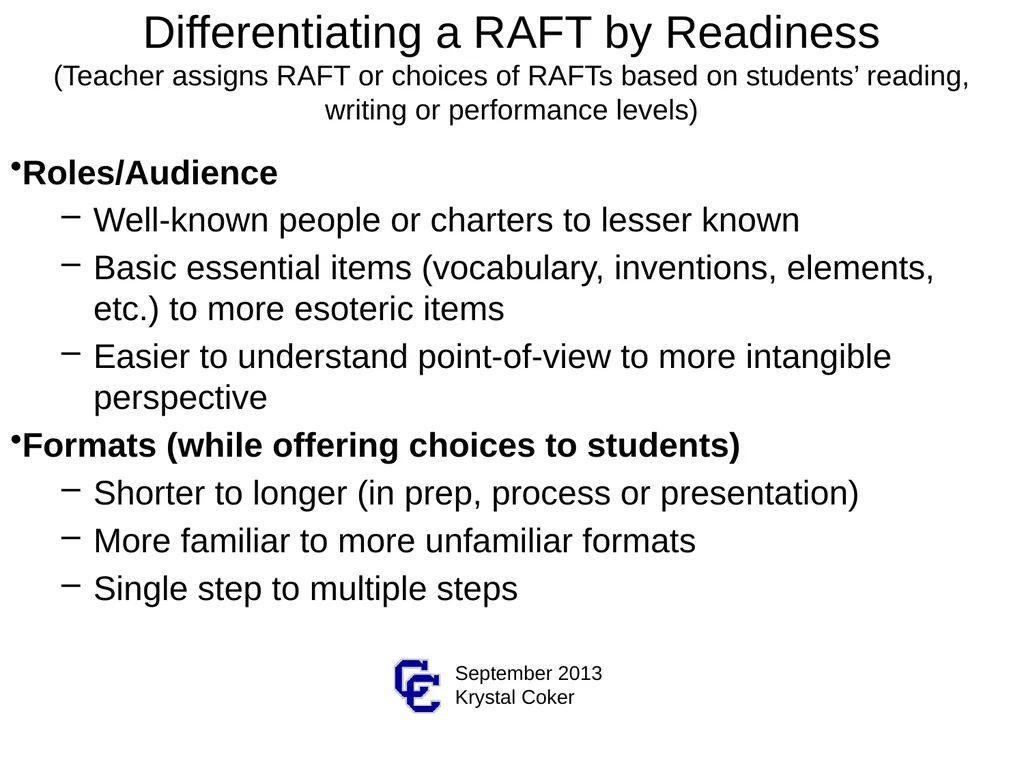
Differentiating a RAFT by Readiness (Teacher assigns RAFT or choices of RAFTs based on students’ reading, writing or performance levels) Roles/Audience
Well-known people or charters to lesser known
Basic essential items (vocabulary, inventions, elements, etc.) to more esoteric items
Easier to understand point-of-view to more intangible perspective
Formats (while offering choices to students)
Shorter to longer (in prep, process or presentation)
More familiar to more unfamiliar formats
Single step to multiple steps September 2013
Krystal Coker<br>
06
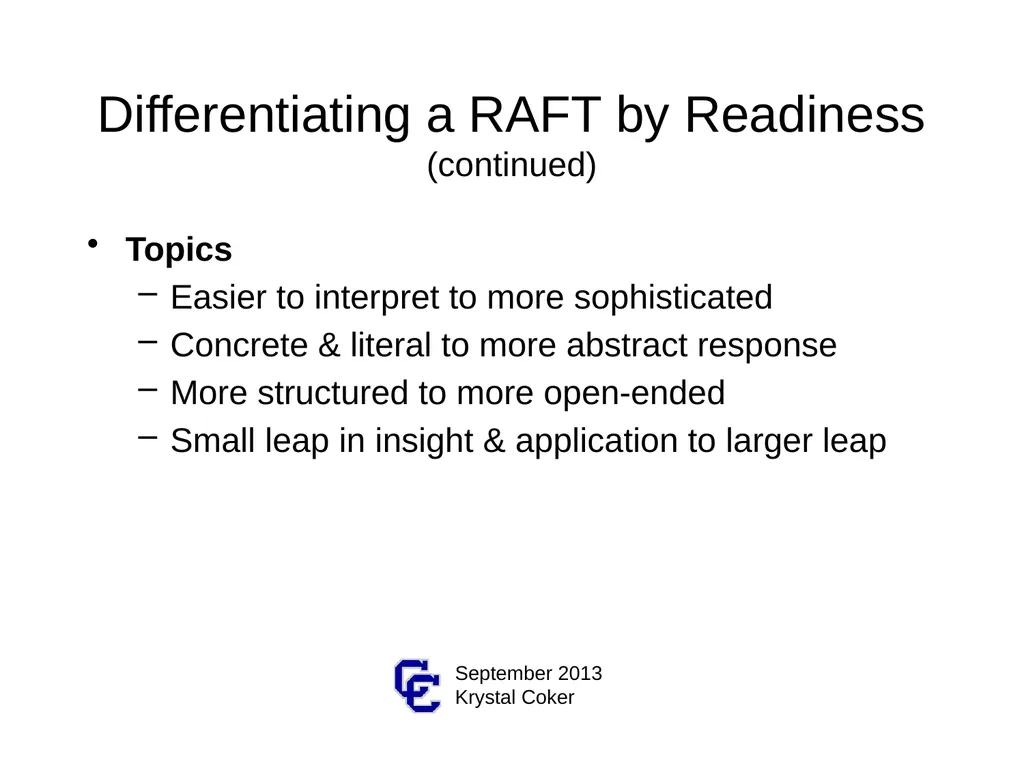
Differentiating a RAFT by Readiness (continued) Topics
Easier to interpret to more sophisticated
Concrete & literal to more abstract response
More structured to more open-ended
Small leap in insight & application to larger leap September 2013
Krystal Coker<br>
07
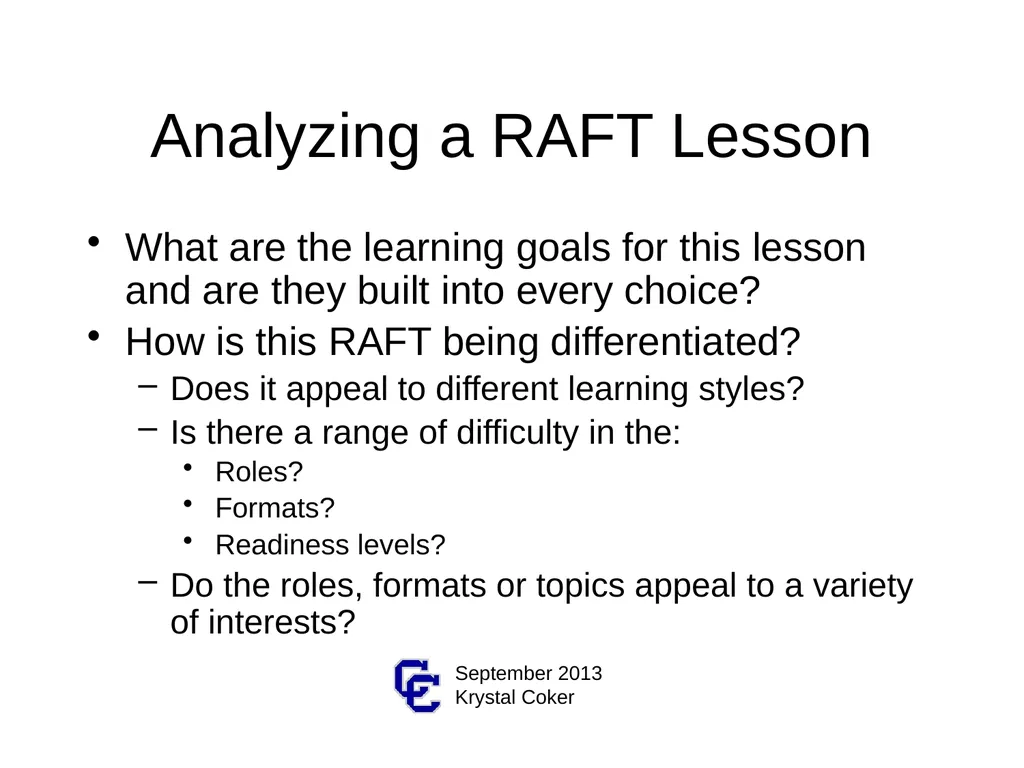
Analyzing a RAFT Lesson What are the learning goals for this lesson and are they built into every choice?
How is this RAFT being differentiated?
Does it appeal to different learning styles?
Is there a range of difficulty in the:
Roles?
Formats?
Readiness levels?
Do the roles, formats or topics appeal to a variety of interests? September 2013
Krystal Coker<br>
08
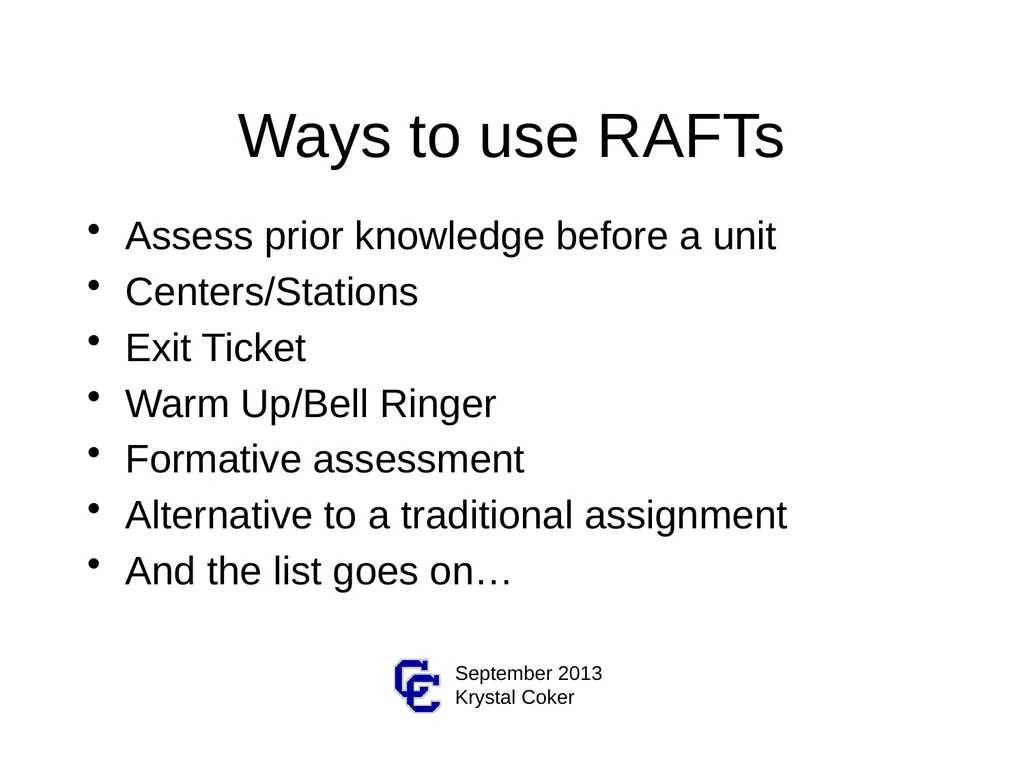
Ways to use RAFTs Assess prior knowledge before a unit
Centers/Stations
Exit Ticket
Warm Up/Bell Ringer
Formative assessment
Alternative to a traditional assignment
And the list goes on… September 2013
Krystal Coker<br>
09
RAFTs and Word Walls You have these lovely word walls…now what?
Integrate word walls into your RAFTs!
This will provide scaffolding within the differentiation by giving the students a word bank to use when they are writing.
…or require students to use a certain number of words from the word wall into their RAFT assignment. September 2013
Krystal Coker<br>
10
Examples You are Ulysses on your journey home from Troy after being gone for over ten years. Write a letter to your wife, Penelope, explaining why you won’t make it home for dinner, again.
Role, Audience, Format, Topic, Strong verb<br>
11
Math Examples You are a multiplication fact sending an invitation about a family reunion to a division fact describing how you are related.
You are a fraction preparing directions for the baker on how to double the recipe.
Fractions and mixed numbers write a persuasive letter to 6th graders reminding them why they can’t live without them.<br>
12
Science Examples Plant sends thank you note to sun for the sun’s role in the plant’s growth.
Lungs send complaint letter to cigarettes emphasizing the effects of smoking.
Trout writes a newspaper article about the effects of acid rain.
Moon prepares an advice column for astronauts on what to expect when they visit.<br>
13
RAFTS can… Be differentiated by readiness level and student interest.
Be created by students (blank row).
Be used as an alternative to a traditional assignment.
Be used as a warm up/bell ringer or exit ticket.
Be used as a formative assessment.<br>
14
Let’s try it! Grade level groups
Select a topic you teach
Think role, audience, format, verb
Planning together is better!<br>