
Reach Associates: Successful Classroom Management
TA
Published · 35 slides · 0 views

1 / 1




Description
Reach Associates: Successful Classroom Management Welcome! Introduce facilitators Participant icebreaker Name School and grade levelcontent they will support One word to describe how they are feeling about new role Schedule and session
Related Topics
Share
Embed code
Download this presentation From Below
"Reach Associates: Successful Classroom Management" is the property of its rightful owner. Permission is granted to download and print the materials on this website for personal, non-commercial use only, and to display it on your personal computer provided you do not modify the materials and that you retain all copyright notices contained in the materials. By downloading content from our website, you accept the terms of this agreement.
Presentation Transcript
01
Reach Associates:
Successful Classroom Management<br>
Successful Classroom Management<br>
02
Welcome! Introduce facilitators
Participant icebreaker
Name
School and grade level/content they will support
One word to describe how they are feeling about new role
Schedule and session topics<br>
Participant icebreaker
Name
School and grade level/content they will support
One word to describe how they are feeling about new role
Schedule and session topics<br>
03
Directions: Take 1 minute to write down a challenge in classroom management you have had in the past and what you did to try to solve this problem. Time for this activity: 1 minute<br>
04
Learn powerful approaches to classroom management.
Practice applying the behavior management cycle—how to set and reinforce expectations for behavior, use effective praise to narrate the positive, and use consequences to manage behavior.<br>
Practice applying the behavior management cycle—how to set and reinforce expectations for behavior, use effective praise to narrate the positive, and use consequences to manage behavior.<br>
05
Classroom Management in Action See Handout<br>
06
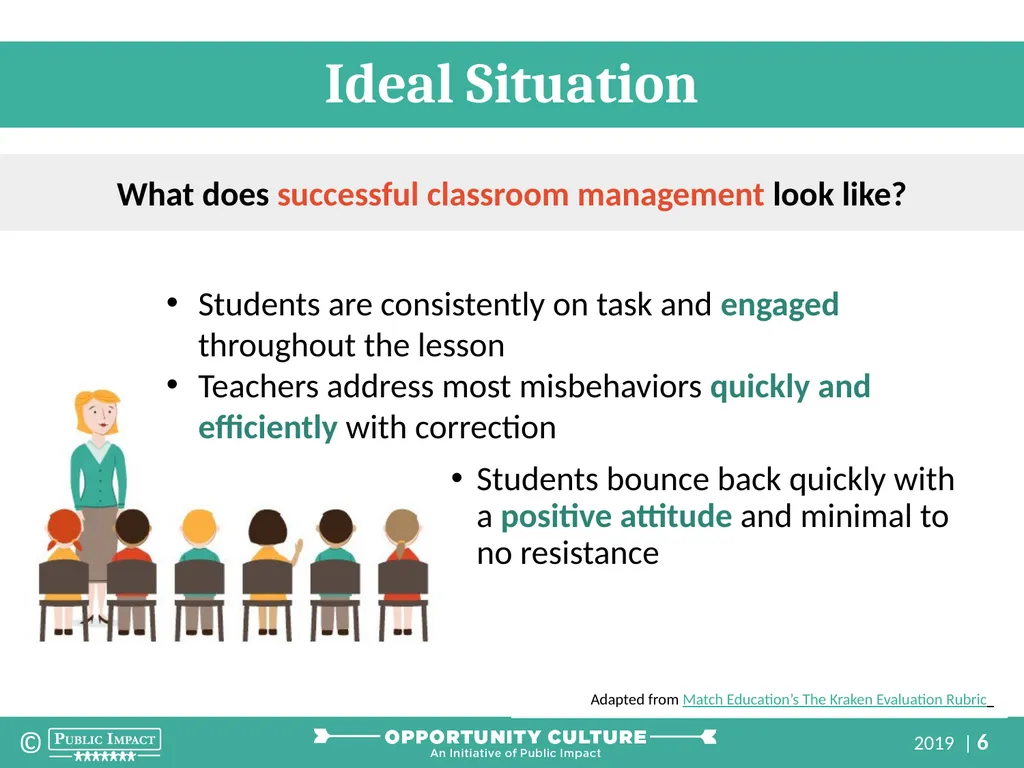
Ideal Situation What does successful classroom management look like? Students are consistently on task and engaged throughout the lesson
Teachers address most misbehaviors quickly and efficiently with correction Students bounce back quickly with a positive attitude and minimal to no resistance<br>
Teachers address most misbehaviors quickly and efficiently with correction Students bounce back quickly with a positive attitude and minimal to no resistance<br>
07
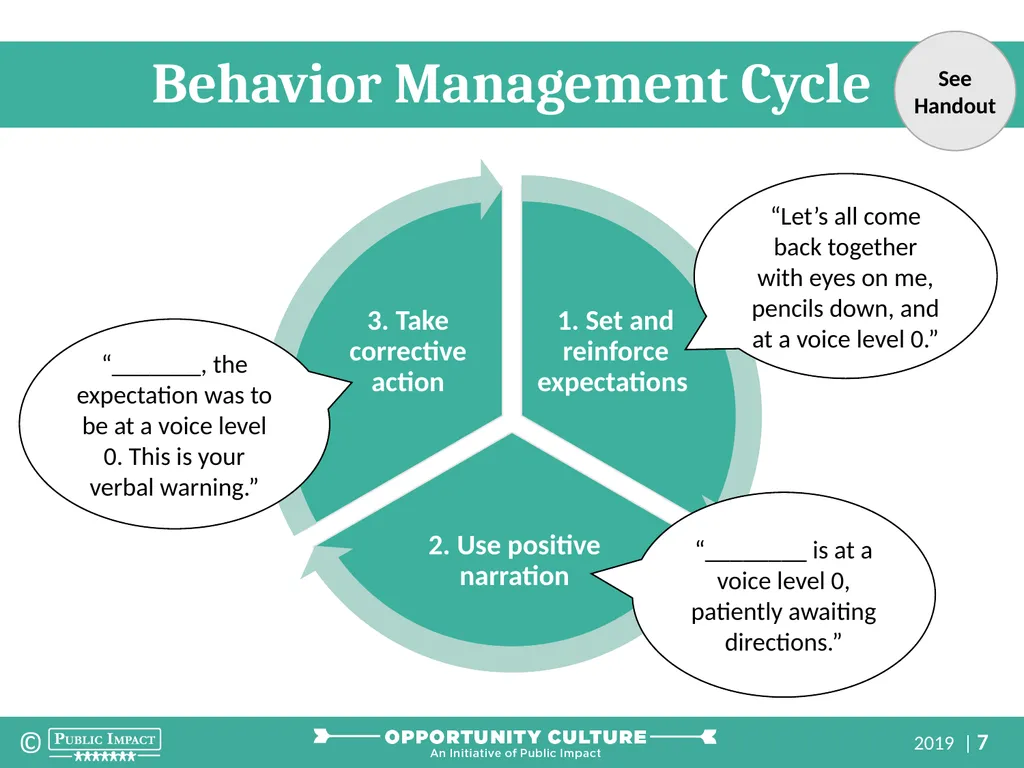
Behavior Management Cycle “Let’s all come back together with eyes on me, pencils down, and at a voice level 0.” “________ is at a voice level 0, patiently awaiting directions.” “_______, the expectation was to be at a voice level 0. This is your verbal warning.” See Handout<br>
08
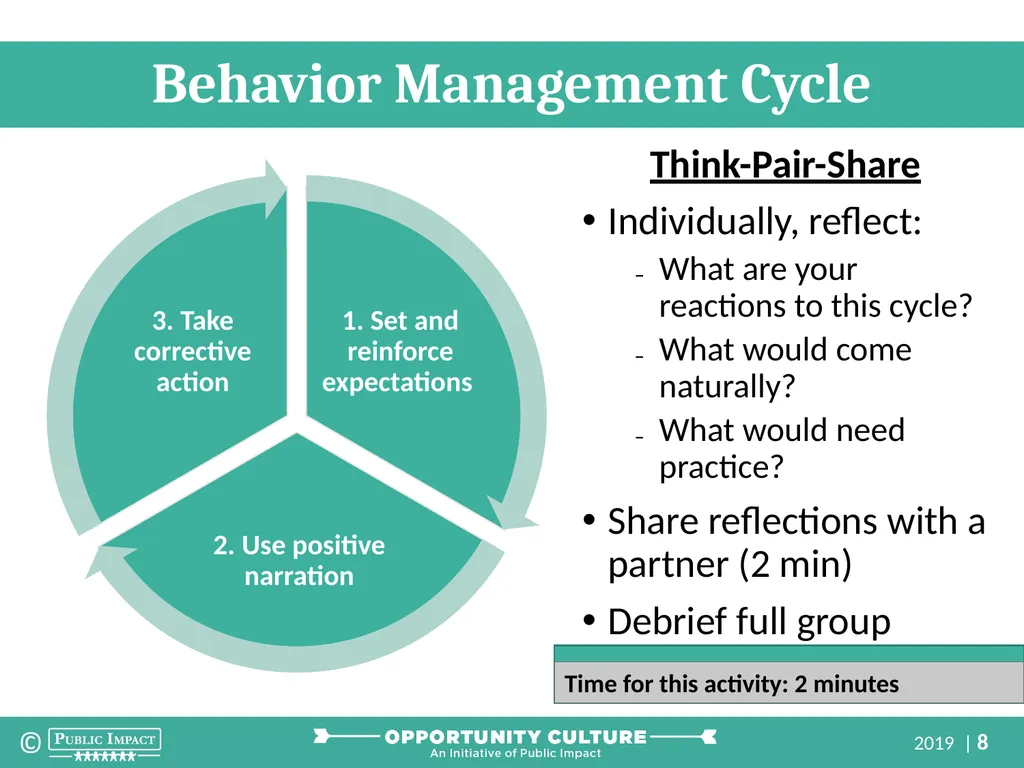
Behavior Management Cycle Think-Pair-Share
Individually, reflect:
What are your reactions to this cycle?
What would come naturally?
What would need practice?
Share reflections with a partner (2 min)
Debrief full group Time for this activity: 2 minutes<br>
Individually, reflect:
What are your reactions to this cycle?
What would come naturally?
What would need practice?
Share reflections with a partner (2 min)
Debrief full group Time for this activity: 2 minutes<br>
09
Step 1: Set and Reinforce Expectations<br>
10
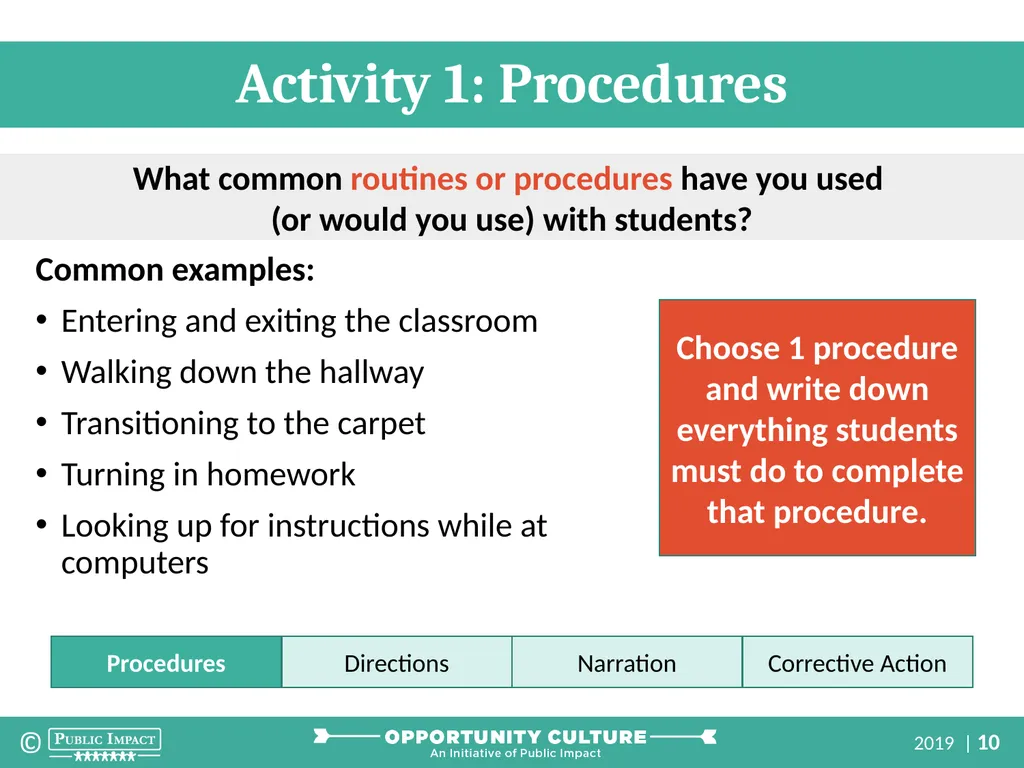
Activity 1: Procedures Common examples:
Entering and exiting the classroom
Walking down the hallway
Transitioning to the carpet
Turning in homework
Looking up for instructions while at computers What common routines or procedures have you used
(or would you use) with students? Choose 1 procedure and write down everything students must do to complete that procedure. Procedures Directions Narration Corrective Action<br>
Entering and exiting the classroom
Walking down the hallway
Transitioning to the carpet
Turning in homework
Looking up for instructions while at computers What common routines or procedures have you used
(or would you use) with students? Choose 1 procedure and write down everything students must do to complete that procedure. Procedures Directions Narration Corrective Action<br>
11
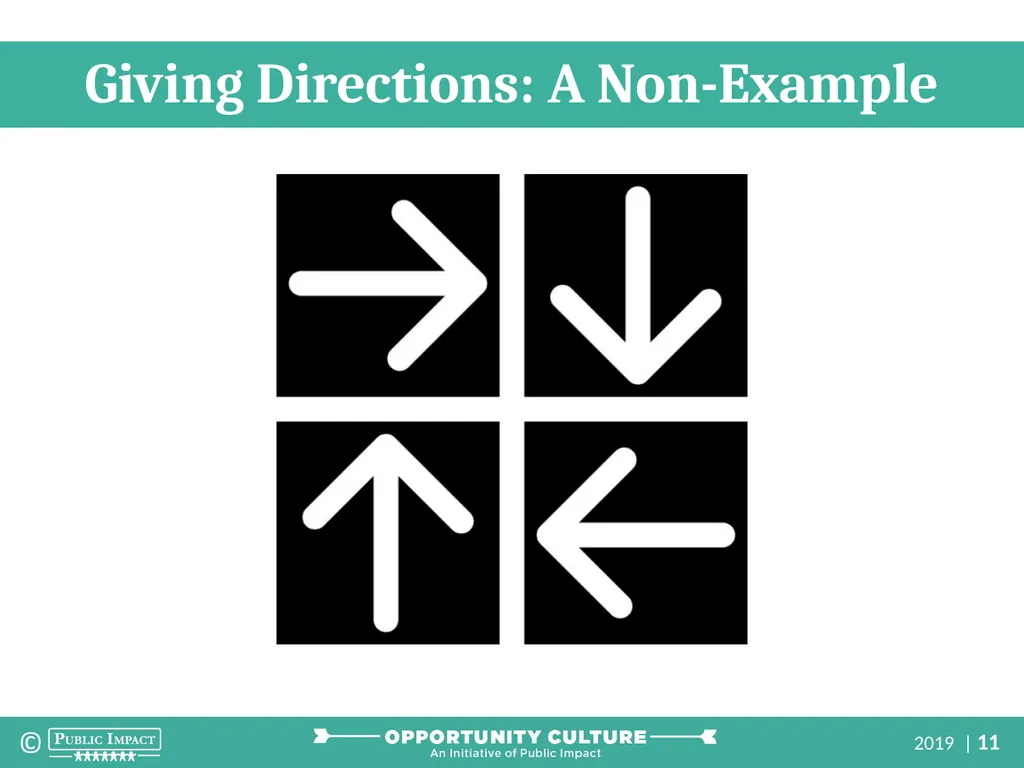
Giving Directions: A Non-Example<br>
12
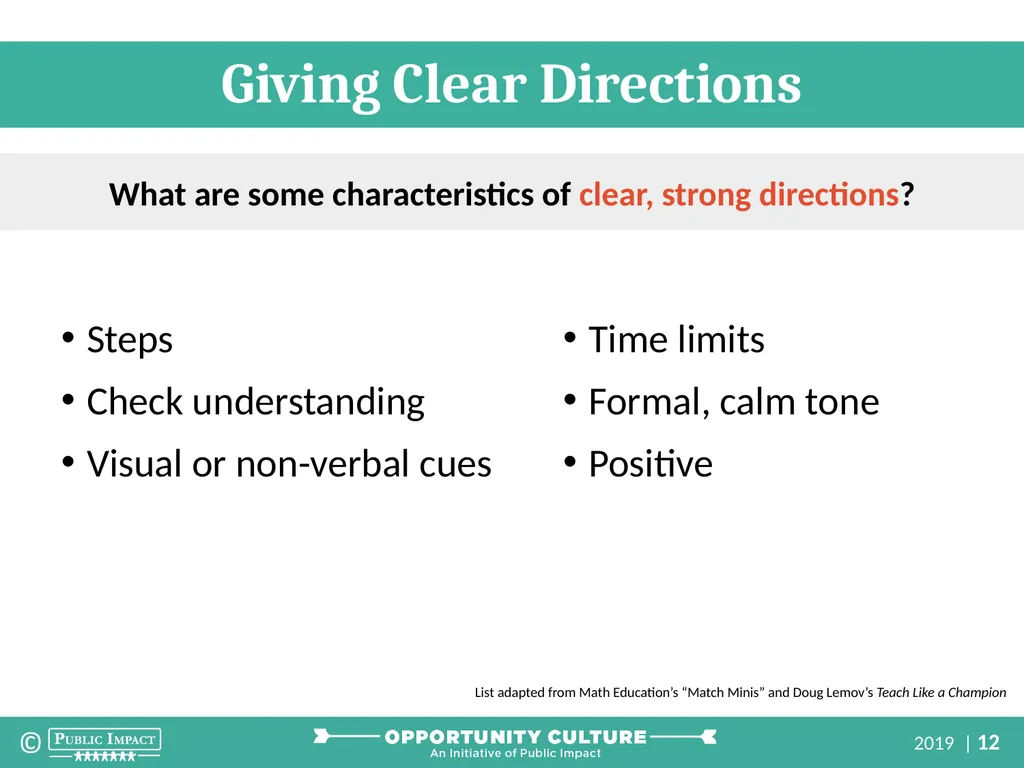
Giving Clear Directions Steps
Check understanding
Visual or non-verbal cues
Time limits
Formal, calm tone
Positive What are some characteristics of clear, strong directions? List adapted from Math Education’s “Match Minis” and Doug Lemov’s Teach Like a Champion<br>
Check understanding
Visual or non-verbal cues
Time limits
Formal, calm tone
Positive What are some characteristics of clear, strong directions? List adapted from Math Education’s “Match Minis” and Doug Lemov’s Teach Like a Champion<br>
13
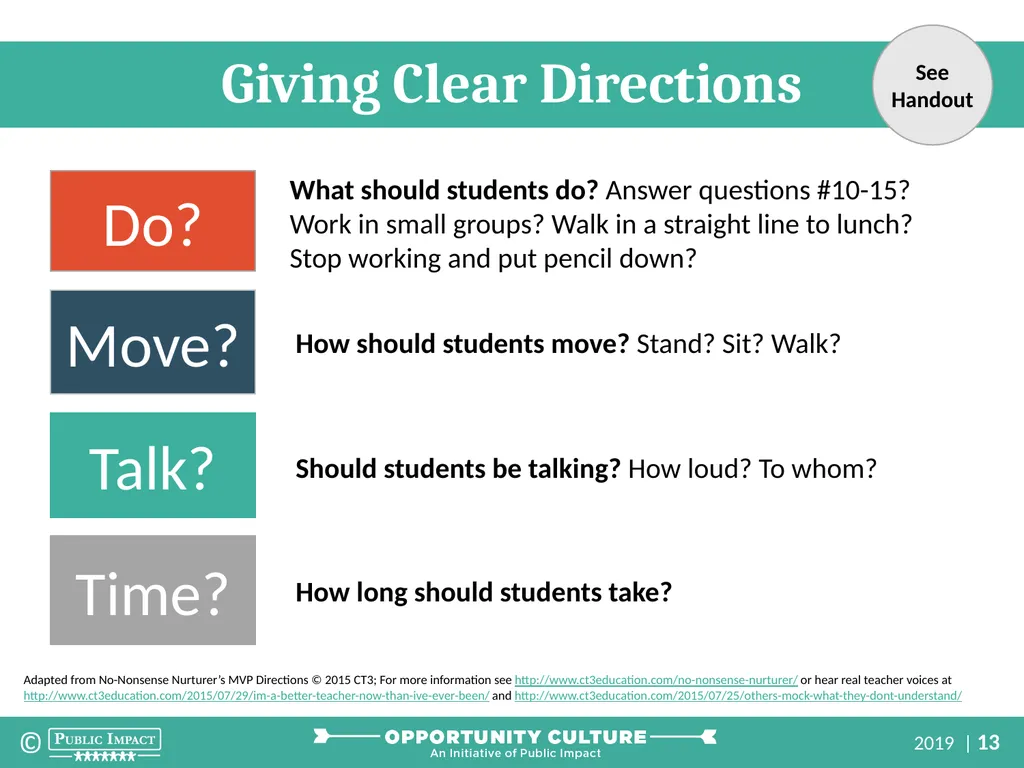
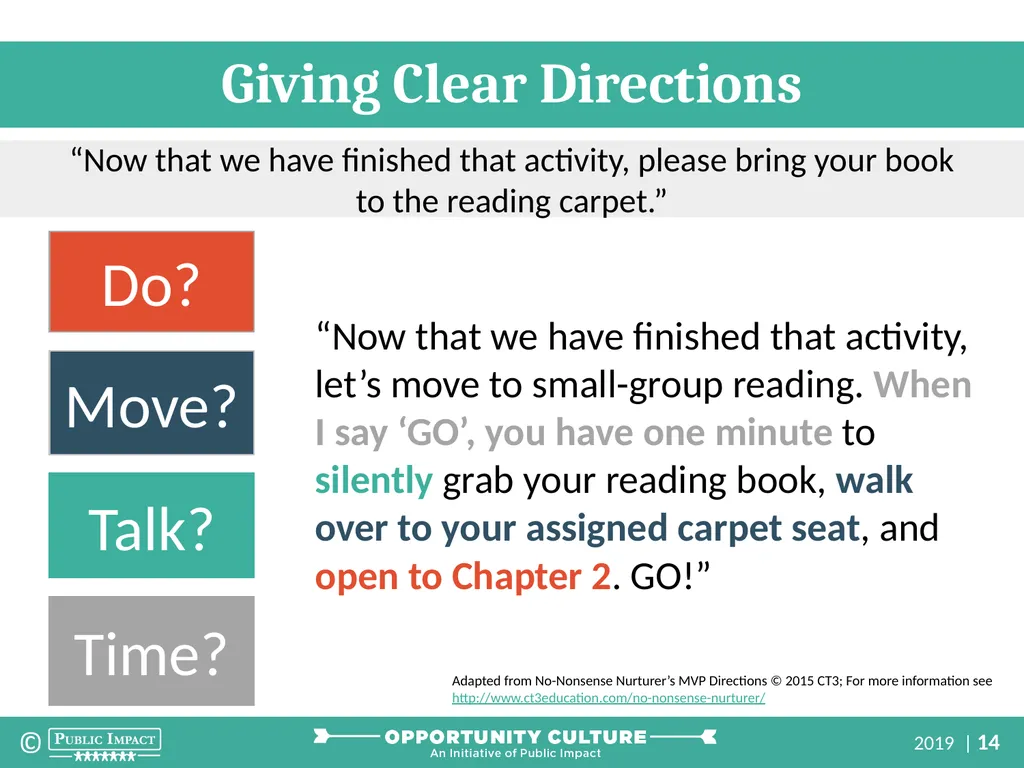
Giving Clear Directions Do? Move? Talk? How should students move? Stand? Sit? Walk? Should students be talking? How loud? To whom? What should students do? Answer questions #10-15?
Work in small groups? Walk in a straight line to lunch?
Stop working and put pencil down? Adapted from No-Nonsense Nurturer’s MVP Directions © 2015 CT3; For more information see http://www.ct3education.com/no-nonsense-nurturer/ or hear real teacher voices at http://www.ct3education.com/2015/07/29/im-a-better-teacher-now-than-ive-ever-been/ and http://www.ct3education.com/2015/07/25/others-mock-what-they-dont-understand/ Time? How long should students take? See Handout<br>
Work in small groups? Walk in a straight line to lunch?
Stop working and put pencil down? Adapted from No-Nonsense Nurturer’s MVP Directions © 2015 CT3; For more information see http://www.ct3education.com/no-nonsense-nurturer/ or hear real teacher voices at http://www.ct3education.com/2015/07/29/im-a-better-teacher-now-than-ive-ever-been/ and http://www.ct3education.com/2015/07/25/others-mock-what-they-dont-understand/ Time? How long should students take? See Handout<br>
14
Giving Clear Directions “Now that we have finished that activity, let’s move to small-group reading. When I say ‘GO’, you have one minute to silently grab your reading book, walk over to your assigned carpet seat, and open to Chapter 2. GO!” “Now that we have finished that activity, please bring your book
to the reading carpet.” Do? Move? Talk? Time? Adapted from No-Nonsense Nurturer’s MVP Directions © 2015 CT3; For more information see http://www.ct3education.com/no-nonsense-nurturer/<br>
15
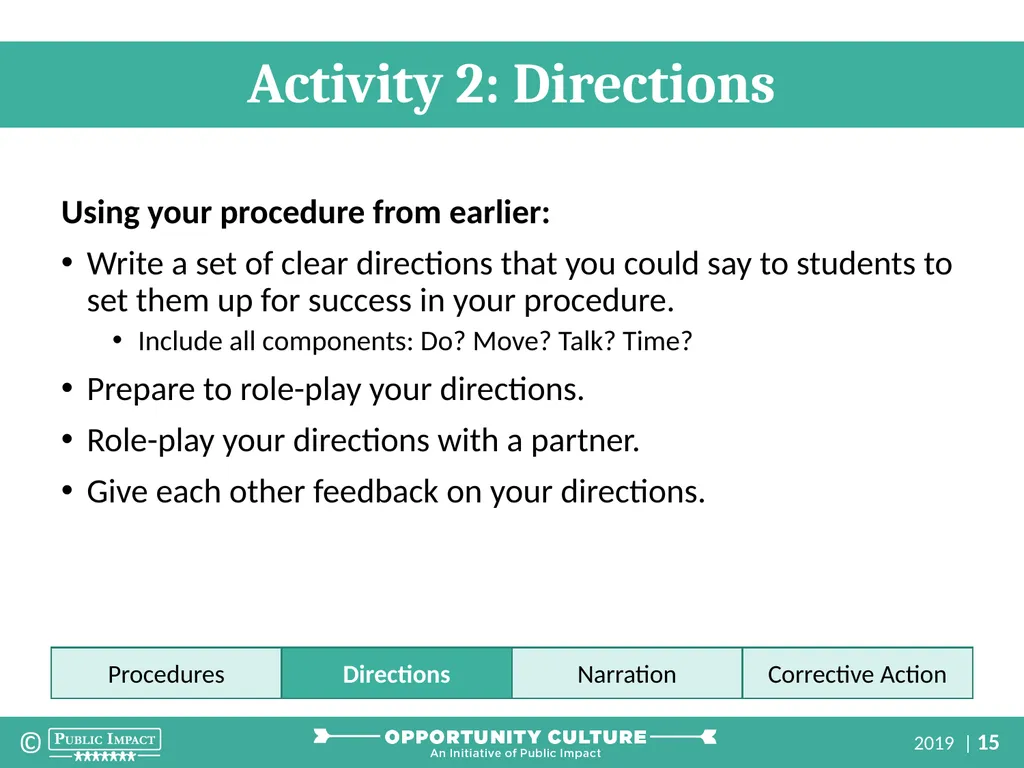
Activity 2: Directions Using your procedure from earlier:
Write a set of clear directions that you could say to students to set them up for success in your procedure.
Include all components: Do? Move? Talk? Time?
Prepare to role-play your directions.
Role-play your directions with a partner.
Give each other feedback on your directions. Procedures Directions Narration Corrective Action<br>
Write a set of clear directions that you could say to students to set them up for success in your procedure.
Include all components: Do? Move? Talk? Time?
Prepare to role-play your directions.
Role-play your directions with a partner.
Give each other feedback on your directions. Procedures Directions Narration Corrective Action<br>
16
Step 2: Use Positive Narration<br>
17
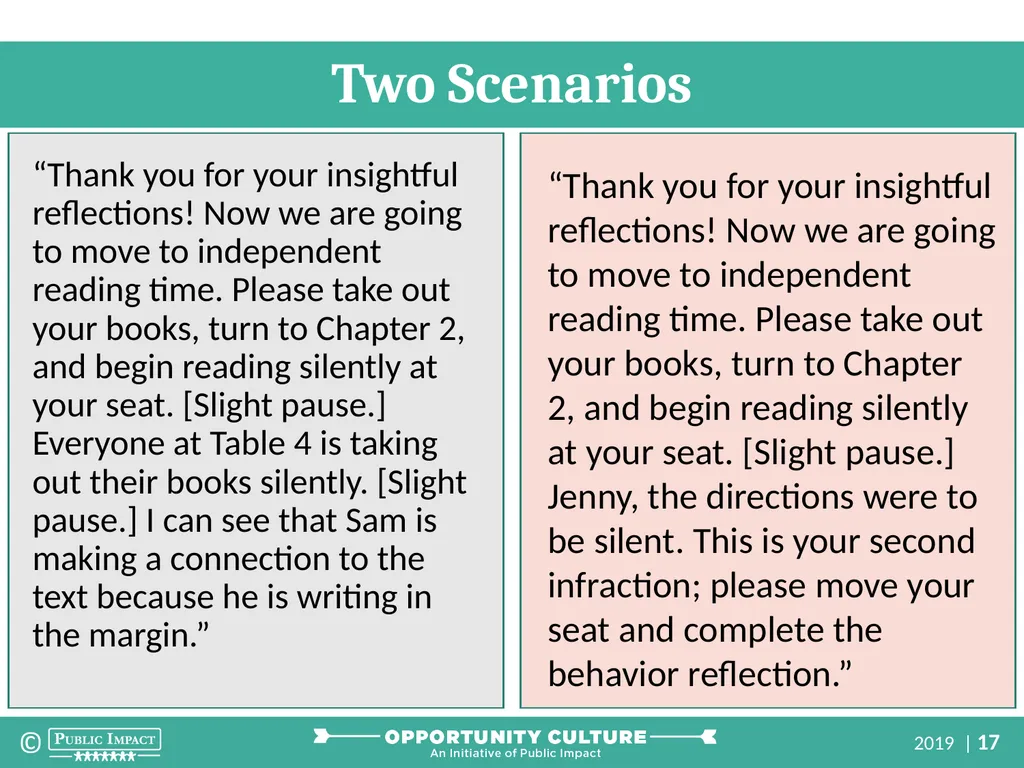
Two Scenarios “Thank you for your insightful reflections! Now we are going to move to independent reading time. Please take out your books, turn to Chapter 2, and begin reading silently at your seat. [Slight pause.] Everyone at Table 4 is taking out their books silently. [Slight pause.] I can see that Sam is making a connection to the text because he is writing in the margin.” “Thank you for your insightful reflections! Now we are going to move to independent reading time. Please take out your books, turn to Chapter 2, and begin reading silently at your seat. [Slight pause.] Jenny, the directions were to be silent. This is your second infraction; please move your seat and complete the behavior reflection.”<br>
18
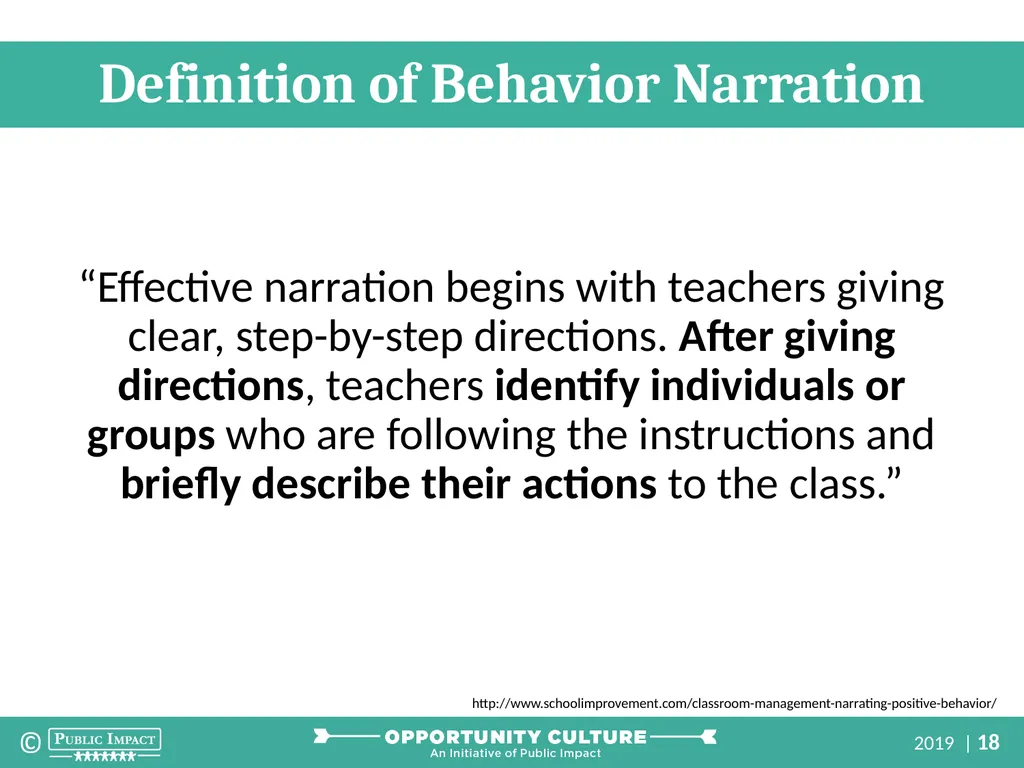
Definition of Behavior Narration “Effective narration begins with teachers giving clear, step-by-step directions. After giving directions, teachers identify individuals or groups who are following the instructions and briefly describe their actions to the class.” http://www.schoolimprovement.com/classroom-management-narrating-positive-behavior/<br>
19
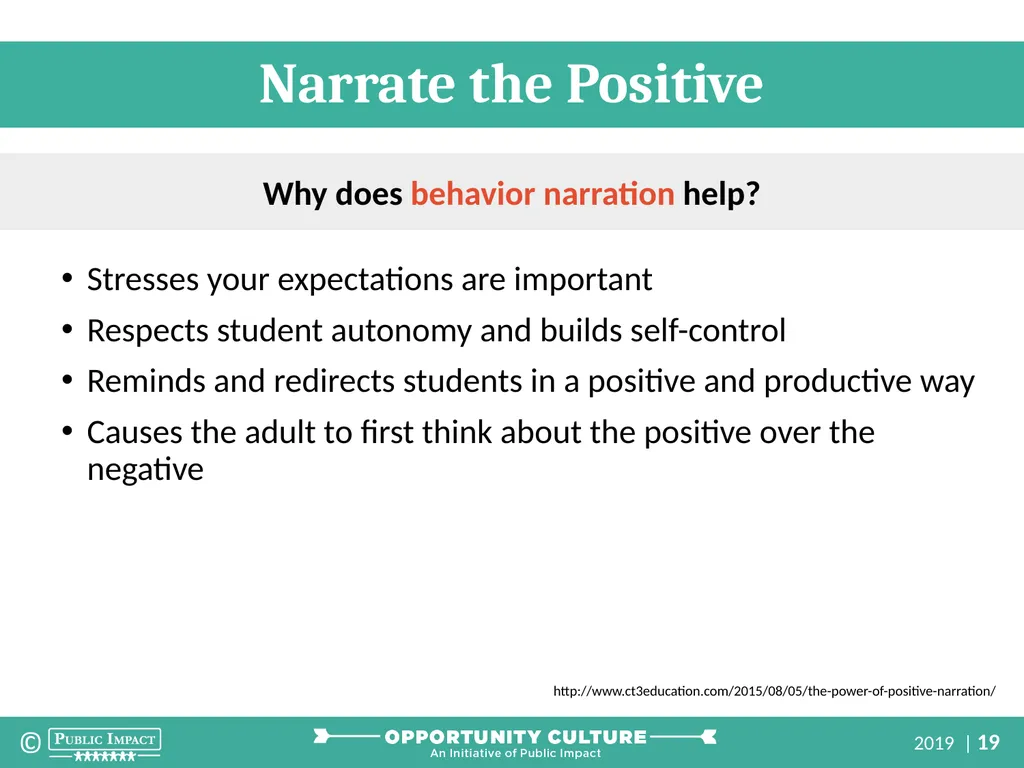
Narrate the Positive Why does behavior narration help? Stresses your expectations are important
Respects student autonomy and builds self-control
Reminds and redirects students in a positive and productive way
Causes the adult to first think about the positive over the negative http://www.ct3education.com/2015/08/05/the-power-of-positive-narration/<br>
Respects student autonomy and builds self-control
Reminds and redirects students in a positive and productive way
Causes the adult to first think about the positive over the negative http://www.ct3education.com/2015/08/05/the-power-of-positive-narration/<br>
20
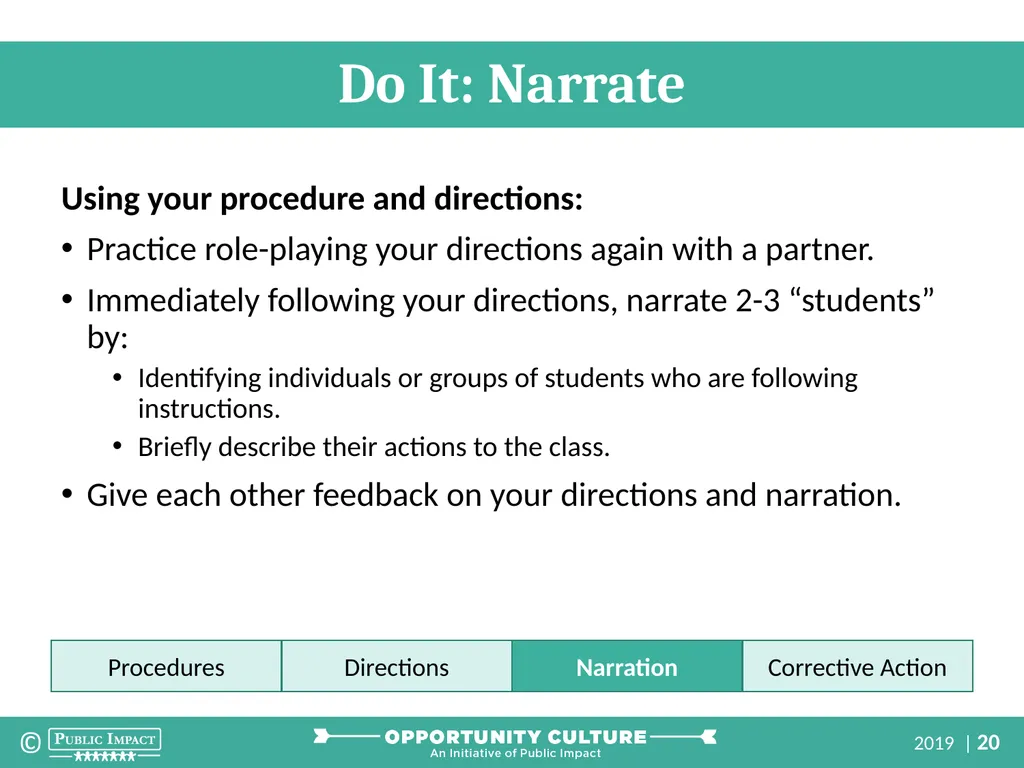
Do It: Narrate Using your procedure and directions:
Practice role-playing your directions again with a partner.
Immediately following your directions, narrate 2-3 “students” by:
Identifying individuals or groups of students who are following instructions.
Briefly describe their actions to the class.
Give each other feedback on your directions and narration. Procedures Directions Narration Corrective Action<br>
Practice role-playing your directions again with a partner.
Immediately following your directions, narrate 2-3 “students” by:
Identifying individuals or groups of students who are following instructions.
Briefly describe their actions to the class.
Give each other feedback on your directions and narration. Procedures Directions Narration Corrective Action<br>
21
Step 3: Take Corrective Action<br>
22
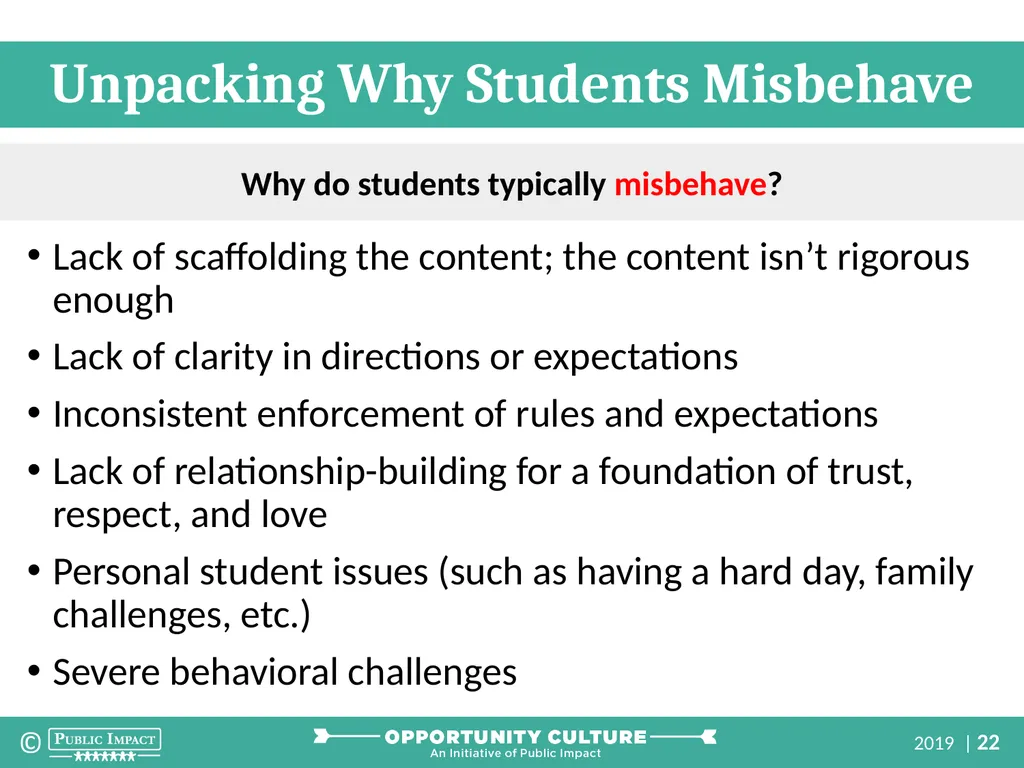
Unpacking Why Students Misbehave Lack of scaffolding the content; the content isn’t rigorous enough
Lack of clarity in directions or expectations
Inconsistent enforcement of rules and expectations
Lack of relationship-building for a foundation of trust, respect, and love
Personal student issues (such as having a hard day, family challenges, etc.)
Severe behavioral challenges Why do students typically misbehave?<br>
Lack of clarity in directions or expectations
Inconsistent enforcement of rules and expectations
Lack of relationship-building for a foundation of trust, respect, and love
Personal student issues (such as having a hard day, family challenges, etc.)
Severe behavioral challenges Why do students typically misbehave?<br>
23
Think-Pair-Share How can you try to prevent behavior issues
instead of being reactive? Time for this activity: 3 minutes<br>
instead of being reactive? Time for this activity: 3 minutes<br>
24
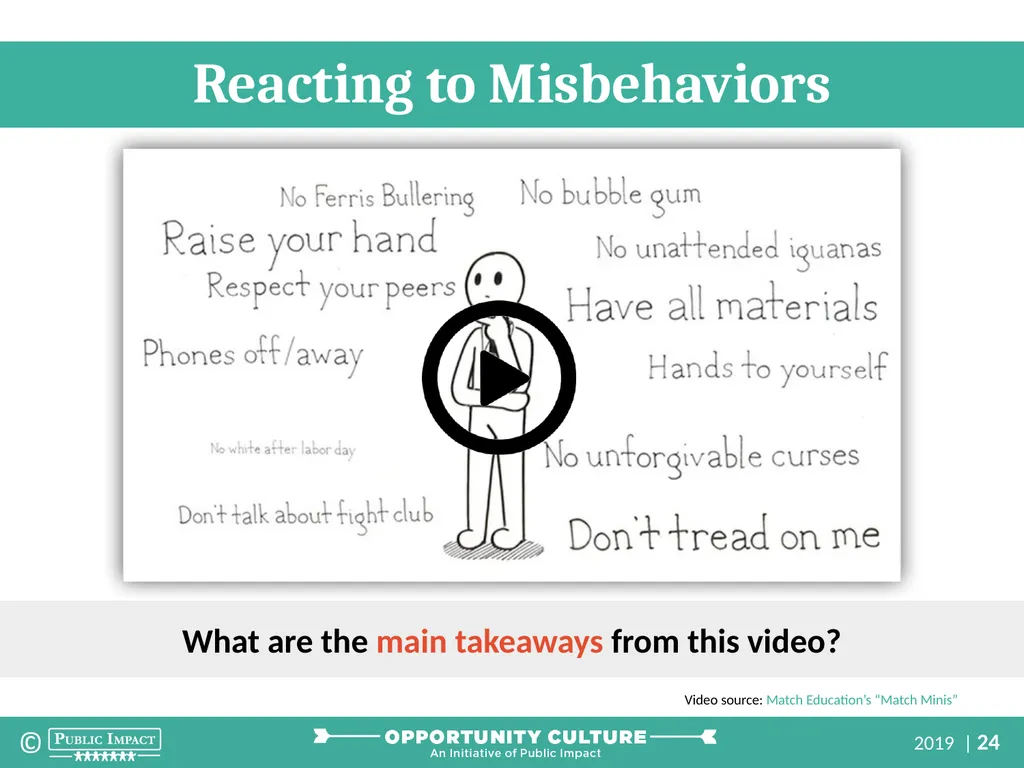
Reacting to Misbehaviors What are the main takeaways from this video? Video source: Match Education’s “Match Minis”<br>
25
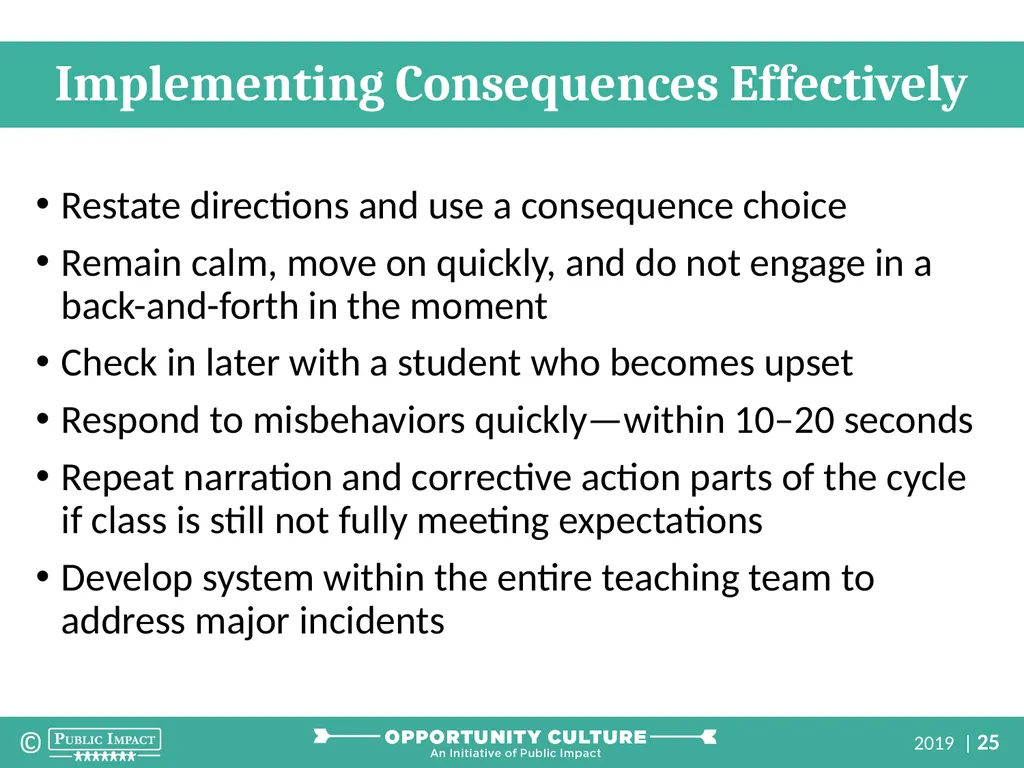
Implementing Consequences Effectively Restate directions and use a consequence choice
Remain calm, move on quickly, and do not engage in a back-and-forth in the moment
Check in later with a student who becomes upset
Respond to misbehaviors quickly—within 10–20 seconds
Repeat narration and corrective action parts of the cycle if class is still not fully meeting expectations
Develop system within the entire teaching team to address major incidents<br>
Remain calm, move on quickly, and do not engage in a back-and-forth in the moment
Check in later with a student who becomes upset
Respond to misbehaviors quickly—within 10–20 seconds
Repeat narration and corrective action parts of the cycle if class is still not fully meeting expectations
Develop system within the entire teaching team to address major incidents<br>
26
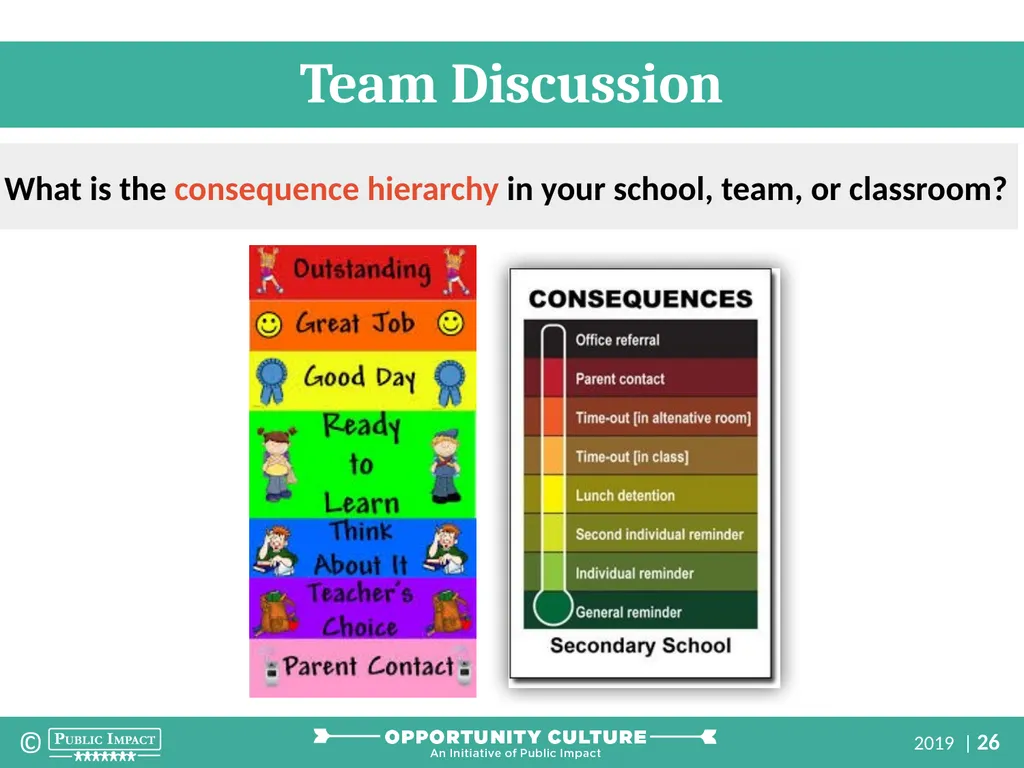
Team Discussion What is the consequence hierarchy in your school, team, or classroom?<br>
27
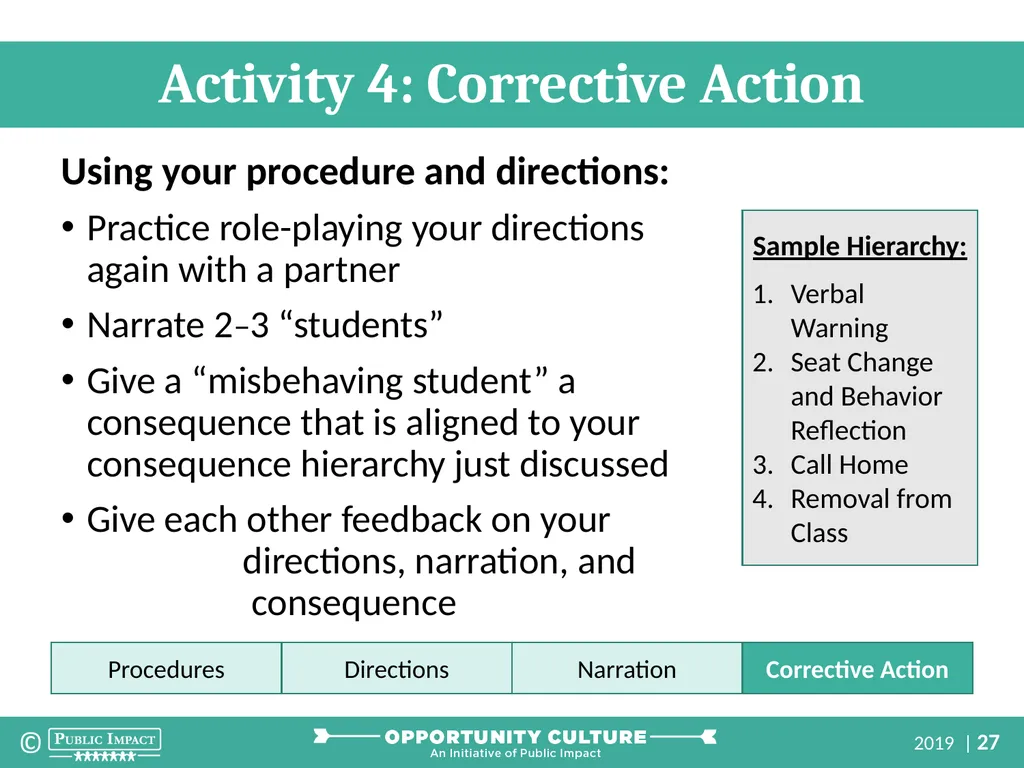
Activity 4: Corrective Action Using your procedure and directions:
Practice role-playing your directions again with a partner
Narrate 2–3 “students”
Give a “misbehaving student” a consequence that is aligned to your consequence hierarchy just discussed
Give each other feedback on your directions, narration, and consequence Sample Hierarchy:
Verbal Warning
Seat Change and Behavior Reflection
Call Home
Removal from Class Procedures Directions Narration Corrective Action<br>
Practice role-playing your directions again with a partner
Narrate 2–3 “students”
Give a “misbehaving student” a consequence that is aligned to your consequence hierarchy just discussed
Give each other feedback on your directions, narration, and consequence Sample Hierarchy:
Verbal Warning
Seat Change and Behavior Reflection
Call Home
Removal from Class Procedures Directions Narration Corrective Action<br>
28
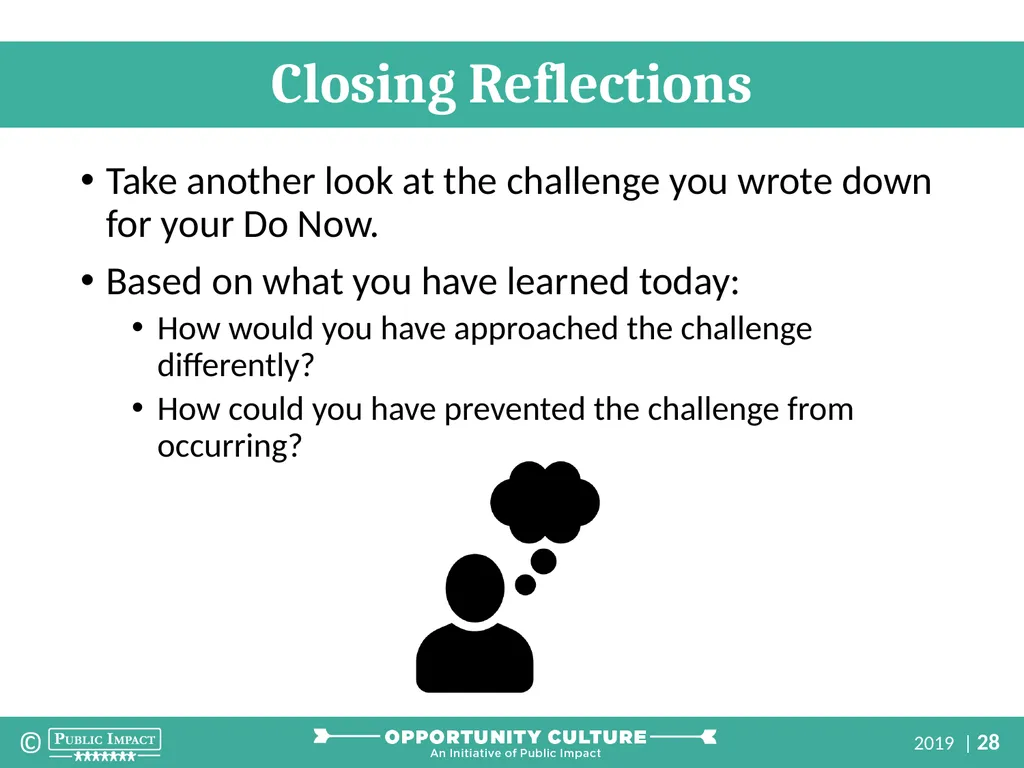
Take another look at the challenge you wrote down for your Do Now.
Based on what you have learned today:
How would you have approached the challenge differently?
How could you have prevented the challenge from occurring? Closing Reflections<br>
Based on what you have learned today:
How would you have approached the challenge differently?
How could you have prevented the challenge from occurring? Closing Reflections<br>
29
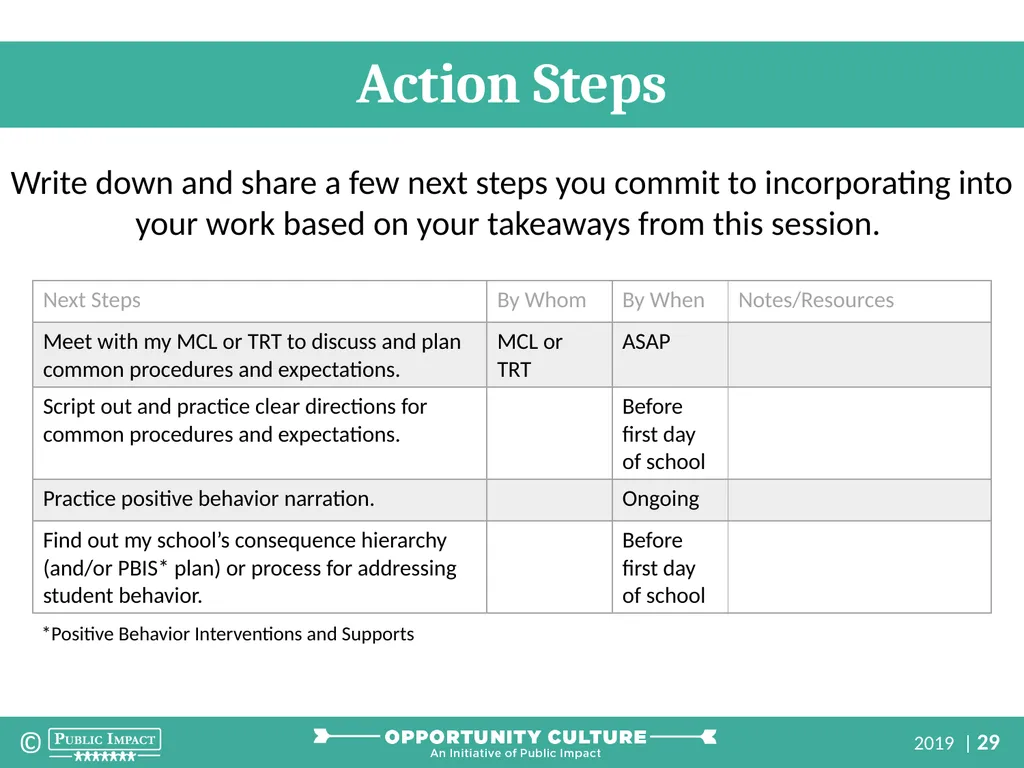
Action Steps Write down and share a few next steps you commit to incorporating into your work based on your takeaways from this session. *Positive Behavior Interventions and Supports<br>
30
Content was adapted from:
Canter, L. & Canter, M. Assertive Discipline: Positive Behavior Management for Today’s Classroom, 1992; Canter, 2009
No-Nonsense Nurturer’s MVP Directions © 2015 CT3
Marzano, R. Classroom Instruction that Works, 2001
Match Education’s “Match Minis”
Teaching As Leadership, Teach For America<br>
Canter, L. & Canter, M. Assertive Discipline: Positive Behavior Management for Today’s Classroom, 1992; Canter, 2009
No-Nonsense Nurturer’s MVP Directions © 2015 CT3
Marzano, R. Classroom Instruction that Works, 2001
Match Education’s “Match Minis”
Teaching As Leadership, Teach For America<br>
31
Appendices<br>
32
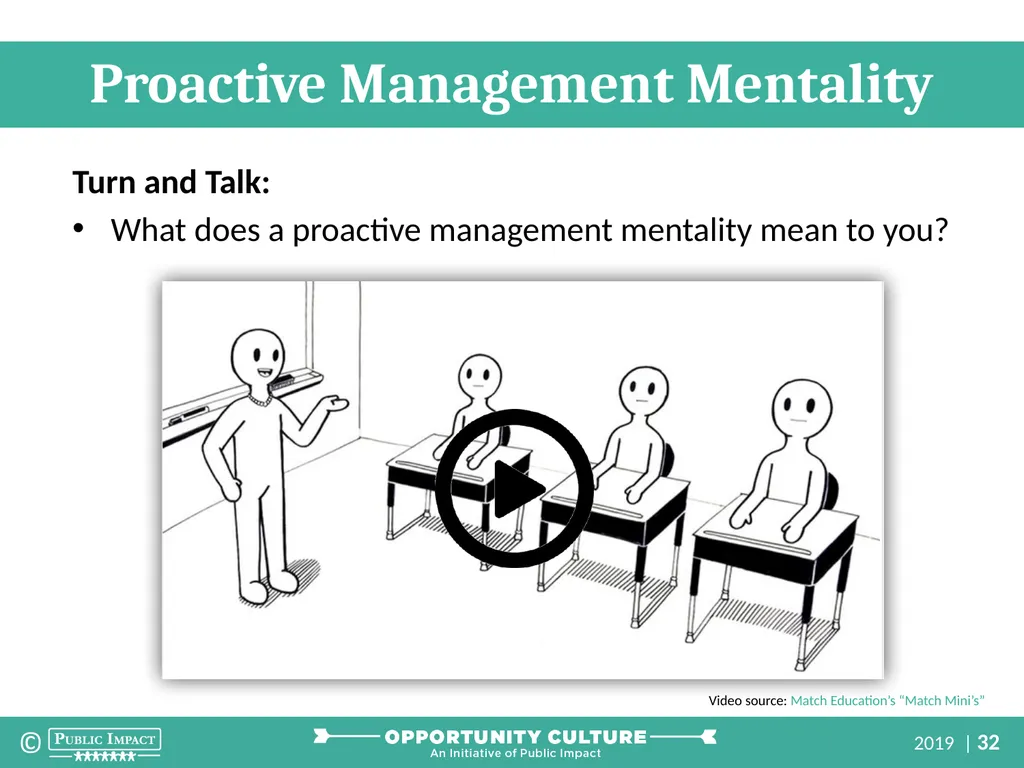
Proactive Management Mentality Turn and Talk:
What does a proactive management mentality mean to you? Video source: Match Education’s “Match Mini’s”<br>
What does a proactive management mentality mean to you? Video source: Match Education’s “Match Mini’s”<br>
33
Proactive Management Mentality Assert authority with student in a firm and positive manner
Goal for management must be 100%
Work with TRT, MCL, or team teachers to create a list of a limited number of non-negotiable rules (3–5) that are clearly stated in the positive
List your nonnegotiables, make expectations clear to students, plan reminders, make students feel noticed
Teach expectations for each rule What are the key elements of a proactive management mentality?<br>
Goal for management must be 100%
Work with TRT, MCL, or team teachers to create a list of a limited number of non-negotiable rules (3–5) that are clearly stated in the positive
List your nonnegotiables, make expectations clear to students, plan reminders, make students feel noticed
Teach expectations for each rule What are the key elements of a proactive management mentality?<br>
34
Reinforce Good Behavior Example: Class point system
When 100% of the class meets the expectation OR when students go above and beyond the expectation, the whole class gets a point.
After x number of points, the class gets a mutually agreed-upon incentive (such as no assigned seats for a class period).
After giving directions, the teacher might say, “LaJuan has silently started her Do Now... We have 100% of the class working productively and silently on the Do Now. You have earned a class point.” What are some other ways your school or your team incentivizes good student or class behavior?<br>
When 100% of the class meets the expectation OR when students go above and beyond the expectation, the whole class gets a point.
After x number of points, the class gets a mutually agreed-upon incentive (such as no assigned seats for a class period).
After giving directions, the teacher might say, “LaJuan has silently started her Do Now... We have 100% of the class working productively and silently on the Do Now. You have earned a class point.” What are some other ways your school or your team incentivizes good student or class behavior?<br>
35
Follow Us! @OppCulture Facebook.com/OpportunityCulture @PublicImpact Facebook.com/PublicImpact LinkedIn.com/company/public-impact---chapel-hill-nc Subscribe to the quarterly Opportunity Culture newsletters, with content by and for Opportunity Culture educators, and sign up to get Remind messages for them: Remind.com/join/ocnew Keep up to date on Opportunity Culture with
resources and research from Public Impact by following: OpportunityCulture.org/mailing-list/<br>