Regional Plan of Action for Implementing the WHO
Description: Regional Plan of Action for Implementing the WHO Global Strategy for Health, Environment and Climate Change-Healthy environments for a healthier population 20202030 Webinar: Climate change and health project ideas for GCF 3 March 2020
Related Topics
Download Presentation
"Regional Plan of Action for Implementing the WHO" is the property of its rightful owner. Permission is granted to download and print the materials on this website for personal, non-commercial use only, and to display it on your personal computer provided you do not modify the materials and that you retain all copyright notices contained in the materials. By downloading content from our website, you accept the terms of this agreement.
Presentation Transcript
slide1. Regional Plan of Action for Implementing the WHO Global Strategy for Health, Environment and Climate Change-Healthy environments for a healthier population 2020–2030 Webinar: Climate change and health project ideas for GCF – 3 March 2020<br>
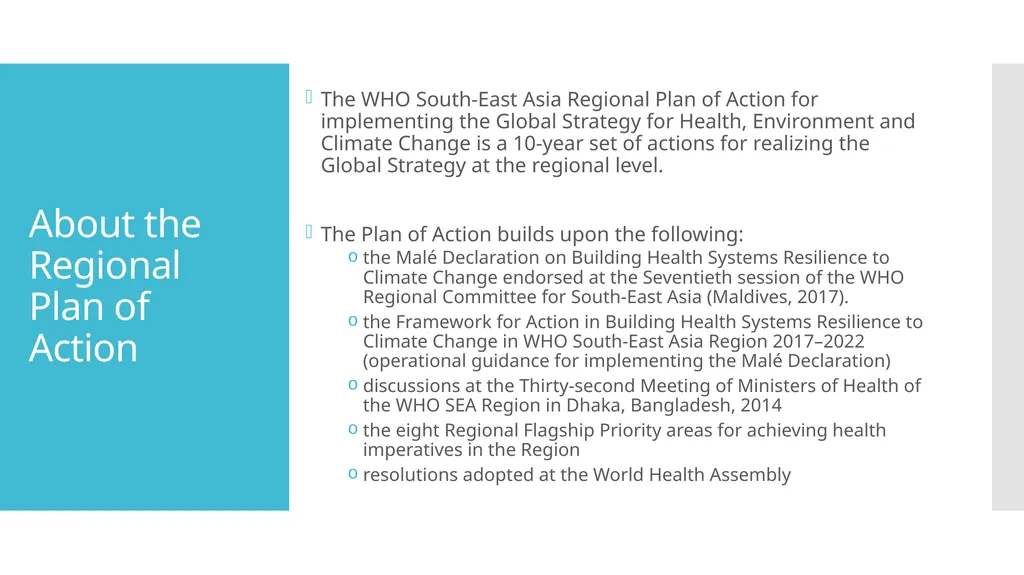
slide2. About the Regional Plan of Action The WHO South-East Asia Regional Plan of Action for implementing the Global Strategy for Health, Environment and Climate Change is a 10-year set of actions for realizing the Global Strategy at the regional level.
The Plan of Action builds upon the following:
the Malé Declaration on Building Health Systems Resilience to Climate Change endorsed at the Seventieth session of the WHO Regional Committee for South-East Asia (Maldives, 2017).
the Framework for Action in Building Health Systems Resilience to Climate Change in WHO South-East Asia Region 2017–2022 (operational guidance for implementing the Malé Declaration)
discussions at the Thirty-second Meeting of Ministers of Health of the WHO SEA Region in Dhaka, Bangladesh, 2014
the eight Regional Flagship Priority areas for achieving health imperatives in the Region
resolutions adopted at the World Health Assembly<br>
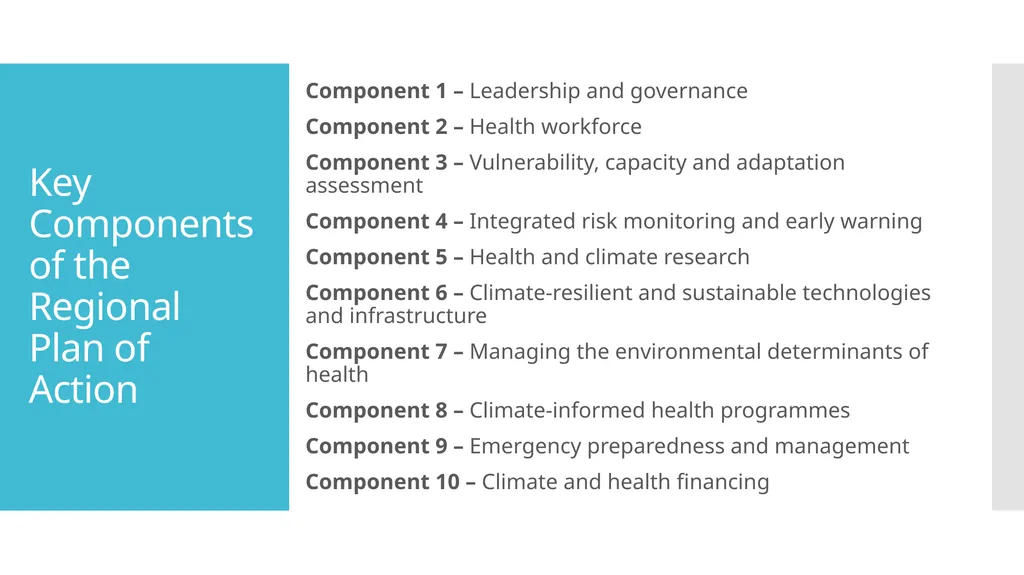
slide3. Key Components of the Regional Plan of Action Component 1 – Leadership and governance
Component 2 – Health workforce
Component 3 – Vulnerability, capacity and adaptation assessment
Component 4 – Integrated risk monitoring and early warning
Component 5 – Health and climate research
Component 6 – Climate-resilient and sustainable technologies and infrastructure
Component 7 – Managing the environmental determinants of health
Component 8 – Climate-informed health programmes
Component 9 – Emergency preparedness and management
Component 10 – Climate and health financing<br>
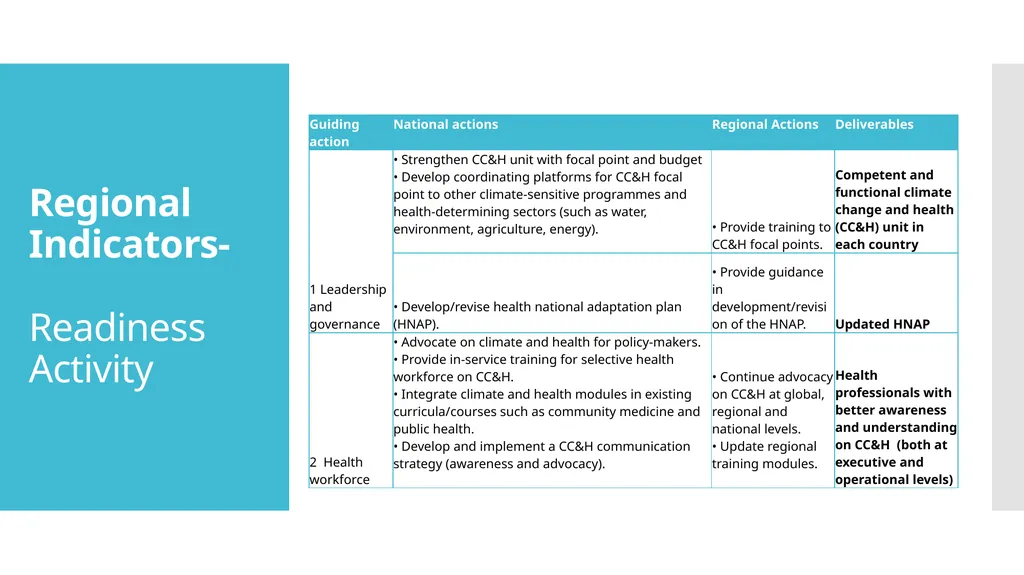
slide4. RegionalIndicators-Readiness Activity<br>
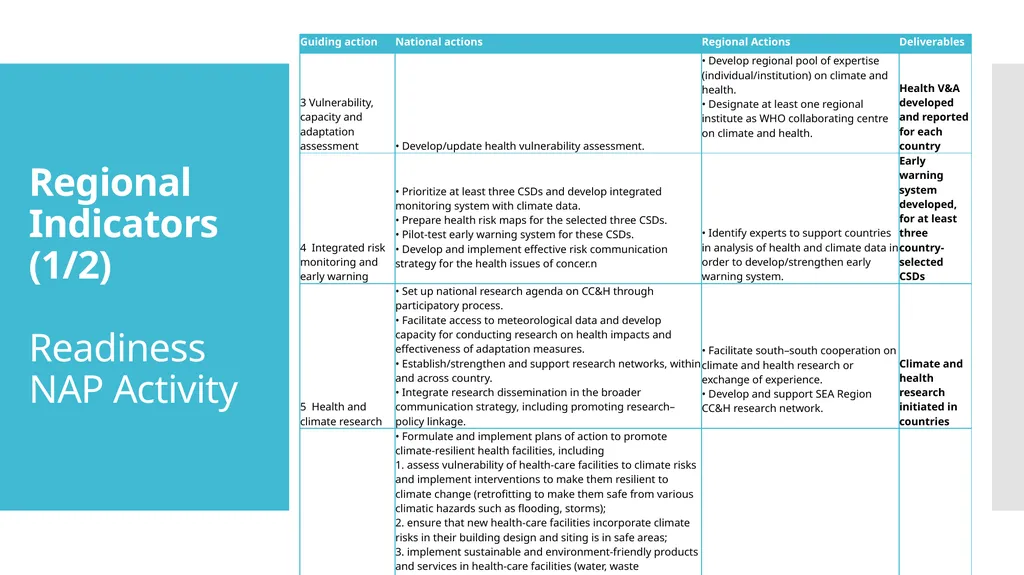
slide5. RegionalIndicators (1/2)Readiness NAP Activity<br>
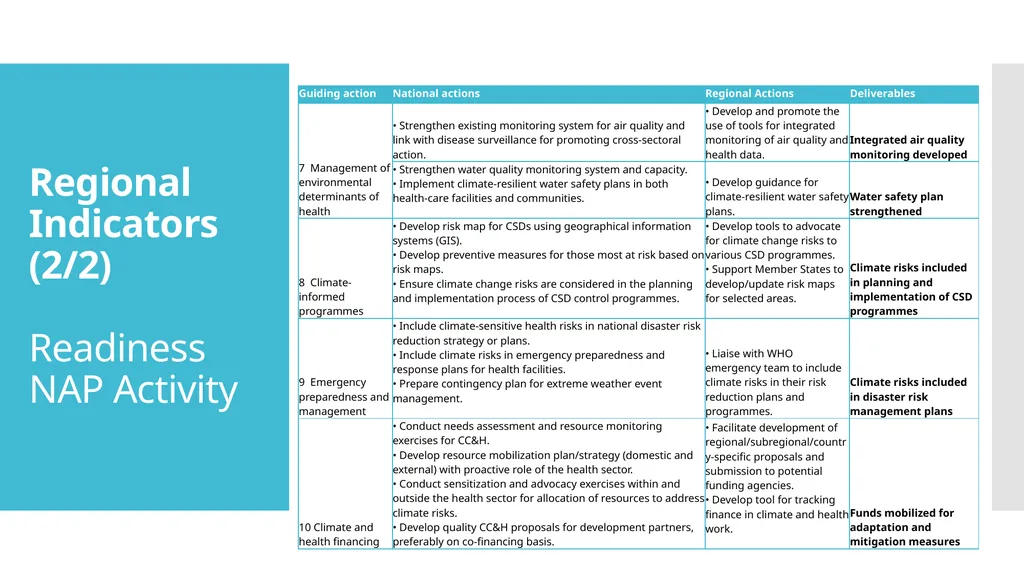
slide6. RegionalIndicators (2/2)Readiness NAP Activity<br>
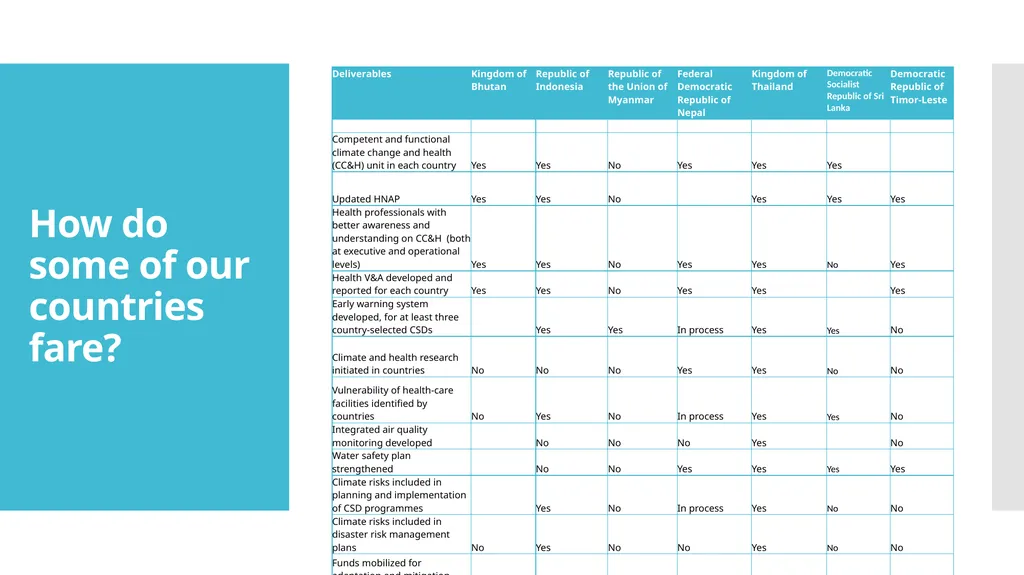
slide7. How do some of our countries fare?<br>
slide8. Thank You<br>
slide2. About the Regional Plan of Action The WHO South-East Asia Regional Plan of Action for implementing the Global Strategy for Health, Environment and Climate Change is a 10-year set of actions for realizing the Global Strategy at the regional level.
The Plan of Action builds upon the following:
the Malé Declaration on Building Health Systems Resilience to Climate Change endorsed at the Seventieth session of the WHO Regional Committee for South-East Asia (Maldives, 2017).
the Framework for Action in Building Health Systems Resilience to Climate Change in WHO South-East Asia Region 2017–2022 (operational guidance for implementing the Malé Declaration)
discussions at the Thirty-second Meeting of Ministers of Health of the WHO SEA Region in Dhaka, Bangladesh, 2014
the eight Regional Flagship Priority areas for achieving health imperatives in the Region
resolutions adopted at the World Health Assembly<br>
slide3. Key Components of the Regional Plan of Action Component 1 – Leadership and governance
Component 2 – Health workforce
Component 3 – Vulnerability, capacity and adaptation assessment
Component 4 – Integrated risk monitoring and early warning
Component 5 – Health and climate research
Component 6 – Climate-resilient and sustainable technologies and infrastructure
Component 7 – Managing the environmental determinants of health
Component 8 – Climate-informed health programmes
Component 9 – Emergency preparedness and management
Component 10 – Climate and health financing<br>
slide4. RegionalIndicators-Readiness Activity<br>
slide5. RegionalIndicators (1/2)Readiness NAP Activity<br>
slide6. RegionalIndicators (2/2)Readiness NAP Activity<br>
slide7. How do some of our countries fare?<br>
slide8. Thank You<br>