Religion in Ancient Egypt Slides originally by C. Kazun Importance Integral to life Sacred and secular were inseparable Immortal beings influence all aspects of nature and human activity godsgoddesses exist representing these aspects
"Religion in Ancient Egypt Slides originally by C." is the property of its rightful owner. Permission is granted to
download and print the materials on this website for personal, non-commercial use only, and to display it
on your personal computer provided you do not modify the materials and that you retain all copyright
notices contained in the materials. By downloading content from our website, you accept the terms of this
agreement.
Presentation Transcript
01
Religion in Ancient Egypt Slides originally by C. Kazun<br>
02
Importance Integral to life
Sacred and secular were inseparable
Immortal beings influence all aspects of nature and human activity
gods/goddesses exist representing these aspects
Polytheistic religion
Worshiped a pantheon of gods and goddesses
more than 80 total deities
Tolerated other cultures beliefs and gods
Allowed foreigners to retain their cultural deities
Sometimes incorporated foreign deities into their pantheon<br>
03
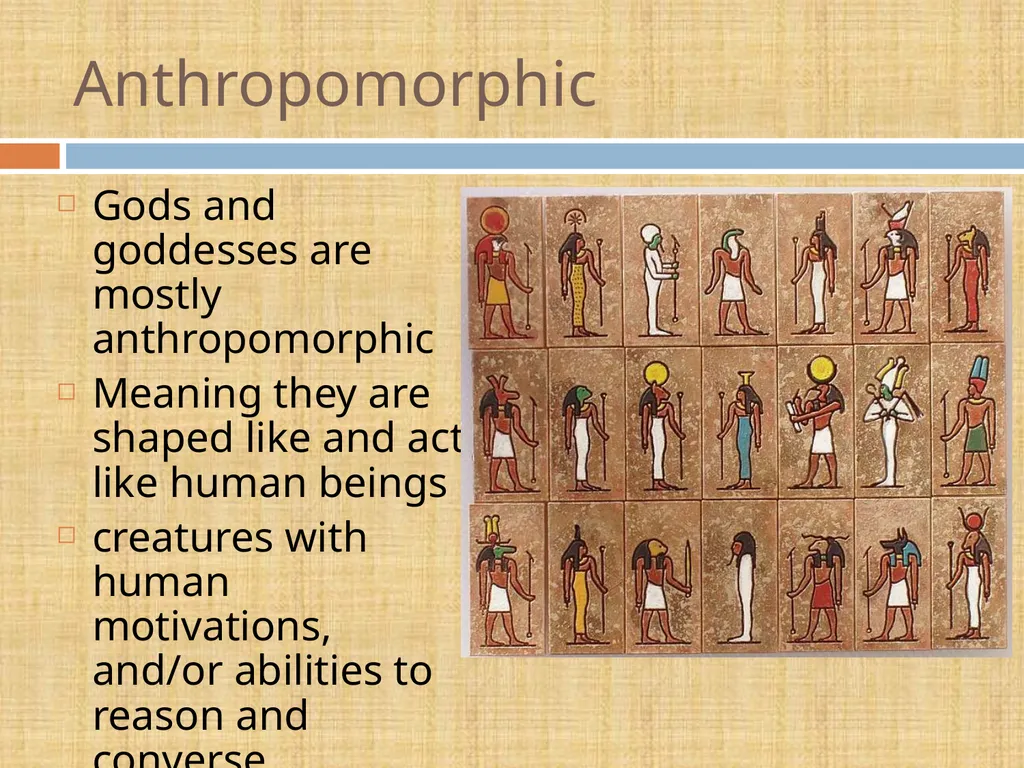
Anthropomorphic Gods and goddesses are mostly anthropomorphic
Meaning they are shaped like and act like human beings
creatures with human motivations, and/or abilities to reason and converse<br>
04
Nature Many gods associated with life-giving forces of nature
Ex. Ra is most important God, as he represents the sun
sun being essential for good harvests and therefore life
Isis was most important goddess as she represented female fertility
Worshiped as devoted mother and wife<br>
05
Association with animals Deities associated with animals or pictured with human bodies and animal heads
Took form of animal whose characteristics they embody
Dogs and cats represented loyalty; crocodile inspired fear; hawks and falcons represented swiftness;
snakes also seen as protector of the king and demon of the underworld
Ex. Horus, often pictured with a falcon head
Anubis, head of a jackal<br>
06
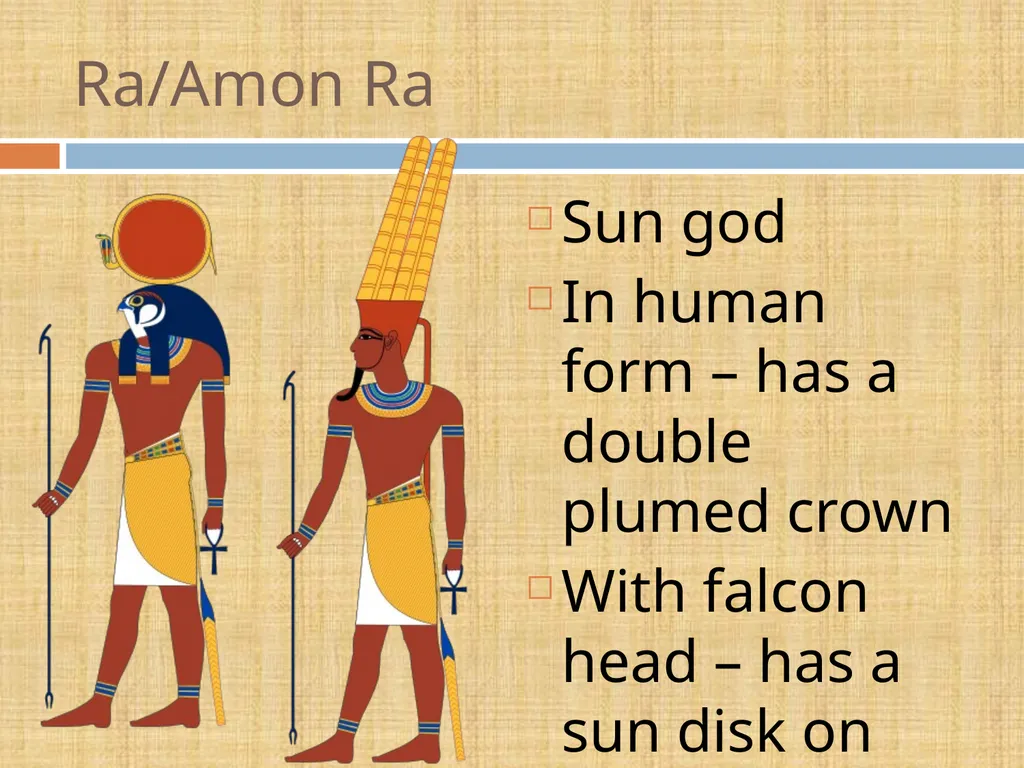
Ra/Amon Ra Sun god
In human form – has a double plumed crown
With falcon head – has a sun disk on crown<br>
07
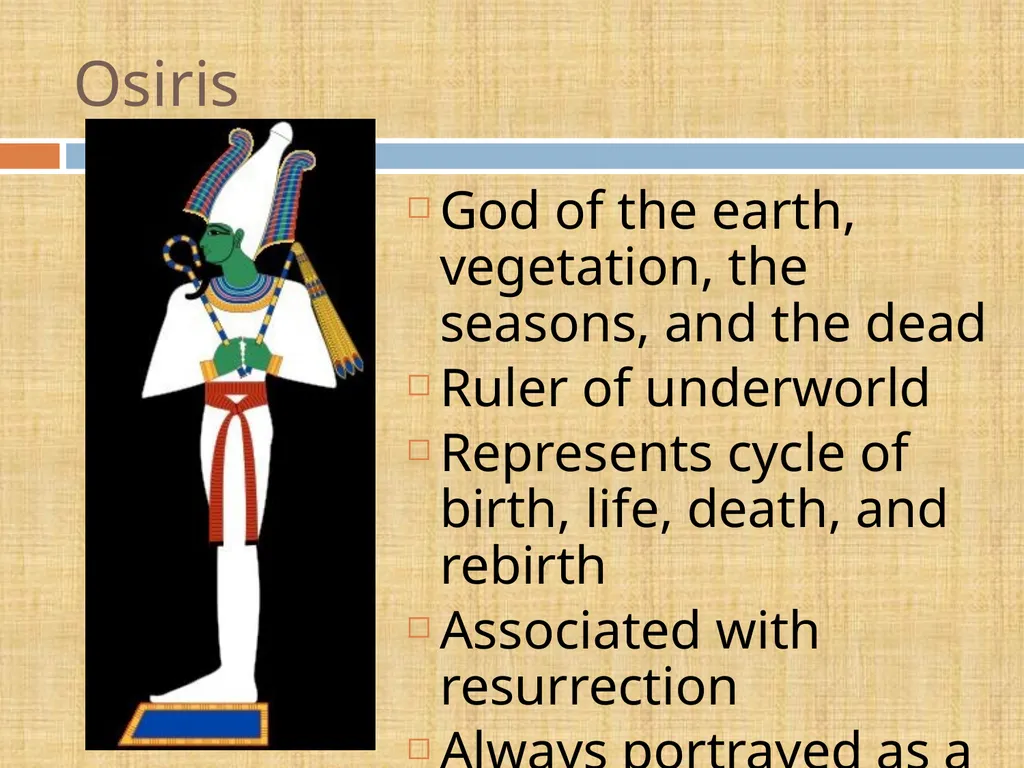
Osiris God of the earth, vegetation, the seasons, and the dead
Ruler of underworld
Represents cycle of birth, life, death, and rebirth
Associated with resurrection
Always portrayed as a mummy<br>
08
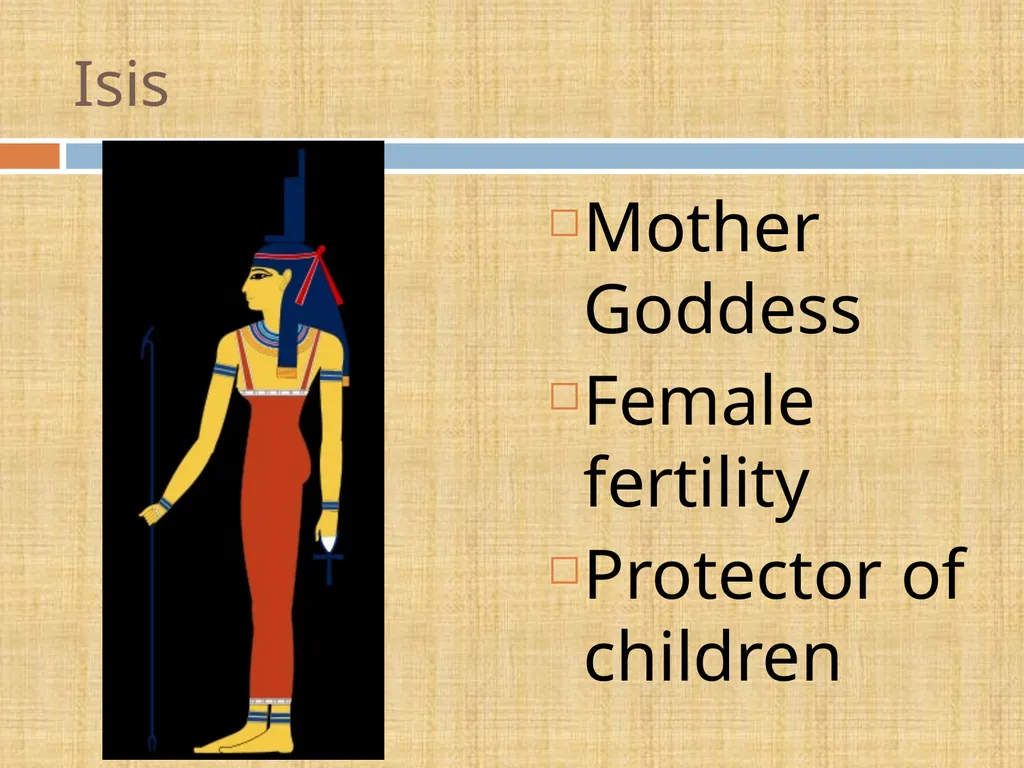
Isis Mother Goddess
Female fertility
Protector of children<br>
09
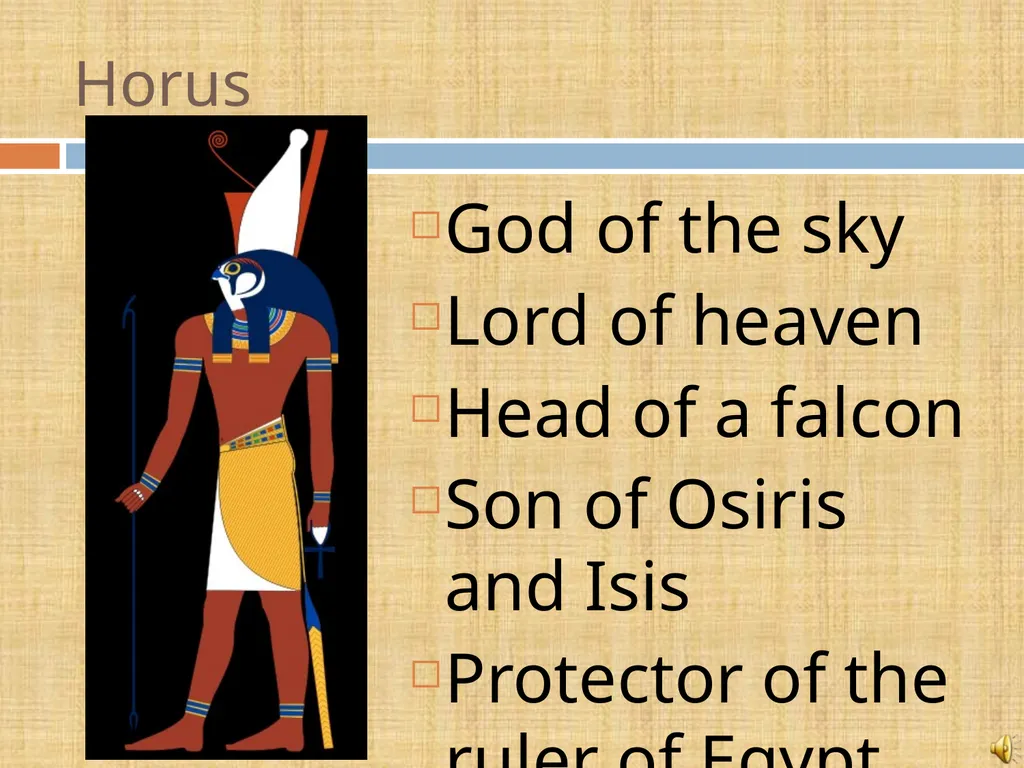
Horus God of the sky
Lord of heaven
Head of a falcon
Son of Osiris and Isis
Protector of the ruler of Egypt<br>
10
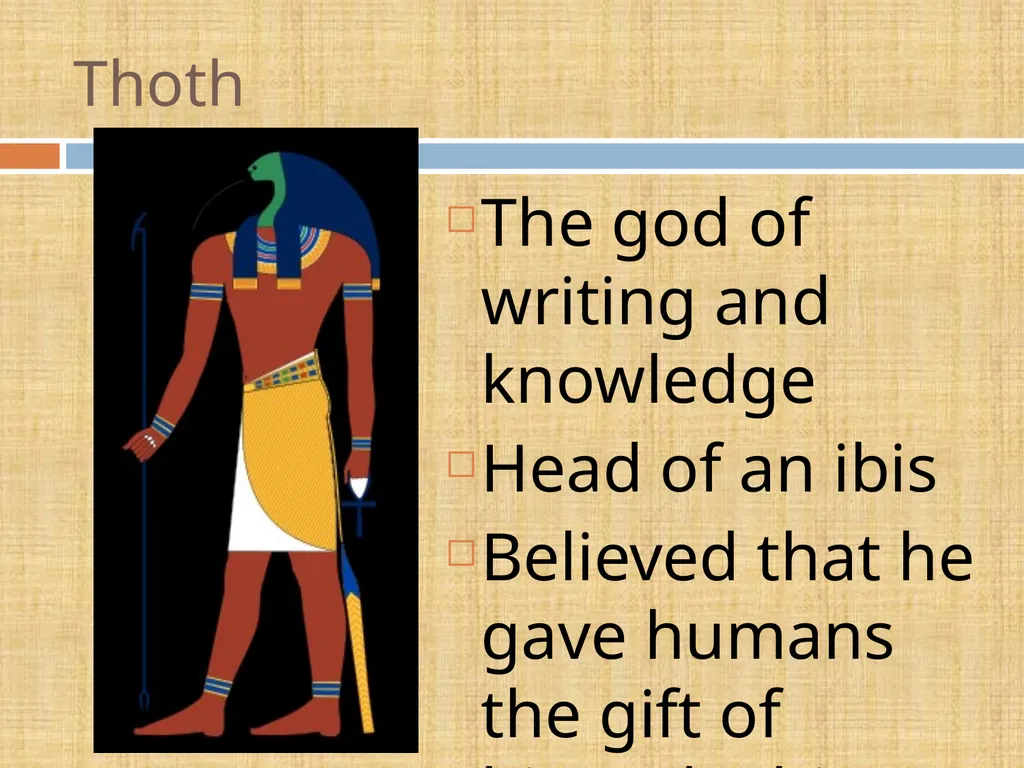
Thoth The god of writing and knowledge
Head of an ibis
Believed that he gave humans the gift of hieroglyphic writing<br>
11
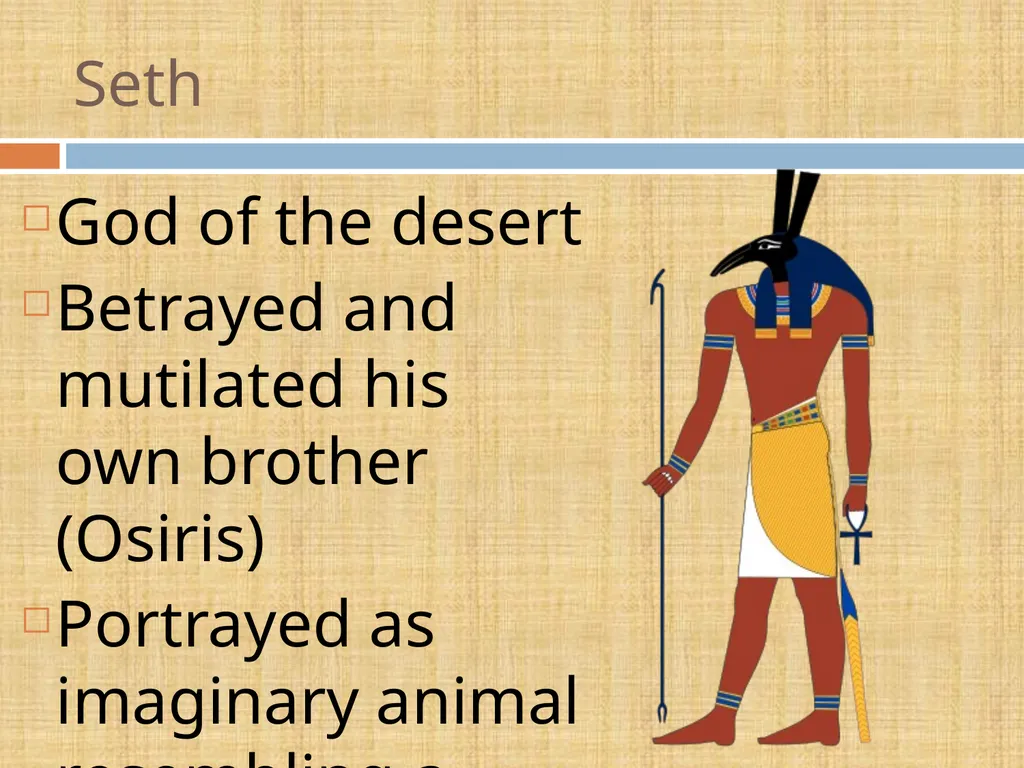
Seth God of the desert
Betrayed and mutilated his own brother (Osiris)
Portrayed as imaginary animal resembling a donkey<br>
12
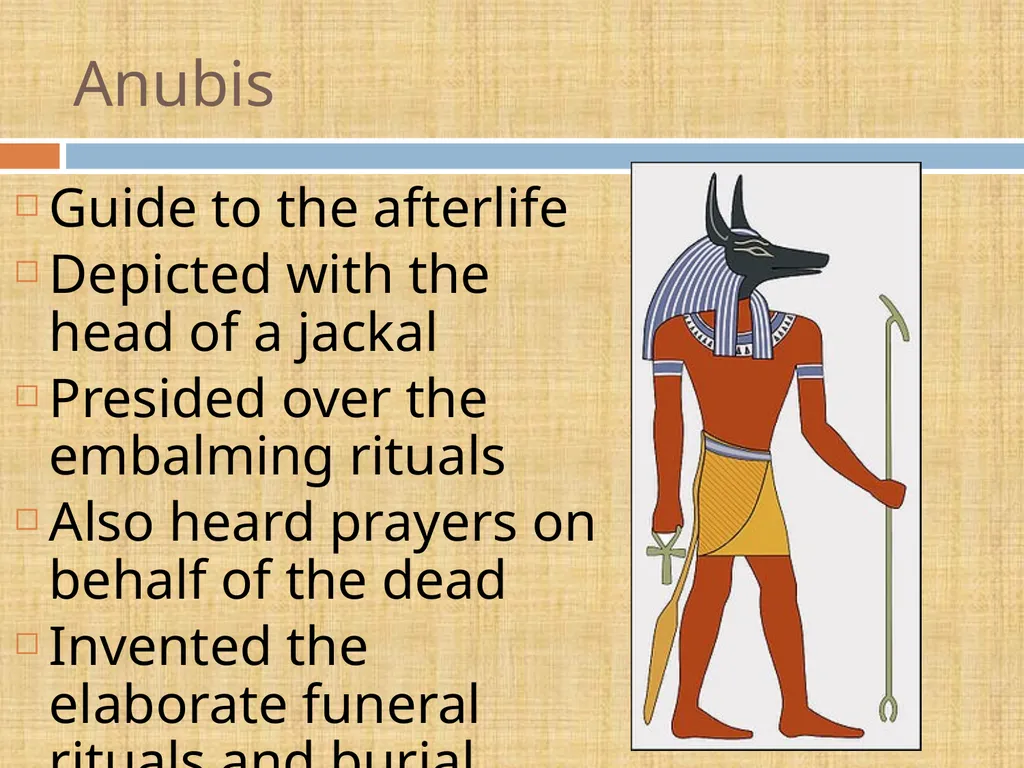
Anubis Guide to the afterlife
Depicted with the head of a jackal
Presided over the embalming rituals
Also heard prayers on behalf of the dead
Invented the elaborate funeral rituals and burial practices<br>
13
State and Household Cities and towns worshiped their own specific gods in addition to the major deities
Amon = Thebes
Originally tribal god, but spread from Thebes, becoming worshipped all over Egypt as the chief god
Took over prestige from Atum (original creation god)
Later combined with Ra; Amon-Ra becoming chief god
Ptah = Memphis
Thoth = Hermopolis
Households worshiped their own specific god (whichever one they felt most connection to), alongside state gods
that god protected the family<br>
14
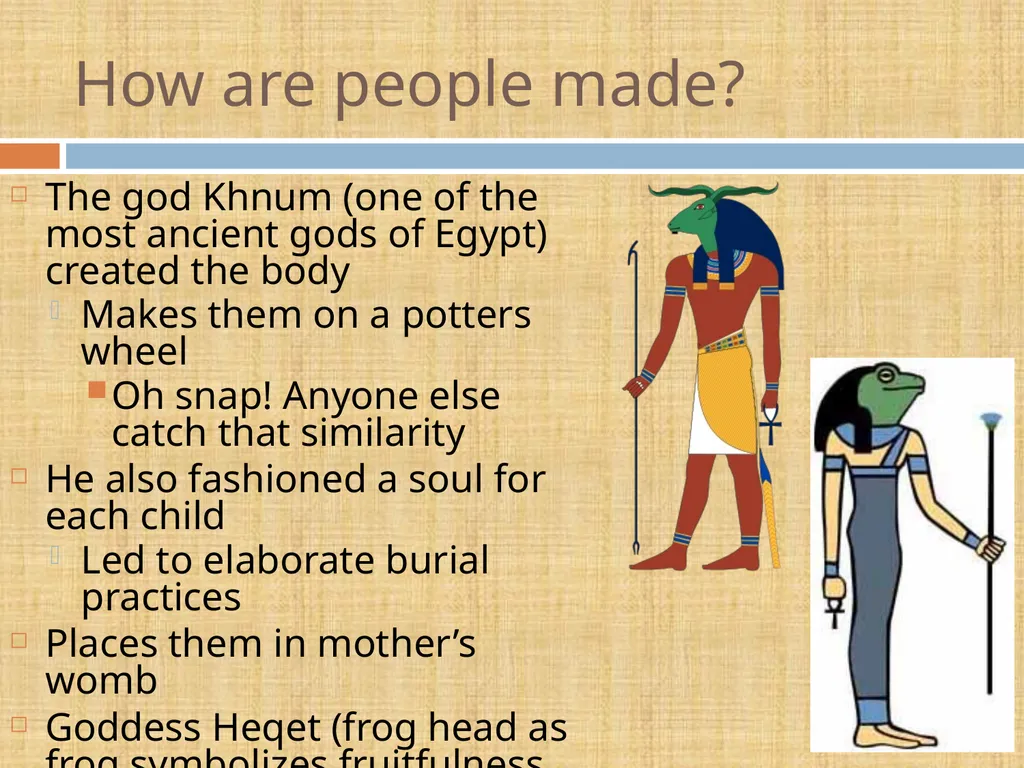
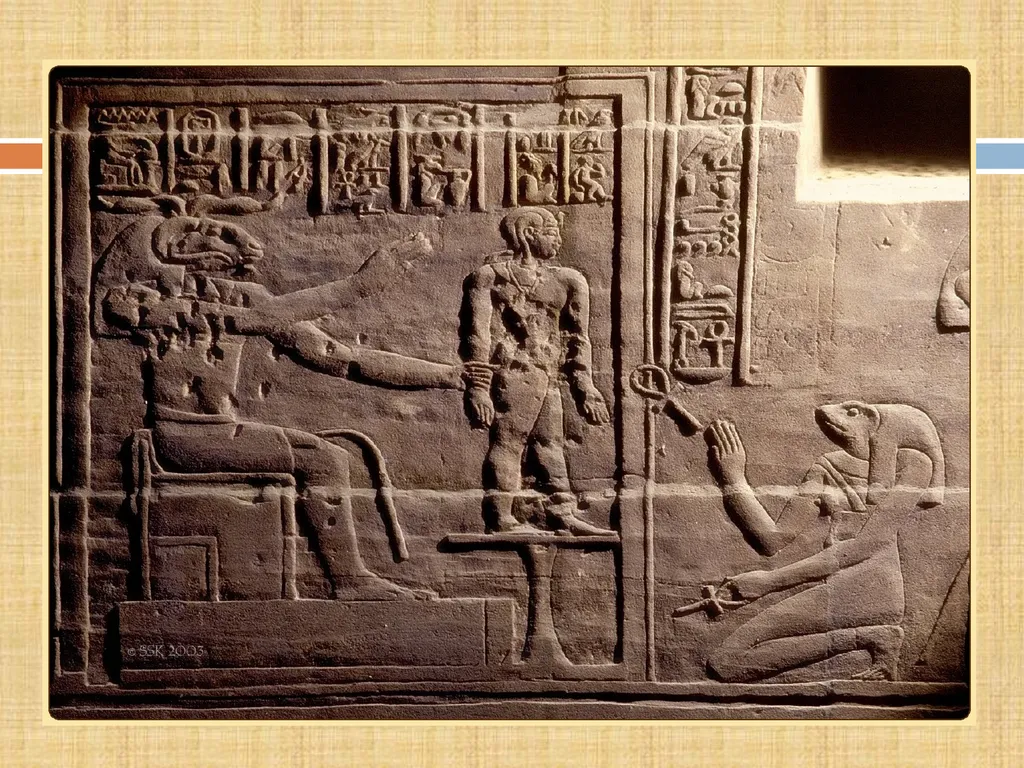
How are people made? The god Khnum (one of the most ancient gods of Egypt) created the body
Makes them on a potters wheel
Oh snap! Anyone else catch that similarity
He also fashioned a soul for each child
Led to elaborate burial practices
Places them in mother’s womb
Goddess Heqet (frog head as frog symbolizes fruitfulness and new life) is the goddess of childbirth and fertility
Also the wife of Khnum<br>
15
Worship Practices Priests held daily religious rituals or services at major temples
To honour state gods
Closed to the public
Ordinary people worshipped at local shrines<br>
16
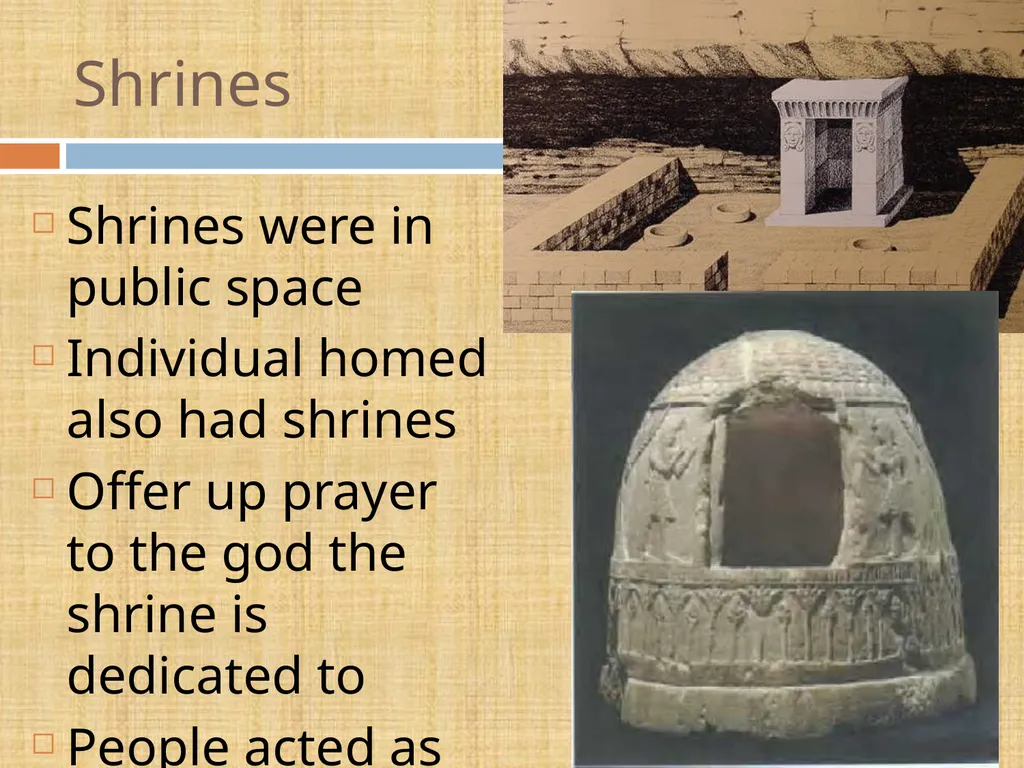
Shrines Shrines were in public space
Individual homed also had shrines
Offer up prayer to the god the shrine is dedicated to
People acted as their own priests<br>
17
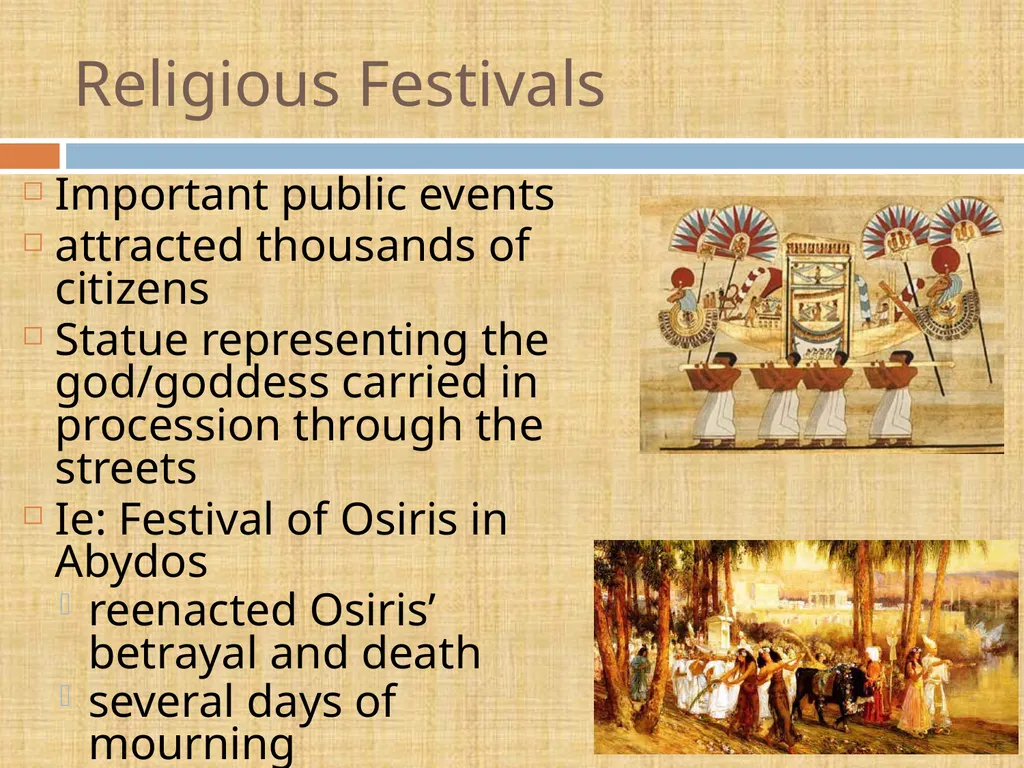
Religious Festivals Important public events
attracted thousands of citizens
Statue representing the god/goddess carried in procession through the streets
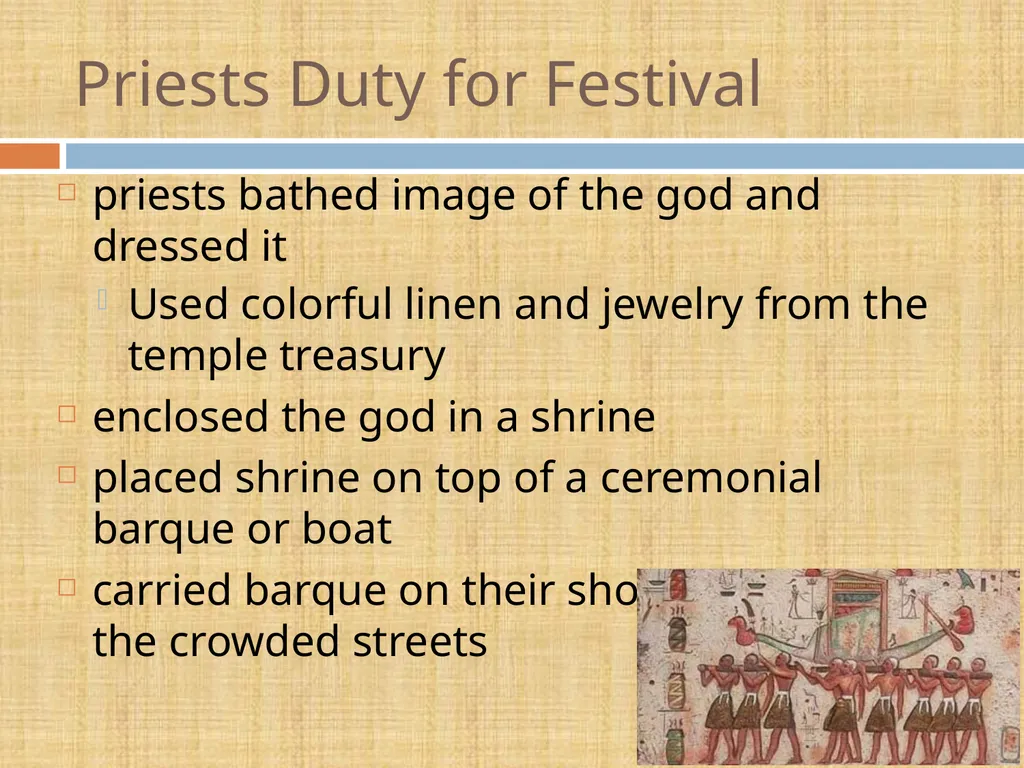
Ie: Festival of Osiris in Abydos
reenacted Osiris’ betrayal and death
several days of mourning
processed to tomb of Osiris<br>
18
Priests Duty for Festival priests bathed image of the god and dressed it
Used colorful linen and jewelry from the temple treasury
enclosed the god in a shrine
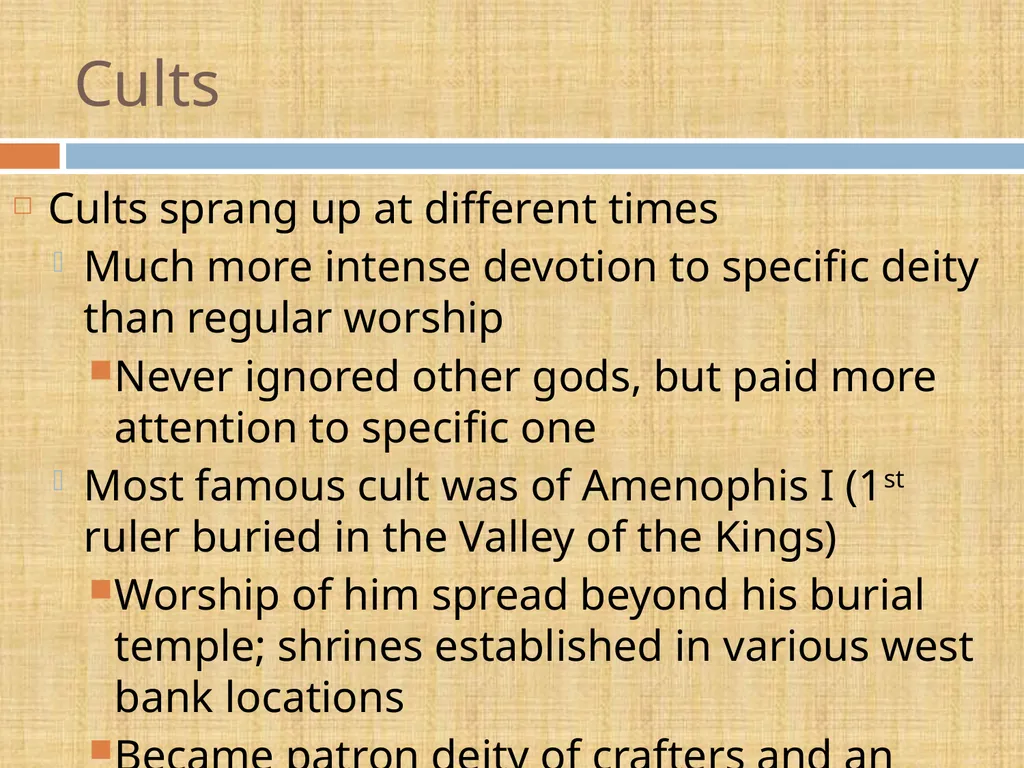
placed shrine on top of a ceremonial barque or boat
carried barque on their shoulders through the crowded streets<br>
19
Cults Cults sprang up at different times
Much more intense devotion to specific deity than regular worship
Never ignored other gods, but paid more attention to specific one
Most famous cult was of Amenophis I (1st ruler buried in the Valley of the Kings)
Worship of him spread beyond his burial temple; shrines established in various west bank locations
Became patron deity of crafters and an intermediary b/w humans and gods<br>
20
Oracles Became popular during New Kingdom, and filled important role in religious practice
Offered citizens chance to communicate with gods directly
Oracle was expected to answer question or provide guidance
How it worked:
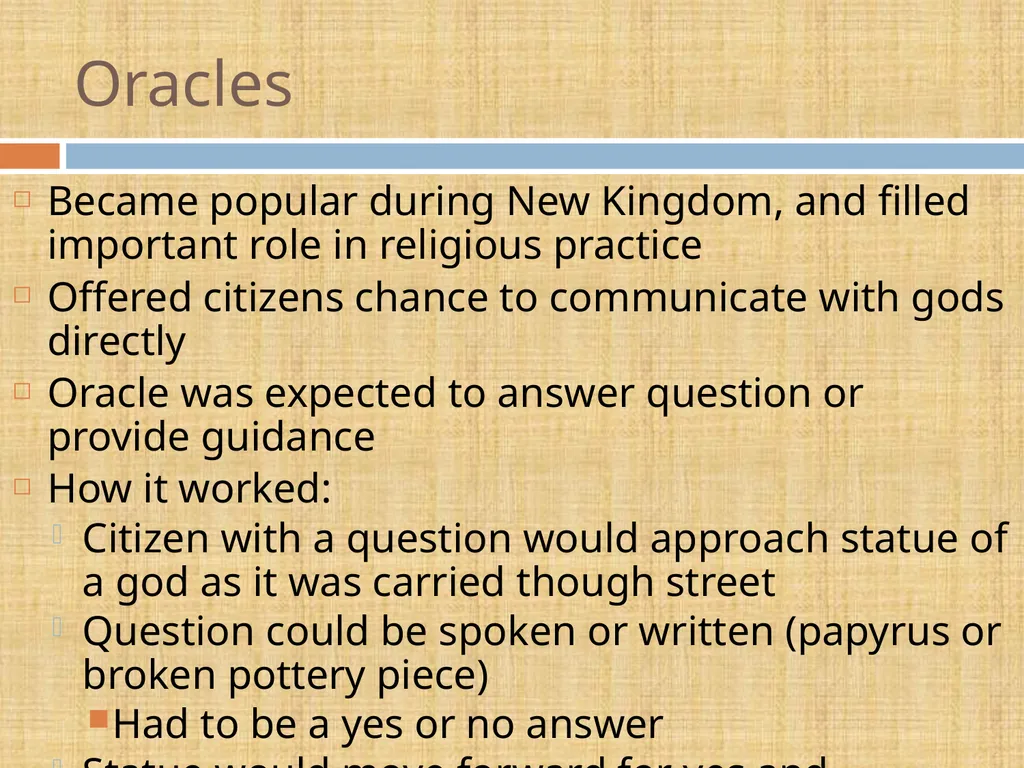
Citizen with a question would approach statue of a god as it was carried though street
Question could be spoken or written (papyrus or broken pottery piece)
Had to be a yes or no answer
Statue would move forward for yes and backward for no<br>
21
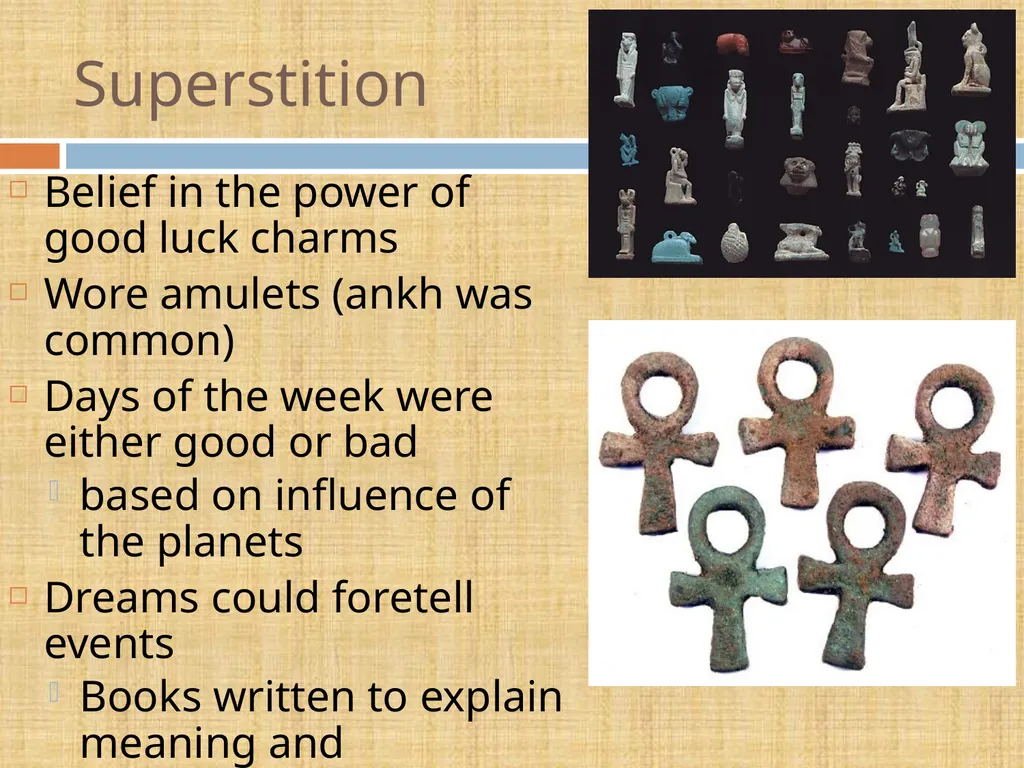
Superstition Belief in the power of good luck charms
Wore amulets (ankh was common)
Days of the week were either good or bad
based on influence of the planets
Dreams could foretell events
Books written to explain meaning and significance of dreams<br>
22
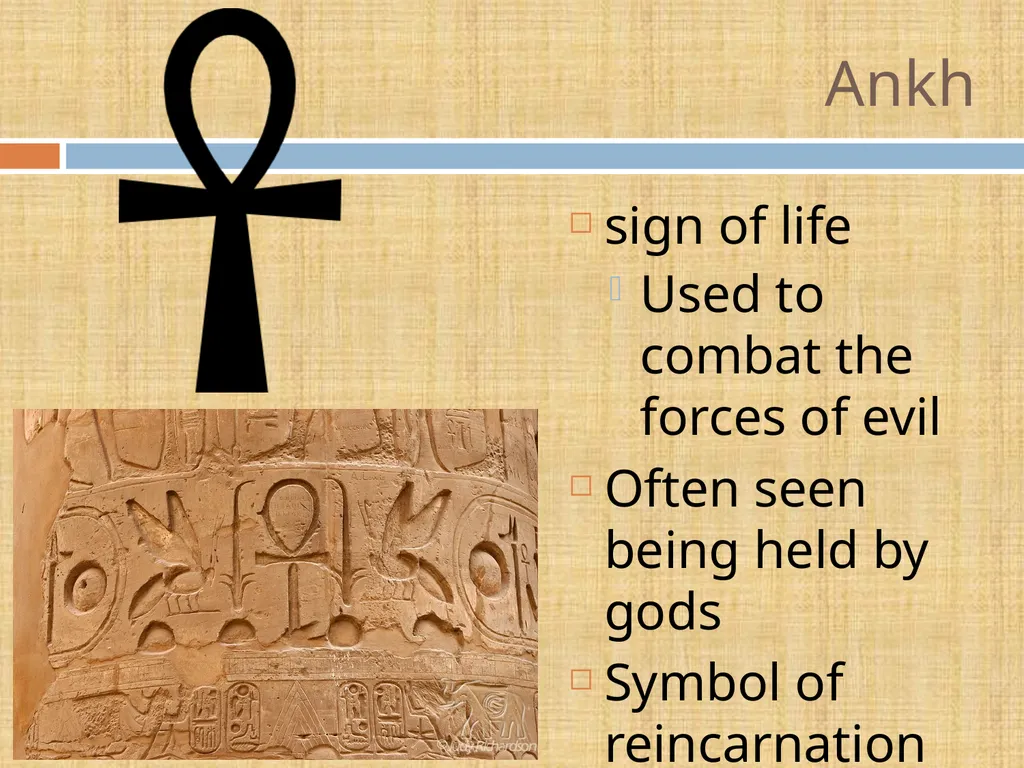
Ankh sign of life
Used to combat the forces of evil
Often seen being held by gods
Symbol of reincarnation and rebirth<br>
23
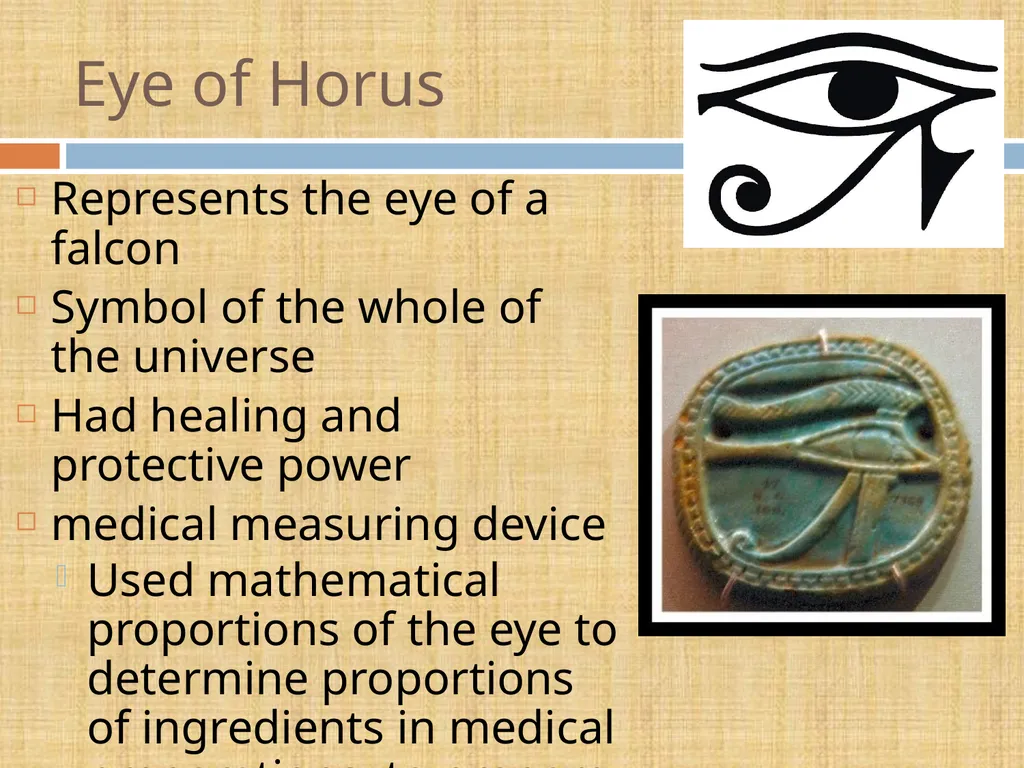
Eye of Horus Represents the eye of a falcon
Symbol of the whole of the universe
Had healing and protective power
medical measuring device
Used mathematical proportions of the eye to determine proportions of ingredients in medical preparations, to prepare medications.<br>