
Renal Replacement Therapy: What the PCP Needs to
TA
Published · 64 slides · 0 views

1 / 1





Description
Renal Replacement Therapy: What the PCP Needs to Know Learning Objectives Describe treatment options for renal replacement therapy to improve awareness and understanding. Use evidence-based strategies to manage patients with kidney failure
Related Topics
Share
Embed code
Download this presentation From Below
"Renal Replacement Therapy: What the PCP Needs to" is the property of its rightful owner. Permission is granted to download and print the materials on this website for personal, non-commercial use only, and to display it on your personal computer provided you do not modify the materials and that you retain all copyright notices contained in the materials. By downloading content from our website, you accept the terms of this agreement.
Presentation Transcript
01
Renal Replacement Therapy: What the PCP Needs to Know<br>
02
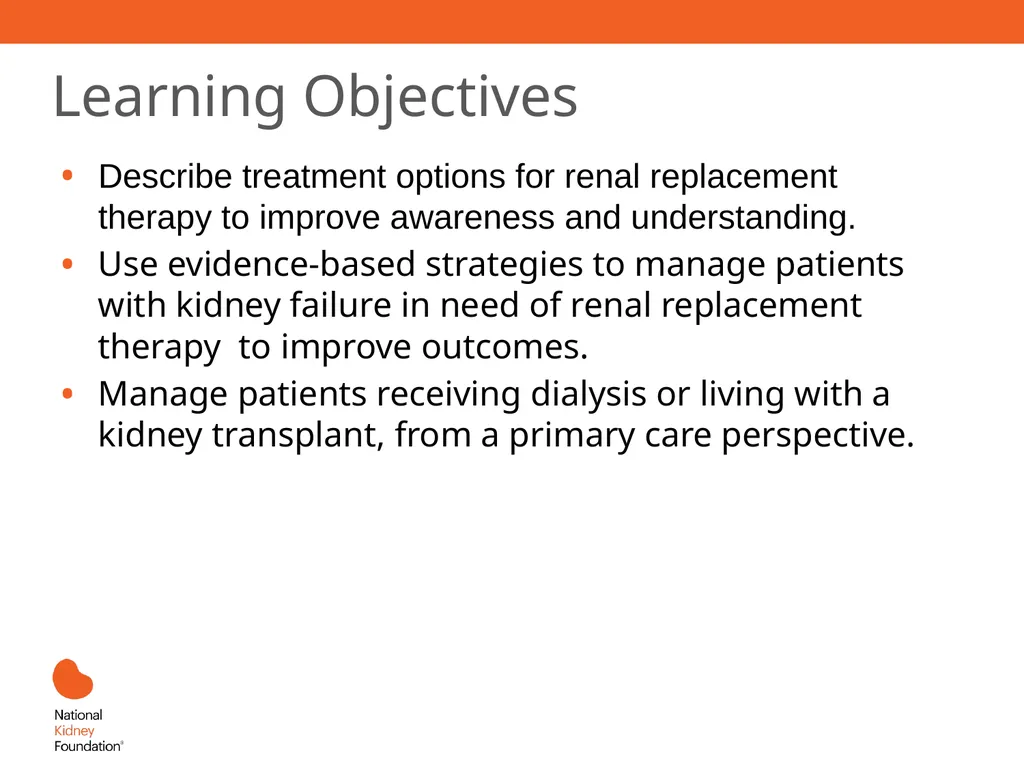
Learning Objectives Describe treatment options for renal replacement therapy to improve awareness and understanding.
Use evidence-based strategies to manage patients with kidney failure in need of renal replacement therapy to improve outcomes.
Manage patients receiving dialysis or living with a kidney transplant, from a primary care perspective.<br>
Use evidence-based strategies to manage patients with kidney failure in need of renal replacement therapy to improve outcomes.
Manage patients receiving dialysis or living with a kidney transplant, from a primary care perspective.<br>
03
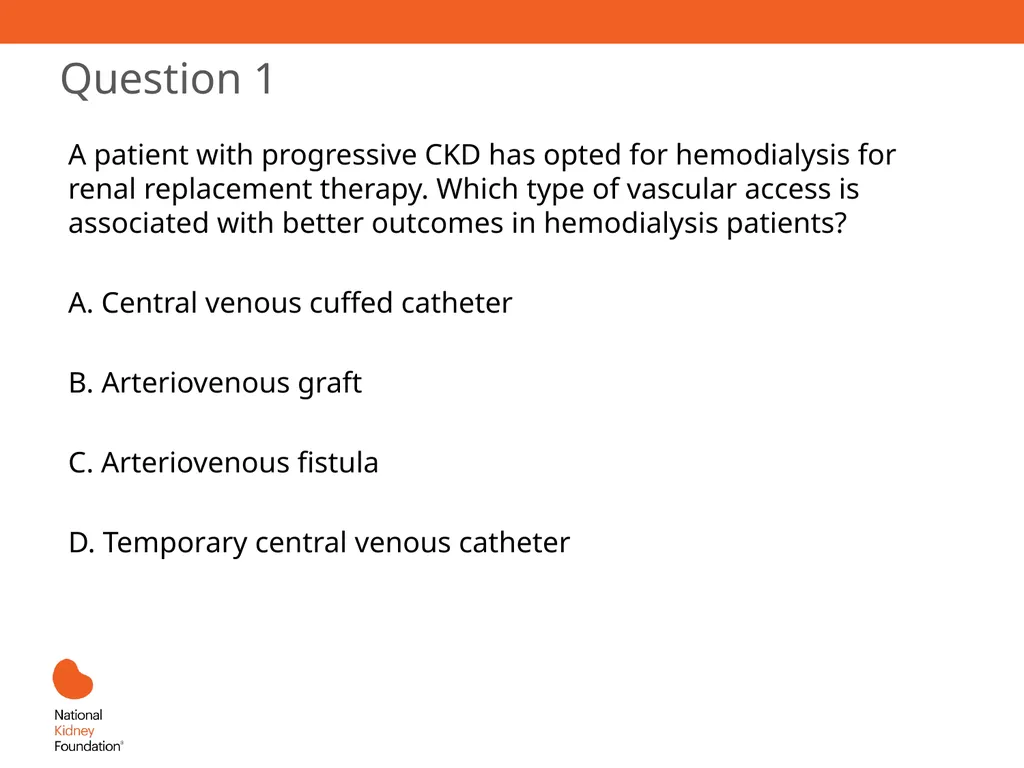
Question 1 A patient with progressive CKD has opted for hemodialysis for renal replacement therapy. Which type of vascular access is associated with better outcomes in hemodialysis patients?
A. Central venous cuffed catheter
B. Arteriovenous graft
C. Arteriovenous fistula
D. Temporary central venous catheter<br>
A. Central venous cuffed catheter
B. Arteriovenous graft
C. Arteriovenous fistula
D. Temporary central venous catheter<br>
04
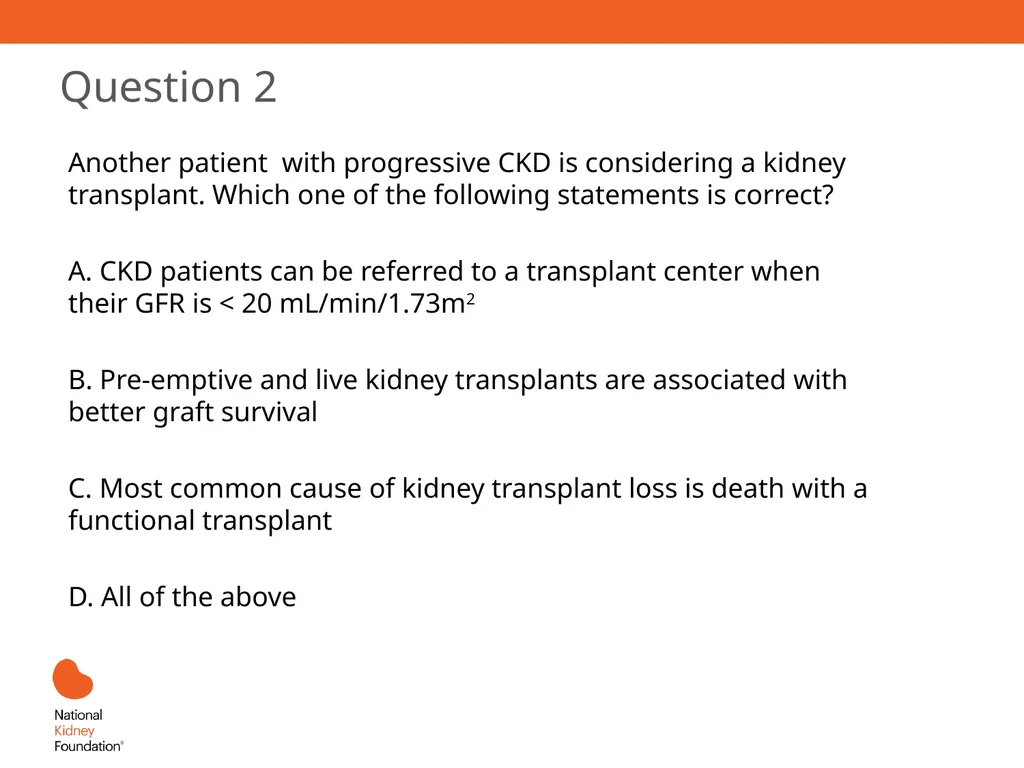
Question 2 Another patient with progressive CKD is considering a kidney transplant. Which one of the following statements is correct?
A. CKD patients can be referred to a transplant center when their GFR is < 20 mL/min/1.73m2
B. Pre-emptive and live kidney transplants are associated with better graft survival
C. Most common cause of kidney transplant loss is death with a functional transplant
D. All of the above<br>
A. CKD patients can be referred to a transplant center when their GFR is < 20 mL/min/1.73m2
B. Pre-emptive and live kidney transplants are associated with better graft survival
C. Most common cause of kidney transplant loss is death with a functional transplant
D. All of the above<br>
05
Renal Replacement Therapy Overview and Considerations for the PCP<br>
06
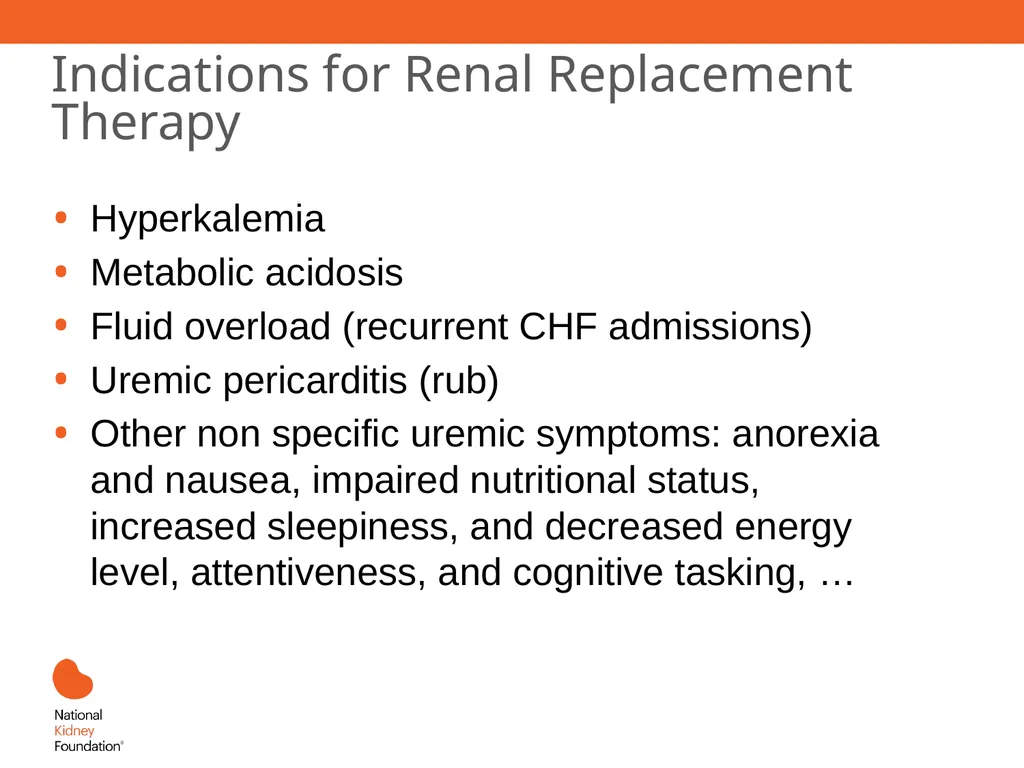
Indications for Renal Replacement Therapy Hyperkalemia
Metabolic acidosis
Fluid overload (recurrent CHF admissions)
Uremic pericarditis (rub)
Other non specific uremic symptoms: anorexia and nausea, impaired nutritional status, increased sleepiness, and decreased energy level, attentiveness, and cognitive tasking, …<br>
Metabolic acidosis
Fluid overload (recurrent CHF admissions)
Uremic pericarditis (rub)
Other non specific uremic symptoms: anorexia and nausea, impaired nutritional status, increased sleepiness, and decreased energy level, attentiveness, and cognitive tasking, …<br>
07
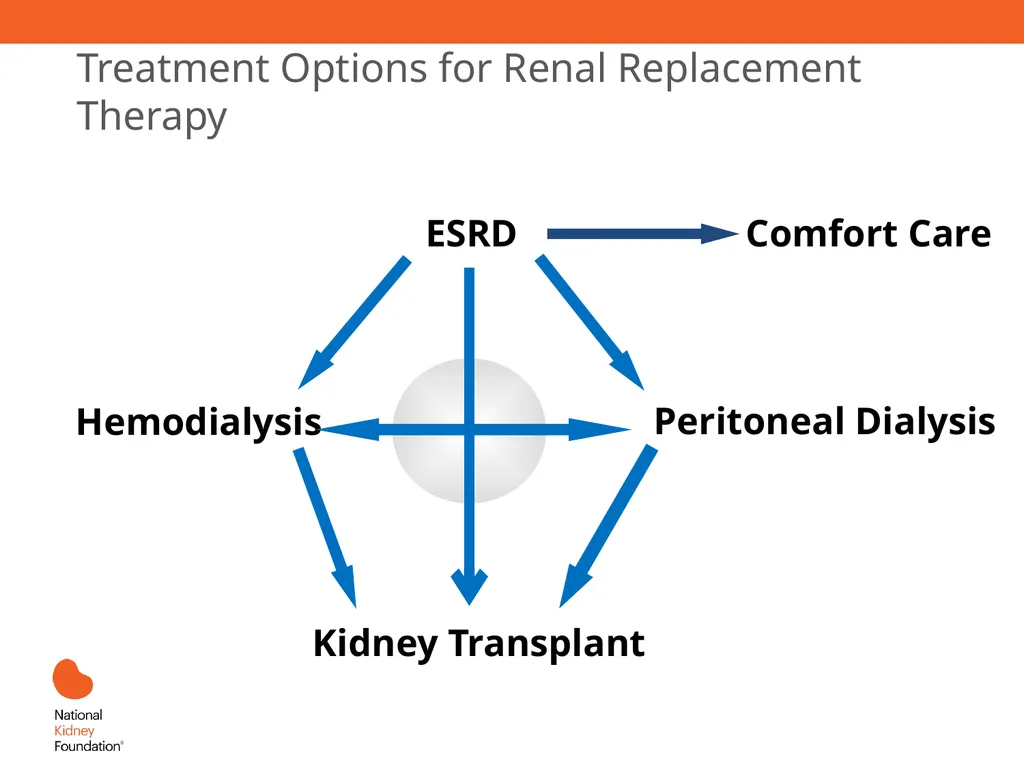
Treatment Options for Renal Replacement Therapy ESRD Hemodialysis Kidney Transplant Peritoneal Dialysis Comfort Care<br>
08
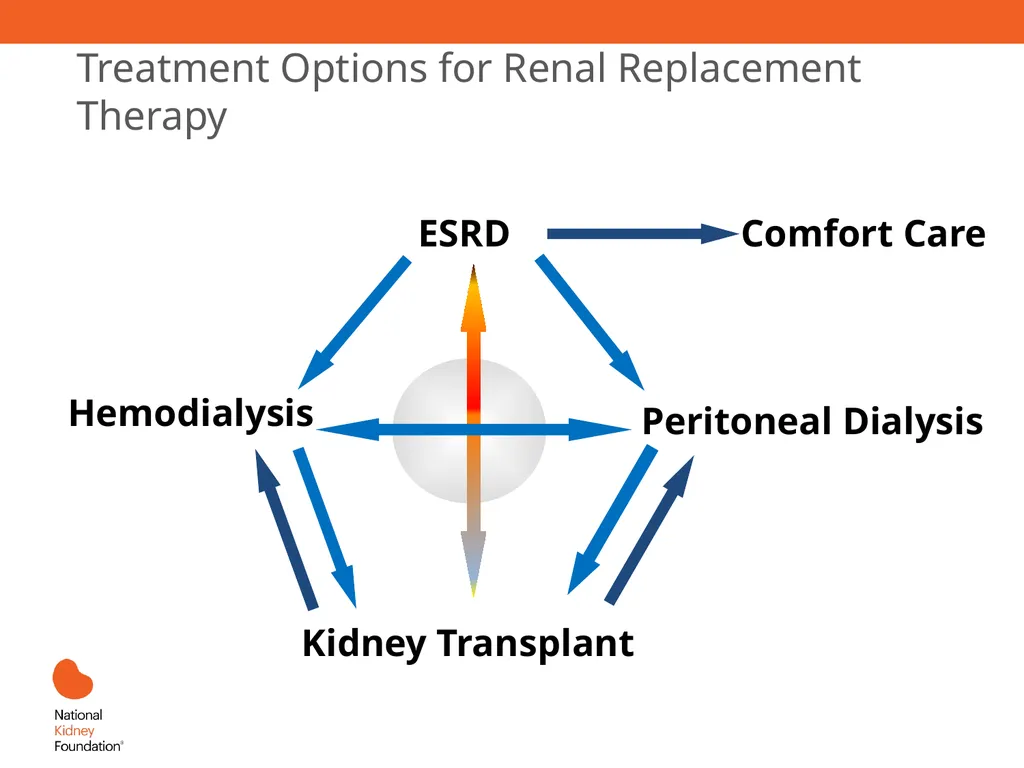
Treatment Options for Renal Replacement Therapy ESRD Hemodialysis Kidney Transplant Peritoneal Dialysis Comfort Care<br>
09
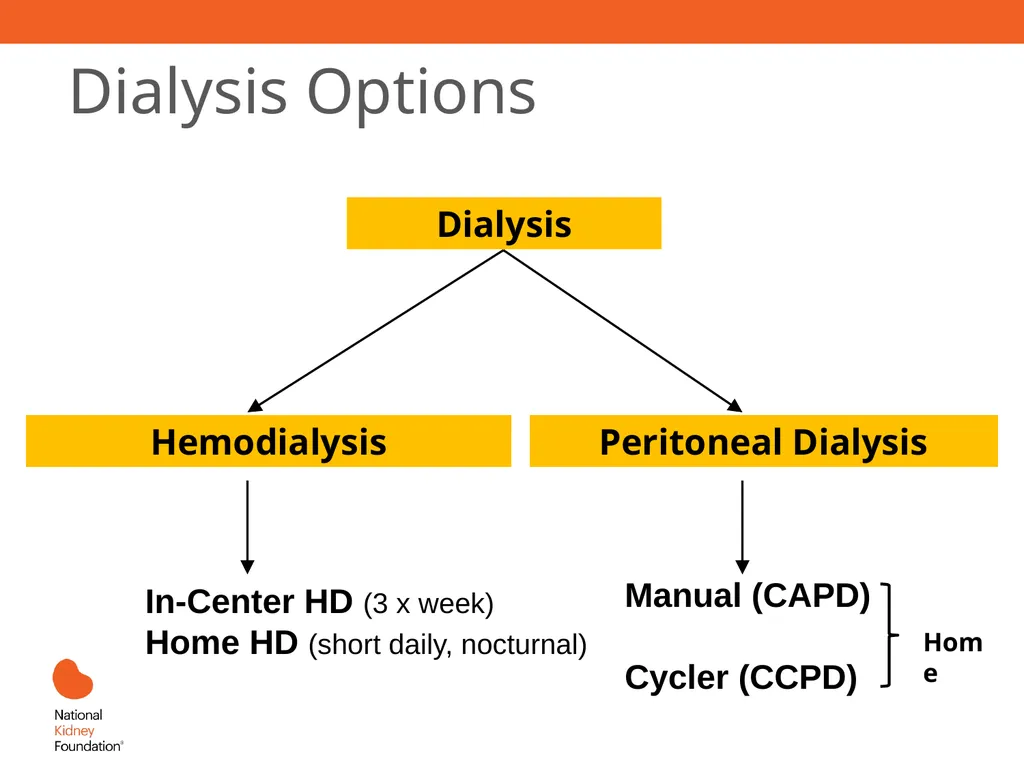
Dialysis Options Dialysis Hemodialysis Peritoneal Dialysis In-Center HD (3 x week)
Home HD (short daily, nocturnal) Manual (CAPD)
Cycler (CCPD) Home<br>
Home HD (short daily, nocturnal) Manual (CAPD)
Cycler (CCPD) Home<br>
10
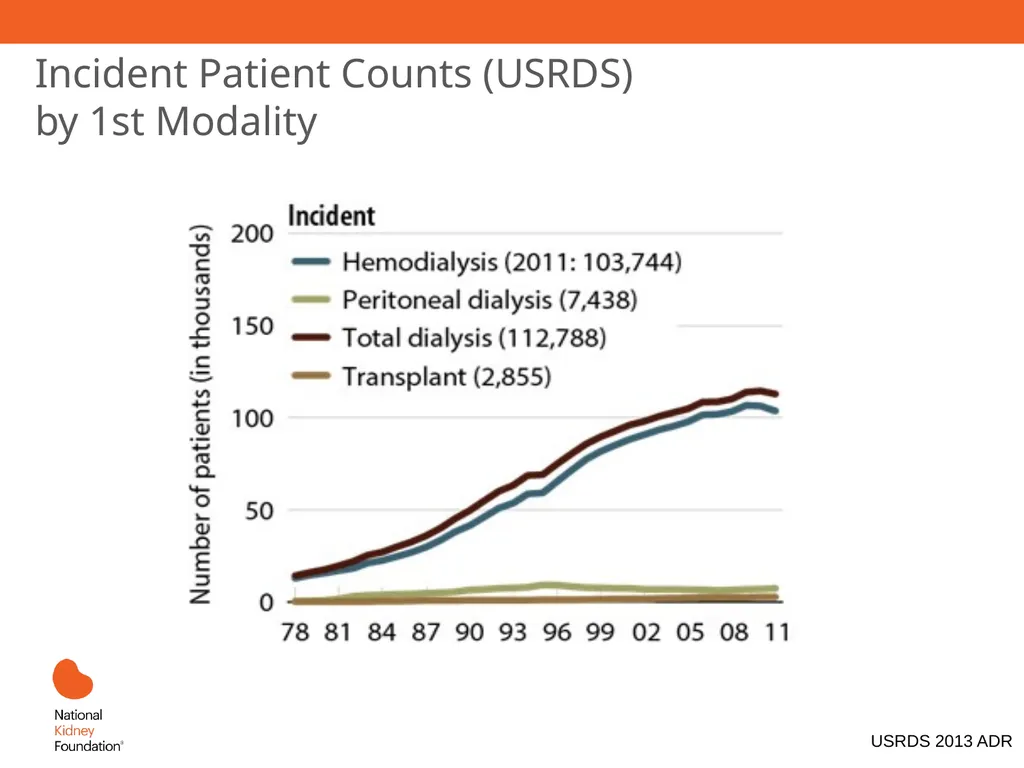
Incident Patient Counts (USRDS)
by 1st Modality USRDS 2013 ADR<br>
11
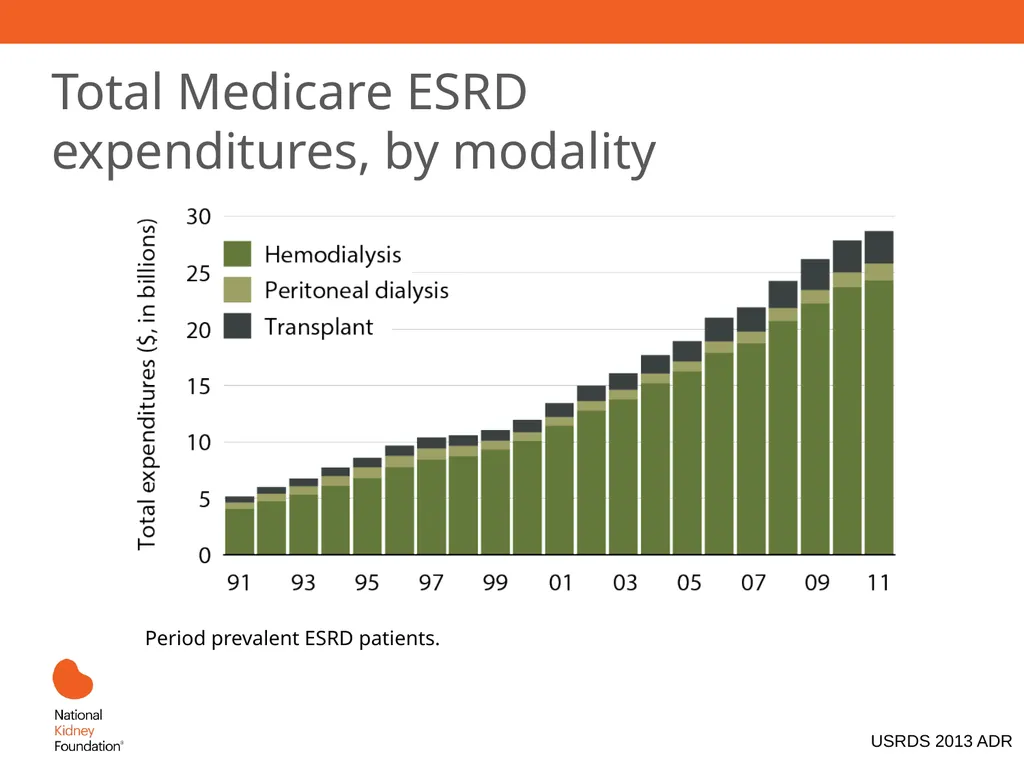
Total Medicare ESRD
expenditures, by modality Period prevalent ESRD patients. USRDS 2013 ADR<br>
12
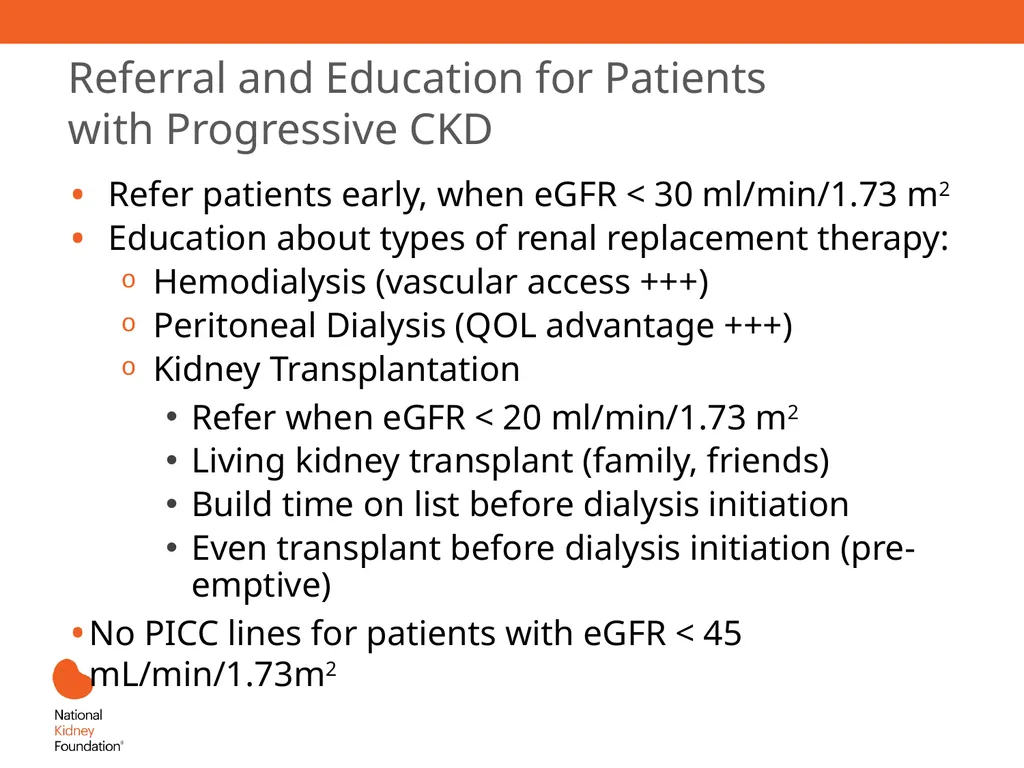
Refer patients early, when eGFR < 30 ml/min/1.73 m2
Education about types of renal replacement therapy:
Hemodialysis (vascular access +++)
Peritoneal Dialysis (QOL advantage +++)
Kidney Transplantation
Refer when eGFR < 20 ml/min/1.73 m2
Living kidney transplant (family, friends)
Build time on list before dialysis initiation
Even transplant before dialysis initiation (pre-emptive)
No PICC lines for patients with eGFR < 45 mL/min/1.73m2 Referral and Education for Patients with Progressive CKD<br>
Education about types of renal replacement therapy:
Hemodialysis (vascular access +++)
Peritoneal Dialysis (QOL advantage +++)
Kidney Transplantation
Refer when eGFR < 20 ml/min/1.73 m2
Living kidney transplant (family, friends)
Build time on list before dialysis initiation
Even transplant before dialysis initiation (pre-emptive)
No PICC lines for patients with eGFR < 45 mL/min/1.73m2 Referral and Education for Patients with Progressive CKD<br>
13
Advantages of Timely Referral in Patients with Progressive CKD Improves patient preparation for RRT
Greater use of permanent vascular access
Avoidance of emergent hemodialysis initiation
Greater utilization of transplantation and self-care dialysis (i.e., peritoneal dialysis or home hemodialysis)
Management of medications which may help to delay the need for RRT
Gives the nephrologist adequate time to counsel patients through this challenging transition in their lives KDIGO Transplant Guidelines<br>
Greater use of permanent vascular access
Avoidance of emergent hemodialysis initiation
Greater utilization of transplantation and self-care dialysis (i.e., peritoneal dialysis or home hemodialysis)
Management of medications which may help to delay the need for RRT
Gives the nephrologist adequate time to counsel patients through this challenging transition in their lives KDIGO Transplant Guidelines<br>
14
Medical Health and Wellness: Components of Multidisciplinary Care in Progressive CKD Education and counseling about different RRT modalities, transplant options, and vascular access surgery
Protocols for laboratory and clinic visits; with attention to CKD and CVD-associated comorbidities (e.g., high blood pressure)
Ethical, psychological, and social care (e.g., social bereavement, depression, anxiety)
Dietary counseling and education on other lifestyle modifications (e.g., exercise, smoking cessation)
Vaccination program KDIGO Transplant Guidelines<br>
Protocols for laboratory and clinic visits; with attention to CKD and CVD-associated comorbidities (e.g., high blood pressure)
Ethical, psychological, and social care (e.g., social bereavement, depression, anxiety)
Dietary counseling and education on other lifestyle modifications (e.g., exercise, smoking cessation)
Vaccination program KDIGO Transplant Guidelines<br>
15
Early Vaccination for Hepatitis B: Too Often Forgotten! Patients with ESRD have response to vaccination
(Secondary to general suppression of immune system)
After Hepatitis B vaccination in ESRD patients:
50 – 60 % develop antibodies, compared to > 90% in patients without renal failure
Have Lower titers
Have protective levels for shorter duration Stevens CE et al. NEJM 1984; 311: 496
Buti M et al. Am J Nephrol 1992; 112: 144<br>
(Secondary to general suppression of immune system)
After Hepatitis B vaccination in ESRD patients:
50 – 60 % develop antibodies, compared to > 90% in patients without renal failure
Have Lower titers
Have protective levels for shorter duration Stevens CE et al. NEJM 1984; 311: 496
Buti M et al. Am J Nephrol 1992; 112: 144<br>
16
Other Considerations for Vaccination in Patients with Progressive CKD Influenza vaccine annually, unless contraindicated.
Polyvalent pneumococcal vaccine:
eGFR <30 ml/min/1.73m2
High risk of pneumococcal infection (e.g., nephrotic syndrome, diabetes, receiving immunosuppression), unless contraindicated.
Offer revaccination within 5 years. KDIGO Transplant Guidelines<br>
Polyvalent pneumococcal vaccine:
eGFR <30 ml/min/1.73m2
High risk of pneumococcal infection (e.g., nephrotic syndrome, diabetes, receiving immunosuppression), unless contraindicated.
Offer revaccination within 5 years. KDIGO Transplant Guidelines<br>
17
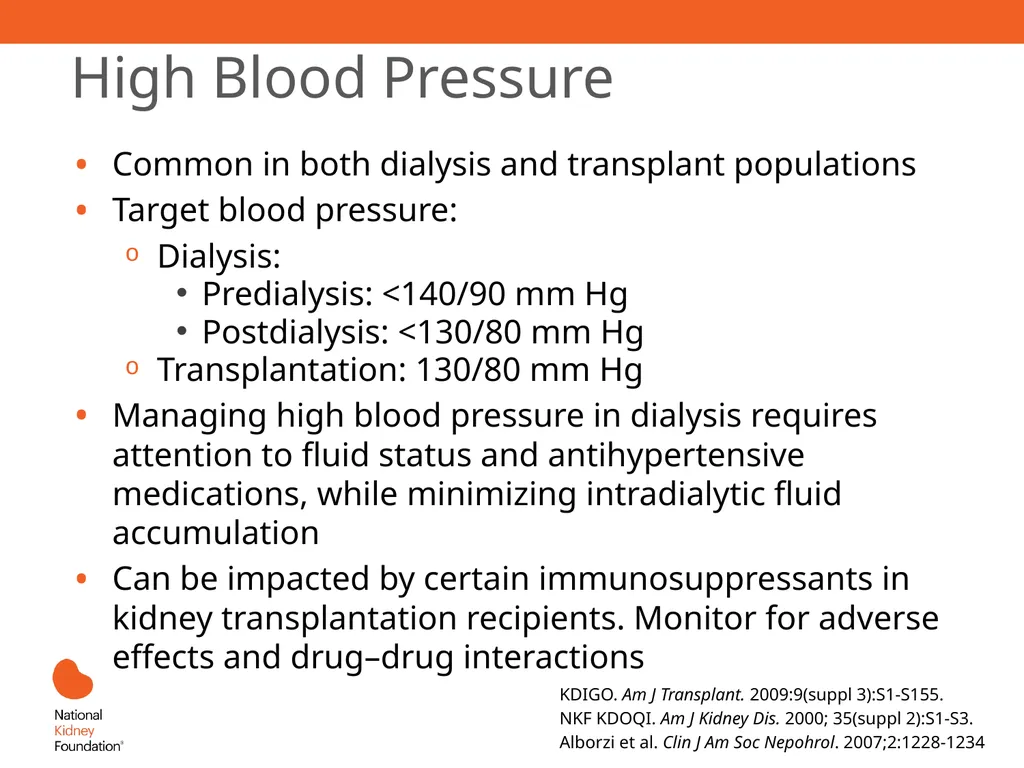
High Blood Pressure Common in both dialysis and transplant populations
Target blood pressure:
Dialysis:
Predialysis: <140/90 mm Hg
Postdialysis: <130/80 mm Hg
Transplantation: 130/80 mm Hg
Managing high blood pressure in dialysis requires attention to fluid status and antihypertensive medications, while minimizing intradialytic fluid accumulation
Can be impacted by certain immunosuppressants in kidney transplantation recipients. Monitor for adverse effects and drug–drug interactions KDIGO. Am J Transplant. 2009:9(suppl 3):S1-S155.
NKF KDOQI. Am J Kidney Dis. 2000; 35(suppl 2):S1-S3.
Alborzi et al. Clin J Am Soc Nepohrol. 2007;2:1228-1234<br>
Target blood pressure:
Dialysis:
Predialysis: <140/90 mm Hg
Postdialysis: <130/80 mm Hg
Transplantation: 130/80 mm Hg
Managing high blood pressure in dialysis requires attention to fluid status and antihypertensive medications, while minimizing intradialytic fluid accumulation
Can be impacted by certain immunosuppressants in kidney transplantation recipients. Monitor for adverse effects and drug–drug interactions KDIGO. Am J Transplant. 2009:9(suppl 3):S1-S155.
NKF KDOQI. Am J Kidney Dis. 2000; 35(suppl 2):S1-S3.
Alborzi et al. Clin J Am Soc Nepohrol. 2007;2:1228-1234<br>
18
Hemodialysis (HD)<br>
19
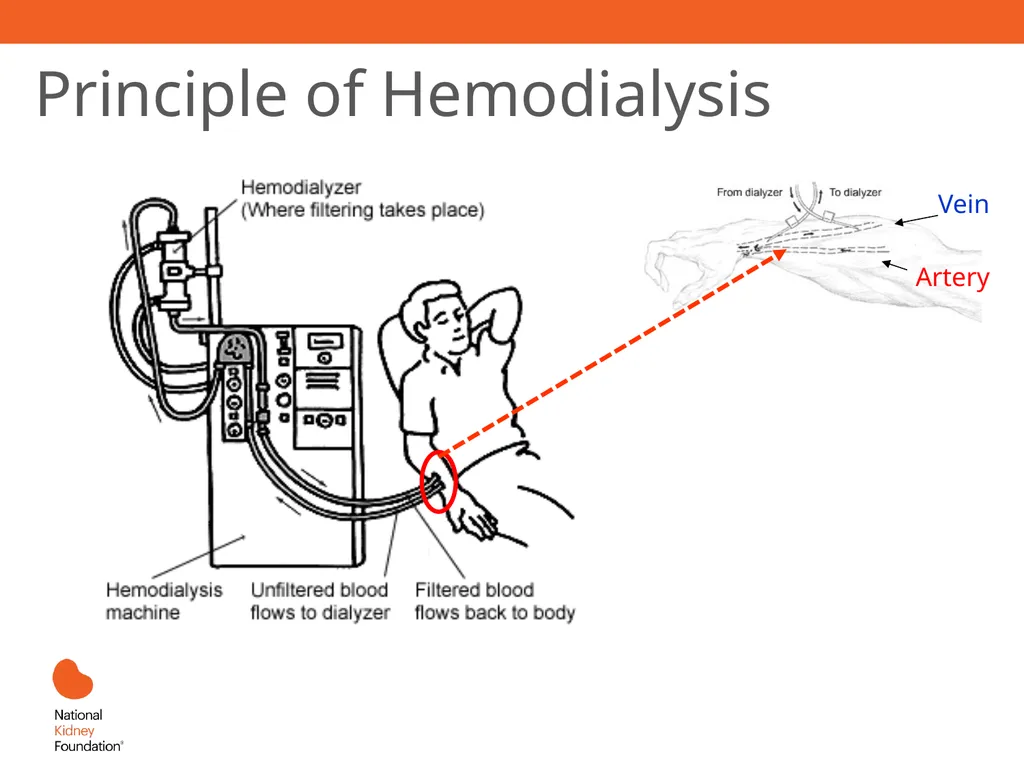
Principle of Hemodialysis Vein Artery<br>
20
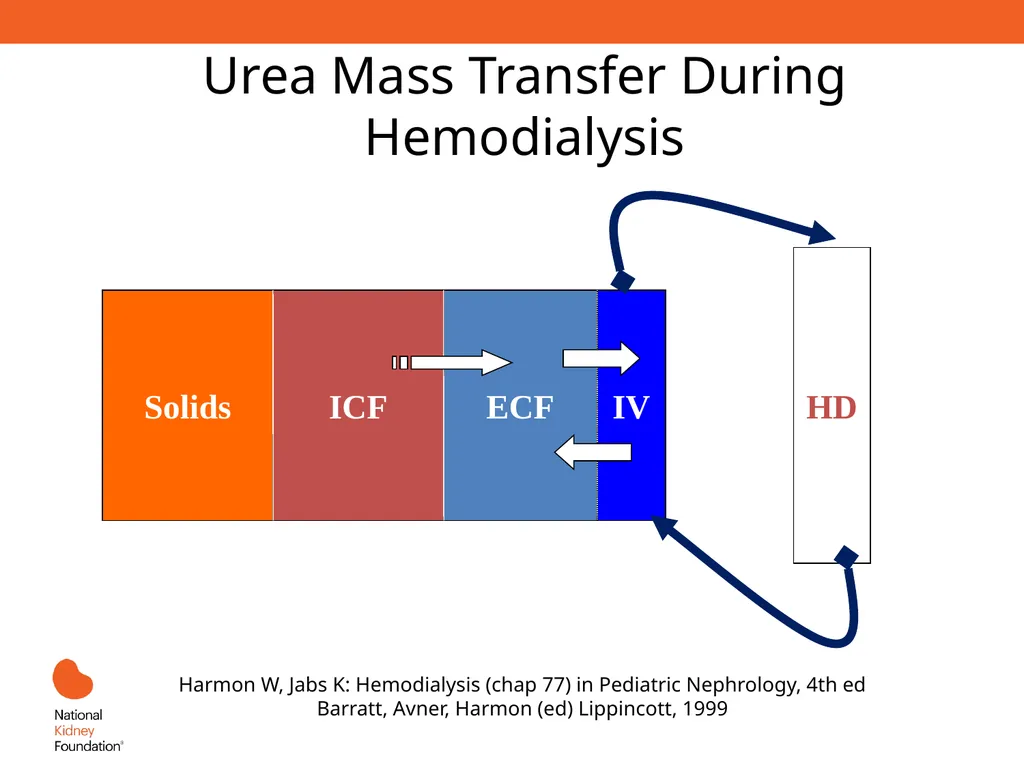
Urea Mass Transfer During Hemodialysis Solids ICF ECF IV HD Harmon W, Jabs K: Hemodialysis (chap 77) in Pediatric Nephrology, 4th ed
Barratt, Avner, Harmon (ed) Lippincott, 1999<br>
Barratt, Avner, Harmon (ed) Lippincott, 1999<br>
21
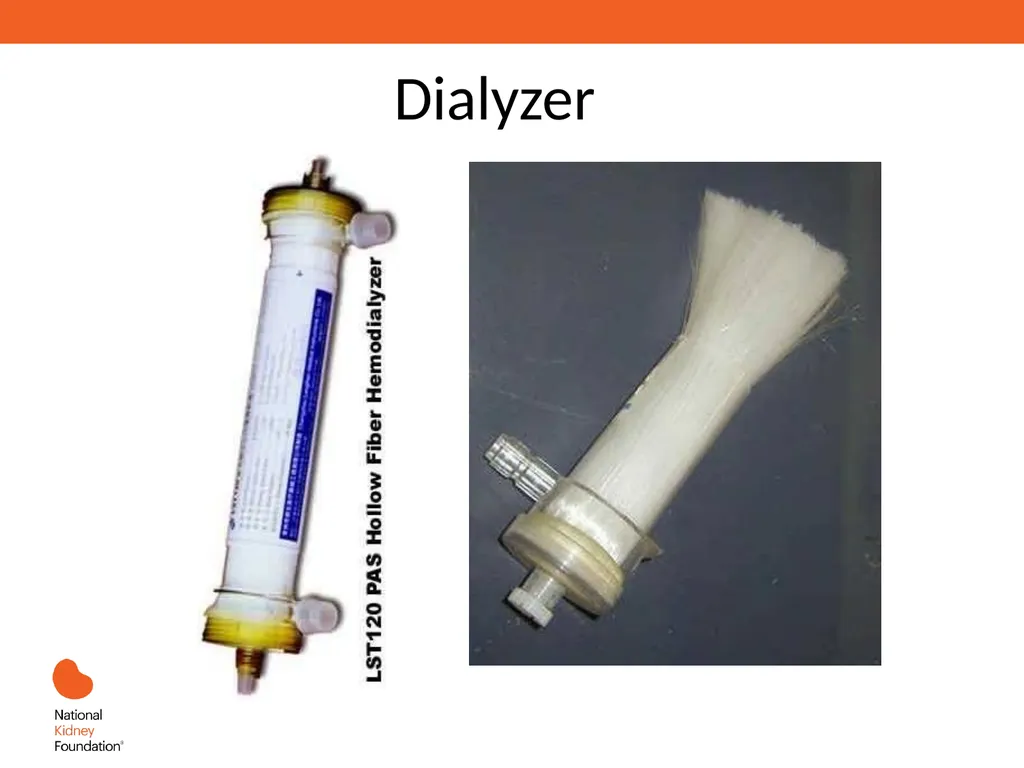
Dialyzer<br>
22
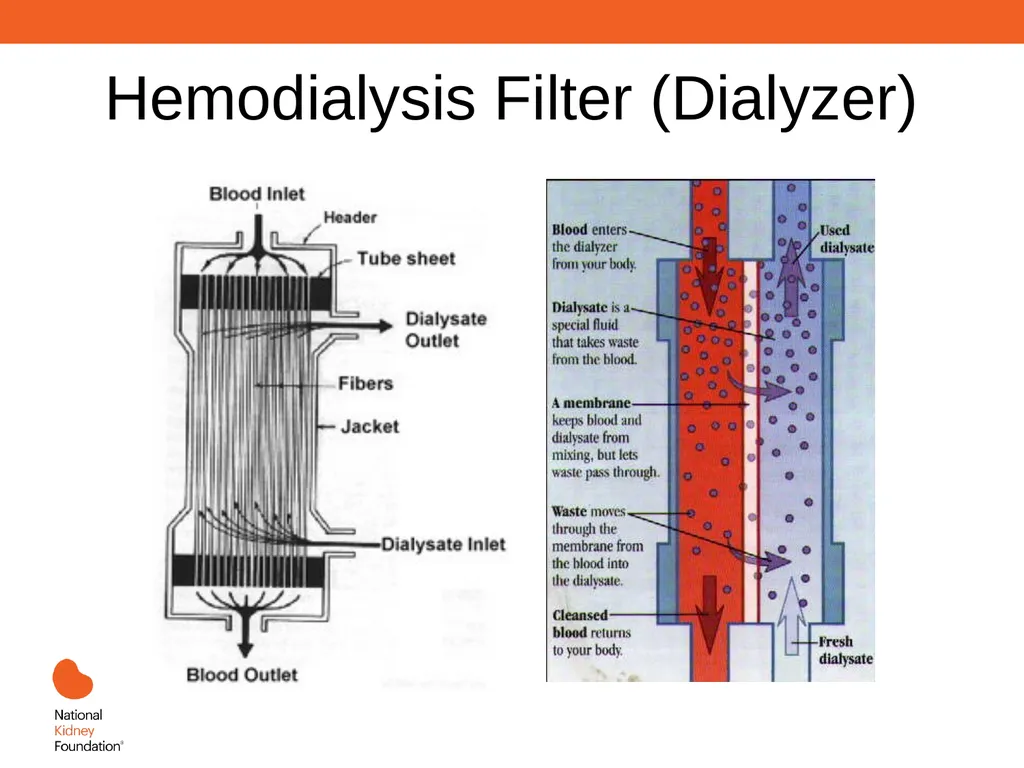
Hemodialysis Filter (Dialyzer)<br>
23
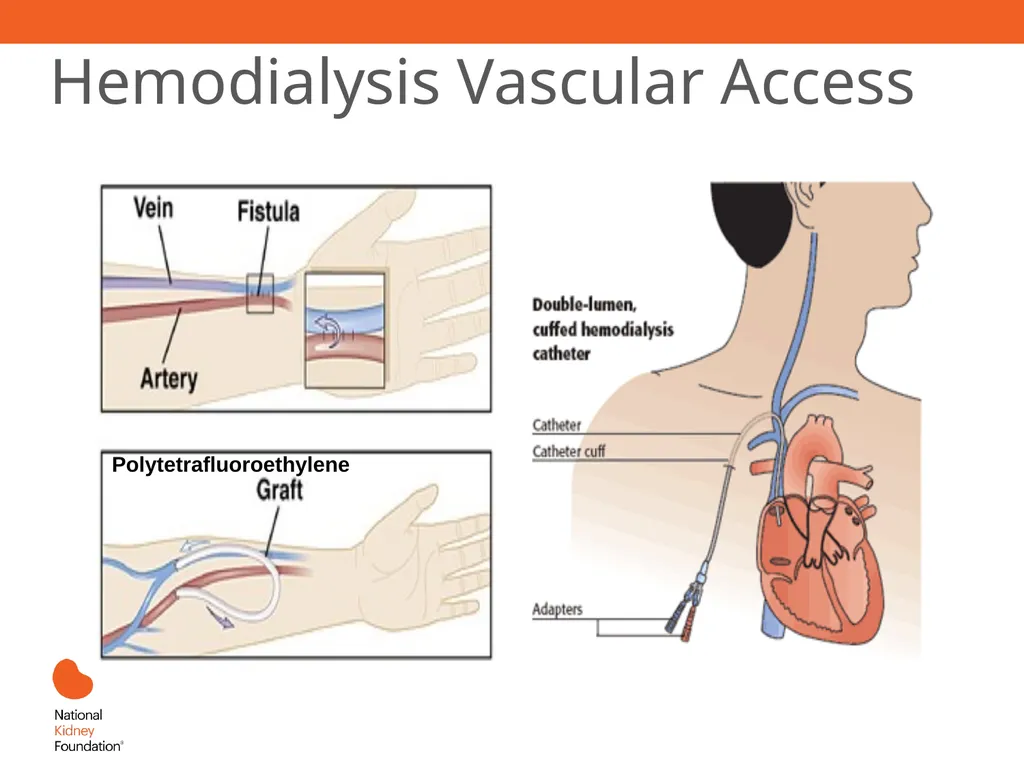
Hemodialysis Vascular Access Polytetrafluoroethylene<br>
24
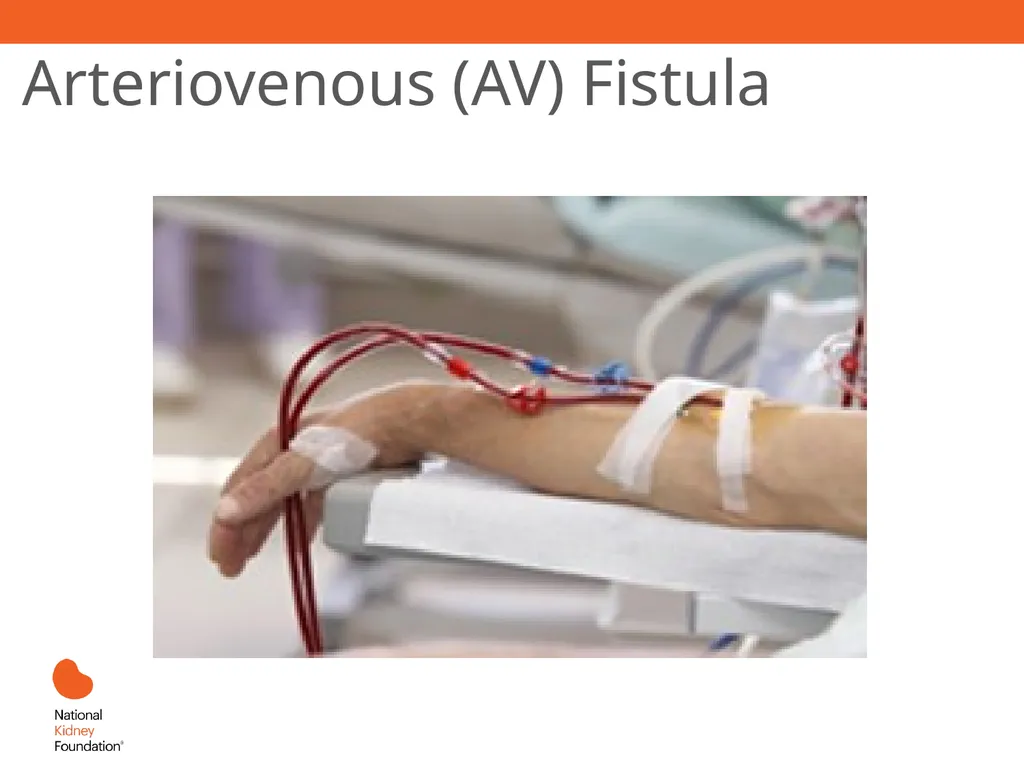
Arteriovenous (AV) Fistula<br>
25
Which Vascular Access and When Should It Be Placed?<br>
26
Dialysis Access Provides location for easy access to patient’s blood for dialysis
Bane of dialysis physician’s existence
Higher flows and cannulation can lead to stenosis or thrombosis
Maintenance of dialysis access patency is critical, at times life-saving
Patency is assessed while patient is on HD by multiple parameters
Early detection of stenosis can lead to intervention before thrombosis occurs<br>
Bane of dialysis physician’s existence
Higher flows and cannulation can lead to stenosis or thrombosis
Maintenance of dialysis access patency is critical, at times life-saving
Patency is assessed while patient is on HD by multiple parameters
Early detection of stenosis can lead to intervention before thrombosis occurs<br>
27
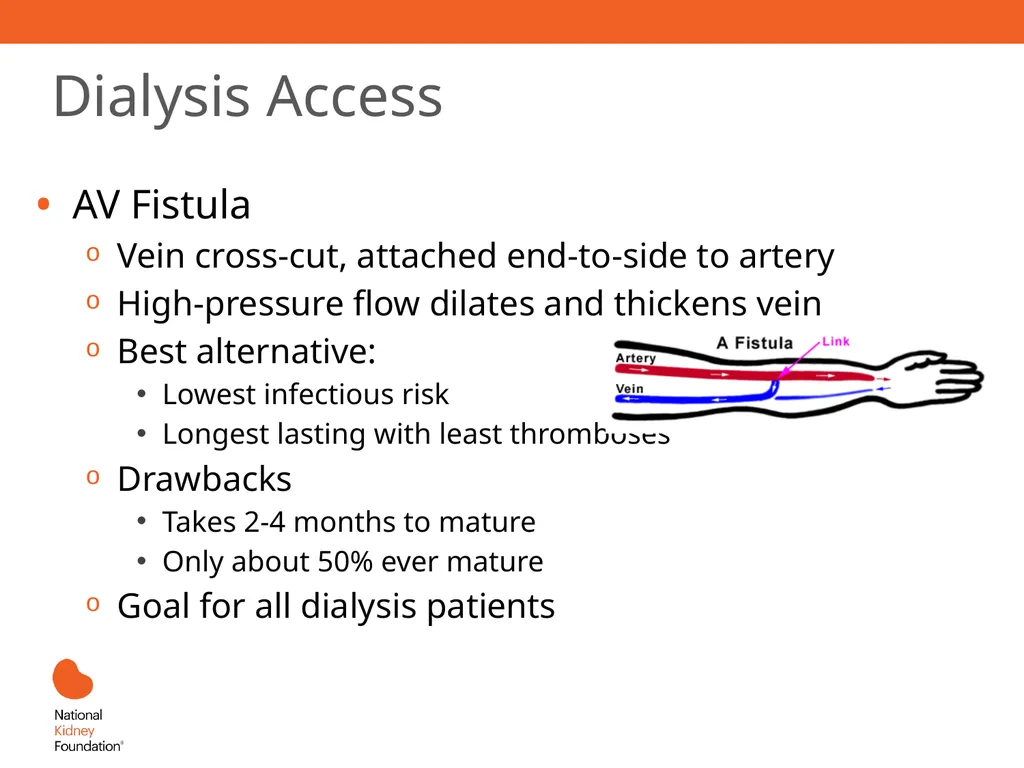
Dialysis Access AV Fistula
Vein cross-cut, attached end-to-side to artery
High-pressure flow dilates and thickens vein
Best alternative:
Lowest infectious risk
Longest lasting with least thromboses
Drawbacks
Takes 2-4 months to mature
Only about 50% ever mature
Goal for all dialysis patients<br>
Vein cross-cut, attached end-to-side to artery
High-pressure flow dilates and thickens vein
Best alternative:
Lowest infectious risk
Longest lasting with least thromboses
Drawbacks
Takes 2-4 months to mature
Only about 50% ever mature
Goal for all dialysis patients<br>
28
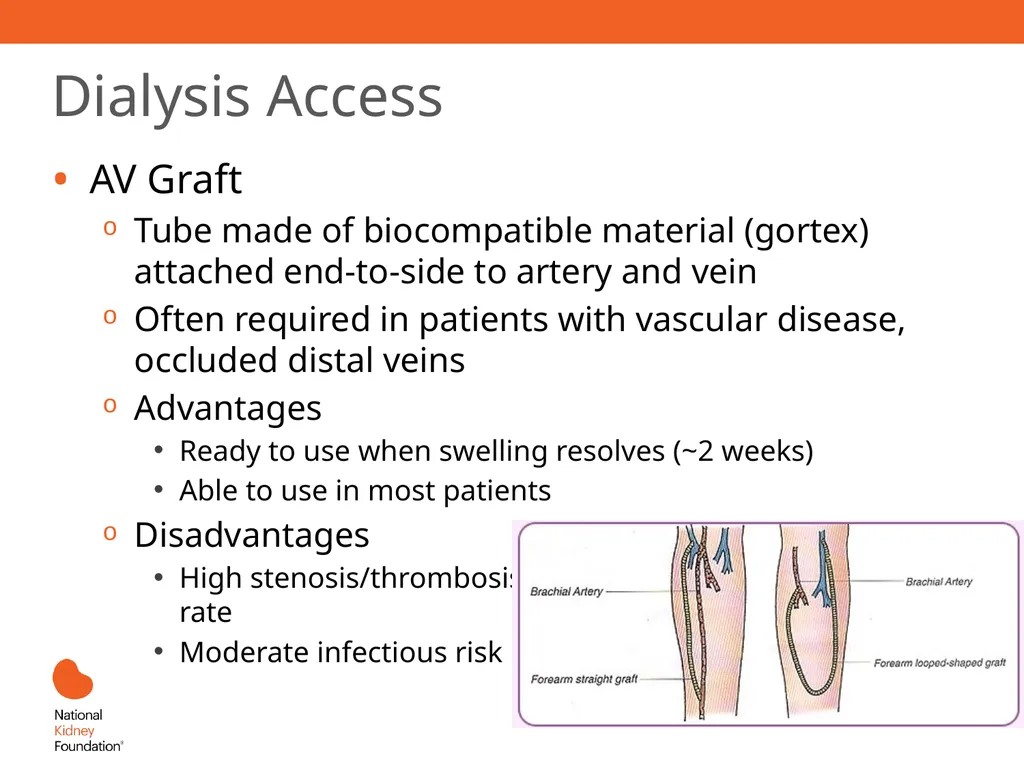
Dialysis Access AV Graft
Tube made of biocompatible material (gortex) attached end-to-side to artery and vein
Often required in patients with vascular disease, occluded distal veins
Advantages
Ready to use when swelling resolves (~2 weeks)
Able to use in most patients
Disadvantages
High stenosis/thrombosis rate
Moderate infectious risk<br>
Tube made of biocompatible material (gortex) attached end-to-side to artery and vein
Often required in patients with vascular disease, occluded distal veins
Advantages
Ready to use when swelling resolves (~2 weeks)
Able to use in most patients
Disadvantages
High stenosis/thrombosis rate
Moderate infectious risk<br>
29
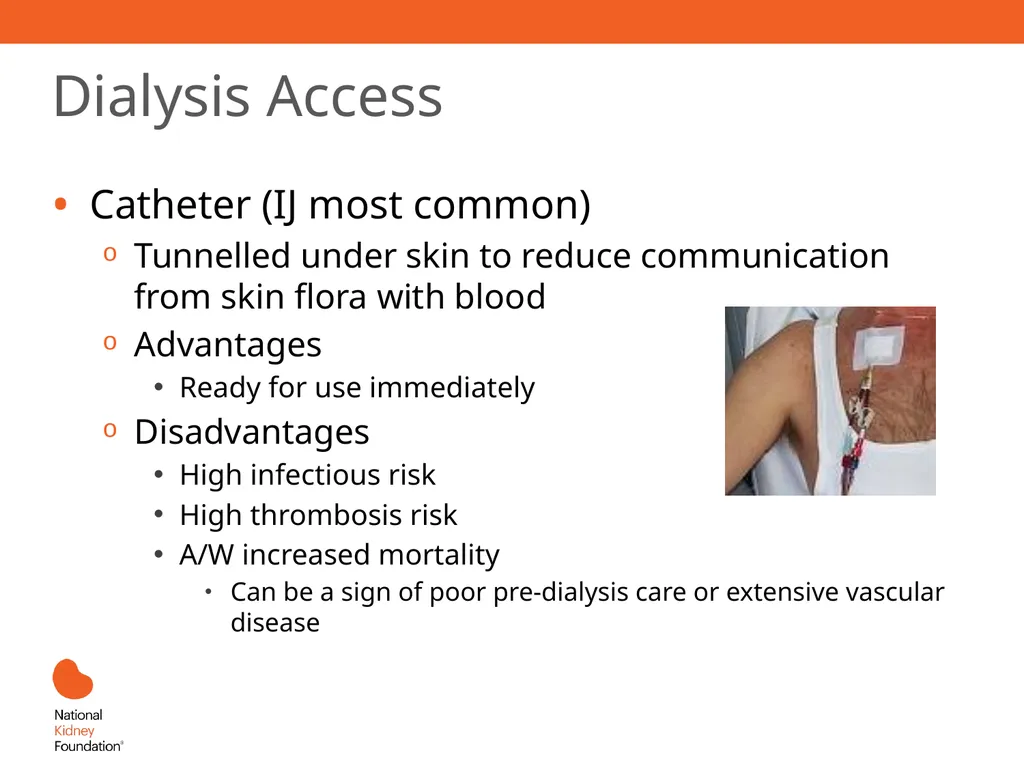
Dialysis Access Catheter (IJ most common)
Tunnelled under skin to reduce communication from skin flora with blood
Advantages
Ready for use immediately
Disadvantages
High infectious risk
High thrombosis risk
A/W increased mortality
Can be a sign of poor pre-dialysis care or extensive vascular disease<br>
Tunnelled under skin to reduce communication from skin flora with blood
Advantages
Ready for use immediately
Disadvantages
High infectious risk
High thrombosis risk
A/W increased mortality
Can be a sign of poor pre-dialysis care or extensive vascular disease<br>
30
Vascular Access Guidelines Arm veins suitable for placement of vascular access should be preserved, regardless of arm dominance. Arm veins, particularly the cephalic veins of the non-dominant arm should not be used.
Avoid PICC lines
Dorsum of the hand could be used for IV.
A Medic Alert bracelet should be worn to inform hospital staff to avoid IV cannulation of essential veins.
Subclavian vein catheterization should be avoided for temporary access in all patients with CKD ( stenosis preclude use of ipsilateral arm for vascular access)<br>
Avoid PICC lines
Dorsum of the hand could be used for IV.
A Medic Alert bracelet should be worn to inform hospital staff to avoid IV cannulation of essential veins.
Subclavian vein catheterization should be avoided for temporary access in all patients with CKD ( stenosis preclude use of ipsilateral arm for vascular access)<br>
31
Astor B. et al. Am J Kidney Dis. 2001; 38:494-501. Patients who started using an AV access by timing of first referral to a nephrologist N=356 hemodialysis patients<br>
32
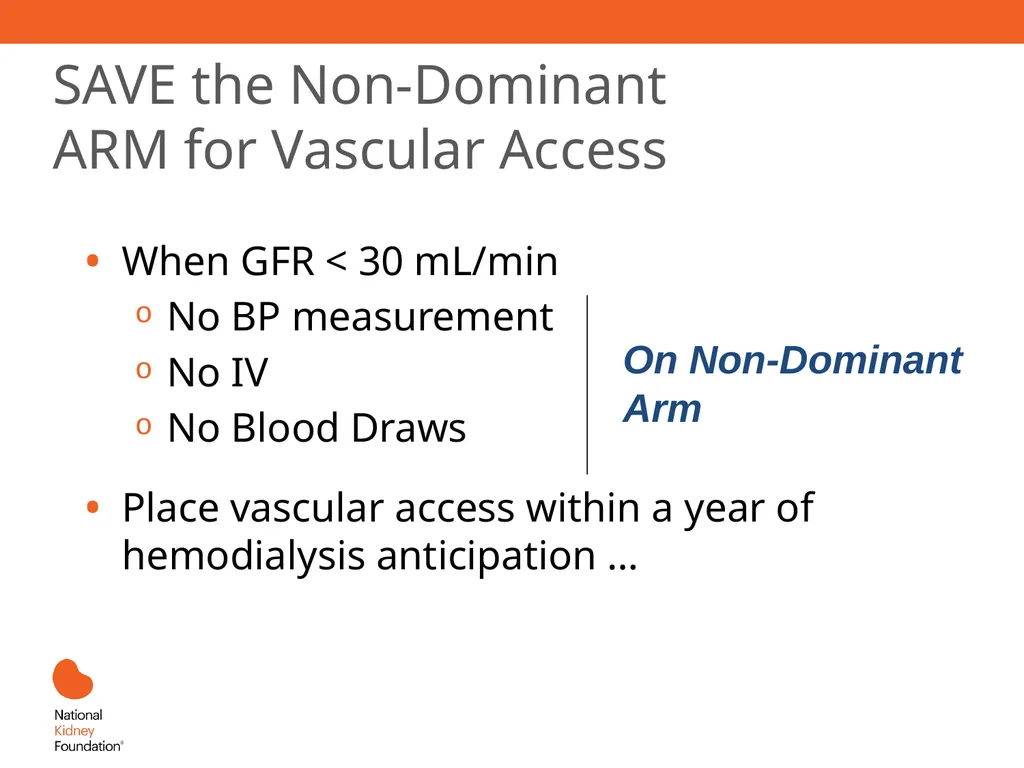
SAVE the Non-Dominant ARM for Vascular Access When GFR < 30 mL/min
No BP measurement
No IV
No Blood Draws
Place vascular access within a year of hemodialysis anticipation … On Non-Dominant Arm<br>
No BP measurement
No IV
No Blood Draws
Place vascular access within a year of hemodialysis anticipation … On Non-Dominant Arm<br>
33
Peritoneal Dialysis (PD)<br>
34
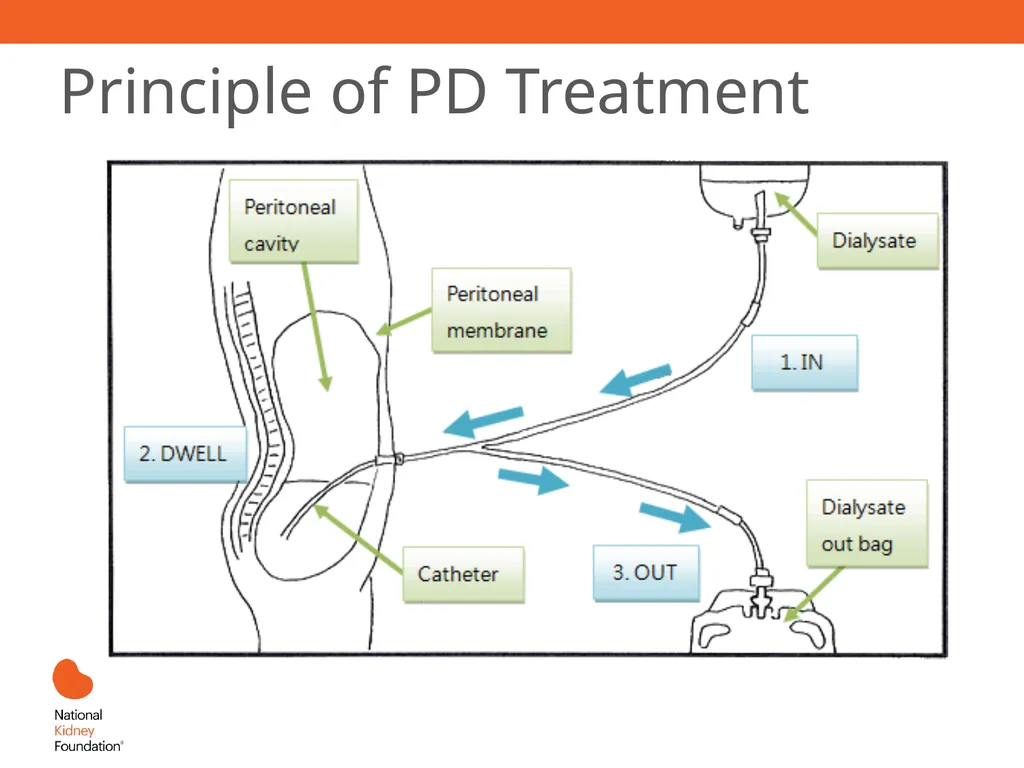
Principle of PD Treatment<br>
35
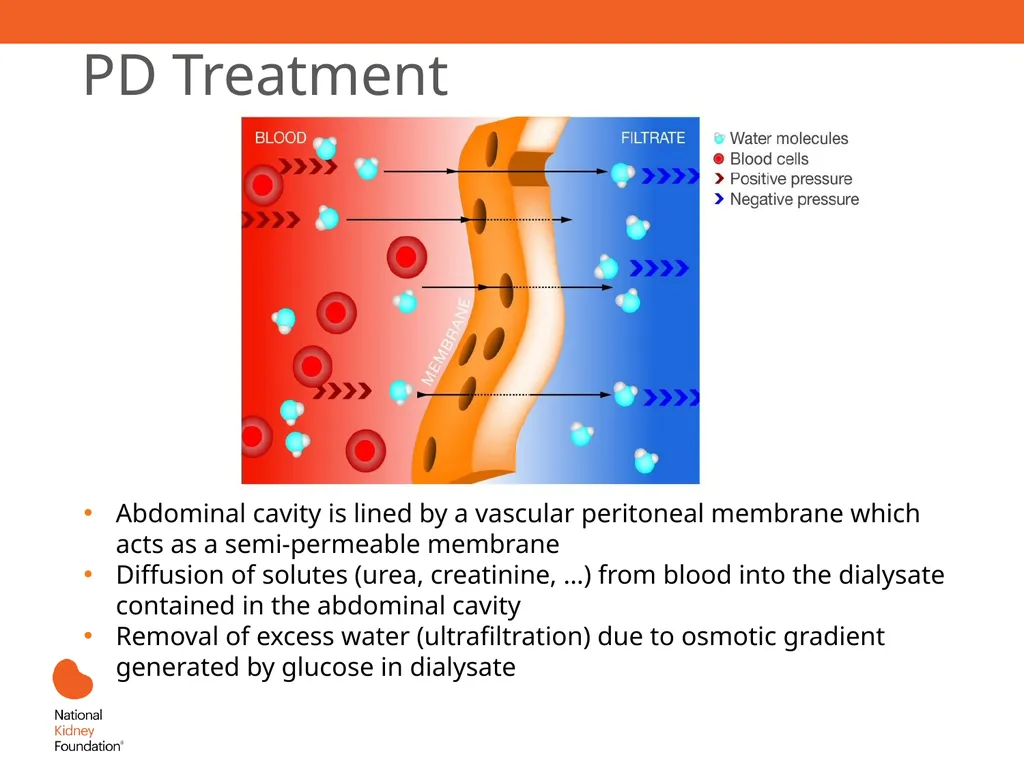
Abdominal cavity is lined by a vascular peritoneal membrane which acts as a semi-permeable membrane
Diffusion of solutes (urea, creatinine, …) from blood into the dialysate contained in the abdominal cavity
Removal of excess water (ultrafiltration) due to osmotic gradient generated by glucose in dialysate PD Treatment<br>
Diffusion of solutes (urea, creatinine, …) from blood into the dialysate contained in the abdominal cavity
Removal of excess water (ultrafiltration) due to osmotic gradient generated by glucose in dialysate PD Treatment<br>
36
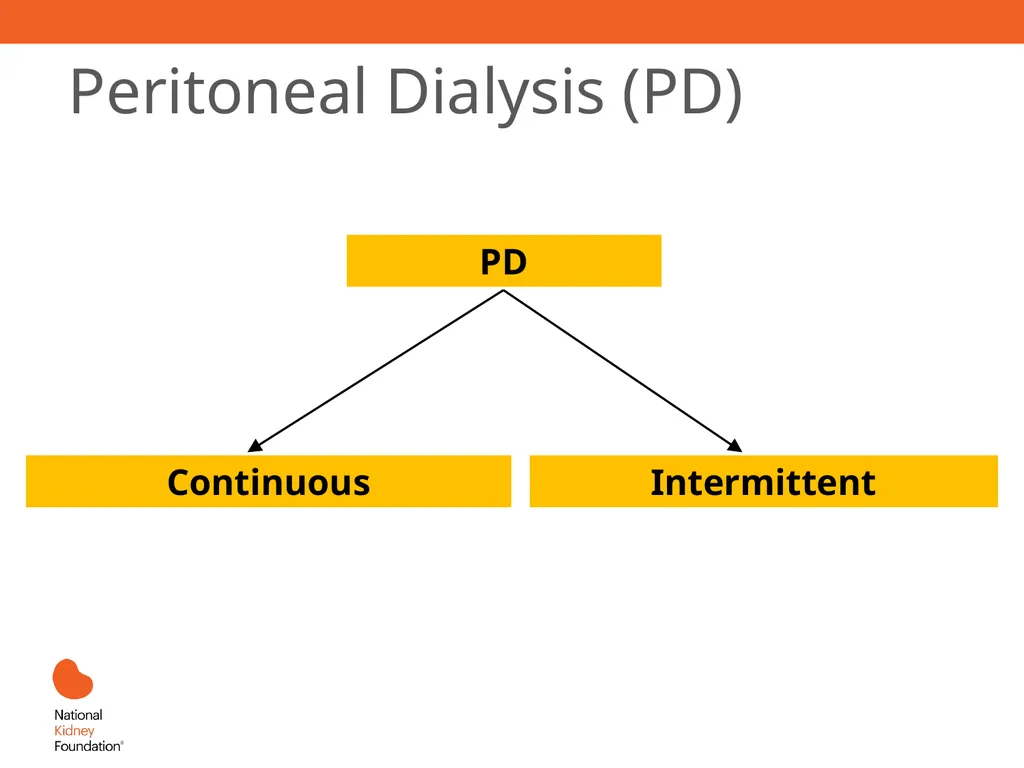
Peritoneal Dialysis (PD) PD Continuous Intermittent<br>
37
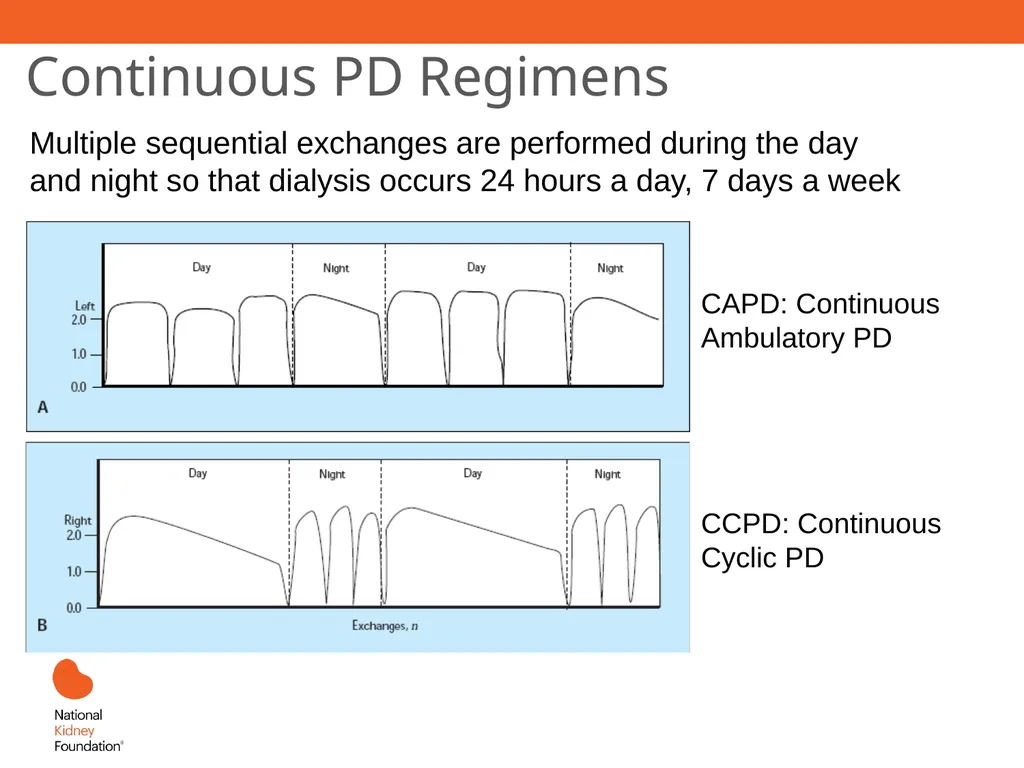
Continuous PD Regimens Multiple sequential exchanges are performed during the day
and night so that dialysis occurs 24 hours a day, 7 days a week CAPD: Continuous
Ambulatory PD CCPD: Continuous
Cyclic PD<br>
and night so that dialysis occurs 24 hours a day, 7 days a week CAPD: Continuous
Ambulatory PD CCPD: Continuous
Cyclic PD<br>
38
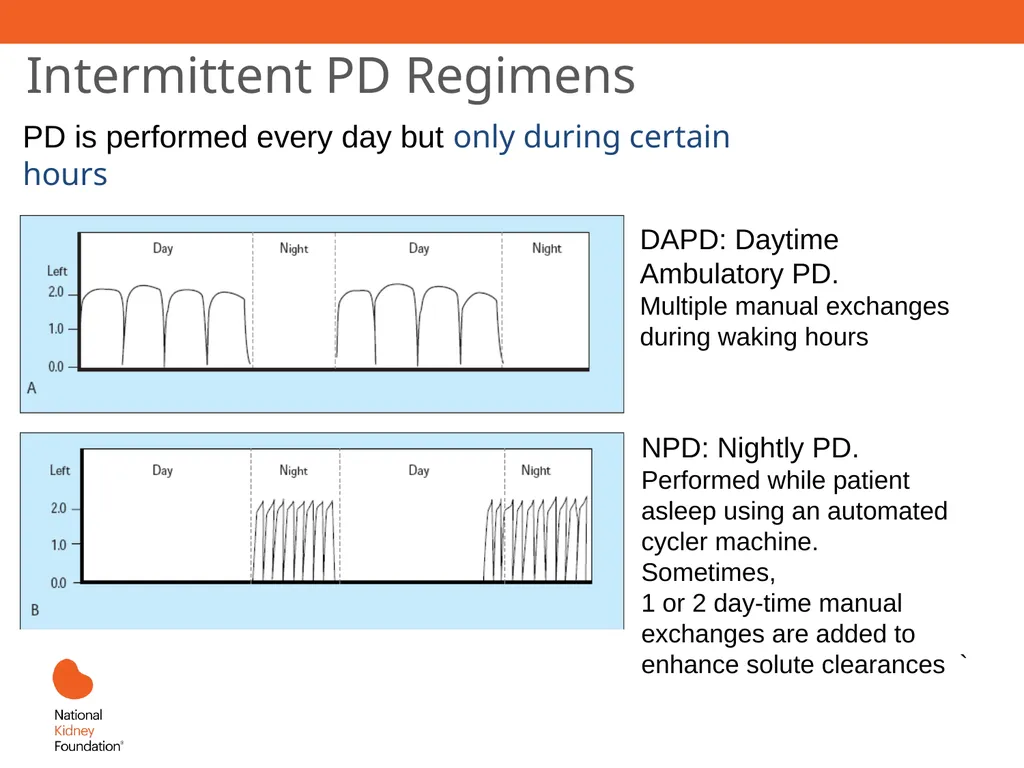
Intermittent PD Regimens PD is performed every day but only during certain hours DAPD: Daytime
Ambulatory PD.
Multiple manual exchanges
during waking hours NPD: Nightly PD.
Performed while patient
asleep using an automated
cycler machine.
Sometimes,
1 or 2 day-time manual
exchanges are added to
enhance solute clearances `<br>
Ambulatory PD.
Multiple manual exchanges
during waking hours NPD: Nightly PD.
Performed while patient
asleep using an automated
cycler machine.
Sometimes,
1 or 2 day-time manual
exchanges are added to
enhance solute clearances `<br>
39
Is Timing of Dialysis Initiation Important in ESRD Patients?
(Controversial)<br>
40
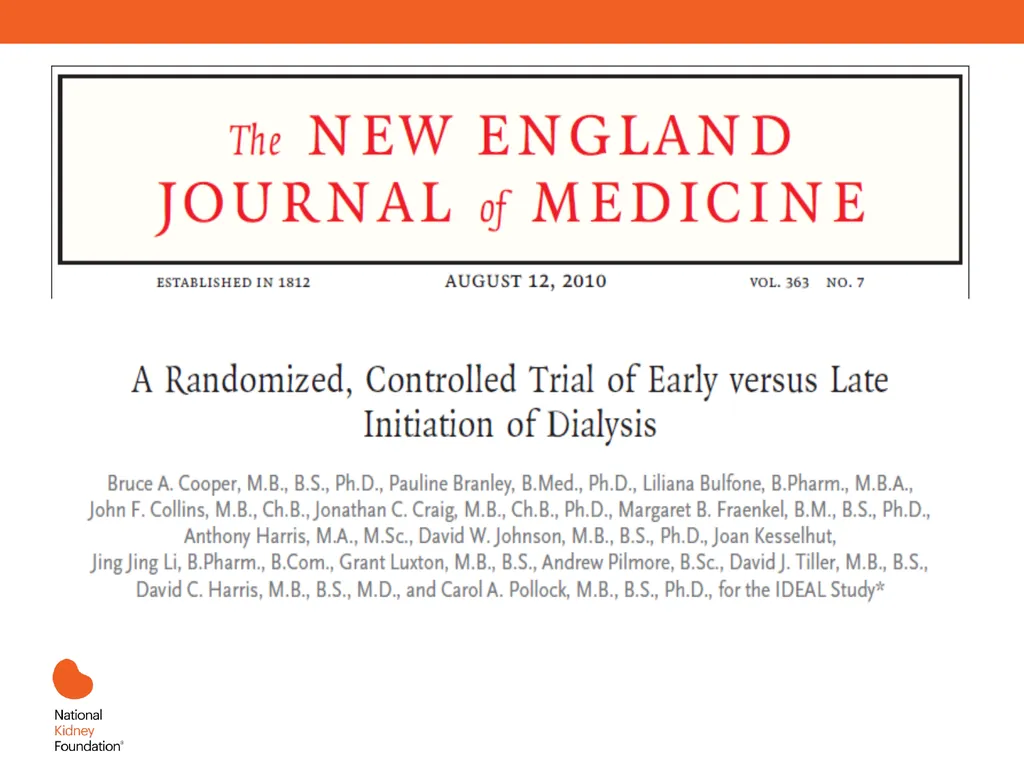
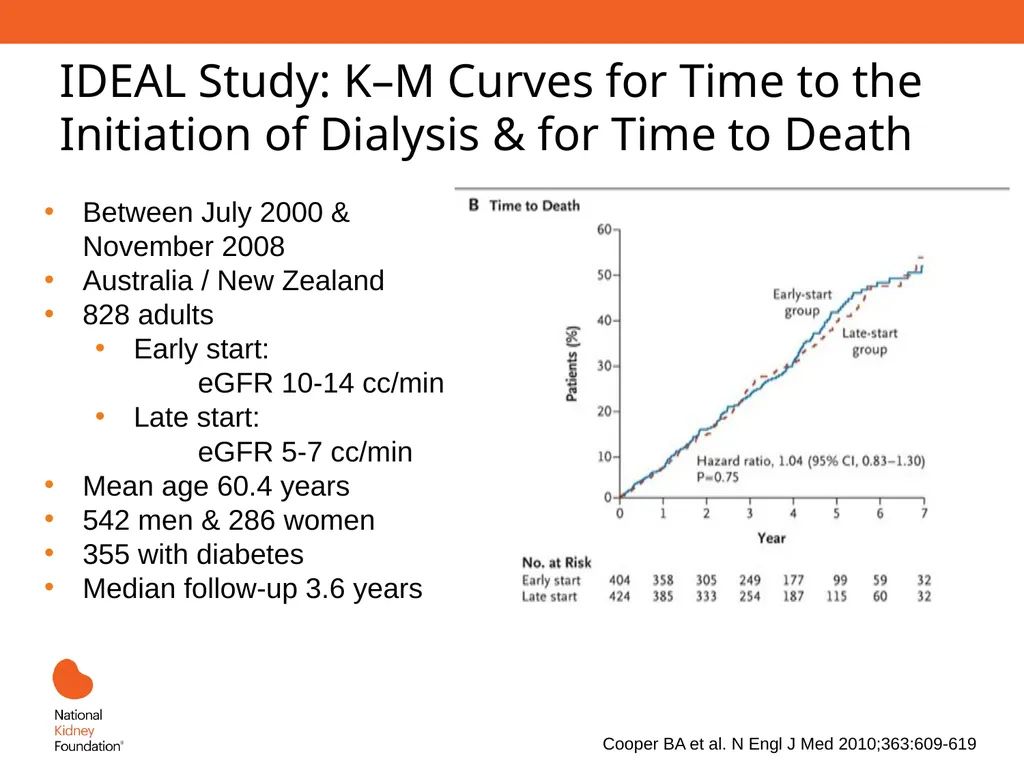
IDEAL Study: K–M Curves for Time to the Initiation of Dialysis & for Time to Death Cooper BA et al. N Engl J Med 2010;363:609-619 Between July 2000 & November 2008
Australia / New Zealand
828 adults
Early start:
eGFR 10-14 cc/min
Late start:
eGFR 5-7 cc/min
Mean age 60.4 years
542 men & 286 women
355 with diabetes
Median follow-up 3.6 years<br>
Australia / New Zealand
828 adults
Early start:
eGFR 10-14 cc/min
Late start:
eGFR 5-7 cc/min
Mean age 60.4 years
542 men & 286 women
355 with diabetes
Median follow-up 3.6 years<br>
41
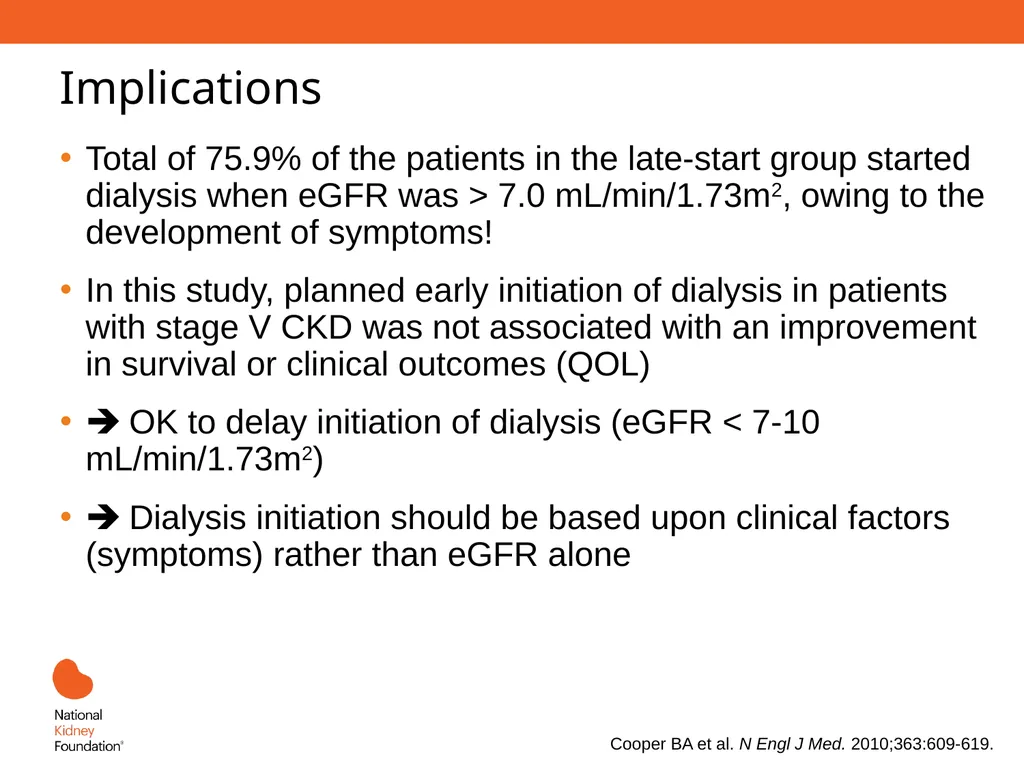
Implications Cooper BA et al. N Engl J Med. 2010;363:609-619. Total of 75.9% of the patients in the late-start group started dialysis when eGFR was > 7.0 mL/min/1.73m2, owing to the development of symptoms!
In this study, planned early initiation of dialysis in patients with stage V CKD was not associated with an improvement in survival or clinical outcomes (QOL)
OK to delay initiation of dialysis (eGFR < 7-10 mL/min/1.73m2)
Dialysis initiation should be based upon clinical factors (symptoms) rather than eGFR alone<br>
In this study, planned early initiation of dialysis in patients with stage V CKD was not associated with an improvement in survival or clinical outcomes (QOL)
OK to delay initiation of dialysis (eGFR < 7-10 mL/min/1.73m2)
Dialysis initiation should be based upon clinical factors (symptoms) rather than eGFR alone<br>
42
Why is Residual Renal Function Important in Dialysis Patients?<br>
43
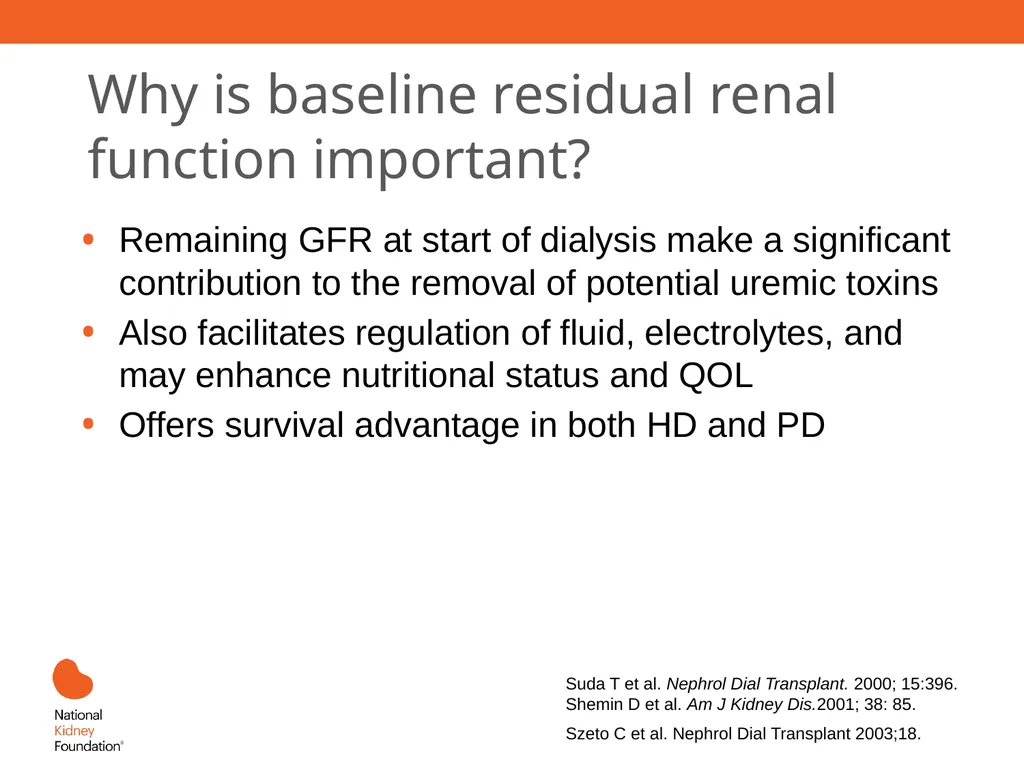
Why is baseline residual renal function important? Remaining GFR at start of dialysis make a significant contribution to the removal of potential uremic toxins
Also facilitates regulation of fluid, electrolytes, and may enhance nutritional status and QOL
Offers survival advantage in both HD and PD Suda T et al. Nephrol Dial Transplant. 2000; 15:396.
Shemin D et al. Am J Kidney Dis.2001; 38: 85.
Szeto C et al. Nephrol Dial Transplant 2003;18.7<br>
Also facilitates regulation of fluid, electrolytes, and may enhance nutritional status and QOL
Offers survival advantage in both HD and PD Suda T et al. Nephrol Dial Transplant. 2000; 15:396.
Shemin D et al. Am J Kidney Dis.2001; 38: 85.
Szeto C et al. Nephrol Dial Transplant 2003;18.7<br>
44
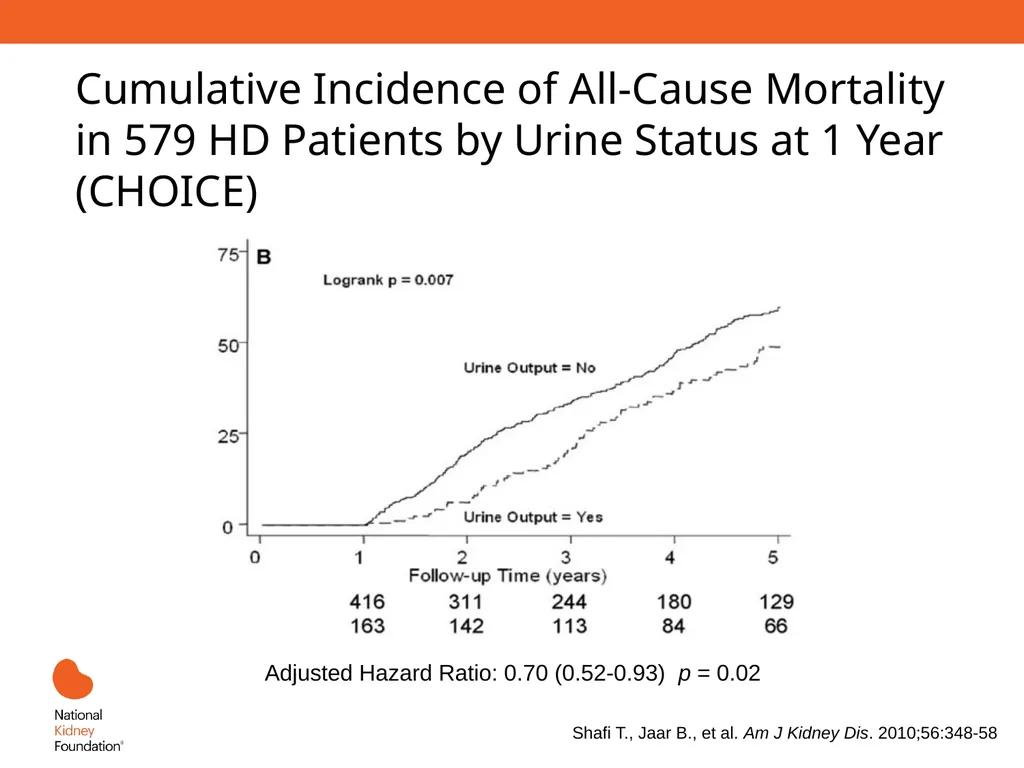
Adjusted Hazard Ratio: 0.70 (0.52-0.93) p = 0.02 Shafi T., Jaar B., et al. Am J Kidney Dis. 2010;56:348-58 Cumulative Incidence of All-Cause Mortality in 579 HD Patients by Urine Status at 1 Year (CHOICE)<br>
45
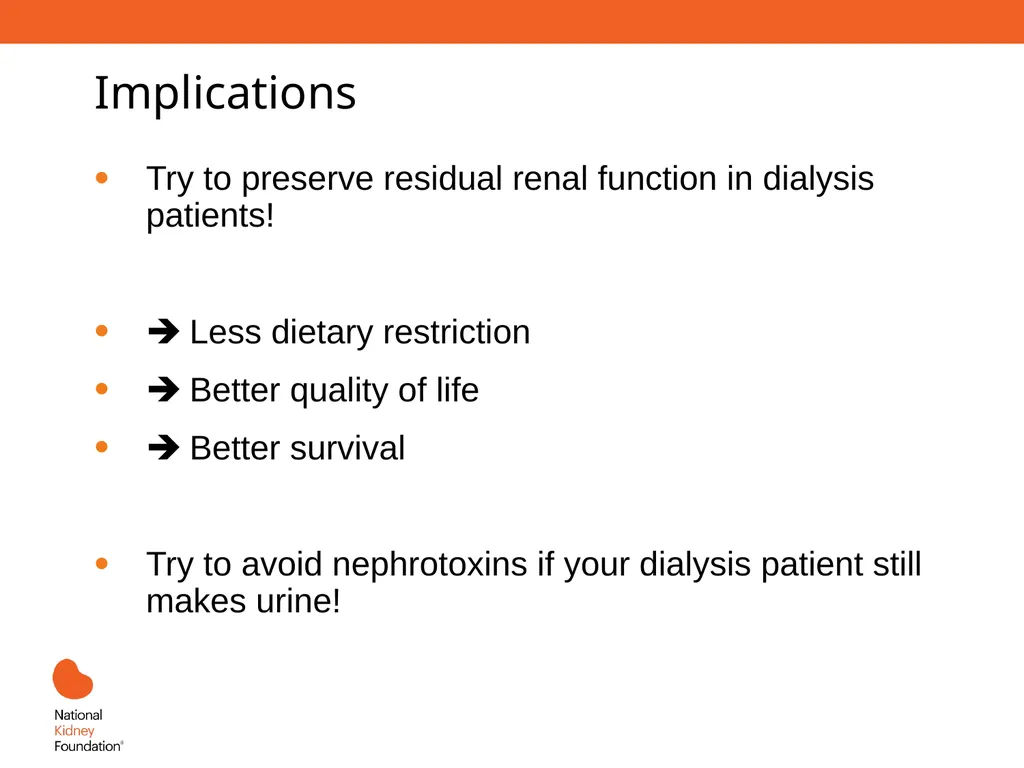
Implications Try to preserve residual renal function in dialysis patients!
Less dietary restriction
Better quality of life
Better survival
Try to avoid nephrotoxins if your dialysis patient still makes urine!<br>
Less dietary restriction
Better quality of life
Better survival
Try to avoid nephrotoxins if your dialysis patient still makes urine!<br>
46
Kidney Transplantation<br>
47
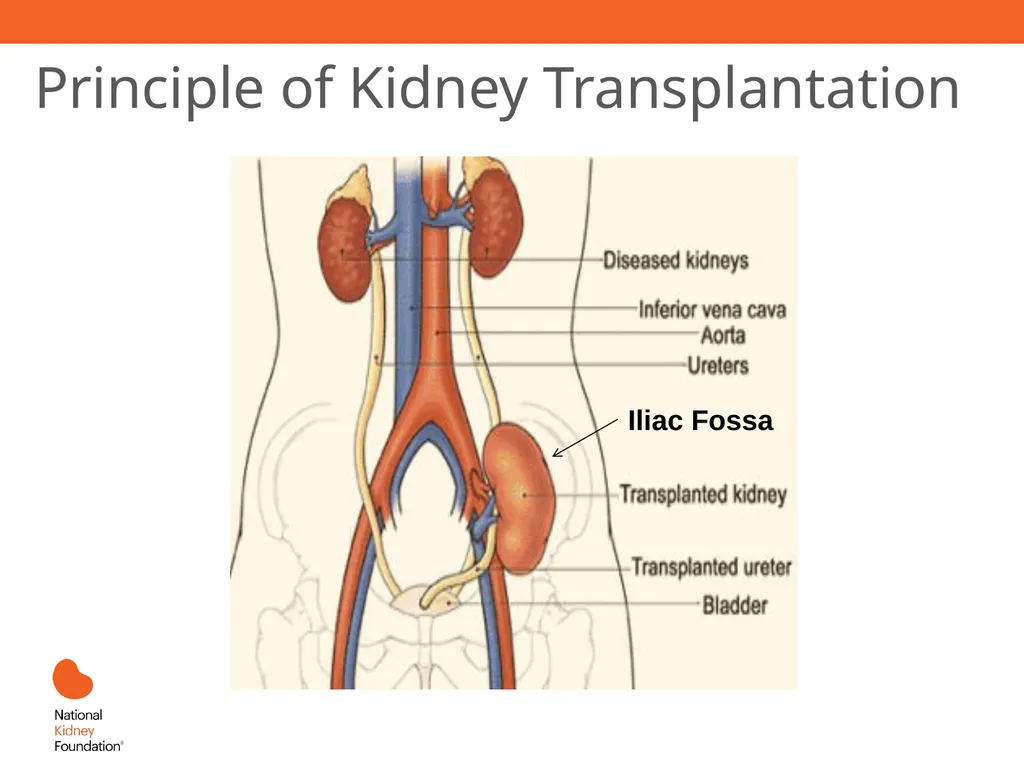
Principle of Kidney Transplantation Iliac Fossa<br>
48
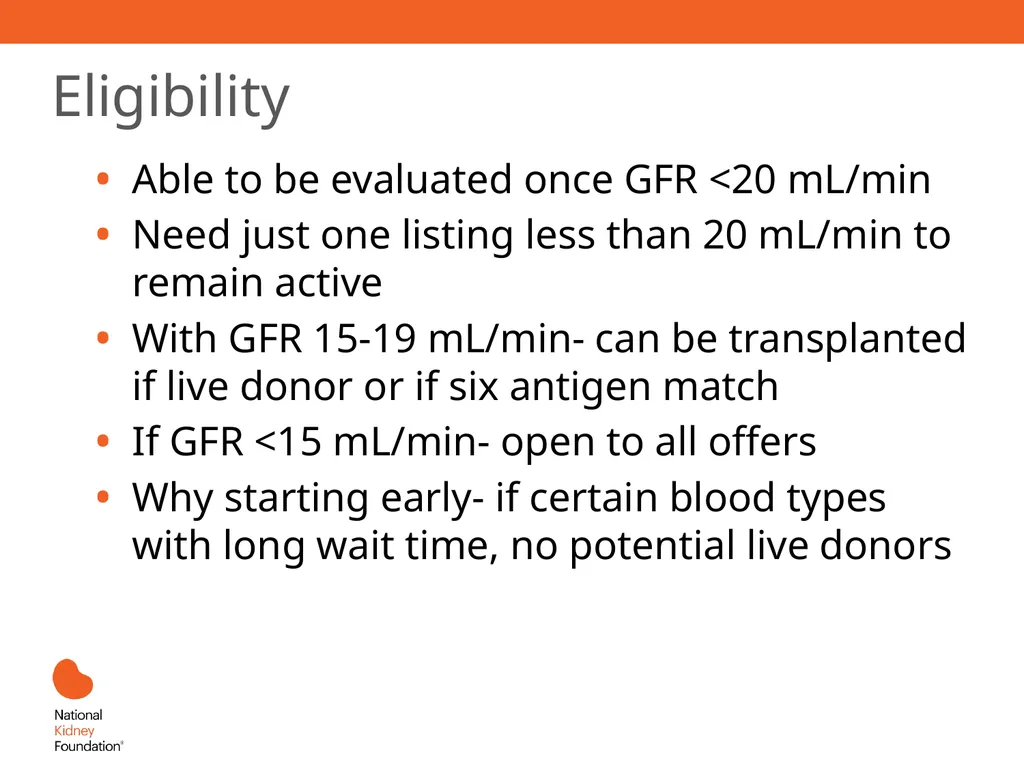
Eligibility Able to be evaluated once GFR <20 mL/min
Need just one listing less than 20 mL/min to remain active
With GFR 15-19 mL/min- can be transplanted if live donor or if six antigen match
If GFR <15 mL/min- open to all offers
Why starting early- if certain blood types with long wait time, no potential live donors<br>
Need just one listing less than 20 mL/min to remain active
With GFR 15-19 mL/min- can be transplanted if live donor or if six antigen match
If GFR <15 mL/min- open to all offers
Why starting early- if certain blood types with long wait time, no potential live donors<br>
49
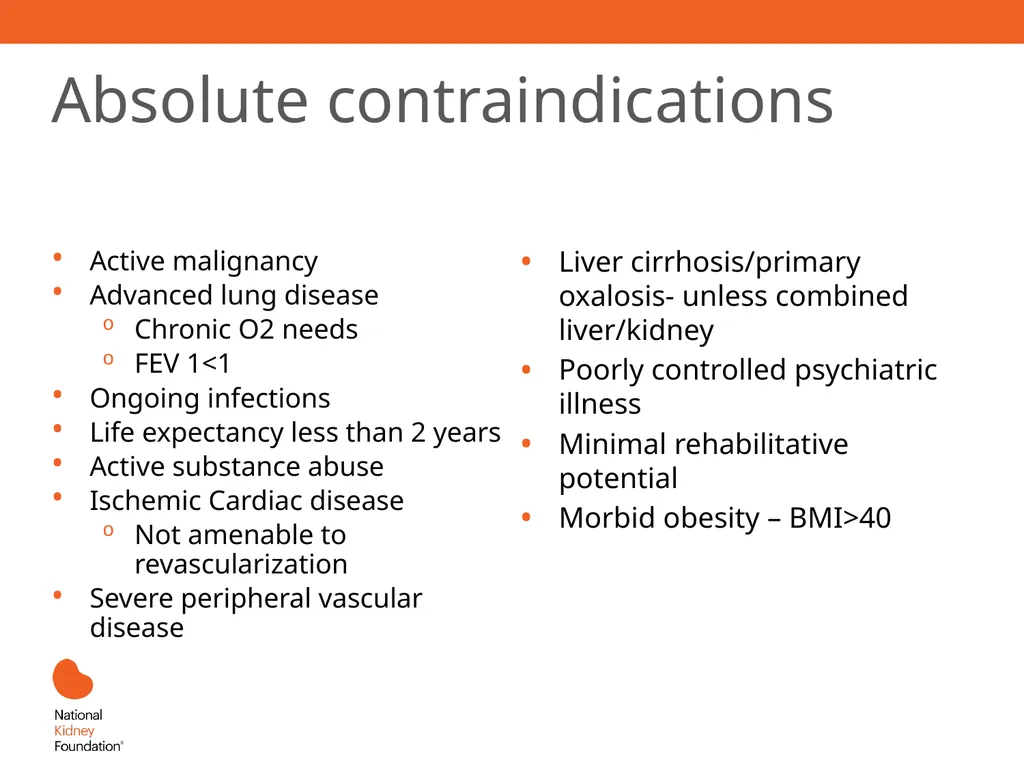
Absolute contraindications Active malignancy
Advanced lung disease
Chronic O2 needs
FEV 1<1
Ongoing infections
Life expectancy less than 2 years
Active substance abuse
Ischemic Cardiac disease
Not amenable to revascularization
Severe peripheral vascular disease Liver cirrhosis/primary oxalosis- unless combined liver/kidney
Poorly controlled psychiatric illness
Minimal rehabilitative potential
Morbid obesity – BMI>40<br>
Advanced lung disease
Chronic O2 needs
FEV 1<1
Ongoing infections
Life expectancy less than 2 years
Active substance abuse
Ischemic Cardiac disease
Not amenable to revascularization
Severe peripheral vascular disease Liver cirrhosis/primary oxalosis- unless combined liver/kidney
Poorly controlled psychiatric illness
Minimal rehabilitative potential
Morbid obesity – BMI>40<br>
50
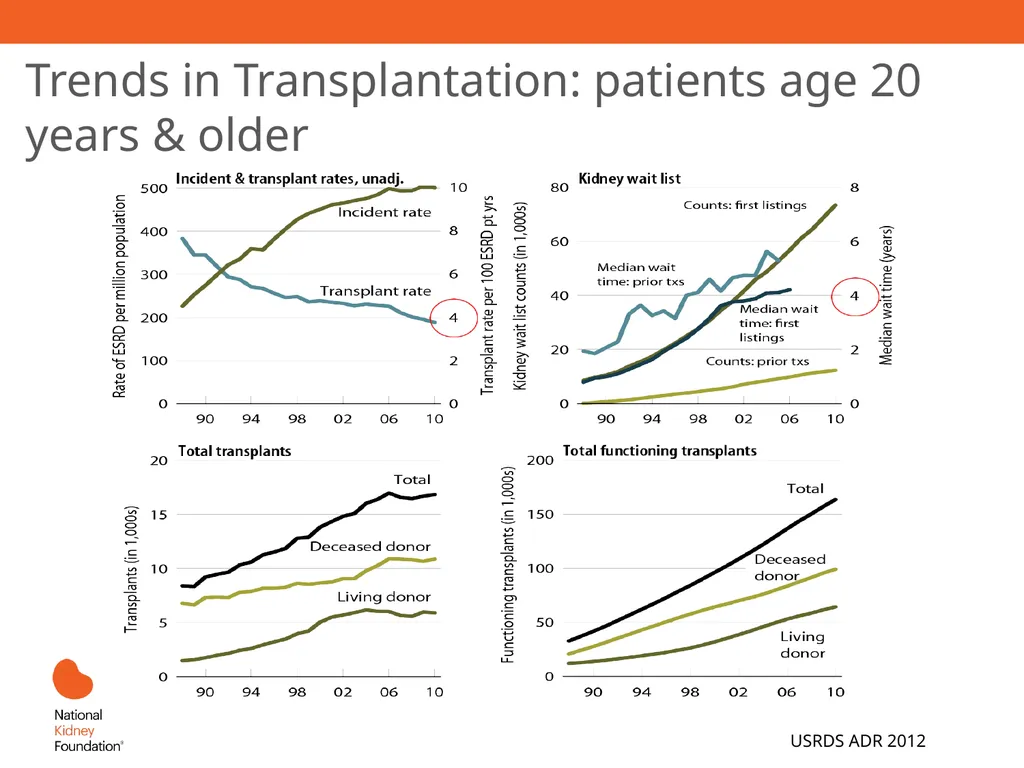
Trends in Transplantation: patients age 20 years & older USRDS ADR 2012<br>
51
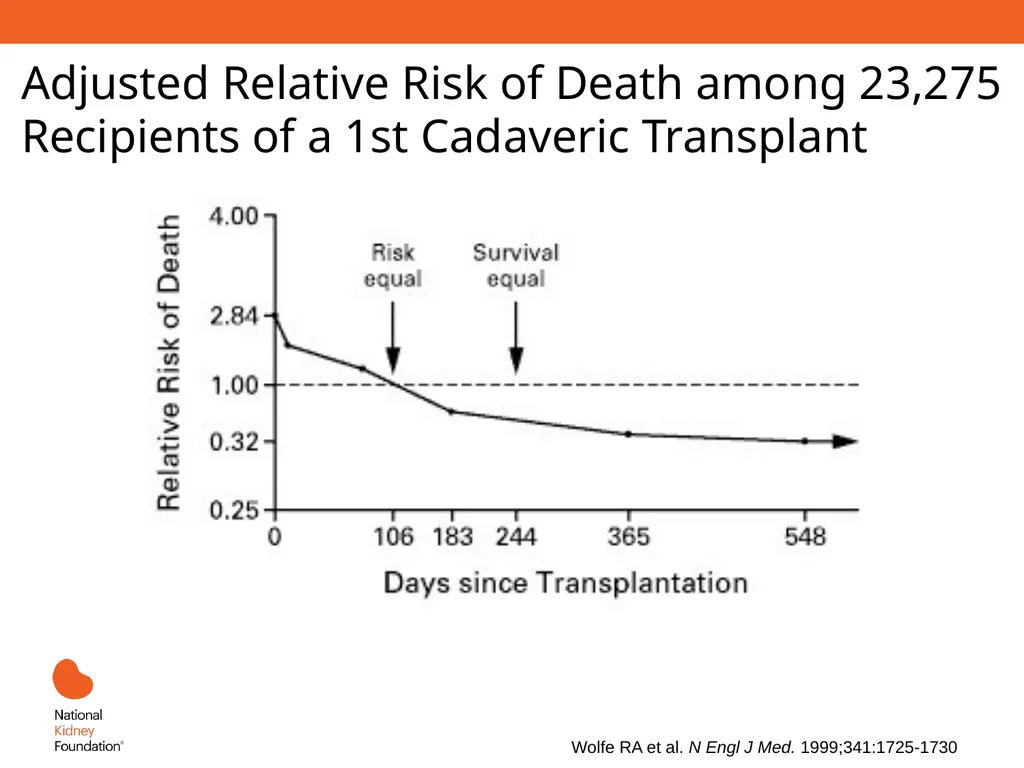
Adjusted Relative Risk of Death among 23,275 Recipients of a 1st Cadaveric Transplant Wolfe RA et al. N Engl J Med. 1999;341:1725-1730<br>
52
Acute Rejection within
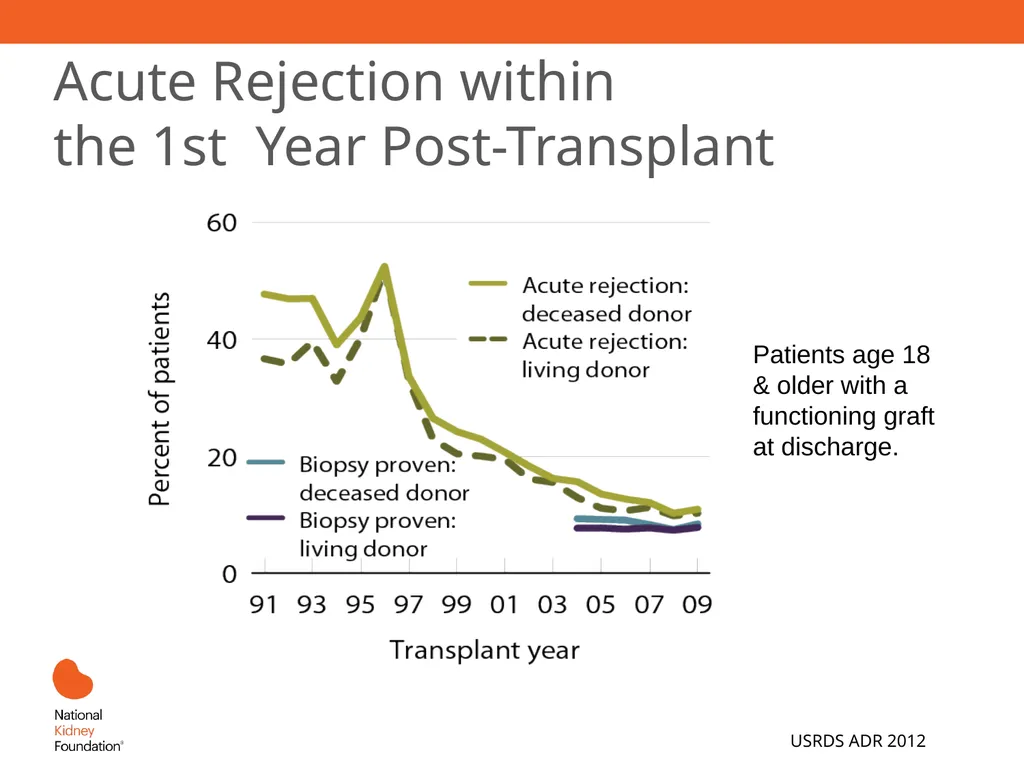
the 1st Year Post-Transplant Patients age 18 & older with a functioning graft at discharge. USRDS ADR 2012<br>
53
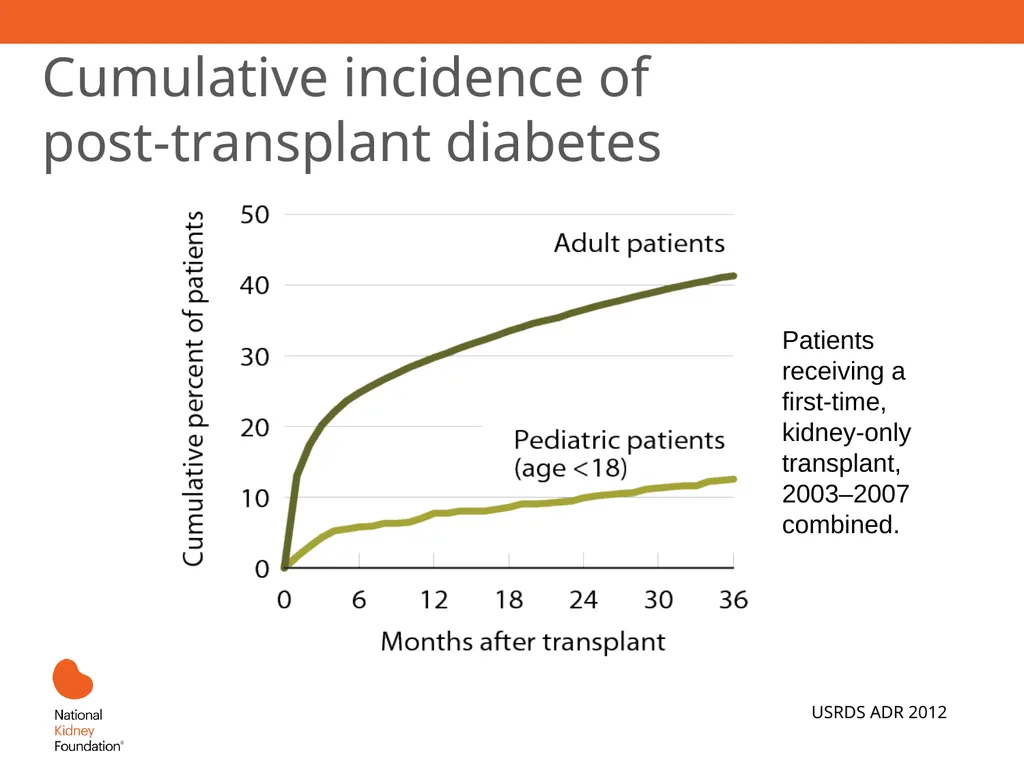
Cumulative incidence of post-transplant diabetes Patients receiving a first-time, kidney-only transplant, 2003–2007 combined. USRDS ADR 2012<br>
54
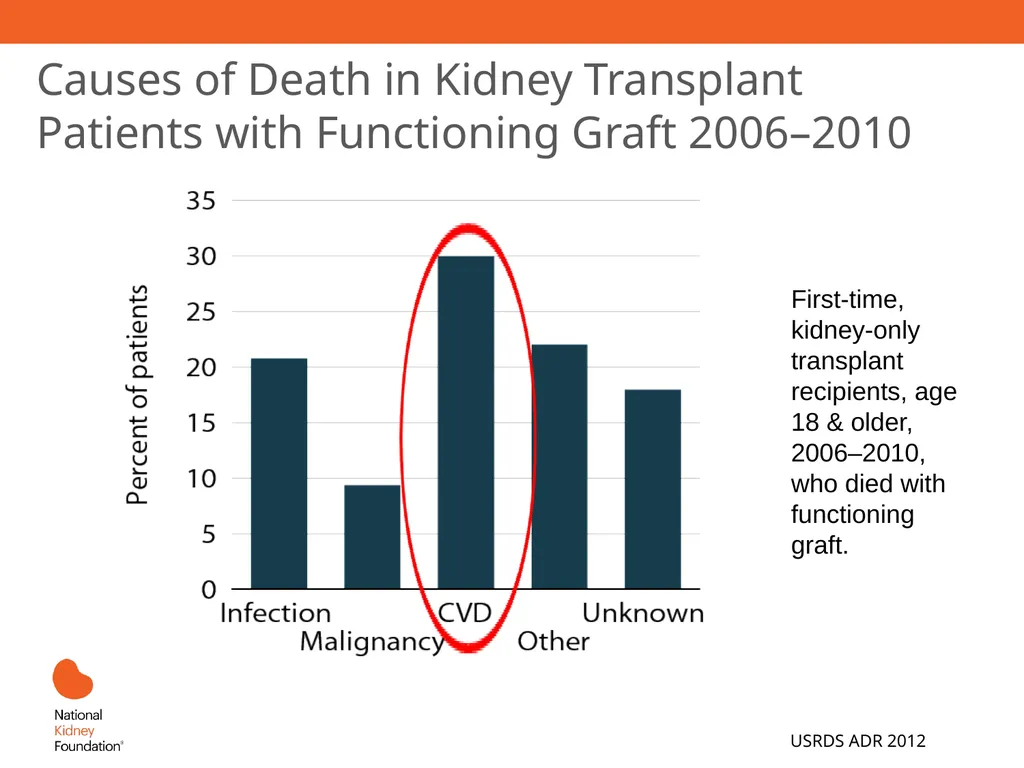
Causes of Death in Kidney Transplant Patients with Functioning Graft 2006–2010 First-time, kidney-only transplant recipients, age 18 & older, 2006–2010, who died with functioning graft. USRDS ADR 2012<br>
55
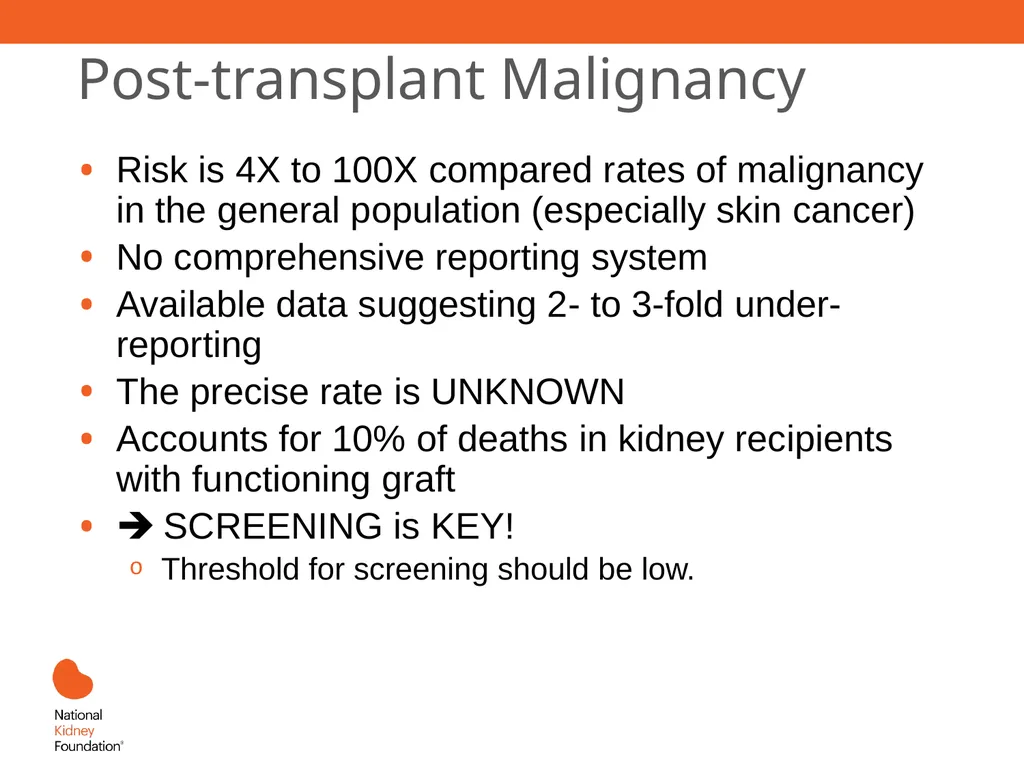
Post-transplant Malignancy Risk is 4X to 100X compared rates of malignancy in the general population (especially skin cancer)
No comprehensive reporting system
Available data suggesting 2- to 3-fold under-reporting
The precise rate is UNKNOWN
Accounts for 10% of deaths in kidney recipients with functioning graft
SCREENING is KEY!
Threshold for screening should be low.<br>
No comprehensive reporting system
Available data suggesting 2- to 3-fold under-reporting
The precise rate is UNKNOWN
Accounts for 10% of deaths in kidney recipients with functioning graft
SCREENING is KEY!
Threshold for screening should be low.<br>
56
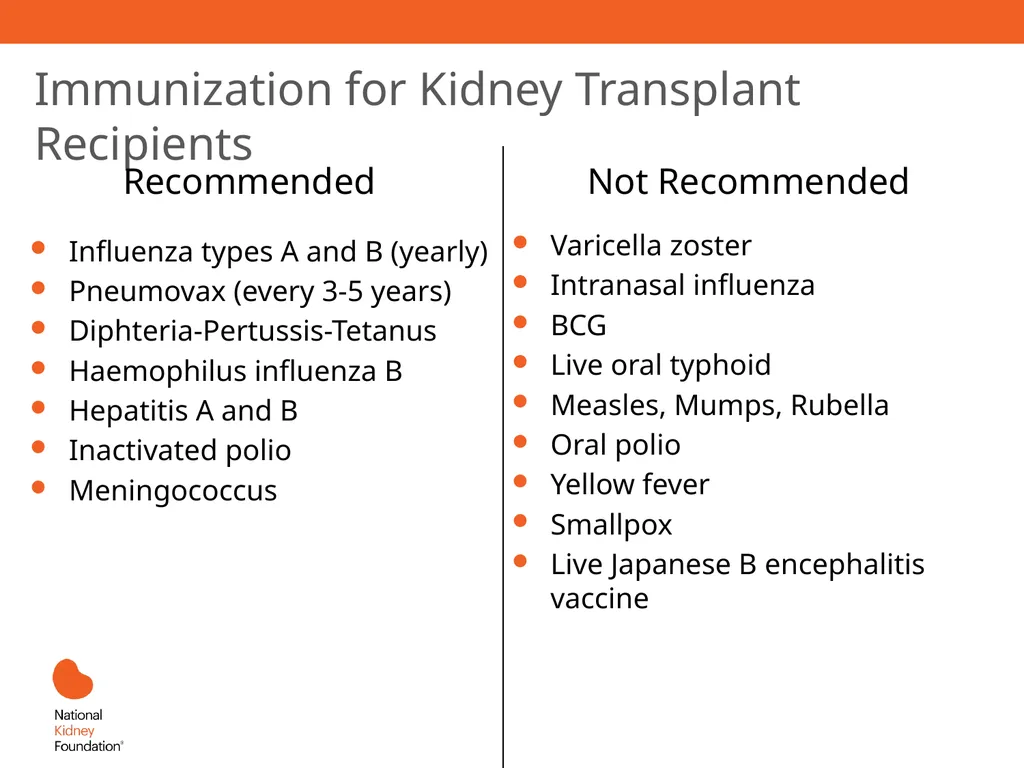
Immunization for Kidney Transplant Recipients Recommended Influenza types A and B (yearly)
Pneumovax (every 3-5 years)
Diphteria-Pertussis-Tetanus
Haemophilus influenza B
Hepatitis A and B
Inactivated polio
Meningococcus Not Recommended Varicella zoster
Intranasal influenza
BCG
Live oral typhoid
Measles, Mumps, Rubella
Oral polio
Yellow fever
Smallpox
Live Japanese B encephalitis vaccine<br>
Pneumovax (every 3-5 years)
Diphteria-Pertussis-Tetanus
Haemophilus influenza B
Hepatitis A and B
Inactivated polio
Meningococcus Not Recommended Varicella zoster
Intranasal influenza
BCG
Live oral typhoid
Measles, Mumps, Rubella
Oral polio
Yellow fever
Smallpox
Live Japanese B encephalitis vaccine<br>
57
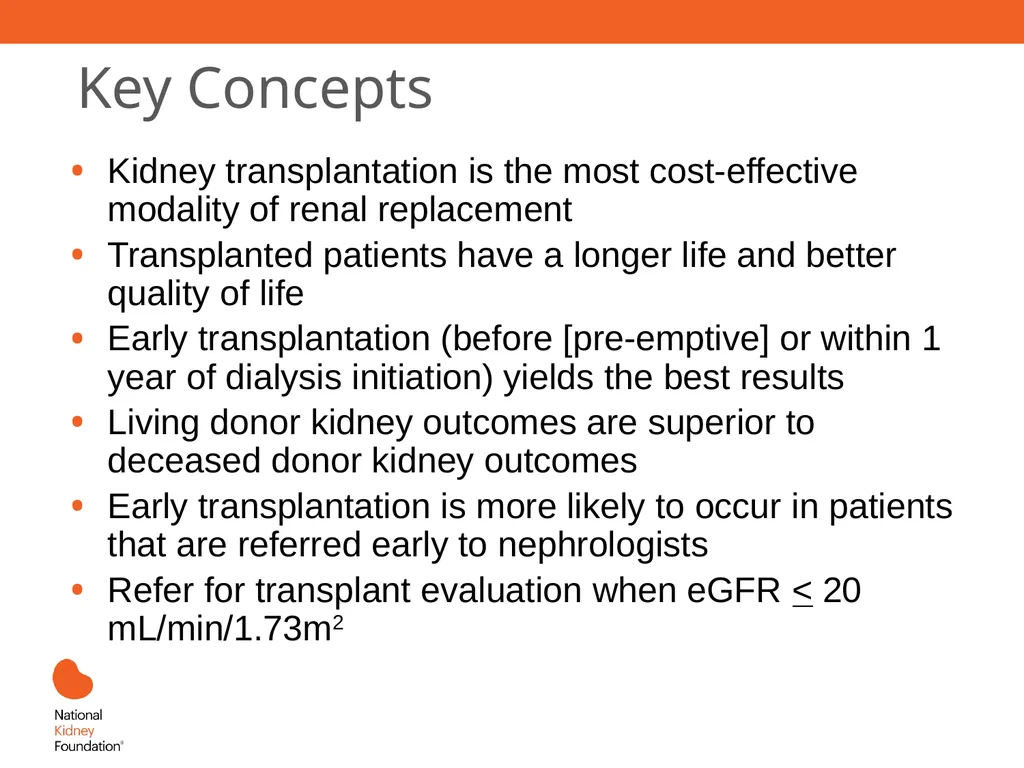
Key Concepts Kidney transplantation is the most cost-effective modality of renal replacement
Transplanted patients have a longer life and better quality of life
Early transplantation (before [pre-emptive] or within 1 year of dialysis initiation) yields the best results
Living donor kidney outcomes are superior to deceased donor kidney outcomes
Early transplantation is more likely to occur in patients that are referred early to nephrologists
Refer for transplant evaluation when eGFR < 20 mL/min/1.73m2<br>
Transplanted patients have a longer life and better quality of life
Early transplantation (before [pre-emptive] or within 1 year of dialysis initiation) yields the best results
Living donor kidney outcomes are superior to deceased donor kidney outcomes
Early transplantation is more likely to occur in patients that are referred early to nephrologists
Refer for transplant evaluation when eGFR < 20 mL/min/1.73m2<br>
58
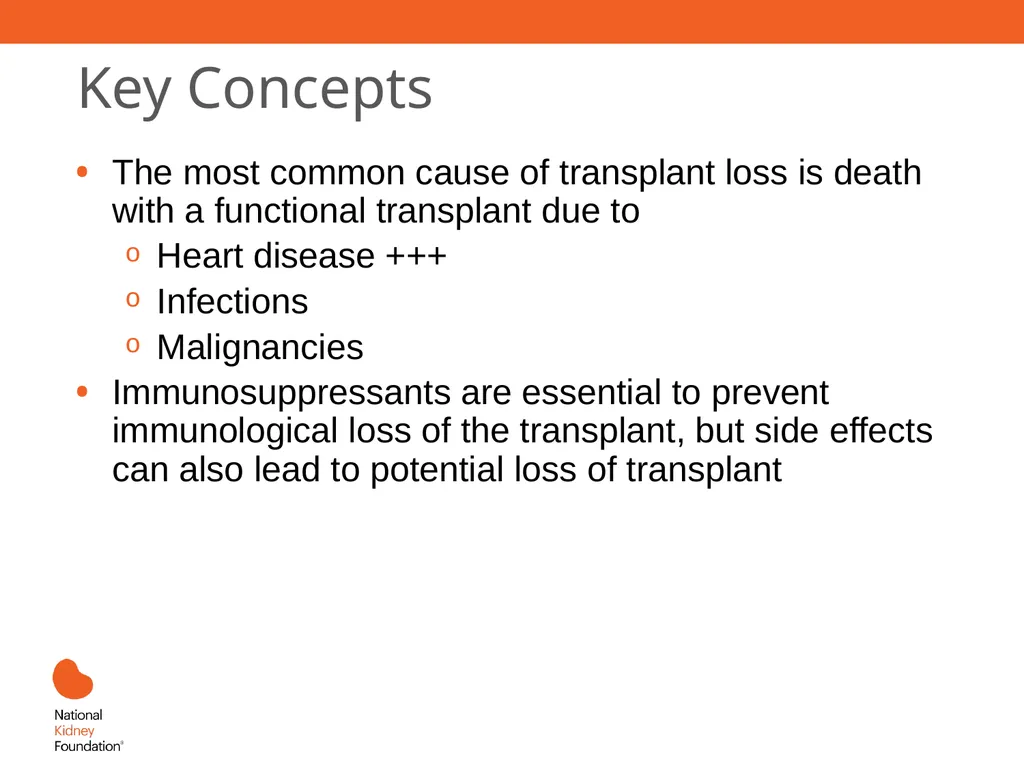
Key Concepts The most common cause of transplant loss is death with a functional transplant due to
Heart disease +++
Infections
Malignancies
Immunosuppressants are essential to prevent immunological loss of the transplant, but side effects can also lead to potential loss of transplant<br>
Heart disease +++
Infections
Malignancies
Immunosuppressants are essential to prevent immunological loss of the transplant, but side effects can also lead to potential loss of transplant<br>
59
What About No Renal Replacement Therapy Option?<br>
60
Starting Dialysis in the Elderly…Or Not? Among patients > 75 yrs with stage 5 CKD who chose NOT to start dialysis:
Overall, more likely to die over next 1-2 years
But if they had ischemic heart disease or other significant comorbidity NO DIFFERENCE in survival
Active disease management and supportive care may be appropriate without starting dialysis in the ill elderly
Must have end-of-life discussions! Murtagh, et al. Nephrol Dial Transplant. 2007; 22(7): 1955-1962.<br>
Overall, more likely to die over next 1-2 years
But if they had ischemic heart disease or other significant comorbidity NO DIFFERENCE in survival
Active disease management and supportive care may be appropriate without starting dialysis in the ill elderly
Must have end-of-life discussions! Murtagh, et al. Nephrol Dial Transplant. 2007; 22(7): 1955-1962.<br>
61
The Future …<br>
62
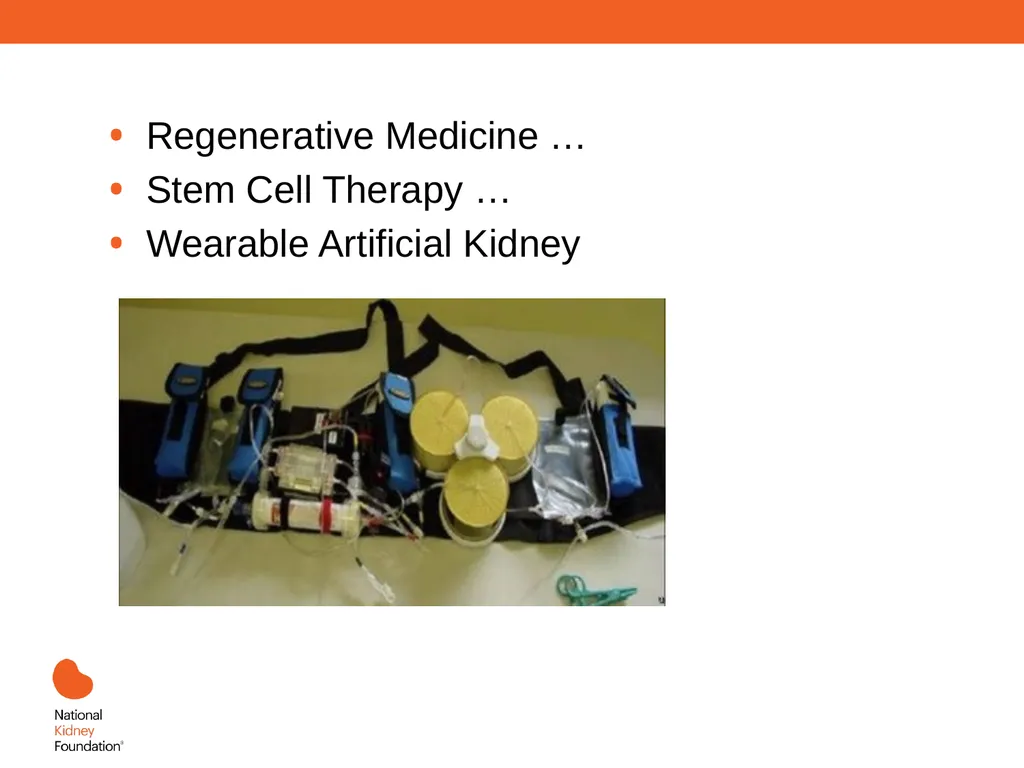
Regenerative Medicine …
Stem Cell Therapy …
Wearable Artificial Kidney<br>
Stem Cell Therapy …
Wearable Artificial Kidney<br>
63
Additional Online Resources for CKD Learning National Kidney Foundation: www.kidney.org
United States Renal Data Service: www.usrds.org
CDC’s CKD Surveillance Project: http://nccd.cdc.gov/ckd
Dialysis Outcomes and Practice Patterns Study (DOPPS): http://www.dopps.org
Organ Procurement and Transplantation Network: http://optn.transplant.hrsa.gov
United Network for Organ Sharing: http://www.unos.org<br>
United States Renal Data Service: www.usrds.org
CDC’s CKD Surveillance Project: http://nccd.cdc.gov/ckd
Dialysis Outcomes and Practice Patterns Study (DOPPS): http://www.dopps.org
Organ Procurement and Transplantation Network: http://optn.transplant.hrsa.gov
United Network for Organ Sharing: http://www.unos.org<br>