REPENTANCE AND FORGIVENESS Lesson 10 for June 6, 2026 If we confess our sins, He is faithful and just to forgive us our sins and to cleanse us from all unrighteousness (1 John 1:9, NKJV) Repentance: Delaying repentance True repentance The
"REPENTANCE AND FORGIVENESS Lesson 10 for June 6," is the property of its rightful owner. Permission is granted to
download and print the materials on this website for personal, non-commercial use only, and to display it
on your personal computer provided you do not modify the materials and that you retain all copyright
notices contained in the materials. By downloading content from our website, you accept the terms of this
agreement.
Presentation Transcript
01
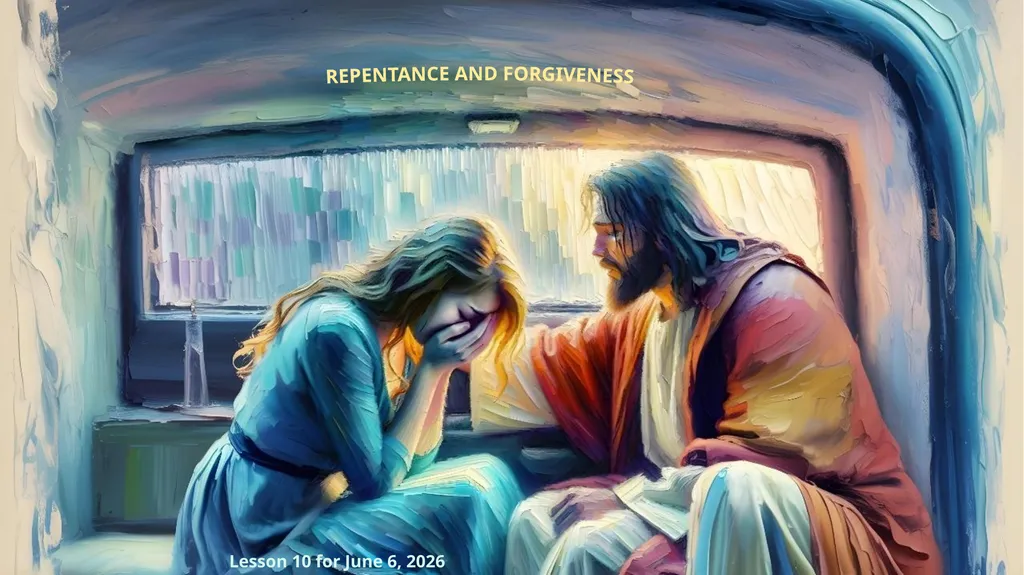
REPENTANCE AND FORGIVENESS Lesson 10 for June 6, 2026<br>
02
“If we confess our sins, He is faithful and just to forgive us our sins and to cleanse us from all unrighteousness”
(1 John 1:9, NKJV)<br>
03
Repentance:
Delaying repentance
True repentance
The call to repentance
Forgiveness:
The grace of forgiveness
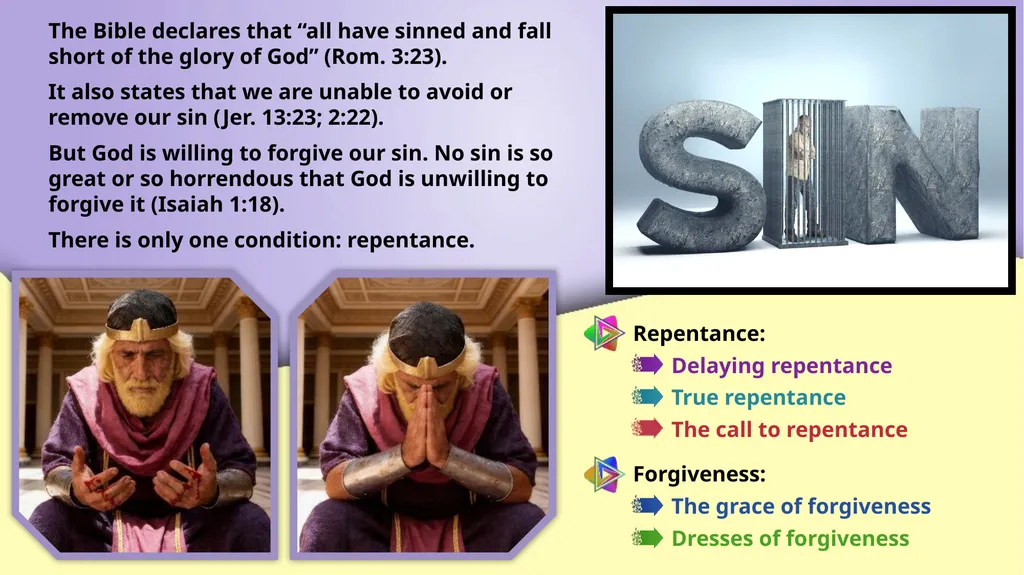
Dresses of forgiveness The Bible declares that “all have sinned and fall short of the glory of God” (Rom. 3:23). There is only one condition: repentance. But God is willing to forgive our sin. No sin is so great or so horrendous that God is unwilling to forgive it (Isaiah 1:18). It also states that we are unable to avoid or remove our sin (Jer. 13:23; 2:22).<br>
04
REPENTANCE<br>
05
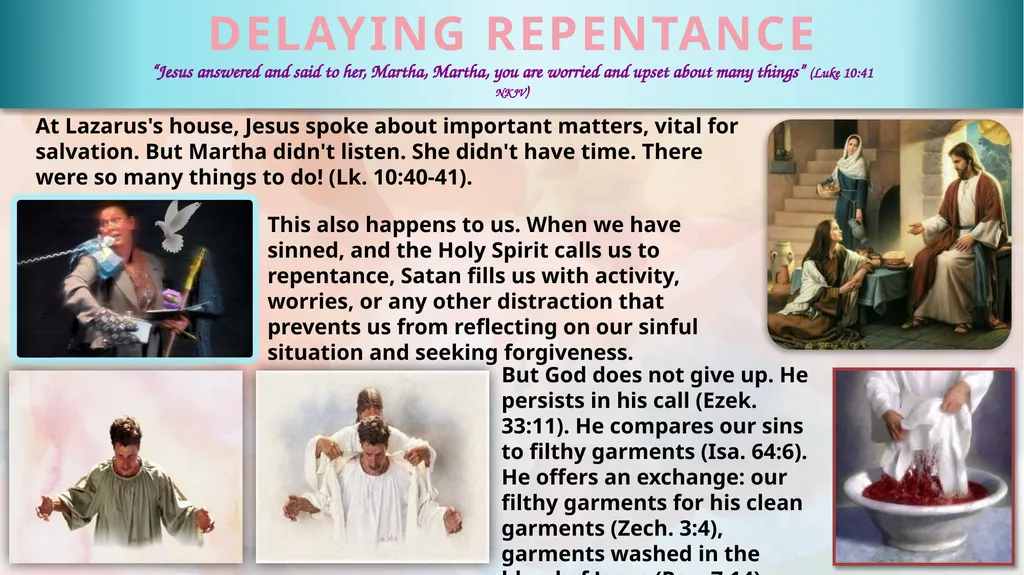
DELAYING REPENTANCE “Jesus answered and said to her, Martha, Martha, you are worried and upset about many things” (Luke 10:41 NKJV) At Lazarus's house, Jesus spoke about important matters, vital for salvation. But Martha didn't listen. She didn't have time. There were so many things to do! (Lk. 10:40-41). This also happens to us. When we have sinned, and the Holy Spirit calls us to repentance, Satan fills us with activity, worries, or any other distraction that prevents us from reflecting on our sinful situation and seeking forgiveness. But God does not give up. He persists in his call (Ezek. 33:11). He compares our sins to filthy garments (Isa. 64:6). He offers an exchange: our filthy garments for his clean garments (Zech. 3:4), garments washed in the blood of Jesus (Rev. 7:14).<br>
06
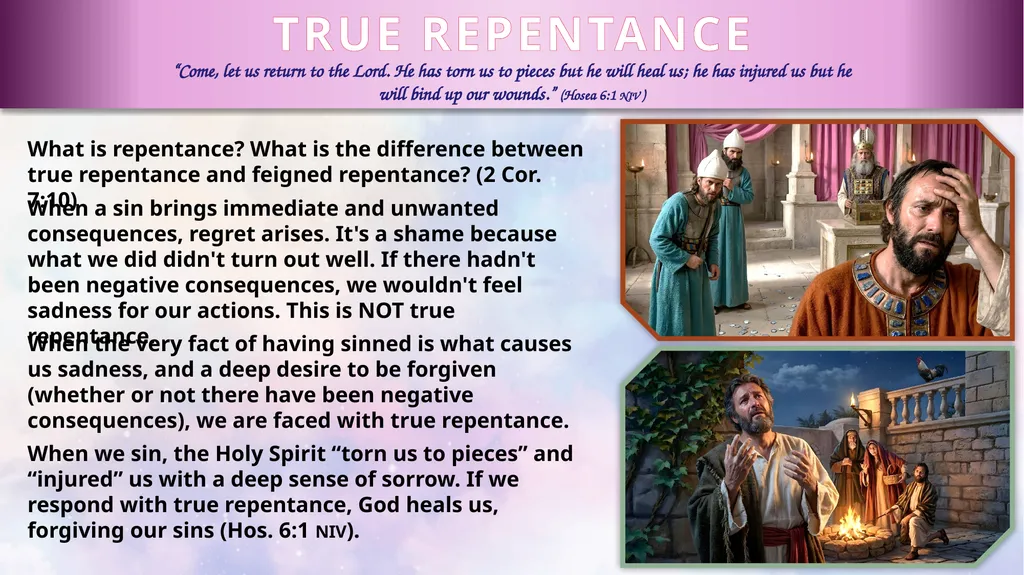
TRUE REPENTANCE “Come, let us return to the Lord. He has torn us to pieces but he will heal us; he has injured us but he will bind up our wounds.” (Hosea 6:1 NIV ) What is repentance? What is the difference between true repentance and feigned repentance? (2 Cor. 7:10) When we sin, the Holy Spirit “torn us to pieces” and “injured” us with a deep sense of sorrow. If we respond with true repentance, God heals us, forgiving our sins (Hos. 6:1 NIV). When the very fact of having sinned is what causes us sadness, and a deep desire to be forgiven (whether or not there have been negative consequences), we are faced with true repentance. When a sin brings immediate and unwanted consequences, regret arises. It's a shame because what we did didn't turn out well. If there hadn't been negative consequences, we wouldn't feel sadness for our actions. This is NOT true repentance.<br>
07
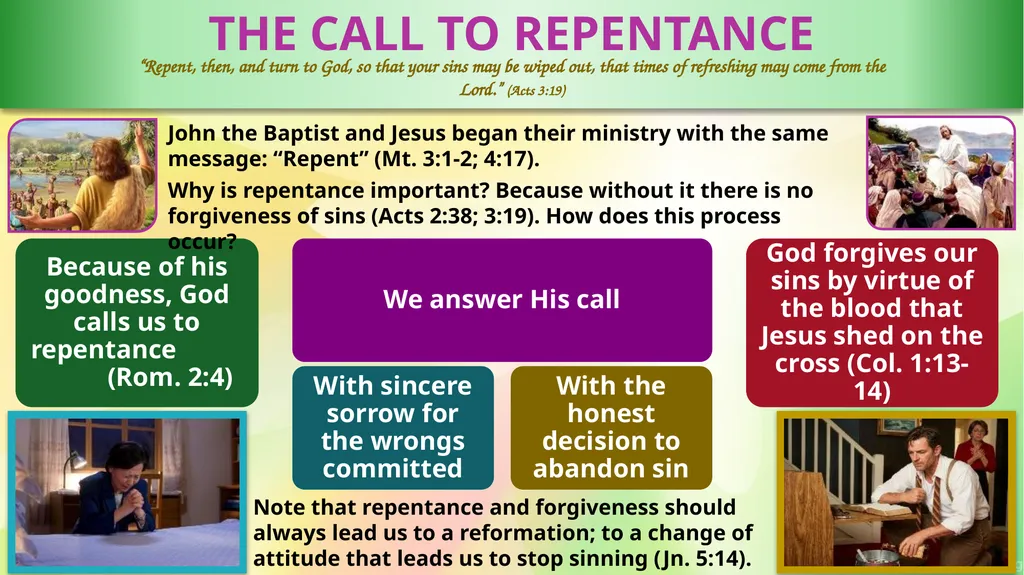
THE CALL TO REPENTANCE “Repent, then, and turn to God, so that your sins may be wiped out, that times of refreshing may come from the Lord.” (Acts 3:19) John the Baptist and Jesus began their ministry with the same message: “Repent” (Mt. 3:1-2; 4:17). Note that repentance and forgiveness should always lead us to a reformation; to a change of attitude that leads us to stop sinning (Jn. 5:14). Why is repentance important? Because without it there is no forgiveness of sins (Acts 2:38; 3:19). How does this process occur?<br>
08
FORGIVENESS<br>
09
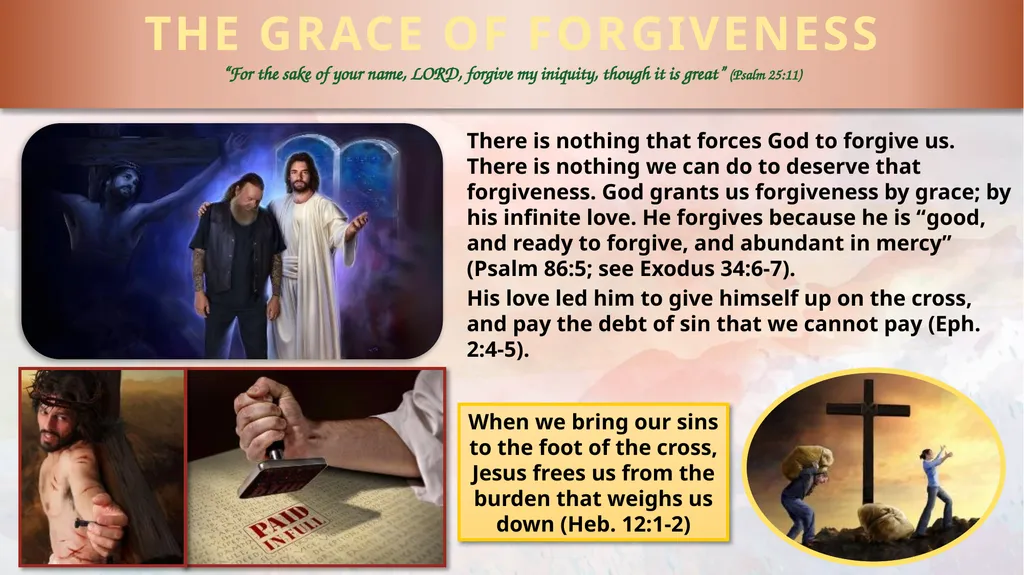
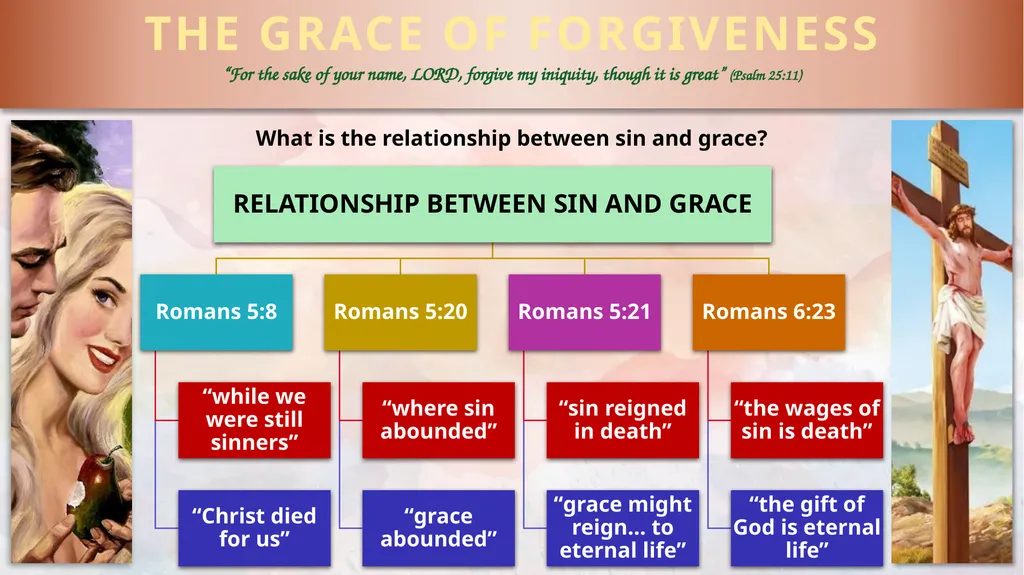
THE GRACE OF FORGIVENESS “For the sake of your name, LORD, forgive my iniquity, though it is great” (Psalm 25:11) There is nothing that forces God to forgive us. There is nothing we can do to deserve that forgiveness. God grants us forgiveness by grace; by his infinite love. He forgives because he is “good, and ready to forgive, and abundant in mercy” (Psalm 86:5; see Exodus 34:6-7). When we bring our sins to the foot of the cross, Jesus frees us from the burden that weighs us down (Heb. 12:1-2) His love led him to give himself up on the cross, and pay the debt of sin that we cannot pay (Eph. 2:4-5).<br>
10
THE GRACE OF FORGIVENESS “For the sake of your name, LORD, forgive my iniquity, though it is great” (Psalm 25:11) What is the relationship between sin and grace?<br>
11
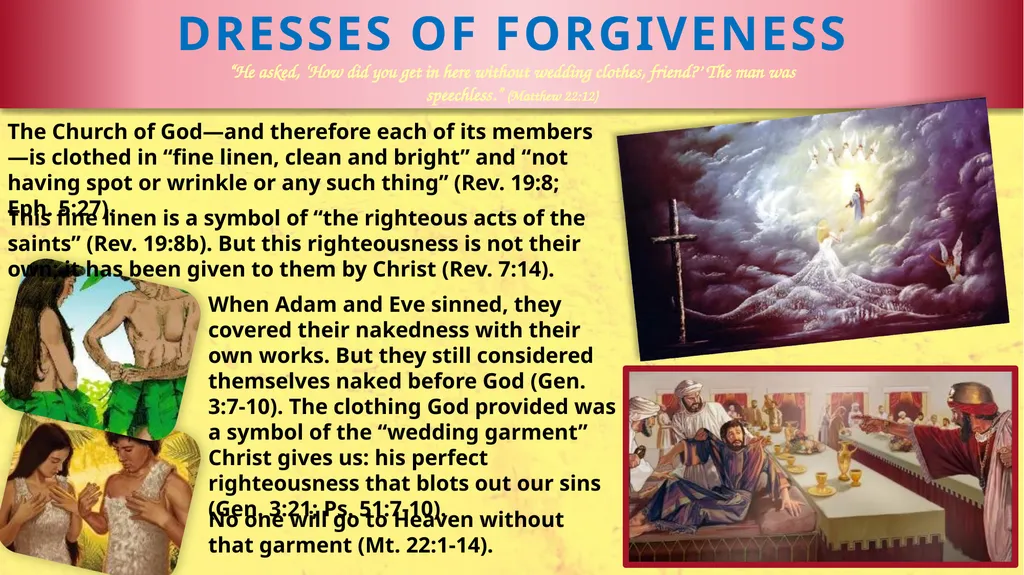
DRESSES OF FORGIVENESS “He asked, ‘How did you get in here without wedding clothes, friend?’ The man was speechless.” (Matthew 22:12) The Church of God—and therefore each of its members—is clothed in “fine linen, clean and bright” and “not having spot or wrinkle or any such thing” (Rev. 19:8; Eph. 5:27). When Adam and Eve sinned, they covered their nakedness with their own works. But they still considered themselves naked before God (Gen. 3:7-10). The clothing God provided was a symbol of the “wedding garment” Christ gives us: his perfect righteousness that blots out our sins (Gen. 3:21; Ps. 51:7-10). This fine linen is a symbol of “the righteous acts of the saints” (Rev. 19:8b). But this righteousness is not their own; it has been given to them by Christ (Rev. 7:14). No one will go to Heaven without that garment (Mt. 22:1-14).<br>
12
“He who would become a child of God must receive the truth that repentance and forgiveness are to be obtained through nothing less than the atonement of Christ. Assured of this the sinner must put forth an effort in harmony with the work done for him, and with unwearied entreaty he must supplicate the throne of grace, that the renovating power of God may come into his soul. Christ pardons none but the penitent, but whom He pardons He first makes penitent. The provision made is complete, and the eternal righteousness of Christ is placed to the account of every believing soul. The costly, spotless robe, woven in the loom of heaven, has been provided for the repenting, believing sinner.” EGW (Selected Messages, vol. 1, p. 393)<br>