Representation Within Print Advertisements On the board opposite write down: A) The key signifiers B) Their connotative meaning SIGNIFIER: WaterOcean Wave SIGNIFIES: Wild, Stormy, Natural, Earthly SIGNIFIER: Words Cool Water SIGNIFIES:
"Representation Within Print Advertisements On the" is the property of its rightful owner. Permission is granted to
download and print the materials on this website for personal, non-commercial use only, and to display it
on your personal computer provided you do not modify the materials and that you retain all copyright
notices contained in the materials. By downloading content from our website, you accept the terms of this
agreement.
Presentation Transcript
01
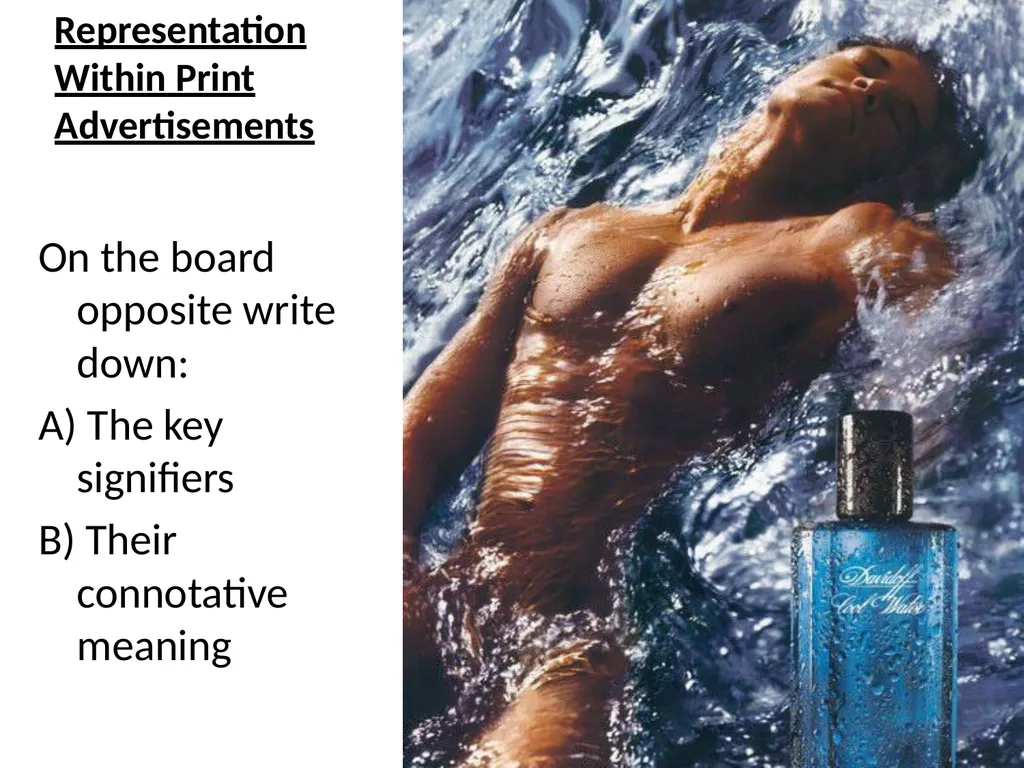
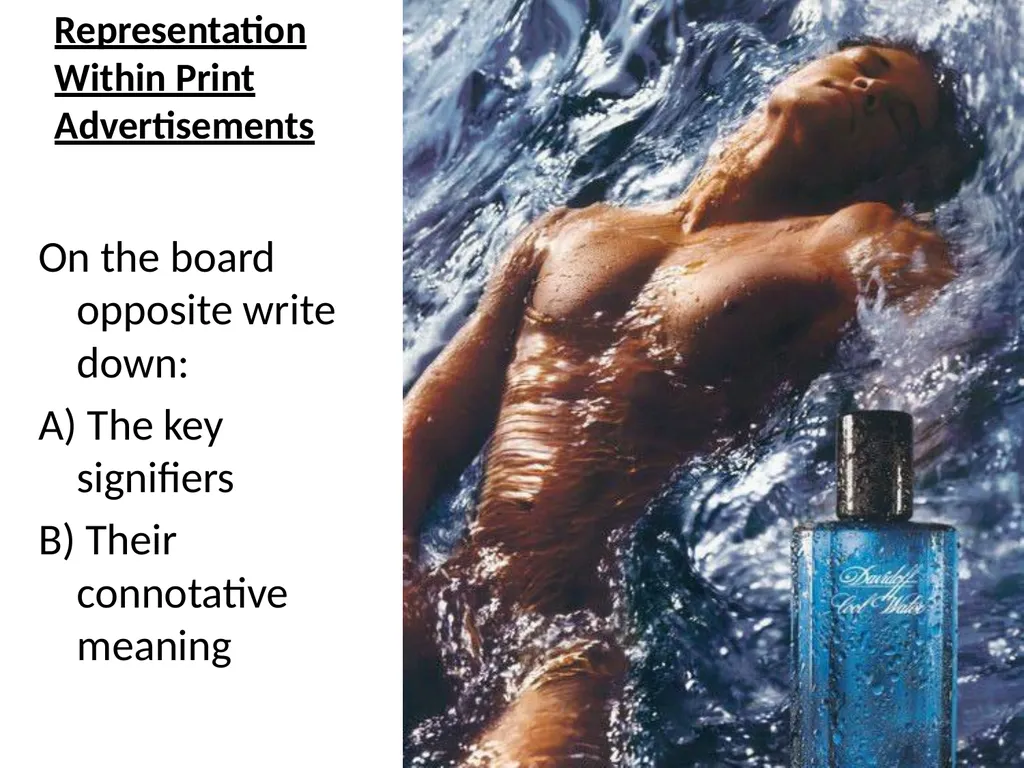
Representation Within Print Advertisements On the board opposite write down:
A) The key signifiers
B) Their connotative meaning<br>
02
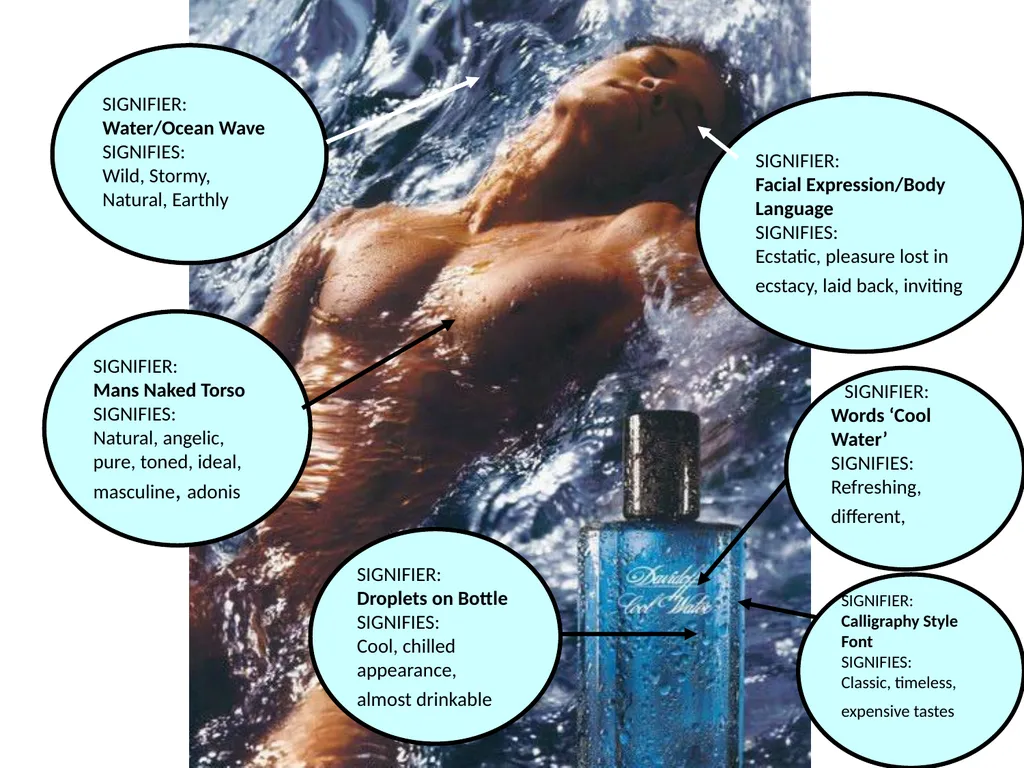
SIGNIFIER: Water/Ocean Wave
SIGNIFIES:
Wild, Stormy, Natural, Earthly SIGNIFIER: Words ‘Cool Water’
SIGNIFIES:
Refreshing, different, SIGNIFIER: Droplets on Bottle
SIGNIFIES:
Cool, chilled appearance, almost drinkable SIGNIFIER:
Mans Naked Torso
SIGNIFIES:
Natural, angelic, pure, toned, ideal, masculine, adonis SIGNIFIER:
Facial Expression/Body Language
SIGNIFIES:
Ecstatic, pleasure lost in ecstacy, laid back, inviting SIGNIFIER: Calligraphy Style Font
SIGNIFIES:
Classic, timeless, expensive tastes<br>
03
By the end of the session you will be able to: Read denotative and connotative levels of within a print advertisement
Use and understand key terms used in the analysis of media language (denotation, connotation, signifier, signified)
Analyse the representation of gender within advertisements Key Questions:
How are groups represented through advertisements?
How are adverts encoded to create meaning?
How do representations fit with the producing institution/brand and dominant ideologies?<br>
04
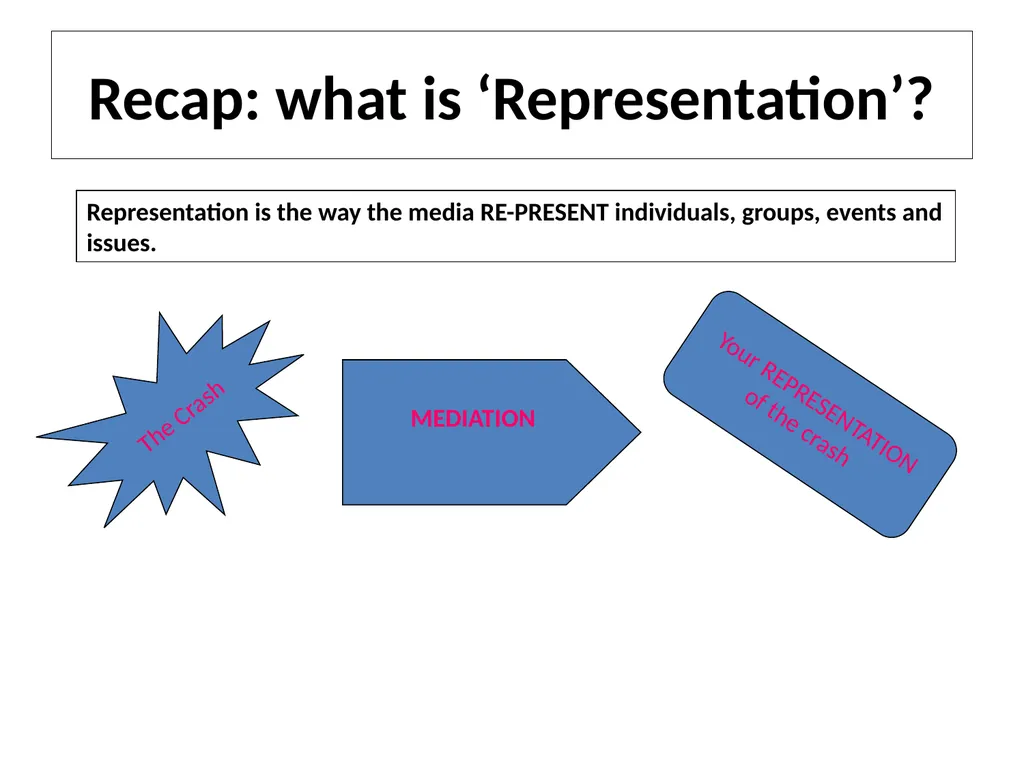
Recap: what is ‘Representation’? The Crash MEDIATION Your REPRESENTATION
of the crash Representation is the way the media RE-PRESENT individuals, groups, events and issues.<br>
05
Key words: Representations are constructed through photography, camerawork, sound and editing
Stereotypes
Media Institutions use stereotypes because the audience will instantly understand them. Think of stereotypes as a ‘visual shortcut’. They’re repeated so often that we assume they are normal or ‘true’.
Archetypes
This is the ‘ultimate’ stereotype. For example, the white stiletto wearing, big busted, brainless blonde bimbo
Countertype
A representation that challenges tradition stereotypical associations of groups, people or places<br>
06
Masculinity Versus Femininity Gender Advertisement refers to the images in advertising that depict stereotypical gender roles and displays.
Gender refers to the juxtaposition between men and women or femininity and masculinity. It is this relationship that advertisers focus on, because people define themselves by gender, and gender can be “communicated at a glance,” making it easy for advertisers to use this theme in their work.<br>
07
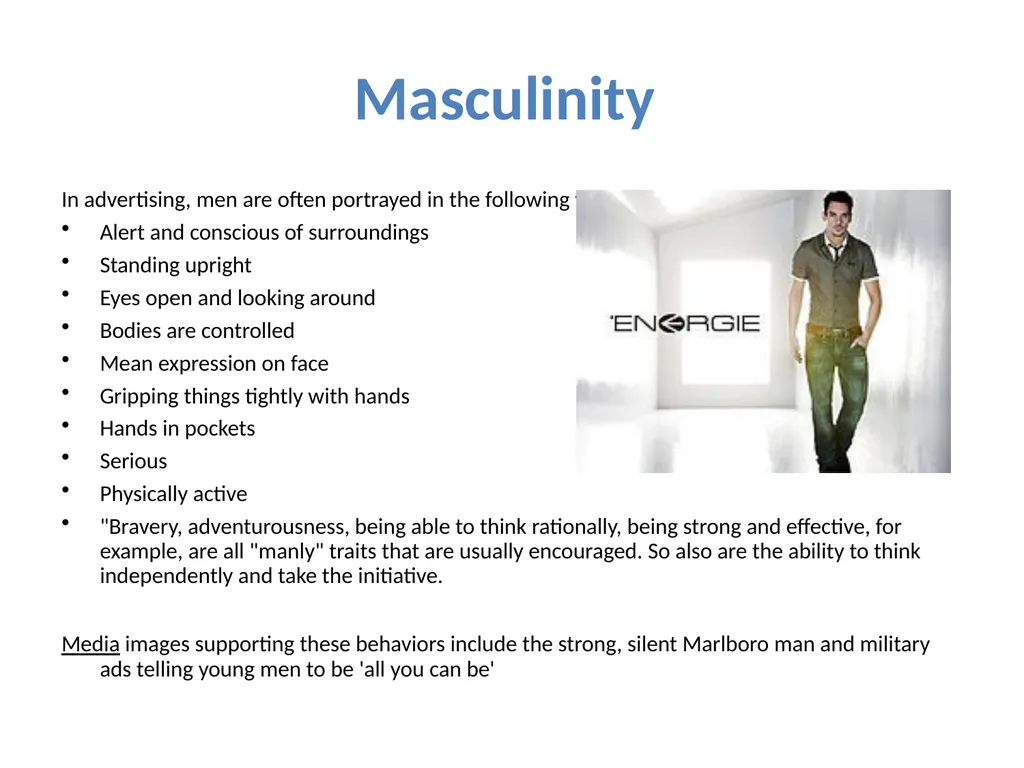
Masculinity In advertising, men are often portrayed in the following ways:[5]
Alert and conscious of surroundings
Standing upright
Eyes open and looking around
Bodies are controlled
Mean expression on face
Gripping things tightly with hands
Hands in pockets
Serious
Physically active
"Bravery, adventurousness, being able to think rationally, being strong and effective, for example, are all "manly" traits that are usually encouraged. So also are the ability to think independently and take the initiative.
Media images supporting these behaviors include the strong, silent Marlboro man and military ads telling young men to be 'all you can be'<br>
08
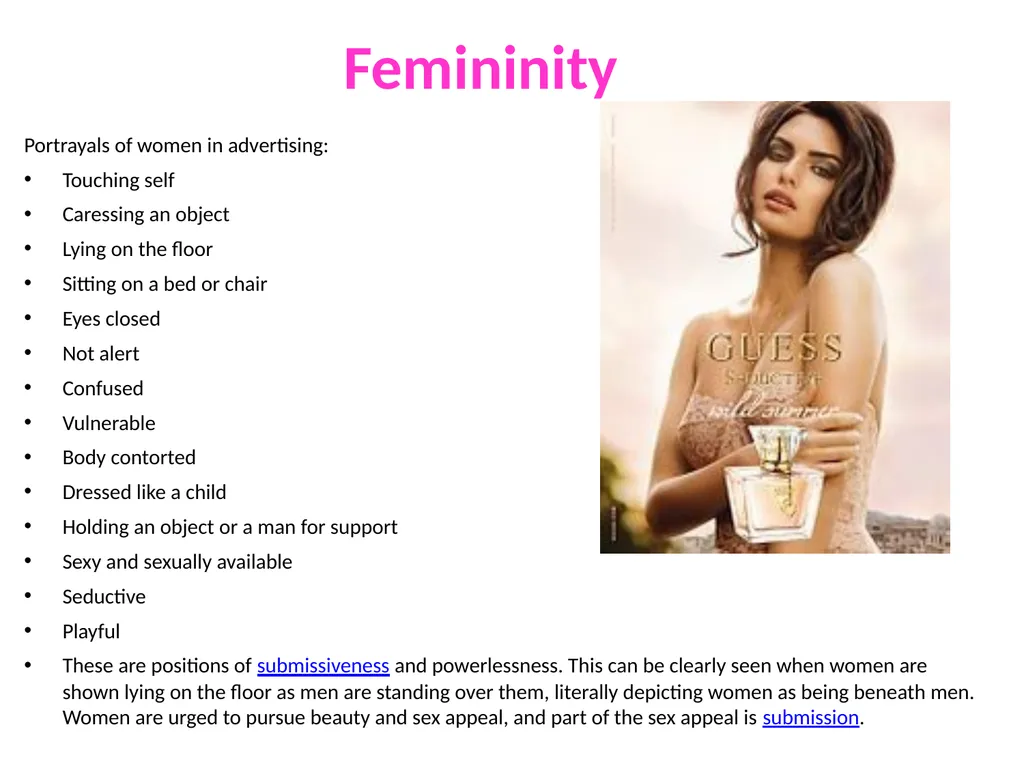
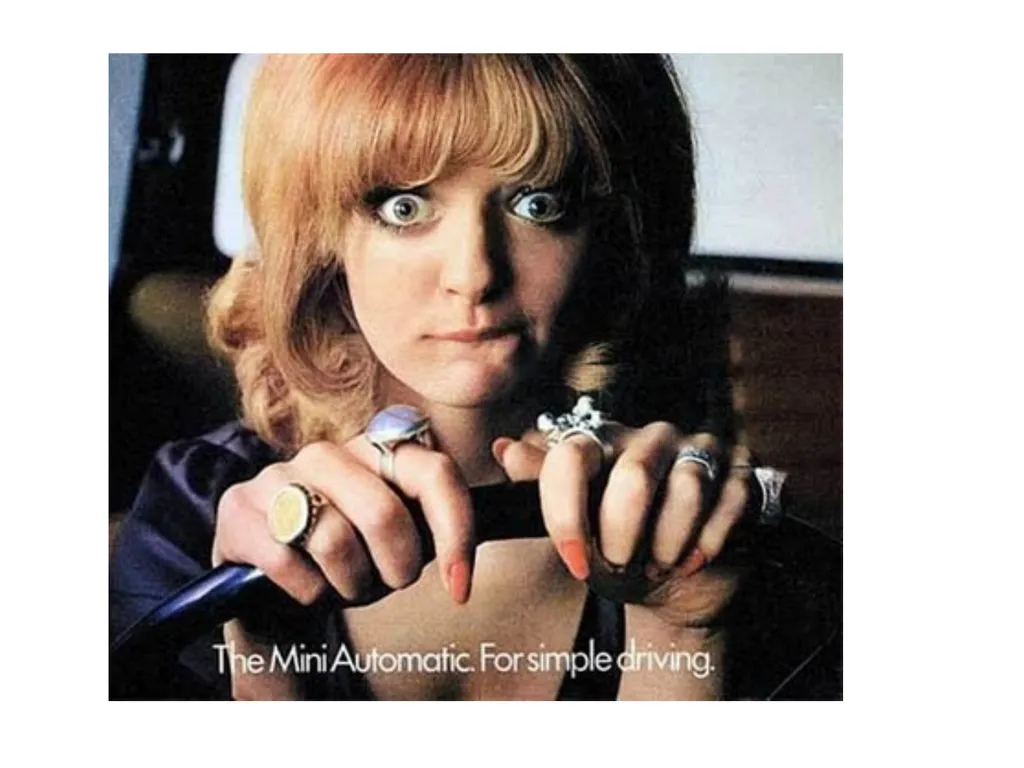
Femininity Portrayals of women in advertising:
Touching self
Caressing an object
Lying on the floor
Sitting on a bed or chair
Eyes closed
Not alert
Confused
Vulnerable
Body contorted
Dressed like a child
Holding an object or a man for support
Sexy and sexually available
Seductive
Playful
These are positions of submissiveness and powerlessness. This can be clearly seen when women are shown lying on the floor as men are standing over them, literally depicting women as being beneath men. Women are urged to pursue beauty and sex appeal, and part of the sex appeal is submission.<br>
09
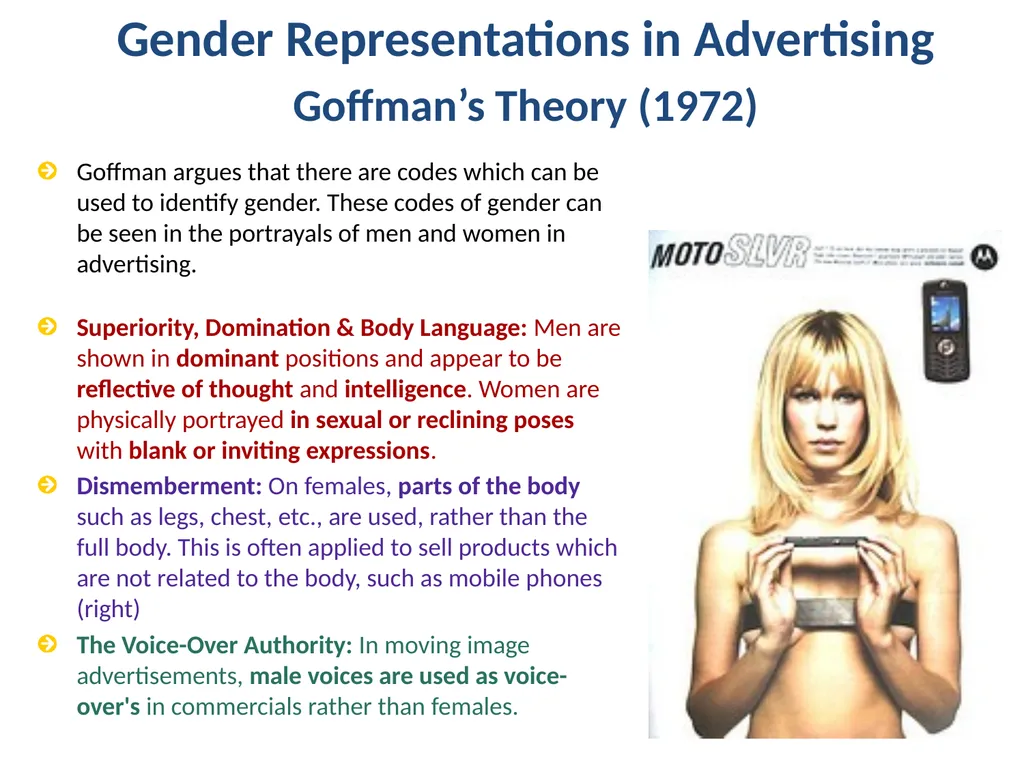
Goffman argues that there are codes which can be used to identify gender. These codes of gender can be seen in the portrayals of men and women in advertising.
Superiority, Domination & Body Language: Men are shown in dominant positions and appear to be reflective of thought and intelligence. Women are physically portrayed in sexual or reclining poses with blank or inviting expressions.
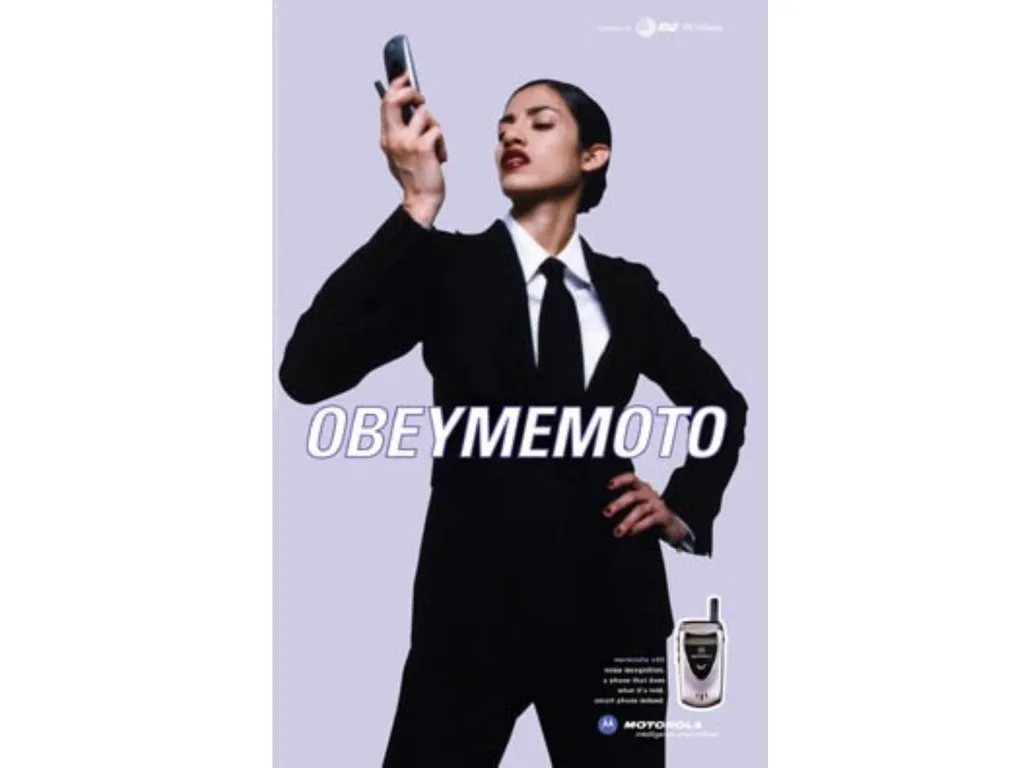
Dismemberment: On females, parts of the body such as legs, chest, etc., are used, rather than the full body. This is often applied to sell products which are not related to the body, such as mobile phones (right)
The Voice-Over Authority: In moving image advertisements, male voices are used as voice-over's in commercials rather than females. Gender Representations in Advertising
Goffman’s Theory (1972)<br>
10
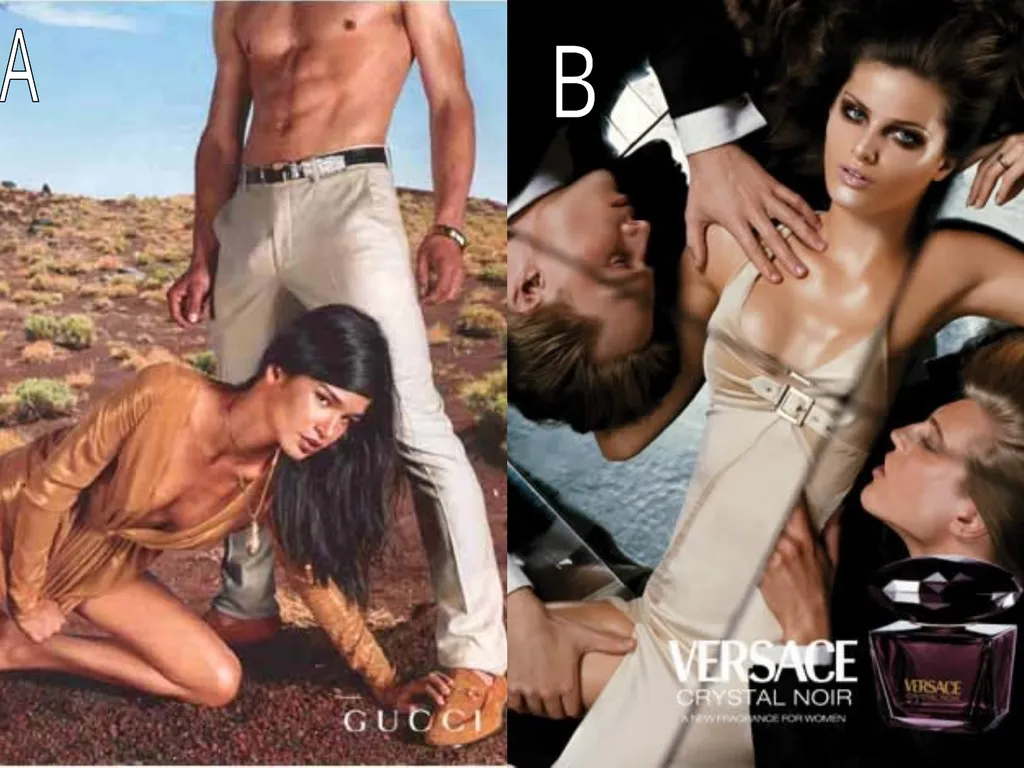
How A B<br>
11
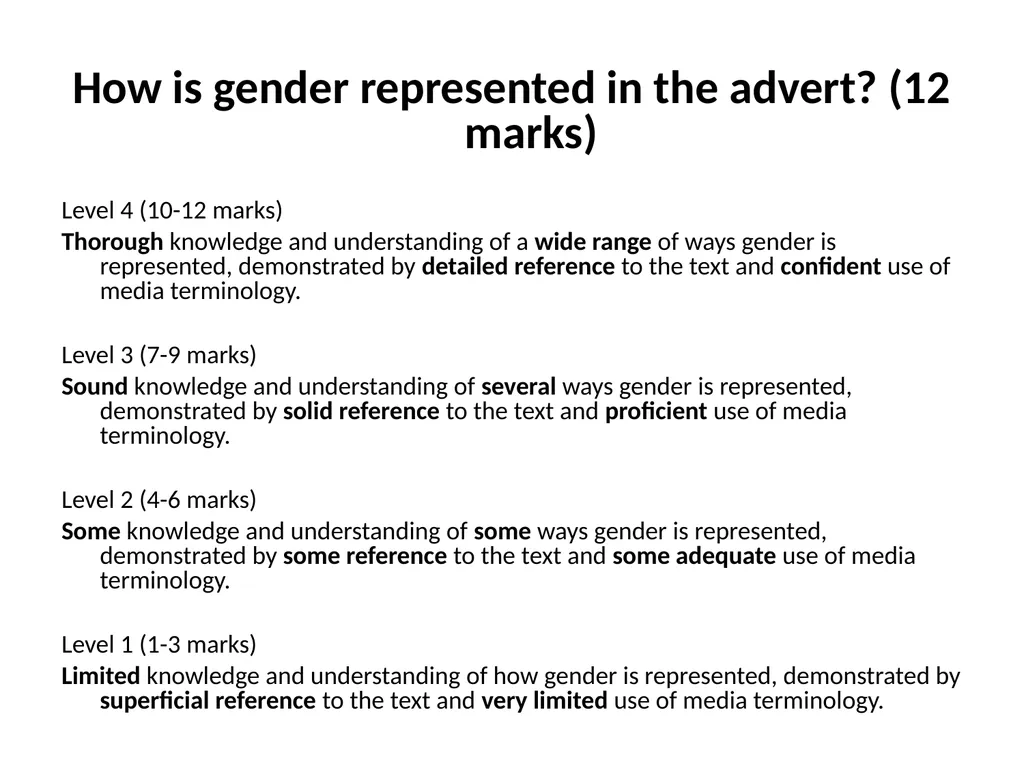
How is gender represented in the advert? (12 marks)
Level 4 (10-12 marks)
Thorough knowledge and understanding of a wide range of ways gender is represented, demonstrated by detailed reference to the text and confident use of media terminology.
Level 3 (7-9 marks)
Sound knowledge and understanding of several ways gender is represented, demonstrated by solid reference to the text and proficient use of media terminology.
Level 2 (4-6 marks)
Some knowledge and understanding of some ways gender is represented, demonstrated by some reference to the text and some adequate use of media terminology.
Level 1 (1-3 marks)
Limited knowledge and understanding of how gender is represented, demonstrated by superficial reference to the text and very limited use of media terminology.<br>
12
Peer Assessment… Highlight in their paragraph where they have:
Analysed media language codes (L)
Used key terms used in the analysis of media texts (T)
Commented on the representation of men/women featured within the advert (R)
Given examples/illustration of your ideas by referring to the text (Eg)
Clearly explained how media language works (Ex)
Referenced key theories (Th) – Goffman/audience
Referred to the audience (A) or the producing media institution (Inst)<br>